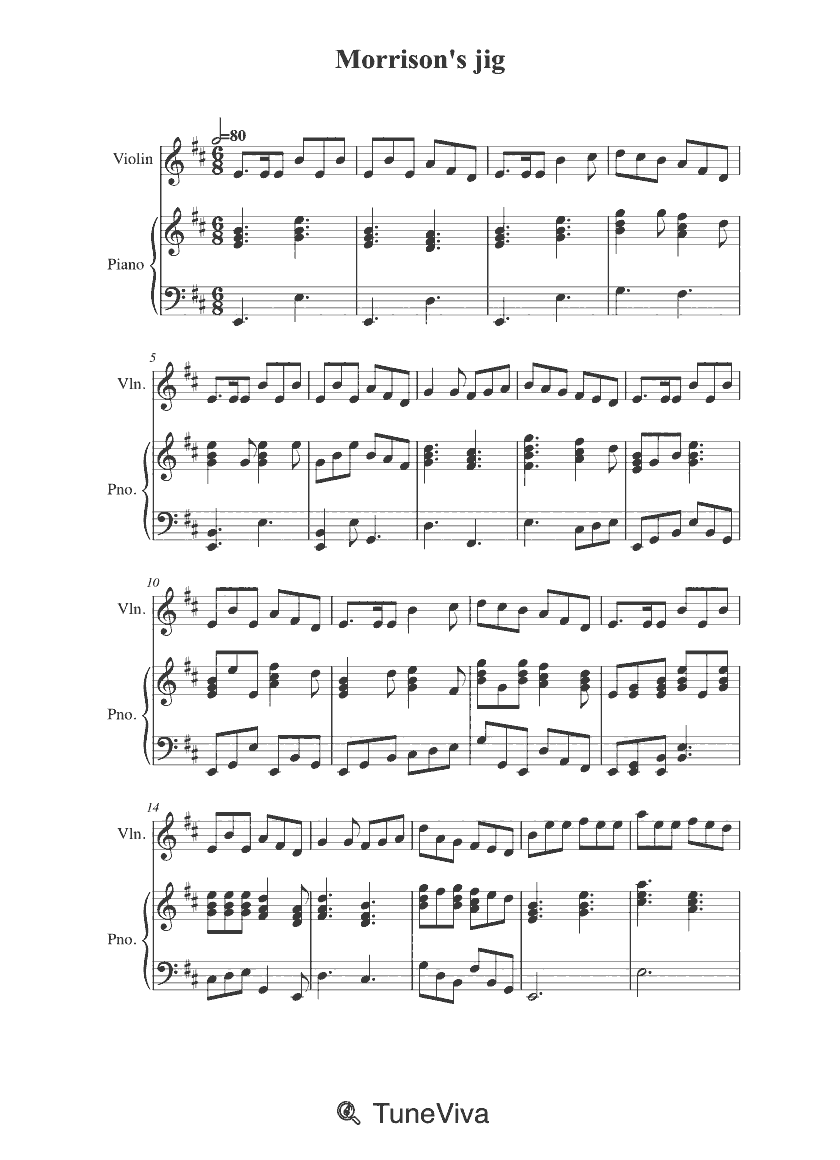
Morrison's jig
Traditional Irish SongArranged by Ollie Stevens
Violin; Piano · 37 sec
Open scoreMorrison's Jig is a traditional Irish jig in 6/8 time, and every version listed here opens with two sharps — the score that names its key gives D major. The available sheet music spans a solo melodic line and a violin-and-piano arrangement, so players can pick a version that matches their instrument and whether they want to play the tune alone or with accompaniment.
Scores 1–20 of 36
Traditional Irish SongArranged by Ollie Stevens
Violin; Piano · 37 sec
Open score
Misc tunes
24 sec · Score #146845
Open score
Jig
24 sec
Open score
Misc tunes
---------------------------------------------------Kesh Jig (Kincora Jig)
24 sec
Open score
trad.
24 sec · Score #111656
Open score
Misc tunes
25 sec · Score #151986
Open score
Misc tunes
12 sec
Open score
Misc tunes
25 sec · Score #195826
Open score
Misc tunes
24 sec · Score #234593
Open score
Misc tunes
24 sec · Score #115337
Open score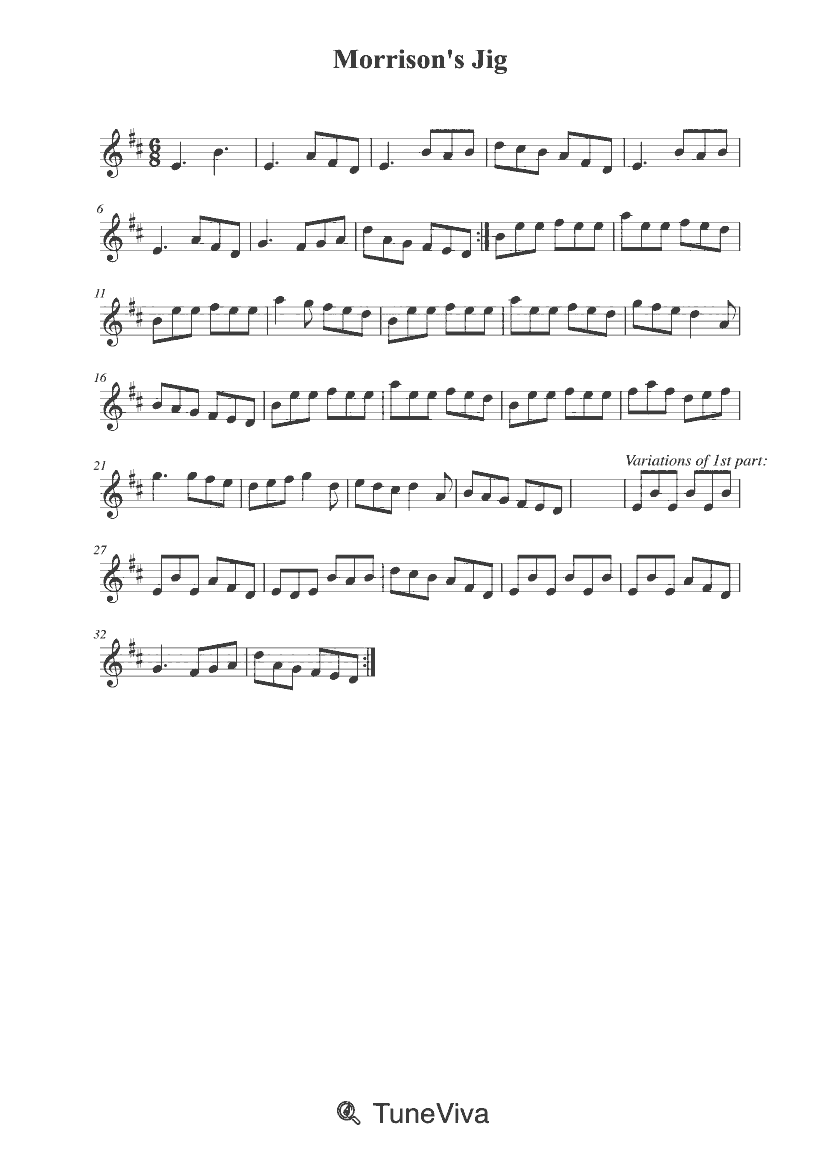
Misc tunes
55 sec · Score #171869
Open score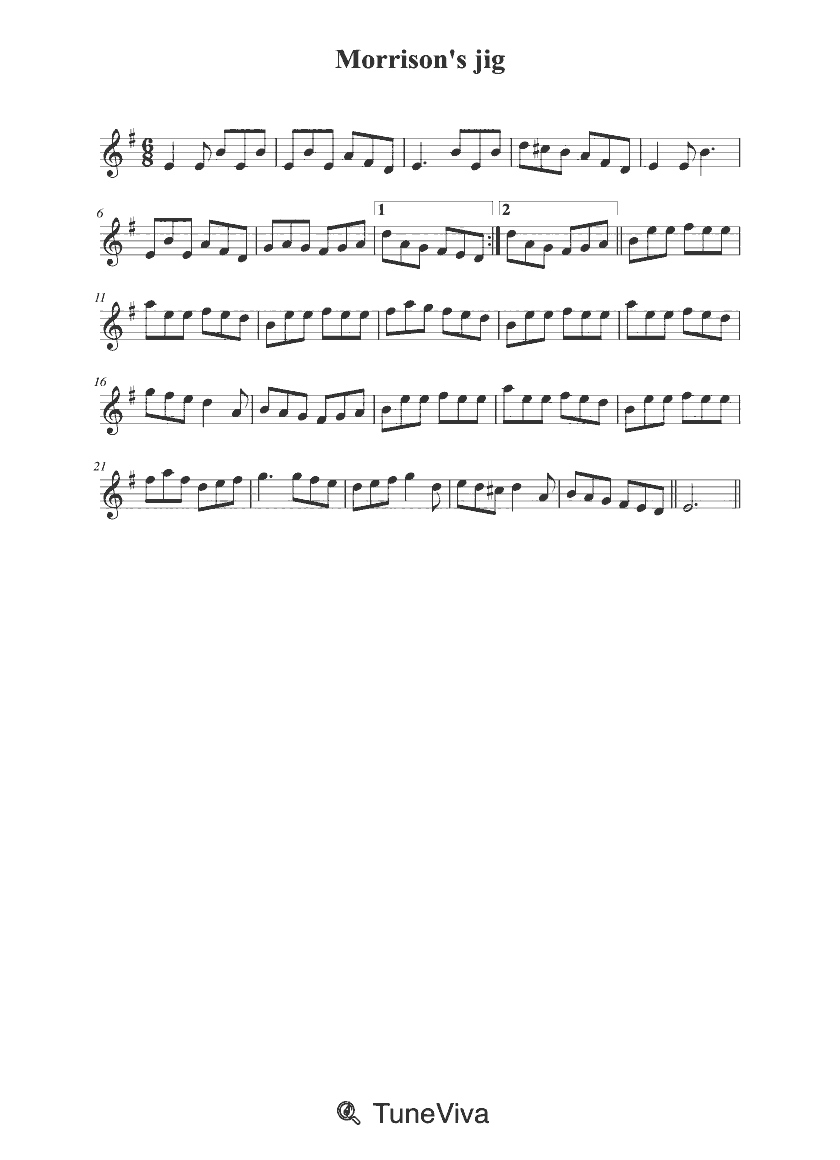
Misc tunes
25 sec · Score #58386
Open score
Misc tunes
25 sec · Score #77349
Open score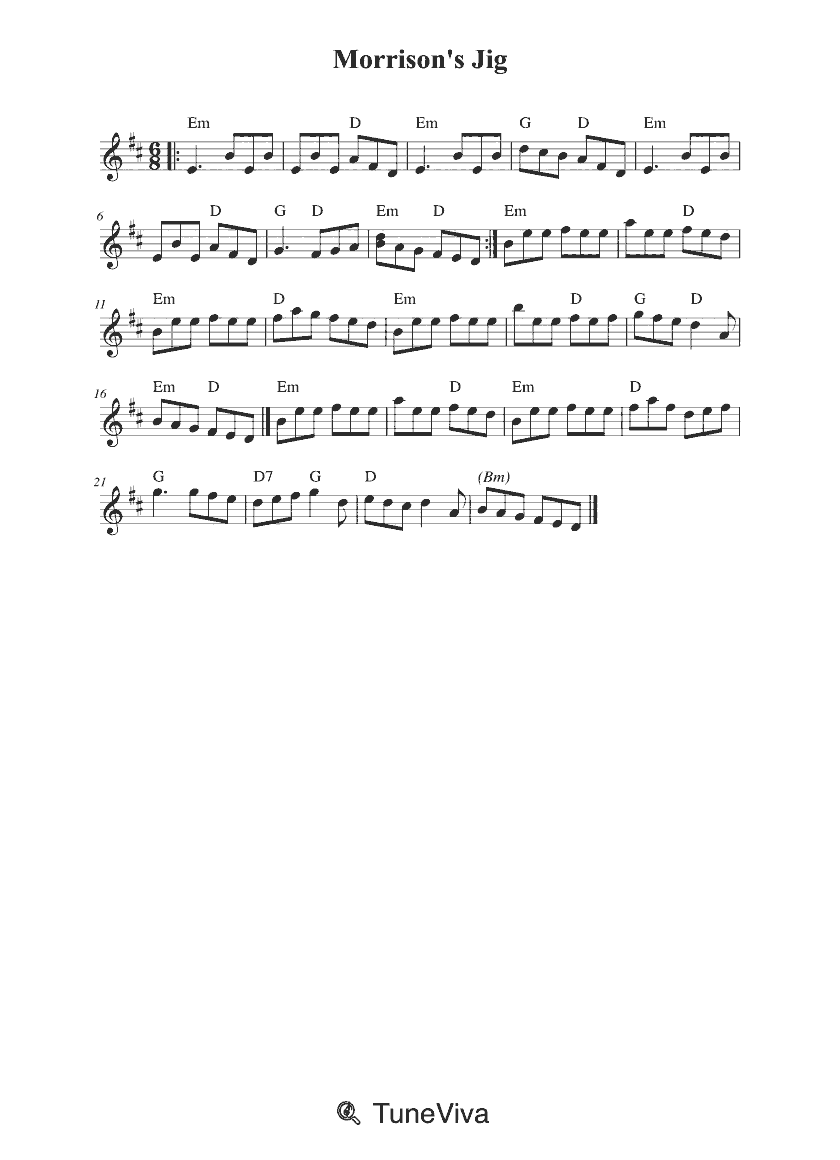
Misc tunes
24 sec · Score #38150
Open score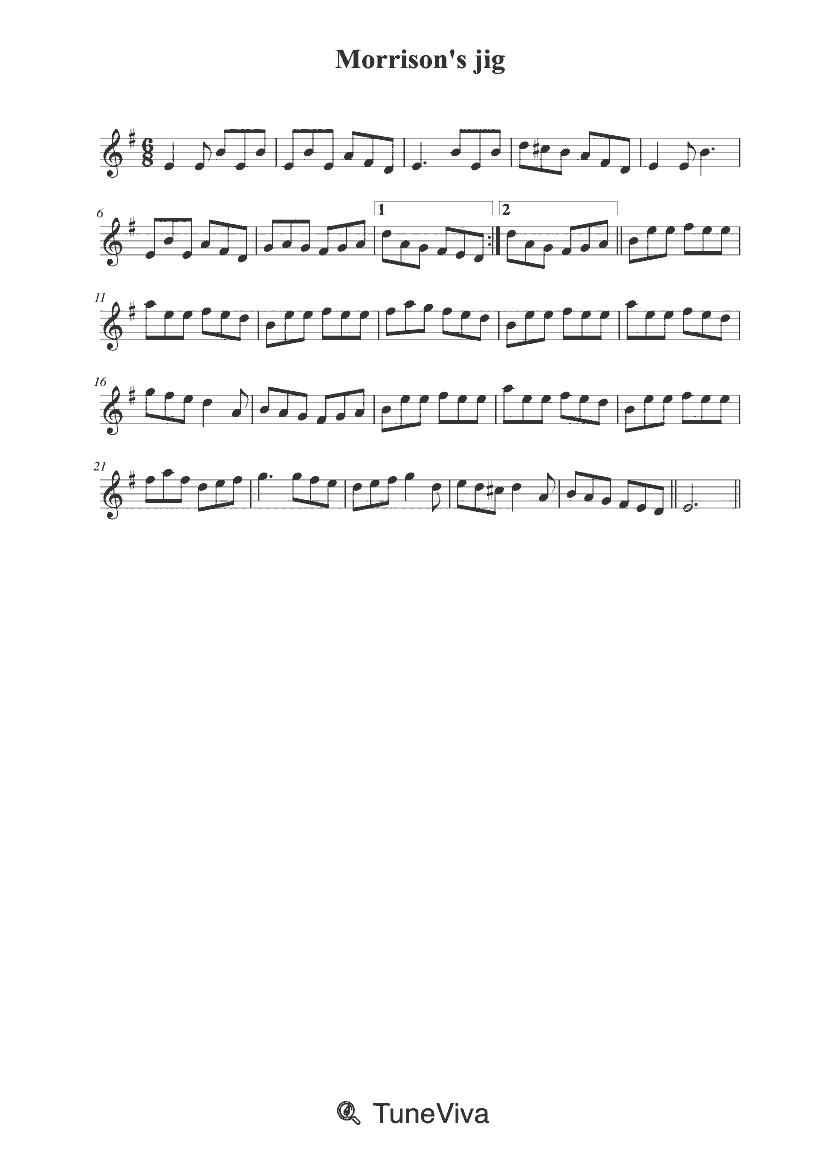
Misc tunes
25 sec · Score #224420
Open score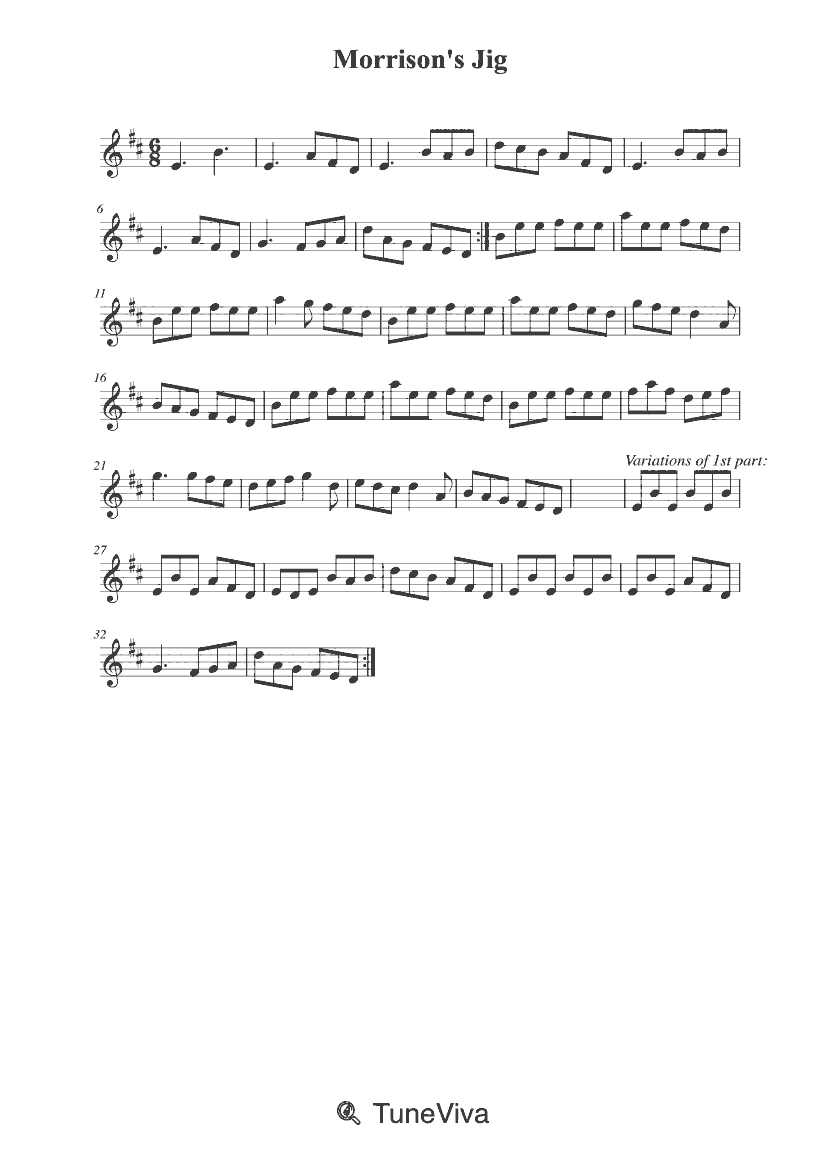
Misc tunes
55 sec · Score #23357
Open score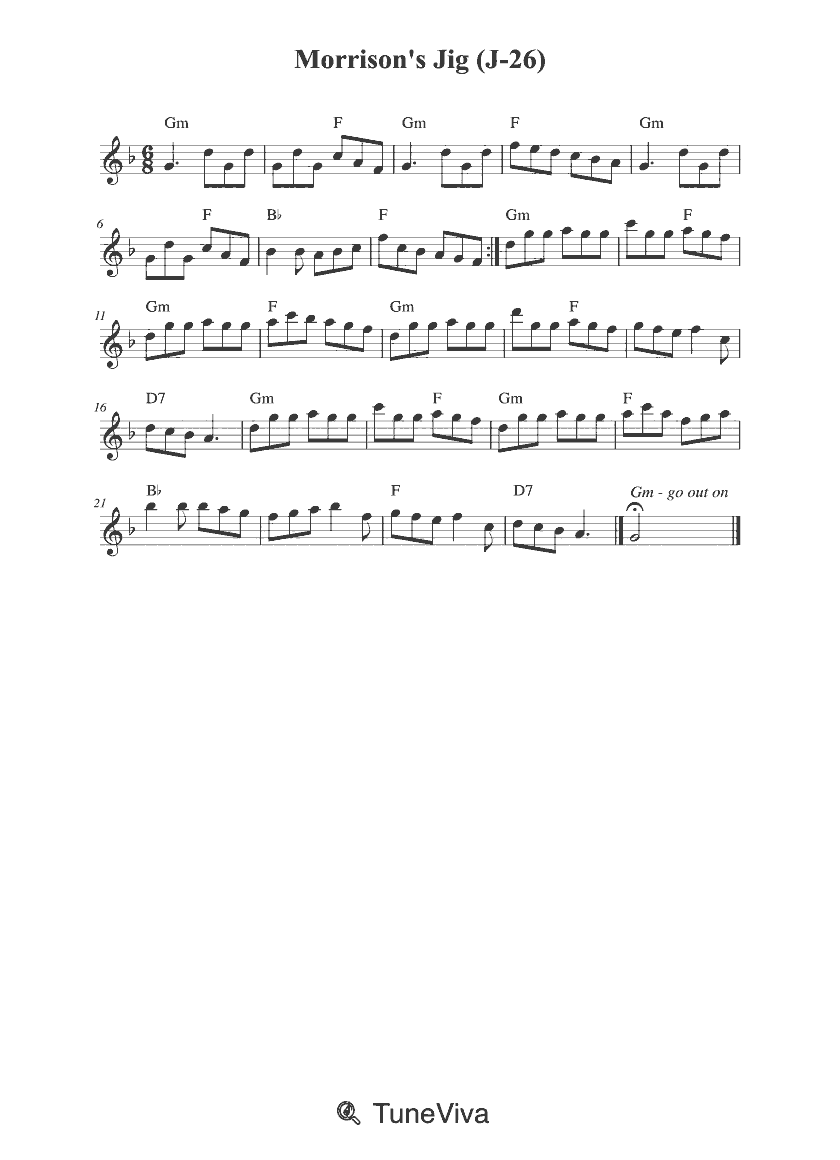
Misc tunes
25 sec
Open score
trad.
24 sec · Score #48342
Open score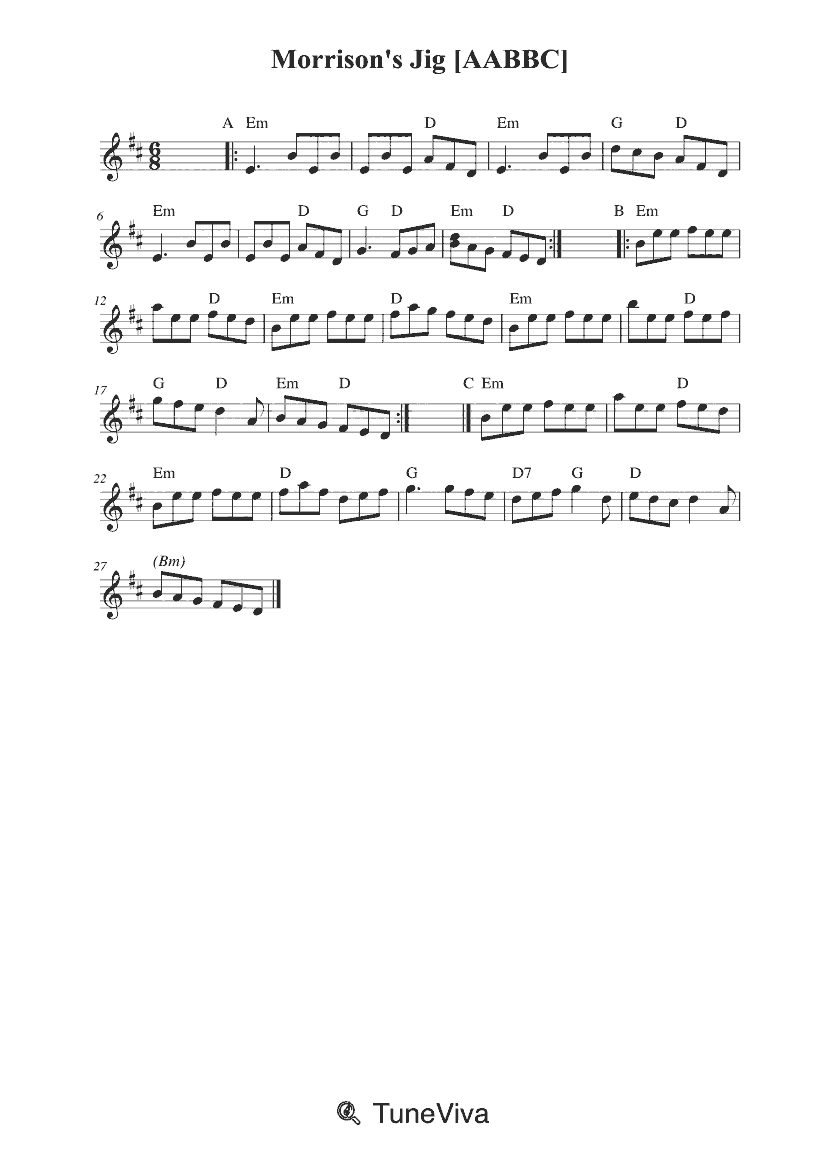
Misc tunes
32 sec
Open score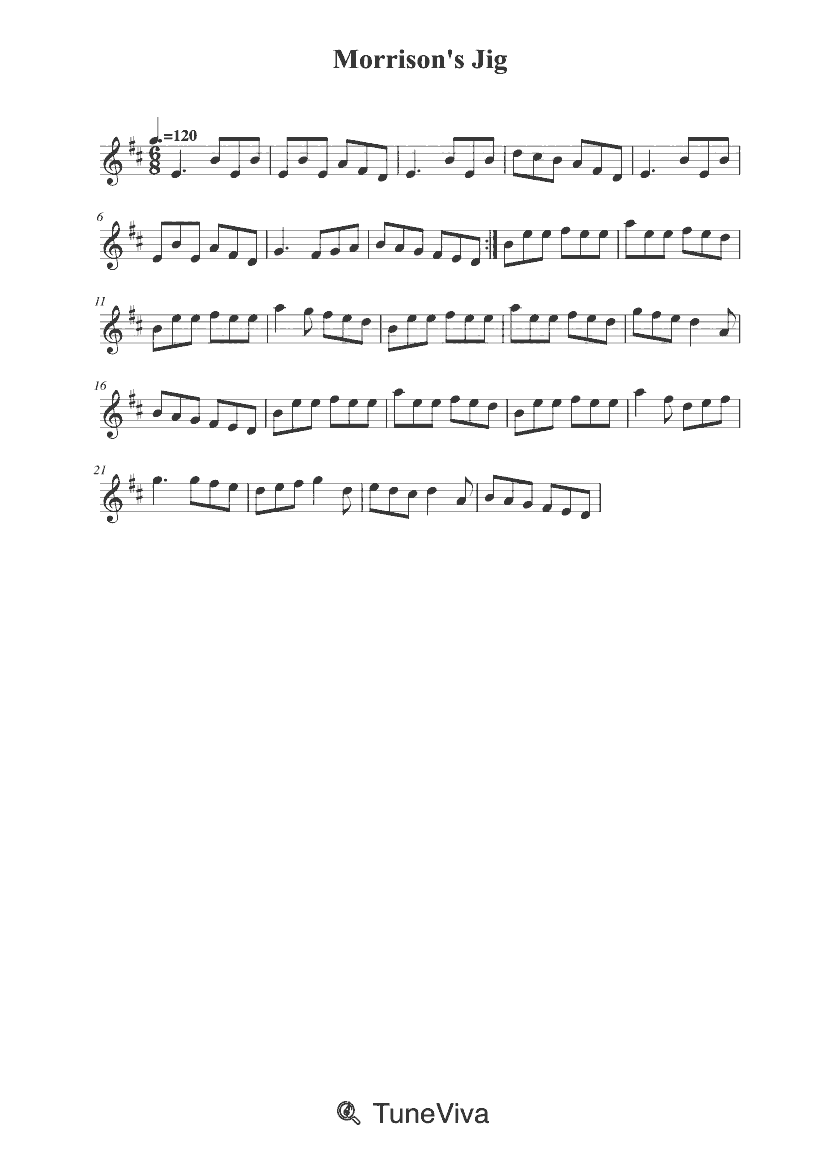
(Al's Jig 3)
Porth Mhuirgheasa
16 sec
Open scorePage 1 of 2
Morrison's Jig belongs to the jig family of traditional Irish dance tunes. One listing describes it as a traditional Irish piece and others simply as a jig, and all three scores share a 6/8 time signature. That metre gives the tune its characteristic two-beat bar, with each beat divided into three quavers. Treat the traditional label as a description of the tune's background rather than a confirmed authorship credit.
In 6/8 there are two main beats per bar, and each beat contains three quavers. Publishers usually beam those quavers in groups of three, which visually reflects the lilt of the tune and helps you read the rhythm at sight. Counting in two — 'one-two-three, two-two-three' — keeps the pulse steady; counting six even beats tends to make a jig sound like a march. The two-sharp key signature used in all the listed versions places the tune in D major or its relative B minor, with D major specified in one score.
The violin-and-piano arrangement gives you a melody part with keyboard accompaniment and opens at 160 BPM, which suits a duet performance or playing with a pianist. Two single-line versions are also listed, one carrying only a melodic staff. A solo line is usually the more practical choice for learning the tune by ear or bringing it to a session, while the accompanied version is better for a recital or a fixed arrangement. Nothing in the listings indicates a difficulty grade, so judge each score by its instrumentation and texture rather than by any stated level.
The only tempo indication supplied is 160 BPM at the opening of the violin-and-piano arrangement. A jig at that tempo moves briskly, so it is worth practising the melody considerably slower while you settle the three-quaver groupings and the two-beat pulse. For dancing, the tempo needs to be steady rather than merely fast, so choose a speed at which the triplets in each beat stay even.
Score parts: Violin, Piano. Catalogue duration 37 sec. Opening key signature: 2 sharps. Opening time signature: 6/8. Opening tempo: 160 BPM.
Catalogue duration 24 sec. Opening key signature: 2 sharps. Opening time signature: 6/8.
Catalogue duration 24 sec. Opening key signature: 2 sharps (D major). Opening time signature: 6/8.
Morrison's Jig is a traditional Irish jig, a dance-tune type built on a repeating two-beat bar in 6/8 time. The jig rhythm comes from dividing each beat into three quavers, which gives the tune its springing, lilting feel.
The listed versions of Morrison's Jig all open with a key signature of two sharps, and the score that names its key specifies D major. A two-sharp signature serves both D major and B minor, so a version could dip into the relative minor even though it begins in D.
The 6/8 signature used for Morrison's Jig means compound duple time: two beats to the bar, each divided into three quavers. Beaming the quavers in threes shows this grouping, and counting the tune in two rather than six preserves the jig's characteristic lilt.
One listed arrangement of Morrison's Jig is scored for violin and piano, with the violin taking the melody and the piano providing accompaniment. That version opens at 160 BPM and is the only listed score with a named arranger attached.
Morrison's Jig is presented in these listings as a traditional Irish tune, and no composer is reliably credited in the material available. The tune circulates as part of the traditional repertoire, so players should not assume a confirmed single author.
The only tempo given for Morrison's Jig in these listings is 160 BPM, marked at the start of the violin-and-piano arrangement. Session and dance players often choose a speed that keeps the three-quaver groups even, so treat that figure as a reference point rather than a fixed rule.