
Munster Buttermilk
Misc tunes
24 sec · Score #31820
Open scoreMunster Buttermilk is listed here as a tune in 6/8, with sheet music versions opening in G major or D major. No composer is named in the available score information, so this page focuses on what the notation shows and how to choose between the keys rather than on an unverified attribution.
Scores 1–20 of 22
Misc tunes
24 sec · Score #31820
Open score
Misc tunes
36 sec · Score #190884
Open score
Misc tunes
36 sec · Score #165389
Open score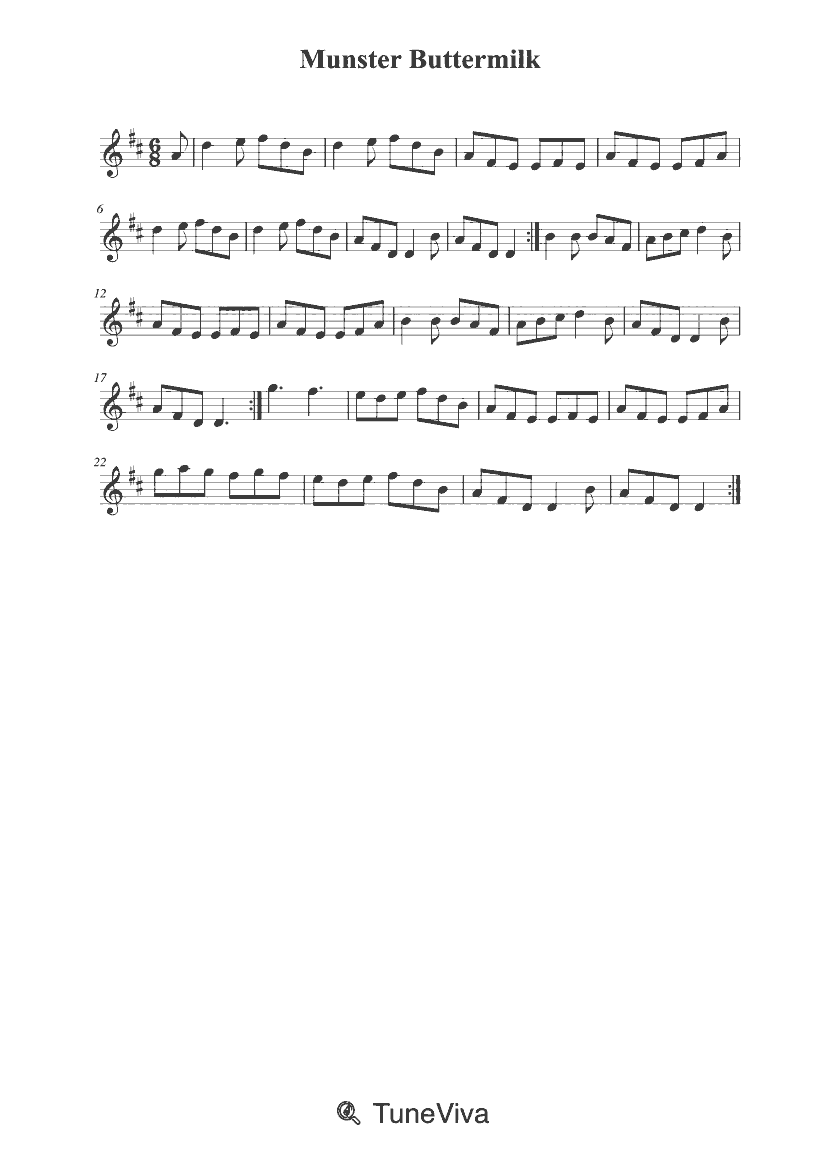
Misc tunes
54 sec · Score #113928
Open score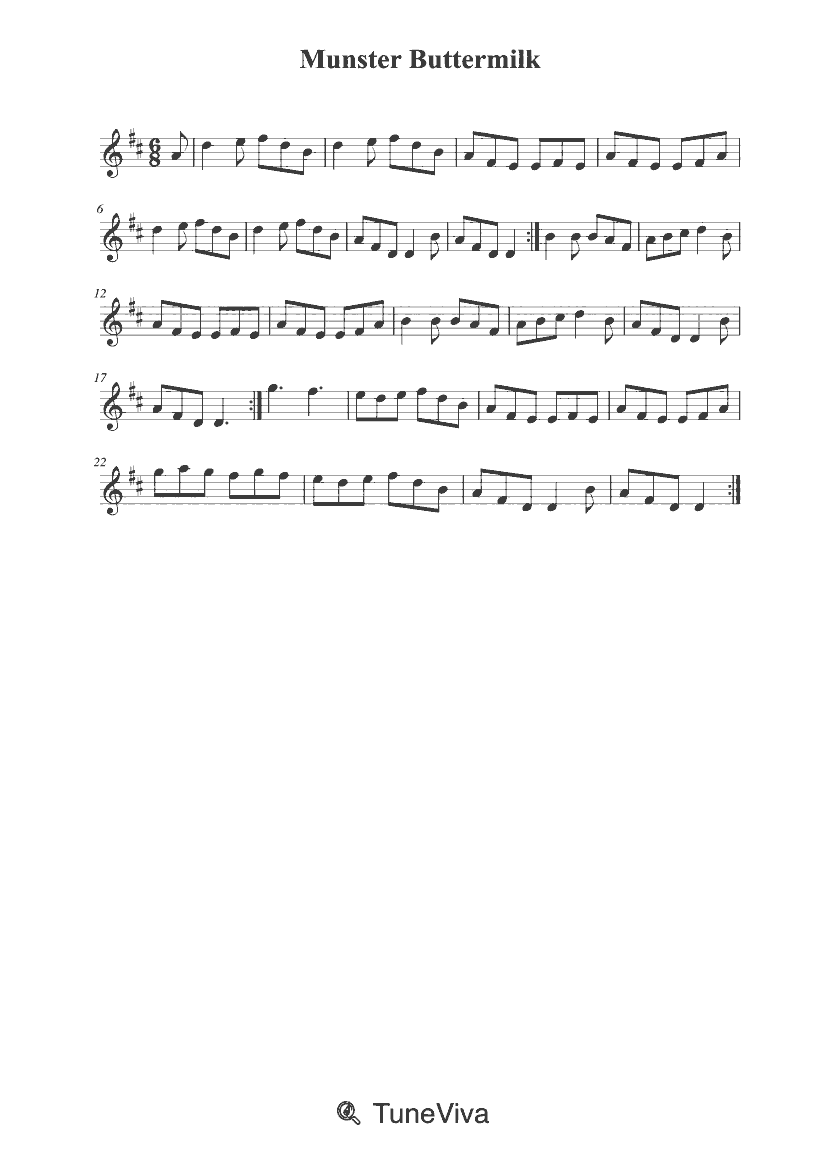
Misc tunes
54 sec · Score #193932
Open score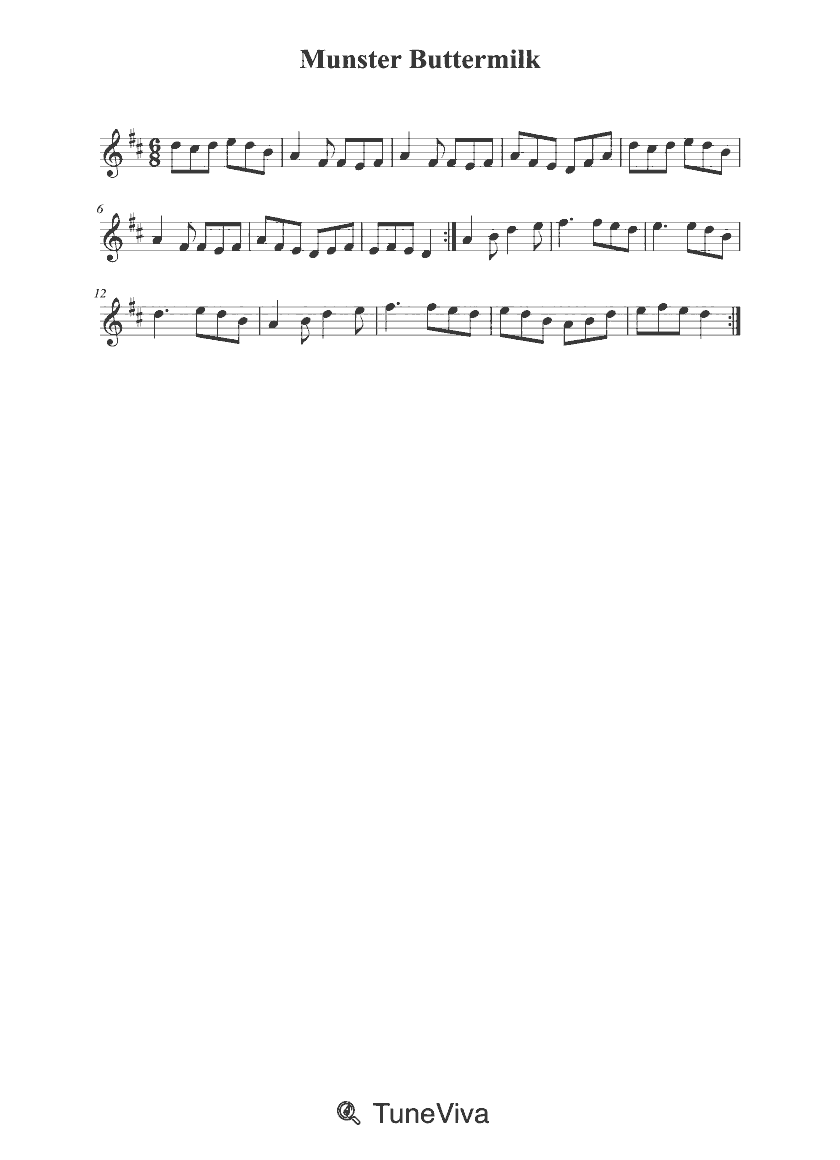
Misc tunes
29 sec
Open score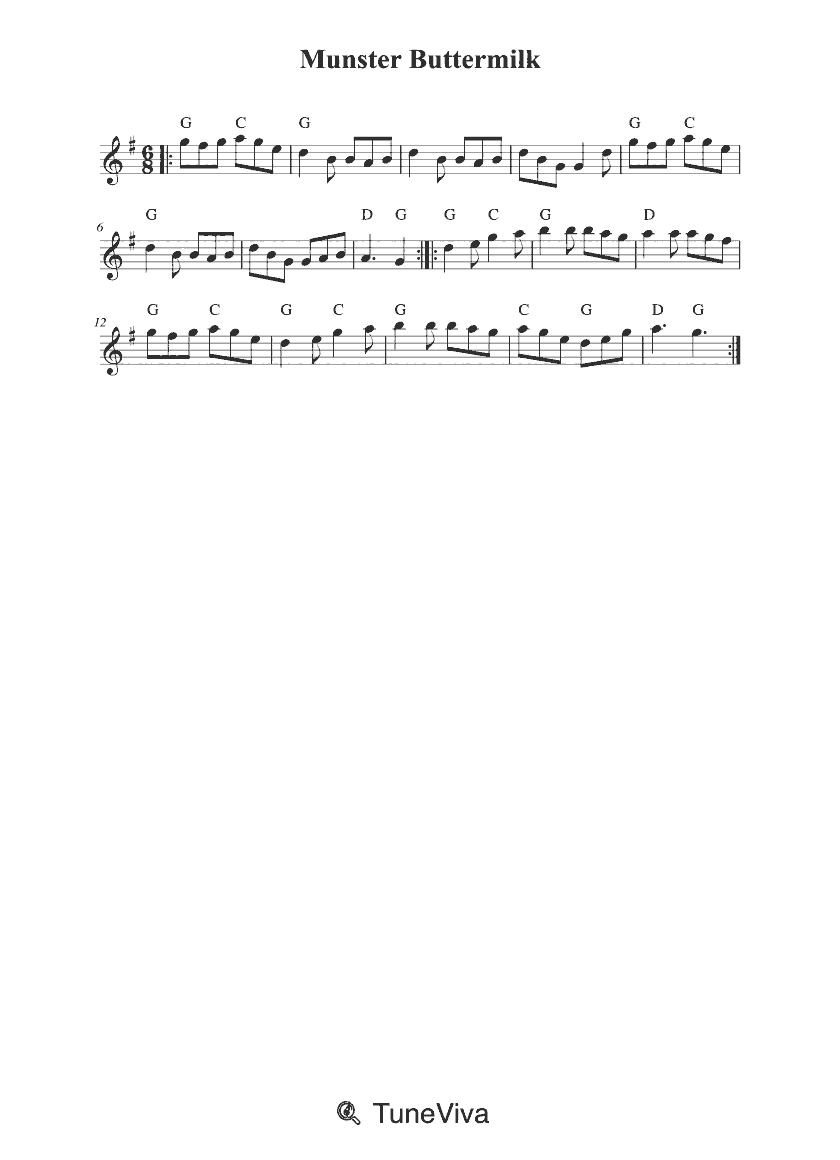
Misc tunes
24 sec · Score #217150
Open score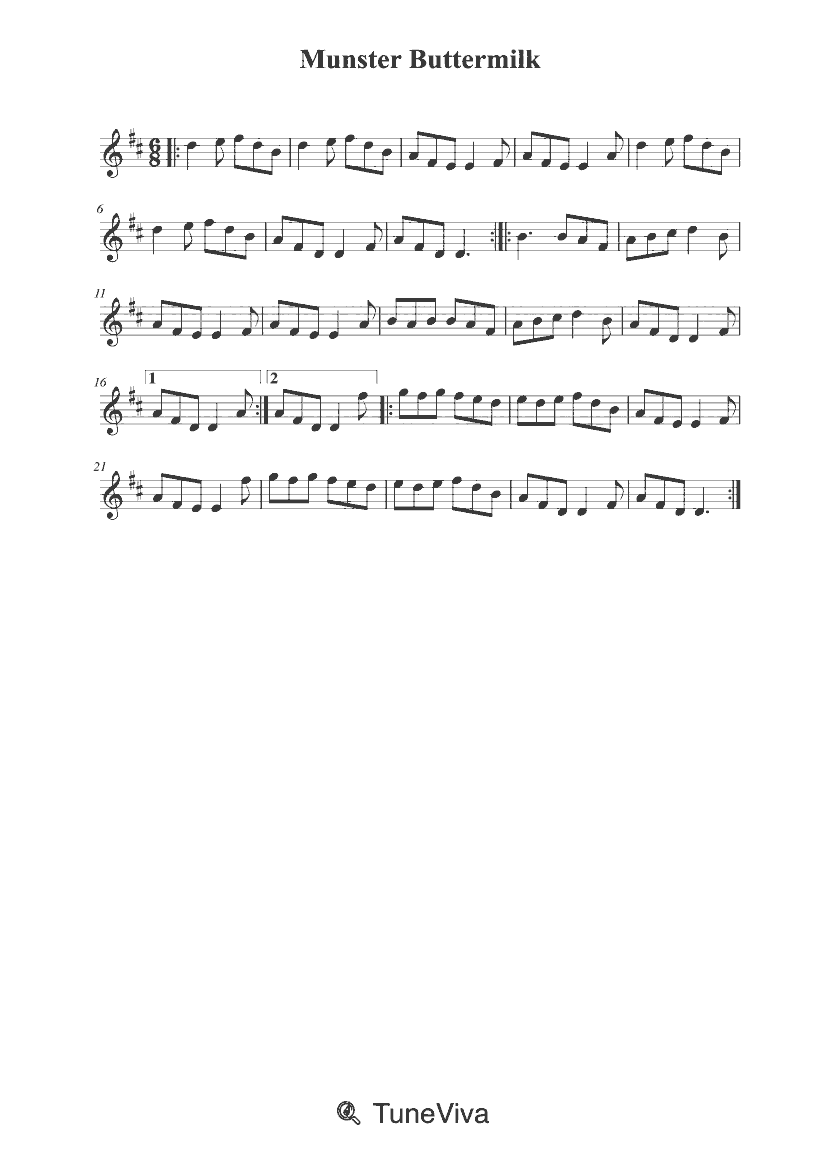
Misc tunes
36 sec · Score #10004
Open score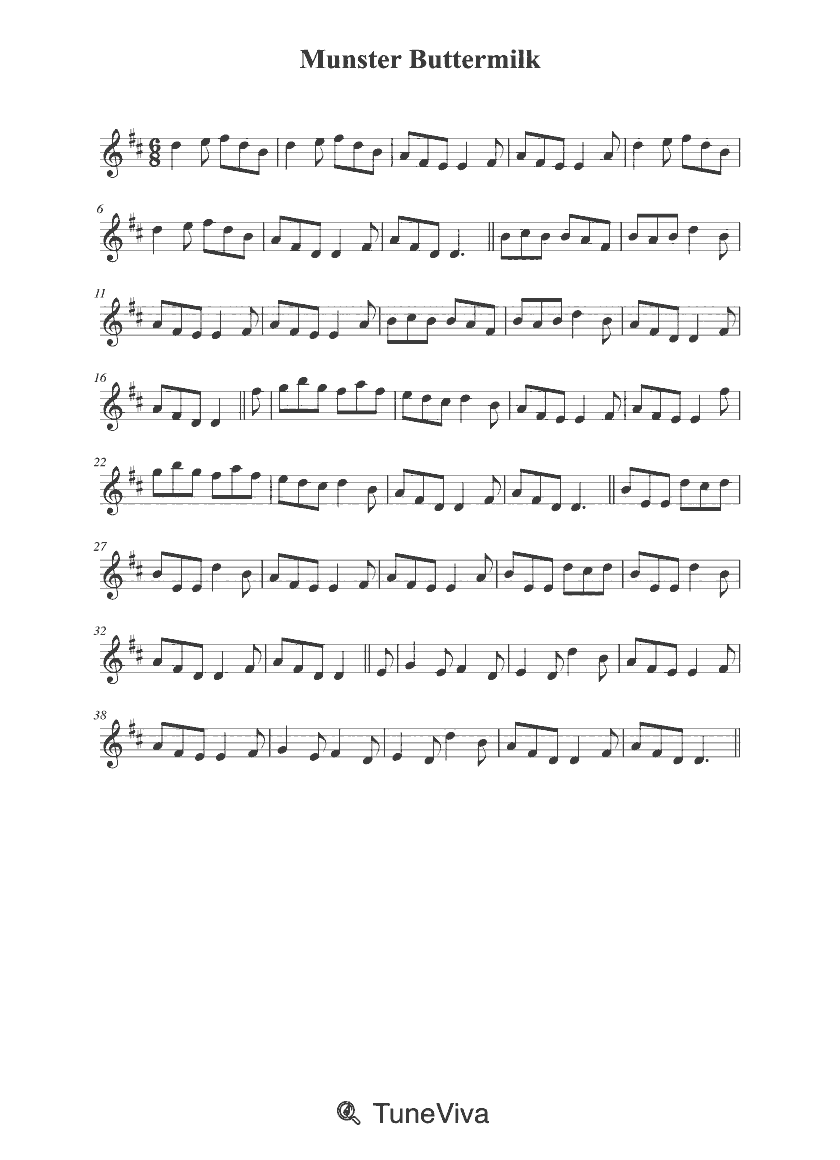
Misc tunes
Behind the HaystackBhl\'athach Mhuimhneach
30 sec
Open score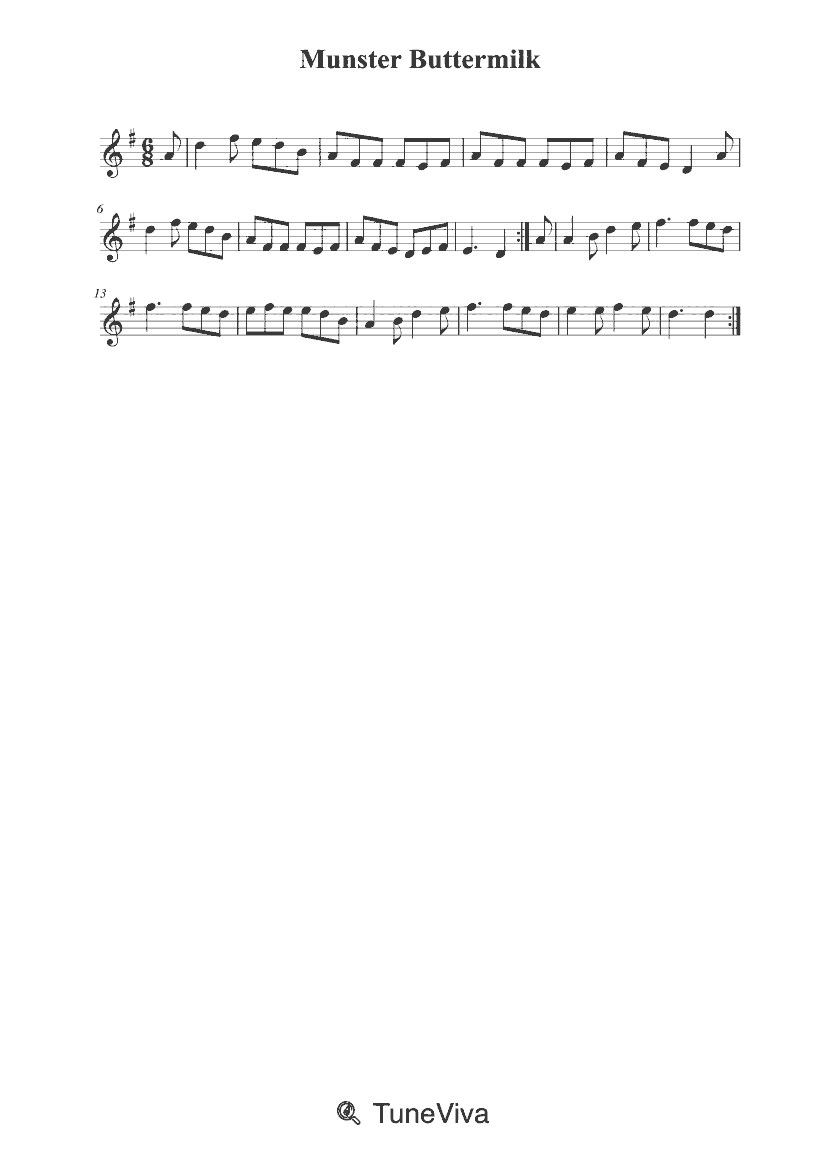
Misc tunes
30 sec
Open score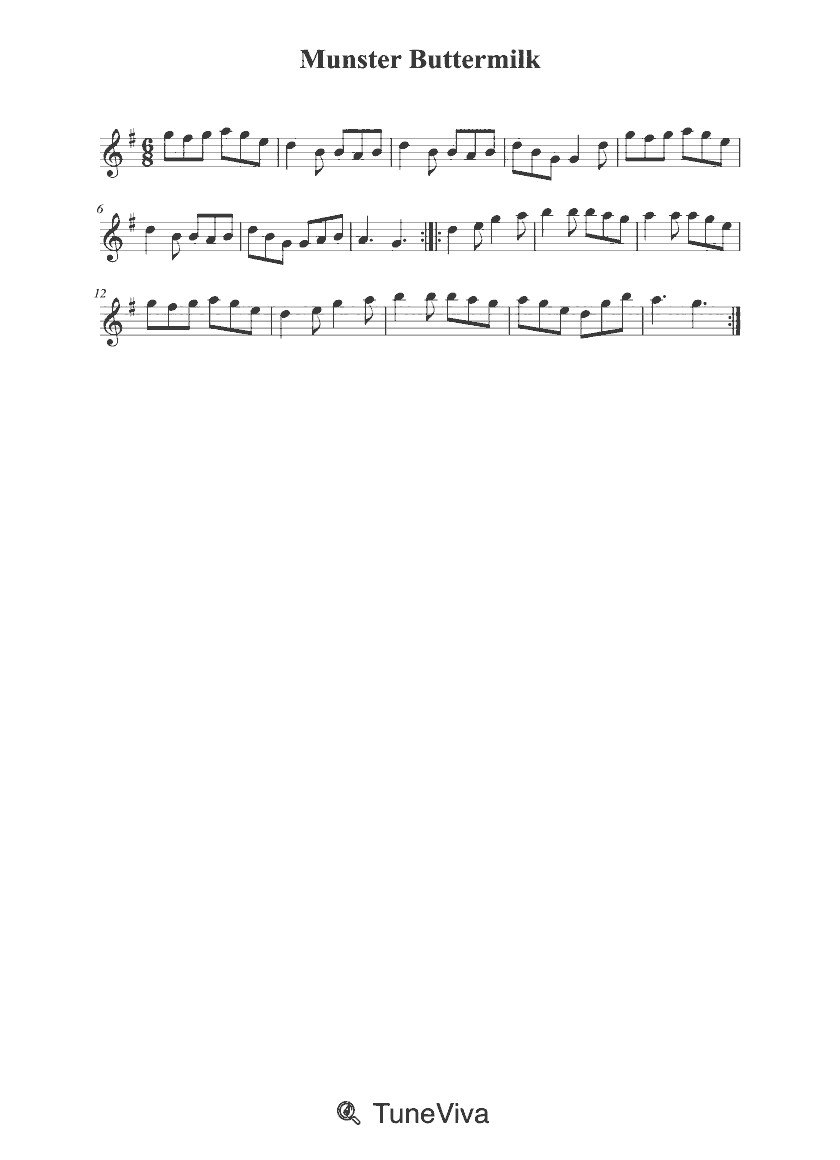
Misc tunes
24 sec · Score #50910
Open score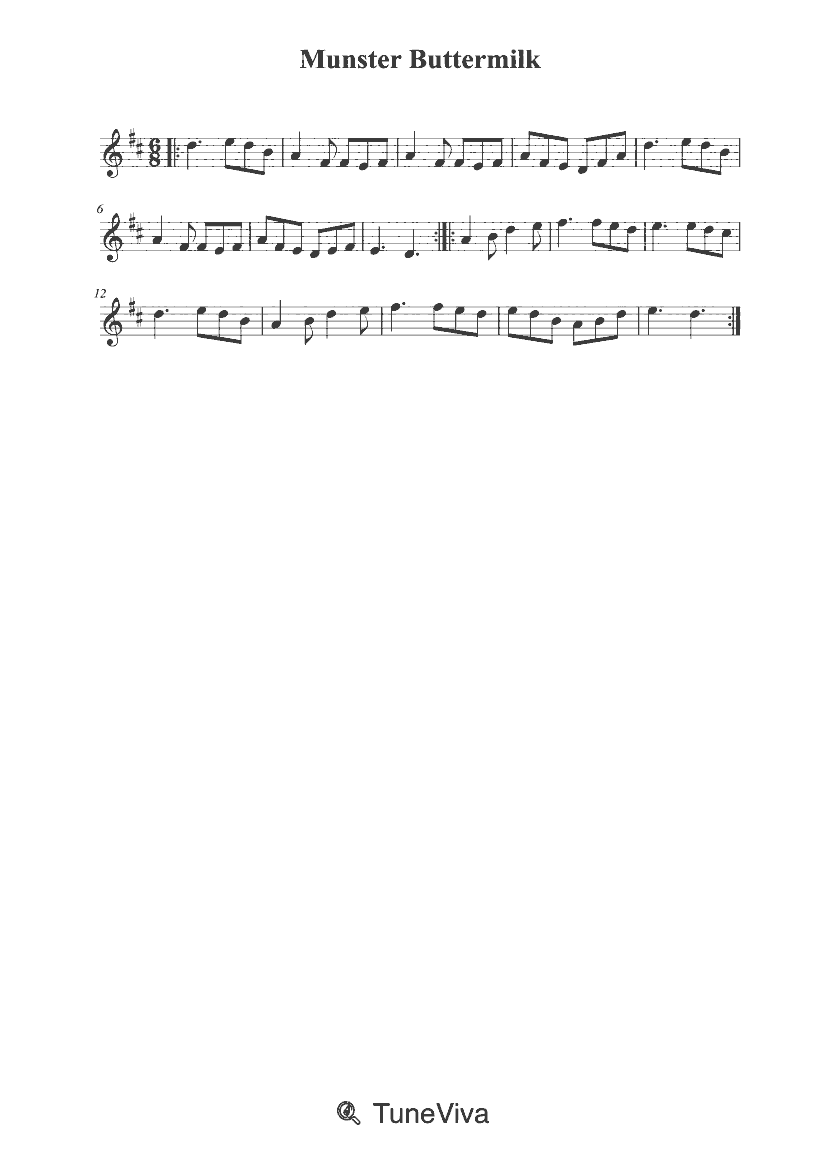
Misc tunes
24 sec · Score #54010
Open score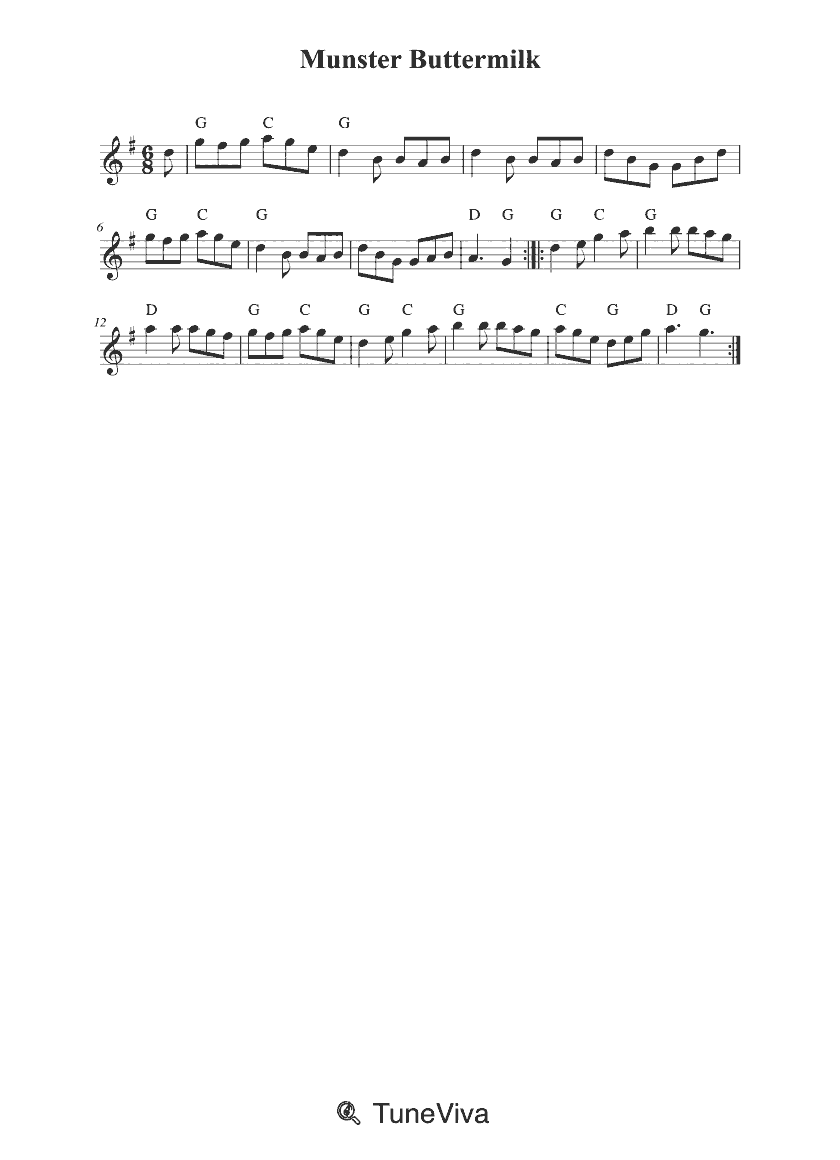
J-14
24 sec
Open score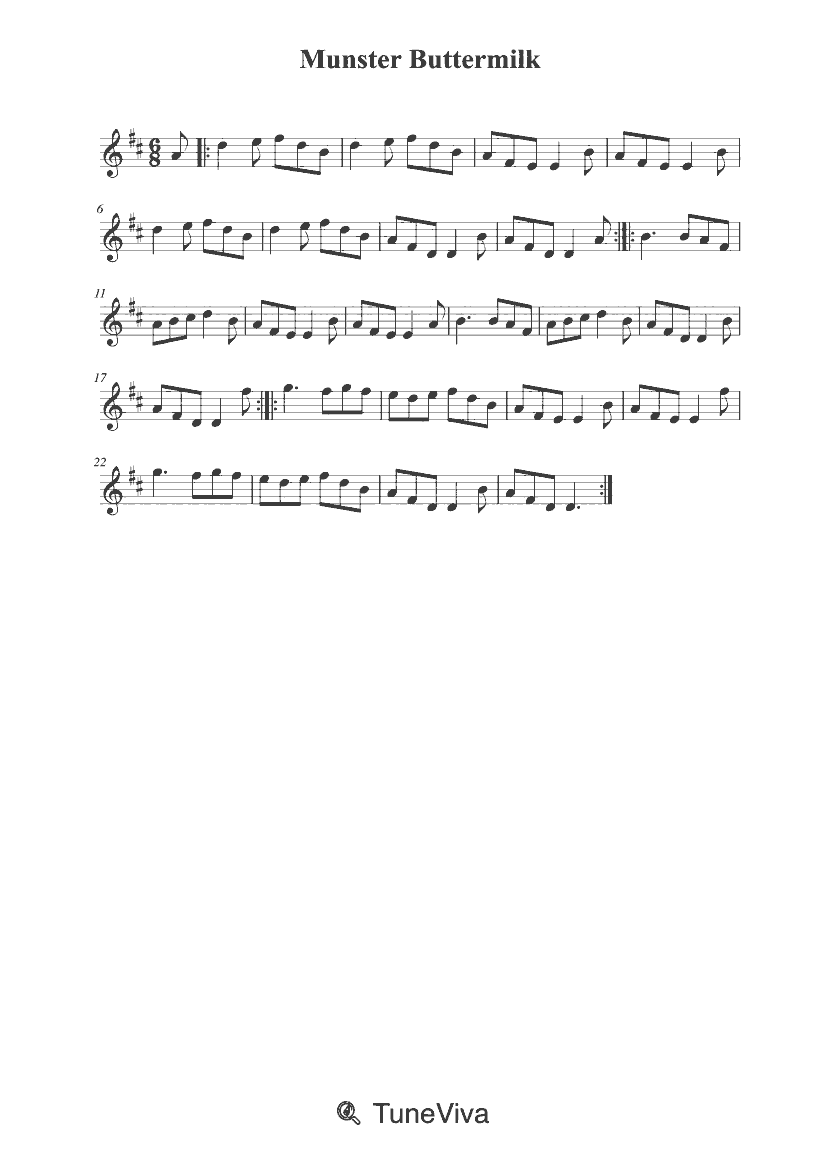
Misc tunes
Behind the Haystack
36 sec
Open score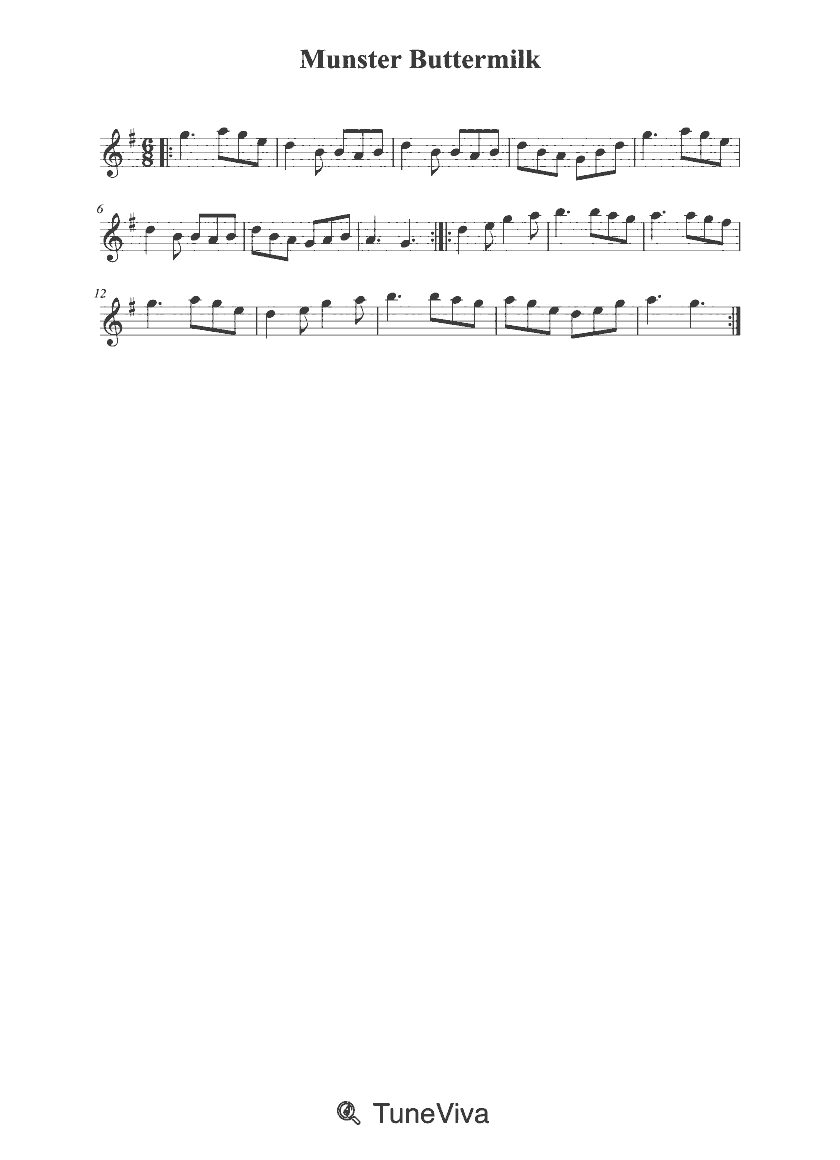
Misc tunes
24 sec · Score #79502
Open score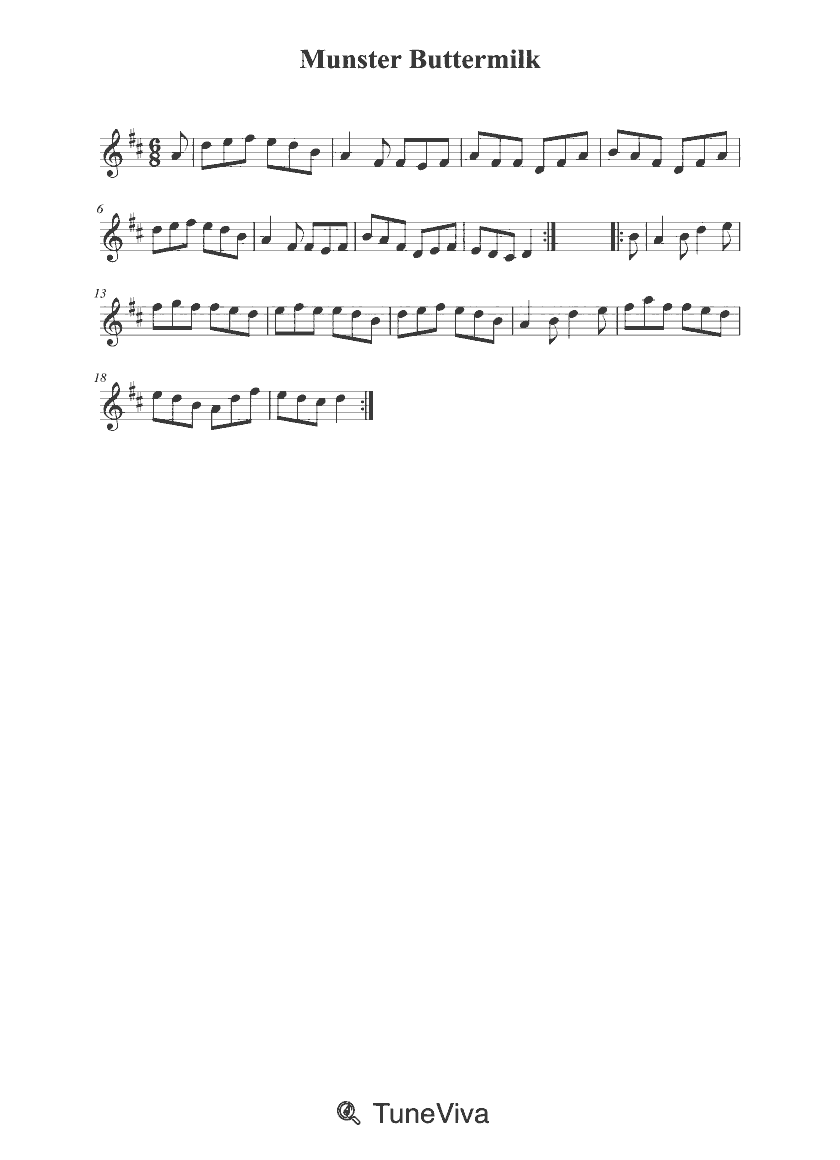
Misc tunes
25 sec
Open score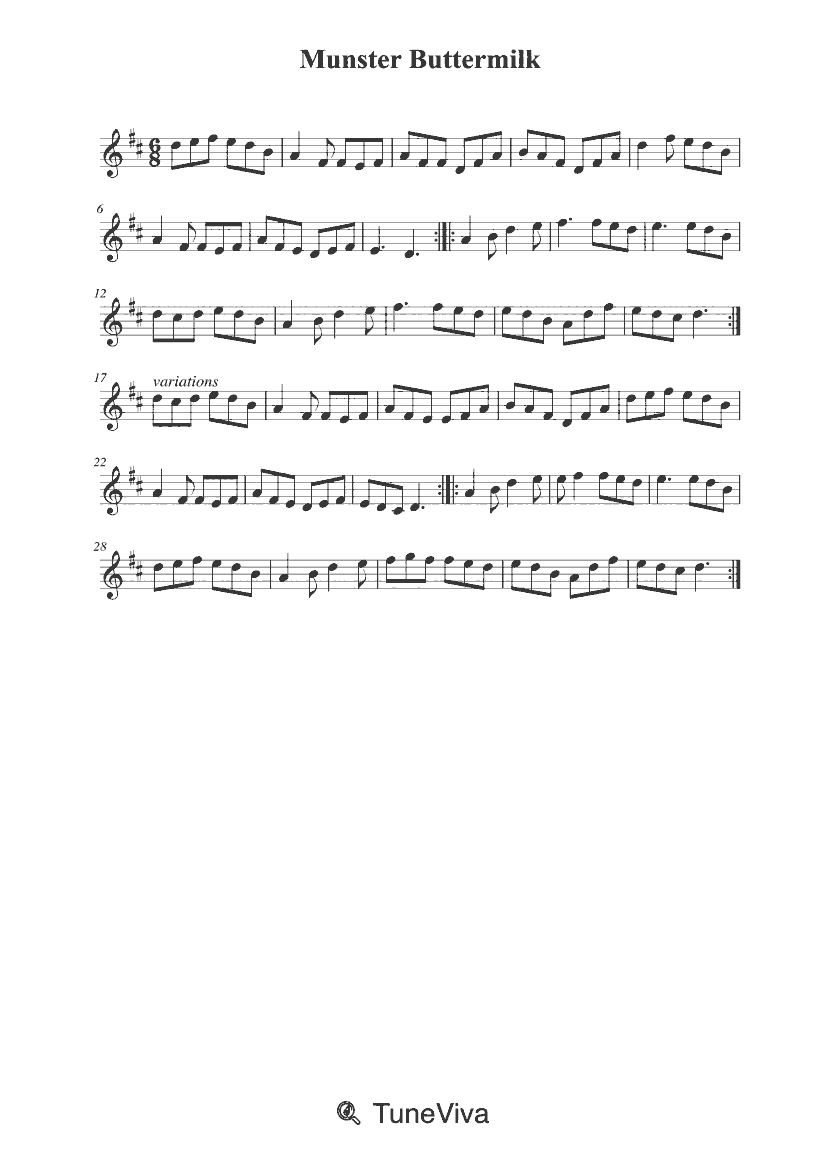
Misc tunes
54 sec · Score #134501
Open score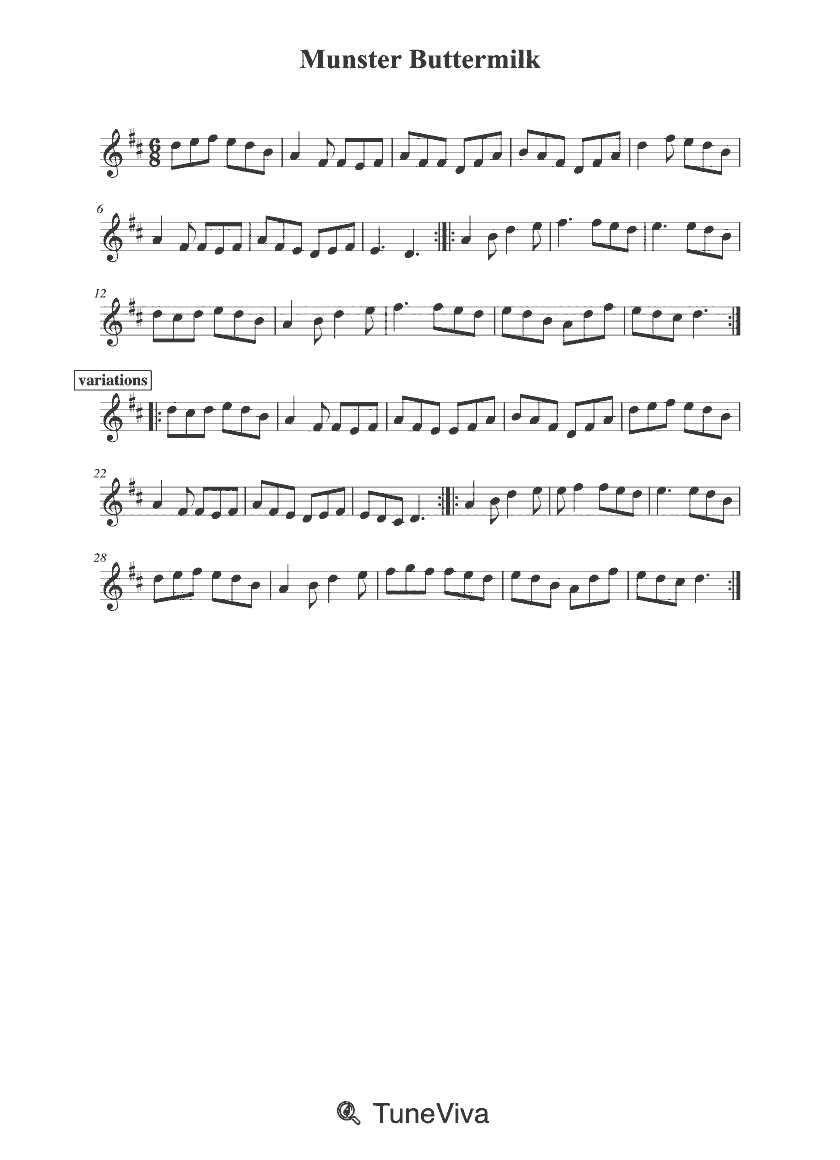
Misc tunes
48 sec
Open score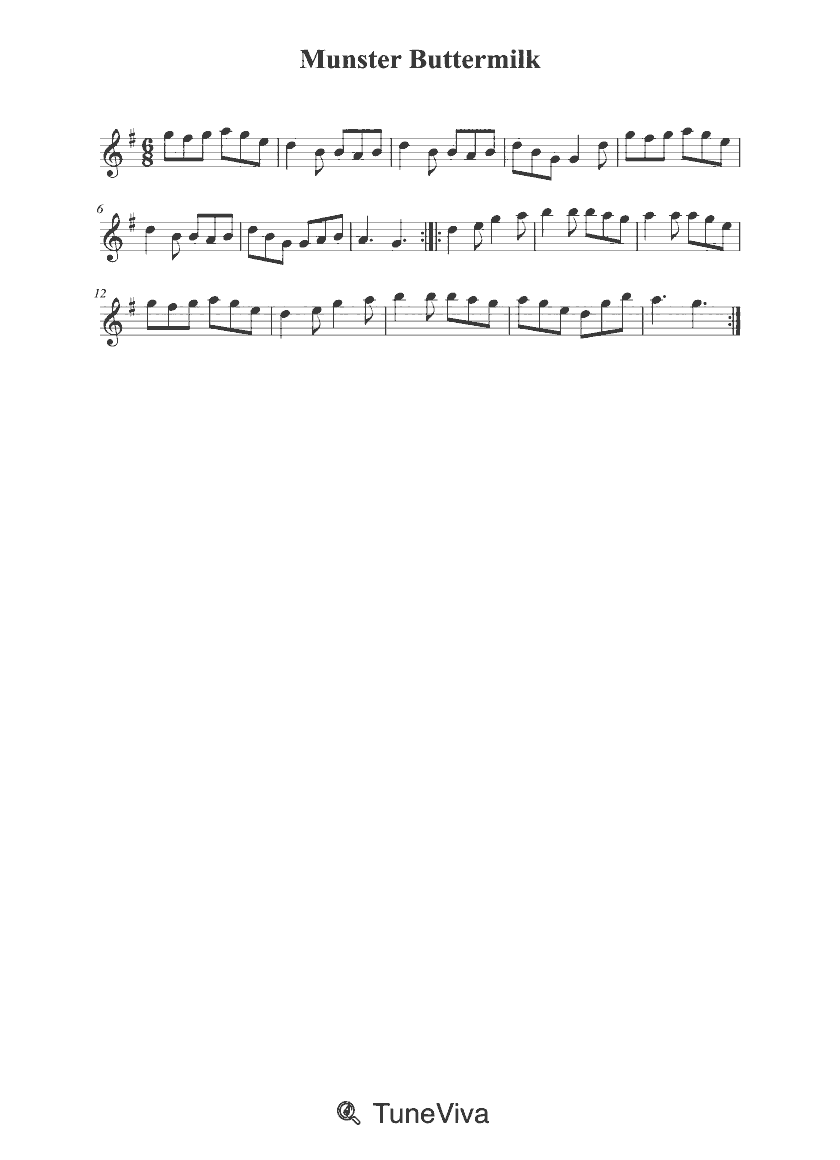
Misc tunes
24 sec · Score #245304
Open score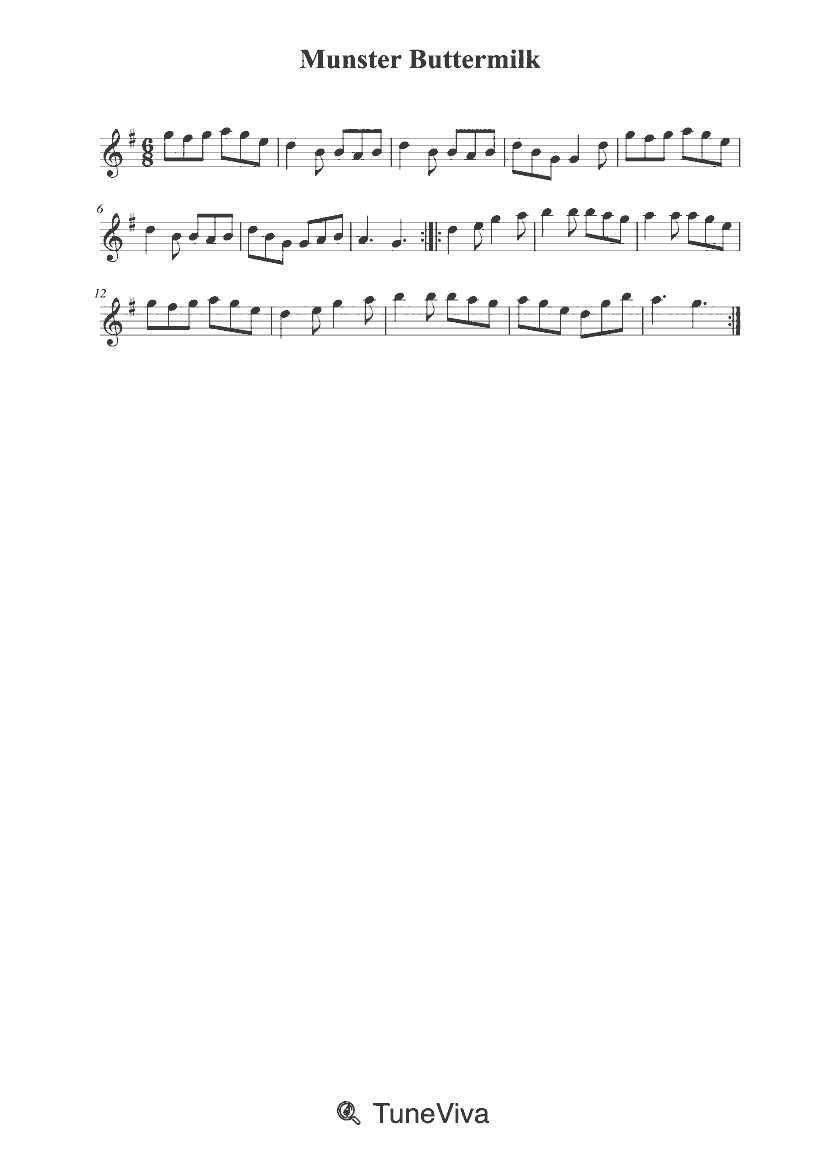
Misc tunes
24 sec · Score #48806
Open scorePage 1 of 2
The Munster Buttermilk scores shown here are notated in 6/8 and open in either G major or D major. The composer field does not identify an individual, and the scores are credited to “Misc tunes.” These details describe the individual settings listed; they do not establish a definitive key, composer, or original form for the tune.
The G major and D major versions place Munster Buttermilk at different pitches. Choose the key that fits your instrument’s range and matches the pitch used by other players if you are playing together. Because instrumentation and difficulty are not specified in the available information, compare the opening notes and overall range in each score before deciding.
All the available Munster Buttermilk scores use a 6/8 time signature. In common practice, 6/8 is felt as two main beats, each divided into three eighth notes. That compound-duple feel affects phrasing and accent, so read the beaming and groupings in the specific score rather than treating every eighth note with equal stress.
The available information does not identify a composer, arranger, genre, or instrumentation for Munster Buttermilk, and it does not explain whether the G major and D major scores are transpositions, separate settings, or unrelated arrangements. Historical background and traditional status should be treated as unconfirmed on this page.
Catalogue duration 24 sec. Opening key signature: 1 sharp (G major). Opening time signature: 6/8.
Catalogue duration 36 sec. Opening key signature: 2 sharps (D major). Opening time signature: 6/8.
Catalogue duration 36 sec. Opening key signature: 2 sharps (D major). Opening time signature: 6/8.
The available score information does not name a composer for Munster Buttermilk; the settings shown are credited to “Misc tunes” rather than an individual. The page therefore cannot attribute the tune to a named composer from the evidence available.
Munster Buttermilk appears in more than one key in the available scores: one version opens in G major with one sharp, and other versions open in D major with two sharps. The key therefore depends on the version you choose, and the available information does not explain the reason for the different keys.
The available Munster Buttermilk scores are all notated in 6/8. A 6/8 time signature groups six eighth notes into two main beats in common practice, giving the music a compound-duple feel. Check the beaming and grouping in the version you use, since the information describes individual settings.
Choose the Munster Buttermilk version whose key fits your instrument’s range and the pitch used by other players. G major and D major place the tune at different pitches; because the available information does not specify instrumentation or difficulty, compare the opening notes and overall range in each score before deciding.
The available Munster Buttermilk scores are not confirmed as one shared arrangement. They share the 6/8 time signature but open in different keys, and the available information does not link them to a common published version or arranger.