My Darling Asleep
Misc Traditional
3 sec
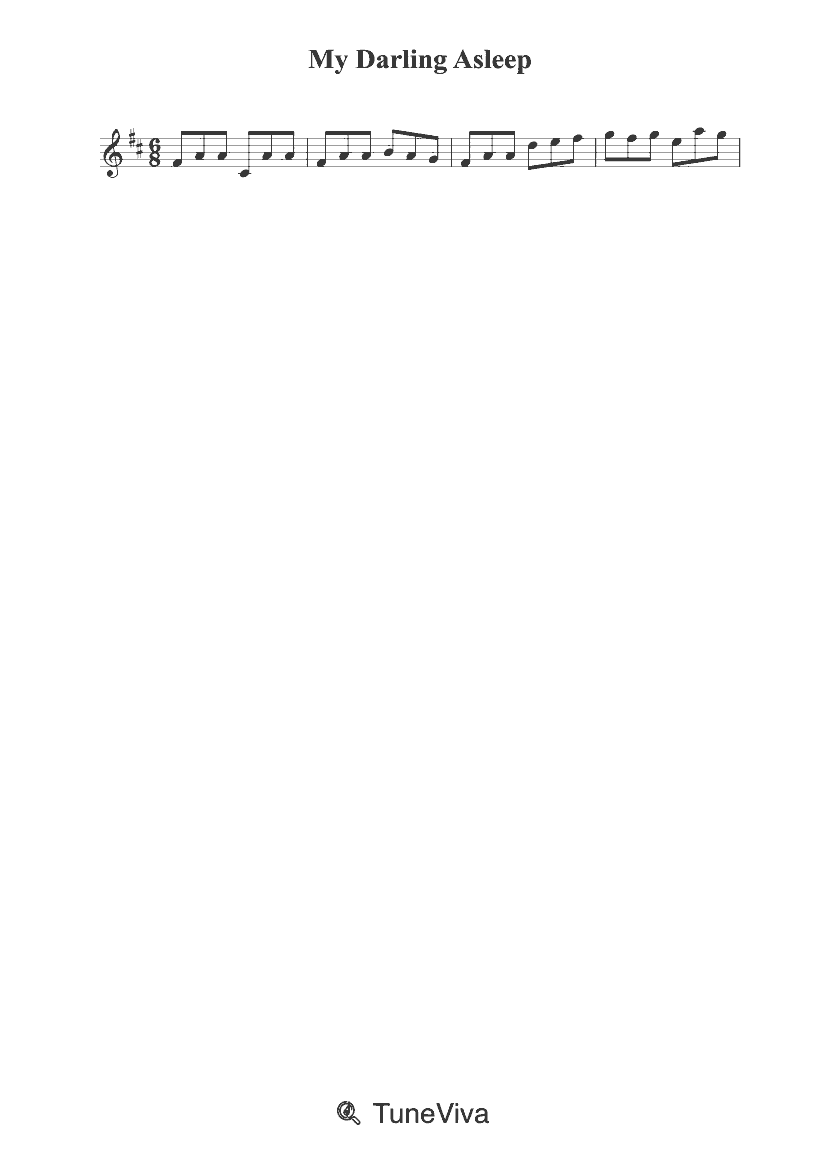
Open scoreMy Darling Asleep sheet music appears here under a traditional folk attribution. The available scores open in D major with a 6/8 time signature; no composer or instrumentation is named in the listings, so compare the actual notation before choosing a version.
Scores 1–20 of 22
Misc Traditional
3 sec
Open score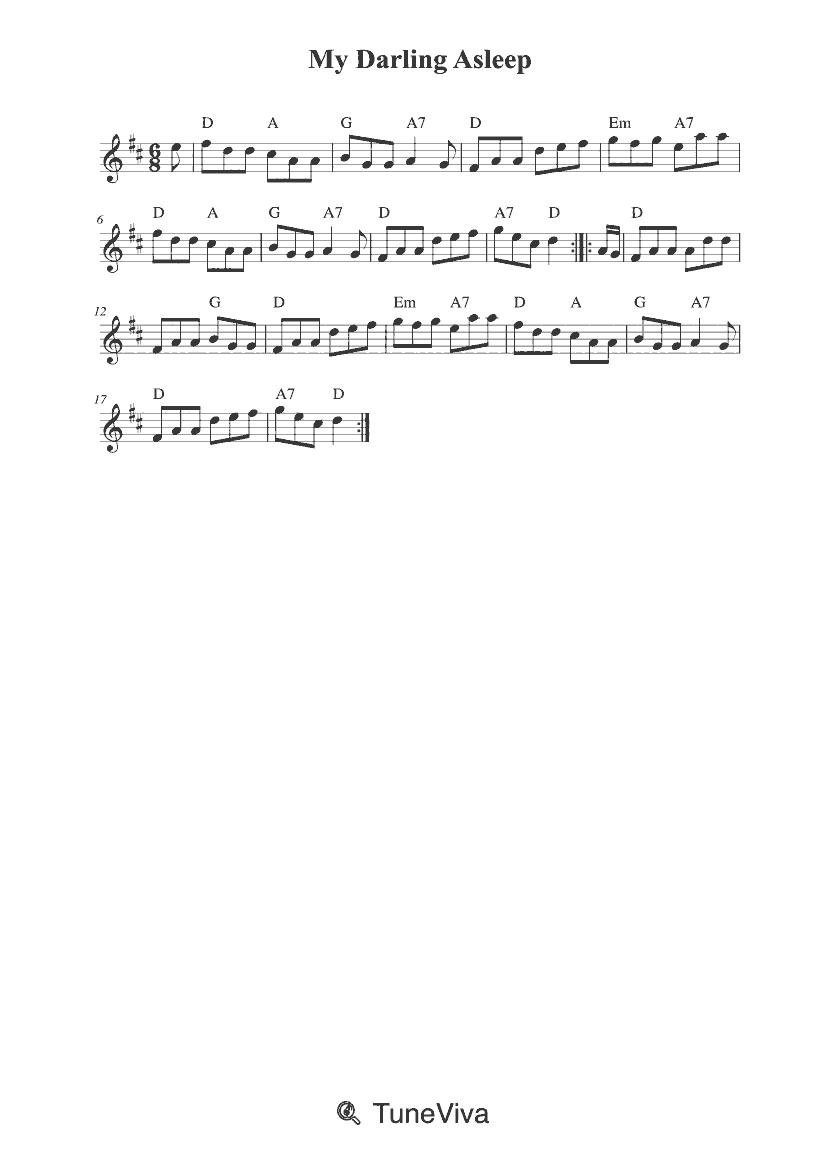
Misc Traditional
24 sec · Score #56451
Open score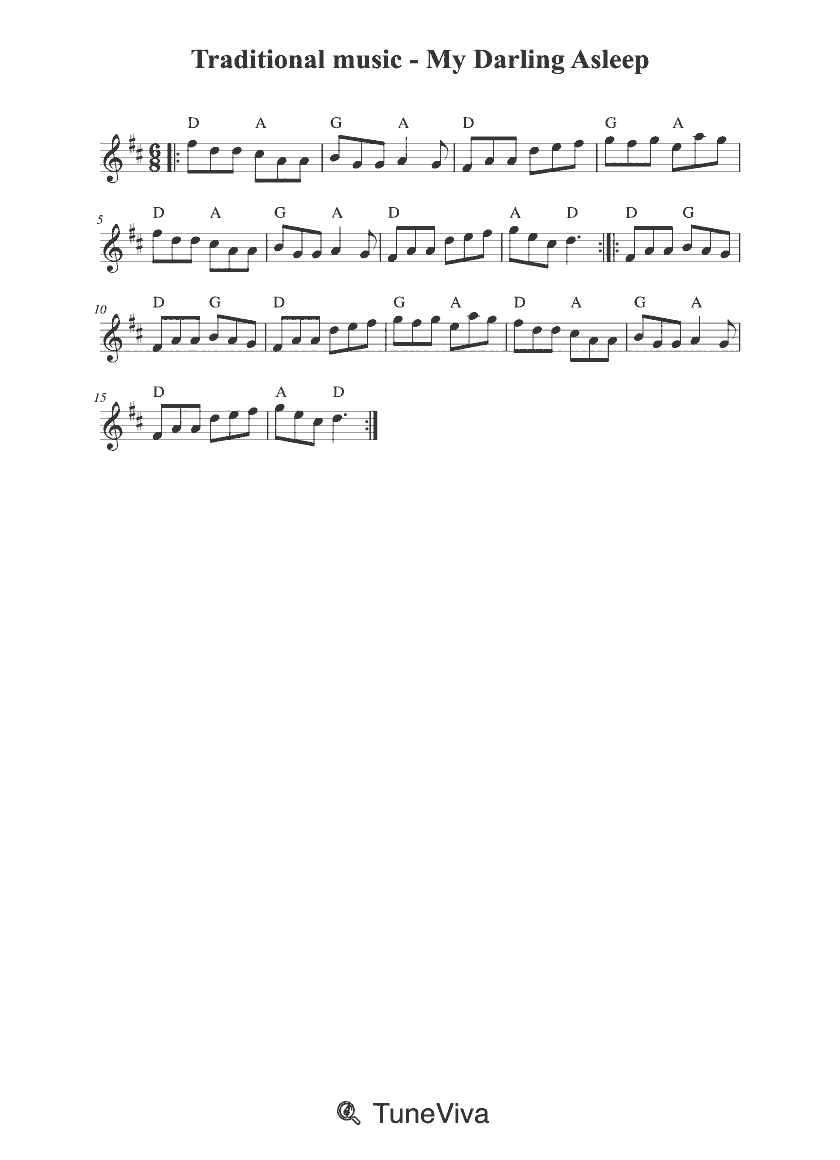
traditional
24 sec
Open score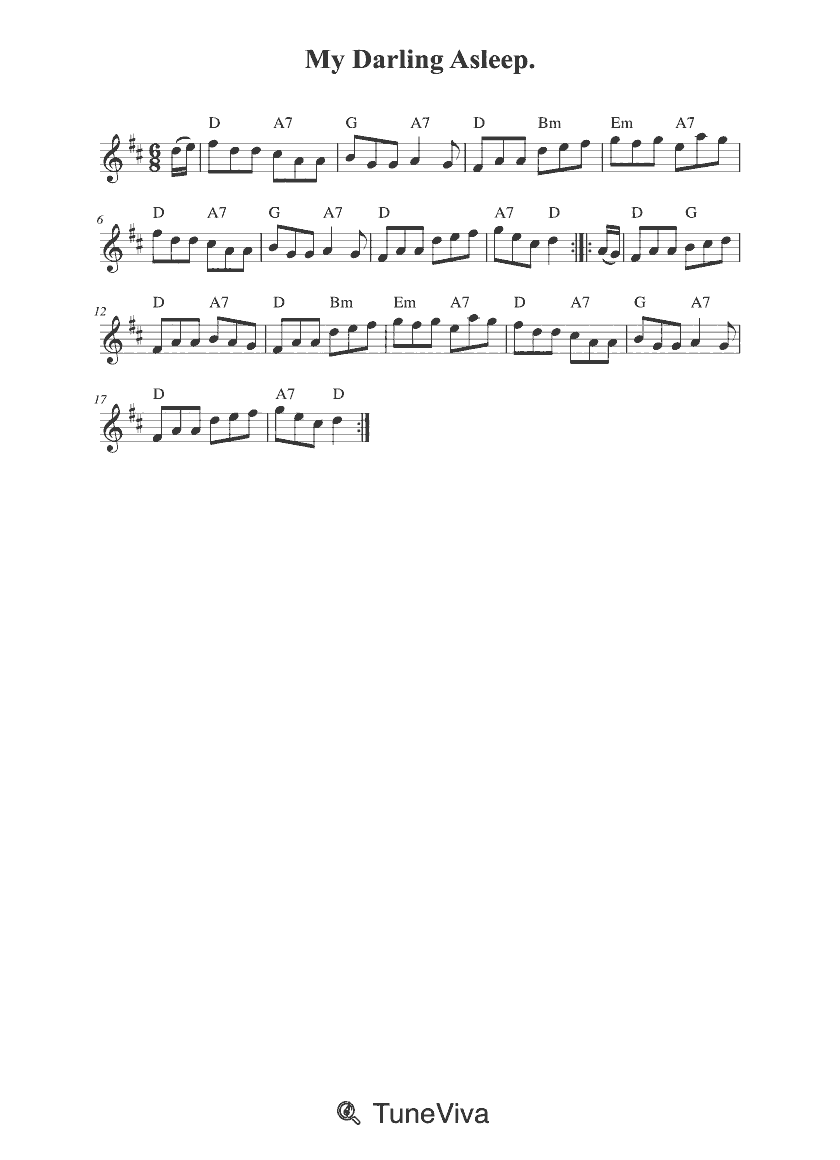
Misc Traditional
24 sec · Score #138173
Open score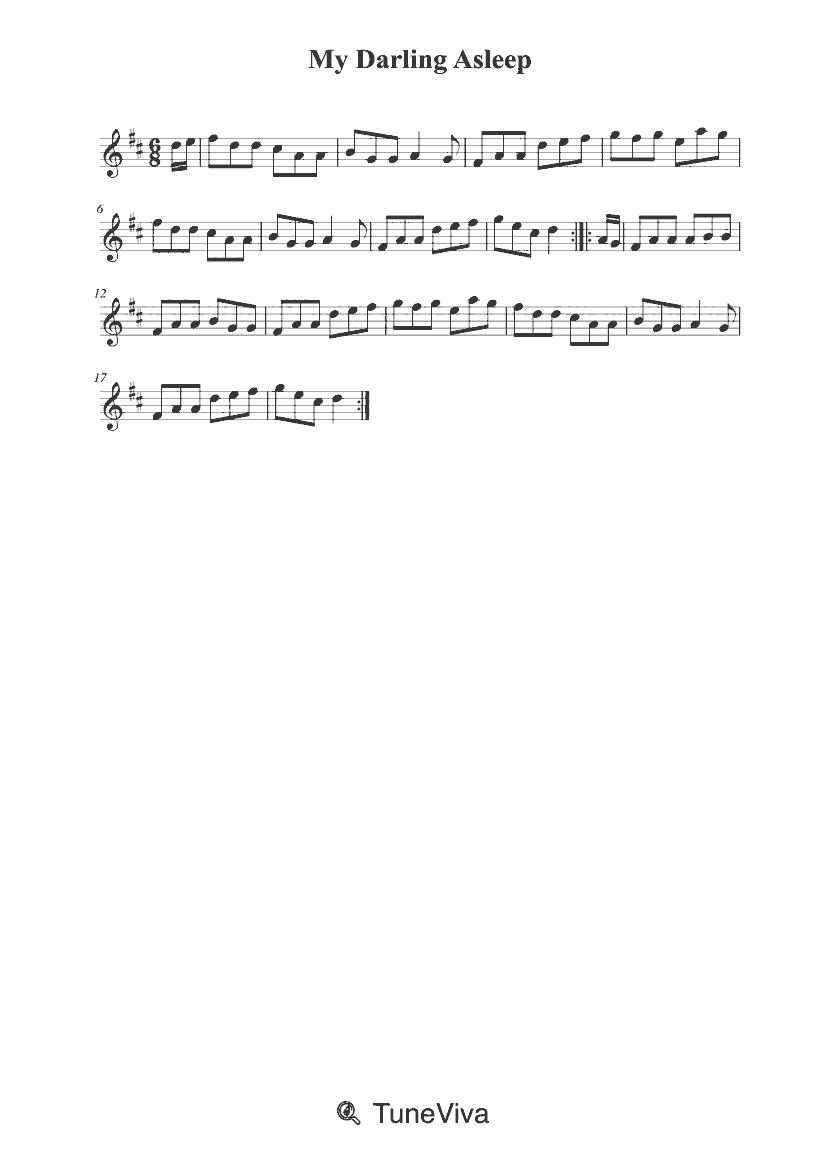
Misc Traditional
24 sec · Score #59886
Open score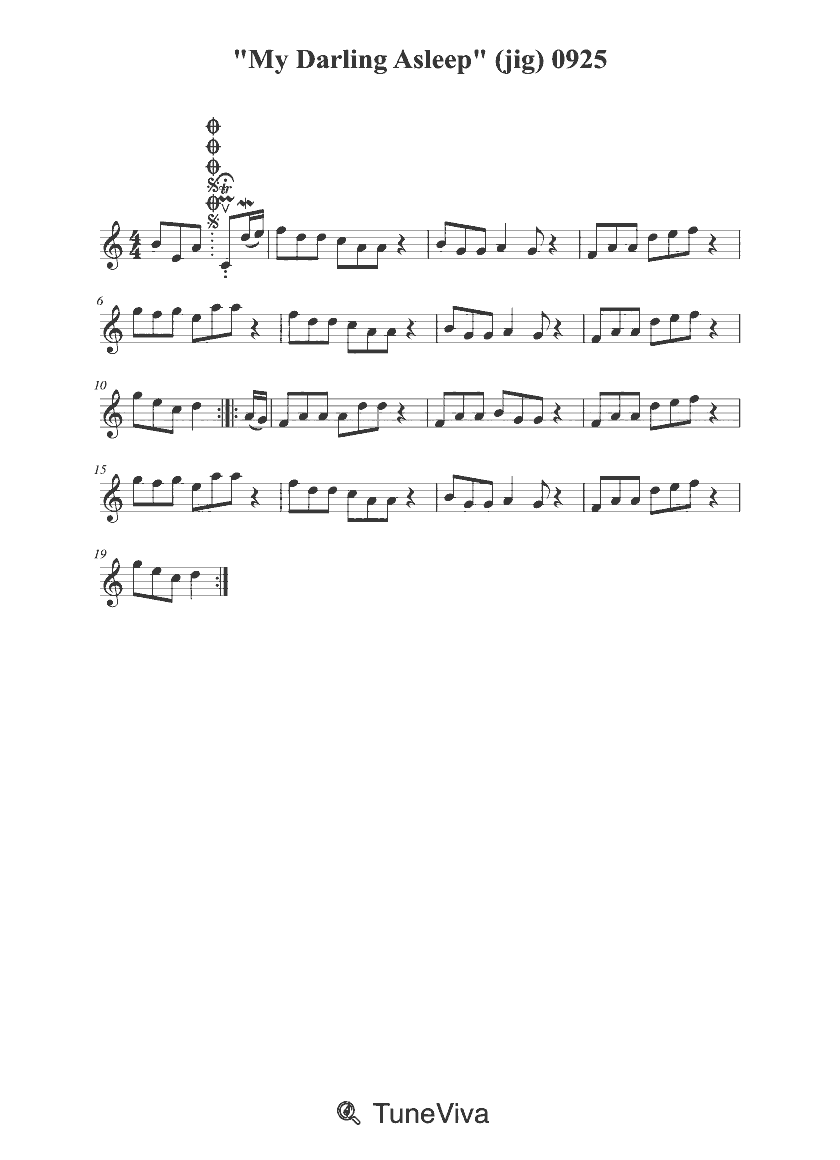
after Mr. Beamish
26 sec
Open score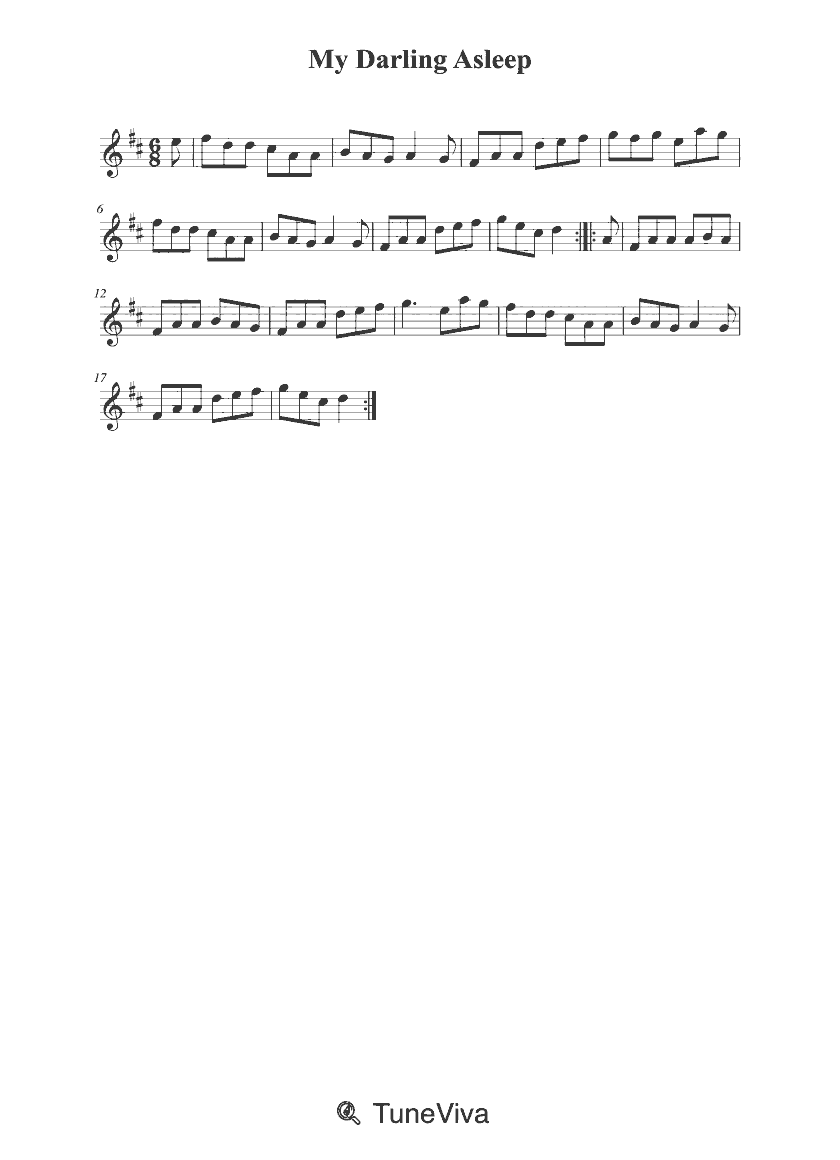
Misc Traditional
24 sec · Score #180796
Open score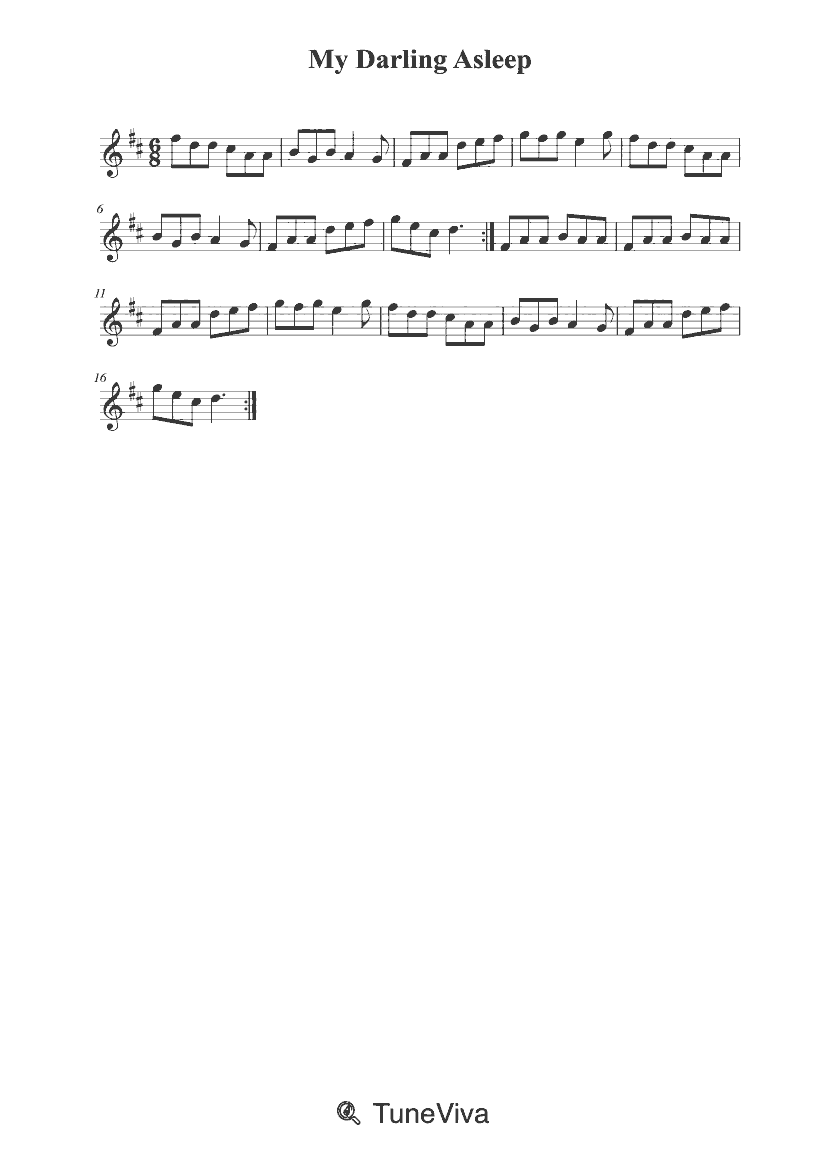
Misc Traditional
30 sec · Score #238999
Open score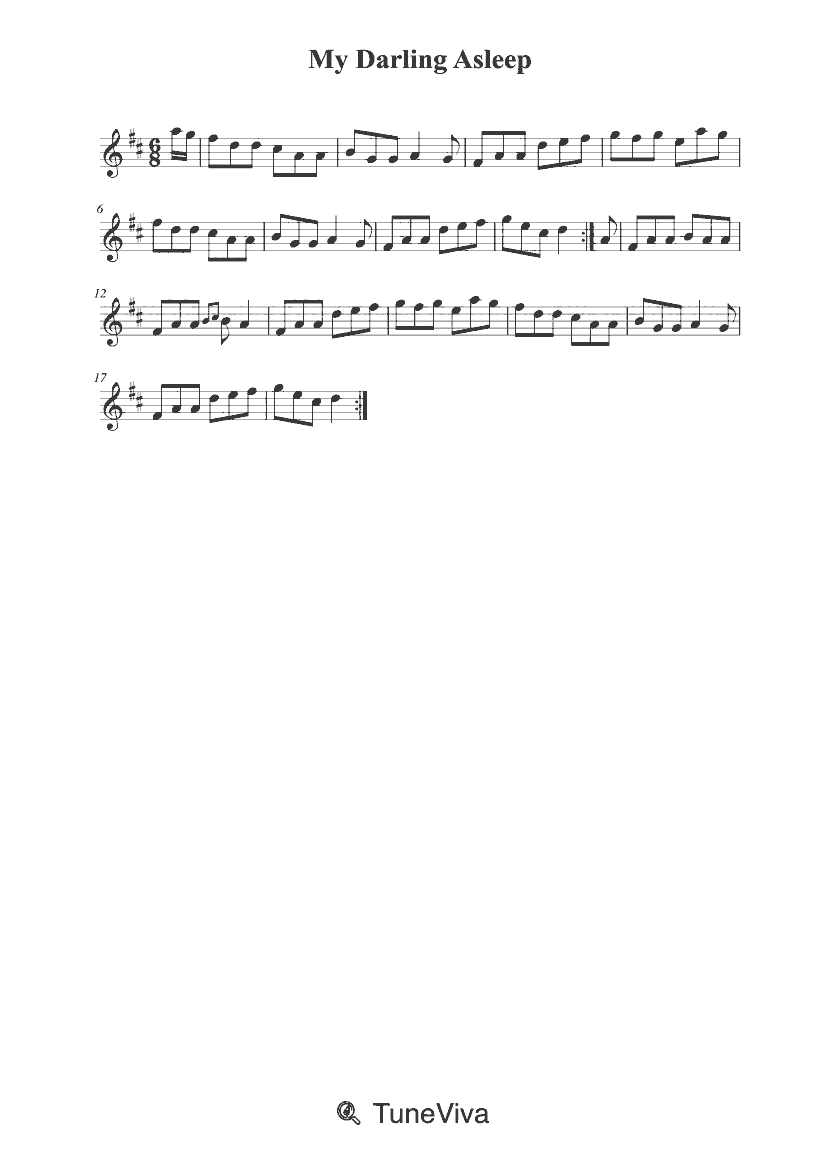
Joe Buchanan's Scottish Tome - Page 263.1
30 sec
Open score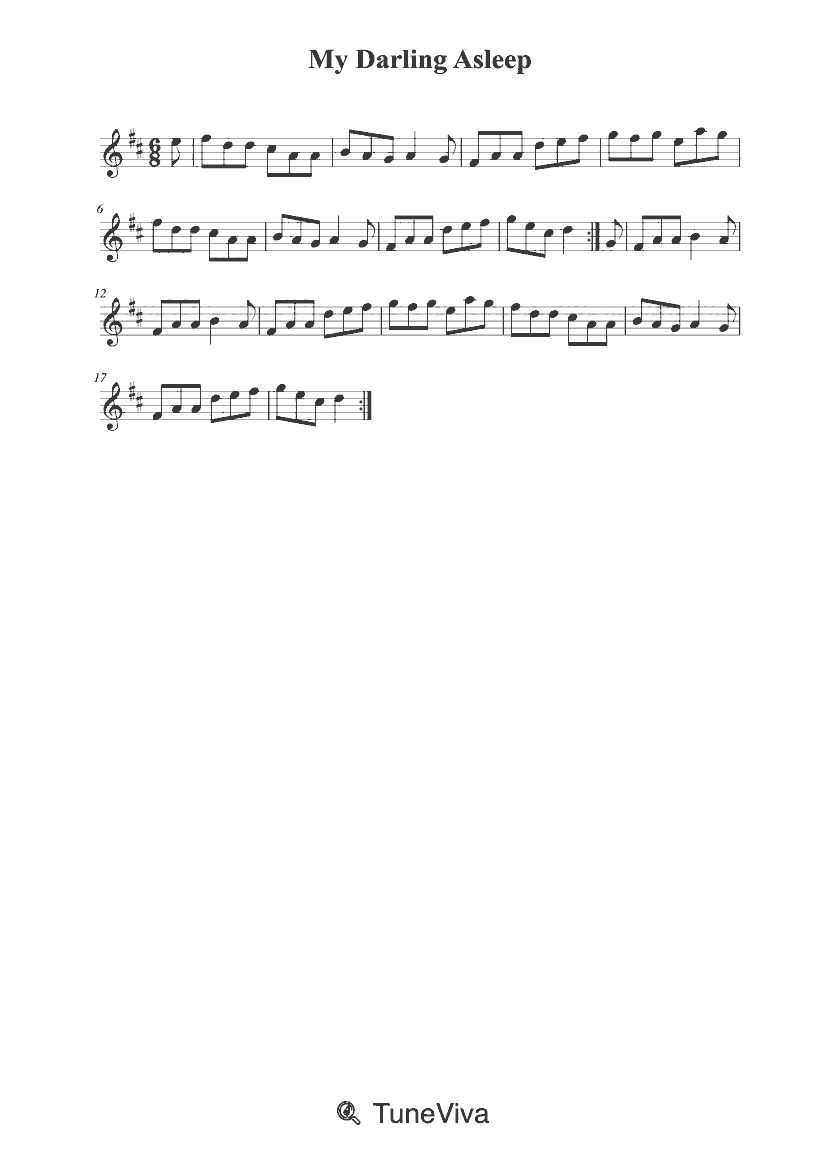
Misc Traditional
30 sec · Score #12185
Open score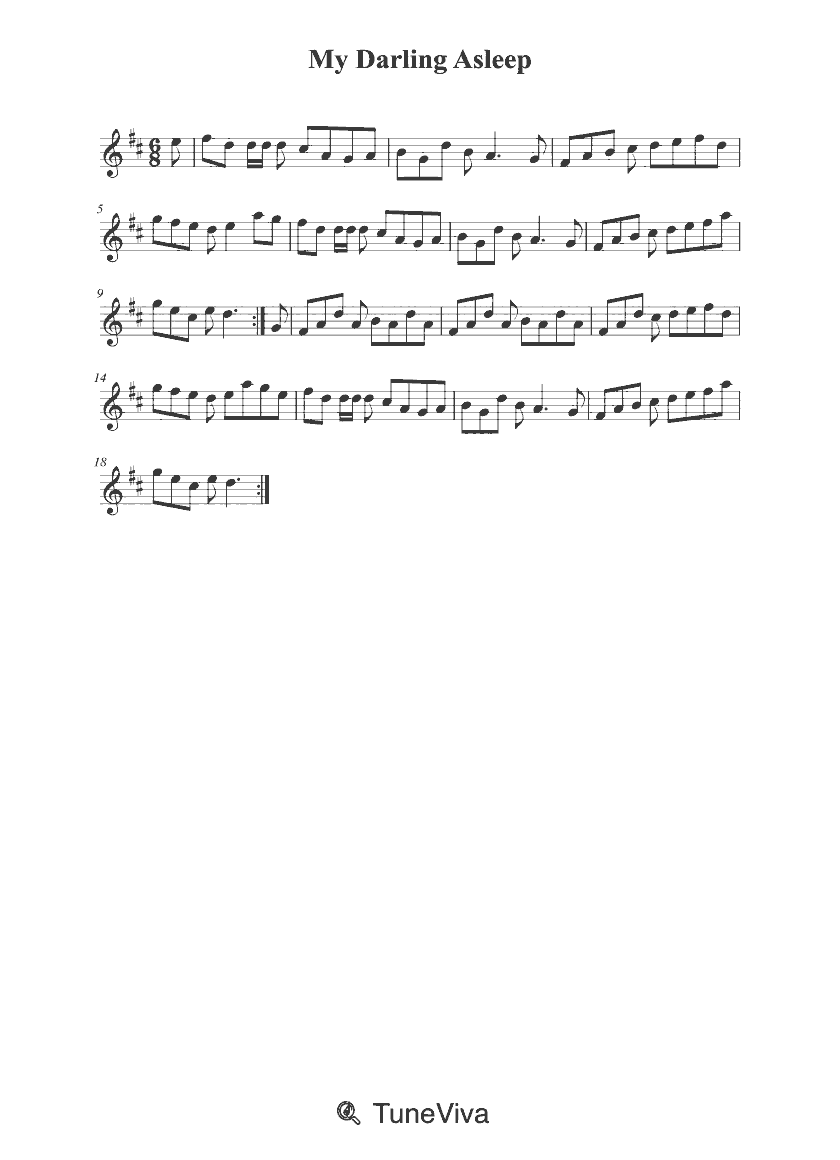
Misc Traditional
40 sec
Open score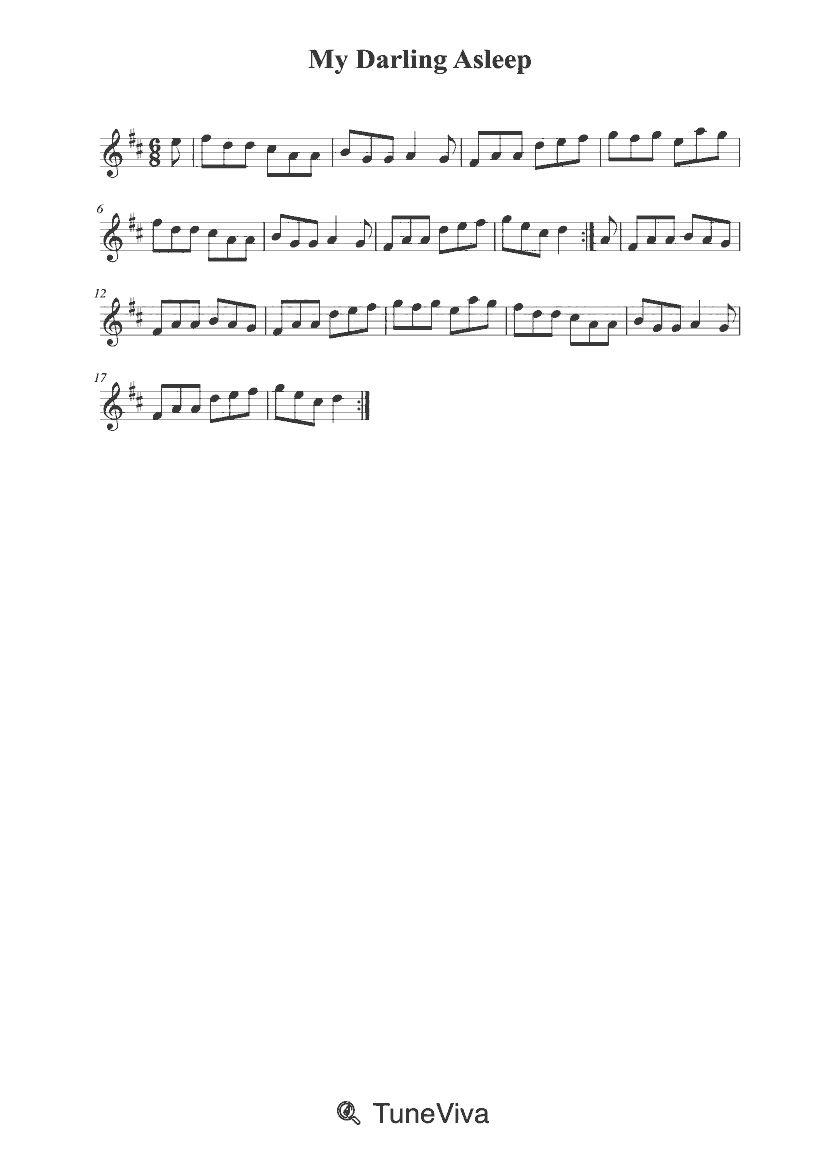
Misc Traditional
30 sec · Score #144907
Open score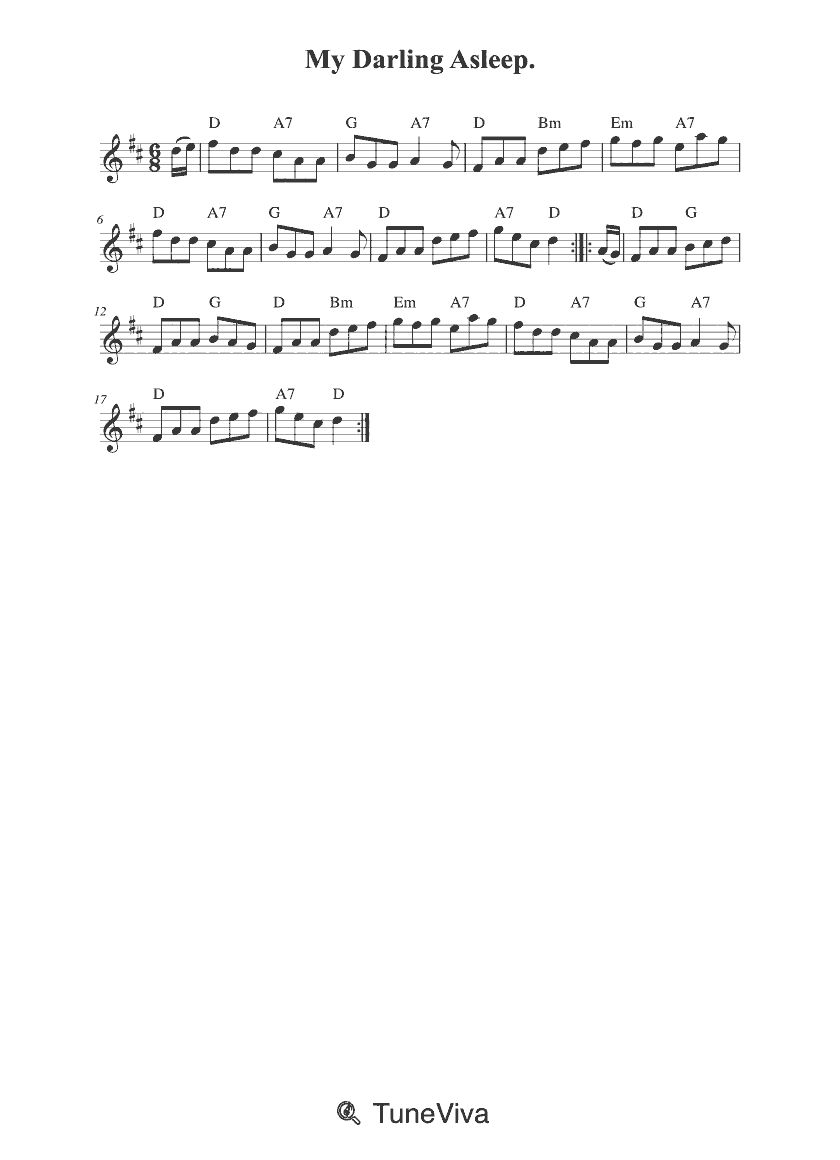
Misc Traditional
Haymaker's Jig
24 sec · Score #217324
Open score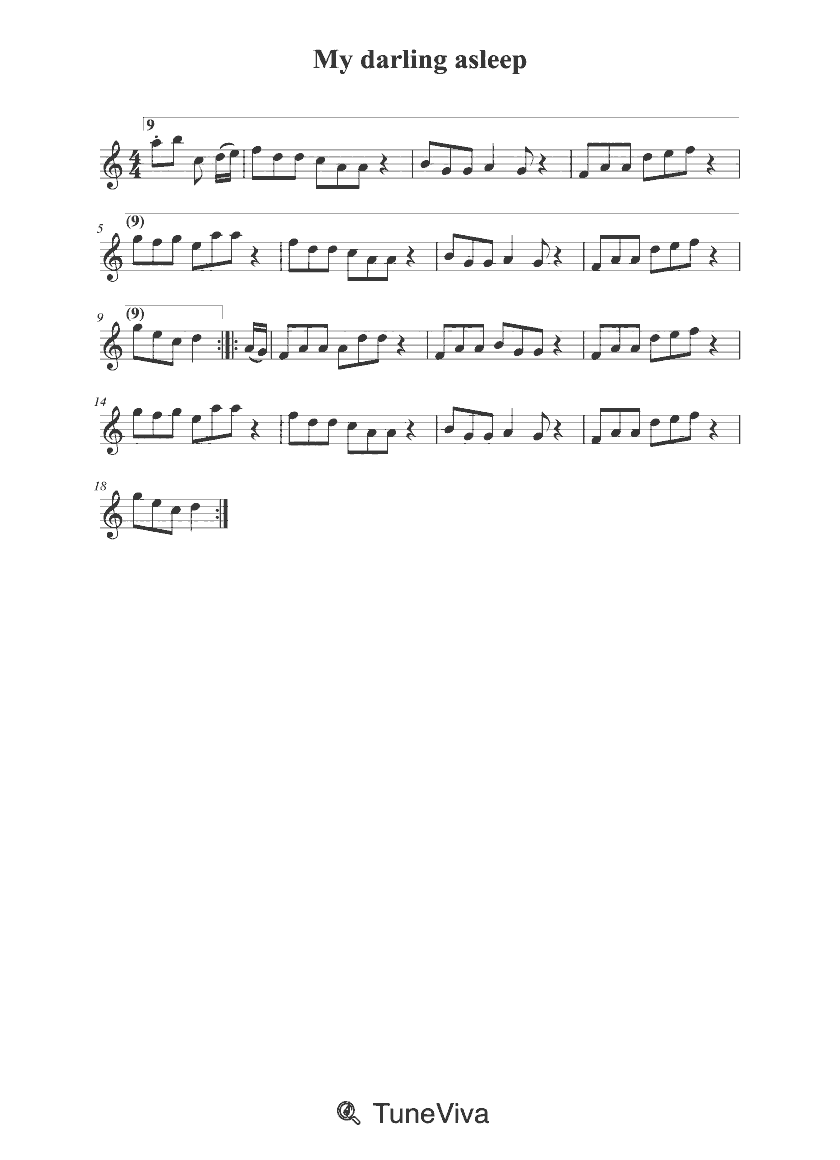
anon.
19 sec
Open score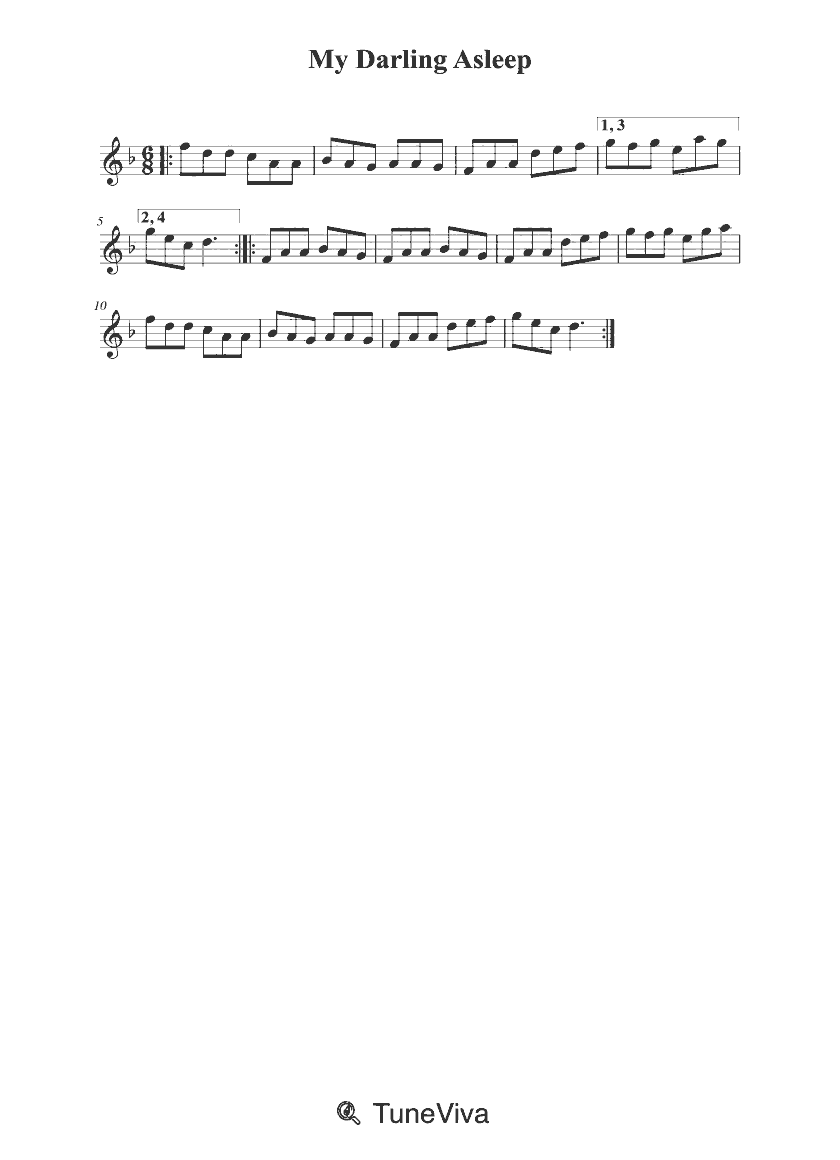
Misc Traditional
18 sec
Open score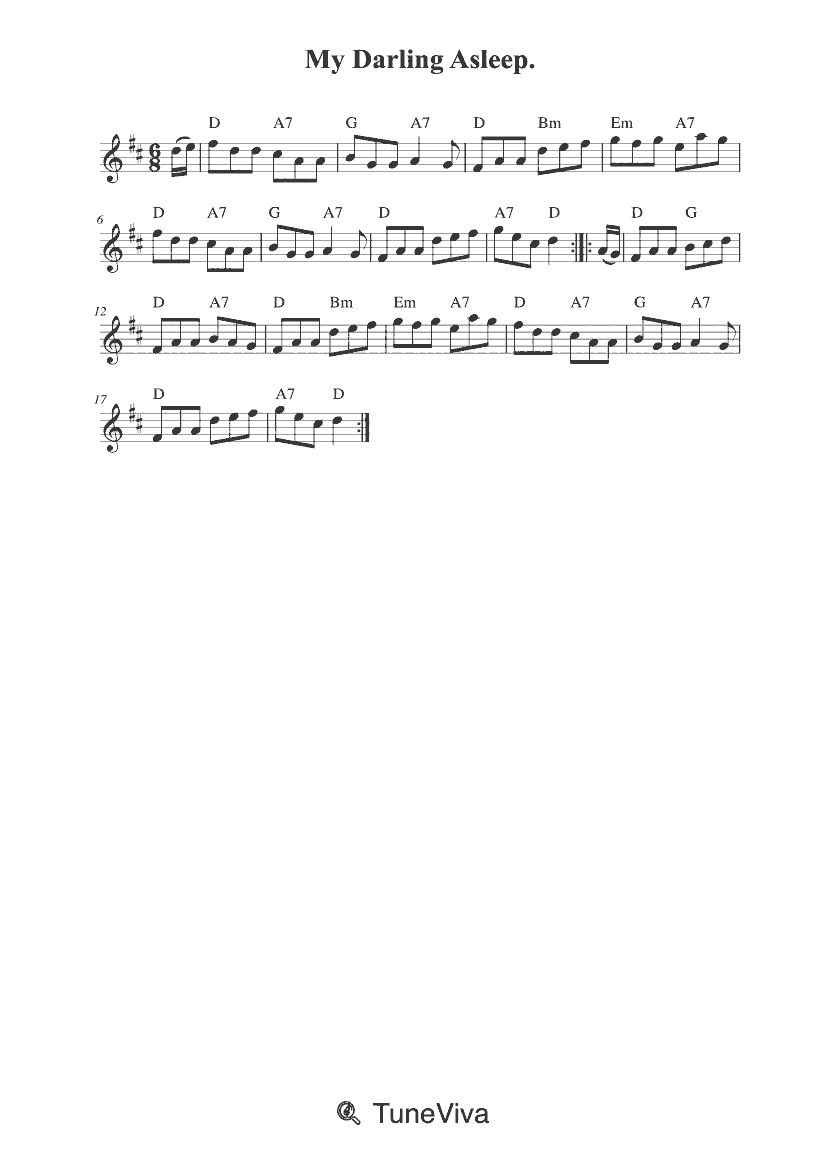
Misc Traditional
24 sec · Score #50814
Open score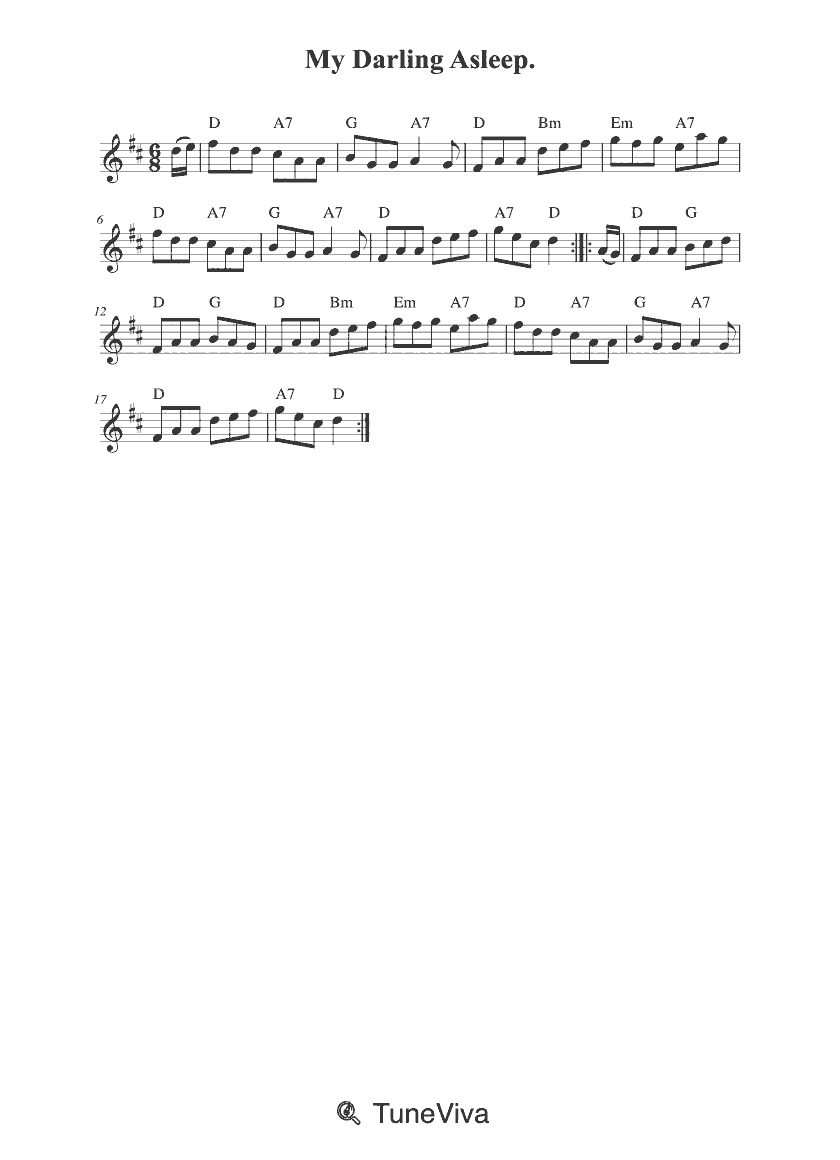
Misc Traditional
Haymaker's Jig
24 sec · Score #62462
Open score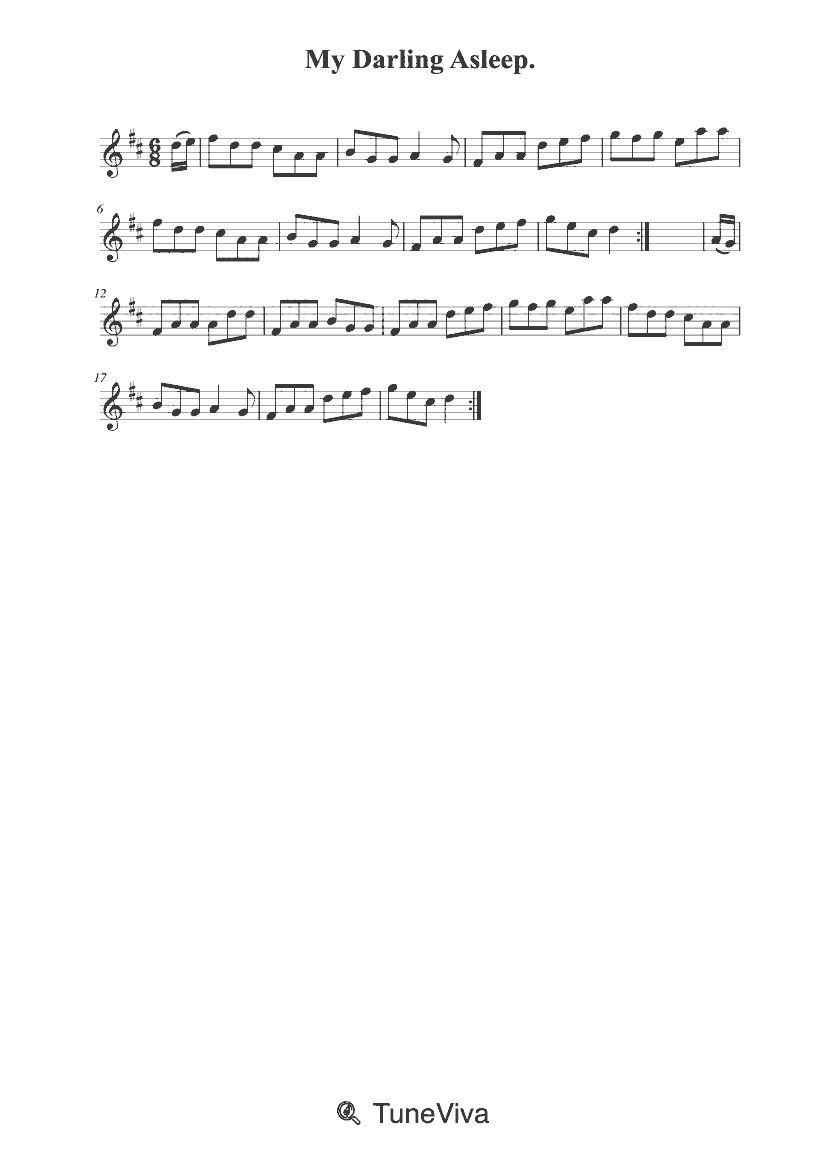
Misc Traditional
31 sec
Open score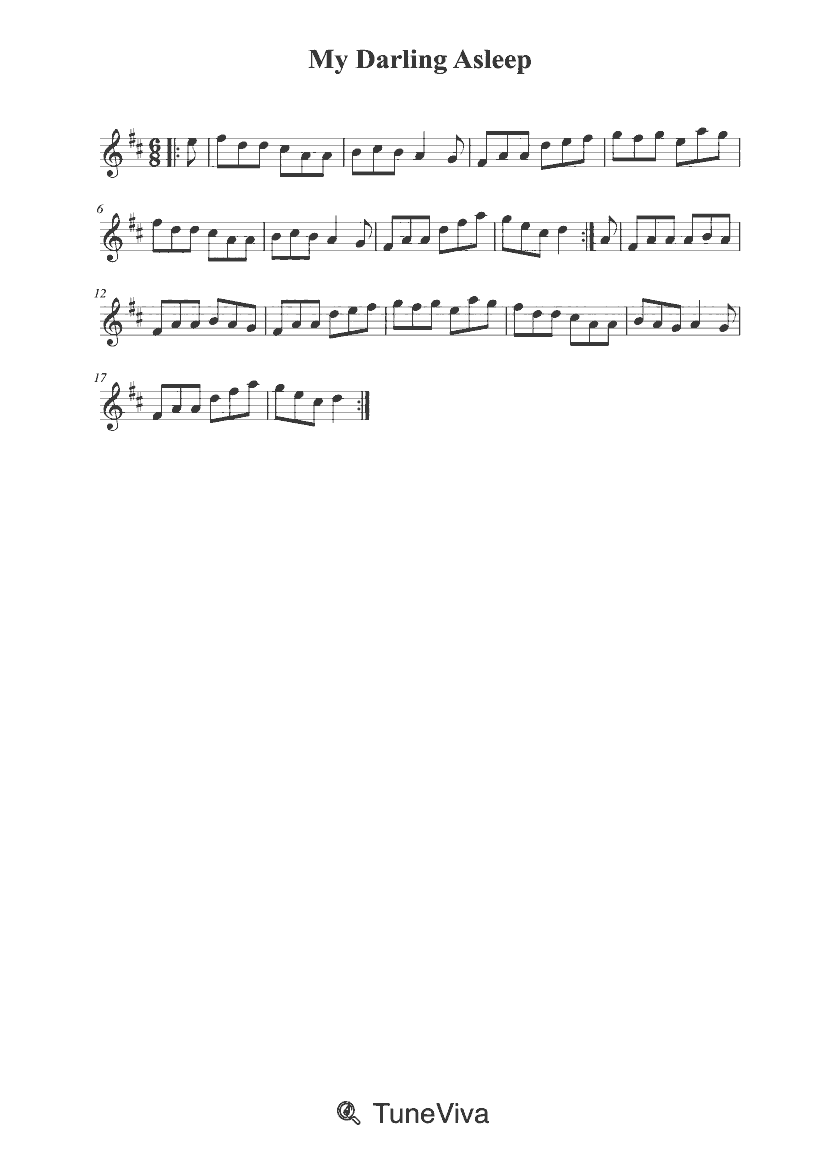
Misc Traditional
30 sec · Score #153544
Open score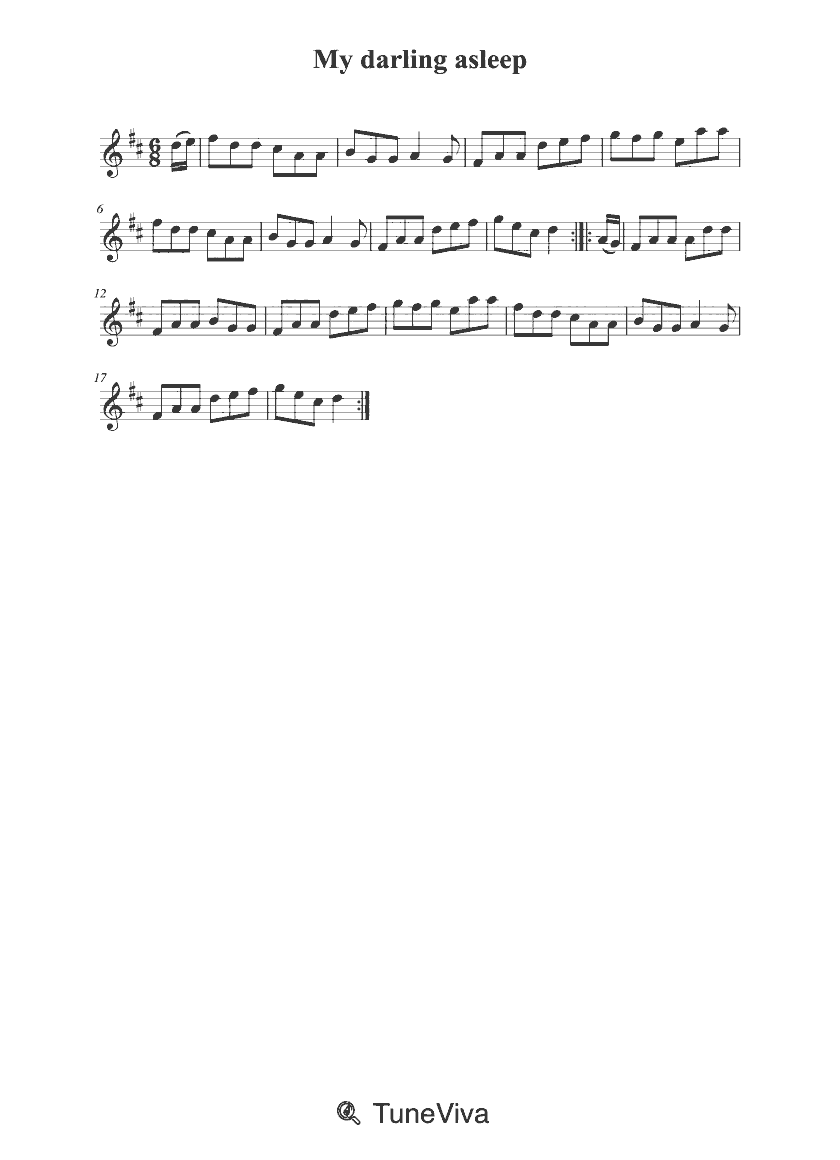
anon.
24 sec
Open scorePage 1 of 2
The selected My Darling Asleep listings are all identified as traditional folk material, and each gives an opening key of D major with a 6/8 time signature. Those details describe the start of the notation, not necessarily the whole piece. No listing names a composer or states the intended instrument, so confirm those points on the score itself.
A 6/8 signature is compound duple metre: two main beats per bar, each normally divided into three quavers. For practice, count a gentle two-beat pulse and subdivide each beat into three, for example “one-two-three, four-five-six” or “one-and-a, two-and-a”. Keep the three subdivisions even rather than letting the bar turn into six equal accents.
The available listings are not identical, but a difference in length or note count does not by itself prove that they are different arrangements, nor does it indicate difficulty. Compare the actual scores for range, ornaments, chords, repeats and the intended instrument or ensemble. Choose the notation that matches how you intend to play the tune.
The listed two-sharp signature is identified as D major, meaning F sharp and C sharp are in force unless accidentals appear. If you play a transposing instrument, check whether the score is written at concert pitch or transposed for your instrument; the listing does not settle that point.
Catalogue duration 3 sec. Opening key signature: 2 sharps (D major). Opening time signature: 6/8.
Catalogue duration 24 sec. Opening key signature: 2 sharps (D major). Opening time signature: 6/8.
Catalogue duration 24 sec. Opening key signature: 2 sharps (D major). Opening time signature: 6/8.
The available My Darling Asleep scores list an opening key signature of D major, with two sharps. That is an opening indication rather than proof of the key throughout, so check the chosen score for any later changes.
The selected My Darling Asleep listings give a 6/8 time signature. In 6/8 there are two main beats per bar, each normally divided into three quavers, which is useful to know when setting a practice pulse.
The available scores credit My Darling Asleep to “Misc Traditional” or “traditional” and classify it as folk. No supplied source documents its origin or authorship, so the traditional attribution should be treated as catalogue information rather than verified history.
The available My Darling Asleep listings do not identify instrumentation. The scores should be checked directly for clef, range and any arrangement notes before you decide whether they suit your instrument or ensemble.
The listed 6/8 signature calls for a two-beat pulse with each beat divided into three quavers. Practise slowly with a metronome on the two main beats, subdividing evenly into three; this keeps the compound metre stable before you add ornaments or speed.
The My Darling Asleep listings share an opening D major key and 6/8 signature, but no supplied source confirms that they are identical arrangements. Compare the notation itself, including range, repeats and accompaniment, rather than relying on the title alone.