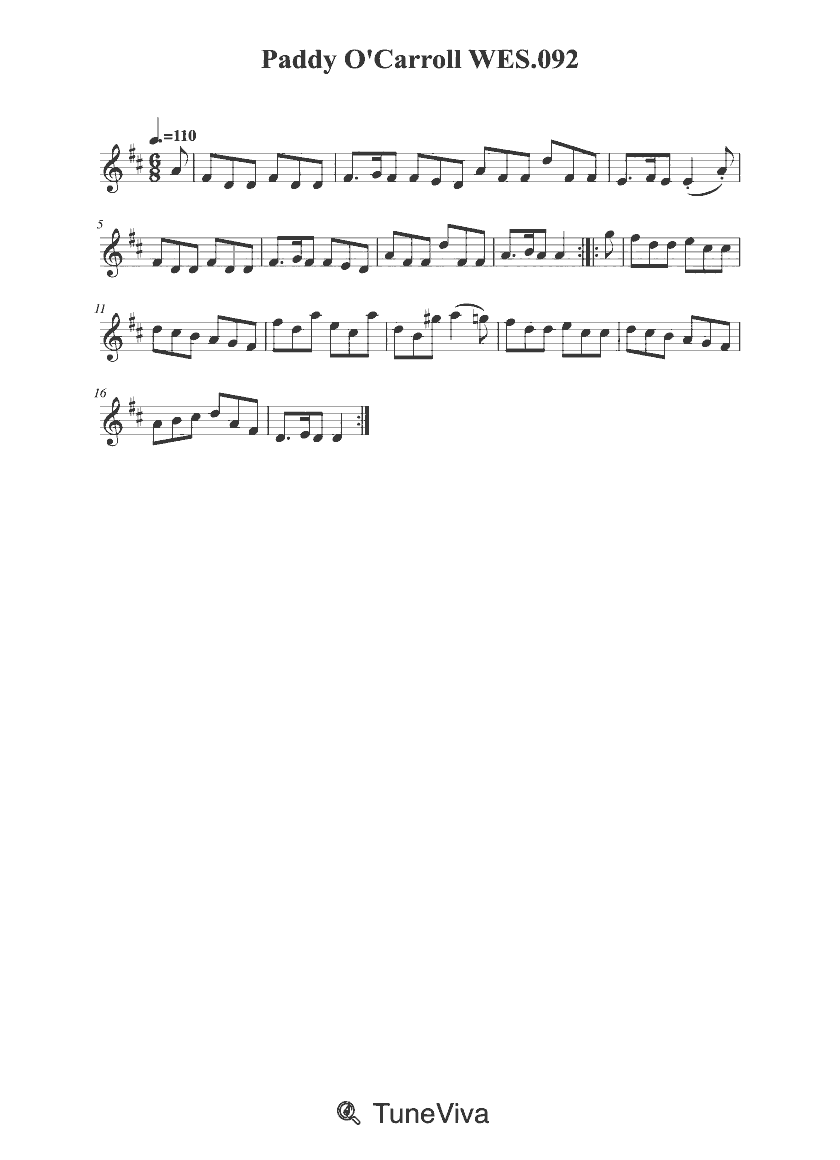
Paddy O'Carroll WES.092
Misc tunes
17 sec · Score #52473
Open scoreThree settings of “Paddy O'Carroll” are listed here, and all three are notated in D major with a 6/8 time signature. No composer is credited on any of the scores, so what you can compare is the music as written in these particular versions rather than a documented composer's text. The settings are close in size — roughly 184 to 192 notes each — and each appears as a single line of music. One score, titled “Paddy O'Carroll WES.092”, also carries an opening tempo marking of 165 BPM; the other two give no tempo.
Scores 1–20 of 21
Misc tunes
17 sec · Score #52473
Open score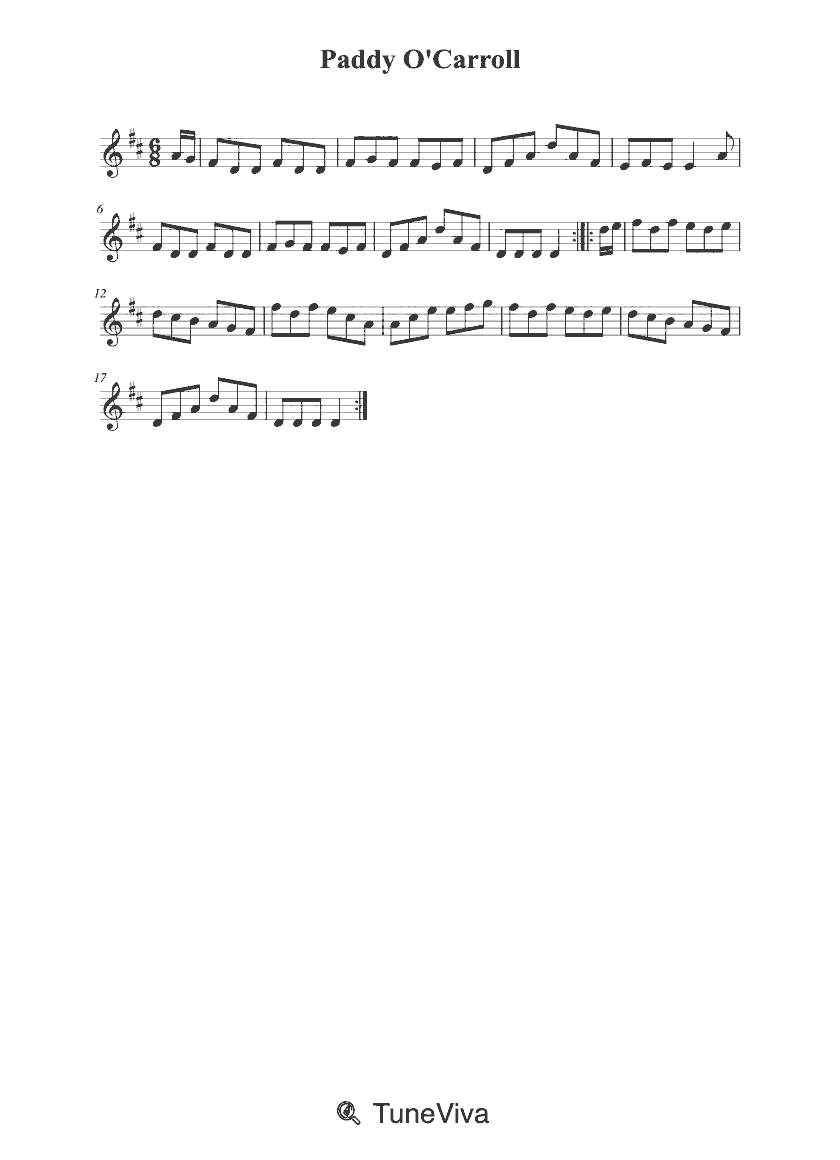
Misc tunes
24 sec · Score #66182
Open score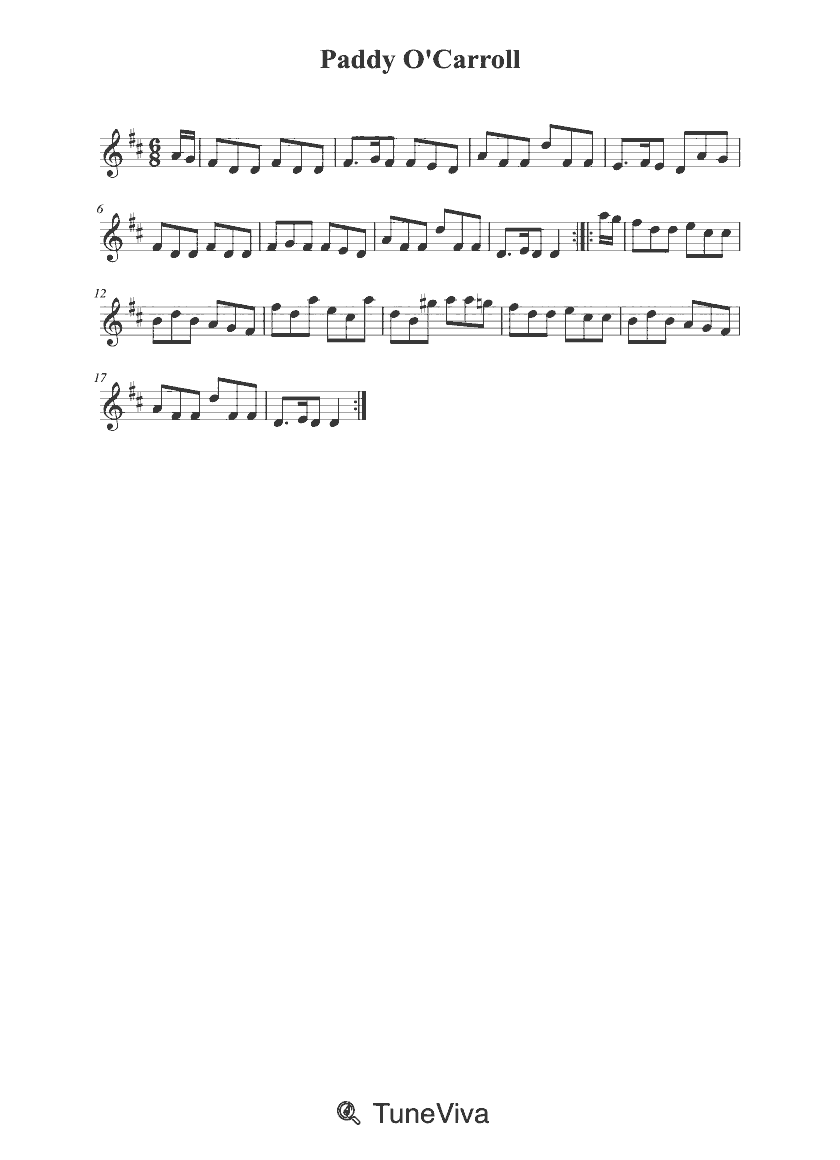
Misc tunes
24 sec · Score #55463
Open score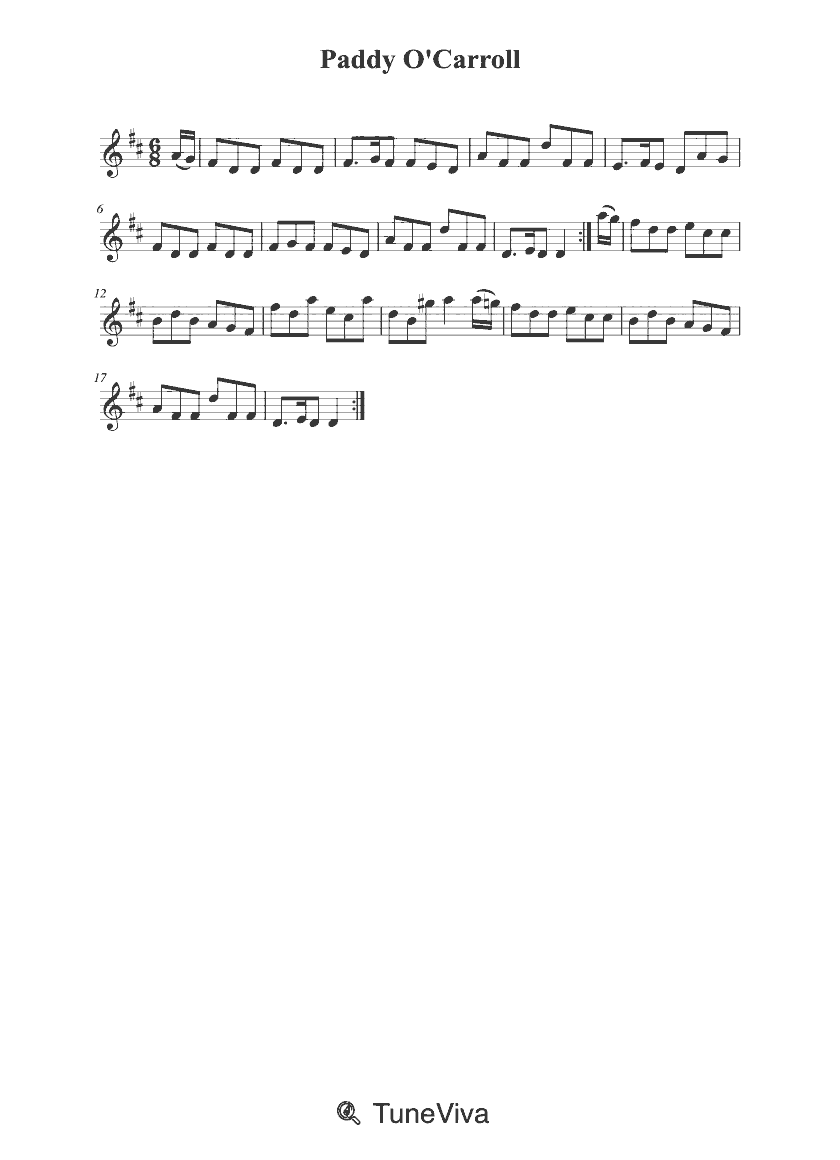
Misc tunes
Paidin Ua Cearbaill
30 sec · Score #98360
Open score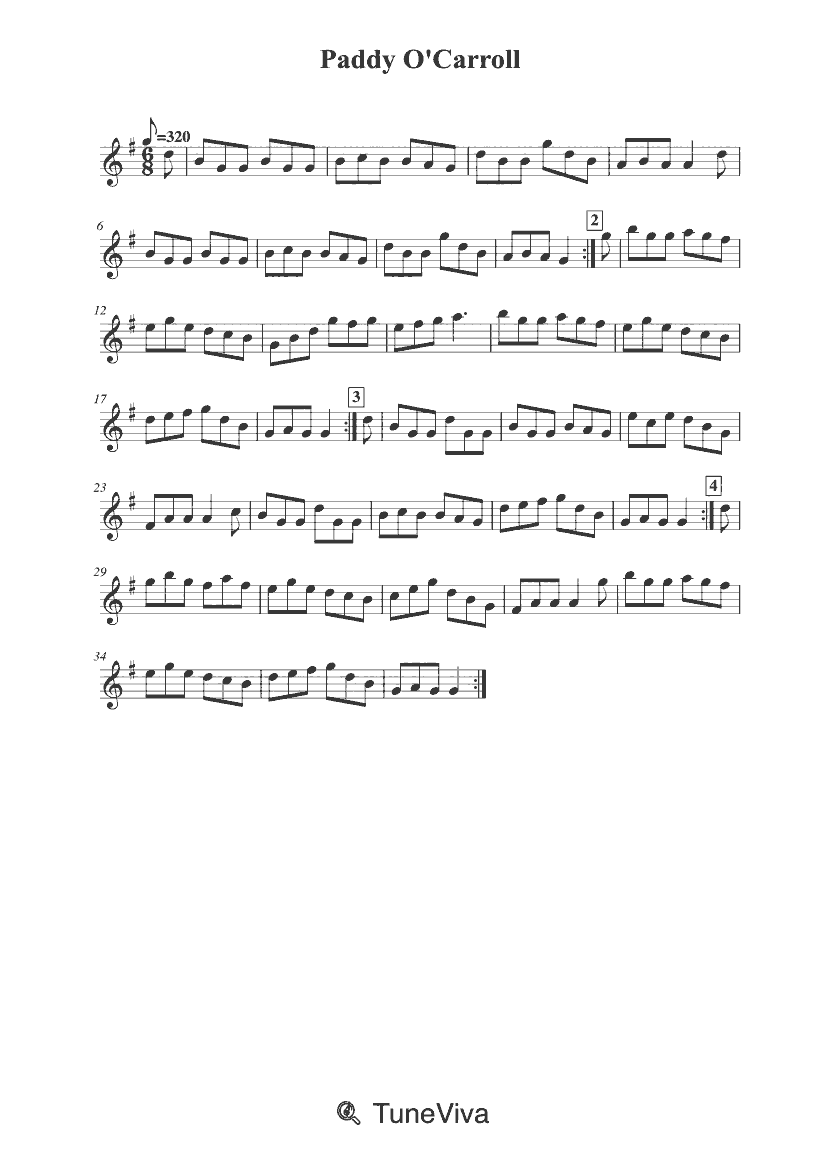
Misc tunes
1 min 3 sec · Score #137290
Open score
anon.
24 sec · Score #7158
Open score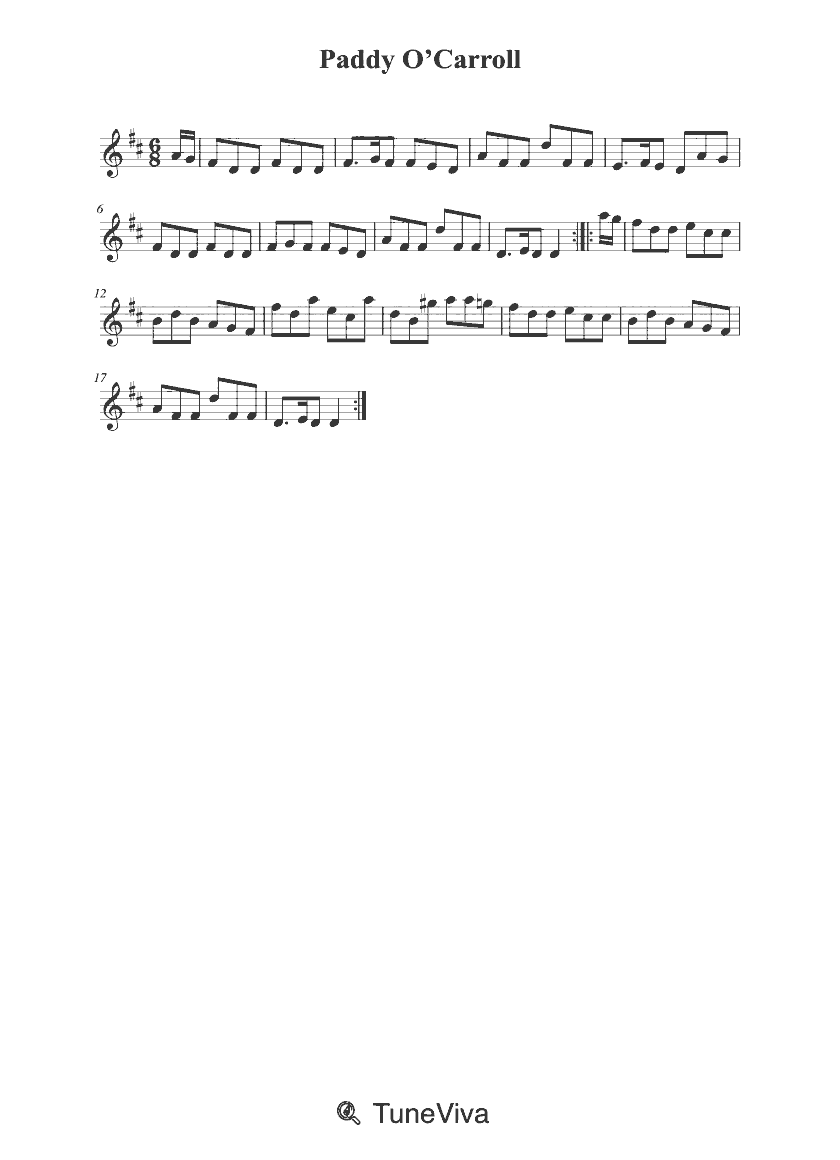
Misc tunes
24 sec
Open score
anon.
24 sec · Score #41245
Open score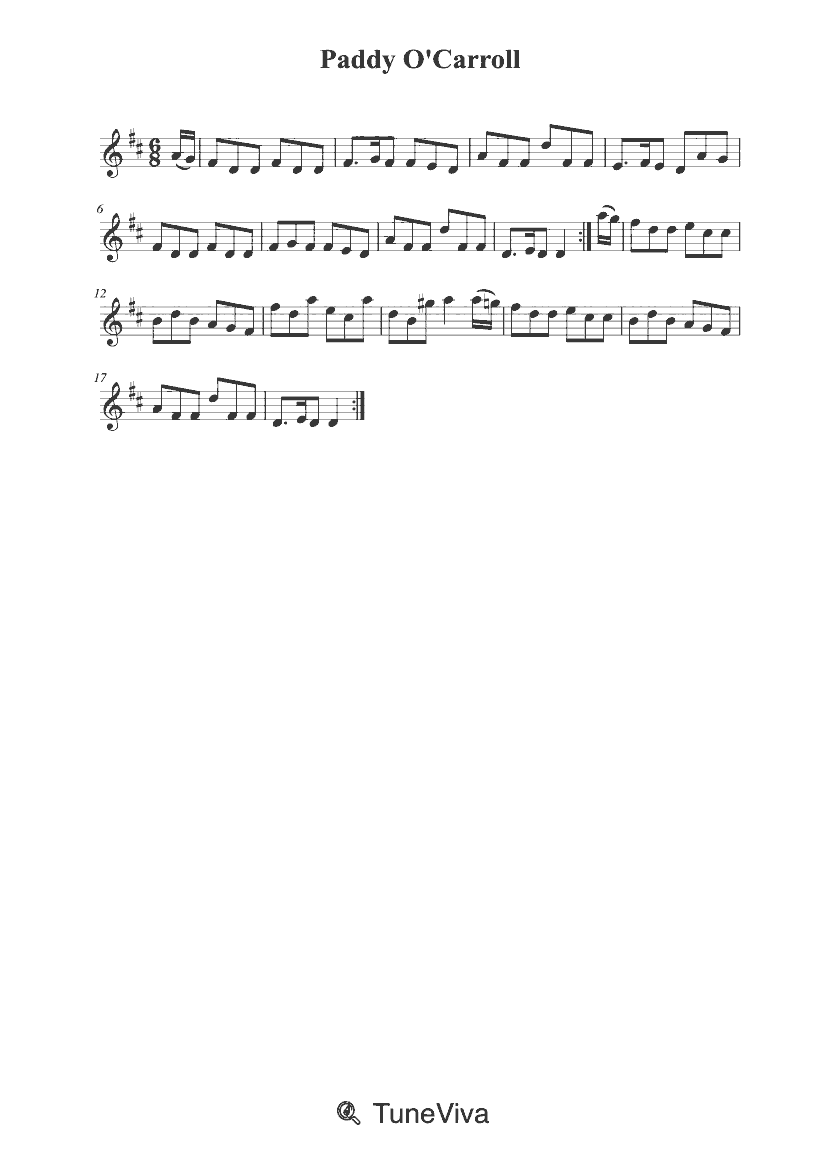
Misc tunes
Paidin Ua Cearbaill
30 sec · Score #64704
Open score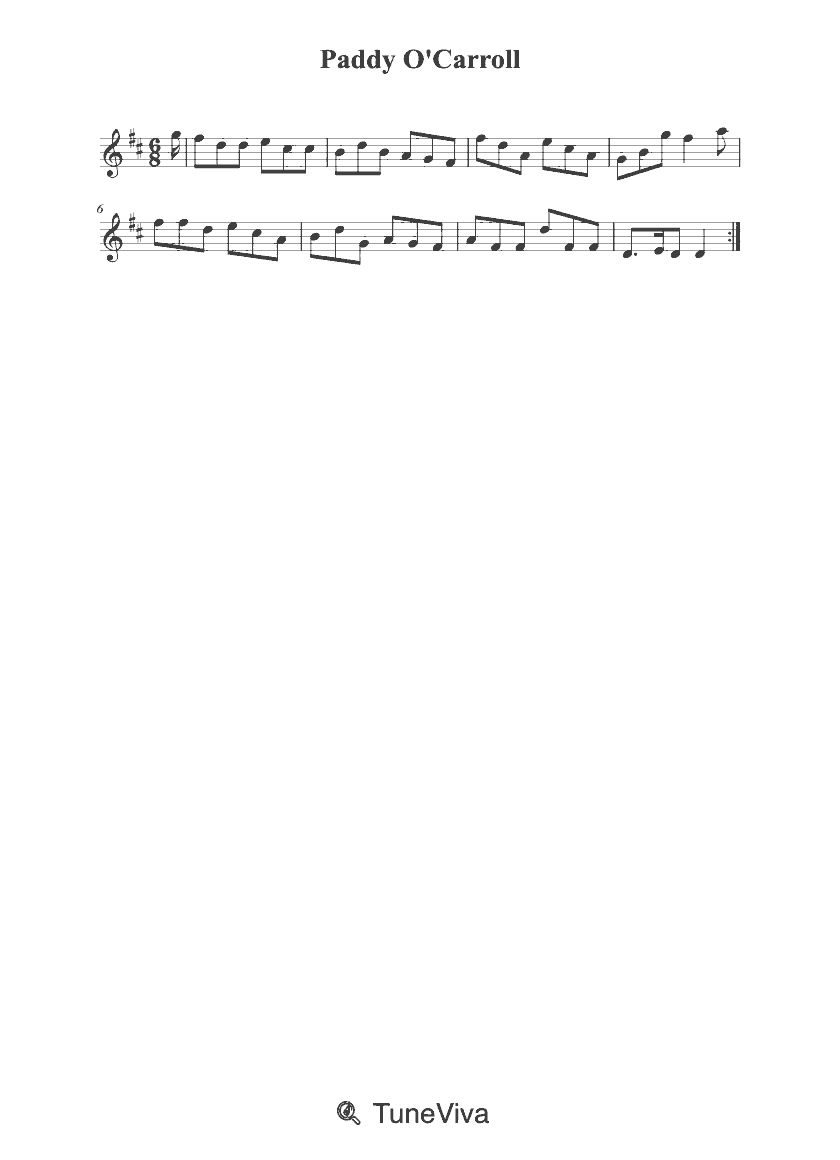
Misc tunes
12 sec
Open score
Unattributed
26 sec
Open score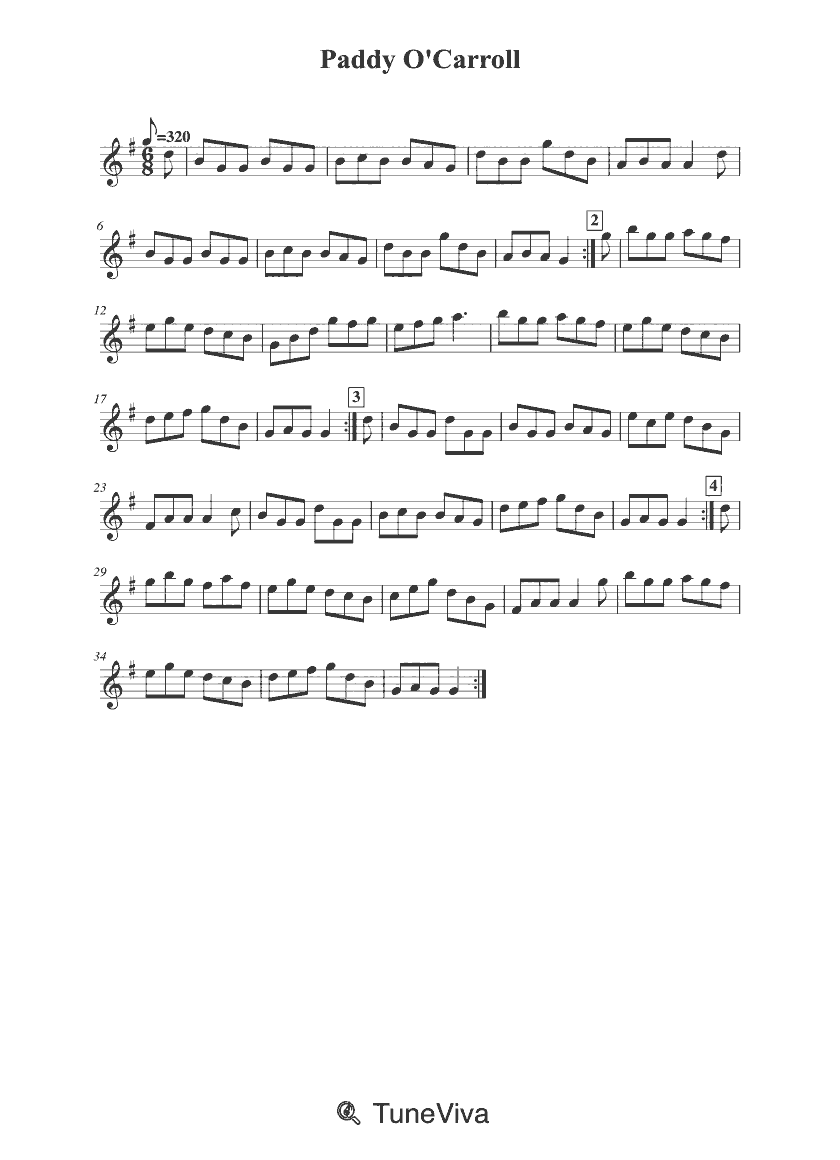
Misc tunes
1 min 3 sec · Score #120384
Open score
anon.
19 sec
Open score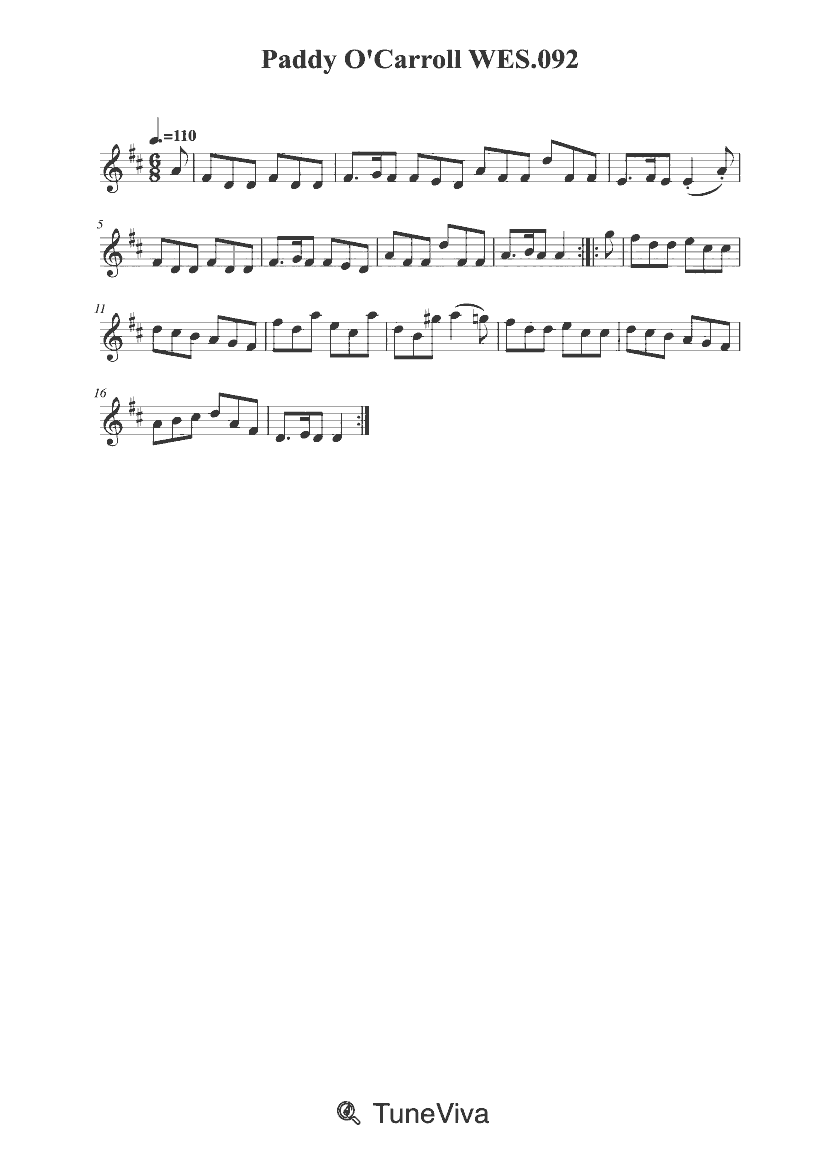
Misc tunes
17 sec · Score #171205
Open score
anon.
24 sec · Score #195040
Open score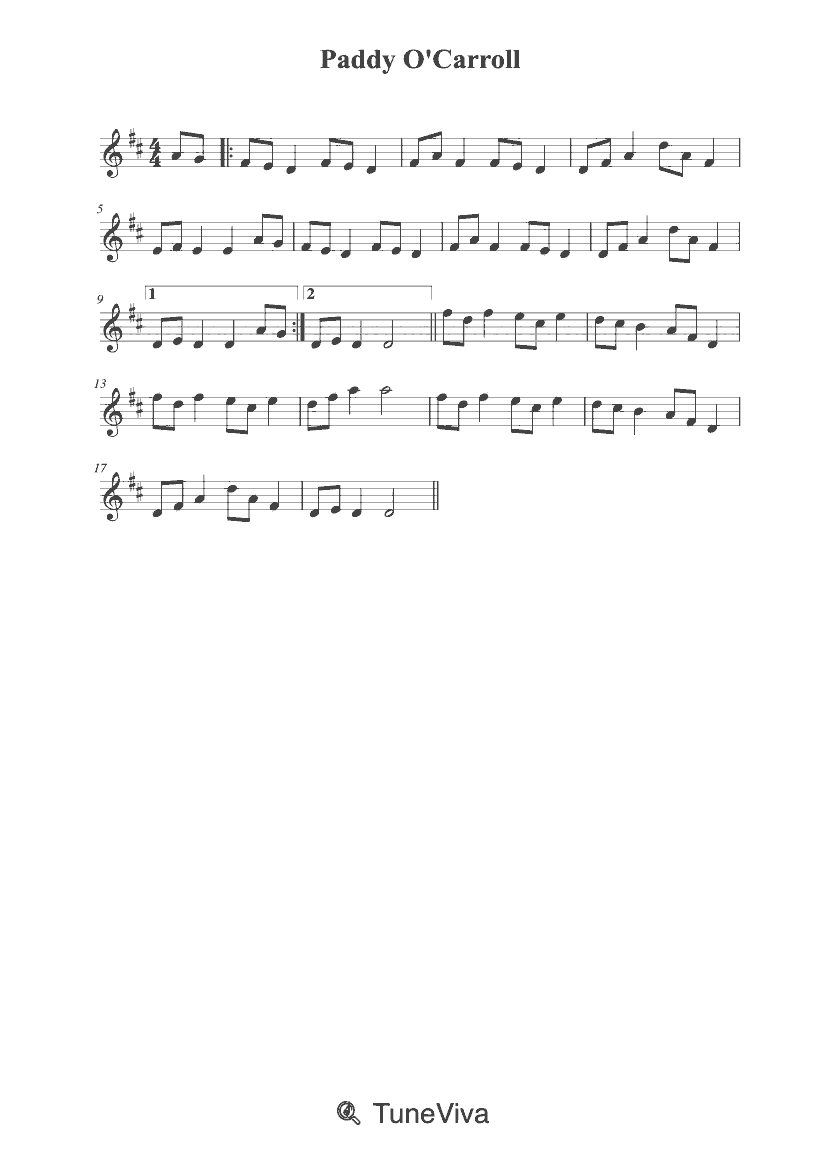
Misc tunes
48 sec · Score #221072
Open score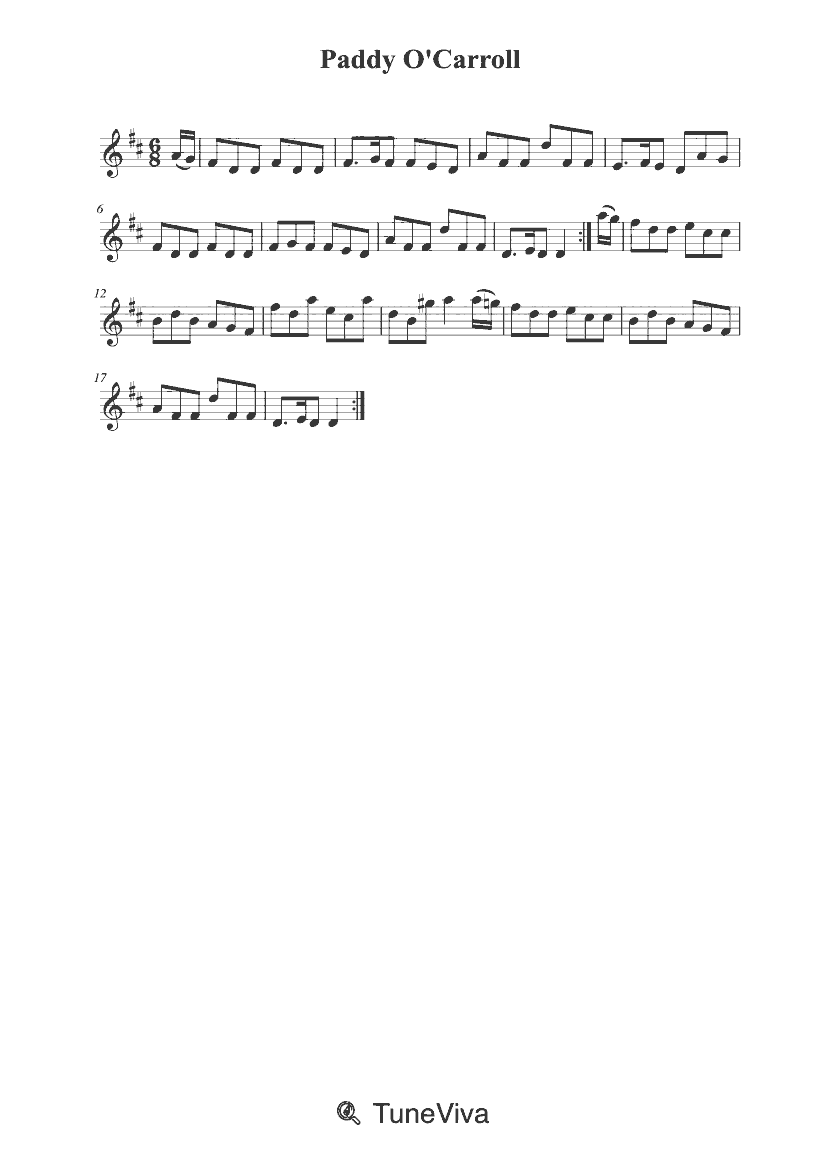
Misc tunes
30 sec
Open score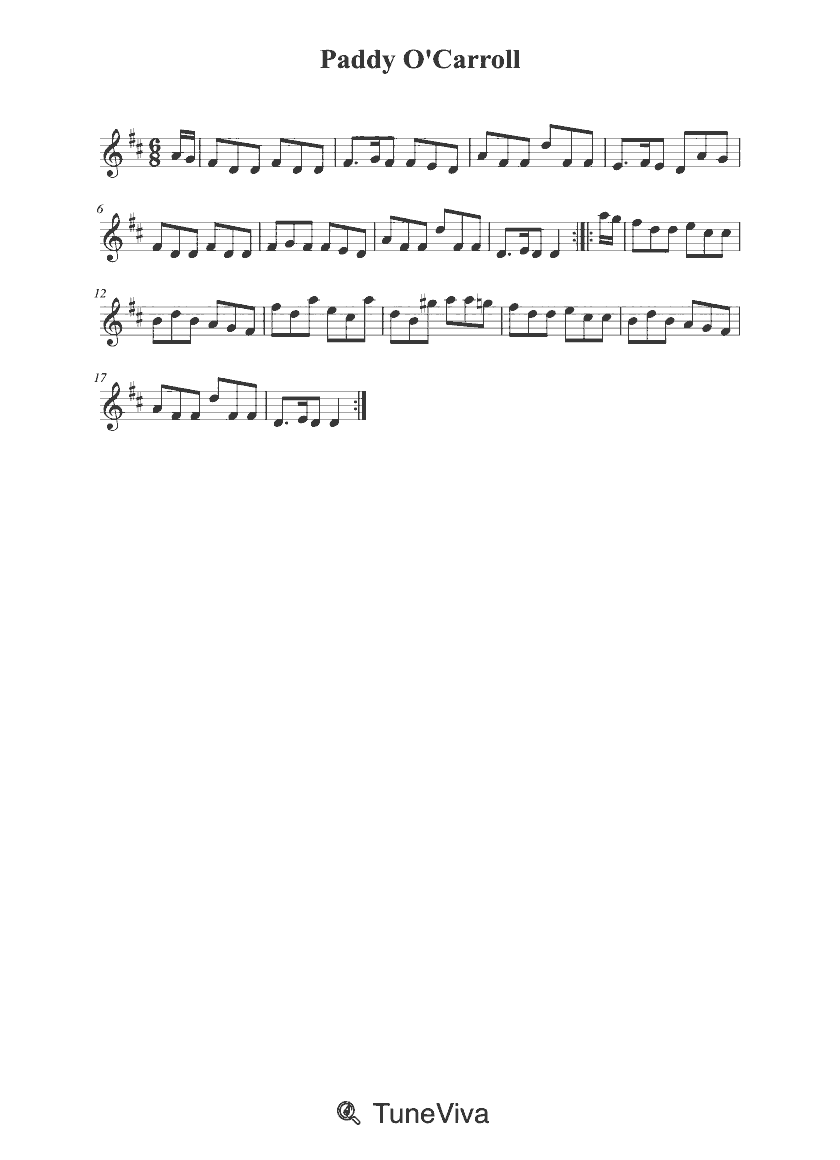
Misc tunes
24 sec · Score #3628
Open score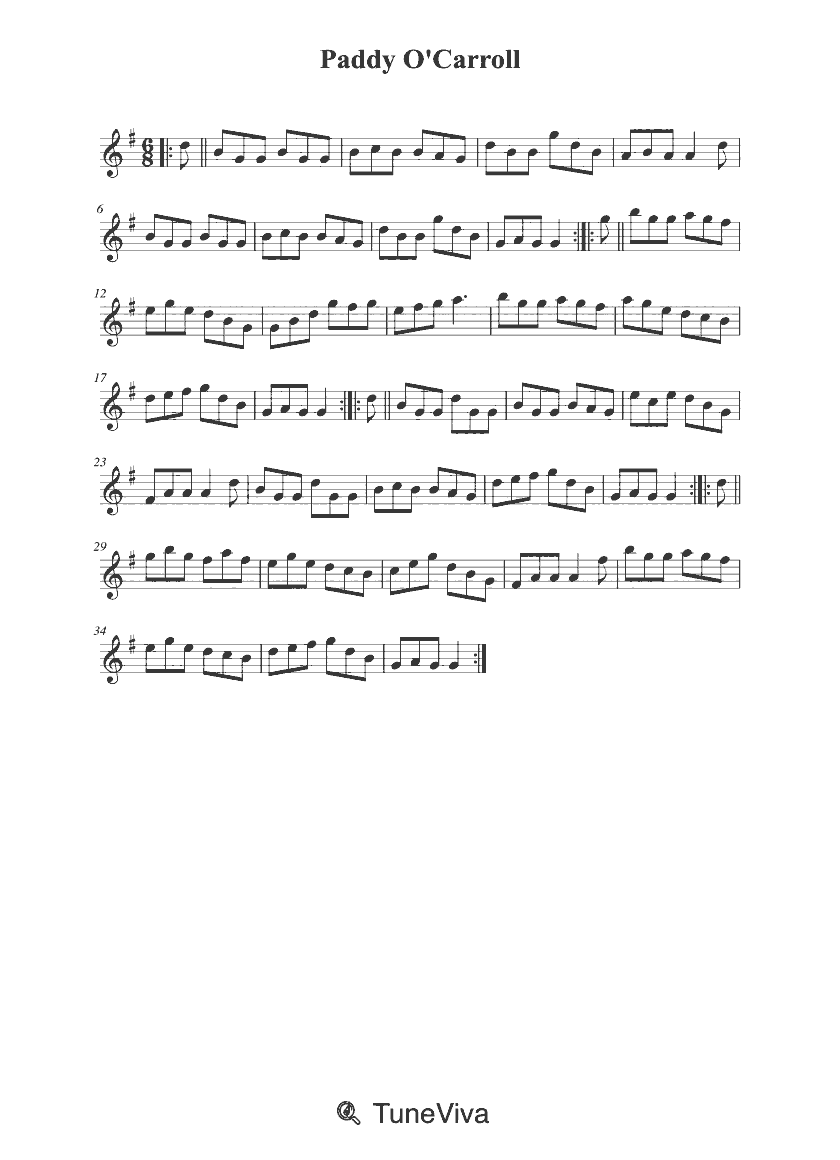
Misc tunes
48 sec · Score #46542
Open score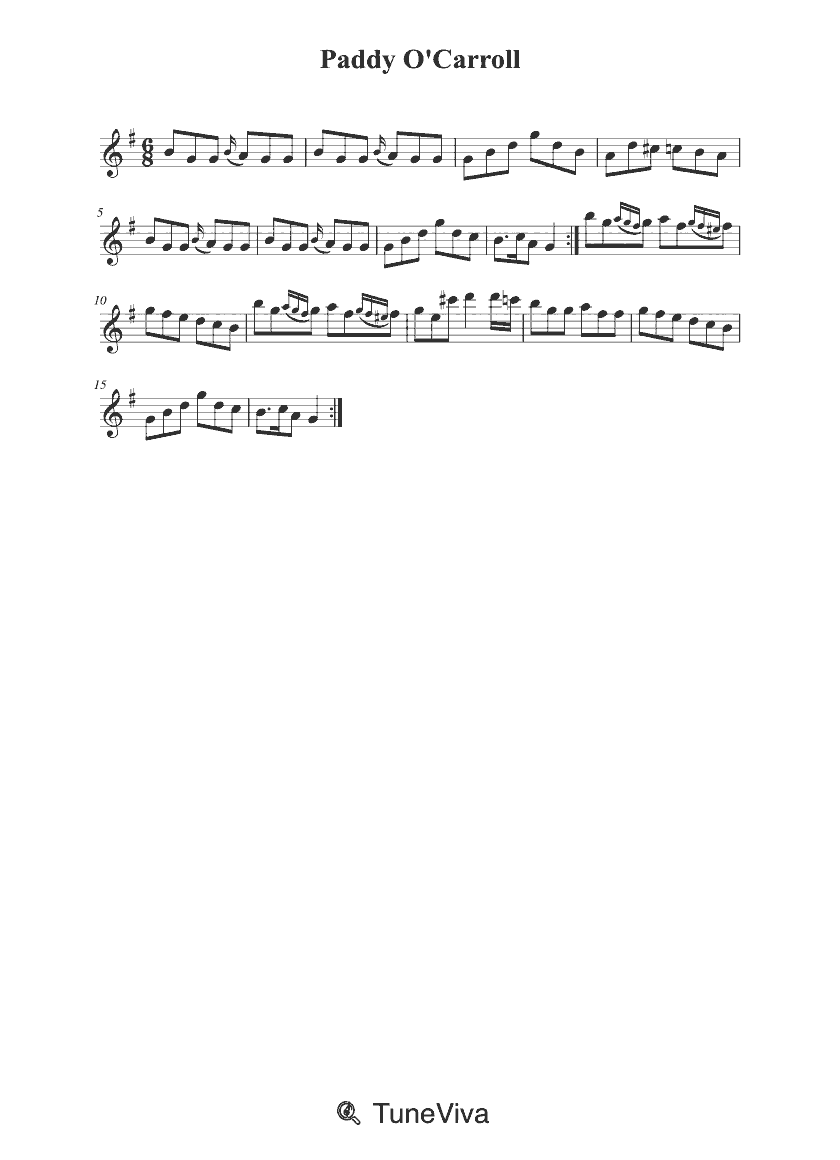
Misc tunes
29 sec
Open scorePage 1 of 2
Each score opens with two sharps, which in the treble clef gives D major, and a 6/8 time signature. 6/8 is a compound duple metre: each bar falls into two main beats, each worth a dotted crotchet and normally divisible into three quavers. That gives the tune a lilting, grouped pulse rather than the even two- or four-beat feel of simple metre. The 165 BPM marking on the WES.092 score does not state which note value the beat refers to, so it is best read as a starting indication to be tested by ear rather than a fixed tempo.
The three versions of “Paddy O'Carroll” are similar but not identical. They run to about 184, 190 and 192 notes, and two of them play for around 24 seconds while the shortest runs to roughly 17 seconds. Small divergences of this kind usually come from repeated sections, added or dropped ornaments, or slightly different rhythmic groupings, so it is worth reading through more than one version before deciding which to learn. The material supplied does not show bar-by-bar where the settings diverge.
Each listed score presents the tune as one line rather than a full arrangement, which suits a fiddle, flute, whistle, mandolin or the right hand alone at the keyboard. Because the melody is unharmonised, decisions about accompaniment, ornamentation and where to breathe are left to the player. A practical approach is to learn the melody slowly at first, mark the two dotted-crotchet beats in each bar so the 6/8 grouping stays clear, then bring the tempo up once the phrase shapes feel secure.
The listings give notation, key, metre and length but no background: no composer, no date, no place of origin and no indication of how the tune is normally performed. Treat the scores as the music itself and look elsewhere for its history. The absence of a credited composer does not by itself prove the tune is traditional, and the presence of three similarly named scores does not prove they are three distinct tunes rather than variant settings of one.
Catalogue duration 17 sec. Opening key signature: 2 sharps (D major). Opening time signature: 6/8. Opening tempo: 165 BPM.
Catalogue duration 24 sec. Opening key signature: 2 sharps (D major). Opening time signature: 6/8.
Catalogue duration 24 sec. Opening key signature: 2 sharps (D major). Opening time signature: 6/8.
All three settings of “Paddy O'Carroll” listed here are notated in D major, shown by a key signature of two sharps, and in 6/8 time. D major places F and C sharp throughout the key, which suits the open strings of fiddles and the natural scale of many traditional melody instruments.
A 6/8 signature means the music is in compound duple metre, so each bar has two main beats, each made up of three quavers and written as a dotted crotchet. Players usually feel that grouping as a strong-weak pulse inside each beat, which gives the melody a rounded, lilting drive. 6/8 is a metre shared by many dance tunes, but the scores supplied here do not state which dance, if any, this tune belongs to.
The three settings differ slightly. Two contain 190 and 192 notes and play for around 24 seconds, while the shortest contains 184 notes and runs to roughly 17 seconds. Such differences often reflect repeated sections, extra ornaments or alternative rhythmic groupings, so comparing two versions side by side can be a useful way to decide which reading of the melody you prefer.
No composer is named on any of the three scores, and nothing in the material supplied here identifies an author or a date. The tune may be traditional, but the absence of a credit is not proof of that, so treat the question of authorship as unresolved unless you can check an authoritative tune collection or index.
Only the score titled “Paddy O'Carroll WES.092” carries a tempo, an opening marking of 165 BPM; the other two settings give no tempo indication. Because the marking does not specify whether the beat is a quaver or a dotted crotchet, use it as a rough starting point and adjust until the 6/8 pulse sits comfortably.