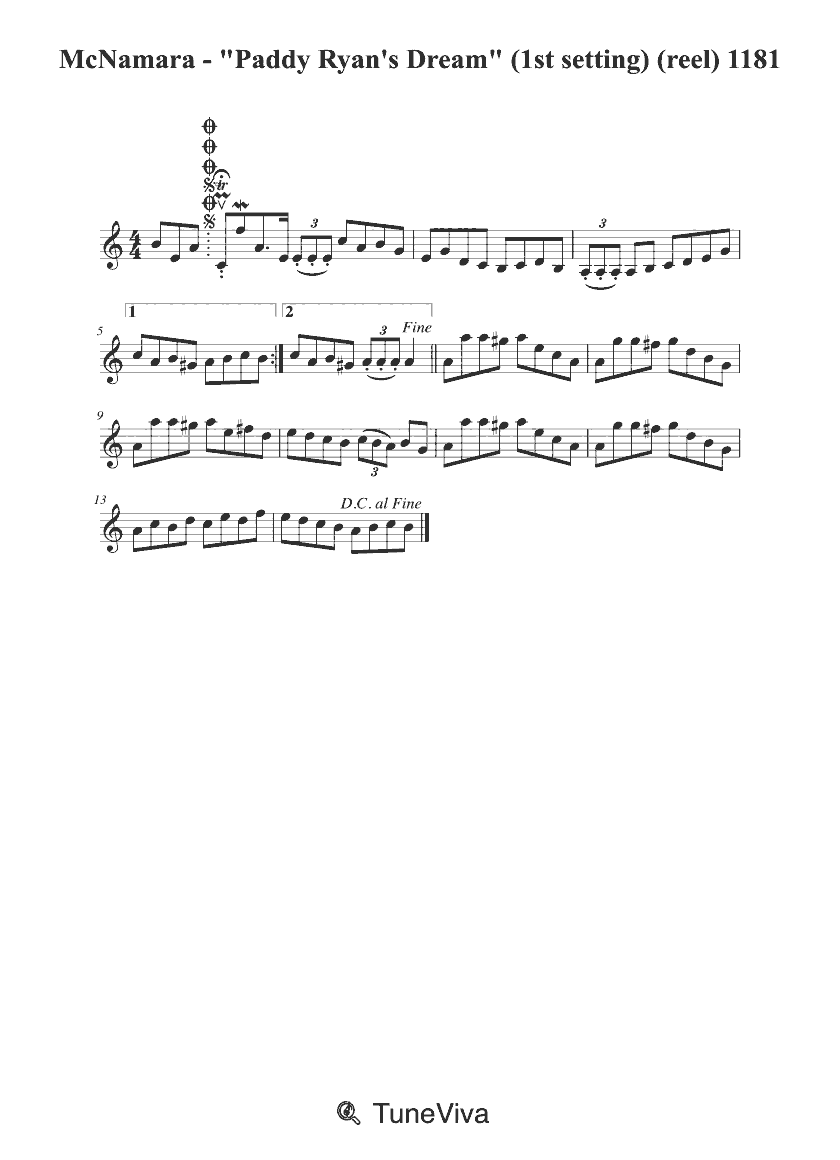
McNamara - "Paddy Ryan's Dream" (1st setting) (reel) 1181
after McNamara
1 min 28 sec
Open scorePaddy Ryan's Dream appears here in three sheet-music versions. The scores differ in their opening key signature and time signature, and one setting carries a credit to McNamara and a “reel” label.
Scores 1–20 of 24
after McNamara
1 min 28 sec
Open score
Misc tunes
1 min 5 sec · Score #142390
Open score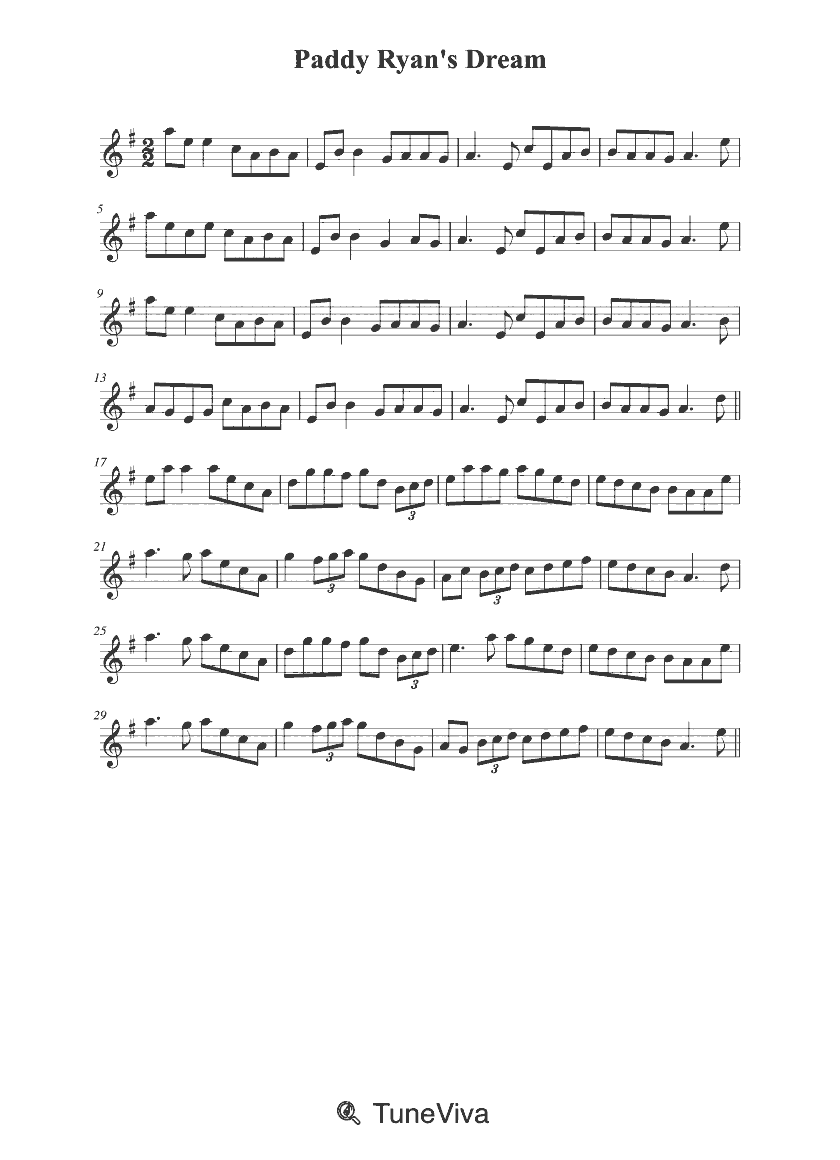
Misc tunes
2 min 8 sec · Score #57243
Open score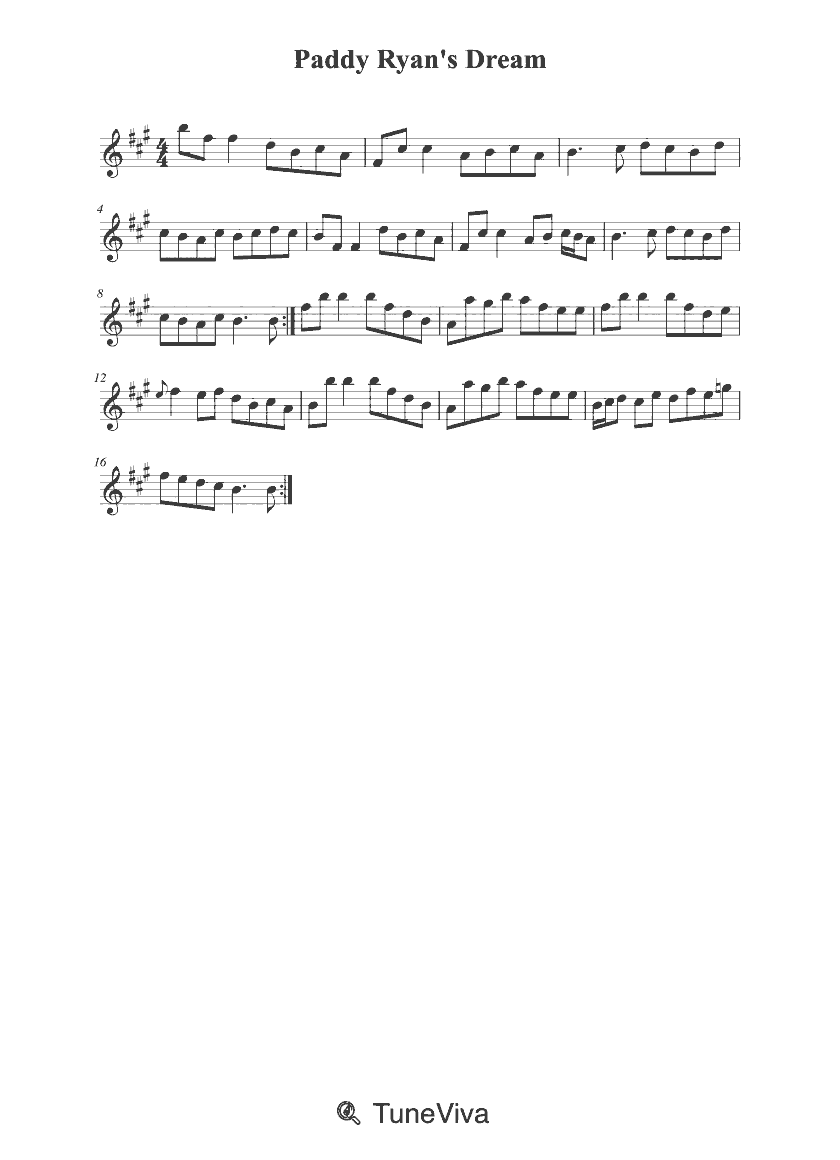
Misc tunes
1 min 20 sec
Open score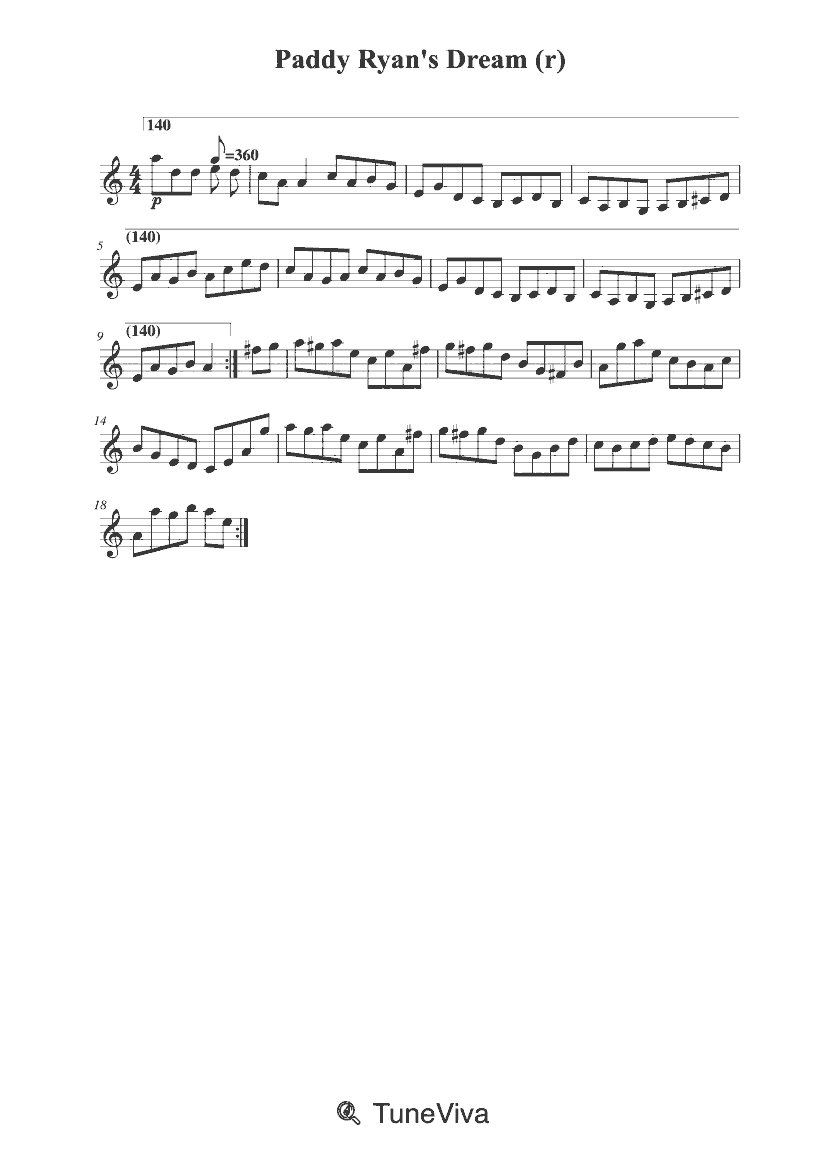
Misc tunes
33 sec · Score #200097
Open score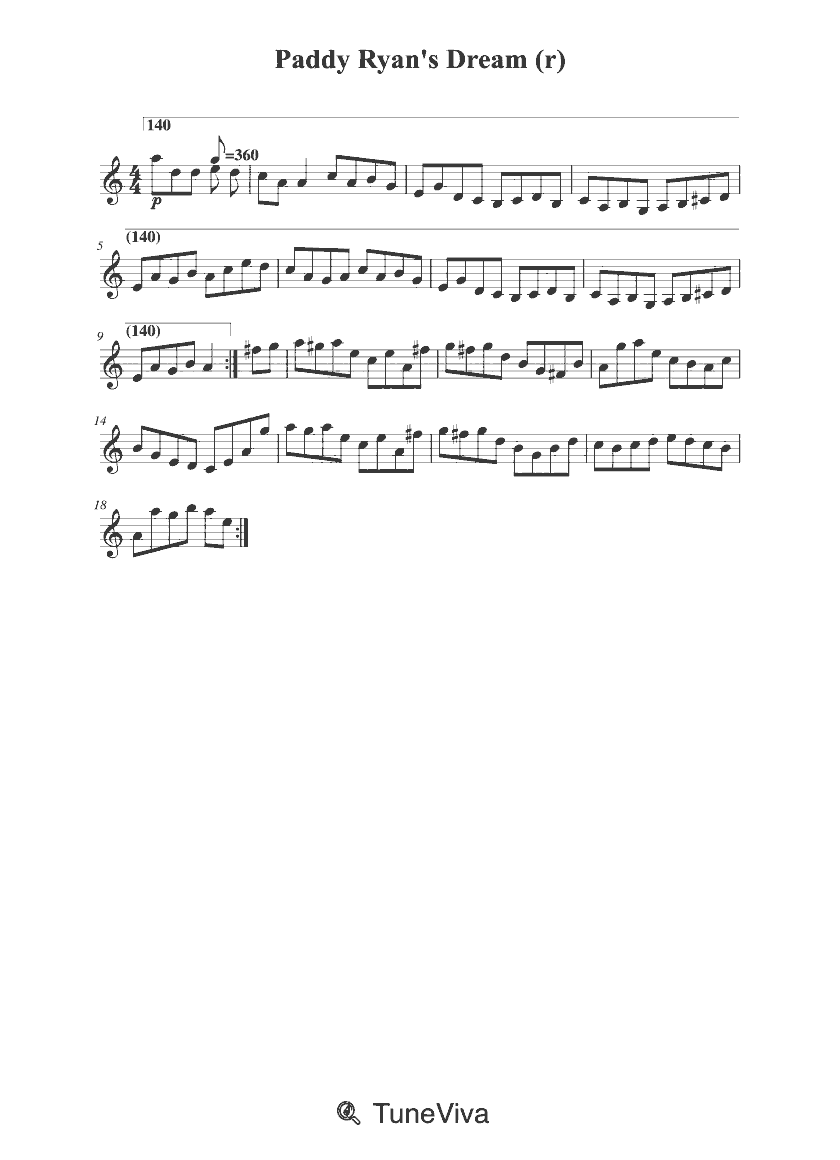
Misc tunes
33 sec · Score #129335
Open score
after Mr. McFadden
1 min 6 sec
Open score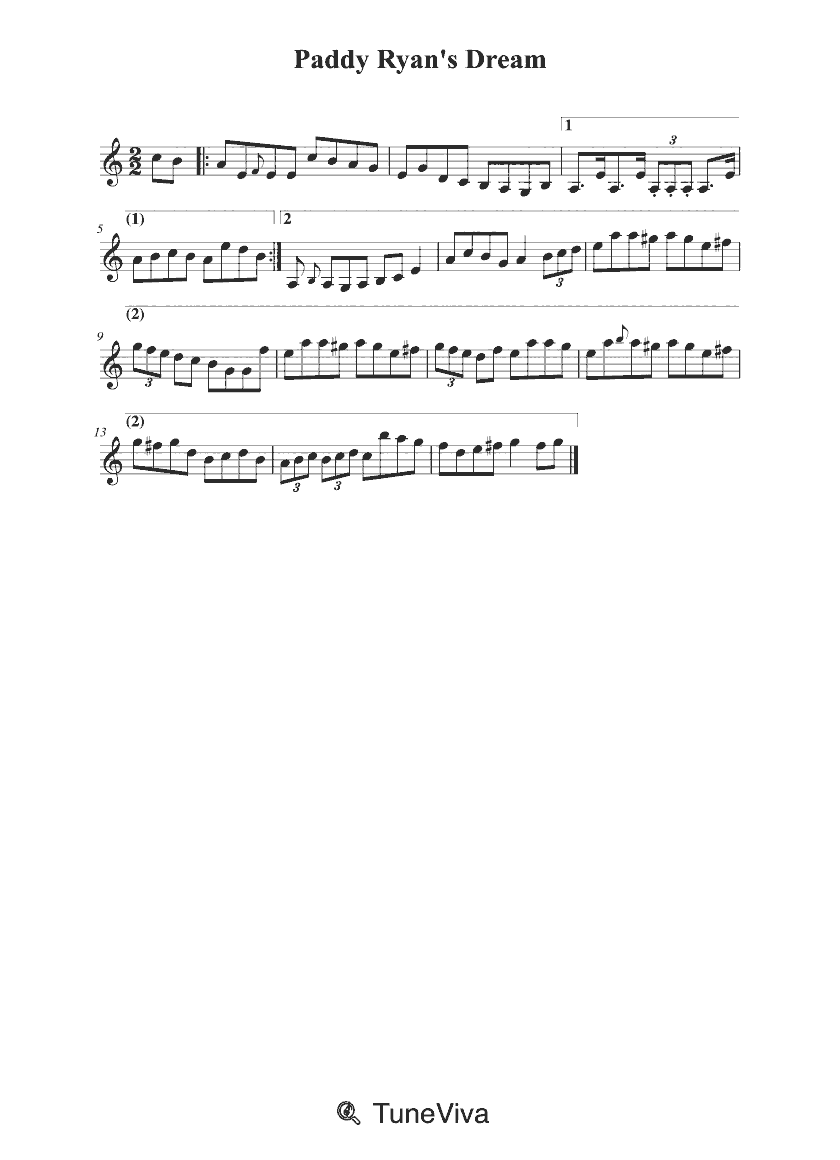
Misc tunes
1 min 5 sec · Score #50825
Open score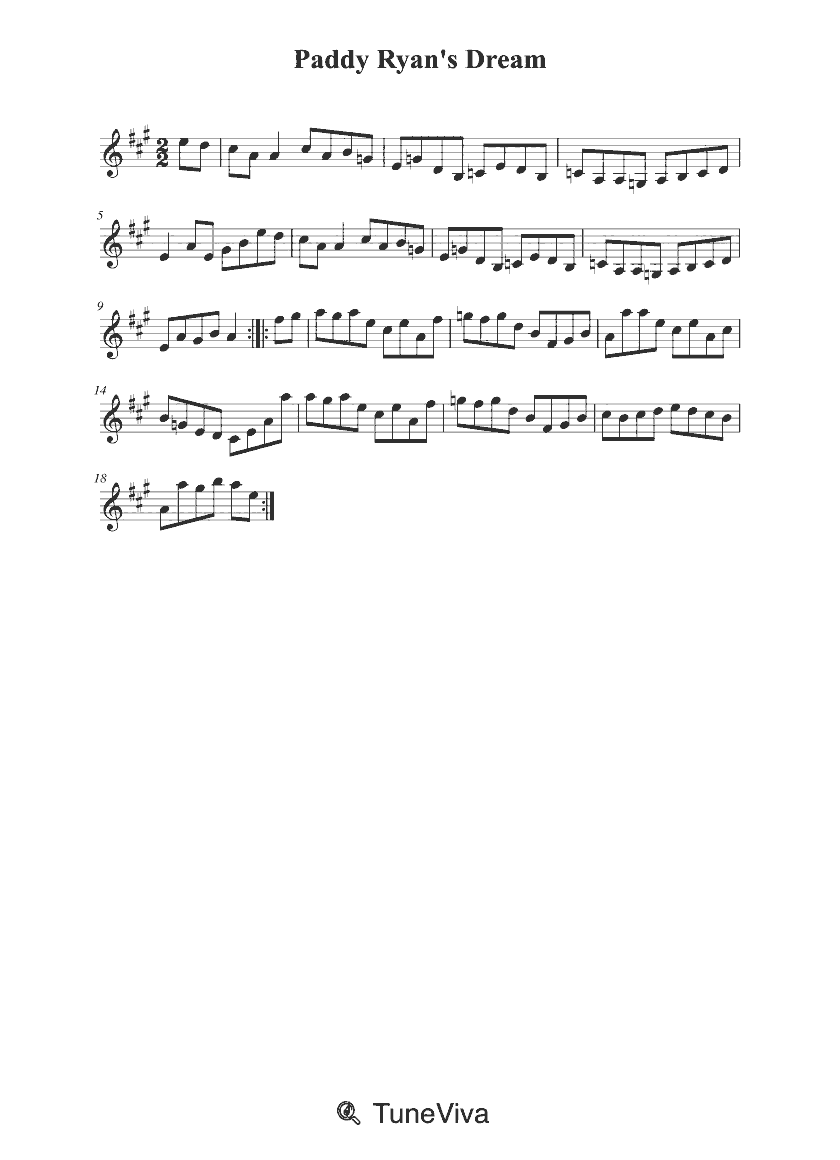
Misc tunes
2 min 8 sec · Score #87899
Open score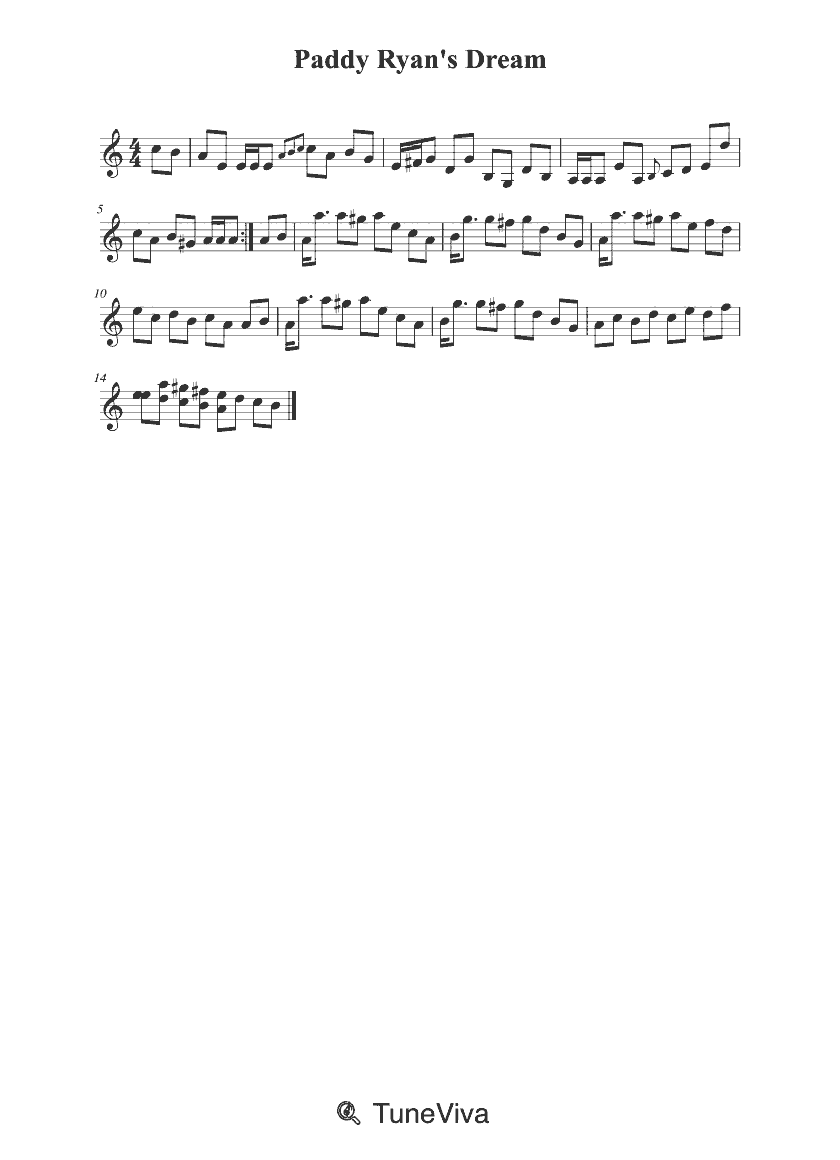
Misc tunes
32 sec · Score #164892
Open score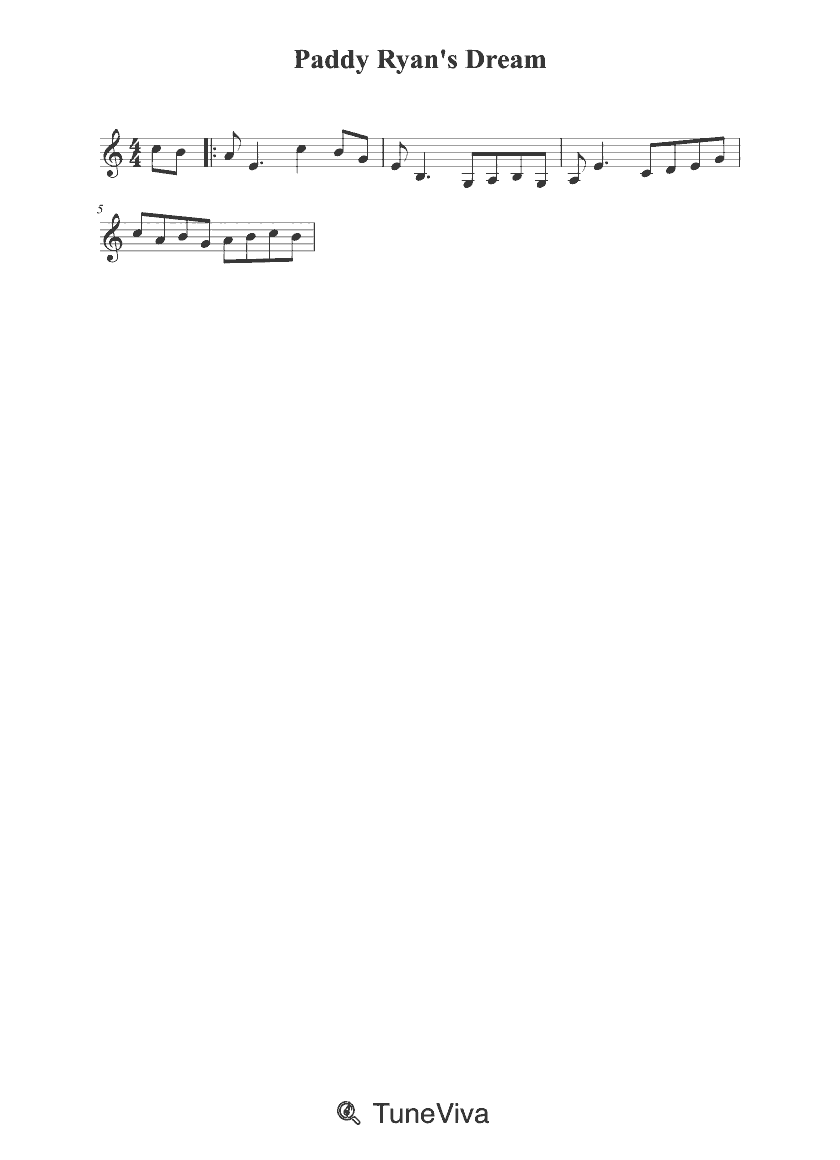
Misc tunes
16 sec
Open score
anon.
1 min 58 sec
Open score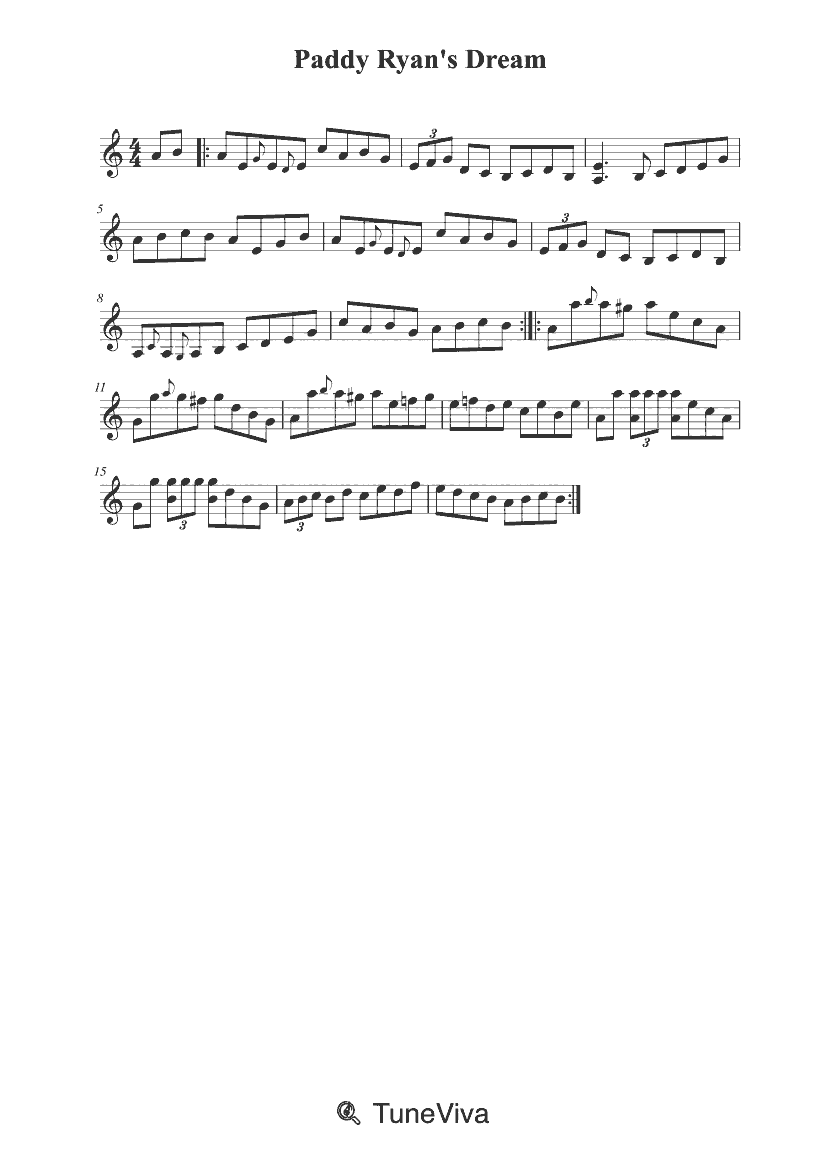
Misc tunes
1 min 4 sec · Score #82827
Open score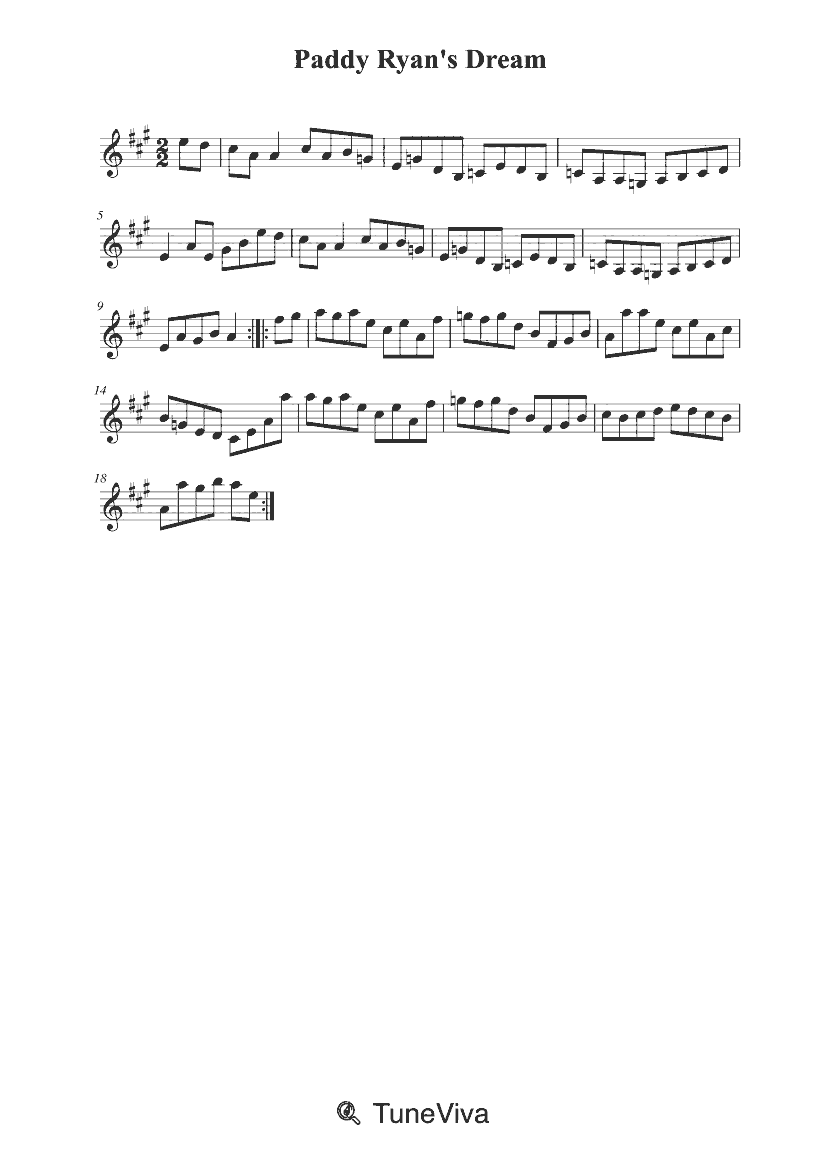
Misc tunes
2 min 8 sec · Score #90826
Open score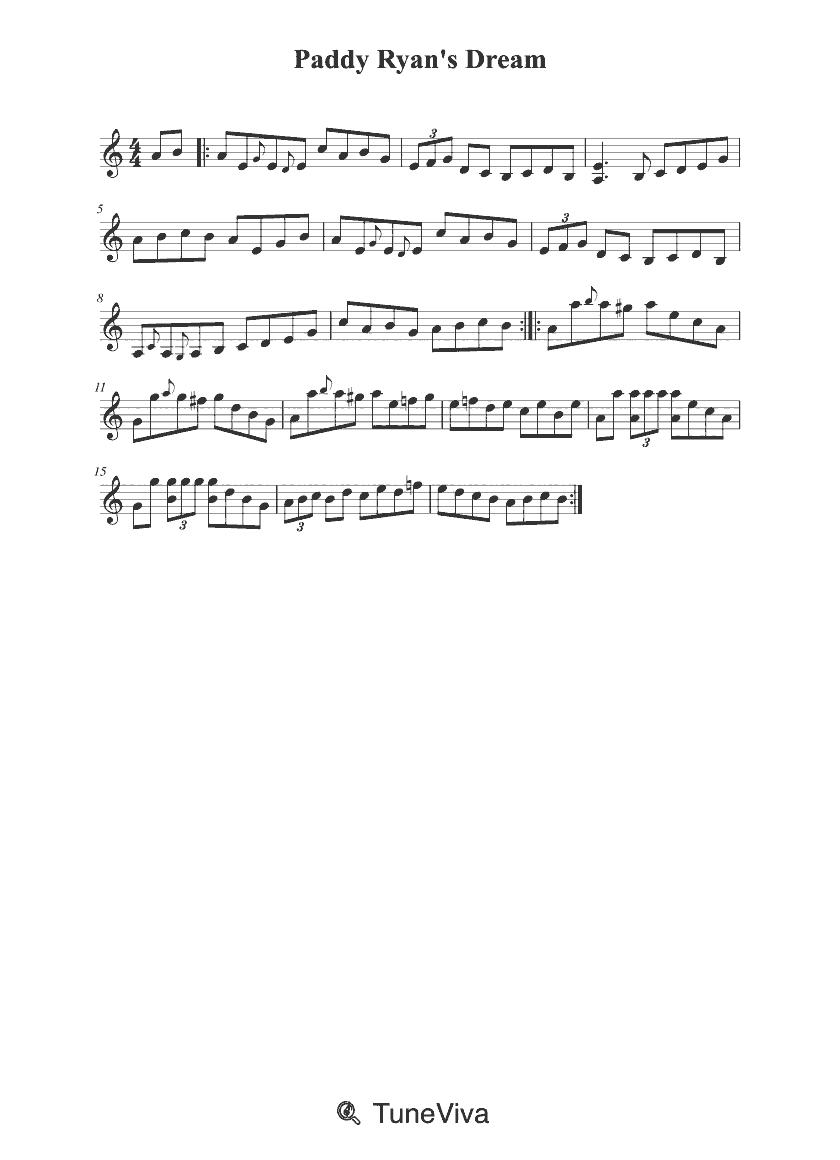
Misc tunes
1 min 4 sec · Score #220107
Open score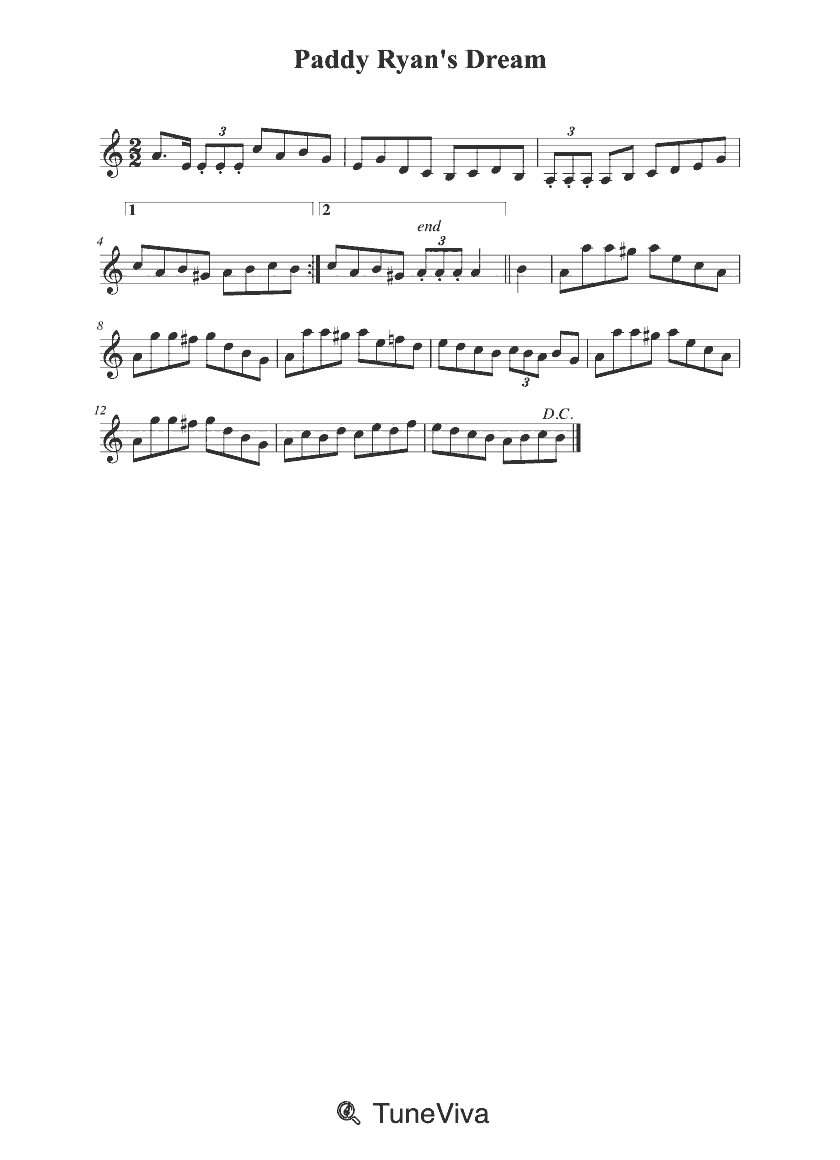
Misc tunes
1 min 58 sec
Open score
anon.
1 min 47 sec
Open score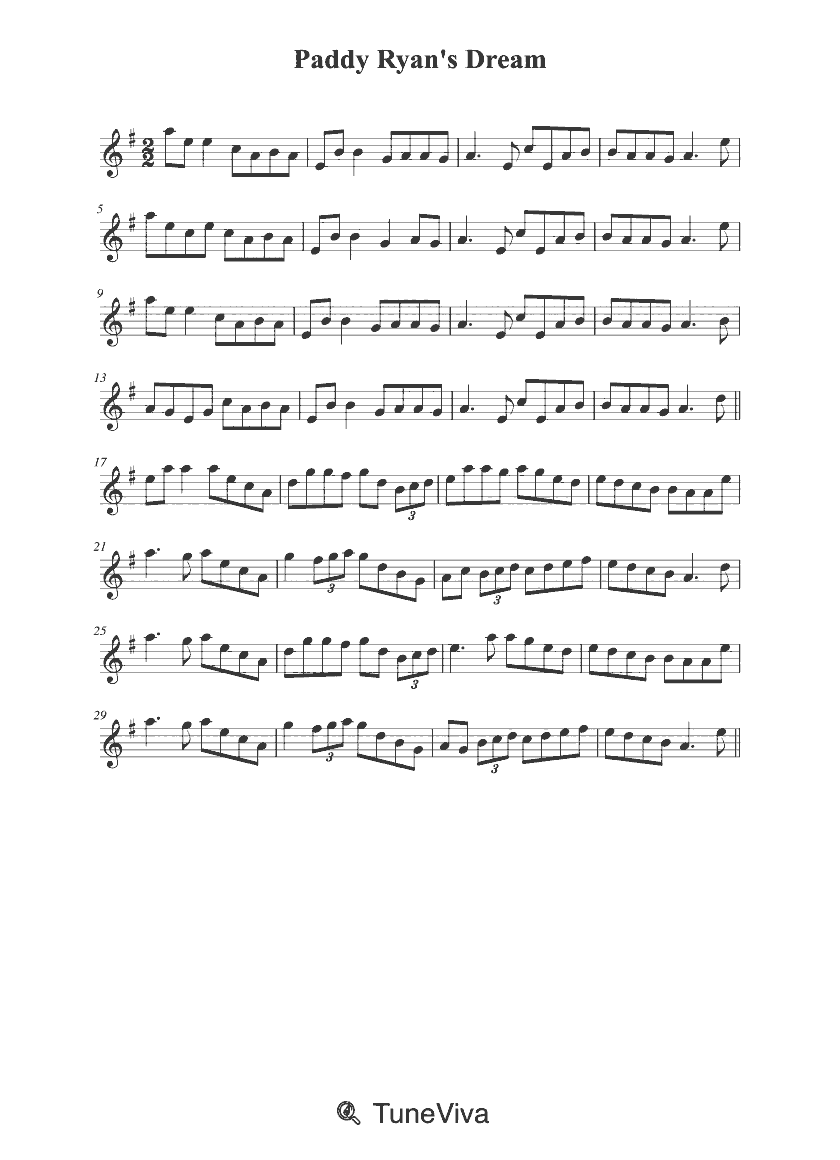
Misc tunes
2 min 8 sec · Score #64825
Open score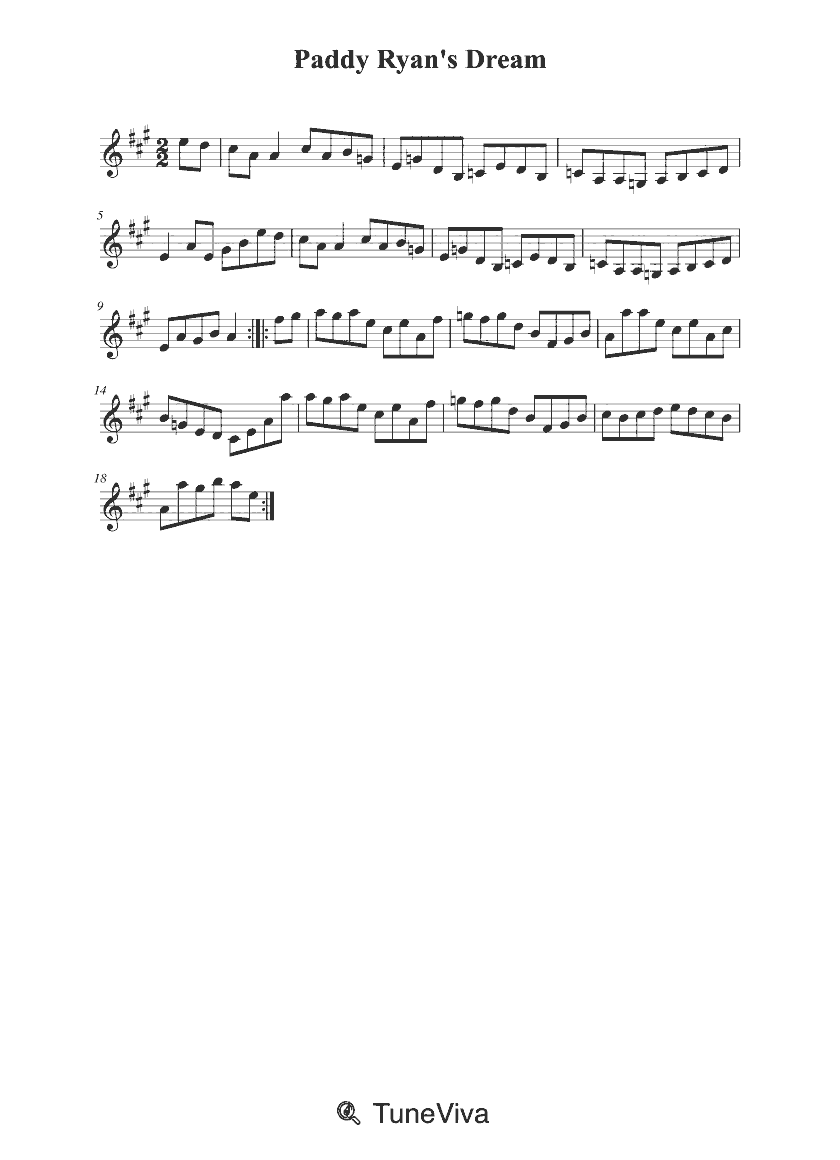
Misc tunes
2 min 8 sec · Score #146453
Open score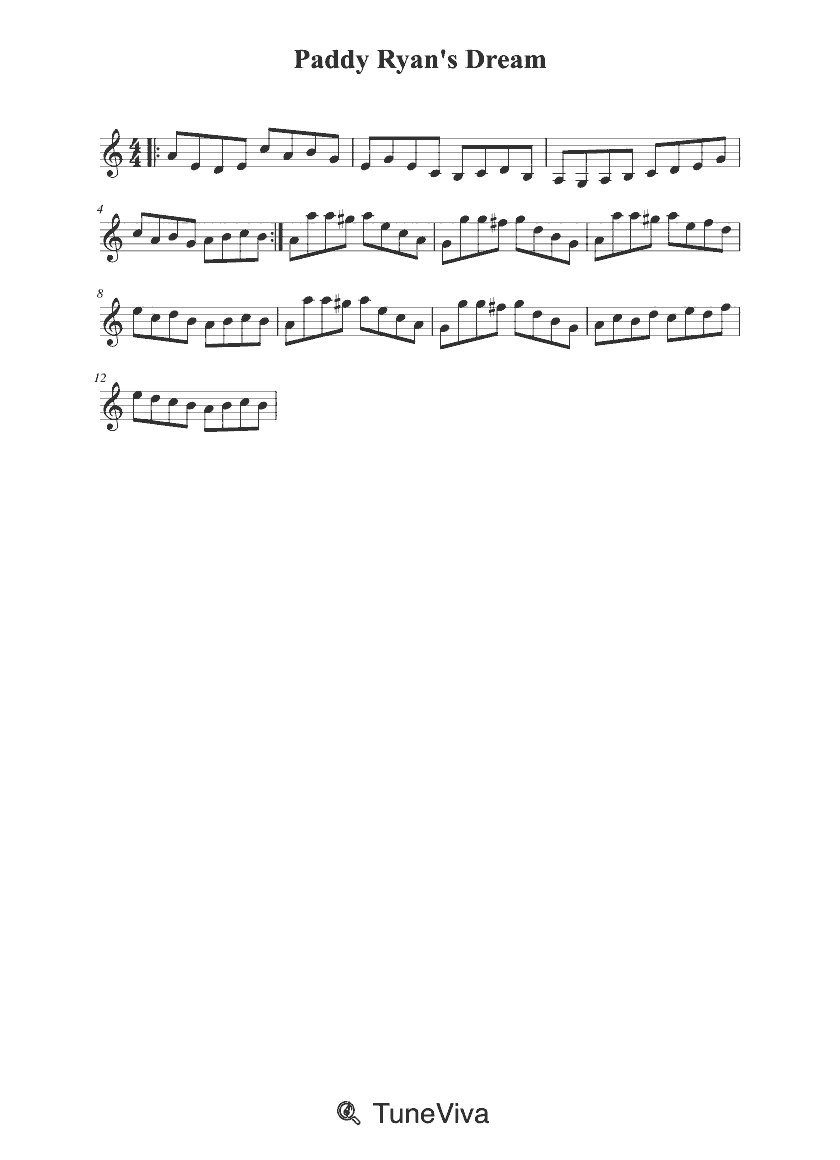
Misc tunes
32 sec · Score #156241
Open scorePage 1 of 2
The three scores present Paddy Ryan's Dream in different notated forms. One is titled as a McNamara setting and labelled “reel”; the other two carry no comparable label or composer credit. Treat these as separate scores to compare rather than as proof of one definitive version.
Two scores begin with no sharps or flats and are notated in 4/4. The third begins with one sharp and is notated in 2/2. These details describe the opening notation only; they do not by themselves establish the piece's overall key or show which setting is more authentic.
No composer is named on two of the scores. The remaining setting is credited “after McNamara,” a phrase that indicates a connection to McNamara without confirming original authorship. Similarly, the “reel” description belongs to one setting and should not be applied automatically to every version.
Compare the opening key signature, time signature and credit before selecting a version. Players who need the one-sharp notation can choose the 2/2 setting, while the two scores with no sharps or flats offer 4/4 notation. If you are following a particular named setting, the McNamara credit may be the deciding detail.
Catalogue duration 1 min 28 sec. Opening key signature: No sharps or flats. Opening time signature: 4/4.
Catalogue duration 1 min 5 sec. Opening key signature: No sharps or flats. Opening time signature: 4/4.
Catalogue duration 2 min 8 sec. Opening key signature: 1 sharp. Opening time signature: 2/2.
One of the three scores is explicitly labelled “(reel)” in its title; the other two are not. That label supports describing that particular setting as a reel, but it does not prove that every version of Paddy Ryan's Dream is a reel.
Two of the three scores list no composer, while one is credited “after McNamara.”
The three scores begin with different key signatures: two have no sharps or flats and one has one sharp. Those markings describe the opening notation only and do not by themselves identify the key or prove that one version is more authentic. Check the full score and your group's preferred key before choosing.
Two scores are notated in 4/4 and one in 2/2. The difference affects how the music is counted and conducted, so players joining a session or ensemble should confirm which meter the group uses rather than assuming the versions are interchangeable.
Compare the opening key signature, meter and attribution. A player who needs the one-sharp notation can choose the score in 2/2 with one sharp; those wanting 4/4 notation with no sharps or flats have two options. The credit “after McNamara” may also matter if you are following that particular setting.