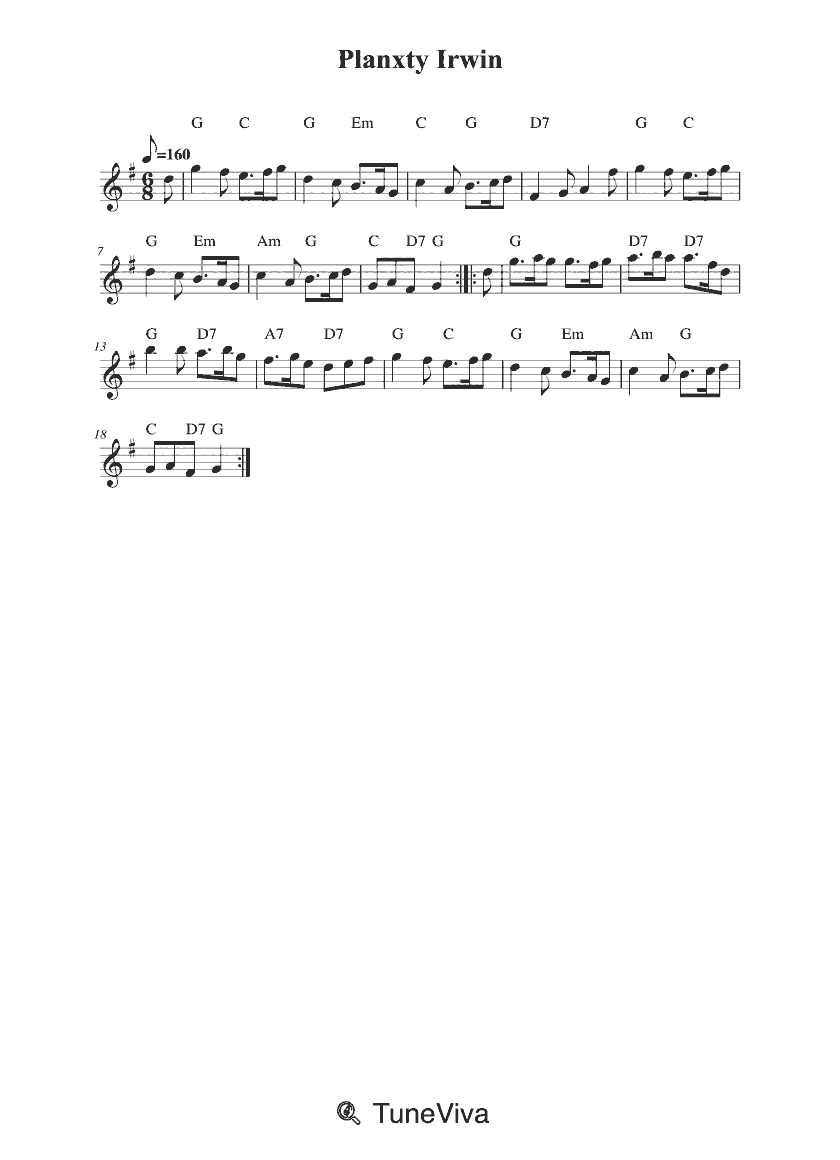
Planxty Irwin
Turlough O'Carolan
36 sec
Open scorePlanxty Irwin sheet music appears here in several settings attributed to Turlough O'Carolan. The versions are not identical: some open in G major with one sharp, others in D major with two, and the listed opening tempos range from 80 to 105 BPM. All three scores are in 6/8, a compound metre that shapes the tune's lilt.
Scores 1–20 of 30
Turlough O'Carolan
36 sec
Open score
Turlough O'Carolan
Colonel John Irwin
13 sec · Score #48589
Open score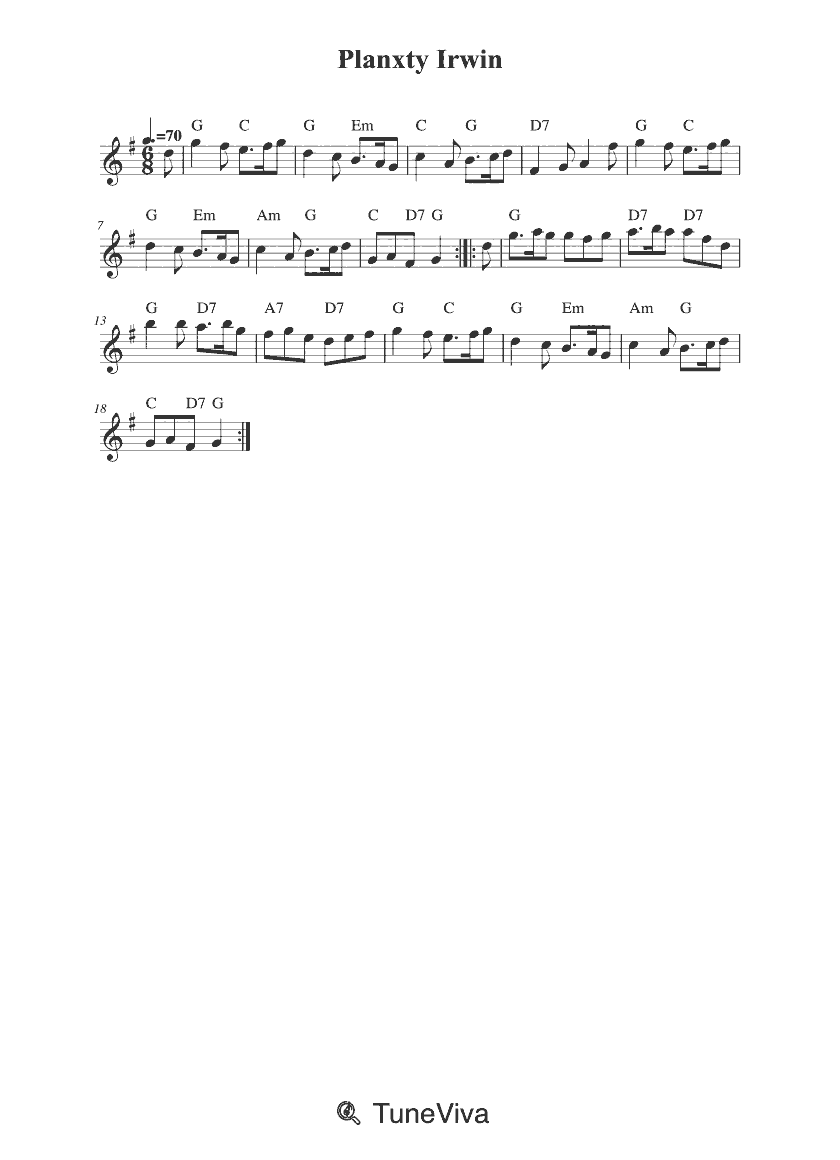
Turlough O'Carolan
Colonel John Irwin
27 sec
Open score
Misc tunes
Colonel John Irwin
54 sec
Open score
Misc tunes
49 sec
Open score
Turlough O'Carolan
2 min 0 sec
Open score
Turlough O'Carolan
Colonel John Irwin
18 sec · Score #54550
Open score
Turlough O'Carolan
Colonel John Irwin
18 sec · Score #226118
Open score
Turlough O'Carolan
48 sec
Open score
Misc tunes
Colonel John Irwin
24 sec
Open score
Turlough O'Carolan
Colonel John Irwin
18 sec · Score #187433
Open score
Turlough O'Carolan
1 min 36 sec
Open score
Turlough O'Carolan
1 min 12 sec · Score #43106
Open score
Turlough O'Carolan
30 sec
Open score
Turlough O'Carolan
Colonel John Irwin
18 sec · Score #192393
Open score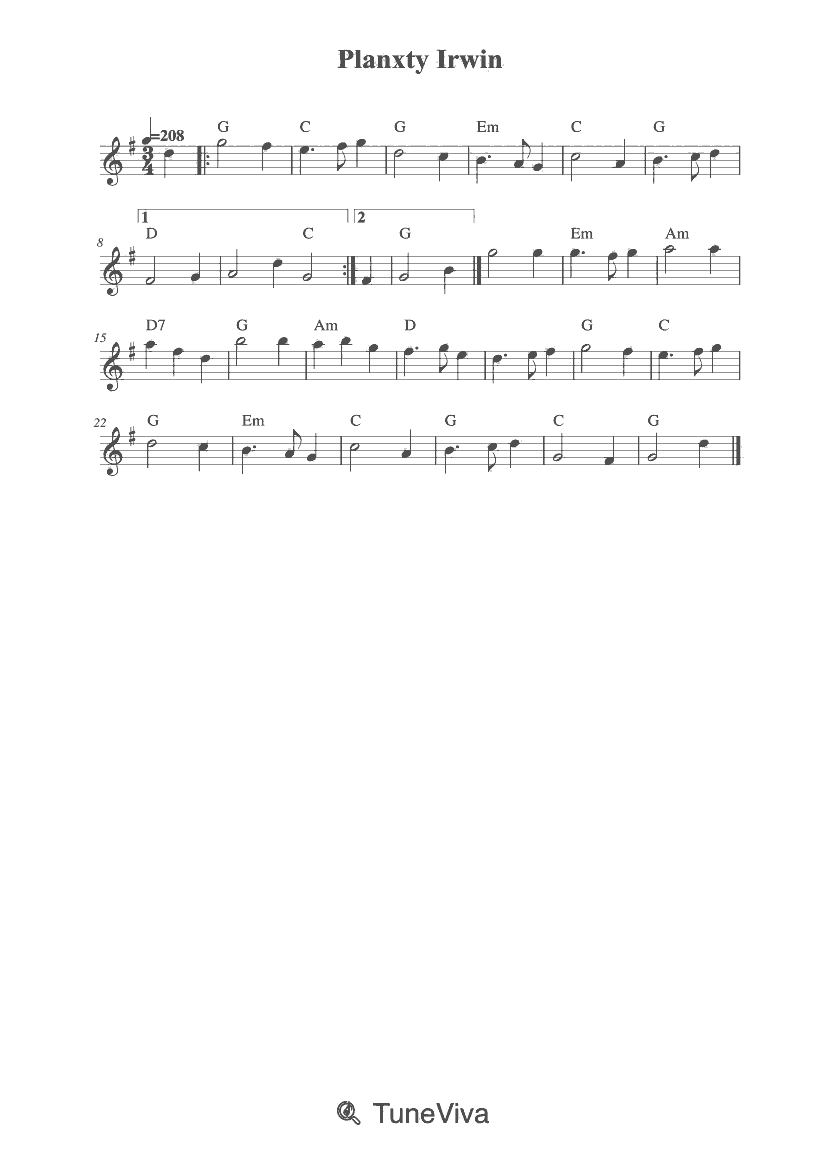
Misc tunes
28 sec
Open score
Turlough O'Carolan
1 min 36 sec
Open score
Turlough O'Carolan
Colonel John Irwin
13 sec · Score #30453
Open score
Turlough O'Carolan
1 min 12 sec · Score #45721
Open score
Turlough O'Carolan
1 min 35 sec
Open scorePage 1 of 2
The listed versions of Planxty Irwin divide between G major (one sharp) and D major (two sharps). If you are playing with others, match their key; if you are choosing for a melody instrument, compare the range and fingering in each score rather than assuming one setting is easier. The key signature and the notes themselves are the practical guide.
A 6/8 bar groups six quavers into two beats of three. In Planxty Irwin, let the first quaver of each group carry a little weight and keep the middle quaver light, so the tune lilts instead of stumbling. The notation shows the metre, but the phrase shape comes from the melody line.
The scores here carry opening tempos of 80 BPM and 105 BPM, which shows that even the listed versions do not agree on speed. Use the marking as a guide, then adjust to the setting: slower while learning the notes, more flowing when the tune is played for listeners.
The scores name Turlough O'Carolan, but no verified source accompanies this page, so treat the attribution as a lead to check. The scores also differ in note count, which indicates different arrangements rather than a single authorised text. Compare endings and repeat patterns before treating one version as definitive.
Catalogue duration 36 sec. Opening key signature: 1 sharp (G major). Opening time signature: 6/8. Opening tempo: 80 BPM.
Catalogue duration 13 sec. Opening key signature: 2 sharps (D major). Opening time signature: 6/8.
Catalogue duration 27 sec. Opening key signature: 1 sharp (G major). Opening time signature: 6/8. Opening tempo: 105 BPM.
The scores listed here credit Turlough O'Carolan with composing Planxty Irwin. That credit is not backed by a verified source on this page, so confirm it with a scholarly or publisher edition if you need the attribution for performance or programme notes.
Planxty Irwin is presented here in two keys: G major, with one sharp, and D major, with two sharps. Choosing between them depends on the range of your instrument and the key of the other players; the notation, not the title, determines the actual notes.
Planxty Irwin is notated in 6/8 in all three versions listed here. A 6/8 bar has two main beats, each divided into three quavers, which gives the tune a lilting, compound feel.
Planxty Irwin has no single required tempo; the versions here show opening markings of 80 BPM and 105 BPM. Treat a tempo marking as a starting point and adjust it to the setting, the players and the acoustic.
Planxty Irwin appears in differing lengths here because the scores are separate arrangements: note counts range from 81 to 164. A lower note count can mean a shorter setting or a different arrangement, so compare the notation and repeats rather than assuming one version is the complete tune.