
John Playford - Rufty Tufty
John Playford
1 min 52 sec · Score #96156
Open scoreRufty Tufty appears here as three separate scores, two of which name John Playford with a 1651 date alongside the tune, while the third carries no composer and is credited to “Misc tunes.” The notations are not identical: key signatures, time signatures, lengths and designated parts differ between them, so the practical task is comparing the versions rather than assuming one standard text. All three scores use a one-sharp key signature, and two of them identify the key as G major. Two are barred in 2/2 and one in 4/4, and only one names an instrument, marking a Piano part. Use the notes below to weigh metre, part designation and length before settling on a version to read or play from.
Scores 1–20 of 26
John Playford
1 min 52 sec · Score #96156
Open score
Misc tunes
1 min 53 sec
Open score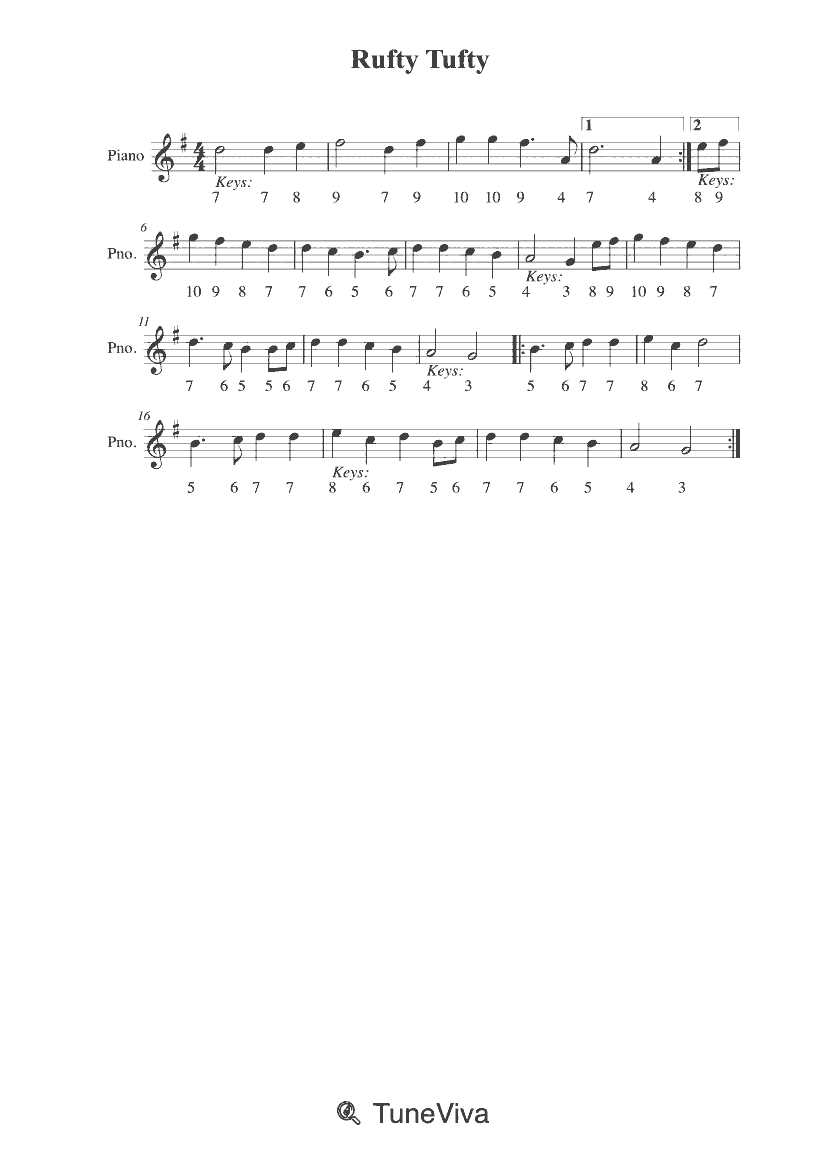
Playford
Piano · 54 sec
Open score
Misc tunes
1 min 52 sec · Score #233068
Open score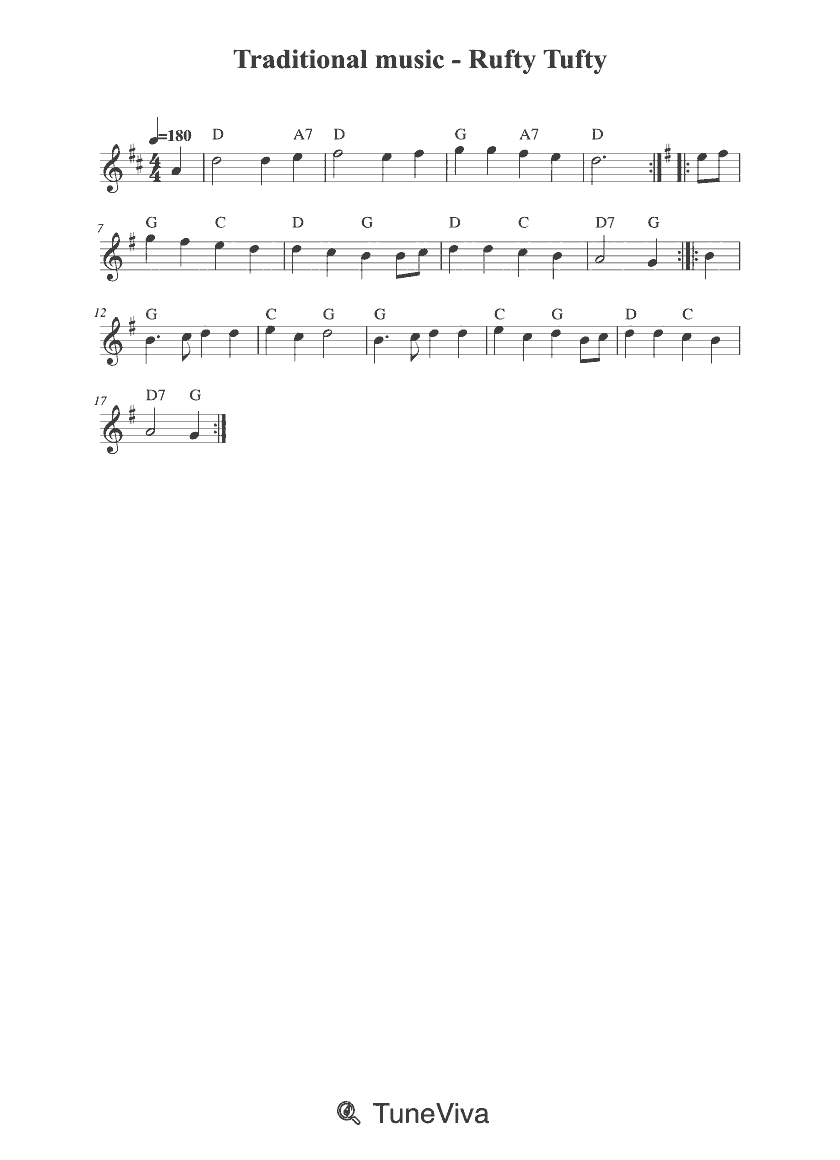
Trad. Playford 1651
37 sec
Open score
Misc tunes
1 min 52 sec · Score #69193
Open score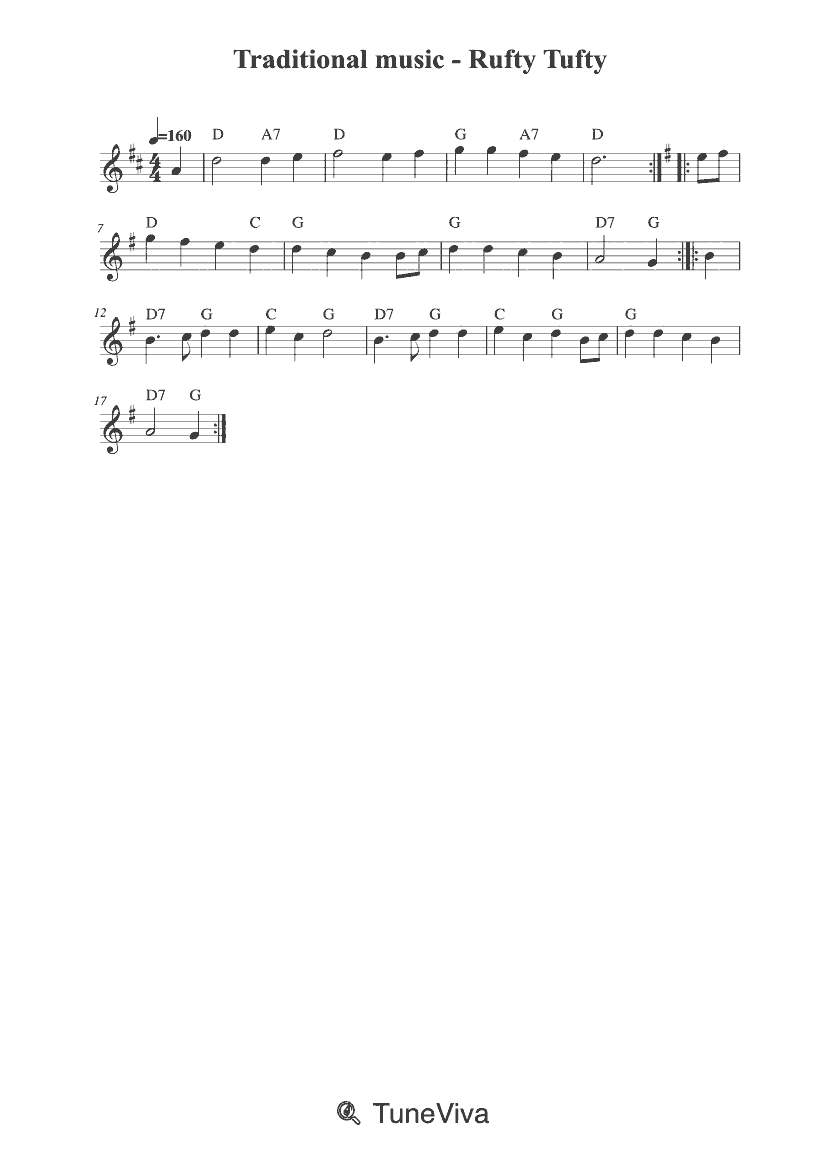
Trad. Playford 1651
42 sec · Score #122909
Open score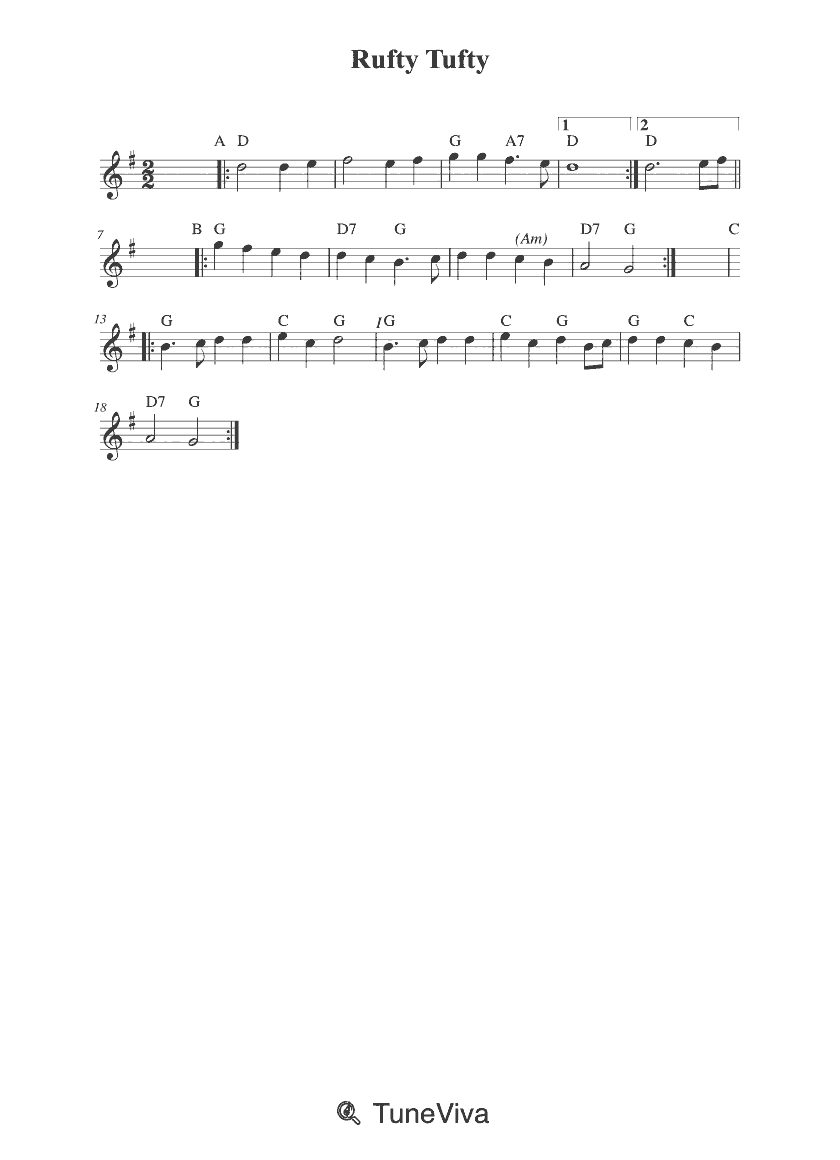
Misc tunes
2 min 4 sec
Open score
John Playford
1 min 52 sec · Score #151192
Open score
Trad.
54 sec
Open score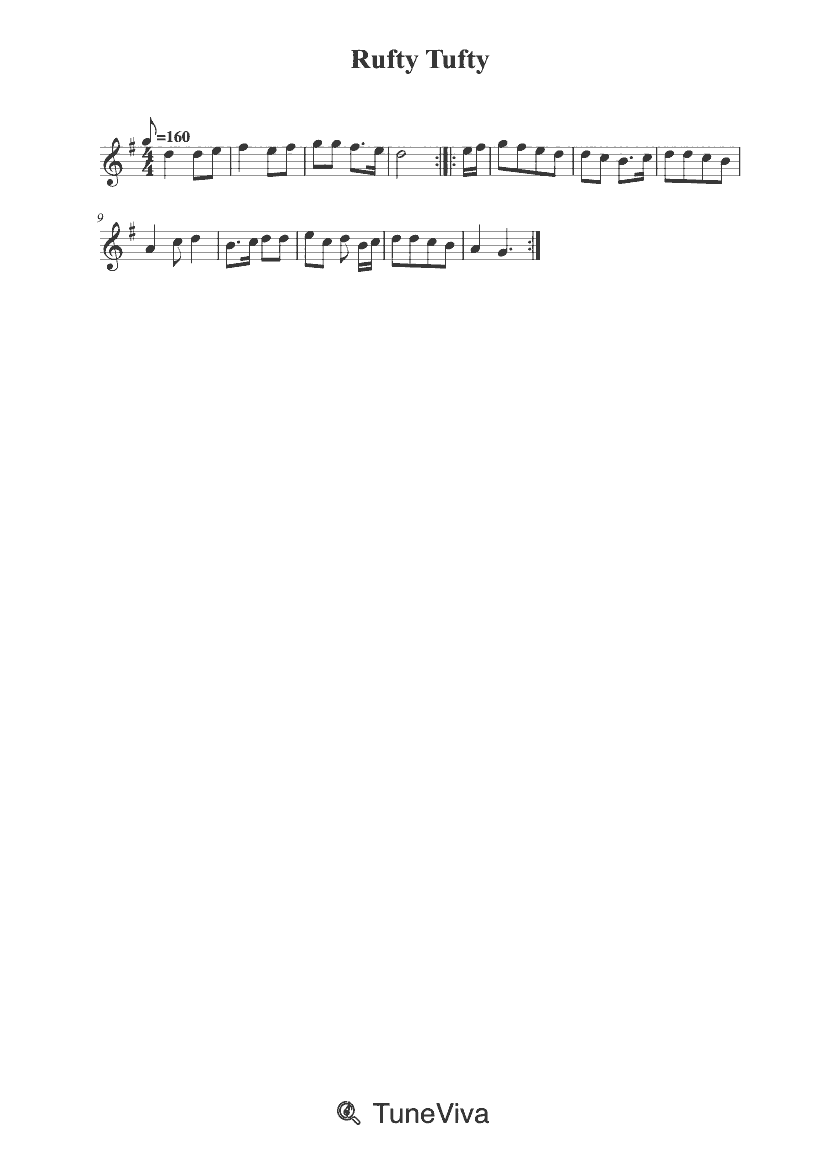
Misc tunes
39 sec
Open score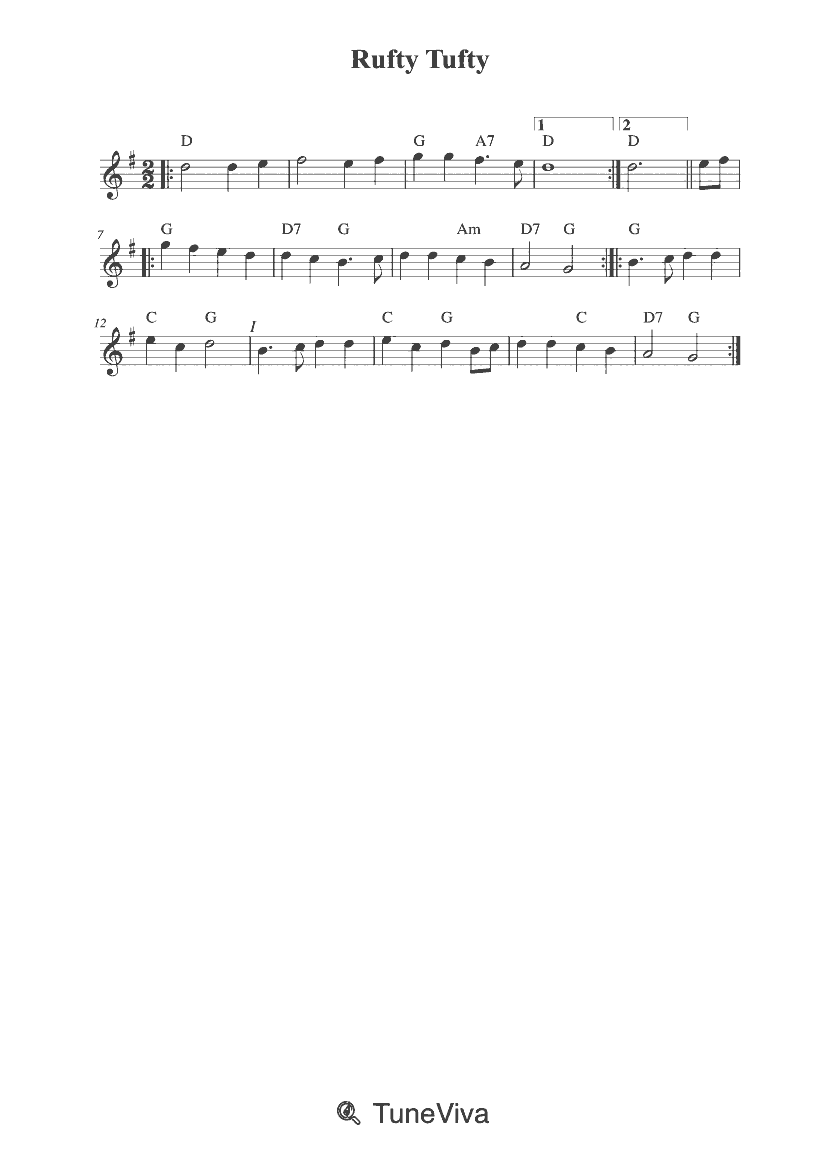
Misc tunes
1 min 52 sec · Score #250177
Open score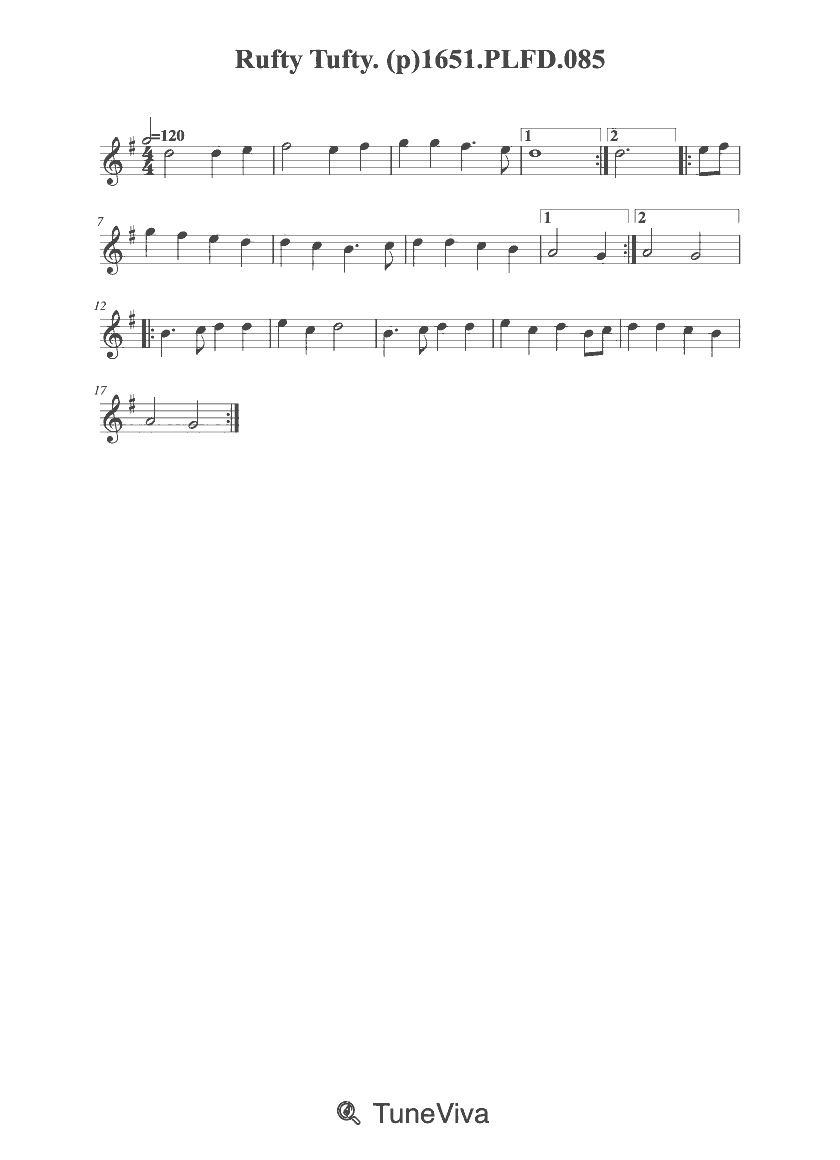
Misc tunes
28 sec
Open score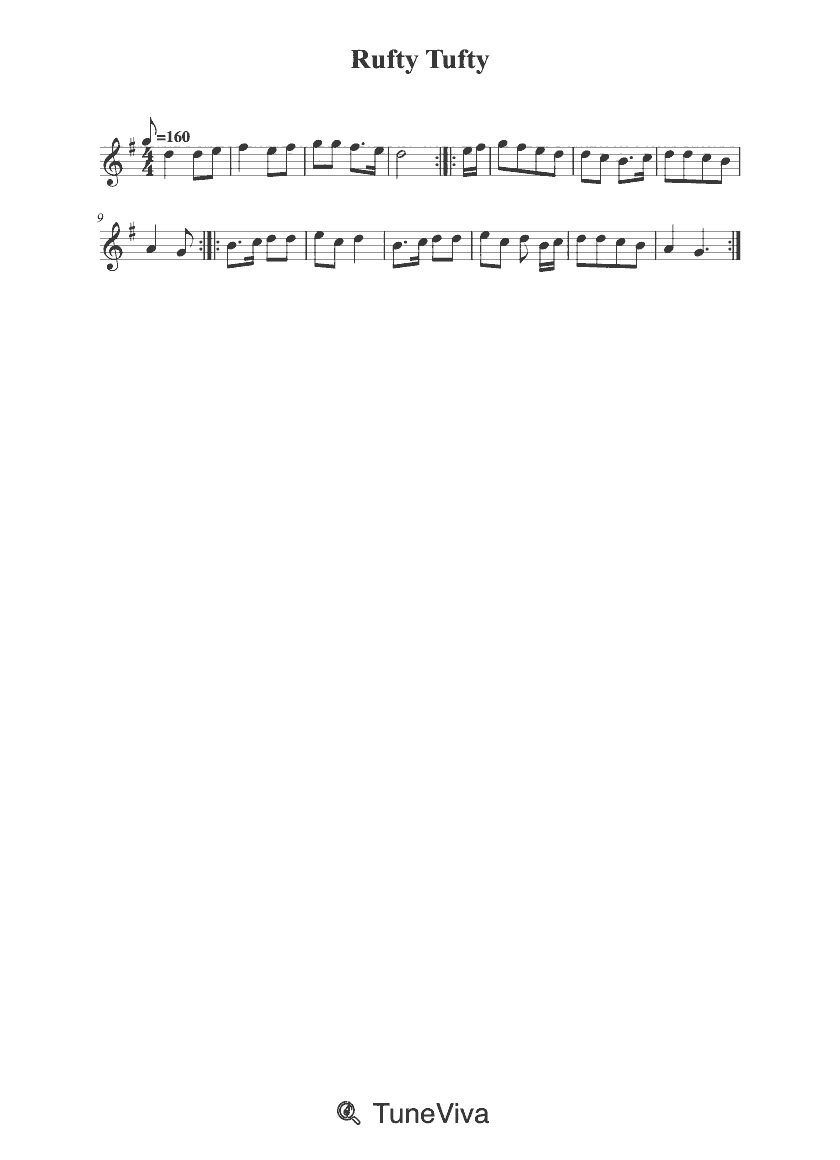
Misc tunes
43 sec
Open score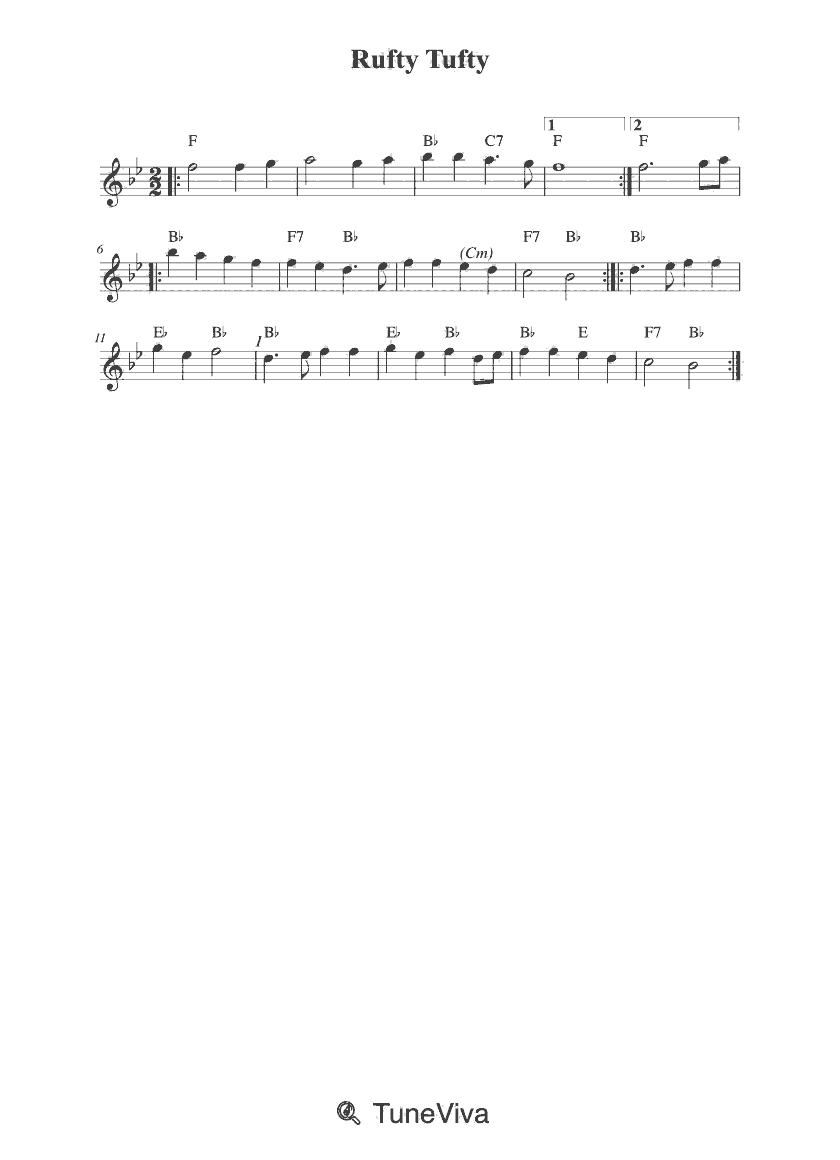
Misc tunes
1 min 52 sec · Score #183626
Open score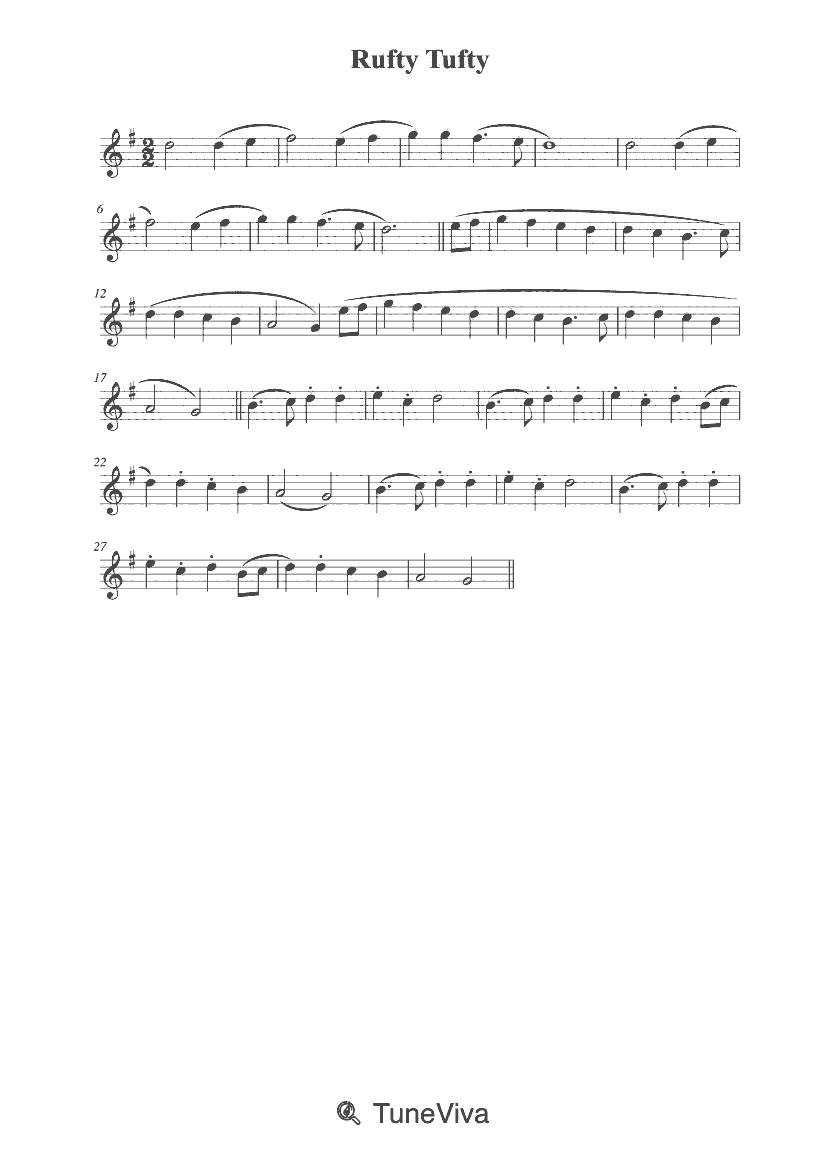
Misc tunes
1 min 52 sec · Score #202352
Open score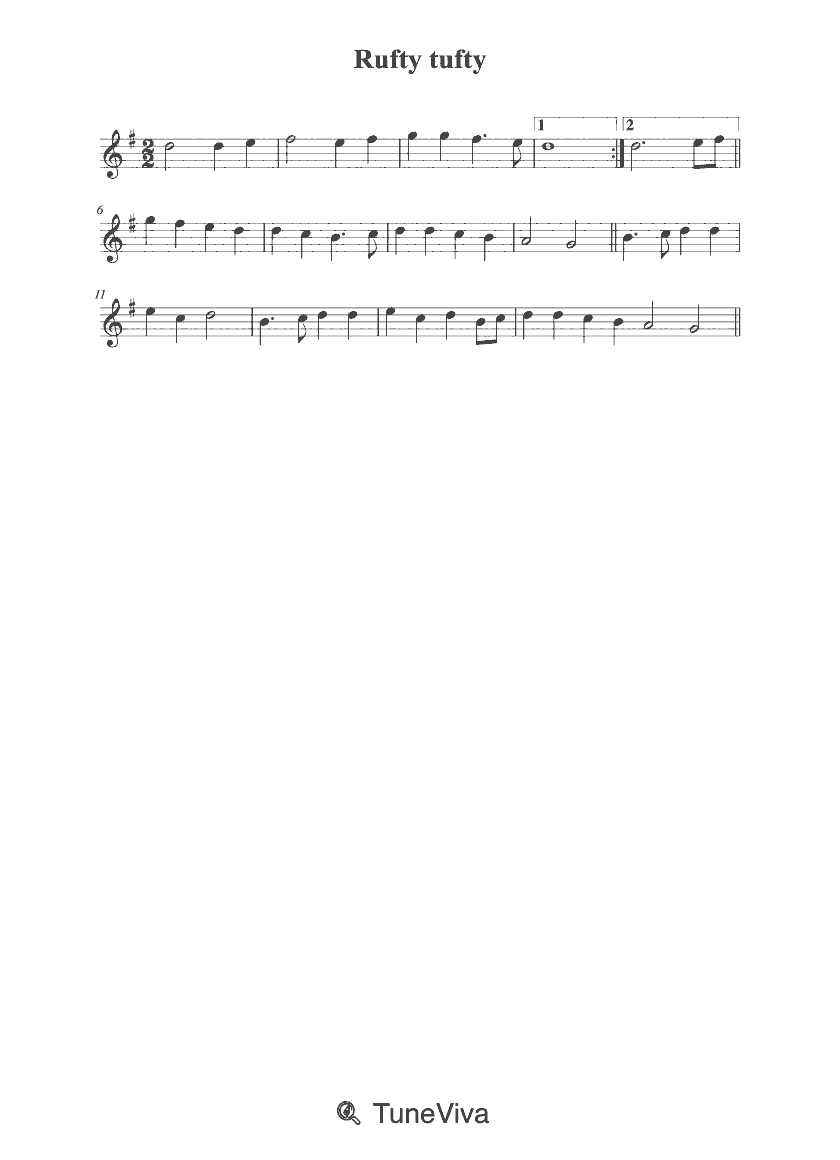
Misc tunes
1 min 12 sec
Open score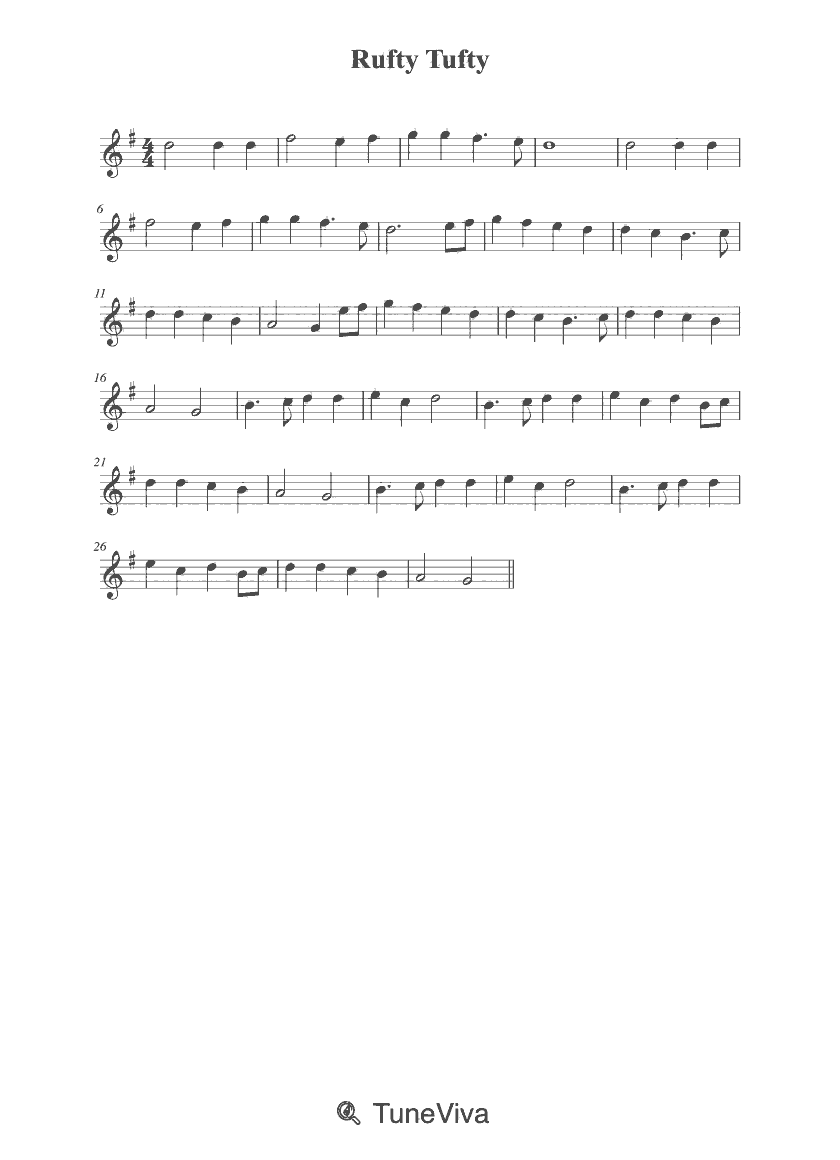
Misc tunes
56 sec
Open score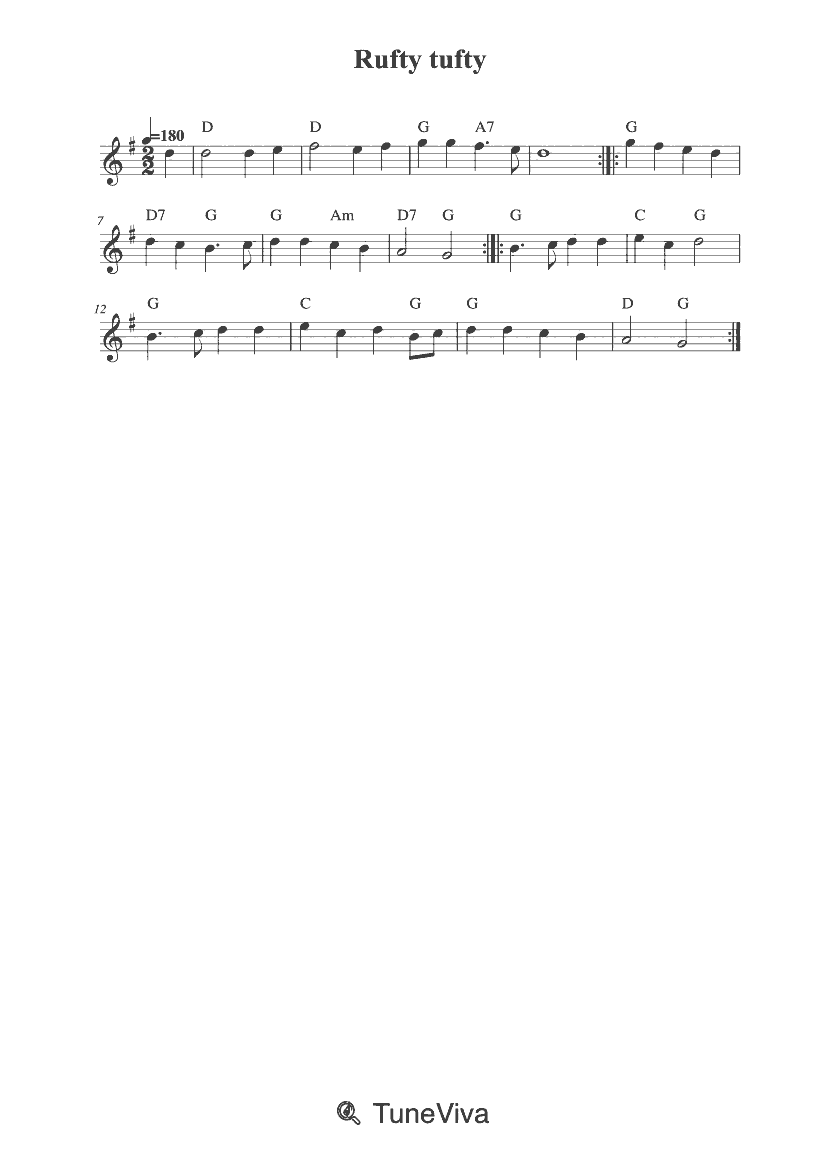
Misc tunes
1 min 16 sec
Open score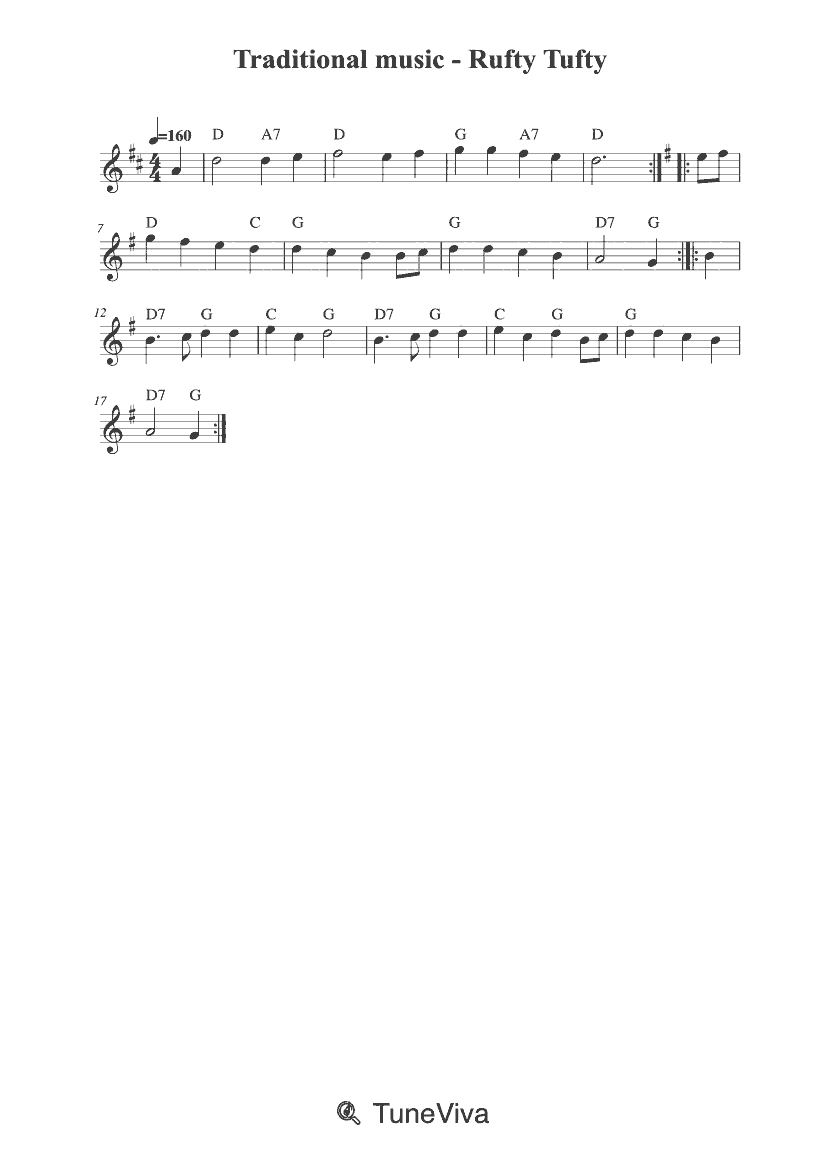
Trad. Playford 1651
42 sec · Score #98882
Open scorePage 1 of 2
Two of the three scores give John Playford as the credited name, with 1651 attached in the composer or artist field; the remaining score is anonymous and credited to “Misc tunes.” These are the credits recorded with each score rather than independently verified attribution, so a musician wanting a firm source for the Playford connection should check a reliable reference before relying on the name.
Every score here carries a one-sharp key signature, and two specify G major. A single sharp can also indicate E minor, so confirm the key from the music itself rather than the signature alone. Metre divides the scores more sharply: two use 2/2 and one uses 4/4. Both are duple, but the choice changes barring, beaming and how the phrases sit on the page, which matters when reading at sight or fitting the tune to a dance or song.
The three scores differ in scale, listed at 212, 100 and 99 notes, with durations of roughly 112, 113 and 54 seconds. Those figures describe individual scores and do not by themselves prove three distinct settings, but they are a fair reason to look at the notation before choosing. Only one score names a part, marked “Piano”; the other two leave instrumentation open, so a piano arrangement should not be assumed for every version.
Nothing supplied with this page documents the tune's origin, its use in dance, its first printing or its original instrumentation. The scores let you compare notations of Rufty Tufty and choose what suits your reading, but they are not evidence of the work's history or of an authoritative edition. Where those questions matter, treat the Playford and 1651 credits as a starting point for further research.
Catalogue duration 1 min 52 sec. Opening key signature: 1 sharp (G major). Opening time signature: 2/2. Opening tempo: 240 BPM.
Catalogue duration 1 min 53 sec. Opening key signature: 1 sharp (G major). Opening time signature: 2/2.
Score parts: Piano. Catalogue duration 54 sec. Opening key signature: 1 sharp. Opening time signature: 4/4.
Two of the three Rufty Tufty scores credit John Playford, with 1651 recorded alongside the name; the third score names no composer and is credited to “Misc tunes.” These credits are the ones attached to each score rather than independently verified facts, so the Playford attribution is best treated as a lead for further checking.
All three Rufty Tufty scores carry a one-sharp key signature, and two of them name the key as G major. Because a single sharp can also serve E minor, reading the opening and closing notes of a score will confirm which key is intended more reliably than the signature on its own.
Two of the Rufty Tufty scores are barred in 2/2 and one in 4/4. Both are duple metres, so the underlying pulse is comparable, but the choice alters how bars are grouped and beamed on the page. If you read at sight or need the notation to line up with a dance, compare the two options and use whichever grouping is clearer for you.
One Rufty Tufty score lists “Piano” among its score parts. The other two scores name no instrument at all, so a piano part should not be assumed for every version; check the designated part on the score you intend to use, particularly if you are planning an ensemble or accompanied performance.
The Rufty Tufty scores differ in listed length, with 212, 100 and 99 notes and durations of roughly 112, 113 and 54 seconds. They also differ in metre, 2/2 against 4/4, and only one names a Piano part. Those details describe the individual scores rather than proving separate compositions, but they are worth comparing before you choose a version.