
Sailor's Hornpipe
English Traditional
Alto Recorder · 32 sec
Open scoreSailor's Hornpipe appears here in several sheet-music settings rather than as a single fixed version. The available scores differ in their opening key and time signature: one begins in D major with two sharps in 2/2, one has no sharps or flats in 2/4, and one begins in G major with one sharp in 4/4. One score also names an alto recorder part. Compare those details before choosing a version, because the title alone does not identify one identical arrangement.
Scores 1–20 of 36
English Traditional
Alto Recorder · 32 sec
Open score
Misc tunes
48 sec
Open score
Misc tunes
2 min 8 sec · Score #14551
Open score
As played by Ancient Mariners
38 sec
Open score
Misc tunes
3 min 13 sec
Open score
Unattributed
2 min 10 sec
Open score
Misc tunes
College Hornpipe
1 min 4 sec
Open score
Misc tunes
2 min 8 sec
Open score
Misc tunes
2 min 8 sec · Score #164826
Open score
anon.
32 sec · Score #66585
Open score
Misc tunes
1 min 36 sec
Open score
Misc tunes
55 sec
Open score
Trad
1 min 20 sec
Open score
anon.
1 min 37 sec
Open score
anon.
32 sec · Score #27464
Open score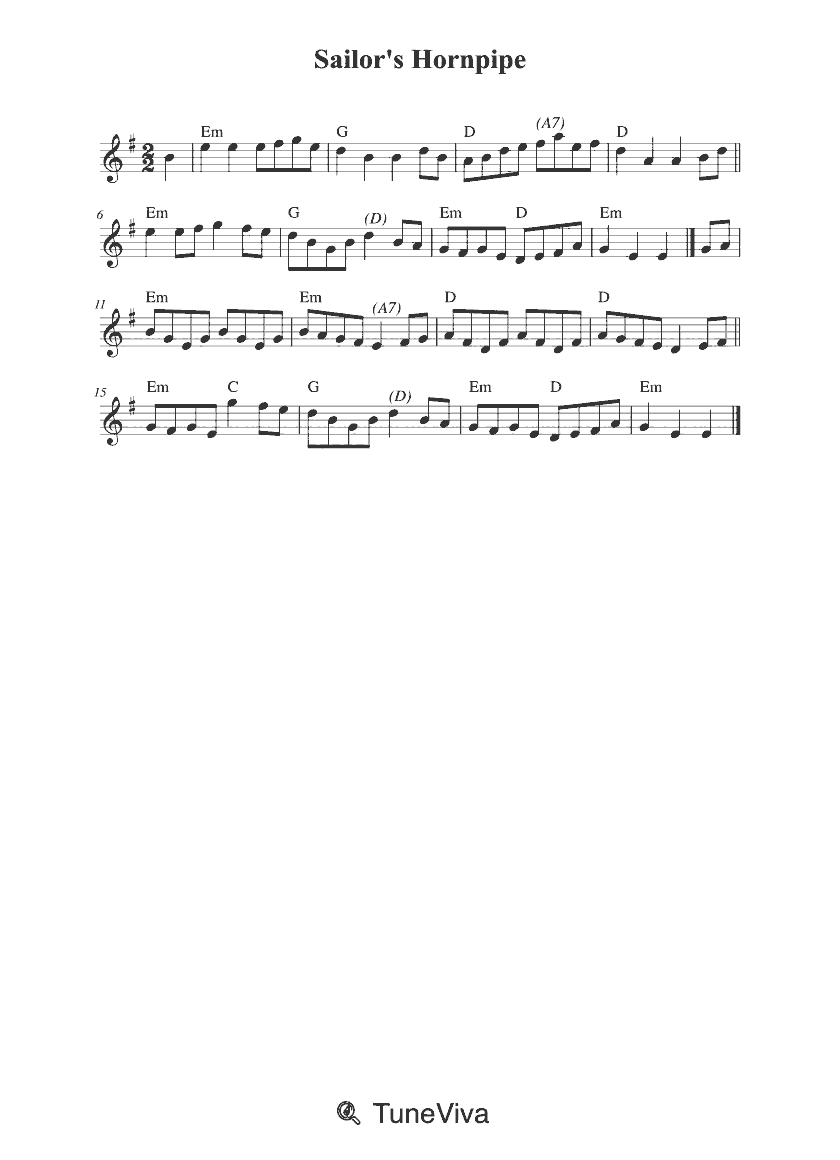
Misc tunes
1 min 4 sec
Open score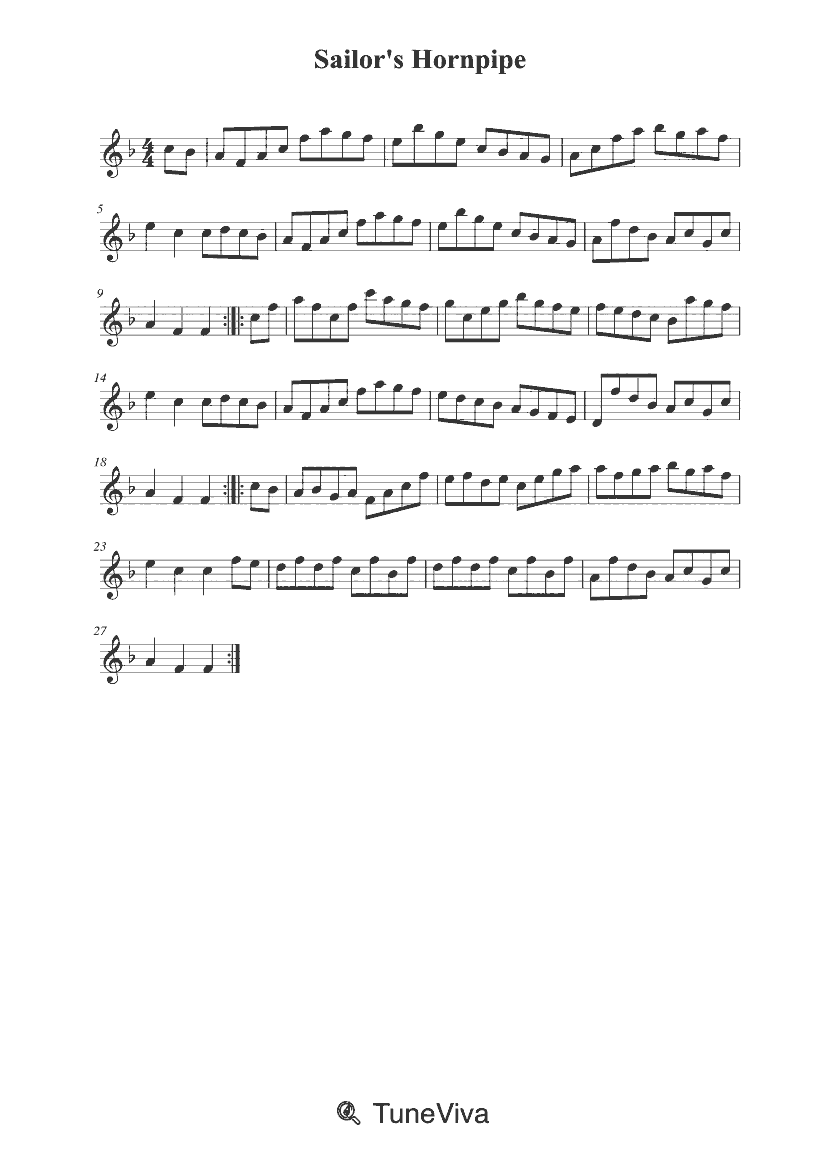
Misc tunes
Old Man QuinnLogier's Hornpipe
1 min 36 sec
Open score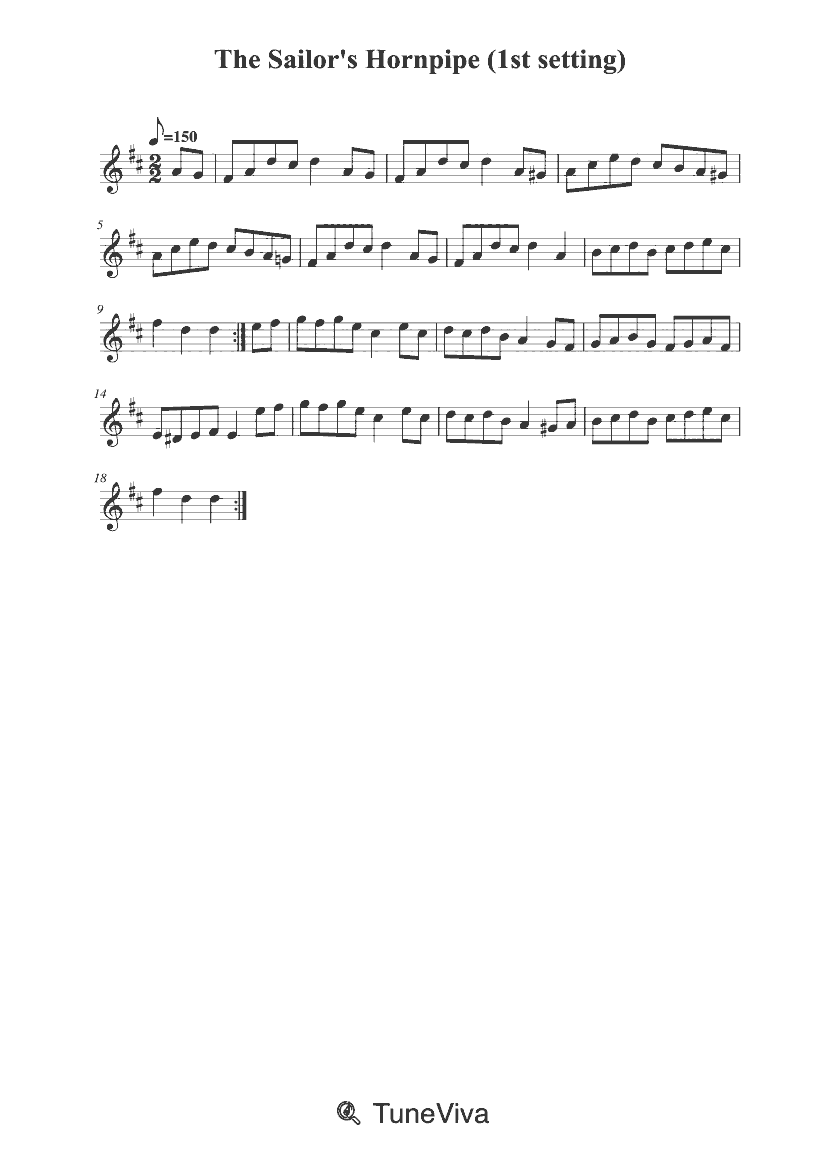
Misc tunes
4 min 16 sec
Open score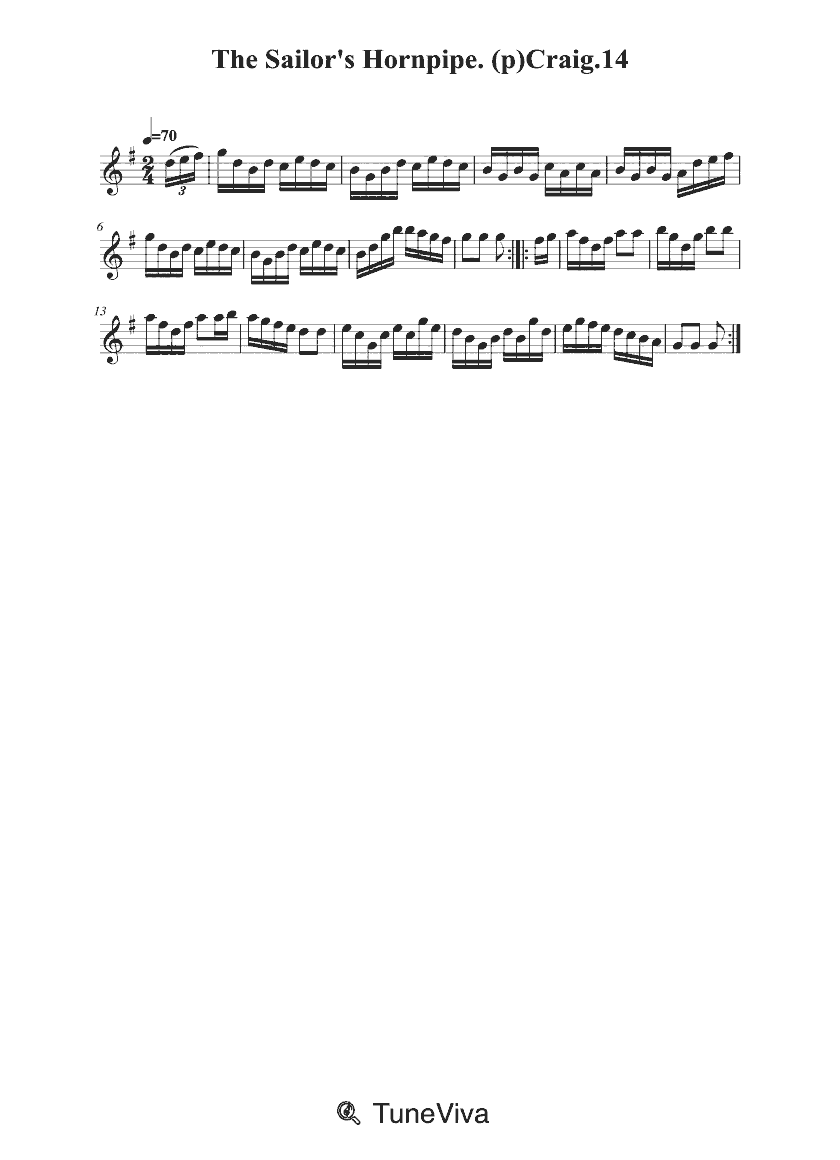
Misc tunes
55 sec
Open score
Unattributed
2 min 10 sec
Open scorePage 1 of 2
The clearest differences among the available Sailor's Hornpipe scores are the opening key and metre. One version opens in D major in 2/2, another has no sharps or flats in 2/4, and a third opens in G major in 4/4. These details can help you match a score to your instrument or preferred reading key, but they do not establish difficulty.
Only one of the available Sailor's Hornpipe scores names a score part: Alto Recorder. The other versions do not specify an instrument in the supplied details, so their scoring should not be assumed. If you need a particular instrument, begin with the score that explicitly identifies it.
The scores use titles such as “Sailor's Hornpipe,” “the Sailors Hornpipe” and “The Sailor's Hornpipe.” Differences in capitalisation and punctuation do not prove that the settings are the same arrangement. Compare key, time signature and any named instrumentation instead.
This page can help you compare the available score settings, but it does not establish a confirmed historical account of Sailor's Hornpipe.
Score parts: Alto Recorder. Catalogue duration 32 sec. Opening key signature: No sharps or flats. Opening time signature: 2/4.
Catalogue duration 48 sec. Opening key signature: 1 sharp (G major). Opening time signature: 4/4.
Catalogue duration 2 min 8 sec. Opening key signature: 2 sharps (D major). Opening time signature: 2/2.
Sailor's Hornpipe is a tune title represented here by several sheet-music settings. The available versions differ in opening key, time signature and, in one case, named instrumentation, so the title does not point to a single identical arrangement on this page.
The available Sailor's Hornpipe settings include one opening in D major with two sharps in 2/2, one with no sharps or flats in 2/4, and one opening in G major with one sharp in 4/4. Checking these details helps match a score to your instrument or preferred reading key.
One score titled “Sailor's Hornpipe” specifies Alto Recorder as its score part. The other available versions do not name an instrument in the supplied details, so their scoring should not be assumed.
The available Sailor's Hornpipe settings are not identical on the supplied details: they use different opening keys and time signatures, and only one names a score part.
Difficulty is not established by the supplied details, so no available Sailor's Hornpipe version can be called easy or assigned a grade here. Key, time signature and named instrumentation are useful for matching a score, but they do not measure difficulty; the score itself is the better guide.
Capitalisation and punctuation differences in titles such as “Sailors Hornpipe” and “The Sailor's Hornpipe” do not prove that the settings are the same arrangement. Comparing opening key, time signature and named instrumentation gives a clearer basis for telling the scores apart.