Scully Casey's
Misc tunes
24 sec · Score #17902
Open scoreThis page gathers Scully Casey's sheet music in three listed versions, with no composer credited for any of them. The scores share a compound-metre character: two open in 6/8 and one in 12/8, while their opening key signatures are one sharp or two flats. Because no verified historical background is available here, the page focuses on what the scores themselves show and how to compare the versions.
Scores 1–20 of 24
Misc tunes
24 sec · Score #17902
Open score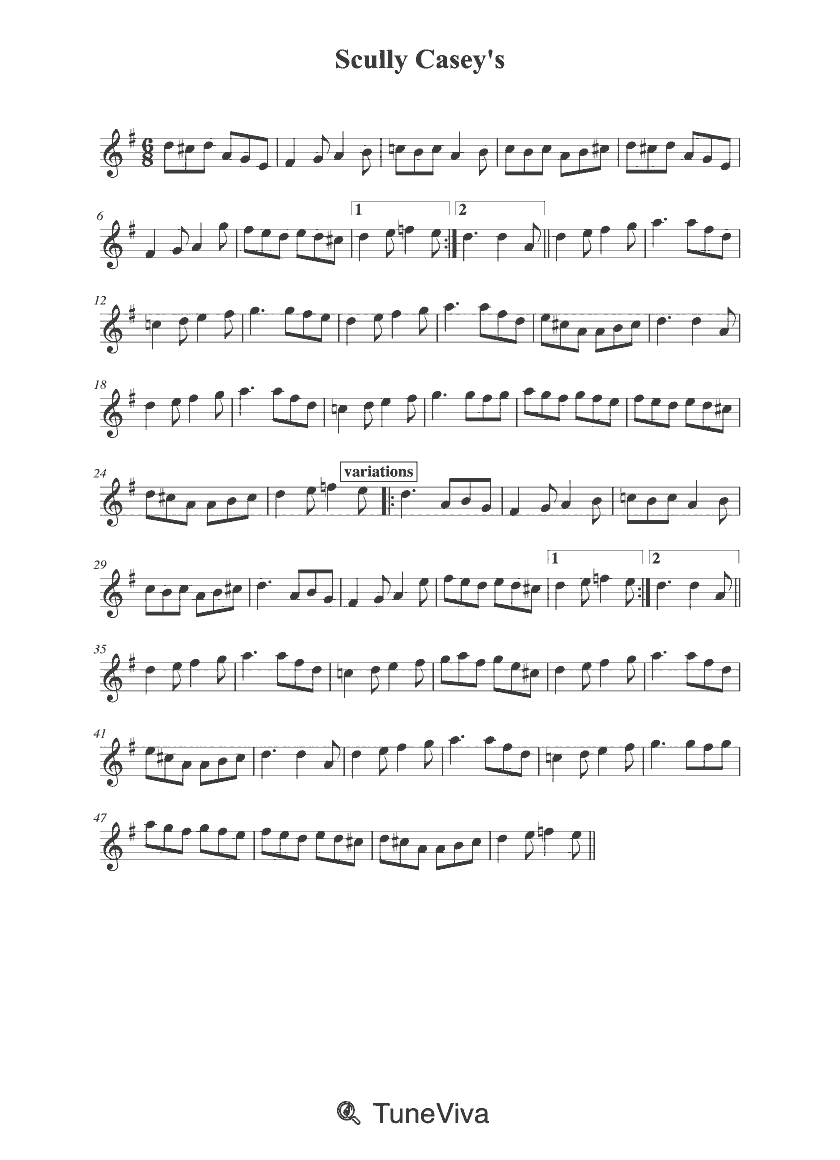
Misc tunes
48 sec
Open score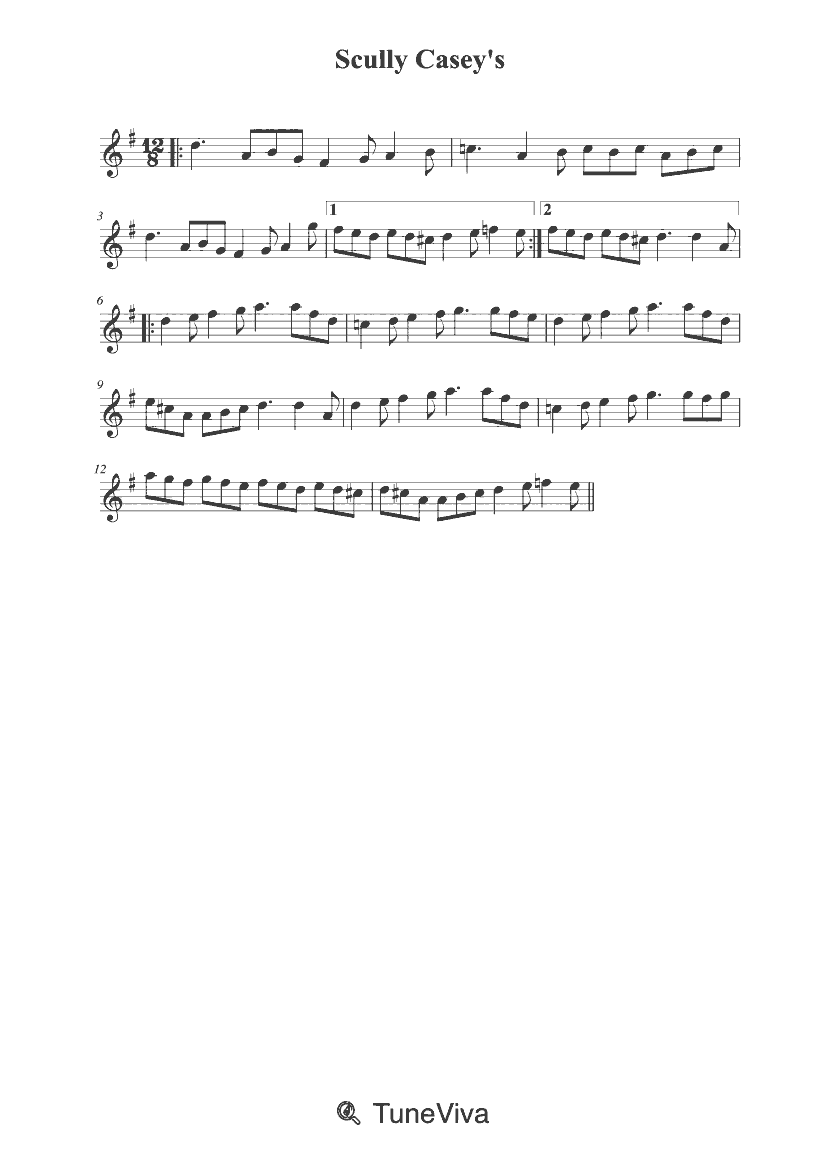
Misc tunes
36 sec
Open score
Misc tunes
32 sec
Open score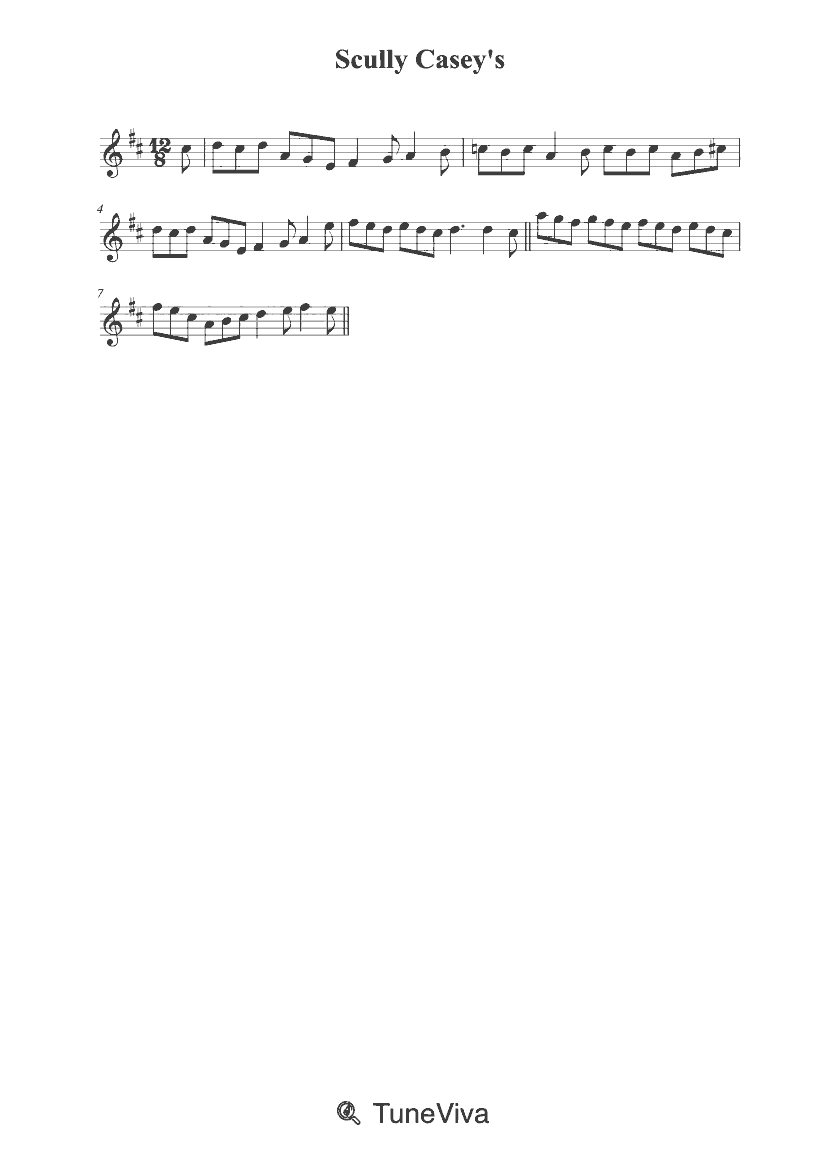
Misc tunes
9 sec
Open score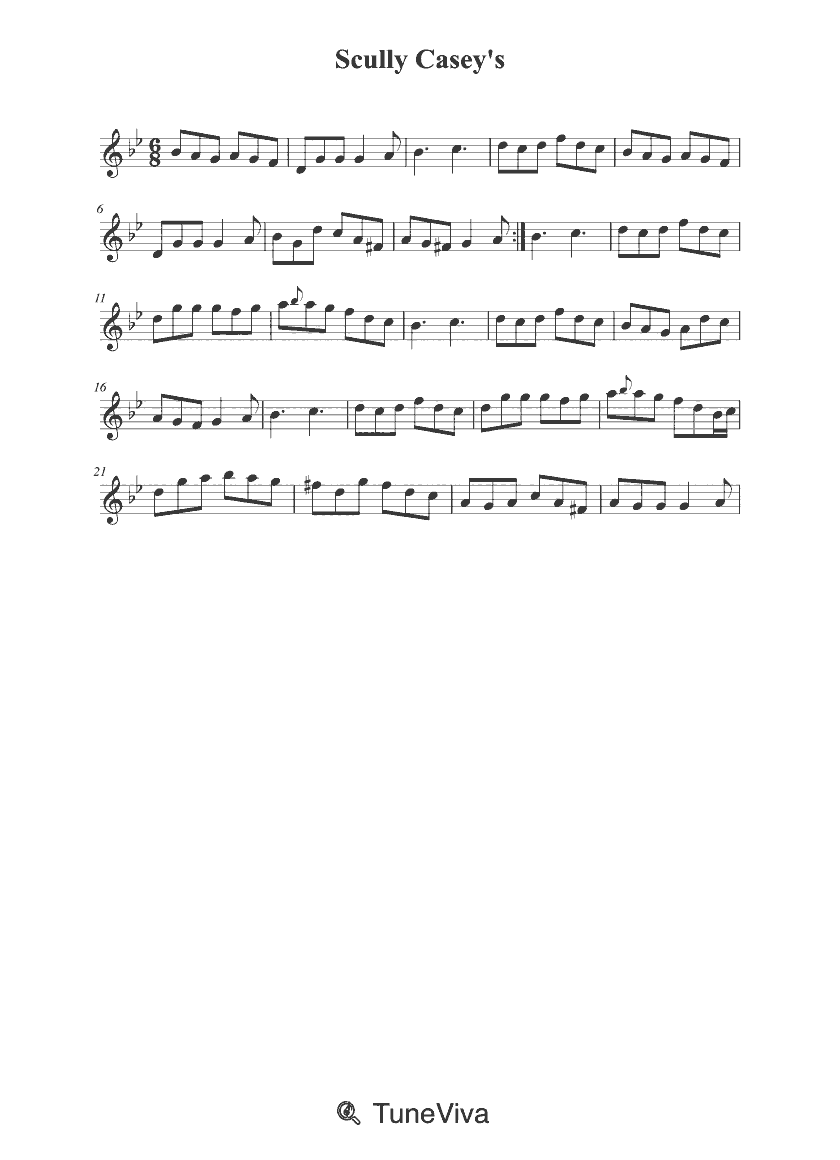
Misc tunes
24 sec · Score #115758
Open score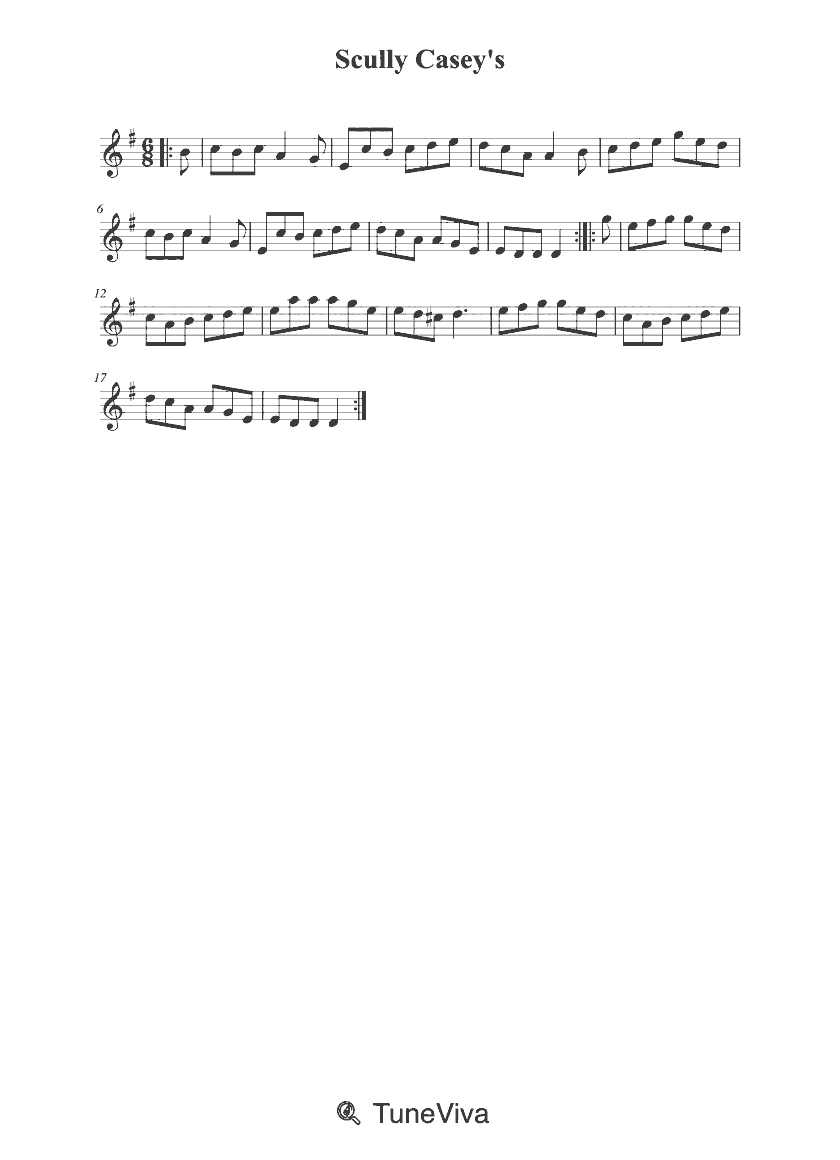
Misc tunes
24 sec · Score #124358
Open score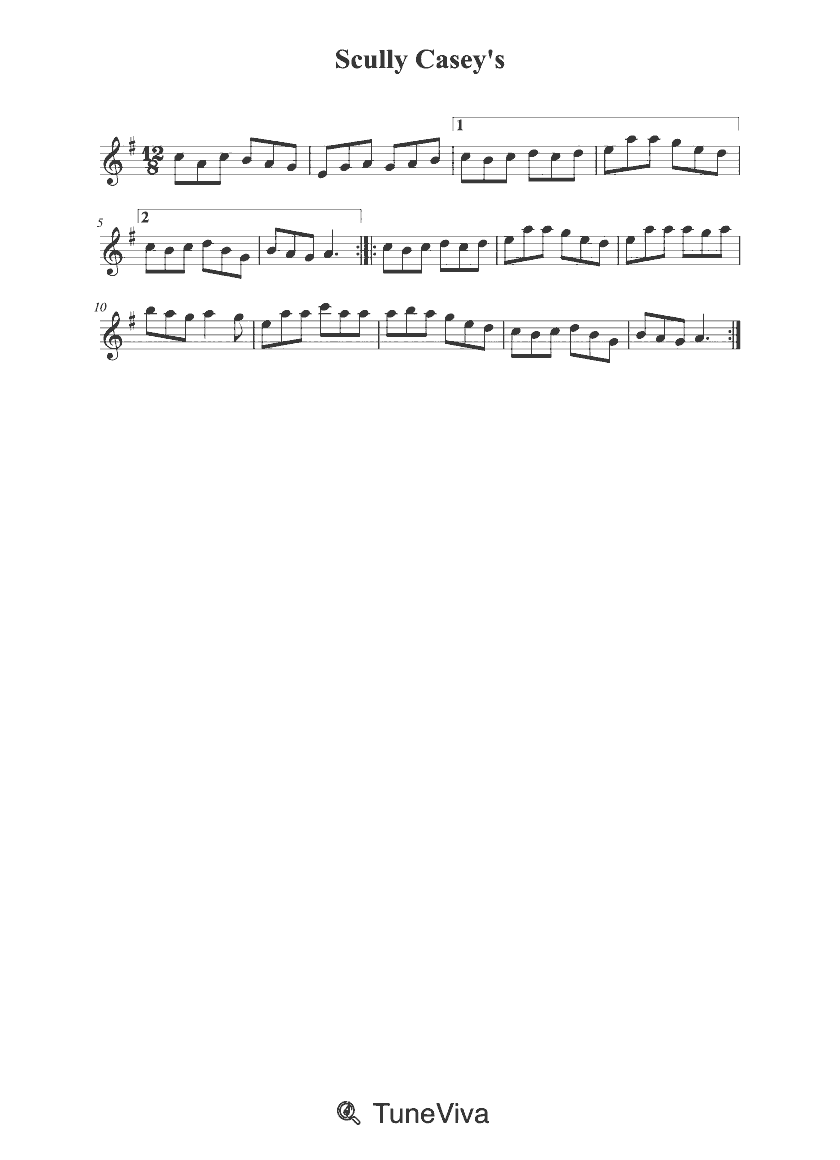
Misc tunes
19 sec
Open score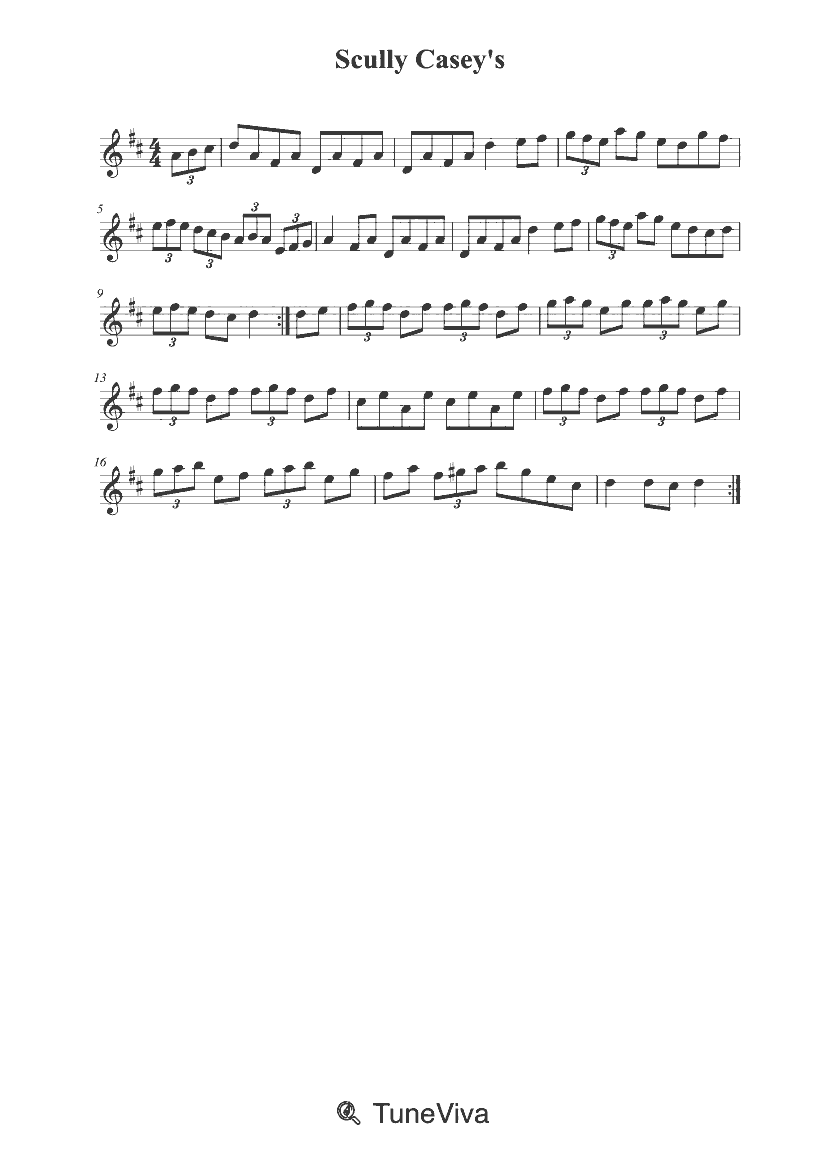
Misc tunes
1 min 20 sec
Open score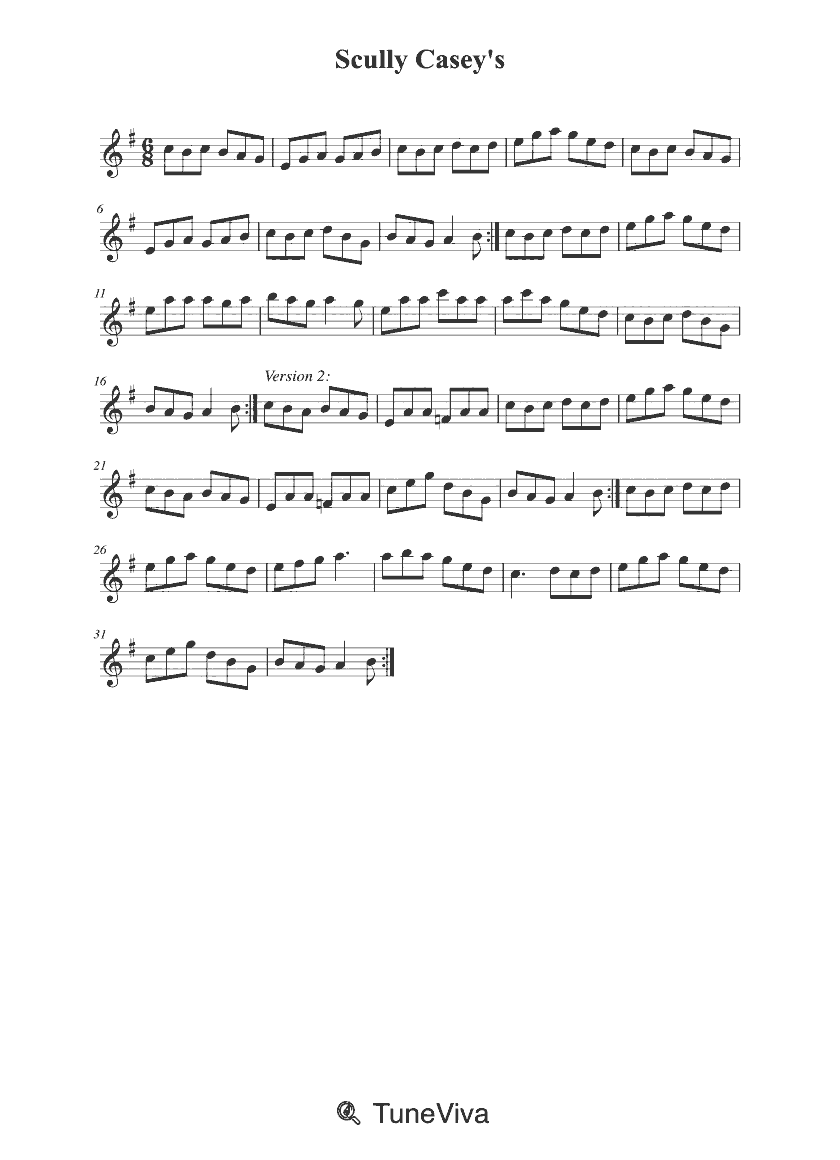
Misc tunes
1 min 24 sec · Score #42627
Open score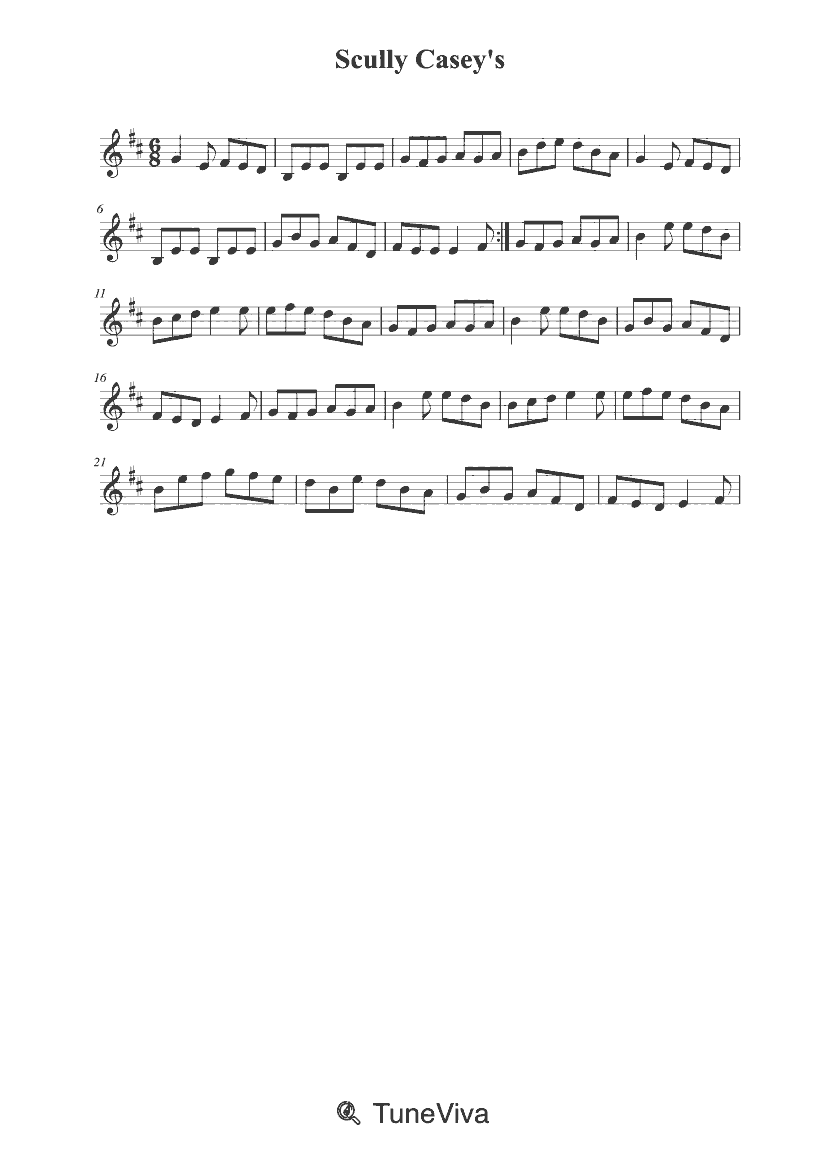
Misc tunes
24 sec · Score #56282
Open score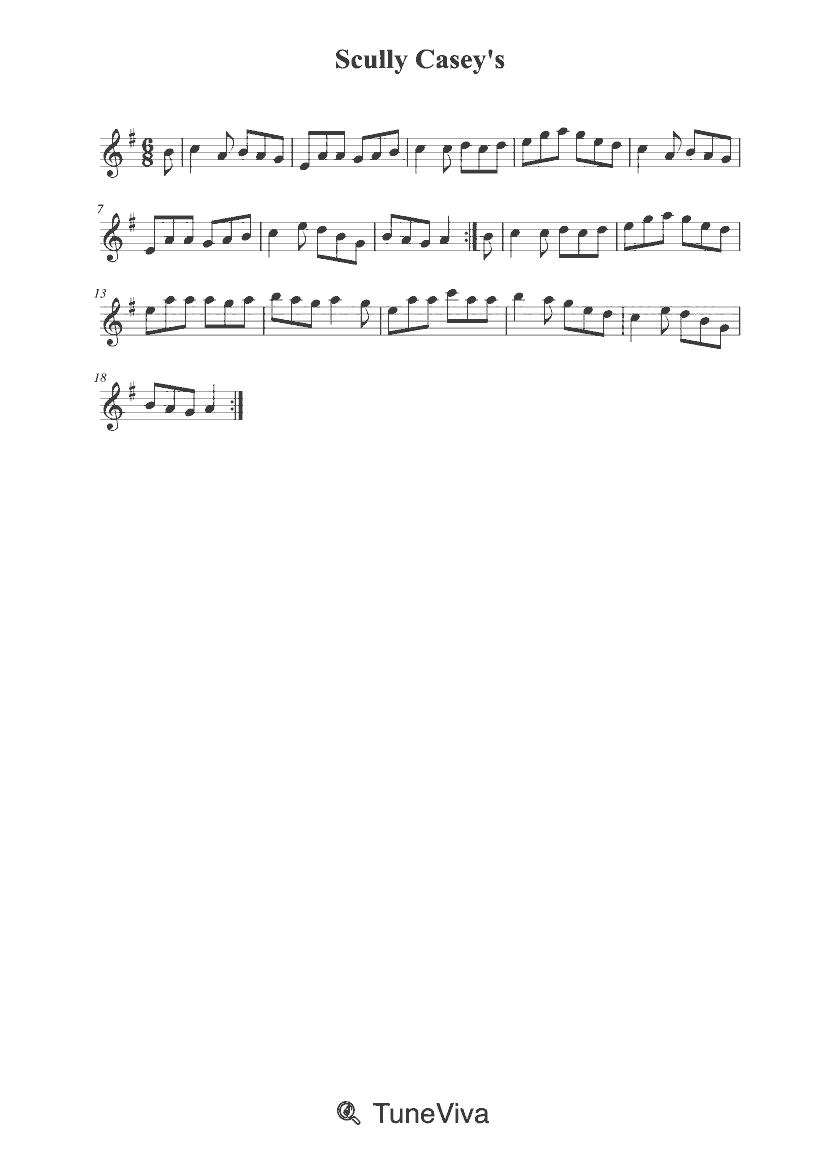
Misc tunes
30 sec · Score #90891
Open score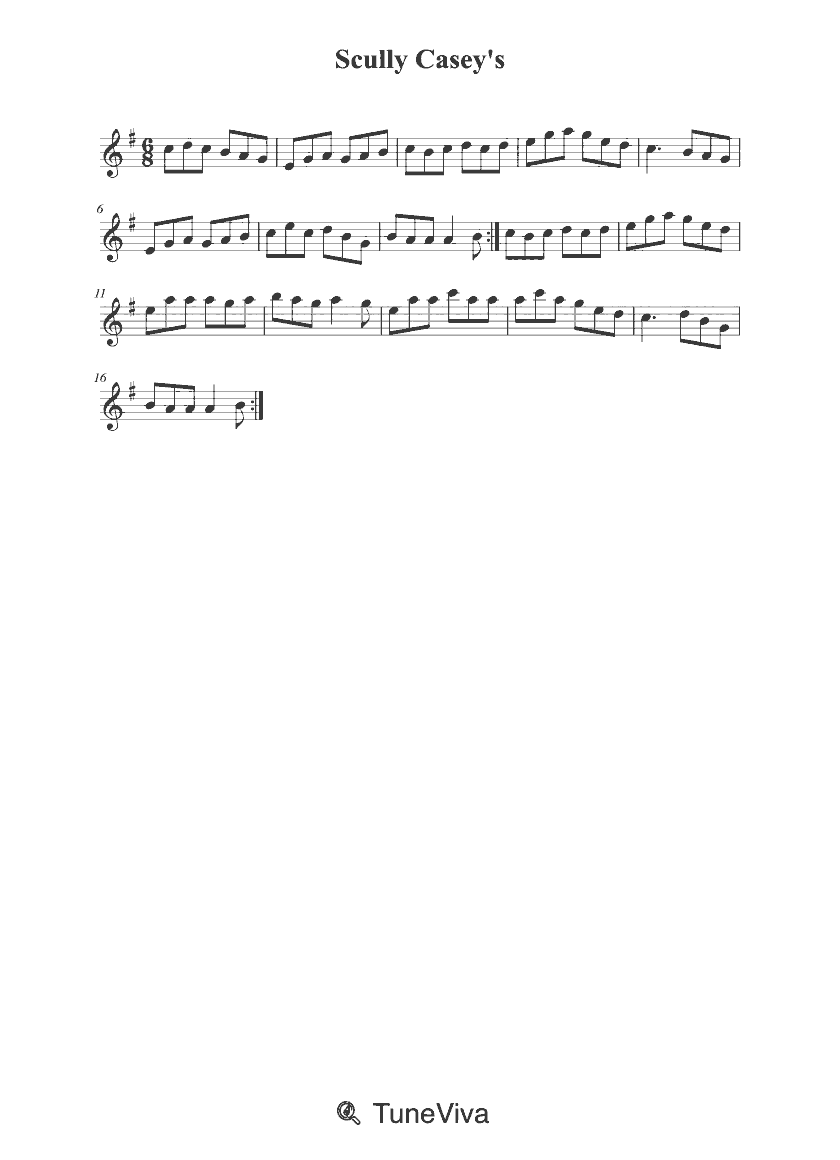
Misc tunes
30 sec · Score #121703
Open score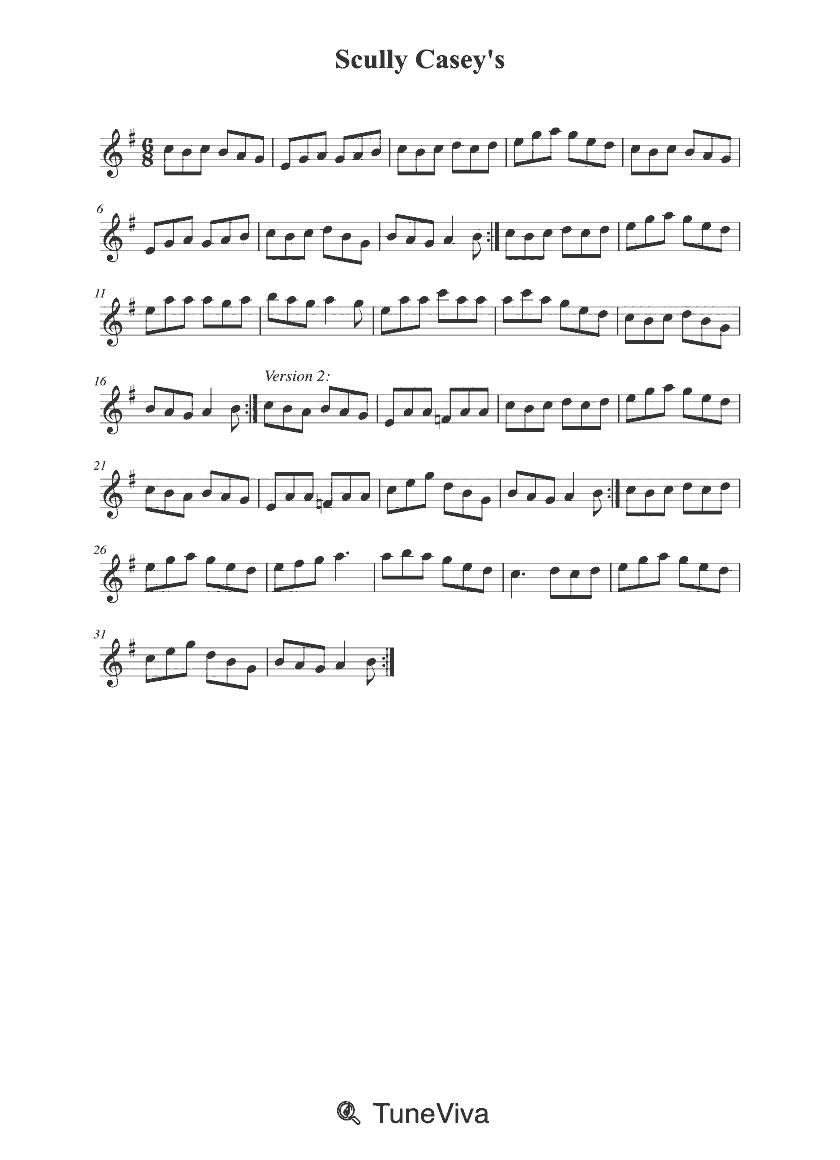
Misc tunes
1 min 24 sec · Score #135900
Open score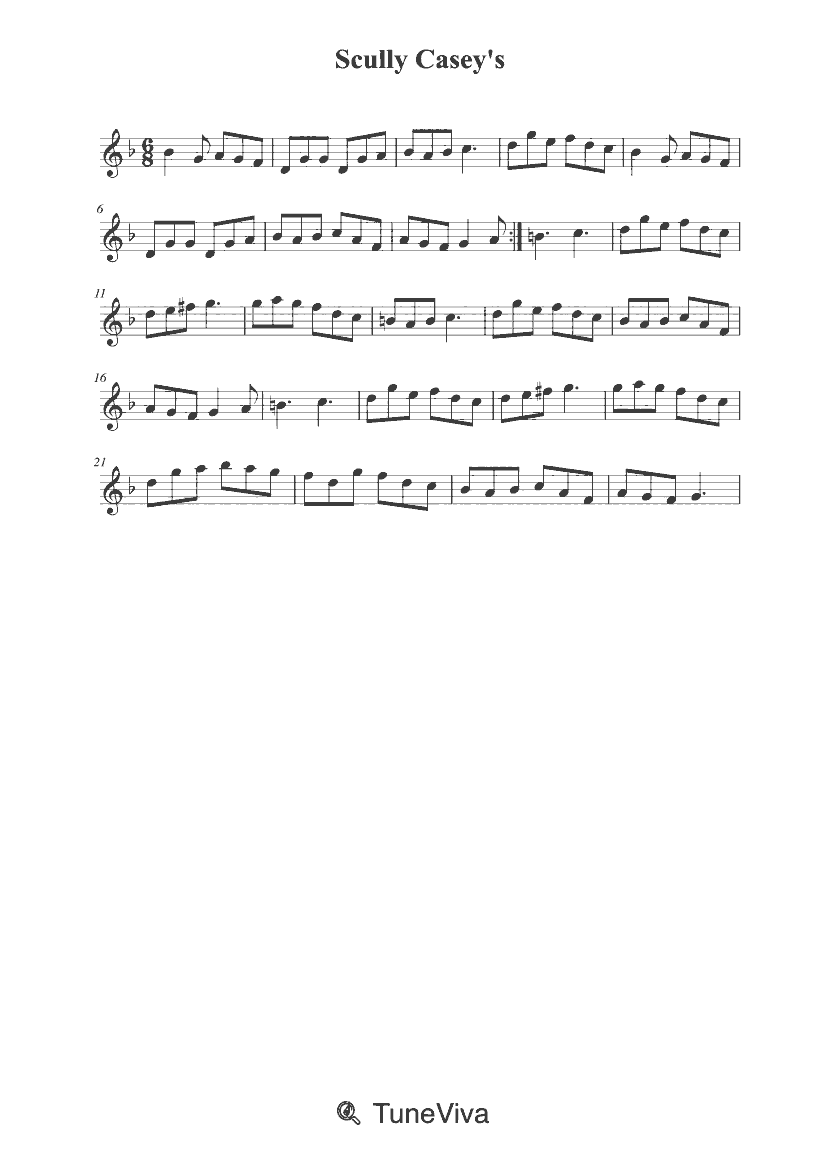
Misc tunes
24 sec · Score #175275
Open score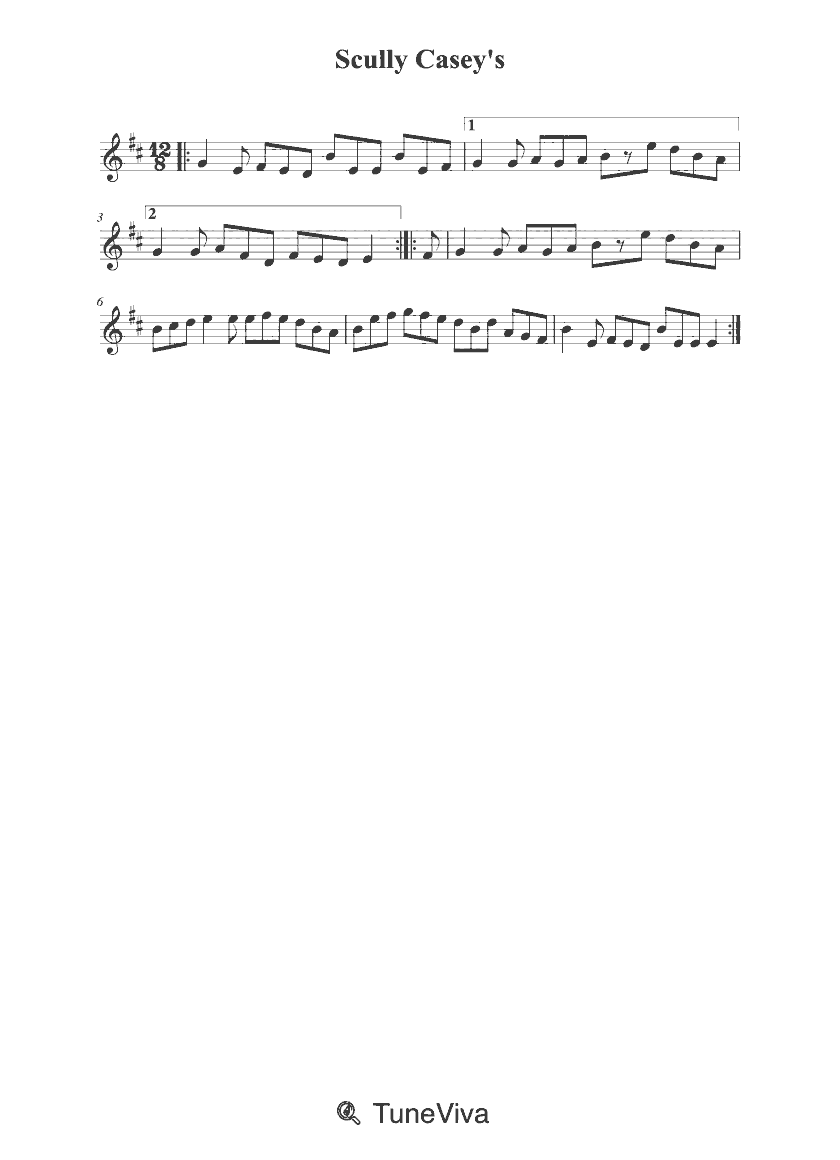
Misc tunes
18 sec
Open score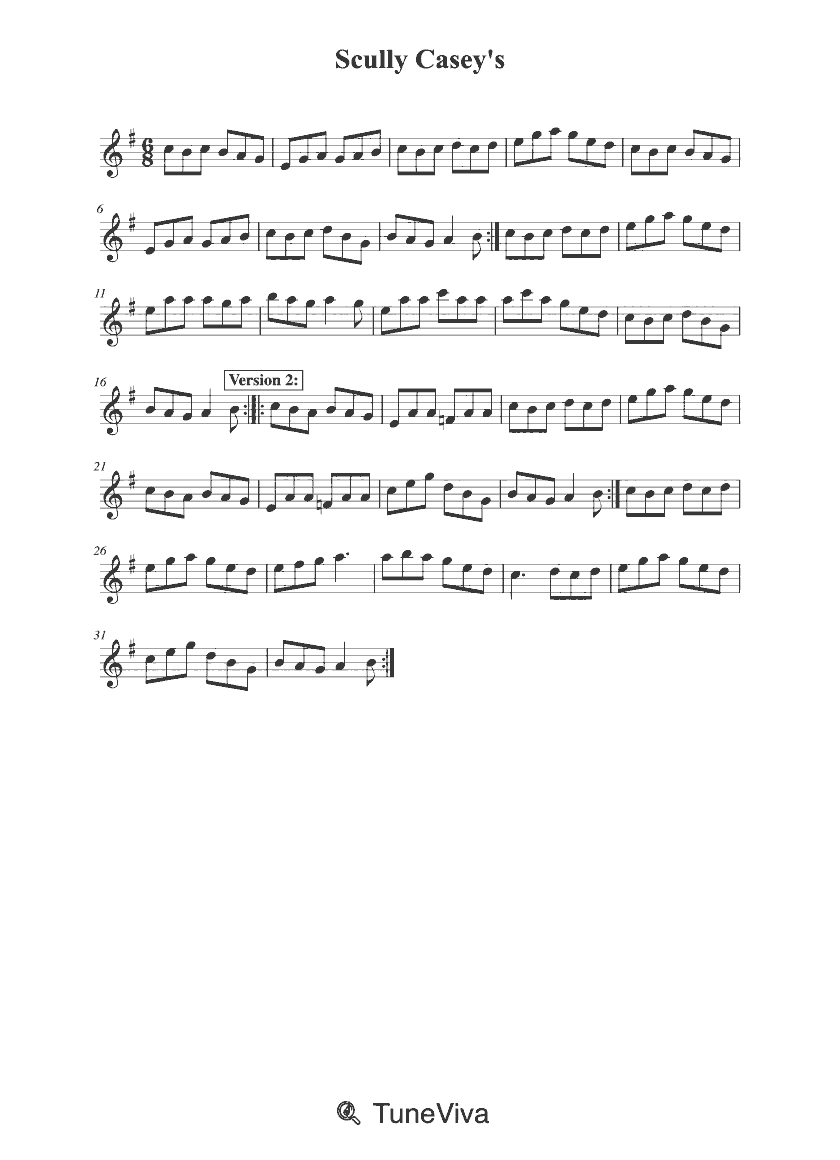
Misc tunes
1 min 0 sec
Open score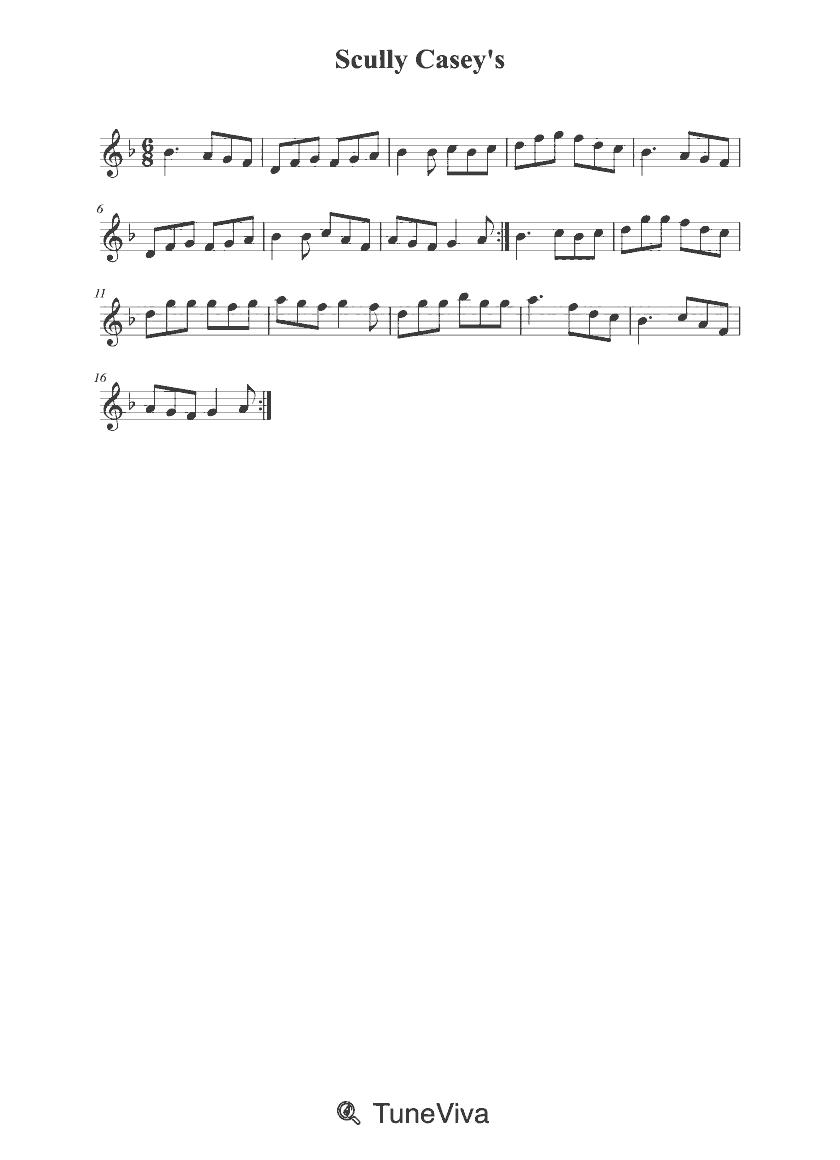
Misc tunes
30 sec · Score #202257
Open score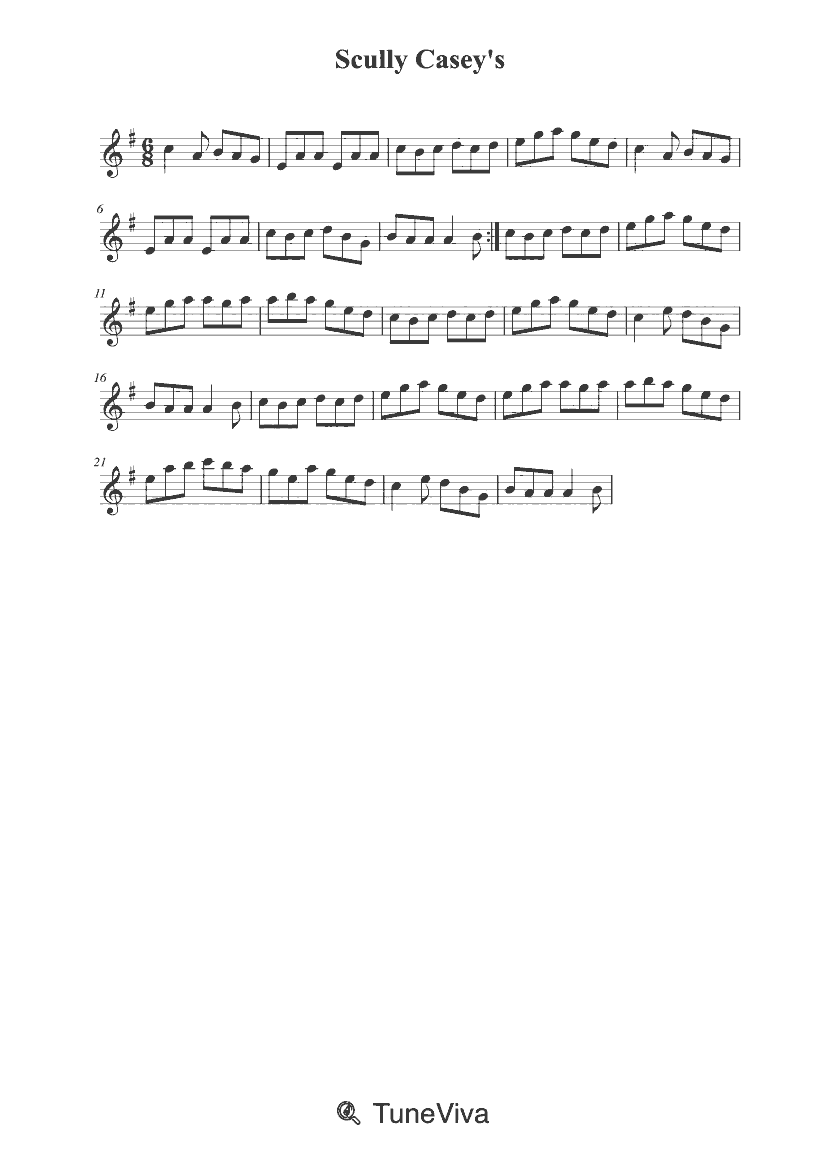
Misc tunes
24 sec · Score #205017
Open score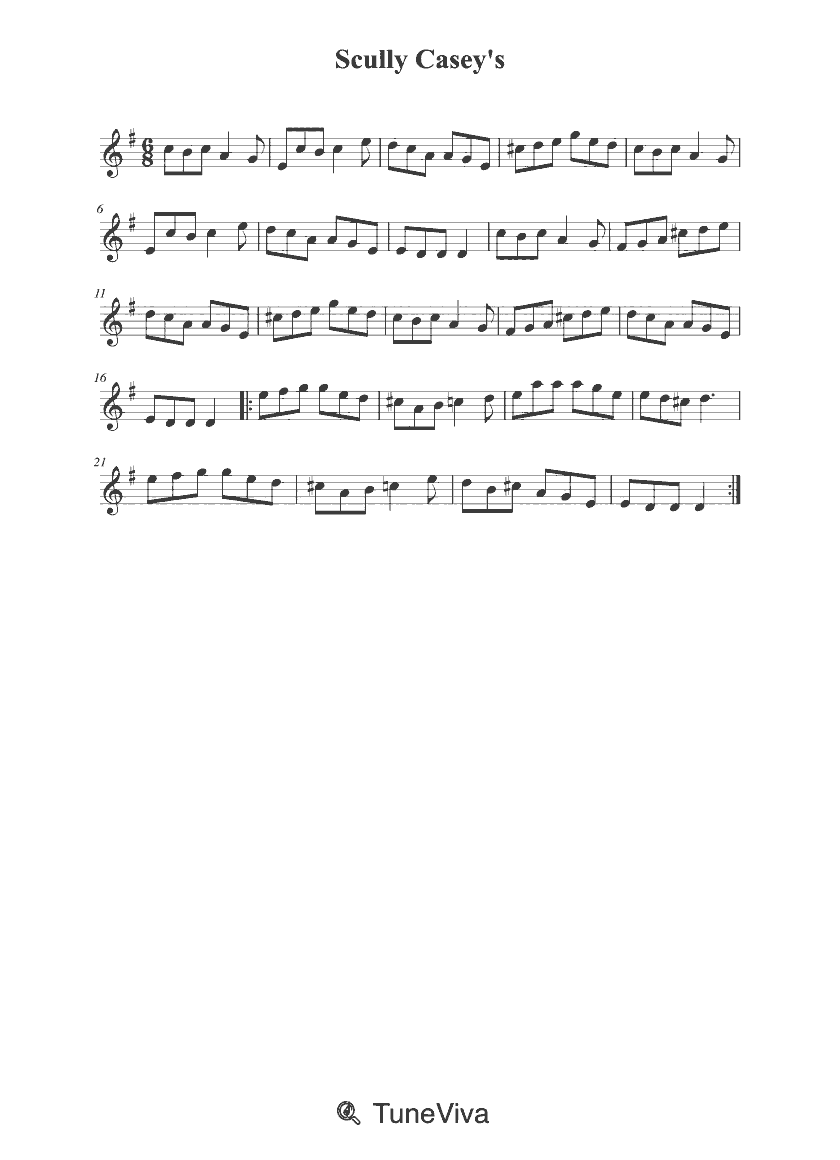
Misc tunes
23 sec
Open scorePage 1 of 2
Each score is titled Scully Casey's and is listed under 'Misc tunes' rather than a named composer. Two versions open in 6/8 and one opens in 12/8. Opening key signatures are one sharp for two scores and two flats, described as G minor, for one score. These details describe the start of each score, not necessarily the whole piece.
The three scores differ in length: 167, 298 and 211 notes, with listed durations of about 24, 48 and 36 seconds. Those differences suggest different settings or lengths, but the listings do not identify which version is authoritative. Compare the metre, key and notation itself when choosing a version for your instrument or group.
6/8 and 12/8 are compound metres, where each main beat divides into three eighth notes. 6/8 has two main beats per bar, while 12/8 has four. Counting in dotted-quarter beats can help keep the pulse steady when reading either metre.
The score listings do not name a composer, instrument, tune type, difficulty level or source edition. The title alone does not establish whether Scully Casey's is a jig, slide or another form. Treat the opening key and time signatures as descriptions of these particular scores, not as definitive statements about every version of the piece.
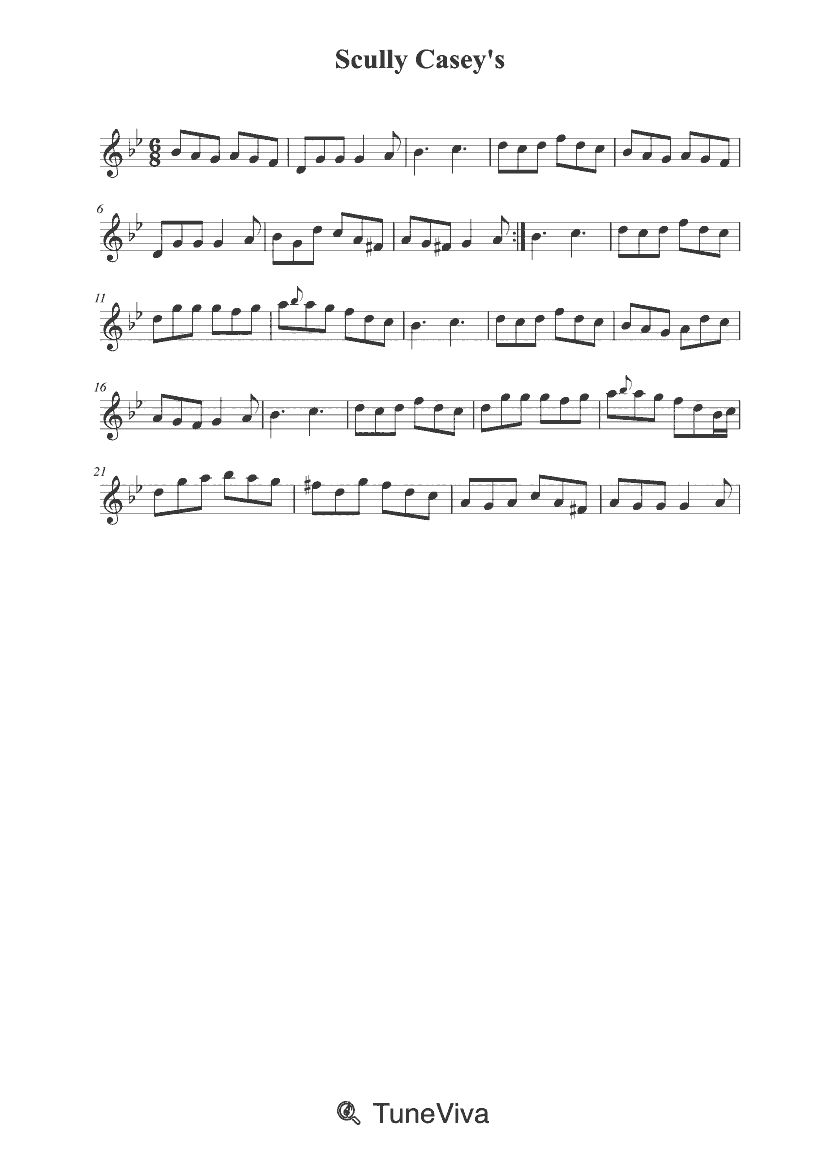
Catalogue duration 24 sec. Opening key signature: 2 flats (G minor). Opening time signature: 6/8.
Catalogue duration 48 sec. Opening key signature: 1 sharp. Opening time signature: 6/8.
Catalogue duration 36 sec. Opening key signature: 1 sharp. Opening time signature: 12/8.
The Scully Casey's scores listed here open in compound metre: two are in 6/8 and one is in 12/8. An opening time signature describes the start of a score, and the listings do not confirm whether the metre changes later.
Opening key signatures for the listed Scully Casey's scores are one sharp on two versions and two flats on one, with the latter described as G minor. A one-sharp signature could indicate G major or E minor, so the supplied details do not settle a single key for the piece.
No composer is credited for the Scully Casey's scores on this page; they are listed under 'Misc tunes'. The available information does not establish an author, so the attribution remains unverified here.
The three Scully Casey's scores differ in note count and duration: 167, 298 and 211 notes, with listed durations of roughly 24, 48 and 36 seconds. Those differences point to different versions or lengths, but the listings do not identify an authoritative setting.
The score listings do not state a tune type, so whether Scully Casey's is a jig, slide or another dance form is not confirmed. Two scores open in 6/8 and one in 12/8, both of which are compound metres.
The listed Scully Casey's scores open with different key signatures: two use one sharp and one uses two flats, described as G minor. The listings do not explain the difference, so players should compare the notation rather than assume one score is a transposition of another.