
Traditional music - Tam Lin
Trad.
Tamlin; Tamlyn; Tam Lynn's
48 sec
Open scoreTam Lin sheet music is available here in several settings of the tune, with opening keys of D minor, E minor and B minor. All three scores use 4/4 time, while one carries a 'Trad.' attribution and a 160 BPM tempo marking; the others name no composer and show no tempo. Compare the opening key, notation and attribution before choosing a version to play.
Scores 1–20 of 35
Trad.
Tamlin; Tamlyn; Tam Lynn's
48 sec
Open score
Misc tunes
1 min 44 sec
Open score
Misc tunes
48 sec · Score #49257
Open score
Misc tunes
1 min 4 sec · Score #216735
Open score
Trad
1 min 4 sec
Open score
Misc tunes
26 sec
Open score
Misc tunes
Howling Wind
2 min 8 sec · Score #157458
Open score
Misc tunes
4 min 48 sec · Score #172131
Open score
Misc tunes
1 min 52 sec
Open score
Misc tunes
1 min 4 sec · Score #145871
Open score
Misc tunes
1 min 46 sec
Open score
Misc tunes
48 sec · Score #206448
Open score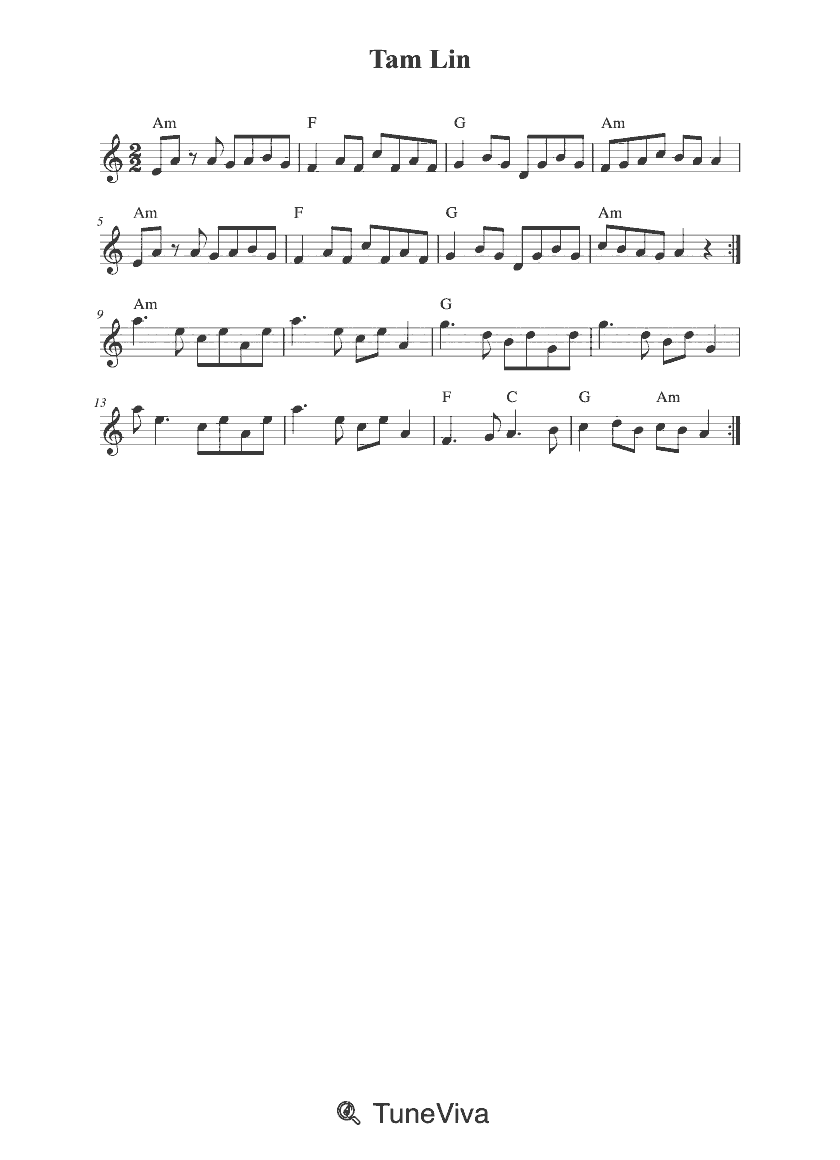
Misc tunes
2 min 40 sec
Open score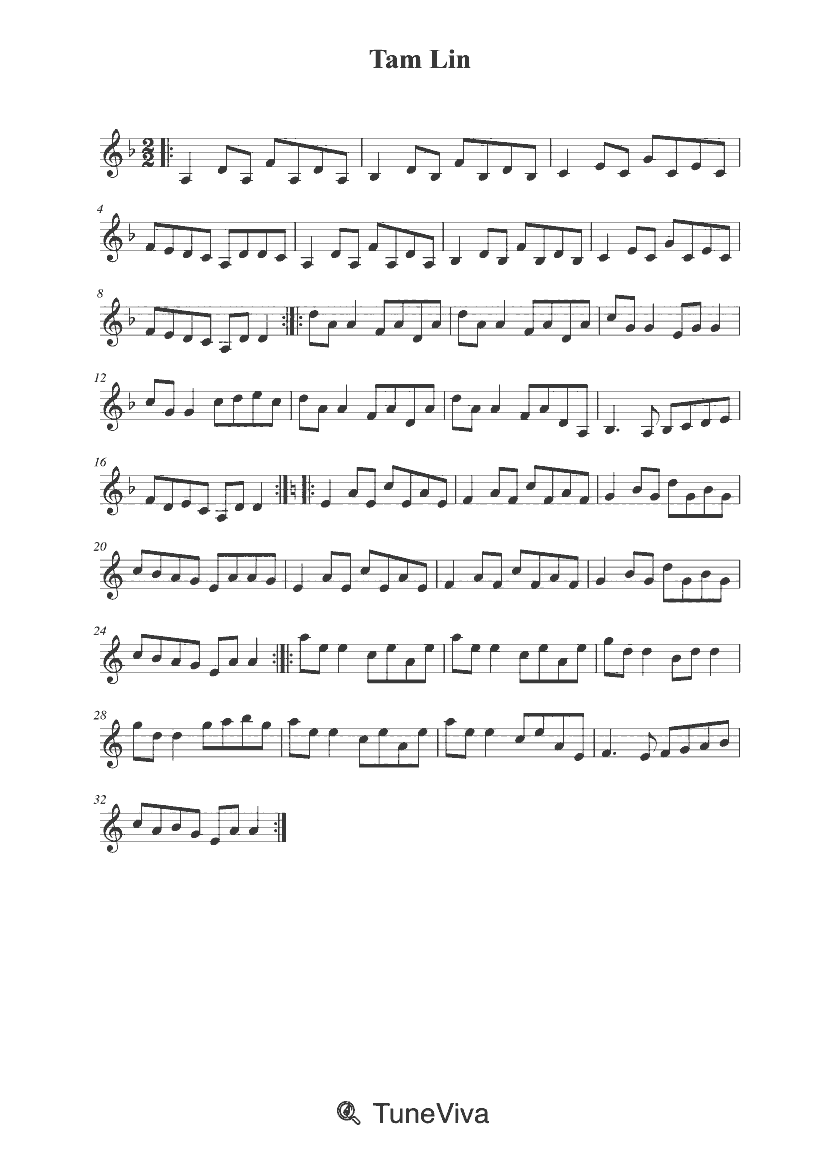
Misc tunes
Howling Wind
4 min 16 sec
Open score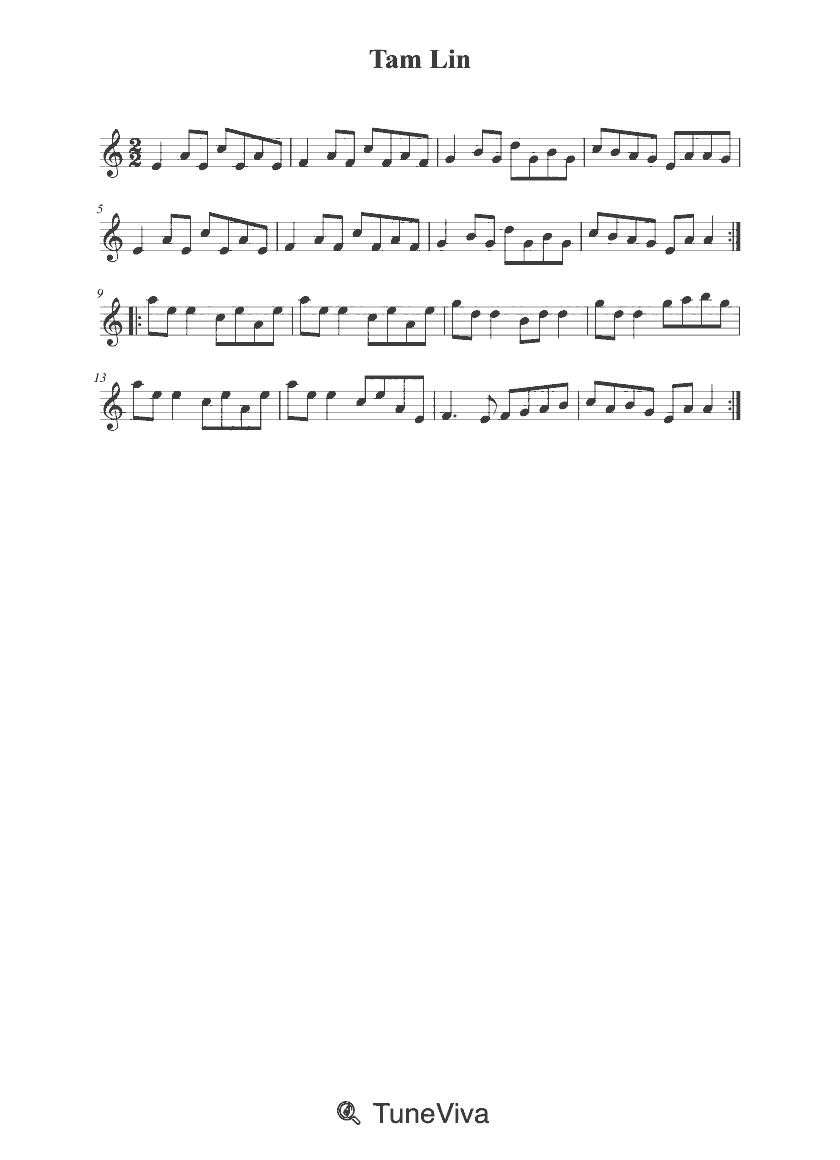
Misc tunes
Howling Wind
2 min 8 sec · Score #233613
Open score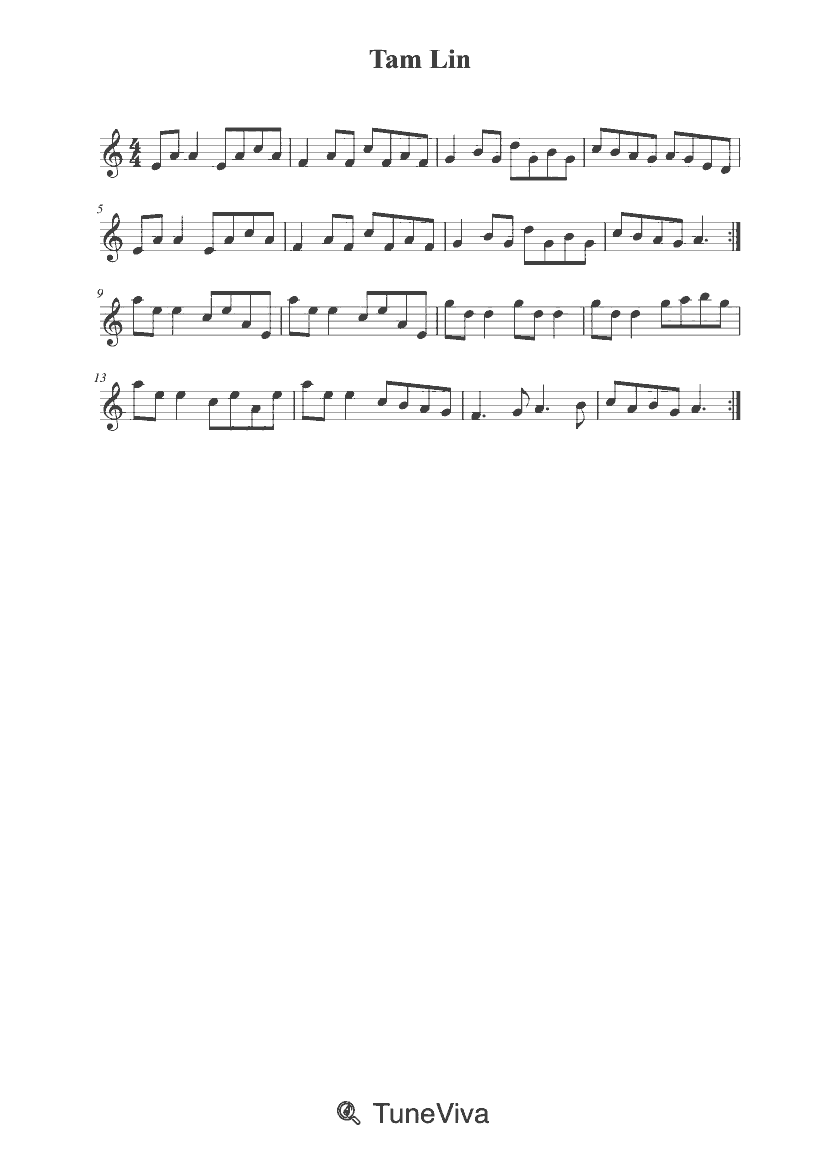
Misc tunes
1 min 19 sec
Open score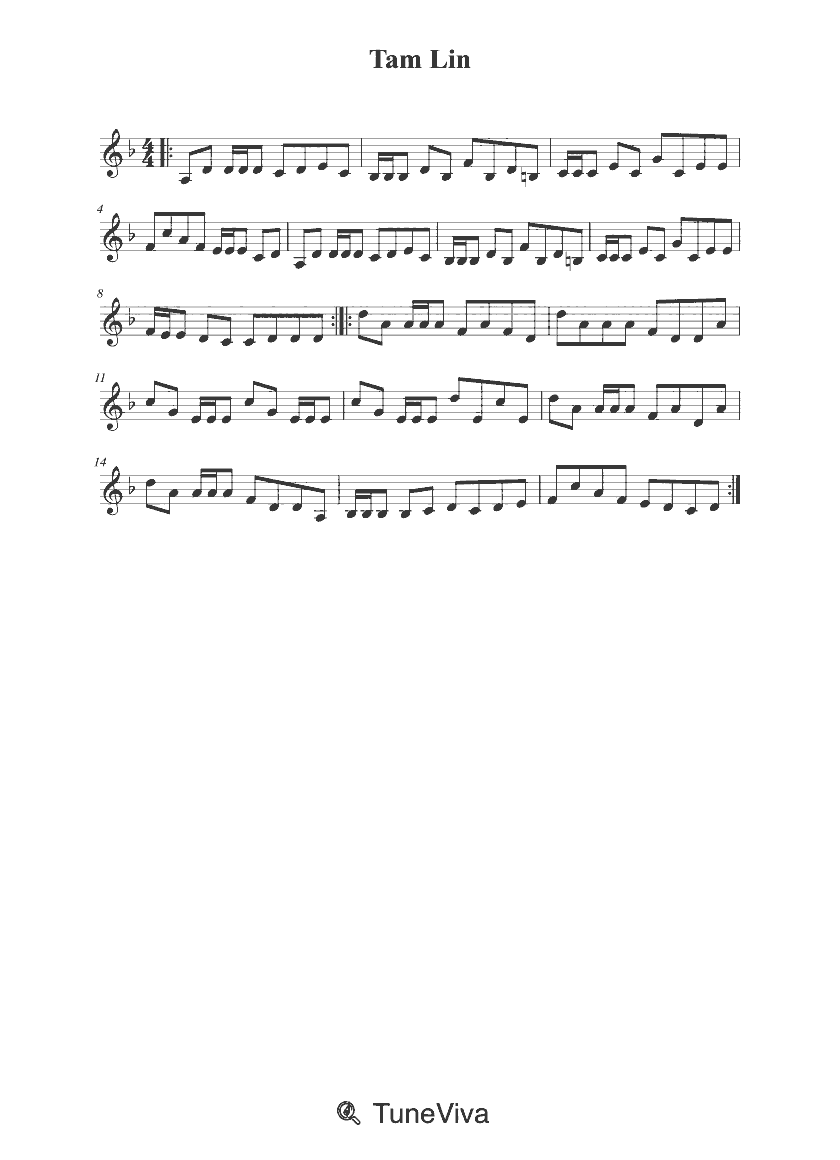
Misc tunes
1 min 4 sec · Score #114553
Open score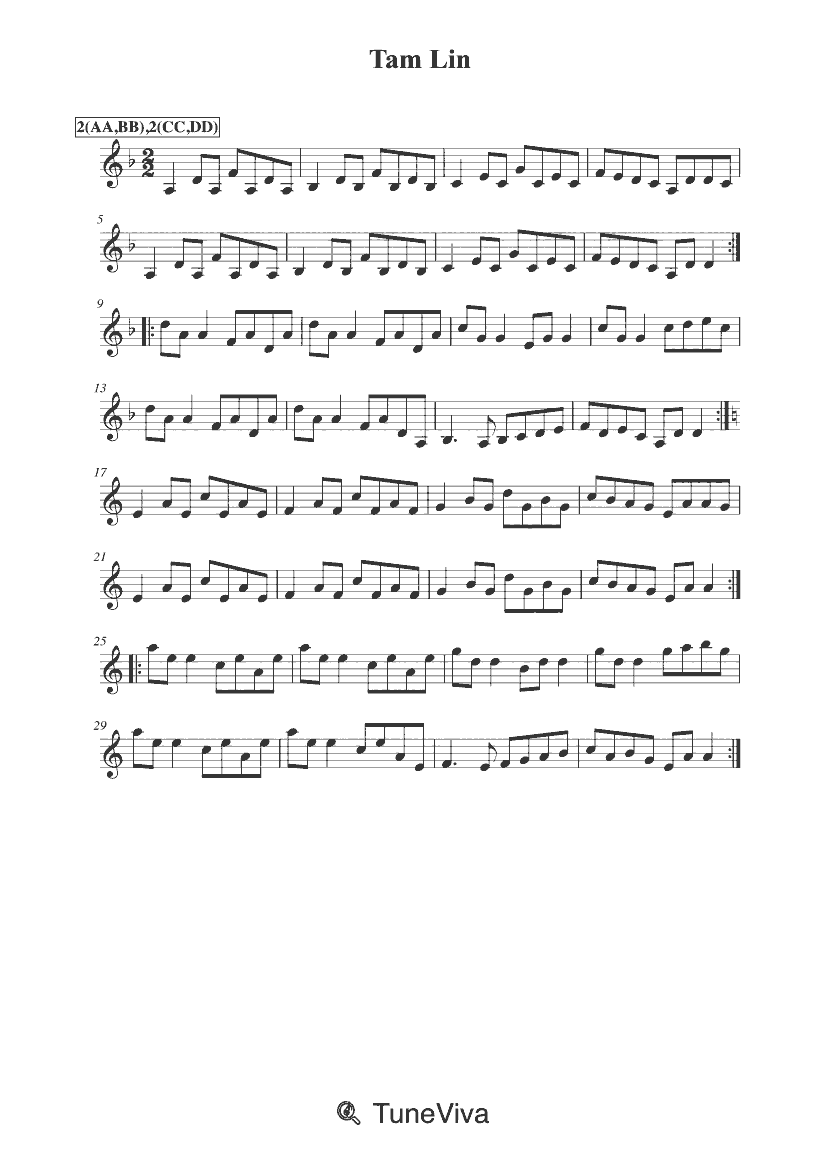
Misc tunes
4 min 48 sec · Score #195728
Open score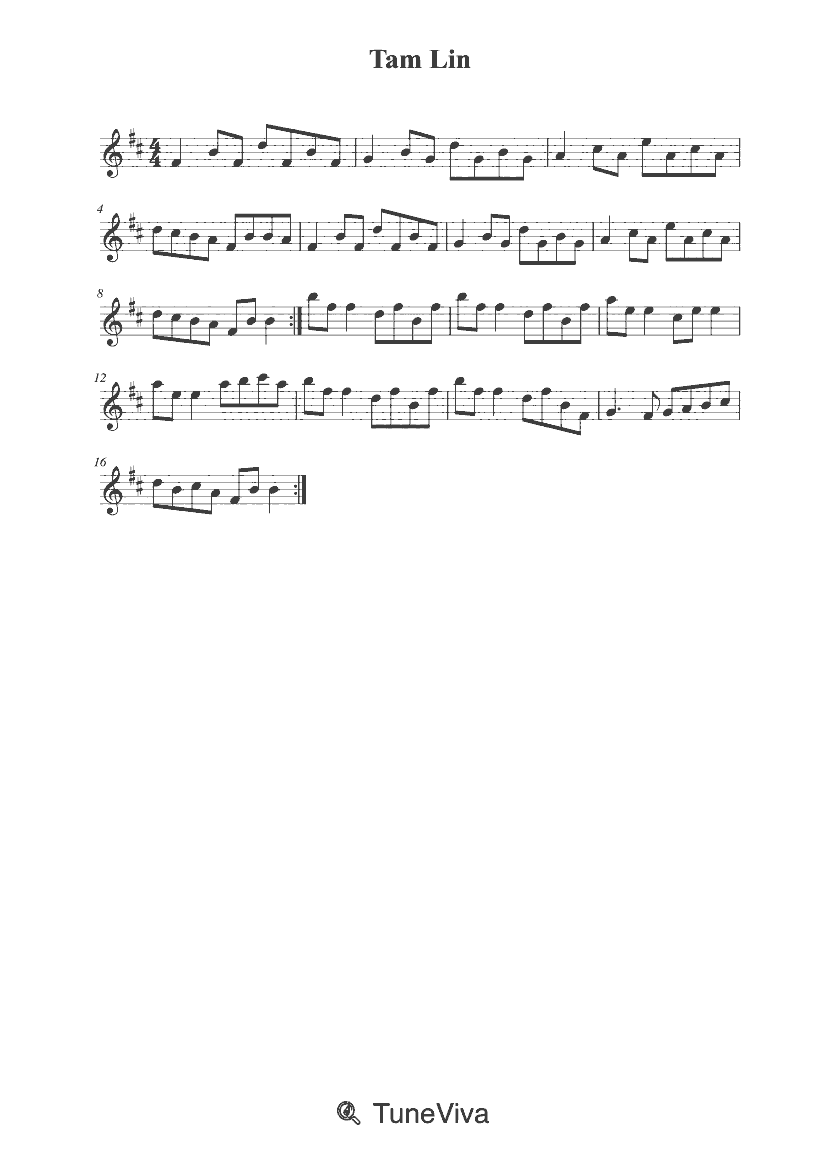
Misc tunes
1 min 20 sec
Open score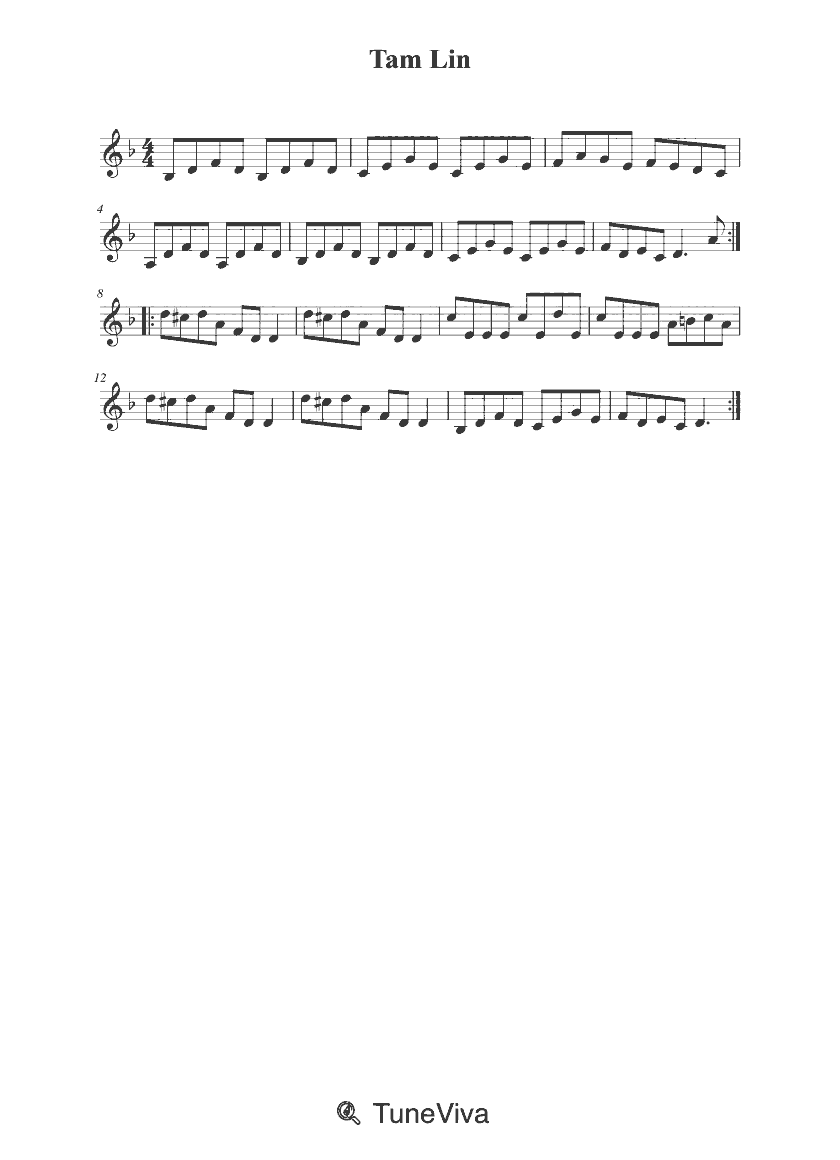
Misc tunes
59 sec
Open scorePage 1 of 2
The available Tam Lin scores begin in D minor (one flat), E minor (one sharp) and B minor (two sharps). Key affects range, fingering and how the melody sits on a particular instrument or for a singer. Look at the first system of each score and choose a key that suits your instrument and the pitch range you need, then confirm the key signature in the music itself.
Each available Tam Lin score is in 4/4, so there are four quarter-note beats in a bar. One score gives an opening tempo of 160 BPM; the others show no tempo marking. Treat a printed tempo as a starting point and adjust it to the setting and your technique. Where no tempo is given, choose a speed that keeps the rhythm clear.
One score is credited to 'Trad.' and another carries the title 'Traditional music - Tam Lin'. That is an attribution in the score, not independent confirmation of the tune's origin, date or authorship.
Check the opening key signature and time signature first, then scan for repeat marks, phrase marks or chord symbols. Establish whether the notation is a single melody line or includes accompaniment, since the title alone may not make that clear. Choose a version whose notation you can read easily and whose key fits your instrument.
Catalogue duration 48 sec. Opening key signature: 1 sharp (E minor). Opening time signature: 4/4. Opening tempo: 160 BPM.
Catalogue duration 1 min 44 sec. Opening key signature: 1 flat (D minor). Opening time signature: 4/4.
Catalogue duration 48 sec. Opening key signature: 2 sharps (B minor). Opening time signature: 4/4.
Tam Lin scores available here open in D minor (one flat), E minor (one sharp) and B minor (two sharps). The key varies between settings, so check the opening key signature on the score you intend to play rather than assuming a single standard key.
The available Tam Lin scores are all in 4/4, with four quarter-note beats per bar. That gives a steady four-beat pulse; confirm the metre at the start of a score because another setting could use a different time signature.
No single tempo is established by the available scores. One Tam Lin score shows an opening tempo of 160 BPM, while the other available scores show no tempo marking. Use any marking as a guide and adjust it to the setting and your instrument.
Some available scores attribute Tam Lin to 'Trad.' or label it 'Traditional music - Tam Lin', indicating a traditional attribution in those scores rather than confirmed authorship.
Different keys can suit different instruments, ranges or performance contexts. The available Tam Lin settings begin in D minor, E minor and B minor, so compare the melody's range and your comfort in each key before choosing a version.
The available Tam Lin scores are not identical: they use different opening keys, and one has a 'Trad.' attribution and a 160 BPM tempo marking while the others show no composer or tempo. Check the notation, key and any performance markings on the version you intend to use.