
The Angry Peeler
Misc tunes
29 sec · Score #205846
Open scoreThe Angry Peeler appears here as an anonymous tune, credited only to “Misc tunes”, in three short single-line settings. All three are notated in 6/8; two carry a one-sharp (G major) signature and one a two-sharp (D major) signature. No composer, collector, region or printed source is named, so these scores are best treated as practical notation for a tune whose history still needs checking against a documented collection or manuscript.
Scores 1–20 of 21
Misc tunes
29 sec · Score #205846
Open score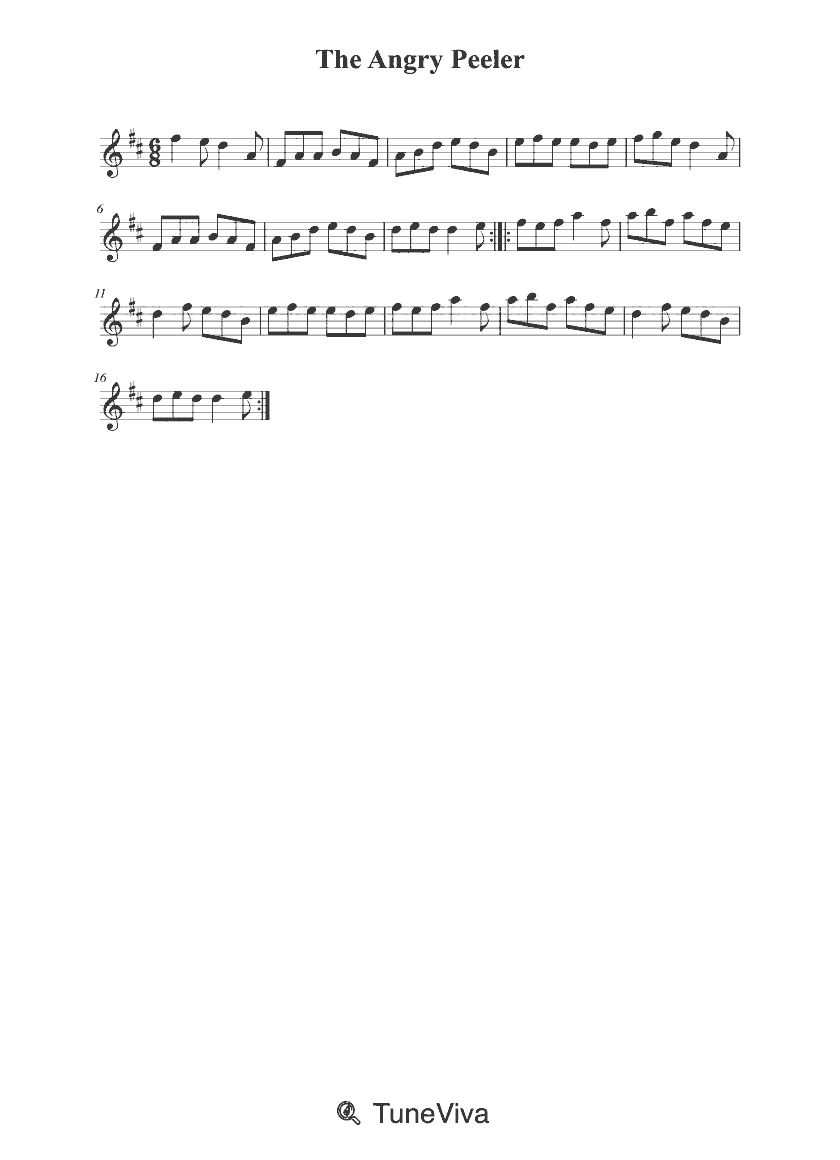
Misc tunes
24 sec · Score #70132
Open score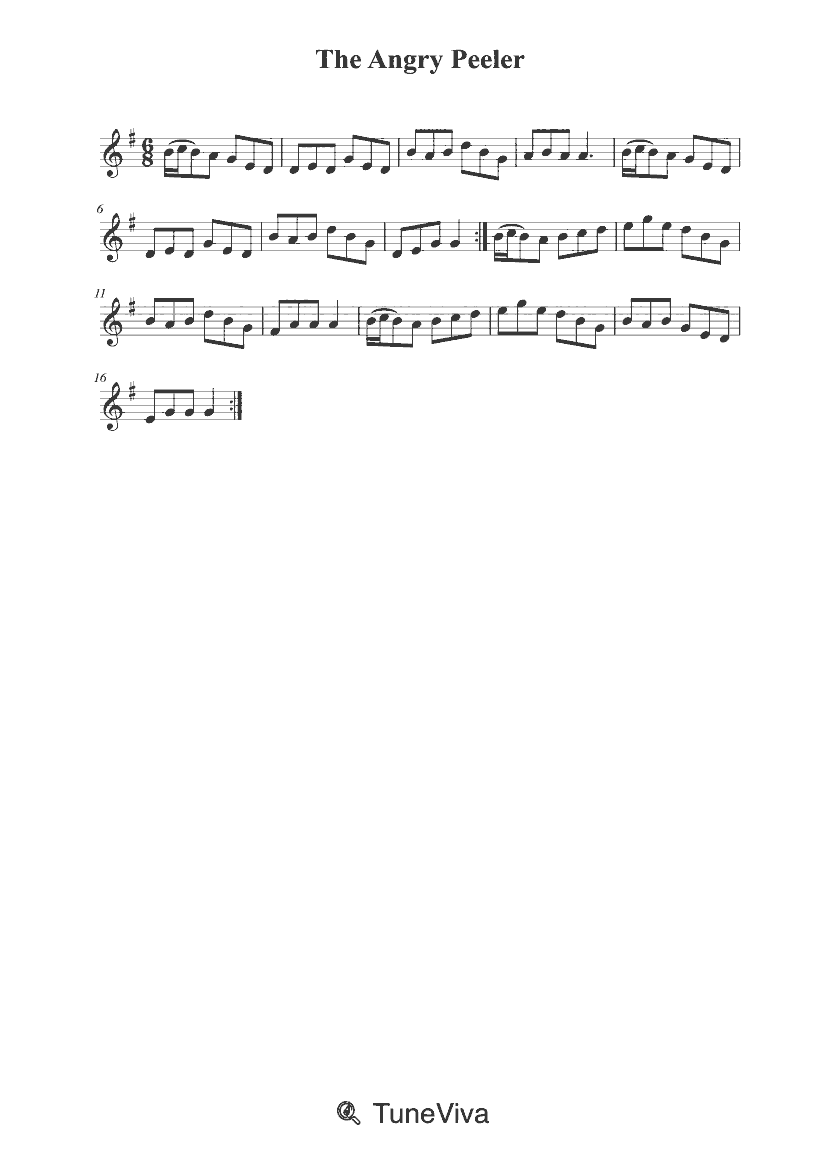
Misc tunes
29 sec · Score #244395
Open score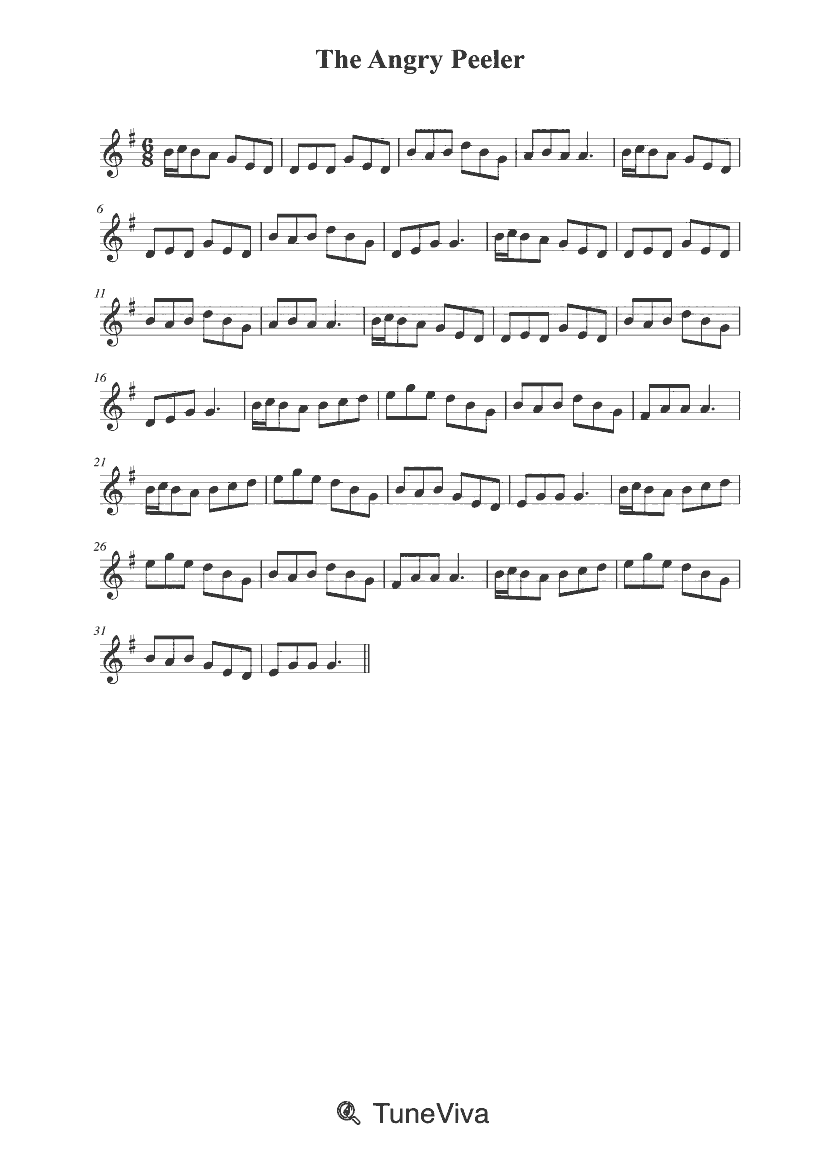
Misc tunes
24 sec · Score #73678
Open score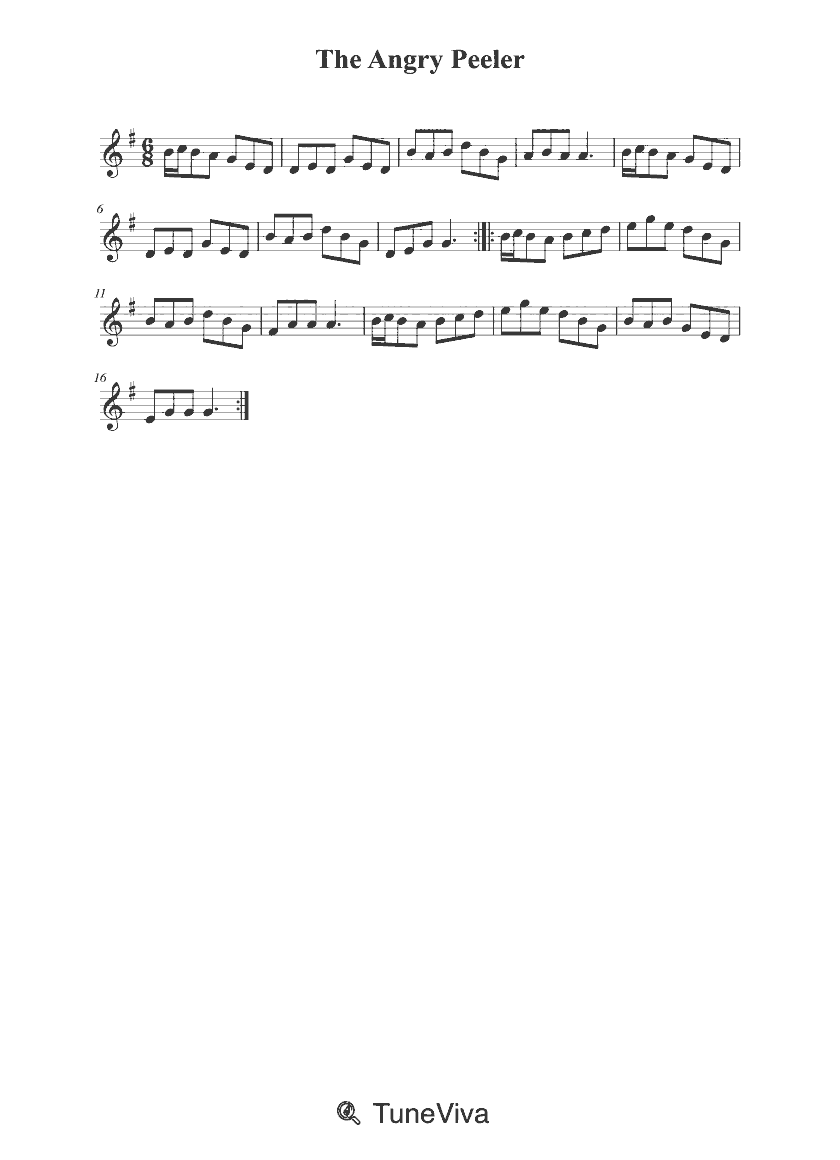
Misc tunes
24 sec · Score #164272
Open score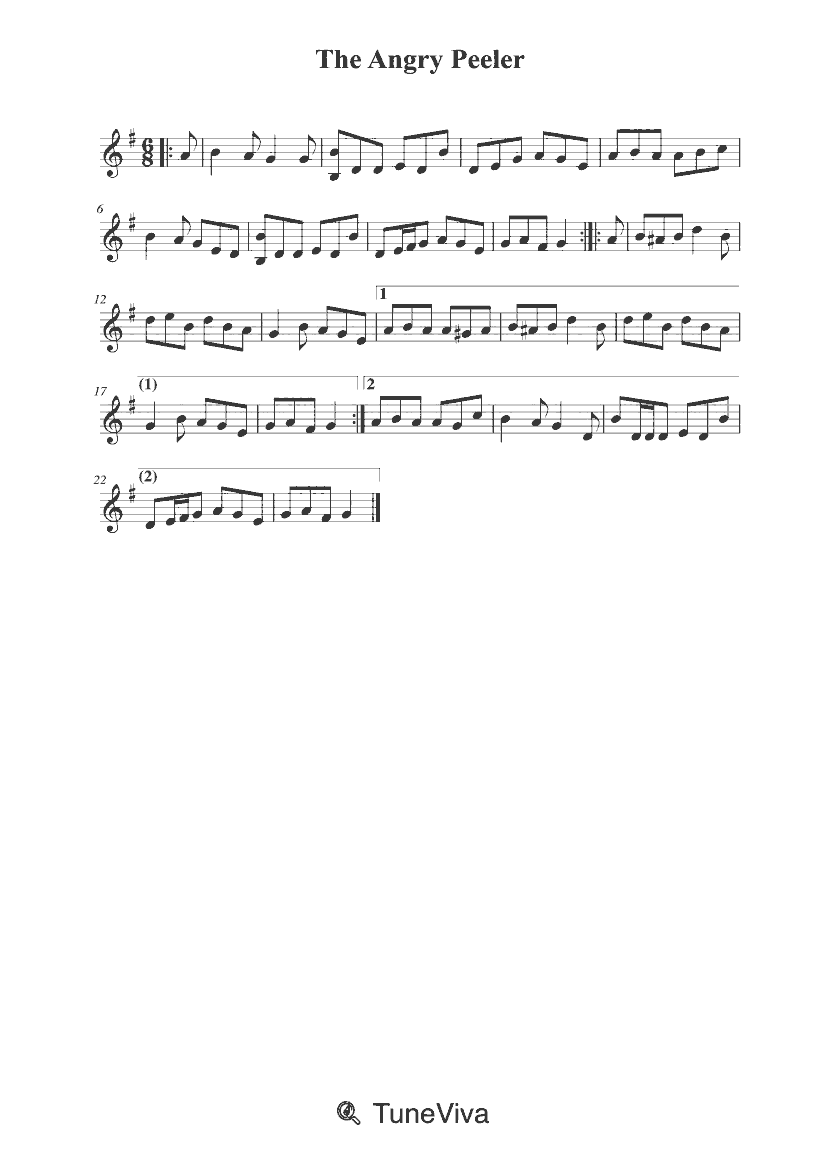
Misc tunes
24 sec · Score #16910
Open score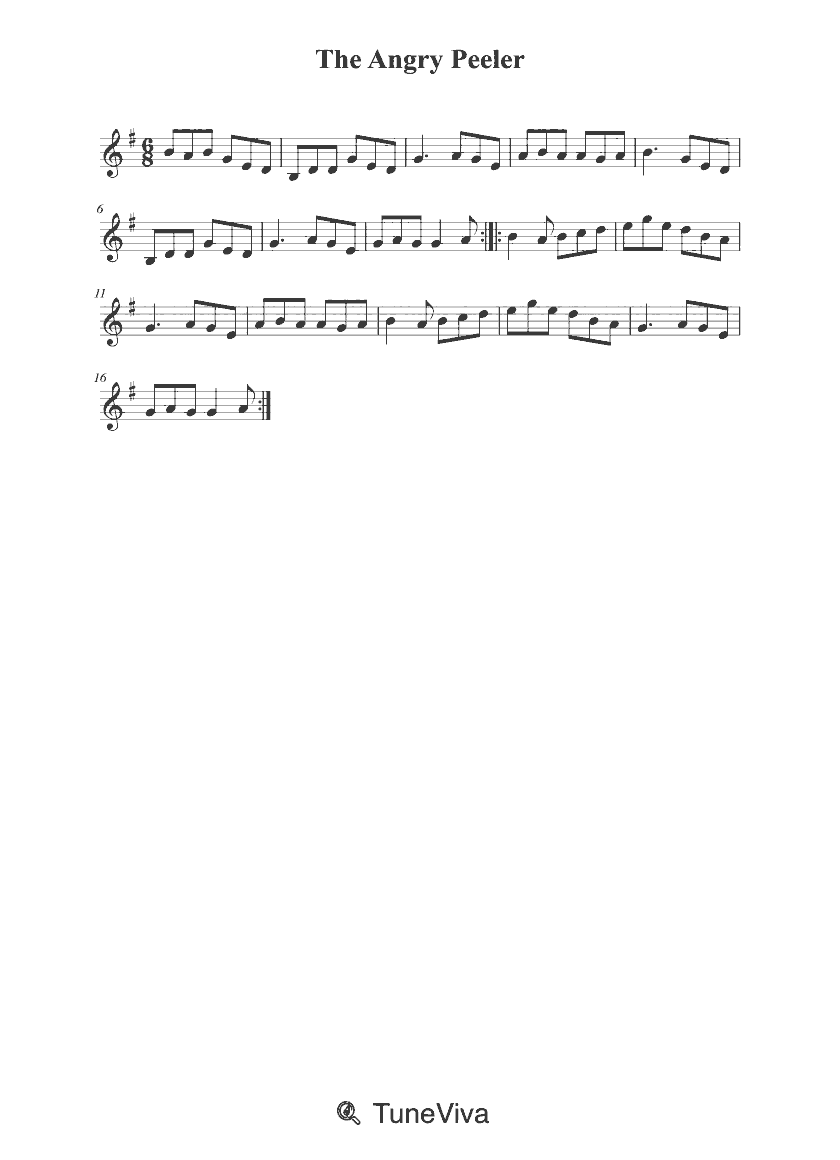
Misc tunes
24 sec · Score #85581
Open score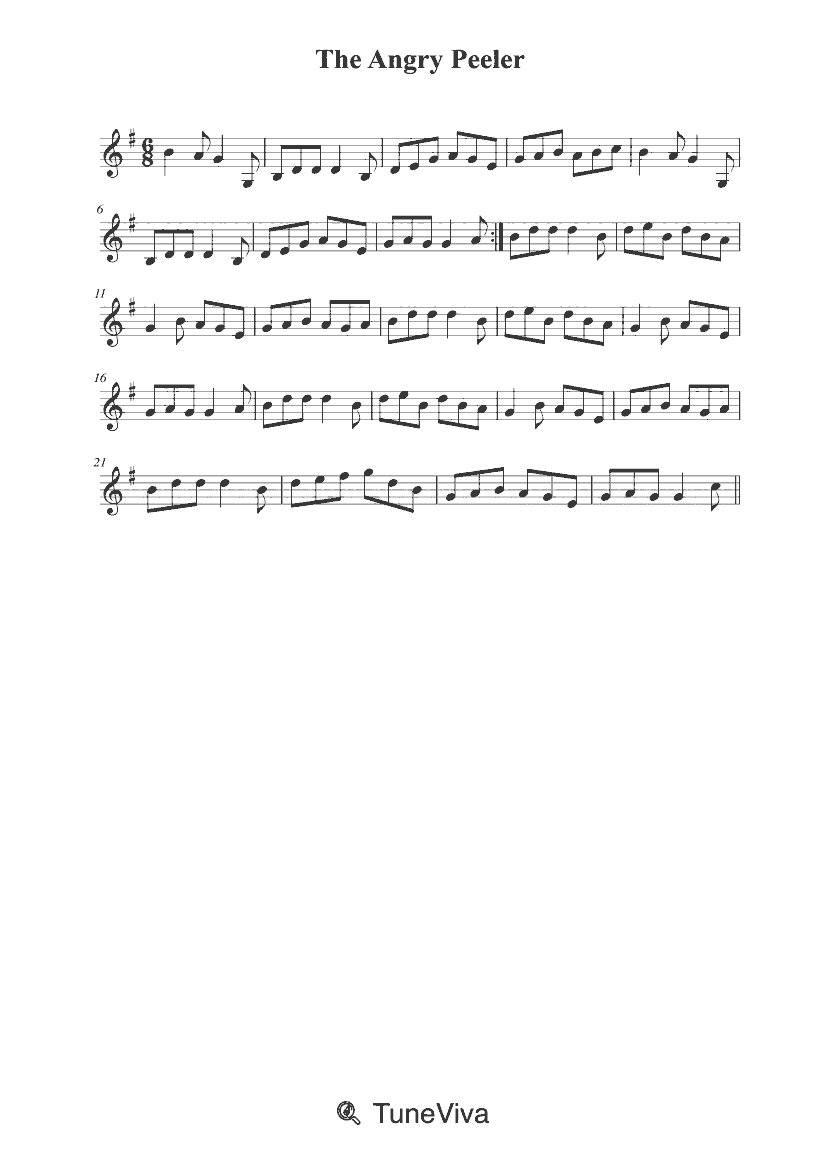
Misc tunes
24 sec · Score #3842
Open score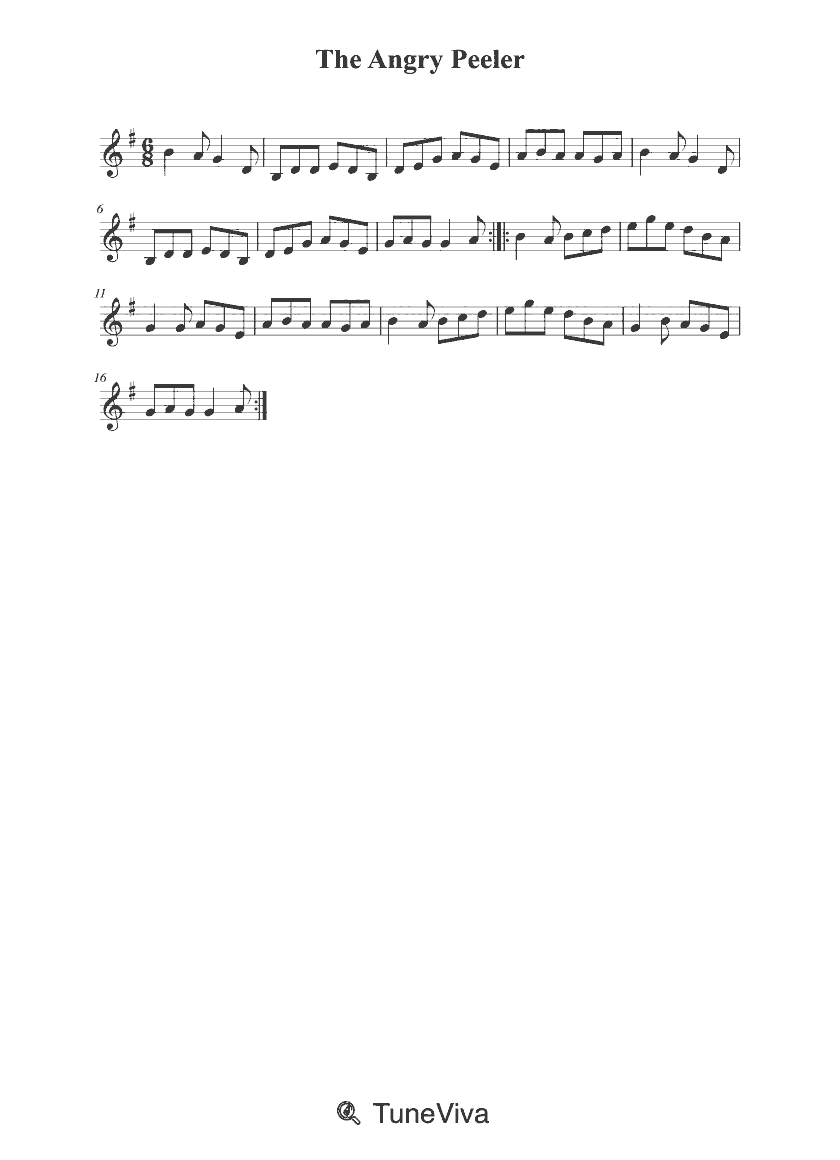
Misc tunes
24 sec · Score #43353
Open score
anon.
7 sec
Open score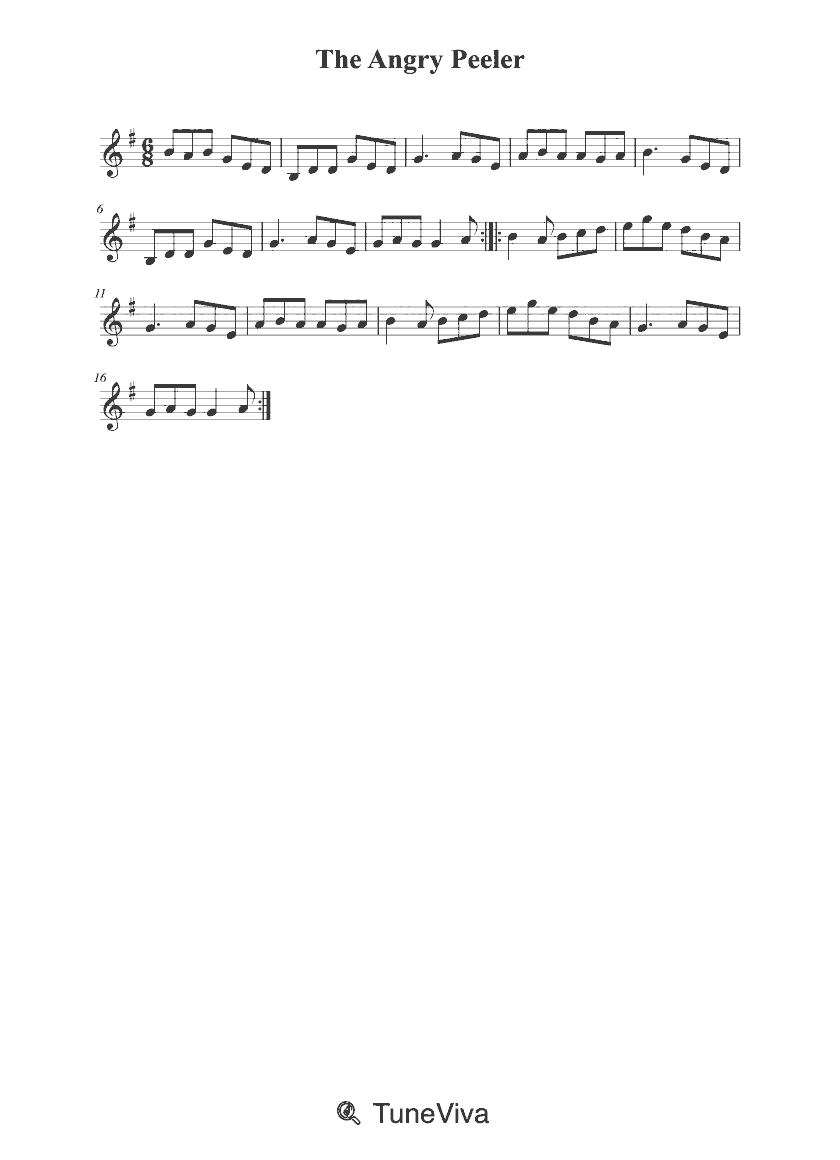
Misc tunes
24 sec · Score #59435
Open score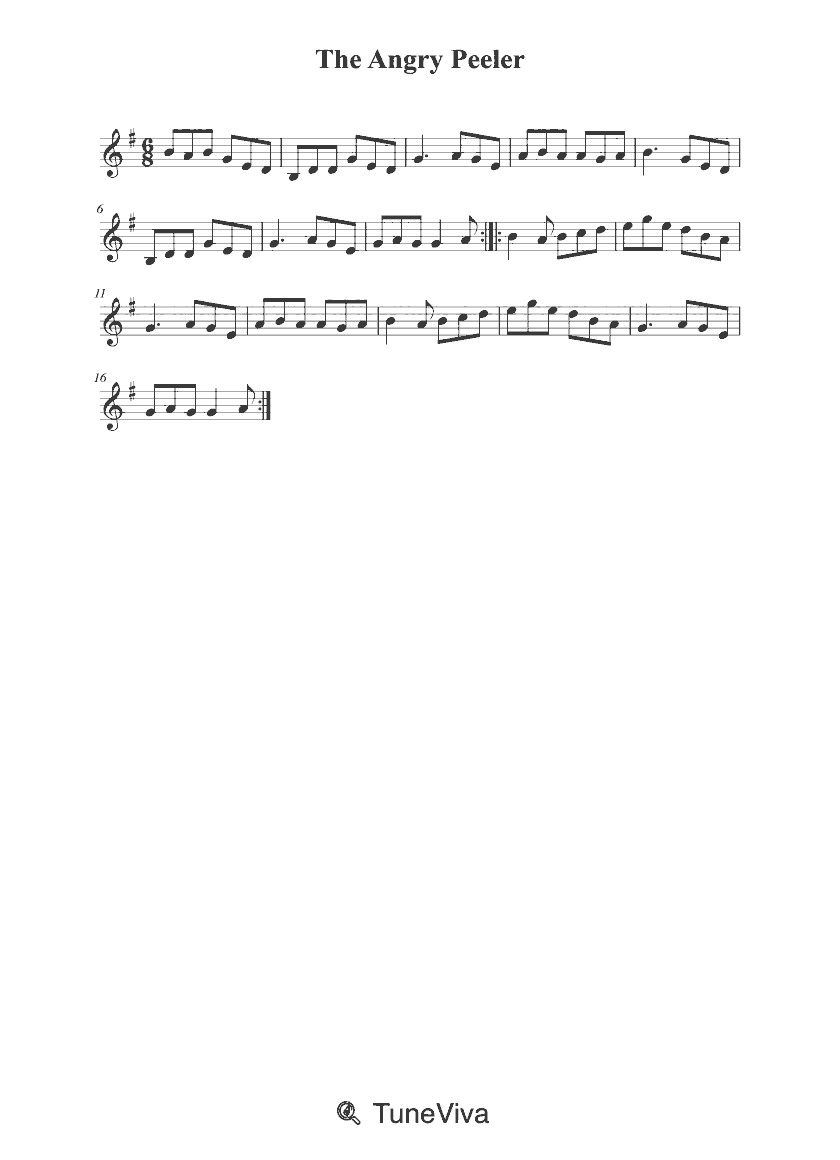
Misc tunes
24 sec · Score #136526
Open score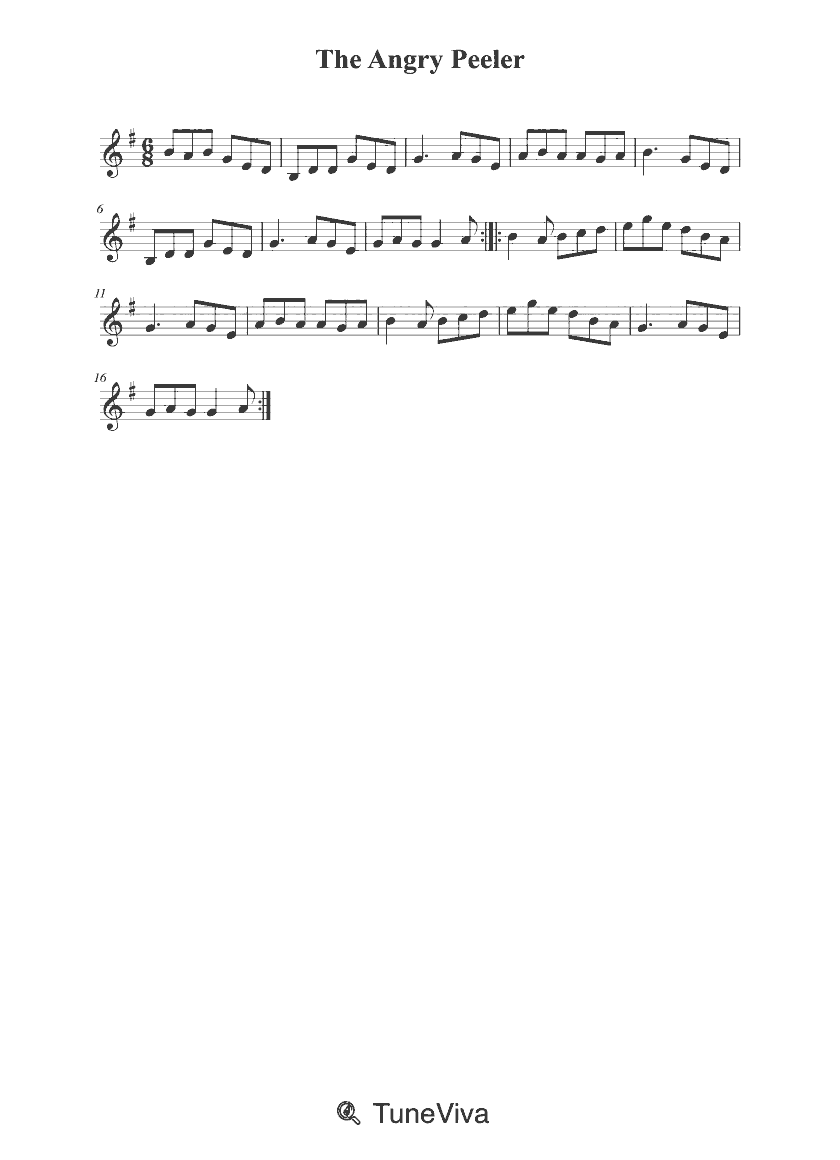
Misc tunes
24 sec · Score #148192
Open score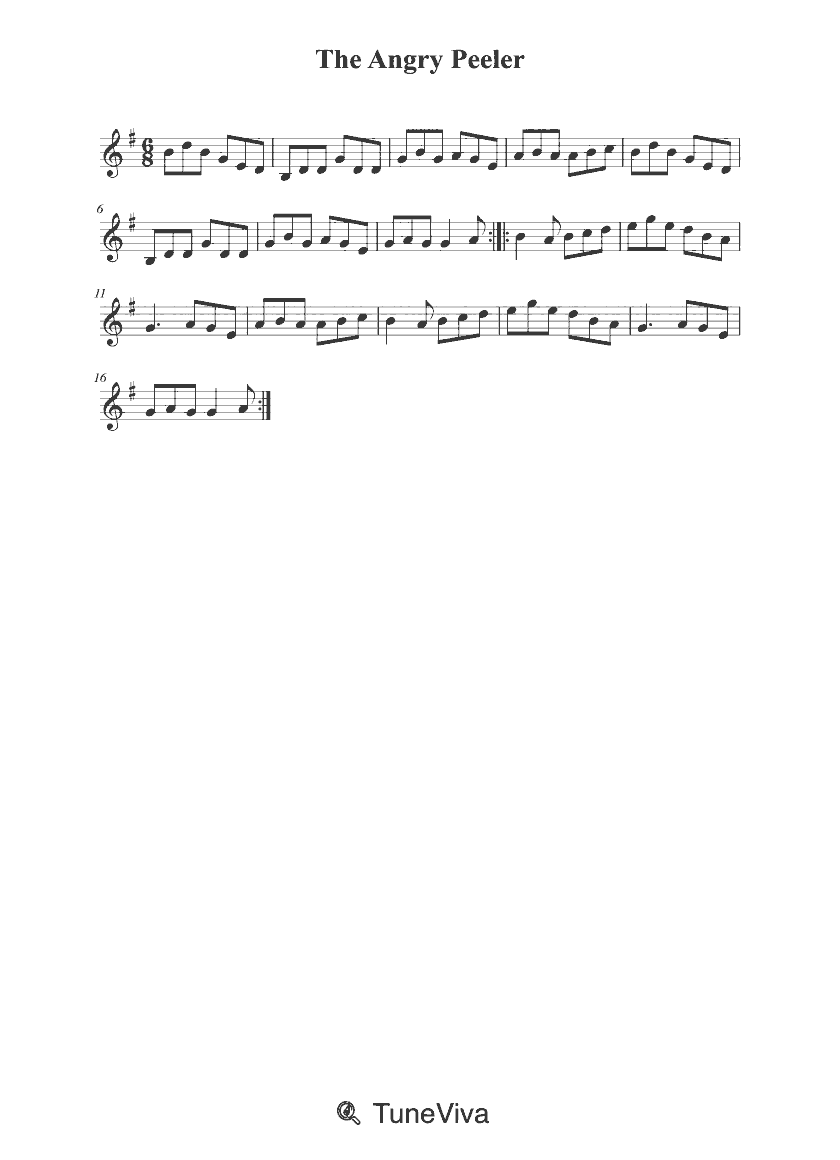
Misc tunes
24 sec · Score #15925
Open score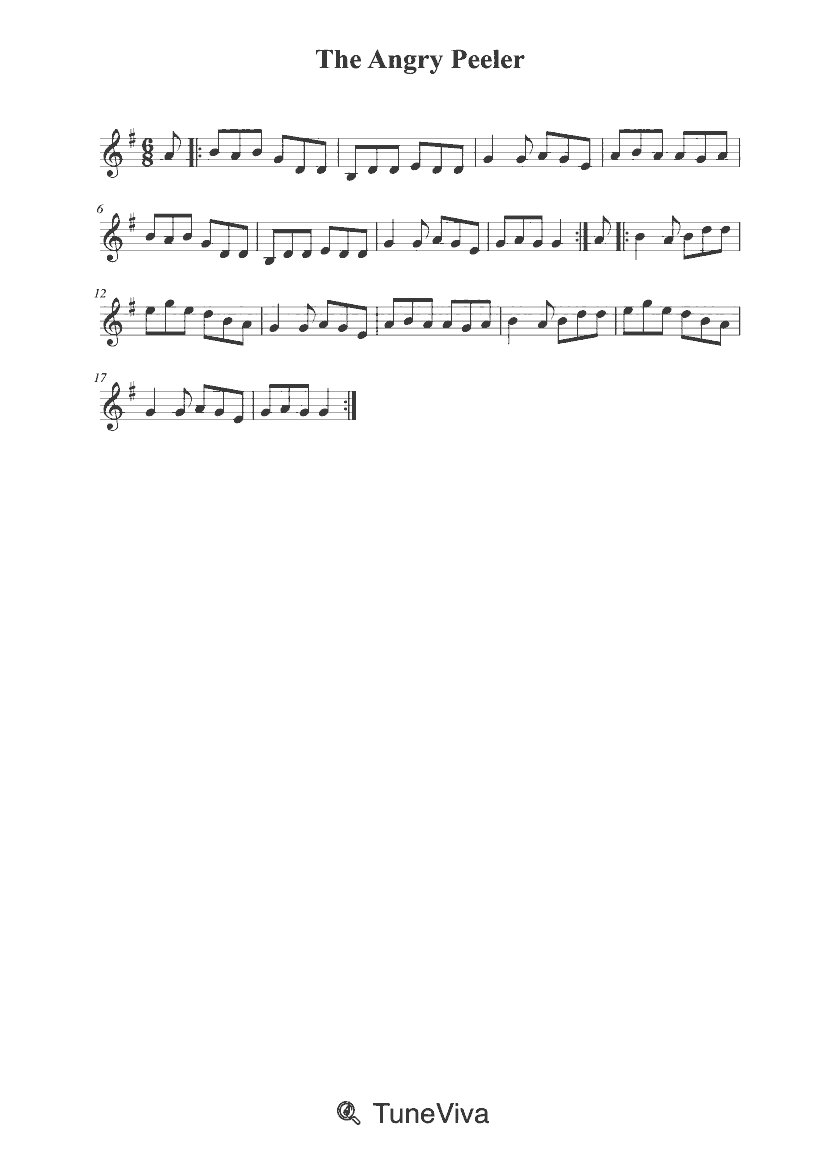
Misc tunes
24 sec · Score #33121
Open score
anon.
24 sec · Score #38266
Open score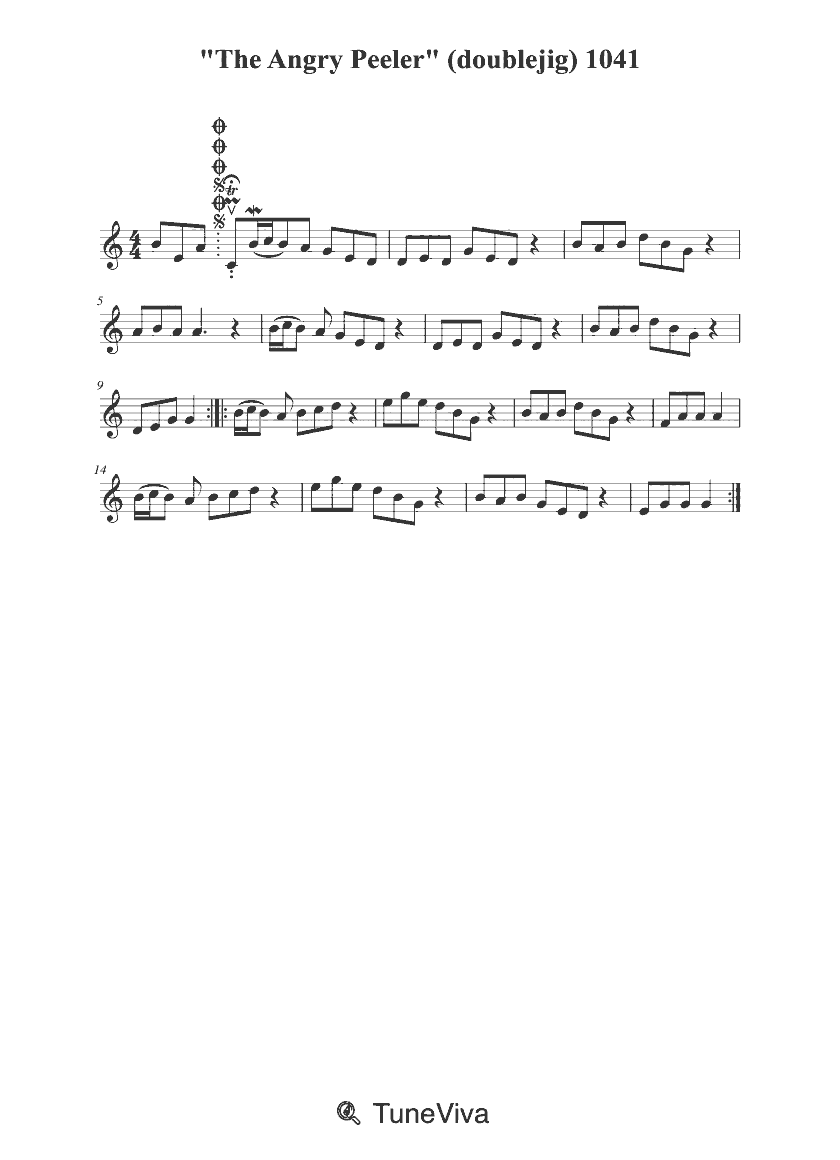
after Fr. Fielding
25 sec
Open score
anon.
24 sec · Score #119432
Open score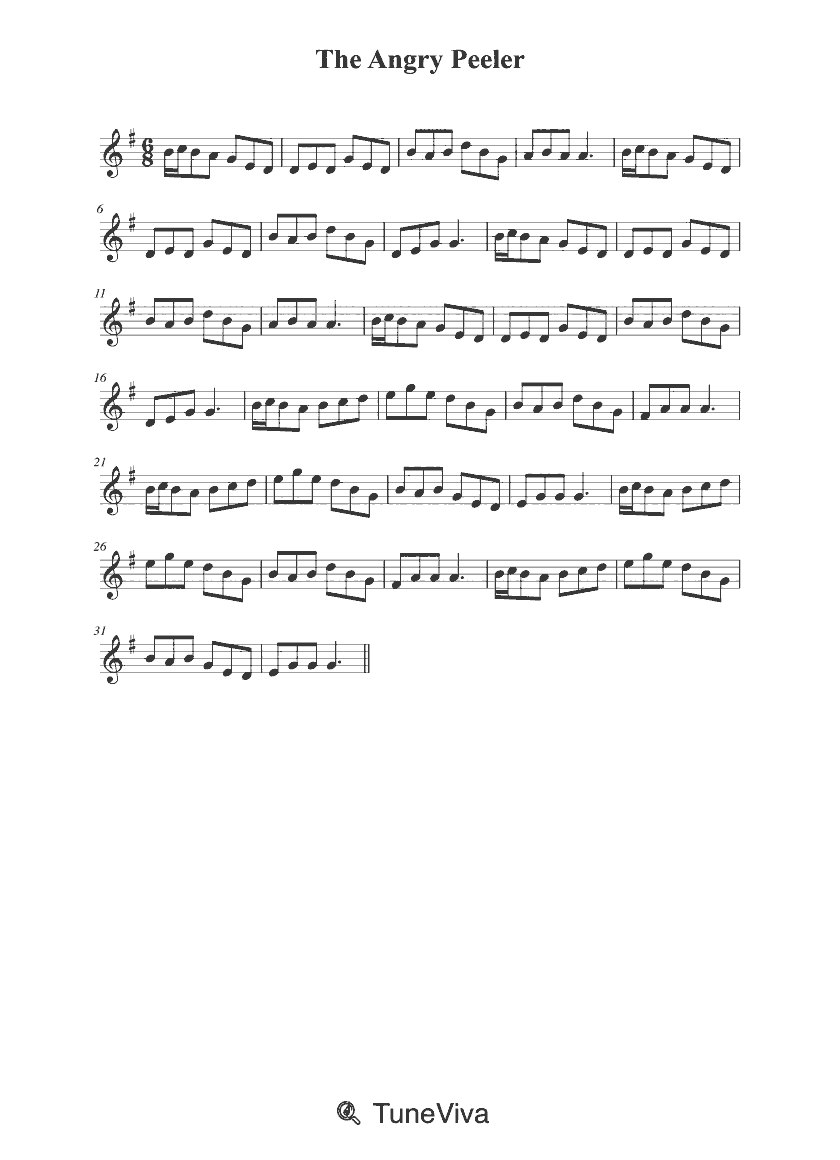
Misc tunes
24 sec · Score #141201
Open score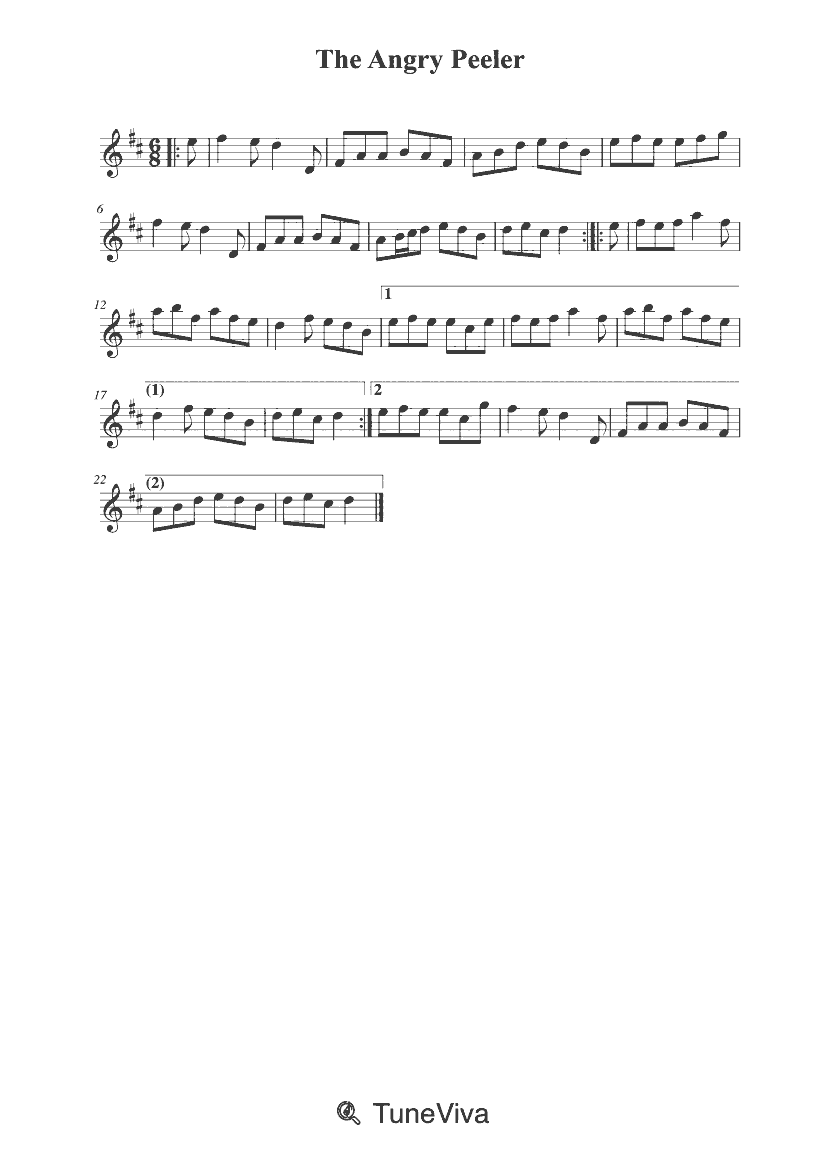
Misc tunes
24 sec · Score #192140
Open scorePage 1 of 2
Two of them open with a one-sharp signature and one with a two-sharp signature, and the settings are not identical in extent. That combination can point to variant versions of a tune, differing amounts of melodic detail, or simply different transcription choices; comparing the melodies bar by bar is the only reliable way to judge. Since no composer, collector or printed edition is credited, each score is one reading of the tune rather than a definitive text.
Key is the clearest practical difference between the available scores. G major uses one sharp and D major uses two, and a setting in D will generally sit higher than the same tune in G. Fiddle, flute, whistle and mandolin players often find one key fits the hand or the instrument's strong register better, and singers should pitch the tune where the phrases fall comfortably. Try both signatures before settling on one, since in a short 6/8 tune a change of key can move the whole piece into an awkward range.
In 6/8 the six quavers of a bar are grouped as two beats of three, so the tune is felt as two dotted-crotchet beats rather than six even ones. Practising slowly with that two-beat pulse helps the tune move instead of dragging, while the three-quaver groups inside each beat stay even. Setting a metronome to the dotted-crotchet beat, or writing the counting above the staff, is a quick check that the grouping holds across the whole tune.
The records do not confirm the tune's tradition, dance type, instrumentation or composer, and the shared title alone does not prove that all three settings are the same melody. Verify any historical claim about the tune against a documented collection or manuscript before repeating it in performance notes or programme copy, and remember that editorial markings you add are your own rather than part of an established edition.
Catalogue duration 29 sec. Opening key signature: 1 sharp (G major). Opening time signature: 6/8.
Catalogue duration 24 sec. Opening key signature: 2 sharps (D major). Opening time signature: 6/8.
Catalogue duration 29 sec. Opening key signature: 1 sharp (G major). Opening time signature: 6/8.
Two of the three available settings of The Angry Peeler open with a one-sharp signature (G major) and one opens with a two-sharp signature (D major). Players should check the key signature on the particular score in front of them rather than assuming a single standard key.
All three available settings of The Angry Peeler are notated in 6/8. That compound metre groups six quavers into two beats of three, so the tune is counted in two dotted-crotchet pulses per bar, which gives the tune its characteristic lilt.
The dance type or genre of The Angry Peeler is not stated in the available records, so calling it a jig would be an assumption. The 6/8 metre is the compound metre used for many jig-type dance tunes, but the tune's actual dance type and regional origin would need confirmation from a documented source.
The three settings share a title and a 6/8 metre but differ in key and are not identical in extent, and nothing in the records confirms they are the same melody. Differences of this kind usually reflect variant versions of a tune or differing transcription choices, so comparing the settings bar by bar is the reliable way to see how closely they relate.
Choosing between the settings of The Angry Peeler comes down mainly to register and comfort. The D major version uses two sharps and generally sits higher than the G major version, which may suit one instrument or voice better than the other. Playing through both keys before deciding is the practical test, especially on fiddle, flute, whistle or mandolin, where a key change can move the tune out of a comfortable range.