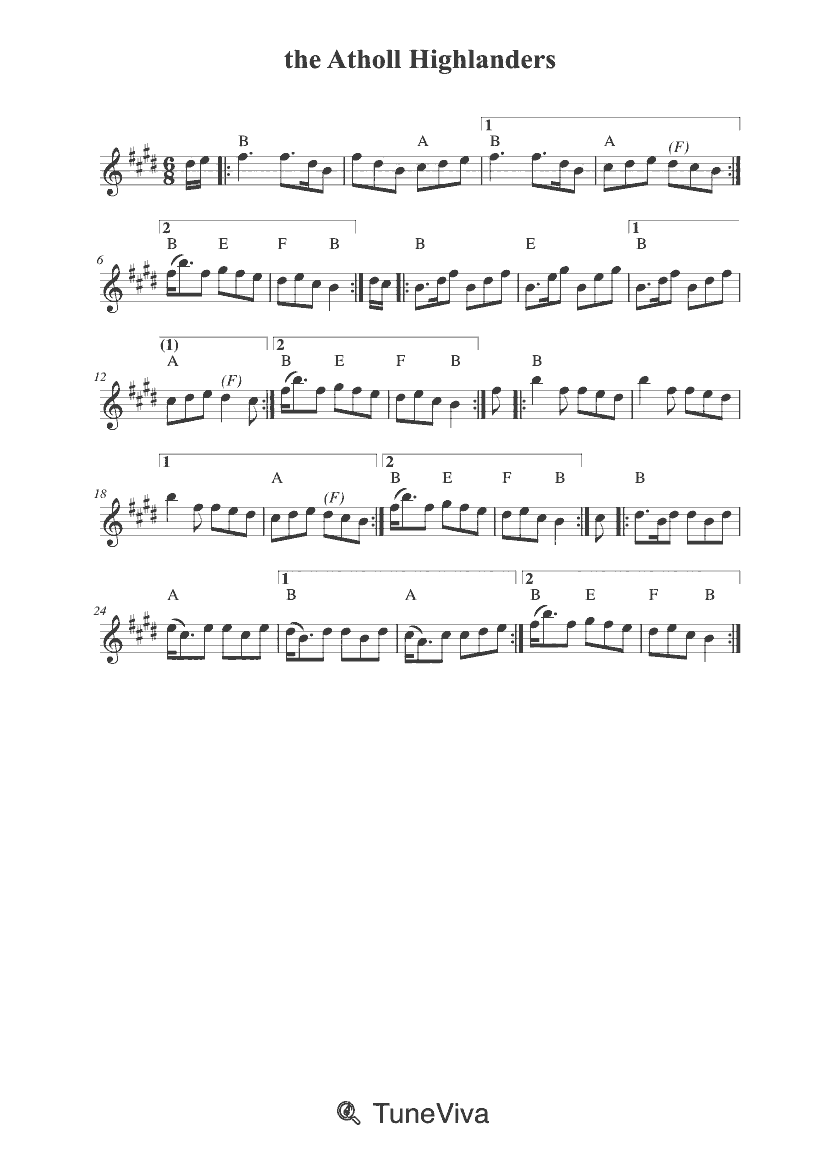
the Atholl Highlanders
Misc Traditional
31 sec
Open scoreThe Atholl Highlanders sheet music is available here in three traditional folk scores. All three open in 6/8, but they use two different opening key signatures, so players can compare the versions and choose the one that fits their instrument or session.
Scores 1–20 of 35
Misc Traditional
31 sec
Open score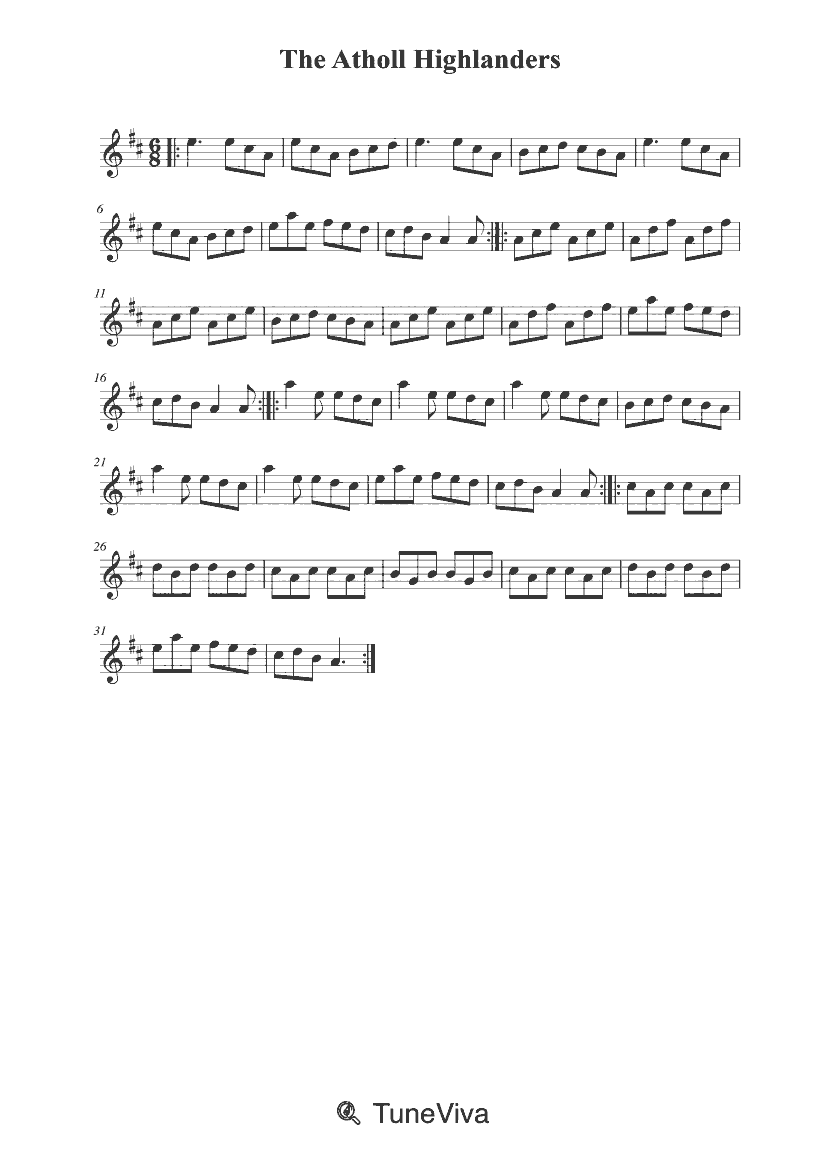
Misc Traditional
Atholl Highlander The
48 sec · Score #18848
Open score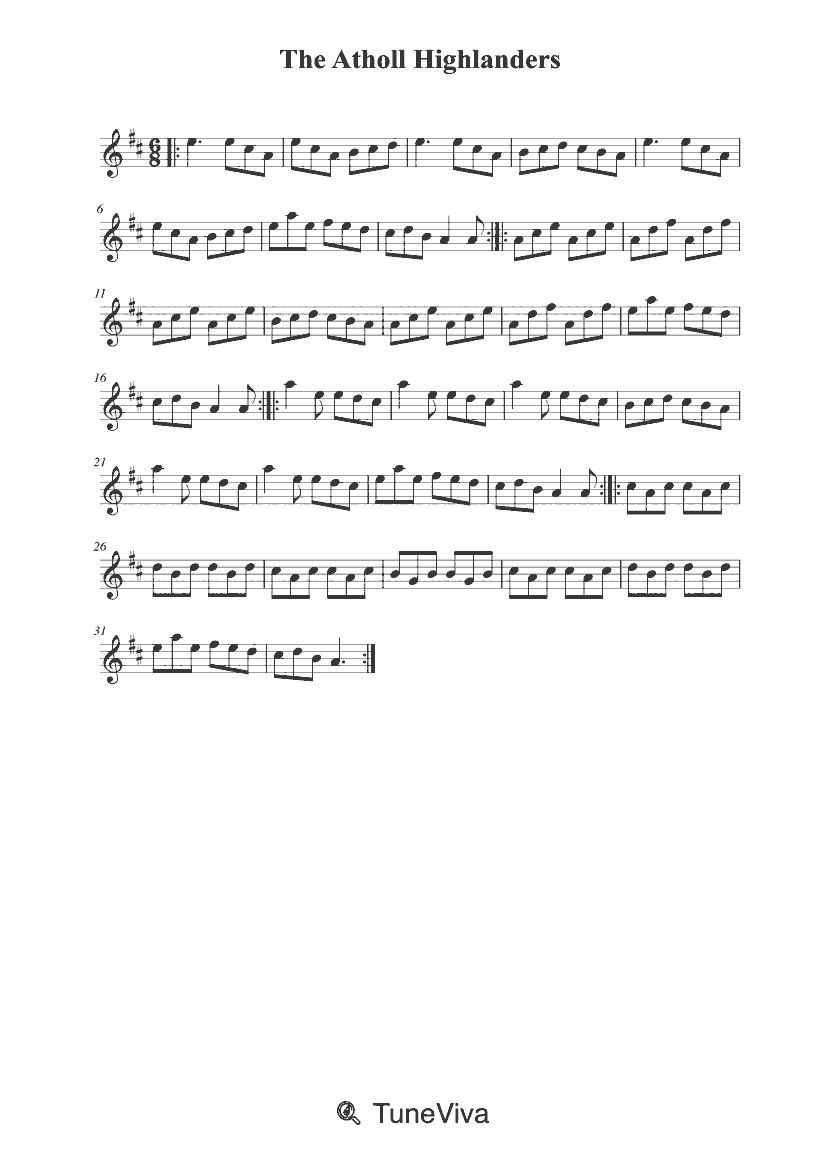
Misc Traditional
Atholl Highlander The
48 sec · Score #151687
Open score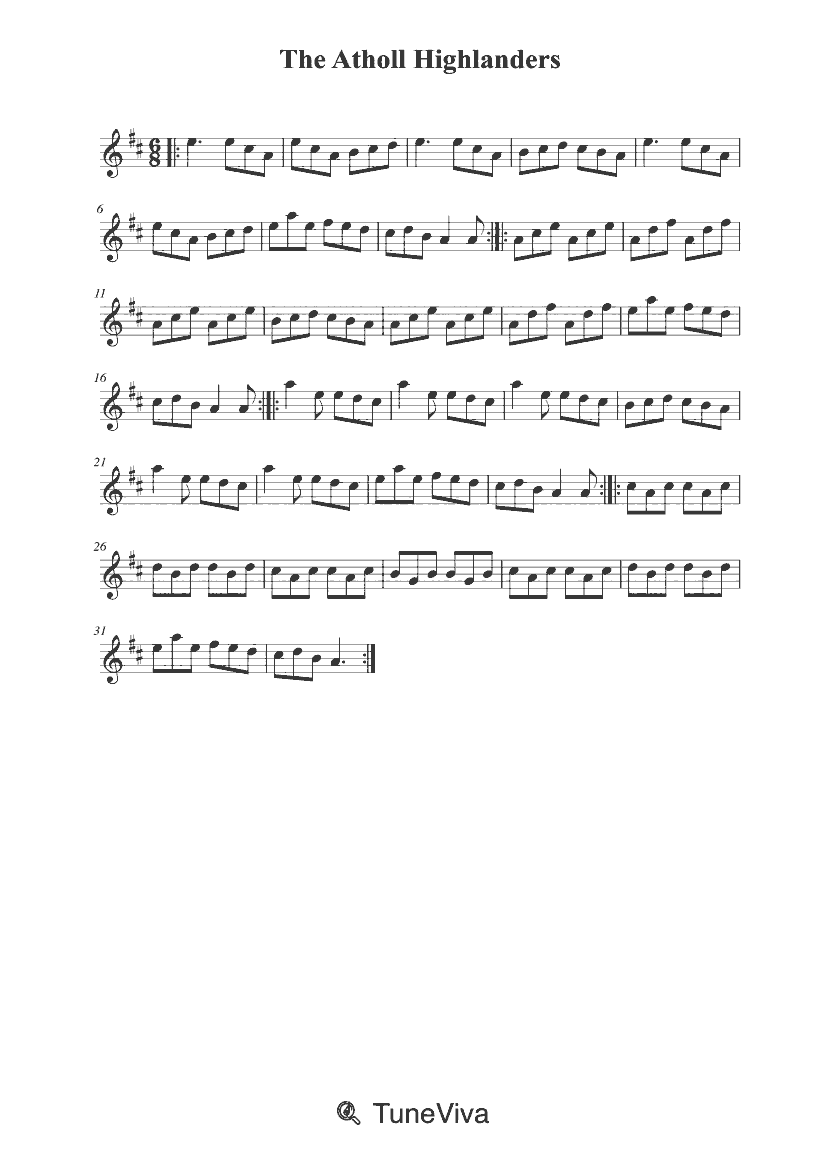
Misc Traditional
48 sec · Score #170002
Open score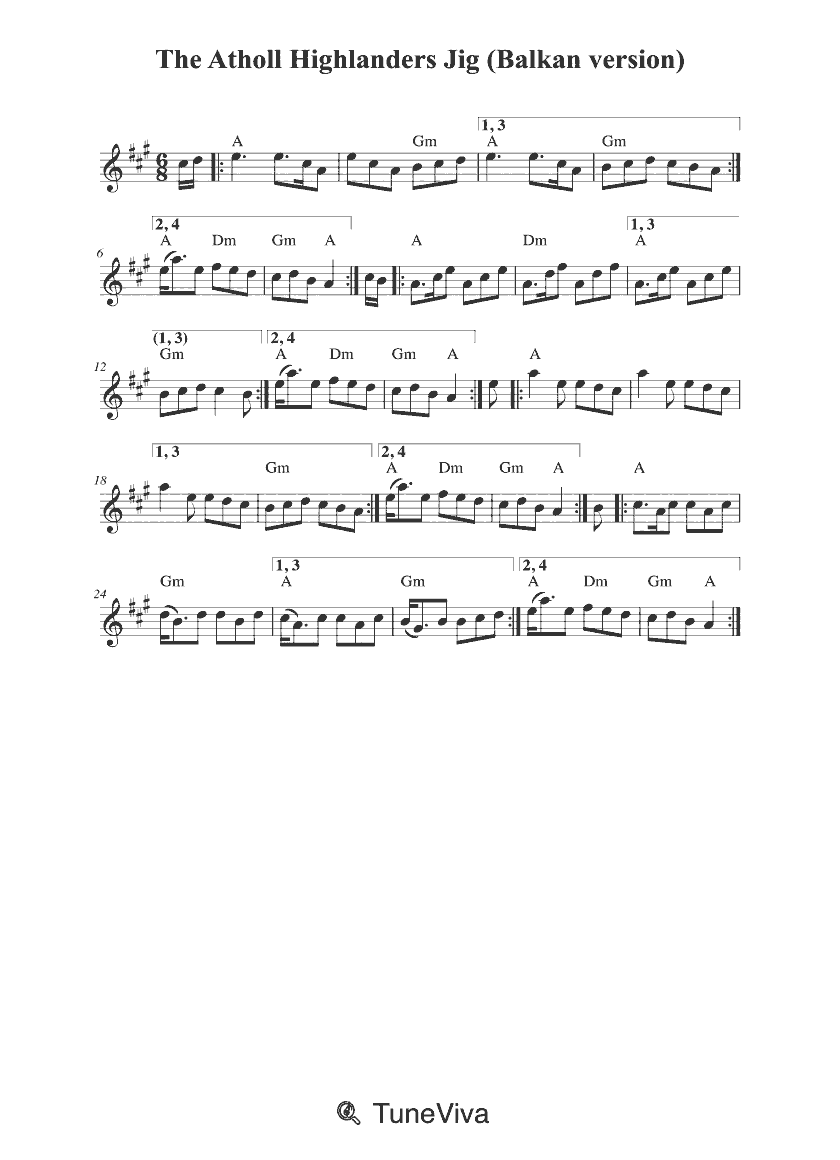
Misc Traditional
31 sec
Open score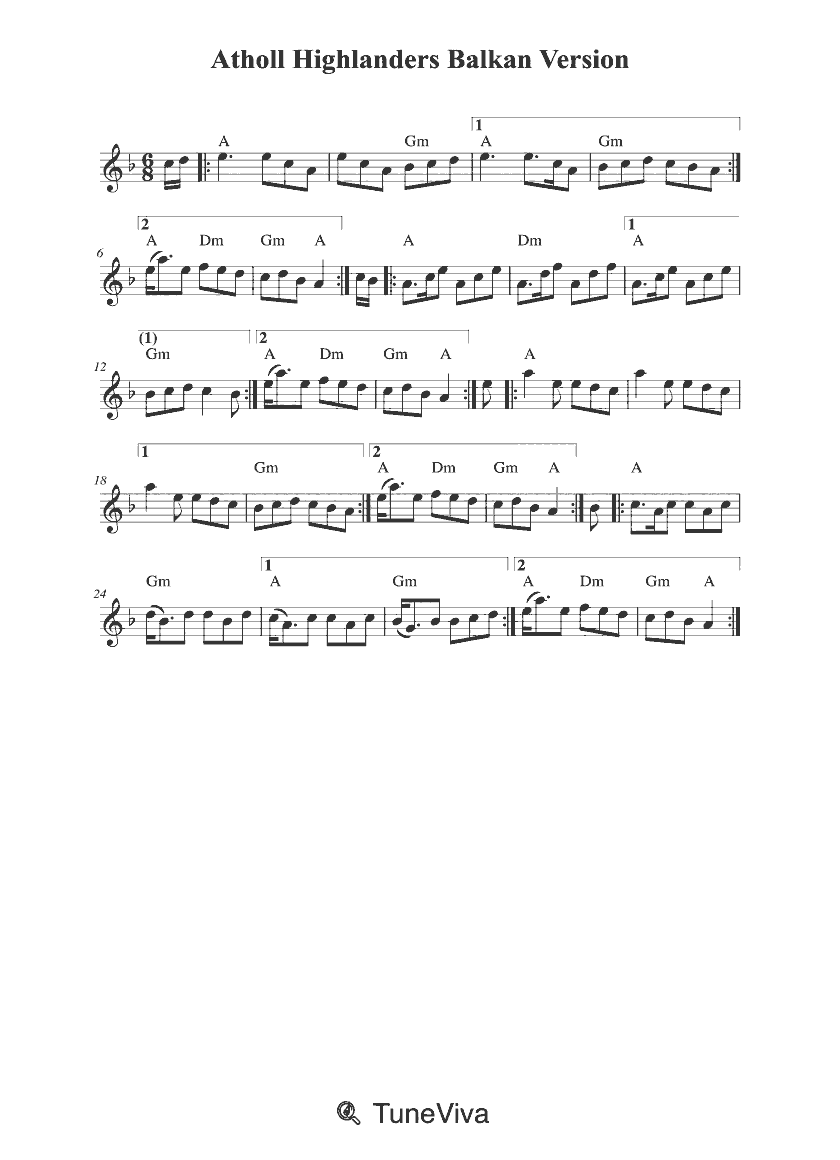
Misc Traditional
31 sec · Score #72375
Open score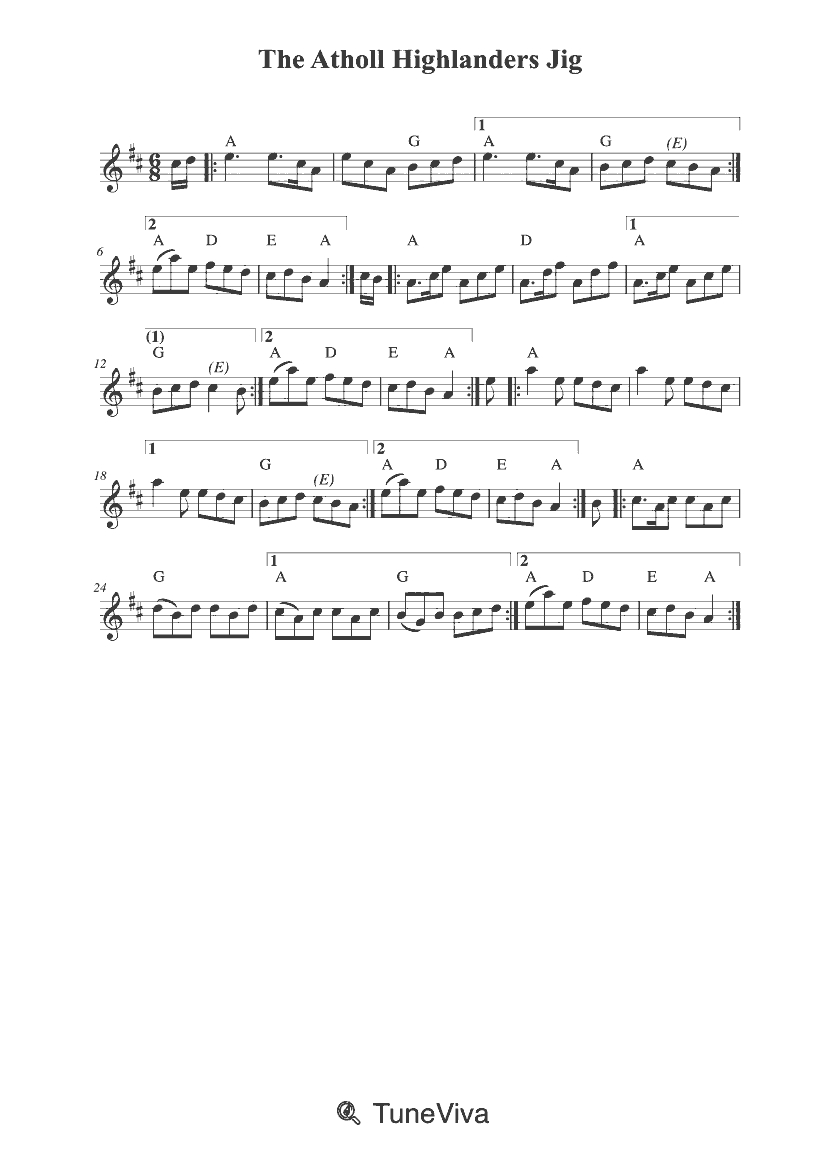
Misc Traditional
31 sec · Score #43918
Open score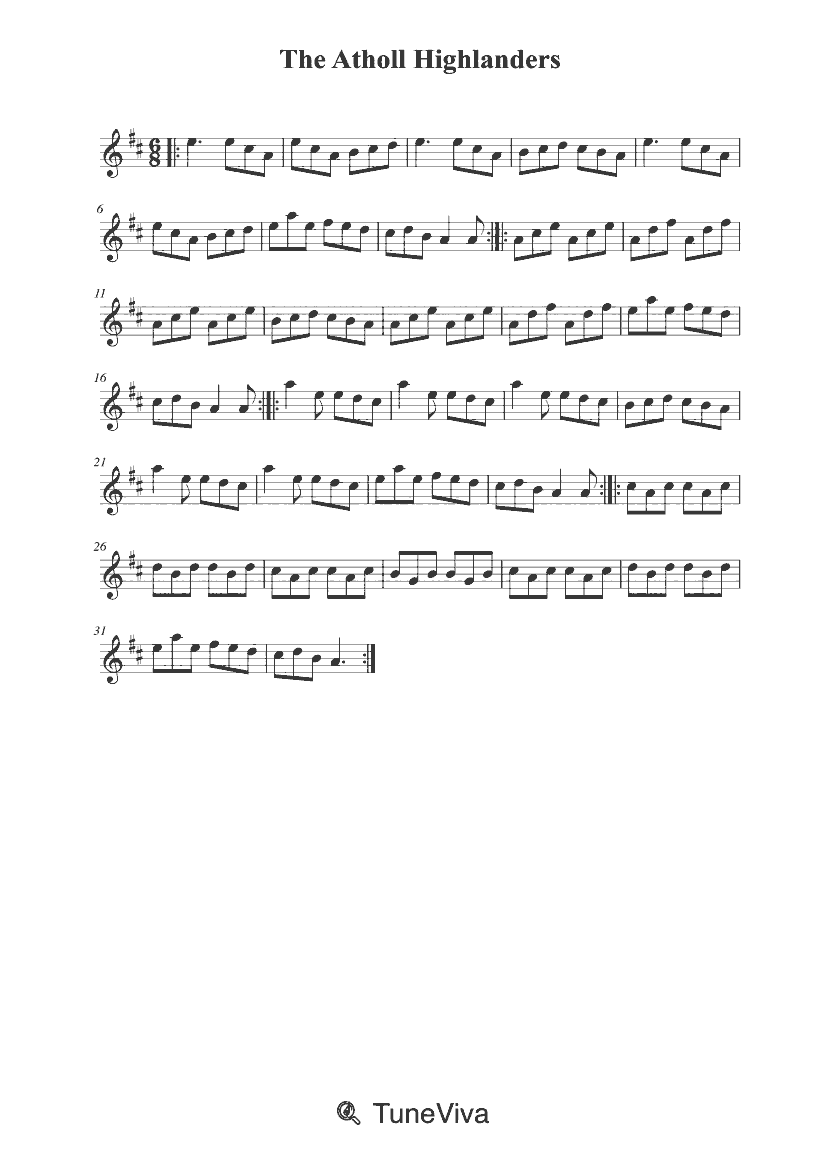
Misc Traditional
48 sec · Score #67985
Open score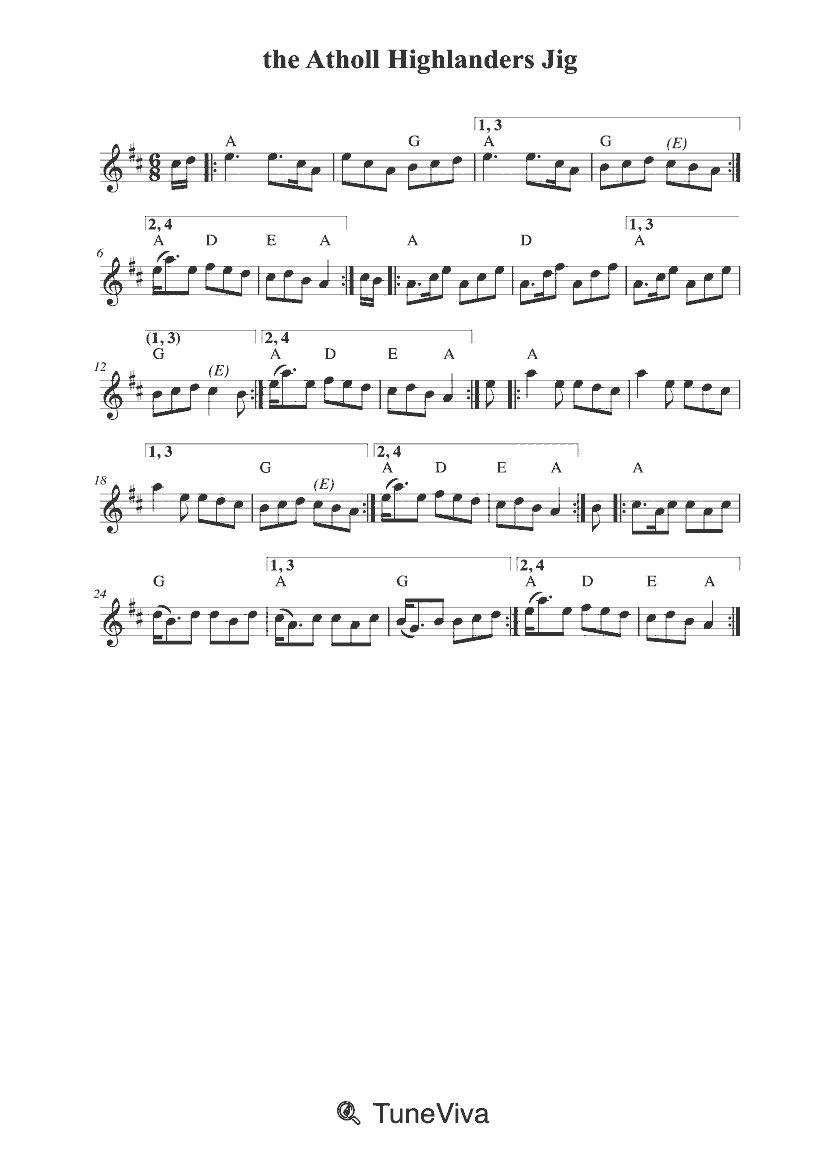
Misc Traditional
31 sec · Score #97282
Open score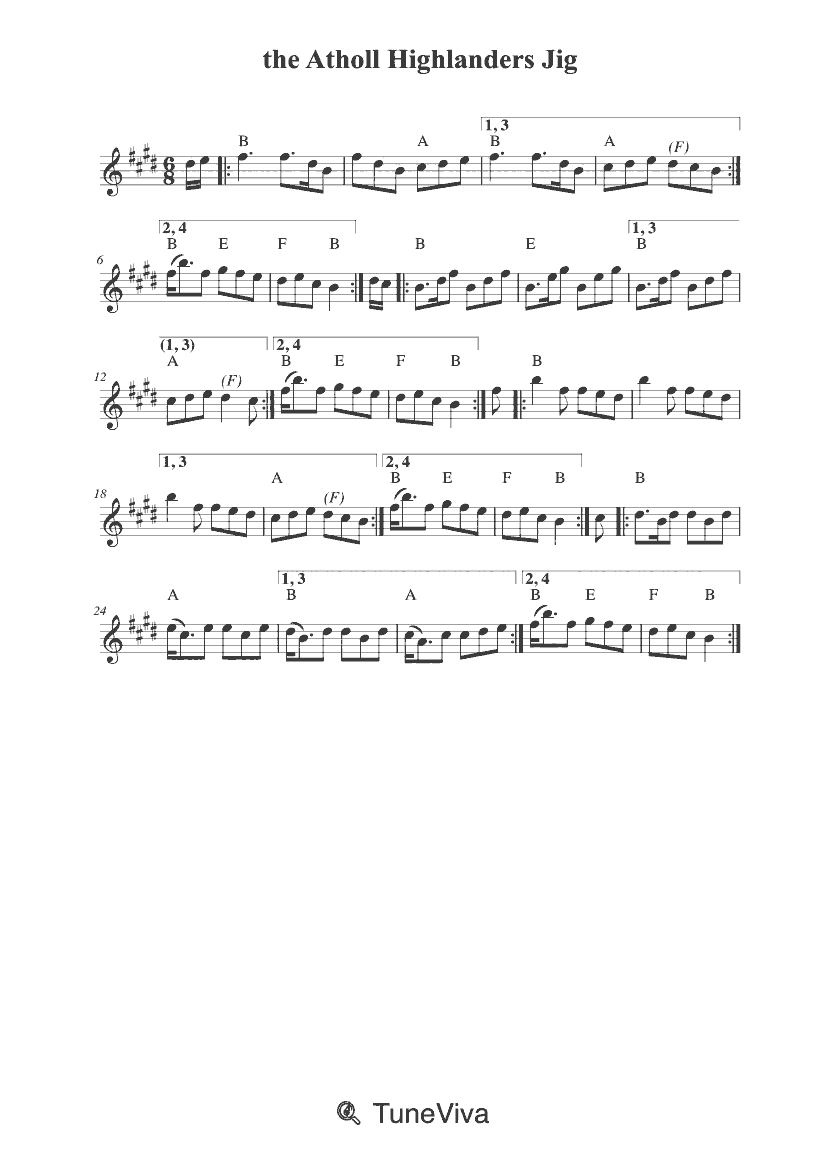
Misc Traditional
31 sec · Score #10296
Open score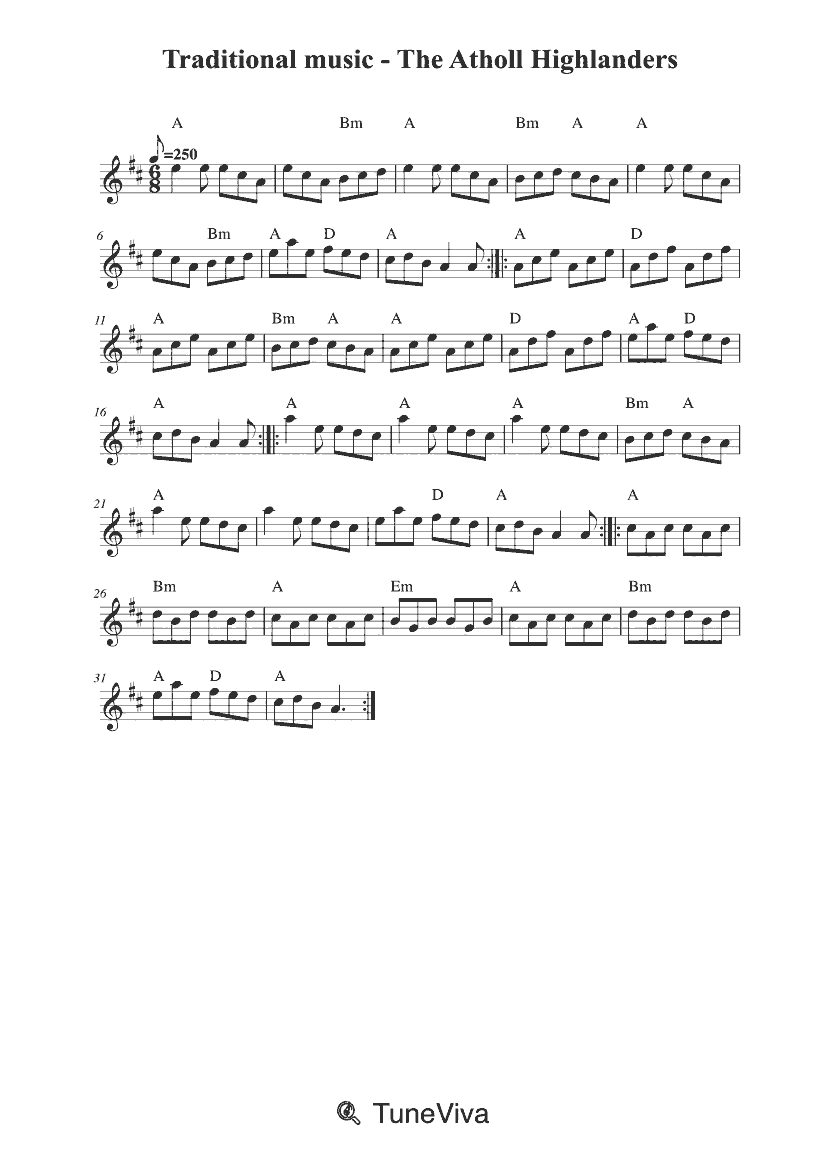
Trad.
46 sec
Open score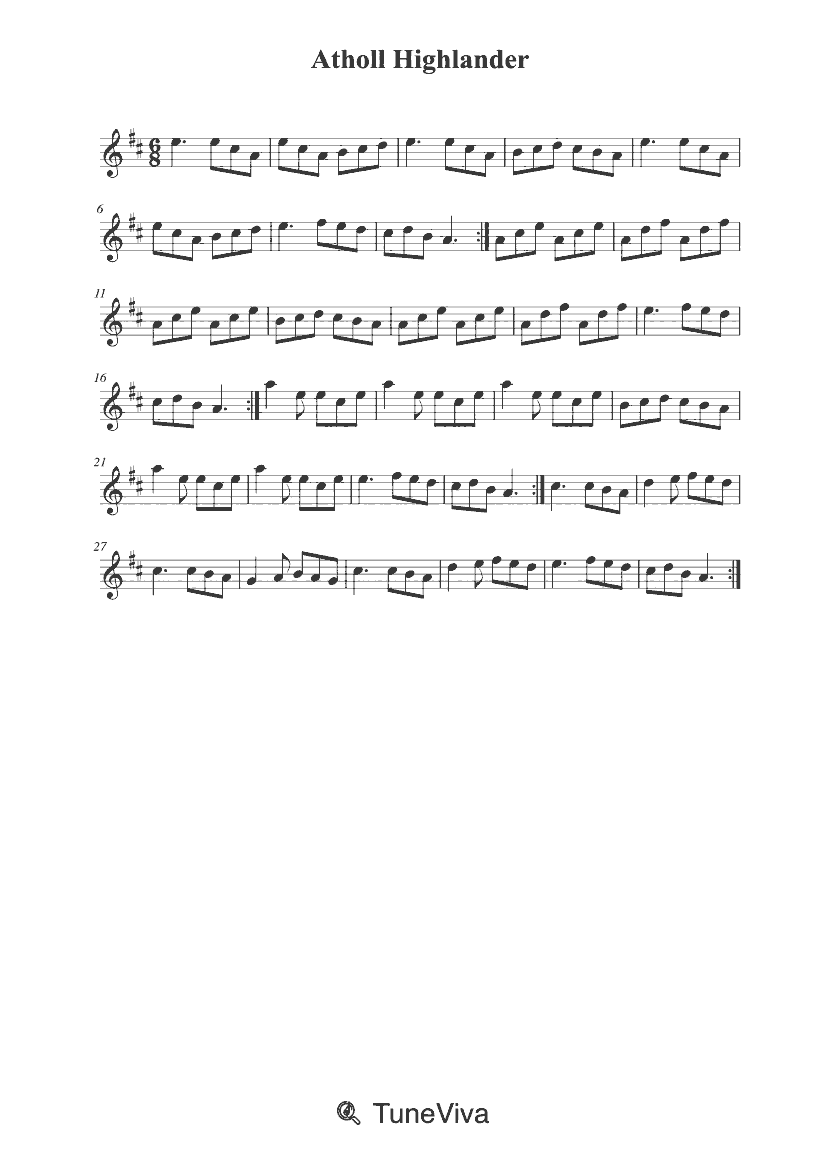
Misc Traditional
1 min 24 sec
Open score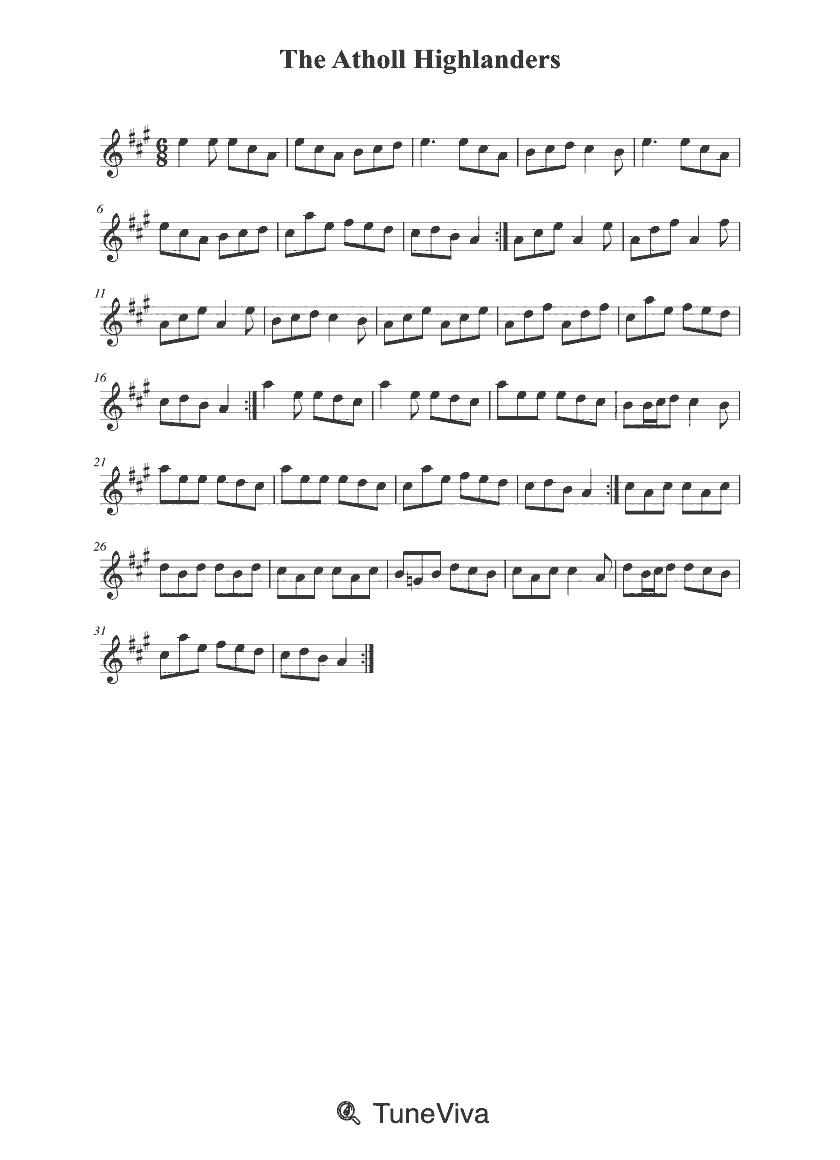
Misc Traditional
1 min 22 sec
Open score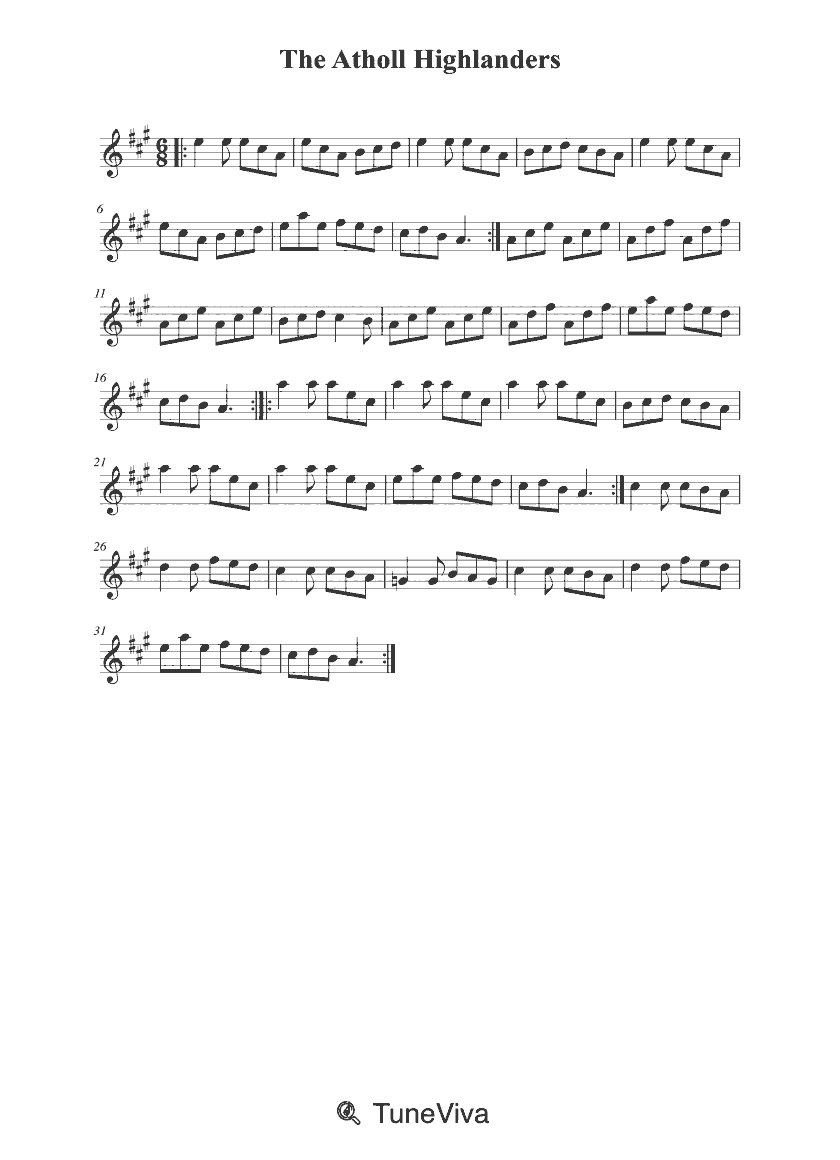
Misc Traditional
1 min 0 sec
Open score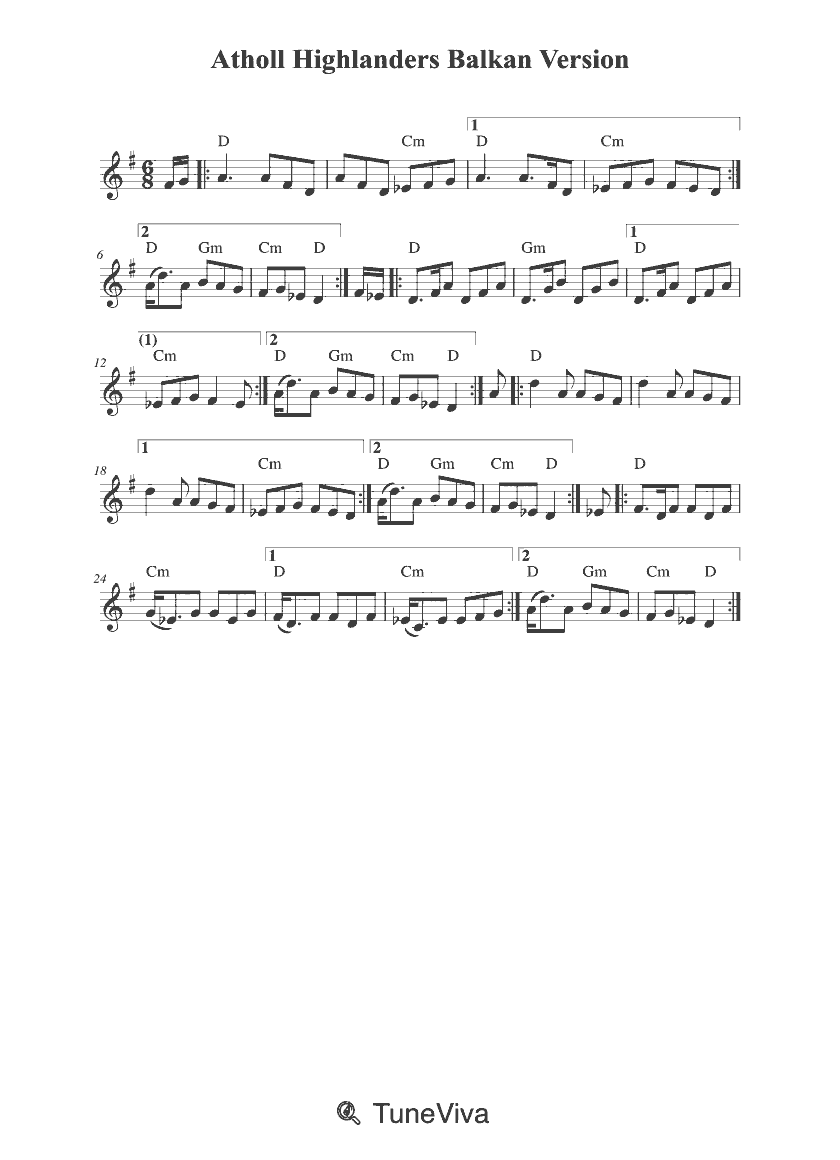
Misc Traditional
31 sec · Score #44885
Open score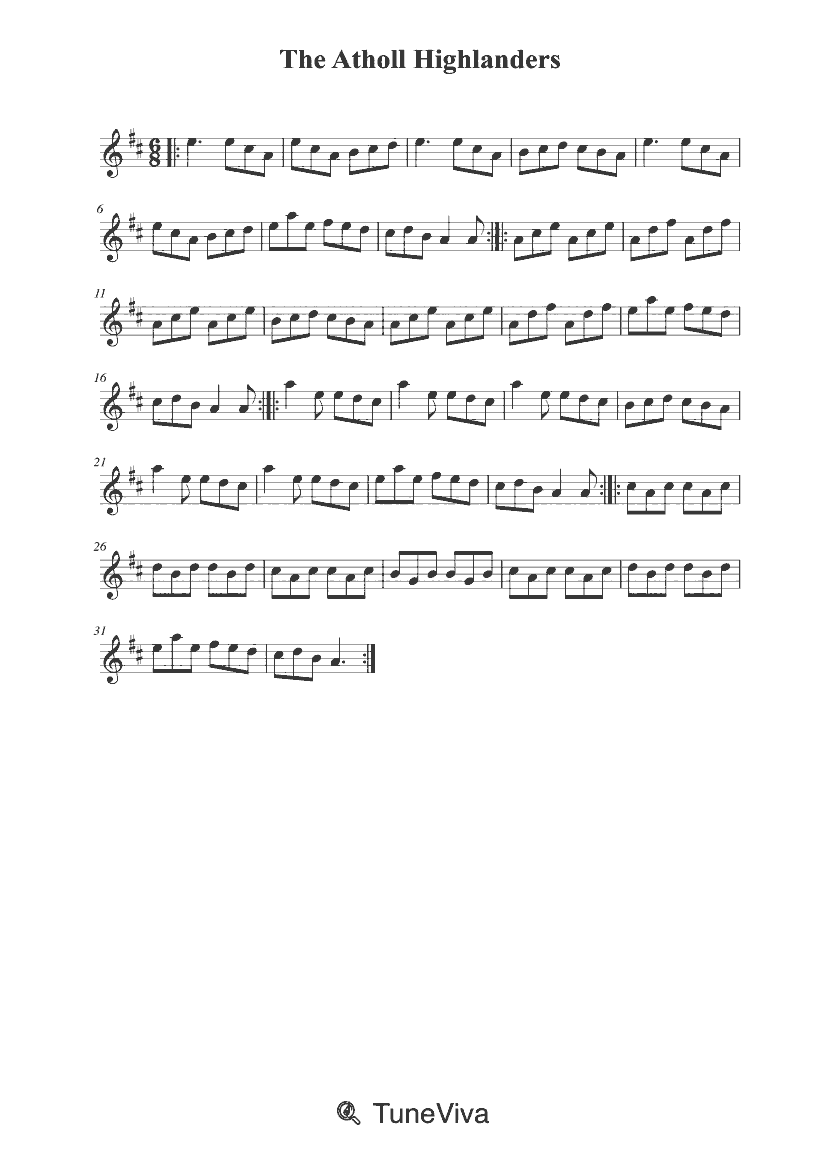
Misc Traditional
48 sec · Score #78045
Open score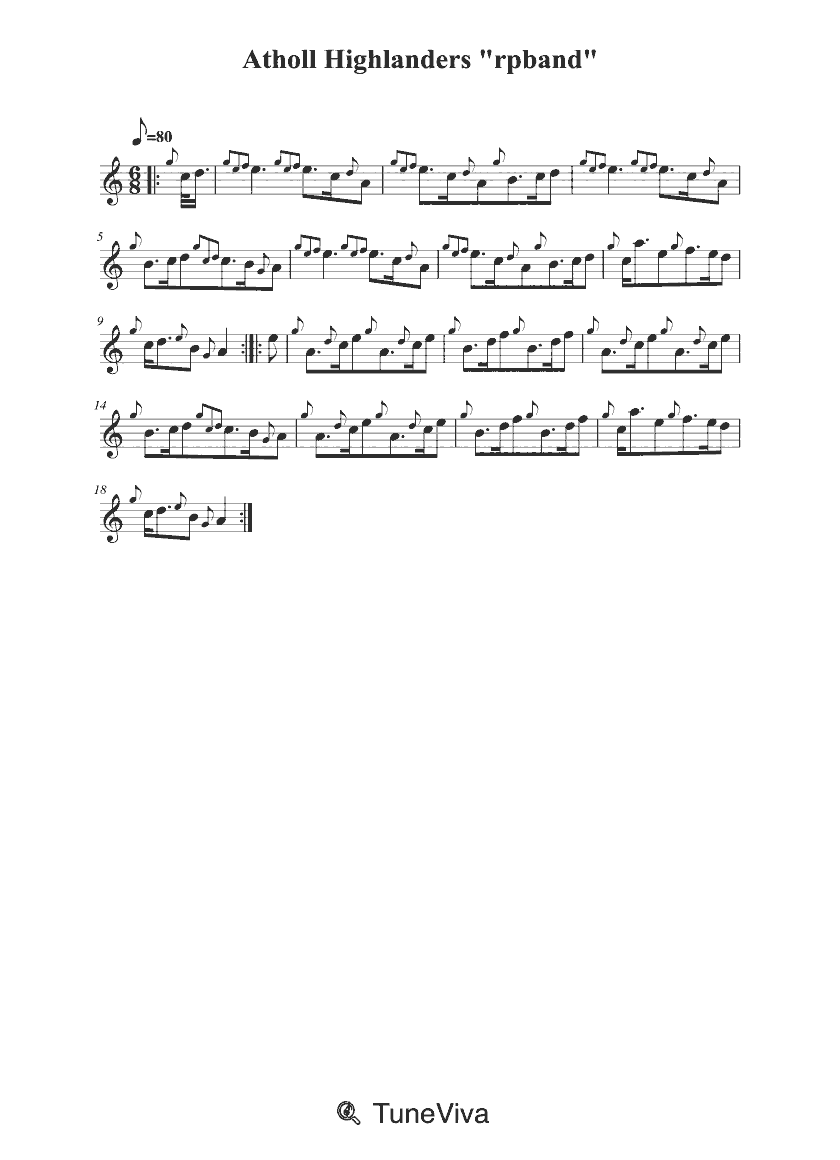
Misc Traditional
1 min 12 sec
Open score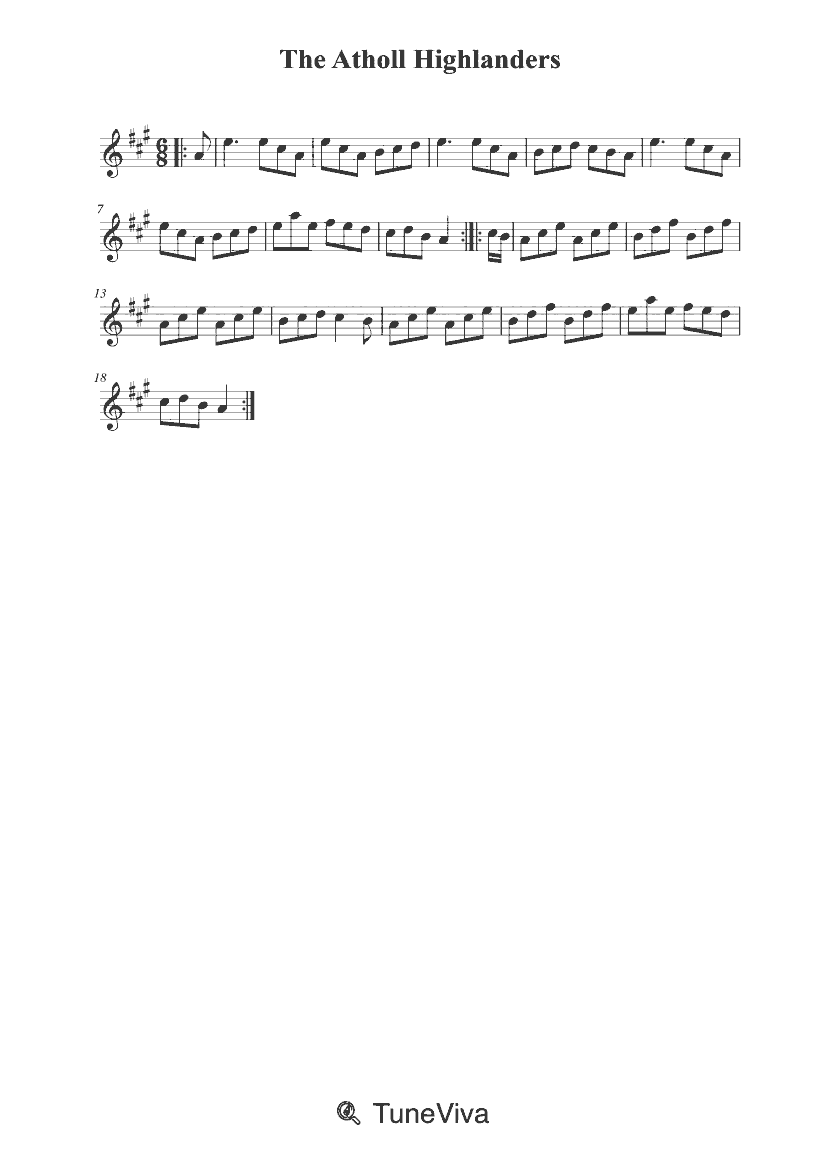
Misc Traditional
24 sec
Open score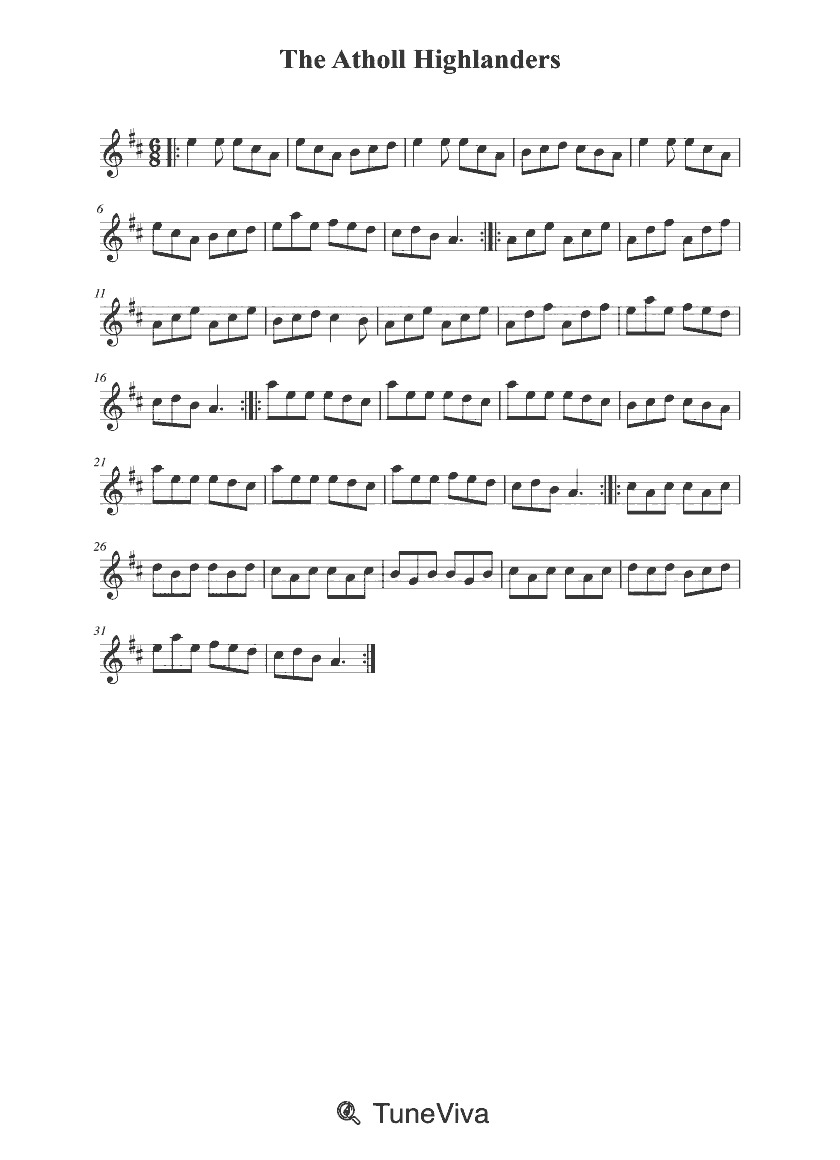
Misc Traditional
48 sec · Score #221355
Open score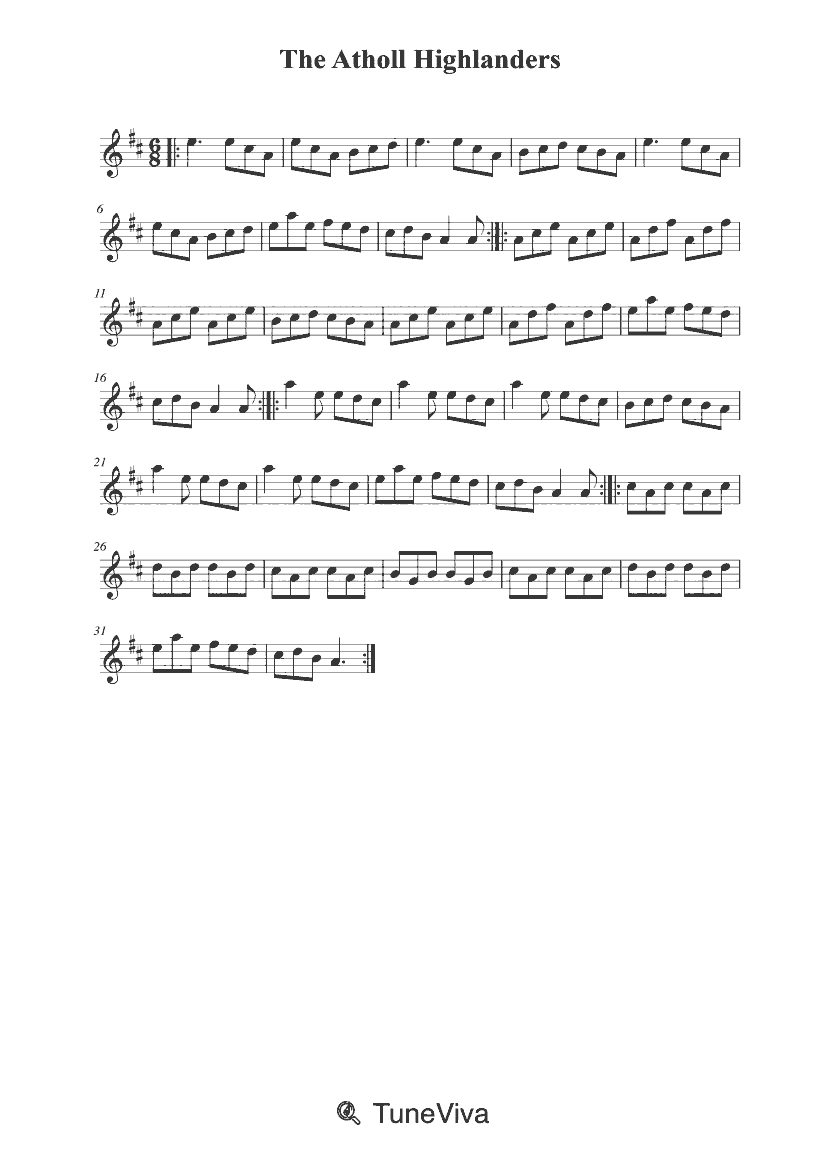
Misc Traditional
48 sec · Score #235547
Open scorePage 1 of 2
The three listed scores of The Atholl Highlanders all begin in 6/8 time. Two open with a key signature of two sharps, while one opens with four sharps. The music is described as traditional folk, with no individual composer credited.
Two scores open with two sharps and one opens with four sharps. On a fixed-range instrument such as fiddle, flute or whistle, the choice affects fingering and tone; on a transposing instrument, check how the written key sits. The listings do not name instrumentation, so confirm the clef and range in the score before choosing.
A 6/8 time signature is compound duple metre: two main beats per bar, each divided into three eighth notes. Counting “one-and-a, two-and-a” can help keep the subdivision even. The metre alone does not identify the tune as a march, jig or another traditional form.
The available information does not establish the tune’s origin, composer or whether the three listed scores are distinct arrangements or duplicate versions. Treat the title as the main identification and check each score for details such as instrumentation, range and any performance markings.
Catalogue duration 31 sec. Opening key signature: 4 sharps. Opening time signature: 6/8.
Catalogue duration 48 sec. Opening key signature: 2 sharps. Opening time signature: 6/8.
Catalogue duration 48 sec. Opening key signature: 2 sharps. Opening time signature: 6/8.
The Atholl Highlanders is listed as a traditional folk piece with no individual composer credited. The available scores are notated in 6/8 time, and the title is the main identifying information provided.
All three available scores of The Atholl Highlanders open in 6/8. That is compound duple metre, with two main beats per bar and each beat divisible into three eighth notes.
The available scores use two different opening key signatures: two sharps and four sharps. Two of the three scores open with two sharps, while one opens with four sharps; musicians should check the full score for the working key and any accidentals.
The Atholl Highlanders is credited to “Misc Traditional,” and no individual composer is named in the available scores. The listings do not provide a verified date or origin for the tune.
The three scores are not identical in key: two open with two sharps and one opens with four sharps. All three share a 6/8 opening time signature. The available information does not confirm whether the two-sharp scores are duplicate copies or separate arrangements.
The tune type of The Atholl Highlanders is not identified in the available information. Its 6/8 metre gives two main beats per bar with three-part subdivisions, but that metre alone does not settle whether the piece is a march, jig or another traditional form.
Choosing between the available scores of The Atholl Highlanders depends on the opening key and the range of your instrument. Two versions use two sharps and one uses four sharps, so compare the clef, range and fingering demands before deciding which score suits your instrument or session.