
The Battering Ram
Misc tunes
36 sec · Score #191518
Open scoreThe Battering Ram sheet music available here appears in three scores, all opening in 6/8. Two versions begin with a two-sharp key signature (D major) and one with a one-sharp signature (G major). No composer is named for any of the scores; they are credited to 'Misc tunes', so the listings should be read as versions of a tune rather than proof of a particular author or historical origin.
Scores 1–20 of 24
Misc tunes
36 sec · Score #191518
Open score
Misc tunes
36 sec · Score #220421
Open score
Misc tunes
54 sec · Score #146016
Open score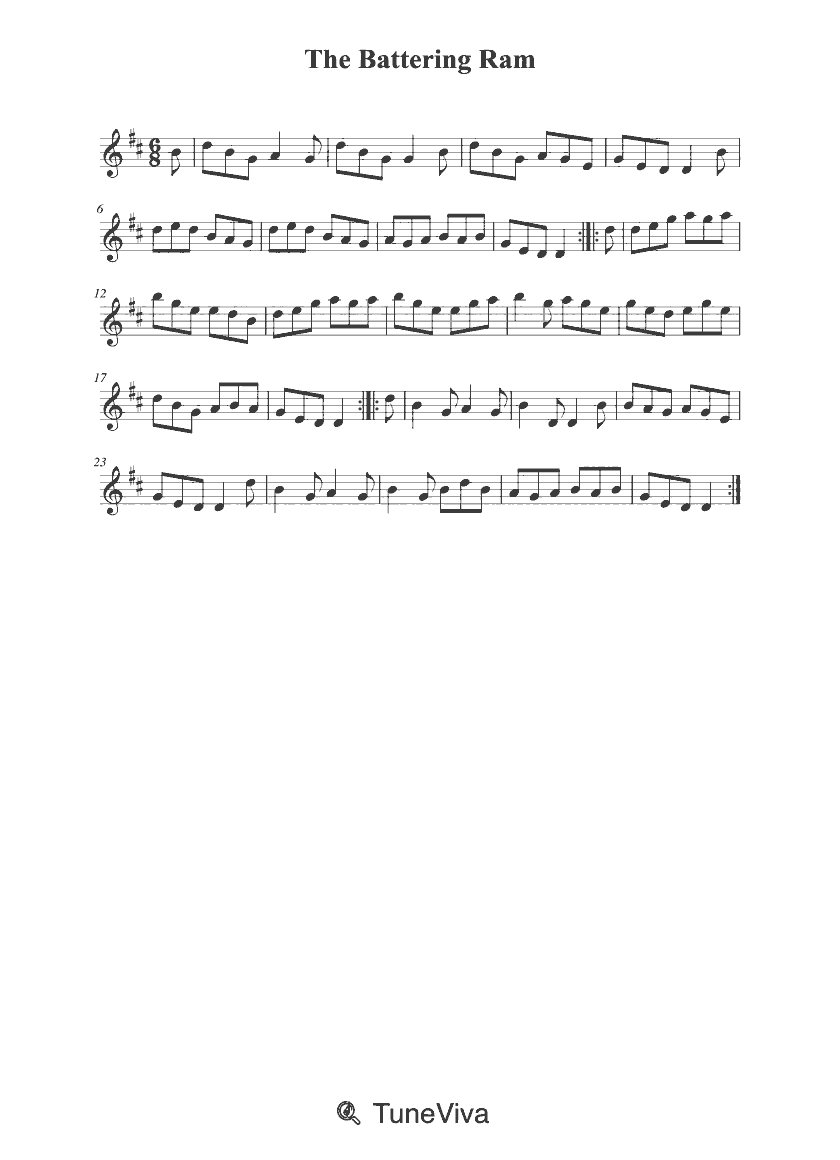
Misc tunes
36 sec · Score #251919
Open score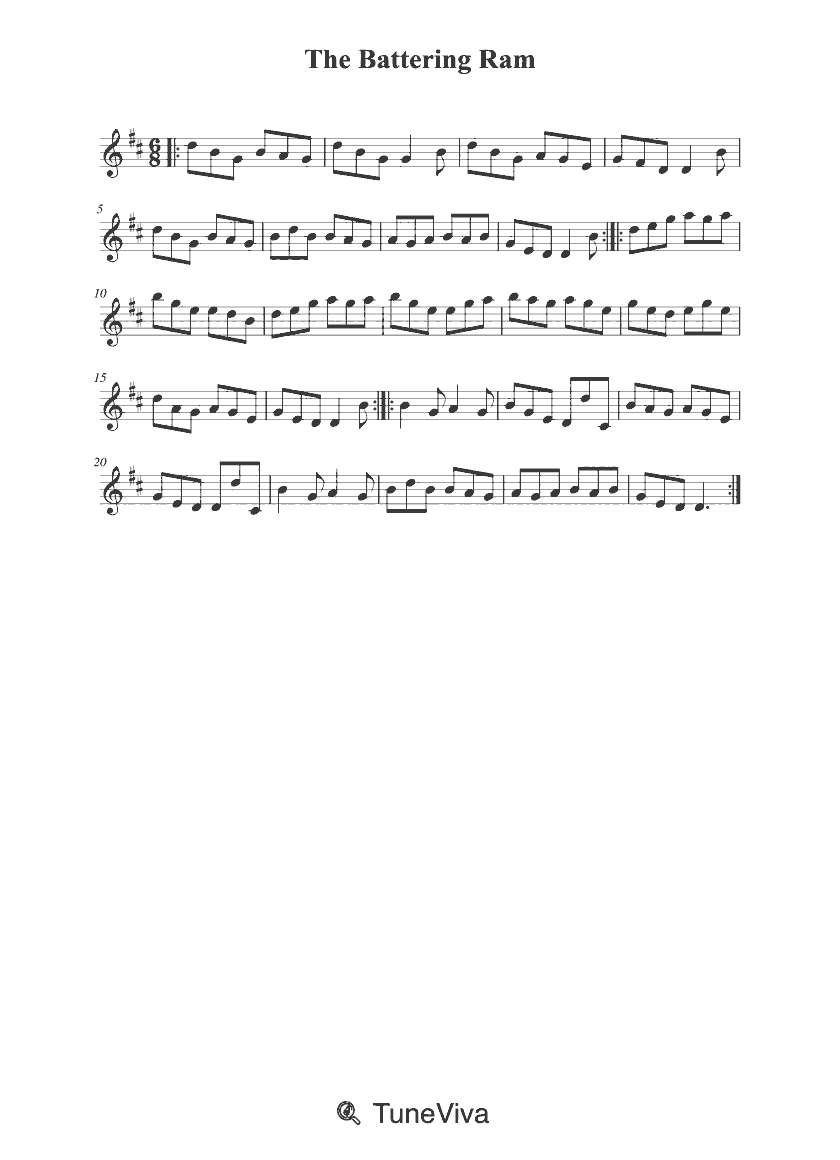
Misc tunes
36 sec · Score #42837
Open score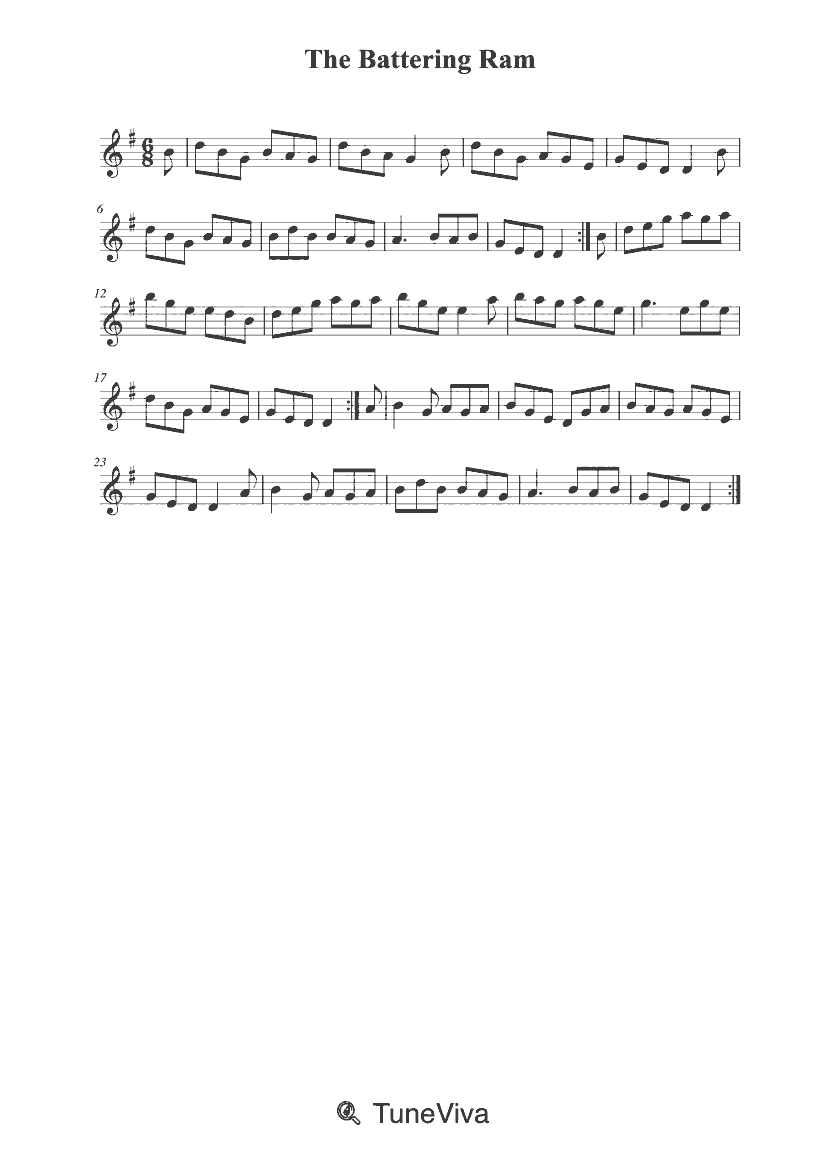
Misc tunes
54 sec · Score #112157
Open score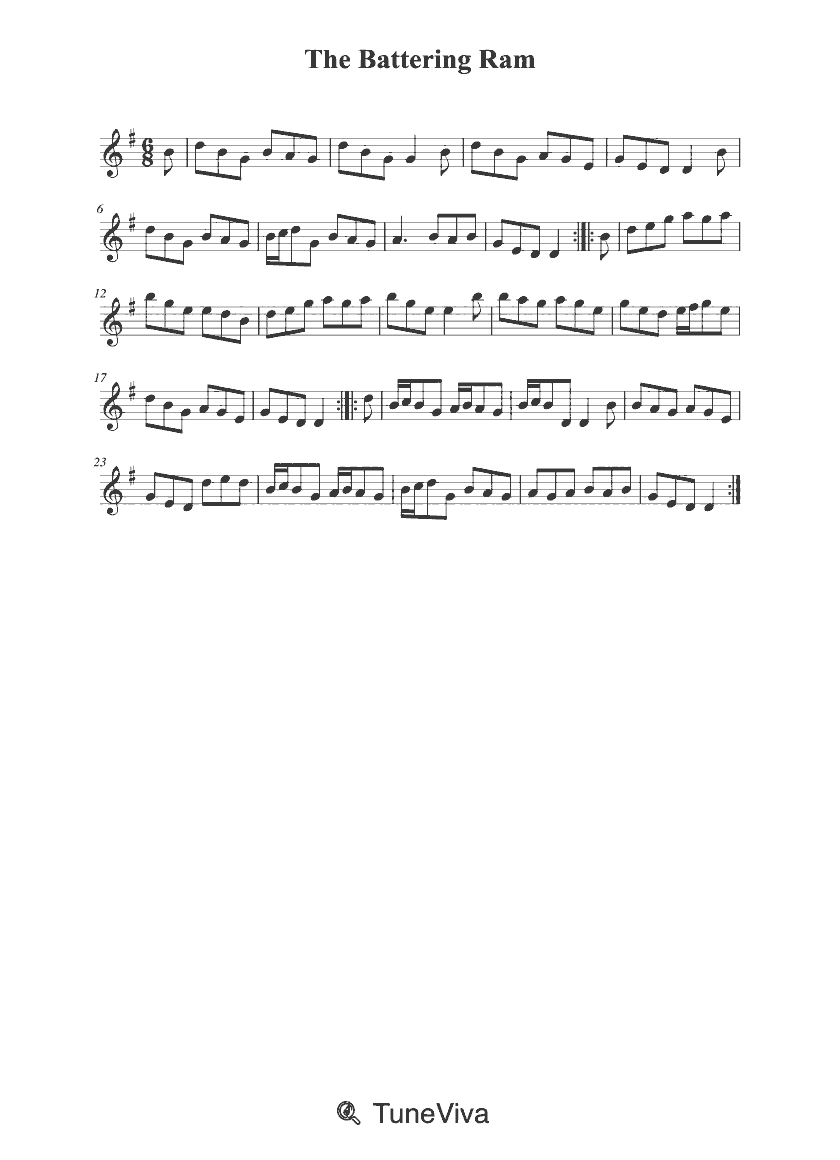
Misc tunes
36 sec · Score #249122
Open score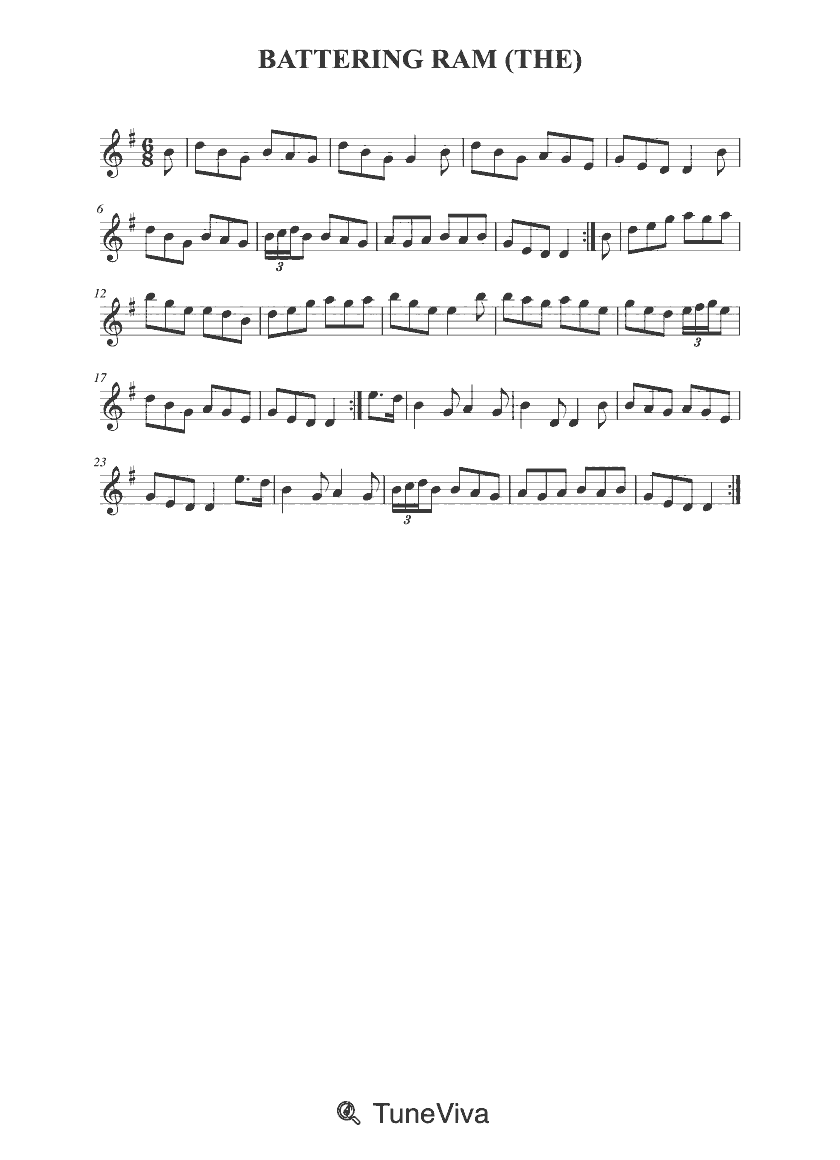
Misc tunes
53 sec
Open score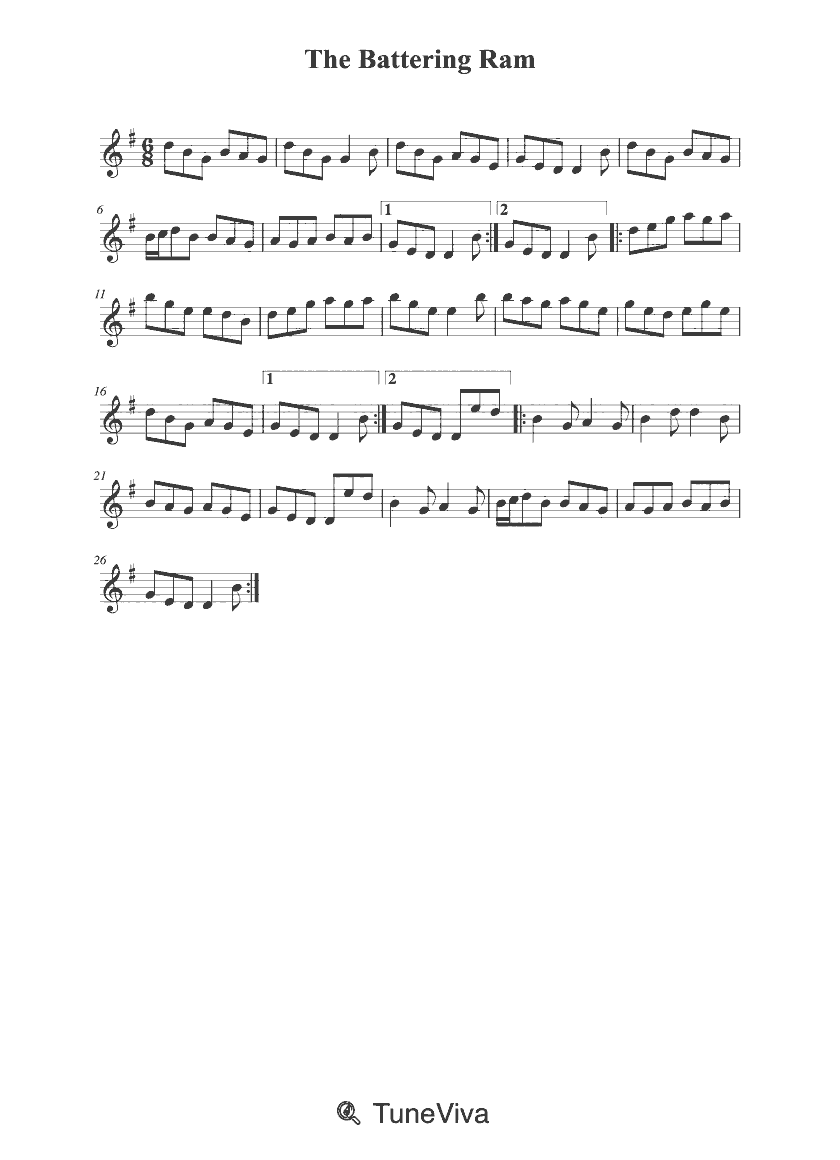
Misc tunes
36 sec · Score #184024
Open score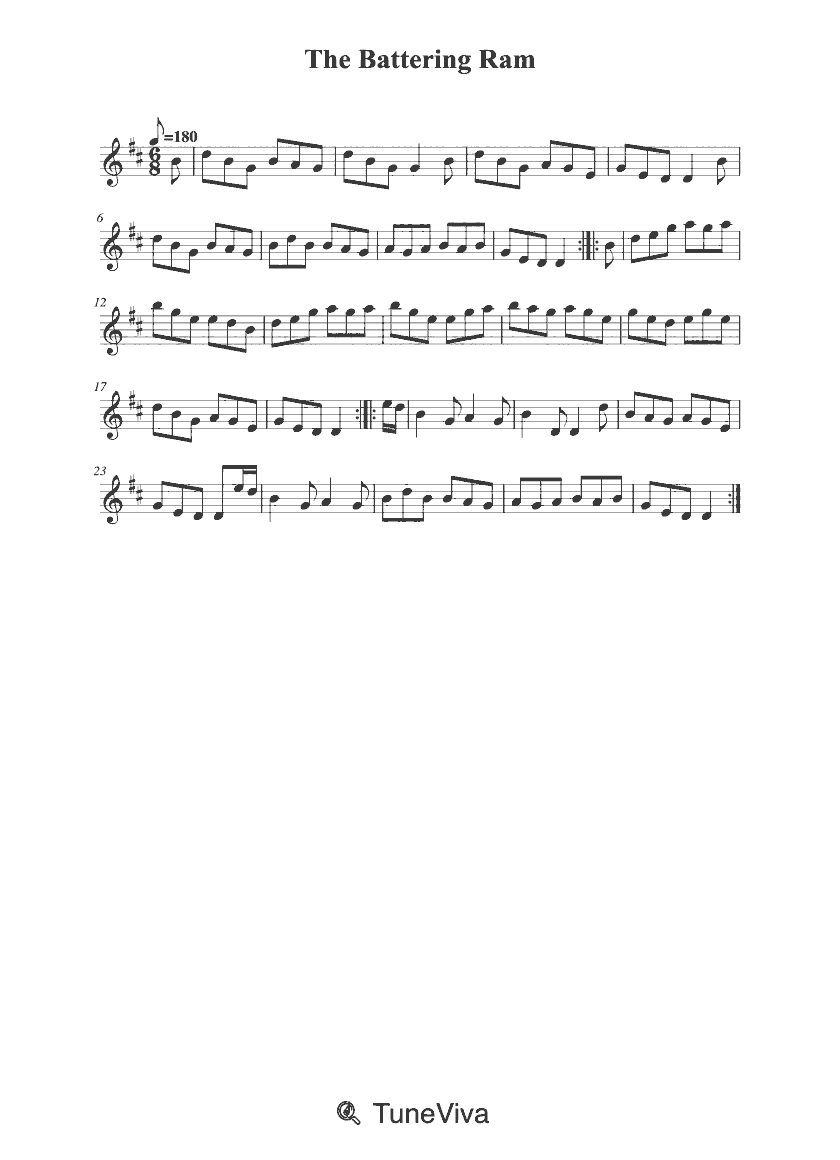
Misc tunes
48 sec
Open score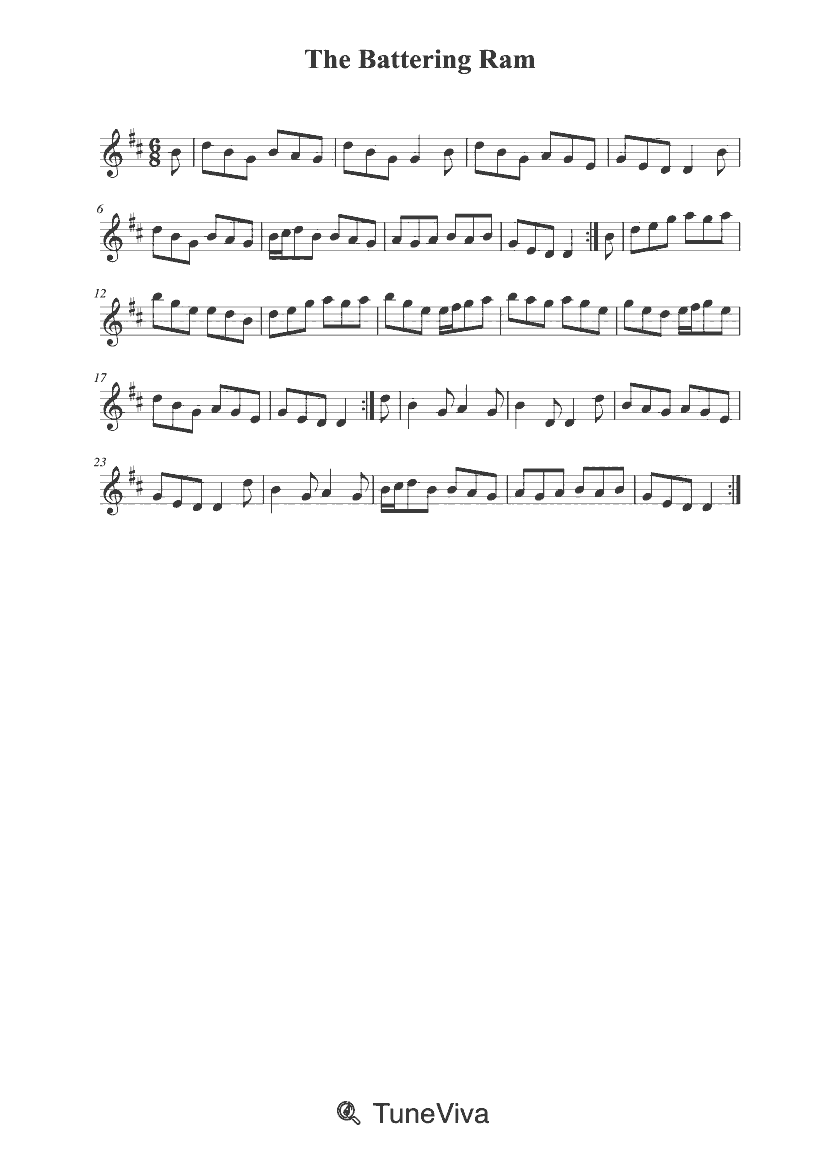
Misc tunes
54 sec · Score #25706
Open score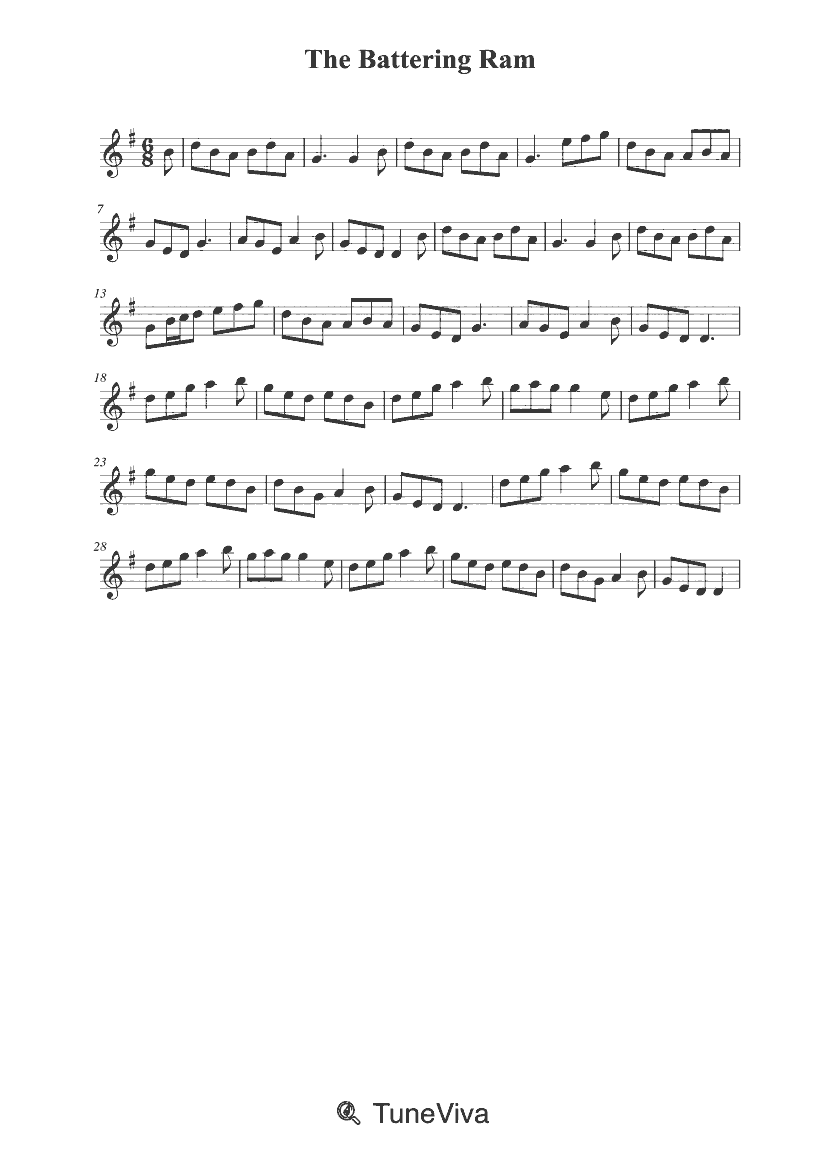
Misc tunes
24 sec · Score #30524
Open score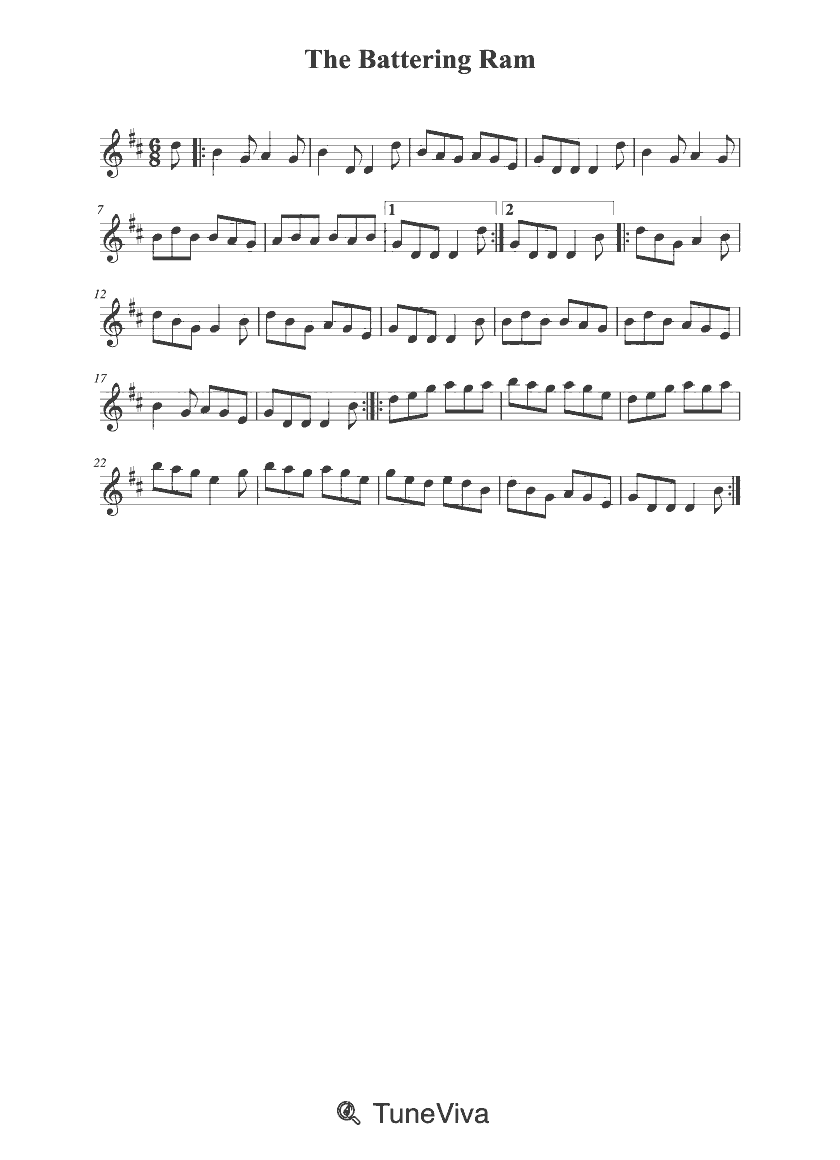
Misc tunes
36 sec · Score #52288
Open score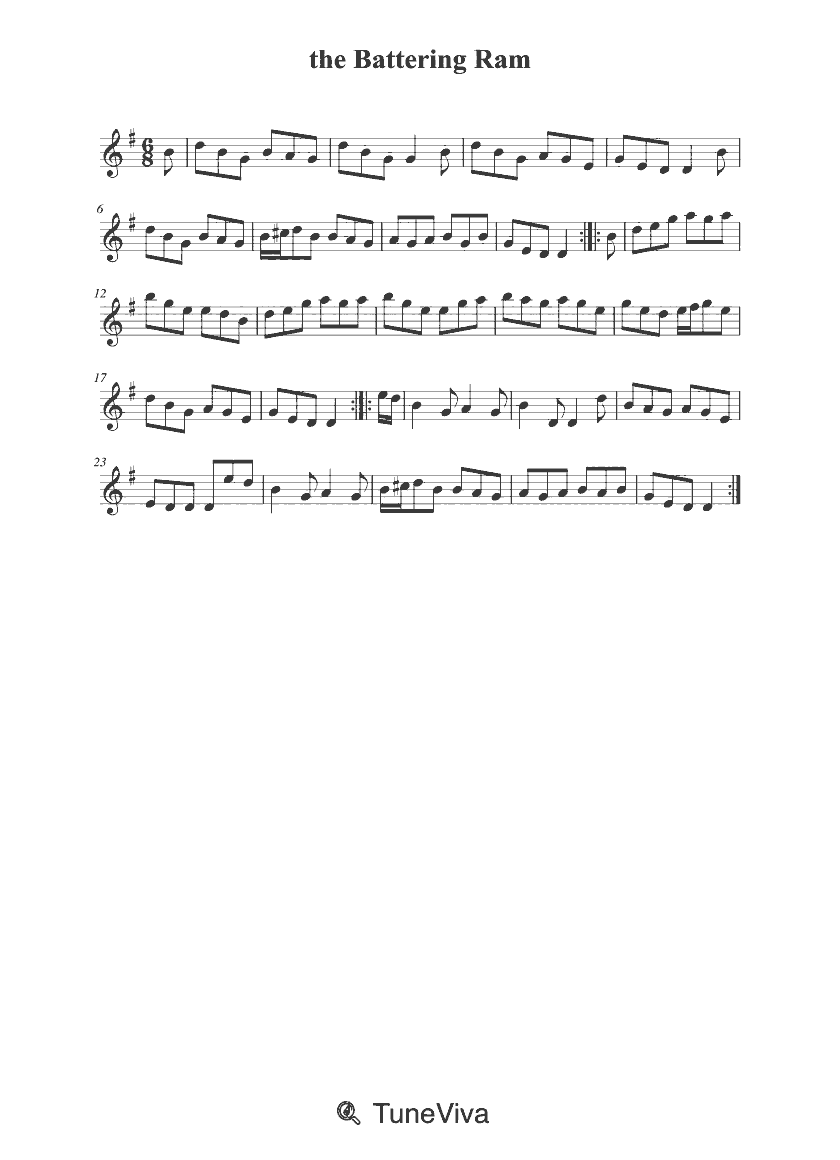
Misc tunes
36 sec · Score #176856
Open score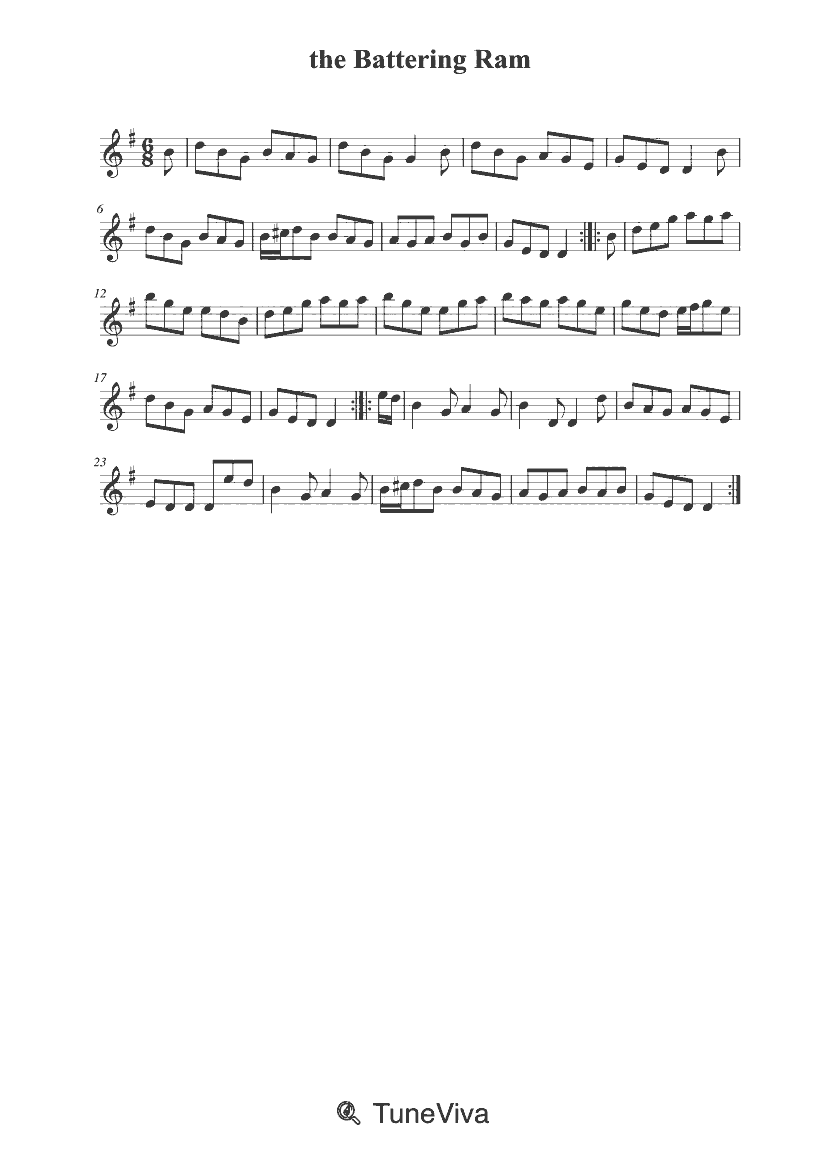
Misc tunes
36 sec · Score #211004
Open score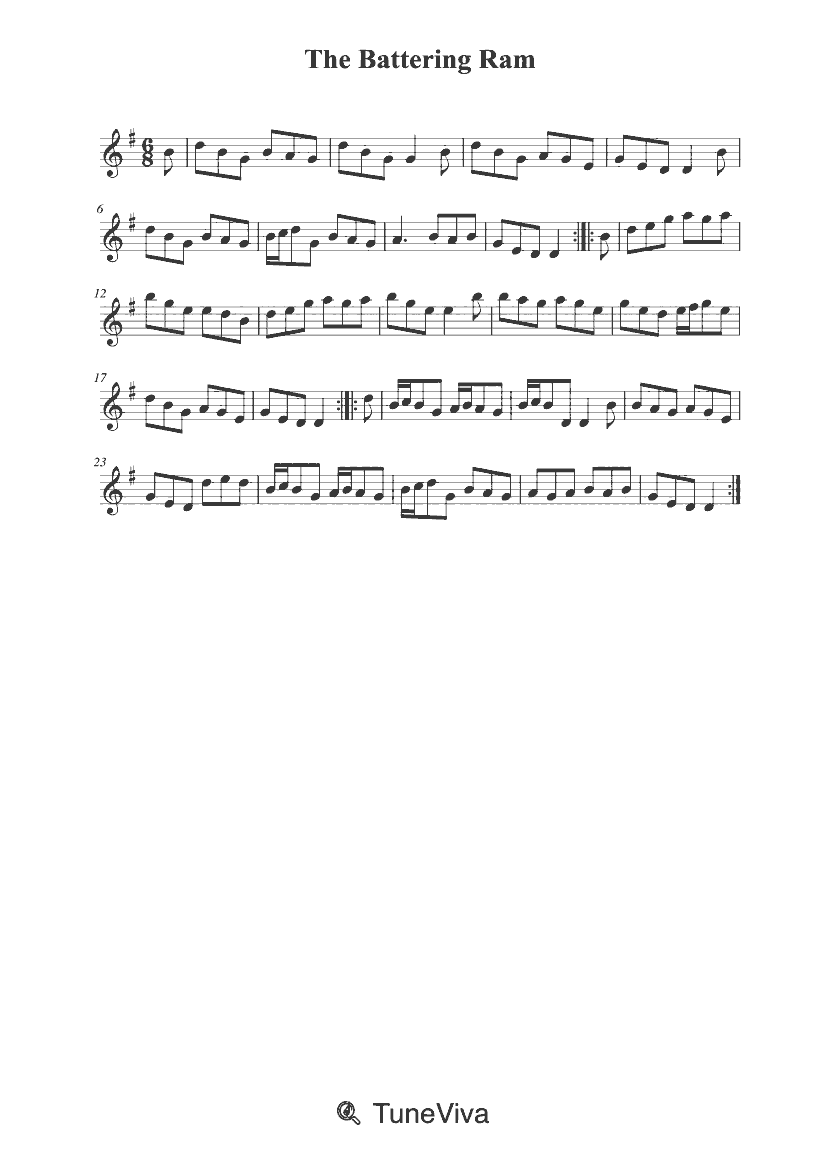
Misc tunes
36 sec · Score #225003
Open score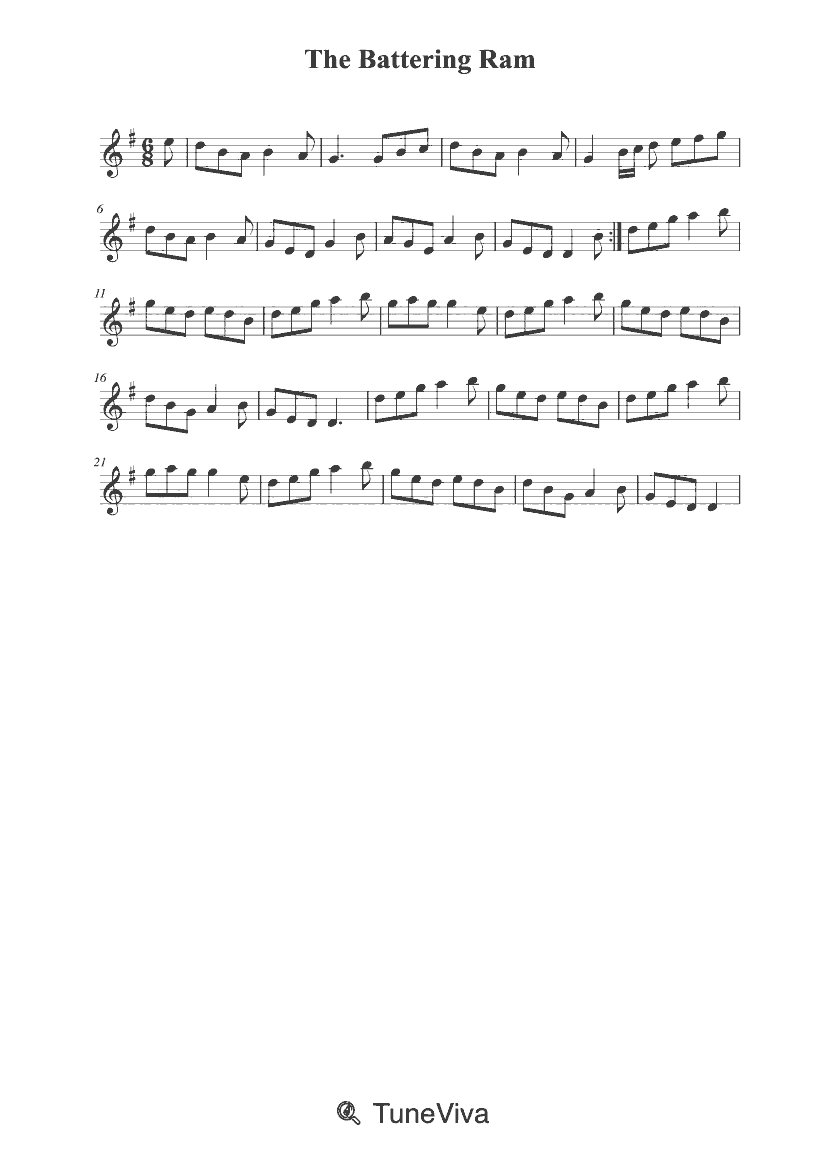
Misc tunes
24 sec · Score #248085
Open score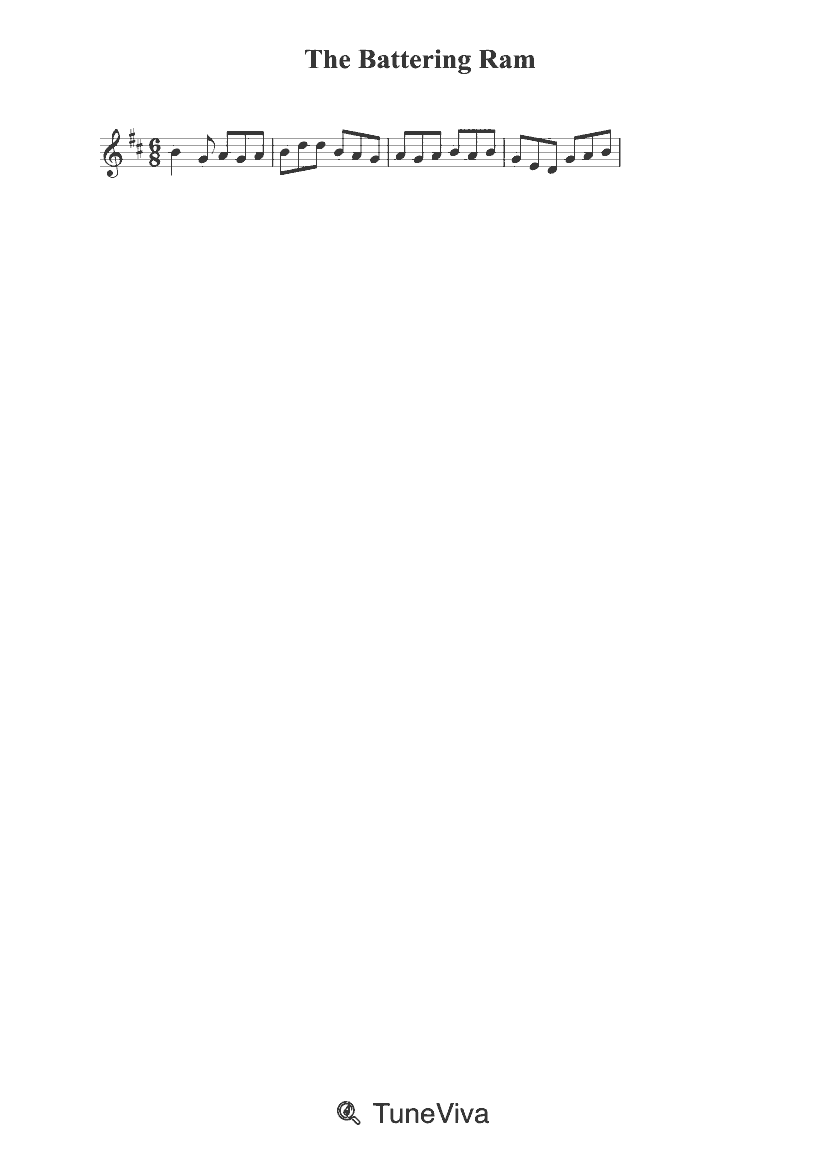
Misc tunes
3 sec
Open score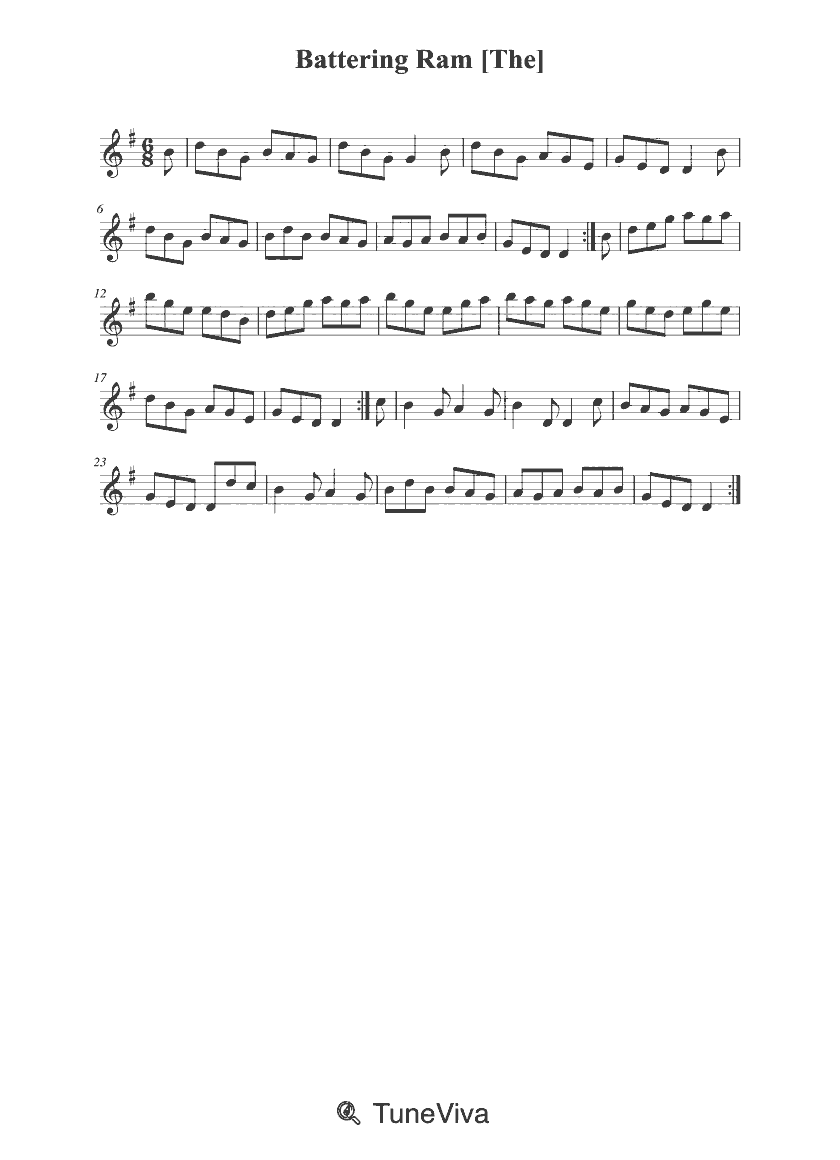
Misc tunes
54 sec
Open score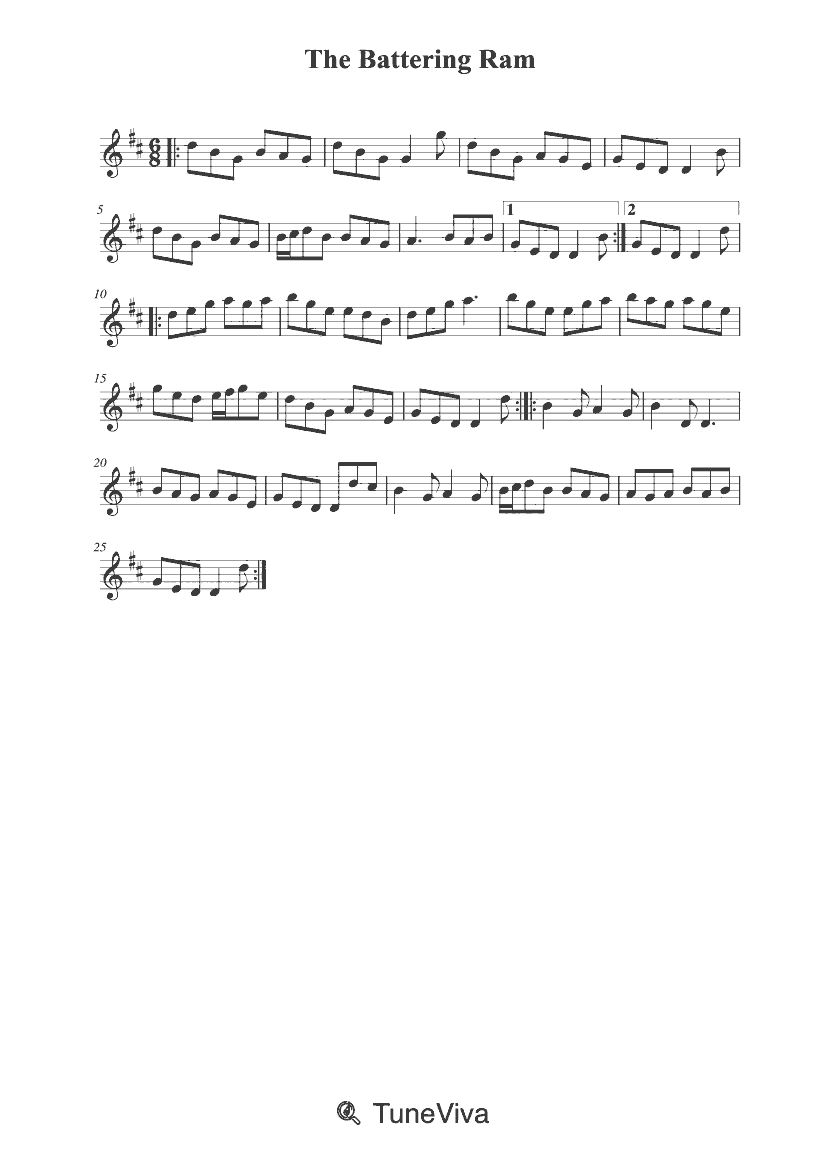
Misc tunes
36 sec · Score #113160
Open scorePage 1 of 2
The Battering Ram is represented by three scores. Two open with a two-sharp key signature (D major) and one with a one-sharp key signature (G major); all three open in 6/8. These details describe the beginning of each score and are the most reliable musical information available here. The scores do not name a composer and are attributed only to 'Misc tunes'.
The main practical difference between the available versions of The Battering Ram is the opening key. D major uses F sharp and C sharp, while G major uses F sharp. A player may prefer the key that sits comfortably in the instrument's range or that makes familiar fingering patterns easier. The available information does not support ranking the versions by difficulty or calling one a beginner version.
All three scores of The Battering Ram open in 6/8, a compound-duple metre with two main beats per bar, each dividing into three eighth notes. When reading the score, grouping the eighths in threes helps clarify the metre and the natural lilt of the bar. This is a description of the notation, not a confirmed genre classification for the tune.
The available scores do not identify a composer, a regional origin, an instrument, or a verified relationship between the D major and G major versions. Historical claims about The Battering Ram should therefore be treated cautiously until supported by a verified source.
Catalogue duration 36 sec. Opening key signature: 2 sharps (D major). Opening time signature: 6/8.
Catalogue duration 36 sec. Opening key signature: 1 sharp (G major). Opening time signature: 6/8.
Catalogue duration 54 sec. Opening key signature: 2 sharps (D major). Opening time signature: 6/8.
The available scores of The Battering Ram do not name a composer; they are credited only to 'Misc tunes'.
The available scores of The Battering Ram open in two keys: two use a two-sharp signature (D major) and one uses a one-sharp signature (G major). These signatures describe the opening of each score, not necessarily any later change of key.
All three available scores of The Battering Ram open in 6/8. In 6/8 the bar has two main beats, each divided into three eighth notes, giving a compound-duple feel.
They share the title and the 6/8 opening metre, but a closer comparison of the melodies would be needed to decide.
The available scores of The Battering Ram are in 6/8, a metre often associated with jigs, but the evidence does not label the piece as a jig or confirm its genre. The time signature alone is not enough to classify it definitively.
Choosing between the D major and G major versions of The Battering Ram depends on the instrument and the range that suits the player. D major uses F sharp and C sharp, while G major uses F sharp, so one key may feel more comfortable in the hands or fit a singer's range better. The available information does not support calling either version easier.