The Battle of Aughrim
Misc Traditional
40 sec
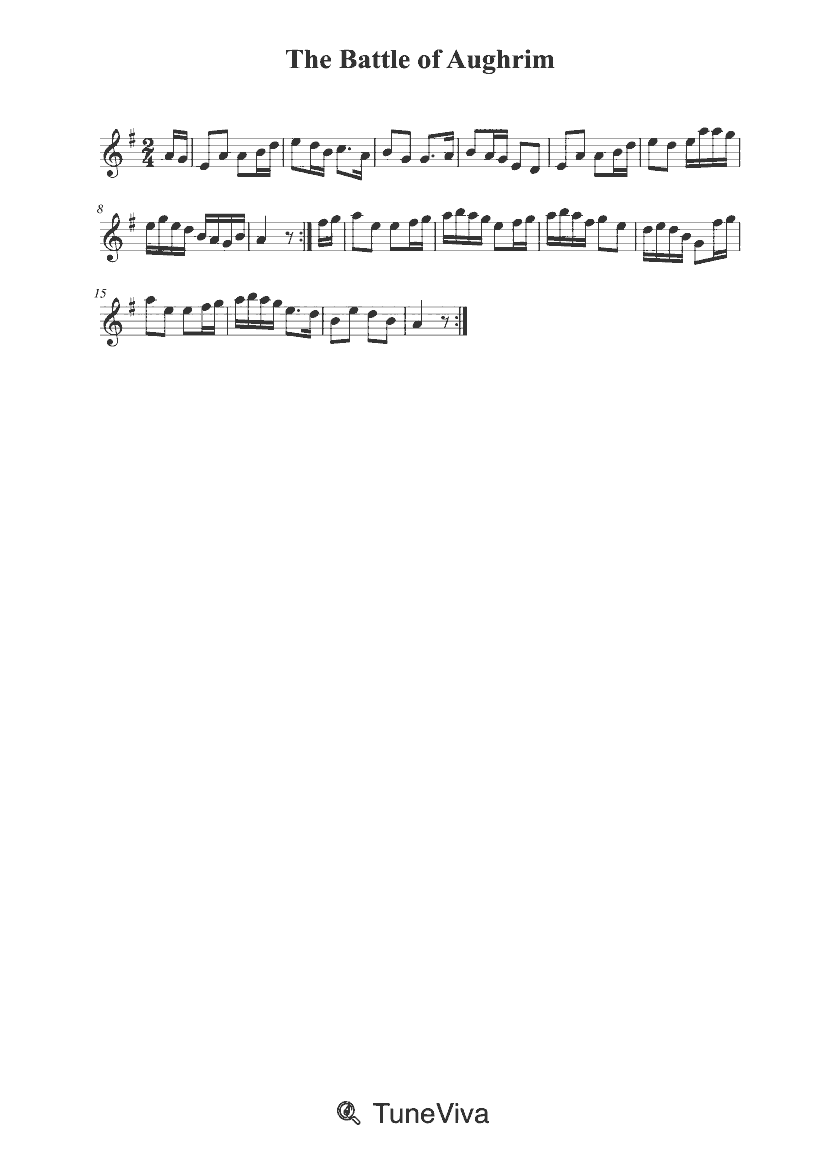
Open scoreThe Battle of Aughrim sheet music is listed here as a folk piece under a traditional attribution, with no named composer. The available scores titled The Battle of Aughrim open in different ways: one in G major with 2/4 time and another in D major with 4/4 time. A separately titled score, After the Battle of Aughrim, opens with two sharps in 2/4. Because the notation differs from the outset, compare key, metre and opening bars before choosing a version for your instrument and preferred pulse.
Scores 1–20 of 33
Misc Traditional
40 sec
Open score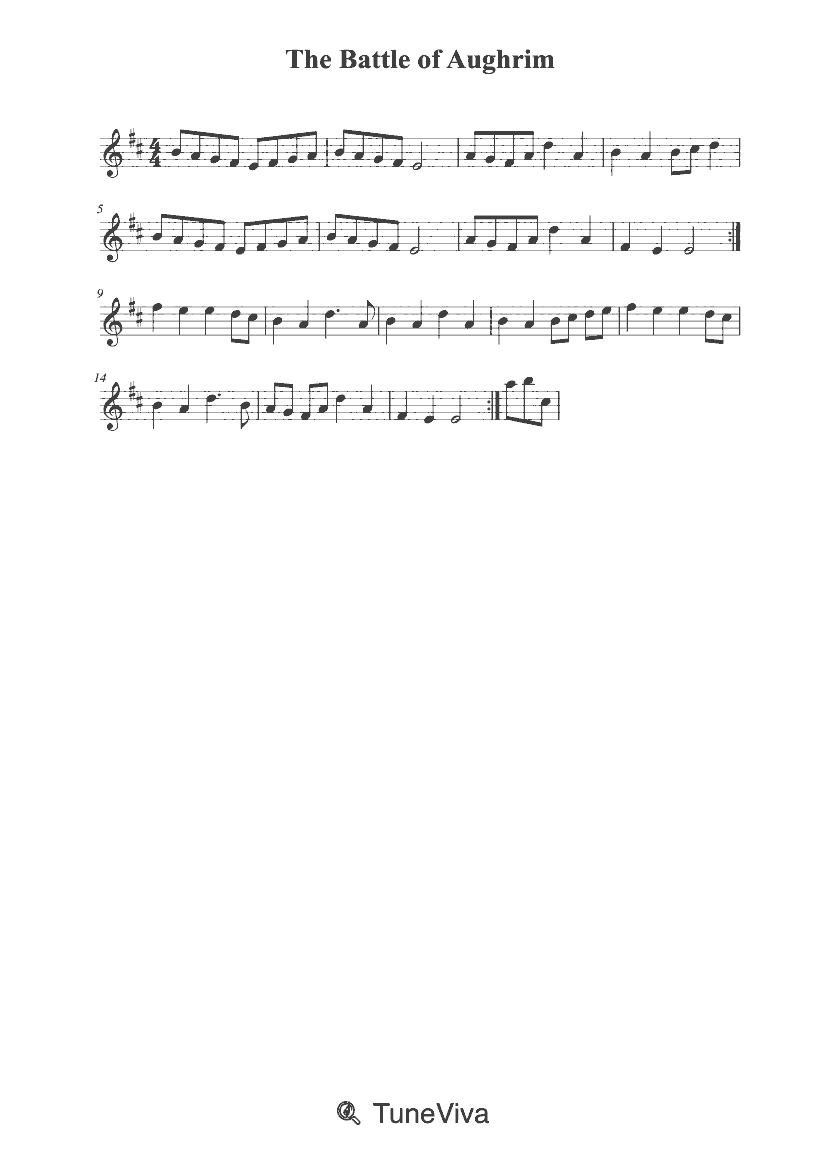
Misc Traditional
1 min 21 sec
Open score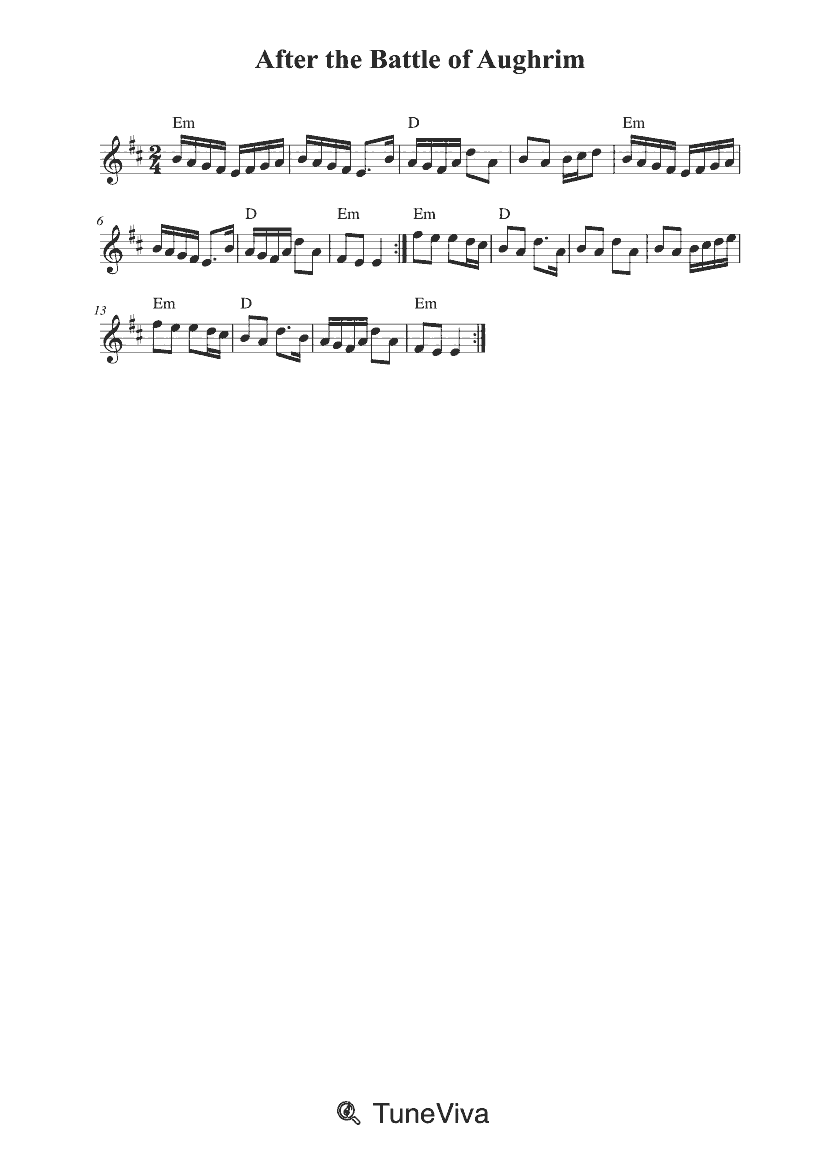
Misc Traditional
Return from Fingal The
40 sec · Score #102144
Open score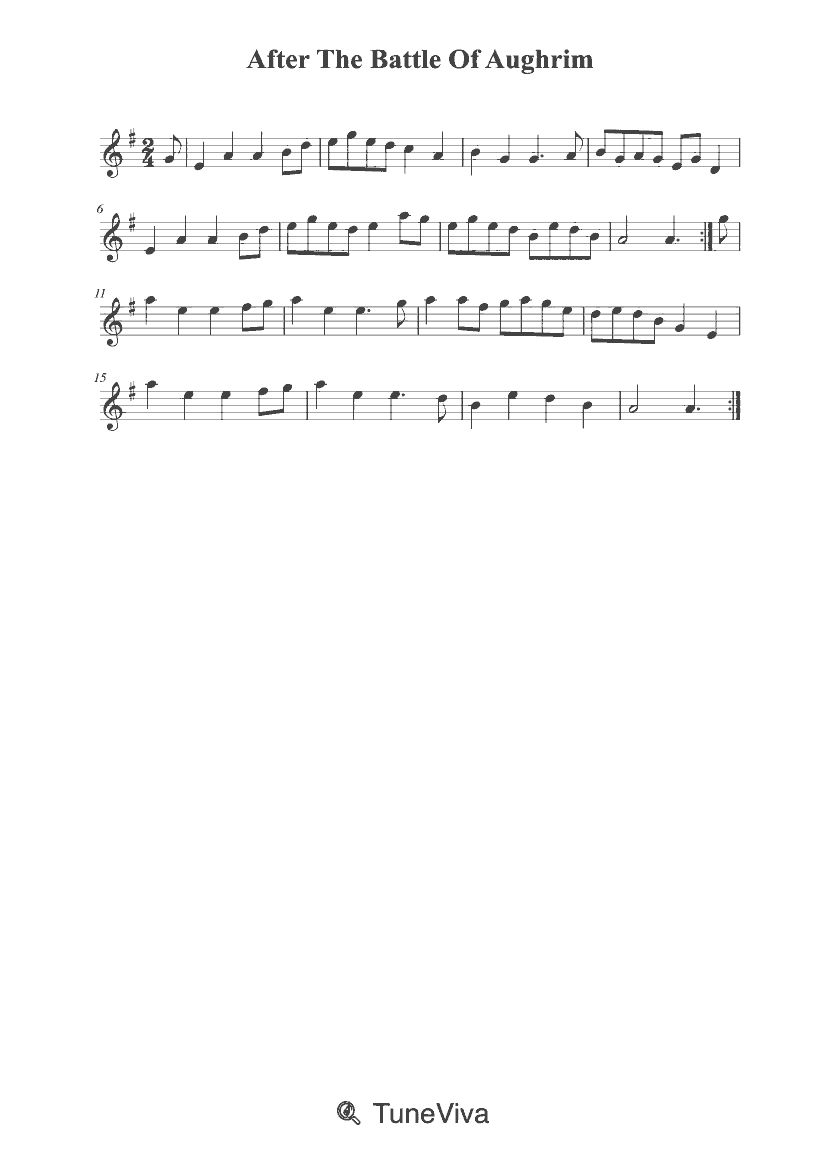
Misc Traditional
1 min 20 sec
Open score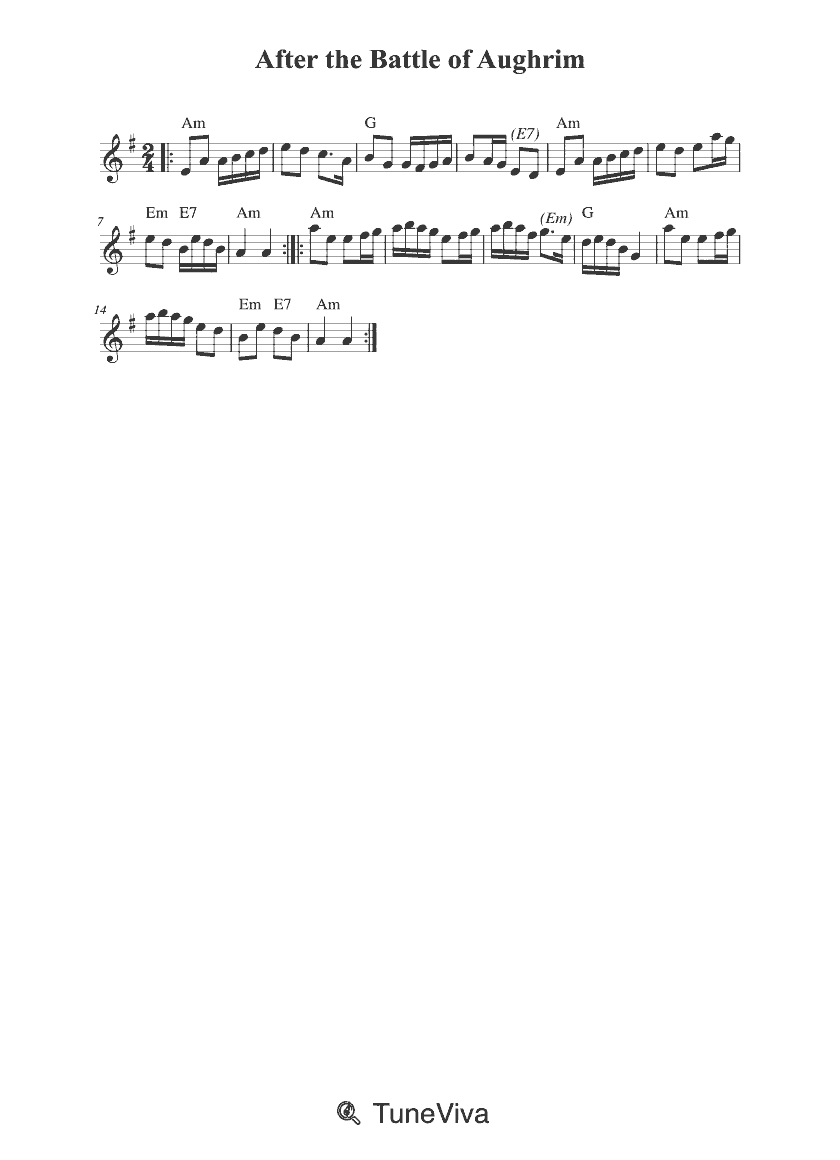
Misc Traditional
32 sec · Score #185137
Open score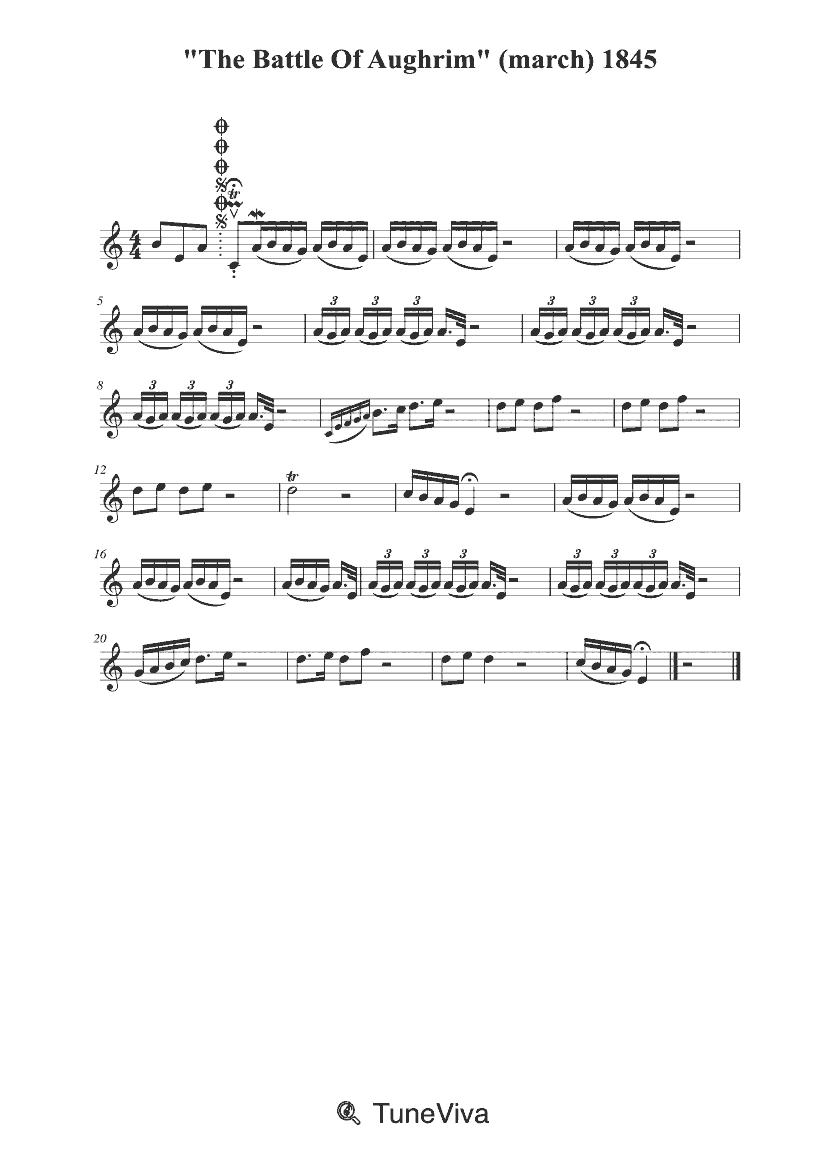
Unattributed
23 sec
Open score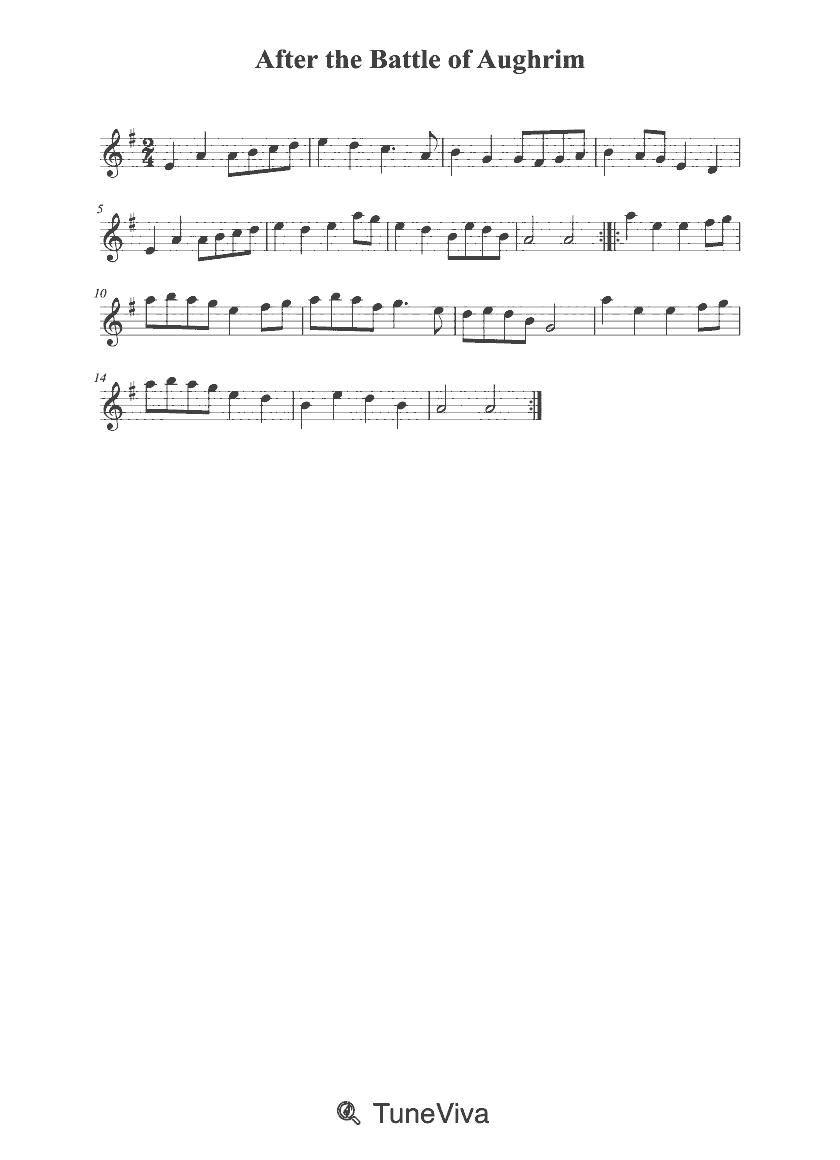
Misc Traditional
1 min 4 sec
Open score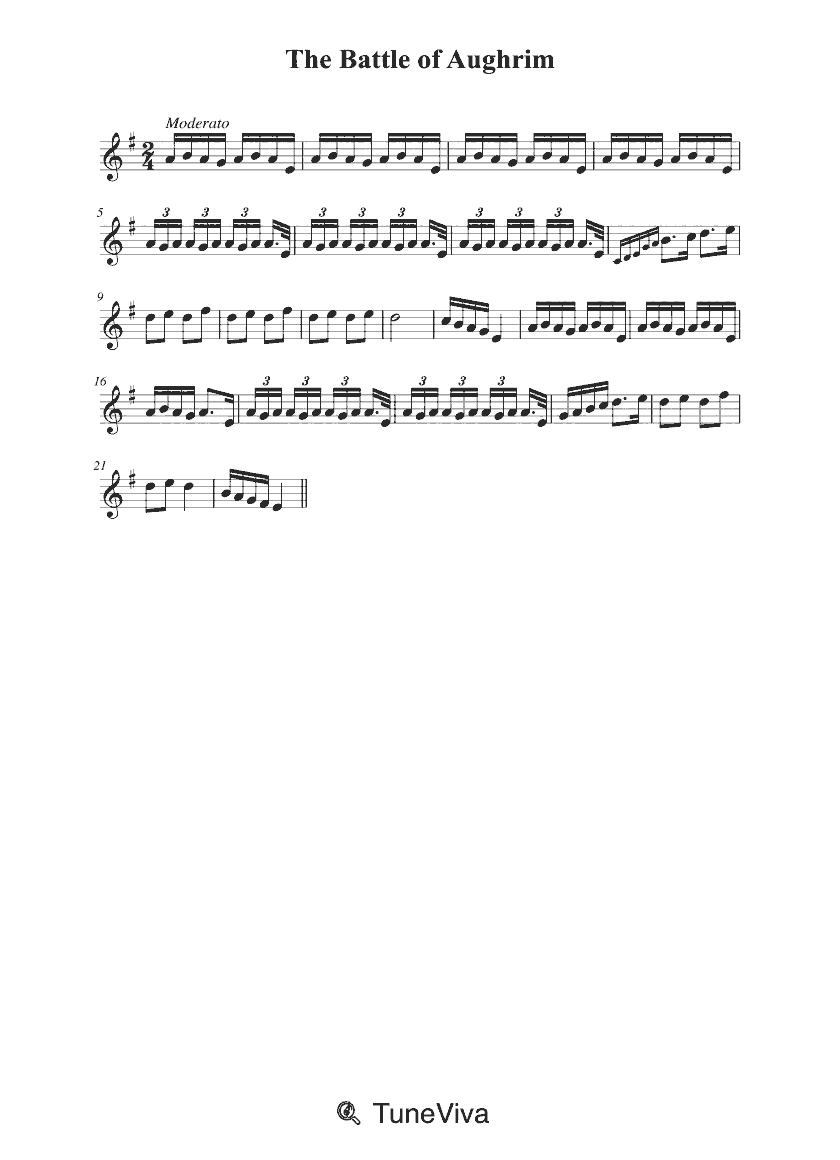
Misc Traditional
22 sec · Score #178229
Open score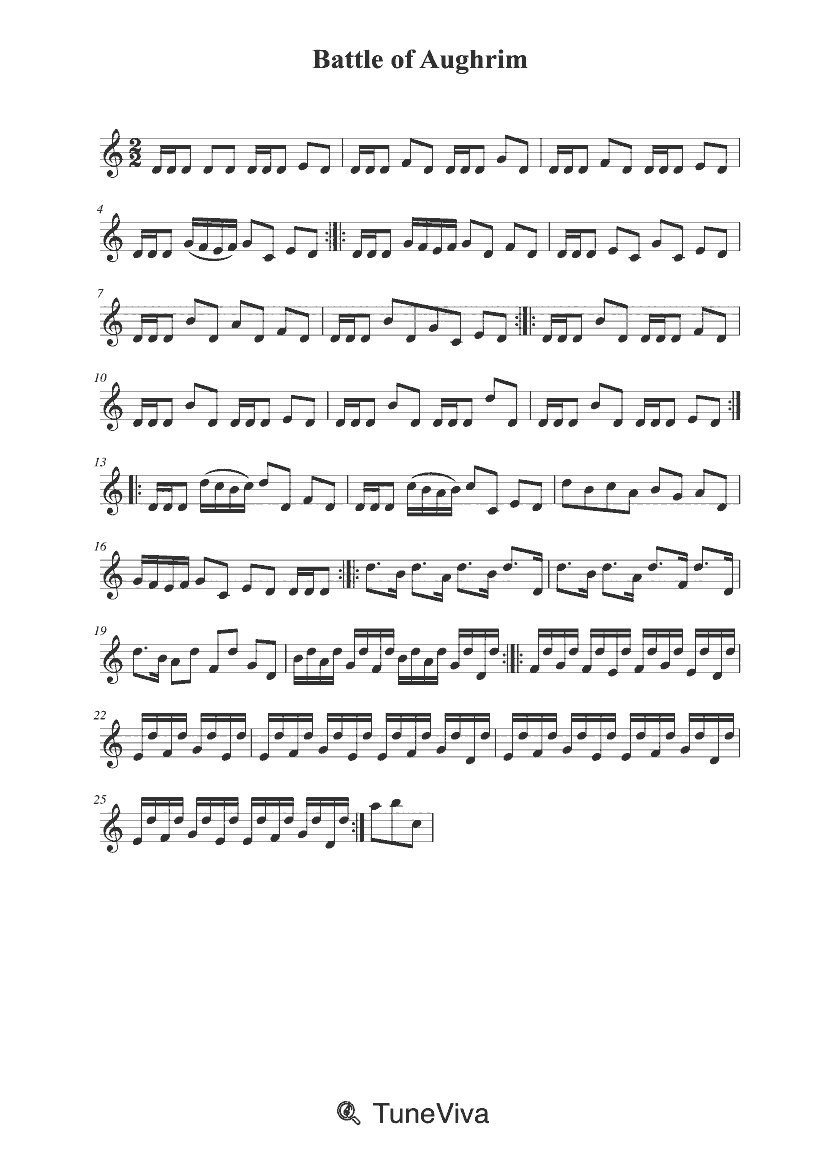
Misc Traditional
3 min 18 sec
Open score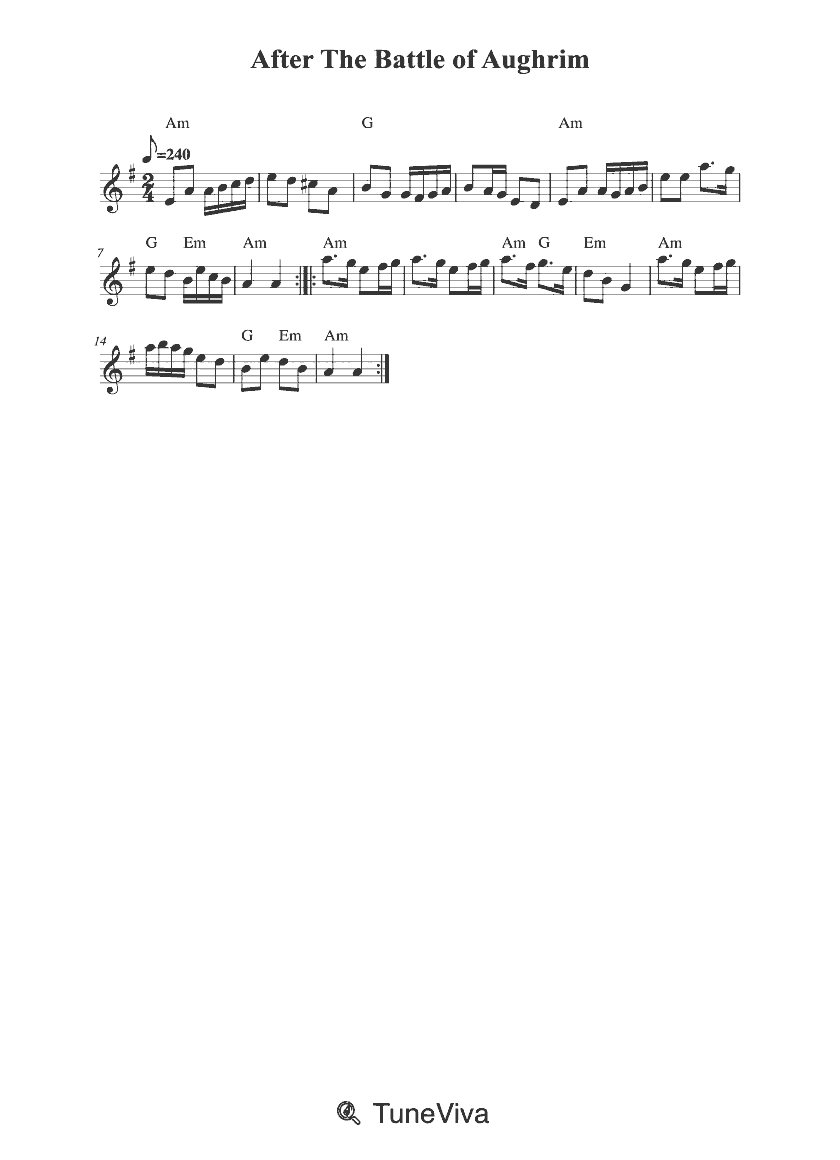
Misc Traditional
32 sec · Score #50577
Open score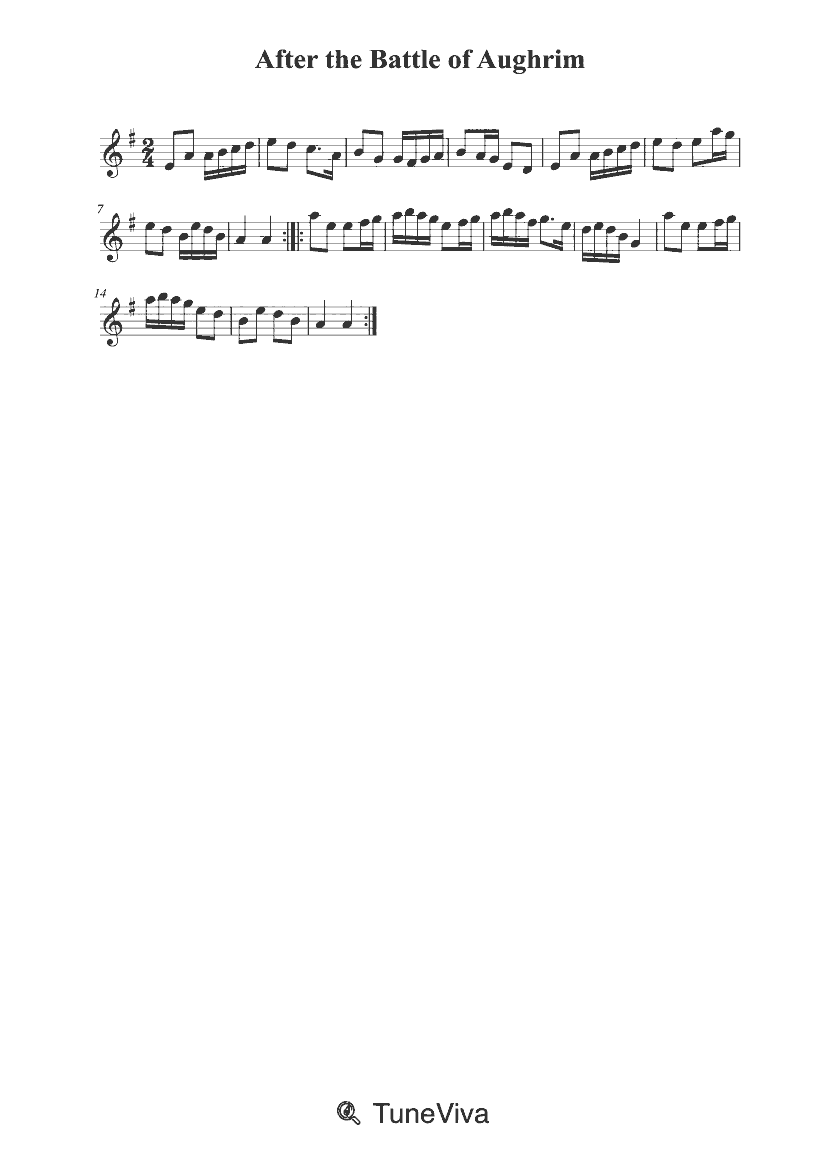
anon.
32 sec
Open score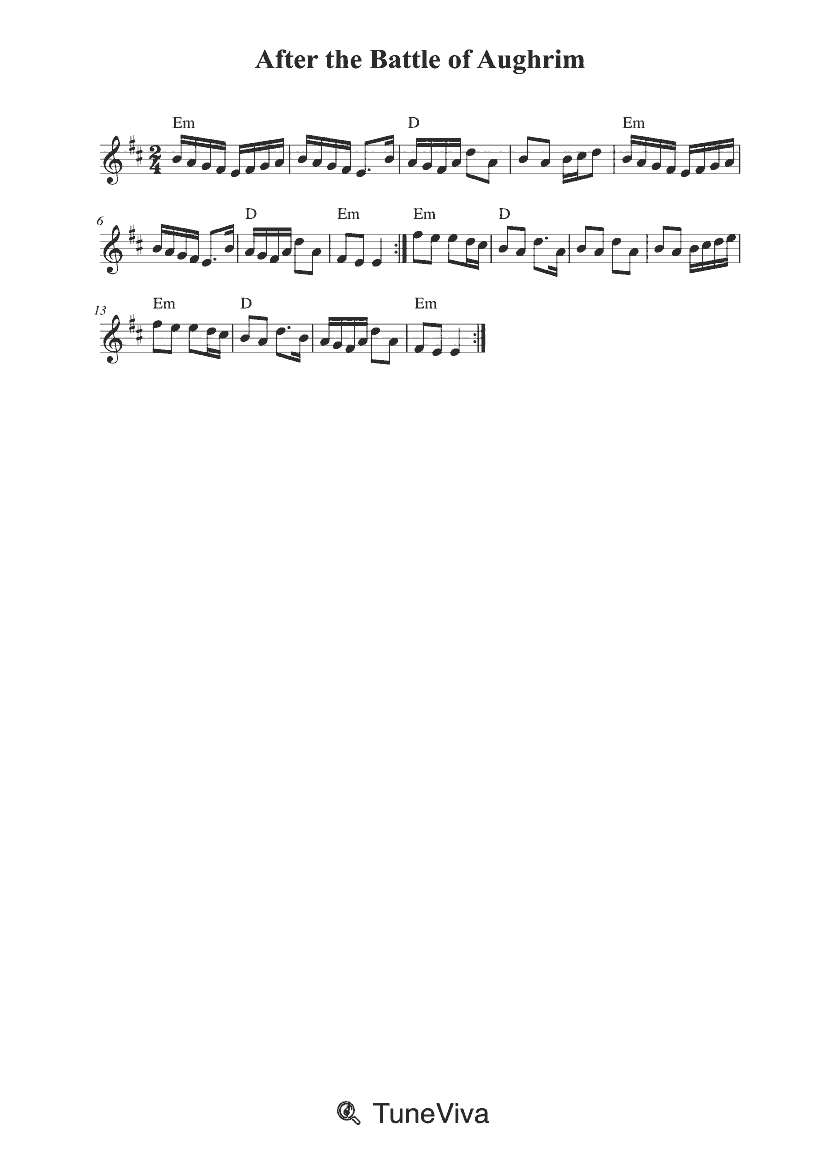
Misc Traditional
Return from Fingal The
40 sec · Score #20461
Open score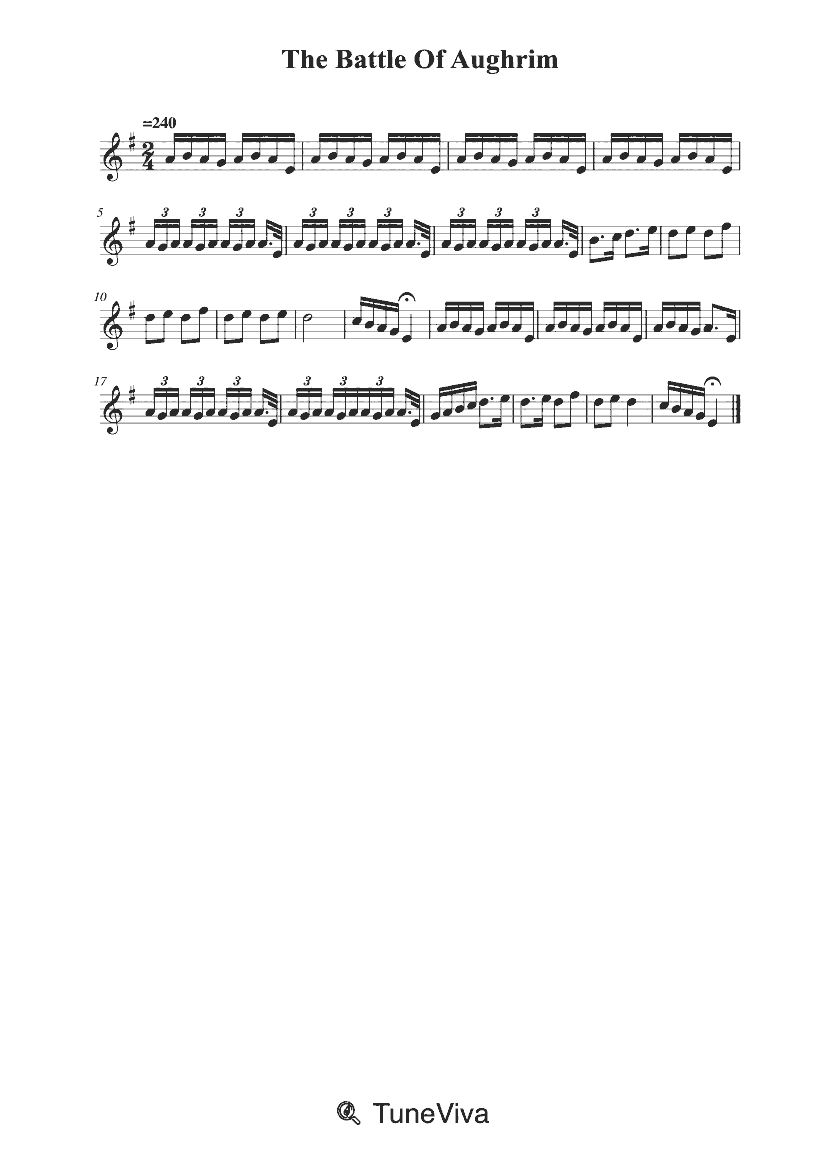
file ID: onmi.misc/006batt_augh
44 sec
Open score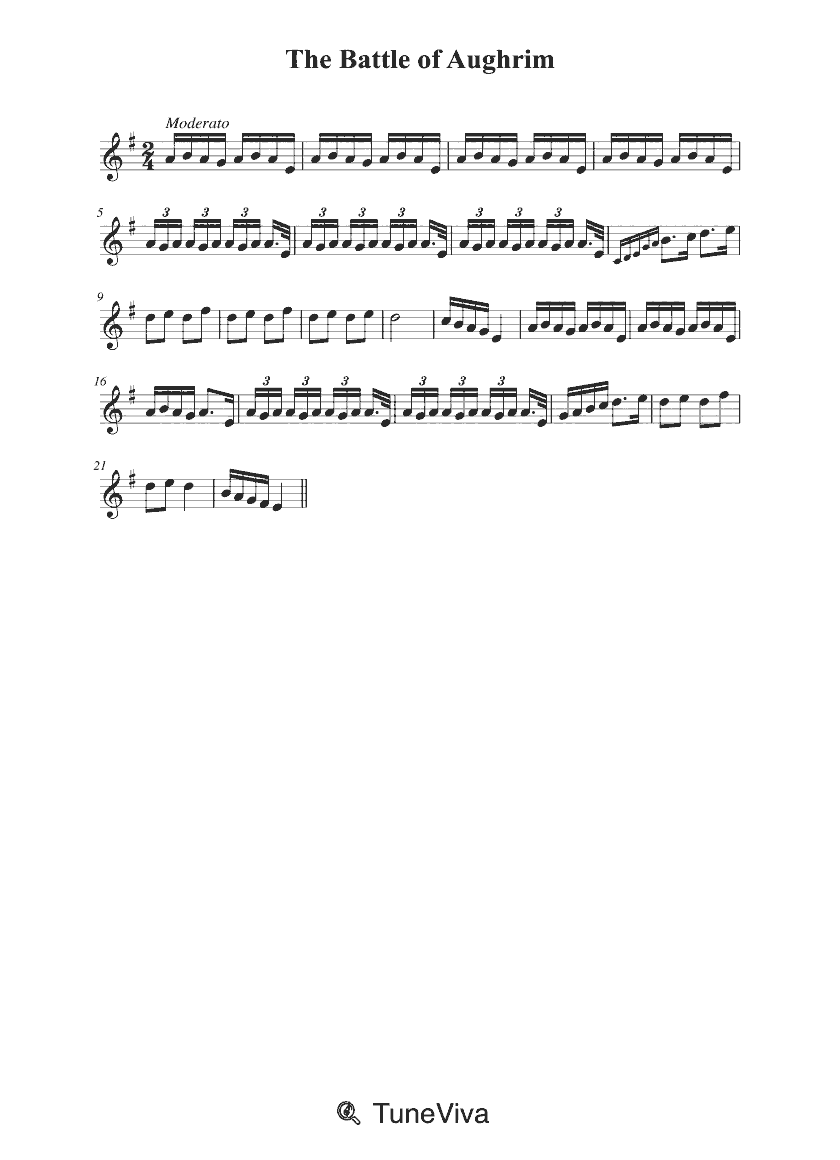
Misc Traditional
22 sec · Score #105344
Open score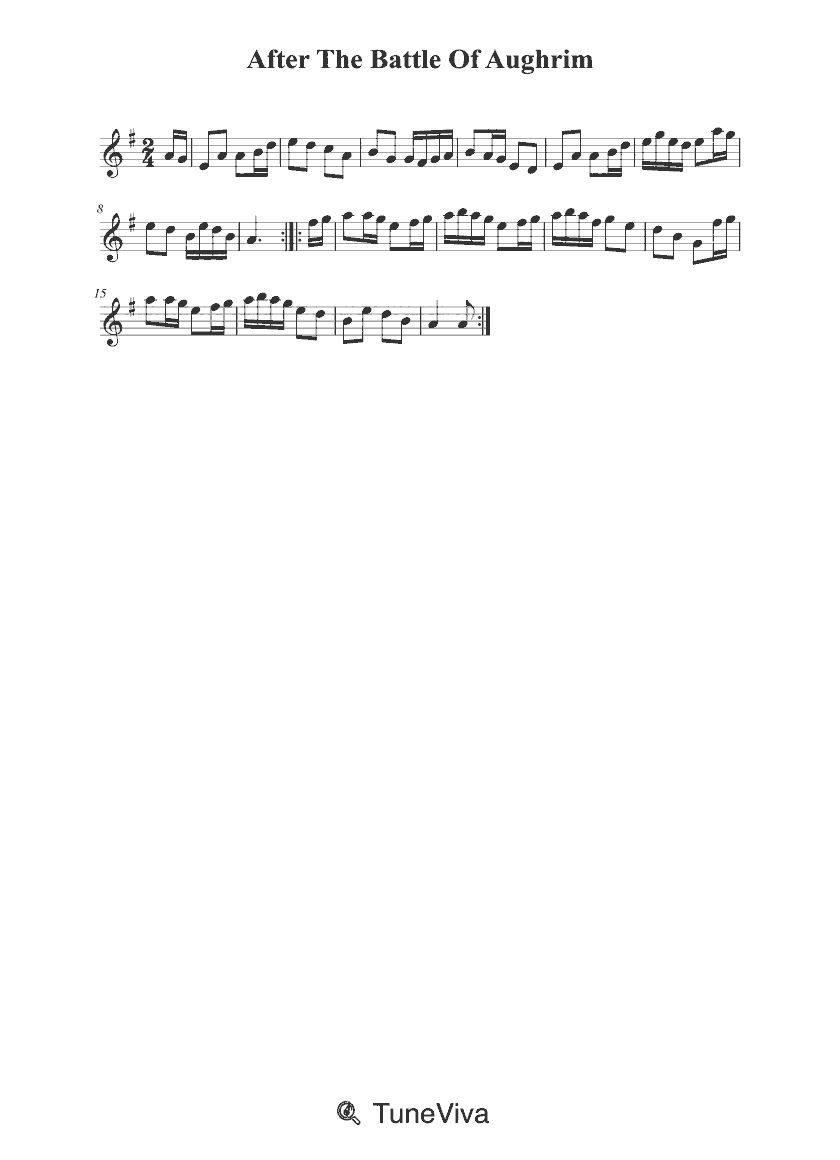
Misc Traditional
32 sec · Score #144014
Open score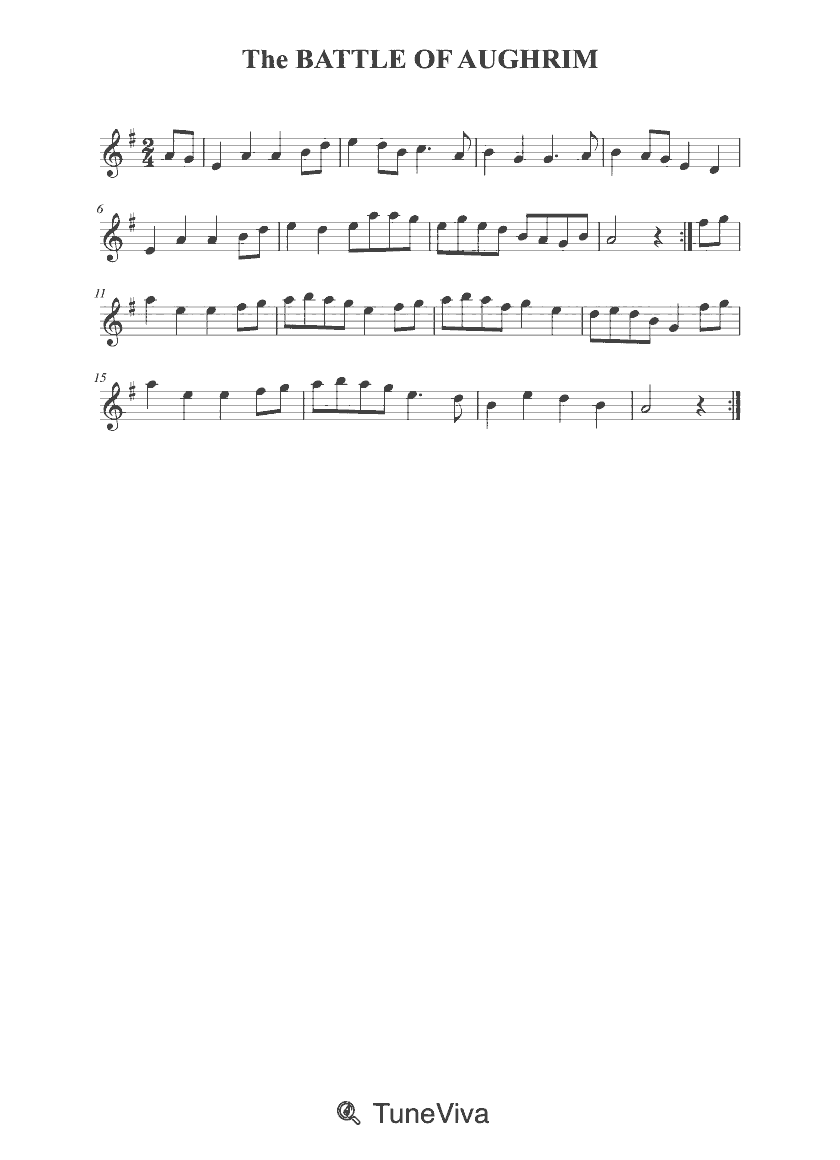
Misc Traditional
1 min 19 sec
Open score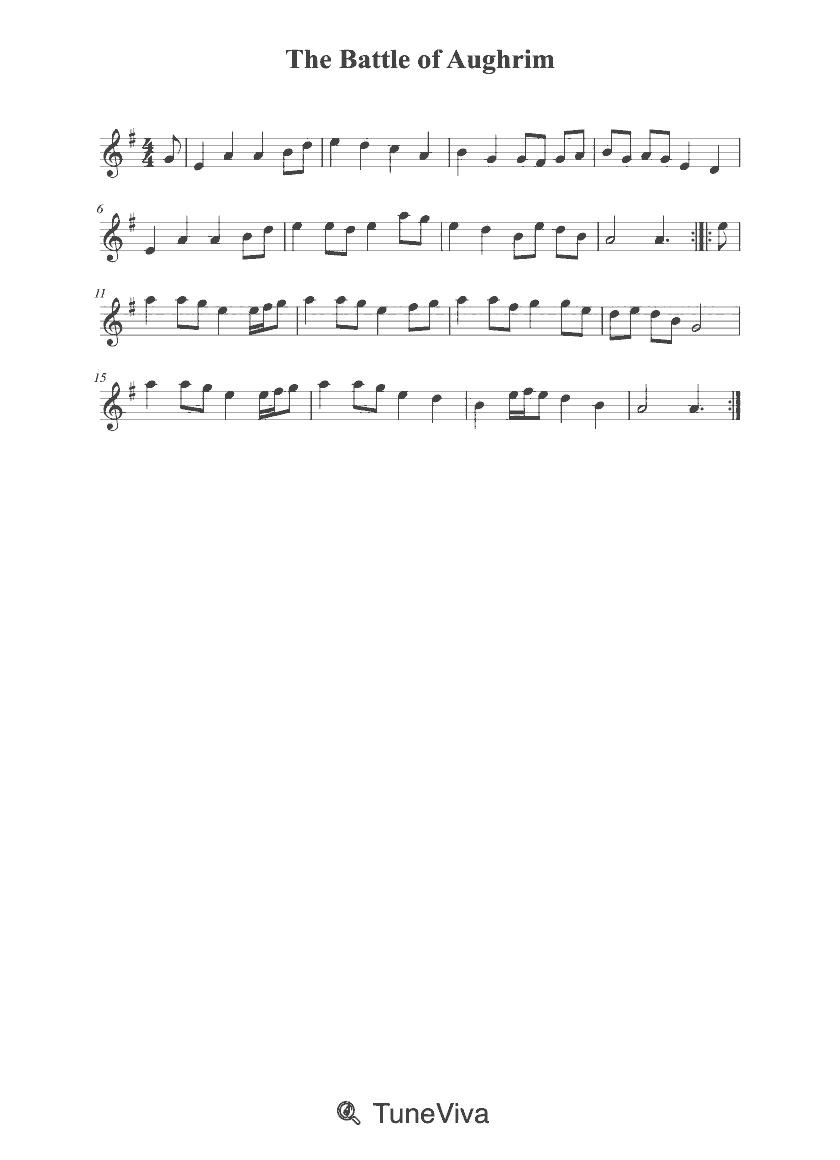
Misc Traditional
1 min 4 sec
Open score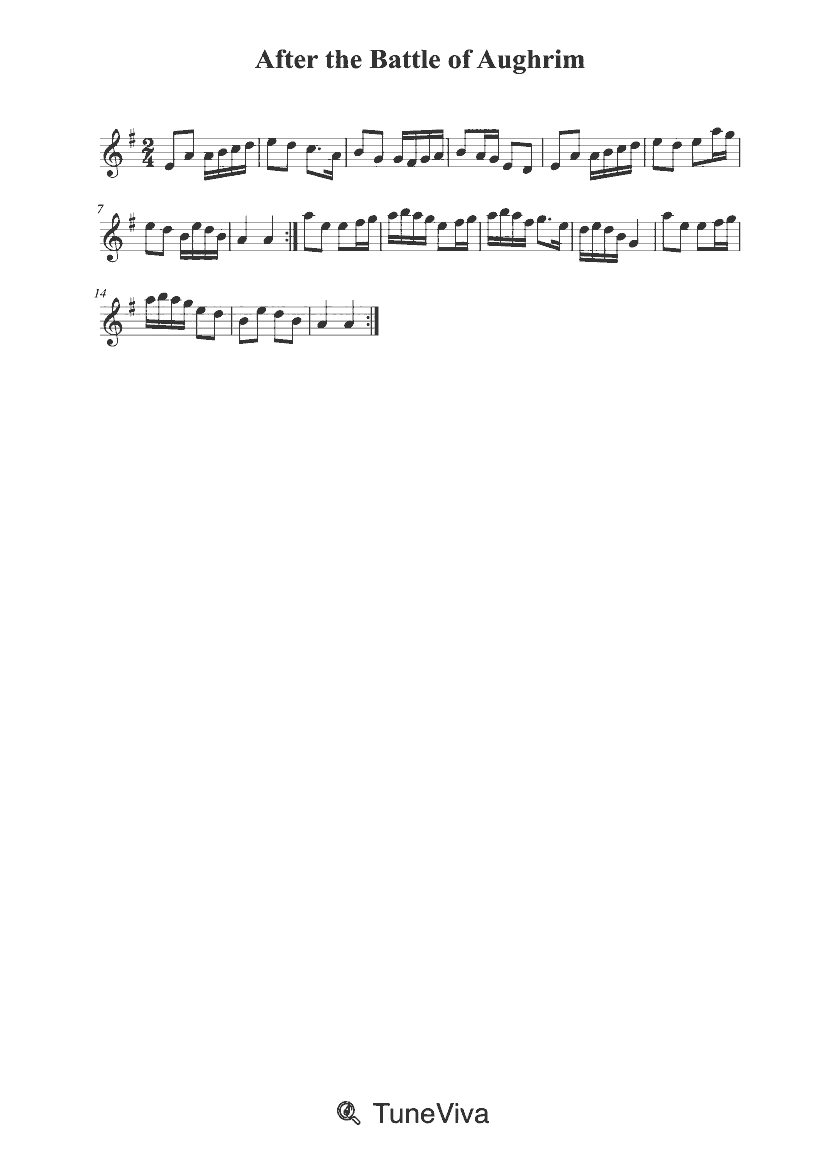
Misc Traditional
40 sec
Open score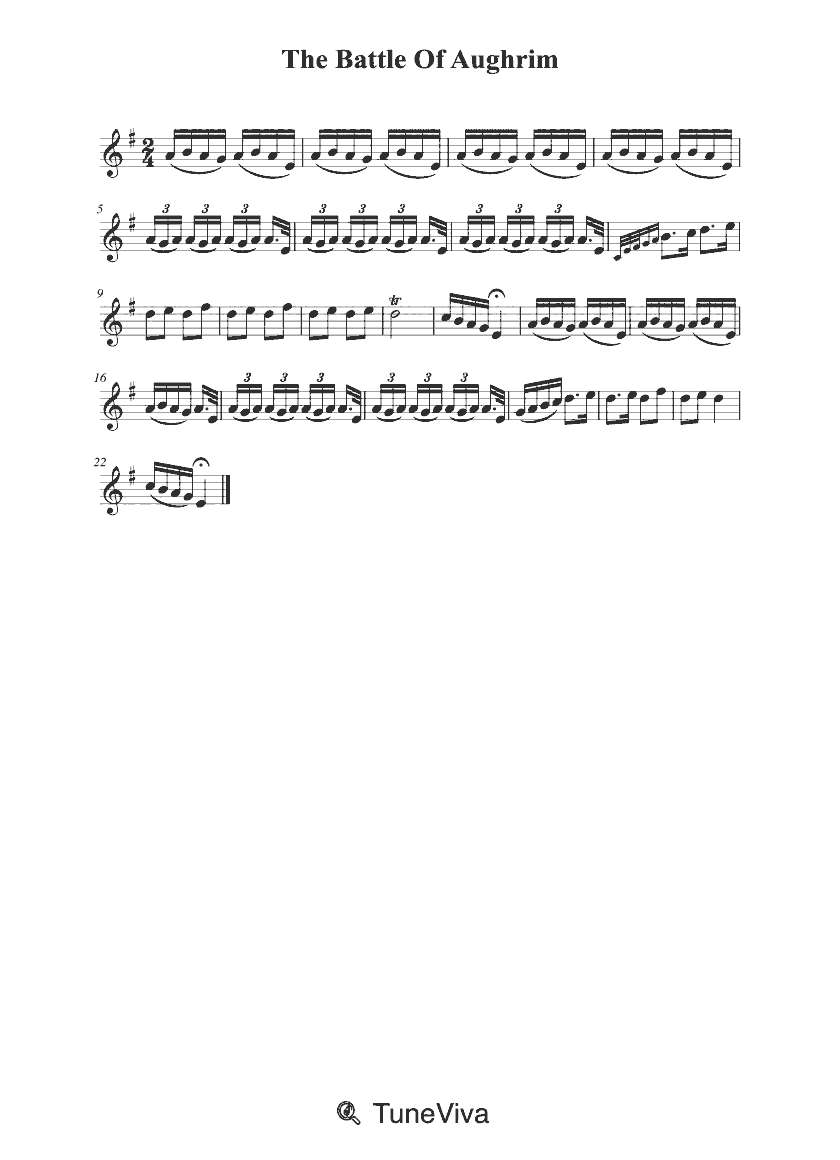
Misc Traditional
22 sec · Score #182150
Open score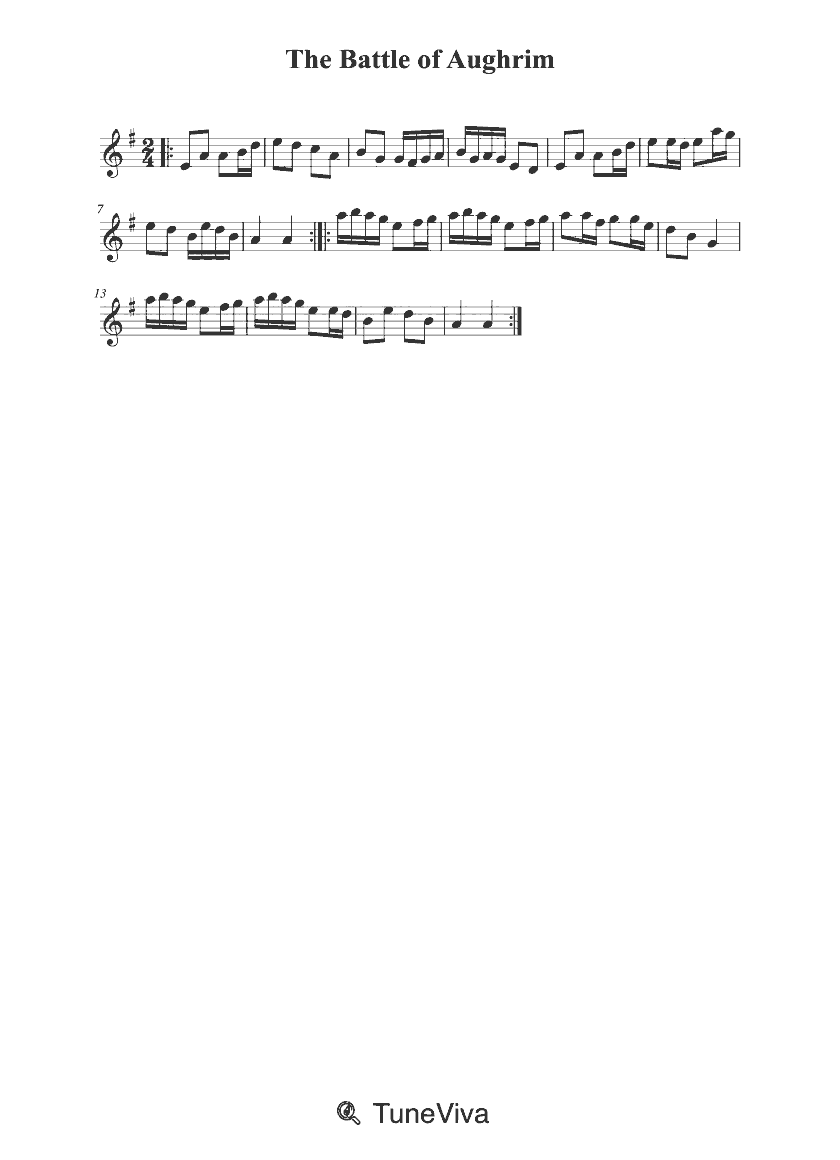
Misc Traditional
32 sec
Open scorePage 1 of 2
The scores titled The Battle of Aughrim do not share a single opening key or metre. One version opens with one sharp, marked G major, in 2/4; another opens with two sharps, marked D major, in 4/4. Those differences affect range, fingering, bowing or breathing, and the basic feel of the tune, so check the opening signature before deciding between versions.
The listed scores are credited to 'Misc Traditional' and placed in the folk genre, with no named composer. That attribution identifies the kind of credit given to the music here, but it does not by itself establish a date, author, regional origin or programme. Treat the battle title as the name of the piece rather than as proof that the notation narrates the battle.
After the Battle of Aughrim appears as a distinct score title in the same listing. Its opening is marked with two sharps and 2/4 time, while the scores titled The Battle of Aughrim open in G major and 2/4 or D major and 4/4. The available information does not explain whether the 'After' title is a continuation, a variant or a different tune, so compare the notation itself.
The available information does not identify instrumentation, arrangement details or difficulty. Check the score you are considering for clef, range, accidentals and any arrangement notes, then compare those features with the key and metre differences already visible. This is more reliable than choosing by title alone.
Catalogue duration 40 sec. Opening key signature: 1 sharp (G major). Opening time signature: 2/4.
Catalogue duration 1 min 21 sec. Opening key signature: 2 sharps (D major). Opening time signature: 4/4.
Catalogue duration 40 sec. Opening key signature: 2 sharps. Opening time signature: 2/4.
The Battle of Aughrim does not have a single key across the available scores: one version opens in G major with 2/4 time, while another opens in D major with 4/4 time. Check the opening signature of the version you are considering rather than assuming one key for the title.
Both 2/4 and 4/4 appear among the available scores titled The Battle of Aughrim. One version opens in 2/4 and another in 4/4, so the metre affects the pulse and bar structure; compare the opening bars before choosing.
No composer is named for The Battle of Aughrim in the available scores. The piece is credited to 'Misc Traditional' and listed in the folk genre, which points to a traditional rather than a named-composer attribution but does not establish a date, author or origin.
After the Battle of Aughrim is a separately titled score in the same listing. Its opening is marked with two sharps and 2/4 time, while the versions titled The Battle of Aughrim open in G major and 2/4 or D major and 4/4. The available information does not establish whether it is a continuation, variant or different tune.
The Battle of Aughrim is listed as a folk piece and credited to 'Misc Traditional'. Folk is a broad label, so it should not be read as a precise historical period or regional style without further evidence.
Choosing between the available scores of The Battle of Aughrim begins with the opening key and metre: one version is in G major and 2/4, another in D major and 4/4, and After the Battle of Aughrim uses two sharps and 2/4. Compare those features with your instrument's range and the pulse you want, then check the score for clef, accidentals and arrangement details.