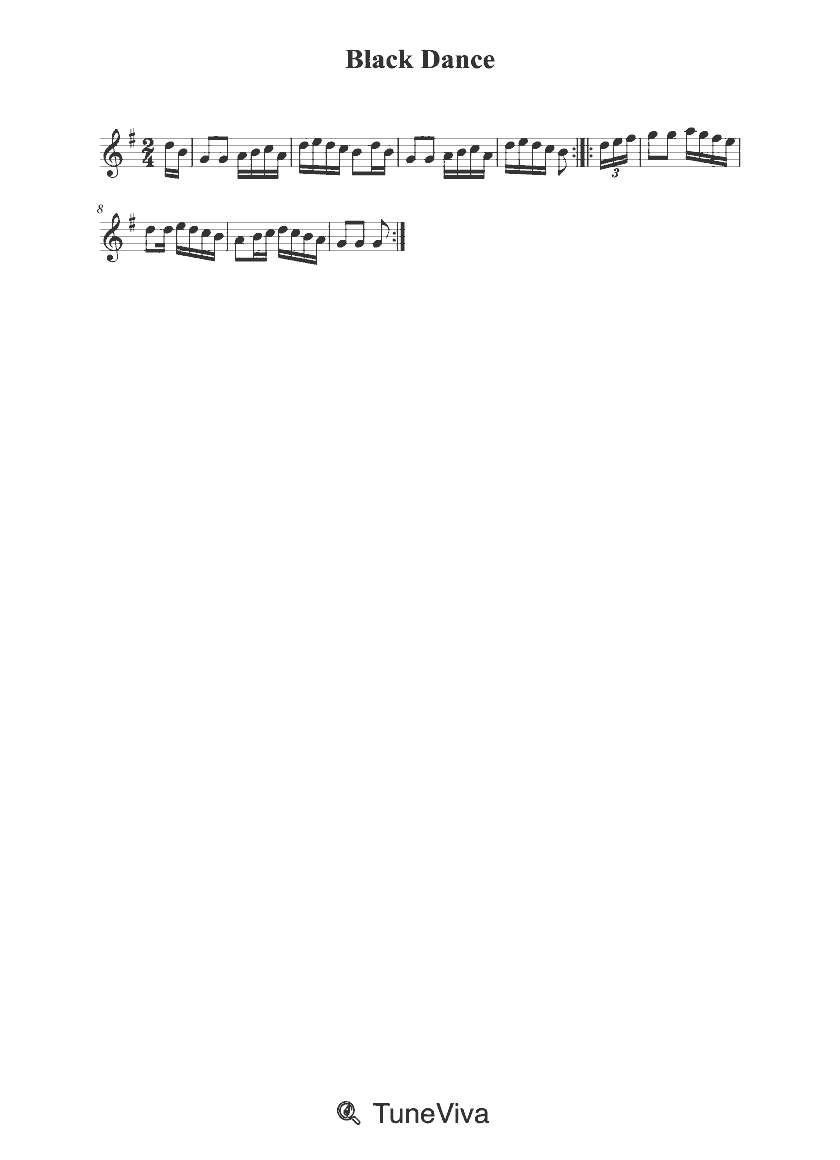
Black Dance
Misc tunes
16 sec
Open scoreThe Black Dance sheet music is available here in several scores that share the title but differ in notation. Each available score opens with a one-sharp key signature recorded as G major, and no composer is named; the scores carry the artist credit “Misc tunes.” The main practical difference is time signature: some versions open in 2/4 and one opens in 2/2, so compare the individual score before choosing a reading.
Scores 1–20 of 49
Misc tunes
16 sec
Open score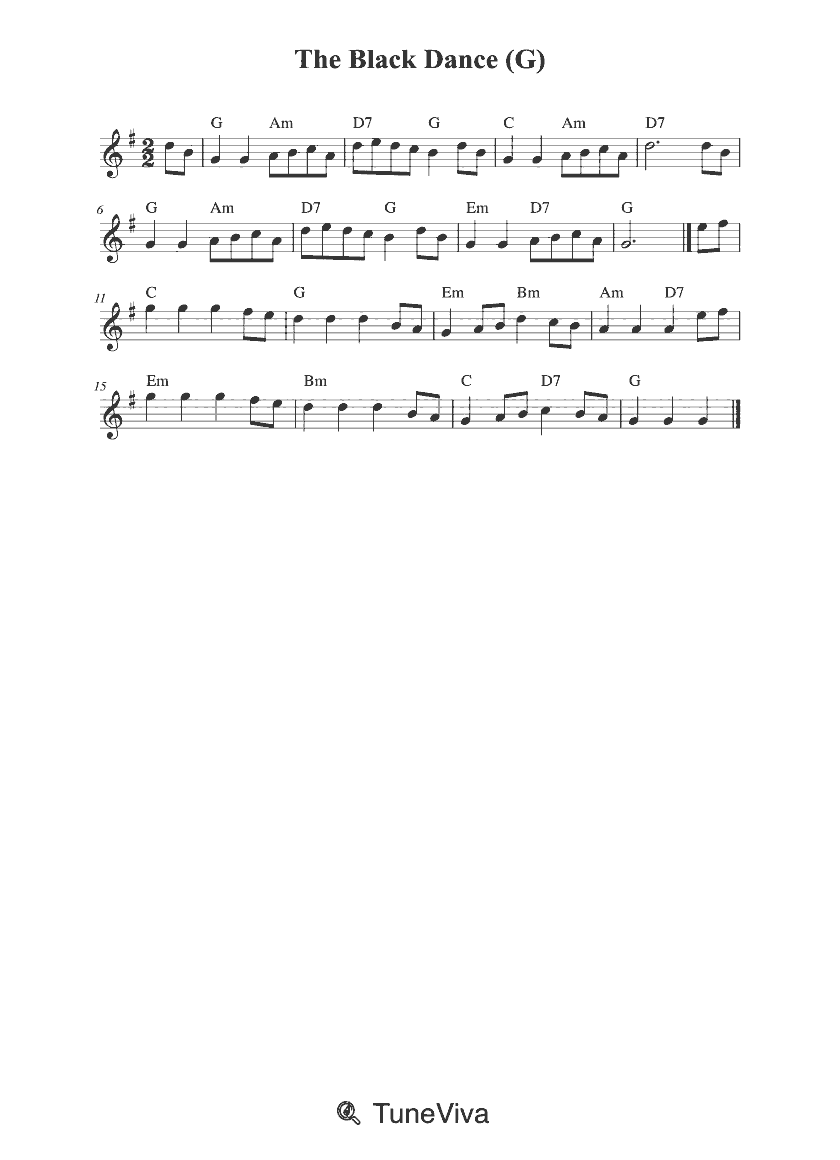
Misc tunes
1 min 4 sec · Score #120399
Open score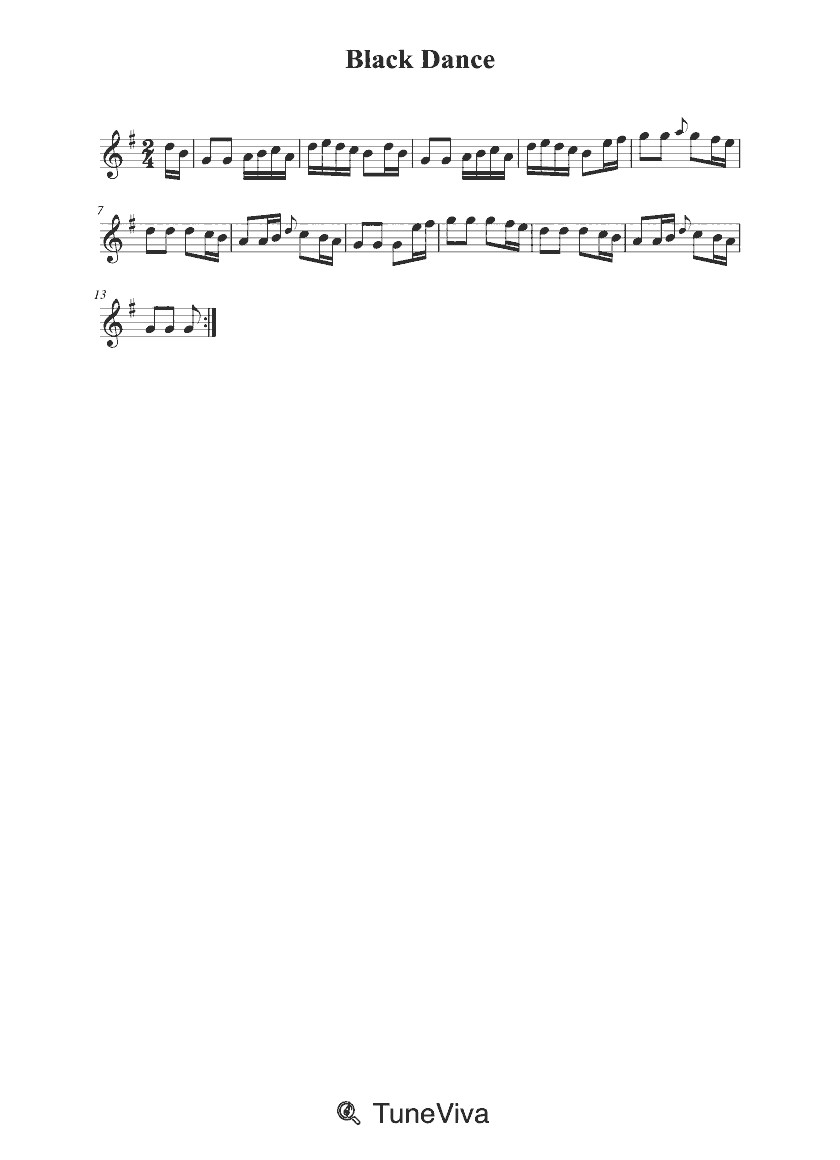
Misc tunes
24 sec · Score #44959
Open score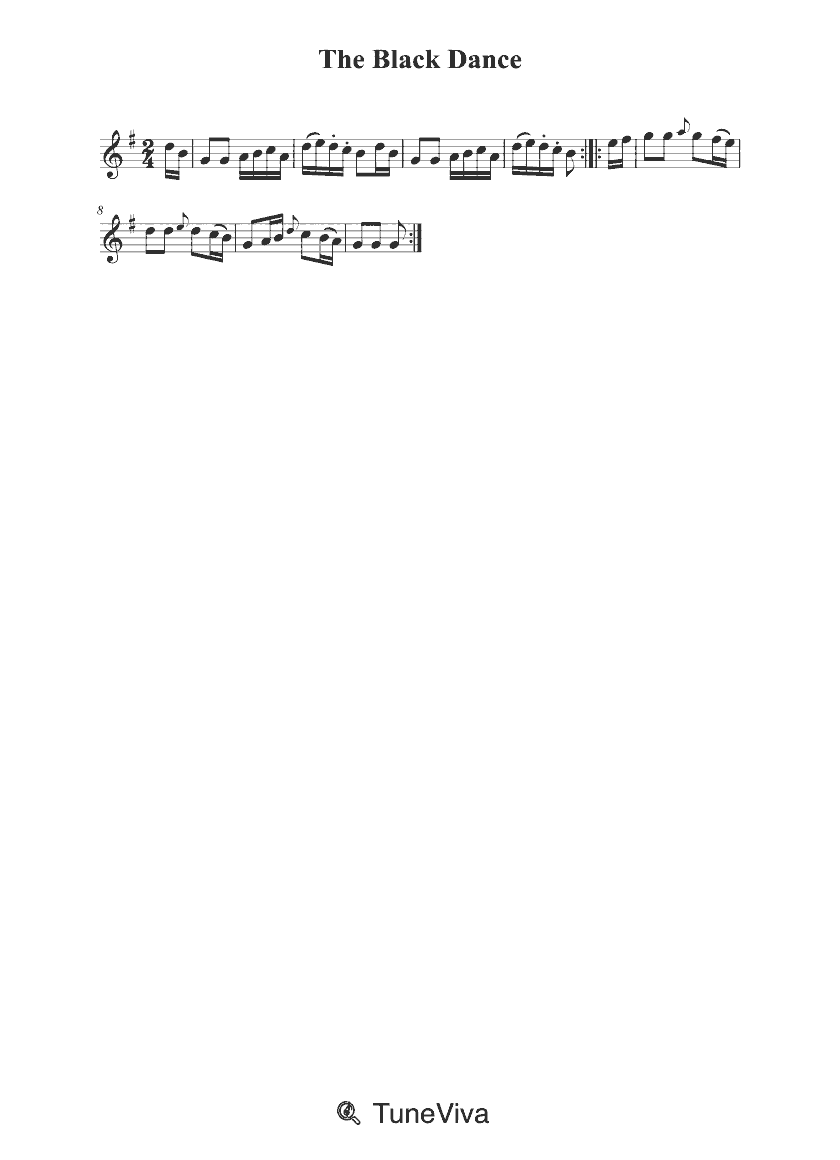
Misc tunes
16 sec · Score #12799
Open score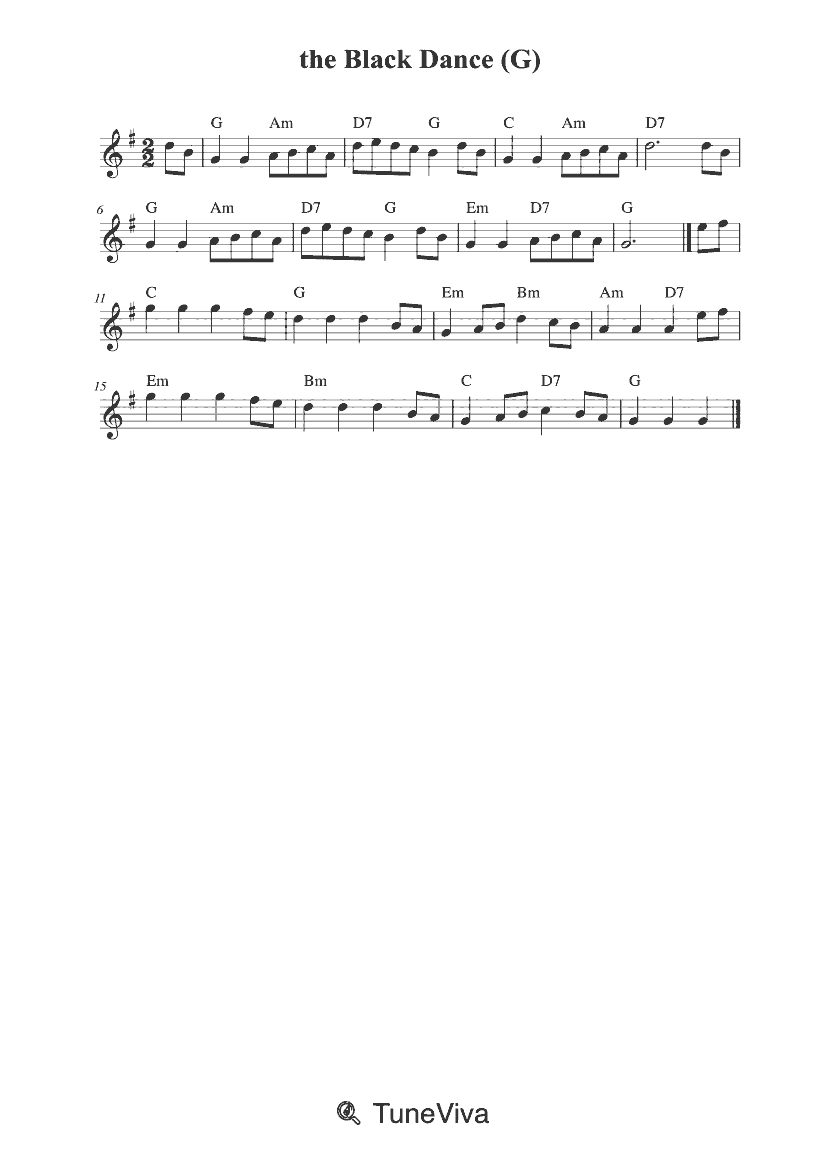
Misc tunes
1 min 4 sec · Score #57061
Open score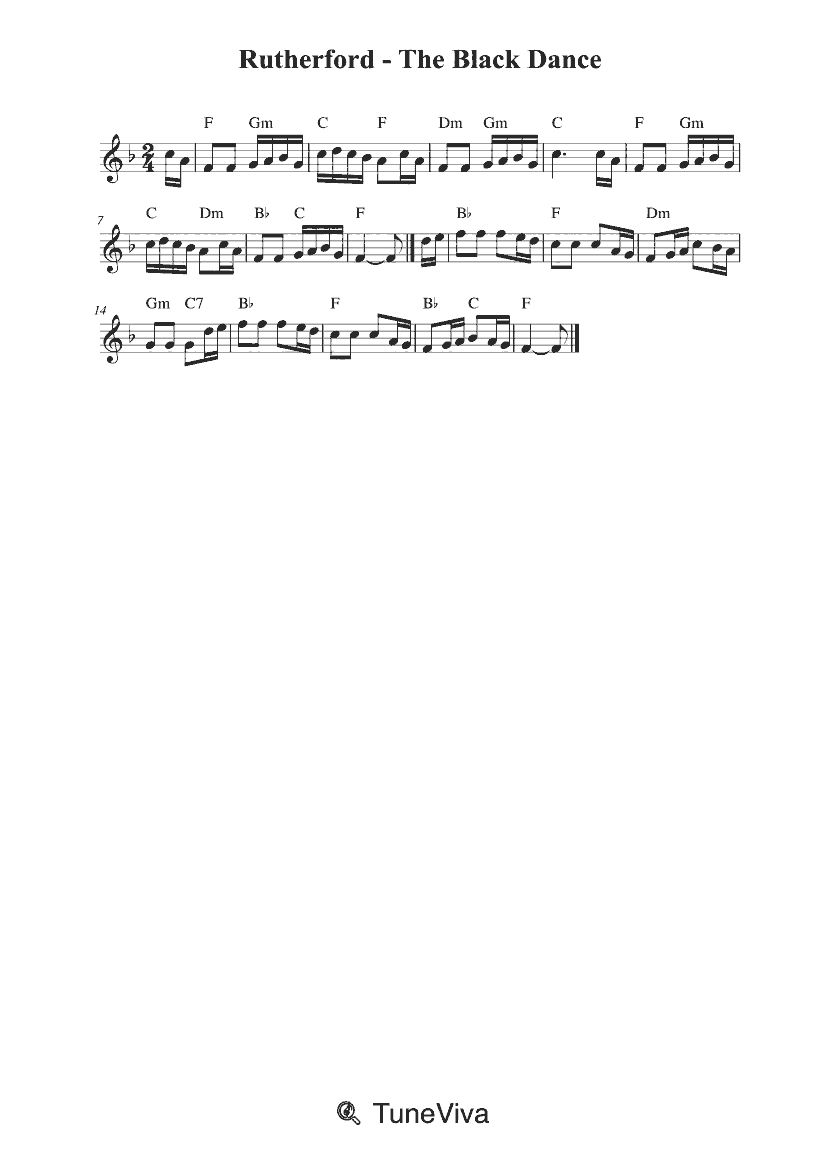
Rutherford 1772
16 sec · Score #92325
Open score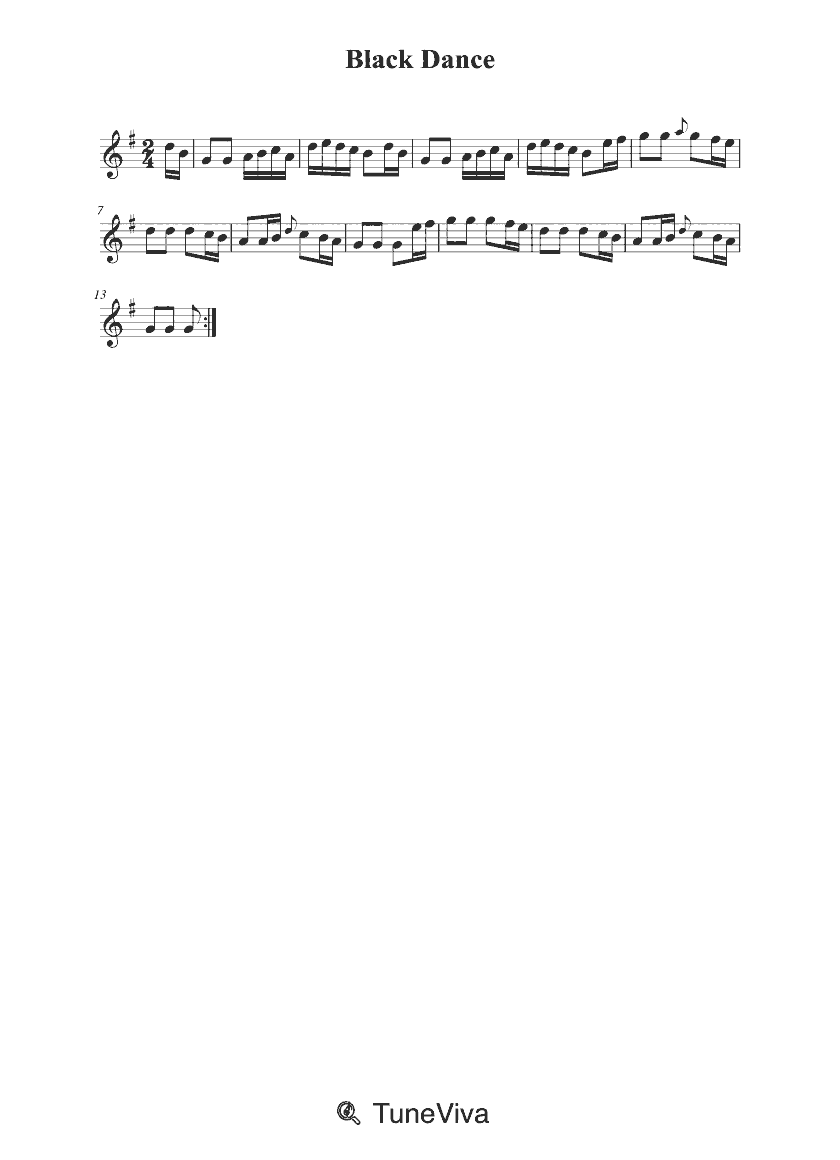
Misc tunes
24 sec · Score #140036
Open score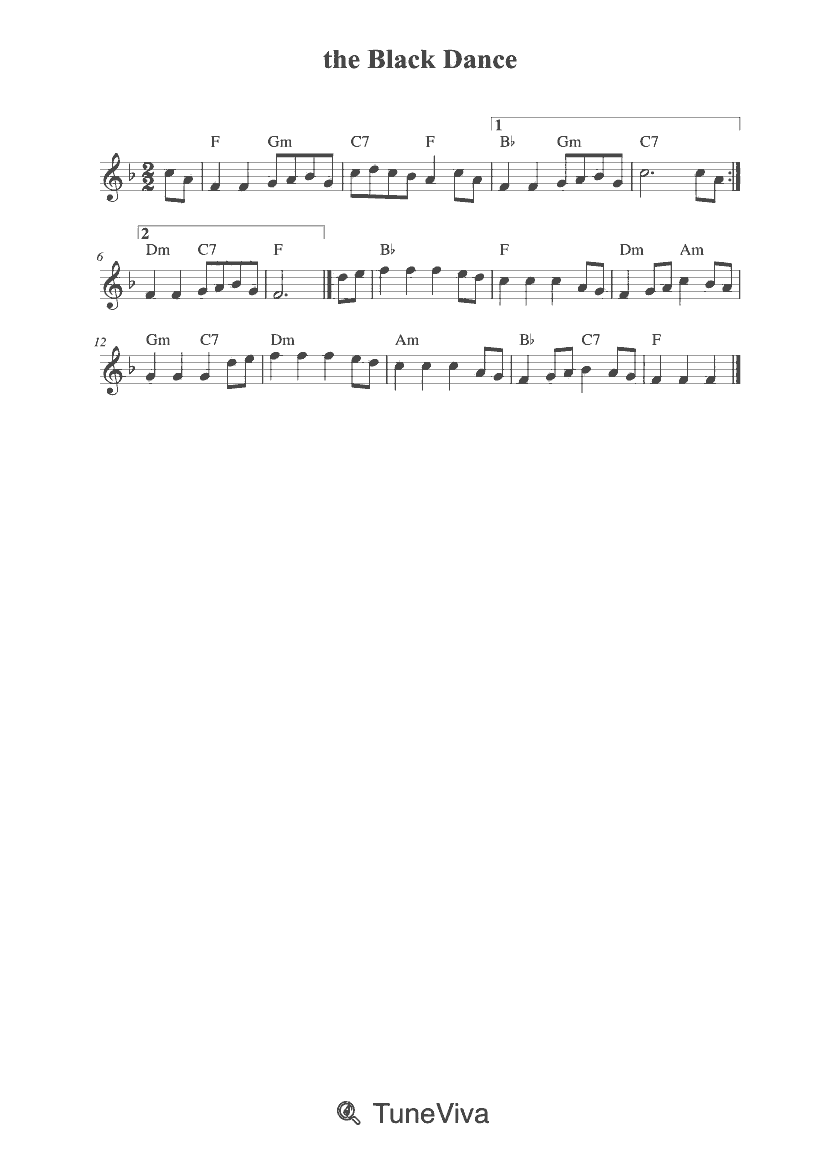
Misc tunes
1 min 5 sec · Score #207941
Open score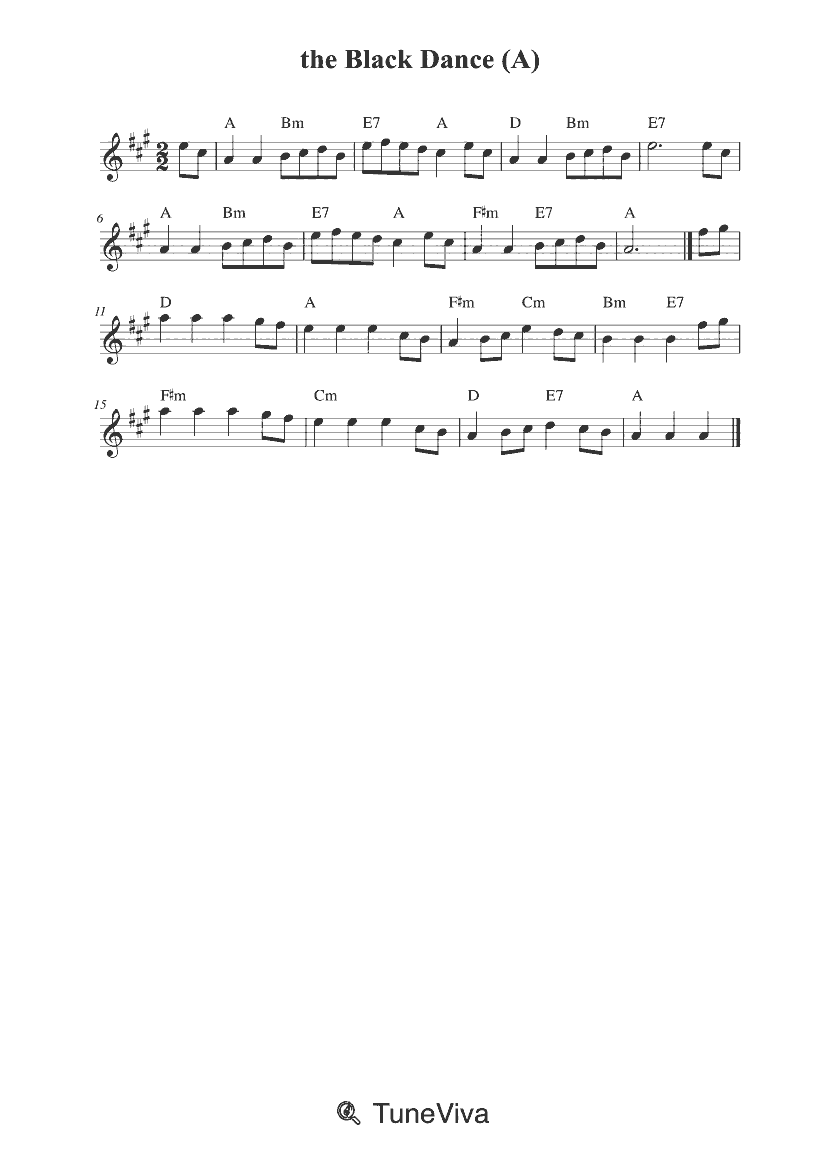
Misc tunes
1 min 4 sec
Open score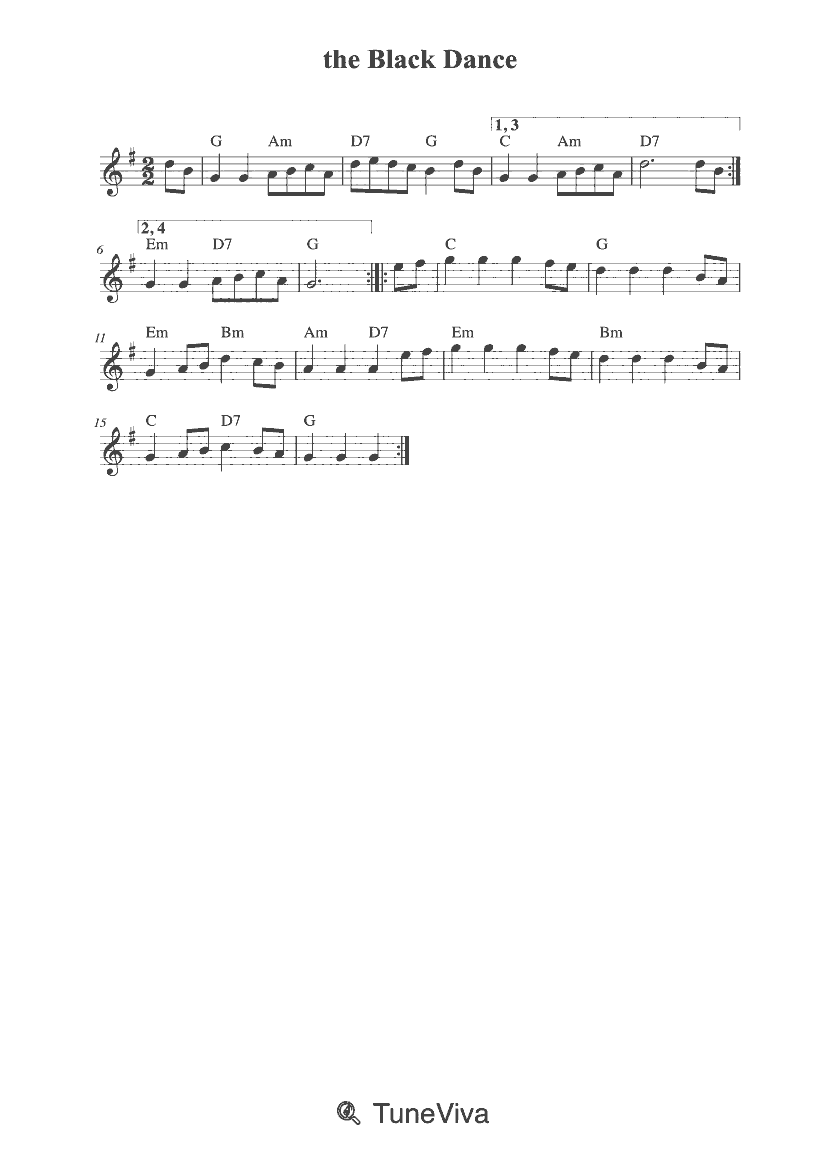
Misc tunes
1 min 46 sec
Open score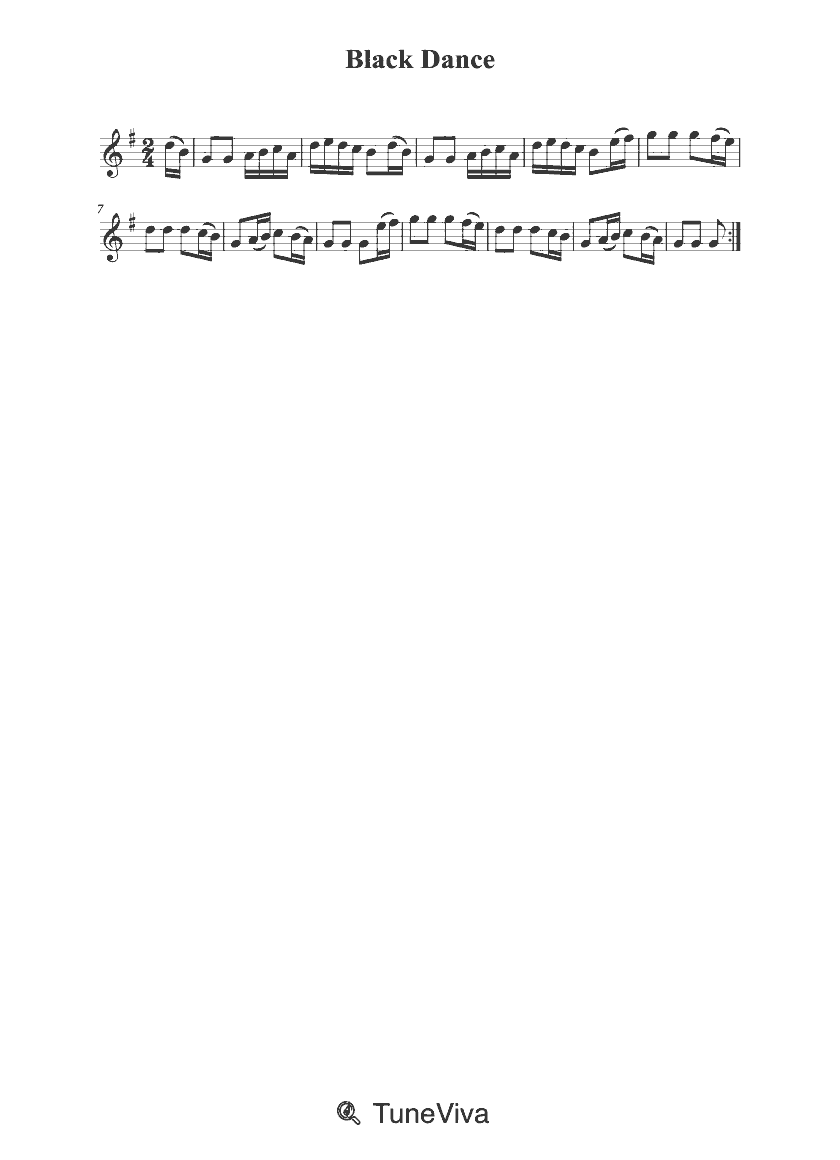
Misc tunes
24 sec · Score #67824
Open score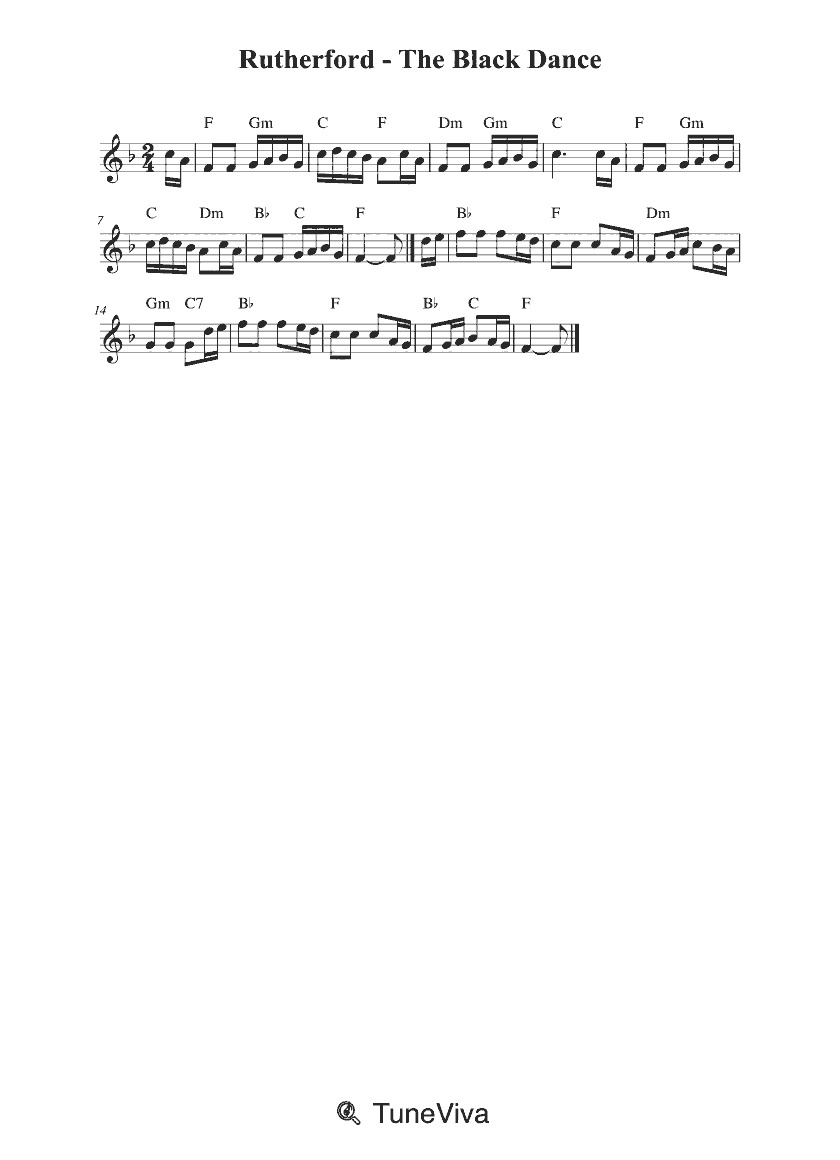
Rutherford 1772
16 sec · Score #72921
Open score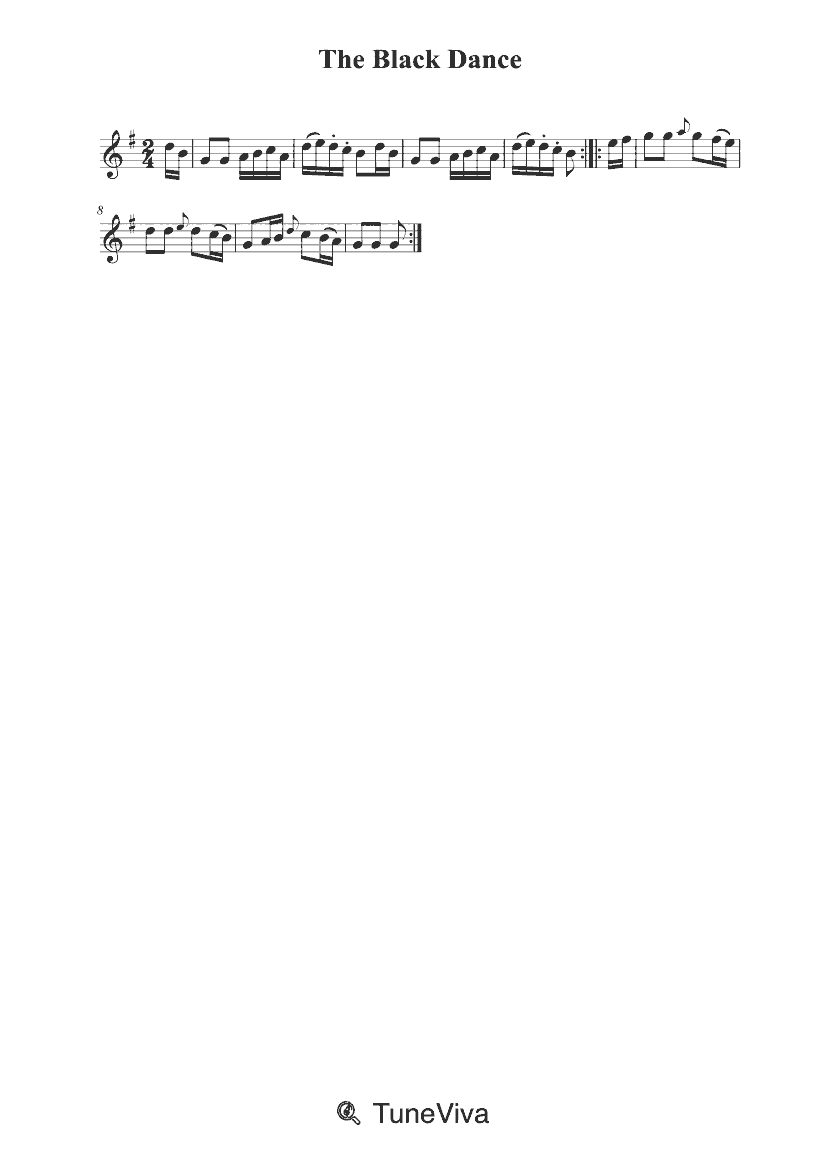
Misc tunes
16 sec · Score #75535
Open score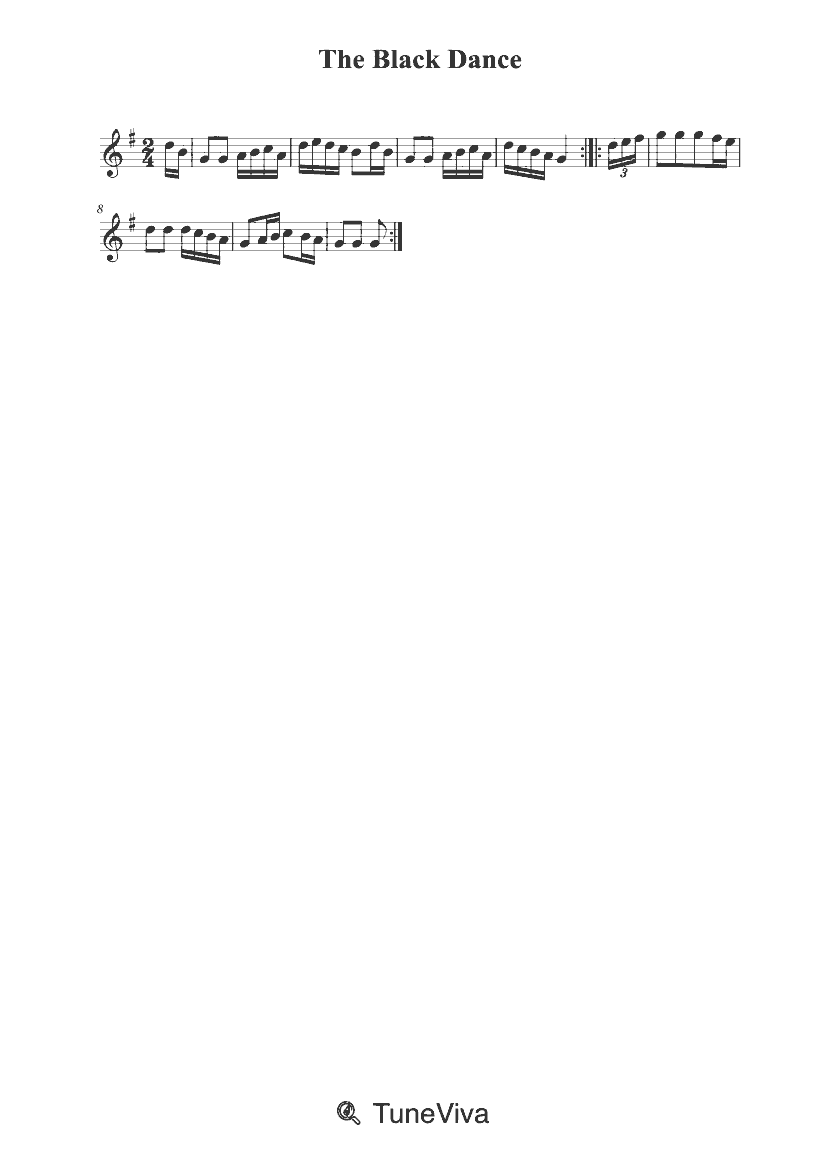
Misc tunes
16 sec · Score #93940
Open score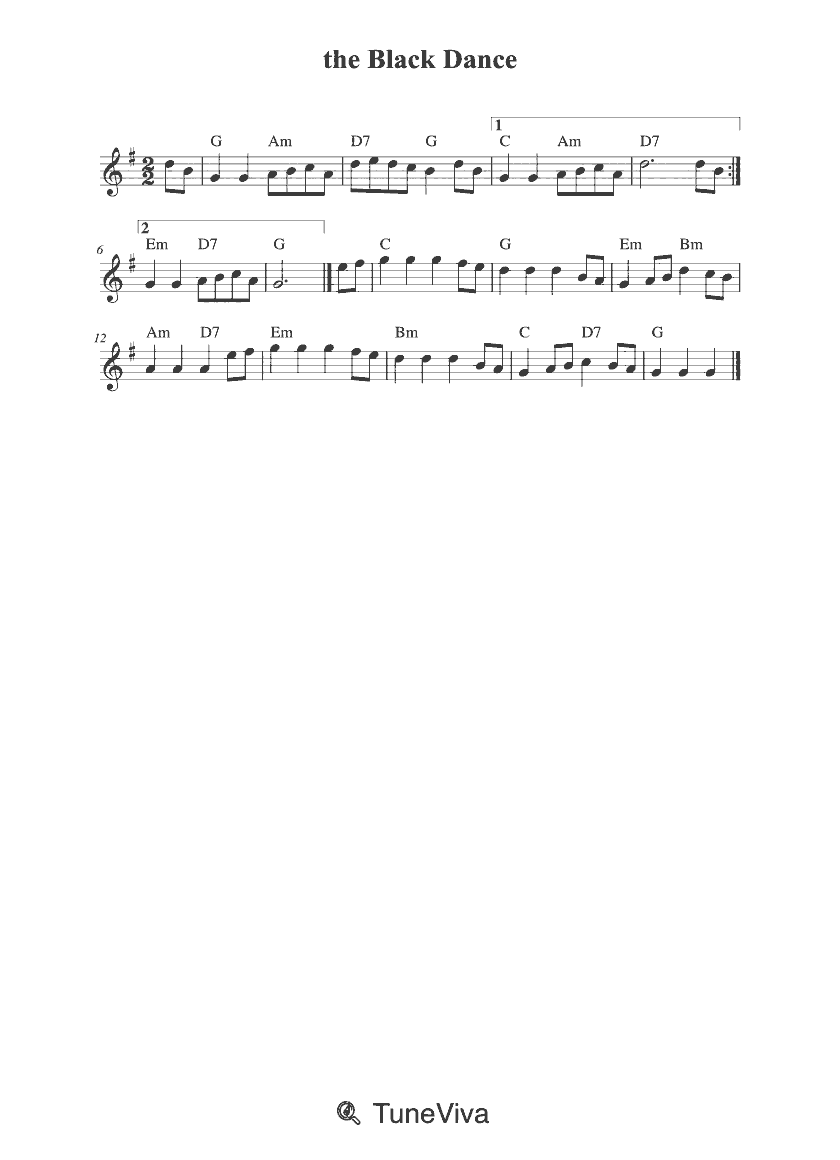
Misc tunes
1 min 5 sec · Score #127127
Open score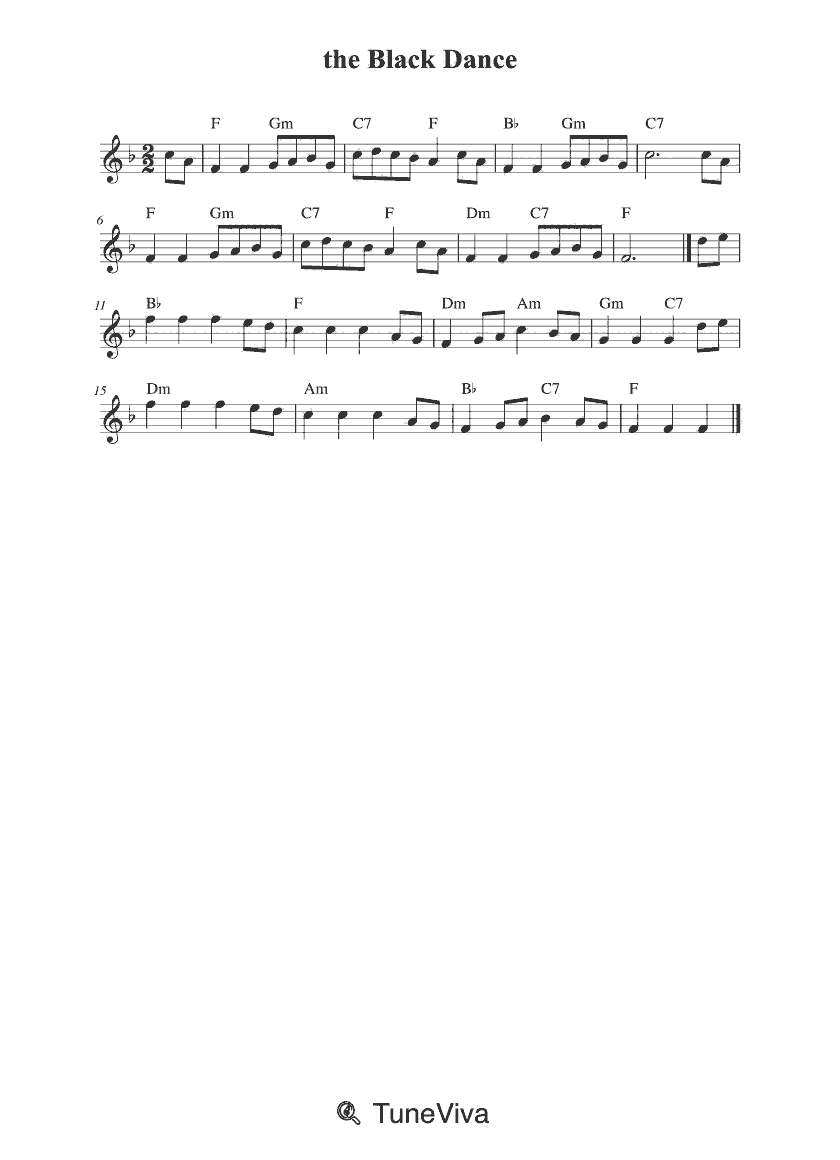
Misc tunes
1 min 4 sec · Score #134579
Open score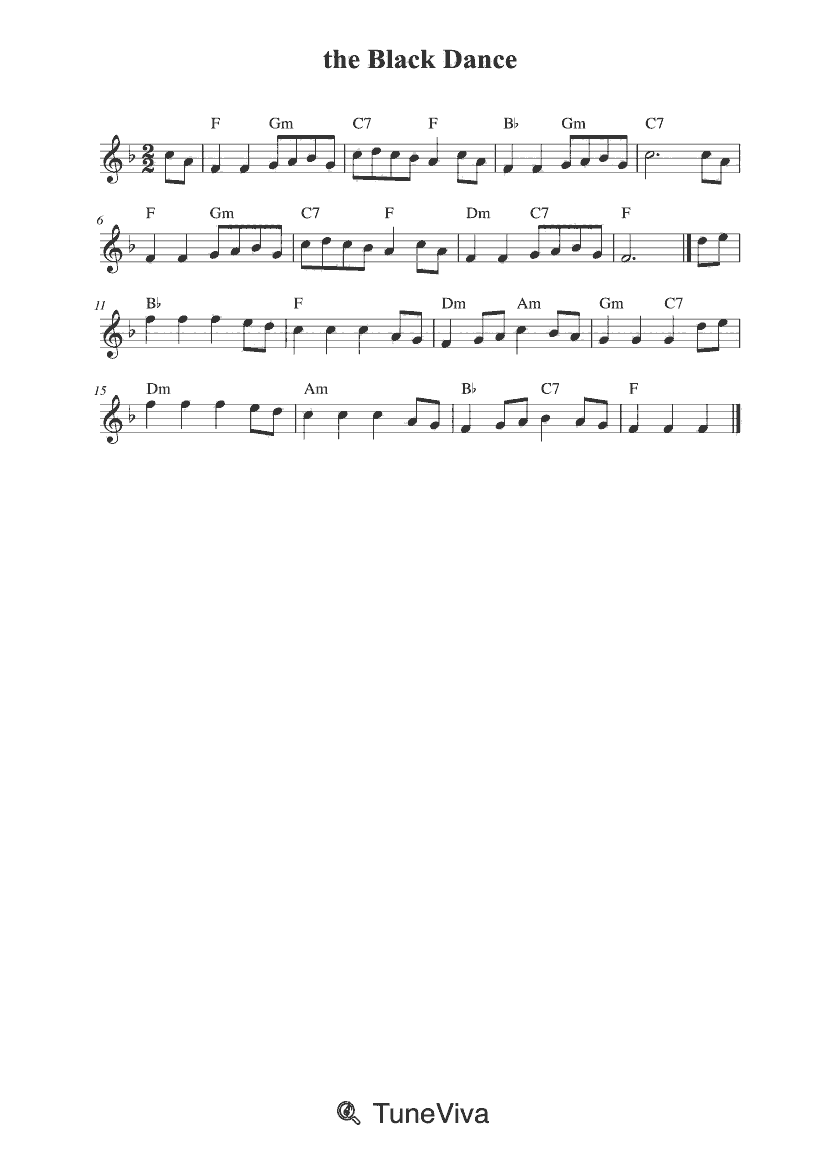
Misc tunes
1 min 4 sec · Score #142865
Open score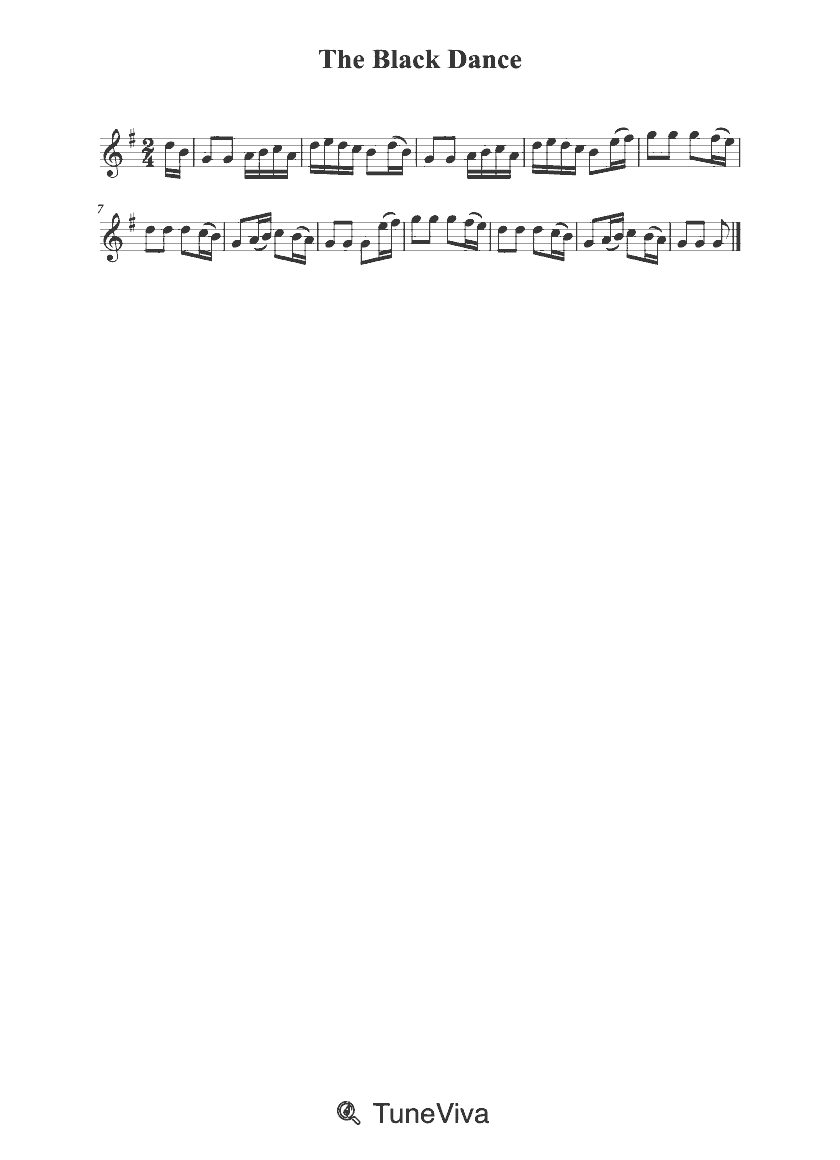
Misc tunes
12 sec
Open score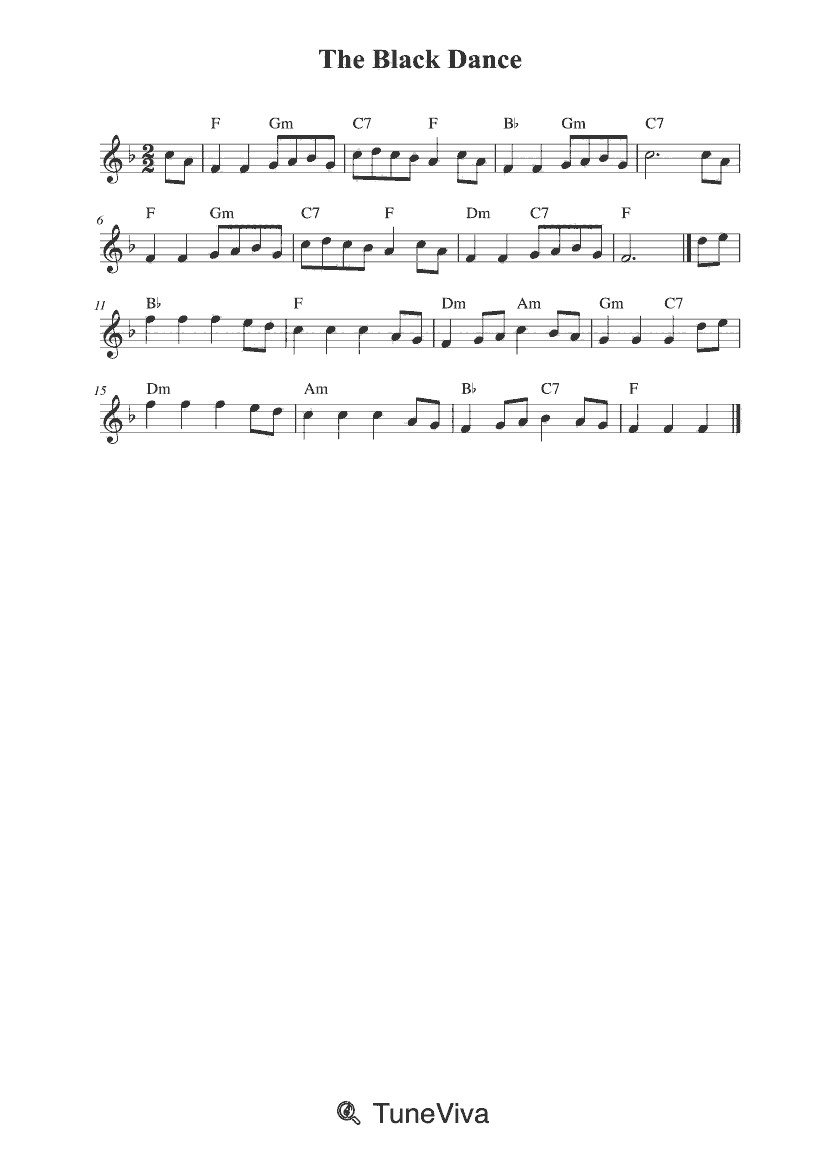
Misc tunes
1 min 4 sec · Score #143015
Open score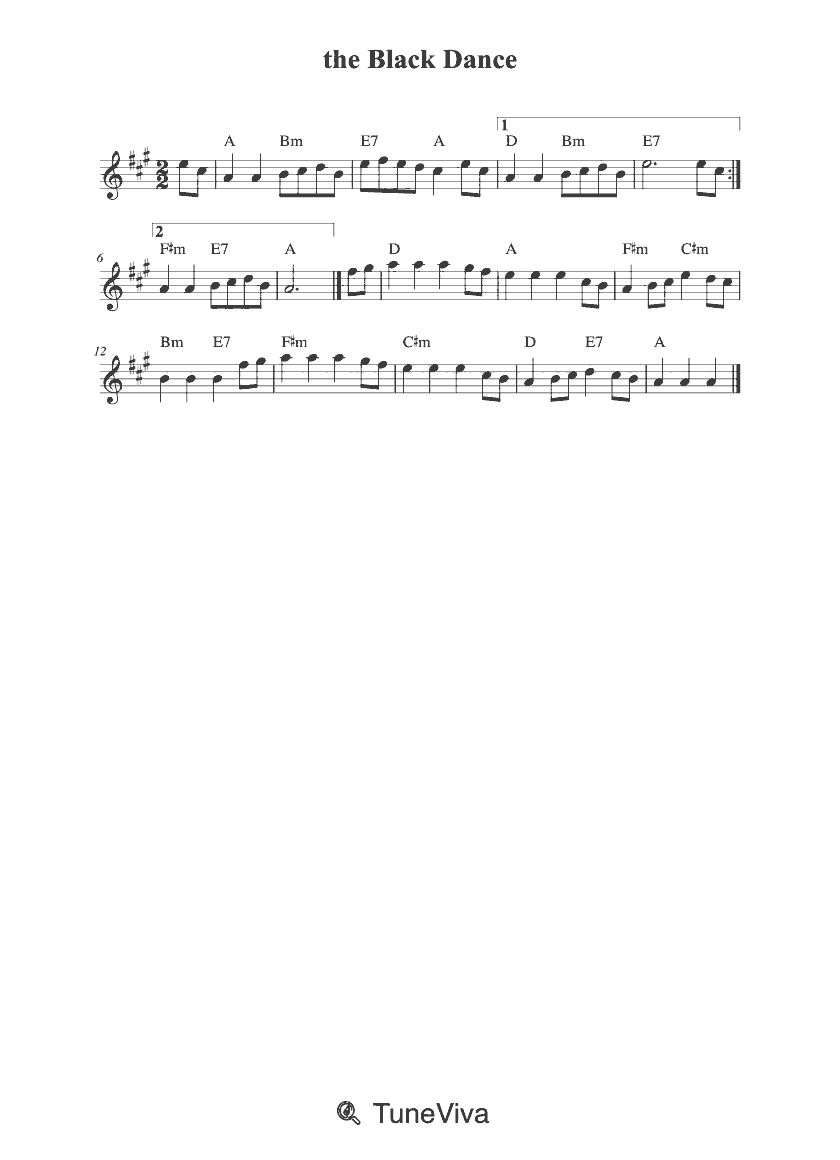
Misc tunes
1 min 5 sec · Score #144770
Open scorePage 1 of 3
The scores titled The Black Dance share an opening key signature of one sharp, recorded as G major, but they do not all use the same opening time signature. Two available versions begin in 2/4 and one begins in 2/2. Shared title and key are useful starting points, but they do not prove that the versions present the same arrangement or musical text.
Both time signatures are duple, but they group beats differently. In 2/4 the beat is counted in quarter notes, while in 2/2 the beat is counted in half notes. If beat grouping matters for your reading or ensemble, compare the opening bars of each version rather than assuming the notation is interchangeable.
The available scores do not identify a composer, date, historical origin, or original instrumentation for The Black Dance. They also do not establish whether one score is the original and the others are arrangements. Treat the shared title as a prompt to compare versions, not as confirmation that every score represents the same work in the same form.
Begin with the time signature and opening bars, then inspect the individual score for clef, range, and any instrument indication. The available information does not identify a preferred or authoritative version, so choose the notation that suits your reading needs and the purpose for which you need the music.
Catalogue duration 16 sec. Opening key signature: 1 sharp (G major). Opening time signature: 2/4.
Catalogue duration 1 min 4 sec. Opening key signature: 1 sharp (G major). Opening time signature: 2/2.
Catalogue duration 24 sec. Opening key signature: 1 sharp (G major). Opening time signature: 2/4.
The available scores for The Black Dance do not name a composer and carry the artist credit “Misc tunes,” so a reliable attribution cannot be made from them.
The available scores of The Black Dance each open with a one-sharp key signature, recorded as G major. That describes the opening key of those scores, not a verified key for every possible version of the title.
The Black Dance appears in the available scores with opening time signatures of 2/4 and 2/2. Both are duple metres, but 2/4 groups quarter-note beats while 2/2 groups half-note beats.
The available scores do not specify an instrument or ensemble for The Black Dance. A player should inspect the individual score for clef, range, and any instrumentation indication.
The relationship between the available versions of The Black Dance is not established. A shared title and opening key do not prove that the scores present the same arrangement or musical text.