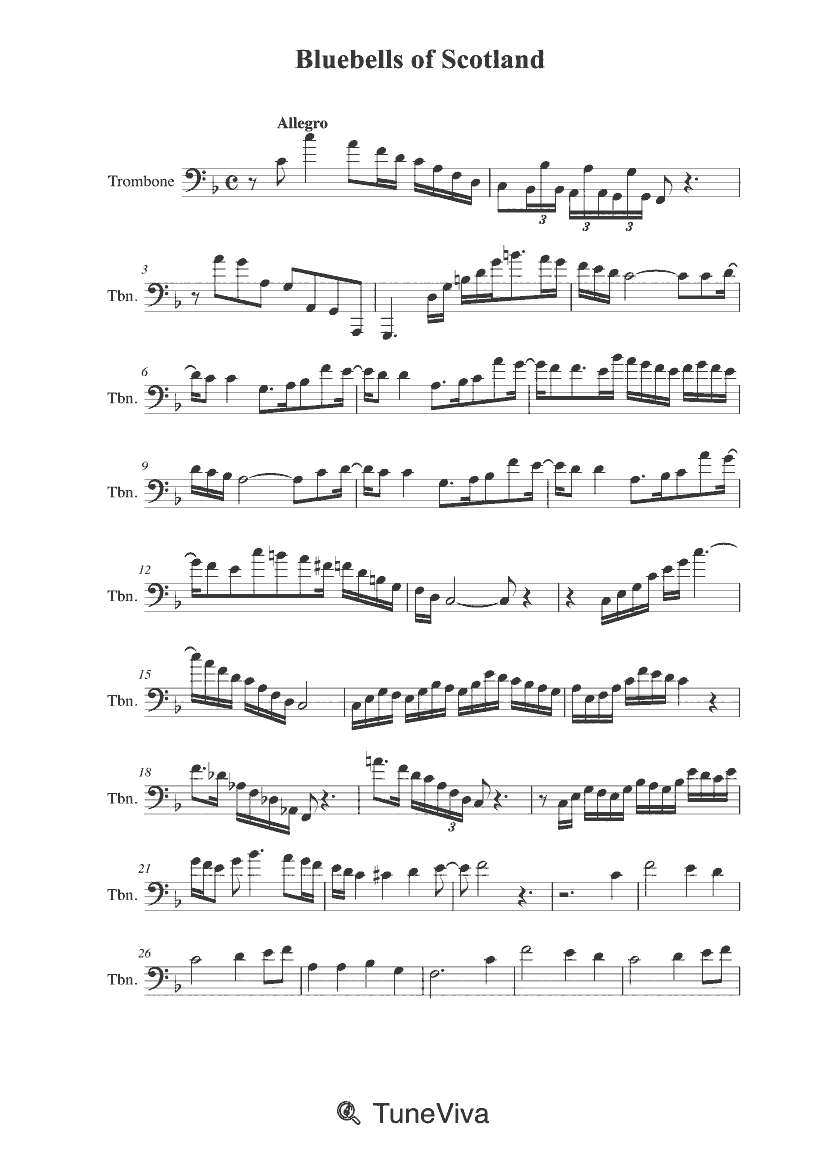
Bluebells of Scotland
Arthur Pryor
Solo Trombone or Baritone
Trombone · 2 min 45 sec
Open scoreThe Blue Bells of Scotland sheet music appears in this selection in three versions: a setting in G major, a variation set in F major, and a trombone score credited to Arthur Pryor. Compare their keys, time signatures, tempo markings and instrumentation to find the version that suits your instrument or the form you want to play.
Scores 1–20 of 47
Arthur Pryor
Solo Trombone or Baritone
Trombone · 2 min 45 sec
Open score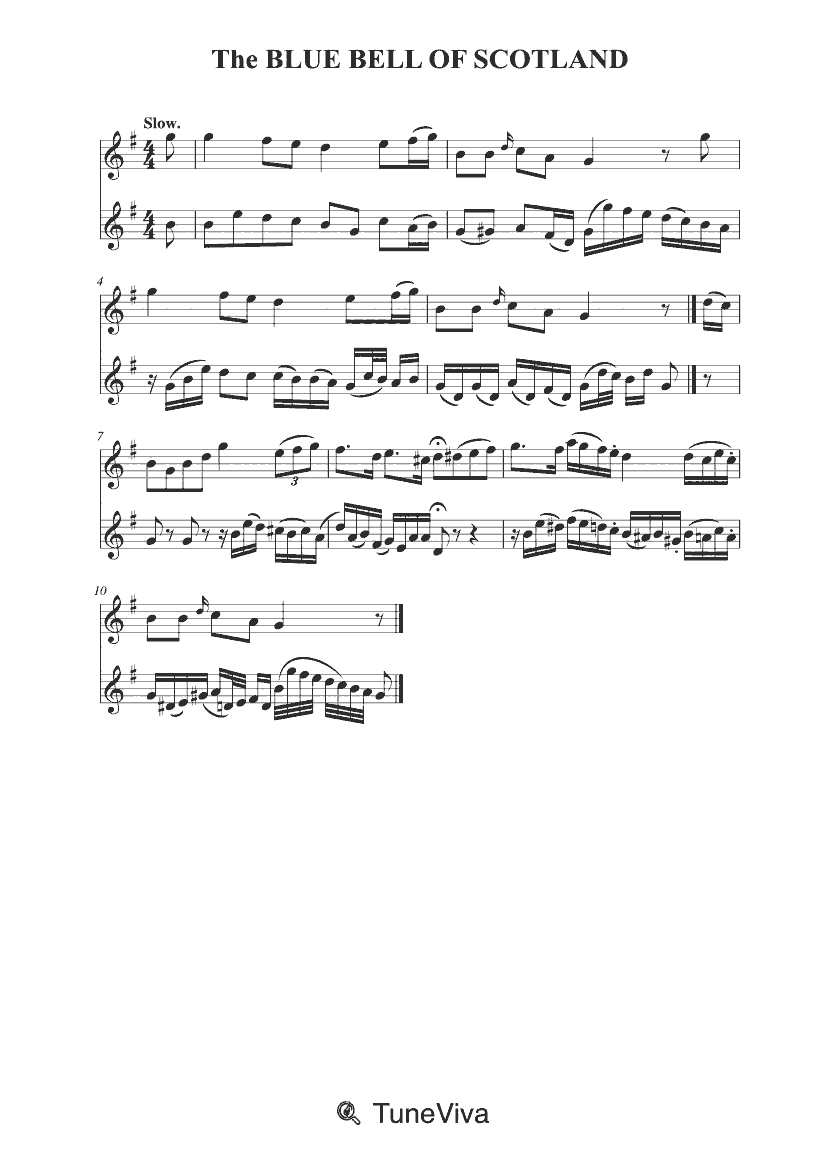
Misc Traditional
16 sec · Score #16740
Open score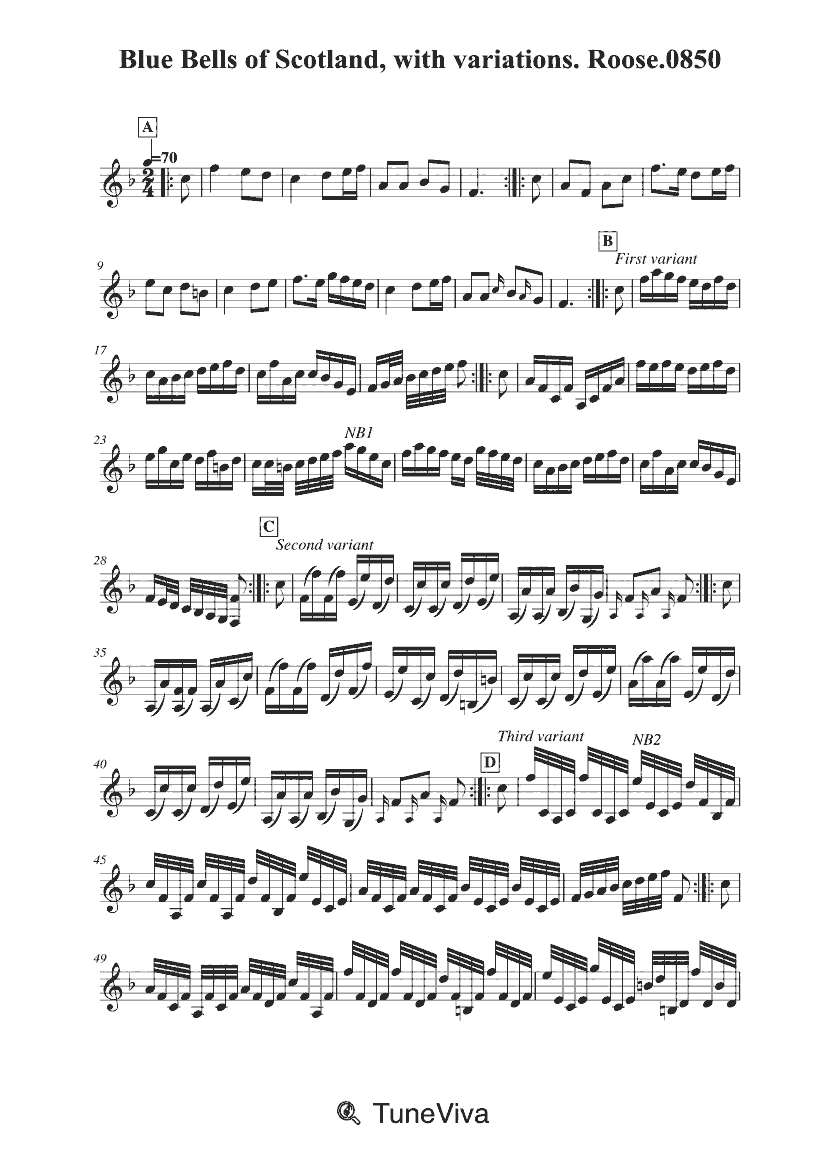
Misc Traditional
2 min 45 sec
Open score
Misc Traditional
1 min 0 sec
Open score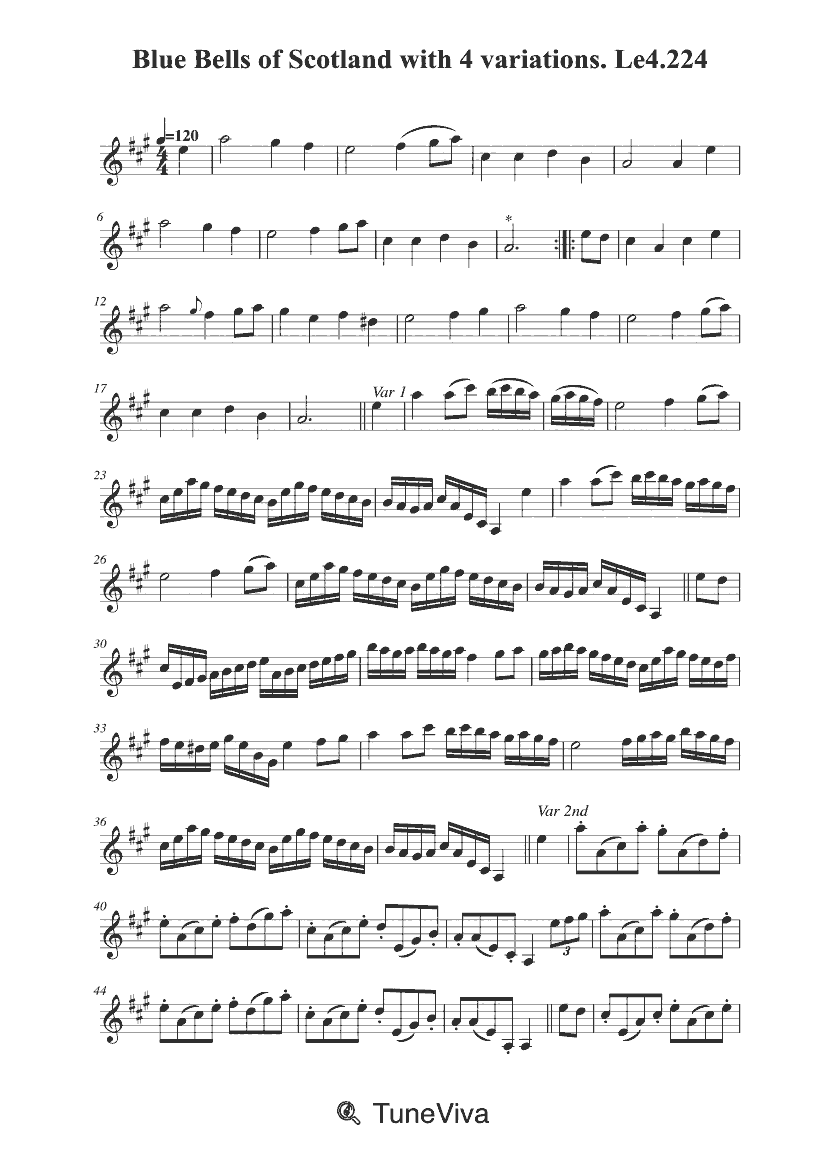
Misc Traditional
5 min 4 sec
Open score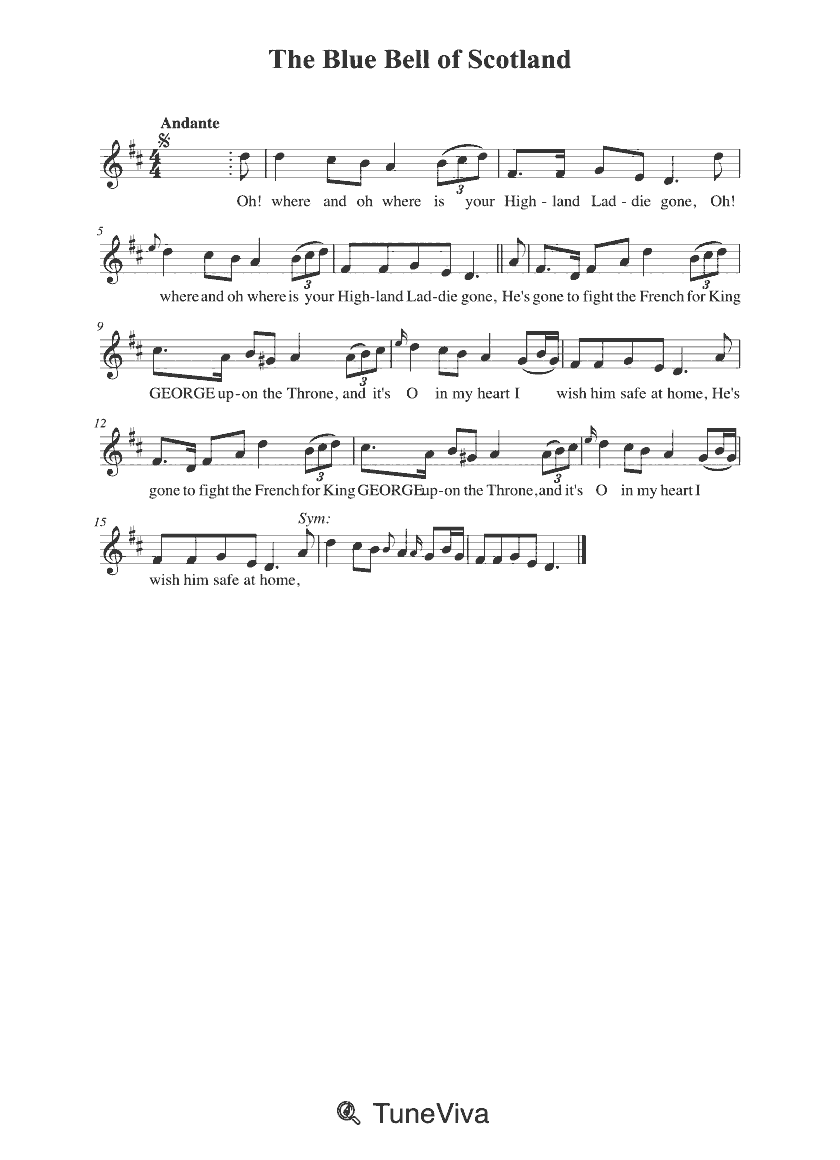
Misc Traditional
41 sec
Open score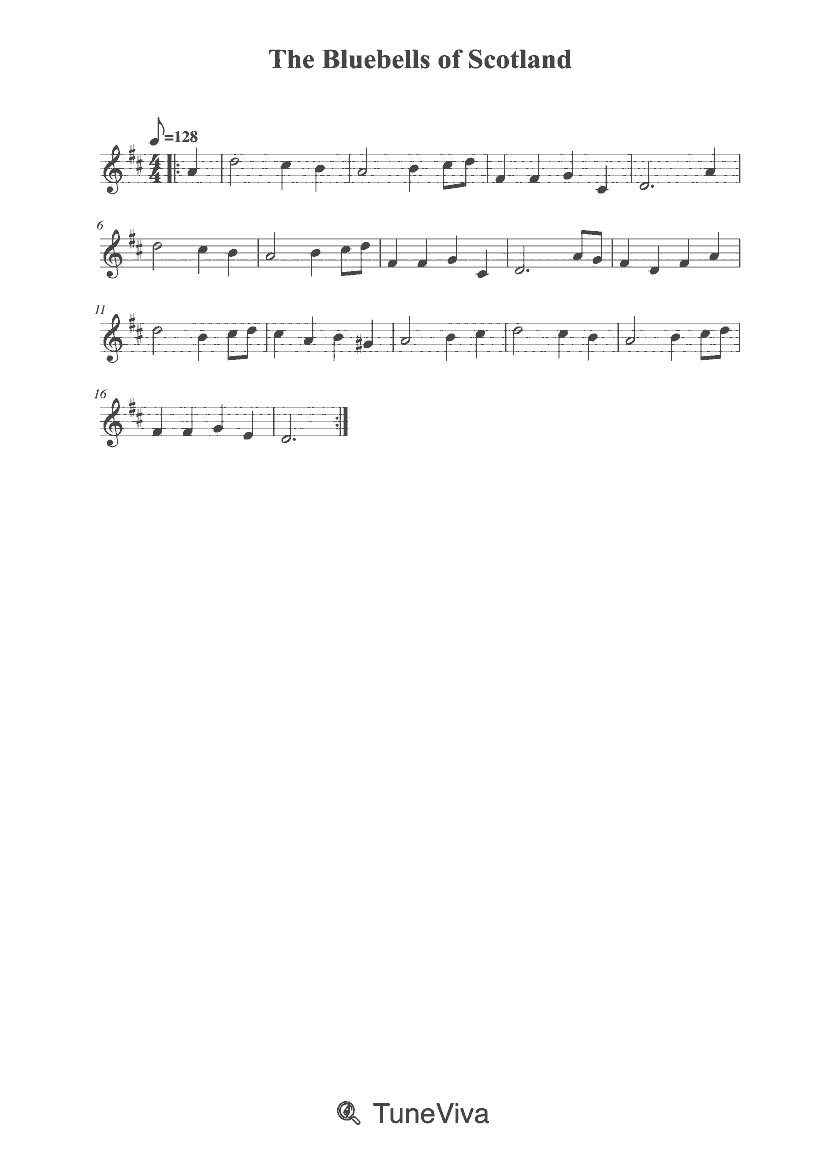
Misc Traditional
2 min 0 sec
Open score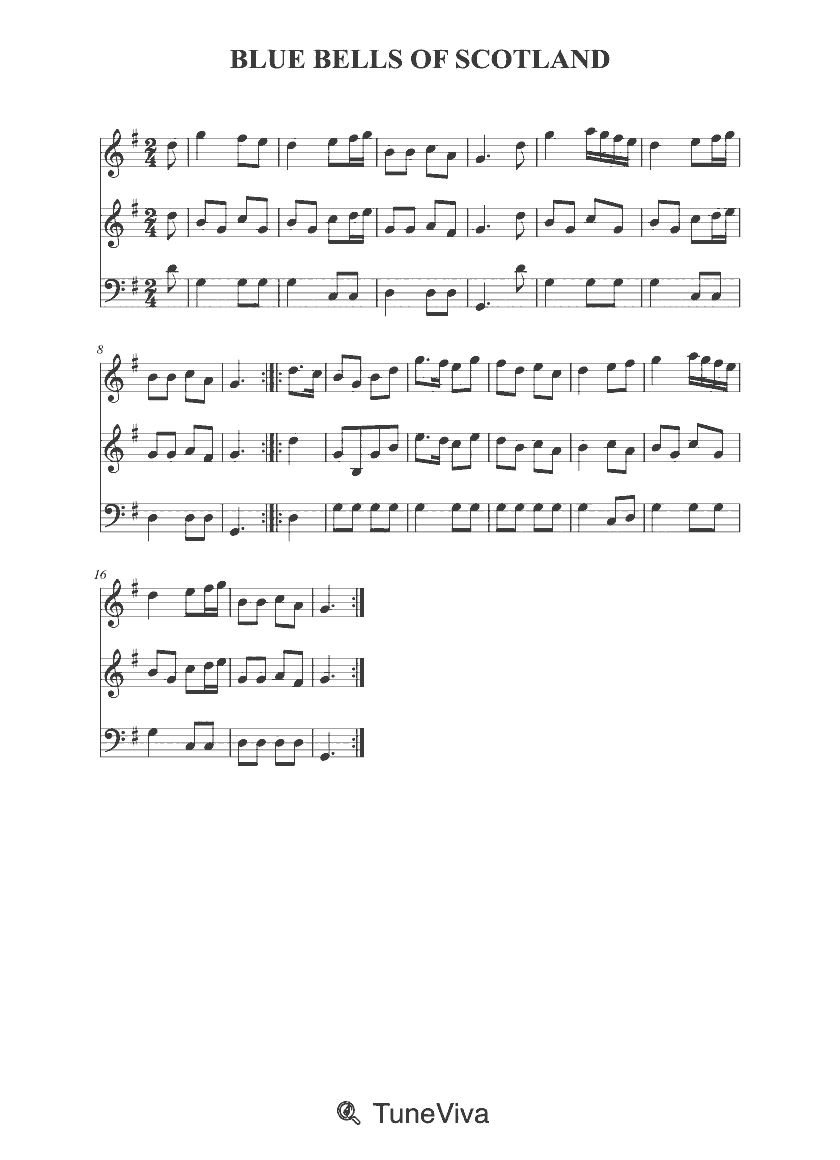
Misc Traditional
32 sec · Score #231012
Open score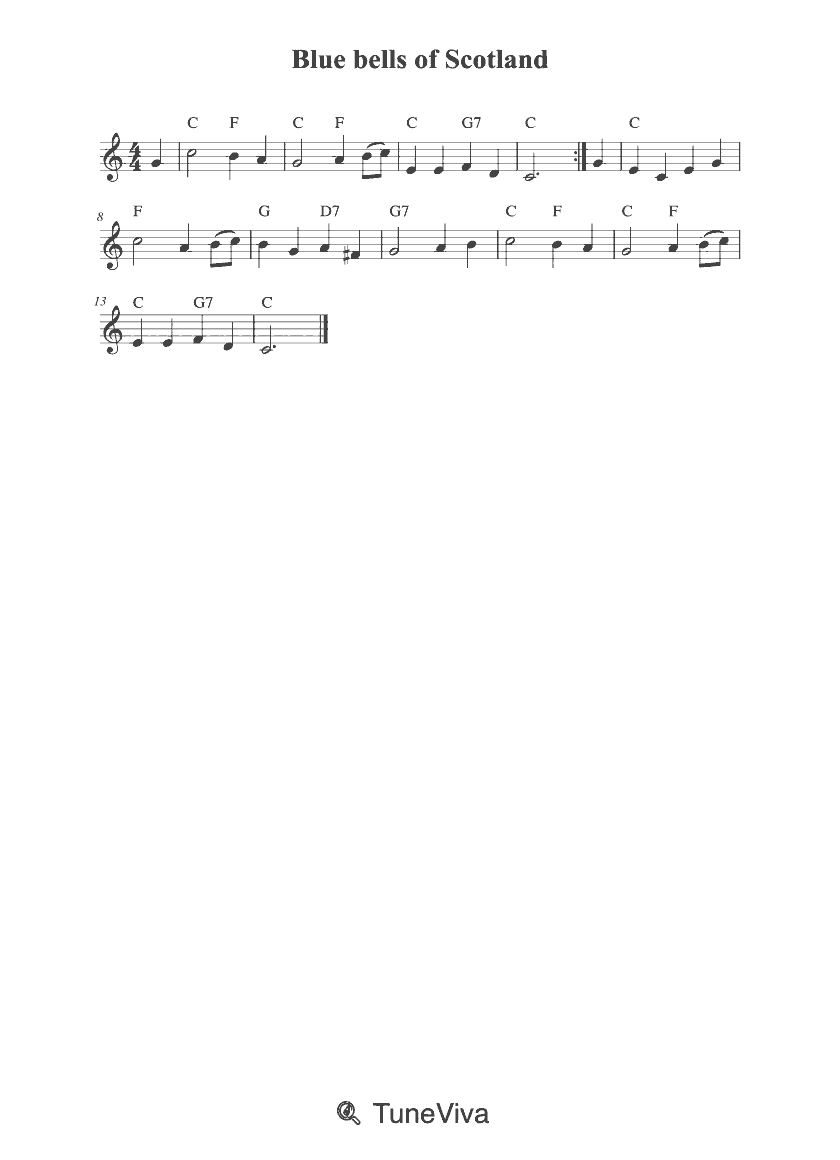
anon.
32 sec
Open score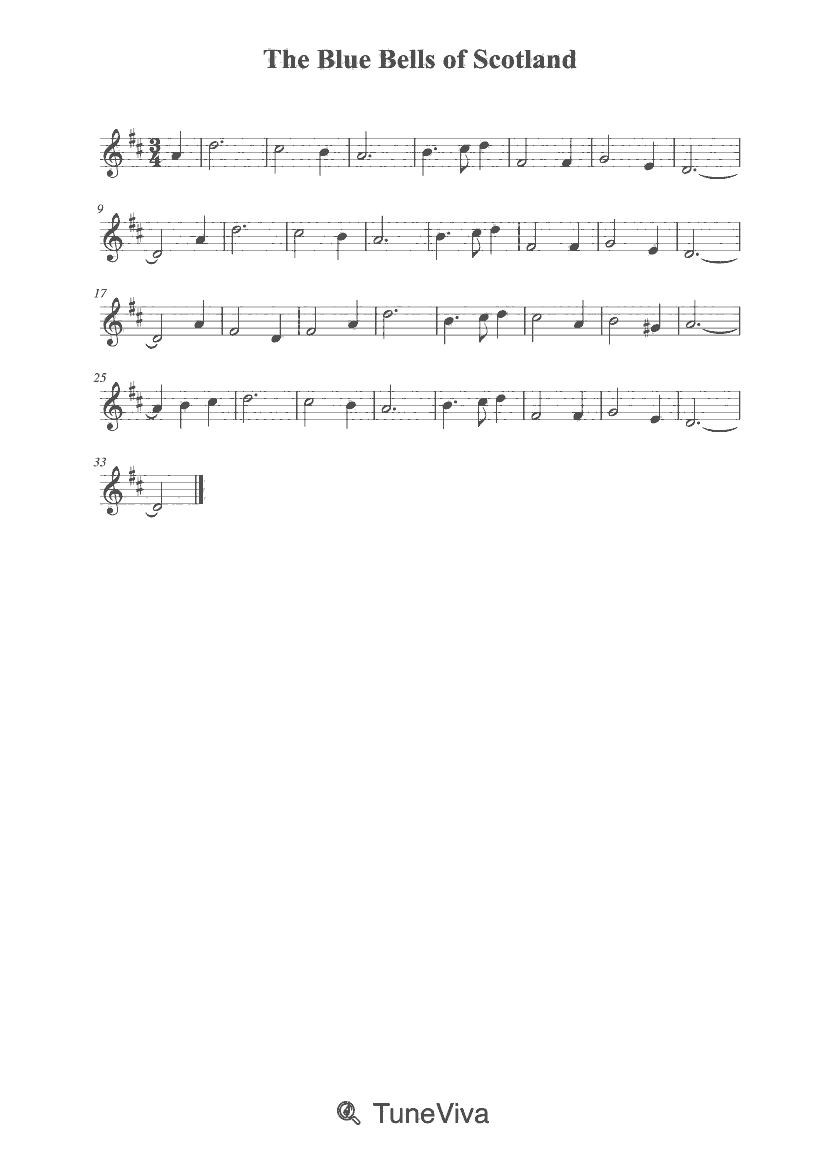
Joe Buchanan's Scottish Tome - Page 561.1
48 sec
Open score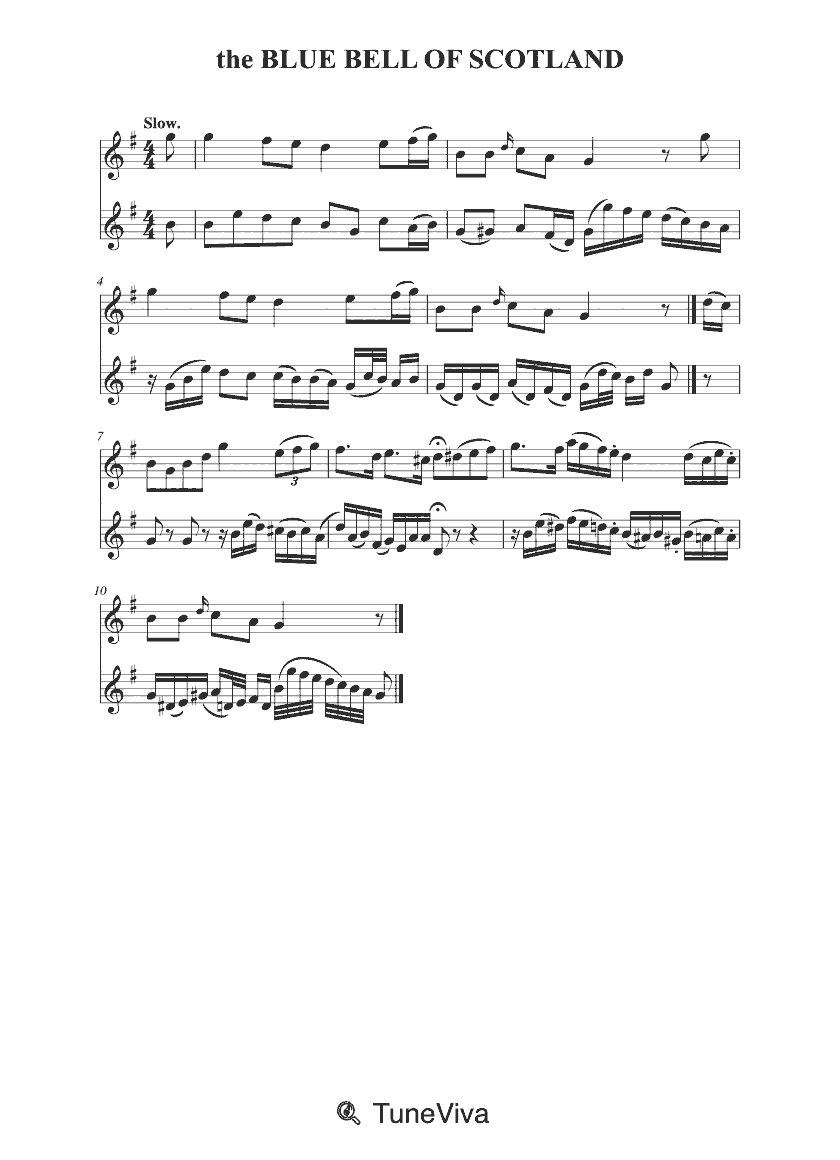
Misc Traditional
16 sec · Score #183298
Open score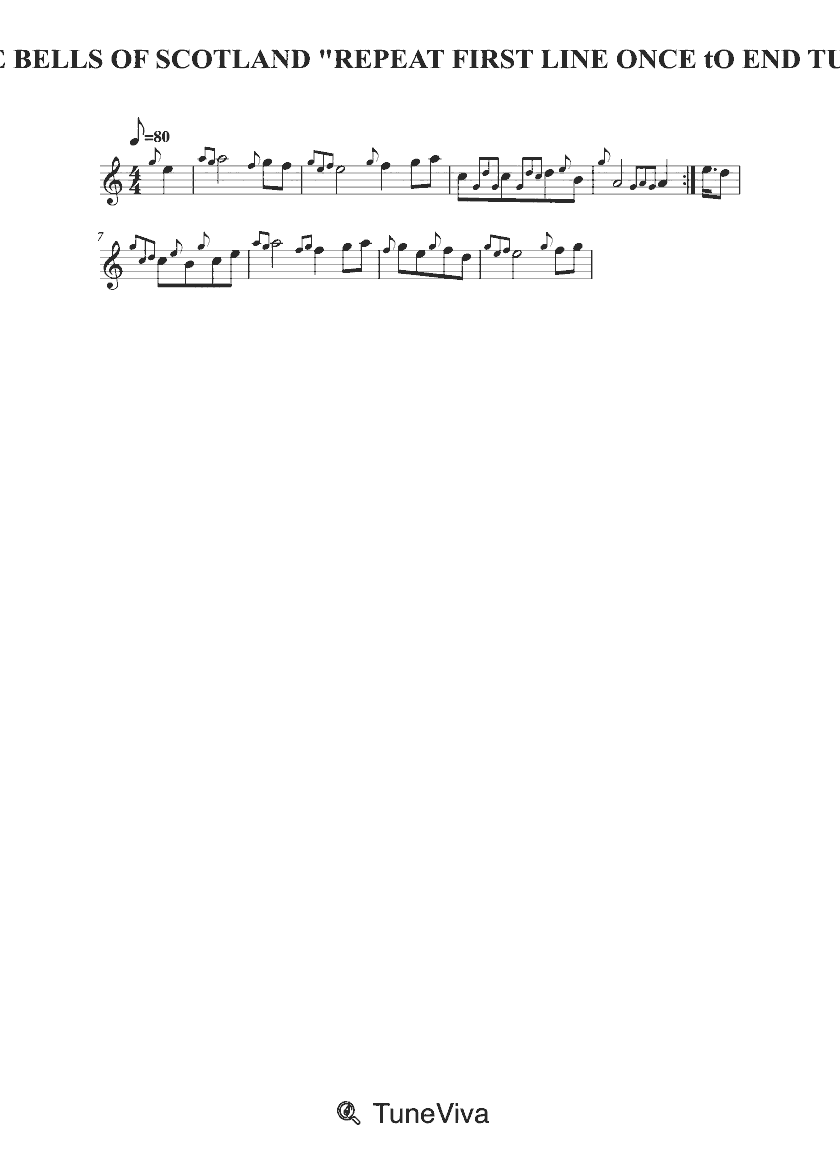
Misc Traditional
57 sec
Open score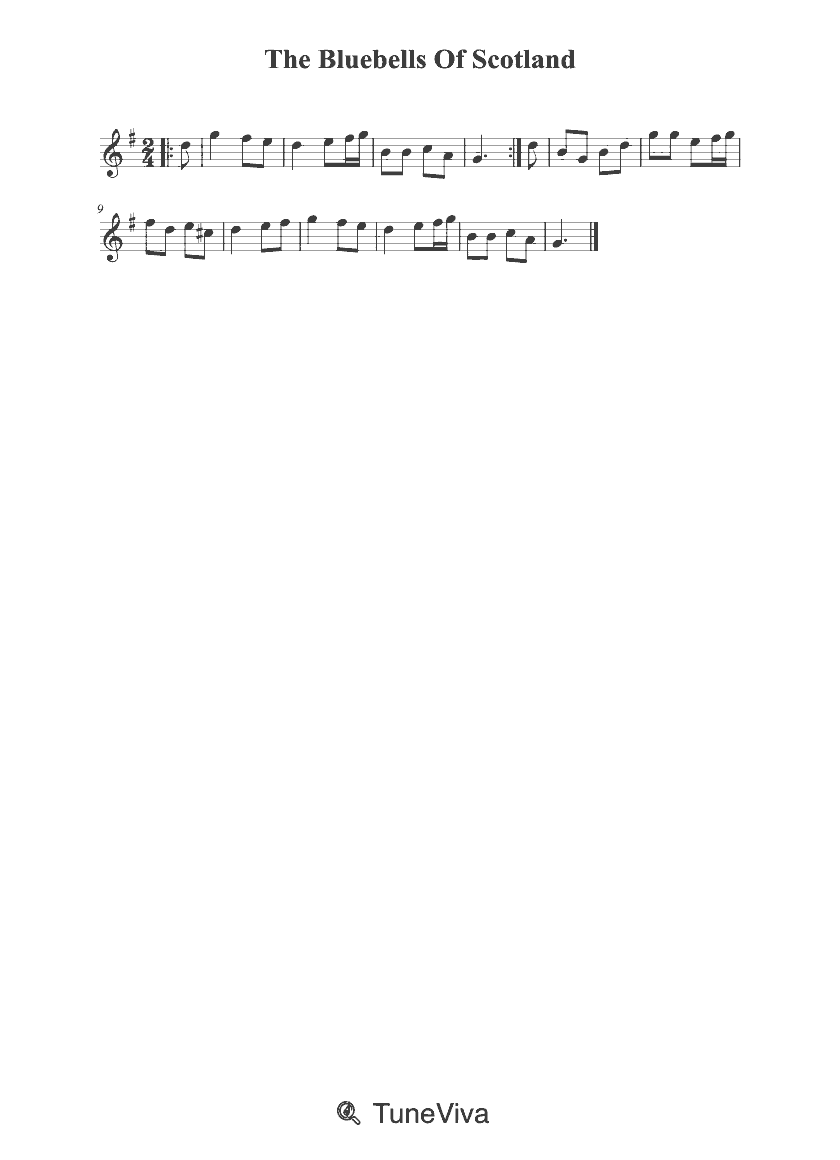
Misc Traditional
16 sec
Open score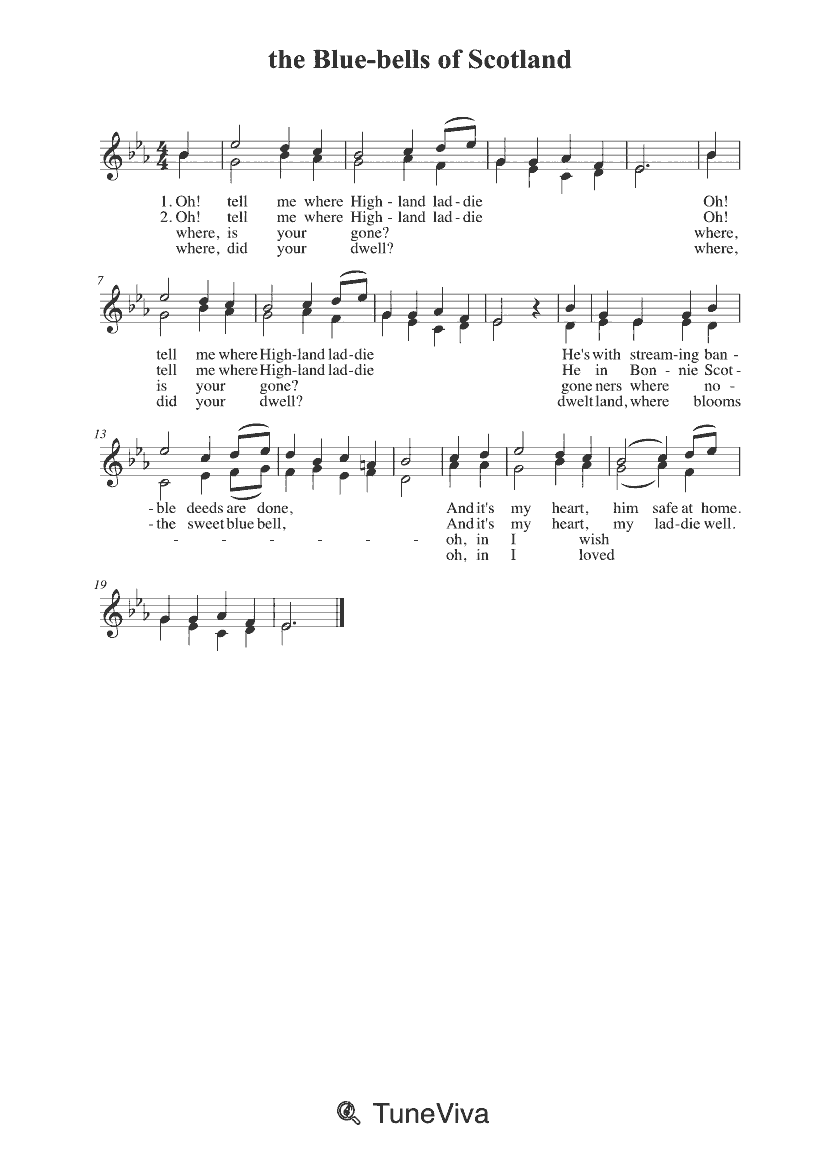
Misc Traditional
32 sec · Score #69687
Open score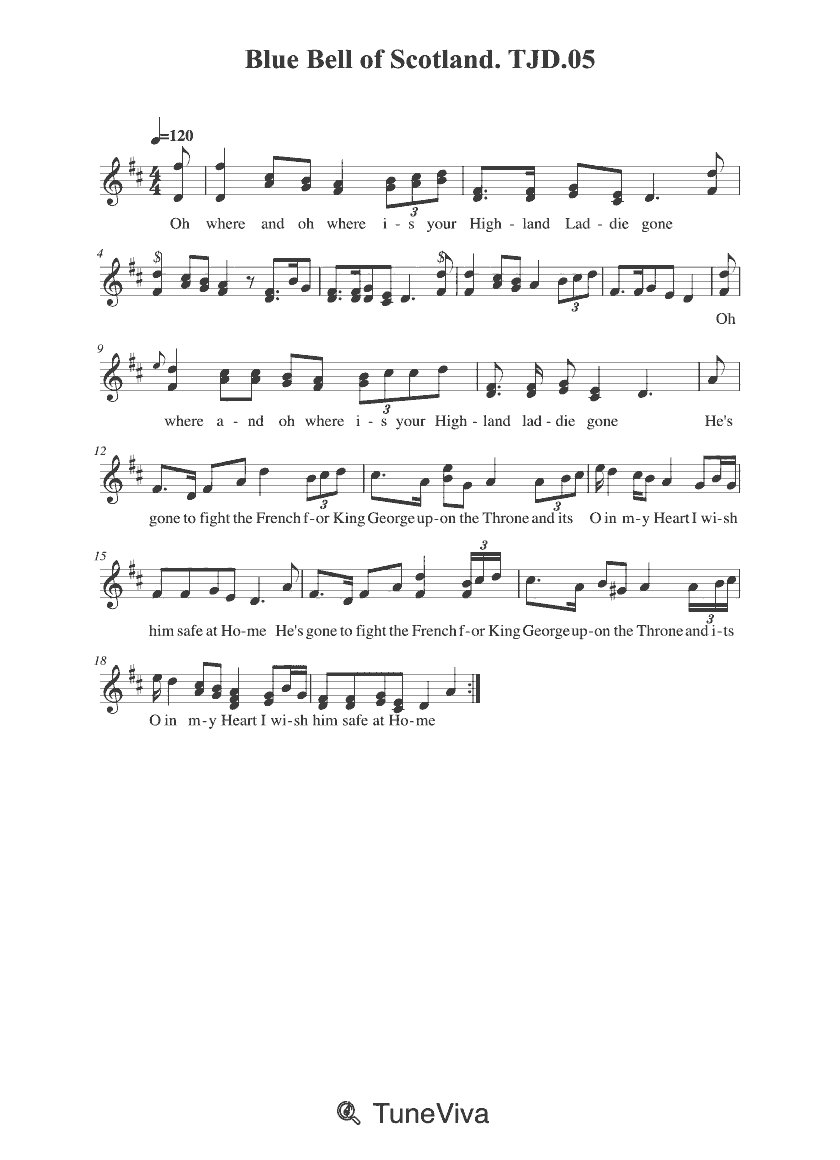
Misc Traditional
1 min 5 sec
Open score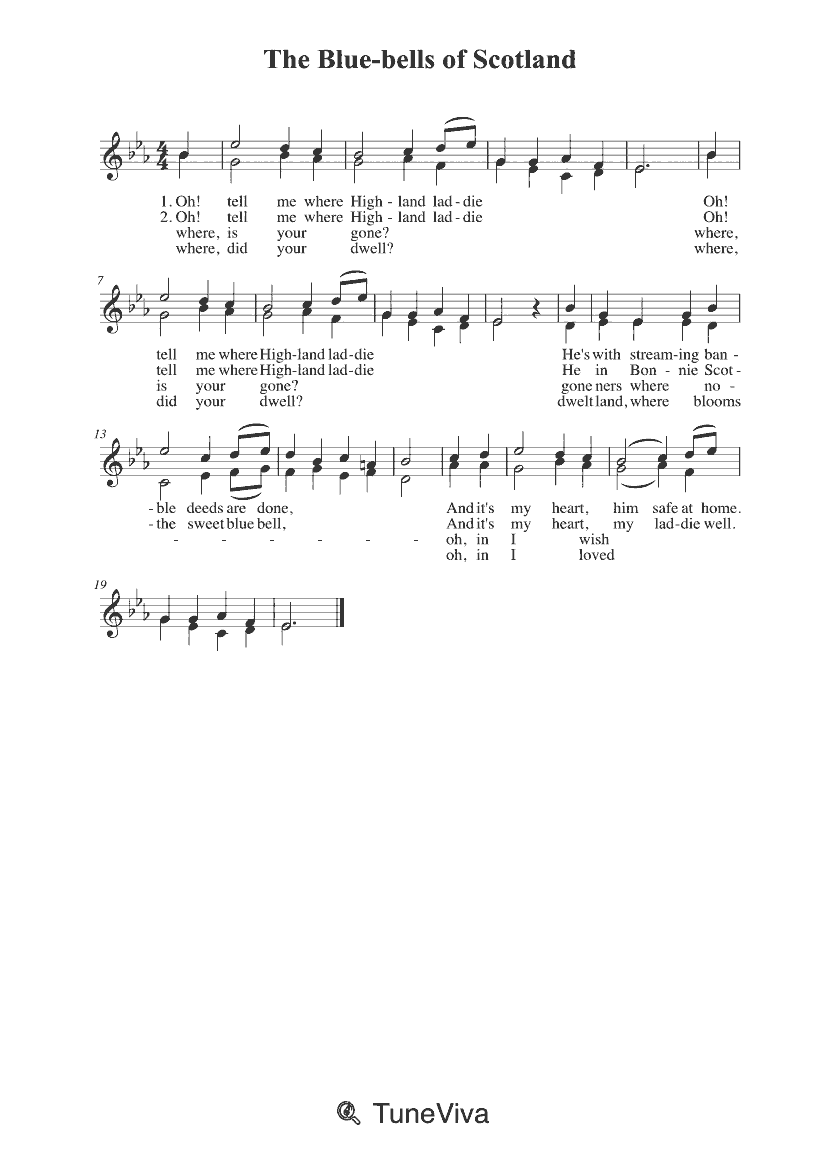
Misc Traditional
32 sec · Score #4648
Open score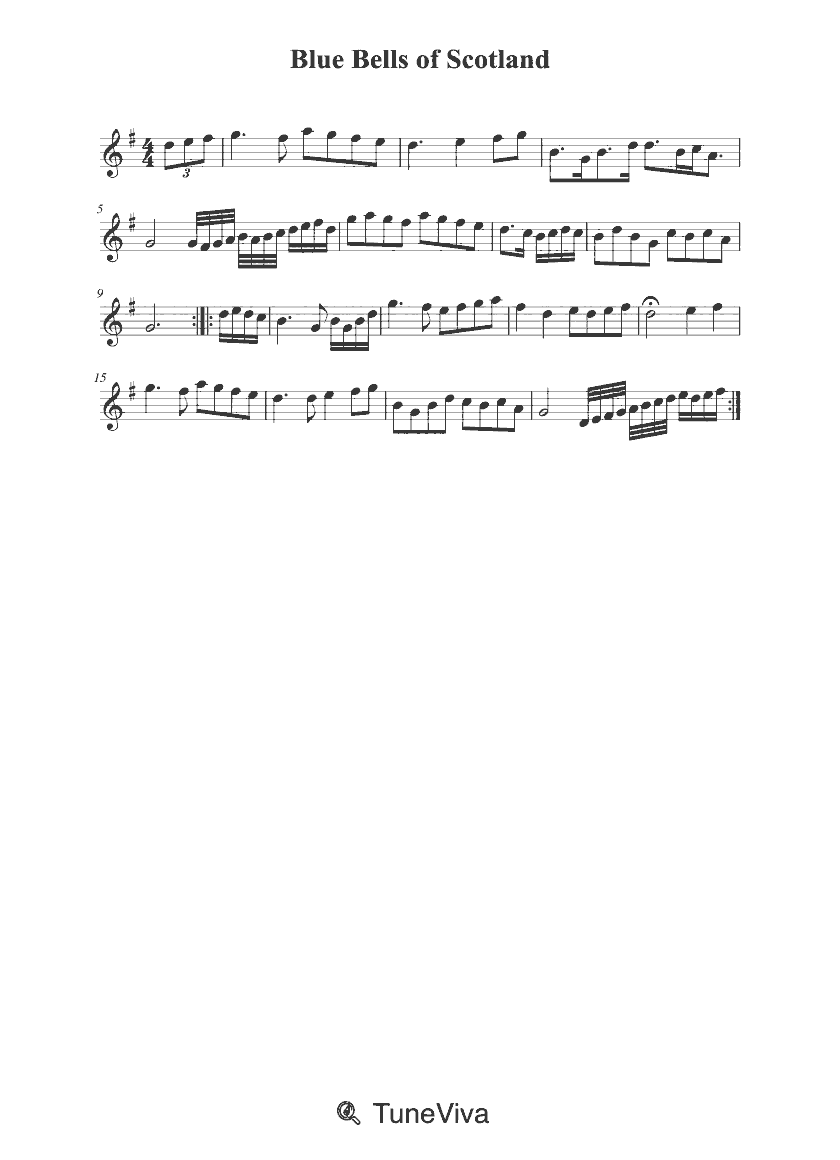
Misc Traditional
1 min 1 sec
Open score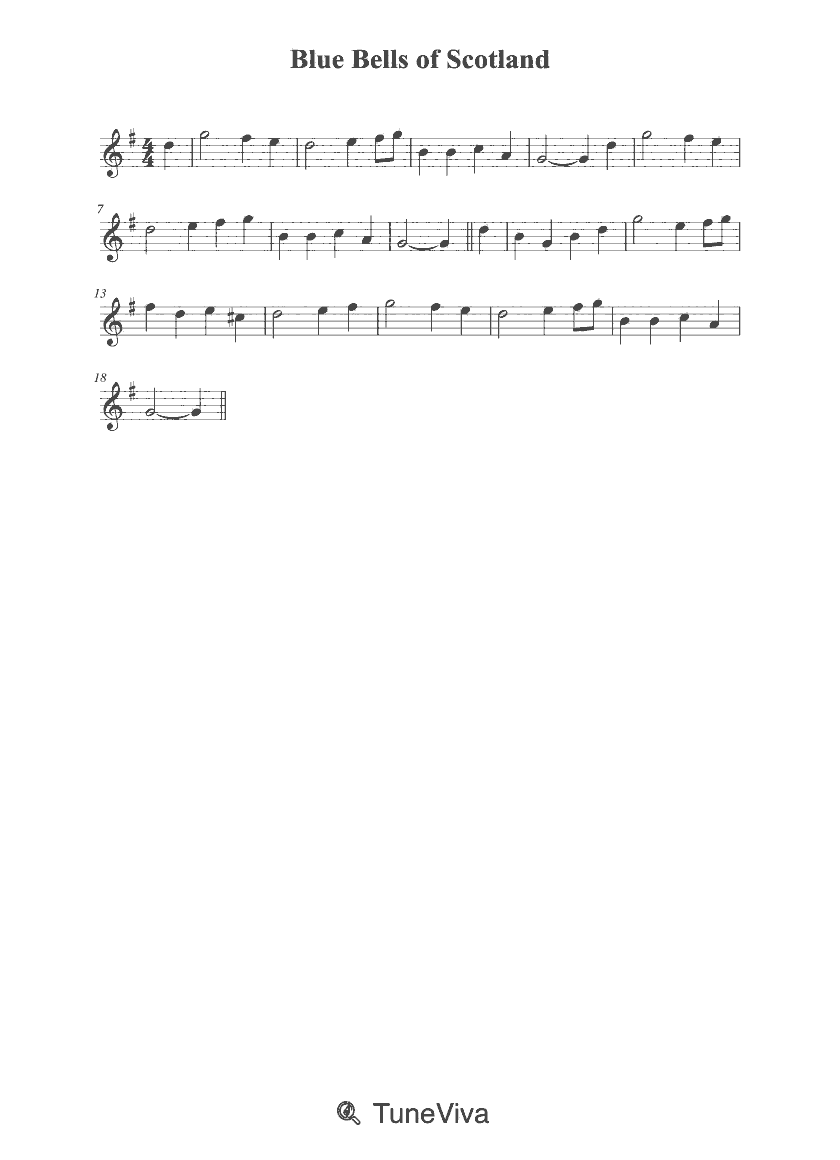
Misc Traditional
32 sec · Score #104778
Open score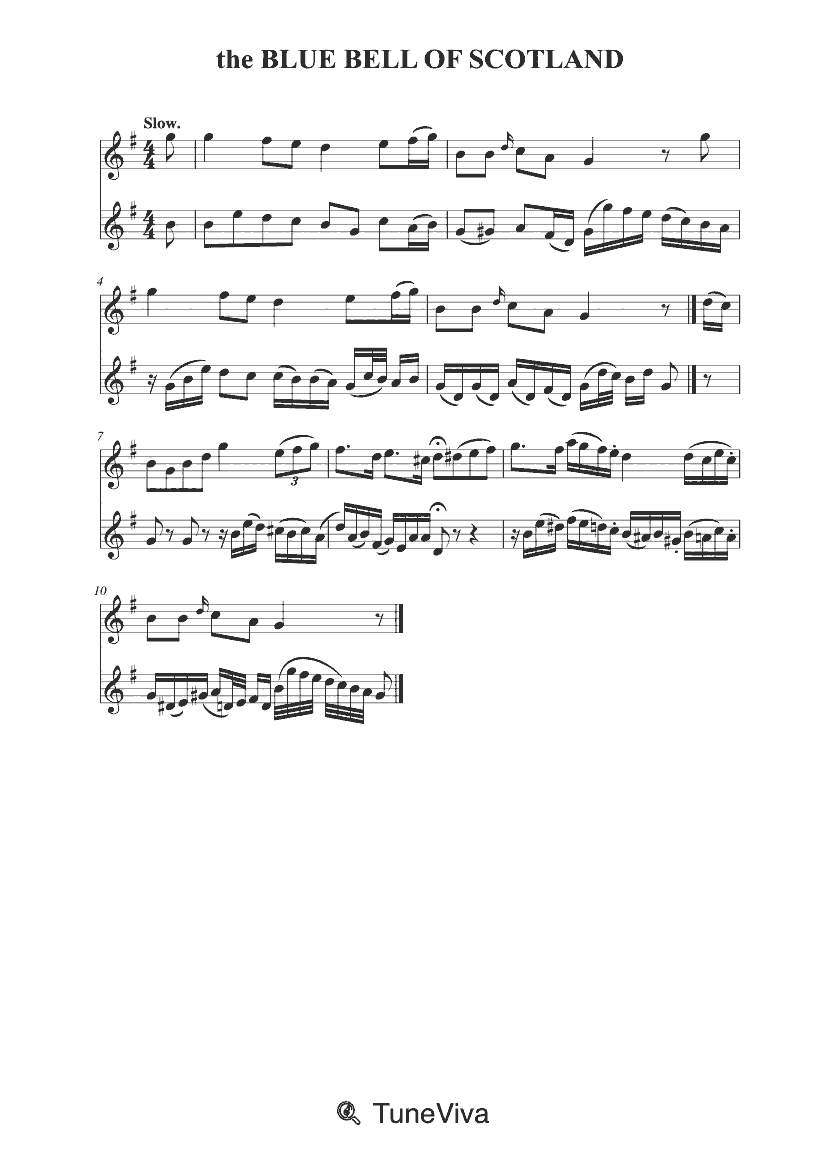
Misc Traditional
16 sec · Score #36409
Open score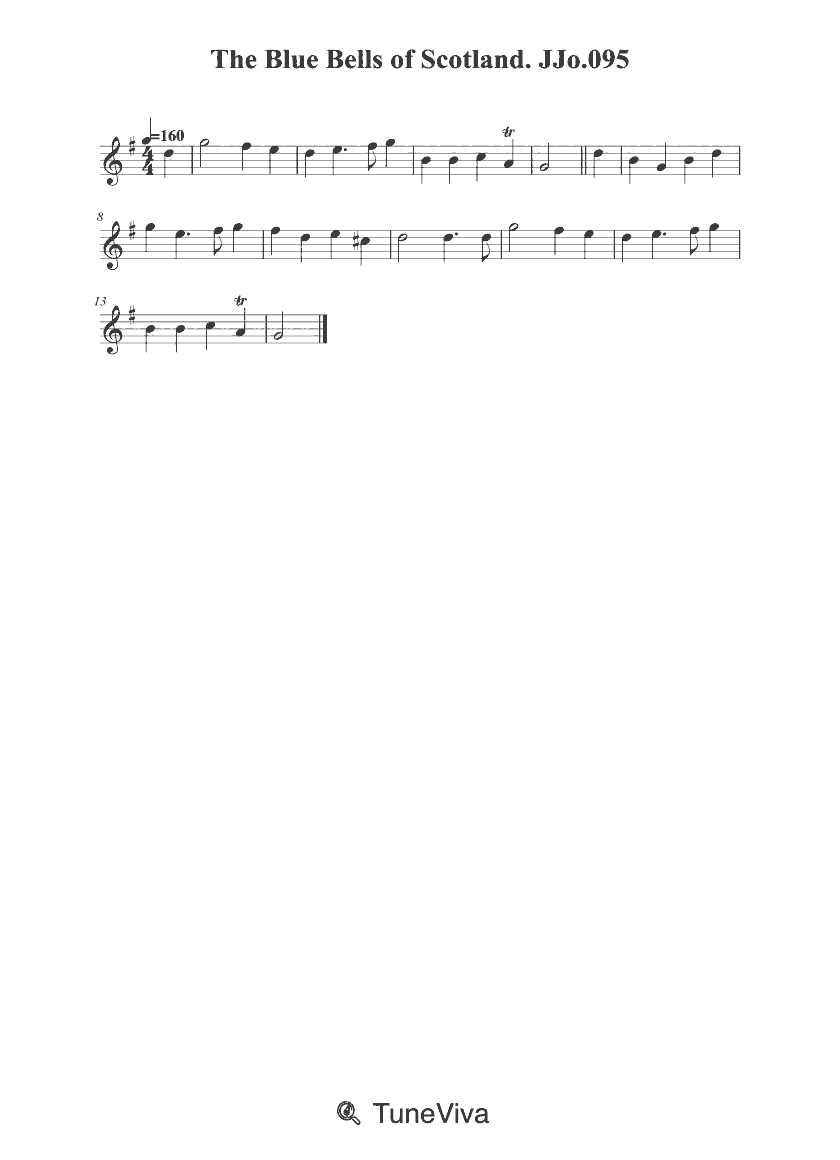
Misc Traditional
18 sec
Open scorePage 1 of 3
The selection contains three distinct profiles. 'The BLUE BELL OF SCOTLAND' is set in G major in 4/4 at an opening tempo of 120 BPM. 'Blue Bells of Scotland, with variations' is in F major in 2/4 at 70 BPM and, as its title says, presents the tune with variations. 'Bluebells of Scotland' is credited to Arthur Pryor, lists a trombone part, and is in F major in 4/4 at 144 BPM. These details describe individual scores and do not establish a single authorised version of the tune.
A title such as 'Blue Bells of Scotland, with variations' describes a theme-and-variations design: the tune is stated and then reworked across successive sections. That is a different proposition from a straightforward setting of the melody, and it is worth checking the score itself if you need a particular number or style of variations, because the listing does not itemise them.
One score is credited to Arthur Pryor and identifies trombone as its part. It is in F major, in 4/4, with an opening tempo of 144 BPM. The available details credit Pryor but do not say whether the score is an original composition or an arrangement of the traditional tune; check the score's title page and notes if that distinction matters to you.
Two keys appear across the selection: G major for the setting titled 'The BLUE BELL OF SCOTLAND' and F major for the variation set and the trombone score. Time signatures also differ, with 4/4 for the G major setting and the trombone score and 2/4 for the variation set. If you are playing with others, match the key and metre to your group's existing materials rather than assuming one setting will fit another.
Score parts: Trombone. Catalogue duration 2 min 45 sec. Opening key signature: 1 flat. Opening time signature: 4/4. Opening tempo: 144 BPM.
Catalogue duration 16 sec. Opening key signature: 1 sharp (G major). Opening time signature: 4/4. Opening tempo: 120 BPM.
Catalogue duration 2 min 45 sec. Opening key signature: 1 flat (F major). Opening time signature: 2/4. Opening tempo: 70 BPM.
The Blue Bells of Scotland is a traditional song title listed in the folk category, and it appears in this selection as three different scores: a setting in G major, a variation set in F major, and a trombone version credited to Arthur Pryor.
The trombone score is titled 'Bluebells of Scotland' and is credited to Arthur Pryor. It lists trombone as its part, is set in F major, and has an opening time signature of 4/4 with a tempo of 144 BPM.
The title indicates a theme-and-variations treatment of The Blue Bells of Scotland: the tune is presented and then varied across successive sections. That score is in F major, in 2/4 time, with an opening tempo of 70 BPM; the listing does not describe the individual variations.
The three scores use two keys and two metres: the setting titled 'The BLUE BELL OF SCOTLAND' is in G major in 4/4; 'Blue Bells of Scotland, with variations' is in F major in 2/4; and the Arthur Pryor trombone score is in F major in 4/4.
The available details credit the trombone score to Arthur Pryor but do not state whether it is an original composition or an arrangement of the traditional tune. The score's own title page or editorial notes would be the place to confirm that.
Only one of the three scores names an instrument, listing trombone for the Arthur Pryor version. The other two scores are listed without instrument parts, so the available details do not confirm which instruments they are intended for.