
the Drunken Landlady
Misc tunes
1 min 4 sec · Score #92013
Open score"The Drunken Landlady" is listed here as a tune title with no composer credited, and the settings available are short pieces notated in 4/4. The versions differ in key: two carry a one-sharp key signature (G major or E minor) and one carries two sharps (D major or B minor), so a player must decide which reading suits their instrument, range or playing group. No attribution, background note or edition information accompanies these scores, so this page sticks closely to what the notation itself shows and flags the rest as open questions.
Scores 1–20 of 22
Misc tunes
1 min 4 sec · Score #92013
Open score
Misc tunes
1 min 4 sec · Score #71621
Open score
Misc tunes
1 min 20 sec · Score #230108
Open score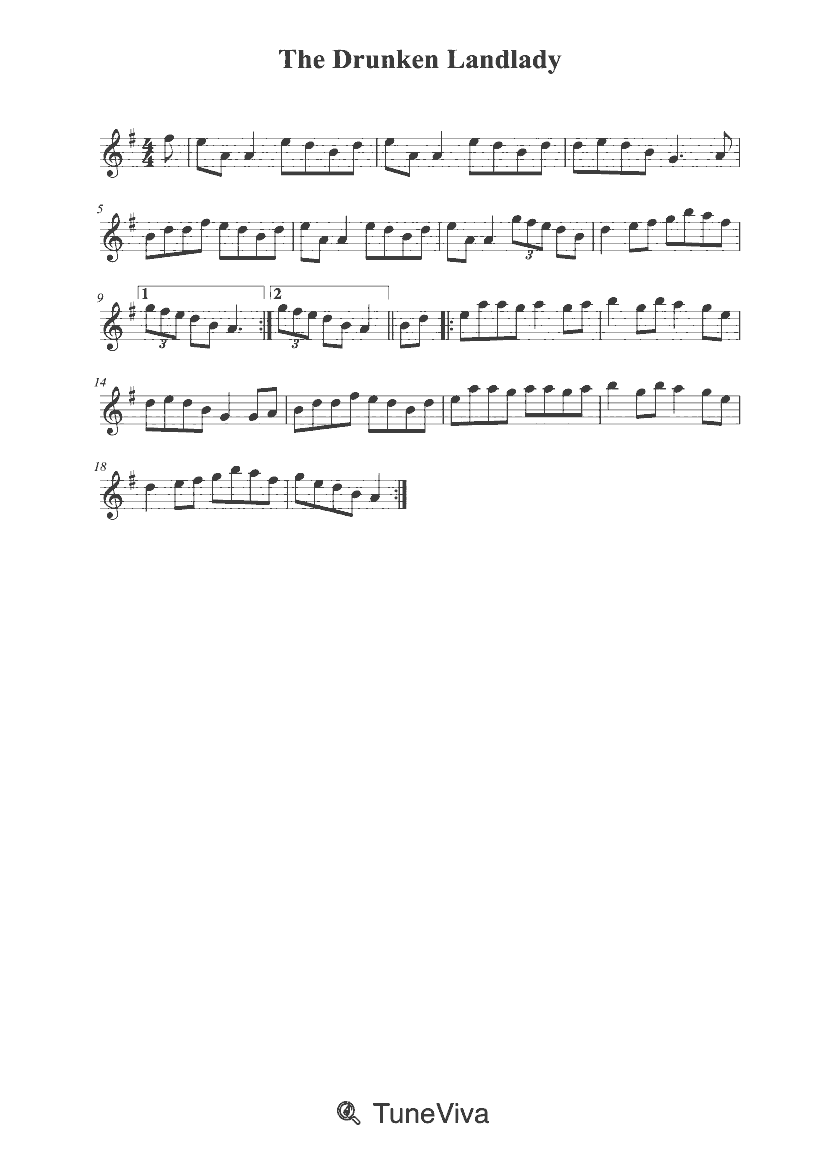
Misc tunes
1 min 3 sec · Score #39850
Open score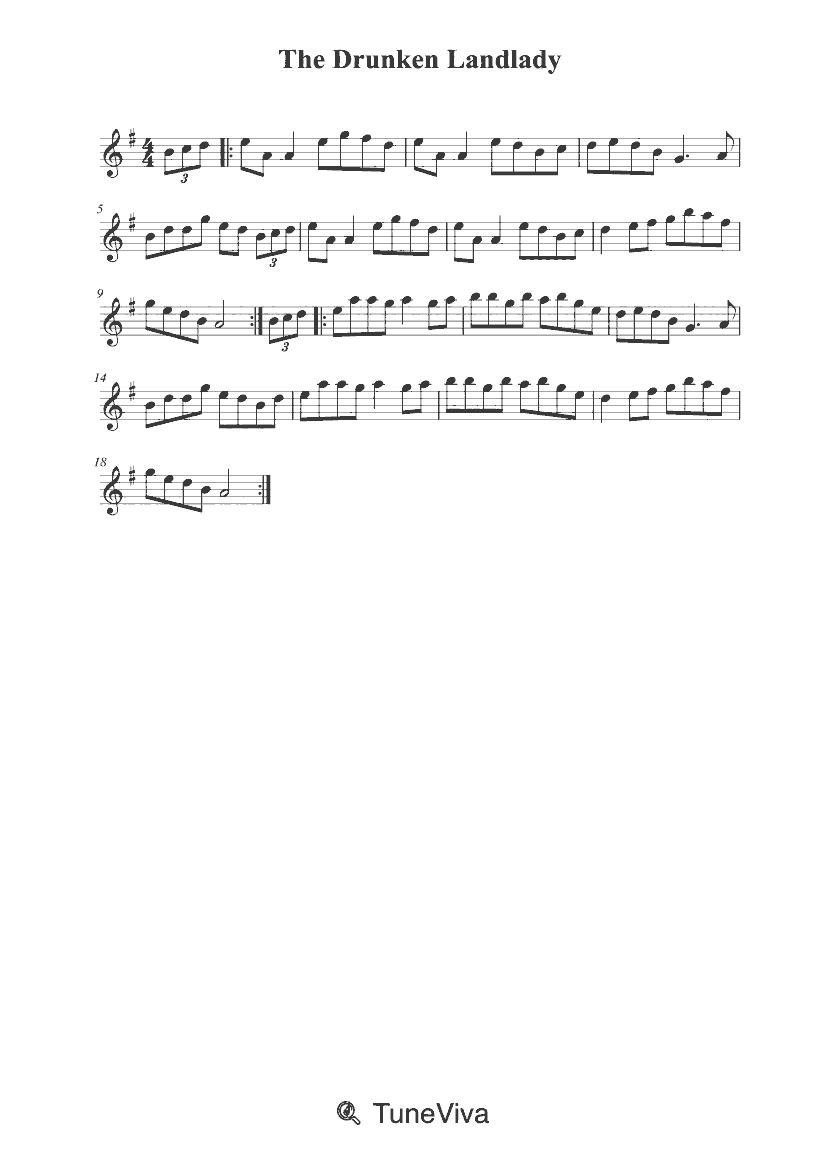
Misc tunes
1 min 5 sec
Open score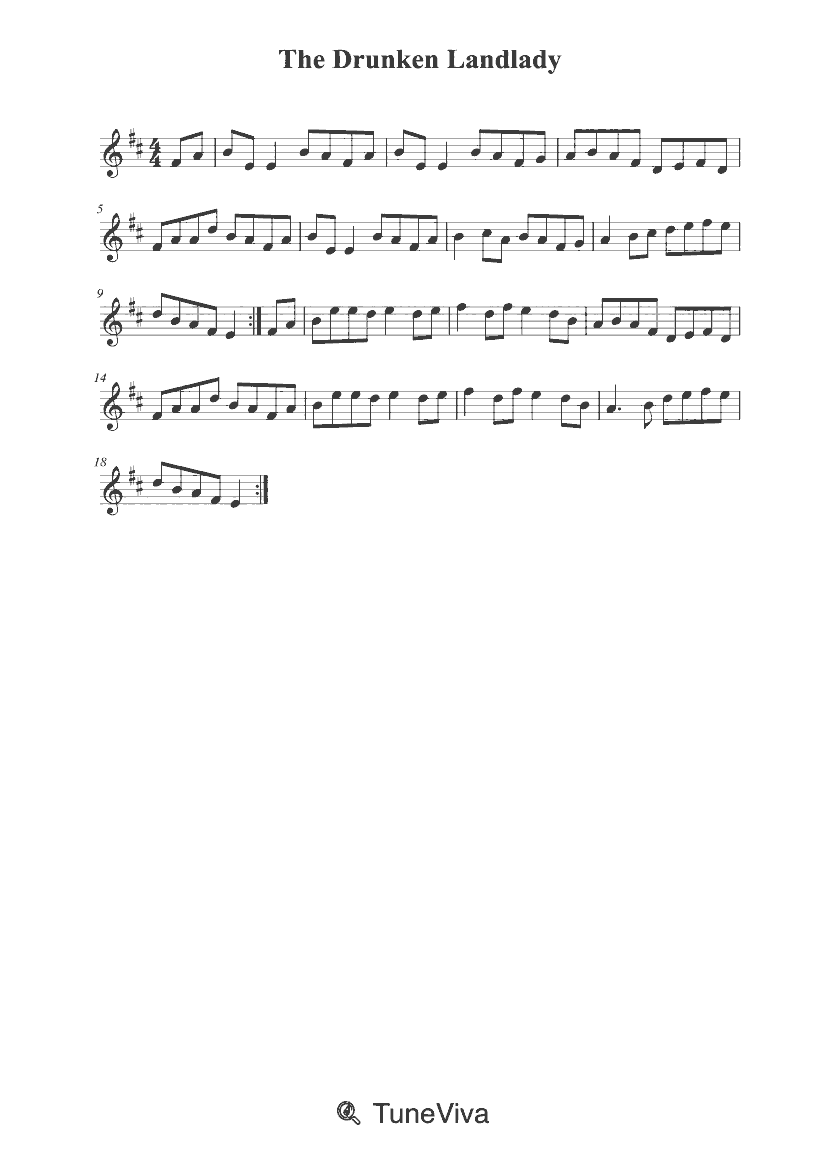
Misc tunes
1 min 20 sec · Score #57479
Open score
Trad.
2 min 8 sec
Open score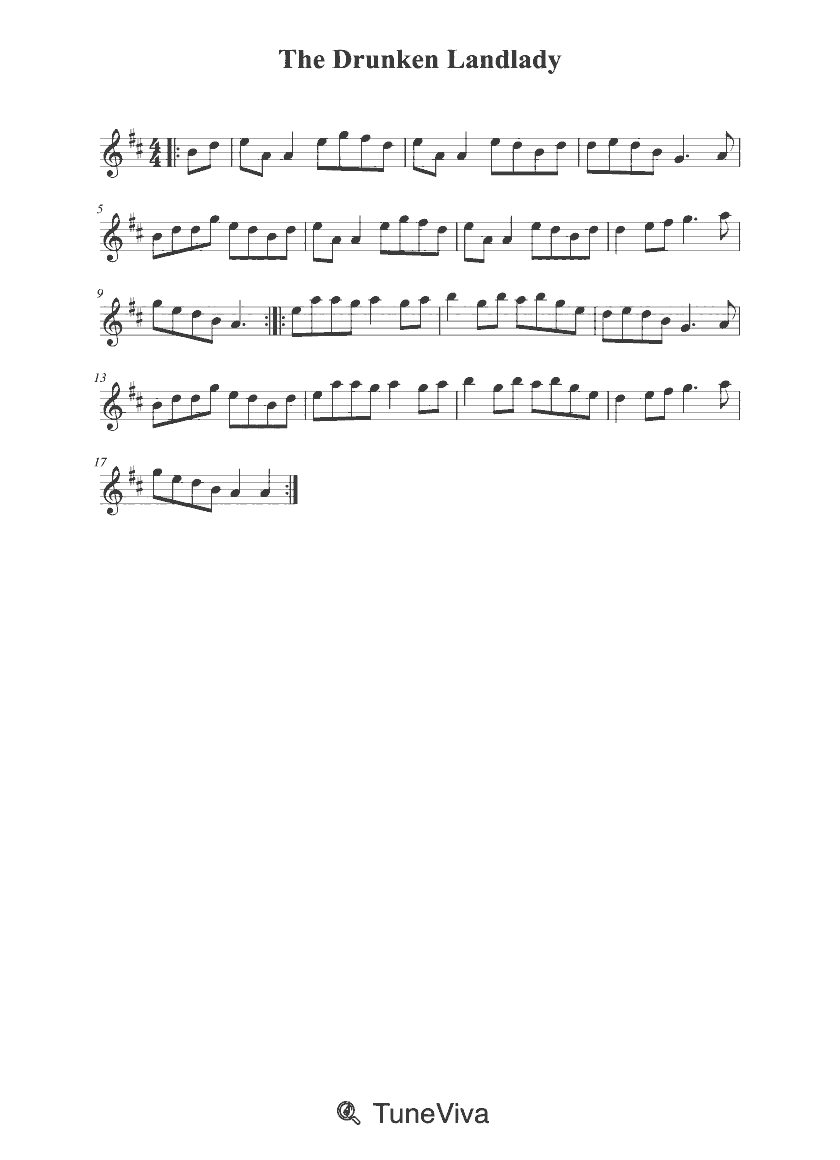
Misc tunes
1 min 4 sec · Score #79311
Open score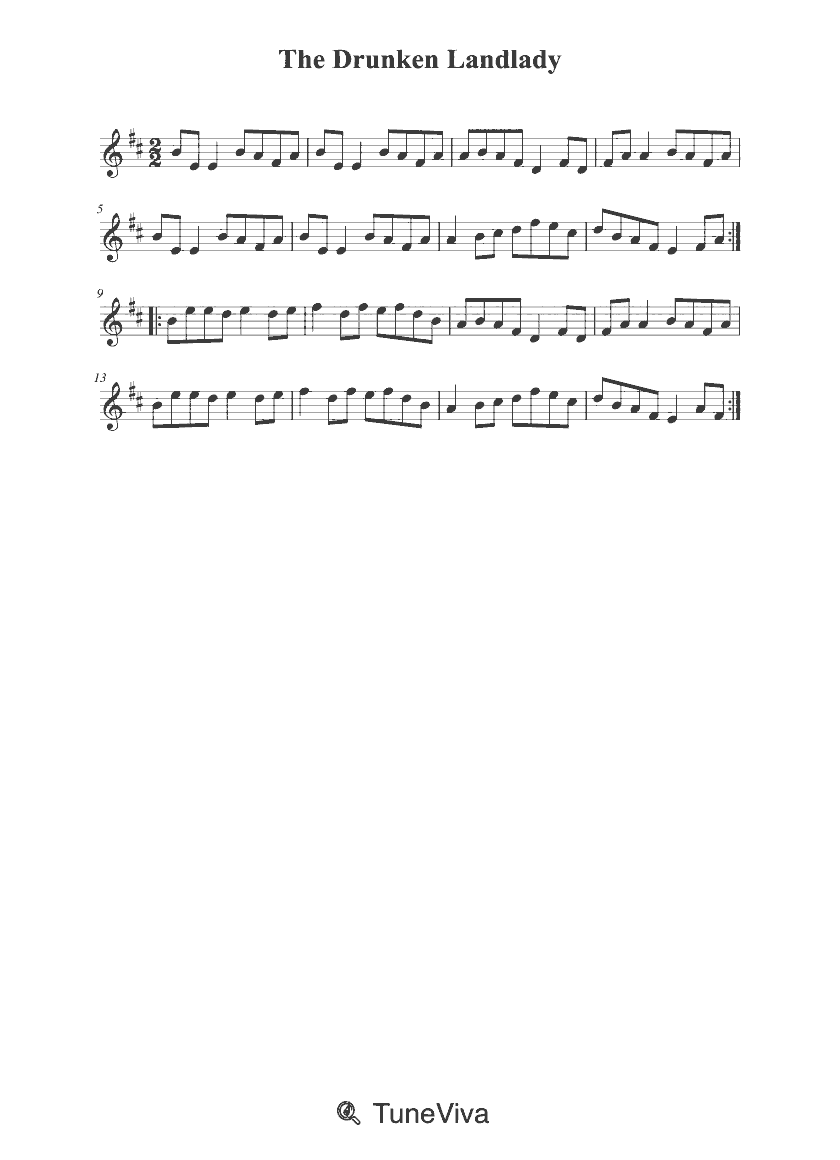
Misc tunes
2 min 8 sec · Score #132243
Open score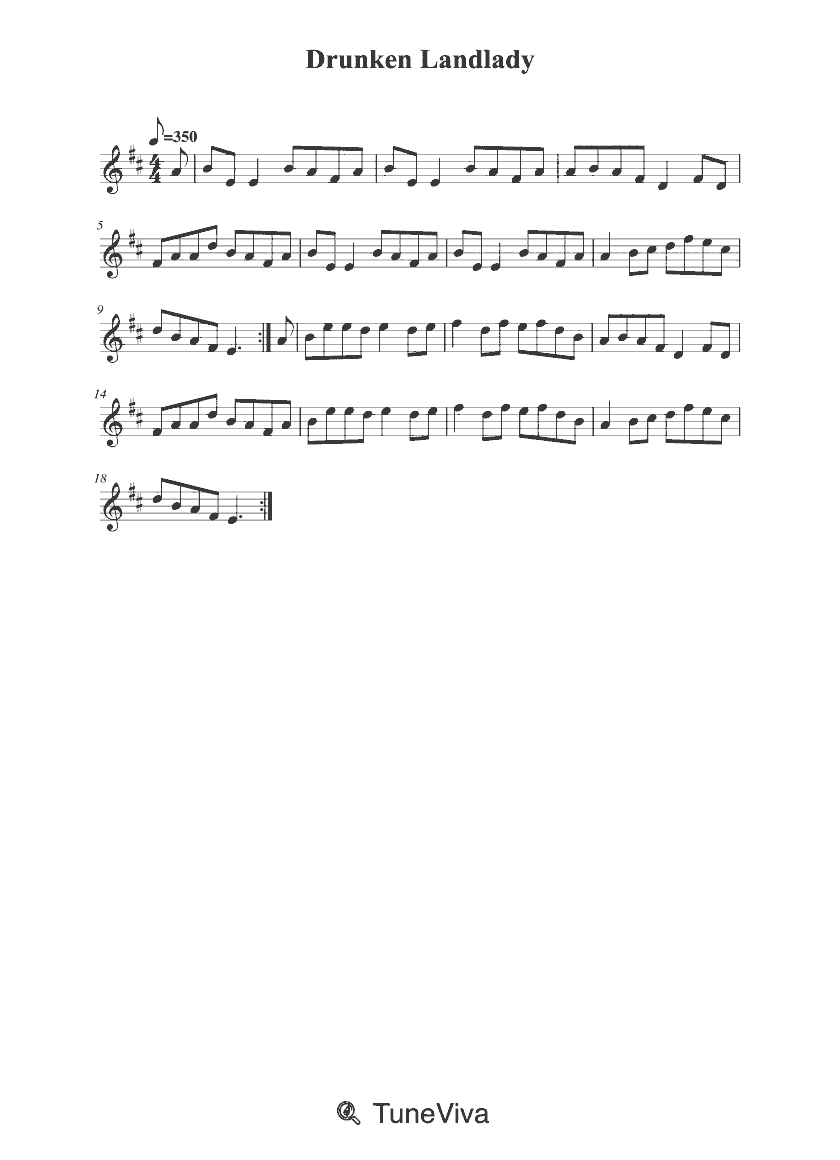
Misc tunes
55 sec
Open score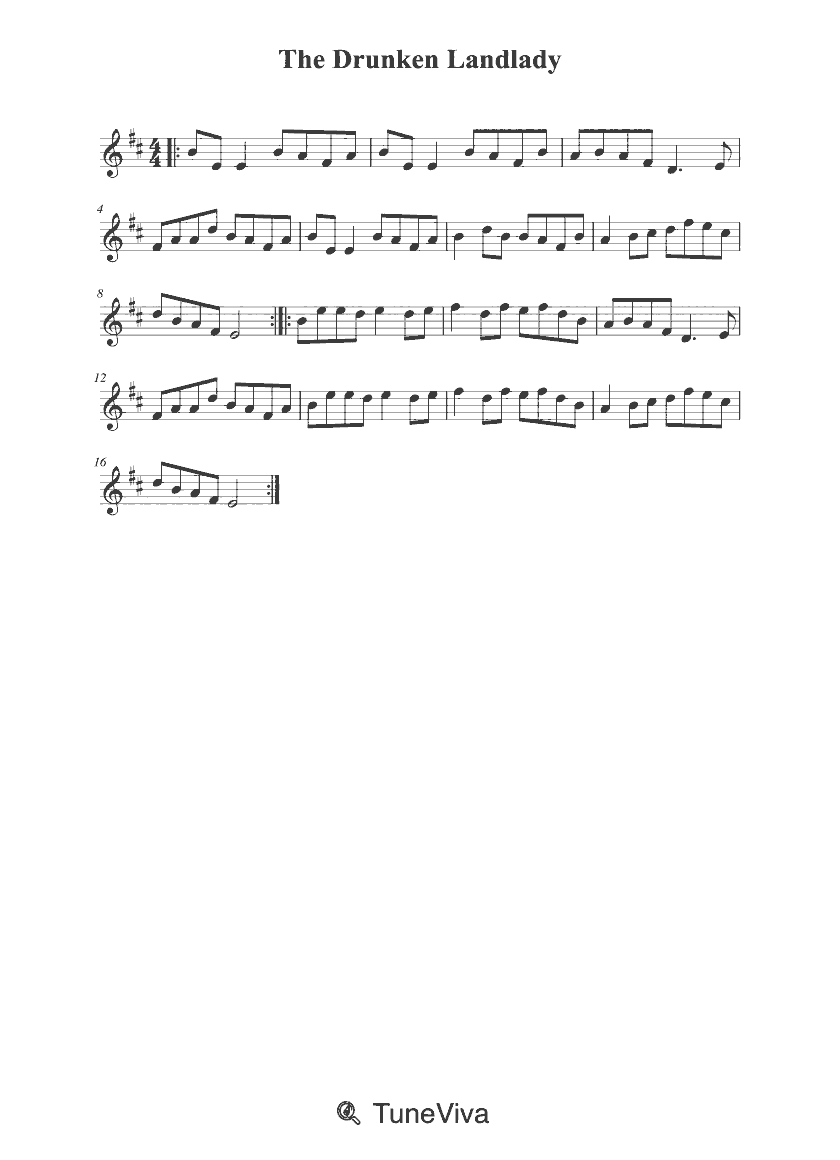
Misc tunes
1 min 4 sec · Score #242570
Open score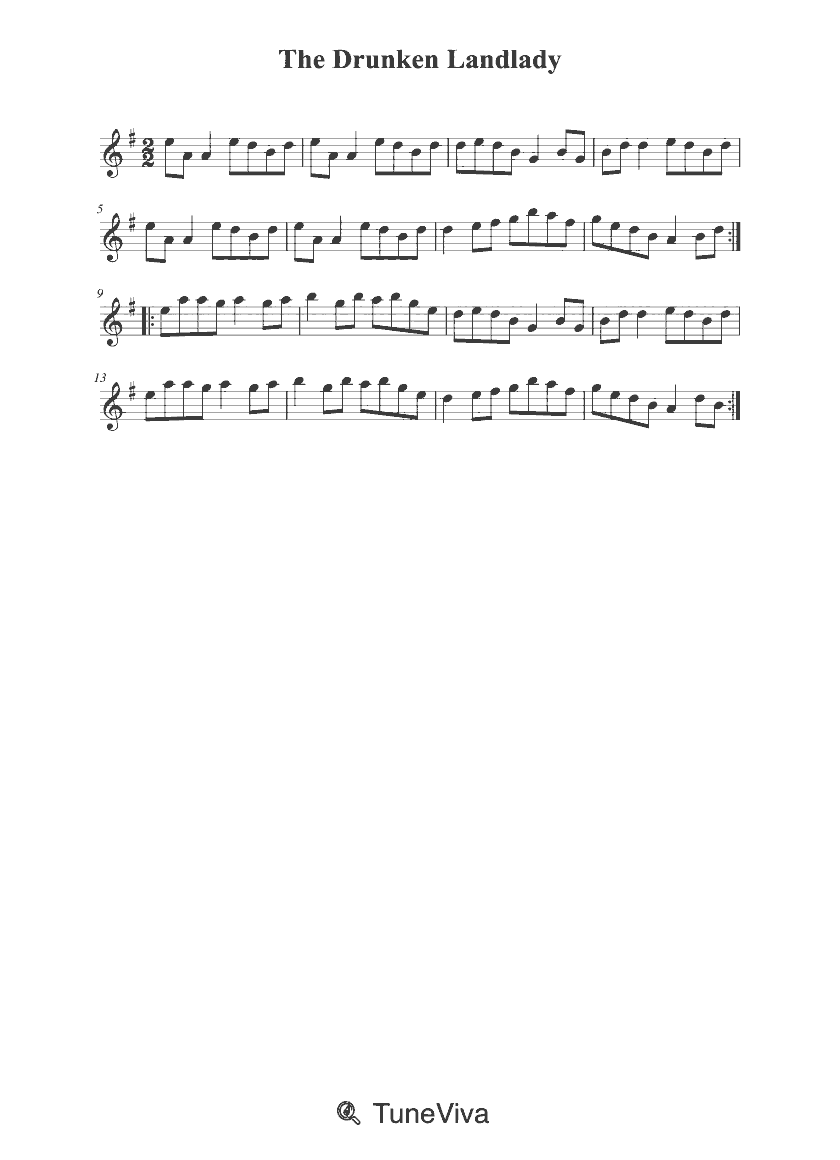
Misc tunes
2 min 8 sec · Score #253761
Open score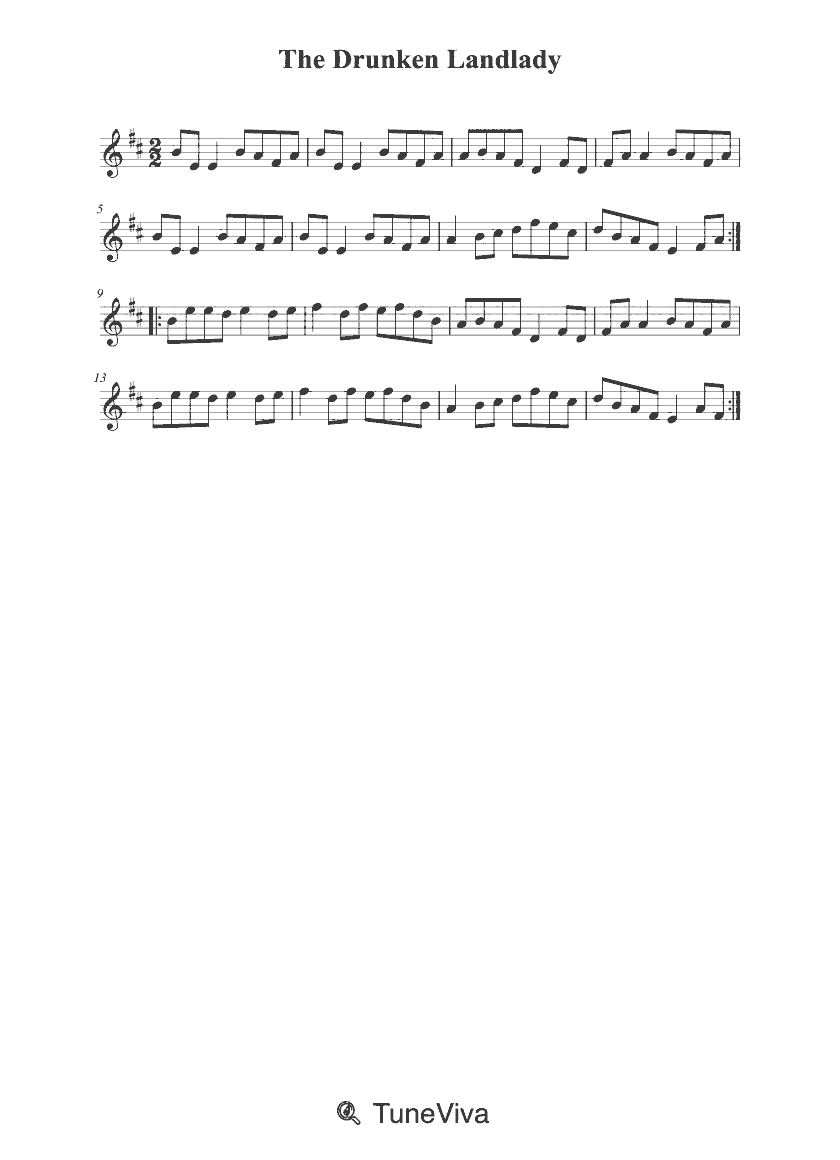
Misc tunes
2 min 8 sec · Score #40839
Open score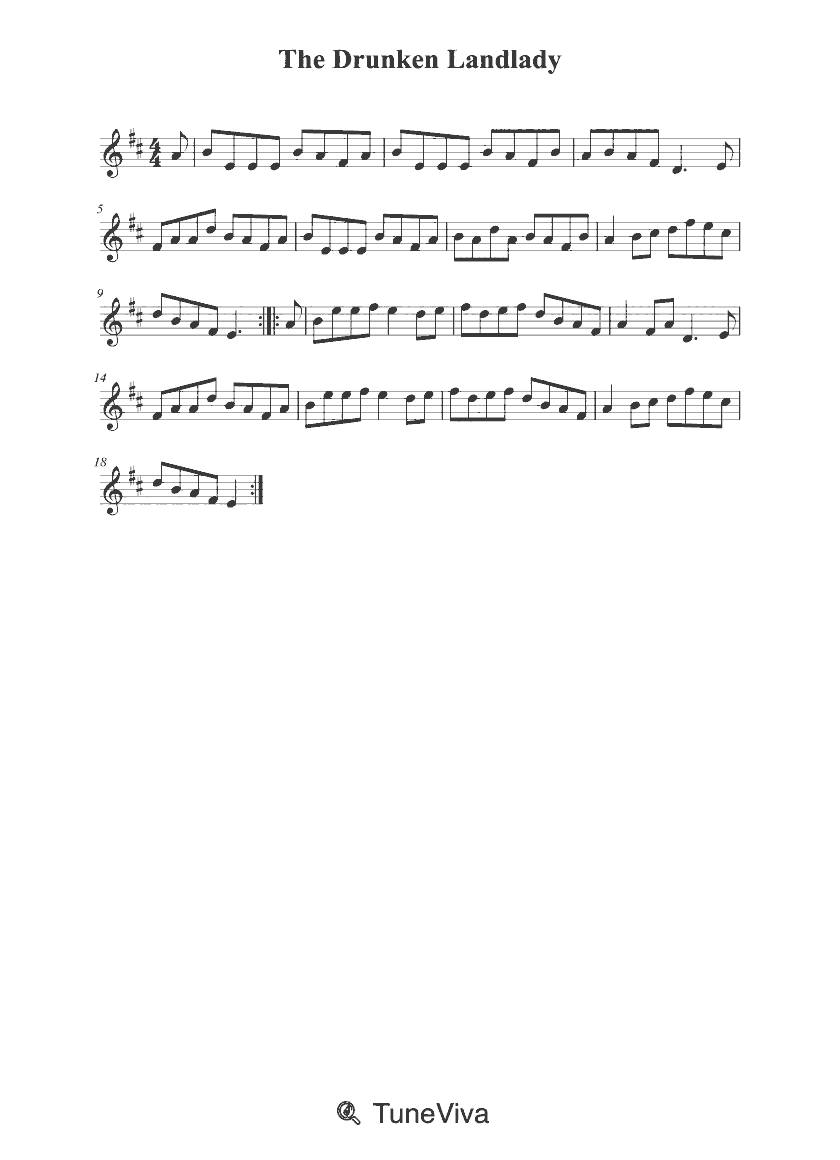
Misc tunes
1 min 3 sec · Score #73850
Open score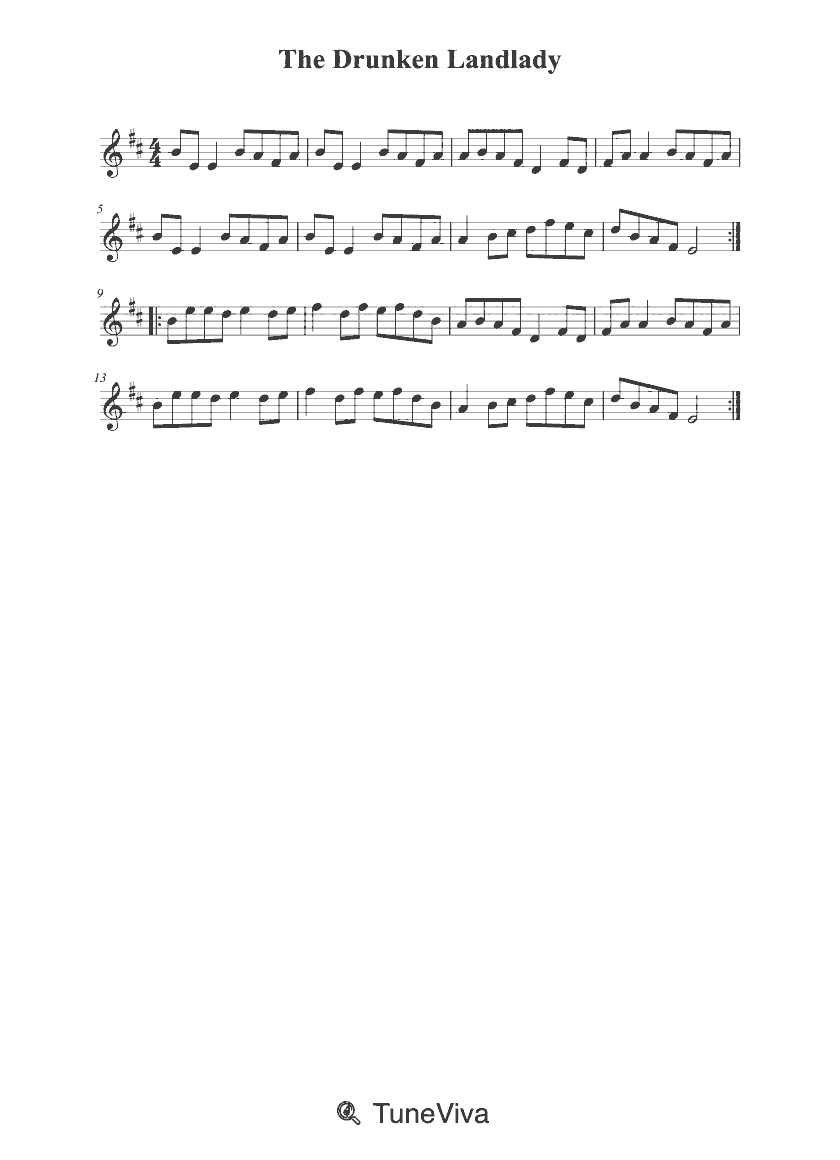
Misc tunes
1 min 4 sec · Score #79873
Open score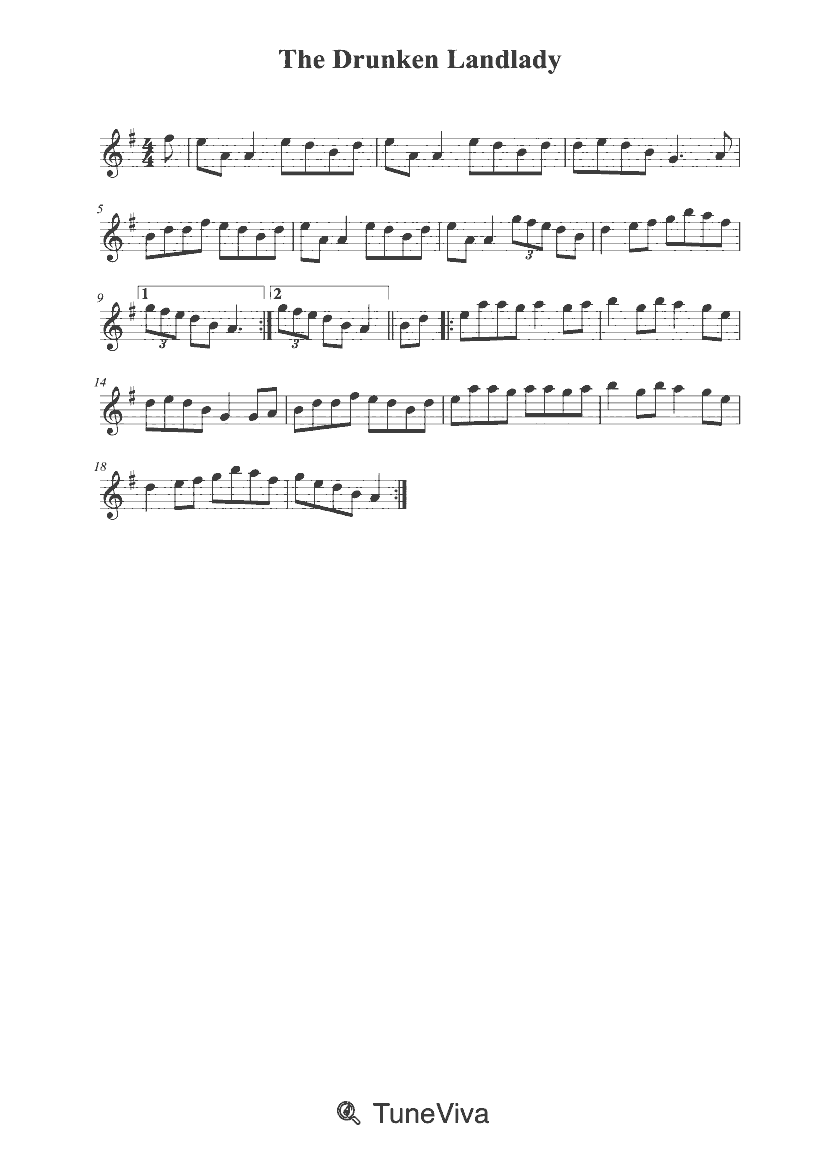
Misc tunes
1 min 3 sec · Score #141068
Open score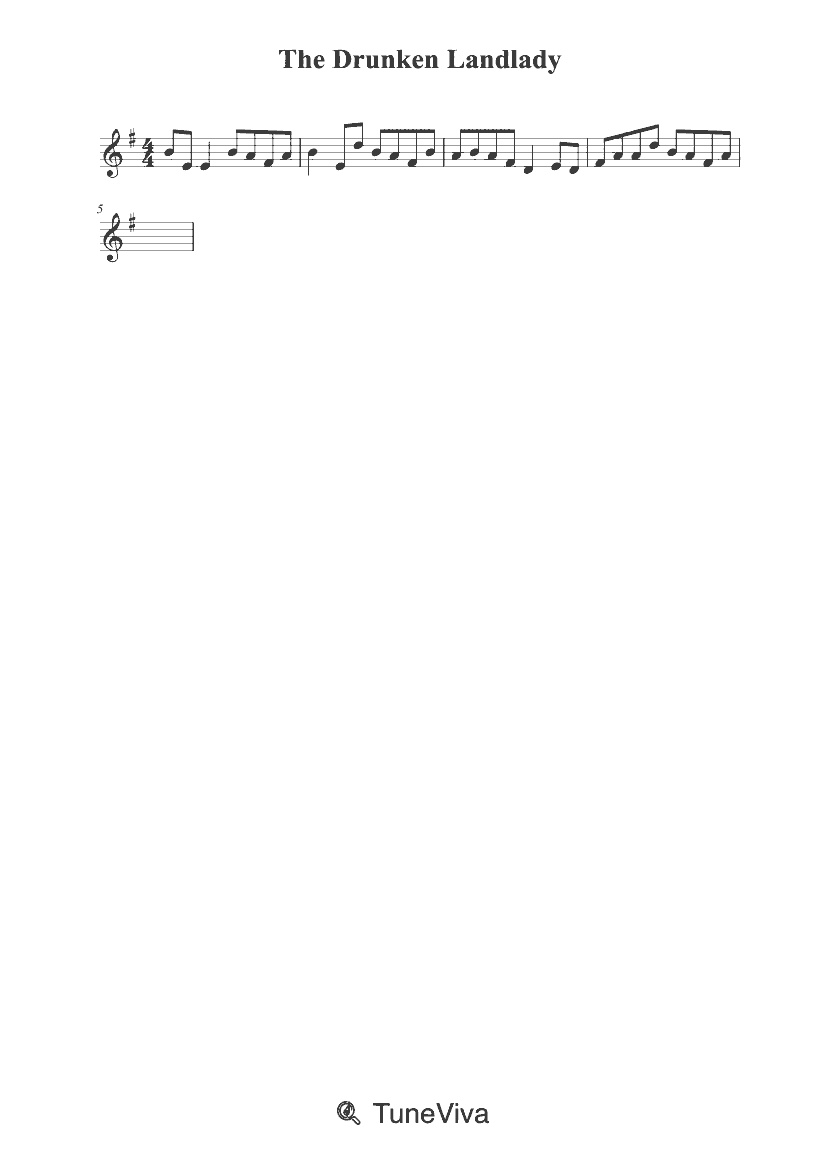
Misc tunes
9 sec
Open score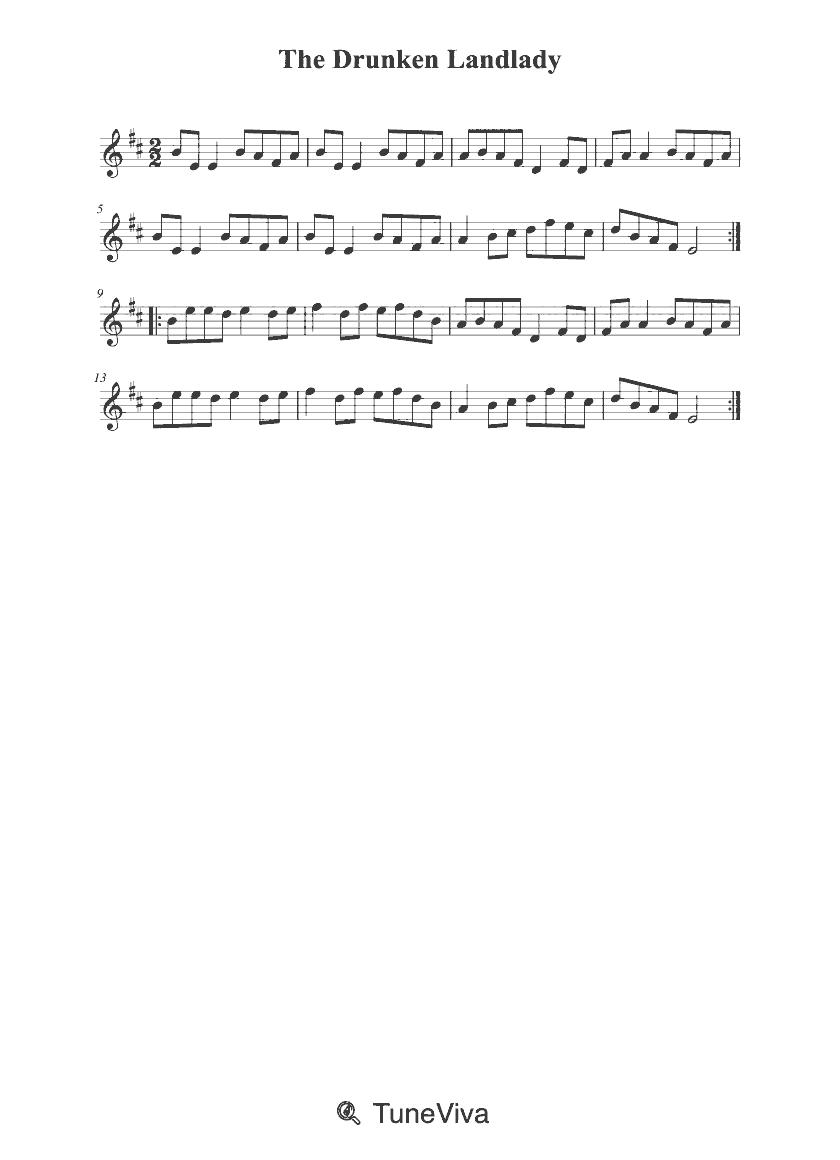
Misc tunes
2 min 8 sec · Score #195213
Open score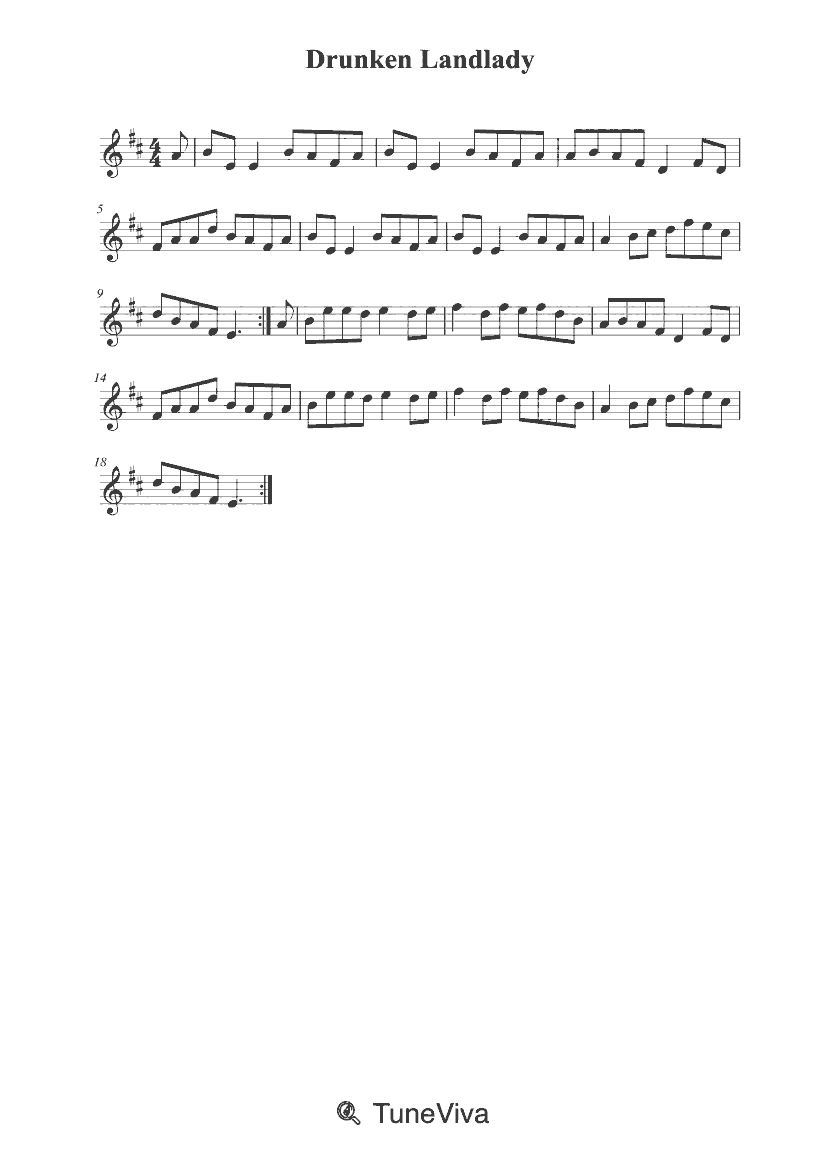
Misc tunes
1 min 20 sec
Open score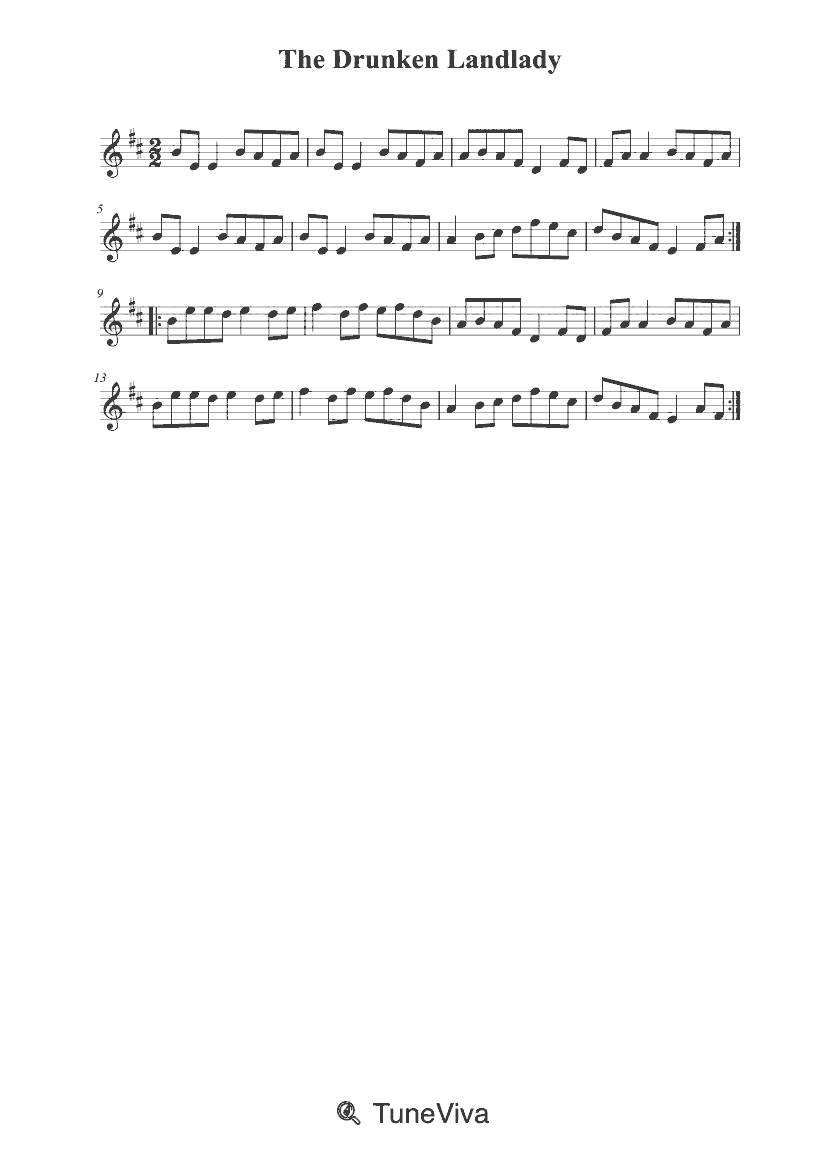
Misc tunes
2 min 8 sec · Score #211339
Open scorePage 1 of 2
Every setting of "The Drunken Landlady" supplied here is written in 4/4, giving four quarter-note beats to the bar and a steady, walking pulse to work from. Start slowly enough that the bar lines stay even, then let the tempo come up once the phrases sit comfortably under the fingers. Because the tune is notated as a single line, the melodic shape is fully exposed — there is nowhere to hide behind a harmony part, so any unevenness in rhythm is immediately audible.
The clearest practical difference between the available versions is the key signature. A one-sharp signature places the tune in G major or E minor; a two-sharp signature places it in D major or B minor. If you are playing with others, match the key they use, since the two readings are not interchangeable in a session. If you are playing alone, choose whichever keeps the melody within a comfortable range and avoids awkward crossings on your instrument, and read through the opening phrase of each before committing.
These scores present the tune without accompanying parts, so decisions about phrasing, ornament and dynamics rest with the player rather than the page. A useful approach is to learn the melody plainly first, then add decoration only where it does not disturb the beat. Playing the tune at a slow, deliberate pace will reveal which bars need extra attention far more reliably than pushing straight to performance speed.
No composer, source collection or arranger is named for any of the settings, and no edition details are recorded, so the historical background of "The Drunken Landlady" cannot be confirmed from the material at hand. The scores also carry no stated difficulty level or grade, and it is not documented whether the notation includes chord indications or performance notes. Treat any description of the tune's origin or its customary playing style as something to verify elsewhere rather than as established fact here.
Catalogue duration 1 min 4 sec. Opening key signature: 2 sharps. Opening time signature: 4/4.
Catalogue duration 1 min 4 sec. Opening key signature: 1 sharp. Opening time signature: 4/4.
Catalogue duration 1 min 20 sec. Opening key signature: 1 sharp. Opening time signature: 4/4.
All three settings of "The Drunken Landlady" available here are notated in 4/4, with four quarter-note beats to the bar. That common metre means the versions can be compared bar for bar even though their key signatures differ.
Two of the settings of "The Drunken Landlady" use a one-sharp key signature, which indicates G major or E minor, while the third uses two sharps, indicating D major or B minor. The scores themselves do not explain the reason for the difference; in practice, players pick the key that fits their instrument's range or matches the key used by other musicians they play with.
No composer is named in the records for any of the three settings of "The Drunken Landlady" held on this page, and no source collection or arranger is identified. The tune's authorship and origin therefore cannot be established from the material available, and any claim about who wrote it should be checked against a separate authoritative source.
The settings are distinct rather than duplicates: they differ in key signature and in how much notation each contains, so they represent separate readings of the tune rather than copies of one another. Comparing the opening bars of two versions side by side is the quickest way to see where the melodic detail diverges.