
"The Fermoy Lasses" (reel) 1310
after Chief F. O'Neill
2 min 3 sec
Open scoreThe Fermoy Lasses appears on TuneViva in three separate scores, all listed under the same tune name but not identical to one another. One score is titled as a reel and credited "after Chief F. O'Neill"; another carries the extra word "Highland"; the third uses the plain title. All three open in 4/4 time, but their key signatures differ, so the settings are not simply interchangeable for a session or a first read-through. The notes below help you compare the versions before choosing one.
Scores 1–20 of 31
after Chief F. O'Neill
2 min 3 sec
Open score
Misc tunes
48 sec
Open score
Misc tunes
32 sec
Open score
Misc tunes
2 min 8 sec · Score #166929
Open score
Misc tunes
16 sec
Open score
Misc tunes
2 min 43 sec
Open score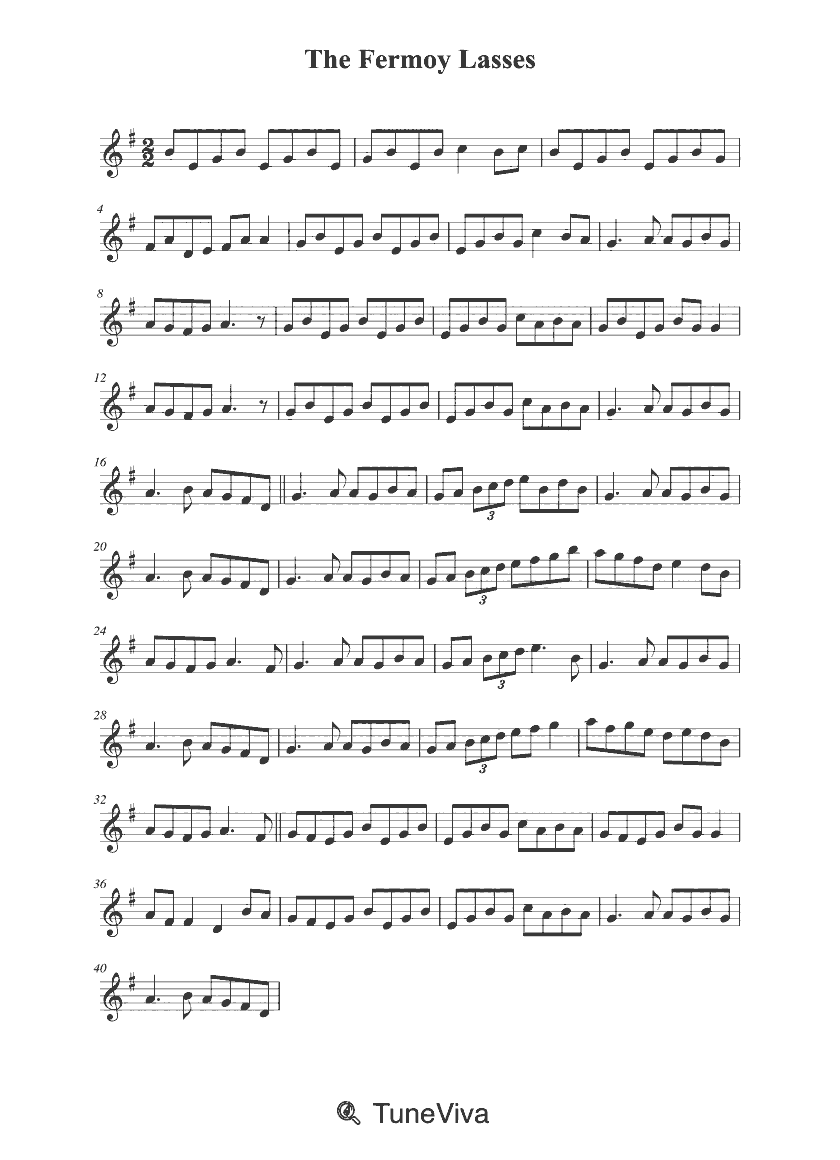
Misc tunes
2 min 40 sec
Open score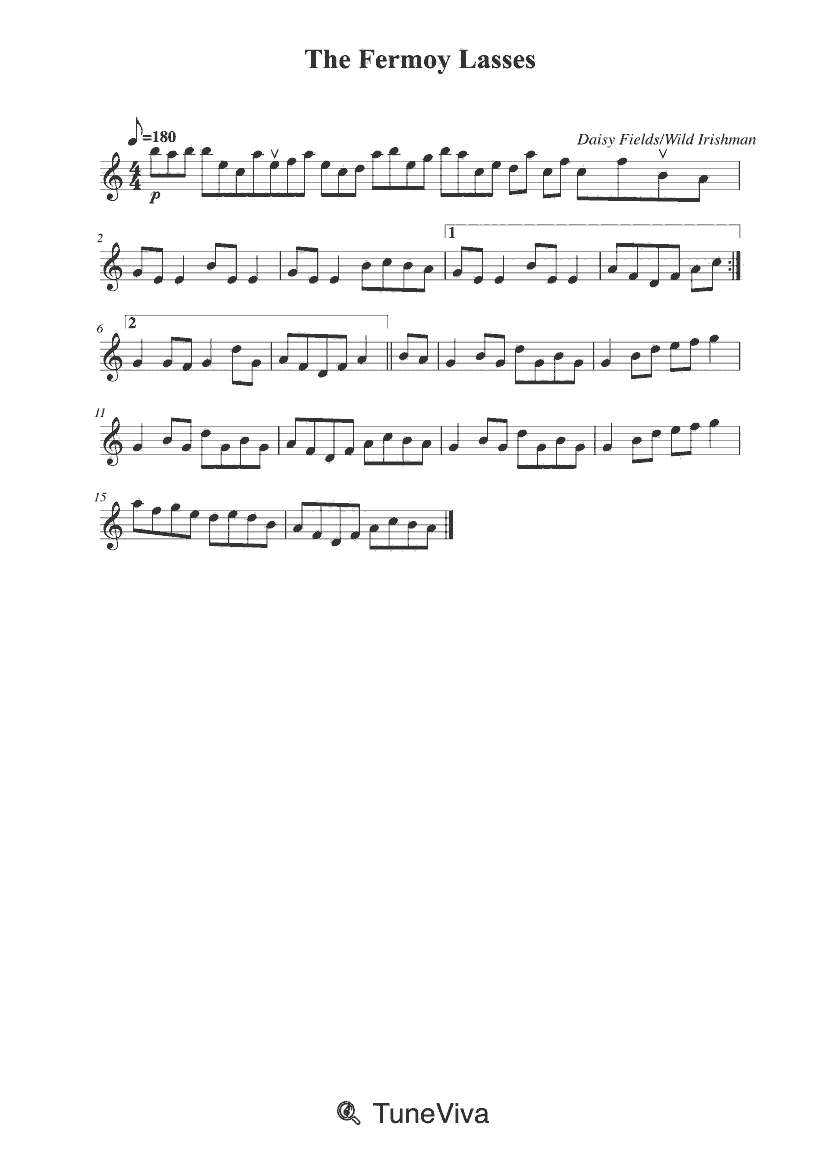
Misc tunes
1 min 45 sec
Open score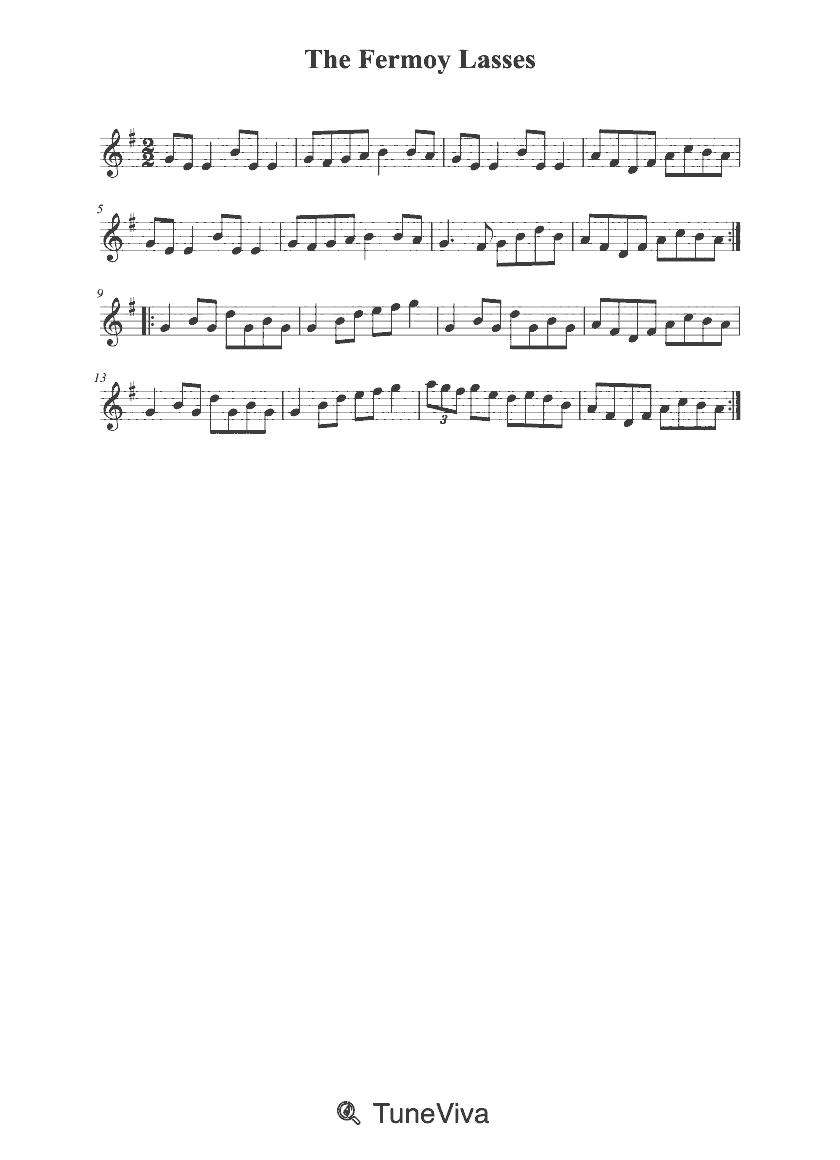
Misc tunes
2 min 8 sec · Score #18743
Open score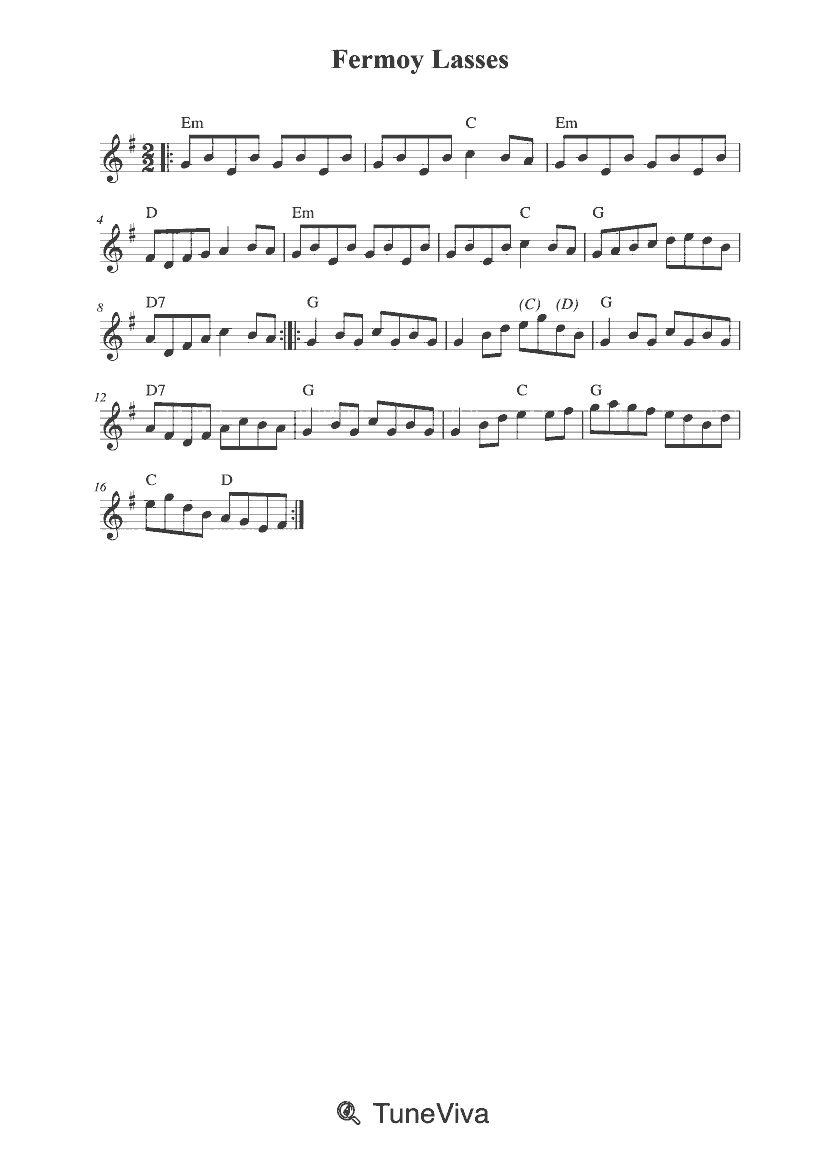
Misc tunes
Down the Broom
2 min 8 sec
Open score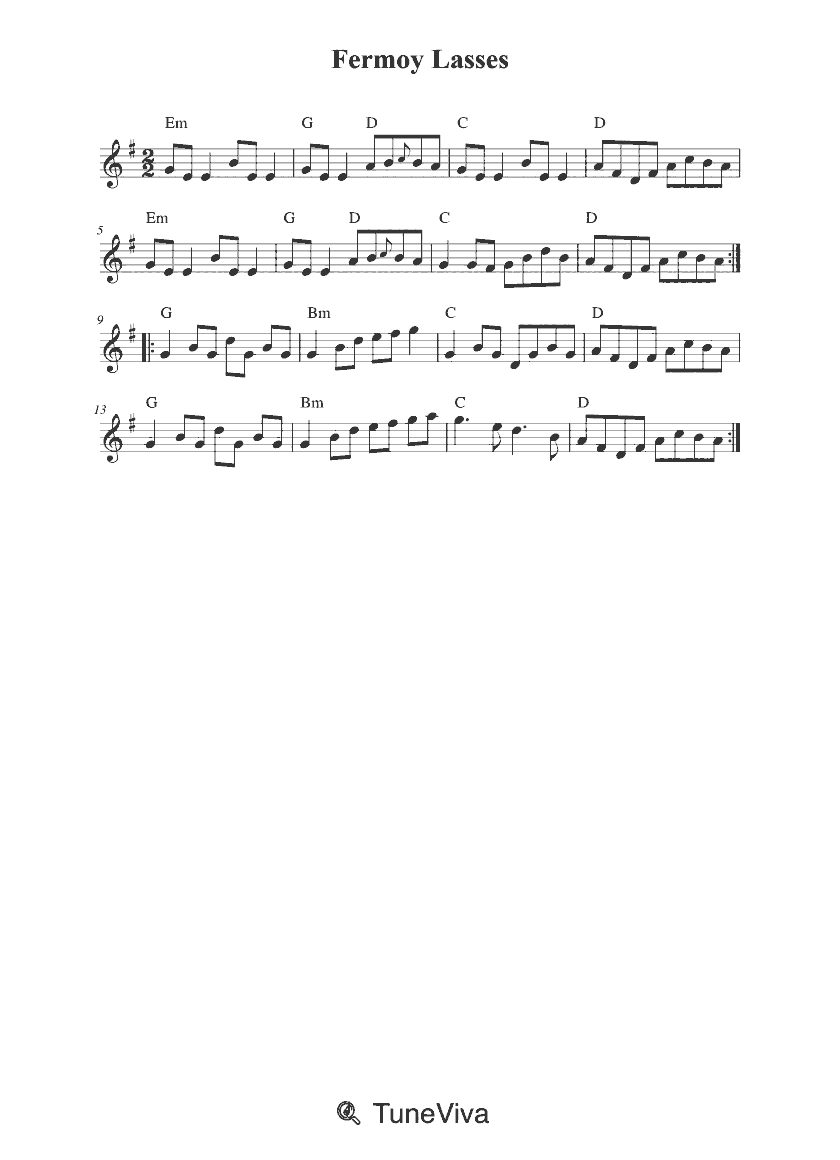
Misc tunes
2 min 8 sec · Score #142329
Open score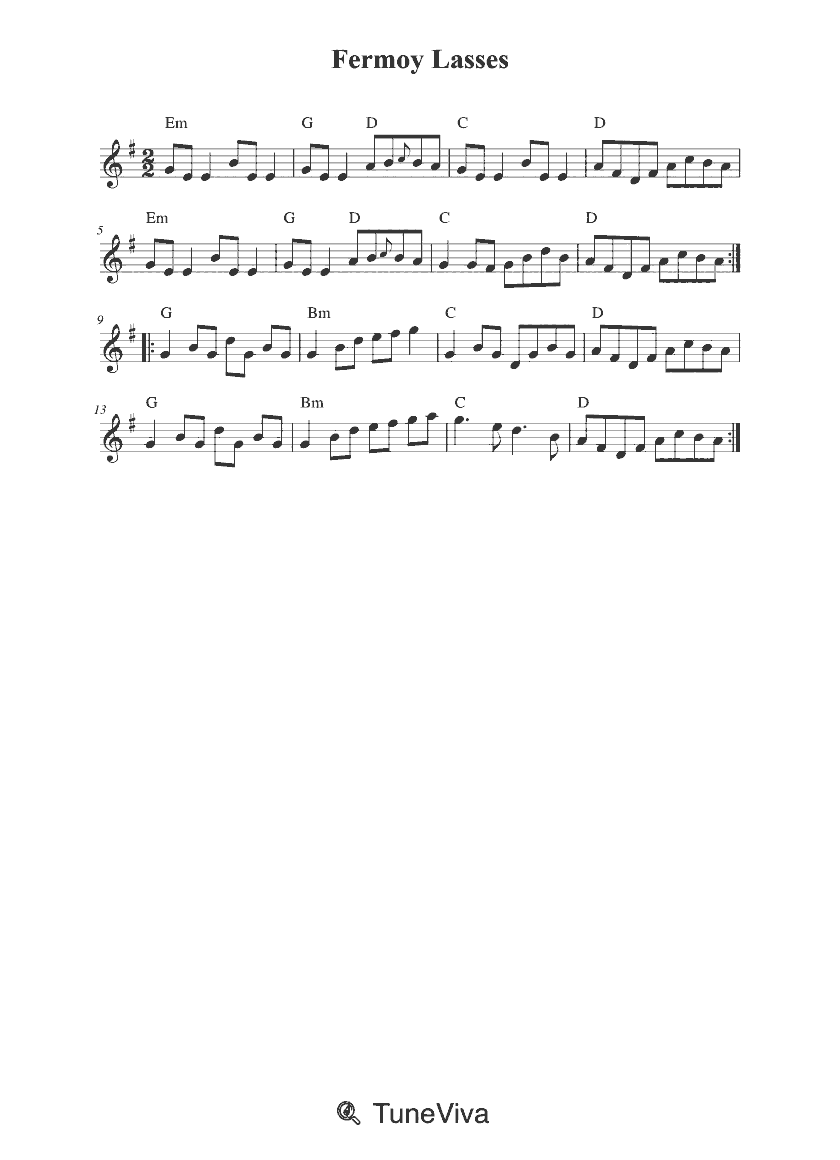
Misc tunes
2 min 8 sec · Score #151342
Open score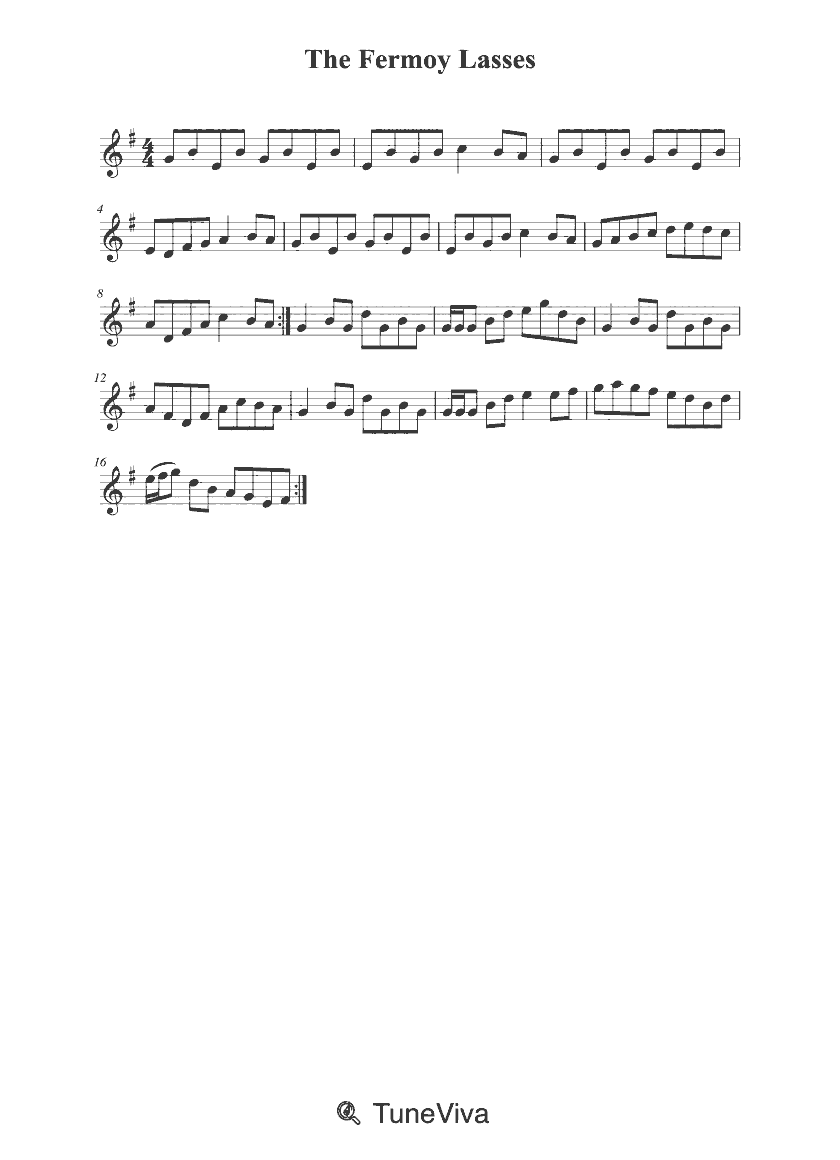
Misc tunes
1 min 20 sec
Open score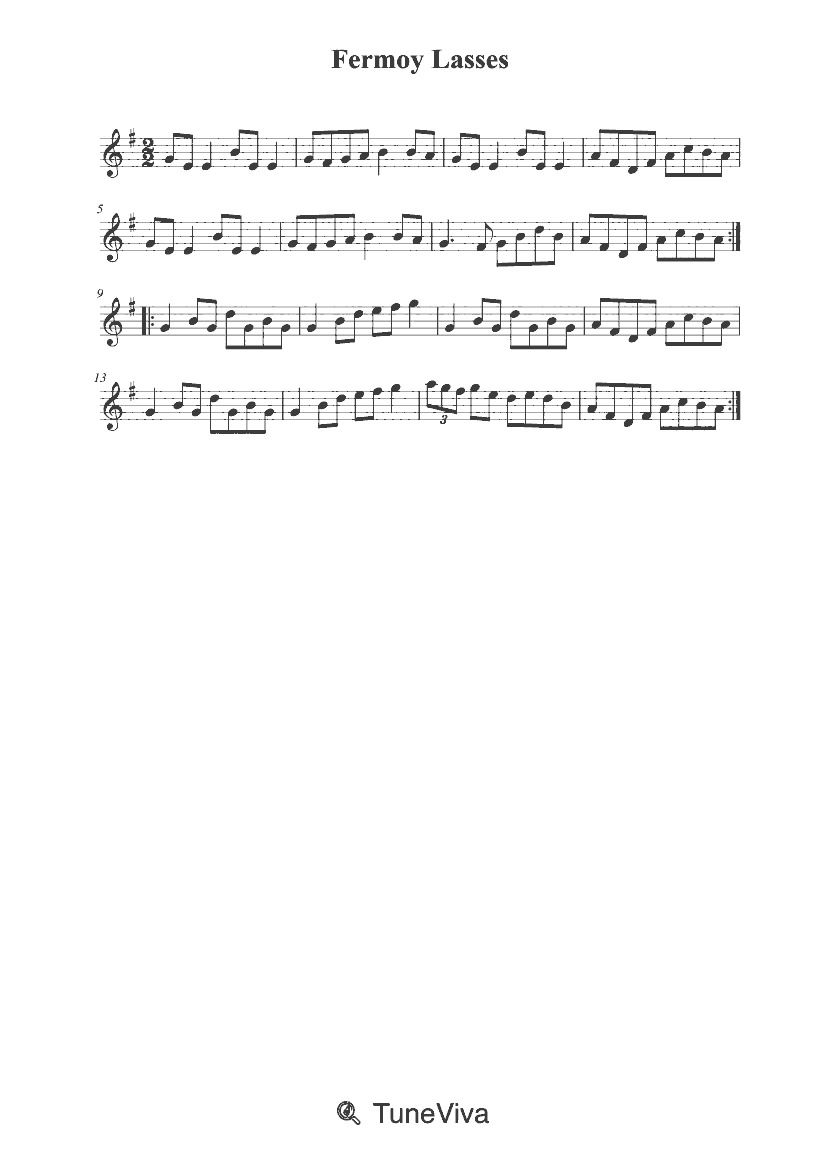
Misc tunes
2 min 8 sec · Score #99054
Open score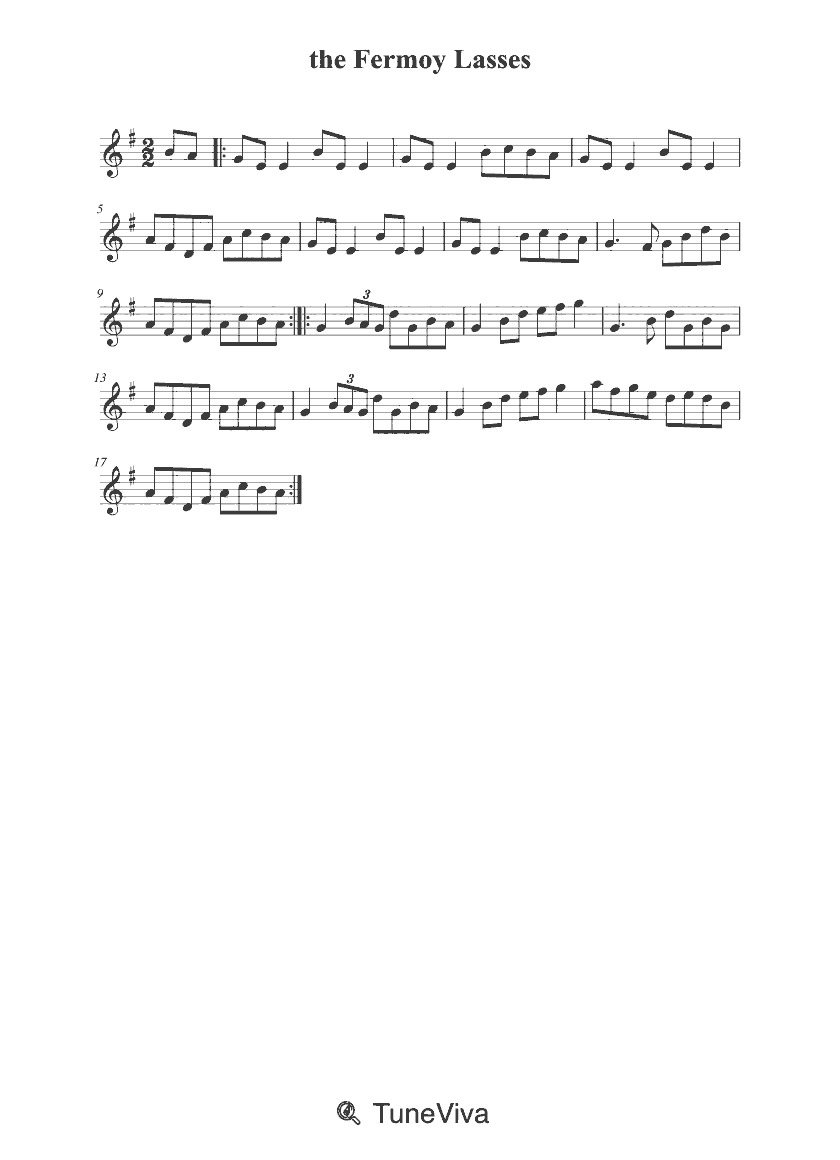
Misc tunes
2 min 9 sec
Open score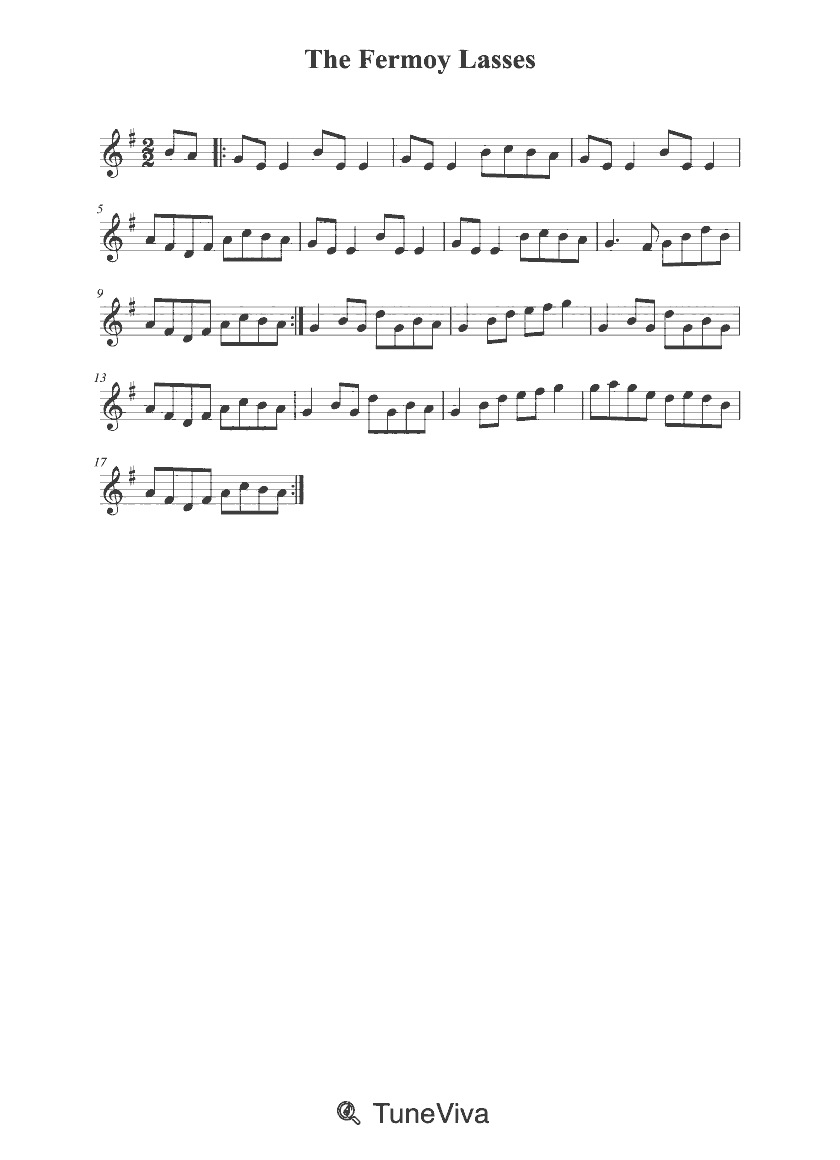
Misc tunes
2 min 41 sec · Score #179174
Open score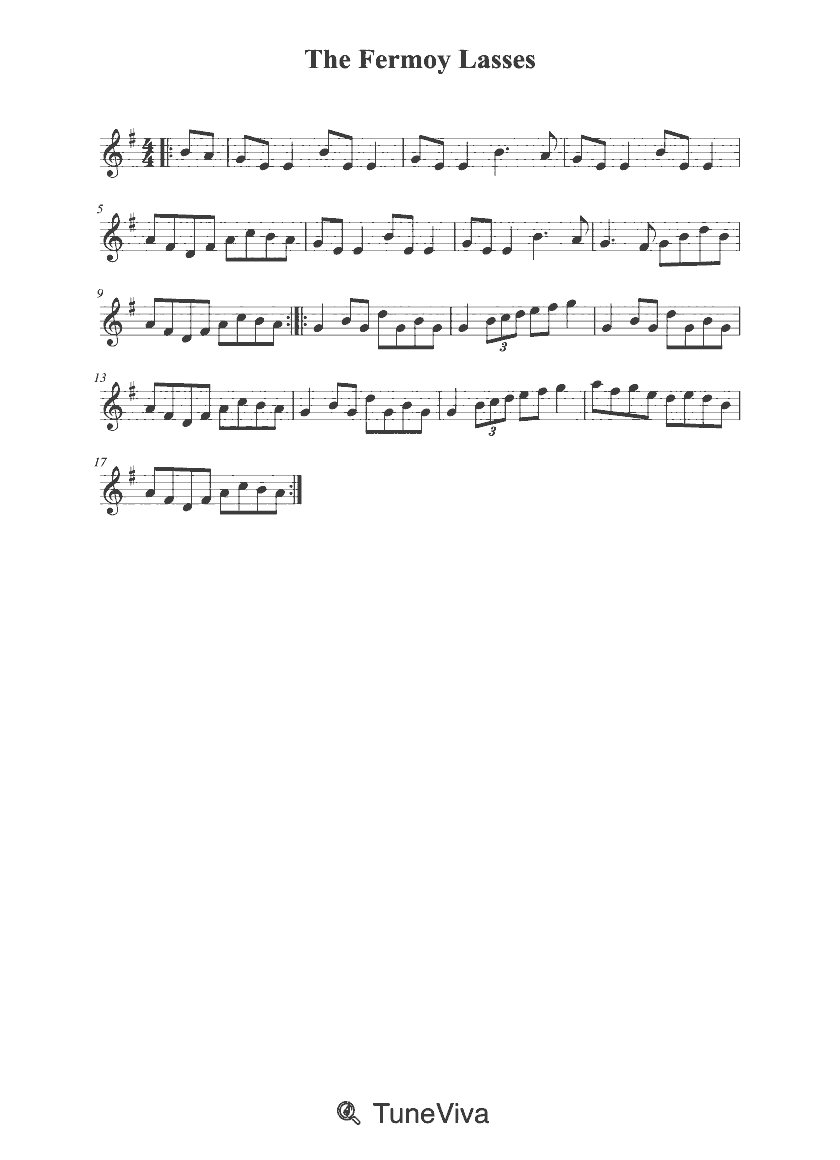
Misc tunes
1 min 5 sec
Open score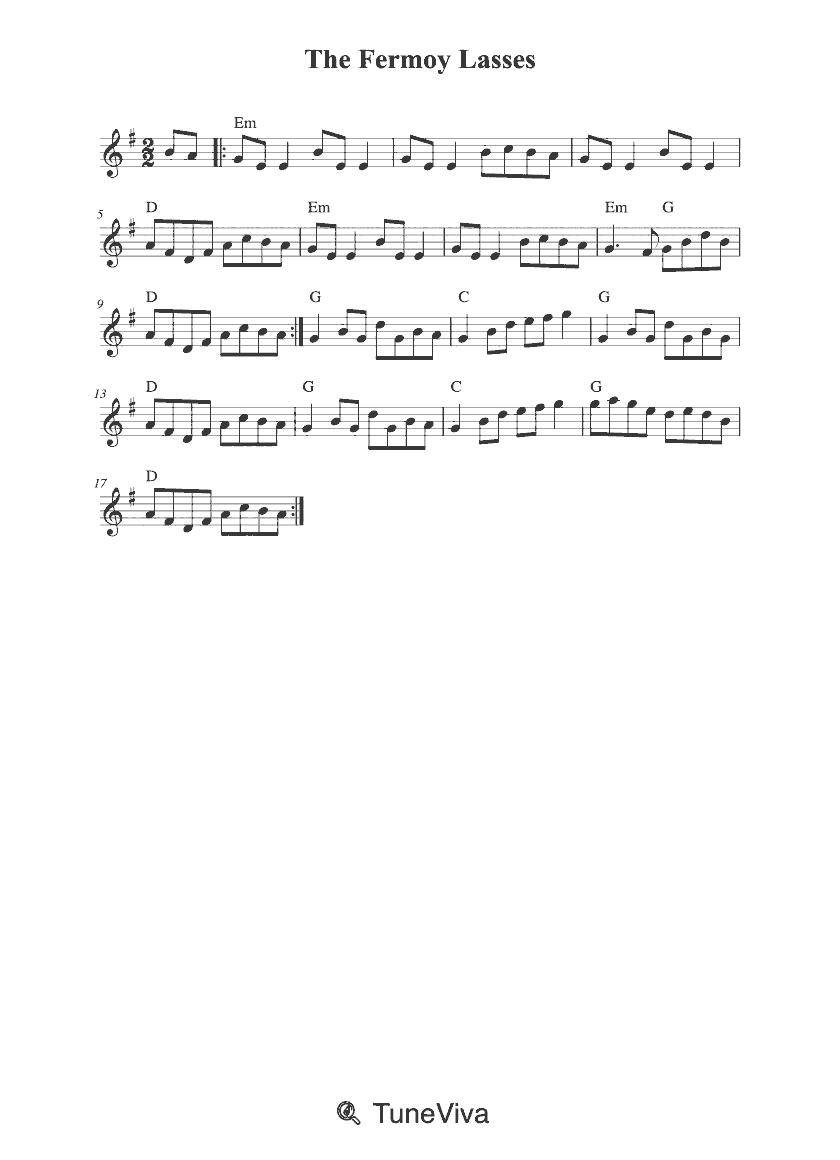
Misc tunes
2 min 41 sec · Score #36876
Open score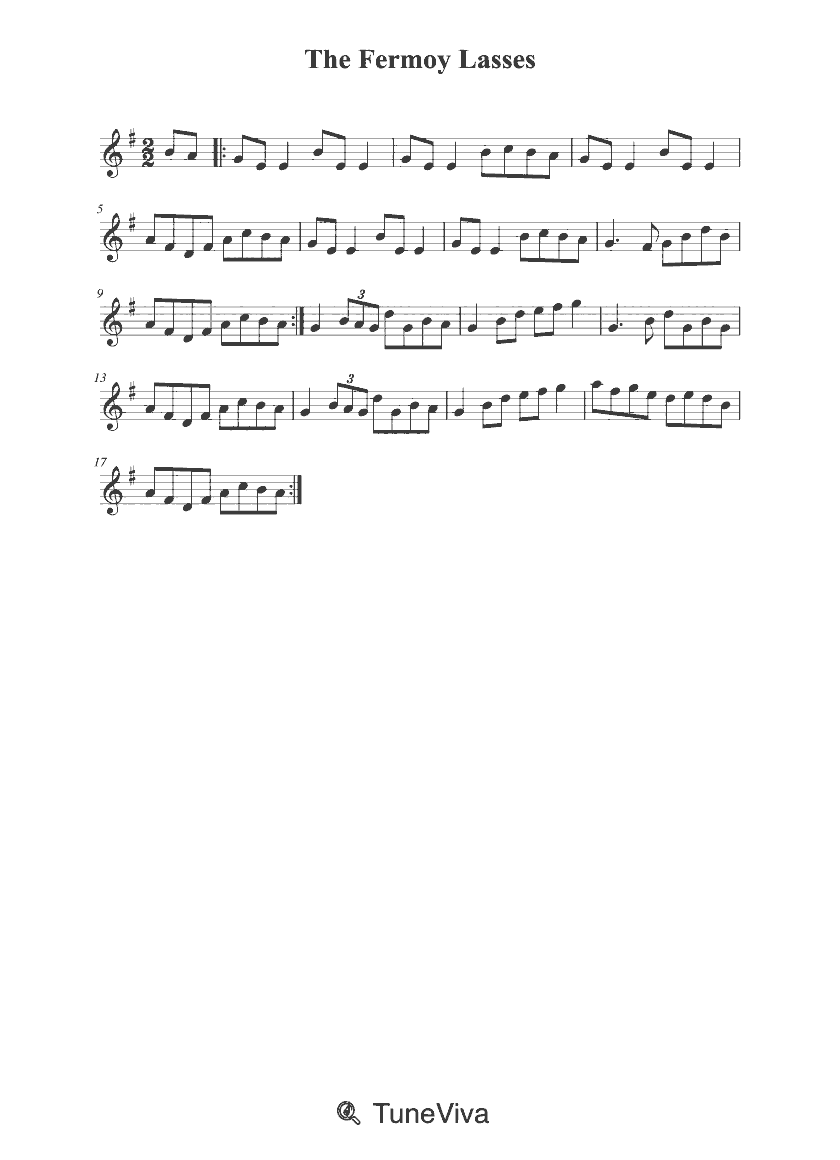
Misc tunes
2 min 41 sec · Score #40258
Open score
anon.
1 min 1 sec
Open scorePage 1 of 2
The most obvious difference between the listed scores is the opening key signature. One begins with no sharps or flats, another with one sharp (described in the score details as E minor), and the third with two sharps (described as B minor). Because the title is the same, it is easy to assume the scores match; check the key and the first bars before assuming a version will fit with other players. If you are preparing to play with others, agree the key in advance, or use a version whose key matches the one you already know.
Every listed version of The Fermoy Lasses opens in 4/4, so the basic pulse is consistent across the settings even where the key is not. Each score is a single-line melody rather than a multi-part arrangement, which makes these versions suitable for reading the tune itself rather than for studying a harmonised setting. Compare the opening phrase across the versions to see how much the melodic shape actually differs.
Two of the scores use only the tune name, while one adds "Highland" and one adds "reel" with an attribution to Chief F. O'Neill. Different titles can point to genuinely different settings or simply to different labelling habits among collectors and publishers. If you are looking for a particular version you have heard, start from the plain title and then check the annotated entries; the added words are the clearest clue available here about where a setting came from.
Catalogue duration 2 min 3 sec. Opening key signature: No sharps or flats. Opening time signature: 4/4.
Catalogue duration 48 sec. Opening key signature: 2 sharps (B minor). Opening time signature: 4/4.
Catalogue duration 32 sec. Opening key signature: 1 sharp (E minor). Opening time signature: 4/4.
The listed settings of The Fermoy Lasses do not agree on a key signature. One score opens with no sharps or flats, a second with one sharp (given as E minor) and a third with two sharps (given as B minor). Players joining a session should confirm the key by ear or with the other musicians before starting.
One score of The Fermoy Lasses is labelled a reel in its title, and all three listed settings open in 4/4 time. The reel designation comes from that score's own title rather than from an independent description, so it should be treated as that version's label rather than as a statement about every setting.
No listed score names a composer for The Fermoy Lasses. One setting is credited "after Chief F. O'Neill", which points to a printed source for that version rather than to a named author; the remaining settings carry no attribution at all. The origin of the tune itself is not established by the available information.
One score adds the word "Highland" to the title of The Fermoy Lasses. The extra word may mark a distinct way of shaping the tune, but the title alone does not show how the notes differ. Compare the notation of that score with the plain-titled settings before deciding which one to learn.
The scores share the title The Fermoy Lasses but differ in key signature, and one carries a different descriptive title, so they cannot be assumed to be identical. Whether they are variants of one melody or separate tunes sharing a name can only be judged by comparing the opening bars of each setting.