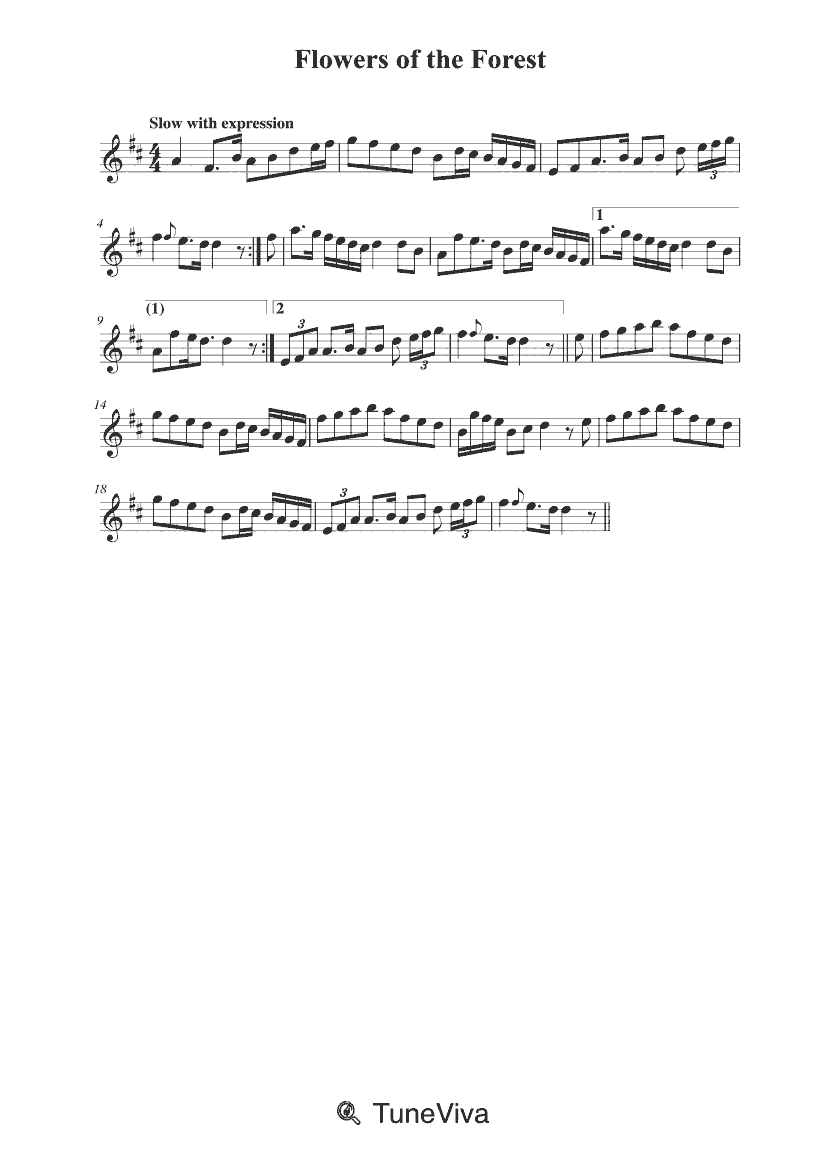
Flowers of the Forest
Misc Traditional
55 sec
Open scoreThe Flowers of the Forest is a traditional melody that turns up in folk collections under several different settings, and the versions listed here are not identical: they open in different keys and in different metres. That makes this page most useful as a comparison point — open two or three of the available scores, check the key, the time signature and the range, and choose the one that fits the instrument or voice you are playing with.
Scores 1–20 of 30
Misc Traditional
55 sec
Open score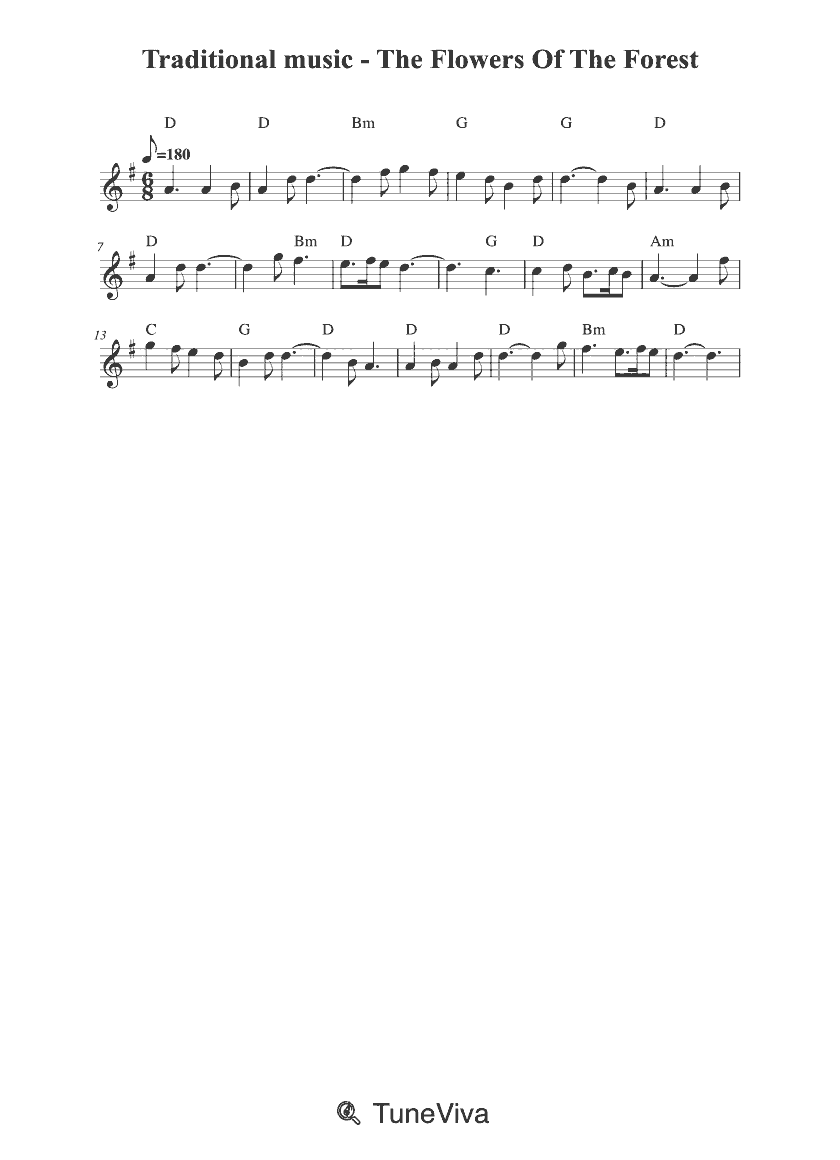
Trad. (before 1615 Skene ms)
19 sec · Score #156862
Open score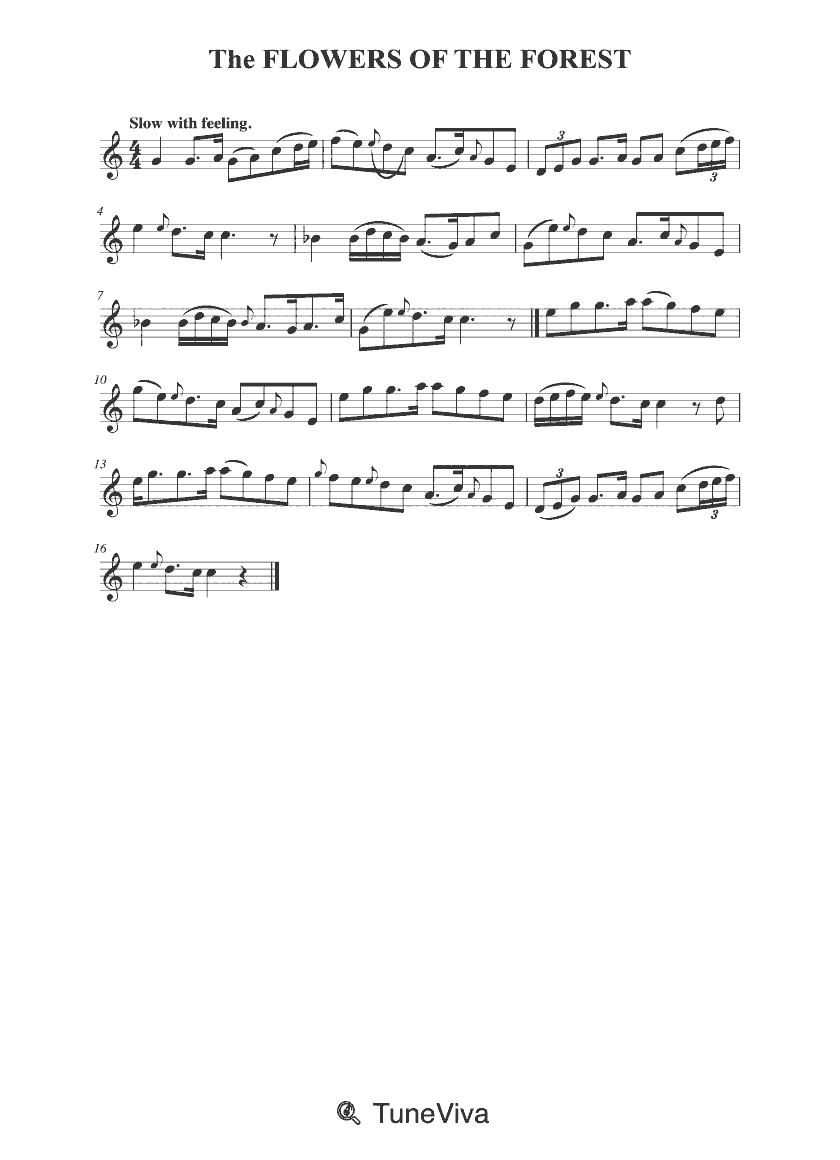
Misc Traditional
31 sec · Score #4418
Open score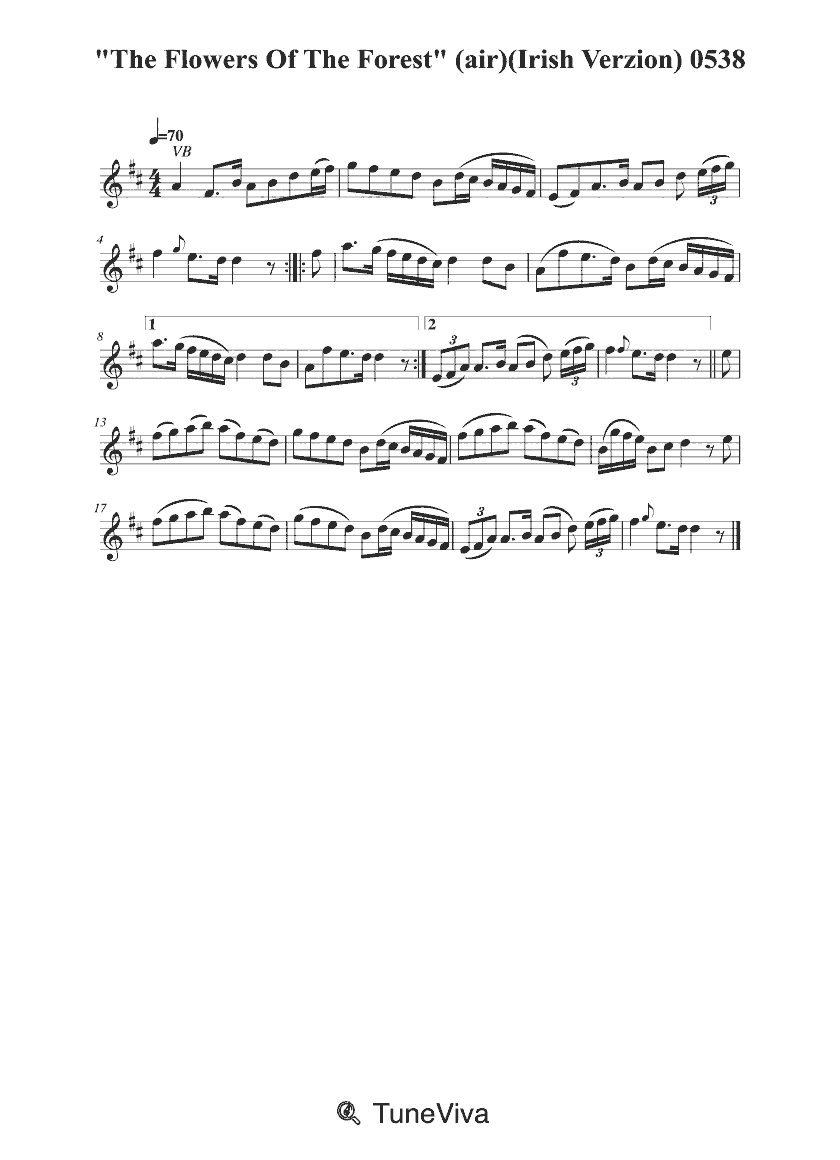
after Sg't. J. O'Neillslow with expression
1 min 21 sec
Open score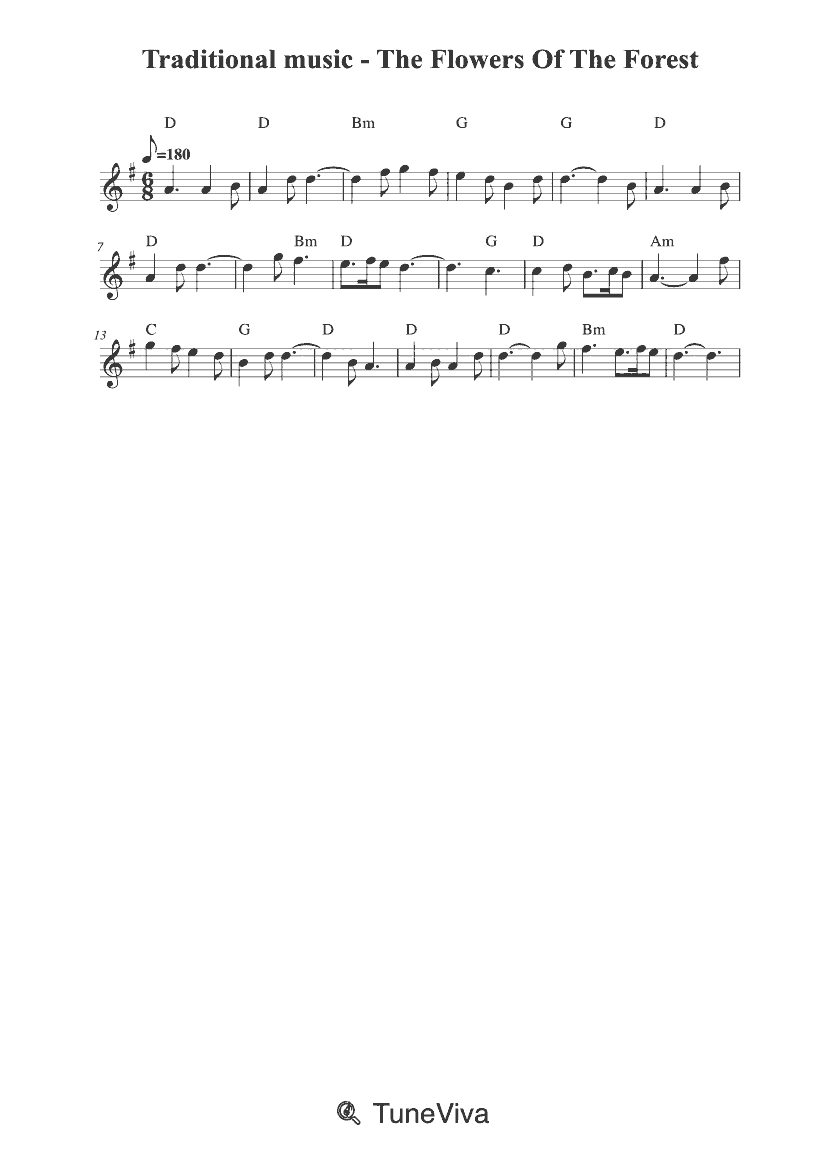
Trad. (before 1615 Skene ms)
19 sec · Score #35758
Open score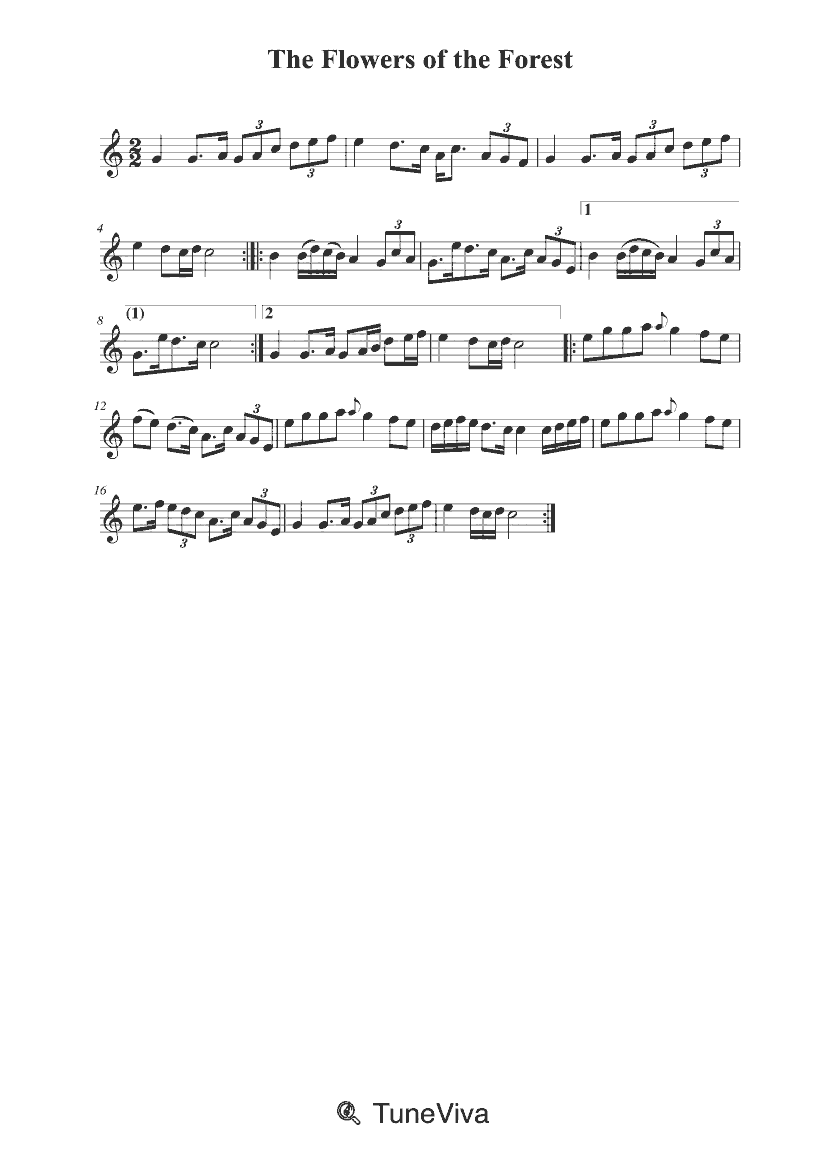
Misc Traditional
2 min 7 sec · Score #180317
Open score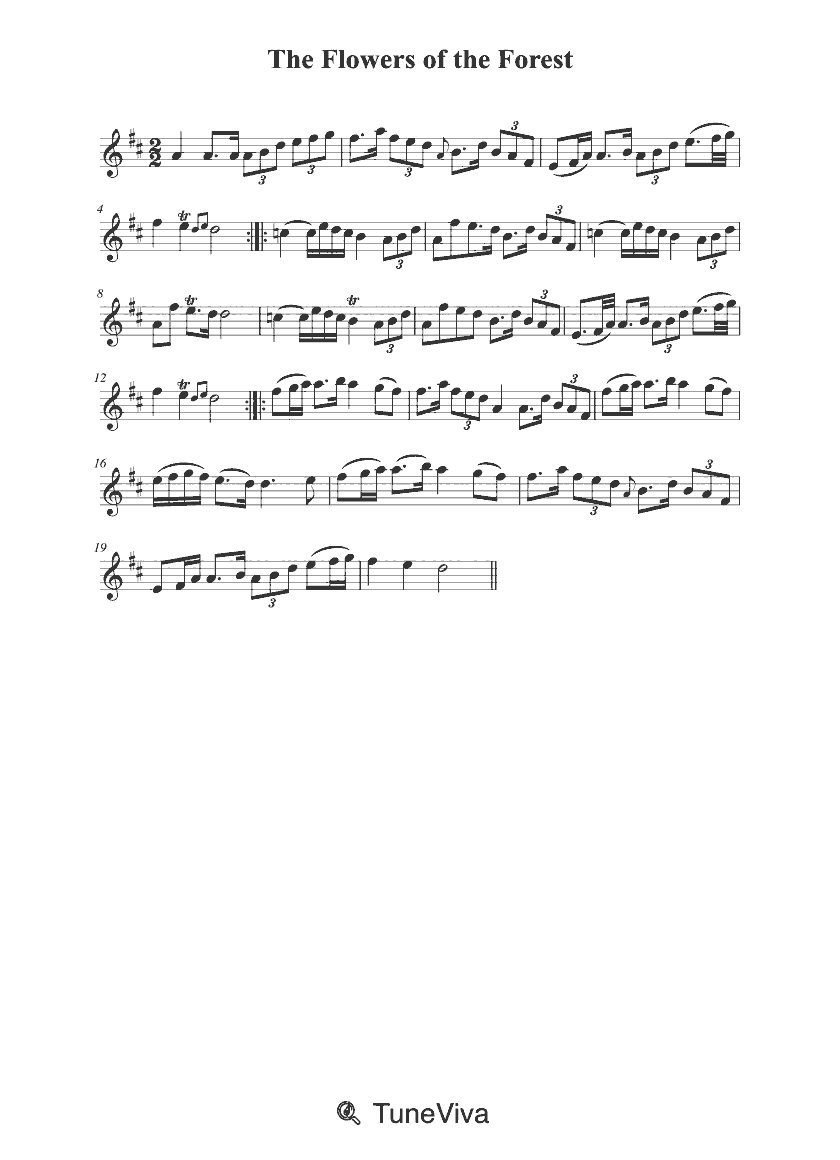
Misc Traditional
2 min 42 sec · Score #27067
Open score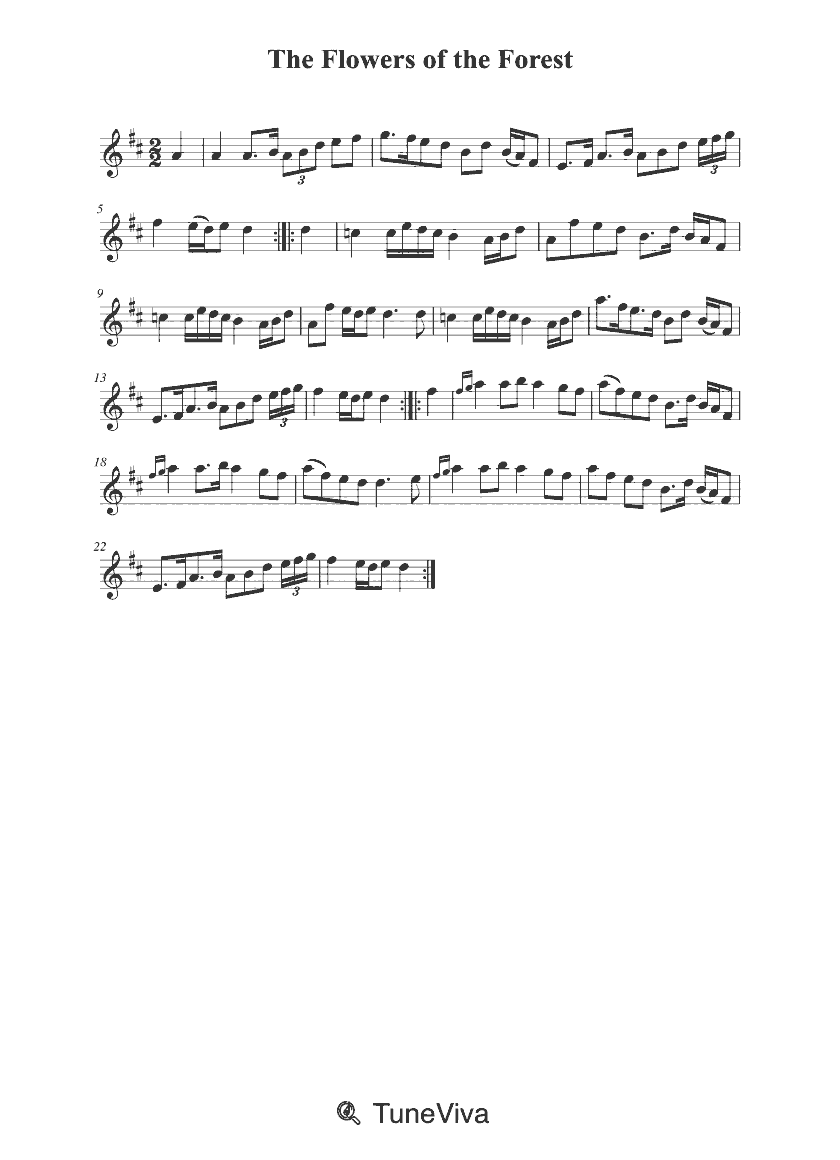
Misc Traditional
2 min 40 sec
Open score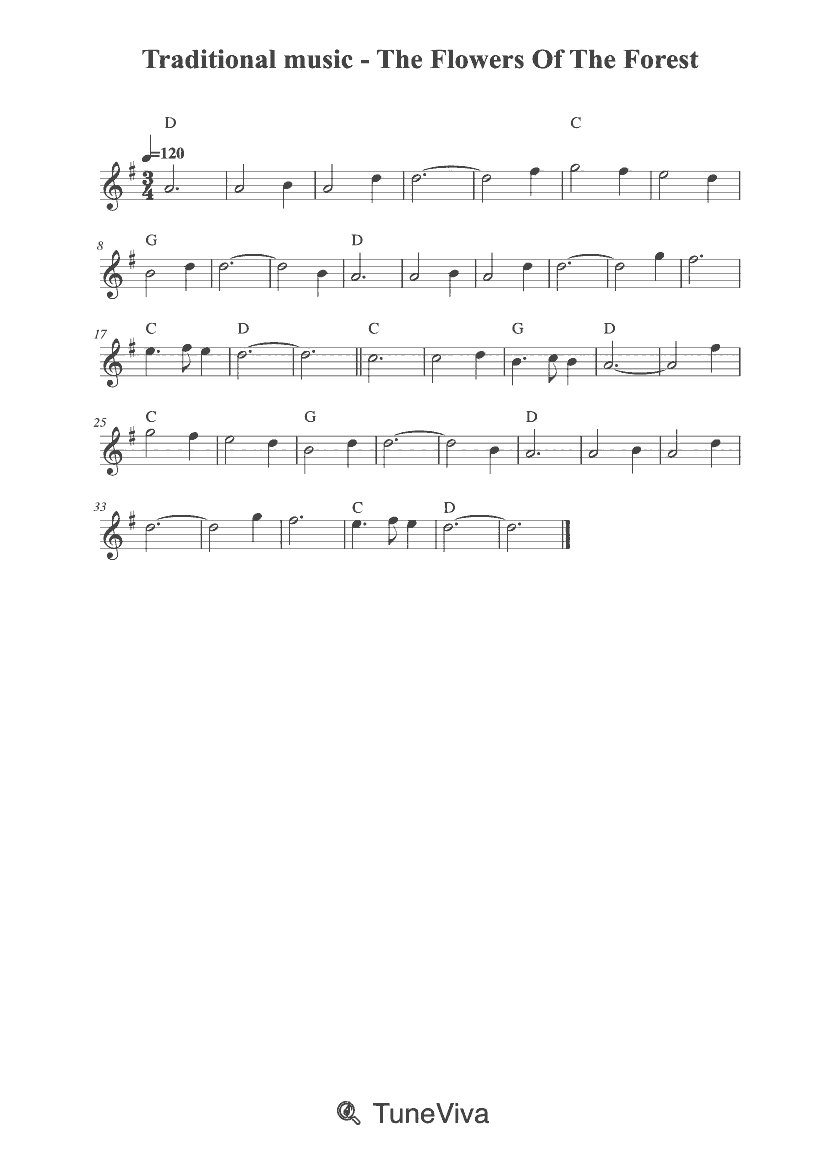
Trad. (before 1615 Skene ms)
57 sec
Open score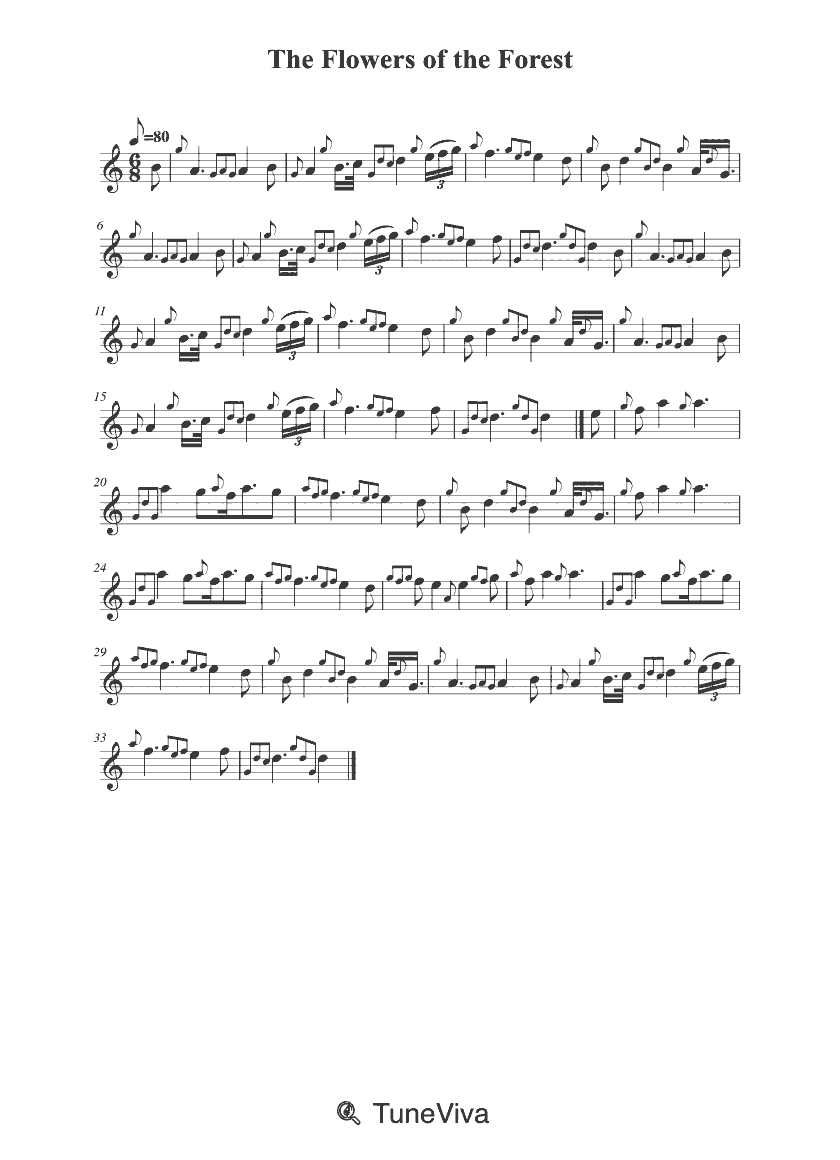
Misc Traditional
1 min 12 sec
Open score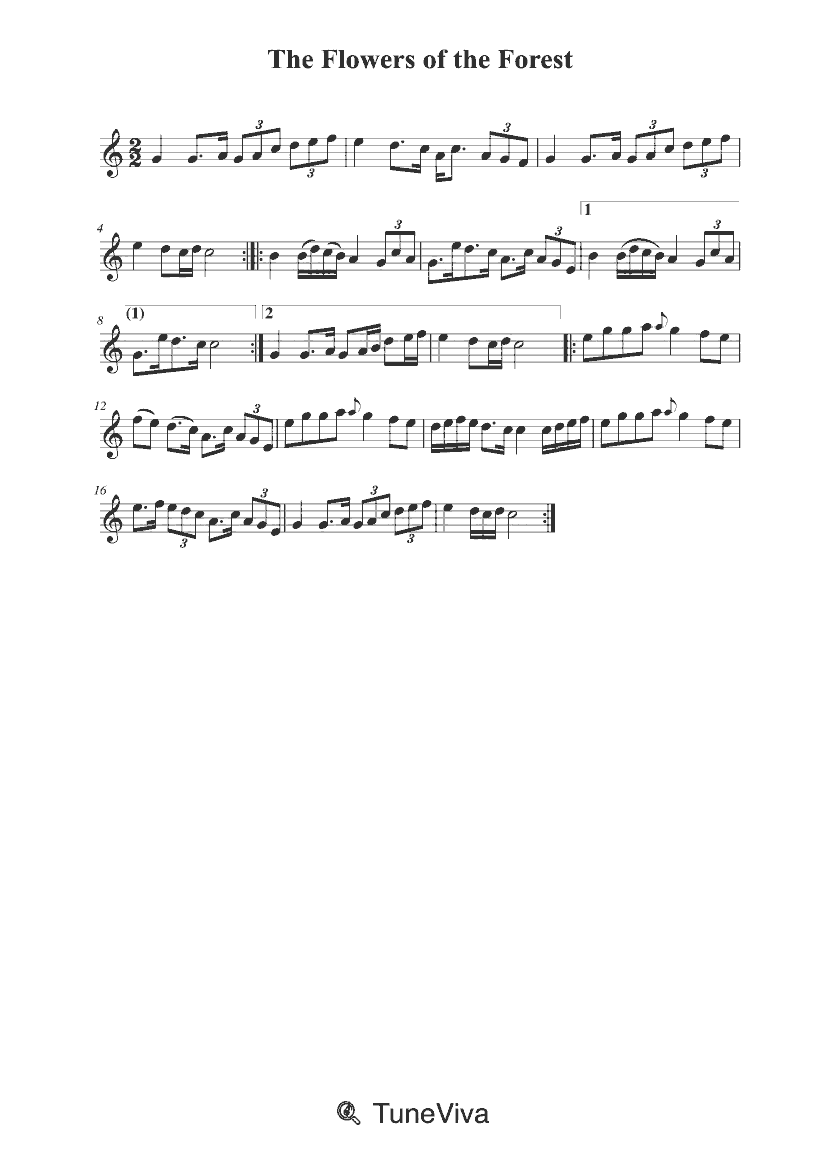
Misc Traditional
2 min 7 sec · Score #31872
Open score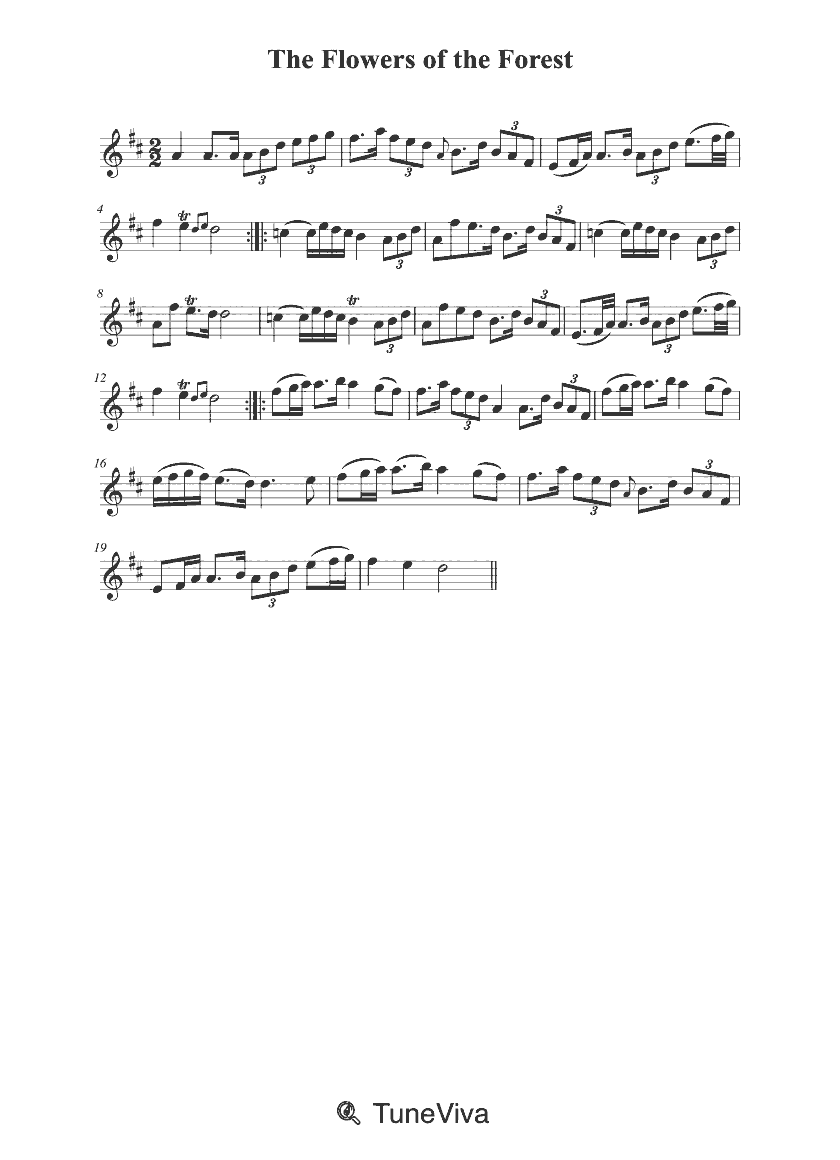
Misc Traditional
2 min 42 sec · Score #38503
Open score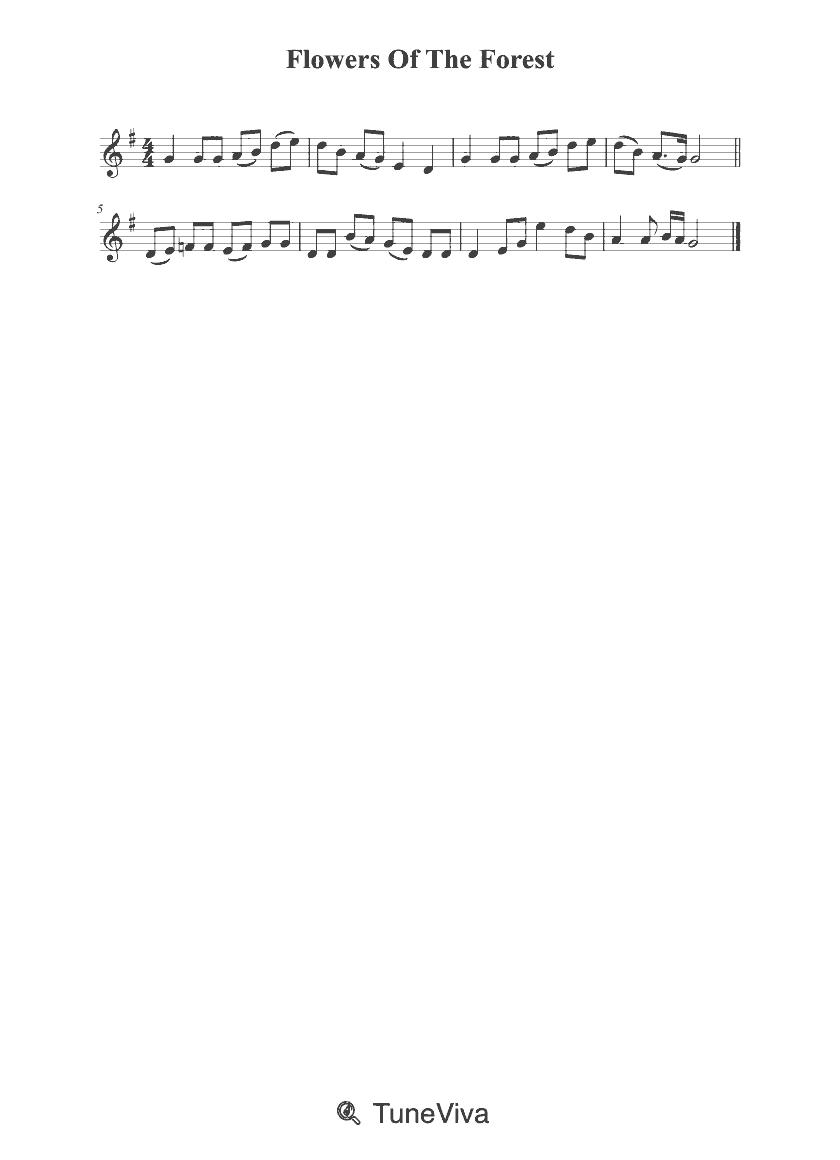
Misc Traditional
16 sec
Open score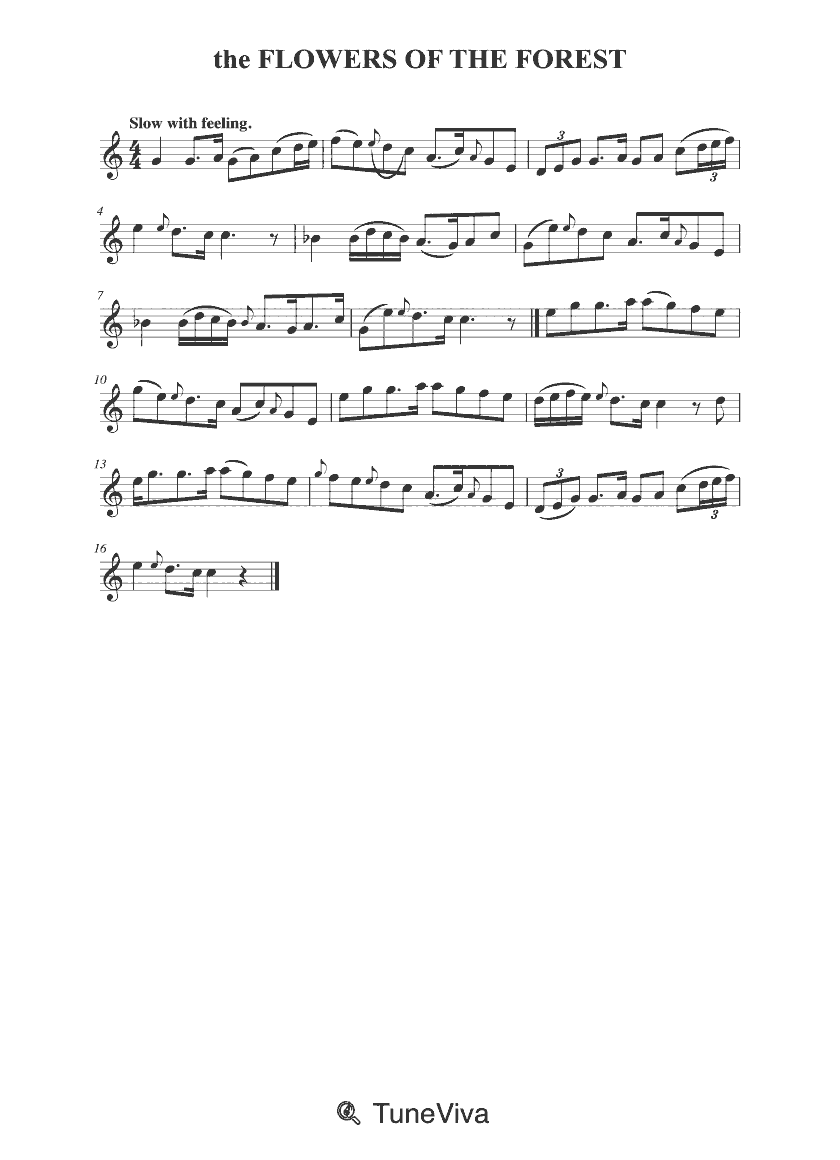
Misc Traditional
31 sec · Score #78222
Open score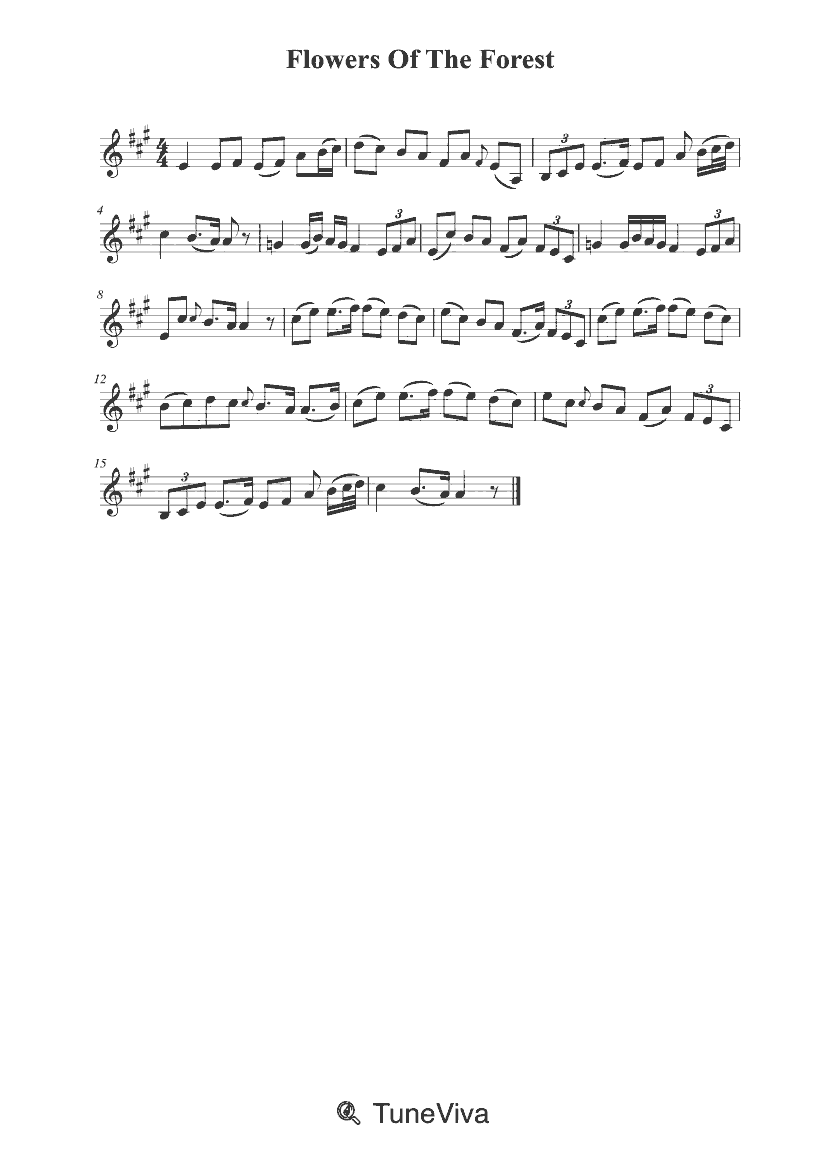
Misc Traditional
31 sec
Open score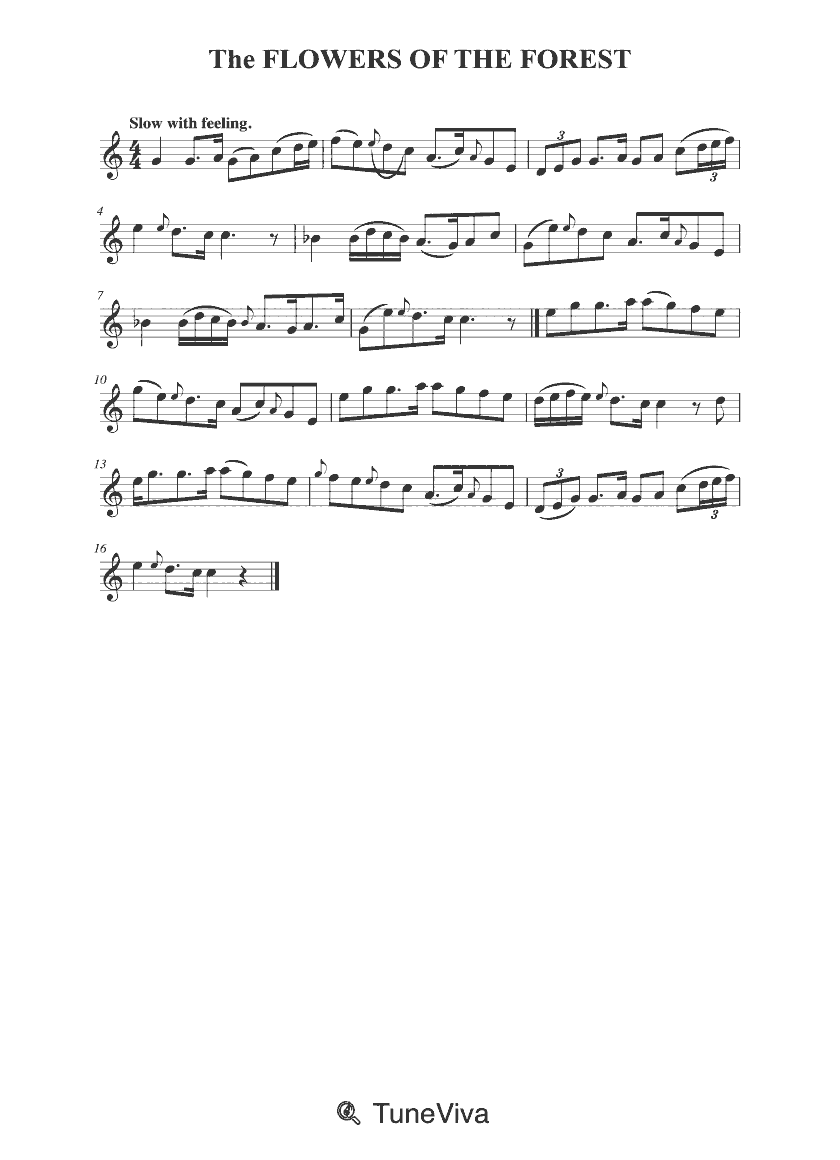
Misc Traditional
31 sec · Score #142980
Open score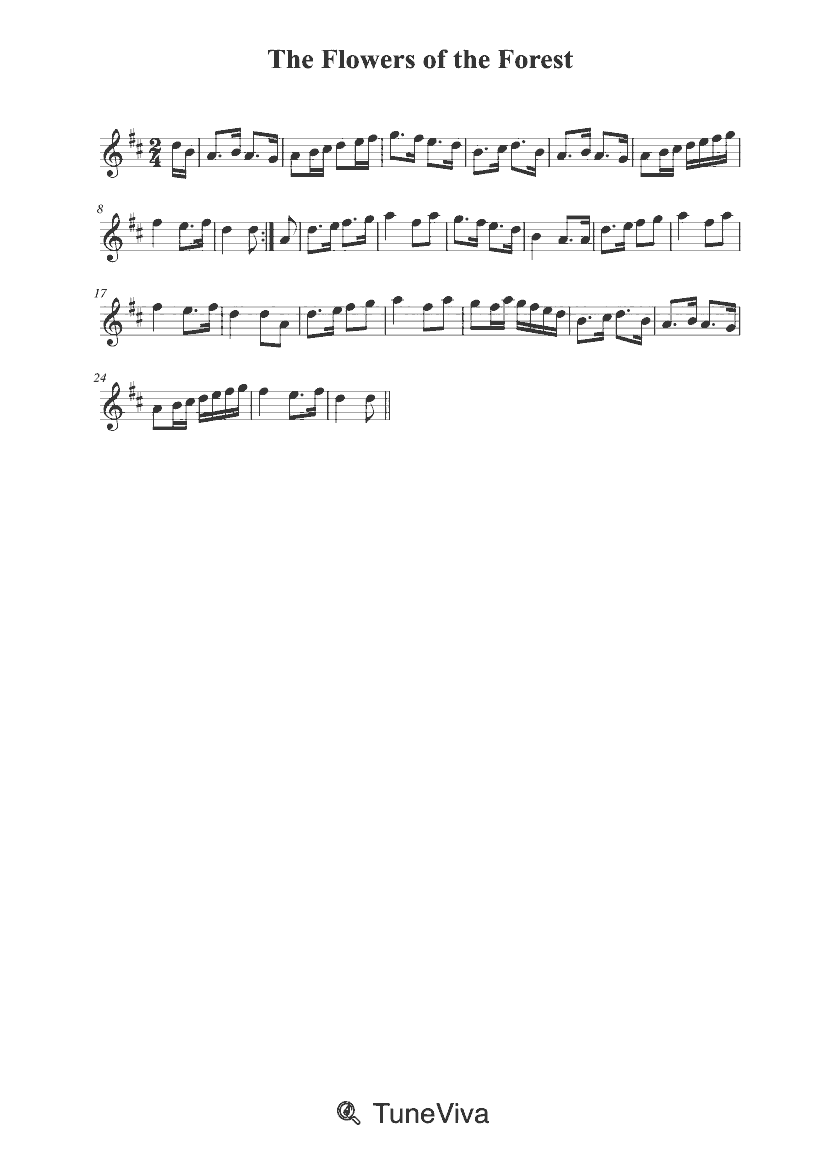
Misc Traditional
32 sec
Open score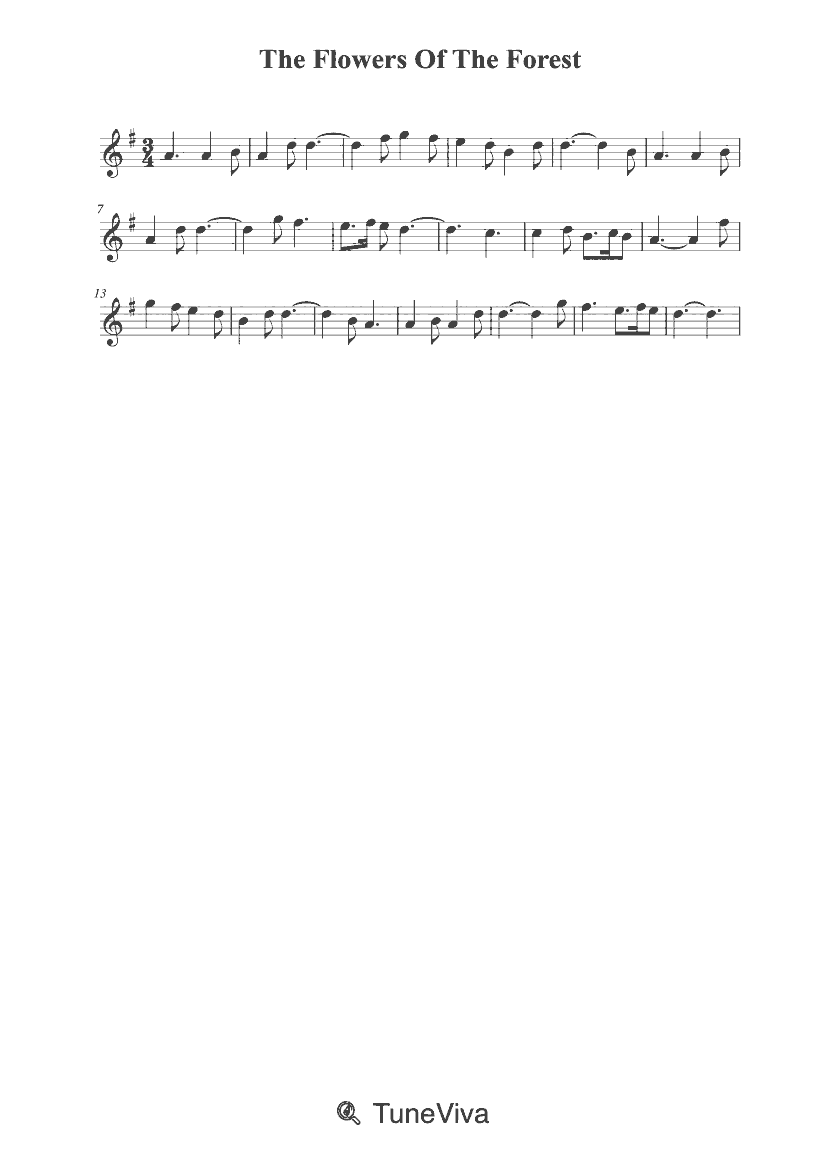
Misc Traditional
28 sec
Open score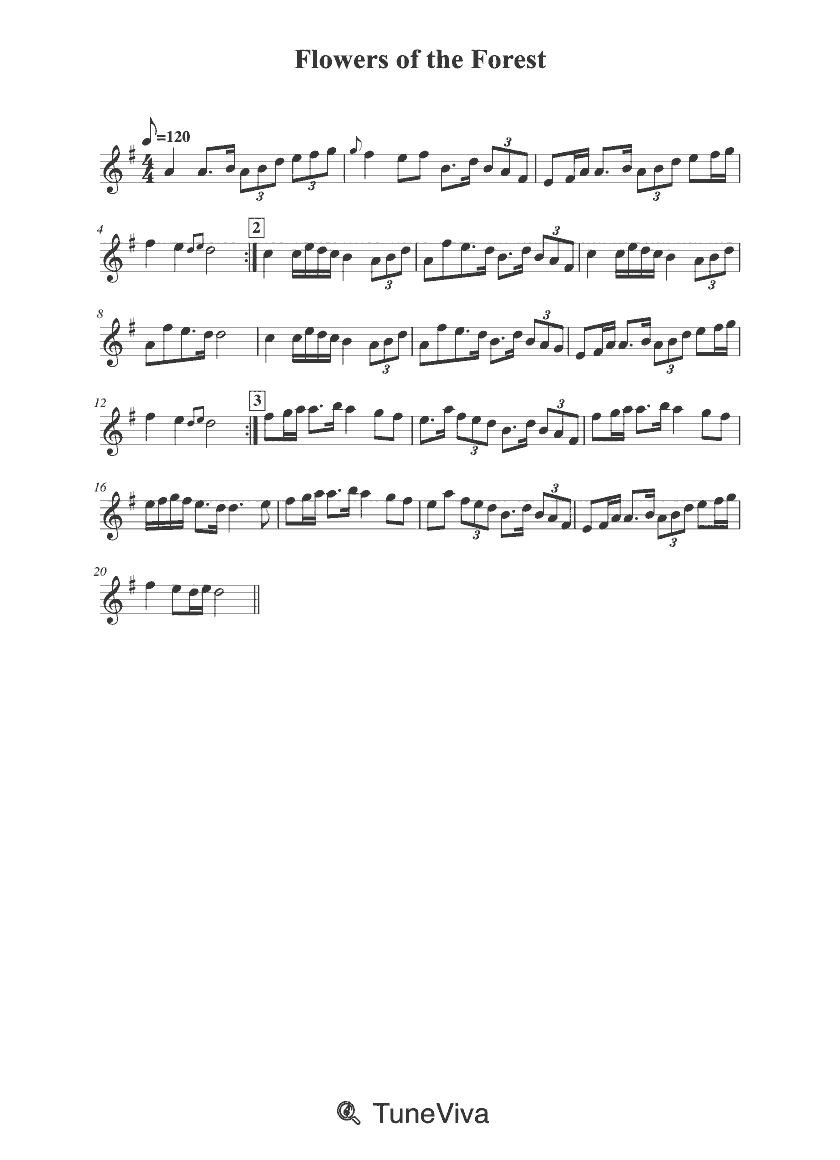
Misc Traditional
2 min 24 sec
Open score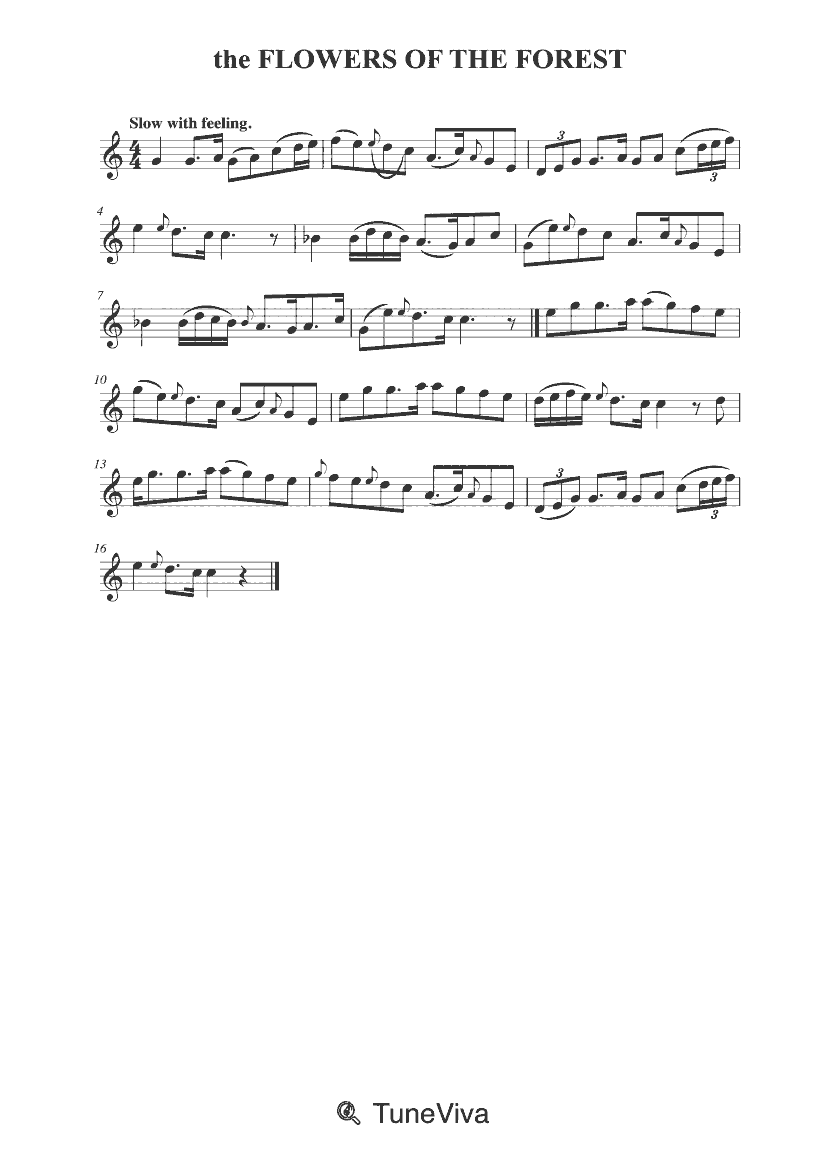
Misc Traditional
31 sec · Score #5612
Open scorePage 1 of 2
The three listed scores are not transpositions of one fixed text. One opens with no sharps or flats in 4/4, a second opens in D major (two sharps) in 4/4, and a third opens with one sharp in 6/8. Because the key and the metre both change between versions, a phrase that sits comfortably under the hand in one score may need re-fingering or re-breathing in another. Read through the opening bars of each before committing to one.
Two of the listed scores are notated in 4/4 and one in 6/8, so the same tune can look quite different on the page. A 4/4 setting tends to group the melody into four steady beats per bar, while a 6/8 setting groups it into two broad beats made of three shorter notes each. If you already know the tune by ear, check which notation matches the rhythm you hear before you start reading.
The listings do not state an instrument, an arranger or a vocal line, so these details have to be confirmed from the score itself. Worth checking: the clef and the range (does the melody sit within your instrument's comfortable compass?), the opening key (does it suit a singer or a fixed-pitch instrument?), the metre (does it match how you hear the tune?), and whether the setting is a bare melody or has added harmony. Nothing in these listings establishes that any version is the standard or authoritative one.
Catalogue duration 55 sec. Opening key signature: 2 sharps (D major). Opening time signature: 4/4. Opening tempo: 120 BPM.
Catalogue duration 19 sec. Opening key signature: 1 sharp. Opening time signature: 6/8. Opening tempo: 90 BPM.
Catalogue duration 31 sec. Opening key signature: No sharps or flats. Opening time signature: 4/4. Opening tempo: 120 BPM.
The Flowers of the Forest is a traditional melody that appears in folk repertoire collections. The scores listed here credit it to "Misc Traditional," and one carries the additional credit "Trad. (before 1615 Skene ms)." The background and origin of the tune are not documented in the material available for this page, so the piece is best described here simply as a traditional folk melody circulating in several different notations.
The three listed scores do not share a single opening key: one begins with no sharps or flats, one in D major with two sharps, and one with a single sharp. Different keys change the range and the fingering of the melody, so the choice usually comes down to the player or singer. Compare the opening bars across versions to see which key places the tune most comfortably.
Both metres appear among the scores listed here: two are notated in 4/4 and one in 6/8. The two notations imply different groupings of the beat, so a 6/8 setting will generally read as two broad beats per bar while a 4/4 setting reads as four. Pick the notation that matches the rhythm you already associate with the tune, or learn the tune from one setting and treat the other as a variant.
The listings record opening tempos of 120 BPM for the two 4/4 settings and 90 BPM for the 6/8 setting. These figures describe the start of those particular scores and are not a settled performance tempo for the tune. Treat them as a starting reference, and let the character you want — measured and deliberate, or more flowing — guide the pace you actually settle on.
Instrumentation is not recorded for any of the three listed scores; they are described only as folk material credited to a traditional source. The clef, range and any chord symbols in the score itself will tell you what the setting was prepared for. If you need a version for a specific instrument, check the score before you rely on it.