Traditional music - The Foggy Dew
Trad
3 min 21 sec
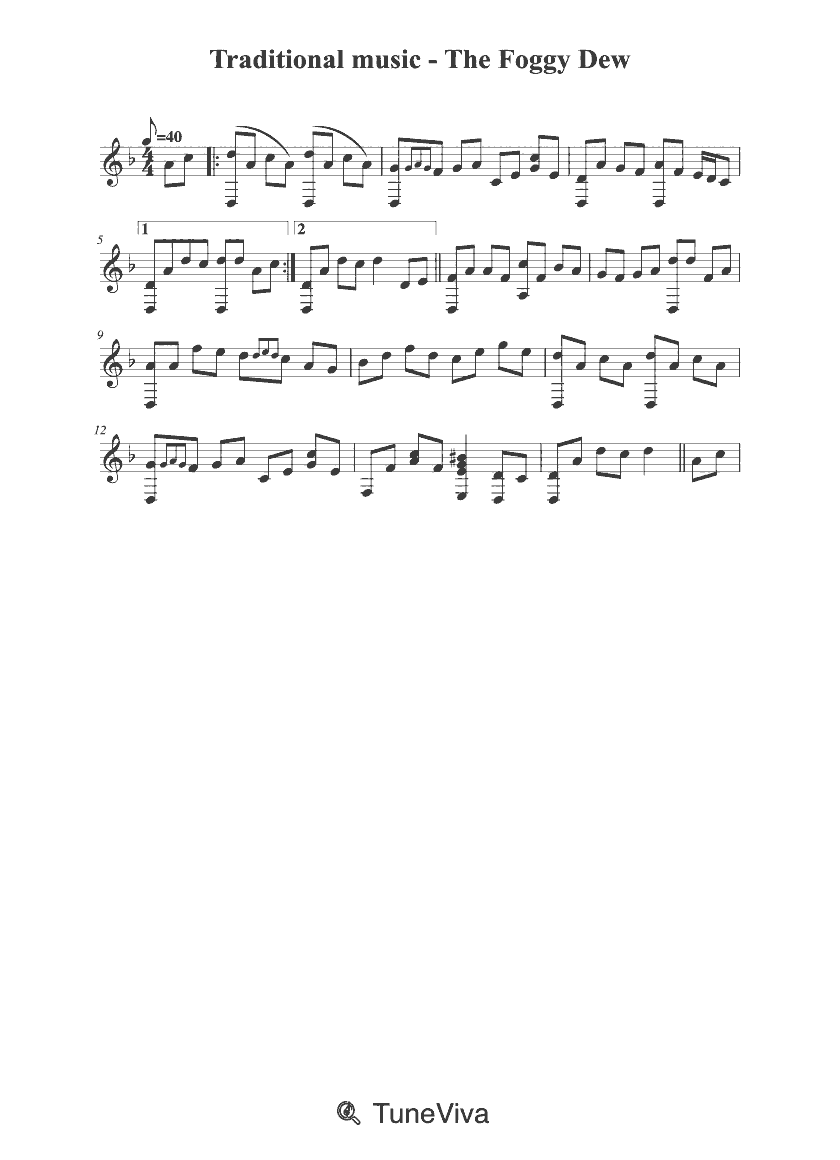
Open scoreScores listed under the title The Foggy Dew sit in the traditional folk repertoire, and the versions currently available here are catalogued as traditional rather than attributed to a named composer. The listed settings differ in some obvious practical ways: their opening keys include D minor, B-flat major and E minor, and their opening metres include 4/4 and 2/4. Those details describe individual scores rather than a single definitive version of the tune, so it is worth comparing the openings before choosing one to play or sing.
Scores 1–20 of 48
Trad
3 min 21 sec
Open score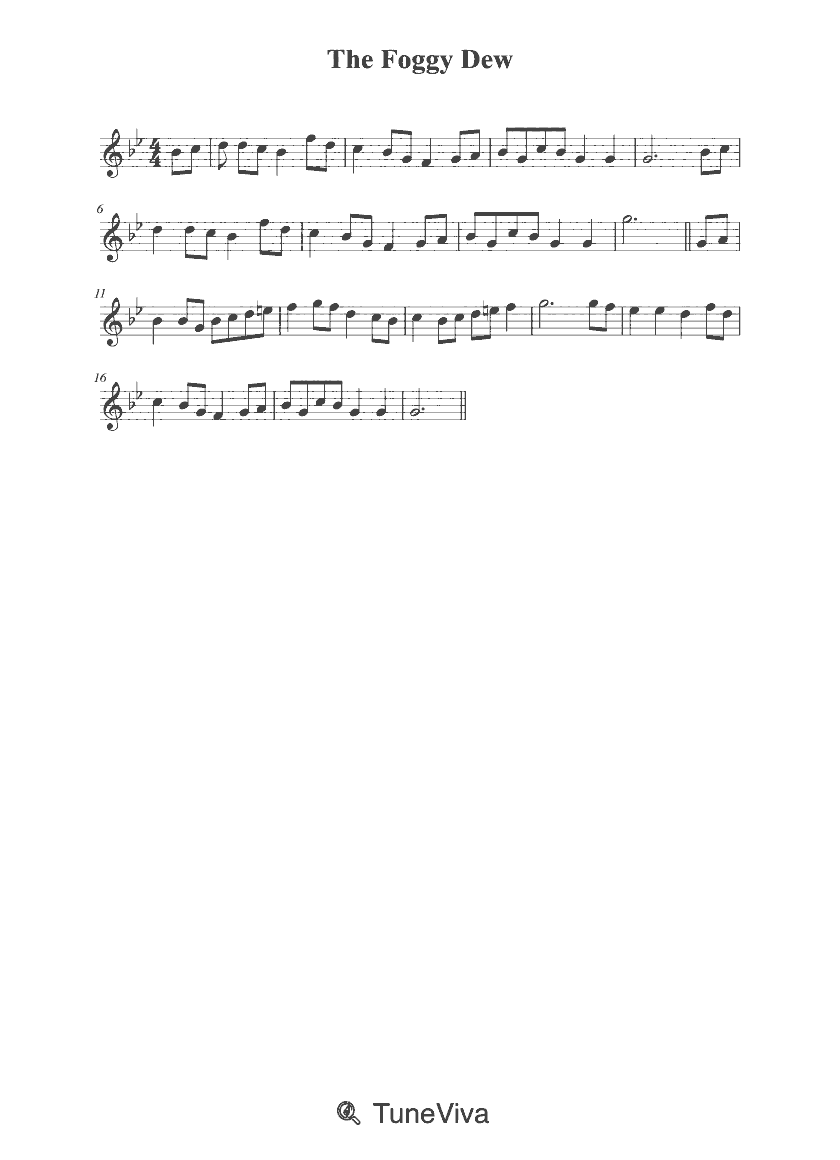
Misc Traditional
32 sec · Score #207354
Open score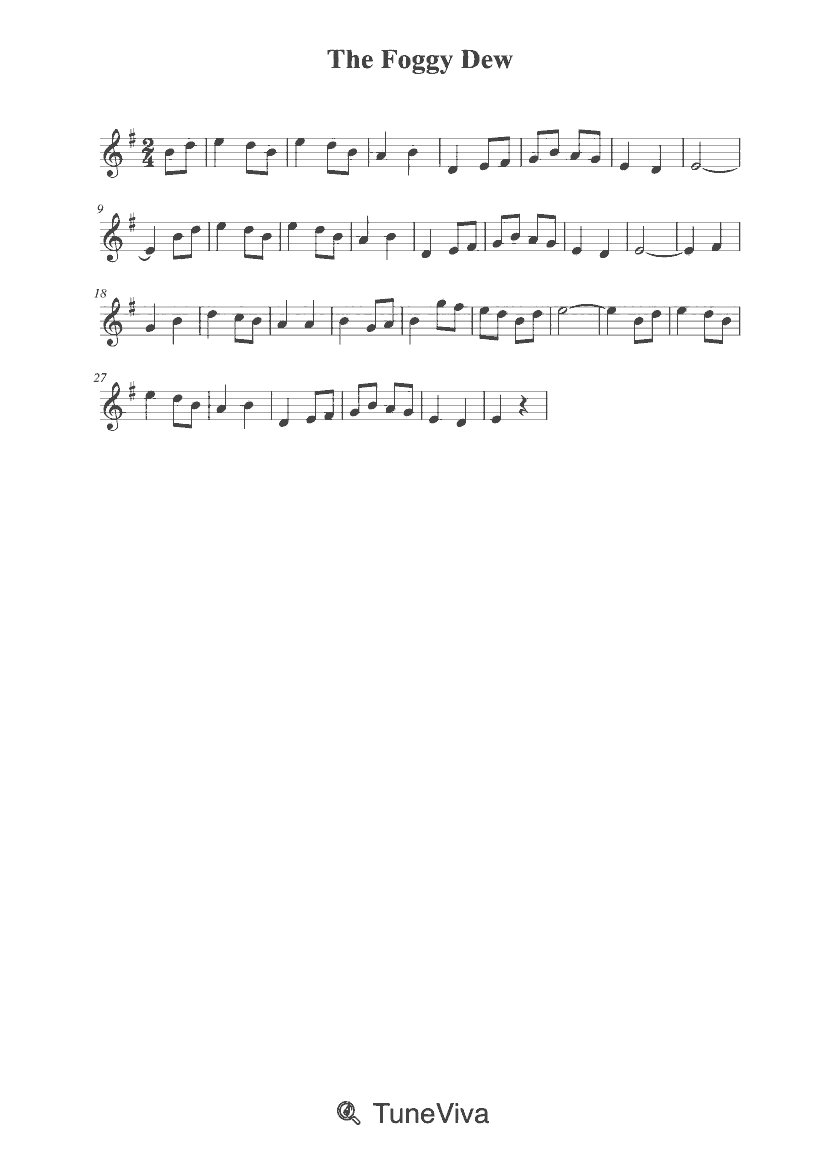
Misc Traditional
Foggy Dew March The
31 sec
Open score
Misc Traditional
33 sec
Open score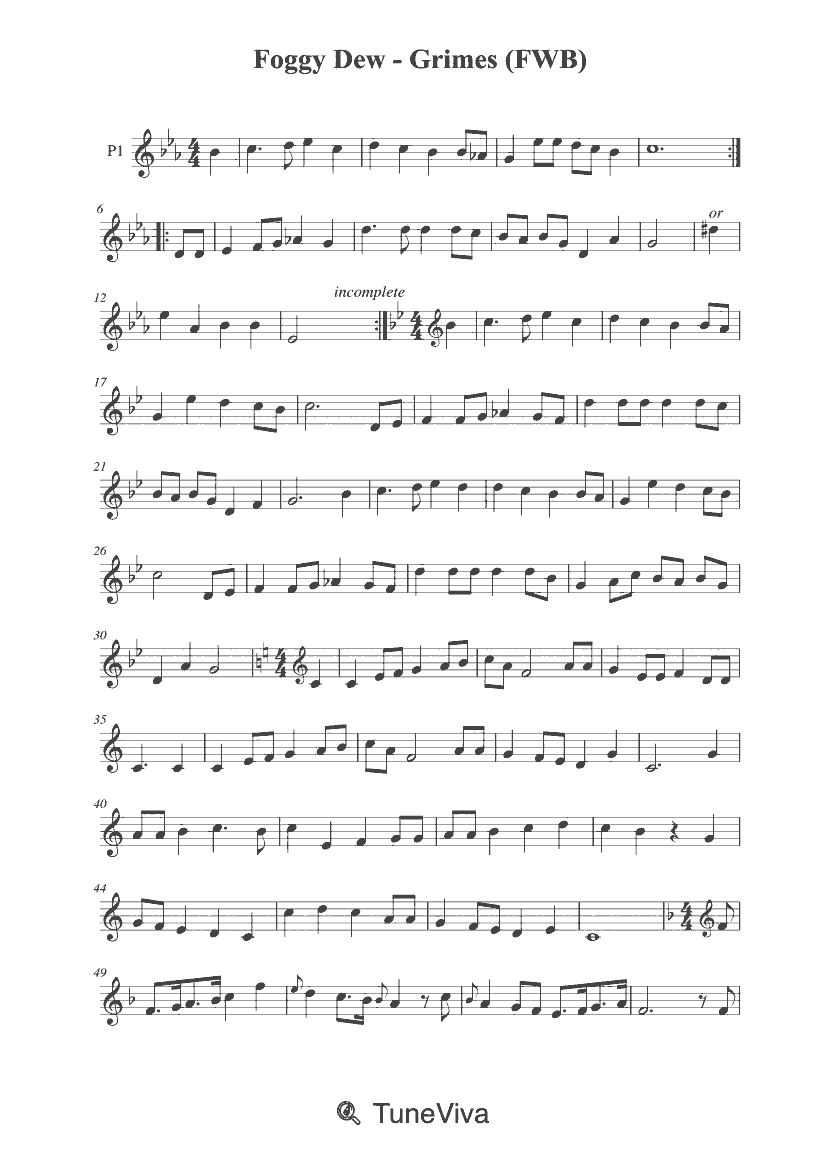
Misc Traditional
P1 · 4 min 6 sec
Open score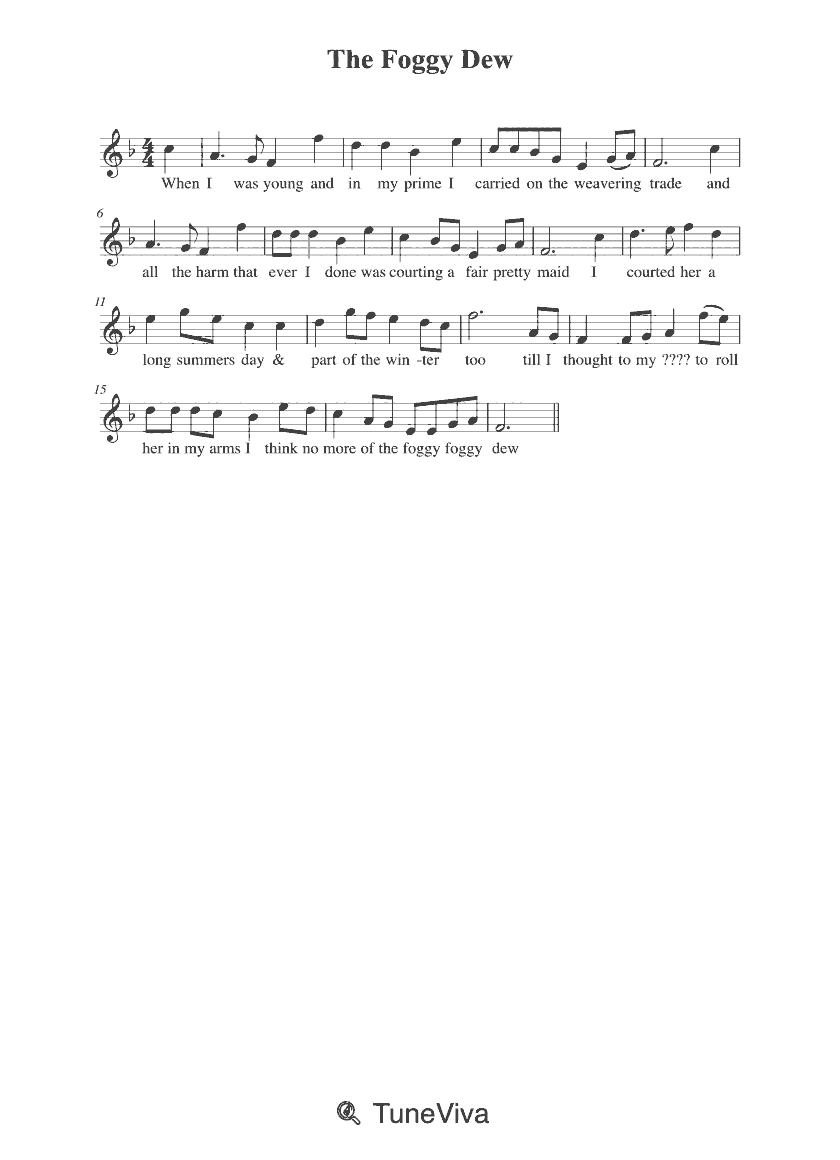
Misc Traditional
32 sec · Score #94674
Open score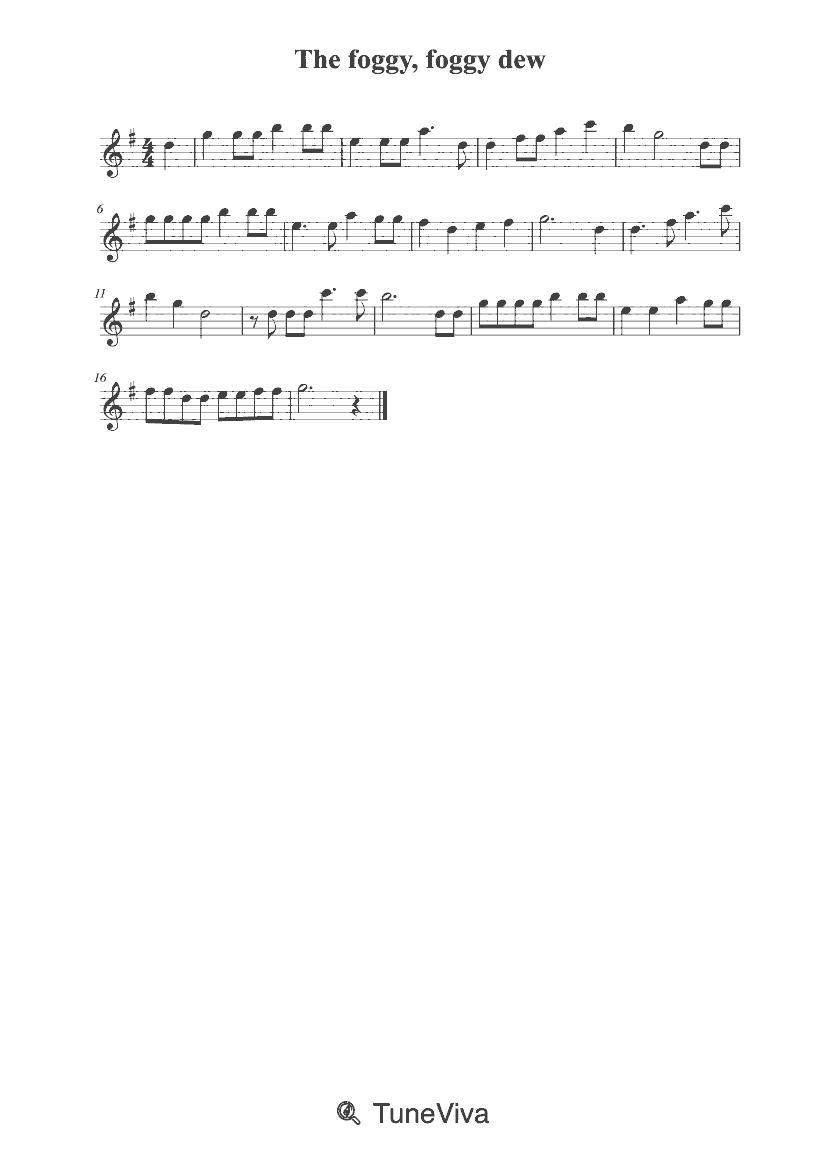
anon.
32 sec · Score #81284
Open score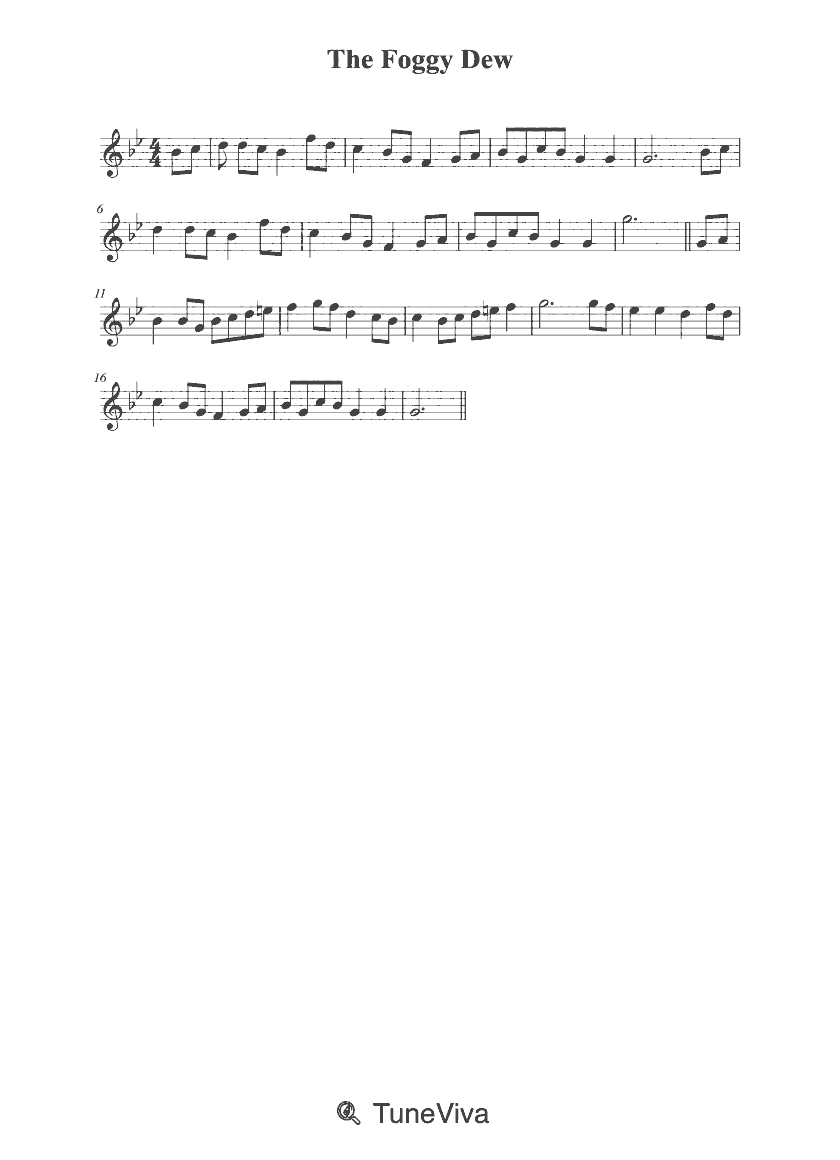
Misc Traditional
32 sec · Score #143187
Open score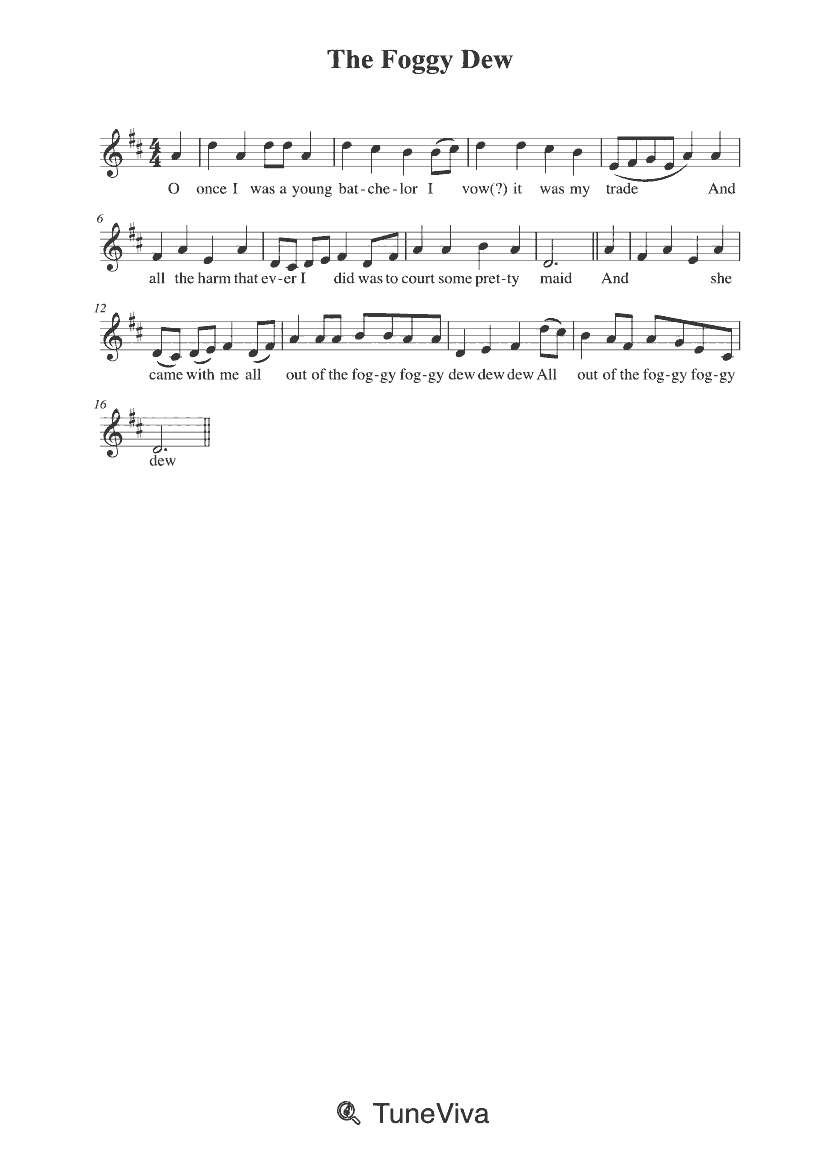
Misc Traditional
28 sec
Open score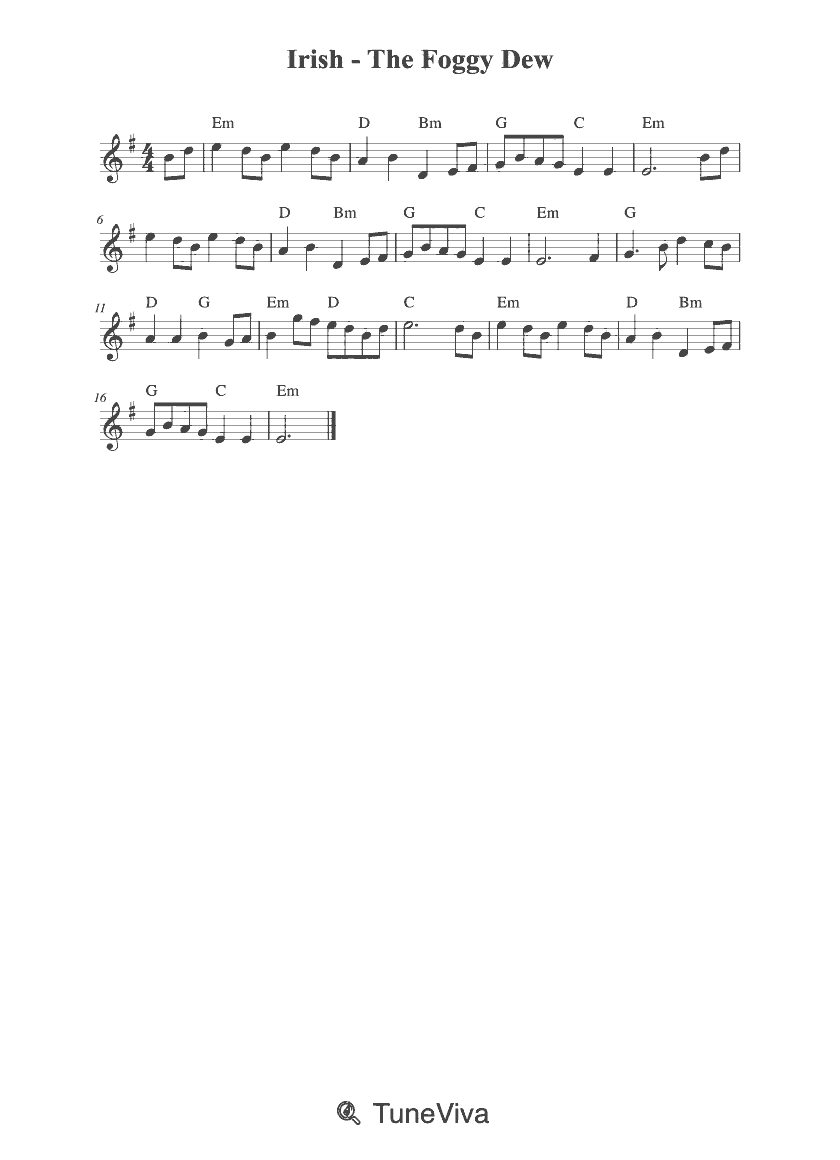
Irish
32 sec
Open score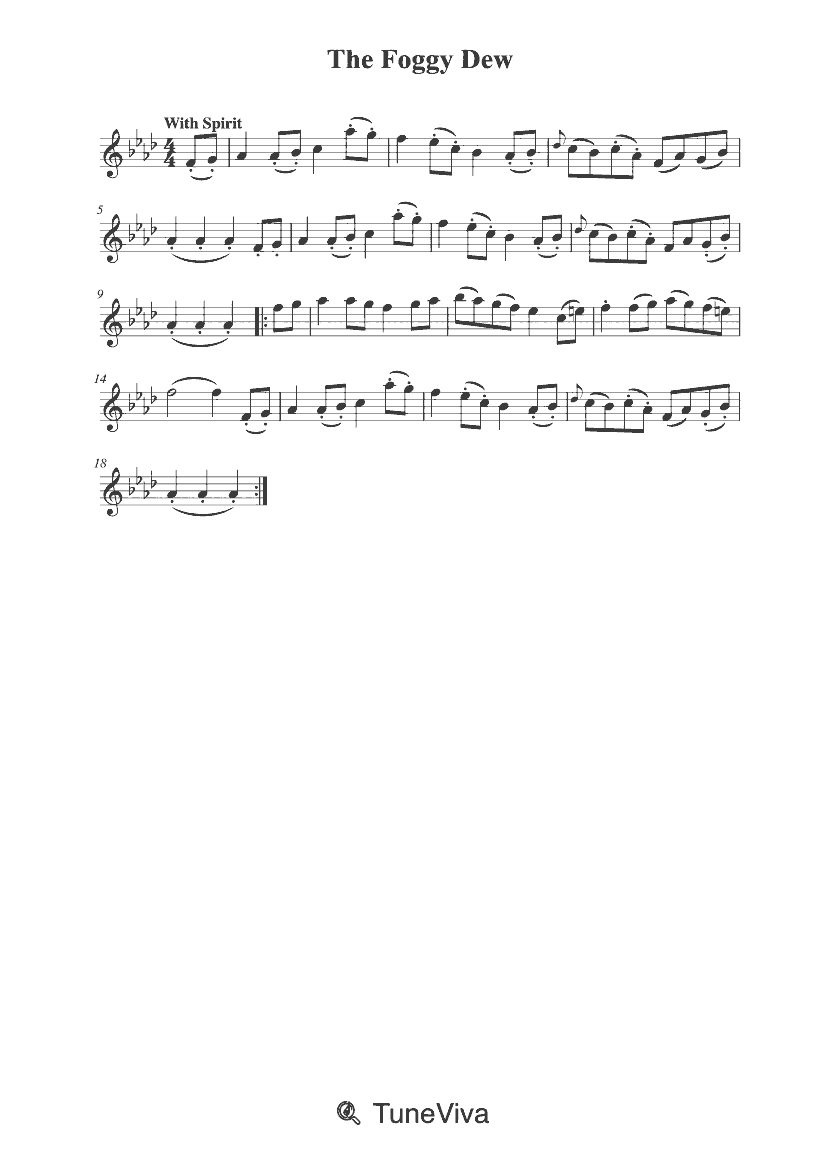
Misc Traditional
48 sec · Score #127106
Open score
anon.
32 sec · Score #228776
Open score
Misc Traditional
32 sec · Score #44105
Open score
Misc Traditional
48 sec · Score #137899
Open score
Misc Traditional
24 sec
Open score
Misc Traditional
32 sec · Score #180477
Open score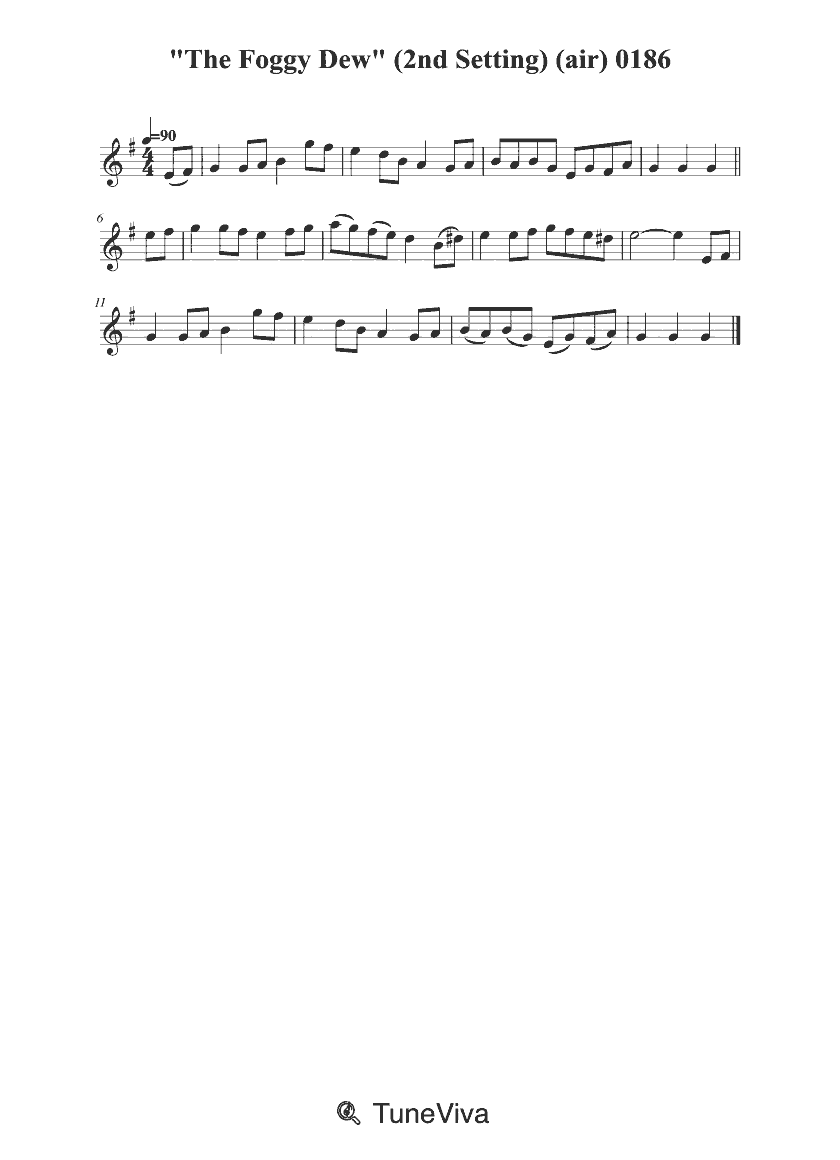
Unattributedmoderate
32 sec
Open score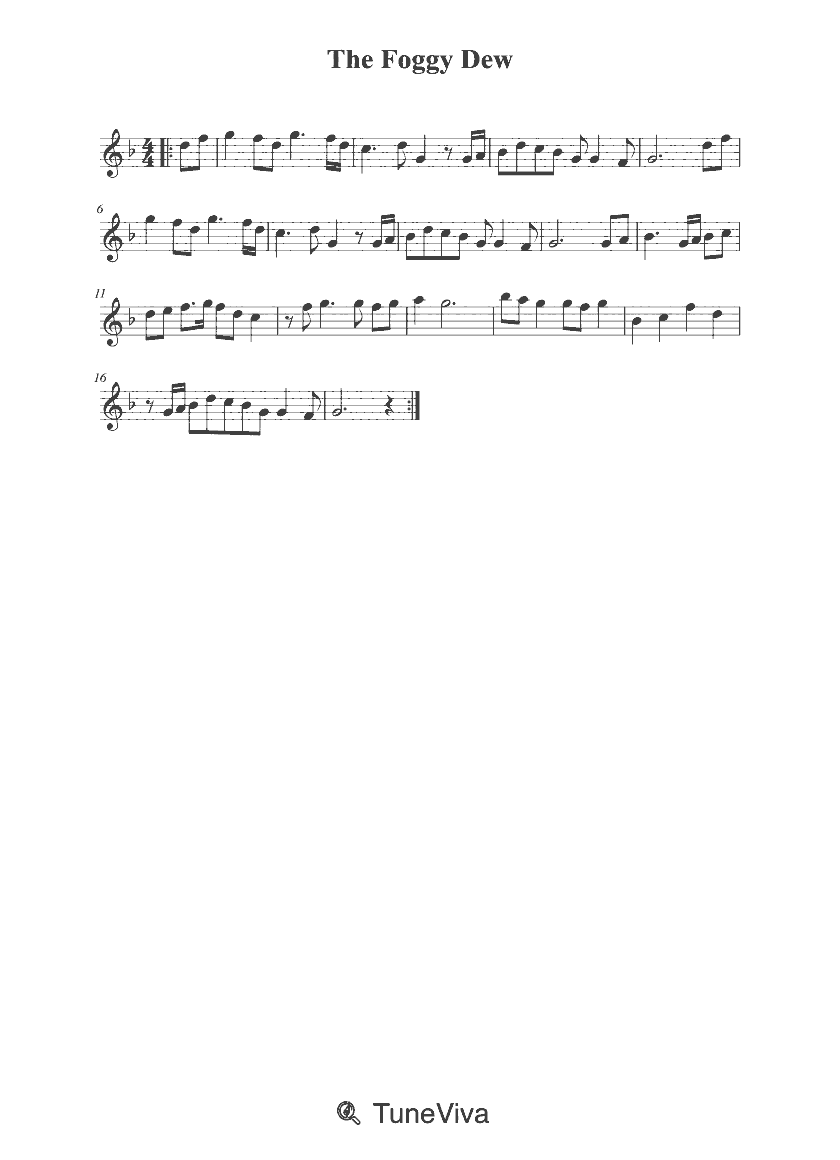
Misc Traditional
1 min 4 sec · Score #127272
Open score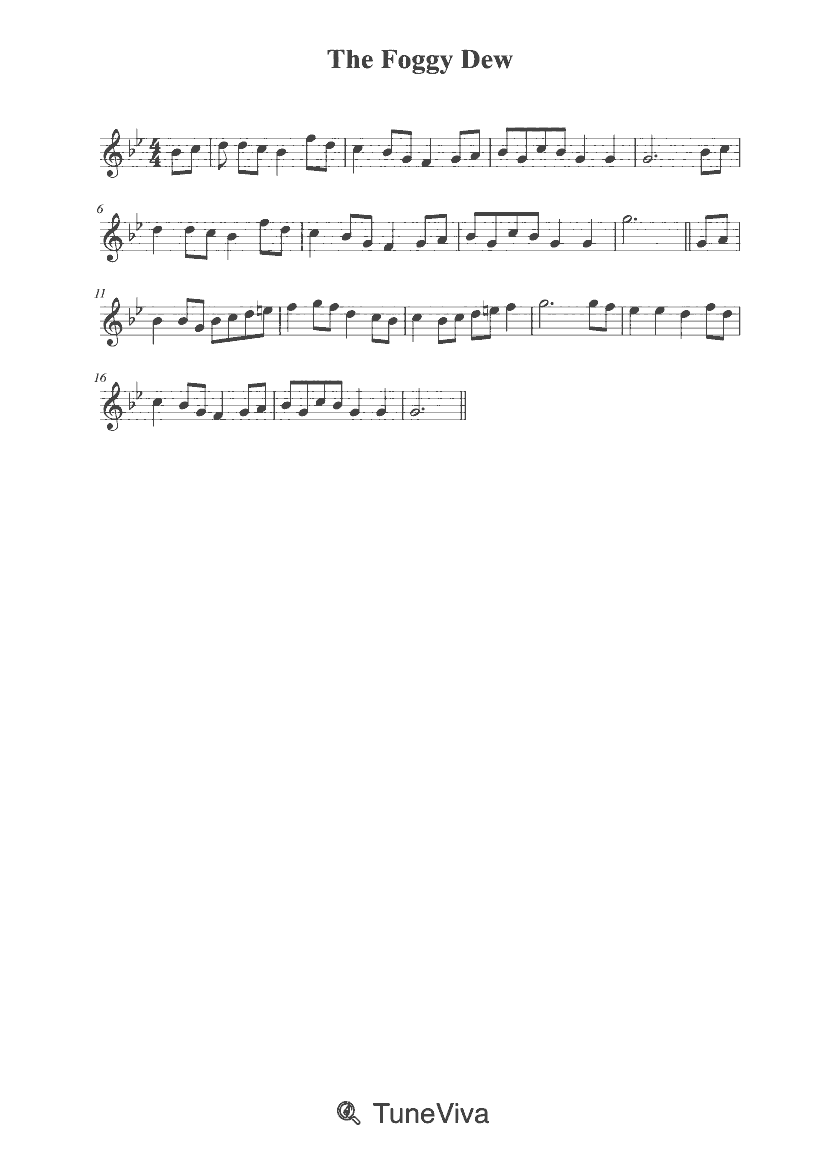
Misc Traditional
32 sec · Score #127893
Open score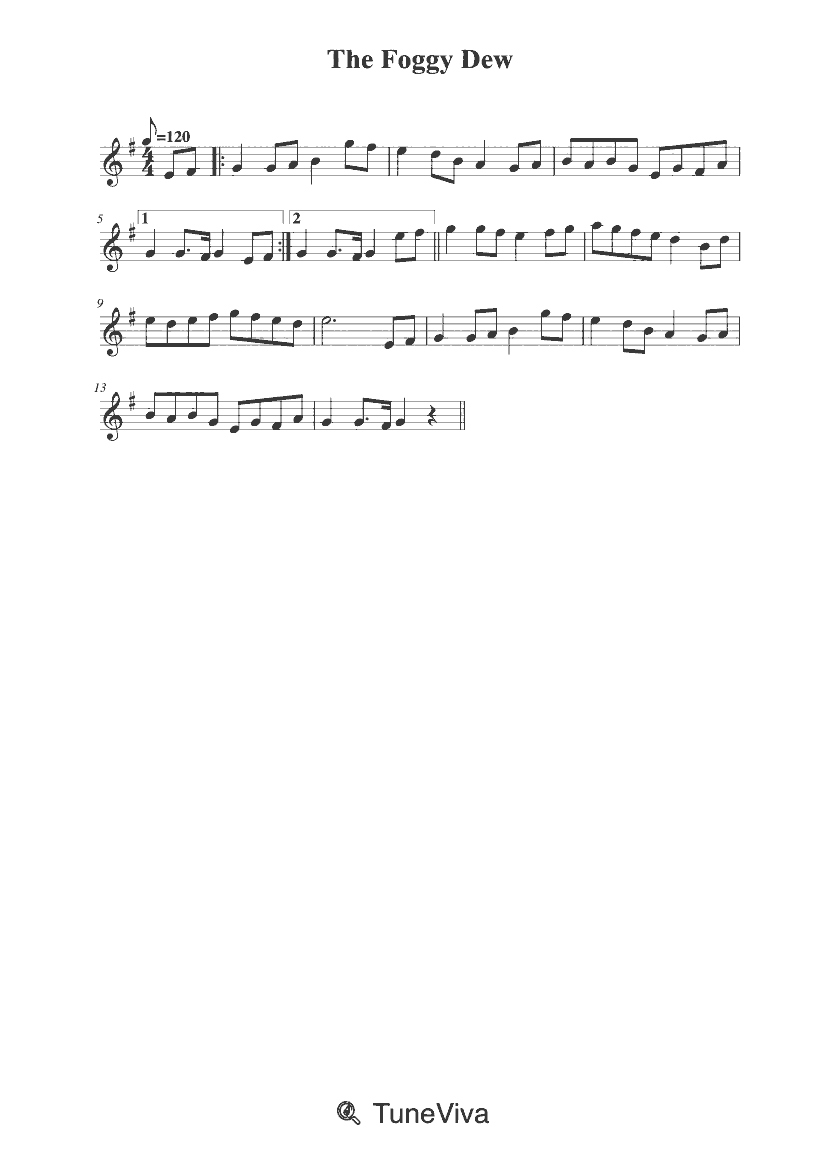
Misc Traditional
1 min 4 sec · Score #45803
Open scorePage 1 of 3
The three scores listed here begin in different keys: one with one flat (D minor), one with two flats (B-flat major), and one with one sharp (E minor). Players and singers should check which key sits comfortably for their instrument or voice range and for any other musicians they are playing with. Read the first few bars rather than relying on the key signature alone, since music in a minor-sounding mode can be notated in more than one way.
Two of the listed settings open in 4/4 while the third opens in 2/4, which will affect how the tune is barred and phrased on the page. One score also carries an opening tempo indication that appears very slow. Treat such markings as a property of that individual score; they are worth verifying by reading through the music or listening to a reference recording before you settle on a speed.
Titles in traditional music are often shared by more than one melody, and a single title can also circulate in several melodic variants. Because the scores here differ in key, metre and length, compare a line or two of the melody against the version you already know before deciding. That quick check prevents the common disappointment of preparing a setting that turns out to be a different tune or a heavily varied form.
The listed durations range from roughly half a minute to over three minutes, which suggests these scores do not all present the same amount of music. If you need a full strophic song accompaniment, a longer setting is likely to be the better starting point; if you want a short melodic statement or a single verse to work from, a brief one may suit. Durations attached to scores can be approximate, so confirm by looking at how many verses or sections the score contains.
Catalogue duration 3 min 21 sec. Opening key signature: 1 flat (D minor). Opening time signature: 4/4. Opening tempo: 20 BPM.
Catalogue duration 32 sec. Opening key signature: 2 flats (B♭ major). Opening time signature: 4/4.
Catalogue duration 31 sec. Opening key signature: 1 sharp (E minor). Opening time signature: 2/4.
The Foggy Dew is presented here as traditional music: one listed score credits the composer as 'Trad' and the other two give no composer name. No evidence supplied with this page identifies an individual composer or arranger, so the safest description is that these are traditional settings attributed to no named author.
The three scores listed for The Foggy Dew open in different keys: one has a single flat, consistent with D minor; one has two flats, consistent with B-flat major; and one has a single sharp, consistent with E minor. These are the opening key signatures only, so a setting may change key later in the piece.
The listed settings open in either 4/4 or 2/4, which means the same tune has been barred and grouped differently from one score to another. A 2/4 notation makes each bar shorter and can give the melody a more strongly pulsed feel on the page, while 4/4 groups the music into longer bars. Either can represent the same underlying tune.
Instrumentation is not stated for the scores listed on this page, so a singer or instrumentalist cannot tell from the title alone whether a given setting includes a vocal line, a piano accompaniment or a single melody part. Inspect the staves and any text underlay in the score itself before choosing one for your purpose.
Choosing between the settings comes down to three practical checks: the key, which should suit your voice or instrument; the metre, which changes how the phrases are barred; and the amount of music included, since the listed settings differ considerably in length. Playing or singing the opening bars of each makes those differences clearest.