Very old - The Fyket
Very old
32 sec · Score #182159
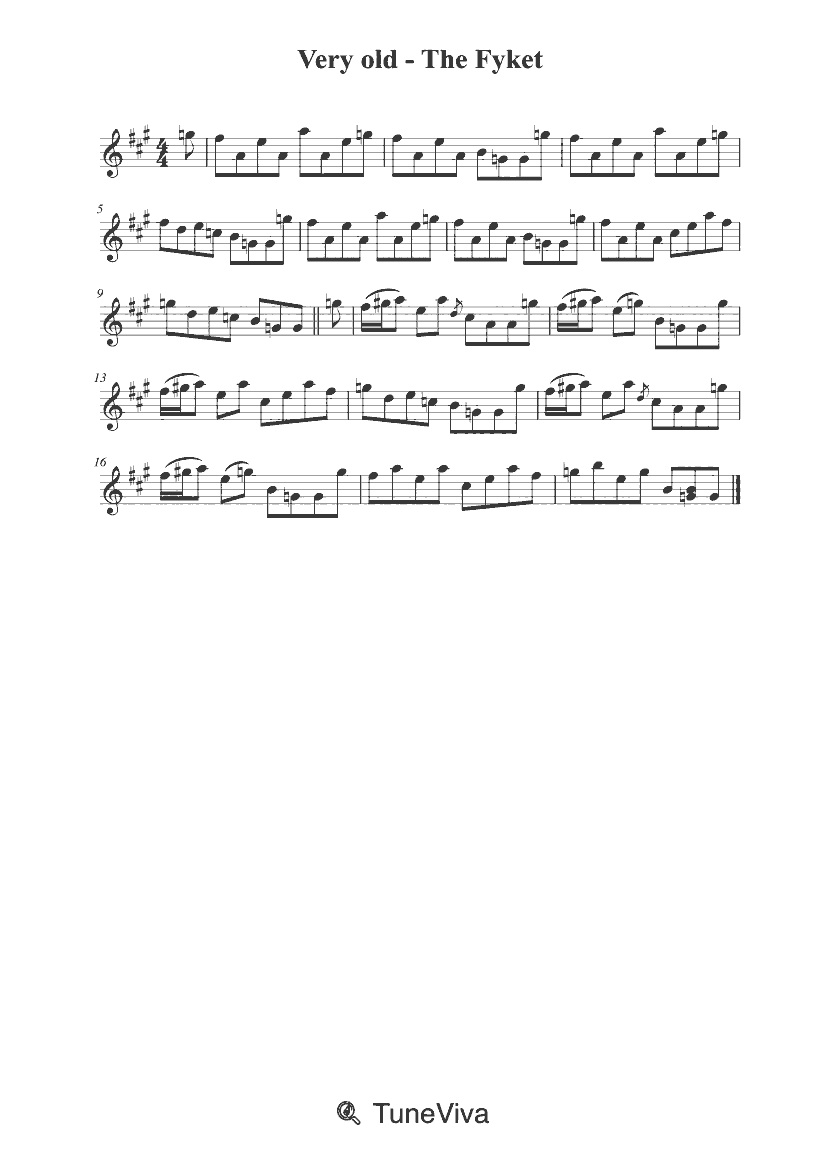
Open scoreThe Fyket sheet music is listed in more than one setting, and the differences are worth checking before you choose a score. Two of the available versions open in A major with a 4/4 time signature, while a third opens in G major in 6/8, so the title is used for both a duple-metre and a compound-metre reading of the tune. That affects phrasing, where the beat falls, and how comfortable the key is for a given instrument or voice. No composer is reliably named for The Fyket in these listings, and the credit 'Very old' should be read as a description rather than a verifiable attribution.
Scores 1–20 of 26
Very old
32 sec · Score #182159
Open score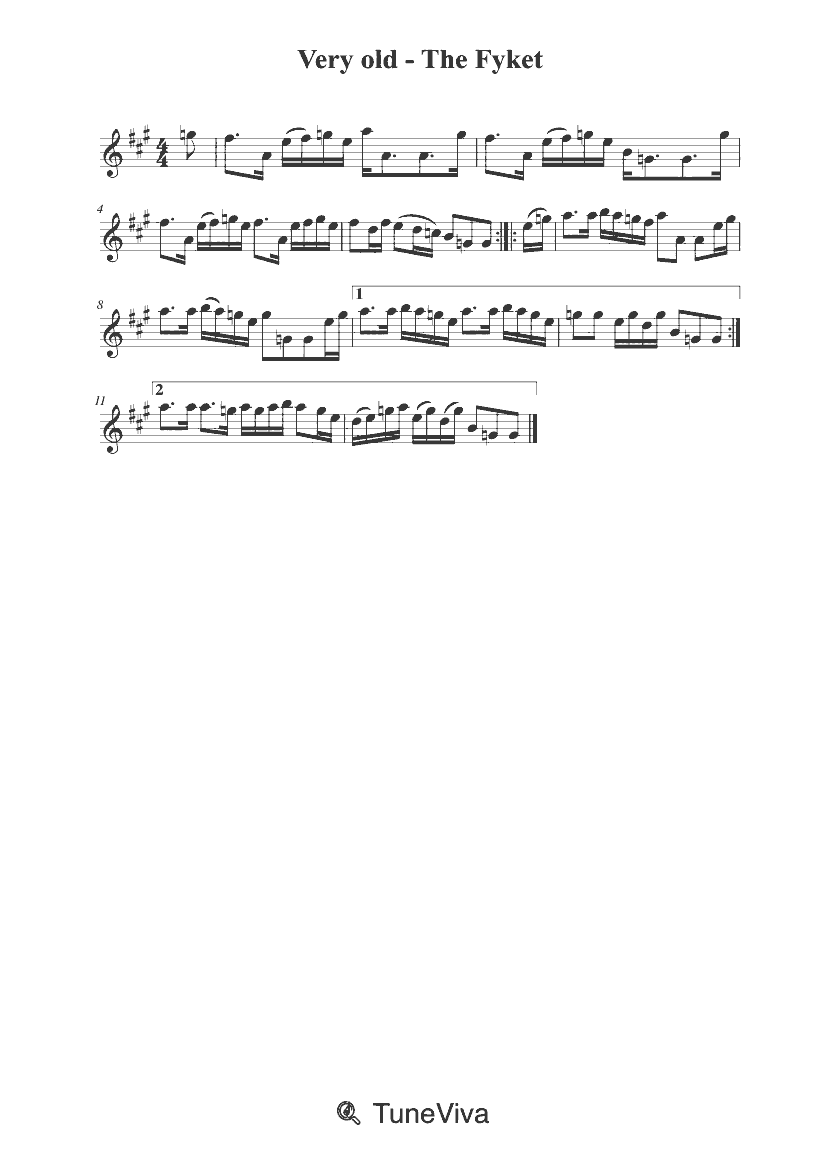
Very old
32 sec · Score #26660
Open score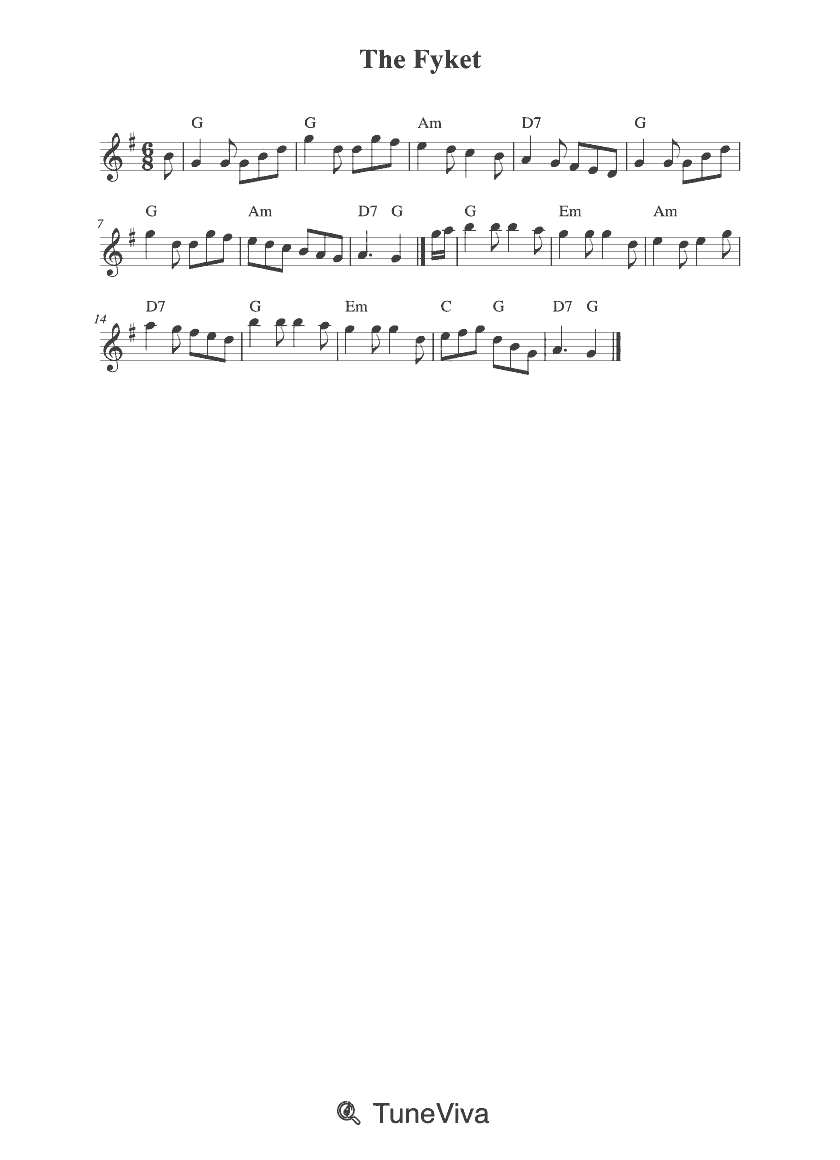
Misc tunes
12 sec · Score #84381
Open score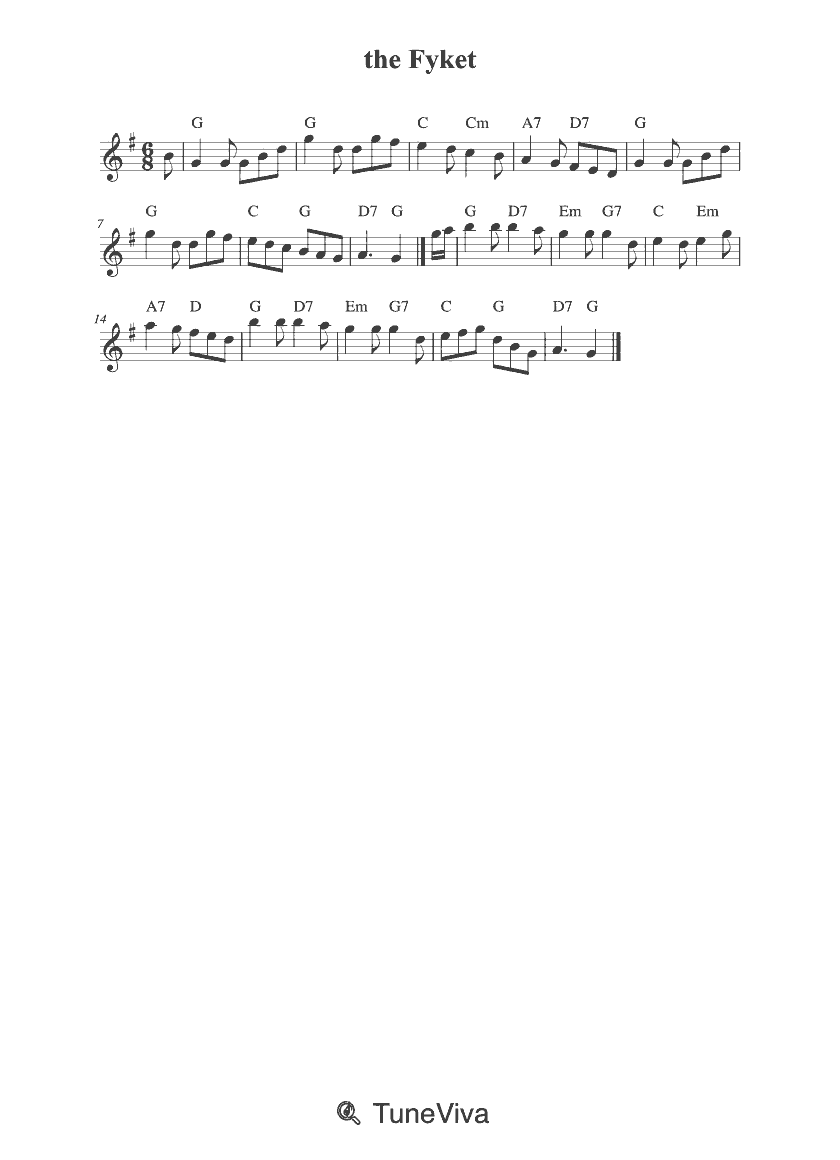
Misc tunes
12 sec · Score #9463
Open score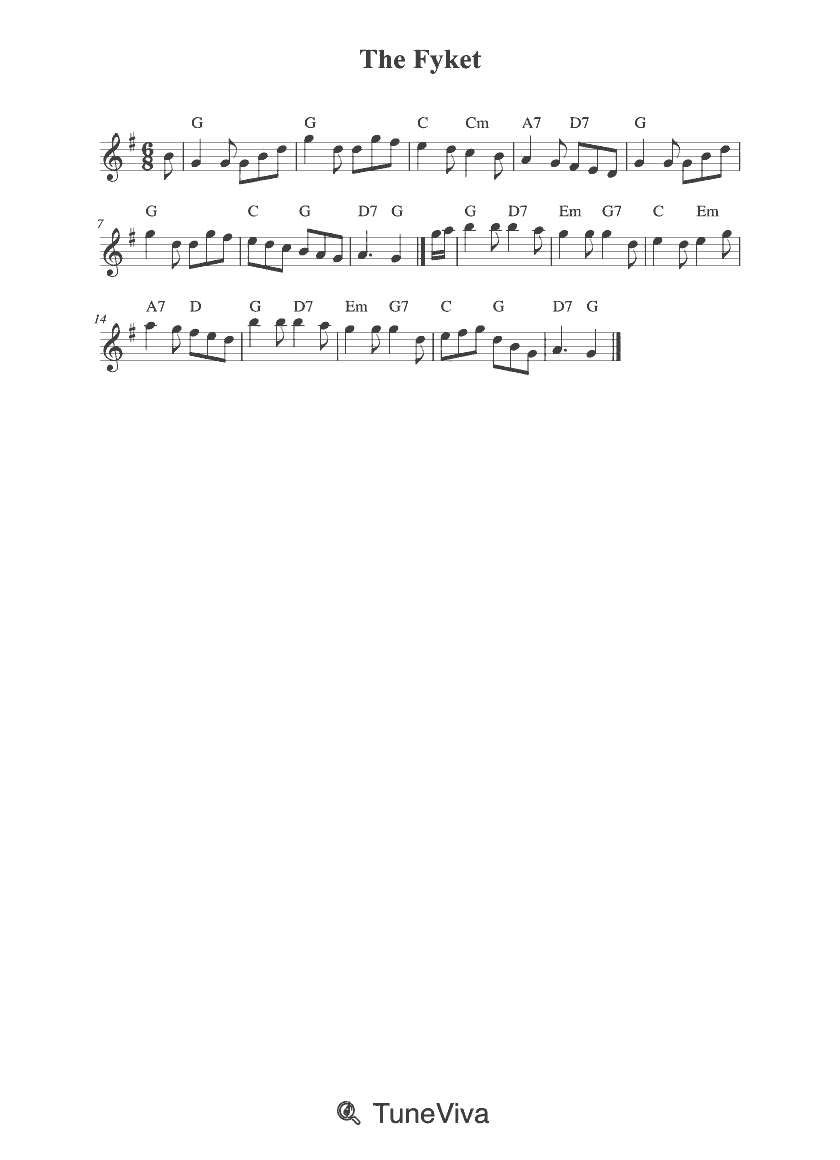
Misc tunes
12 sec · Score #88078
Open score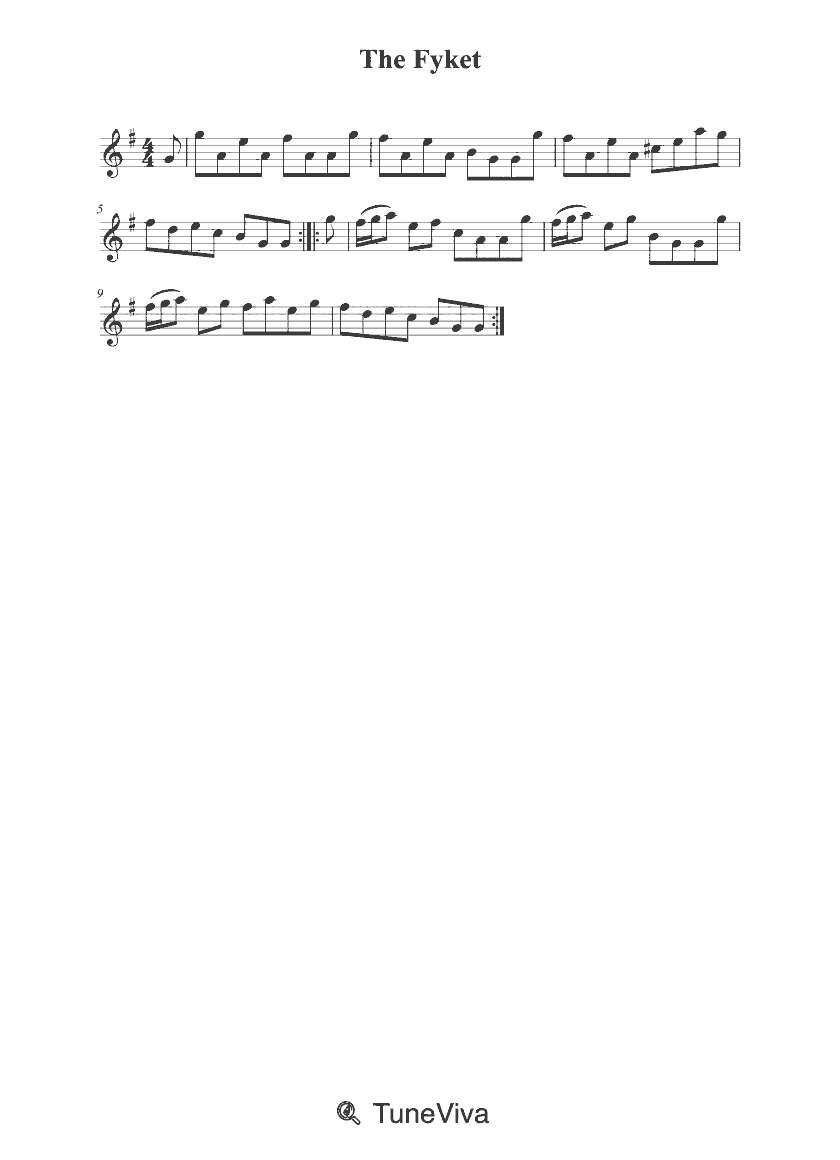
Misc tunes
32 sec · Score #176451
Open score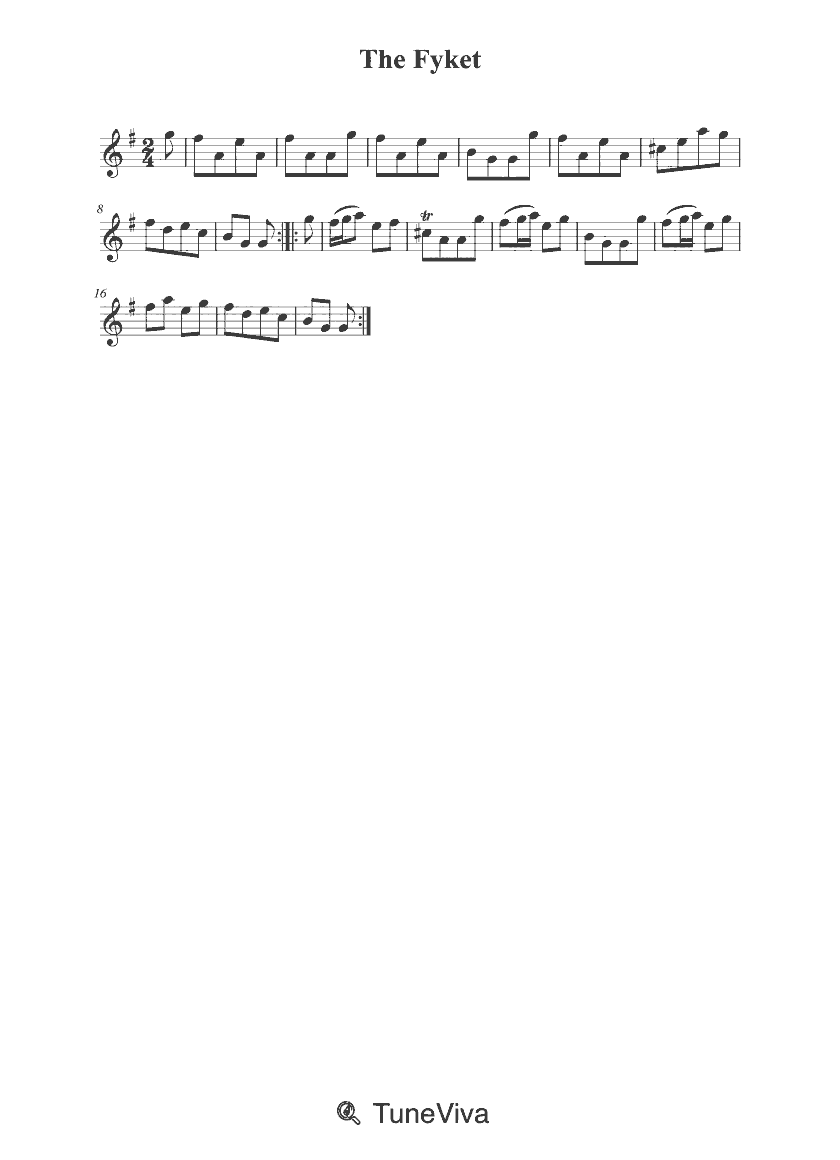
Misc tunes
32 sec · Score #1088
Open score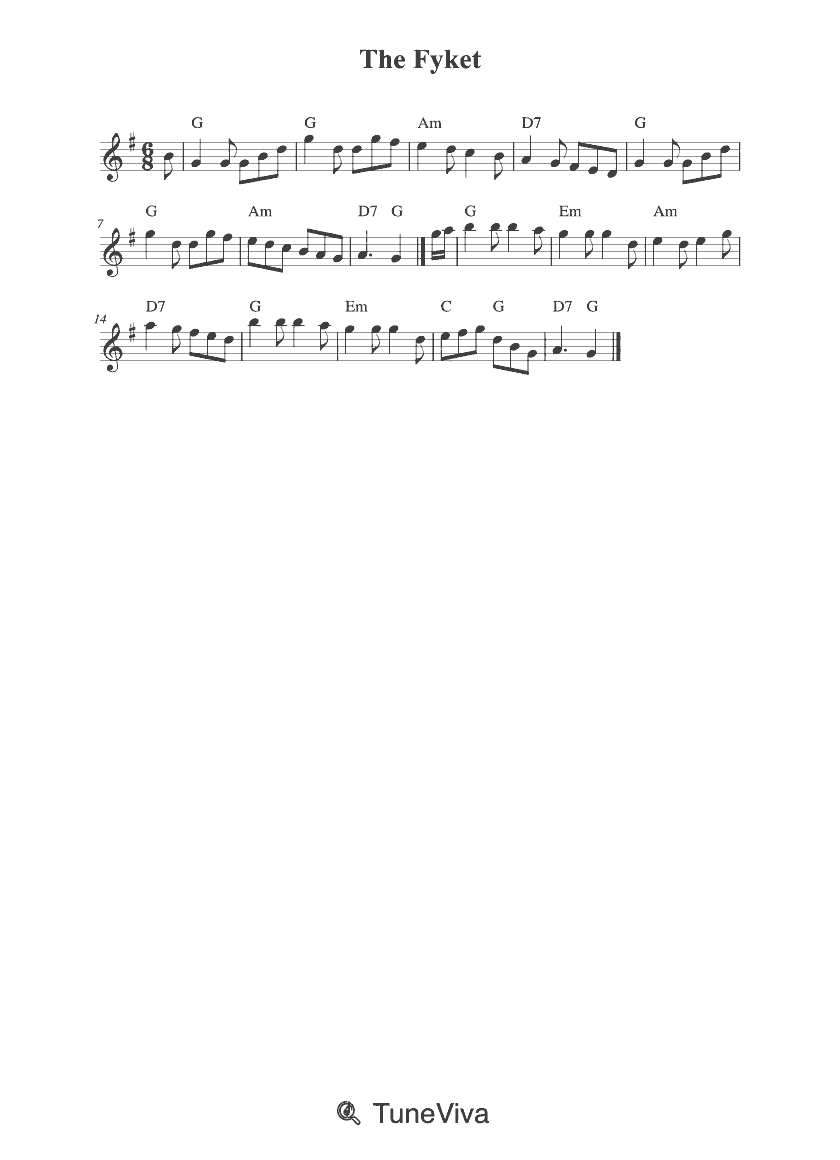
Misc tunes
12 sec · Score #65410
Open score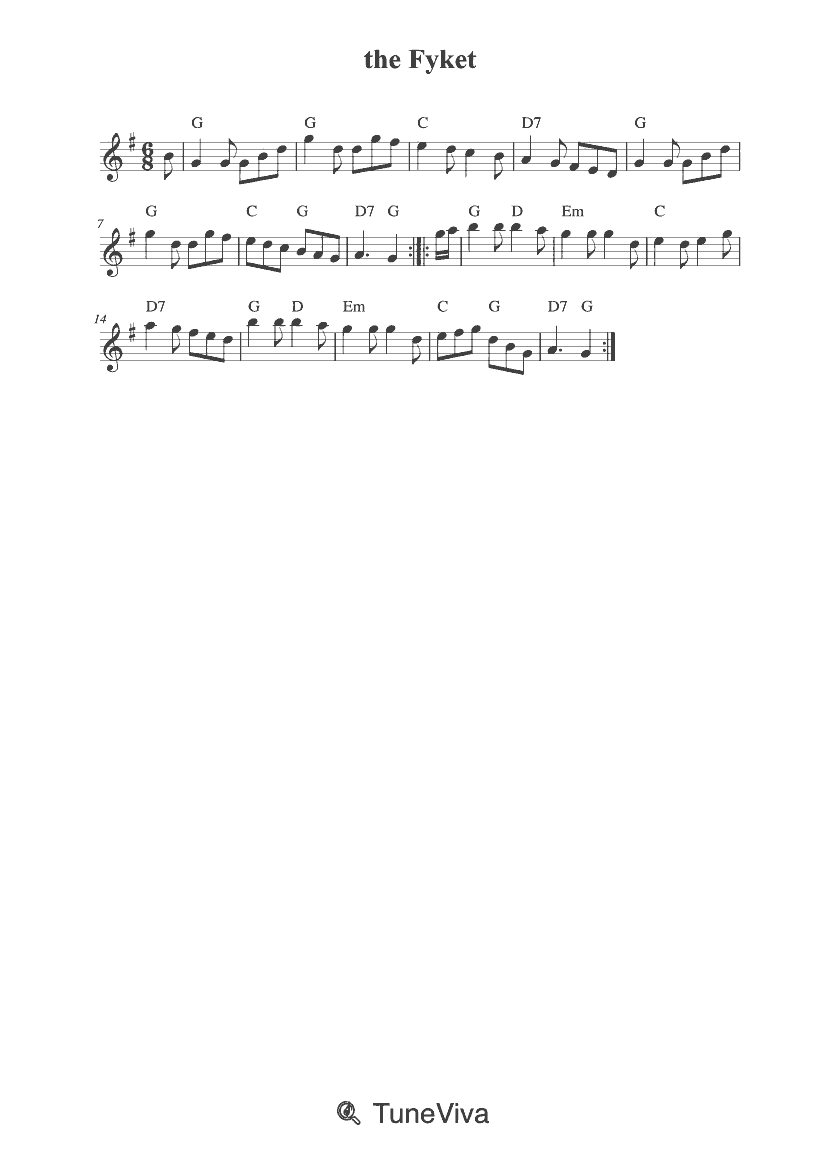
Misc tunes
24 sec · Score #99326
Open score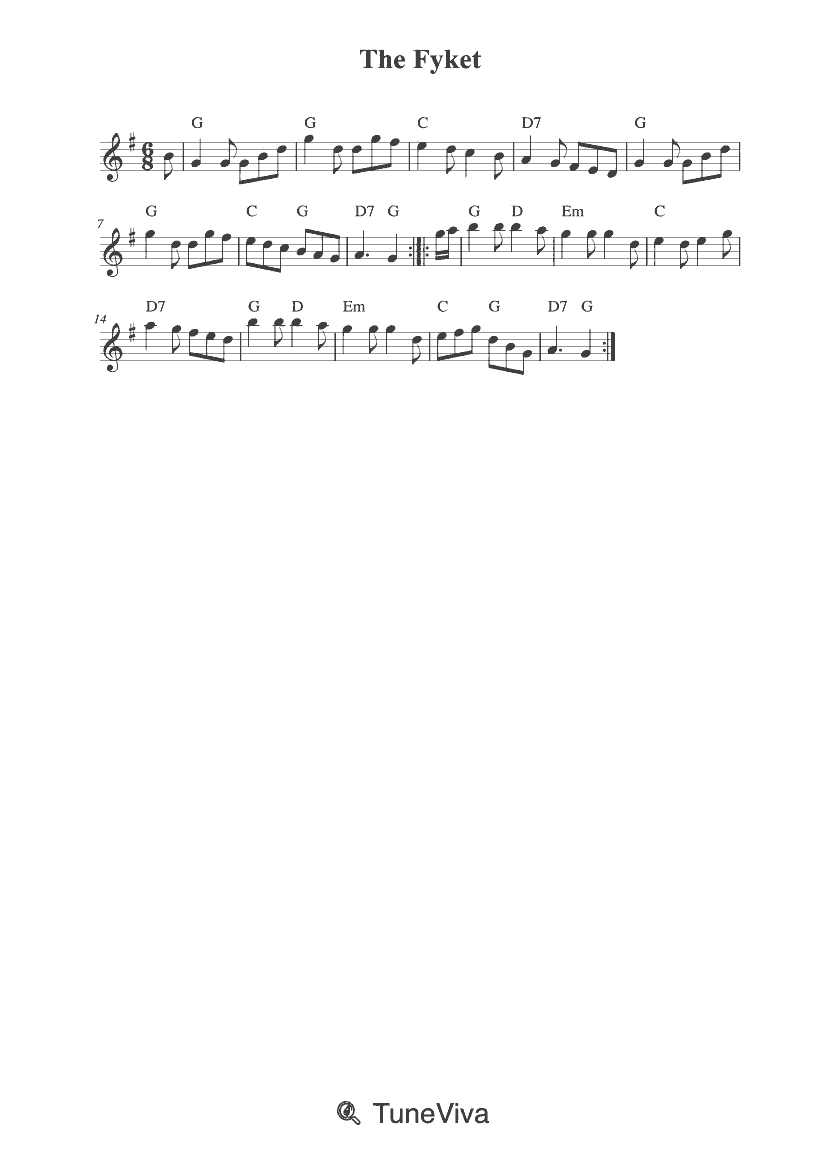
Misc tunes
24 sec · Score #123999
Open score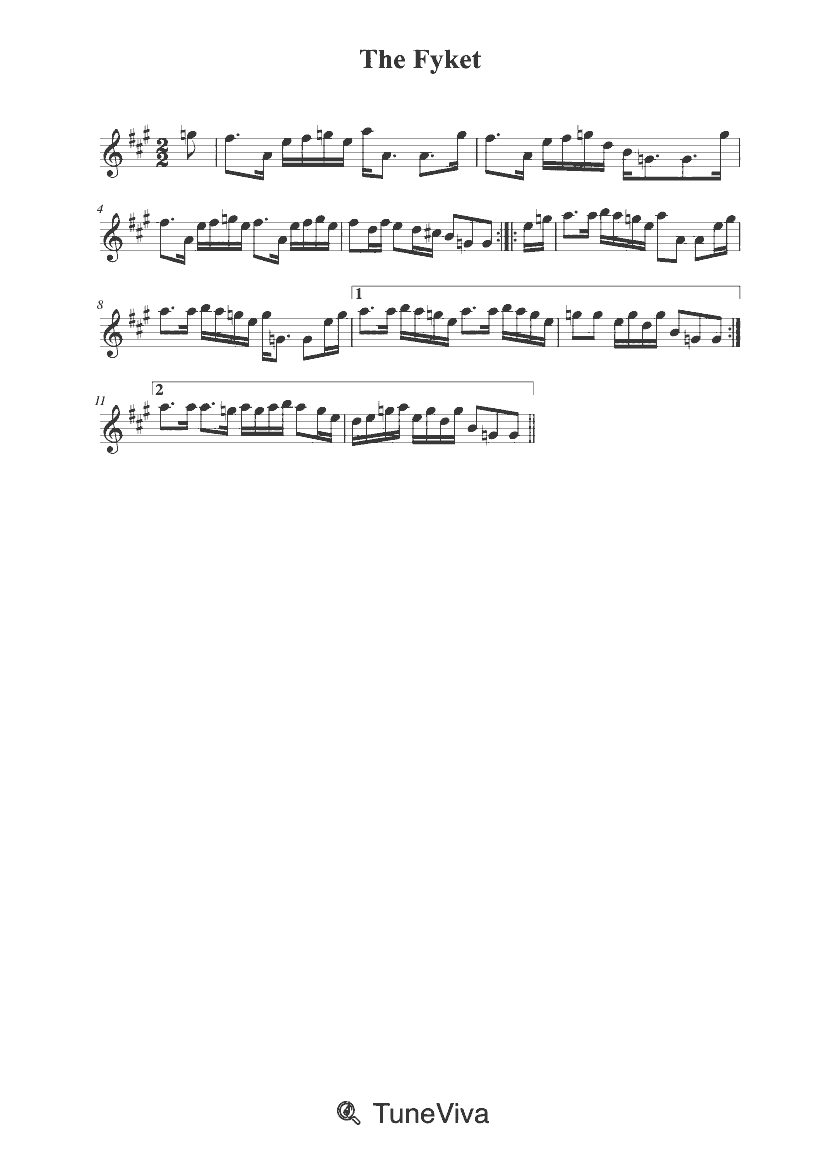
Misc tunes
1 min 4 sec · Score #15401
Open score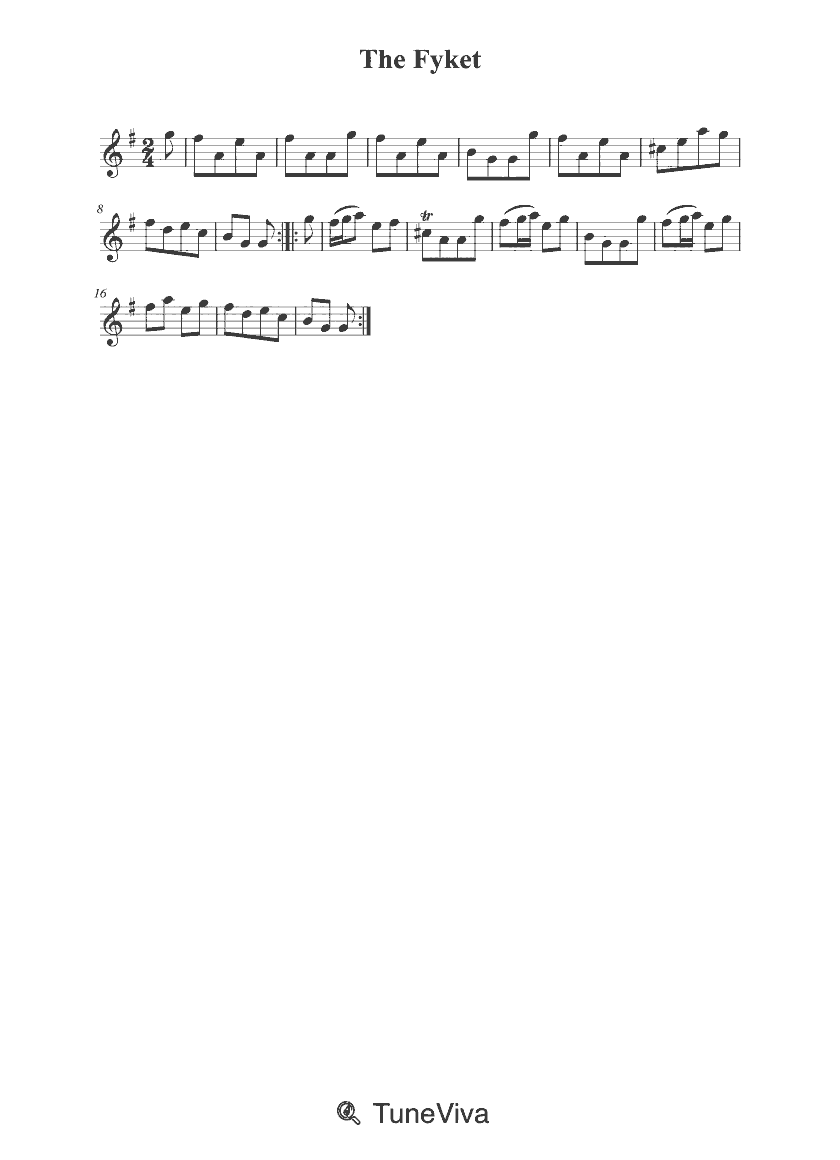
Misc tunes
32 sec · Score #210158
Open score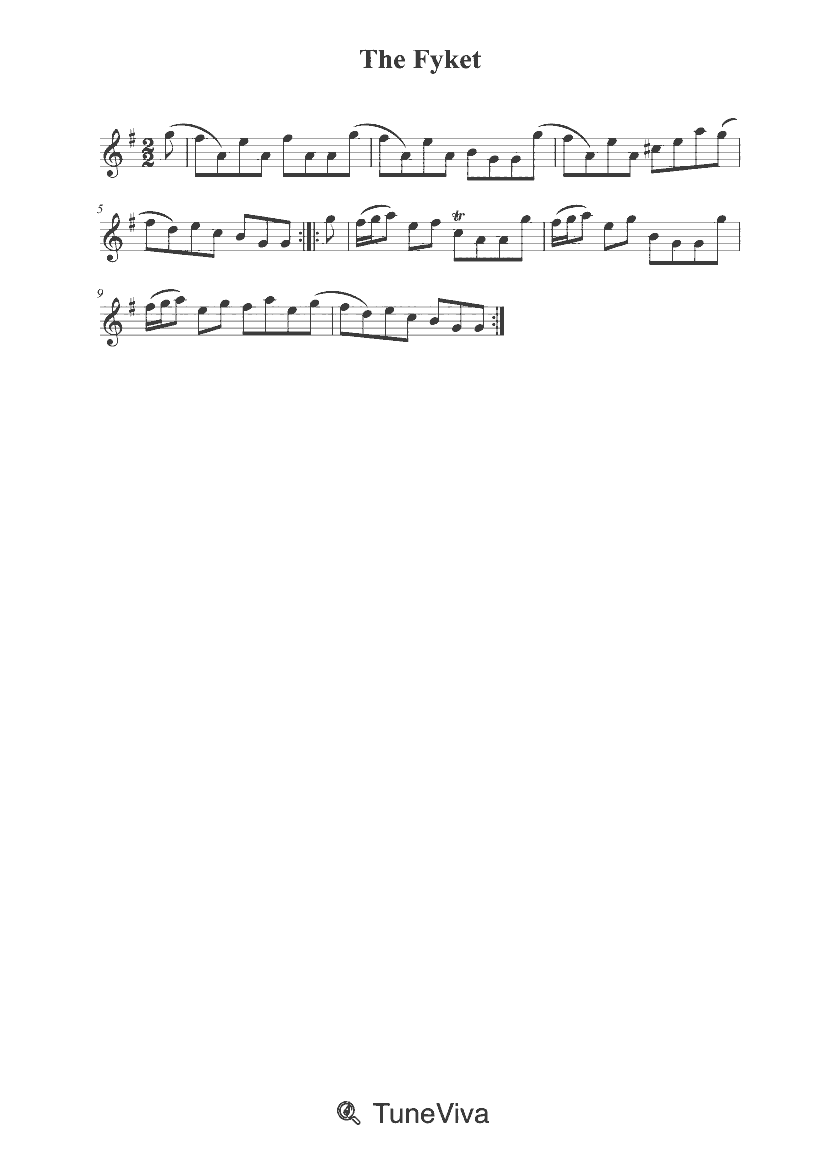
Misc tunes
1 min 4 sec · Score #103065
Open score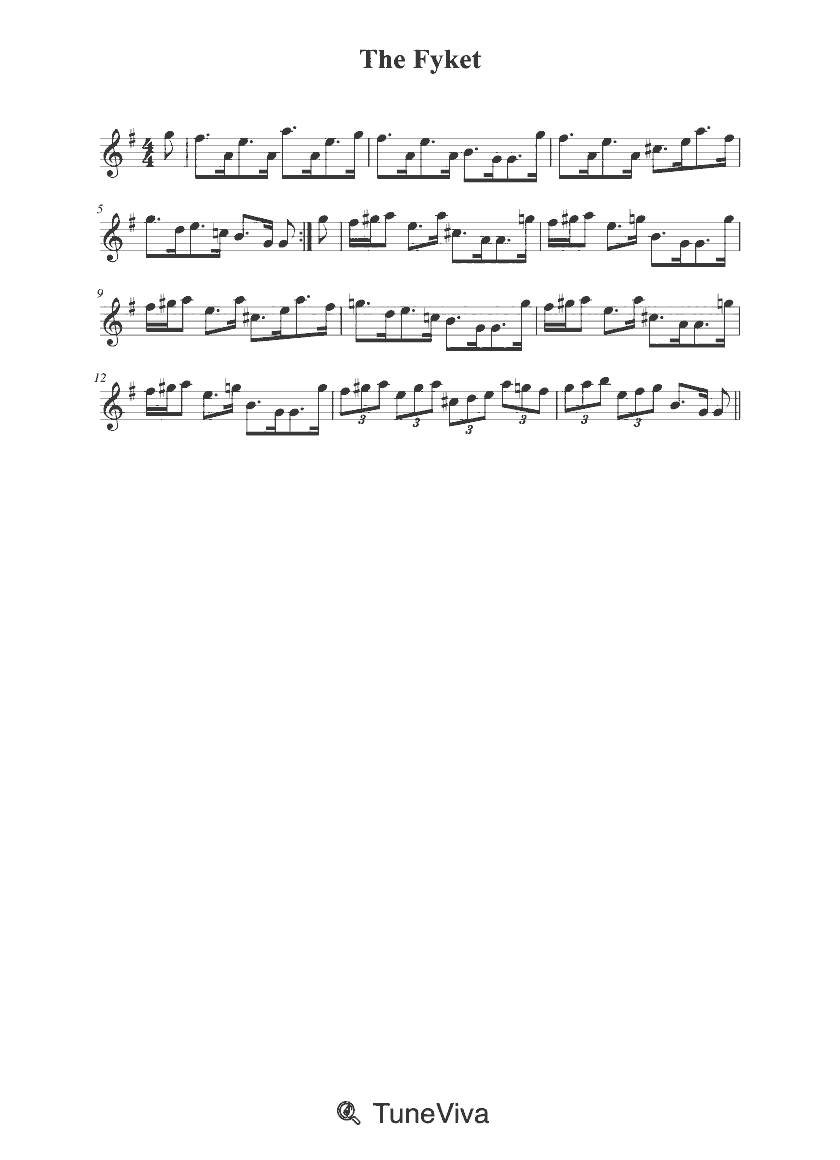
Misc tunes
32 sec · Score #149731
Open score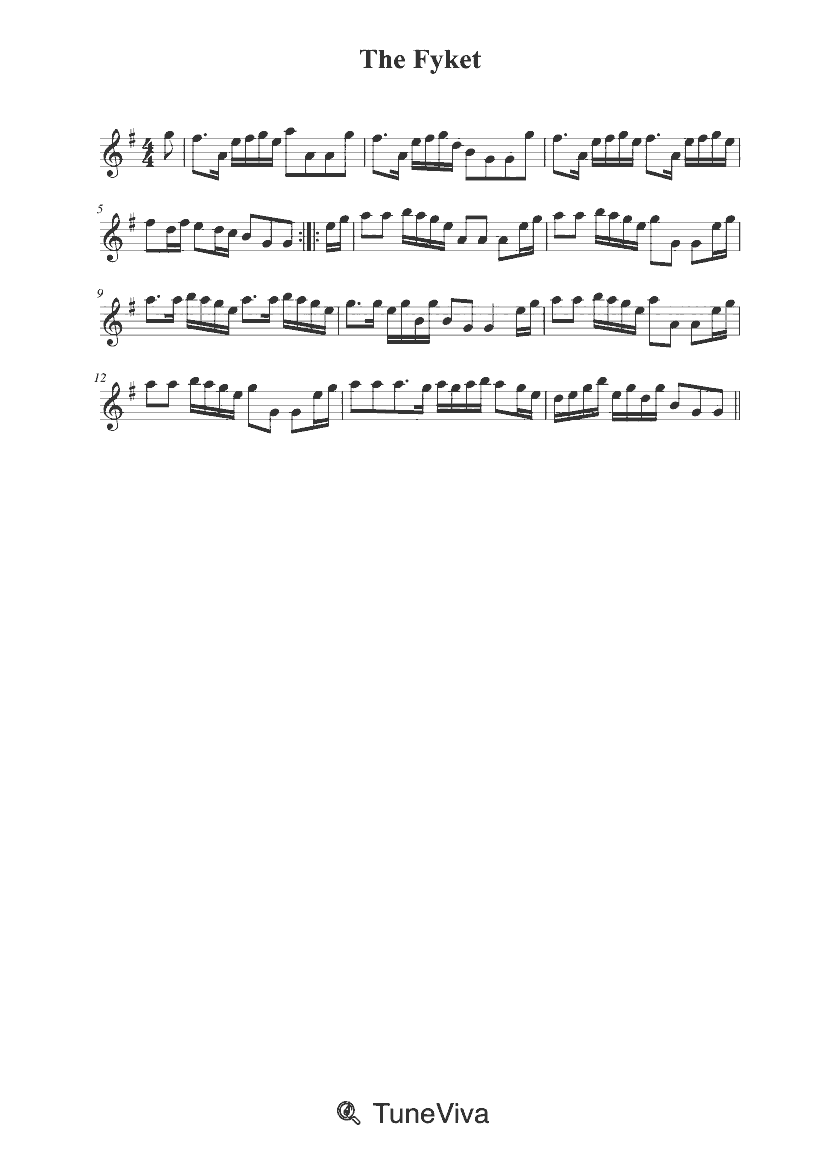
Misc tunes
48 sec
Open score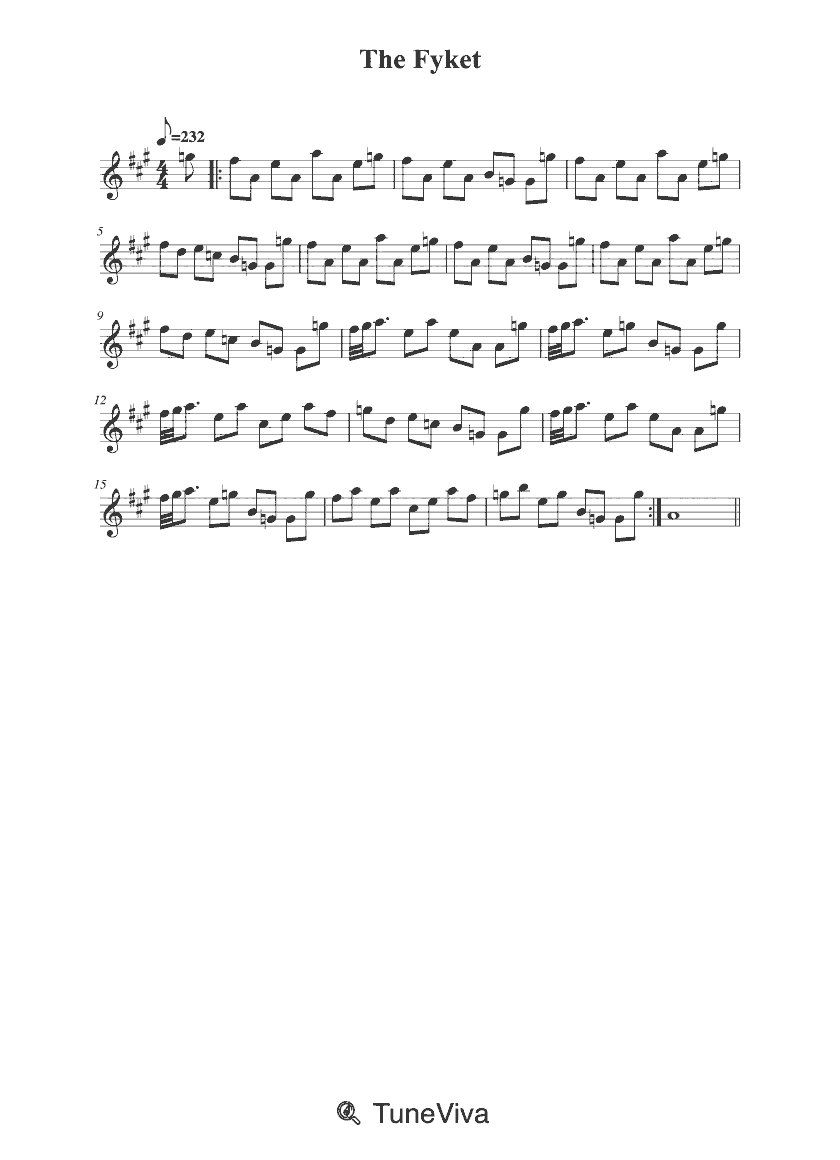
Misc tunes
1 min 9 sec
Open score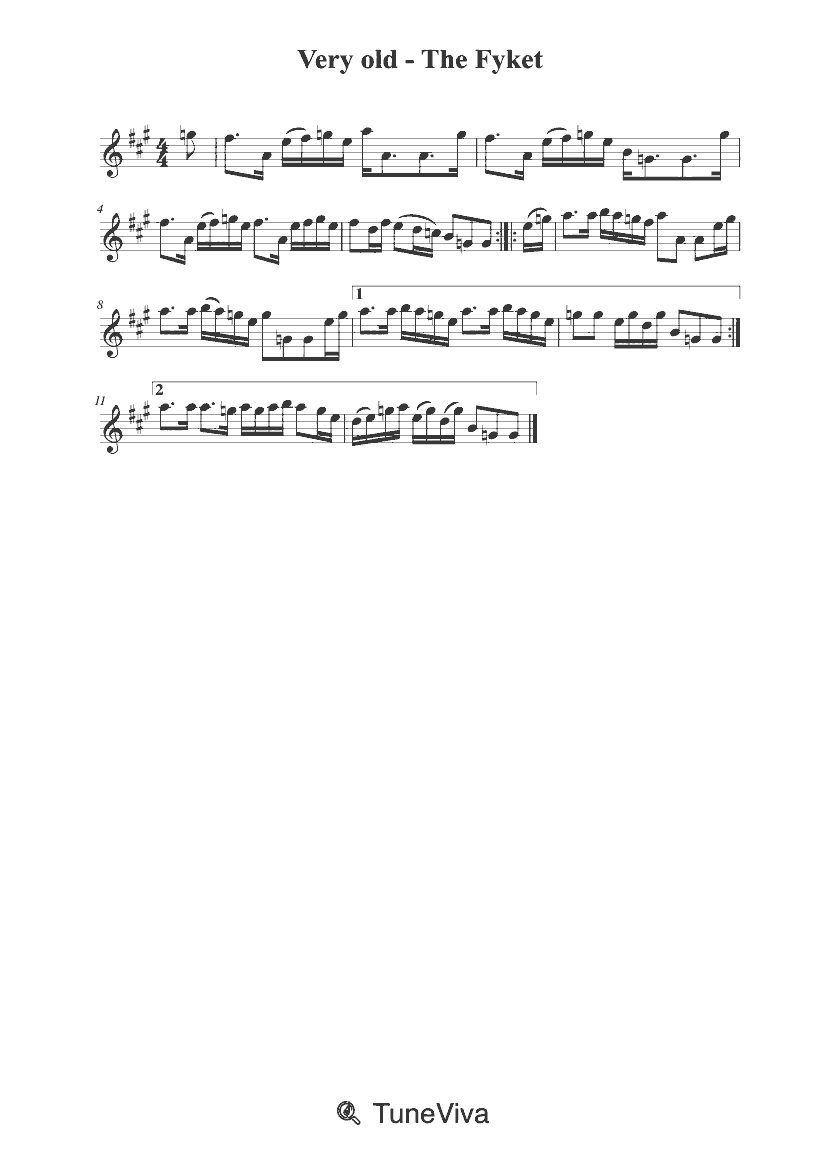
Very old
32 sec · Score #196717
Open score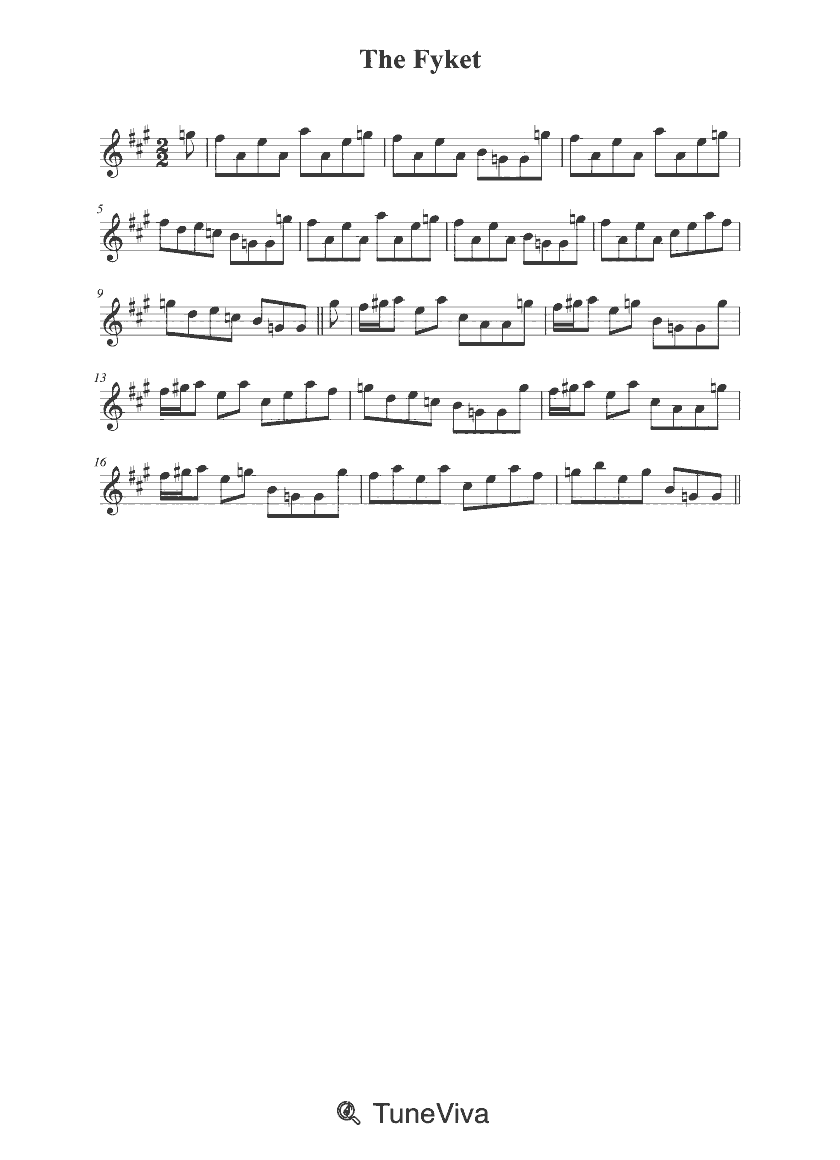
Misc tunes
1 min 4 sec · Score #767
Open score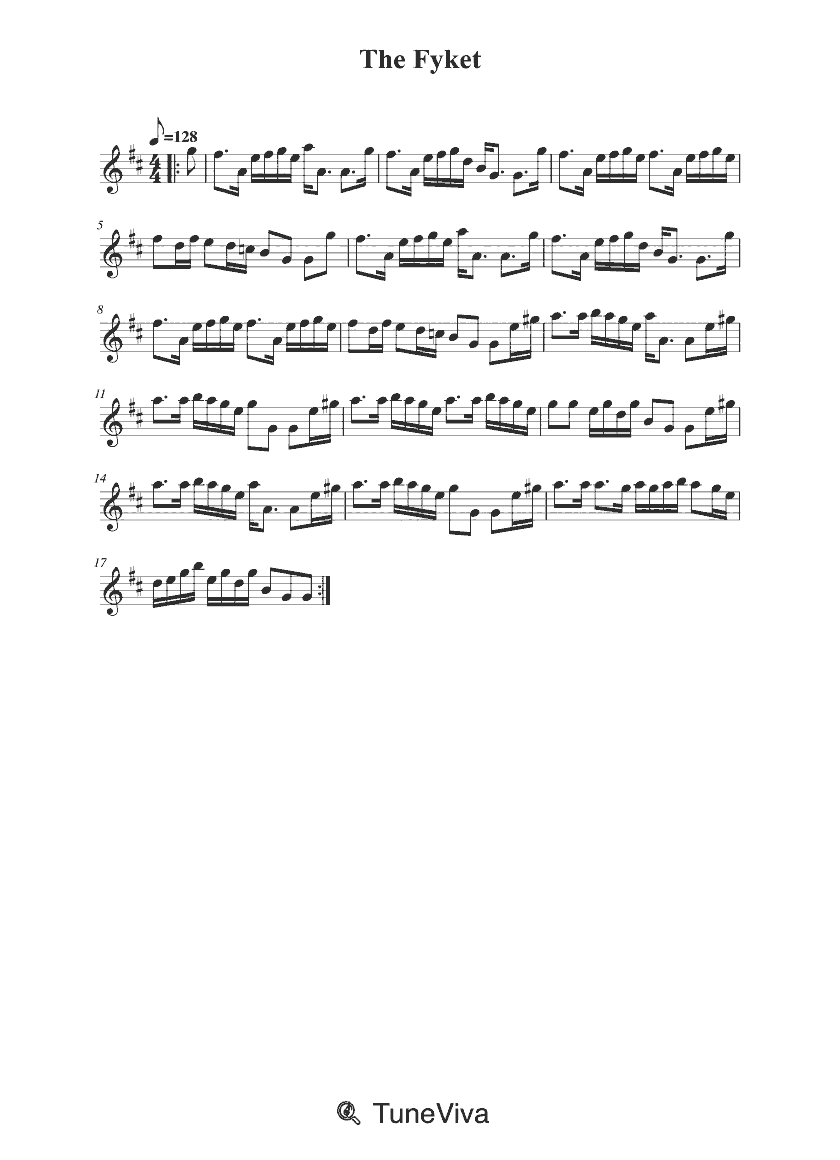
Misc tunes
2 min 0 sec
Open score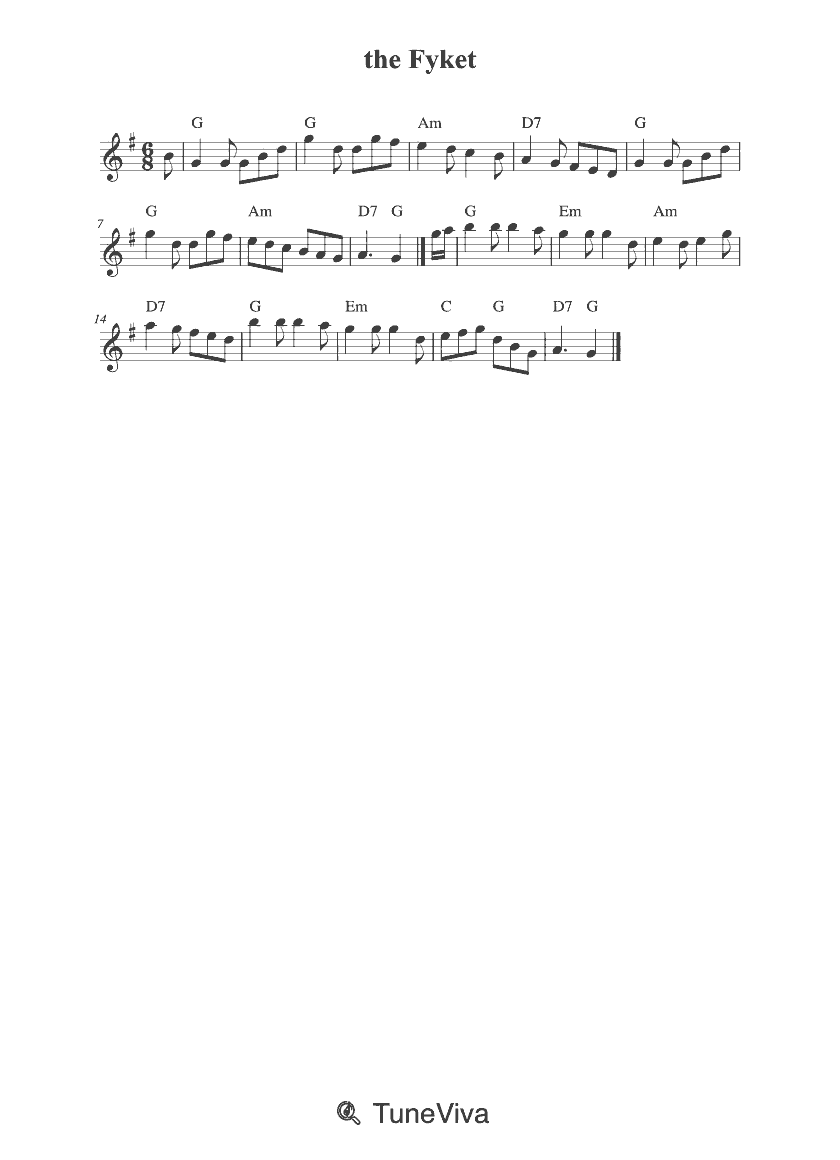
Misc tunes
12 sec · Score #53368
Open scorePage 1 of 2
The three scores split into two groups: two open with three sharps (A major) in 4/4, and one opens with one sharp (G major) in 6/8. Opening key signatures describe only the start of a piece, so confirm whether the key changes later. The 6/8 setting will group its notes in compound beats and phrase differently from the 4/4 settings, which matters if you are accompanying a singer or playing with others who have learned a different version.
A major and G major sit differently under the fingers on many instruments, and the choice between them can be practical rather than musical: string players often find G major and A major comfortable for open strings, while transposing instruments may prefer one over the other. Use the key and time signature, not the length of the listing, to decide which score to open first, then check the range and any accidentals in the score itself.
None of the available scores names a composer. Two entries carry the credit 'Very old', which reads as a descriptive tag rather than a person's name, and the third lists no composer at all. That label is not evidence of the tune's age and should not be treated as a date. If you need a scholarly attribution or a source for the tune, look for an edition that names its source rather than relying on the title page of a single score.
Catalogue duration 32 sec. Opening key signature: 3 sharps (A major). Opening time signature: 4/4.
Catalogue duration 32 sec. Opening key signature: 3 sharps (A major). Opening time signature: 4/4.
Catalogue duration 12 sec. Opening key signature: 1 sharp (G major). Opening time signature: 6/8.
No composer is named for The Fyket in the available scores. Two entries carry the credit 'Very old', which appears to be a descriptive label rather than a composer, and the third lists no composer. Authorship of the tune therefore cannot be established from these listings.
The Fyket appears in two keys across the available scores. Two versions open with three sharps (A major) and one opens with one sharp (G major). These figures describe the opening key signature only, so a setting may move to another key later in the piece.
The scores divide into duple and compound metre: two are in 4/4 and one is in 6/8. The 6/8 version groups notes in compound beats, which changes the pulse and phrasing compared with the 4/4 settings. Players used to a 4/4 Fyket should expect the 6/8 score to feel and accent differently.
The available listings for The Fyket do not state instrumentation, clefs or which parts are included. Each entry appears as a single score, so the intended instrument or ensemble should be confirmed by opening the score and checking its clef, range and any part indications.