
The Gobby O
Misc tunes
19 sec
Open scoreThe Gobby O sheet music available here appears in three notated versions, all opening in 6/8 time. The versions differ in their written keys: one is marked in B-flat major, one carries a single sharp, and one has no sharps or flats. One score is titled Gobby O and Variations, The (#68), which indicates a theme-and-variations presentation. No composer, date, origin, or instrumentation is identified in the available records, so the scores are best compared by key, range, and format rather than by attribution.
Scores 1–20 of 36
Misc tunes
19 sec
Open score
Misc tunes
36 sec · Score #80127
Open score
Misc tunes
42 sec
Open score
Misc tunes
36 sec · Score #138106
Open score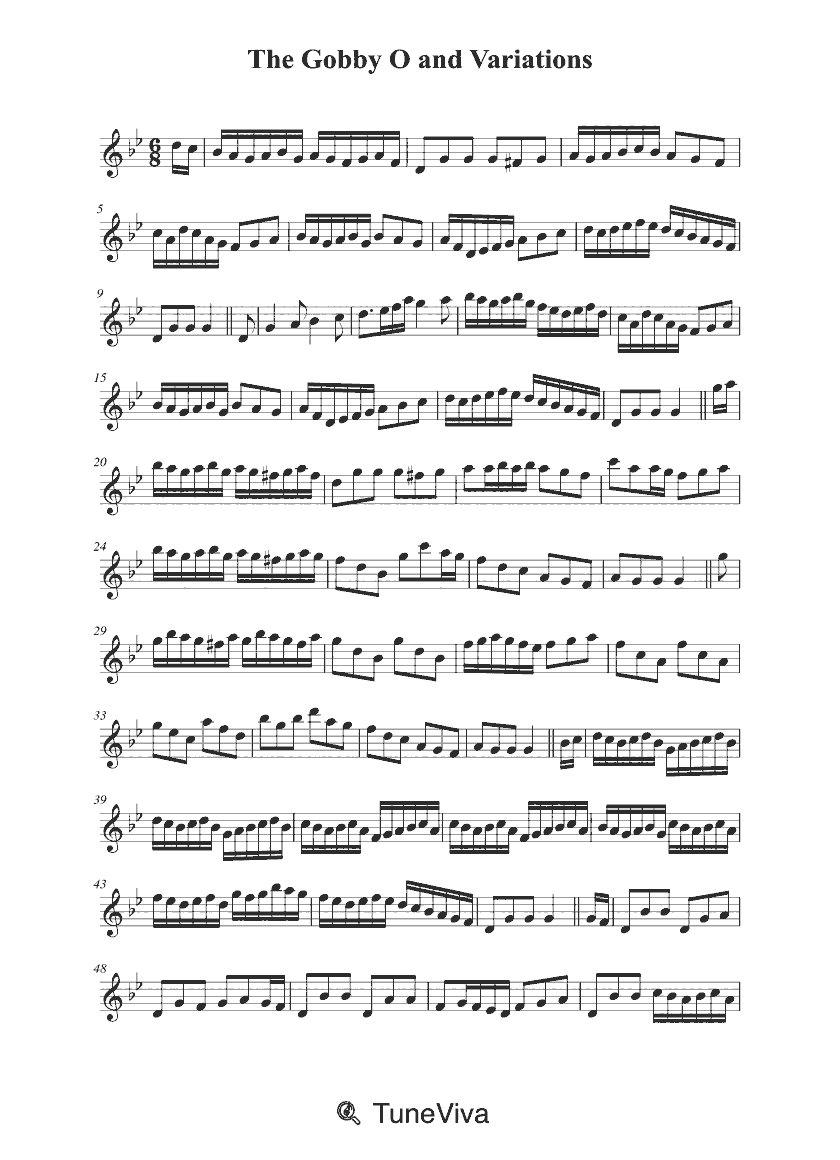
Misc tunes
42 sec · Score #282
Open score
anon.
19 sec
Open score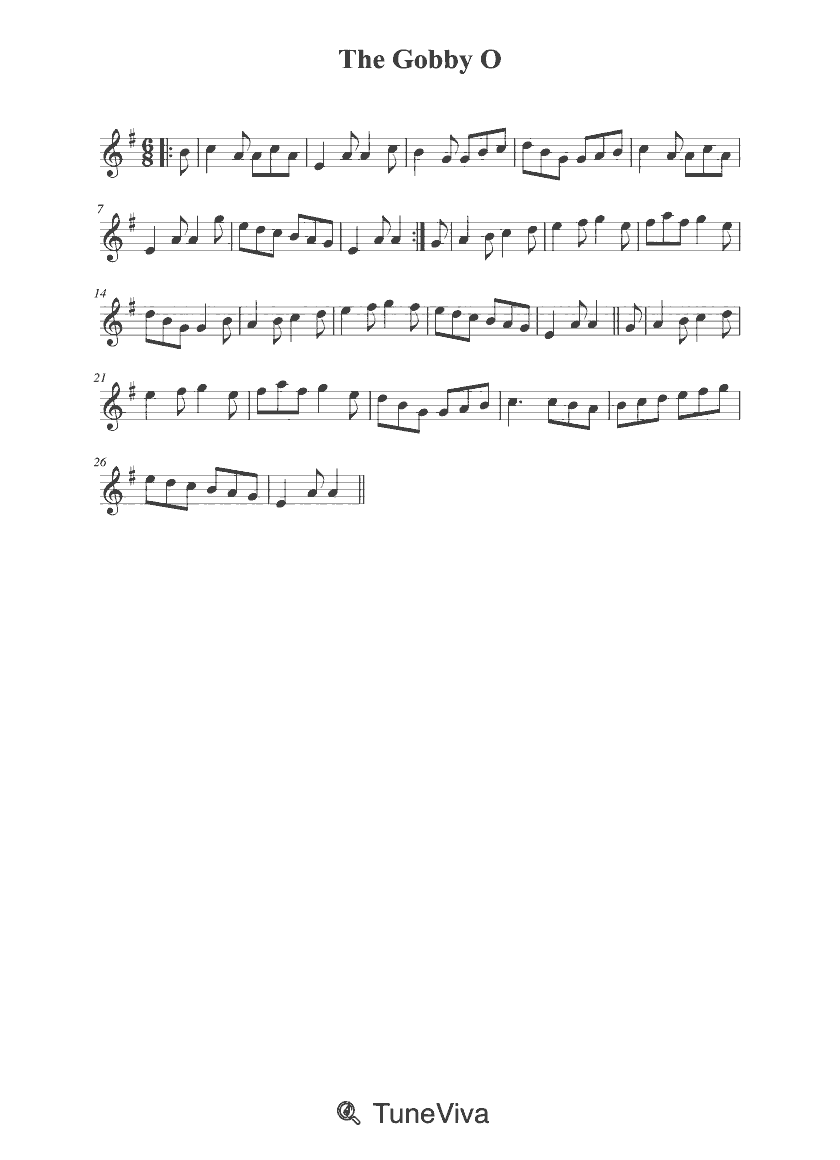
Misc tunes
24 sec · Score #18394
Open score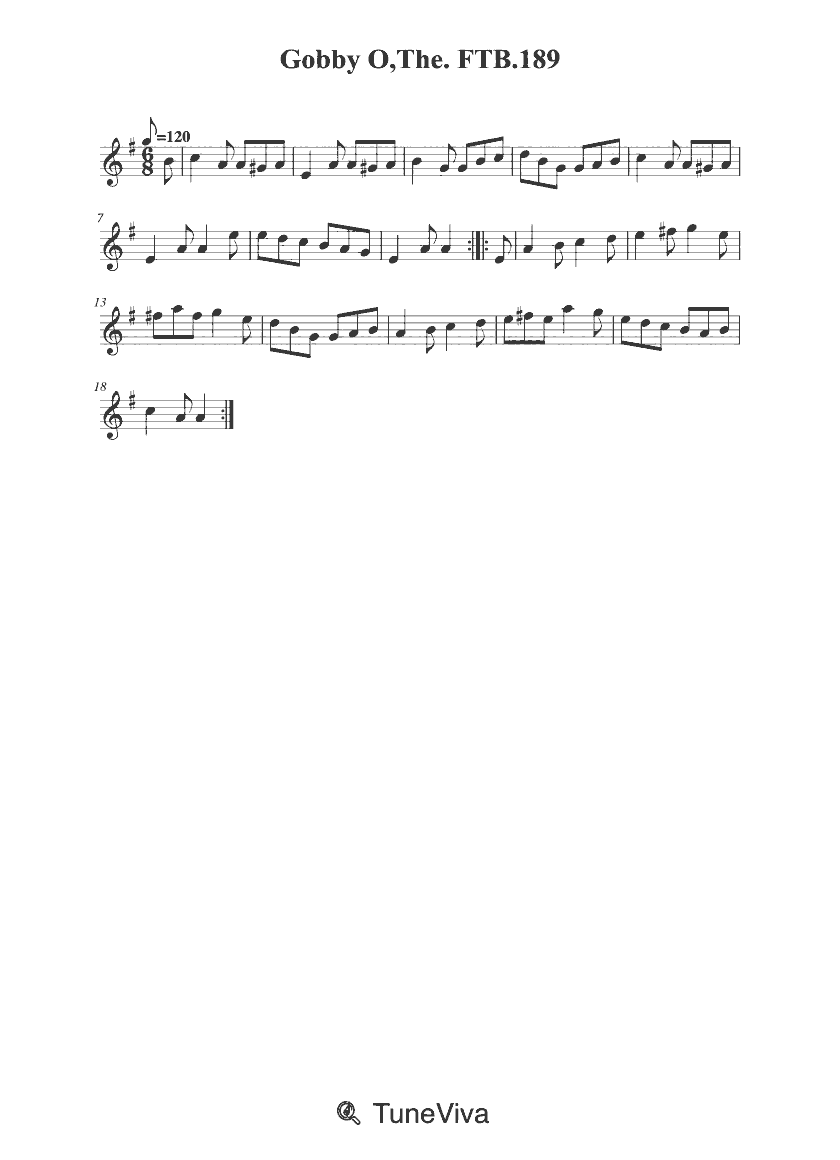
Misc tunes
48 sec
Open score
after Chief F. O'Neill
42 sec
Open score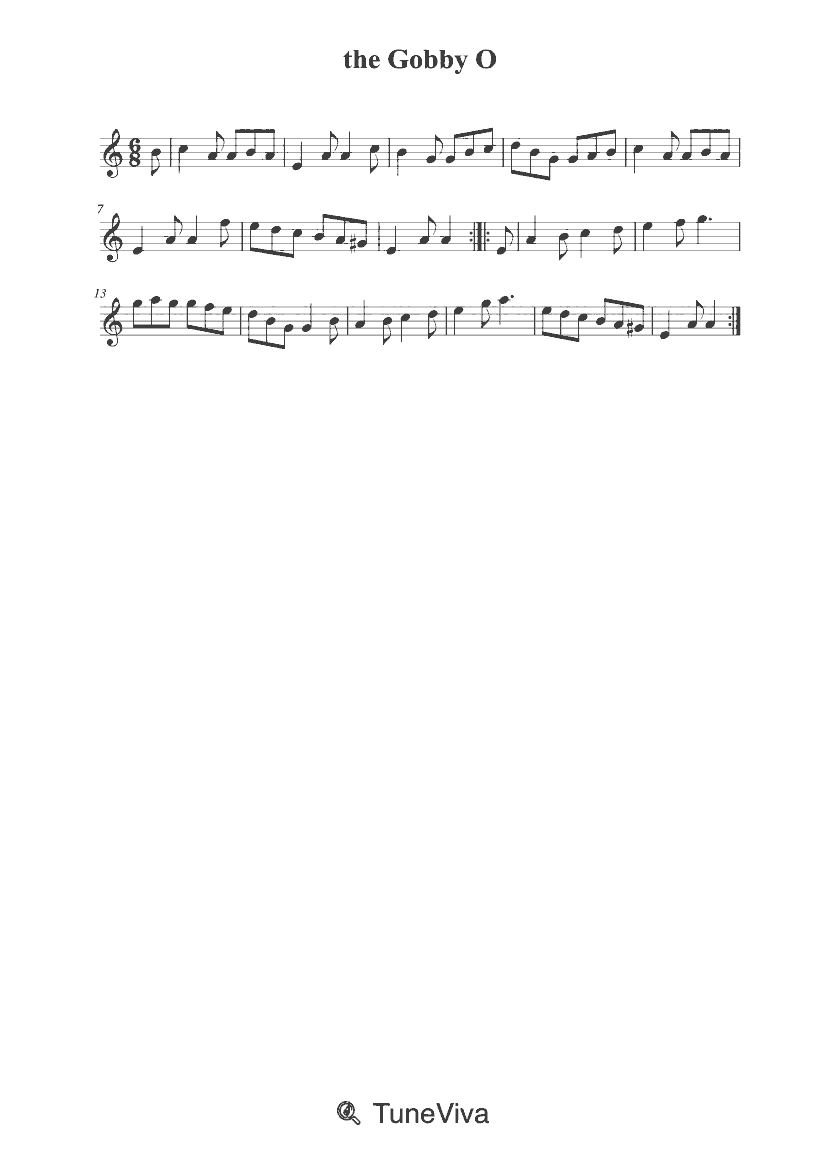
Misc tunes
24 sec · Score #166837
Open score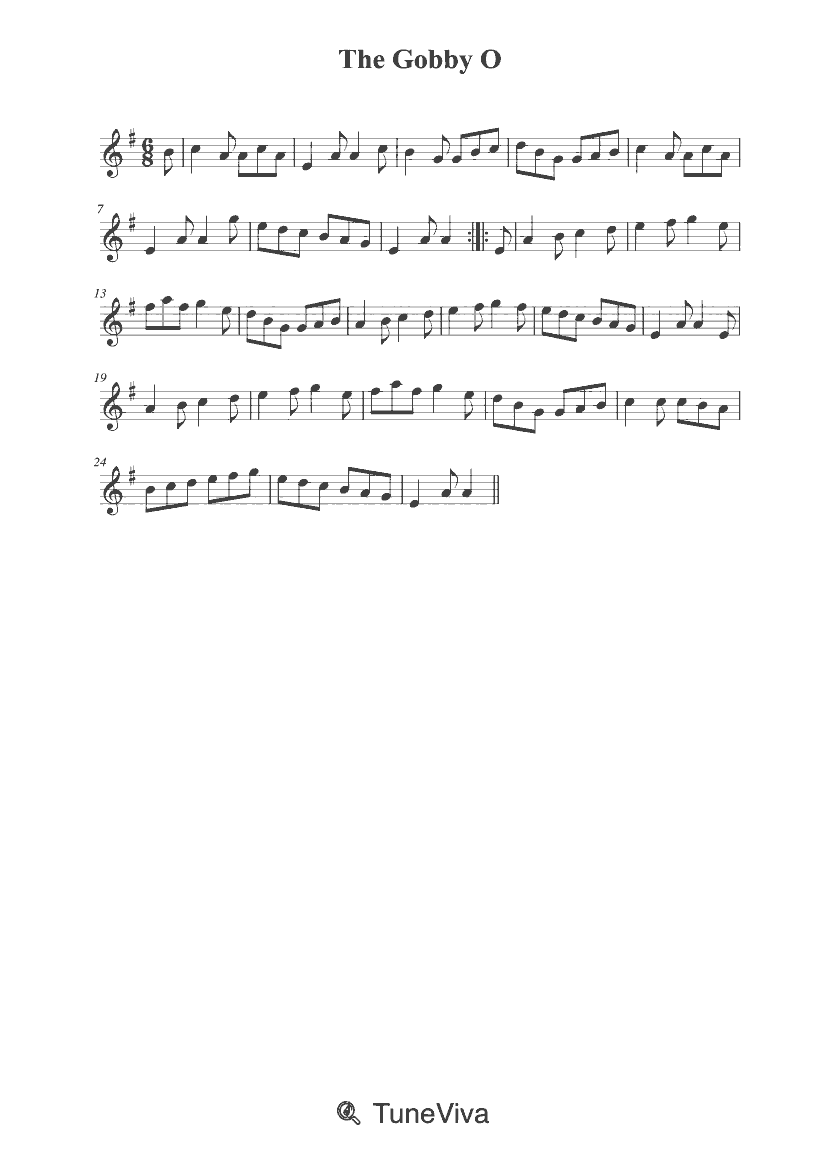
Misc tunes
36 sec · Score #191552
Open score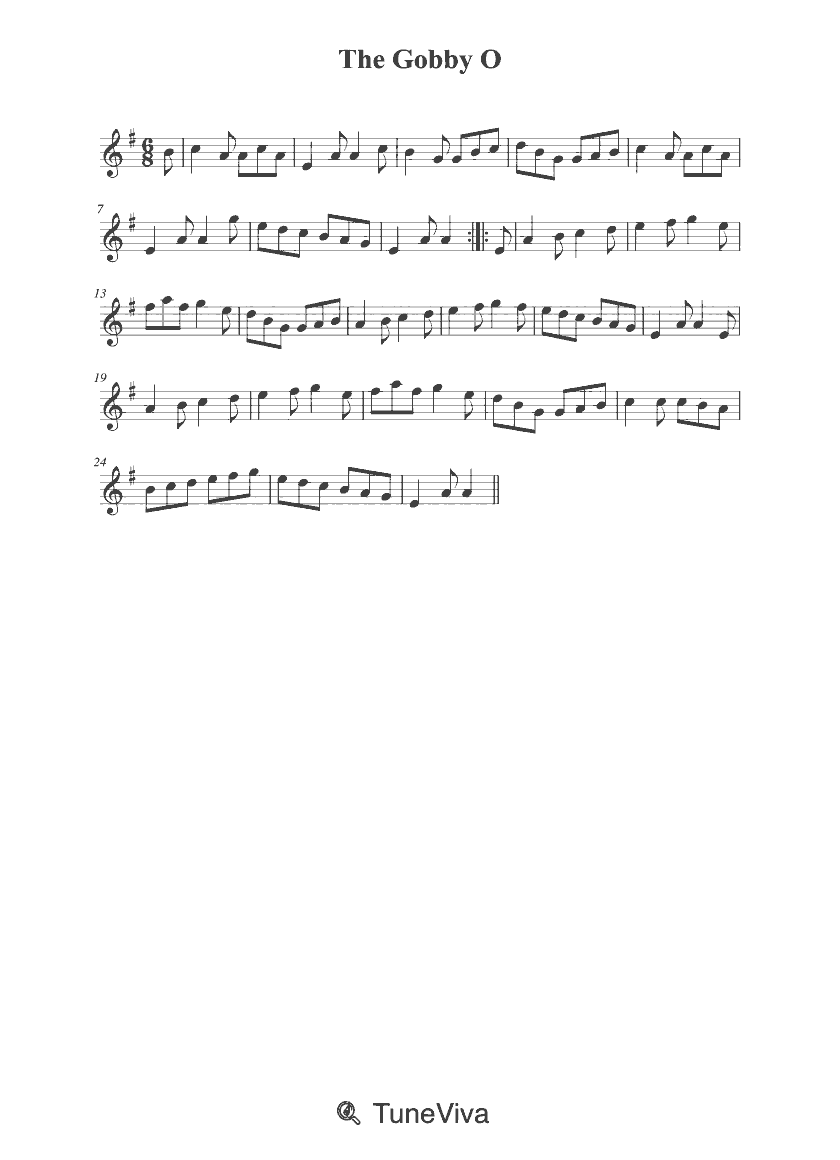
Misc tunes
36 sec · Score #207948
Open score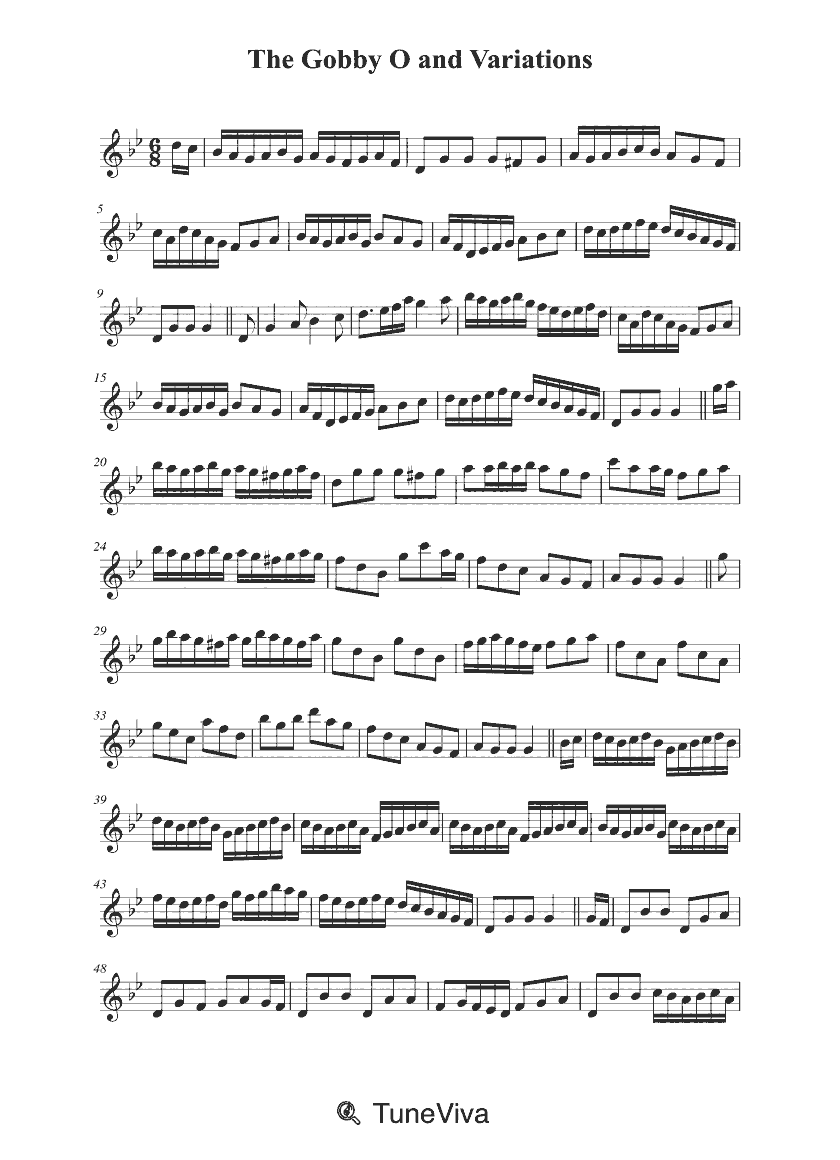
Misc tunes
42 sec · Score #252781
Open score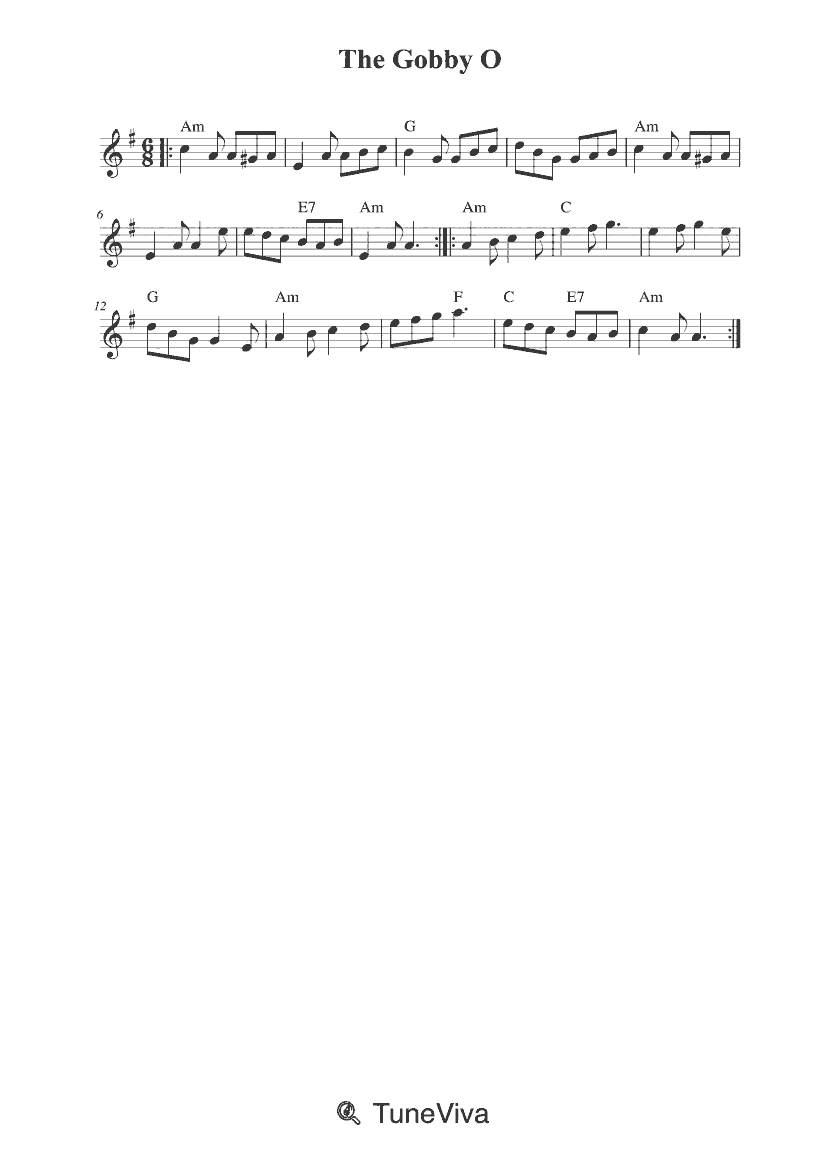
Misc tunes
Jefferson and Liberty
24 sec
Open score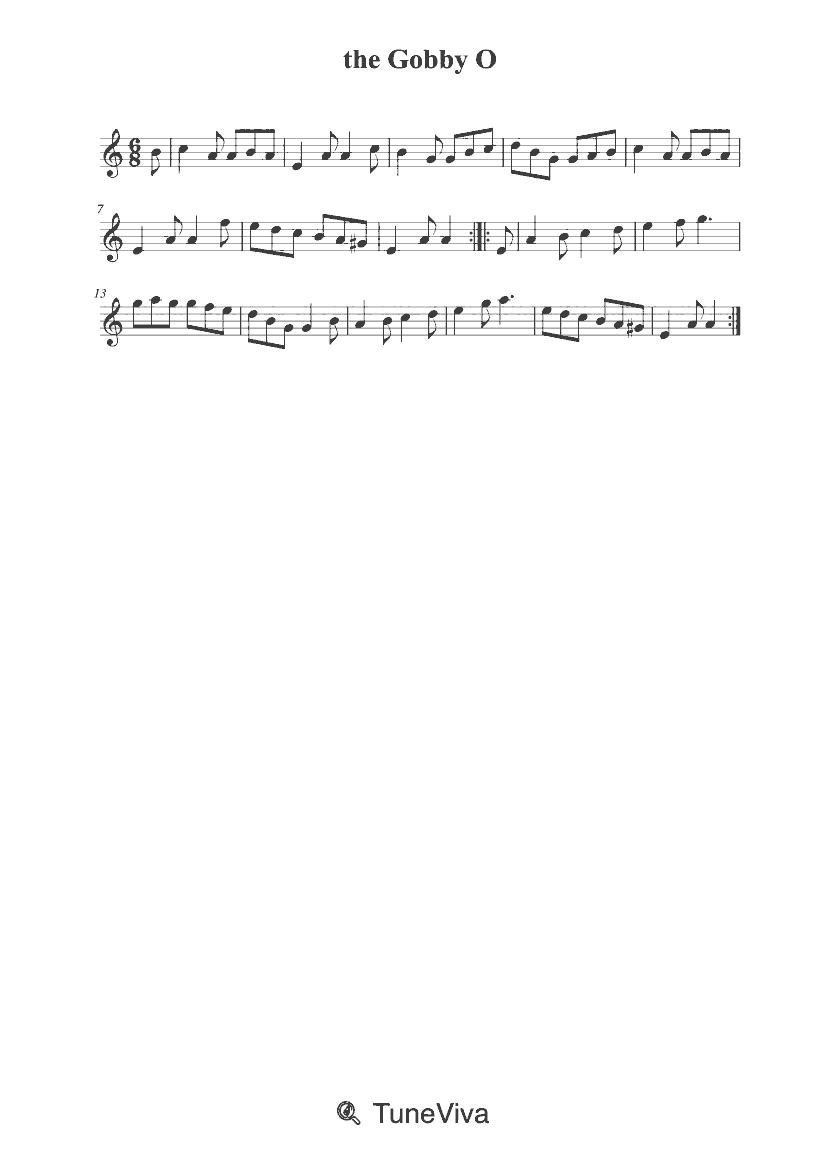
Misc tunes
24 sec · Score #79064
Open score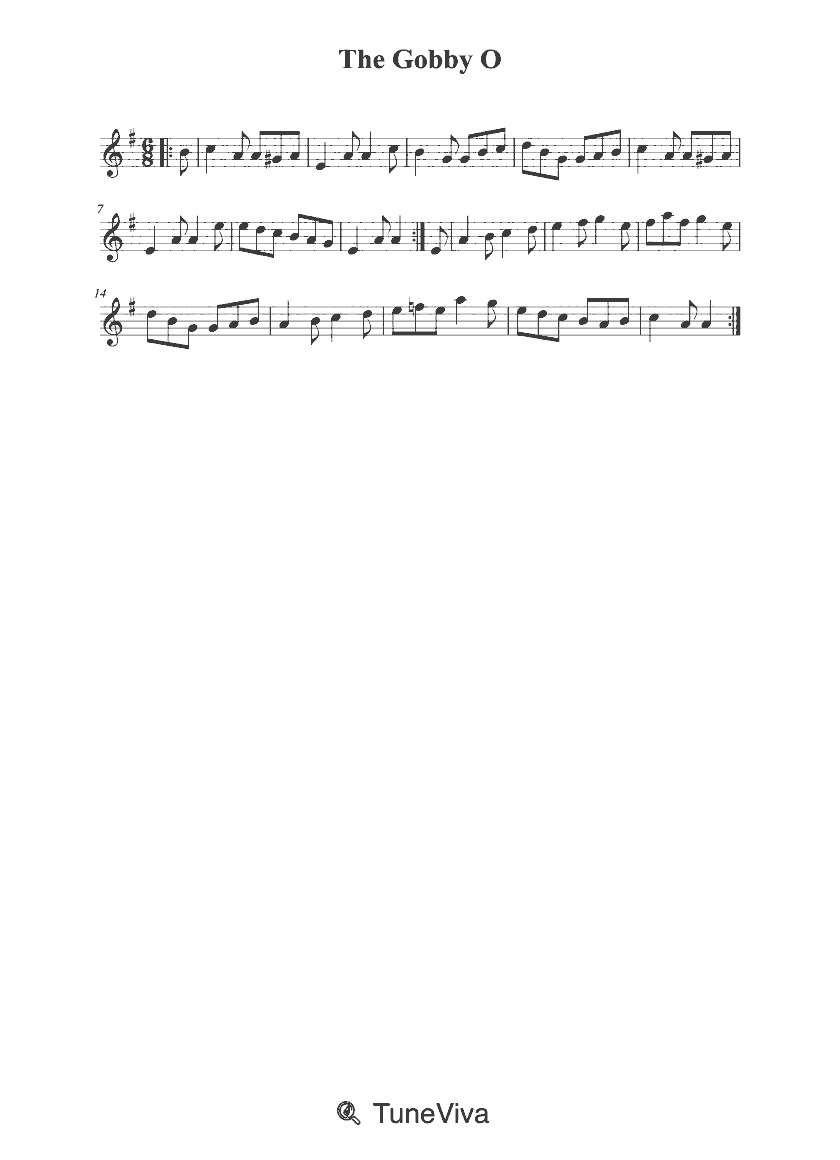
Misc tunes
30 sec · Score #117112
Open score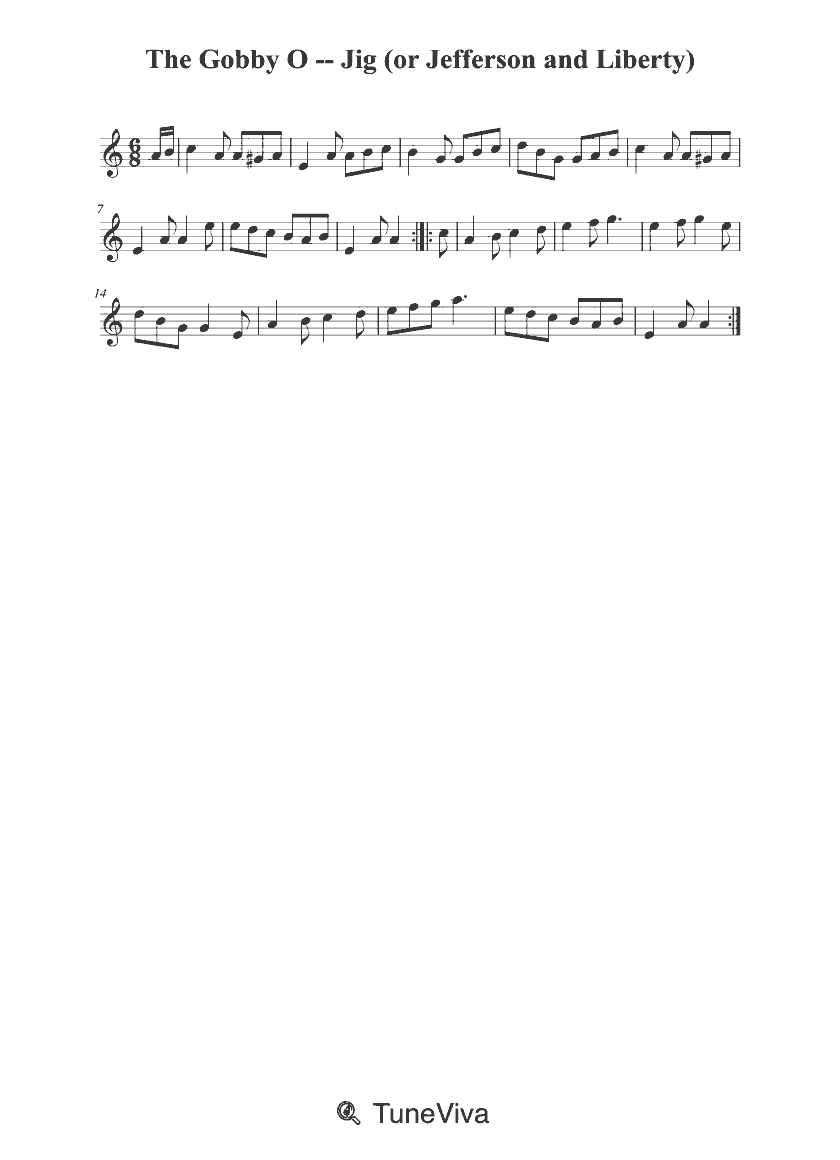
Misc tunes
24 sec
Open score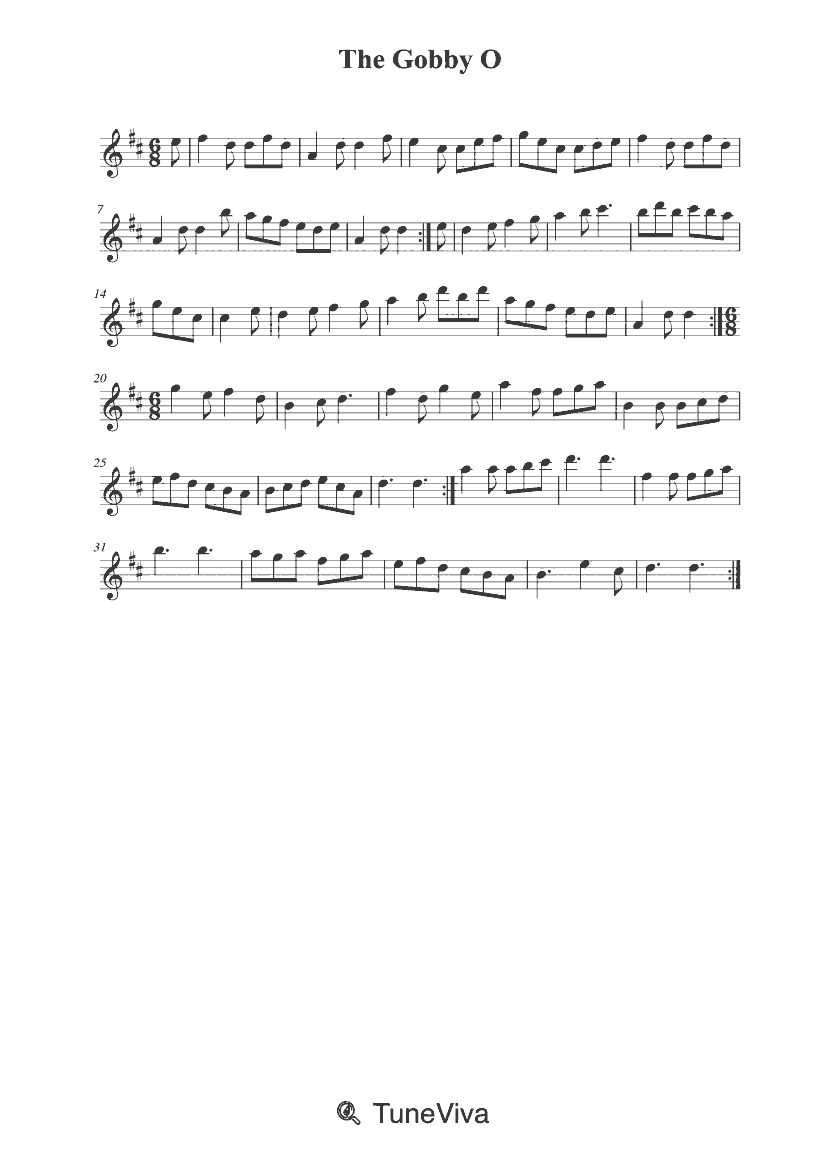
Misc tunes
1 min 24 sec
Open score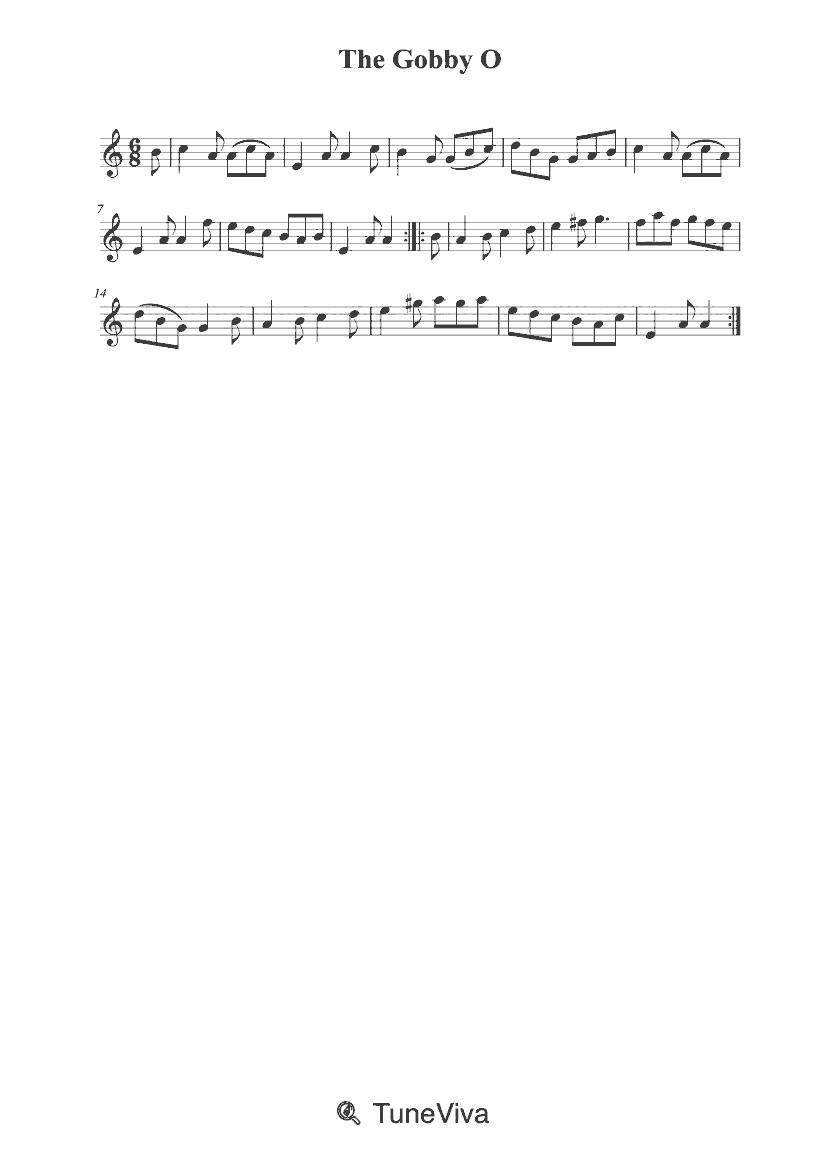
Misc tunes
24 sec · Score #215579
Open score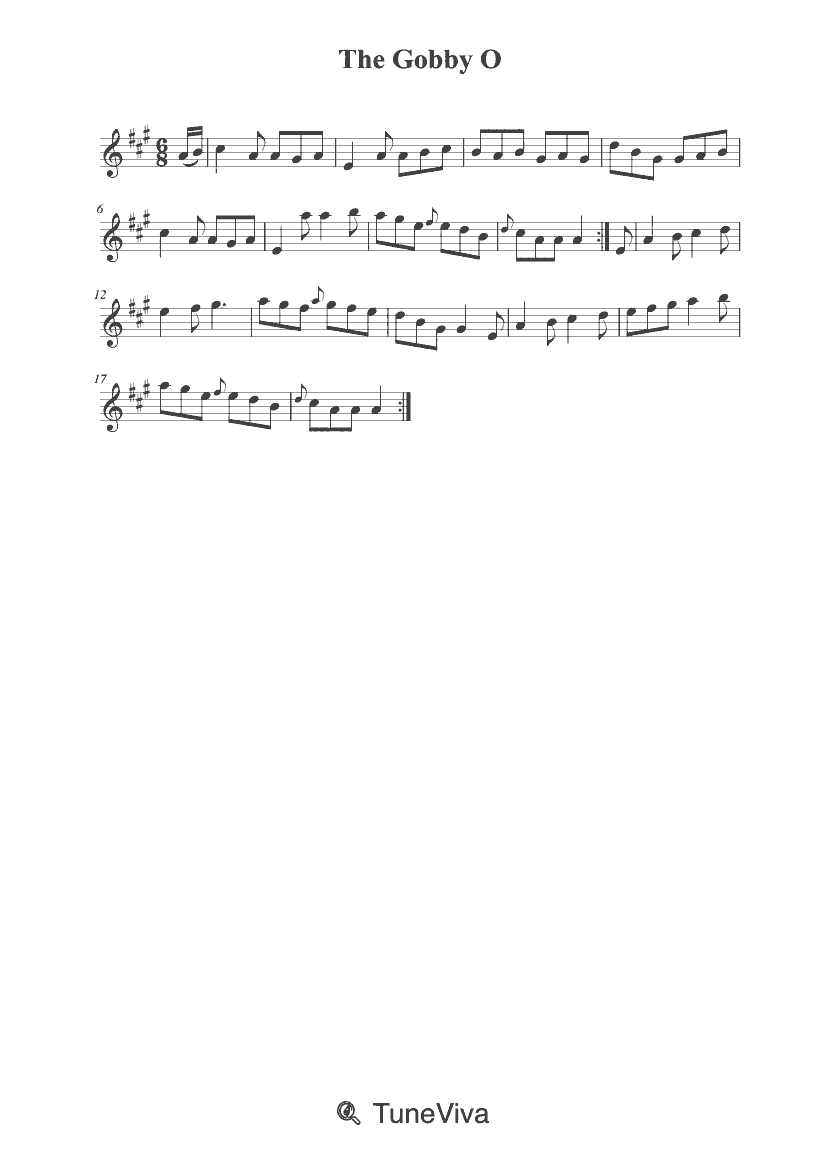
Misc tunes
30 sec · Score #22043
Open scorePage 1 of 2
All three scores of The Gobby O open in 6/8. In this metre, each bar normally has two main beats, each split into three eighth notes, giving a compound-duple feel. One score also gives an opening tempo of 150 BPM; treat that as a starting point for that version, not a rule for the others.
The versions begin in B-flat major, with one sharp, and with no sharps or flats. A one-sharp or empty signature can belong to a major key or its relative minor, and the records do not settle the mode. Compare the written key and range with your instrument and any ensemble before choosing.
The score titled Gobby O and Variations, The (#68) is the only one whose title indicates a theme followed by variations. The available information does not identify the composer of the variations or the techniques used, so inspect the notation if you want a longer or more varied treatment.
No composer, date, origin, or instrumentation is named for any of the three scores of The Gobby O. The title and notation establish that versions exist, but they do not support attribution to a particular composer or tradition. Treat any such attribution as unverified unless an authoritative source is consulted.
Catalogue duration 19 sec. Opening key signature: No sharps or flats. Opening time signature: 6/8. Opening tempo: 150 BPM.
Catalogue duration 36 sec. Opening key signature: 1 sharp. Opening time signature: 6/8.
Catalogue duration 42 sec. Opening key signature: 2 flats (B♭ major). Opening time signature: 6/8.
The available scores of The Gobby O do not name a composer. Because the records also lack a date and origin, the piece should not be attributed to a particular composer or tradition without further evidence.
The available scores of The Gobby O all open in 6/8 time. A 6/8 signature normally gives two main beats per bar, each divided into three eighth notes, which produces a compound-duple lilt rather than a simple two- or four-beat pulse.
The three scores of The Gobby O begin with different key signatures: one score is marked in B-flat major, one has a single sharp, and one has no sharps or flats. The available records do not say whether these are transpositions or separate settings, so compare the written key and range with your instrument before choosing a version.
Gobby O and Variations, The (#68) is one of the scores titled under The Gobby O. The title indicates a theme followed by variations, but the available information does not identify a composer for the set or describe which variation techniques are used. Players wanting a longer treatment of the tune should inspect that score's notation.
Choosing among The Gobby O sheet music versions depends mainly on the opening key and the kind of score you need. The versions begin in B-flat major, with one sharp, and with no sharps or flats; only Gobby O and Variations, The (#68) is titled as a theme-and-variations set. Check the written key, range, and notation against your instrument and ensemble before deciding.
The available scores of The Gobby O do not state an instrumentation. The records establish that notated versions exist, but they do not identify original performing forces, so players should rely on the score's range and notation rather than assuming a specific instrument.
One available score of The Gobby O is marked in B-flat major. The other two carry a single sharp or no sharps or flats; those signatures alone can indicate either a major key or its relative minor, and the records do not settle the mode. Check the opening and closing notes and the harmony in the score to determine the key in practice.