
The Lass of Richmond Hill - James Hook
James Hook (1746-1827)Accompaniment realised by William Alexander Barrett (1832-1891)
P1; Piano · 1 min 30 sec
Open scoreThis page gathers The Lass of Richmond Hill sheet music in several listed versions credited to James Hook. The available scores open in B-flat major or D major and use different time signatures, so the key, meter and accompaniment are worth comparing before choosing a version. Score credits also name Leonard McNally for the words in one listing and William Alexander Barrett for realising a piano accompaniment.
Scores 1–20 of 24
James Hook (1746-1827)Accompaniment realised by William Alexander Barrett (1832-1891)
P1; Piano · 1 min 30 sec
Open score
James Hook
52 sec
Open score
James Hook
32 sec · Score #169058
Open score
James Hook
32 sec · Score #200495
Open score
Misc tunes
1 min 39 sec
Open score
James Hook
32 sec · Score #223069
Open score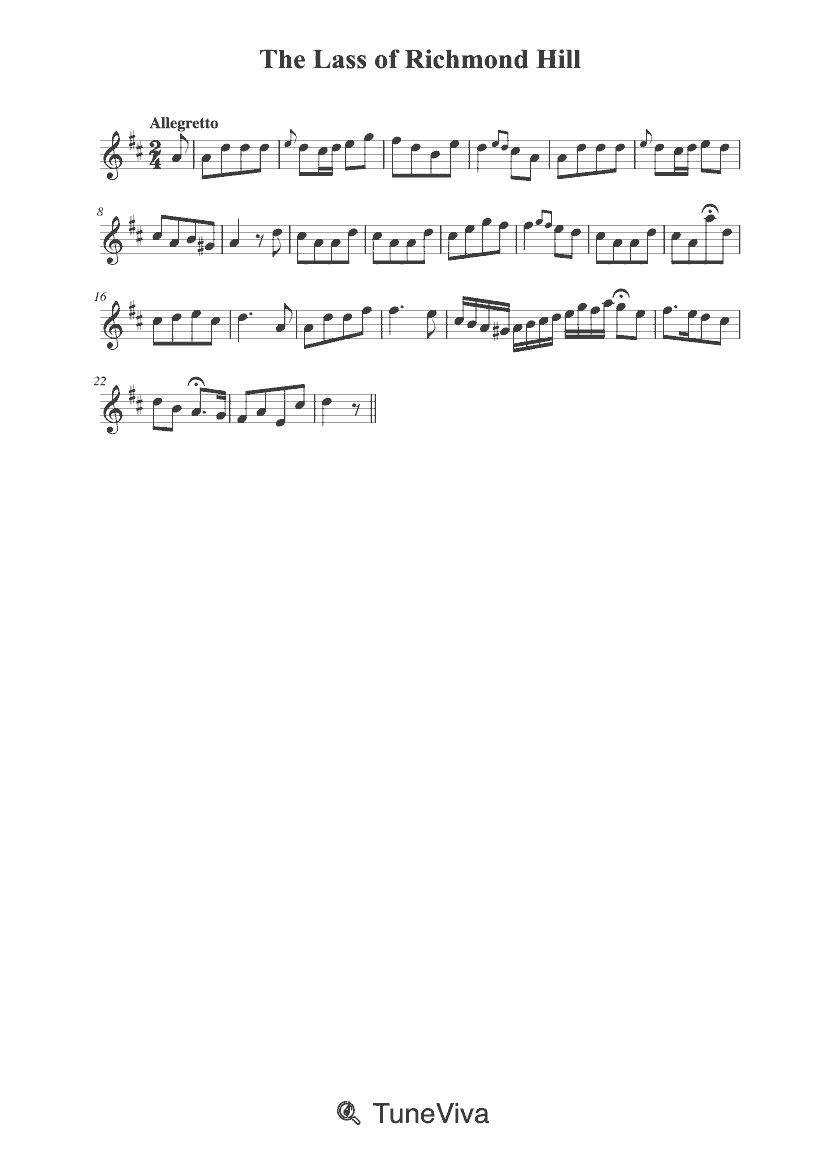
Misc tunes
25 sec · Score #223903
Open score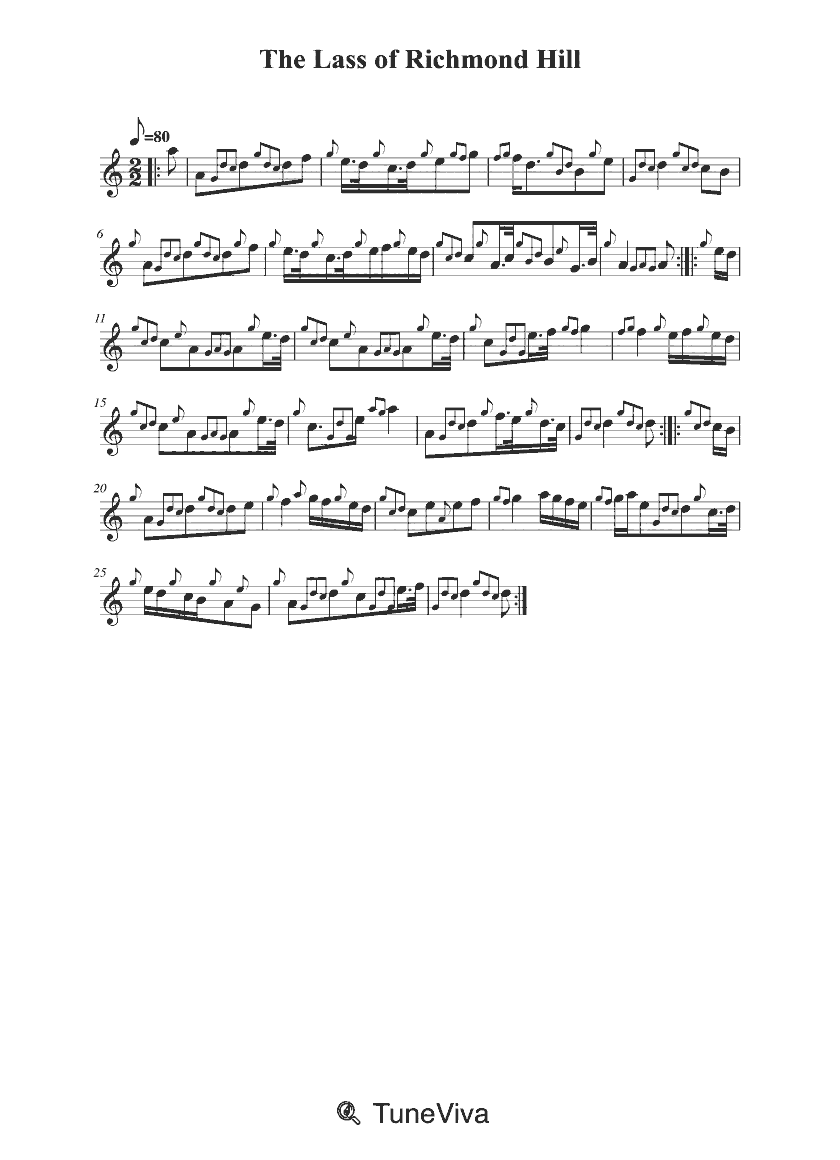
Misc tunes
4 min 49 sec · Score #4135
Open score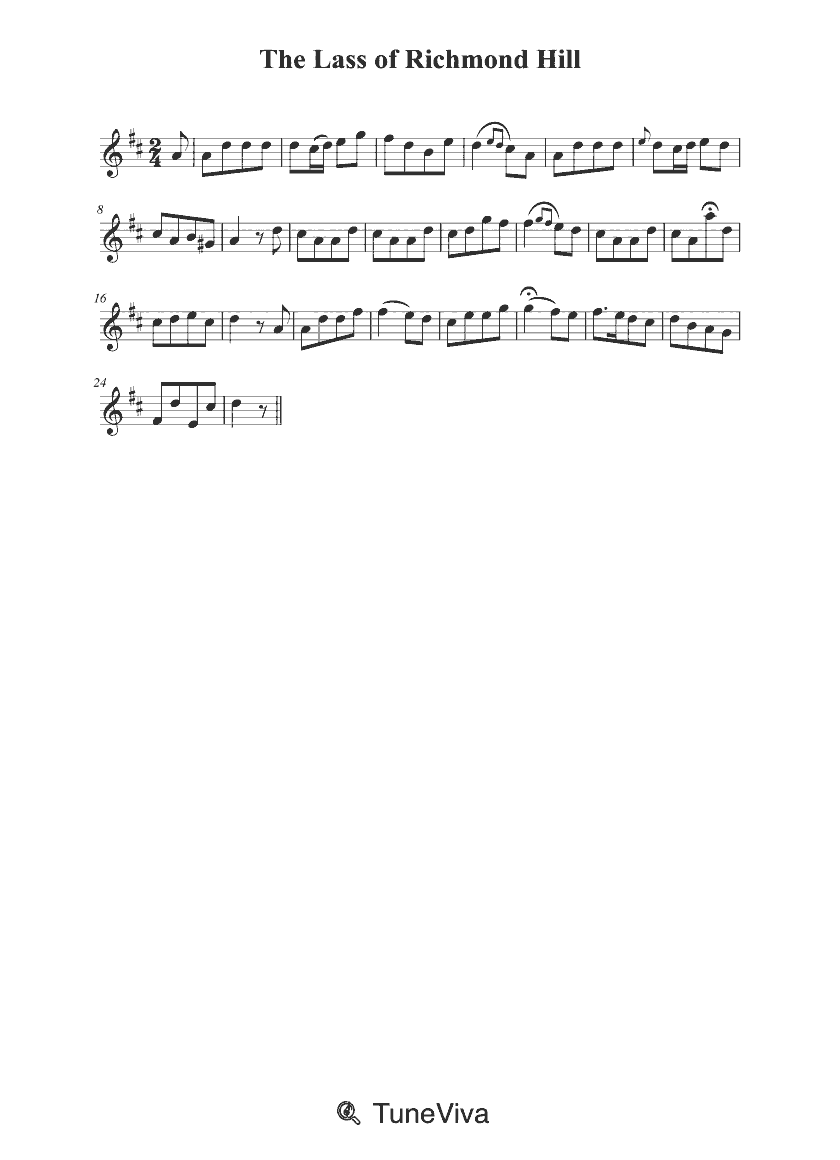
Misc tunes
24 sec · Score #85650
Open score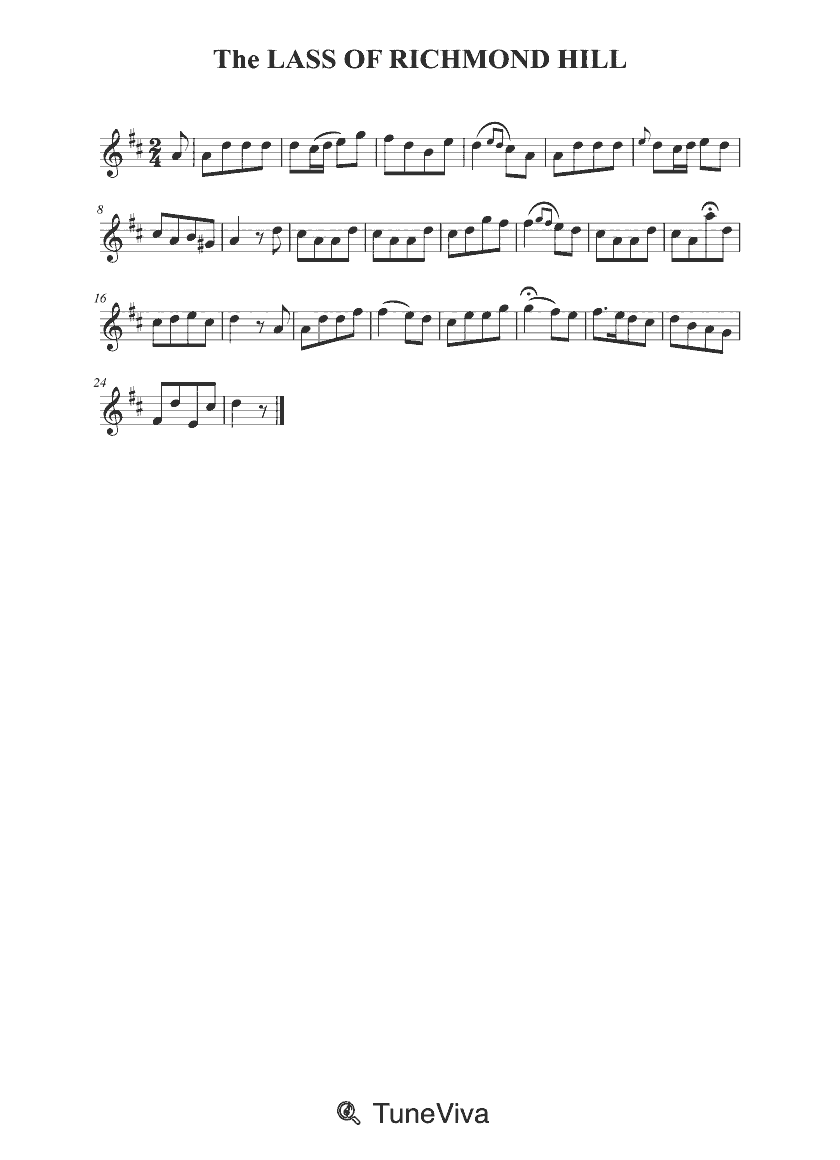
Misc tunes
24 sec · Score #201602
Open score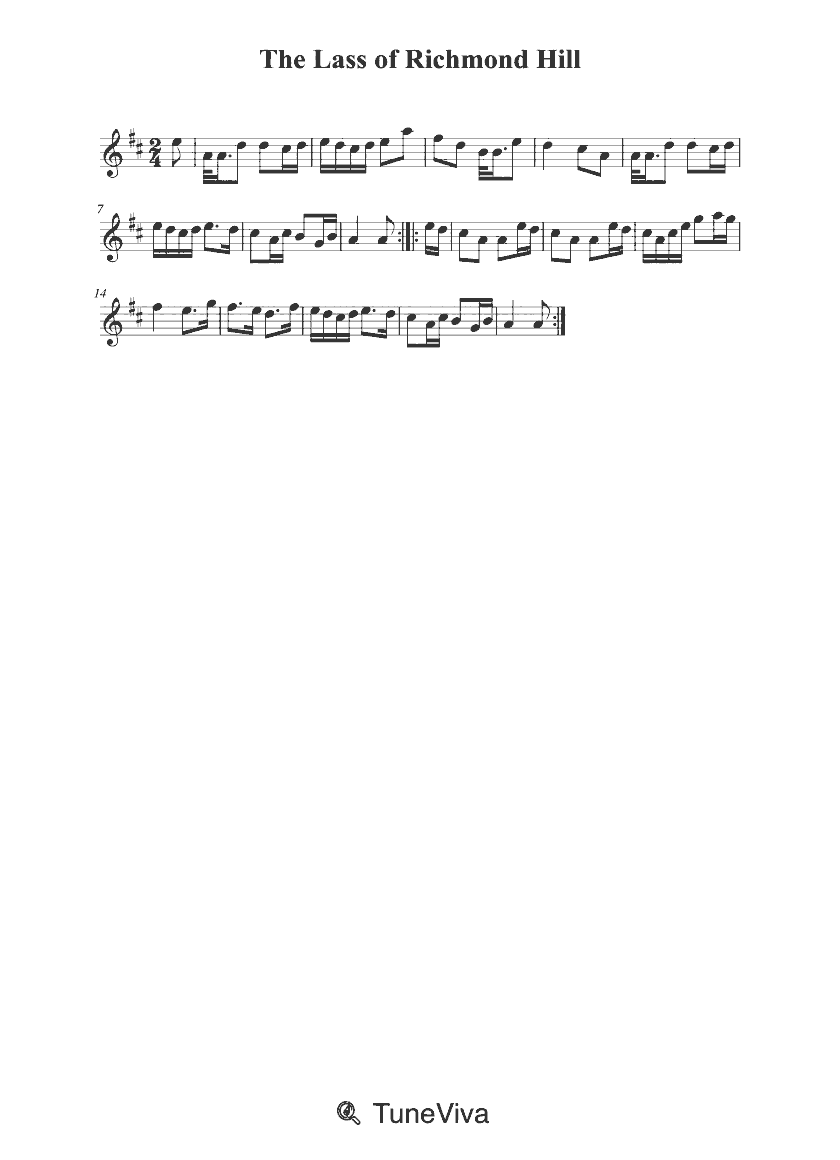
Misc tunes
32 sec · Score #184746
Open score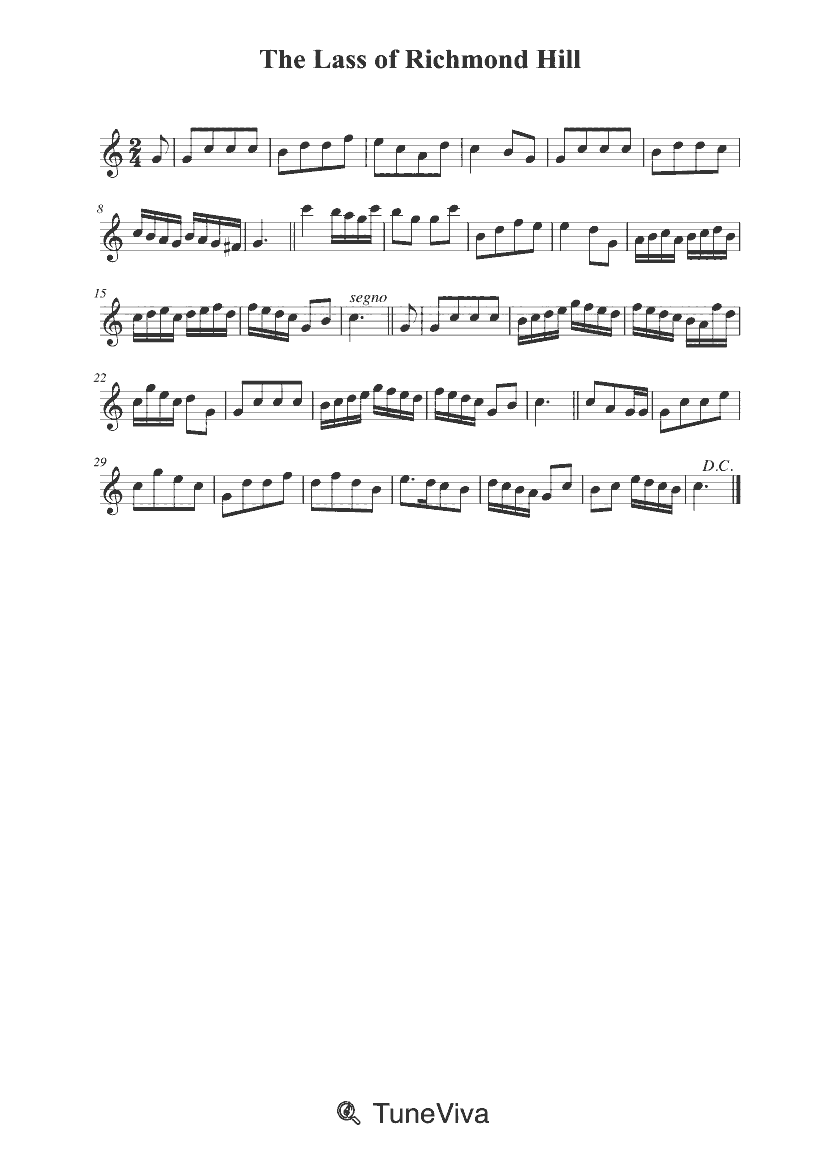
Hart's 8th Set
1 min 4 sec
Open score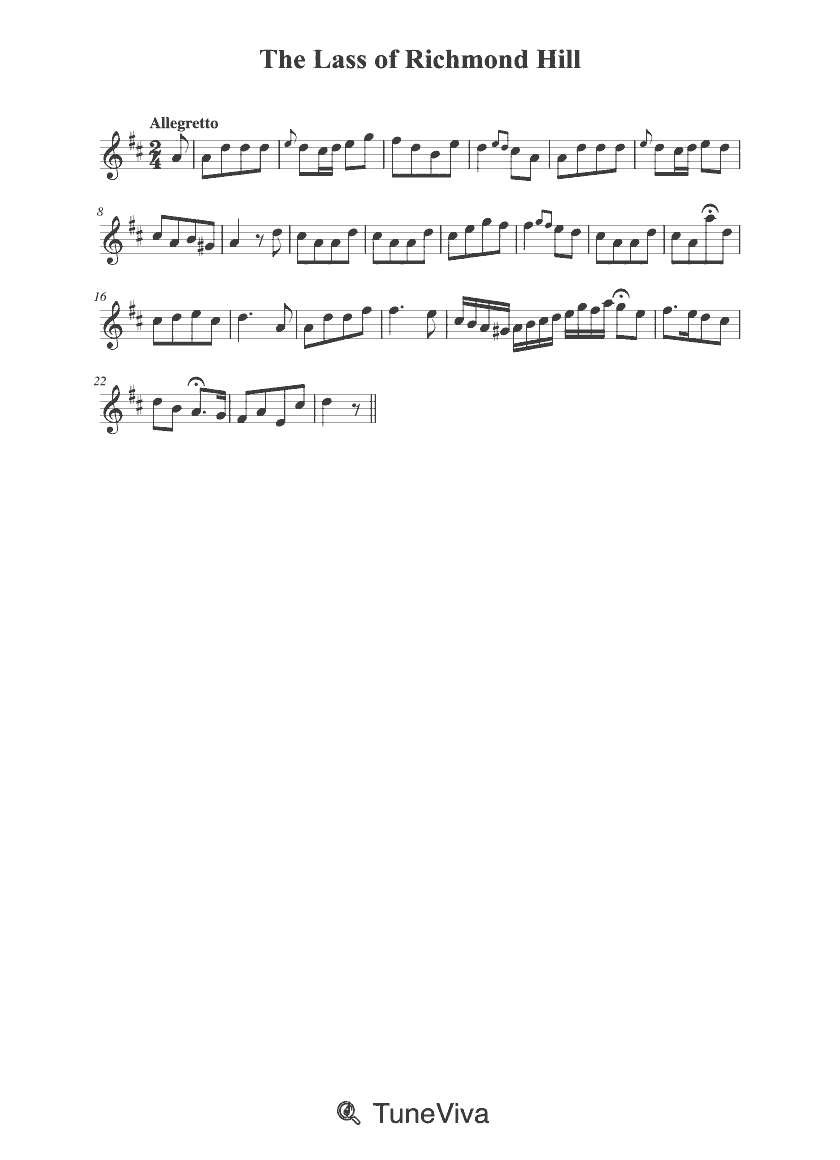
Misc tunes
25 sec · Score #41330
Open score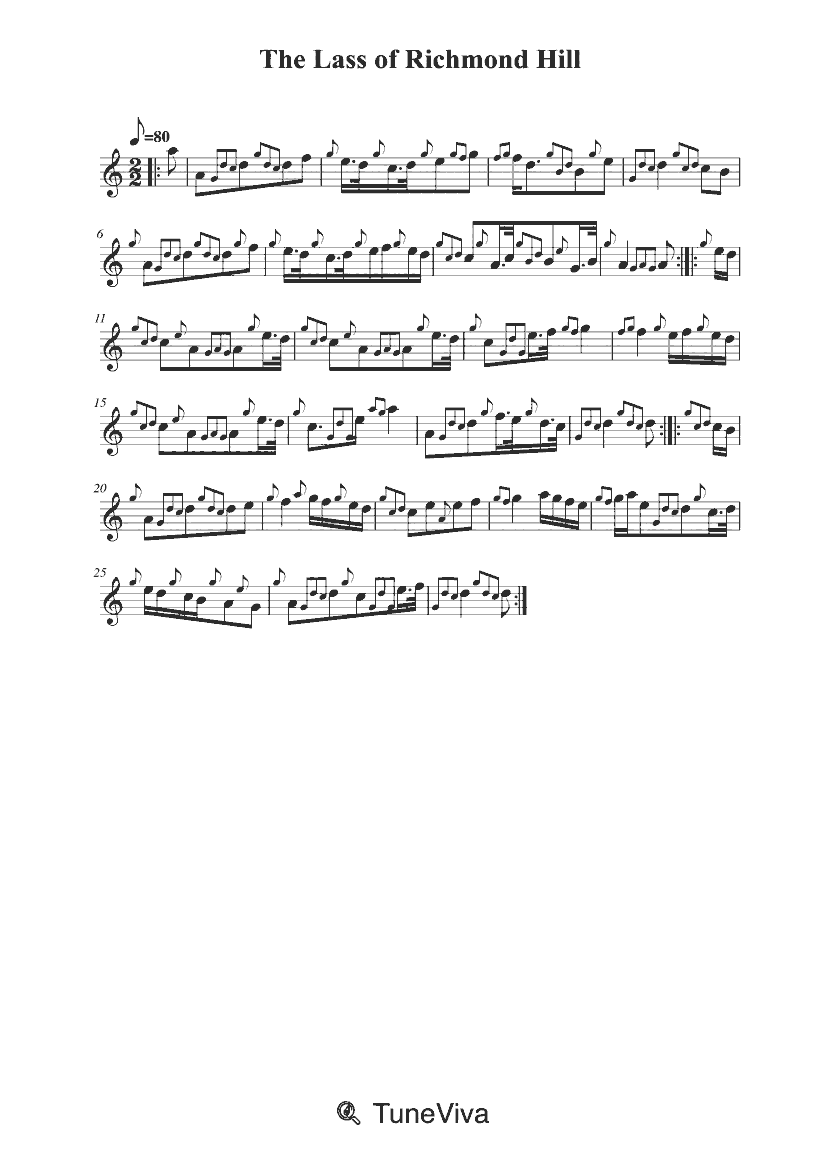
Misc tunes
4 min 49 sec · Score #133067
Open score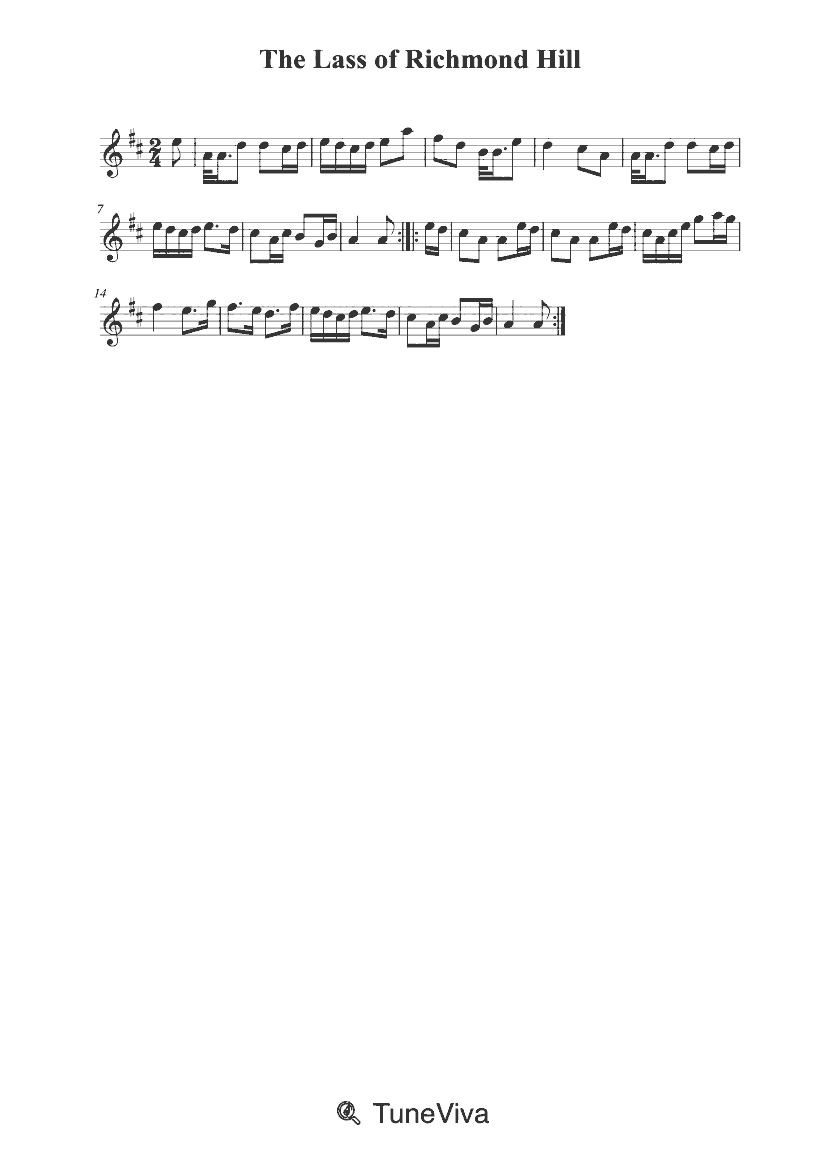
Misc tunes
32 sec · Score #229534
Open score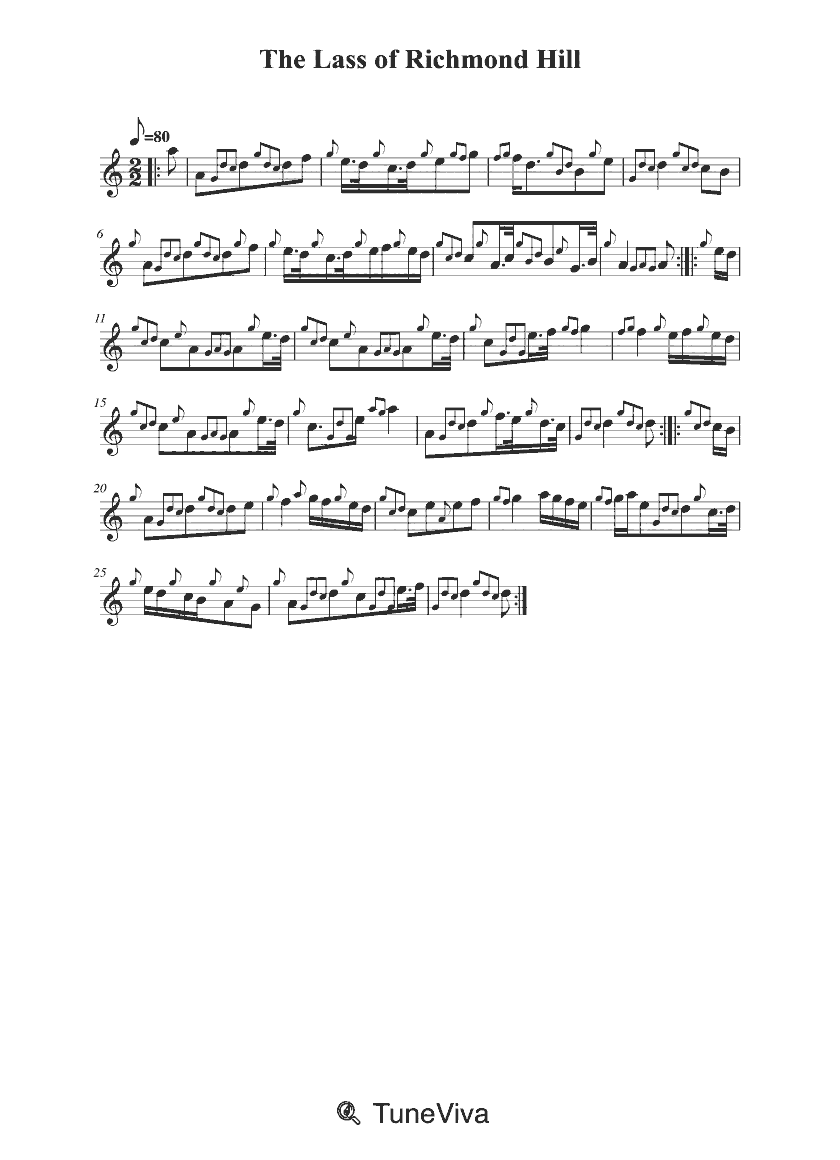
Misc tunes
4 min 49 sec · Score #67400
Open score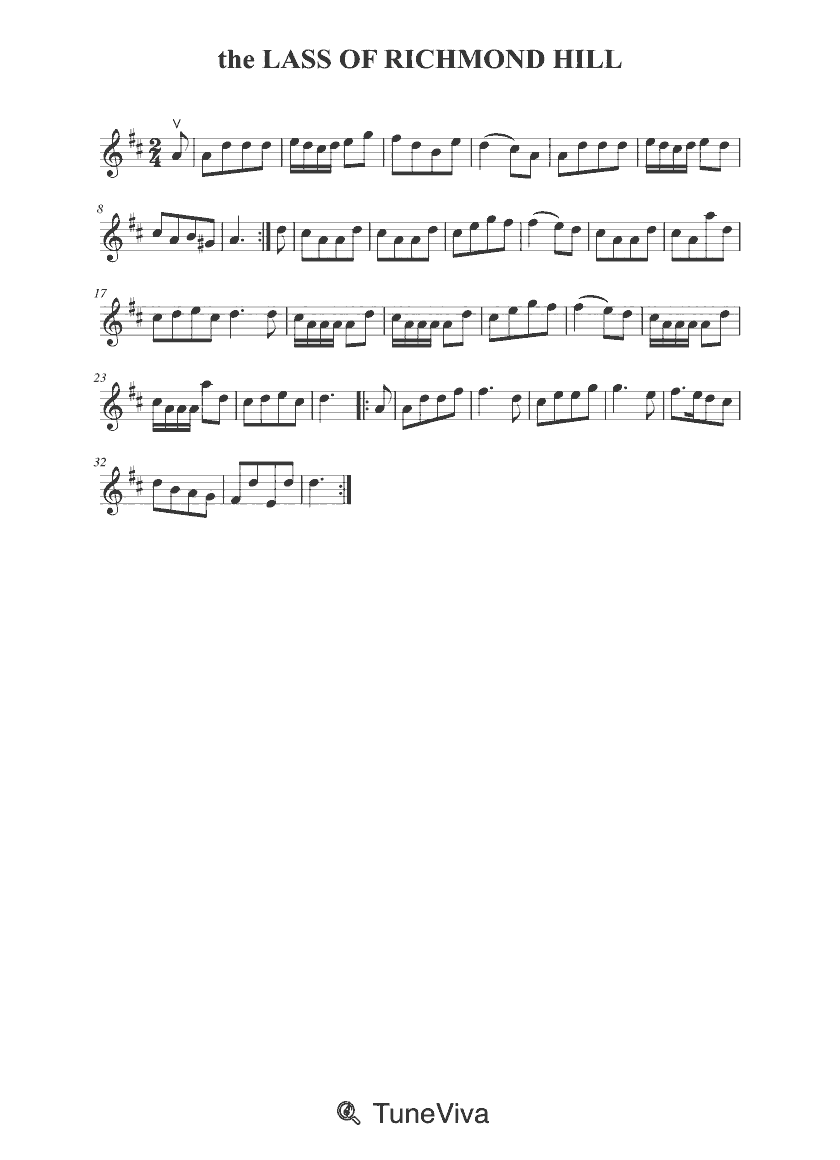
Misc tunes
48 sec · Score #9200
Open score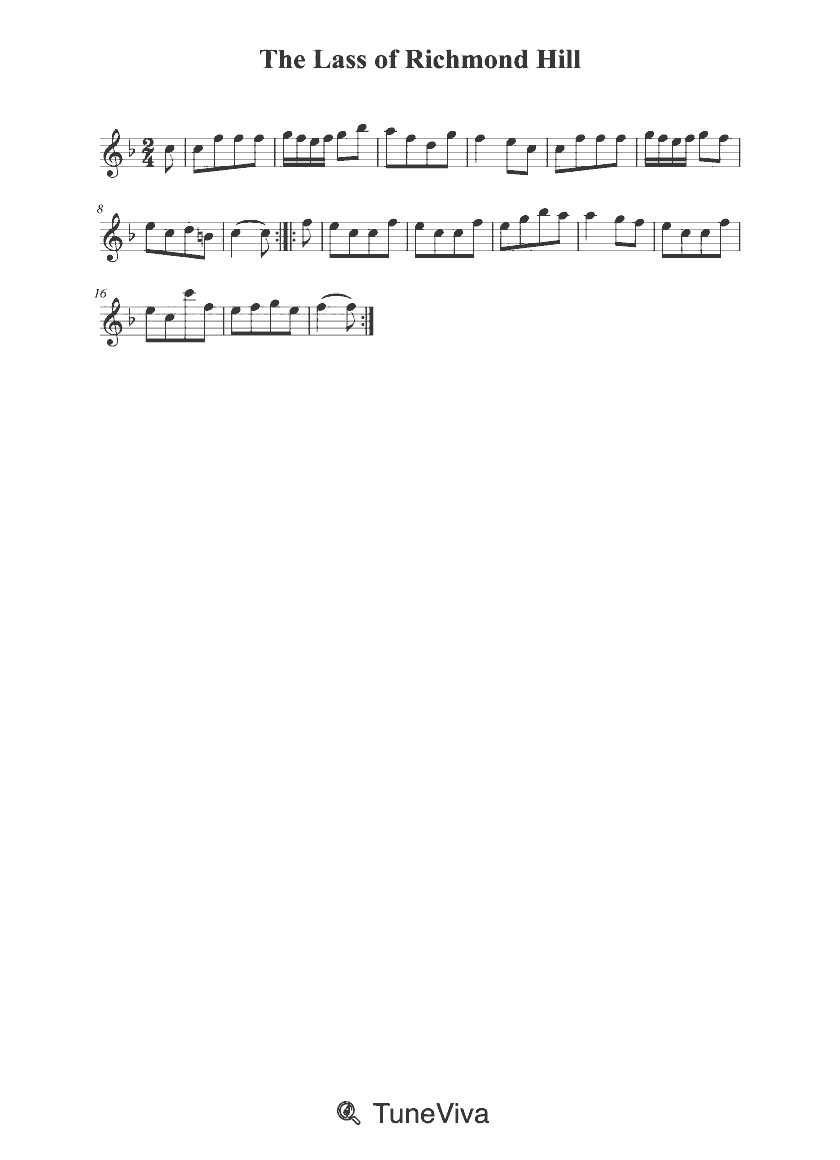
Misc tunes
32 sec · Score #49319
Open score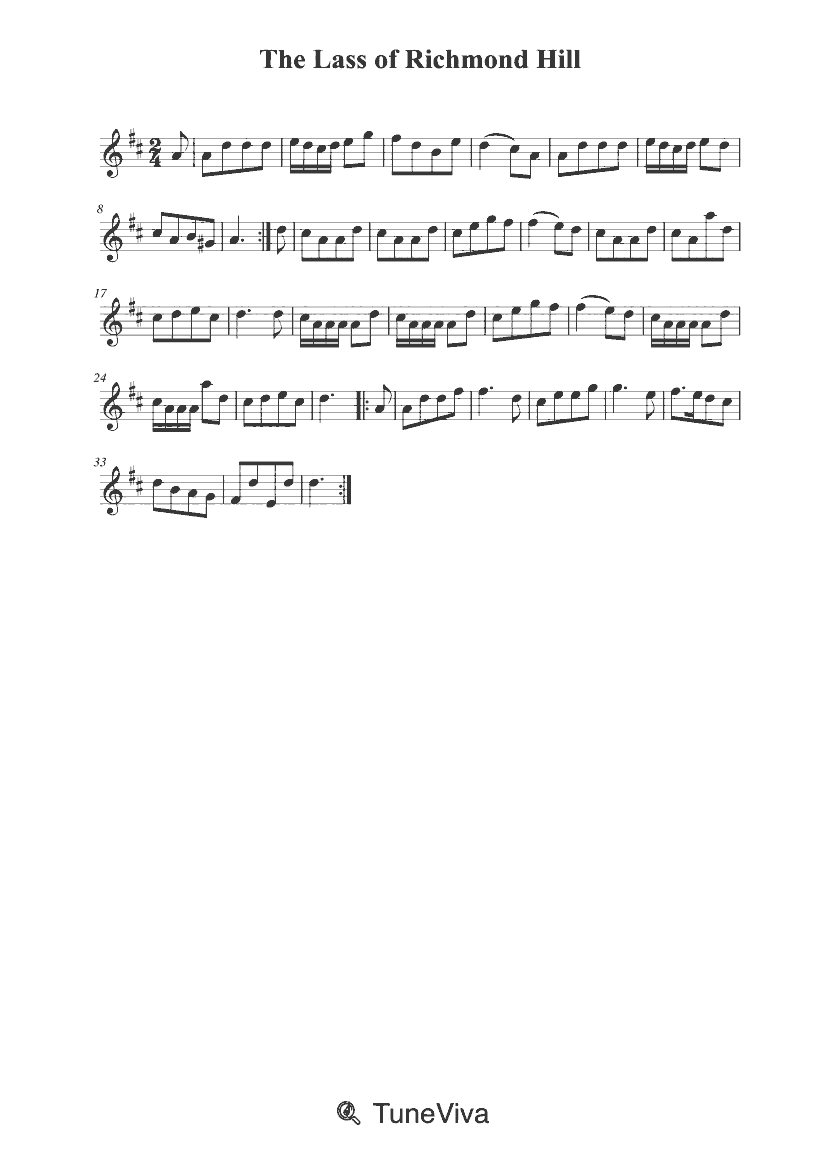
Misc tunes
48 sec · Score #100214
Open score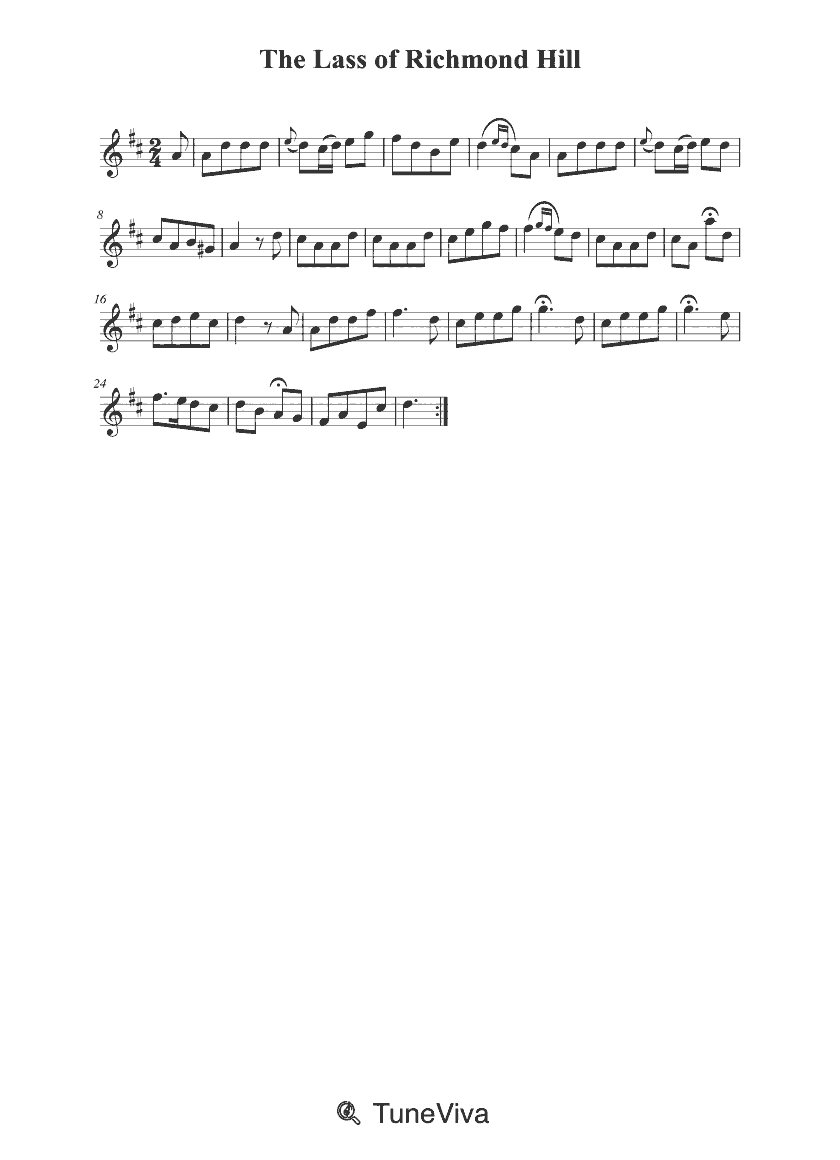
Misc tunes
52 sec
Open scorePage 1 of 2
The listed scores are all credited to James Hook, but their openings differ: B-flat major with two flats, and D major with two sharps. The time signatures also vary between 2/4 and 2/2. These details help you compare the notation, but they do not establish whether the scores represent the same original version or separate arrangements.
One score in B-flat major includes a piano part, with the accompaniment realised by William Alexander Barrett. The D-major scores do not list a separate piano part in their details. A singer should compare the opening key and vocal range with their own voice, and check whether the score includes the accompaniment they need.
The available scores associate The Lass of Richmond Hill with James Hook (1746–1827). One score credit names Leonard McNally (1752–1820) as lyricist, while the other listings do not include a lyricist credit. These credits are useful starting points, but they should be checked against a reliable edition or reference source before being treated as definitive.
Check the complete score, not just the opening key or time signature, to confirm the vocal range, accompaniment and any repeats or verse layout. The available score details do not document the song’s first publication, original instrumentation or historical background, so those questions need separate verification.
Score parts: P1, Piano. Catalogue duration 1 min 30 sec. Opening key signature: 2 flats (B♭ major). Opening time signature: 2/4.
Catalogue duration 52 sec. Opening key signature: 2 sharps (D major). Opening time signature: 2/2. Opening tempo: 220 BPM.
Catalogue duration 32 sec. Opening key signature: 2 sharps (D major). Opening time signature: 2/4.
The available scores credit James Hook (1746–1827) as composer. One score also credits Leonard McNally (1752–1820) with the words and William Alexander Barrett (1832–1891) with realising the piano accompaniment. These are score credits rather than independently verified historical conclusions.
One score credit names Leonard McNally (1752–1820) as lyricist. The other listed scores do not include a lyricist credit. The attribution should be checked against a reliable edition or reference source before being treated as definitive.
Listed openings are B-flat major, with two flats, and D major, with two sharps. The B-flat score includes a piano part; the D-major scores do not list a separate piano part in their details. Singers should choose a key that suits their voice and confirm the full score before use.
One available score includes a piano part, with the accompaniment realised by William Alexander Barrett. The other listed scores do not show separate part information. Check the score itself if you need a confirmed accompaniment for performance.
The scores list openings in 2/4 and 2/2. Both are duple meters, but the notation differs: 2/4 counts two quarter-note beats per bar, while 2/2 counts two half-note beats per bar. The listed versions are therefore not notationally identical.
Compare the opening key, time signature and whether a piano part is included. A B-flat major score with piano accompaniment suits a singer who wants that key and accompaniment; the D-major scores offer a higher key and a different meter. Verify the complete score and range before committing to a version.