
The Maid Behind the Bar
Misc tunes
1 min 19 sec
Open scoreThe Maid Behind The Bar sheet music is represented here by three listed scores. All three open in D major with a 4/4 time signature, and none identifies an individual composer: one title calls the music traditional, one score is credited to “Trad,” and another includes a reference to Joe Buchanan's Scottish Tome, page 183.3. These details help you compare the available scores, but they do not by themselves establish the tune's history, origin, genre or definitive setting.
Scores 1–20 of 60
Misc tunes
1 min 19 sec
Open score
Trad
1 min 4 sec
Open score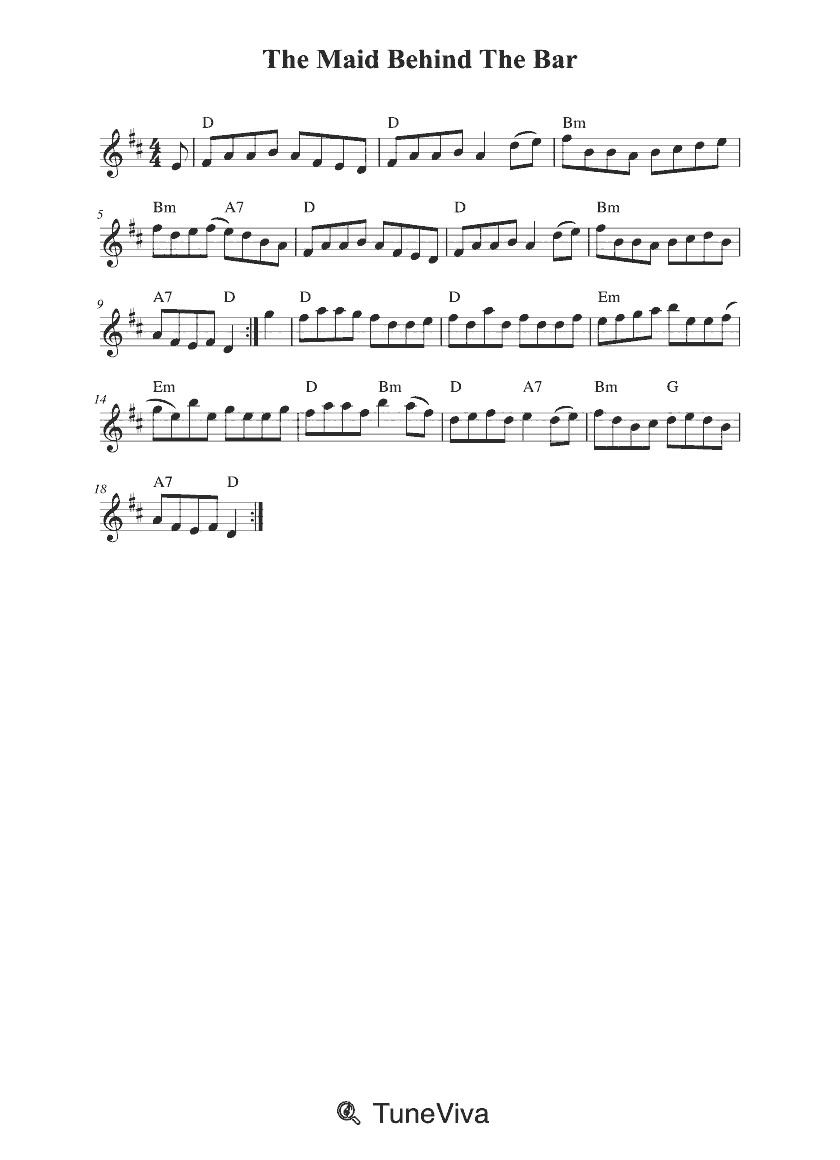
Joe Buchanan's Scottish Tome - Page 183.3
1 min 19 sec
Open score
Misc tunes
1 min 52 sec
Open score
Misc tunes
4 min 20 sec
Open score
Trad
1 min 20 sec
Open score
Misc tunes
2 min 7 sec
Open score
Misc tunes
Green Mountain The
2 min 41 sec
Open score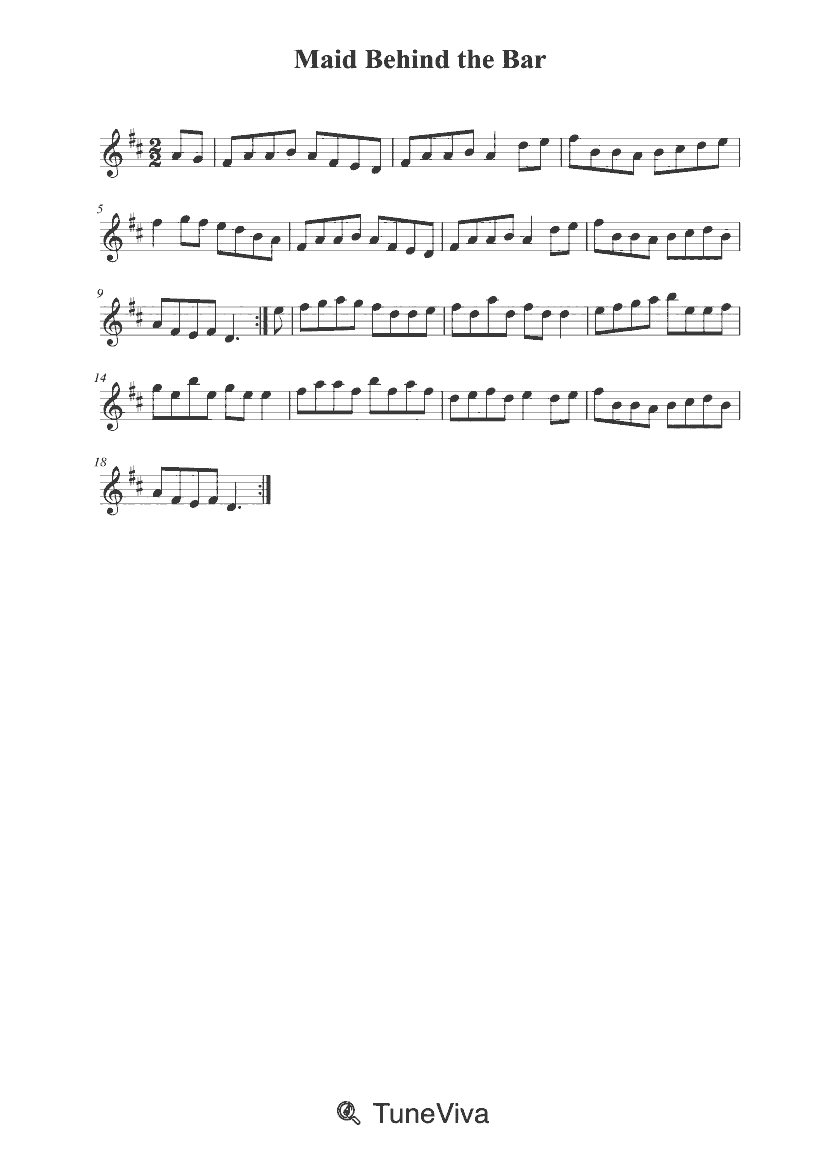
Misc tunes
Green Mountain The
2 min 41 sec
Open score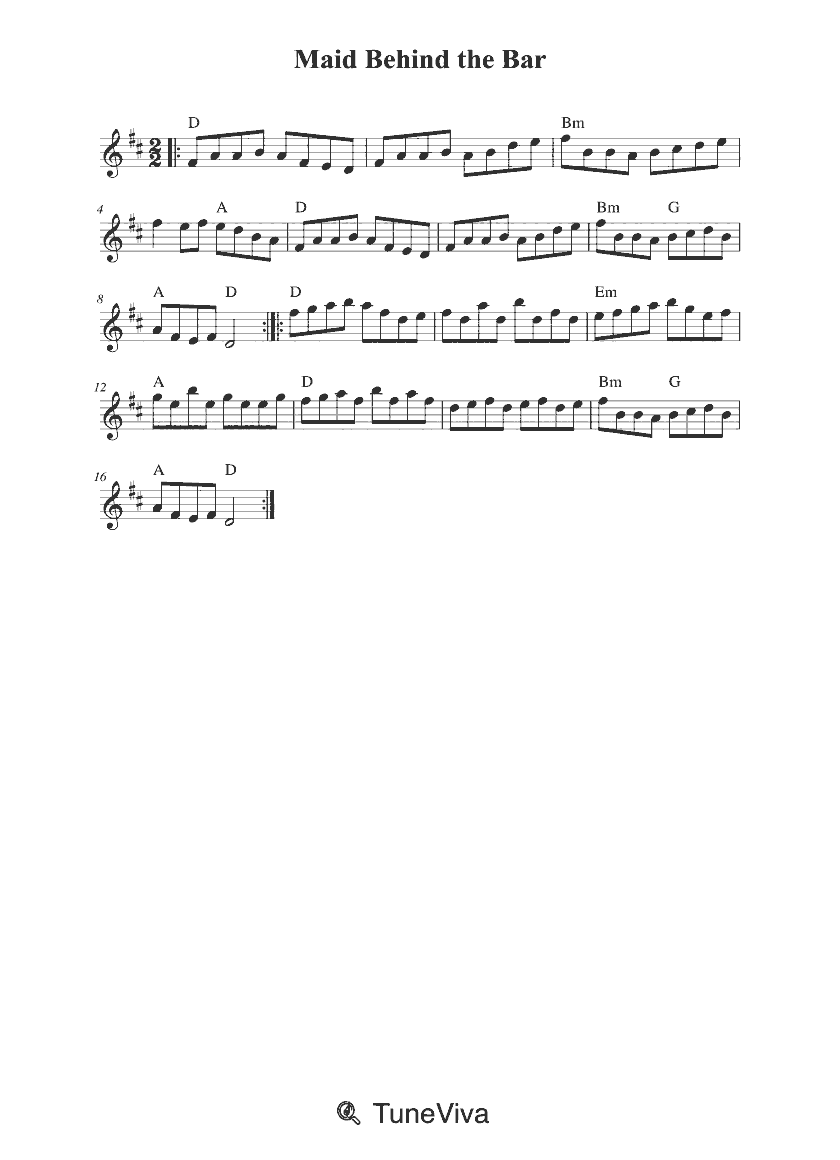
Misc tunes
Judy's Reel
2 min 8 sec
Open score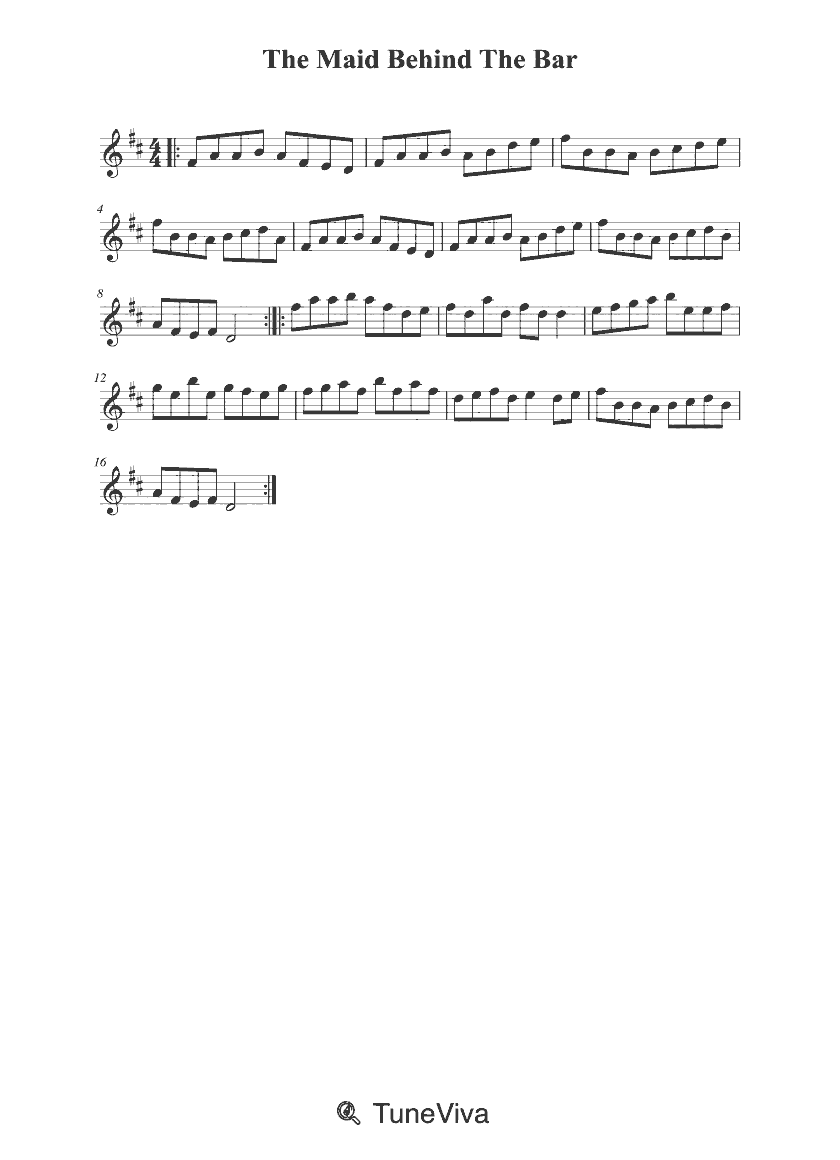
Misc tunes
1 min 4 sec · Score #111179
Open score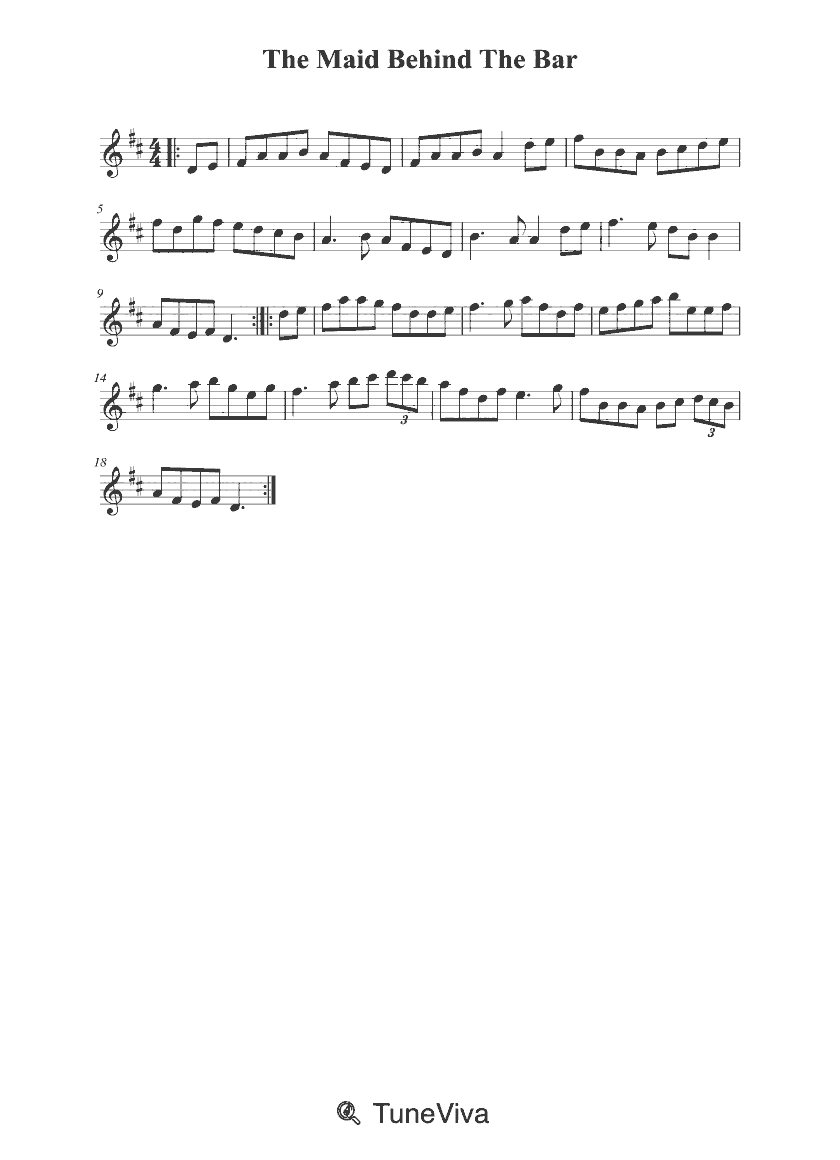
Misc tunes
1 min 5 sec
Open score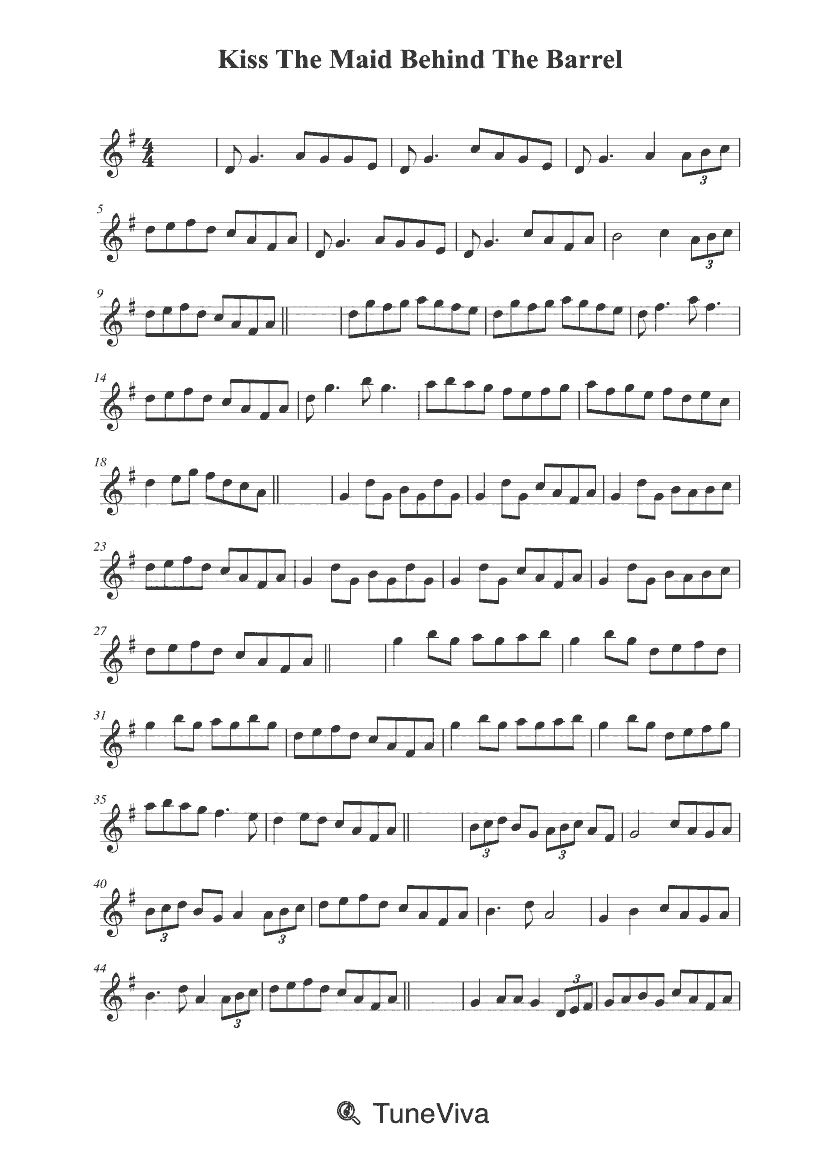
Misc tunes
1 min 48 sec
Open score
anon.
2 min 57 sec
Open score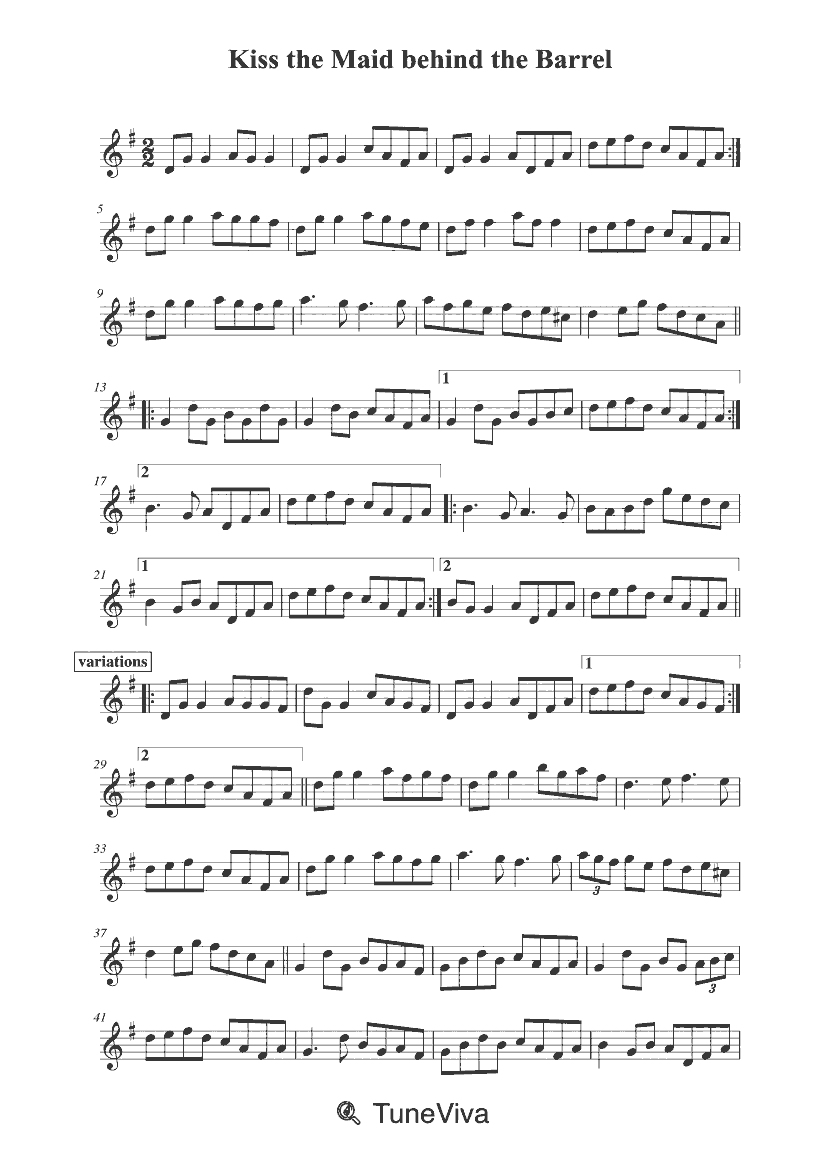
Misc tunes
4 min 16 sec
Open score
after Mr. Kennedy
2 min 10 sec
Open score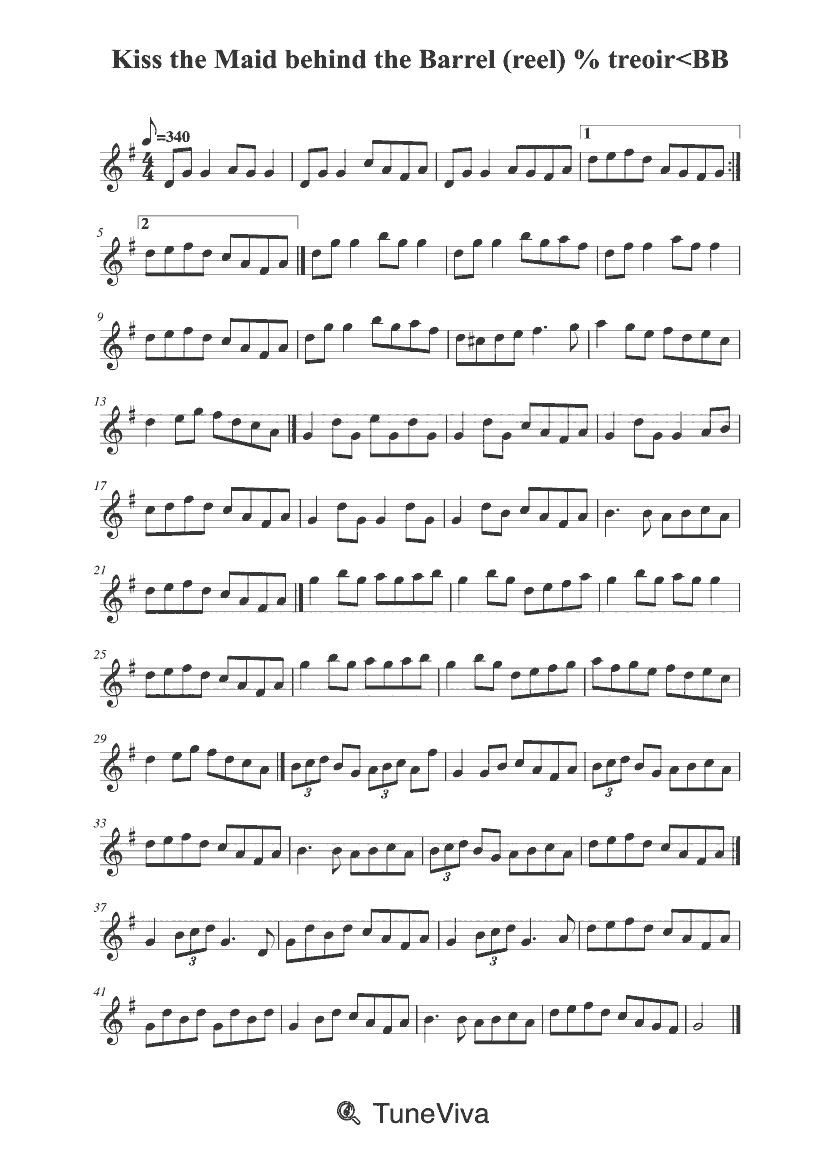
Misc tunes
Maid Behind the Bar [2]
1 min 7 sec
Open score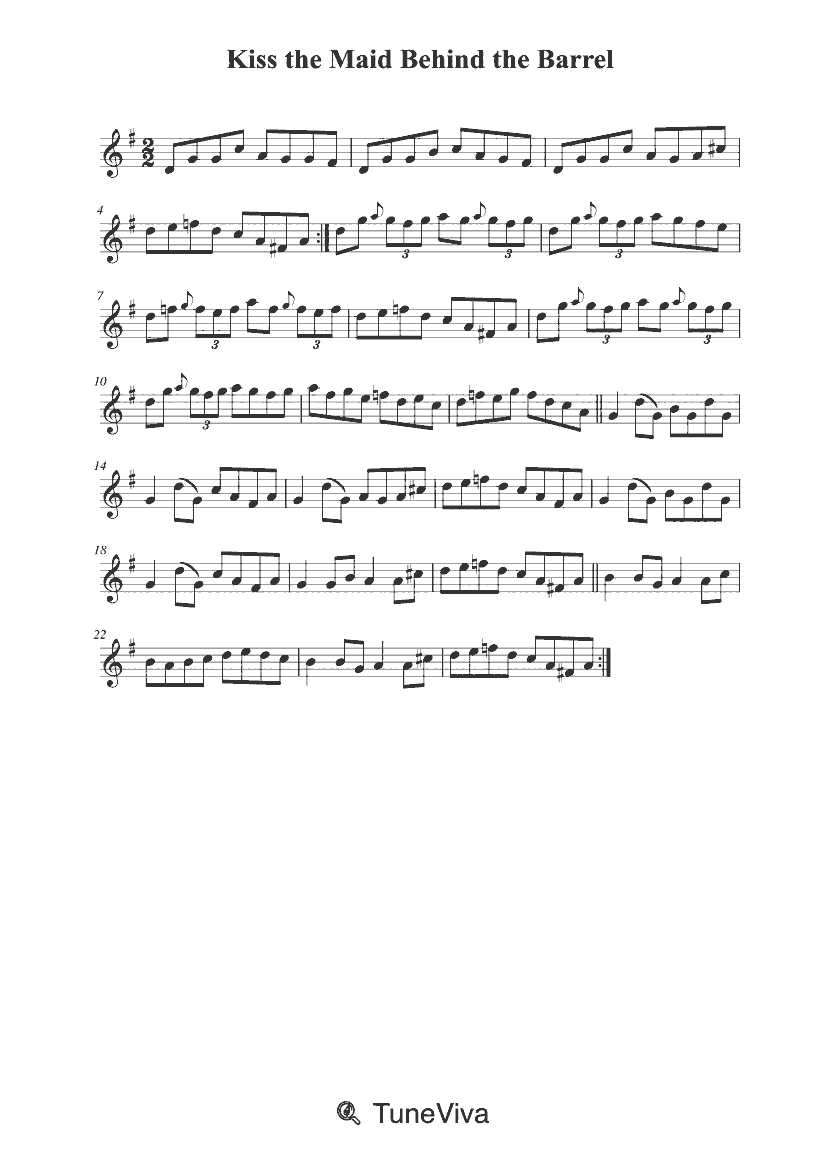
Misc tunes
3 min 28 sec
Open score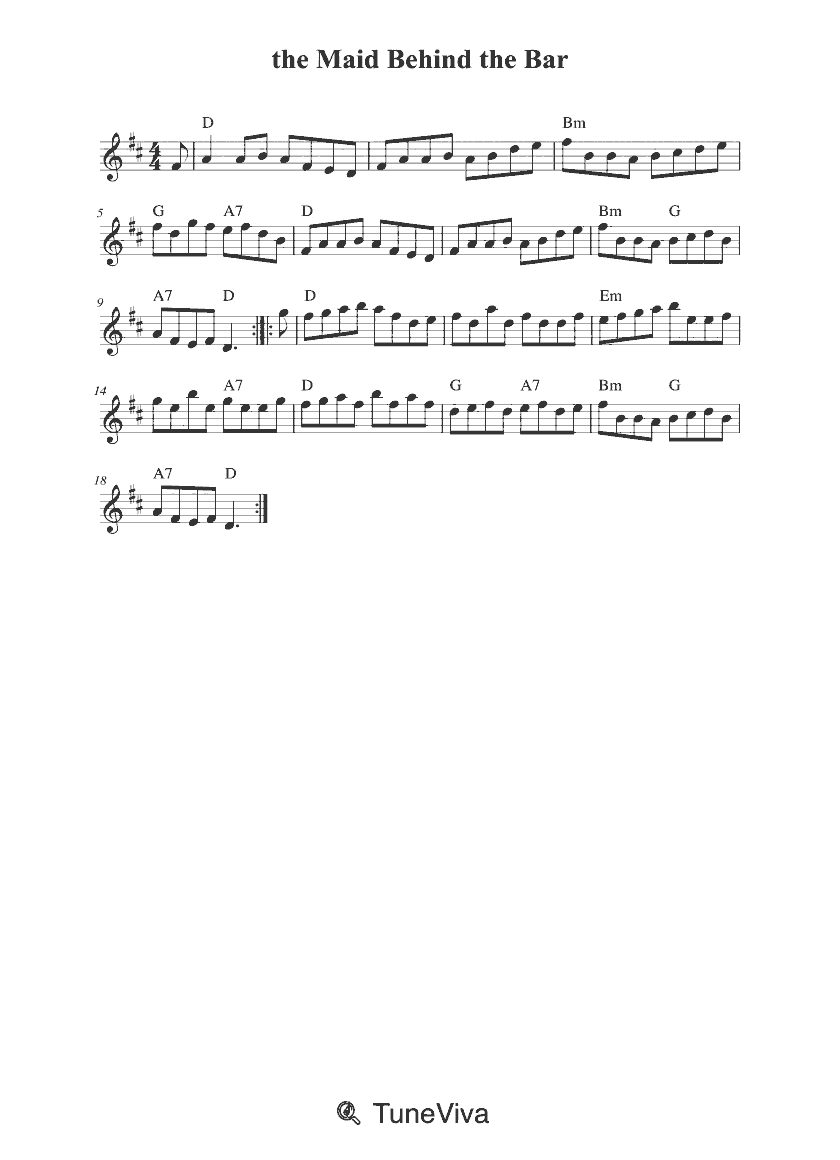
Misc tunes
1 min 4 sec · Score #67943
Open score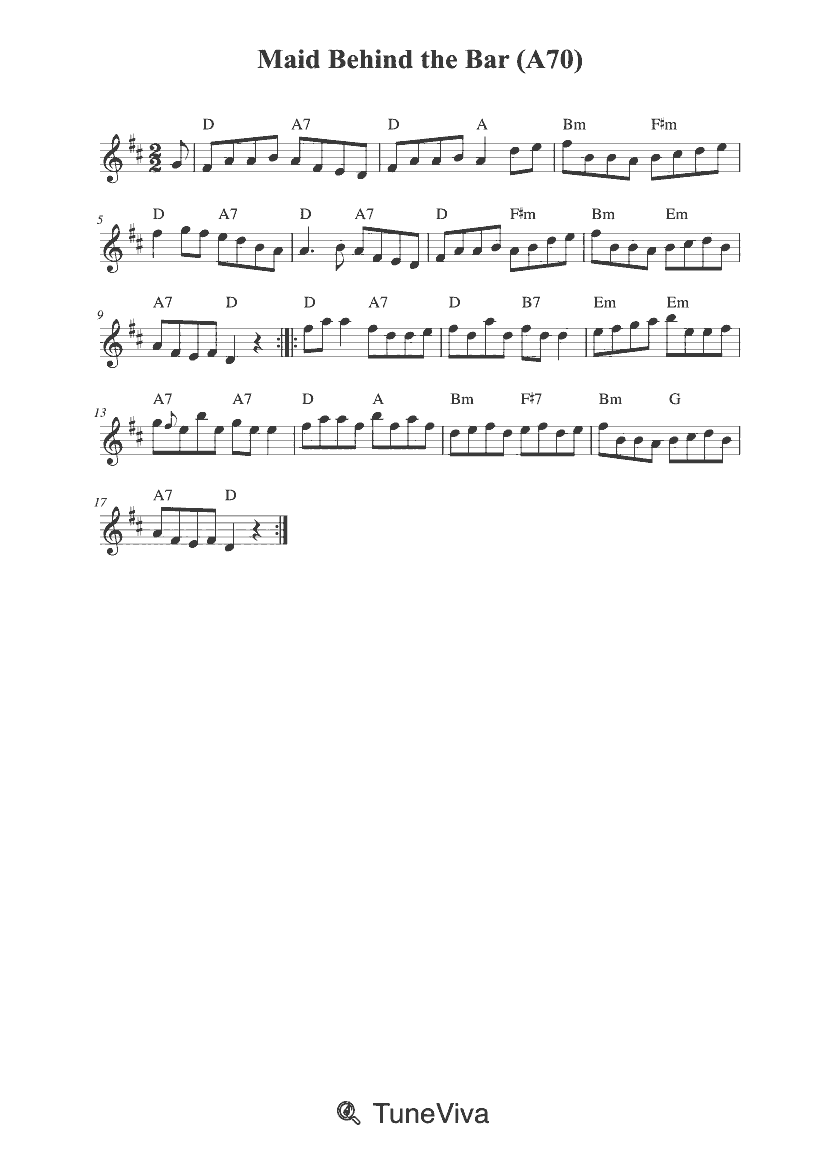
Misc tunes
Green Mountain The
2 min 8 sec
Open scorePage 1 of 3
Each of the three listed scores of The Maid Behind The Bar opens with a two-sharp key signature identified as D major and a 4/4 time signature. Their titles vary: one is simply titled “The Maid Behind the Bar,” one is titled “Traditional music - The Maid Behind the Bar,” and one includes “Joe Buchanan's Scottish Tome - Page 183.3.” The listings do not name an individual composer, and the collection reference in one title should not be read as a composer credit.
Because all three scores share the same opening key and metre, the choice is less about basic key and more about the source or presentation you need. If the Joe Buchanan's Scottish Tome reference matters for your research, the score whose title includes it is the obvious starting point. Otherwise, compare the scores themselves for layout, completeness and any differences in the notation; the listings alone do not establish which score is authoritative.
The available scores do not confirm a genre, region of origin, dance form or instrumentation for The Maid Behind The Bar. The listings also give different note totals and durations for the three scores; treat those figures as descriptions of individual scores rather than proof of different versions of the tune.
The shared D major opening and 4/4 metre give a player a consistent starting point when comparing these scores. That consistency describes only the opening key and time signature, however, so check the full score for later changes, repeats or notational differences before deciding which version suits your needs.
Catalogue duration 1 min 19 sec. Opening key signature: 2 sharps (D major). Opening time signature: 4/4.
Catalogue duration 1 min 4 sec. Opening key signature: 2 sharps (D major). Opening time signature: 4/4.
Catalogue duration 1 min 19 sec. Opening key signature: 2 sharps (D major). Opening time signature: 4/4.
No individual composer is identified in the available scores of The Maid Behind The Bar. One title describes the music as traditional, one score is credited to “Trad,” and another title includes a Joe Buchanan's Scottish Tome page reference rather than a composer name. The evidence does not establish a named author.
All three listed scores of The Maid Behind The Bar open with a two-sharp key signature identified as D major and a 4/4 time signature. These details describe the opening of each score, not necessarily every section or any later change.
The three scores of The Maid Behind The Bar carry different listing titles: one is plain, one adds “Traditional music,” and one includes “Joe Buchanan's Scottish Tome - Page 183.3.” The titles indicate how each score is presented or sourced in the listing, but they do not by themselves prove that the musical settings differ.
One score title for The Maid Behind The Bar includes “Joe Buchanan's Scottish Tome - Page 183.3,” which appears to identify a collection and page location.
The three listed scores of The Maid Behind The Bar give note totals of 238, 298 and 300, with durations of roughly 64, 79 and 79 seconds. Those figures show that the scores are not identical in their listed details, but they do not establish whether the differences reflect notation, layout, arrangement or another factor.
The available score listings for The Maid Behind The Bar do not identify it as an Irish reel or confirm a dance form, region of origin or genre beyond the broad description “traditional music” in one title.