
The Moon and Seven Stars
Misc tunes
24 sec · Score #84338
Open scoreThe Moon and Seven Stars is represented here by three separate scores, each listed under the same title without a credited composer. All three are notated in 6/8; two begin with a D major key signature and one with F major. One score lists an opening tempo of 140 BPM. These details describe the individual scores rather than establishing a single definitive version.
Scores 1–20 of 22
Misc tunes
24 sec · Score #84338
Open score
Misc tunes
21 sec · Score #93543
Open score
Misc tunes
24 sec · Score #224261
Open score
Misc tunes
Seven Stars
24 sec
Open score
Misc tunes
Seven Stars. WCa.16
16 sec
Open score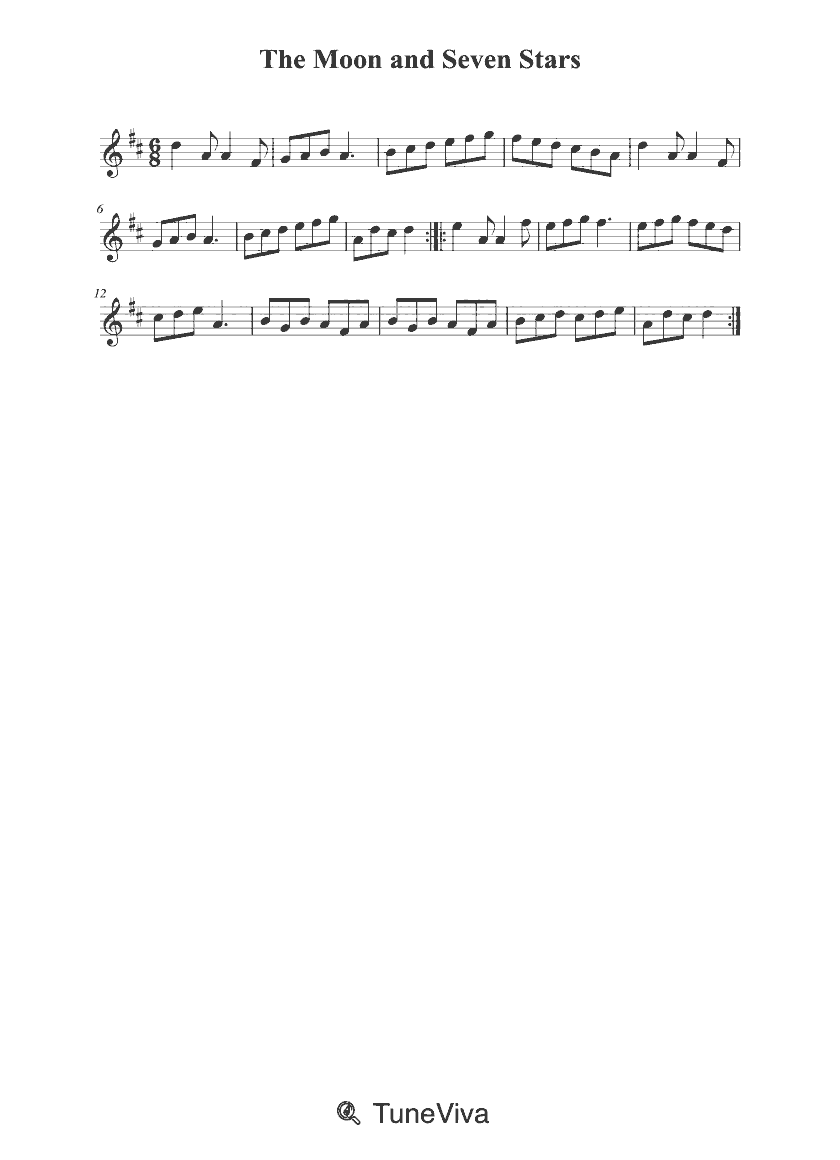
Misc tunes
Seven Stars
23 sec · Score #2963
Open score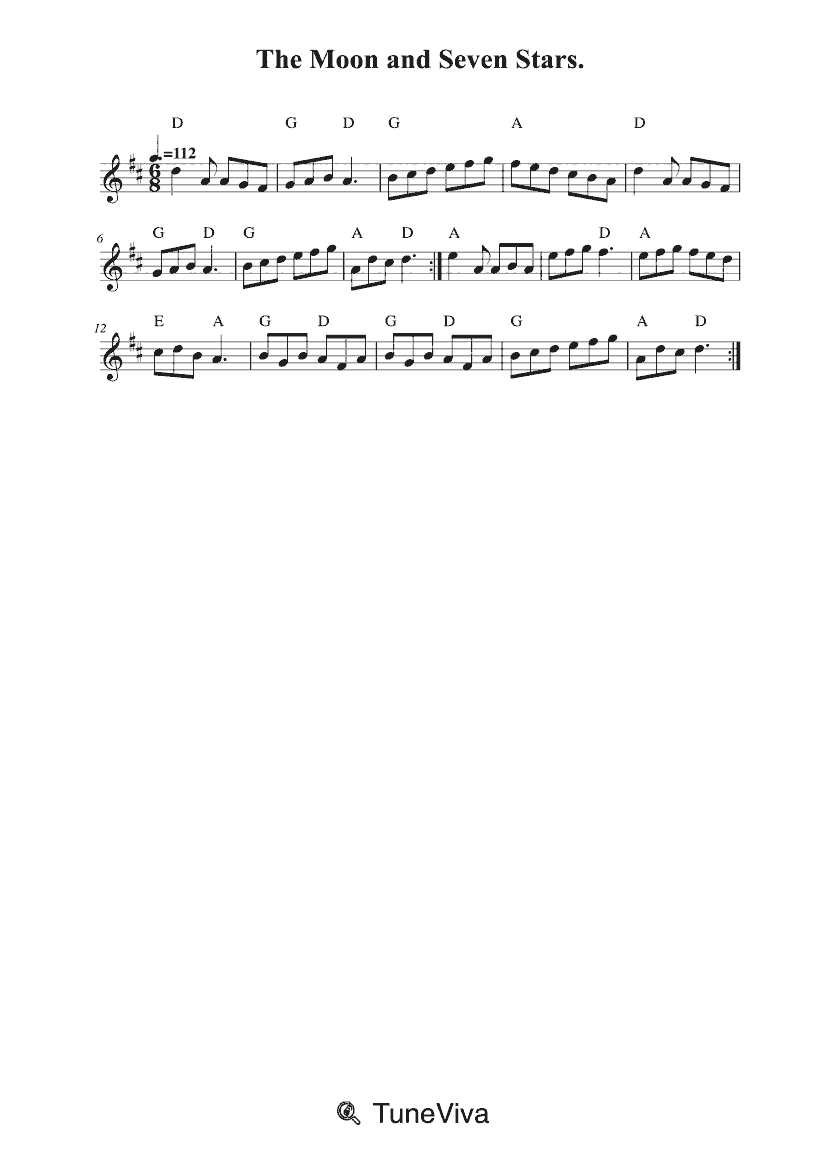
Misc tunes
21 sec · Score #78518
Open score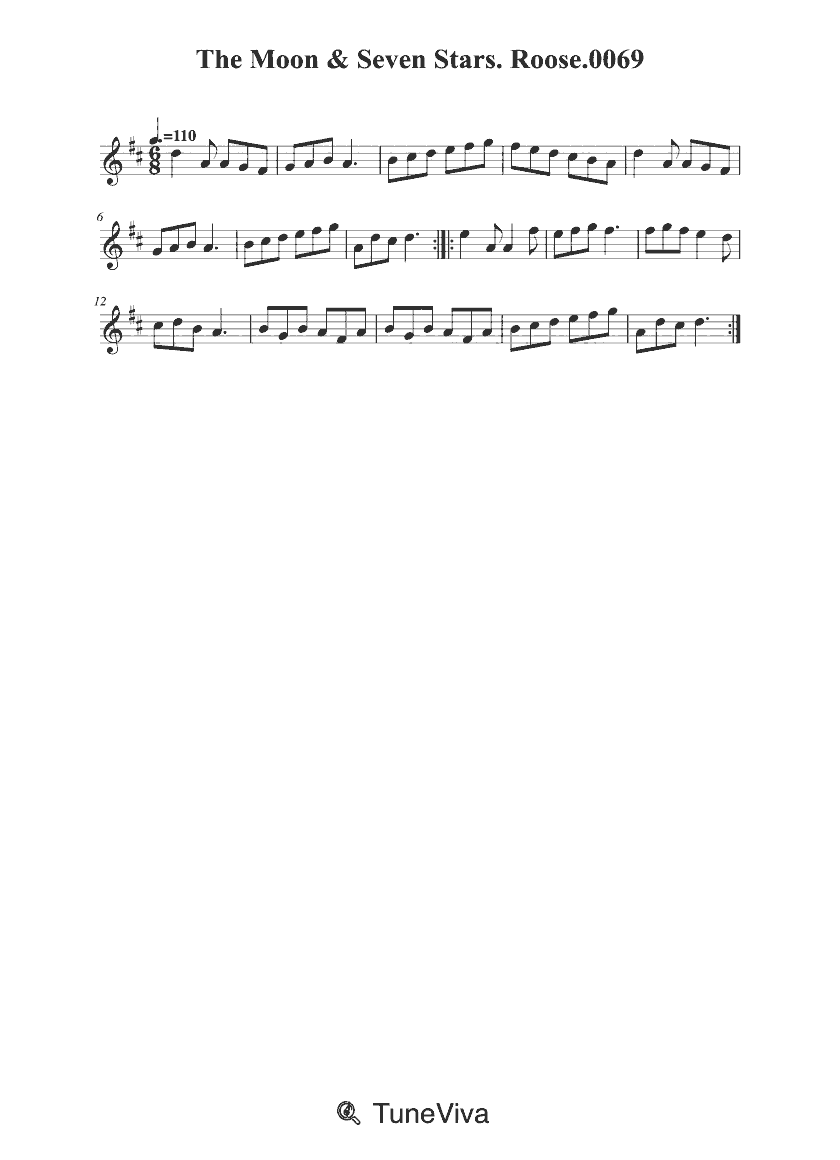
Misc tunes
Seven Starsaka. Roose.0069
17 sec
Open score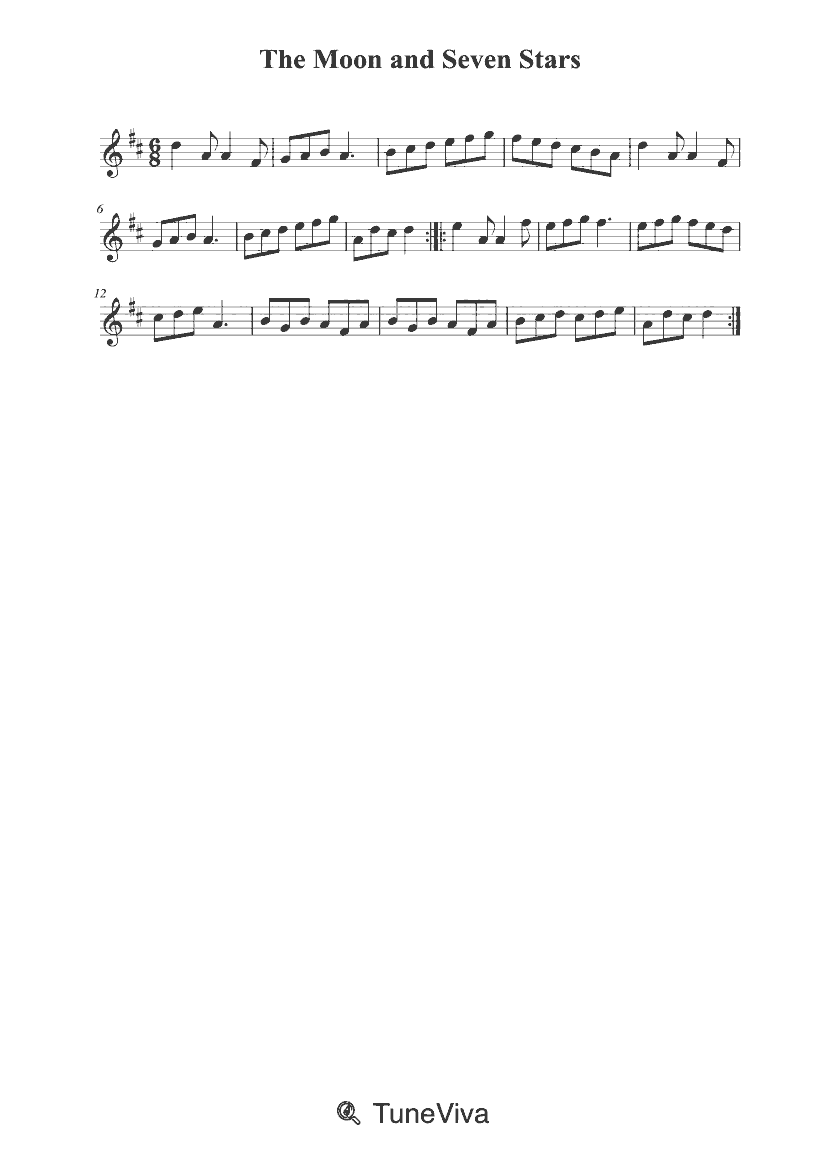
Misc tunes
Seven Stars
23 sec · Score #247961
Open score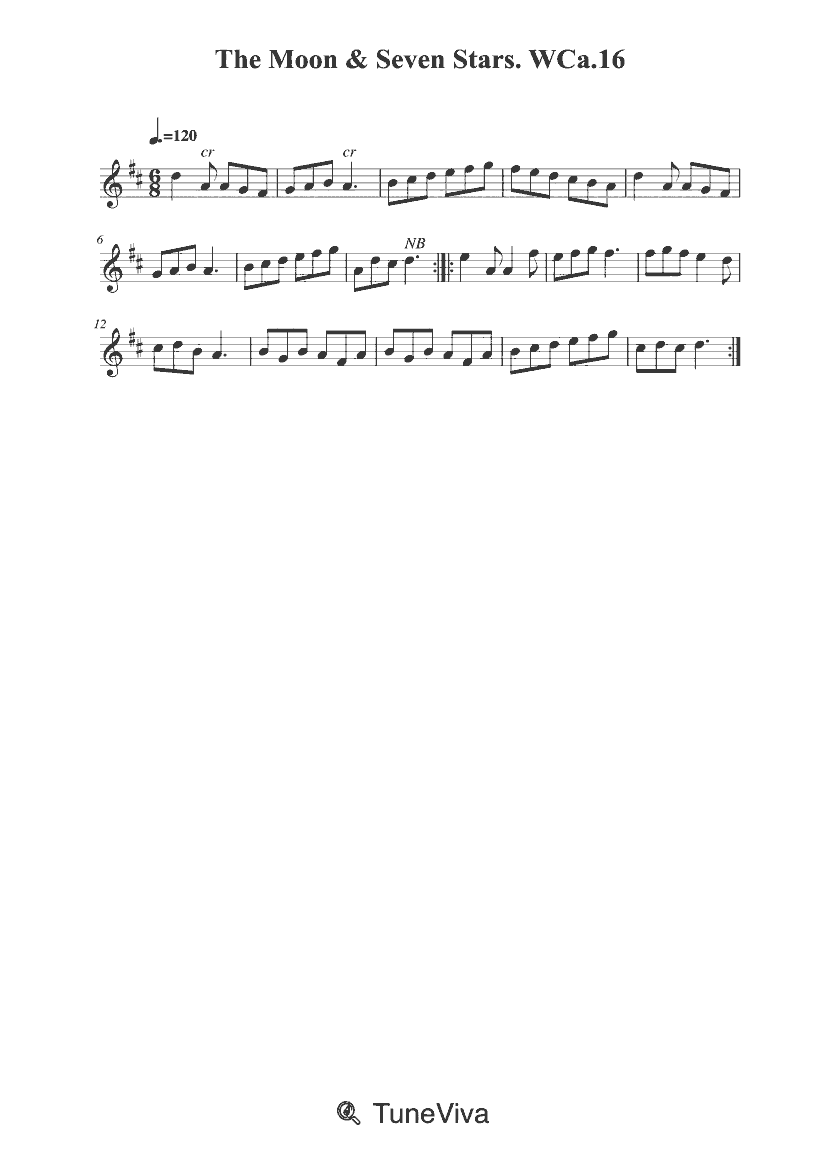
Misc tunes
Seven Stars. WCa.16
16 sec
Open score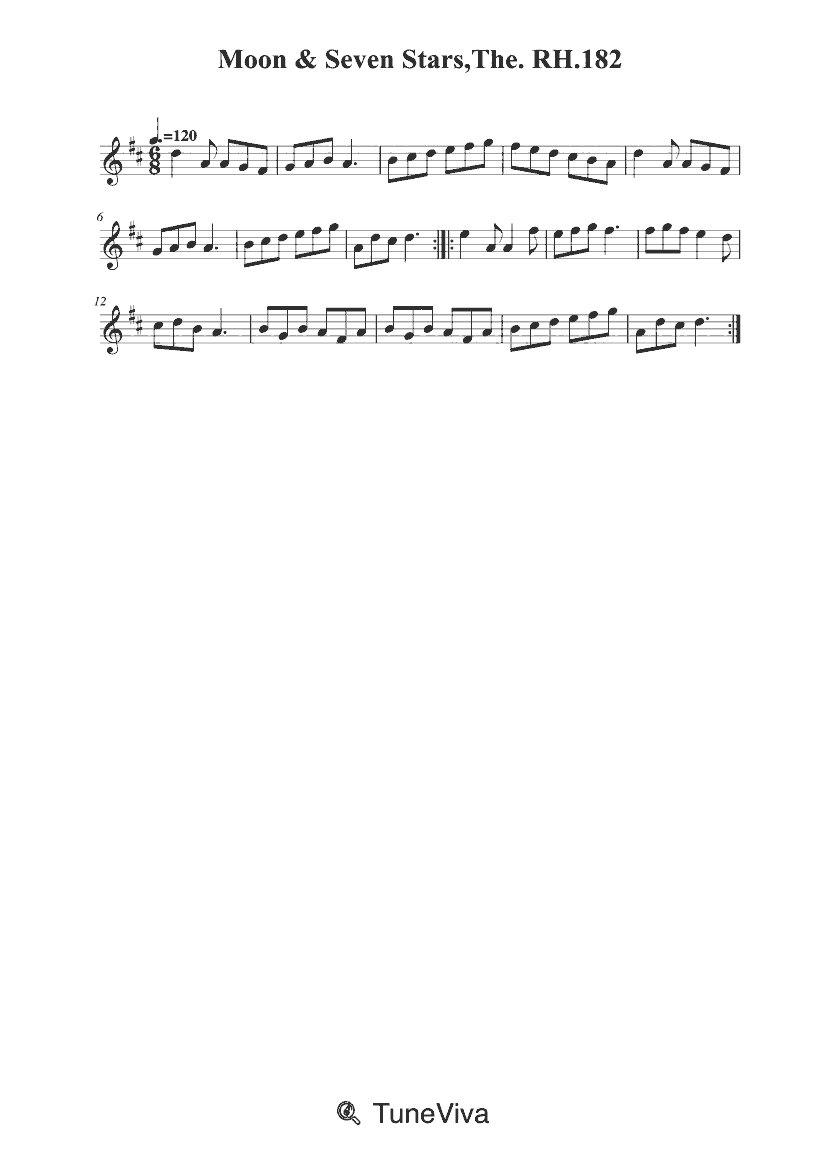
Misc tunes
Seven Starsaka. RH.182
16 sec
Open score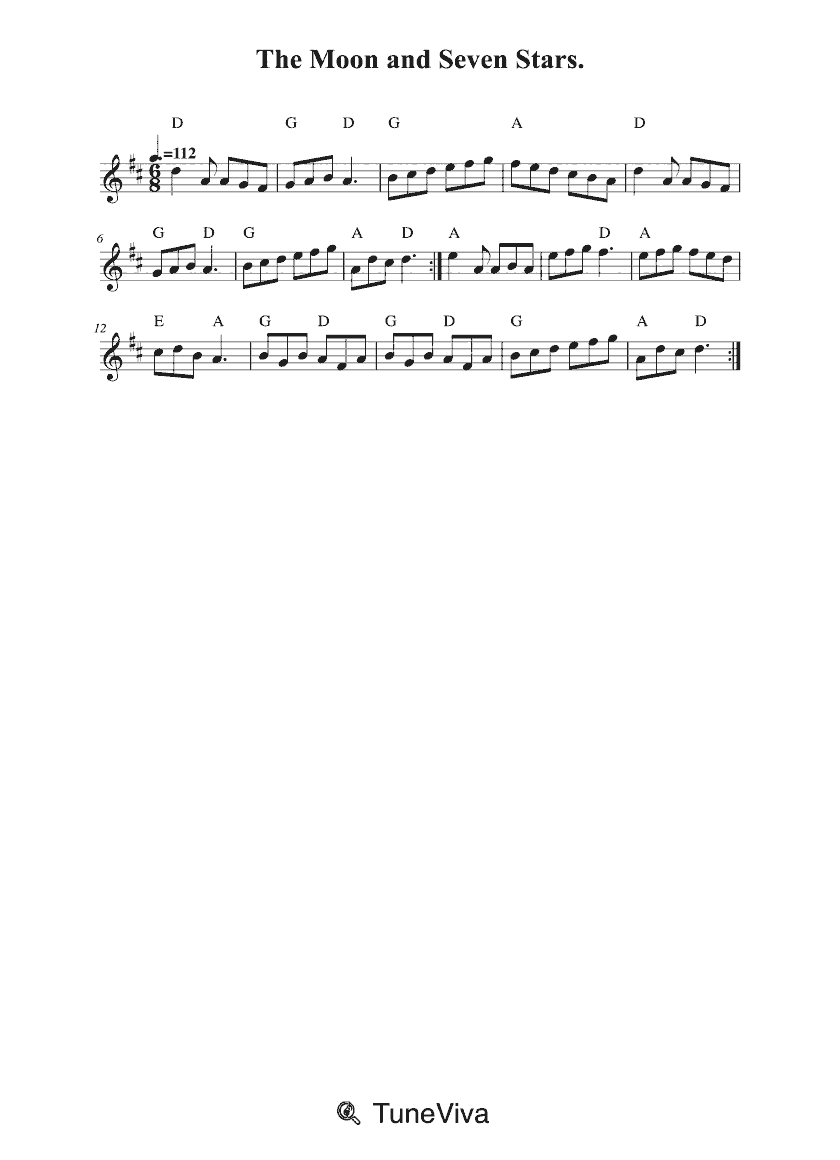
Misc tunes
21 sec · Score #174692
Open score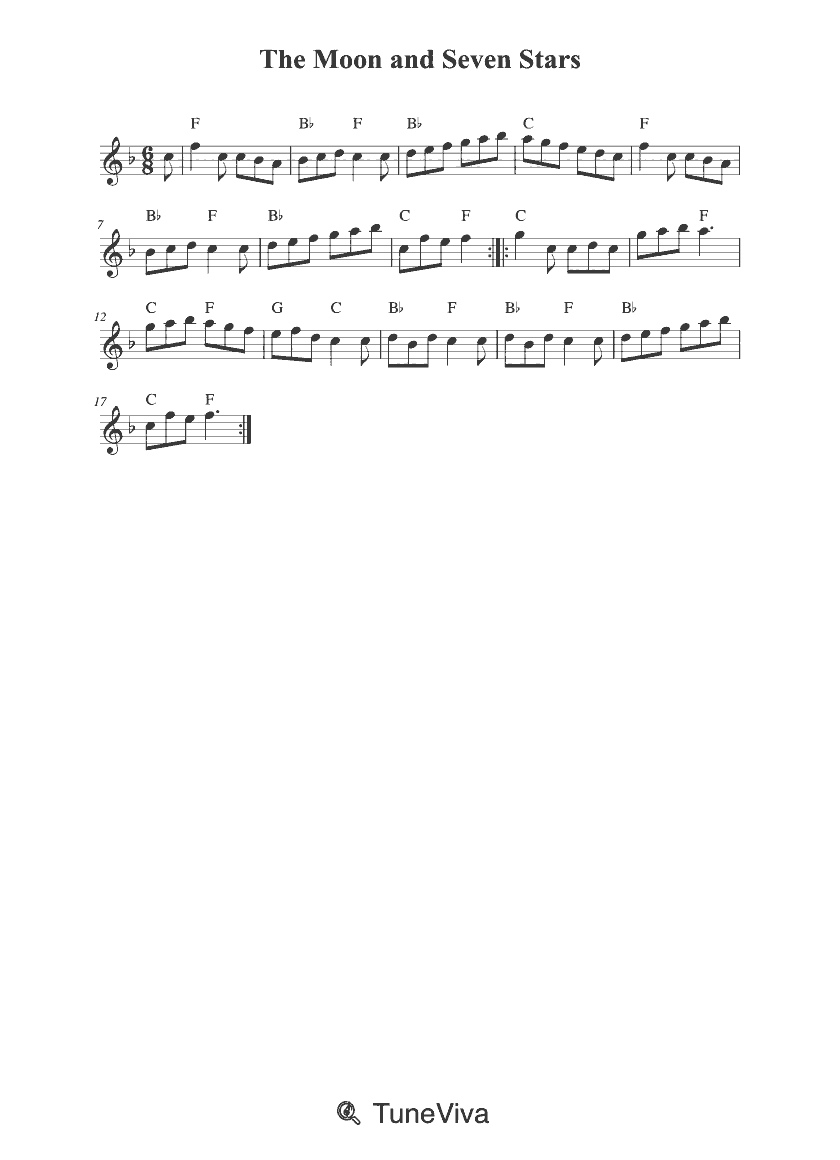
Misc tunes
24 sec · Score #198410
Open score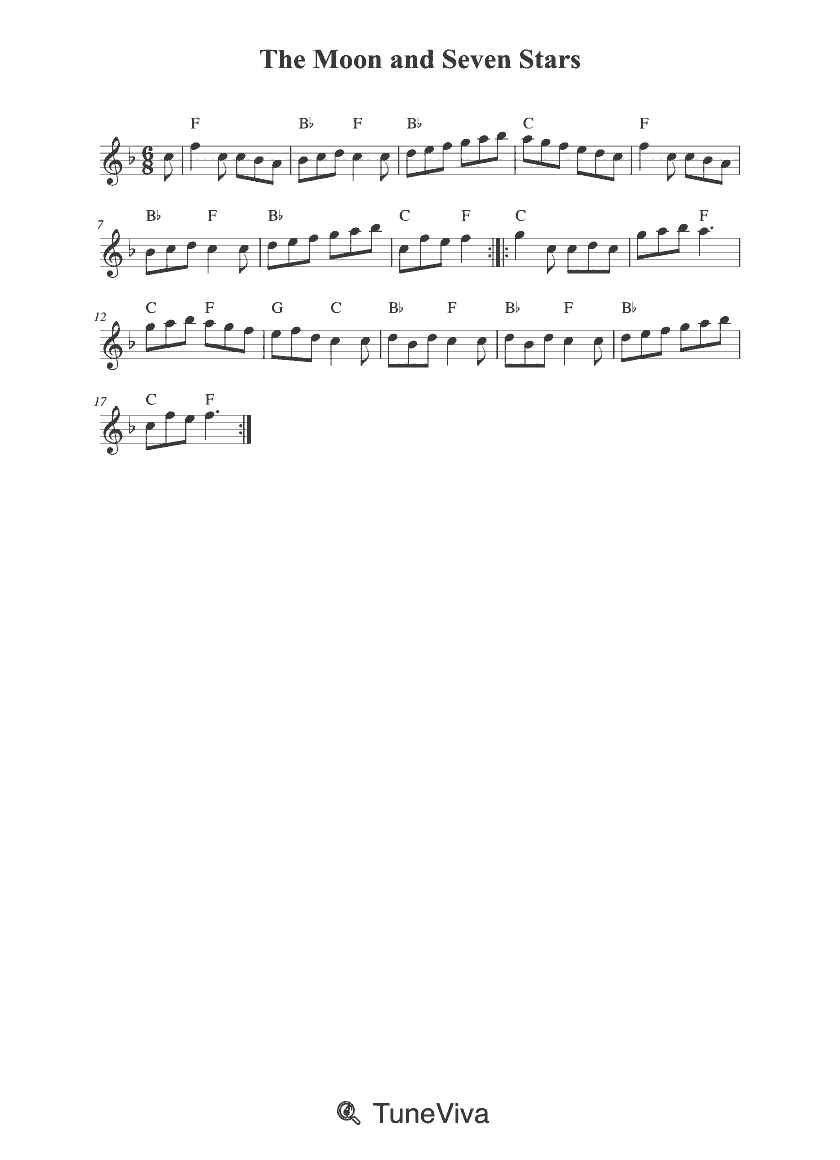
Misc tunes
24 sec · Score #36548
Open score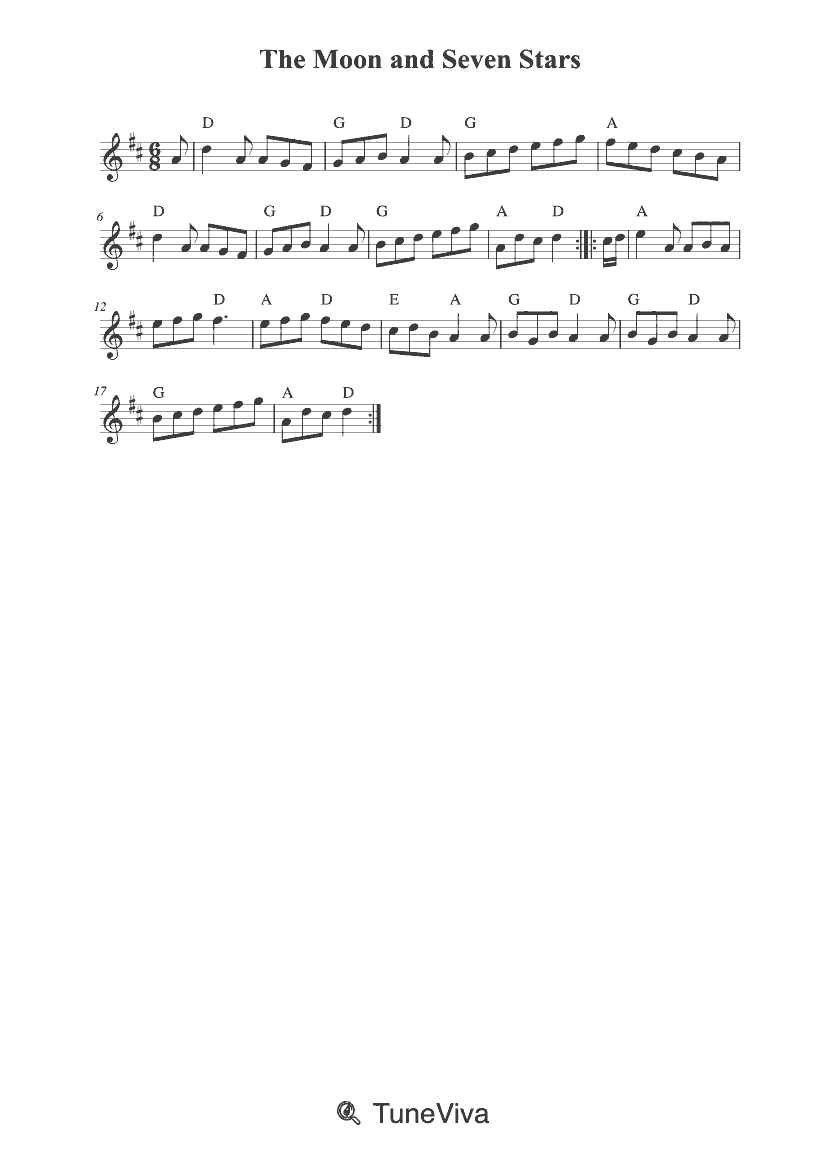
Misc tunes
24 sec · Score #134657
Open score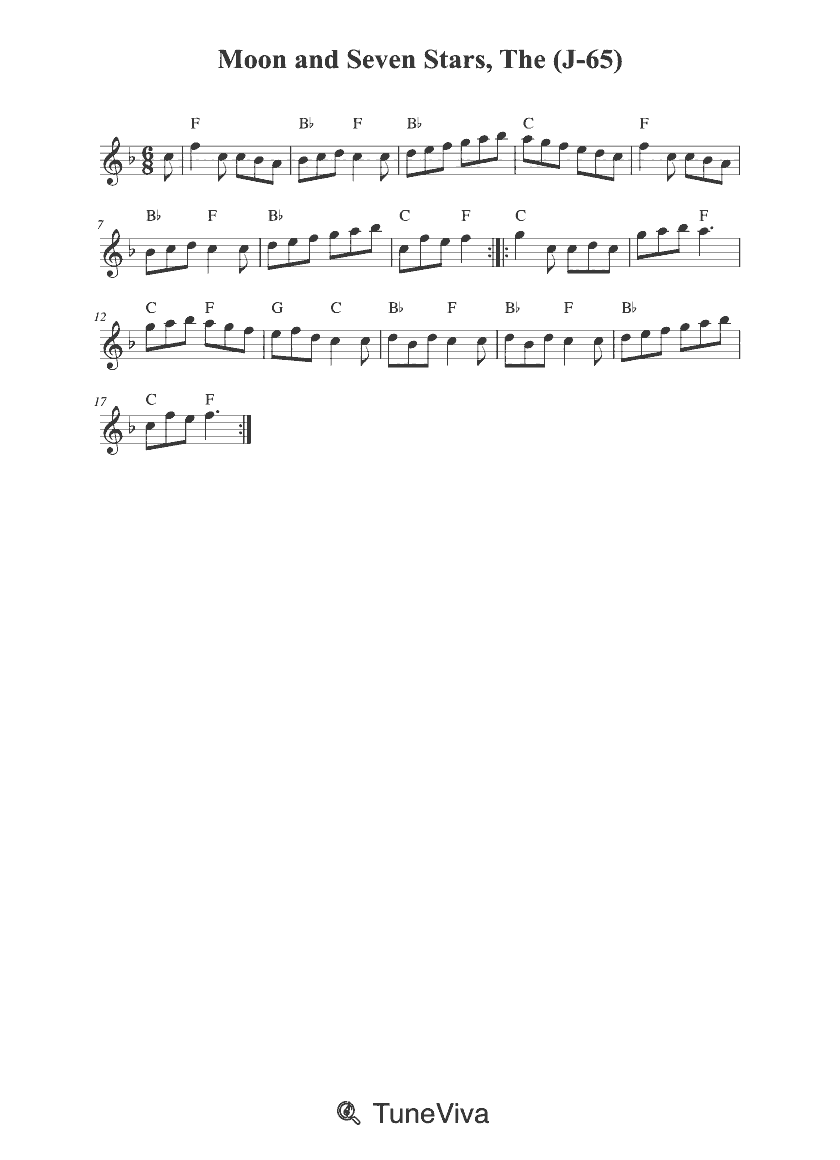
Misc tunes
24 sec · Score #205408
Open score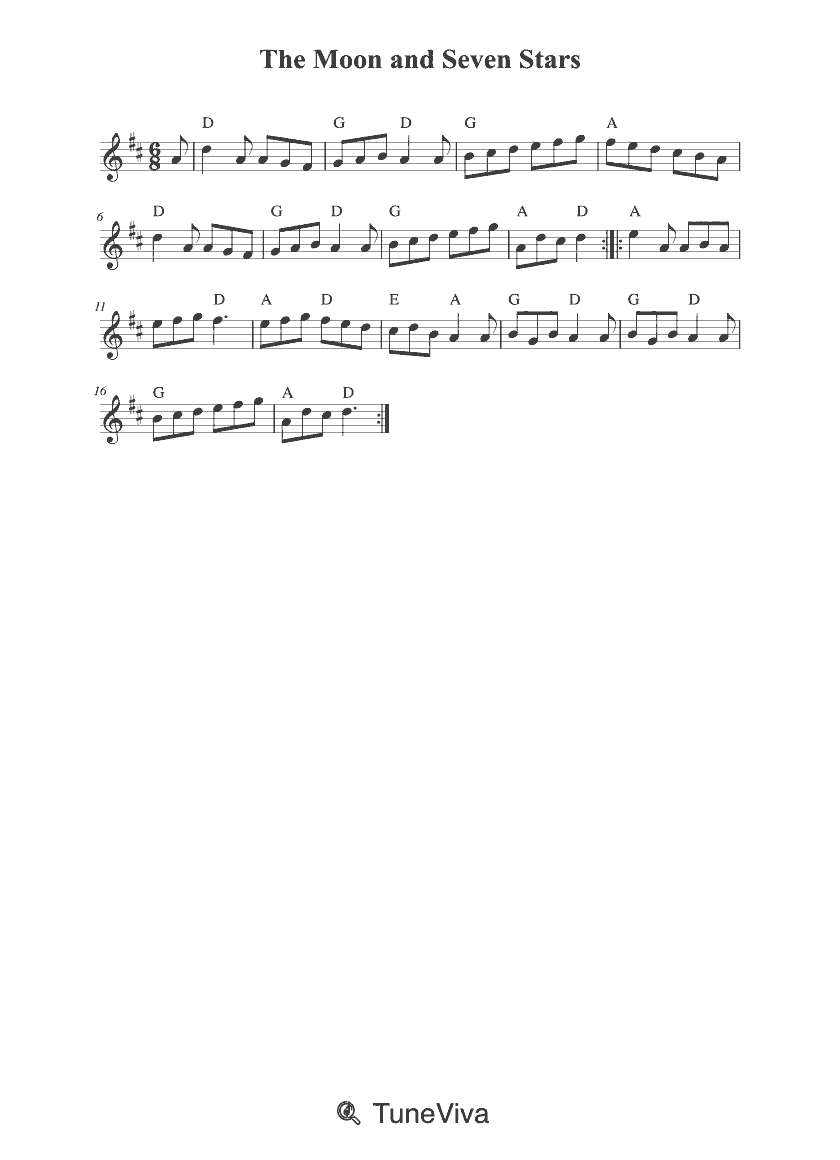
Misc tunes
24 sec · Score #241371
Open score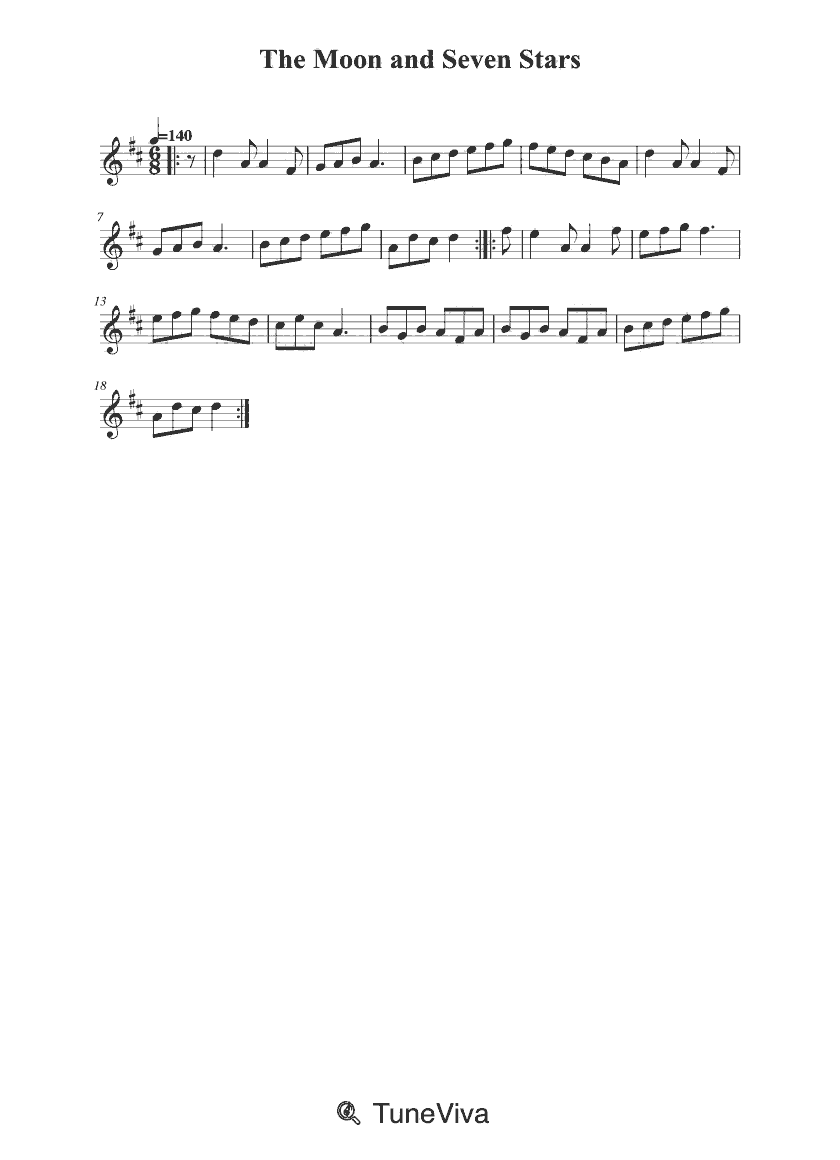
Misc tunes
21 sec · Score #13092
Open score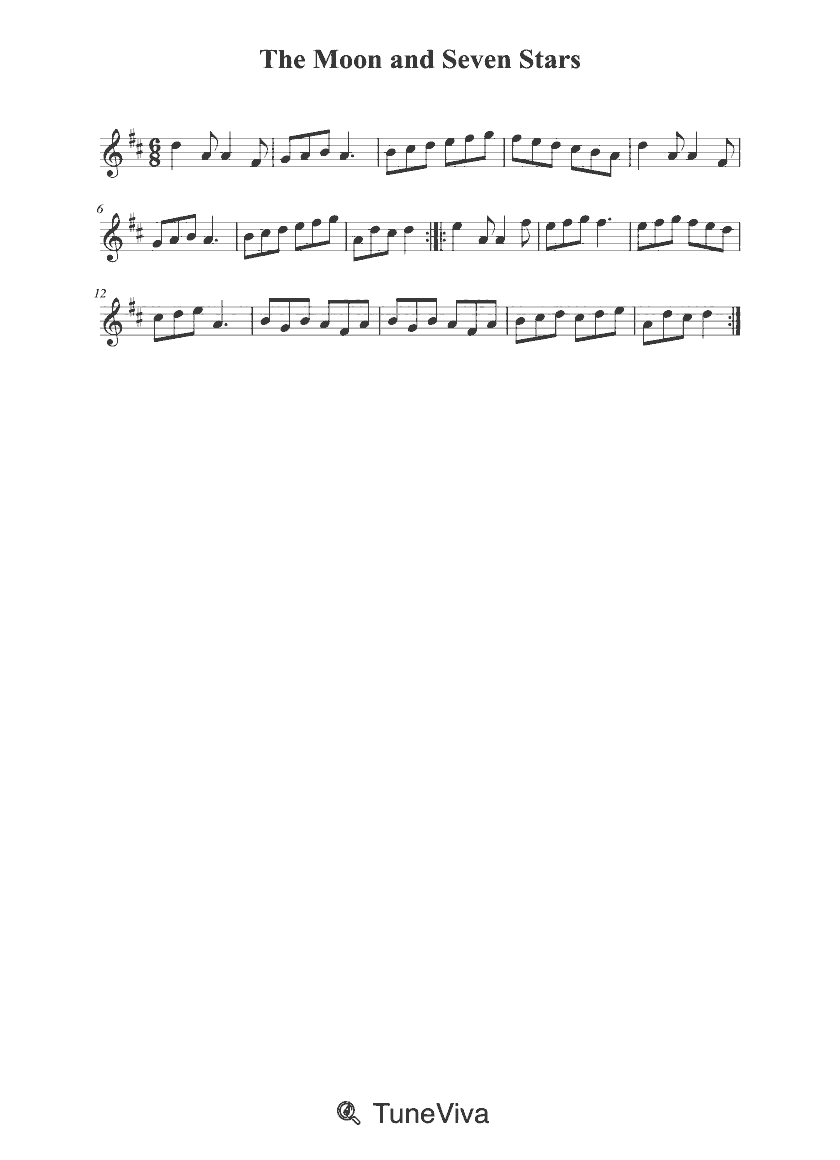
Misc tunes
Seven Stars
23 sec · Score #74291
Open score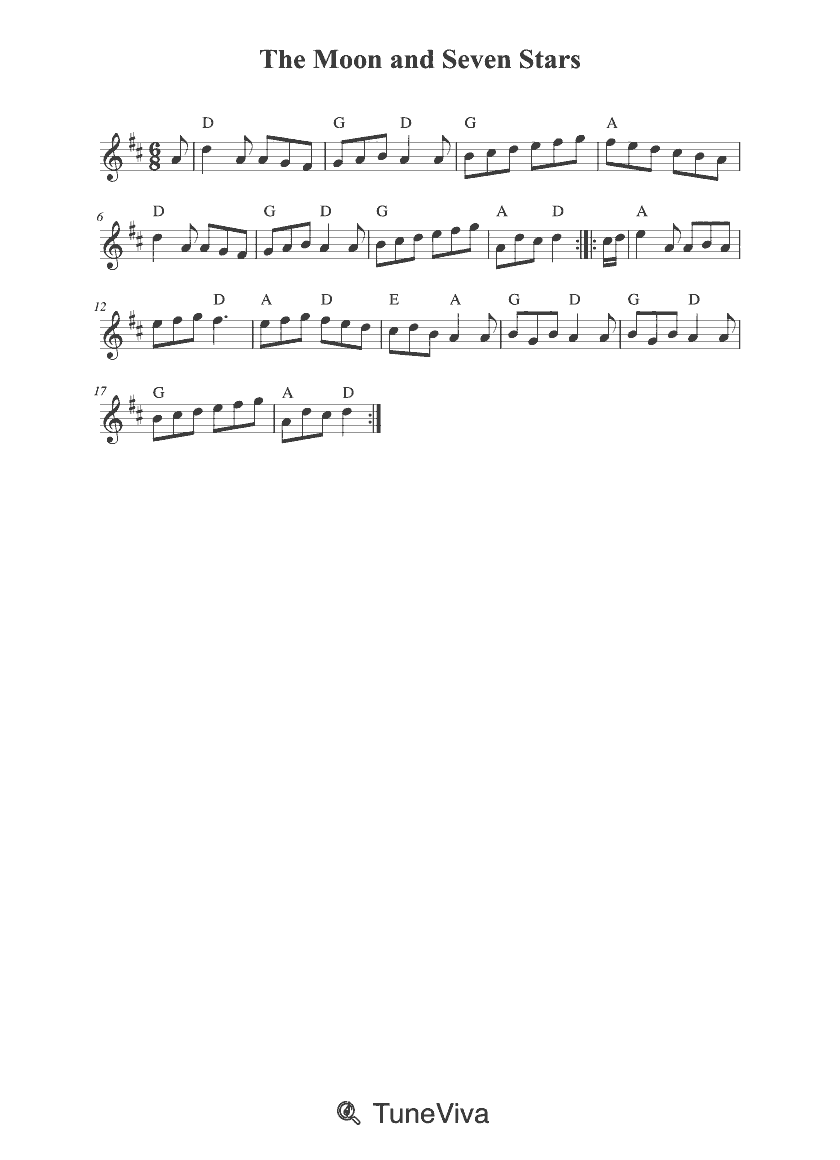
Misc tunes
24 sec · Score #204368
Open scorePage 1 of 2
The scores share the title The Moon and Seven Stars but are not identical. Two open in D major and one in F major, and all three use a 6/8 time signature. Their note counts and listed durations differ, so they should be treated as distinct versions rather than duplicate copies of one fixed arrangement.
D major is the opening key for two of the scores, while the third opens in F major. The 6/8 metre is compound duple, normally felt as two main beats per bar with each beat divided into three eighth notes. Only one score gives an opening tempo, 140 BPM; the other two provide no tempo marking.
The opening key is the clearest practical difference for a player choosing between the scores: select D major or F major according to the instrument, voice or ensemble you are working with. The 140 BPM marking belongs to one specific score and should not be assumed to apply to the others. The listings do not identify instrumentation, arrangers or difficulty, so those points need to be checked in the scores themselves.
No composer, genre, origin or instrumentation is established for The Moon and Seven Stars by the supplied records. The title alone should not be taken as proof of a traditional origin, a particular dance type or a specific performing tradition. Historical and authorship questions require independent verification beyond these score listings.
Catalogue duration 24 sec. Opening key signature: 2 sharps (D major). Opening time signature: 6/8.
Catalogue duration 21 sec. Opening key signature: 2 sharps (D major). Opening time signature: 6/8. Opening tempo: 140 BPM.
Catalogue duration 24 sec. Opening key signature: 1 flat (F major). Opening time signature: 6/8.
The three scores listed for The Moon and Seven Stars do not credit a composer; each carries 'Misc tunes' as the artist rather than a named author.
All three scores listed for The Moon and Seven Stars are notated in 6/8. In compound duple metre, 6/8 is usually felt as two main beats per bar, each divided into three eighth notes; that grouping affects the phrasing and rhythmic feel of the music.
The available scores do not all use the same key. Two of the three versions open with a D major key signature, while the third opens with one flat, given as F major. A player should therefore check the opening key before choosing a score for a particular instrument, voice or ensemble.
Only one of the three scores lists an opening tempo: 140 BPM. The other two give no tempo, so 140 BPM should be treated as information about that single score, not as a recommended speed for every version.
The three scores are not identical: two open in D major and one in F major, and their note counts are 170, 158 and 166. Their listed durations also differ. Those differences show that the scores are distinct versions, but the records do not name an arranger or explain the relationship between them.