
Musical Priest
Irish
Violín; Viola; Violonchelo · 1 min 4 sec
Open scoreThe Musical Priest sheet music appears here in several versions rather than as a single fixed edition. The scores shown differ in opening key signature, time signature and instrumentation; one lists parts for violin, viola and cello, while others do not list separate parts. Compare those details to match a version to your instrument or ensemble.
Scores 1–20 of 39
Irish
Violín; Viola; Violonchelo · 1 min 4 sec
Open score
Misc tunes
1 min 36 sec
Open score
Misc tunes
3 min 12 sec
Open score
Misc tunes
4 min 48 sec
Open score
Traditional
1 min 17 sec
Open score
Misc tunes
3 min 12 sec
Open score
after Mr. McFadden
1 min 56 sec
Open score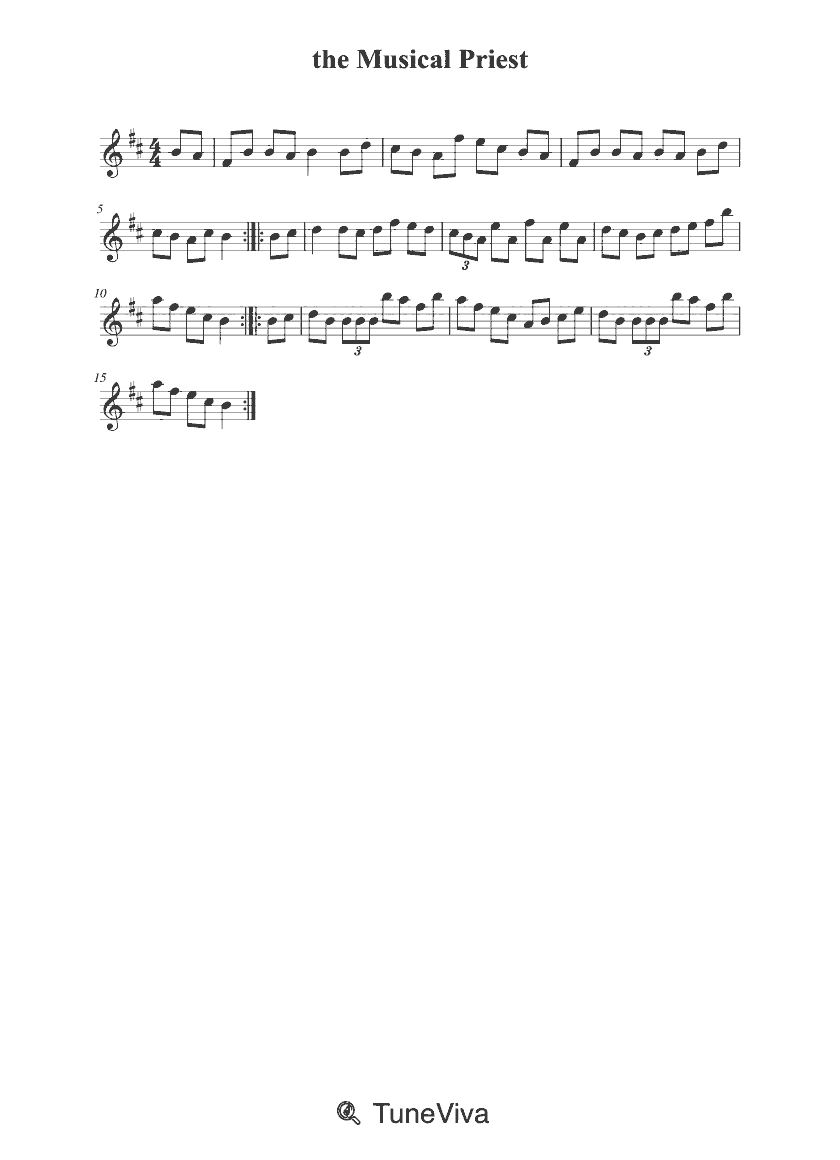
Misc tunes
48 sec · Score #77406
Open score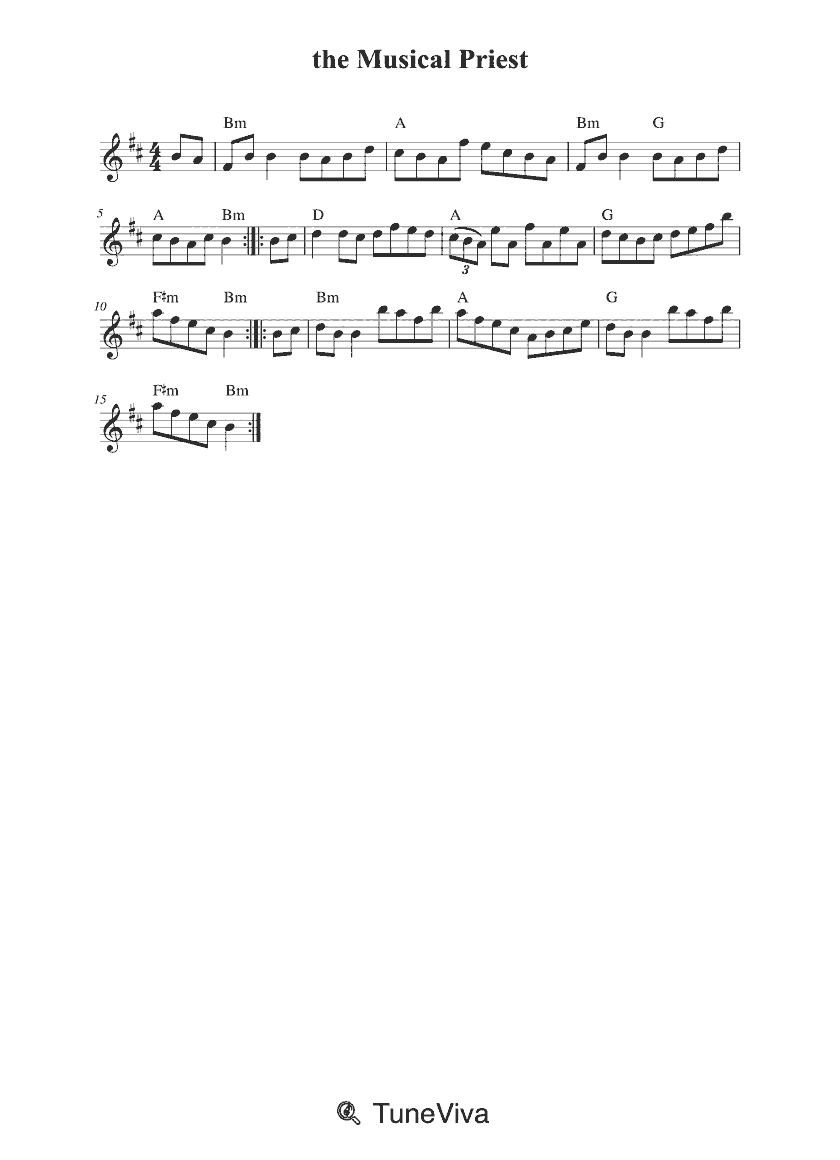
Misc tunes
48 sec · Score #171086
Open score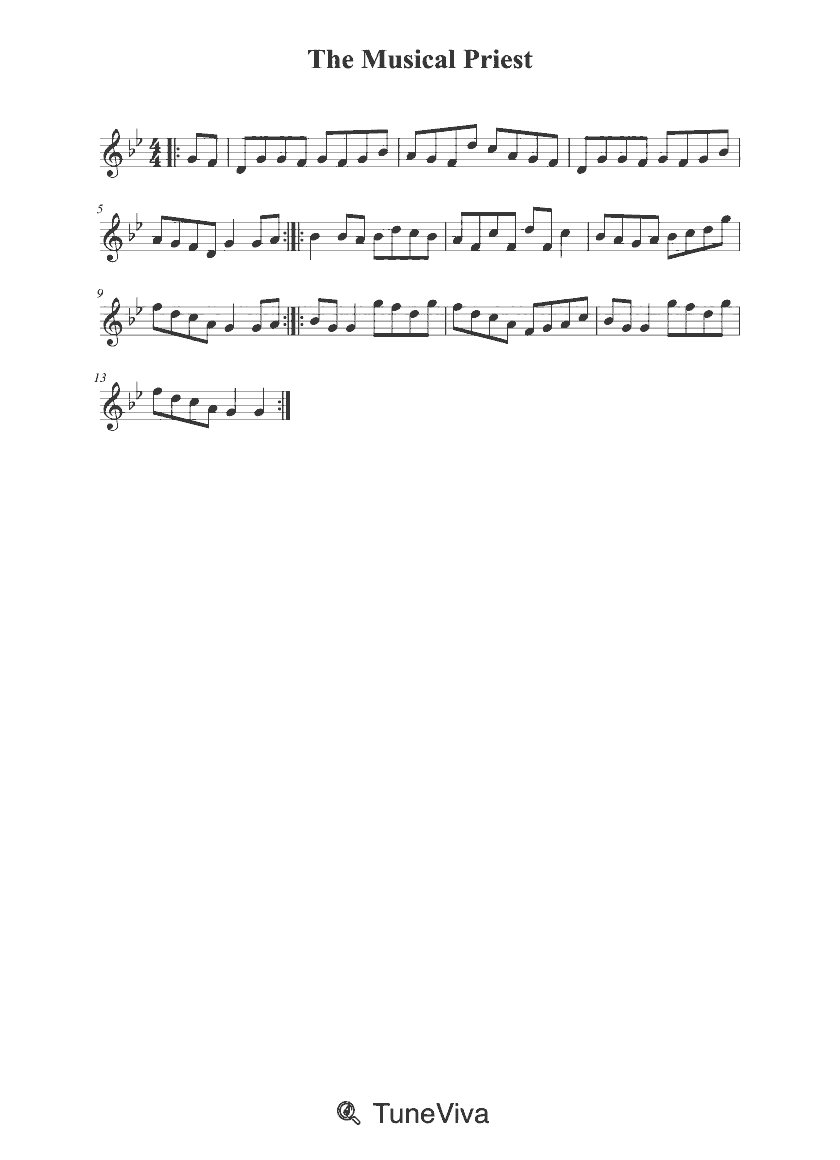
Misc tunes
49 sec · Score #128281
Open score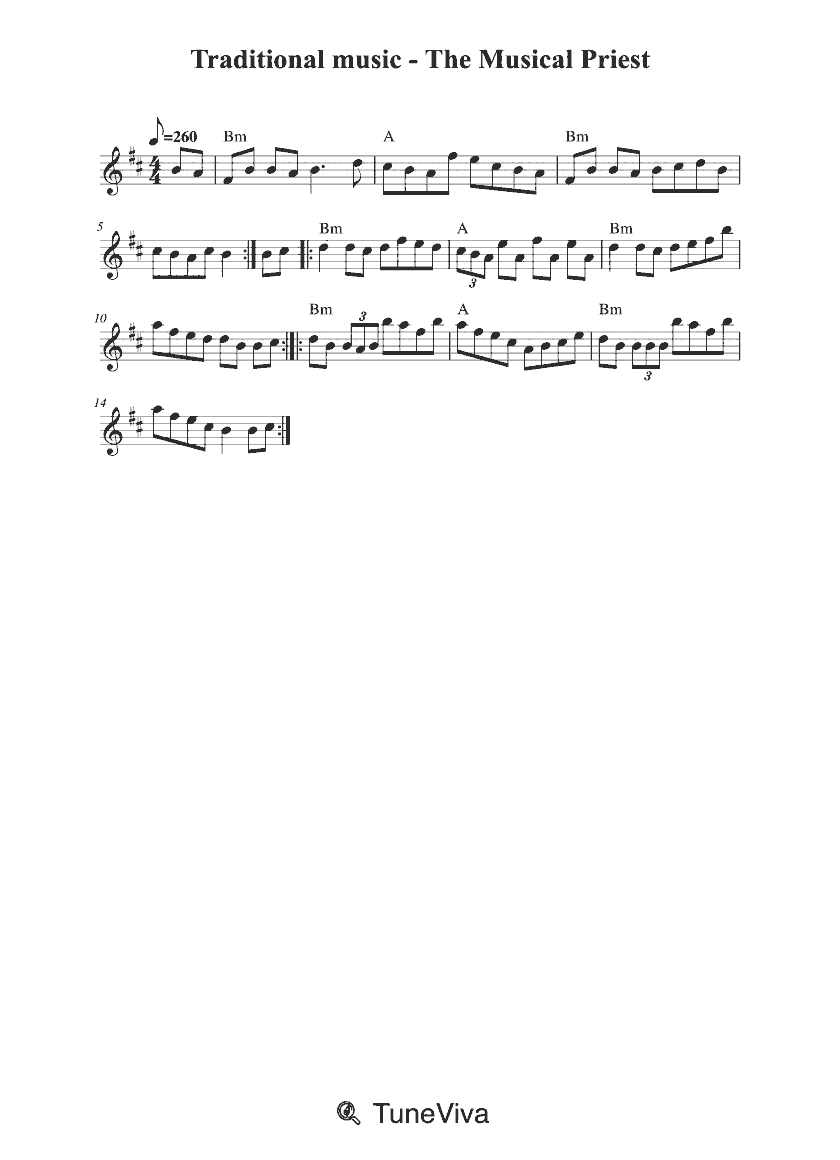
Trad. O'Neill's 1748
45 sec
Open score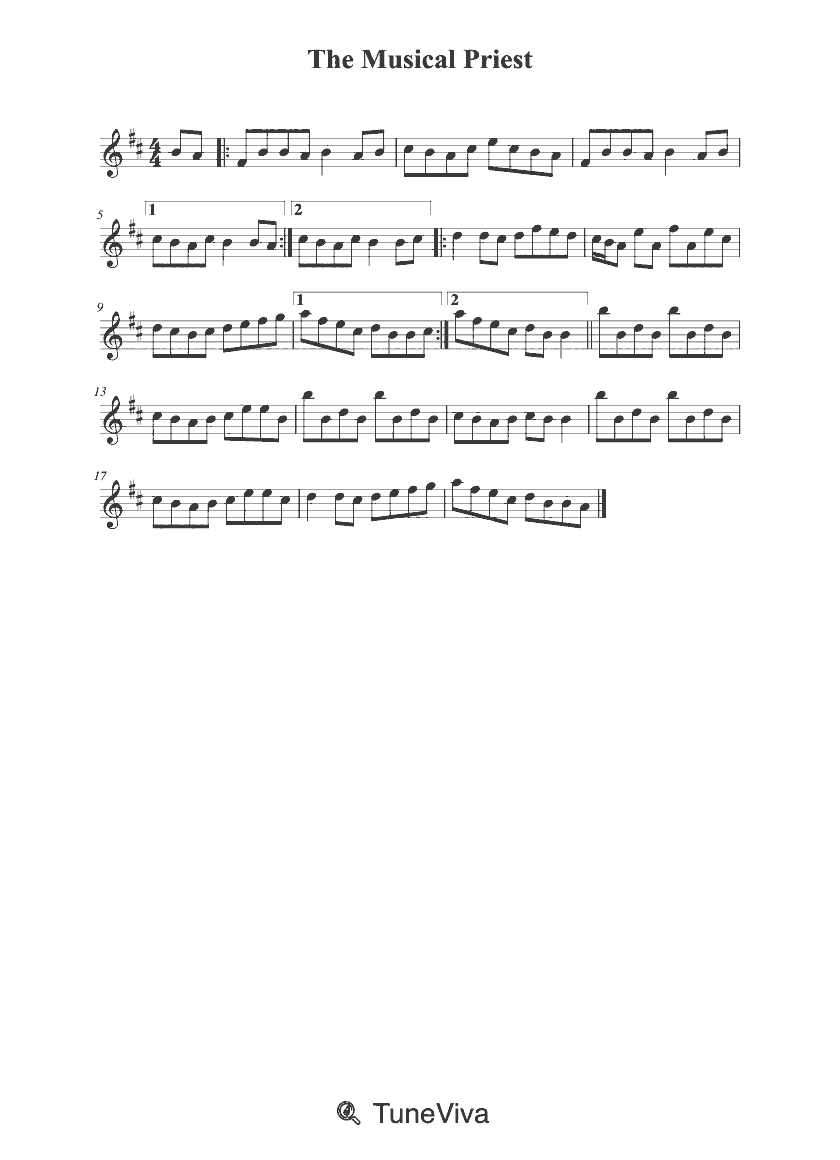
Misc tunes
48 sec · Score #142951
Open score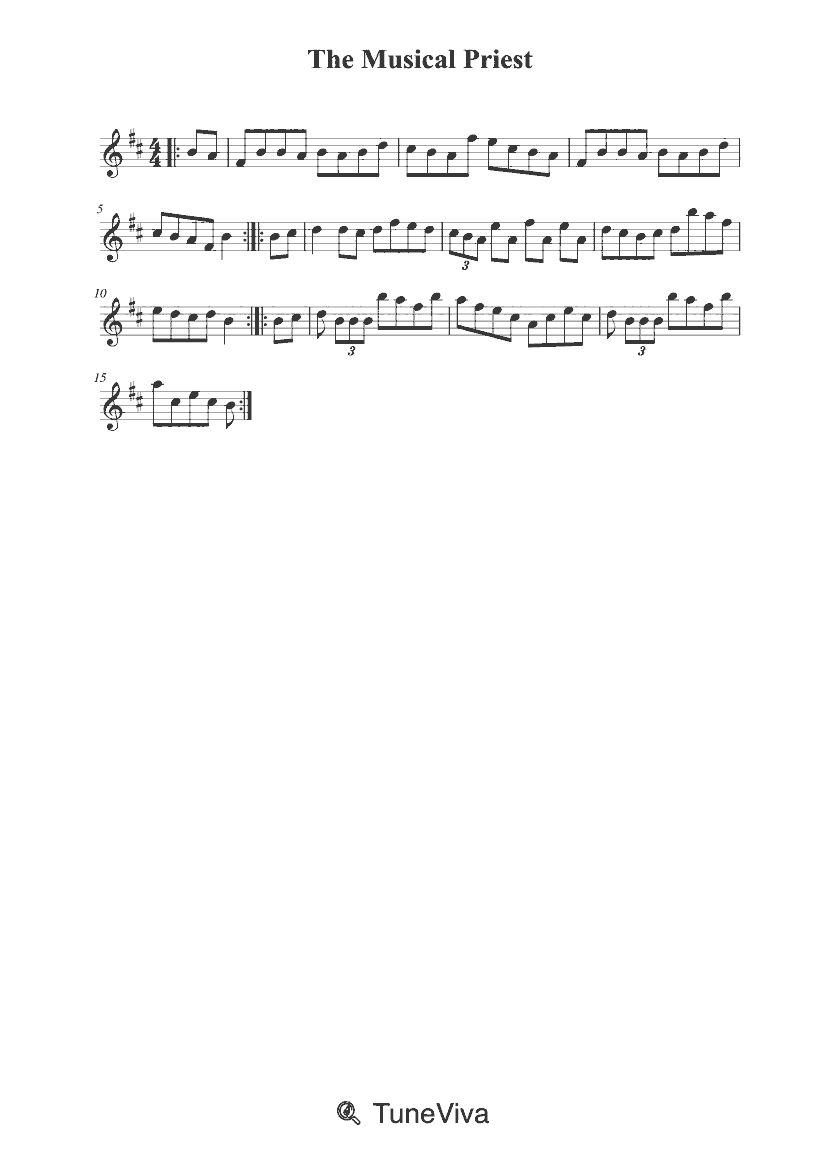
Misc tunes
47 sec
Open score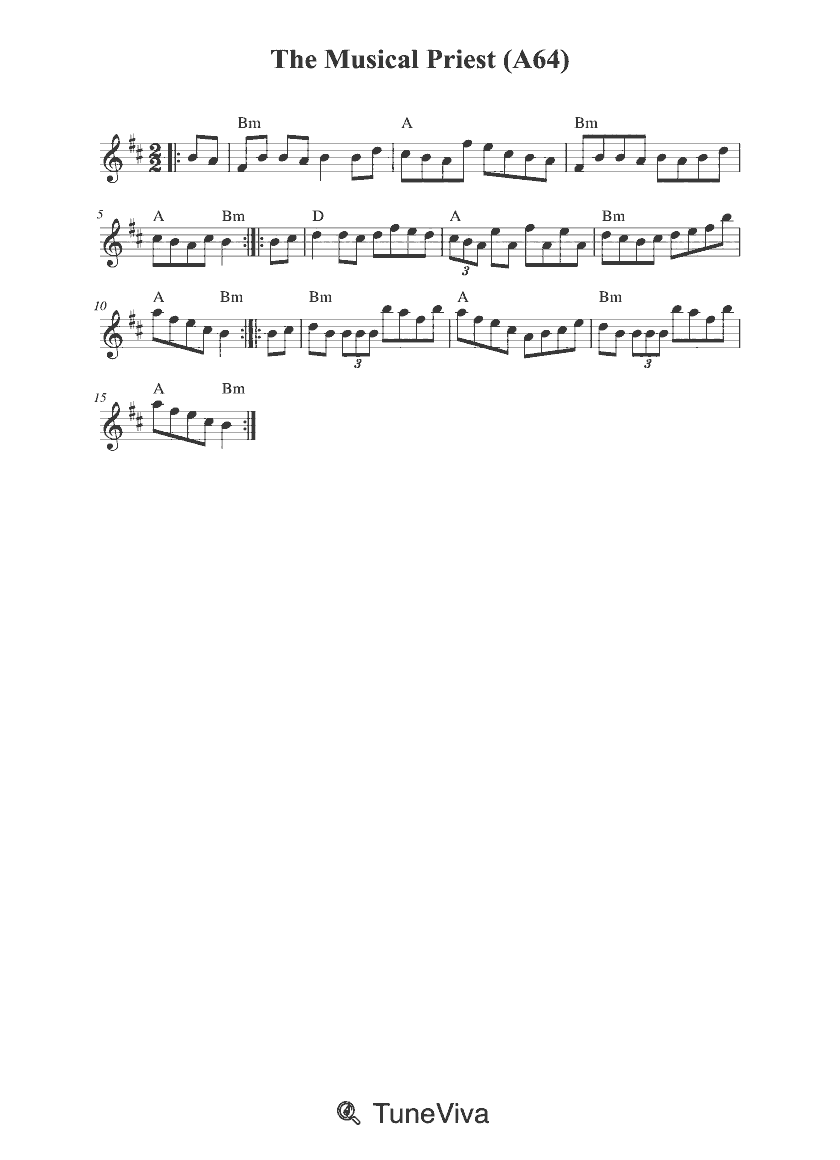
Misc tunes
The Broom of the Cowden Knowes
1 min 36 sec
Open score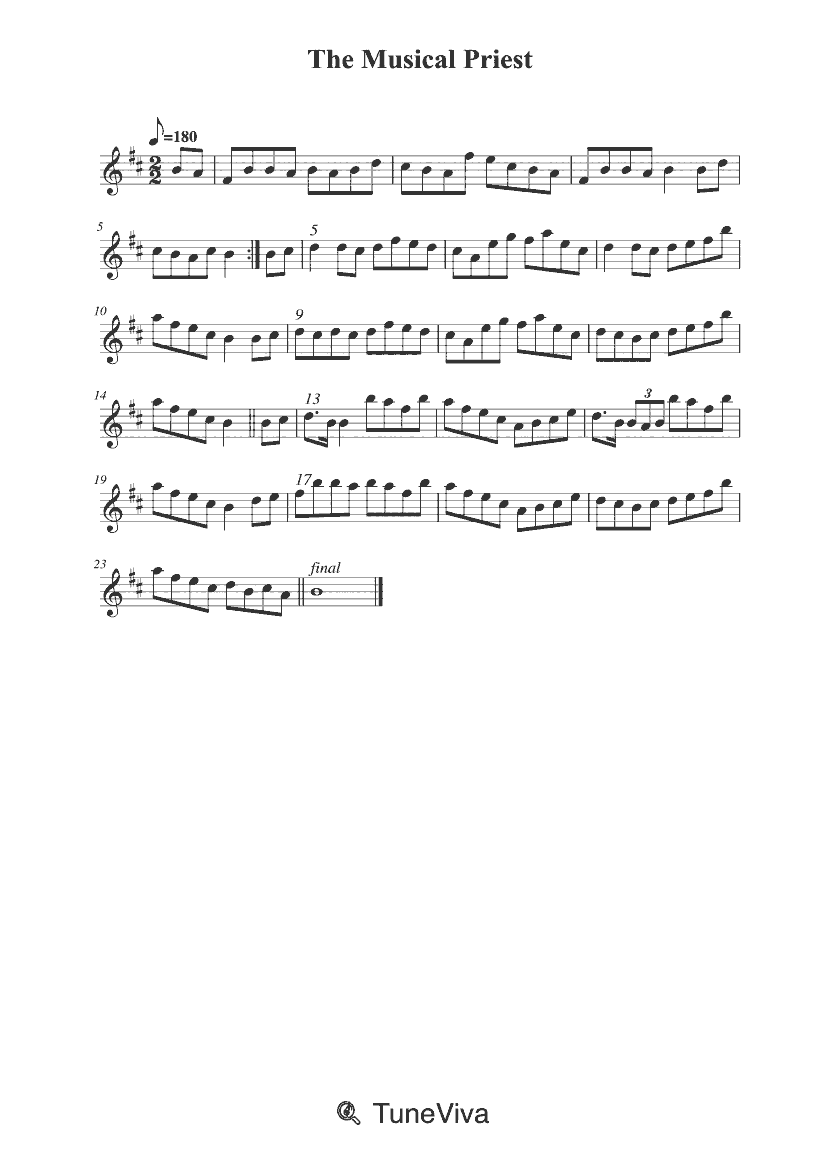
Misc tunes
2 min 15 sec
Open score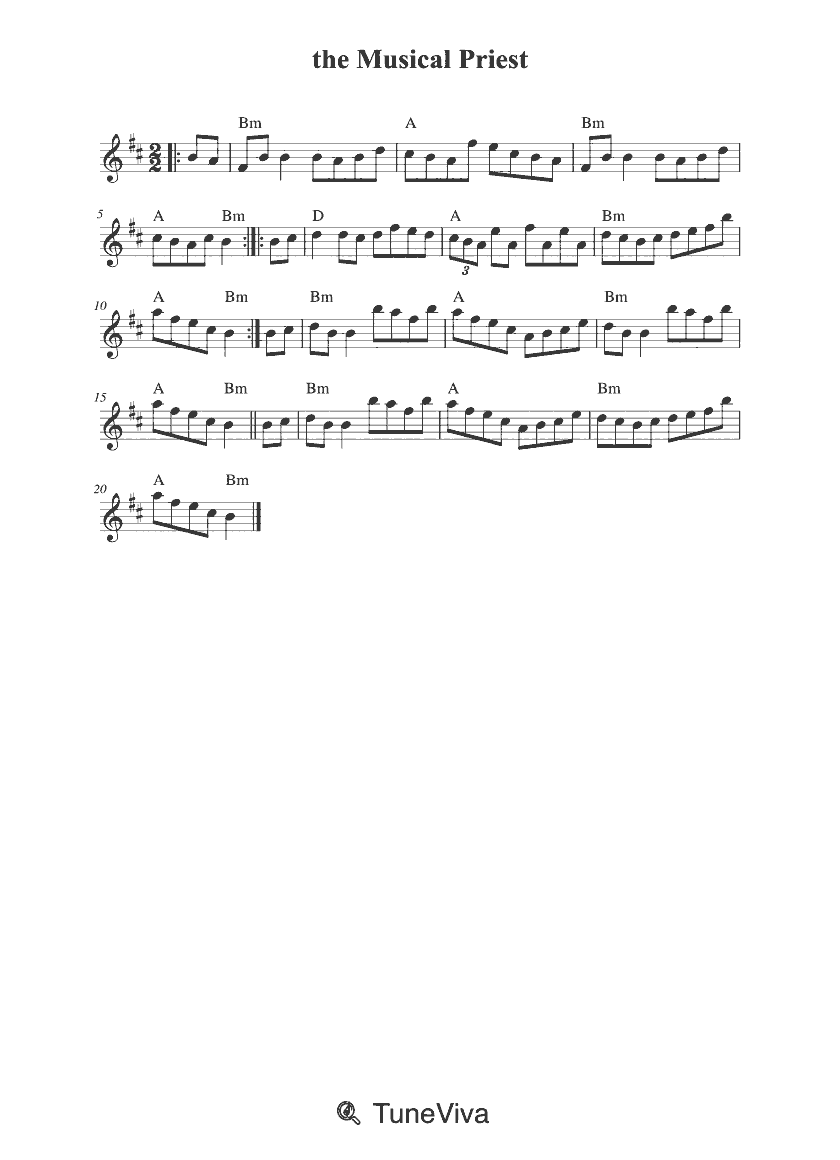
Misc tunes
the Broom of the Cowden Knowes
1 min 36 sec
Open score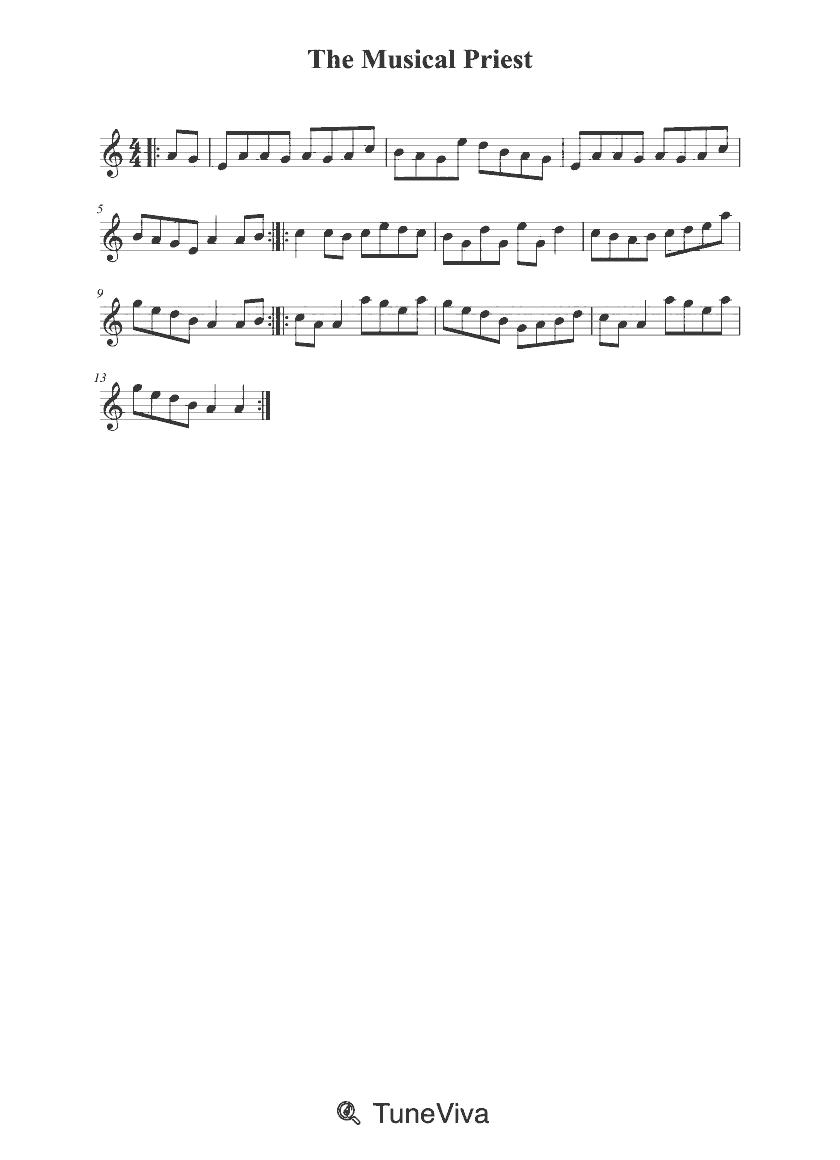
Misc tunes
49 sec · Score #45748
Open score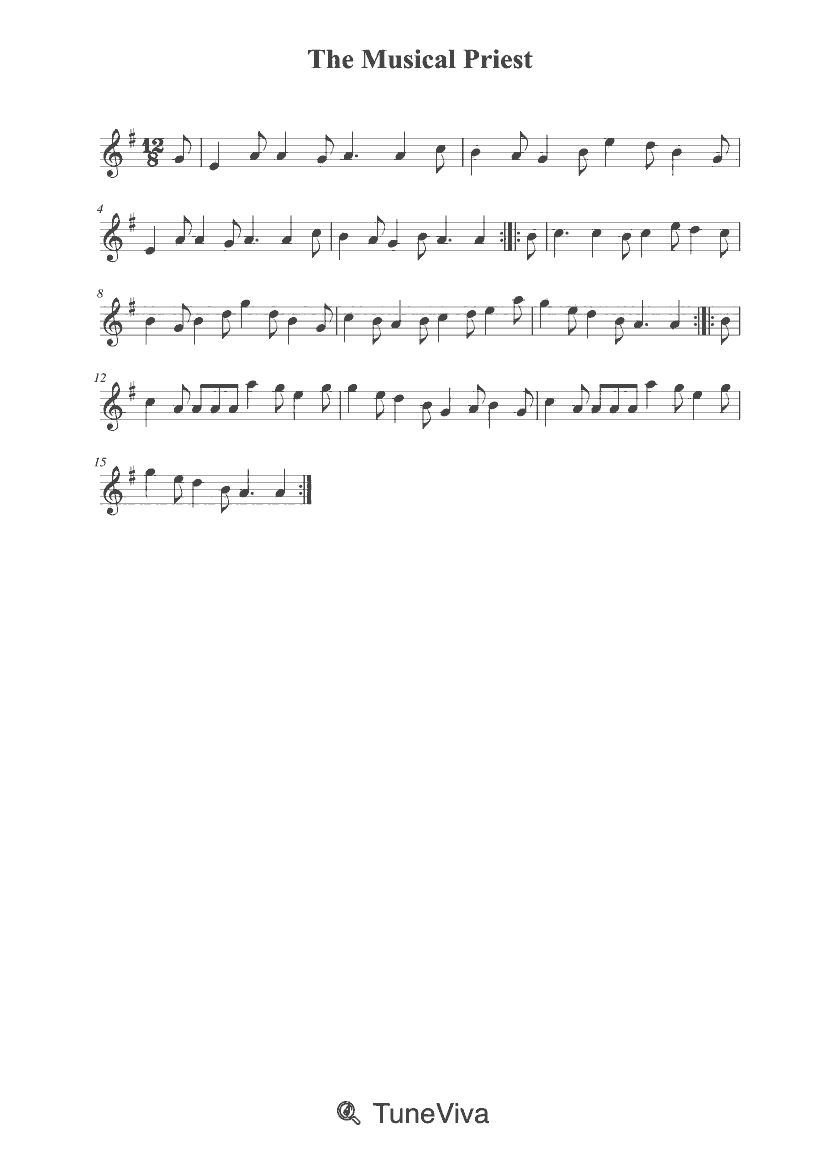
Misc tunes
36 sec
Open score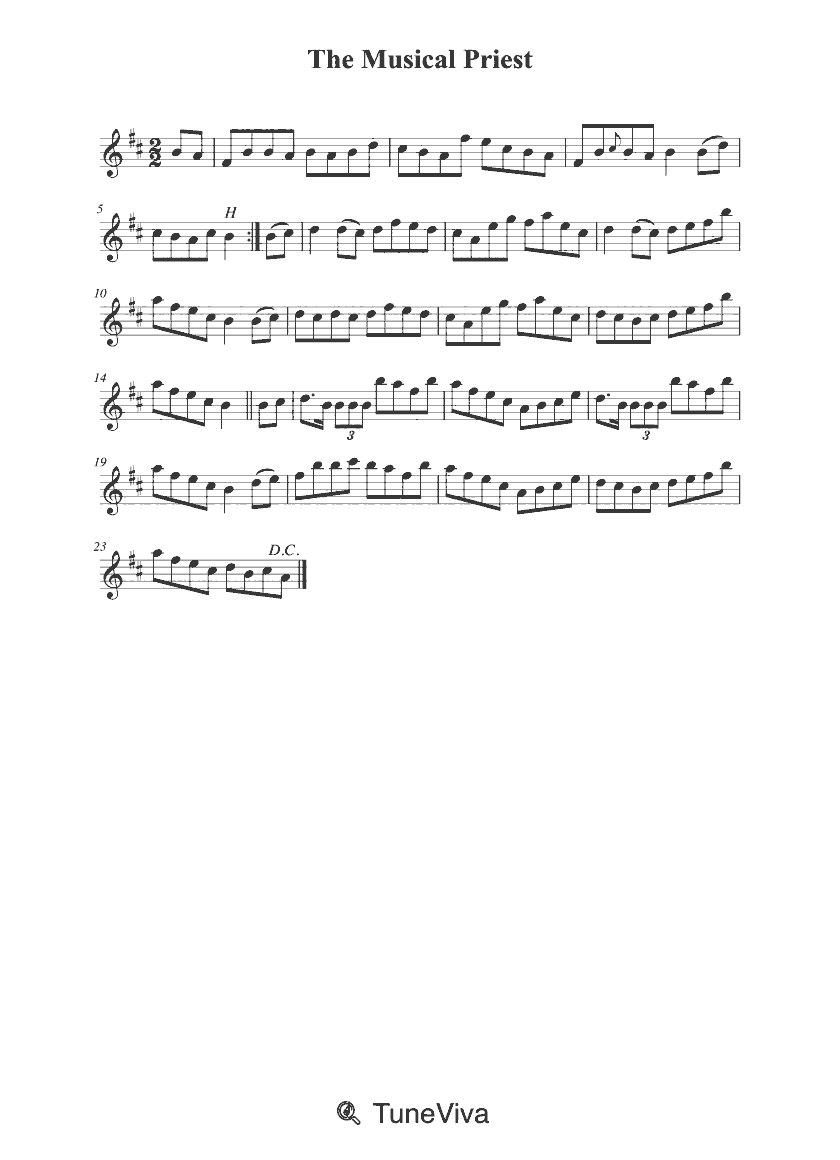
Misc tunes
2 min 58 sec
Open score
anon.
2 min 58 sec
Open scorePage 1 of 2
One score listed under The Musical Priest includes parts for violin, viola and cello. The other selected scores do not list separate parts, so the title alone does not tell you that every version is suitable for the same ensemble. If you need a particular combination of instruments, check the instrumentation listed for that score before choosing it.
The opening key signatures in the selected scores vary: two sharps, two sharps with B minor noted, and one sharp. The listed opening time signatures are 2/2 and 4/4. These are opening indications, not proof of every key or metre used later in a piece, so look through the score if you need a version that stays in a particular range or notation.
The selected scores do not name an individual composer for The Musical Priest. One score lists “Irish” in the composer field, which may indicate a traditional or regional attribution rather than a personal name, while the others leave the composer unstated.
Two scores with the same title are not necessarily identical arrangements. Before playing with others, agree on the key and time signature, and confirm whether the score provides separate parts or a single notated line. Those practical details matter more than the title alone when choosing a version.
Score parts: Violín, Viola, Violonchelo. Catalogue duration 1 min 4 sec. Opening key signature: 2 sharps. Opening time signature: 4/4.
Catalogue duration 1 min 36 sec. Opening key signature: 1 sharp. Opening time signature: 2/2.
Catalogue duration 3 min 12 sec. Opening key signature: 2 sharps (B minor). Opening time signature: 2/2.
The scores shown under The Musical Priest differ in instrumentation and notation: one lists parts for violin, viola and cello, while others do not list separate parts. Their opening key signatures and time signatures also vary. Comparing those details is the most reliable way to choose a version for a particular instrument or ensemble.
No single key is confirmed by the available scores. The opening key signatures listed are two sharps, with one score noting B minor; another two sharps without a mode; and another one sharp. A score’s opening signature may not describe every section, so check the full notation before deciding whether it suits your instrument.
One score listed under The Musical Priest includes parts for violin, viola and cello. The other selected scores do not list separate string parts, so this is not evidence that every version is for the same string ensemble. Check the instrumentation on the specific score you intend to use.
The Musical Priest scores shown do not name an individual composer. One lists “Irish” in the composer field, which may indicate an Irish traditional attribution rather than a personal name, while the others leave the composer unstated.
The selected versions of The Musical Priest show both 2/2 and 4/4 as opening time signatures. Both notate four quarter-note lengths to a bar, but 2/2 treats the half note as the beat while 4/4 treats the quarter note as the beat. Pick the notation that matches how you want to read or rehearse the piece.