
Traditional music - The Old Torn Petticoat
Trad
49 sec
Open scoreThe Old Torn Petticoat appears here as a traditional tune title with three sheet-music versions to compare. All three scores open with a one-sharp key signature and 4/4 time, while their listed durations and note counts differ, so the versions are not identical on paper. Use the score details to choose the setting that best suits your reading or playing needs.
Scores 1–20 of 23
Trad
49 sec
Open score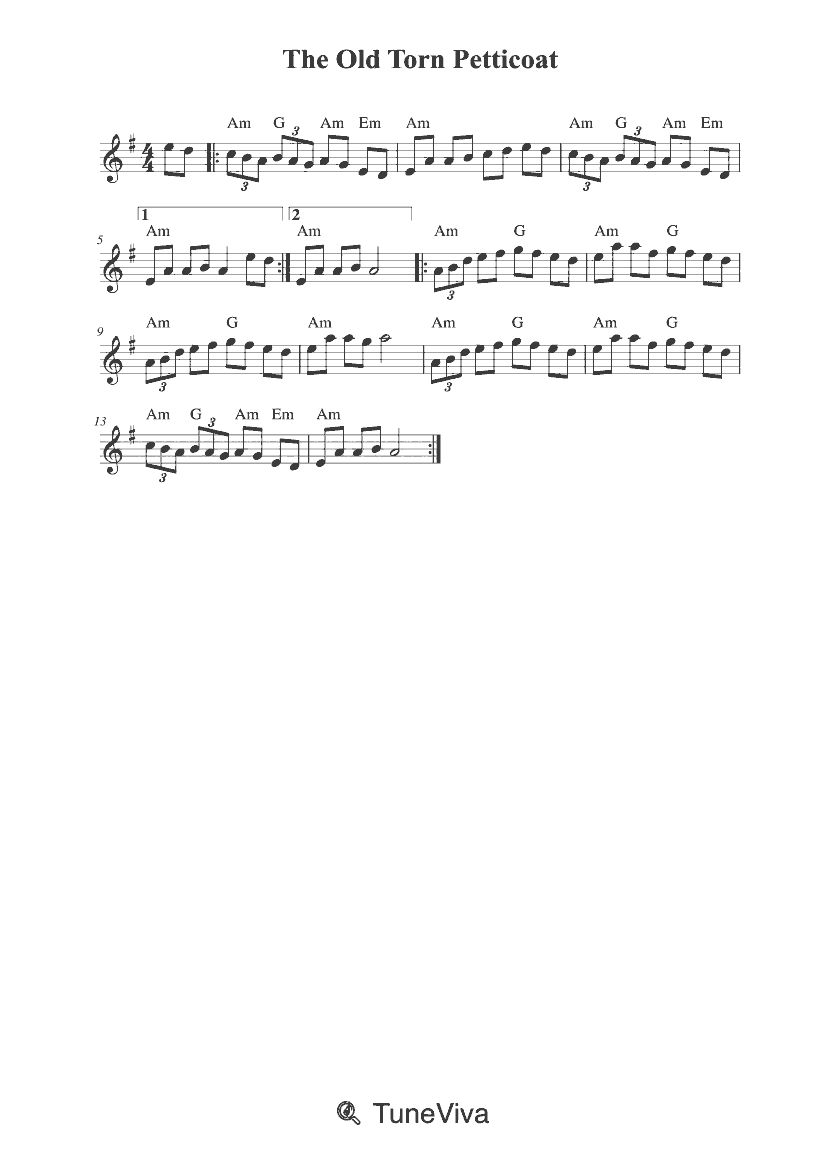
Misc tunes
48 sec · Score #135159
Open score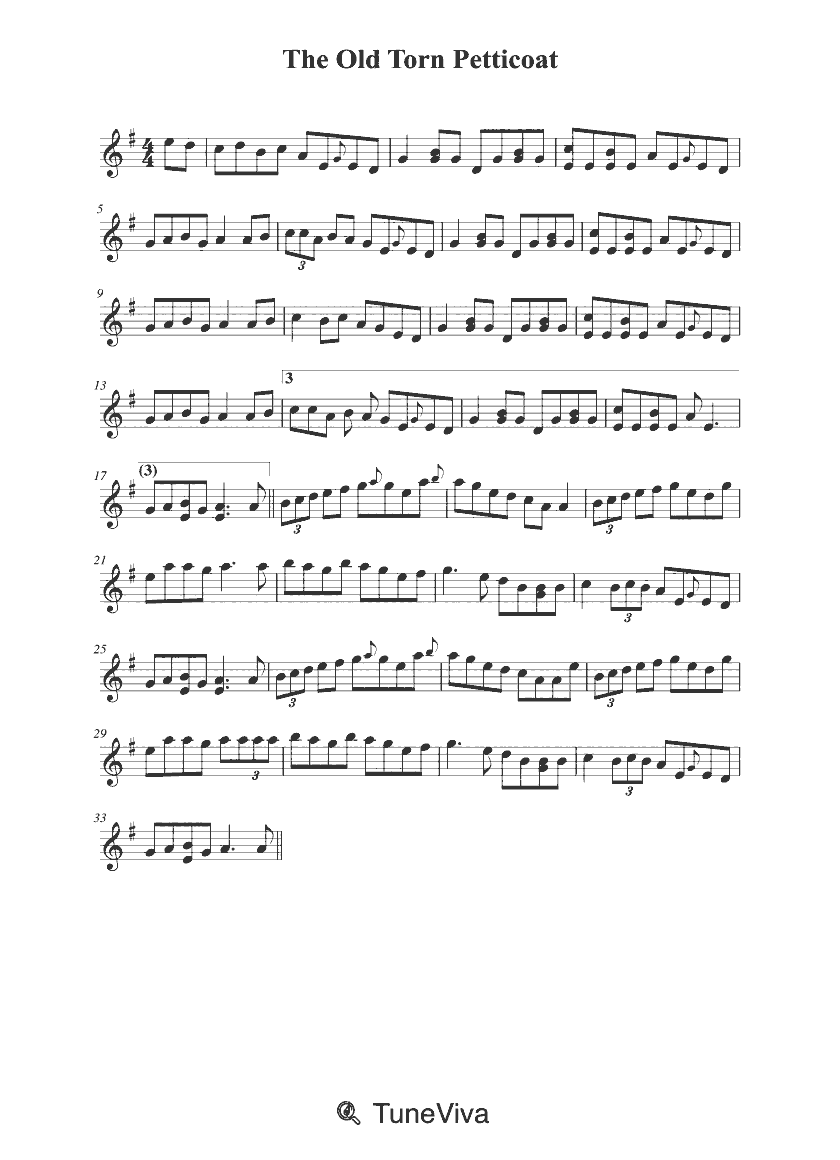
Misc tunes
1 min 4 sec · Score #156731
Open score
Trad
6 sec
Open score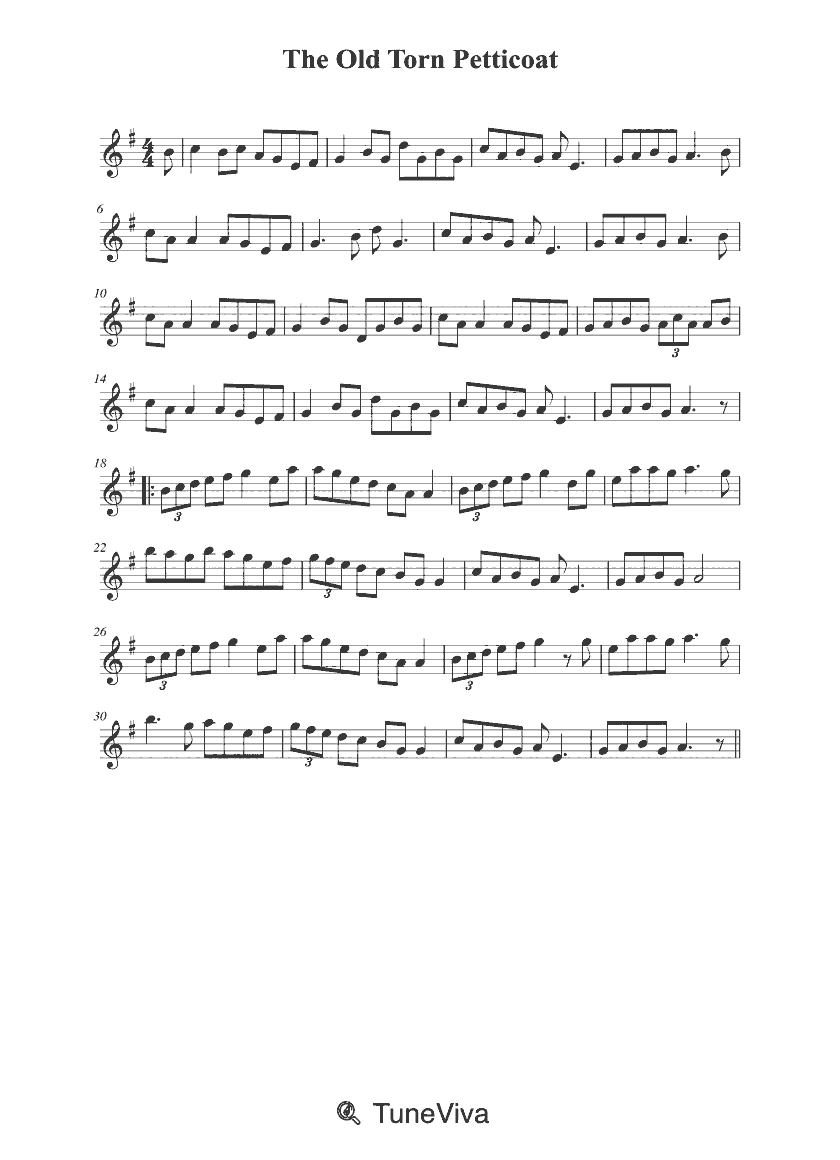
Misc tunes
1 min 36 sec
Open score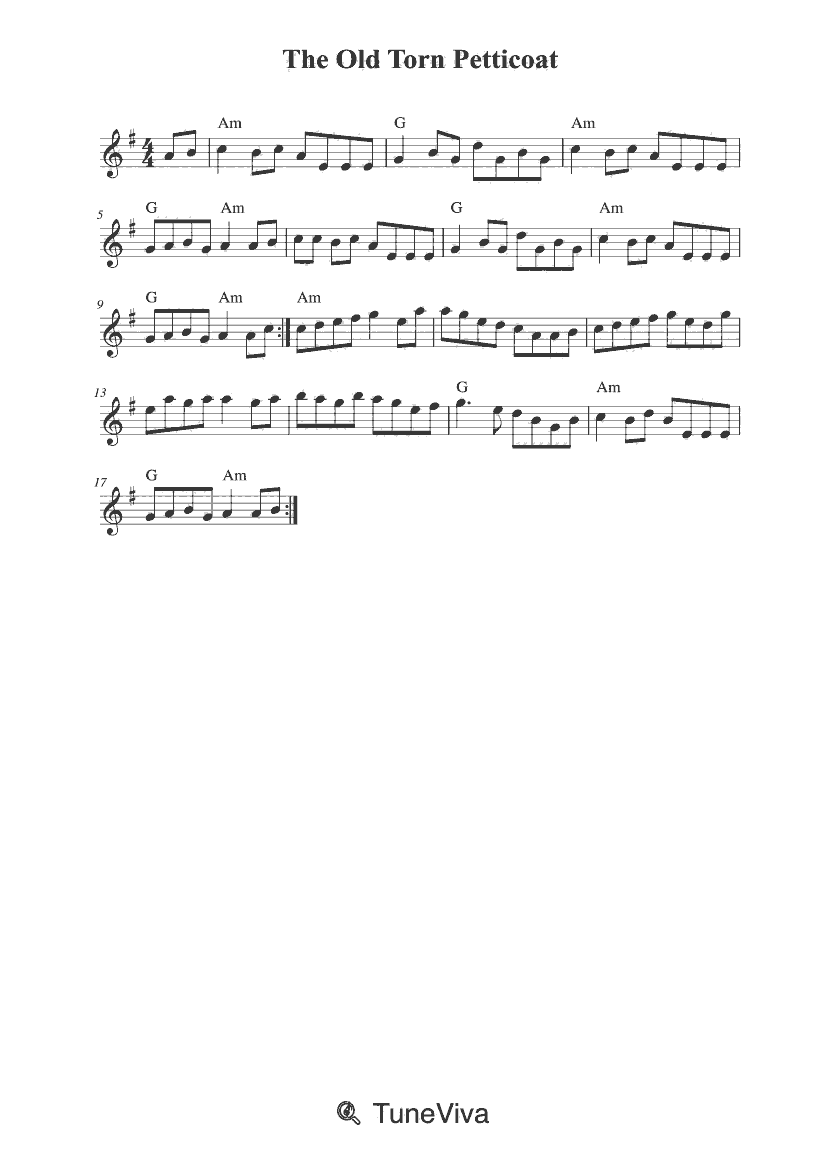
Misc tunes
1 min 21 sec · Score #40592
Open score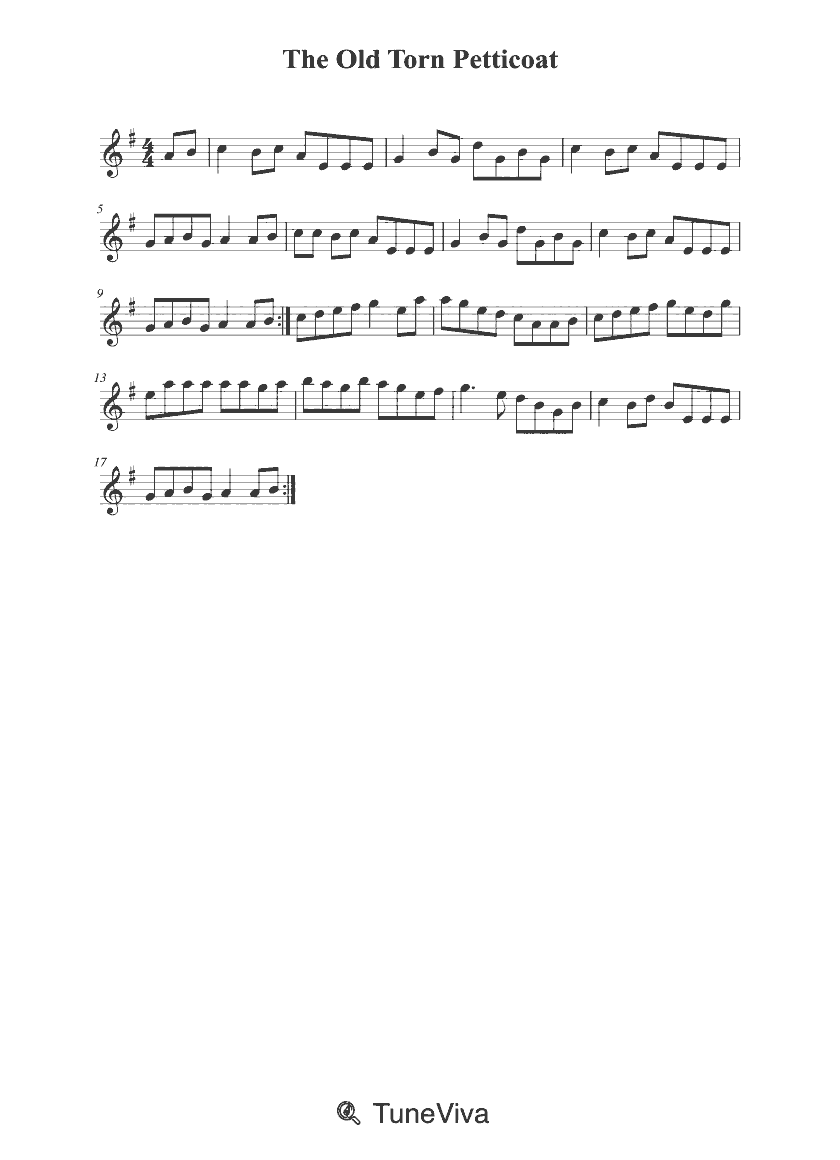
Misc tunes
1 min 21 sec · Score #231601
Open score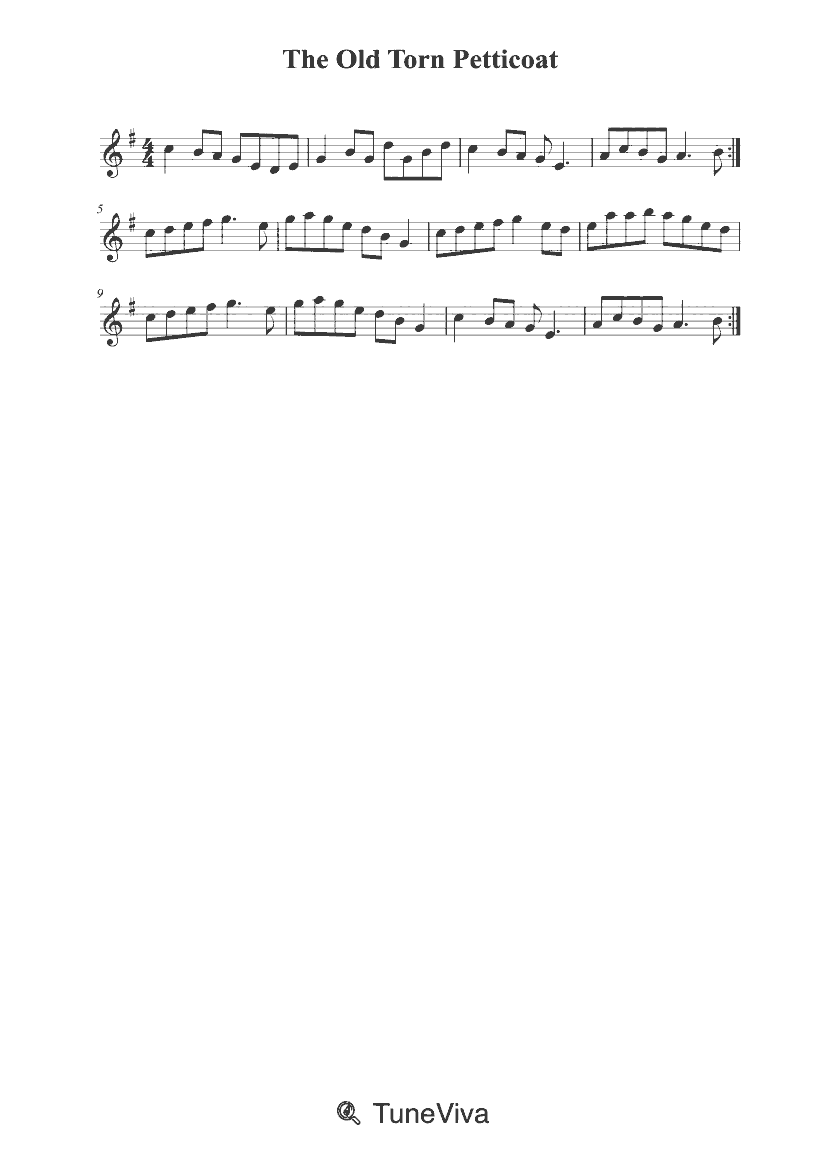
Misc tunes
56 sec
Open score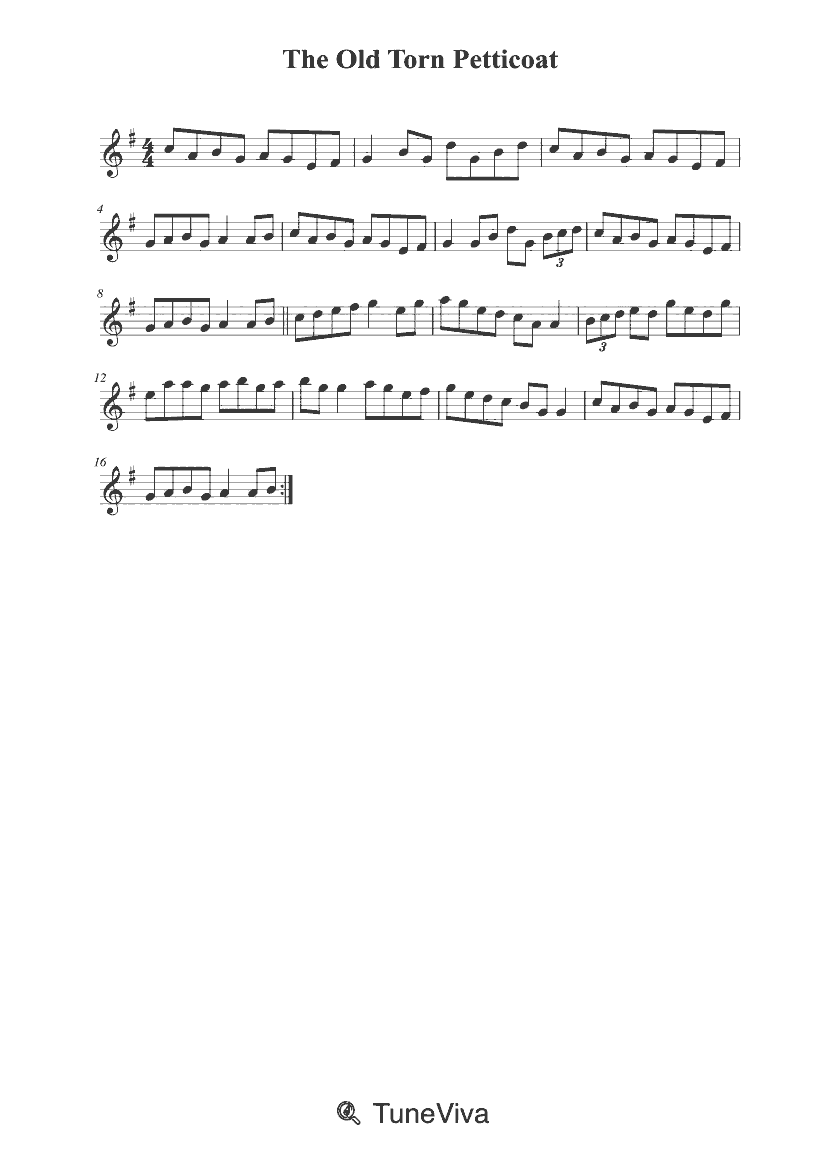
Misc tunes
1 min 4 sec · Score #44884
Open score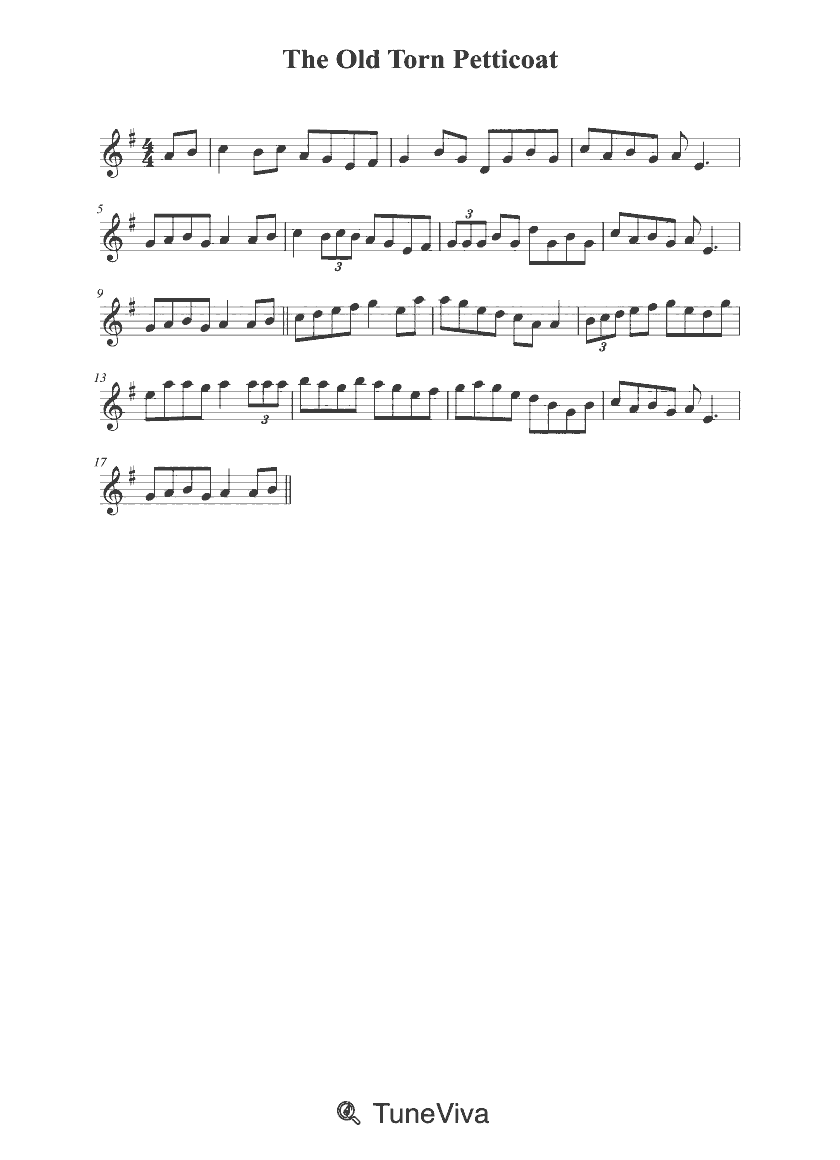
Misc tunes
32 sec · Score #58101
Open score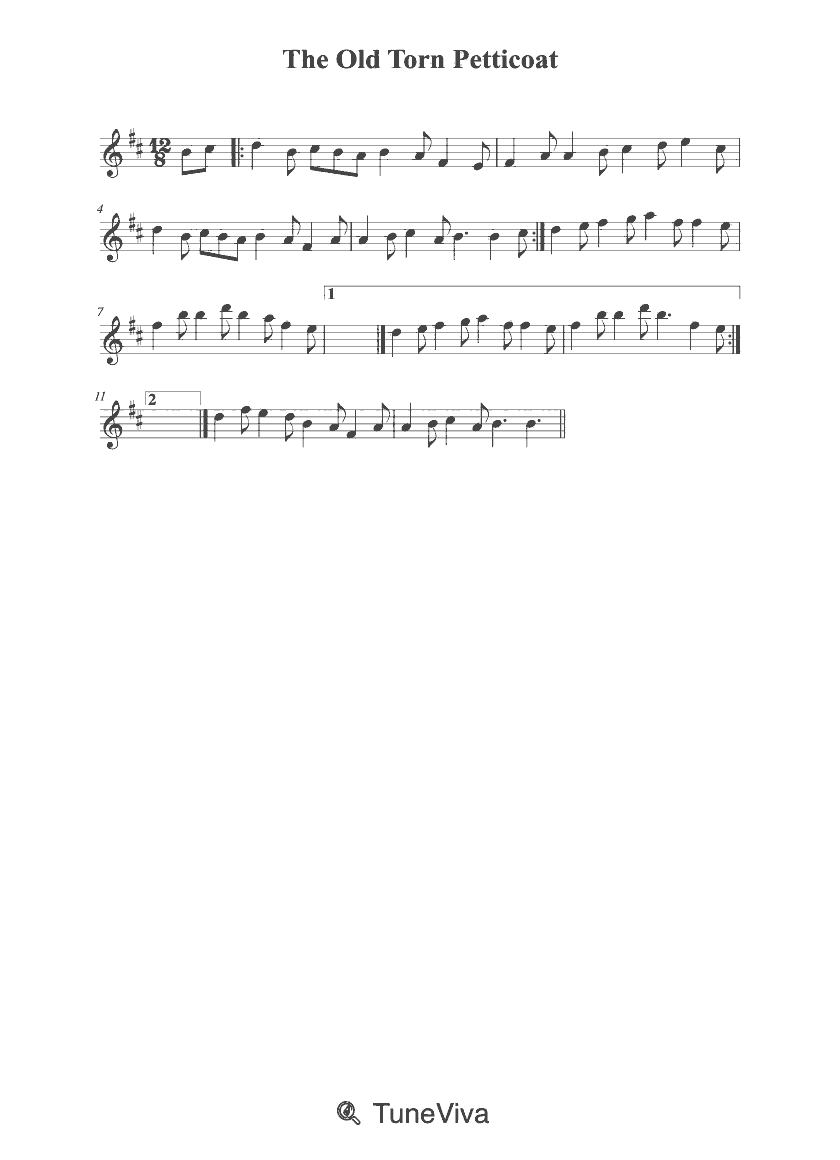
Misc tunes
36 sec · Score #87891
Open score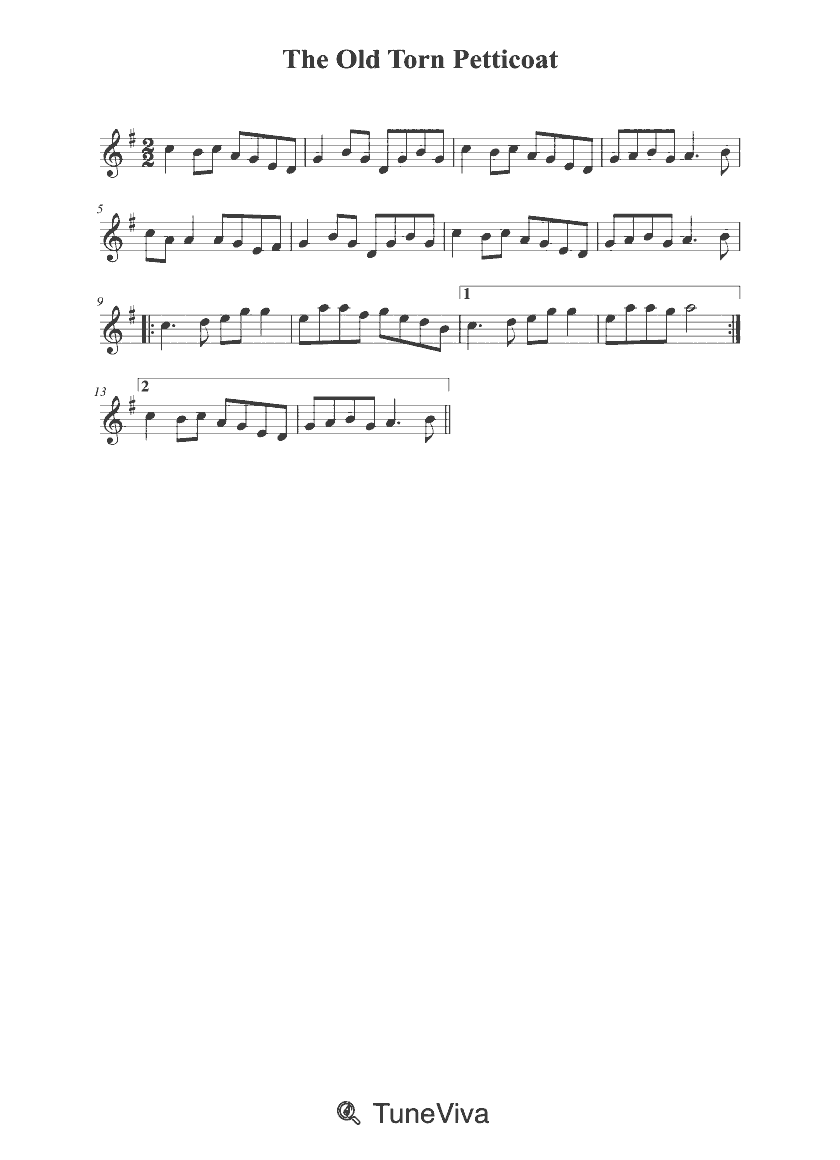
Misc tunes
1 min 4 sec · Score #104389
Open score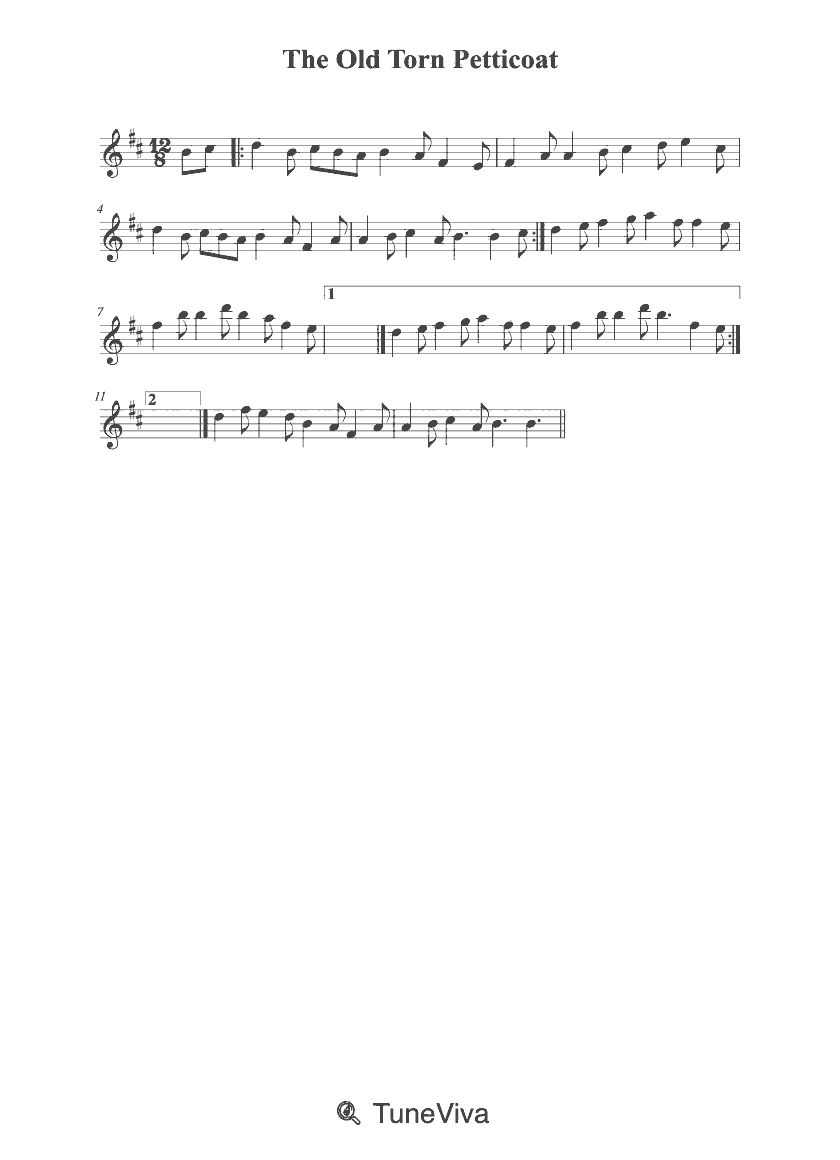
Misc tunes
36 sec · Score #120878
Open score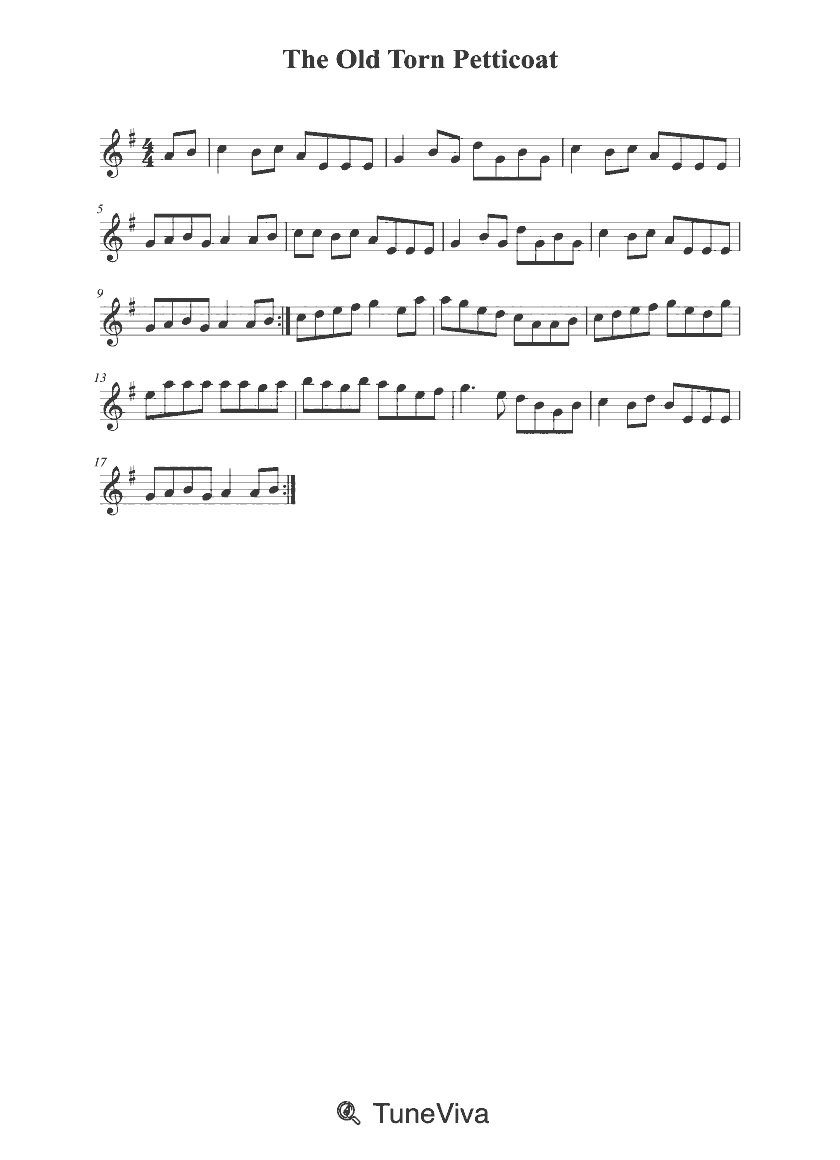
Misc tunes
1 min 21 sec · Score #123604
Open score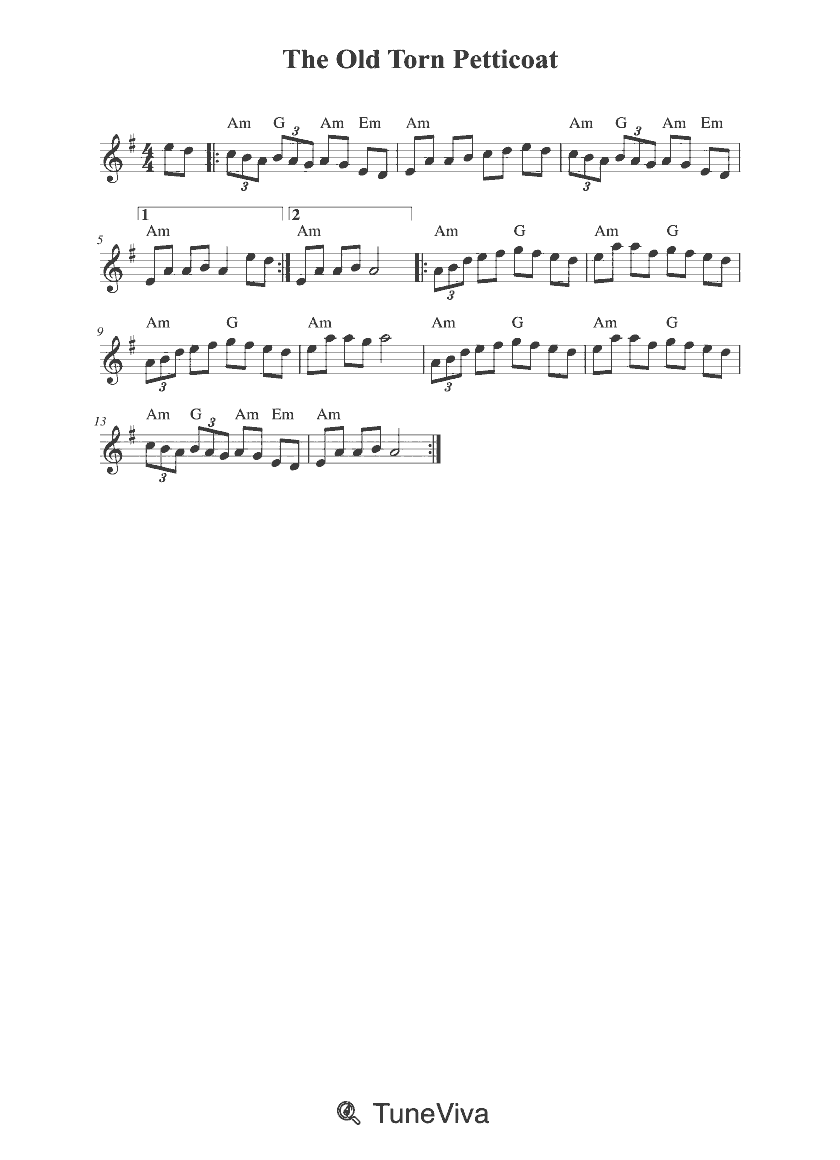
Misc tunes
48 sec · Score #204001
Open score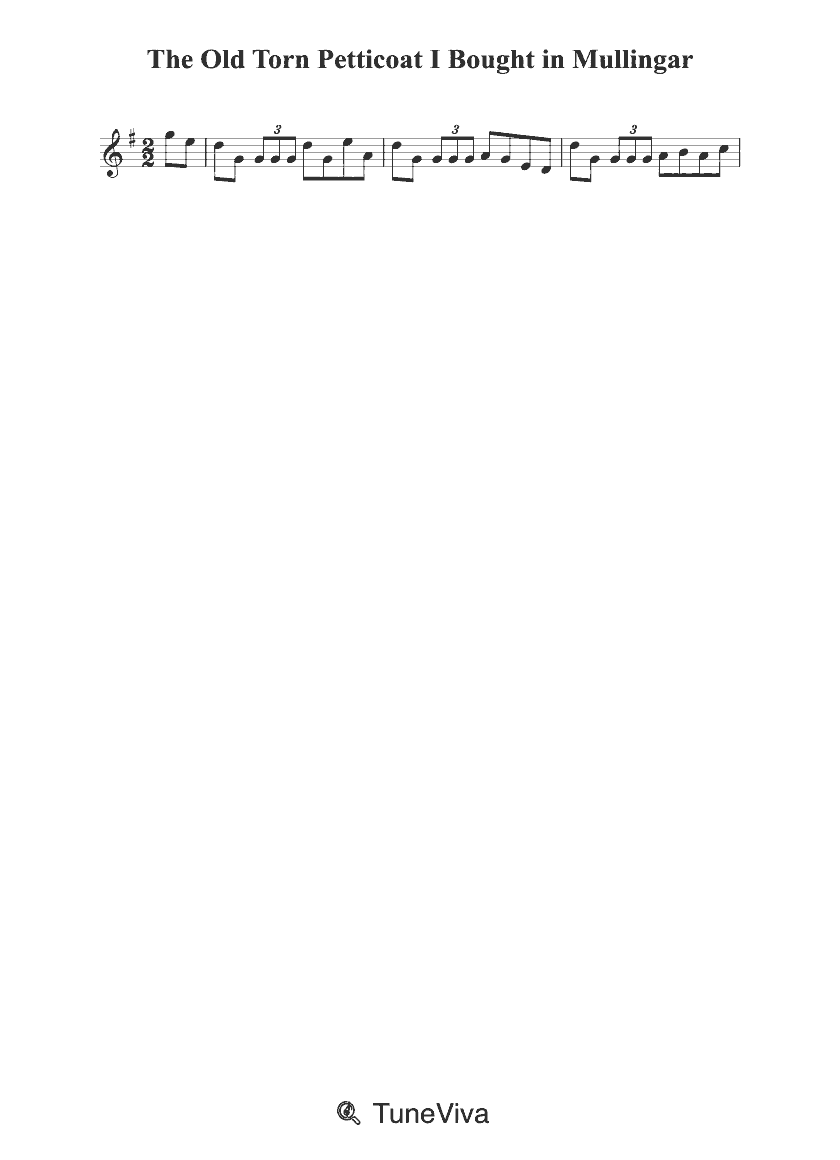
Misc tunes
13 sec
Open score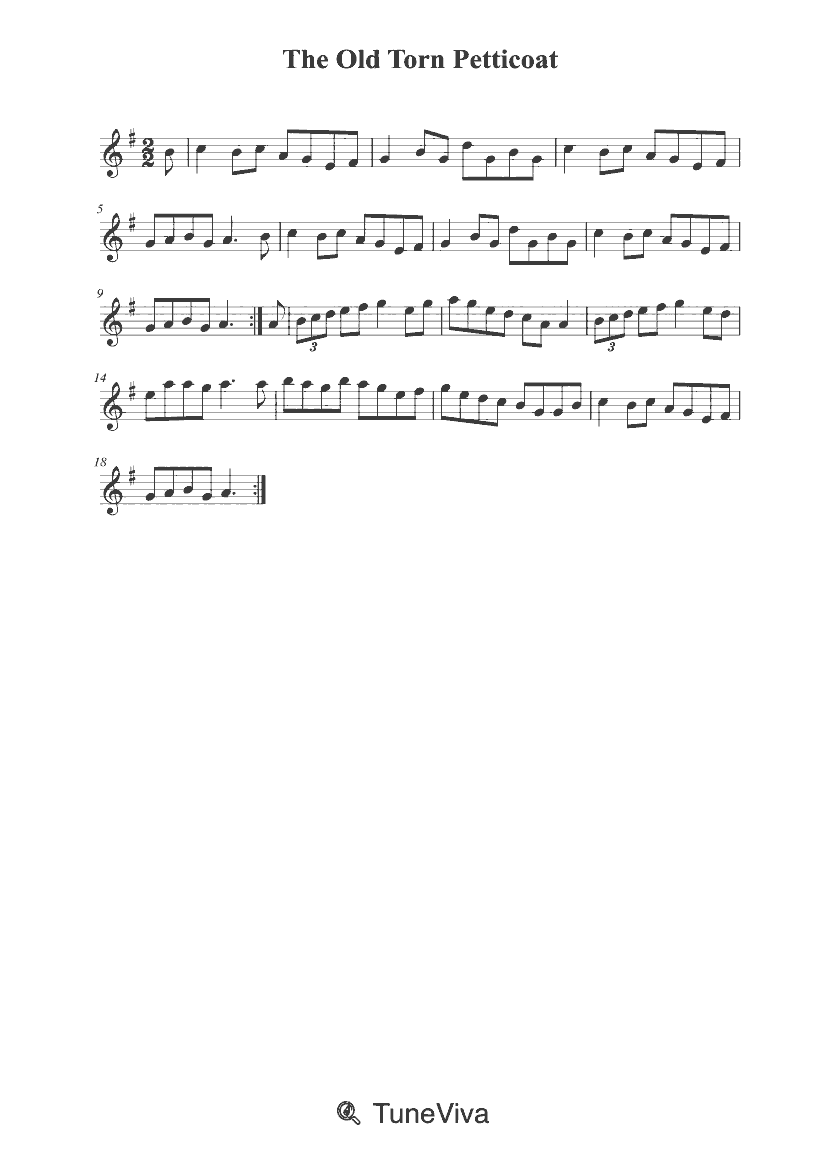
Misc tunes
2 min 40 sec
Open score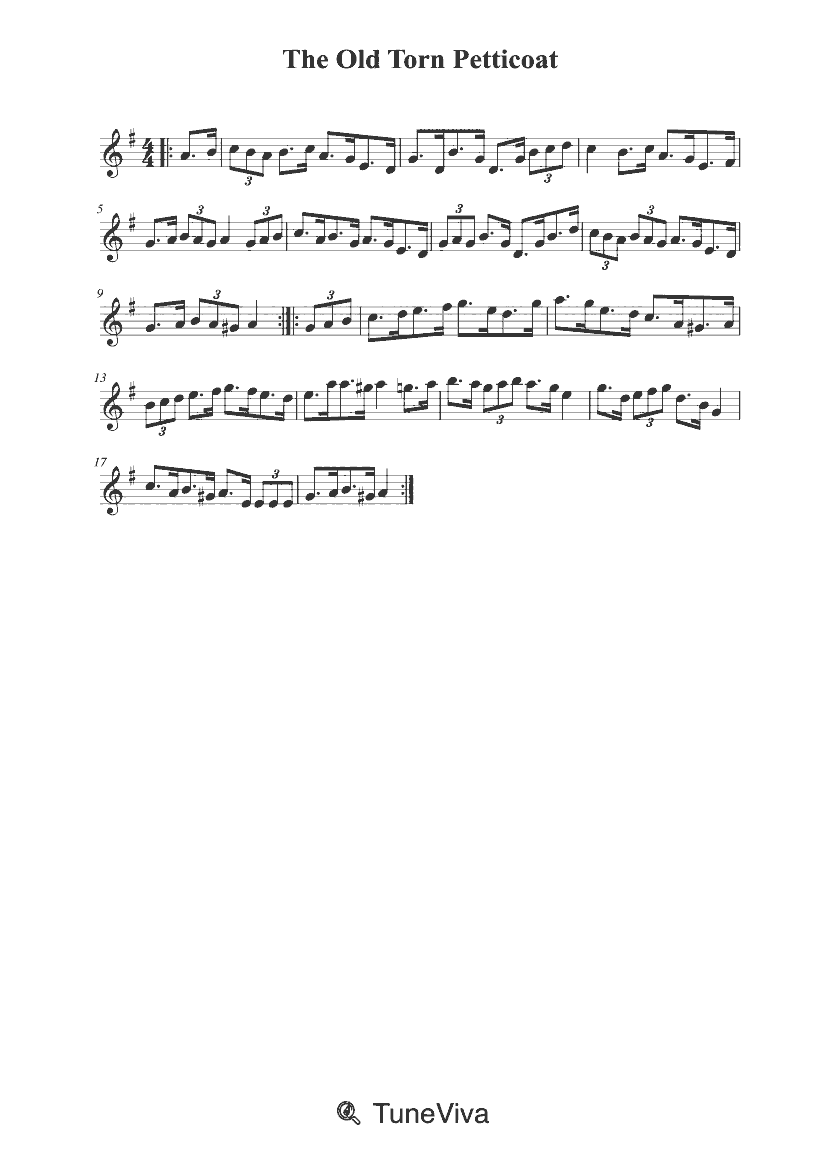
Misc tunes
1 min 4 sec · Score #39270
Open score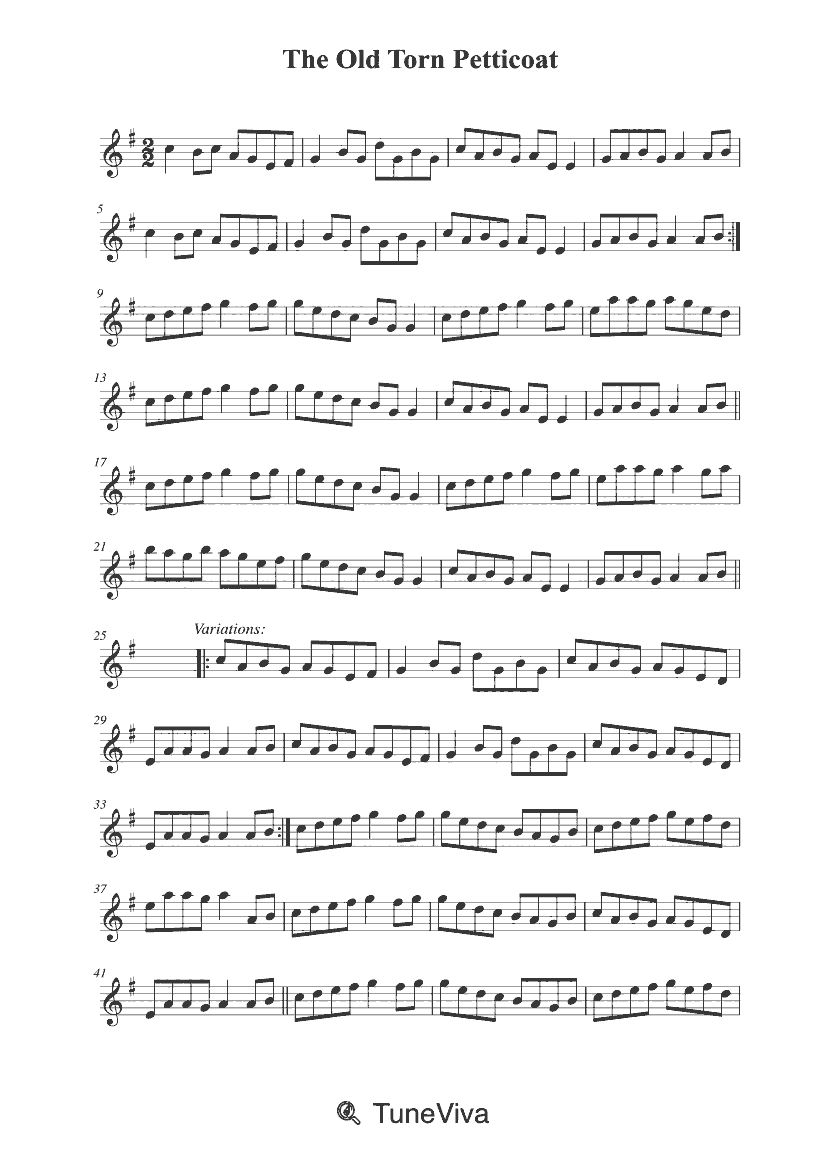
Misc tunes
4 min 20 sec
Open score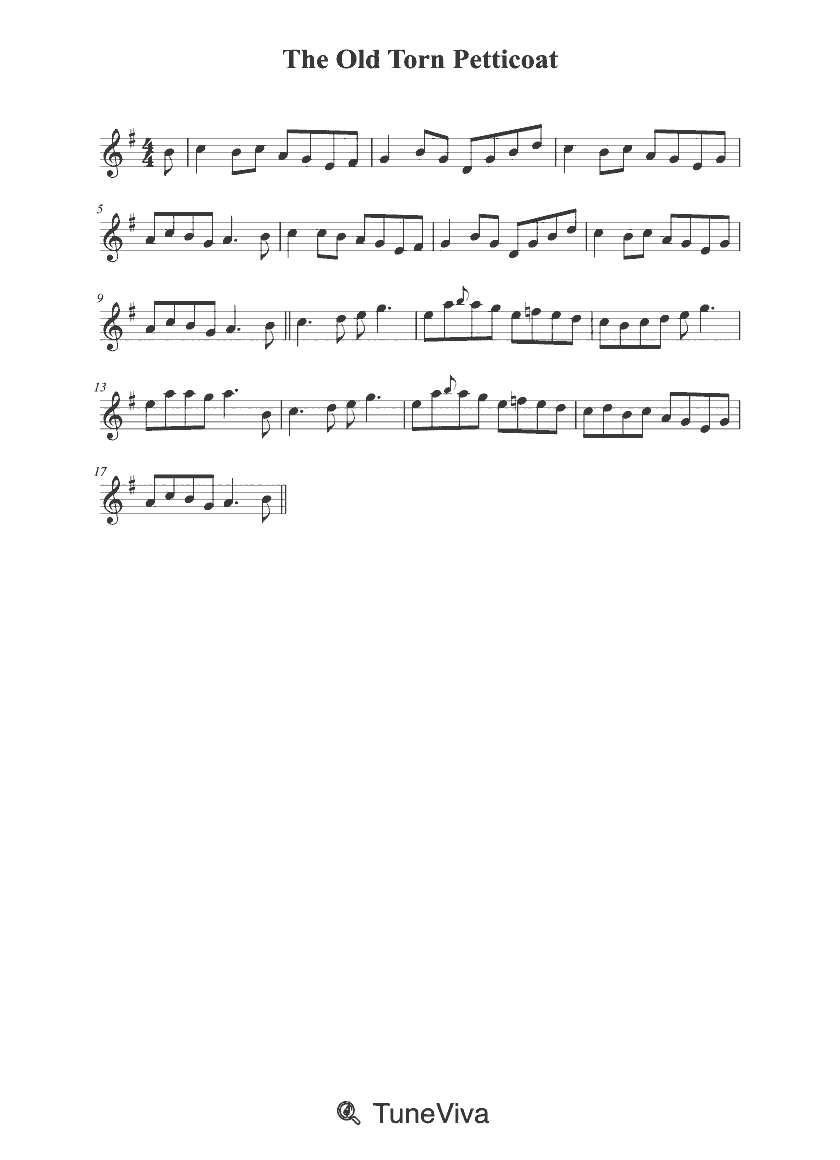
Misc tunes
32 sec · Score #150071
Open scorePage 1 of 2
The scores listed under The Old Torn Petticoat share the same opening key signature and time signature, but they are not identical in length. Two versions run for about 48–49 seconds in the listed score details, while the third runs for about 64.5 seconds; note counts also differ, at 196, 276 and 198. These differences suggest different settings or transcriptions, but they do not by themselves prove that the versions are separate works.
Each of the three scores opens with one sharp in the key signature and a 4/4 time signature. A one-sharp signature means F is sharped; it does not by itself tell you whether the music is major or minor. The 4/4 opening indicates four quarter-note beats per bar. These details describe the opening of each score only, not any later key or metre changes.
One score is credited to “Trad” and another is titled “Traditional music – The Old Torn Petticoat,” which supports a traditional attribution. The title alone does not establish a named composer, place of origin, instrumentation, or whether every score is a complete setting. The other scores carry no composer credit in the supplied details.
If you want a shorter listed span, compare the versions around 48–49 seconds; if you need a longer reading, the score listed at about 64.5 seconds is the outlier. Note count can also help you judge how much notation a version contains, but the supplied details do not include difficulty grades or pedagogical notes. Examine the notation itself before deciding which setting fits your purpose.
Catalogue duration 49 sec. Opening key signature: 1 sharp. Opening time signature: 4/4.
Catalogue duration 48 sec. Opening key signature: 1 sharp. Opening time signature: 4/4.
Catalogue duration 1 min 4 sec. Opening key signature: 1 sharp. Opening time signature: 4/4.
The Old Torn Petticoat is the title of a traditional tune represented by three sheet-music versions on this page. One score is credited to “Trad” and another is labelled as traditional music, but the supplied details do not establish its history, origin, or a named composer.
All three scores of The Old Torn Petticoat open with a one-sharp key signature and 4/4 time. The one-sharp signature means F is sharped, though the opening signature alone does not confirm whether the music is in a major or minor key. These values describe the opening of each score only.
The three versions differ in their listed durations and note counts. Two are about 48–49 seconds long, while the third is about 64.5 seconds; their note counts are 196, 276 and 198. These differences show that the scores are not identical in the supplied details, though they do not prove that each is a separate musical work.
No named composer is given for The Old Torn Petticoat in the supplied score details. One score carries the credit “Trad,” which points to a traditional attribution, but that credit does not identify an individual composer or verify the tune’s origins.
The durations shown for the three scores are approximately 48.5 seconds, 64.5 seconds and 49 seconds. These figures describe the individual scores listed and should be treated as approximate rather than as definitive performance timings.
Choosing a version of The Old Torn Petticoat depends on what you need. The shorter listed scores may suit a more concise reading, while the longer score contains more notation. The supplied details do not identify an easiest version, so compare the actual notation and length before deciding.