
Queen of the May
Misc tunes
36 sec · Score #231078
Open scoreThe Queen of May sheet music is listed in several distinct versions rather than one fixed arrangement. The available scores differ at the outset: one opens in 4/4 with no sharps or flats, one in 2/4 with one sharp, and one in 6/8 with one sharp. Musicians should compare the opening metre, key signature, and title wording before choosing a score. The available information does not establish whether these are settings of a song, a dance tune, or another piece.
Scores 1–20 of 35
Misc tunes
36 sec · Score #231078
Open score
Trad
32 sec
Open score
after Chief O'Neill
34 sec
Open score
Misc tunes
1 min 4 sec · Score #194193
Open score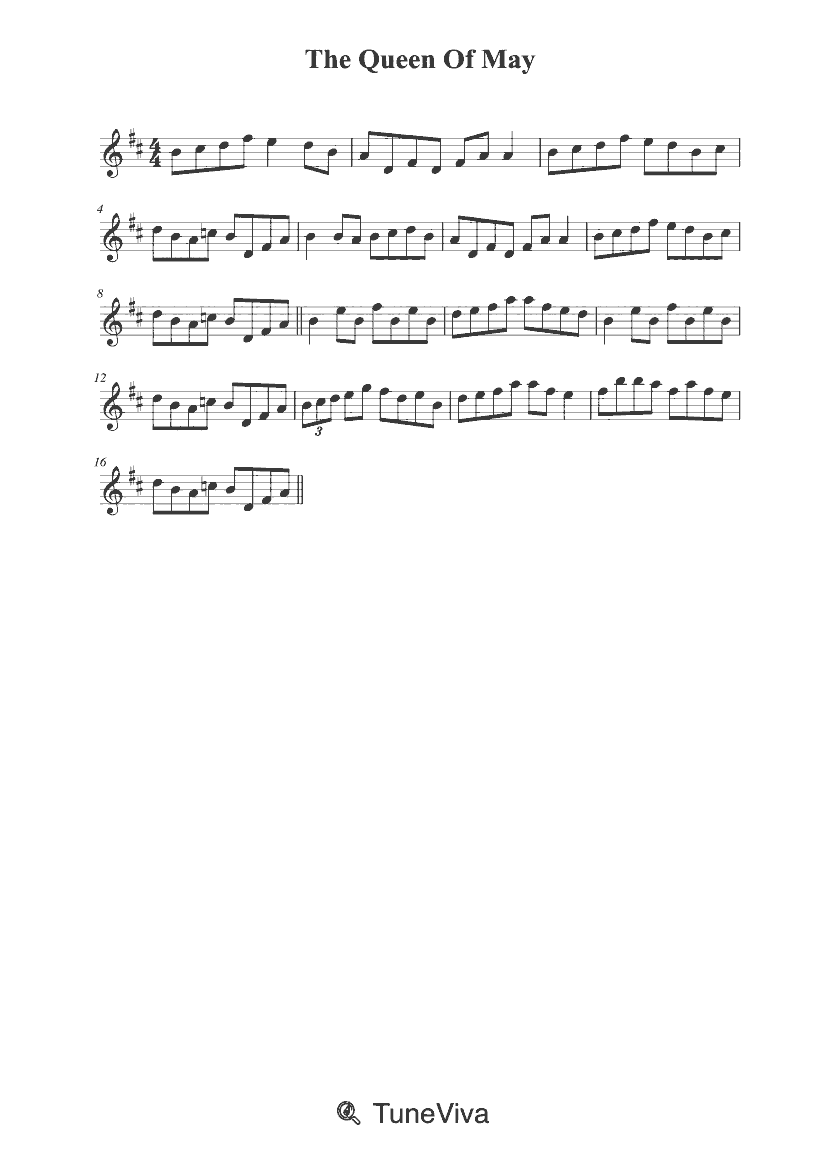
Misc tunes
32 sec · Score #119388
Open score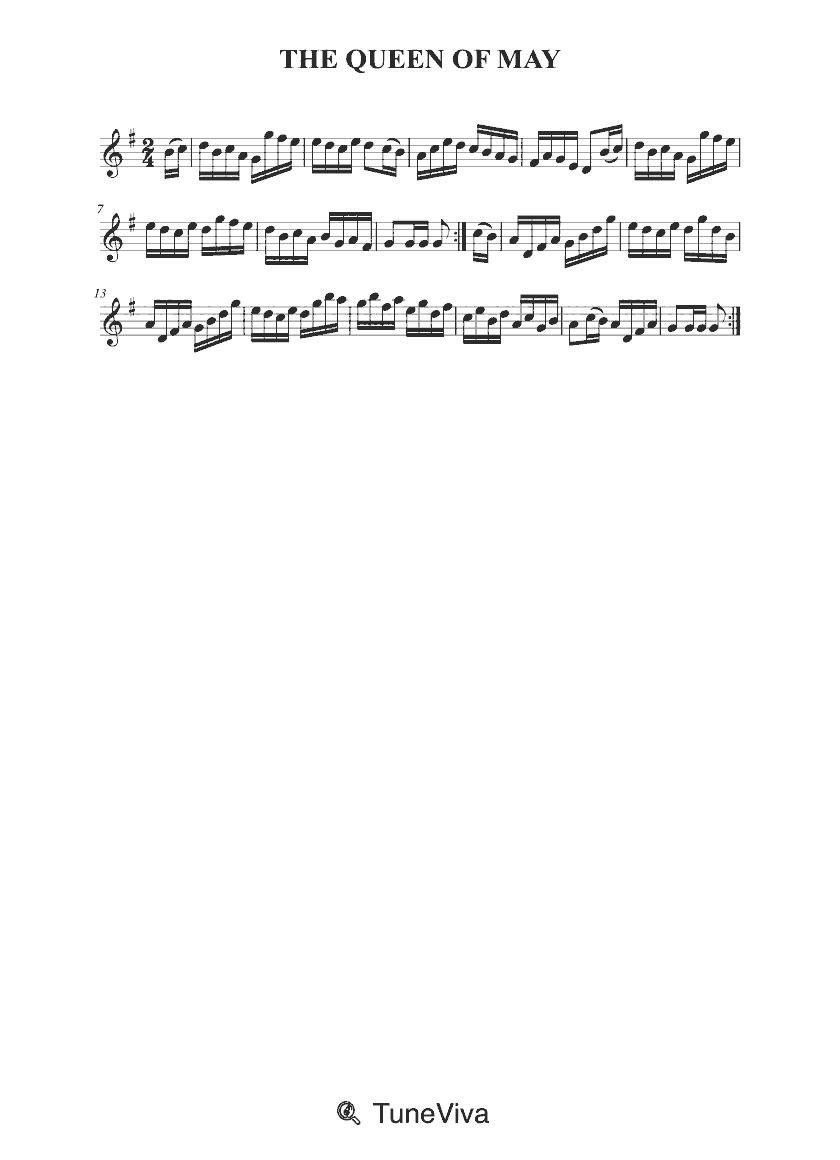
Misc tunes
40 sec
Open score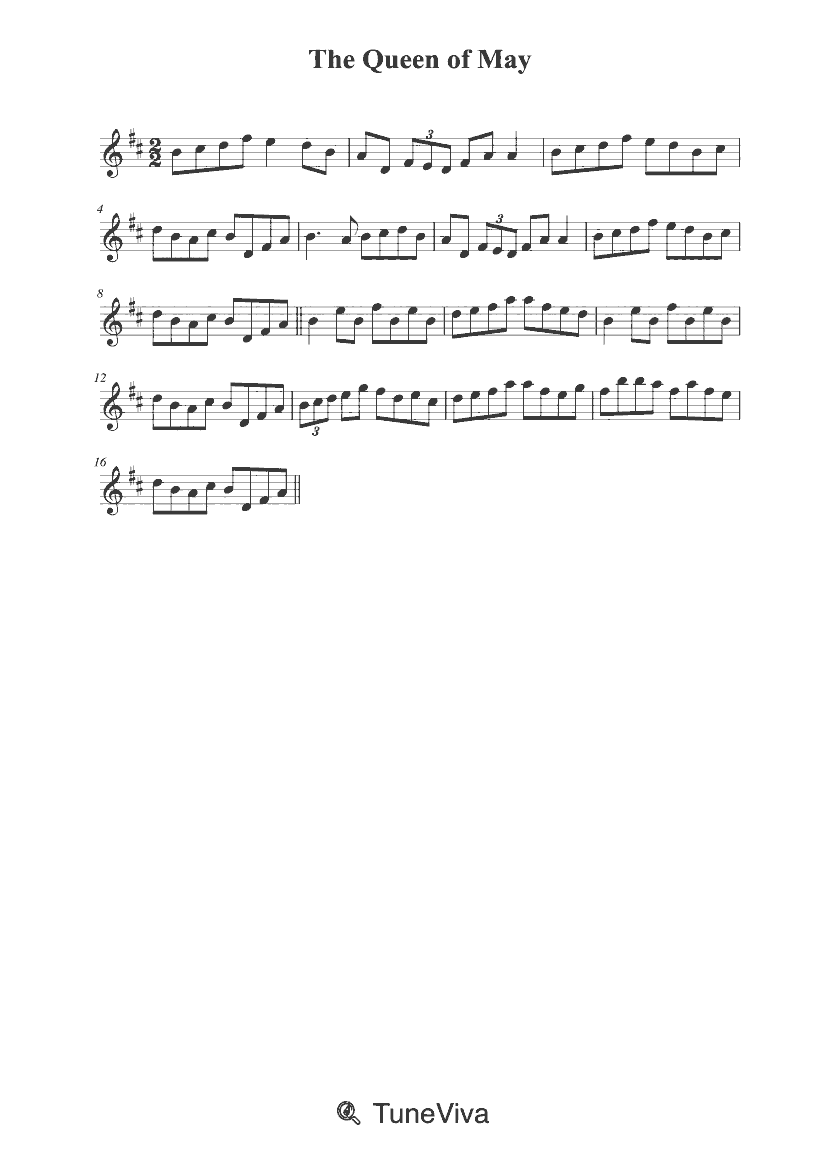
Misc tunes
1 min 4 sec · Score #211368
Open score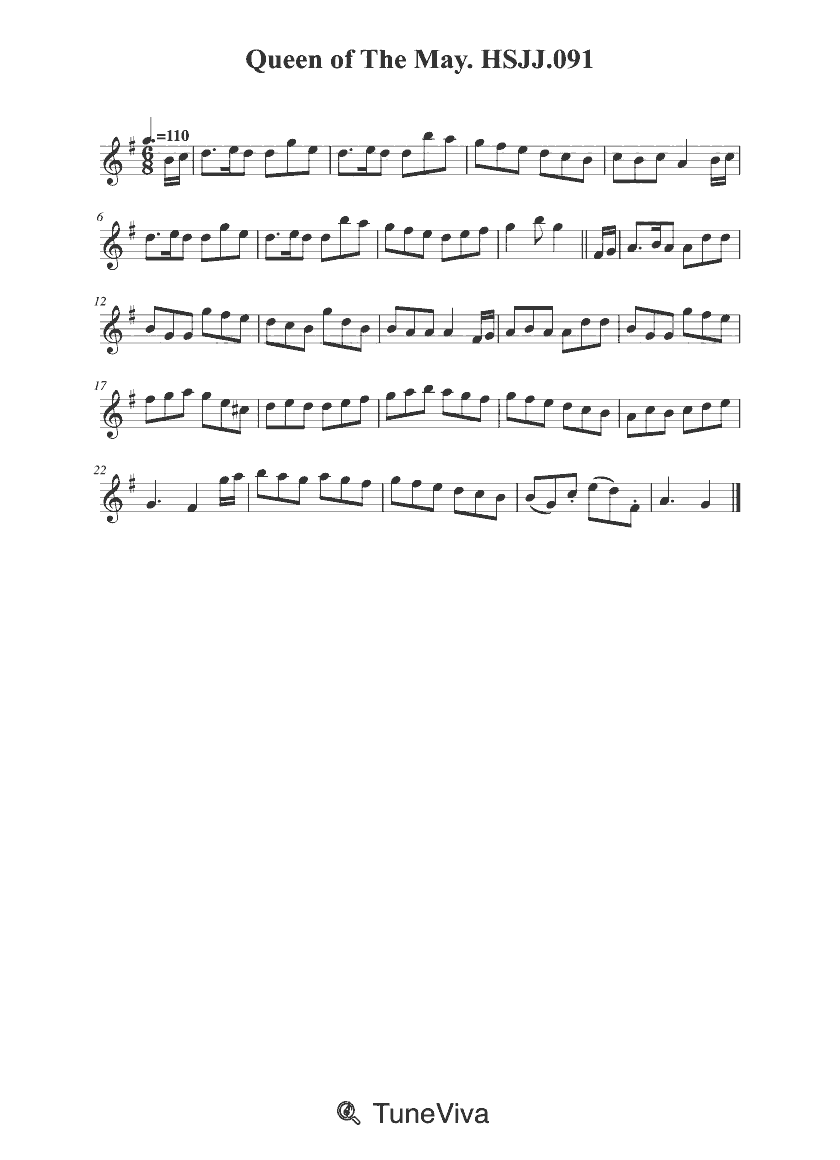
Misc tunes
13 sec
Open score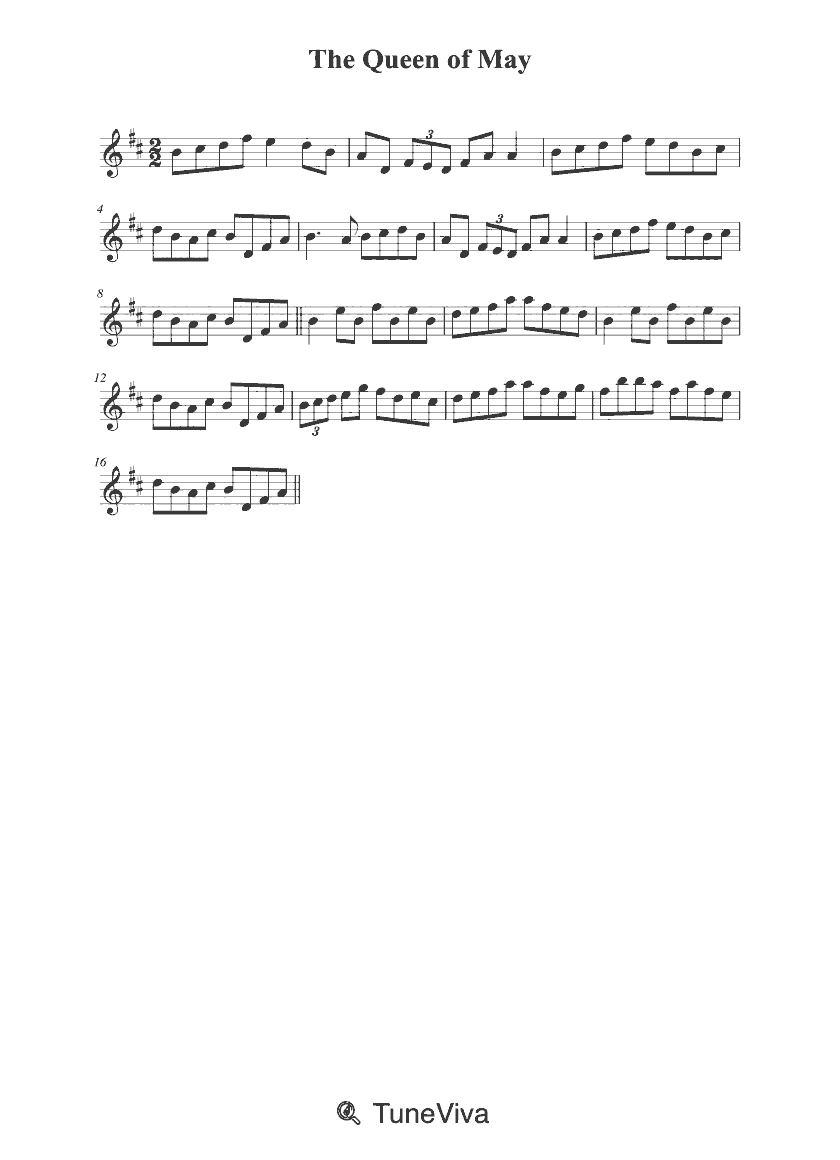
Misc tunes
1 min 4 sec · Score #186916
Open score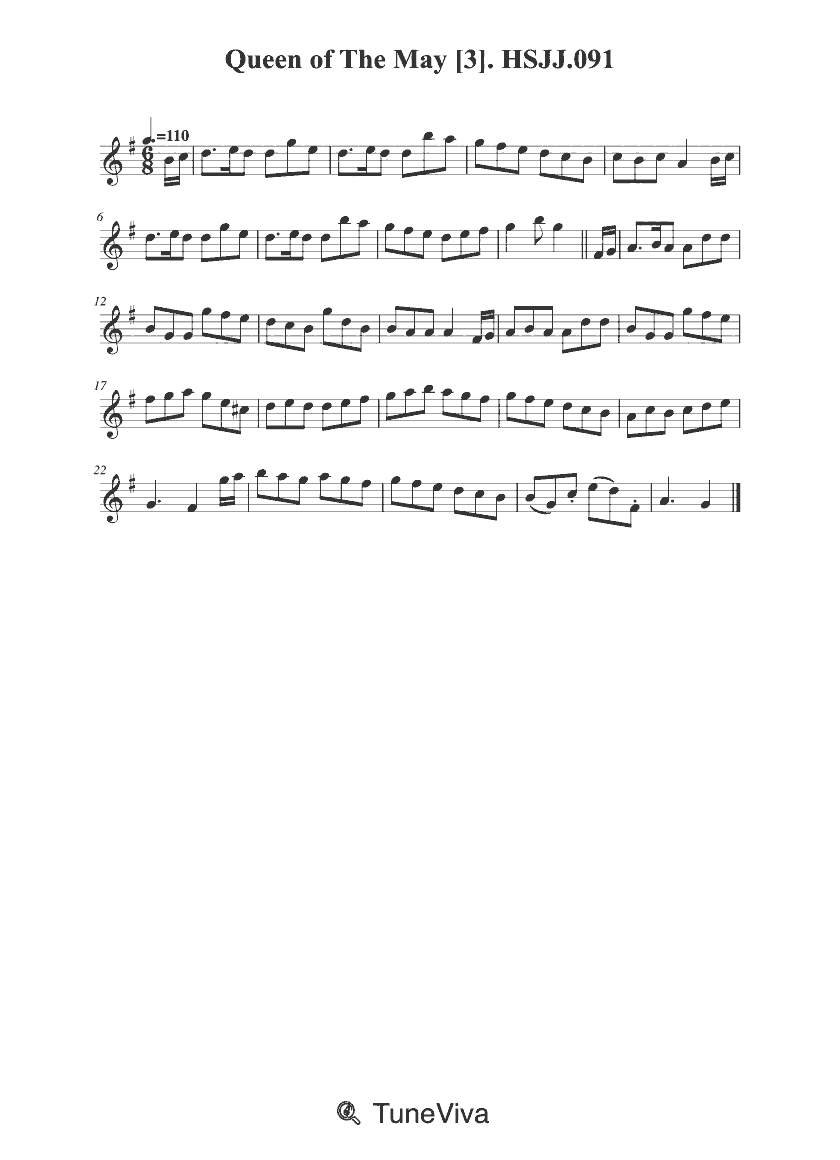
Misc tunes
13 sec
Open score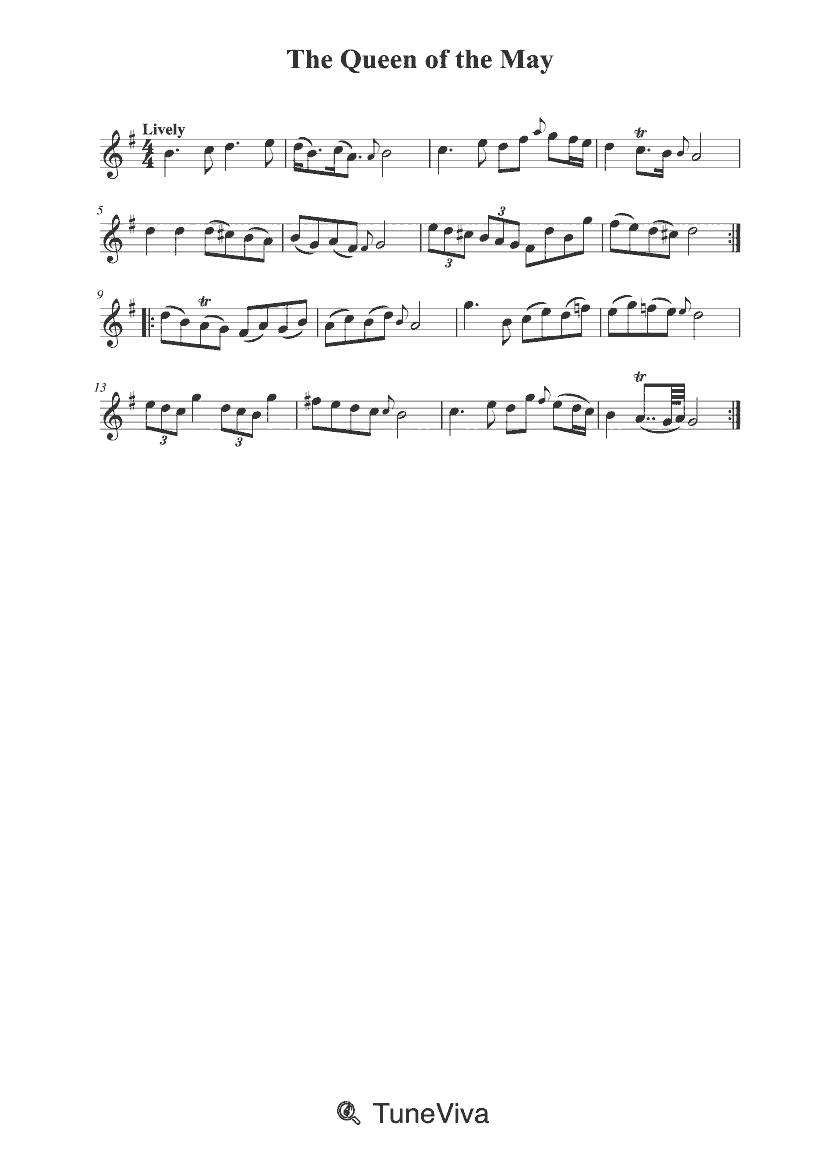
Misc tunes
1 min 4 sec · Score #237034
Open score
Trad
3 min 33 sec · Score #243369
Open score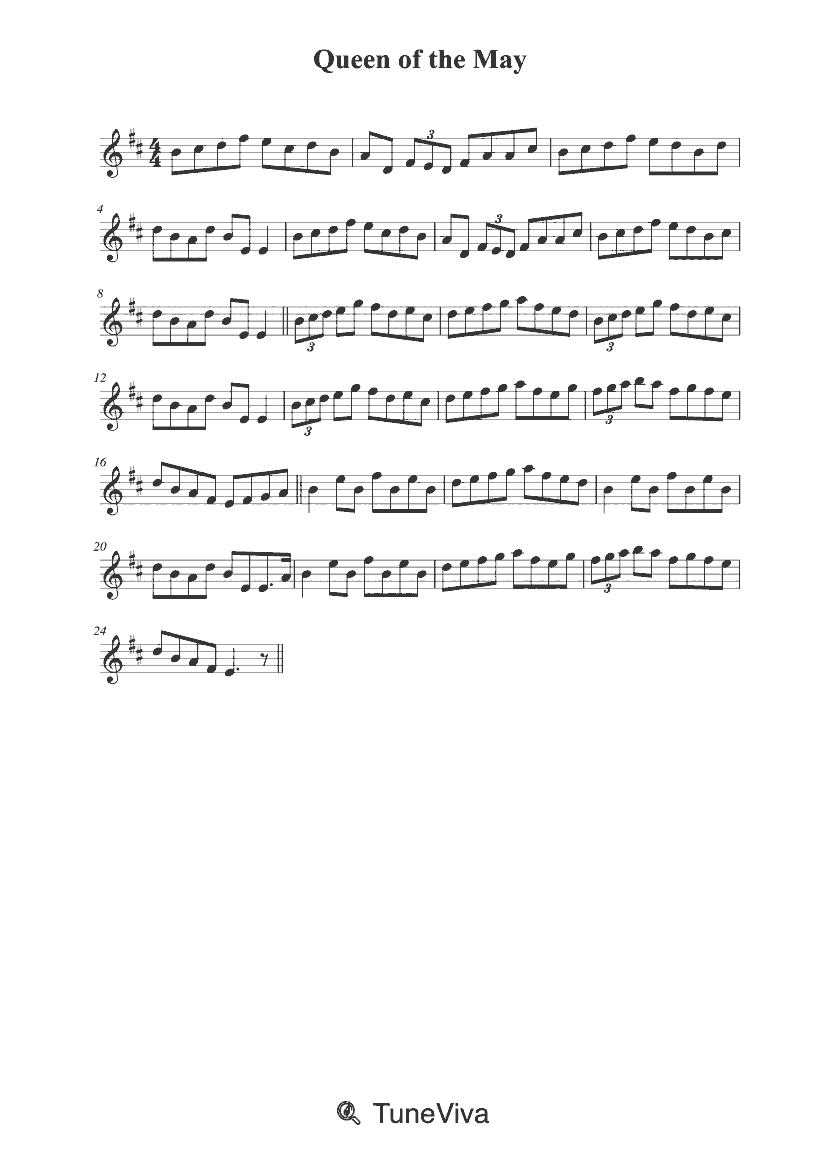
Misc tunes
48 sec
Open score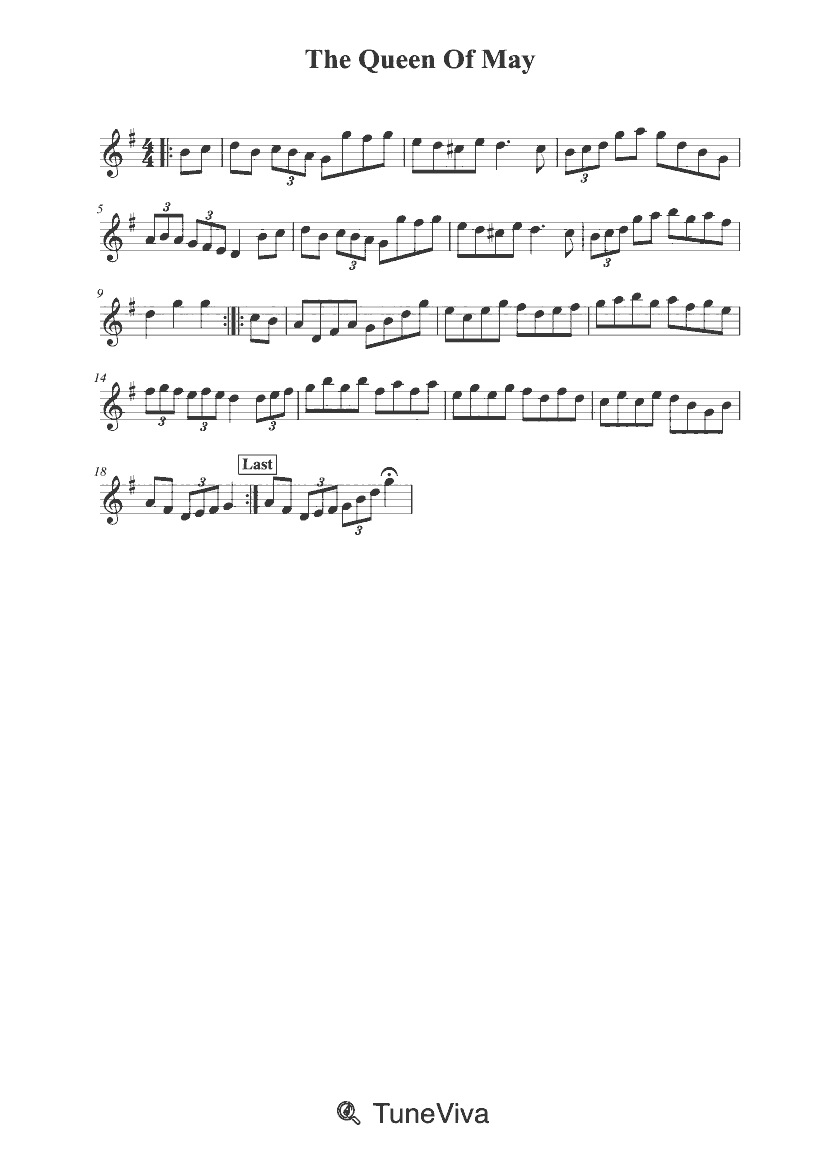
Misc tunes
1 min 6 sec
Open score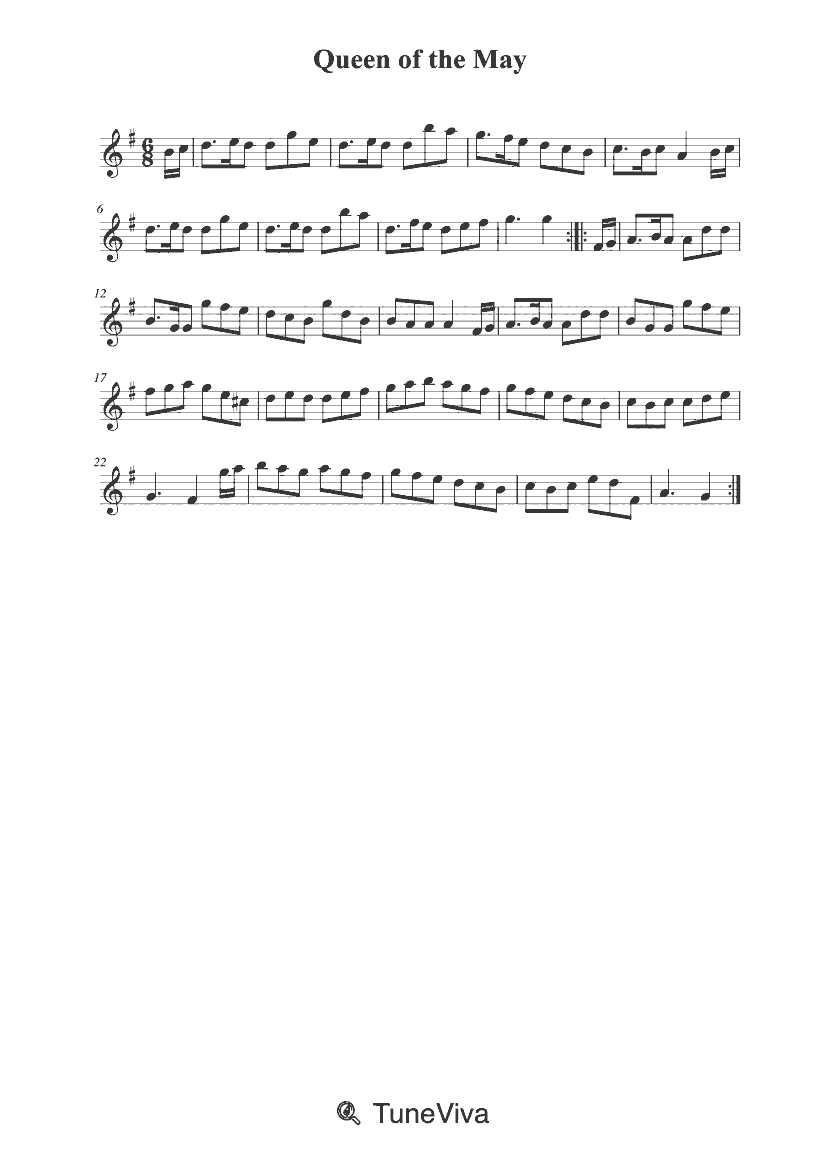
Misc tunes
36 sec · Score #112643
Open score
Trad
3 min 33 sec · Score #117035
Open score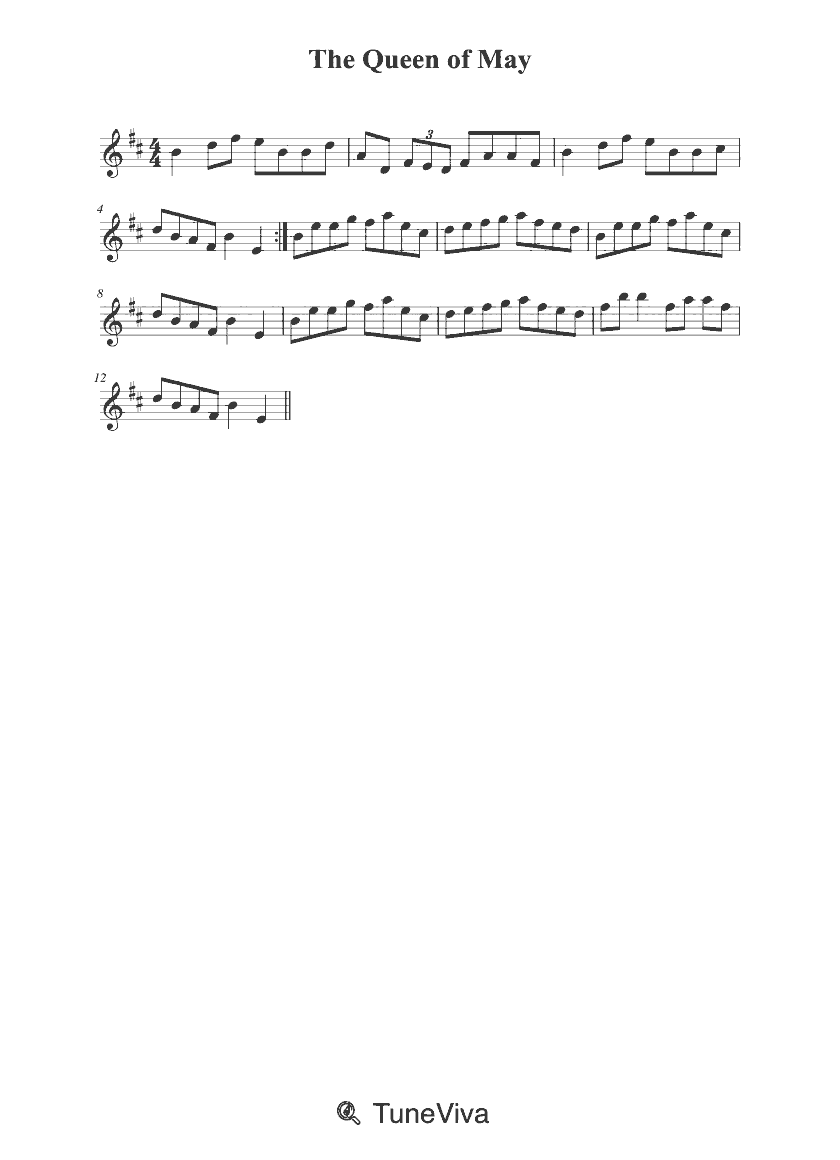
Misc tunes
32 sec · Score #139996
Open score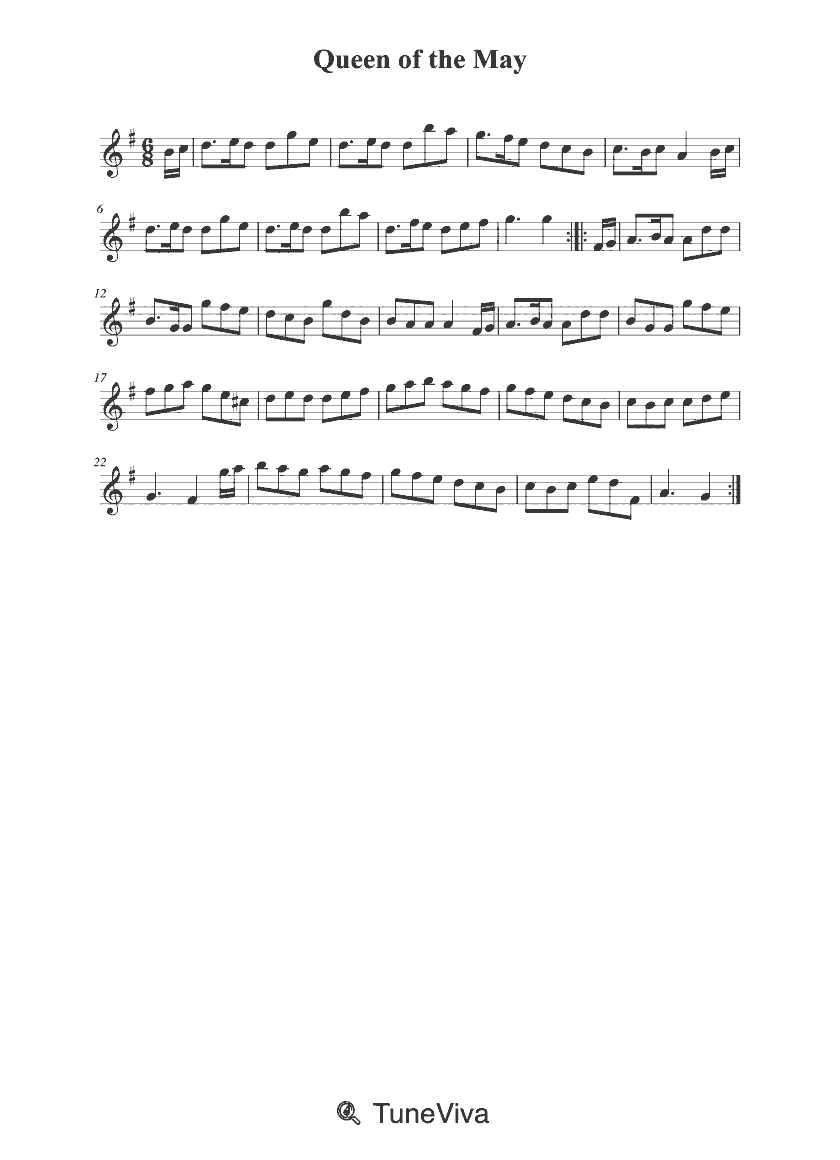
Misc tunes
36 sec · Score #142967
Open score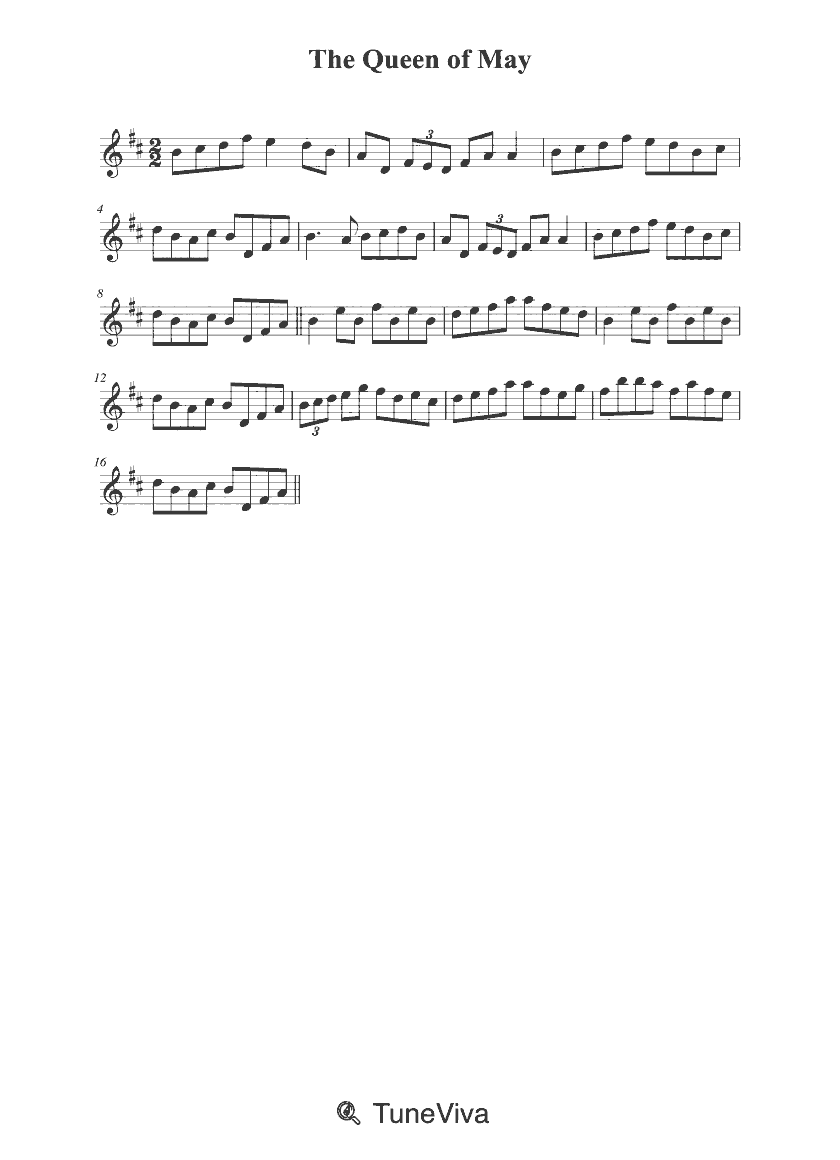
Misc tunes
1 min 4 sec · Score #166817
Open score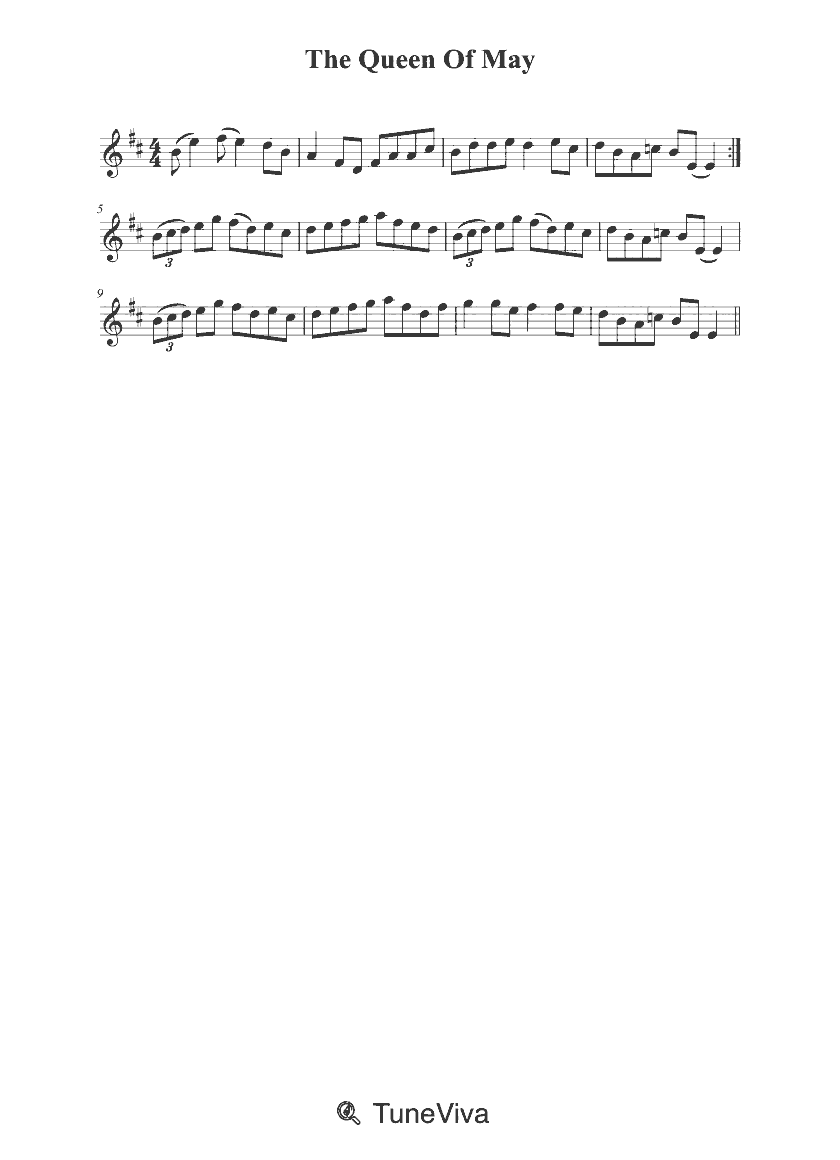
Misc tunes
32 sec · Score #167285
Open scorePage 1 of 2
The listed versions open in 4/4, 2/4, and 6/8. A 6/8 setting groups pulses differently from 2/4 or 4/4, which affects the lilt and how the music is counted. If you are playing with others, agree on which version you are using before rehearsing.
One score is titled as a hornpipe with a 1728 date and credited 'after Chief O'Neill'; another is described as traditional music; a third gives no composer credit. Those details can help you shortlist a version, but the piece's identity, date, and attribution are not independently confirmed here.
Two of the available scores open with one sharp, while one opens with no sharps or flats. A key signature narrows the likely key but does not by itself settle whether the music is major or minor; check the opening and closing notes and any accidentals. You may also need to transpose if you are working with a singer or a fixed-key instrument.
The available scores do not name an intended instrument, and the piece's origin, composer, and date are not confirmed by an authoritative reference. Use the title wording and opening signatures to compare versions, and consult a reliable edition or reference source before treating any historical detail as settled.
Catalogue duration 36 sec. Opening key signature: 1 sharp (G major). Opening time signature: 6/8.
Catalogue duration 32 sec. Opening key signature: 1 sharp (G major). Opening time signature: 2/4.
Catalogue duration 34 sec. Opening key signature: No sharps or flats. Opening time signature: 4/4.
The Queen of May is listed under several score titles, but the available information does not establish whether the name refers to a song, a dance tune, or another type of piece. One title describes it as a hornpipe dated 1728, while another simply says 'Traditional music'; those are title descriptions, not independently confirmed facts. A musician should treat the identity as unresolved until an authoritative edition or reference source is checked.
The scores open in different metres: one in 4/4, one in 2/4, and one in 6/8. Those signatures imply different groupings of beats, with 6/8 felt as compound duple and 2/4 or 4/4 as simple metres, so the versions will behave differently when counted or accompanied. Compare the metre with the version you already know before choosing.
Two of the listed scores open with one sharp, and one opens with no sharps or flats. A one-sharp signature commonly points to G major or E minor, and a key signature alone does not settle the mode. Check the opening and closing notes if you need to confirm the key.
One score is titled '"The Queen Of May" (hornpipe) 1728' and credited 'after Chief O'Neill,' but the other listed scores do not use the hornpipe description.
Compare the opening key signature, time signature, title wording, and composer credit, because those are the details that distinguish the available scores. None of the listed titles names an instrument, so check the score itself before assuming it suits a particular instrument. If you need a specific dance type or song setting, match the title description rather than relying on the shared name alone.
The titles vary by the definite article, capitalisation, and punctuation, and they are listed under the same song name. Those differences alone do not prove separate works, but they also do not prove the scores are identical settings. Use the key, metre, and any composer credit to compare them.