
"The Rakes Of Clonmel" (jig) 0902
after Chief F. O'Neill
54 sec
Open scoreThe Rakes of Clonmel sheet music is available here in three notated settings, and the practical choice between them comes down to meter, key and title spelling. Two scores open in 6/8, while the score whose title carries the word “jig” actually opens in 4/4 — a mismatch worth checking against the version you already know. The opening key signatures also differ: no sharps or flats, one sharp, and two sharps (D major). One setting is credited “after Chief F. O'Neill”; the others name no composer, so the scores are best compared as individual notations of a tune rather than as confirmed editions of a single authorised text.
Scores 1–20 of 38
after Chief F. O'Neill
54 sec
Open score
Misc tunes
Ben Kelly's Delight
2 min 42 sec · Score #215752
Open score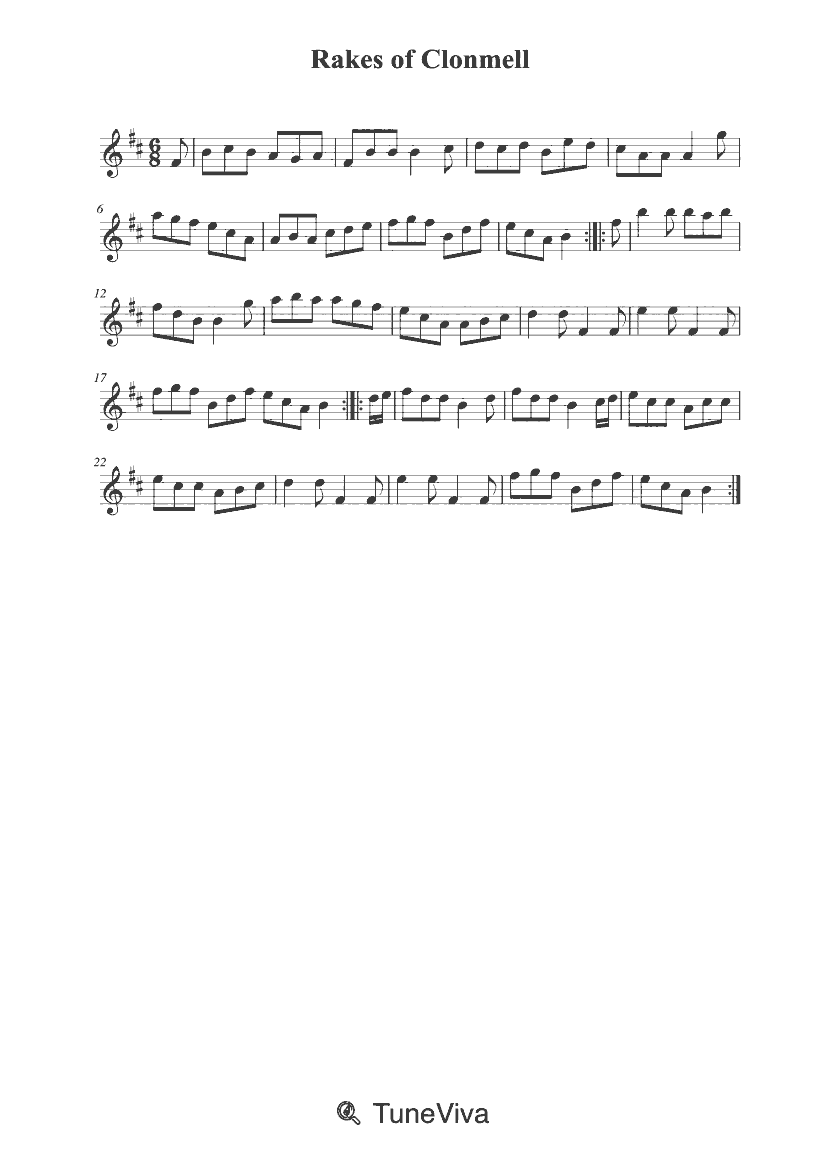
Misc tunes
36 sec
Open score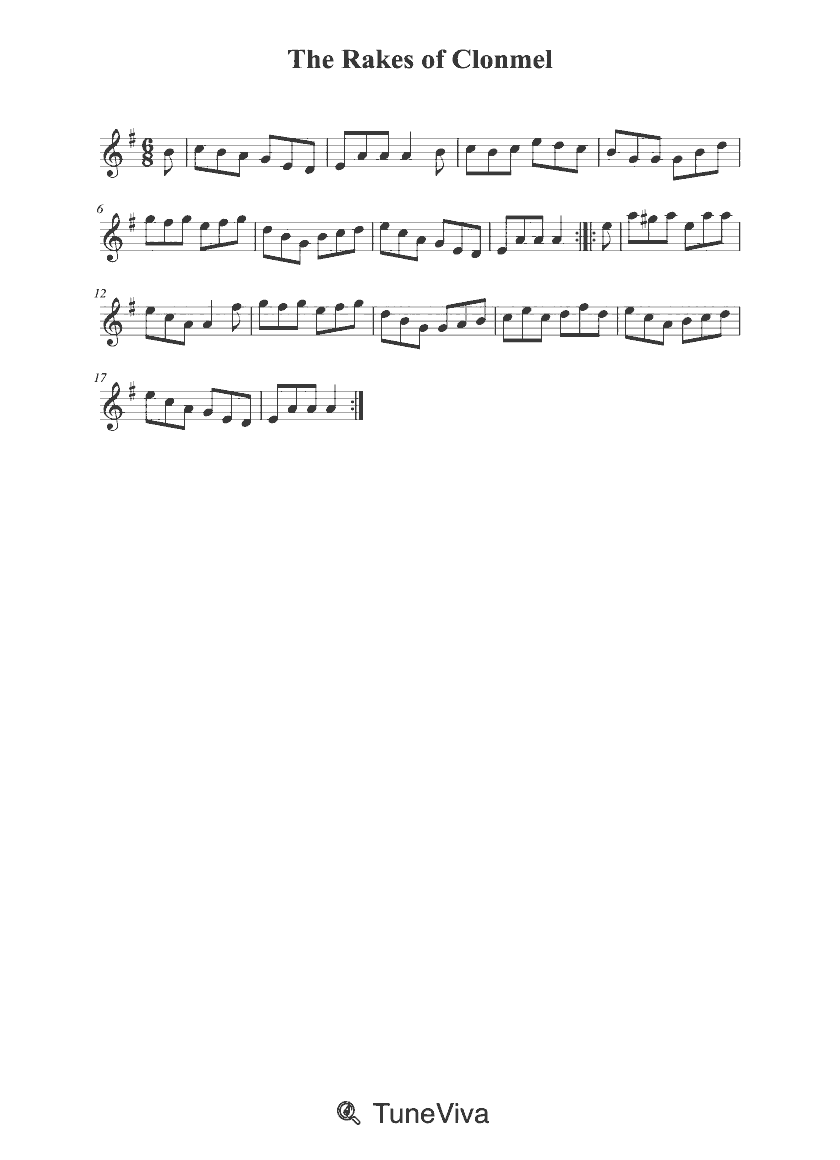
Misc tunes
24 sec · Score #235412
Open score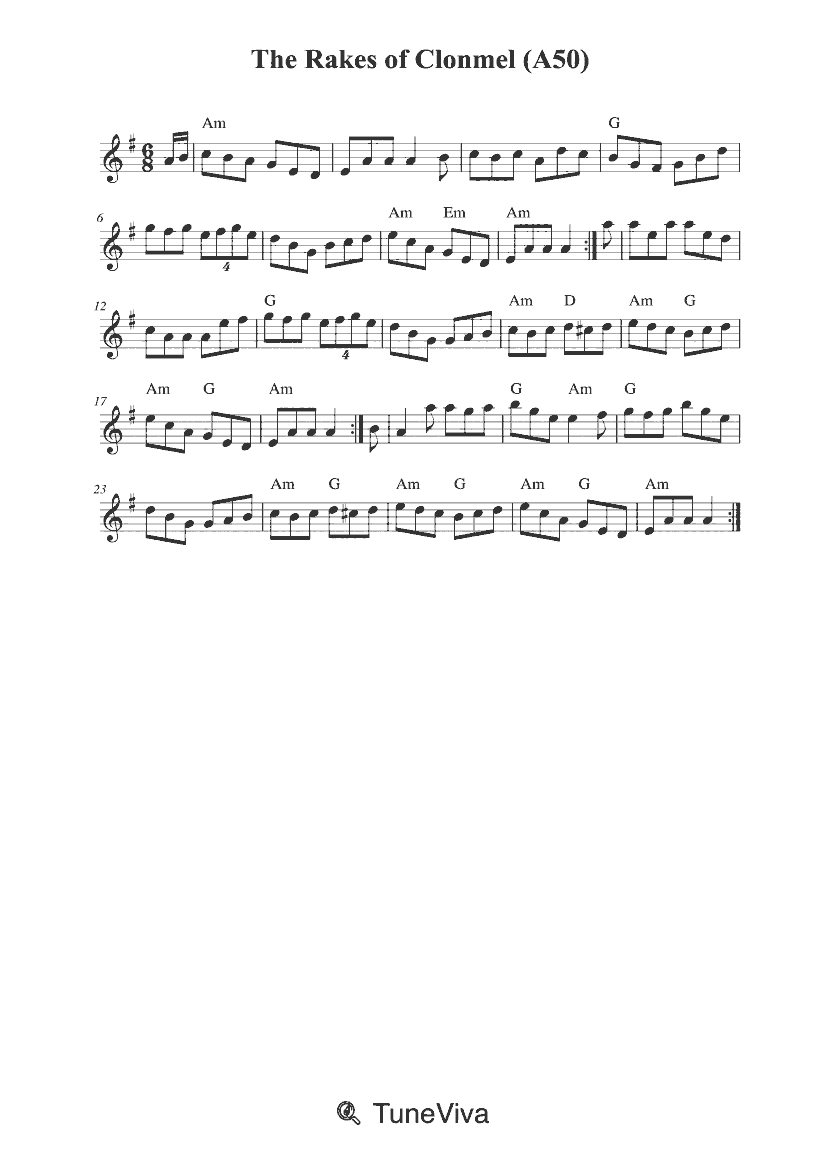
Misc tunes
54 sec
Open score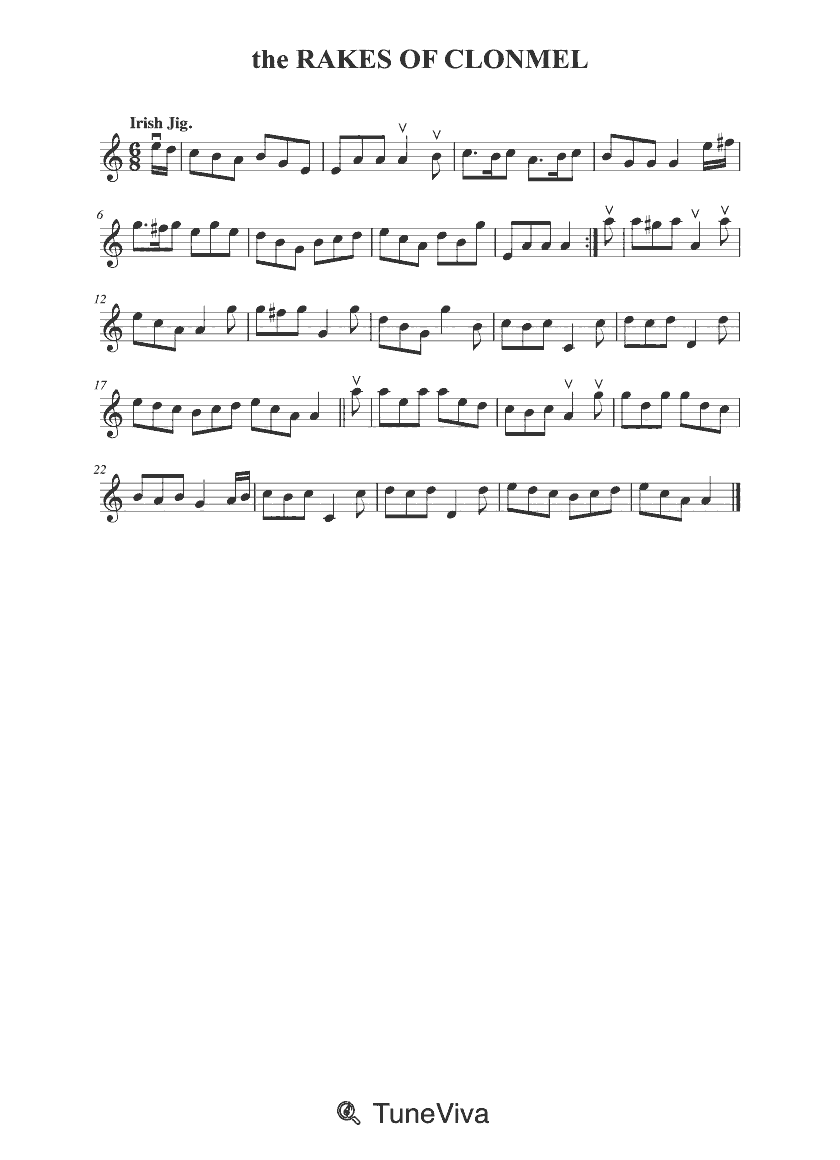
Misc tunes
24 sec · Score #41194
Open score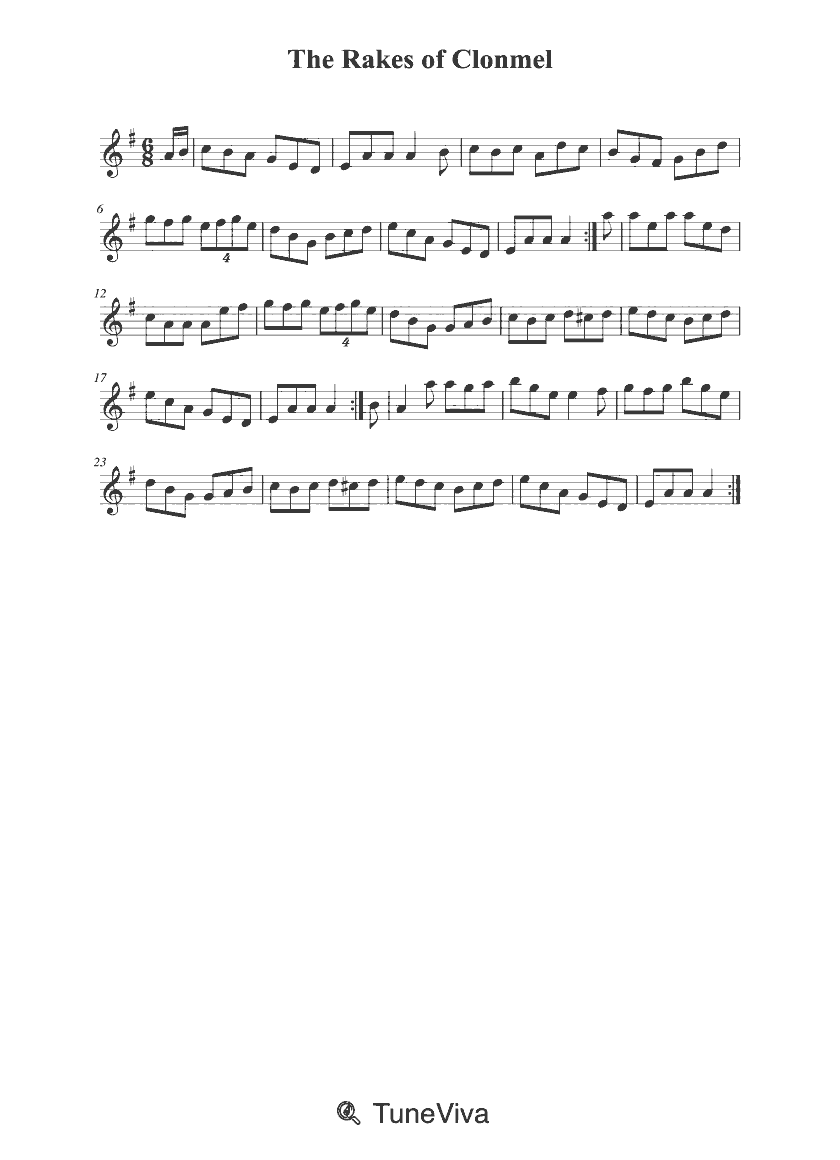
Misc tunes
54 sec
Open score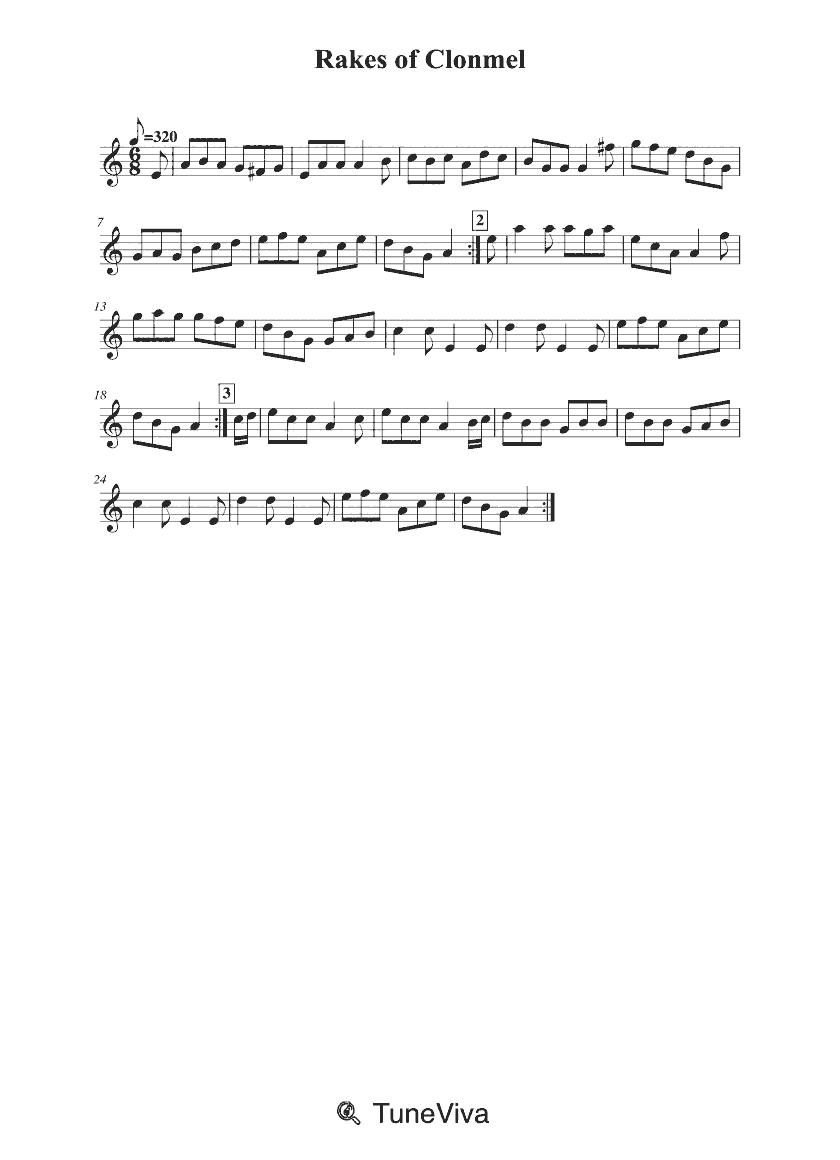
Misc tunes
40 sec
Open score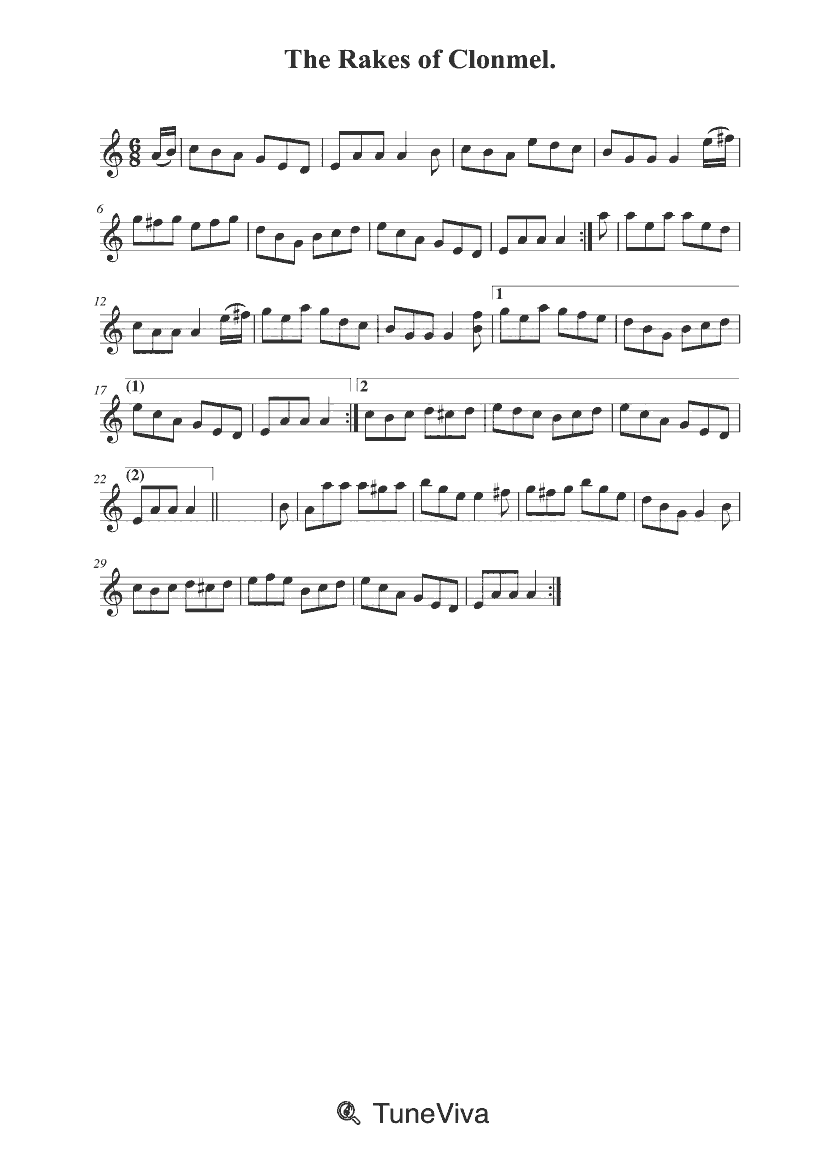
Misc tunes
53 sec
Open score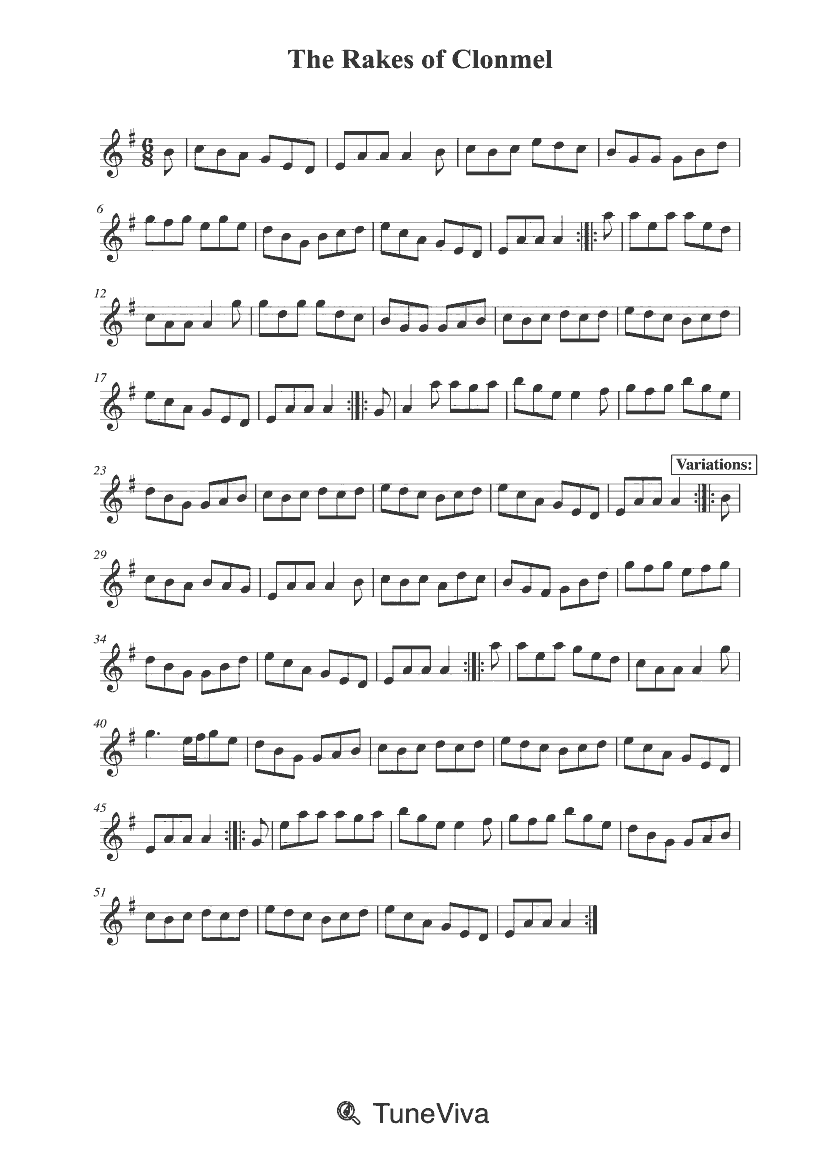
Misc tunes
Ben Kelly's Delight
1 min 12 sec
Open score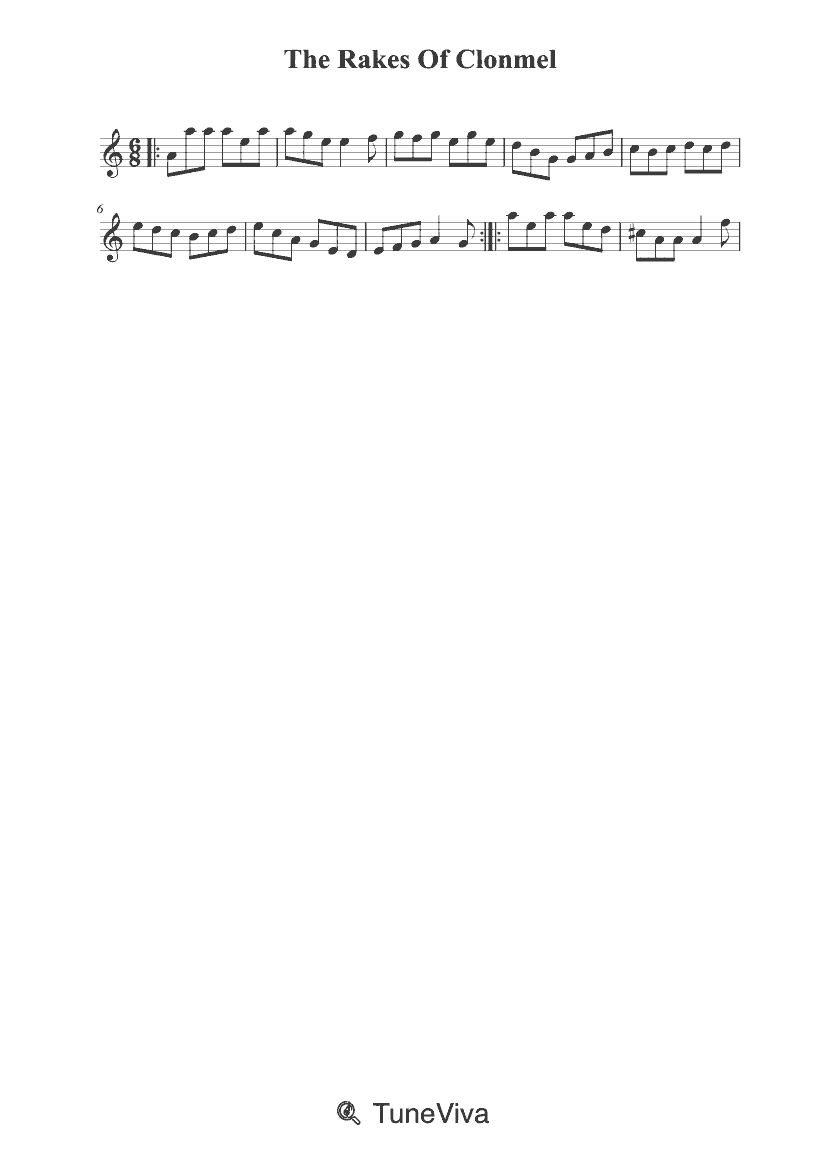
Misc tunes
15 sec
Open score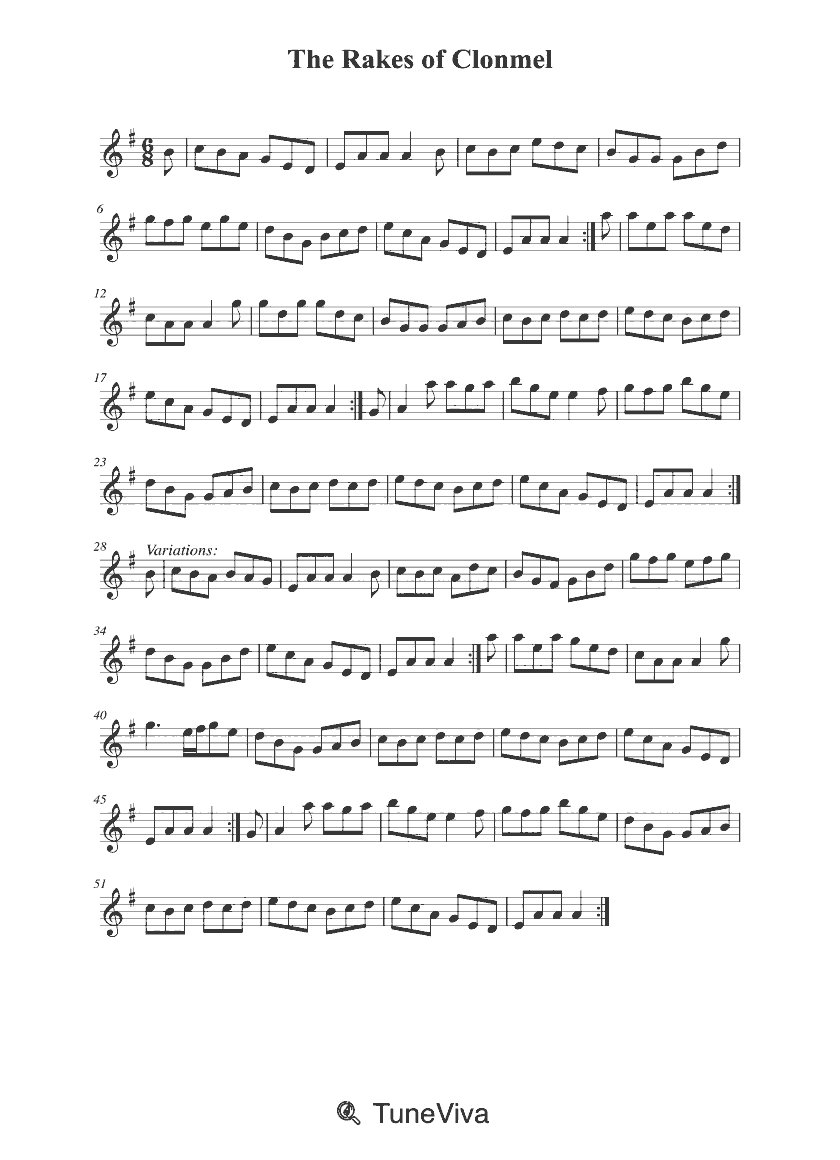
Misc tunes
Ben Kelly's Delight
2 min 42 sec · Score #222699
Open score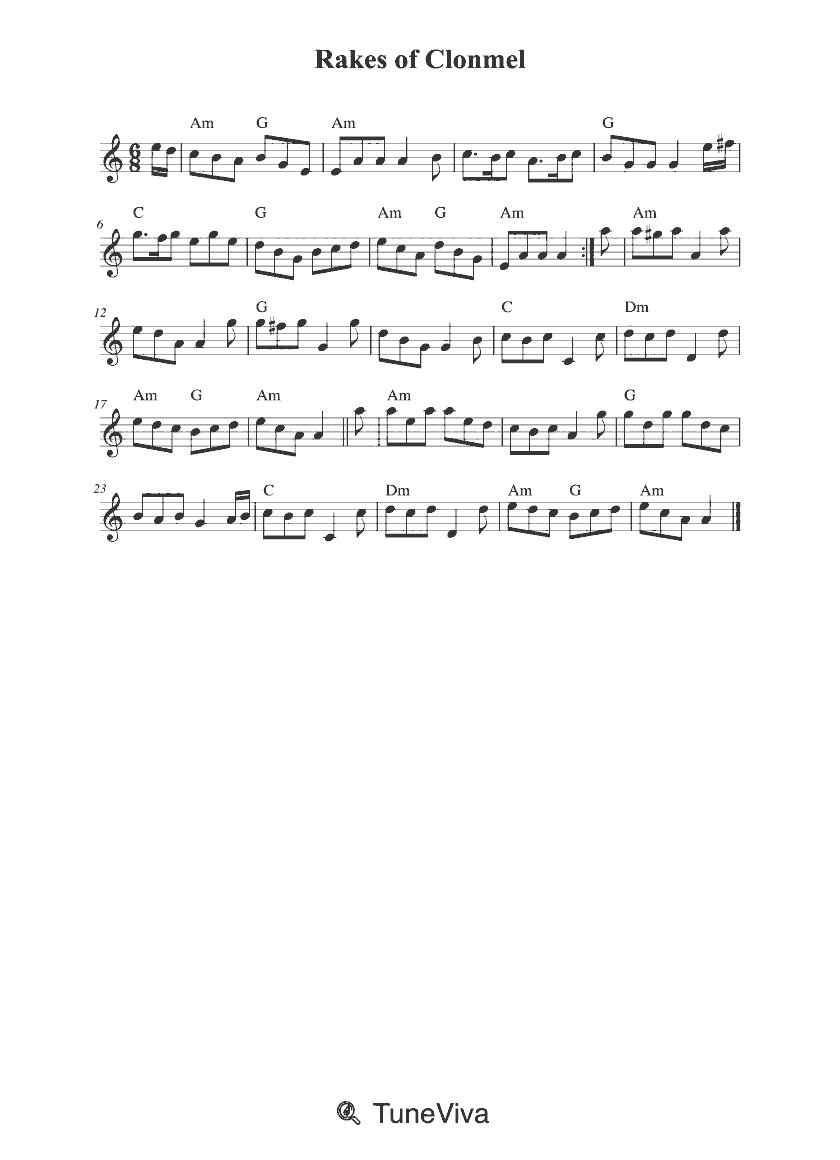
Misc tunes
24 sec · Score #250166
Open score
anon.
36 sec
Open score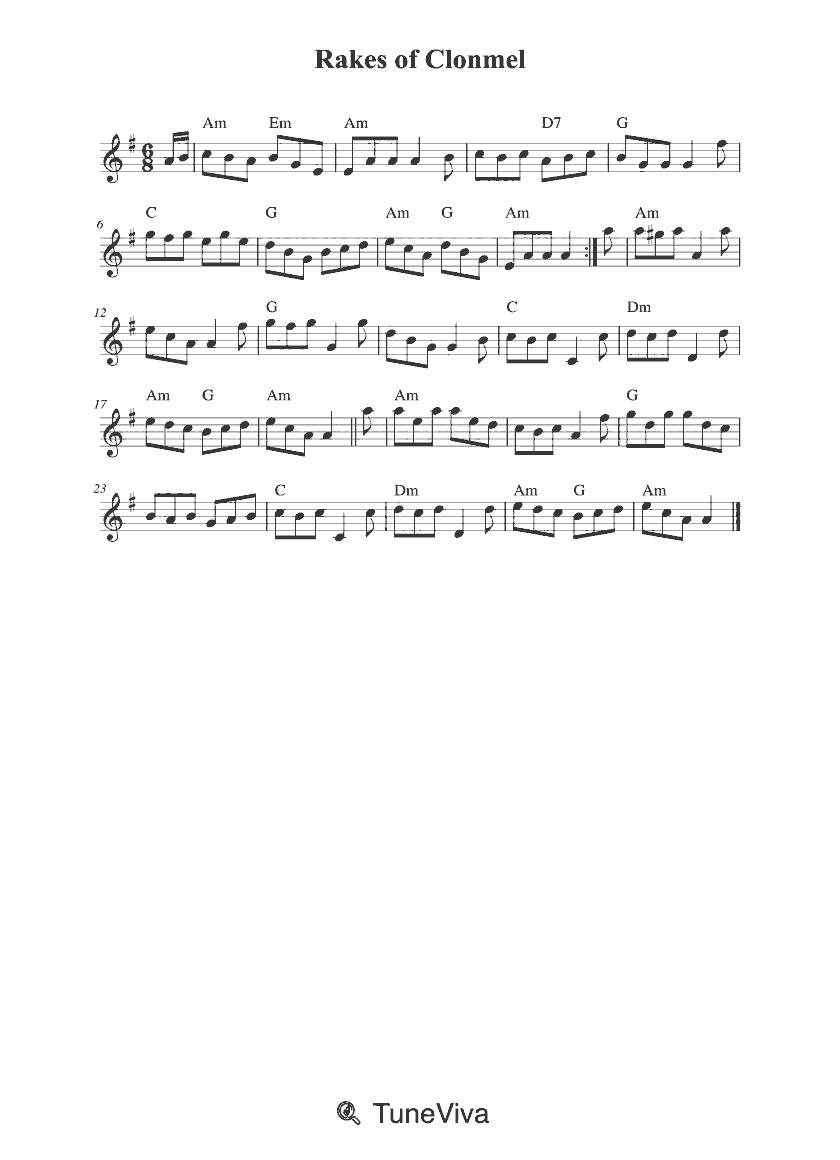
Misc tunes
24 sec · Score #12982
Open score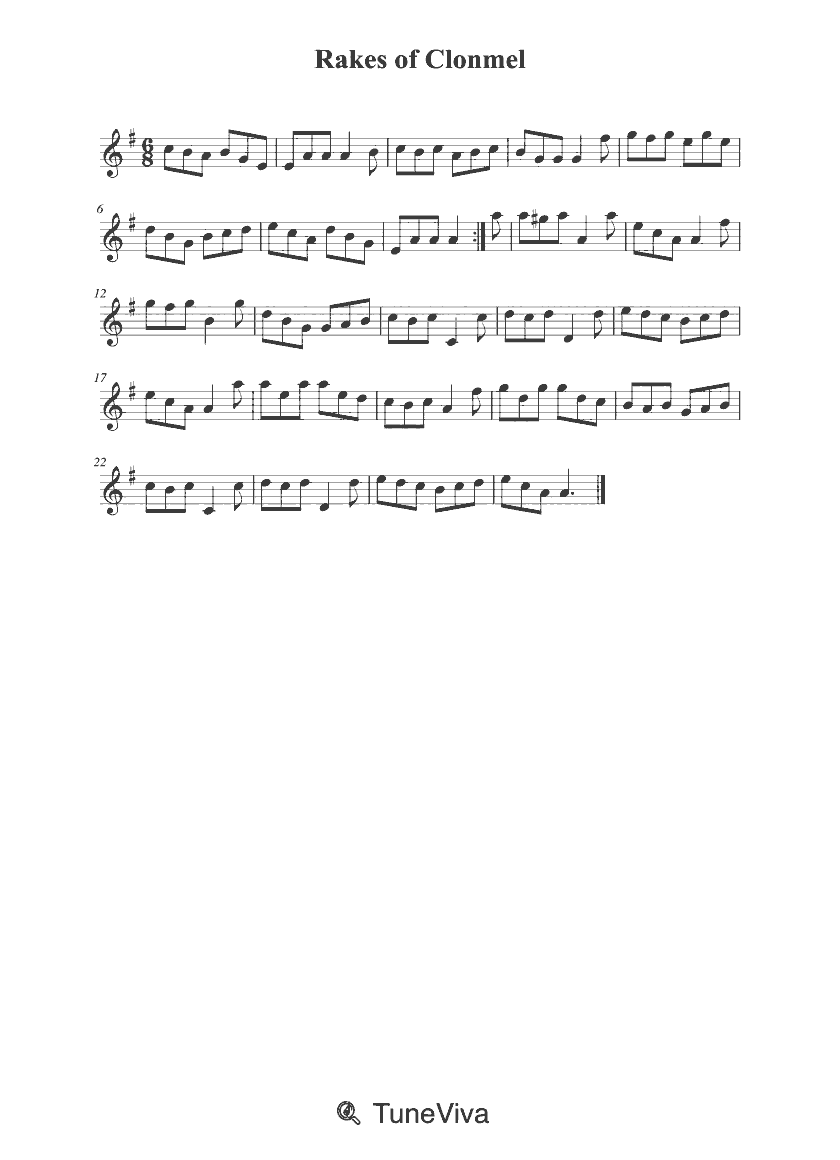
Misc tunes
24 sec · Score #47376
Open score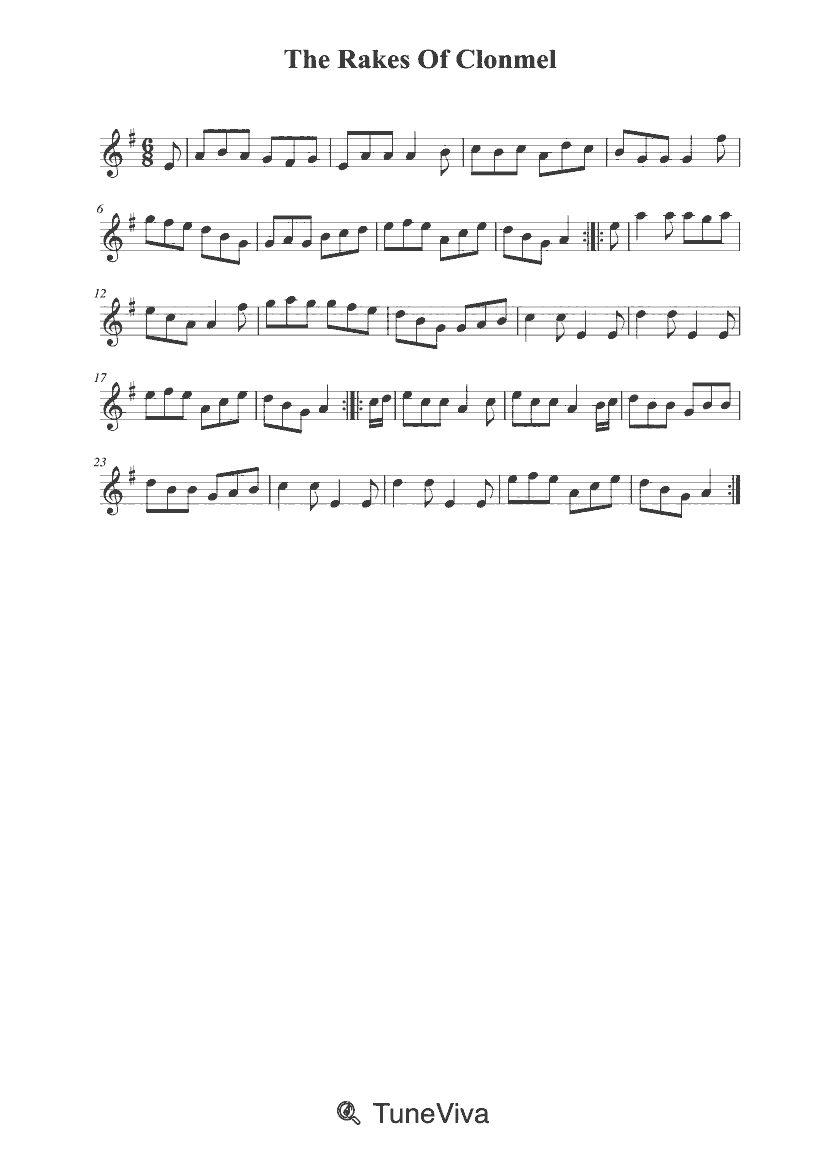
Misc tunes
36 sec
Open score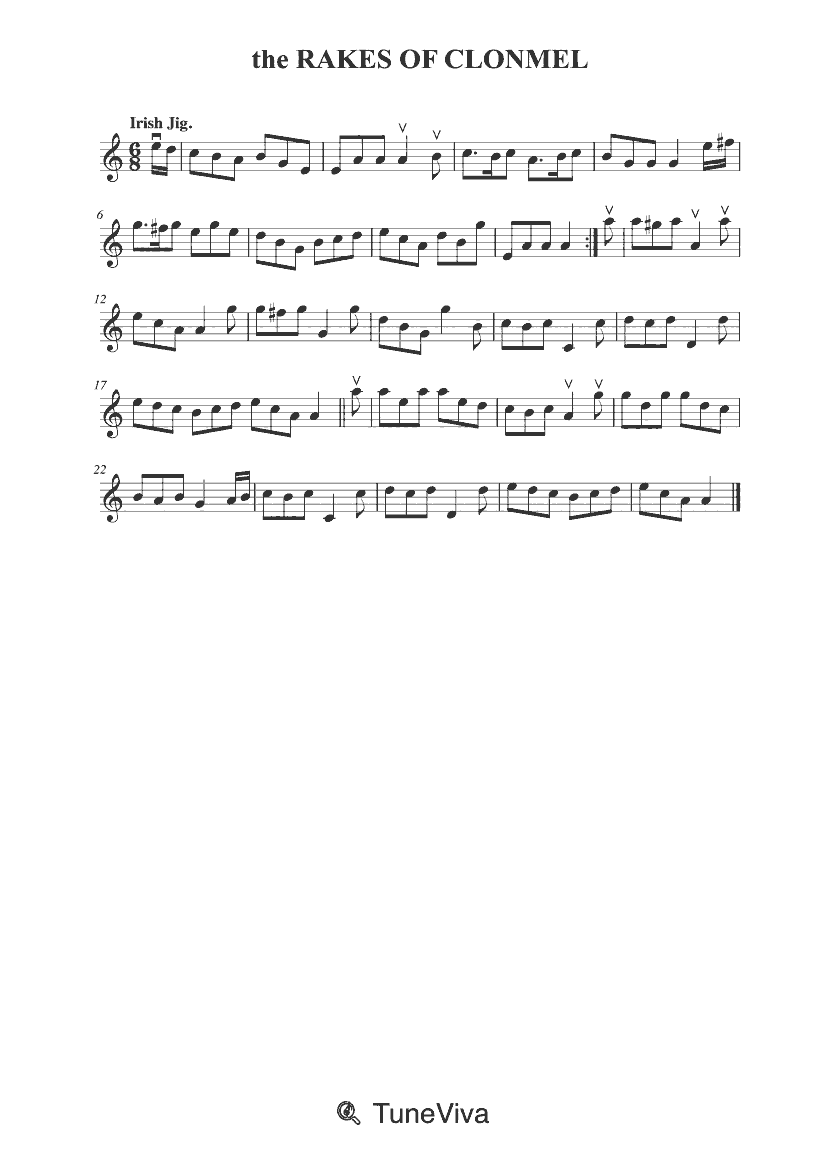
Misc tunes
24 sec · Score #57623
Open score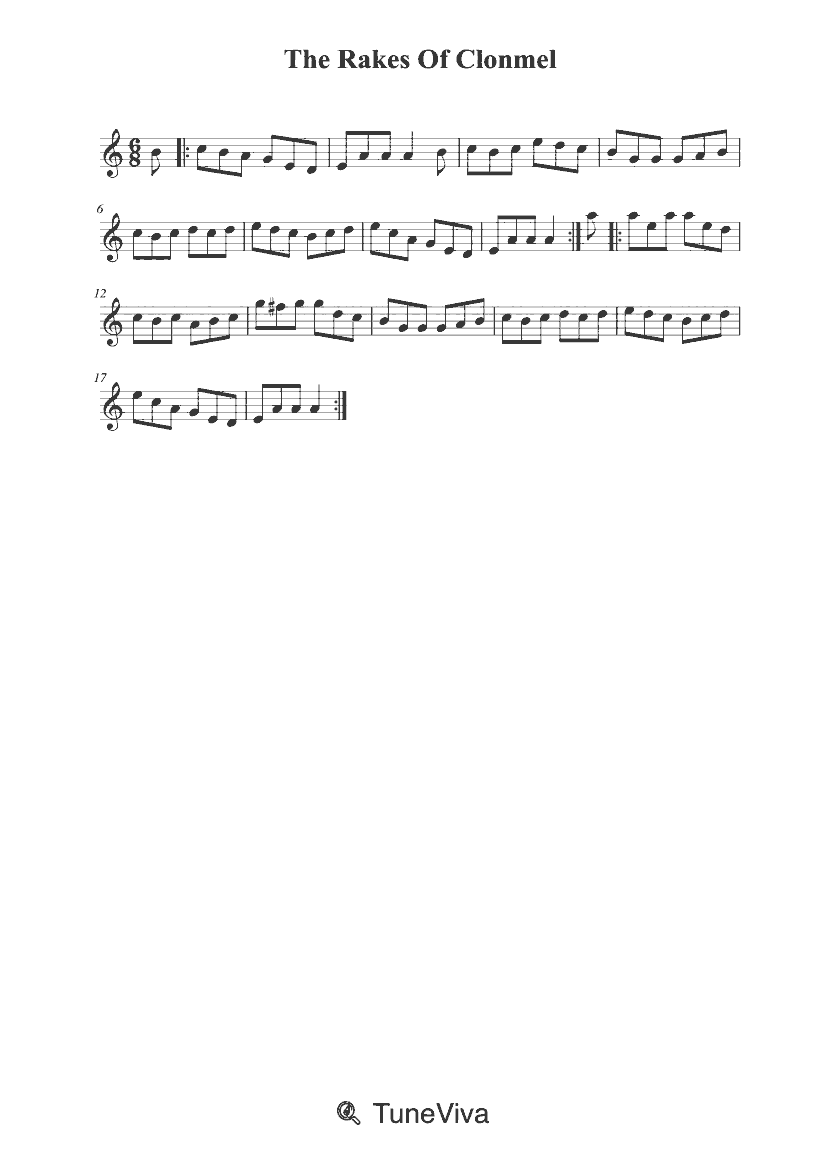
Misc tunes
24 sec · Score #95973
Open score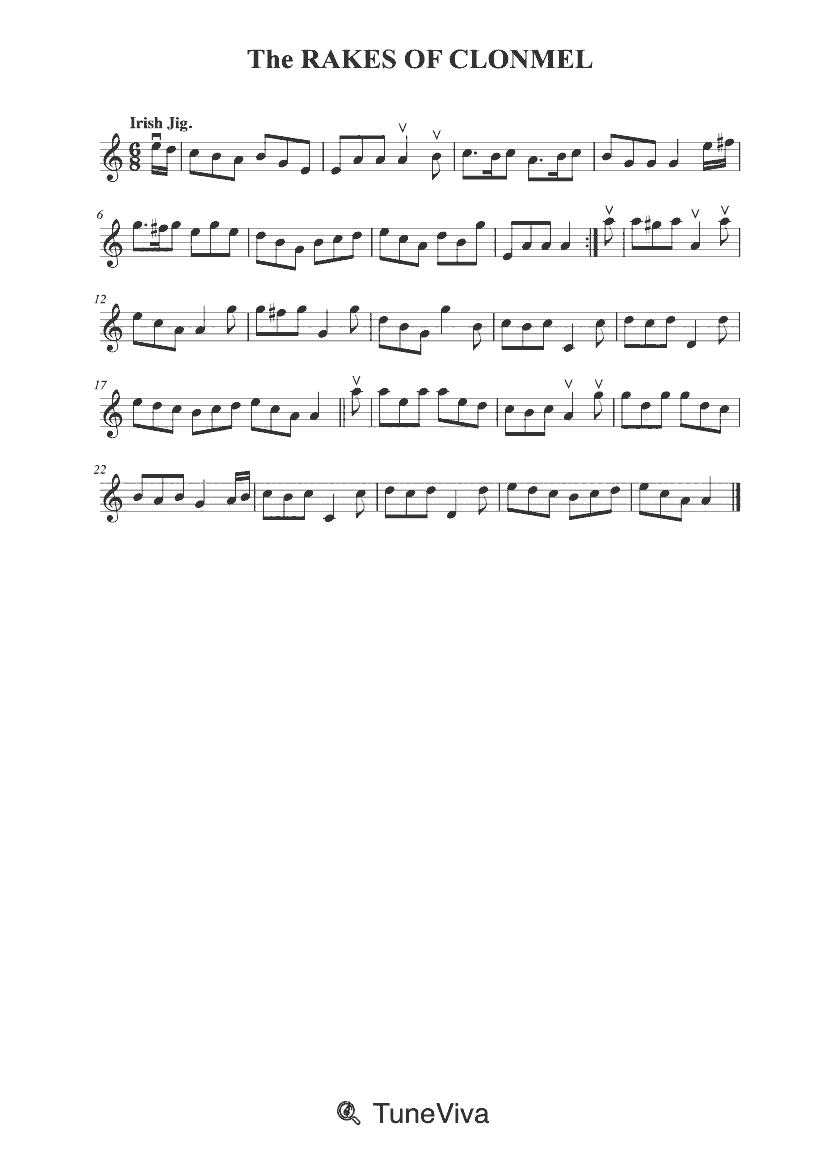
Misc tunes
24 sec · Score #97447
Open scorePage 1 of 2
Two of the three settings open in 6/8. The third, titled “The Rakes Of Clonmel (jig) 0902”, opens in 4/4 despite the jig label in its title. Time signature governs how bars are grouped and counted, so let the notation on the page guide you if the label and the meter disagree, and choose the setting that matches the rhythm you already play or hear.
The settings open with no sharps or flats, with one sharp, and with two sharps (D major). These are presented as different notated keys rather than as proof of one authorised key, and they are not described as transpositions of each other. Pick the score whose key suits your instrument, session or ensemble instead of assuming any setting is the definitive one.
Only one setting carries a composer field, reading “after Chief F. O'Neill”. The word “after” normally signals a setting derived from or associated with a named source or arranger rather than a claim of original composition. No supporting reference was supplied to confirm what relationship that particular score has to O'Neill's work, so read the credit as belonging to that score alone.
The tune is listed as both “The Rakes of Clonmel” and “Rakes of Clonmell”.
Catalogue duration 54 sec. Opening key signature: No sharps or flats. Opening time signature: 4/4.
Catalogue duration 2 min 42 sec. Opening key signature: 1 sharp. Opening time signature: 6/8.
Catalogue duration 36 sec. Opening key signature: 2 sharps (D major). Opening time signature: 6/8.
The jig designation attaches to one score only: the setting titled “The Rakes Of Clonmel (jig) 0902”. That score opens in 4/4, while the two settings without a jig label open in 6/8. Because the label and the notated meter do not line up, jig should be treated as a description of one particular score rather than a confirmed characterisation of every version.
The notated key differs between the available settings: one opens with no sharps or flats, one with a single sharp, and one with two sharps, given as D major. The key therefore depends on which score you choose, and the settings are not presented as transpositions of one another.
Two of the three settings open in 6/8 and one opens in 4/4. Because the 4/4 setting is the one labelled a jig, musicians comparing versions should check the time signature on the score itself rather than relying on the title alone.
Two of the available settings name no composer. The third has the credit “after Chief F. O'Neill”, which points to a connection with a named source or arranger for that setting rather than establishing original authorship.
One listed score uses “Rakes of Clonmell” while the others use “The Rakes of Clonmel”. The difference is a spelling variant in the titles, useful for searching and for telling the settings apart; no evidence was supplied to show which form came first or which is more authoritative.
Compare three things in order: the time signature (6/8 in two settings, 4/4 in the one labelled a jig), the opening key signature (none, one sharp, or two sharps in D major), and the title spelling. Matching meter and key to the version you already play is the quickest way to pick a score that reads comfortably on your instrument.