
Road to Lisdoonvarna/Swallowtail Jig
Misc tunes
Traditional Irish
Violoncello · 42 sec
Open scoreThe Road to Lisdoonvarna appears in several short arrangements rather than a single definitive edition. The available scores differ in instrumentation and notation: some are single-line parts for violoncello or bass, while one is a four-part score for treble, alto, alto 5th and bass. Their opening signatures use compound metre, either 6/8 or 12/8, and two or three sharps, so check the version that matches your instrument or ensemble before you begin.
Scores 1–20 of 60
Misc tunes
Traditional Irish
Violoncello · 42 sec
Open score
Traditional
Bass · 24 sec
Open score
Traditional
Treble; Alto; Alto 5th +1 parts · 24 sec
Open score
Misc tunes
24 sec · Score #228016
Open score
Traditional
Viola 2 · 24 sec
Open score
Misc tunes
30 sec · Score #95117
Open score
Misc tunes
24 sec · Score #31066
Open score
Misc tunes
24 sec · Score #8748
Open score
Misc tunes
All the Ways to Galway
2 min 8 sec
Open score
Misc tunes
All The Way To GalwayRoad To Listonvarna
2 min 40 sec
Open score
Misc tunes
24 sec · Score #115209
Open score
Misc tunes
40 sec · Score #68251
Open score
Misc tunes
30 sec · Score #71056
Open score
Misc tunes
1 min 4 sec
Open score
Misc tunes
All the Ways to Galway
1 min 4 sec
Open score
Trad.
Lisdoonvarna
24 sec
Open score
Misc tunes
24 sec · Score #226736
Open score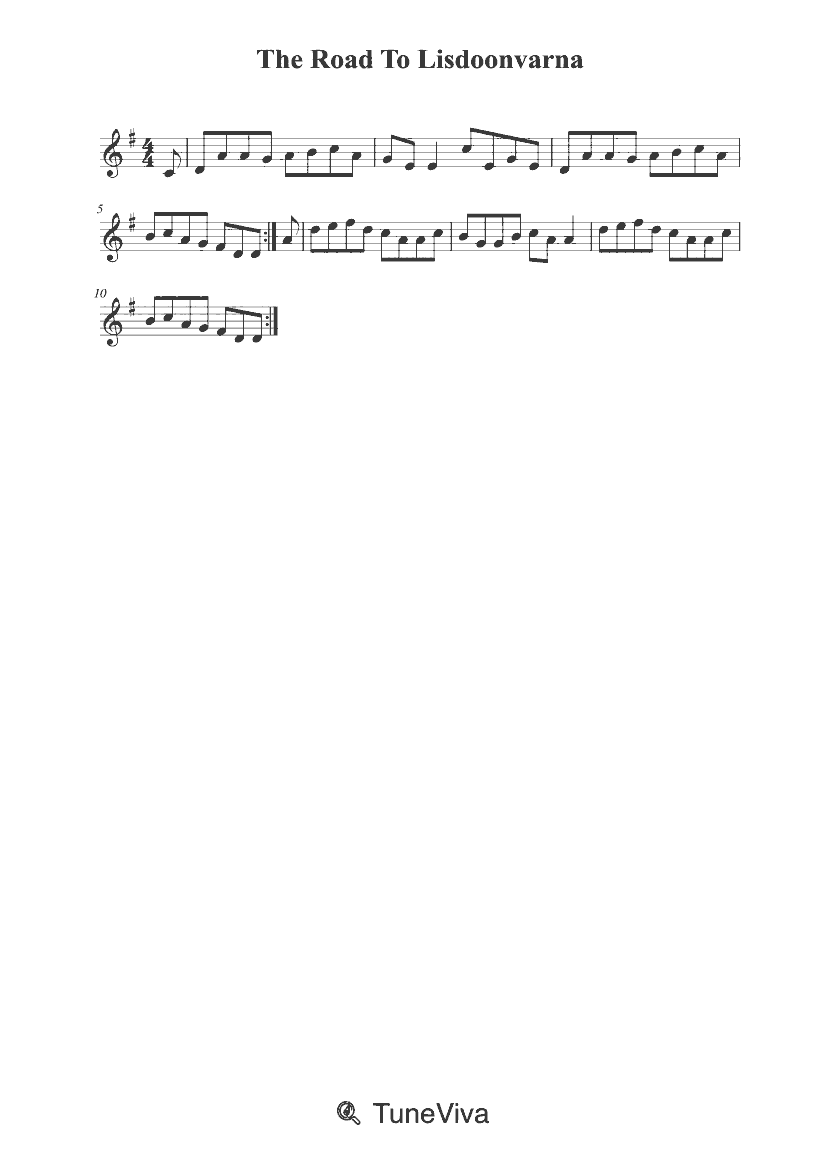
Misc tunes
40 sec · Score #131345
Open score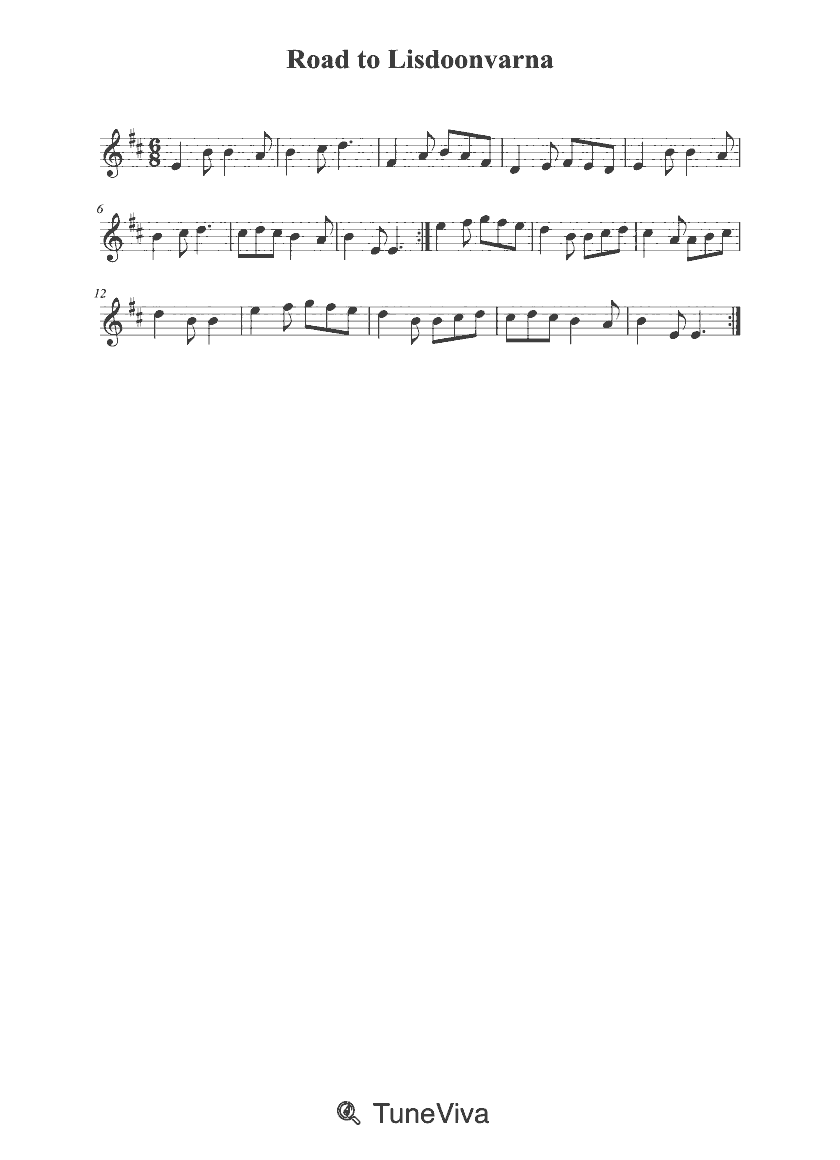
Misc tunes
30 sec
Open score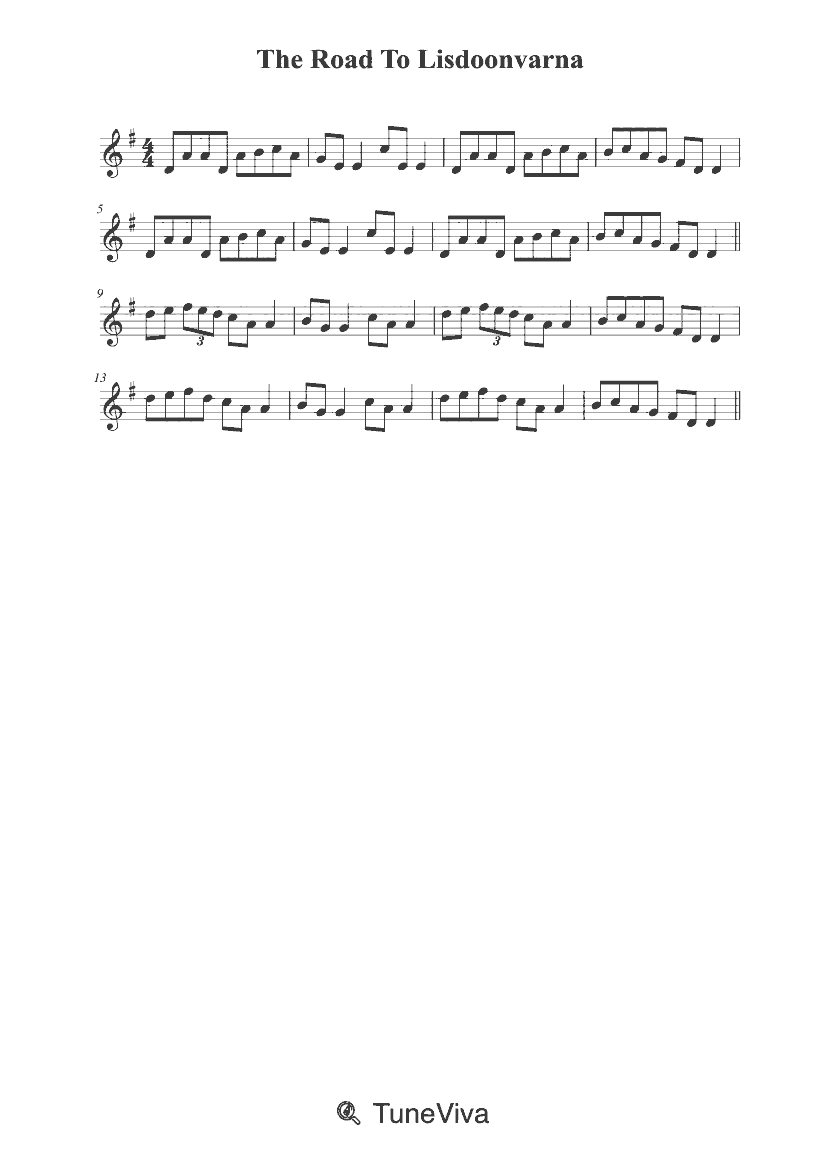
Misc tunes
32 sec
Open scorePage 1 of 3
One score is titled 'Road to Lisdoonvarna/Swallowtail Jig' and gives a single violoncello part in 6/8 with two sharps. A second score is a bass part in 12/8 with two sharps. A third is a four-part score for treble, alto, alto 5th and bass, also in 12/8, with opening signatures of two and three sharps. These are distinct arrangements, not interchangeable copies of one edition.
The scores open in 6/8 or 12/8; both are compound metres that group eighth notes in threes. A two-sharp signature belongs to D major or B minor, while a three-sharp signature belongs to A major or F-sharp minor. The available listings do not establish one authoritative key for the tune, so treat the signatures as details of individual arrangements.
A bass player should start with the score marked 'Bass', while a cellist can use the single violoncello part. For a mixed ensemble, the four-part treble, alto, alto 5th and bass score is the fullest arrangement shown. If you specifically want the tune paired with 'Swallowtail Jig', only the violoncello-titled score names both tunes; the pairing is not confirmed as a complete set by the score data.
Score parts: Violoncello. Catalogue duration 42 sec. Opening key signature: 2 sharps. Opening time signature: 6/8. Opening tempo: 180 BPM.
Score parts: Bass. Catalogue duration 24 sec. Opening key signature: 2 sharps. Opening time signature: 12/8.
Score parts: Treble, Alto, Alto 5th, Bass. Catalogue duration 24 sec. Opening key signature: 2 sharps; 3 sharps. Opening time signature: 12/8.
Three distinct presentations appear among the available scores: a single violoncello part titled 'Road to Lisdoonvarna/Swallowtail Jig', a bass part, and a four-part score for treble, alto, alto 5th and bass. They are separate arrangements, so compare instrumentation and notation before choosing one.
The available scores of The Road to Lisdoonvarna open in either 6/8 or 12/8. Both are compound metres that group beats in threes. The 6/8 version is a single violoncello part, while the 12/8 versions include a bass part and a four-part score.
Scores listed for The Road to Lisdoonvarna begin with two sharps or three sharps. Two sharps is the signature of D major or B minor; three sharps is the signature of A major or F-sharp minor. The listings do not establish a single authoritative key for the tune.
The available listings do not state the tune type directly. One score title pairs it with 'Swallowtail Jig', and the metres shown are 6/8 and 12/8, both compound; those details are compatible with jig repertoire, but they do not prove that The Road to Lisdoonvarna is classified as a jig.
The four-part score lists treble, alto, alto 5th and bass parts. Its opening signatures include two sharps and three sharps, so the parts may not all begin in the same key area; check each part before rehearsal.
One score is titled 'Road to Lisdoonvarna/Swallowtail Jig', which pairs the two tune names. The other listed versions name only The Road to Lisdoonvarna. The score data does not confirm whether the pairing is a full set or simply a title combining two tunes.