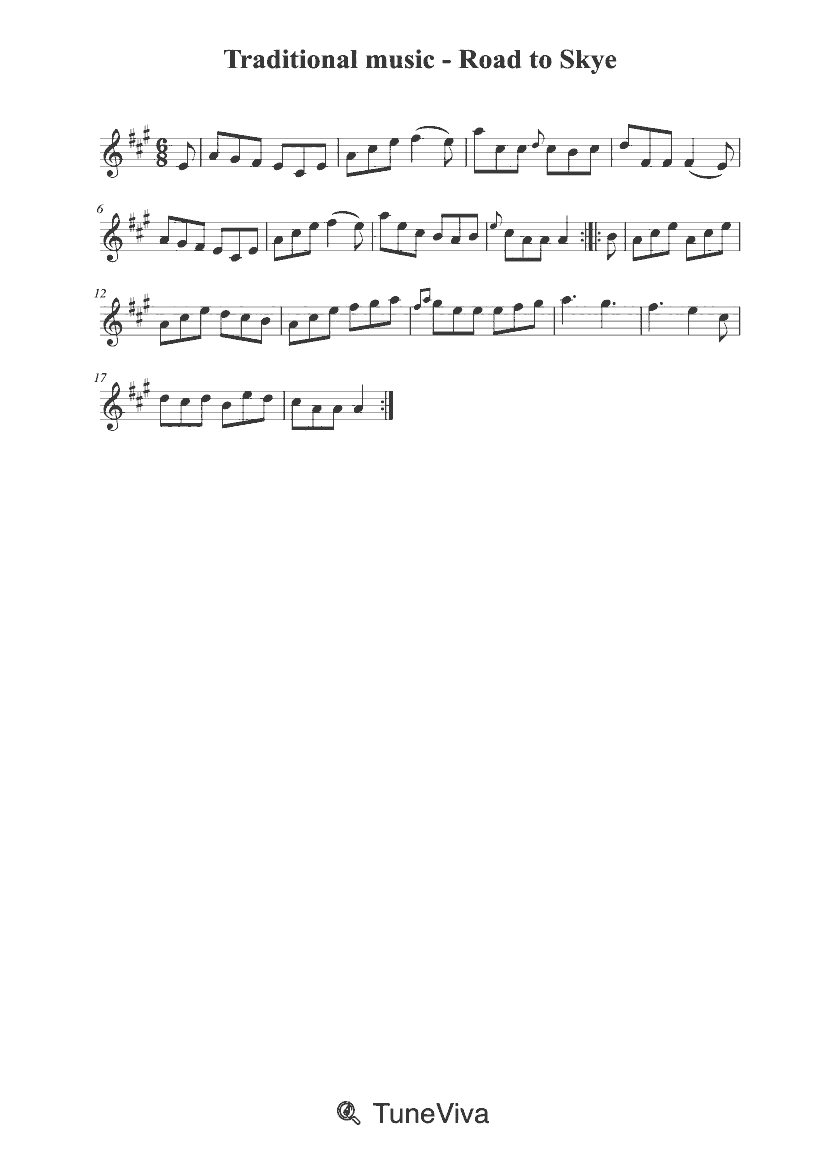
Traditional music - Road to Skye
Trad.-Buddy MacMaster Natalie MacMaster
24 sec · Score #127315
Open scoreThree scores are listed under “The Road to Skye” in this collection. Each opens in A major with three sharps and uses 6/8 time. Two entries carry the composer credit “Trad.-Buddy MacMaster Natalie MacMaster”; the third has no composer listed. No supplied source confirms an author, tune type, or original instrumentation, so the guidance below stays close to what the scores themselves show.
Scores 1–20 of 21
Trad.-Buddy MacMaster Natalie MacMaster
24 sec · Score #127315
Open score
Misc tunes
18 sec · Score #122405
Open score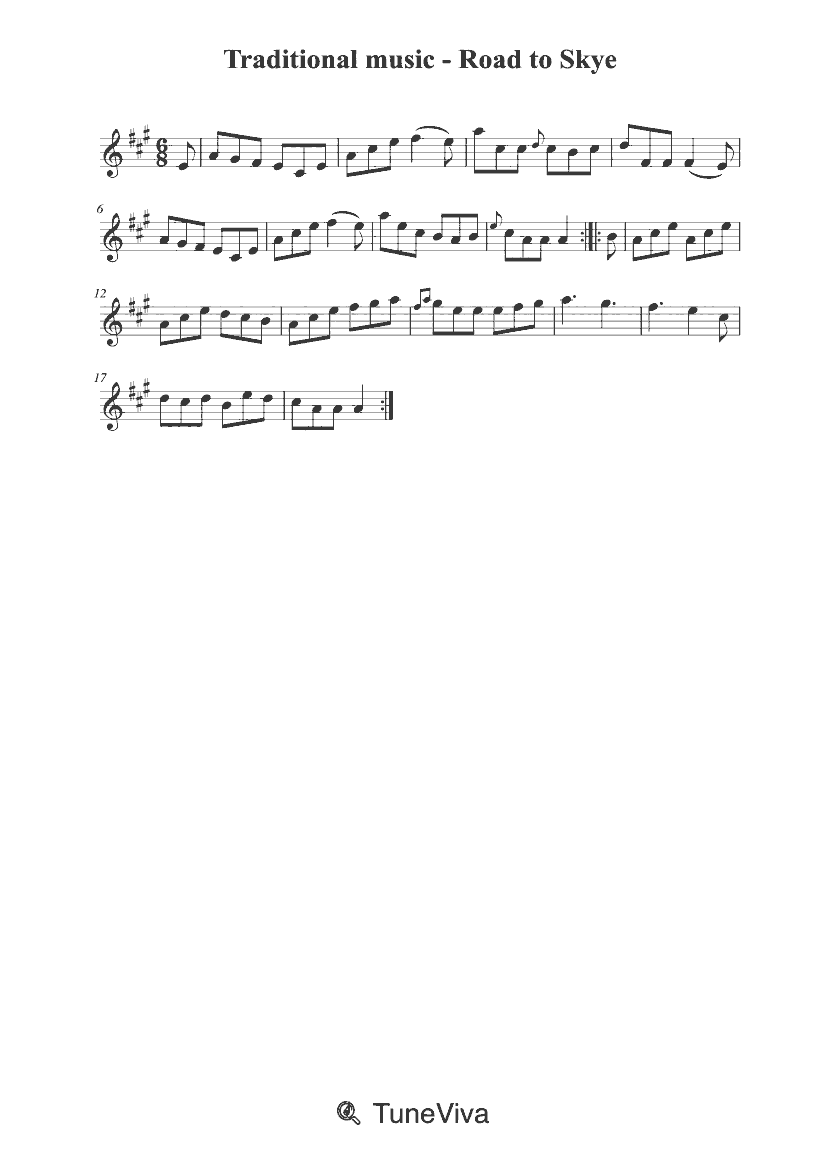
Trad.-Buddy MacMaster Natalie MacMaster
24 sec · Score #116145
Open score
Misc tunes
24 sec · Score #45413
Open score
Misc tunes
29 sec
Open score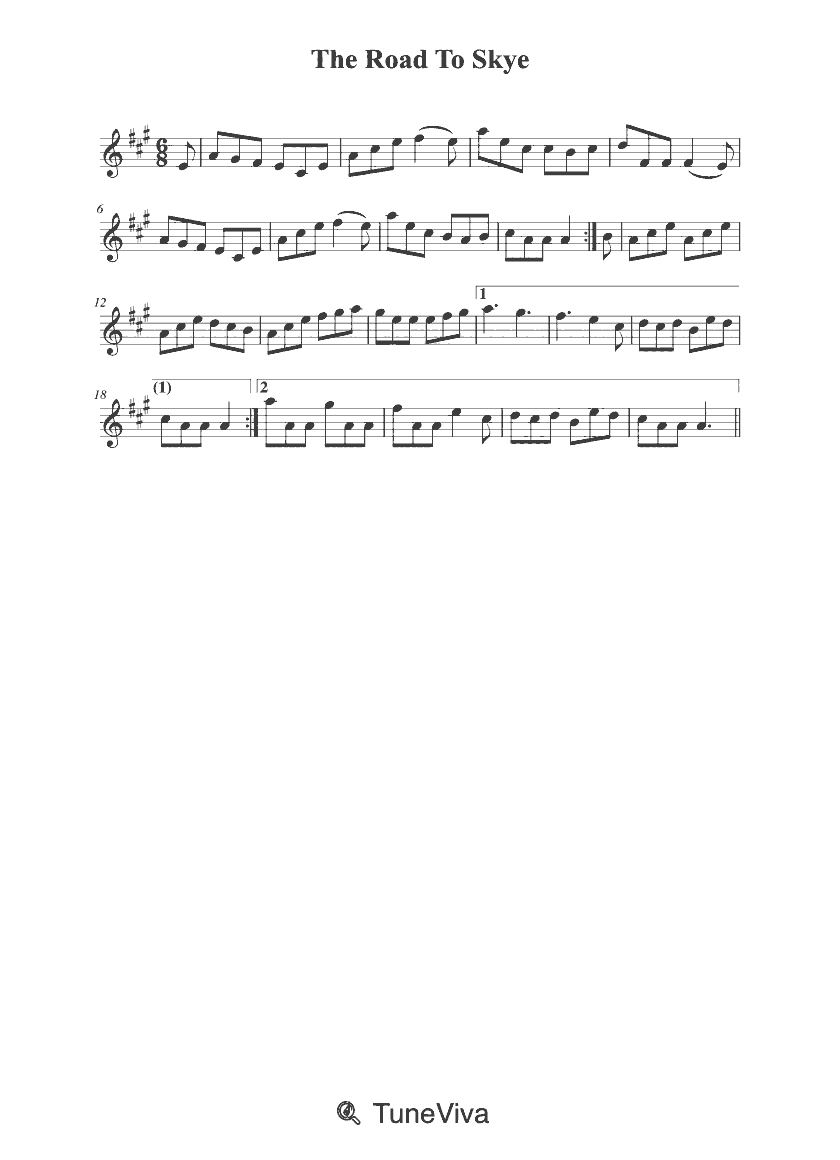
Misc tunes
30 sec · Score #91043
Open score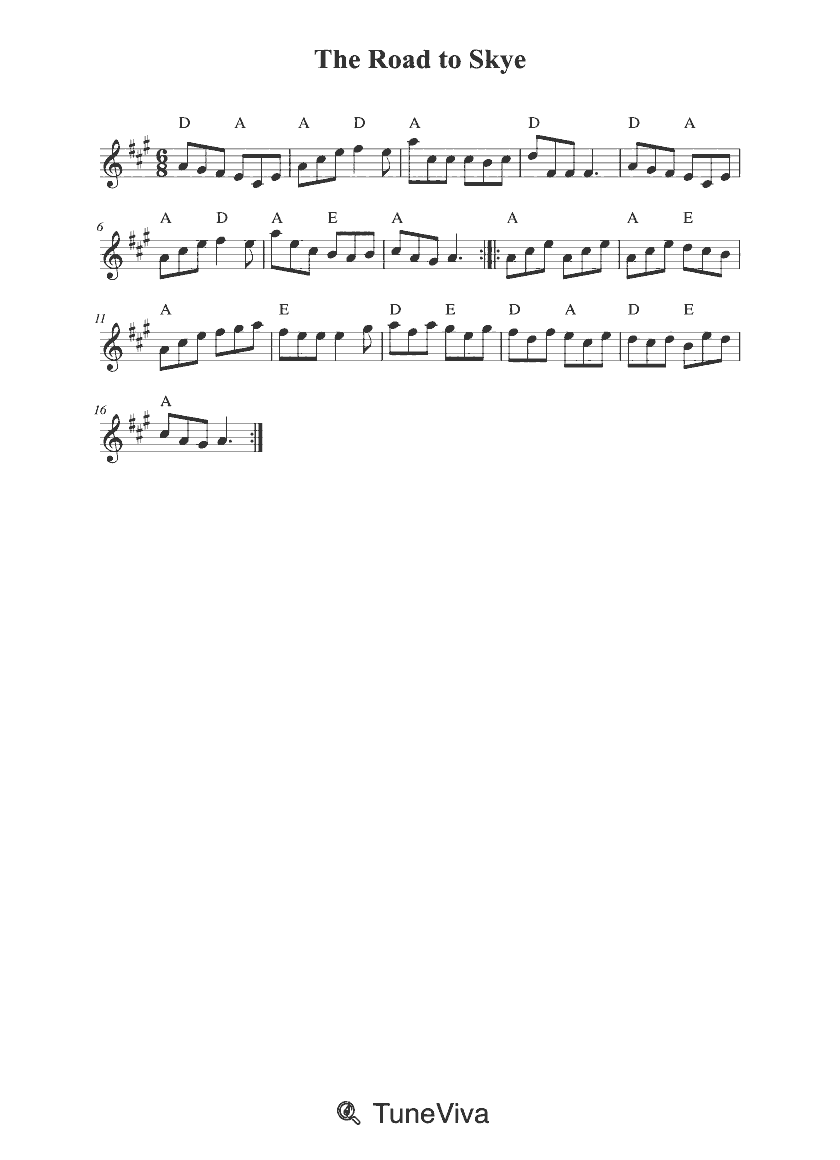
Misc tunes
24 sec · Score #81067
Open score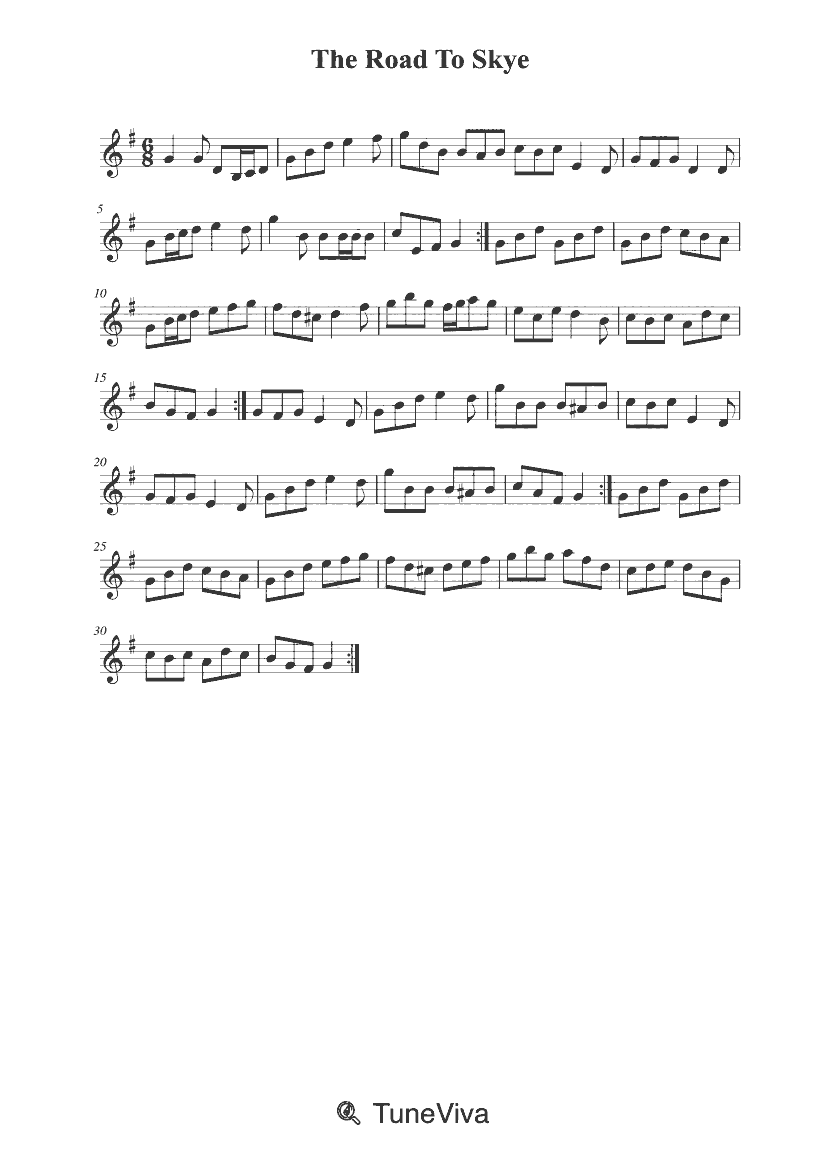
Misc tunes
1 min 22 sec
Open score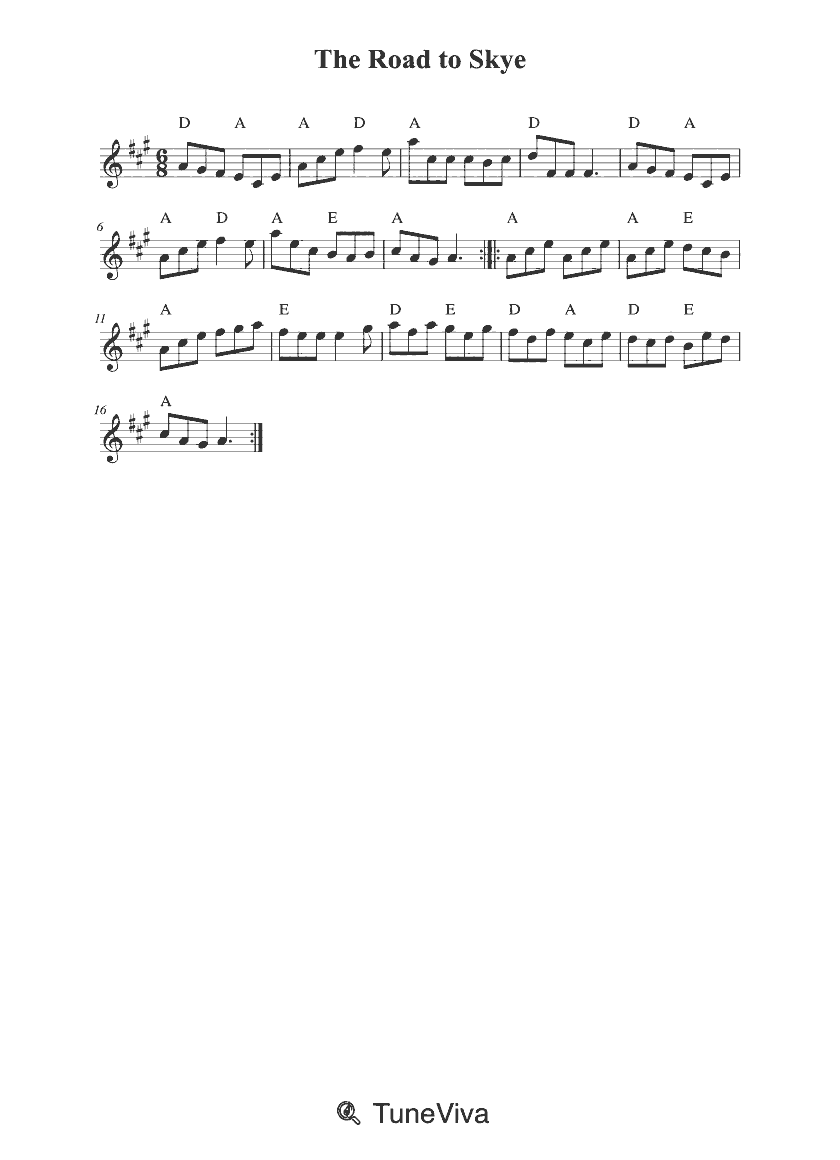
Misc tunes
24 sec · Score #135520
Open score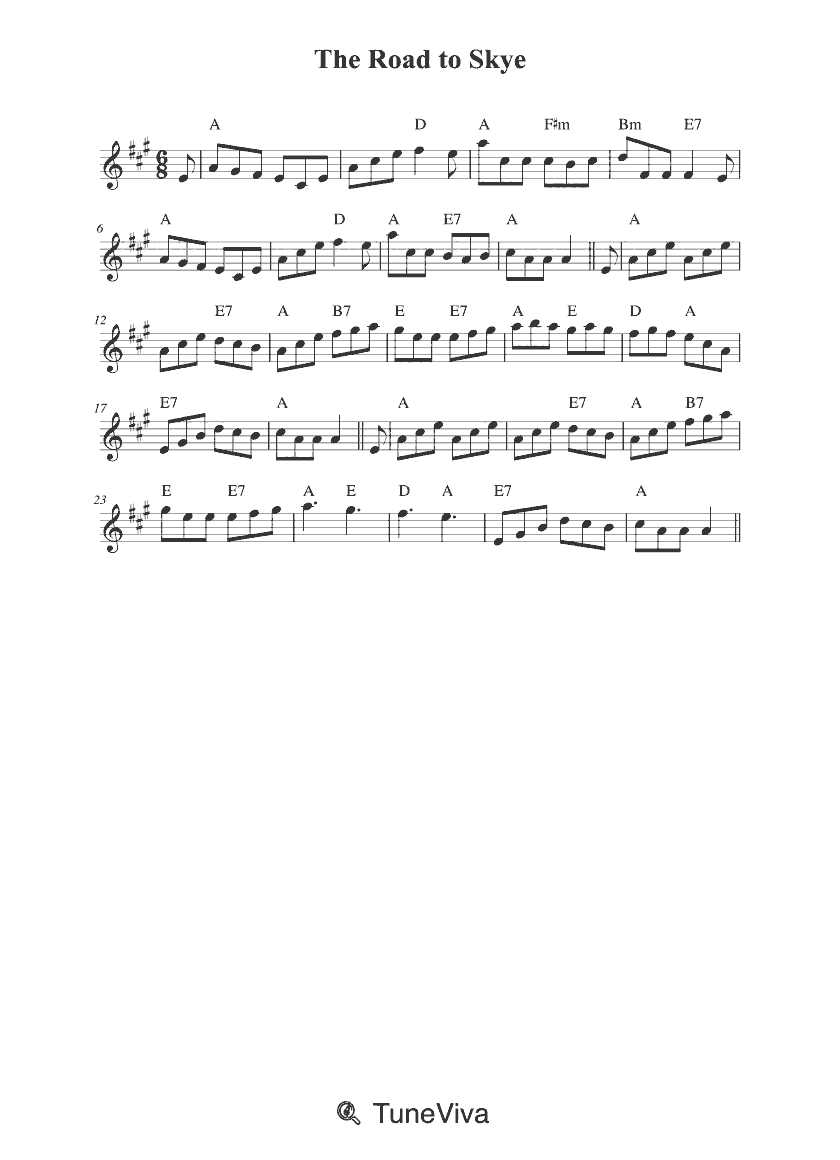
Misc tunes
18 sec · Score #138556
Open score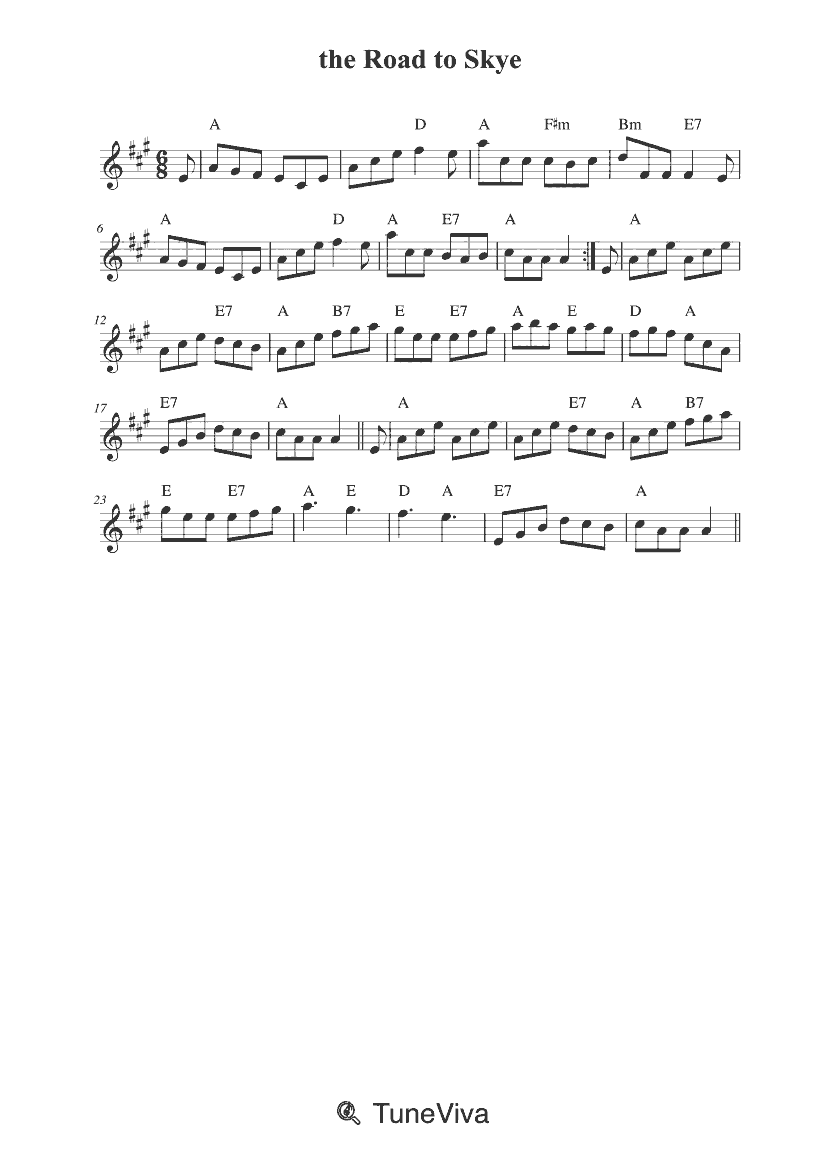
Misc tunes
24 sec · Score #64769
Open score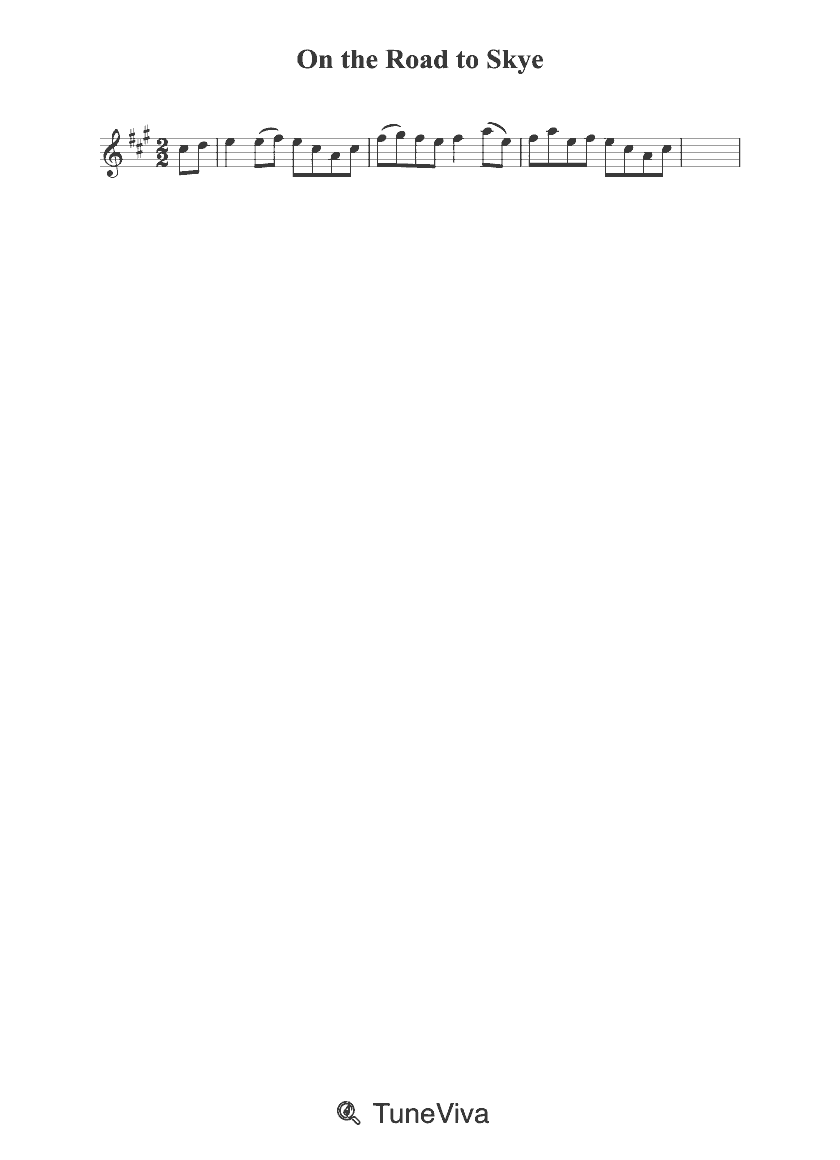
Misc tunes
15 sec
Open score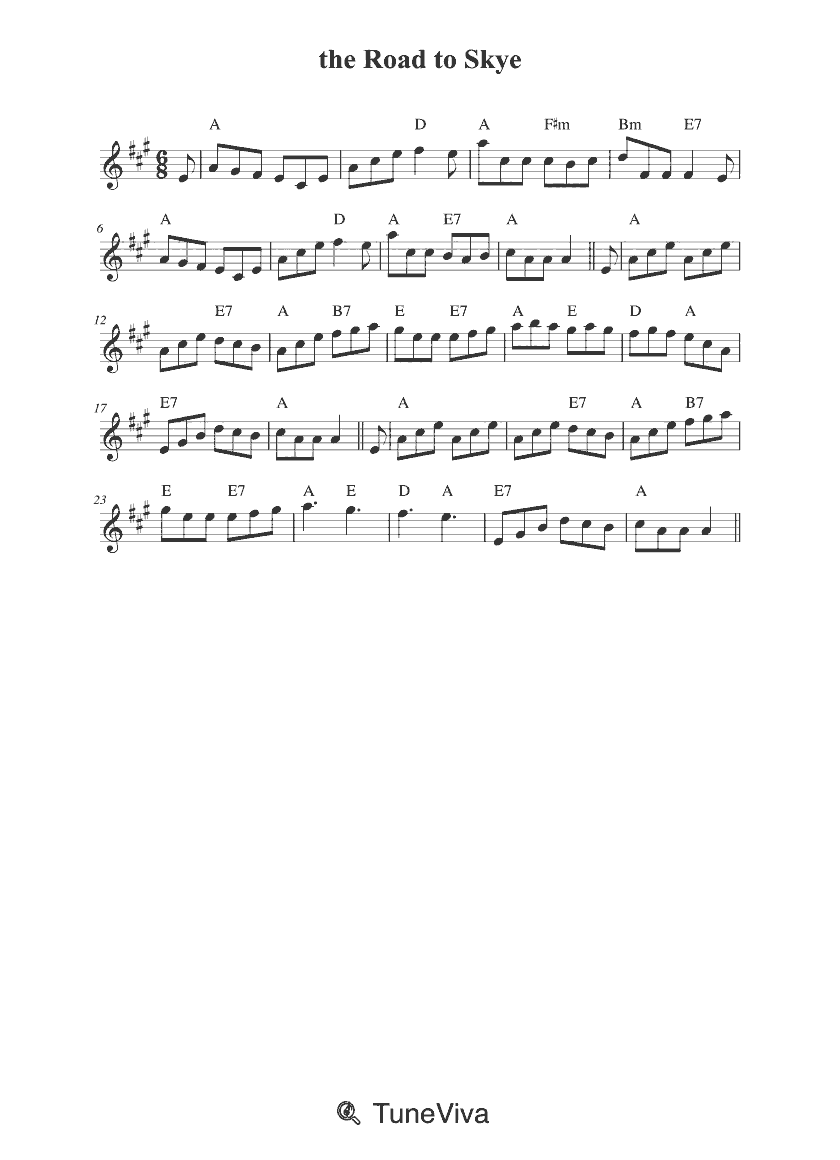
Misc tunes
18 sec · Score #215002
Open score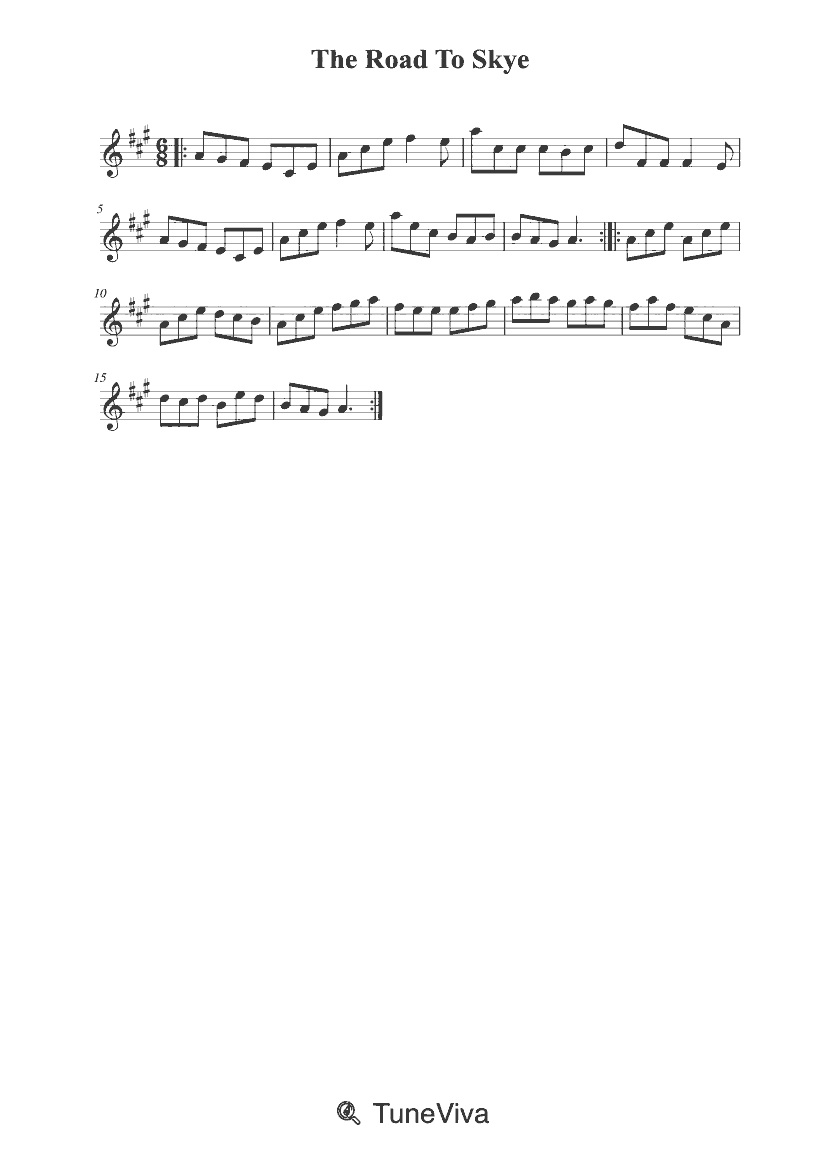
Misc tunes
24 sec · Score #216407
Open score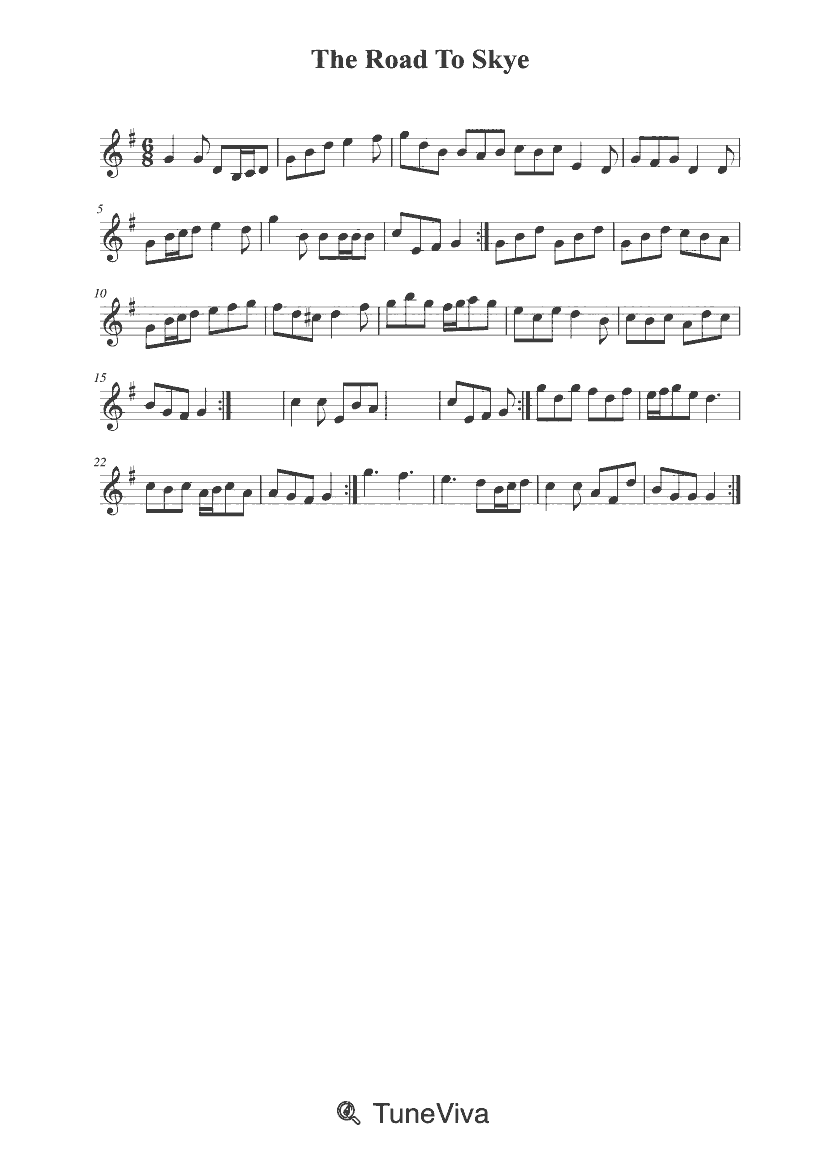
Misc tunes
1 min 30 sec
Open score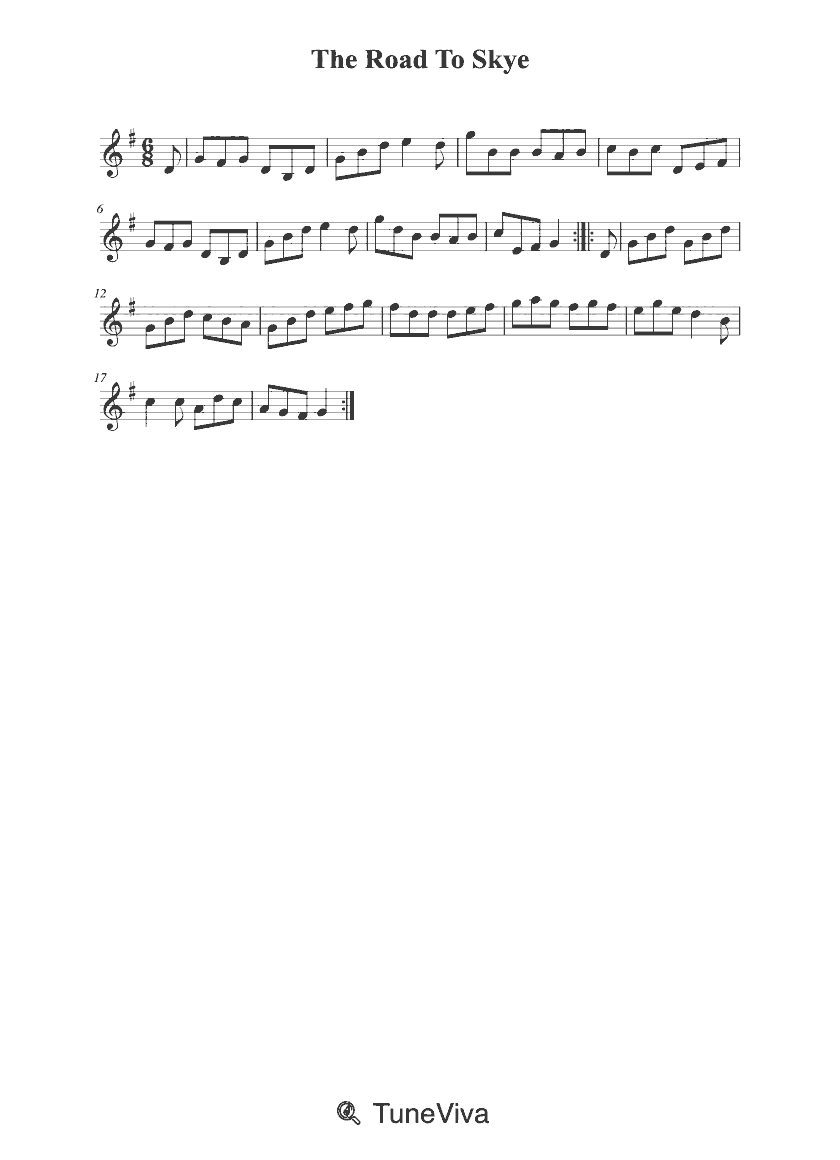
Misc tunes
24 sec · Score #74380
Open score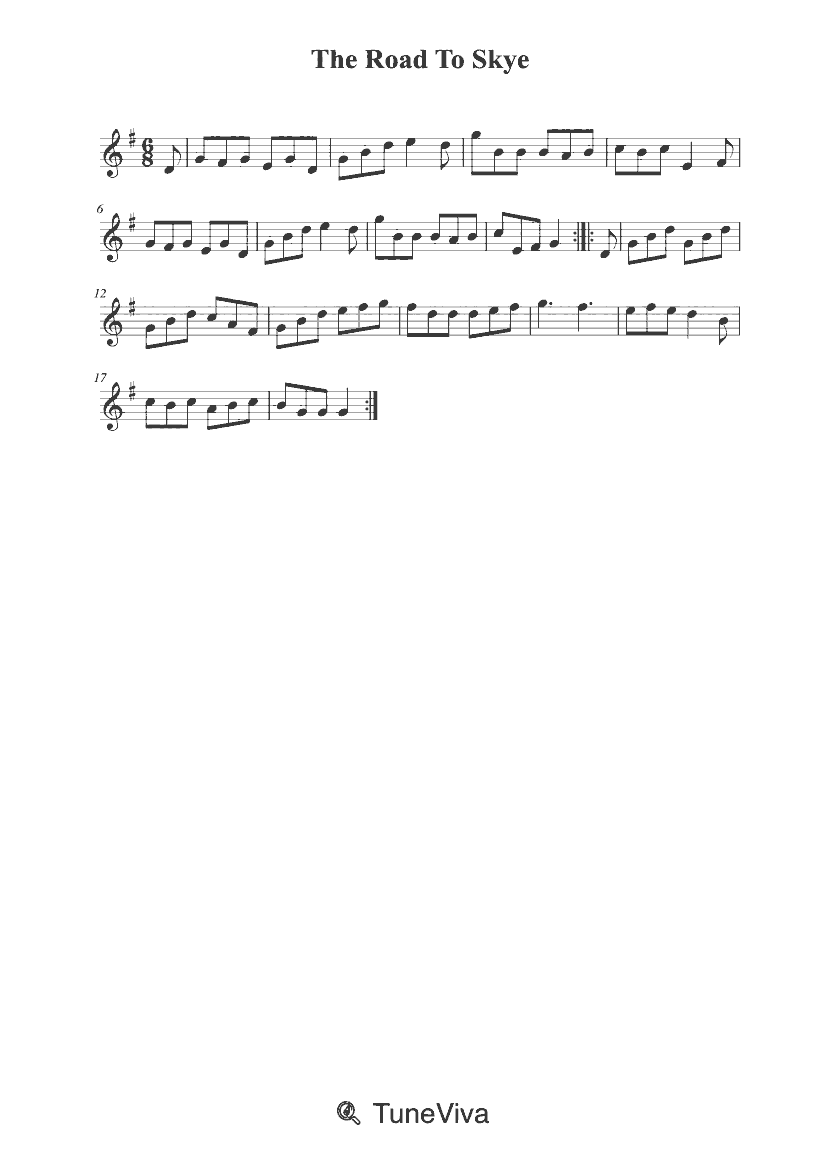
Misc tunes
24 sec · Score #85895
Open score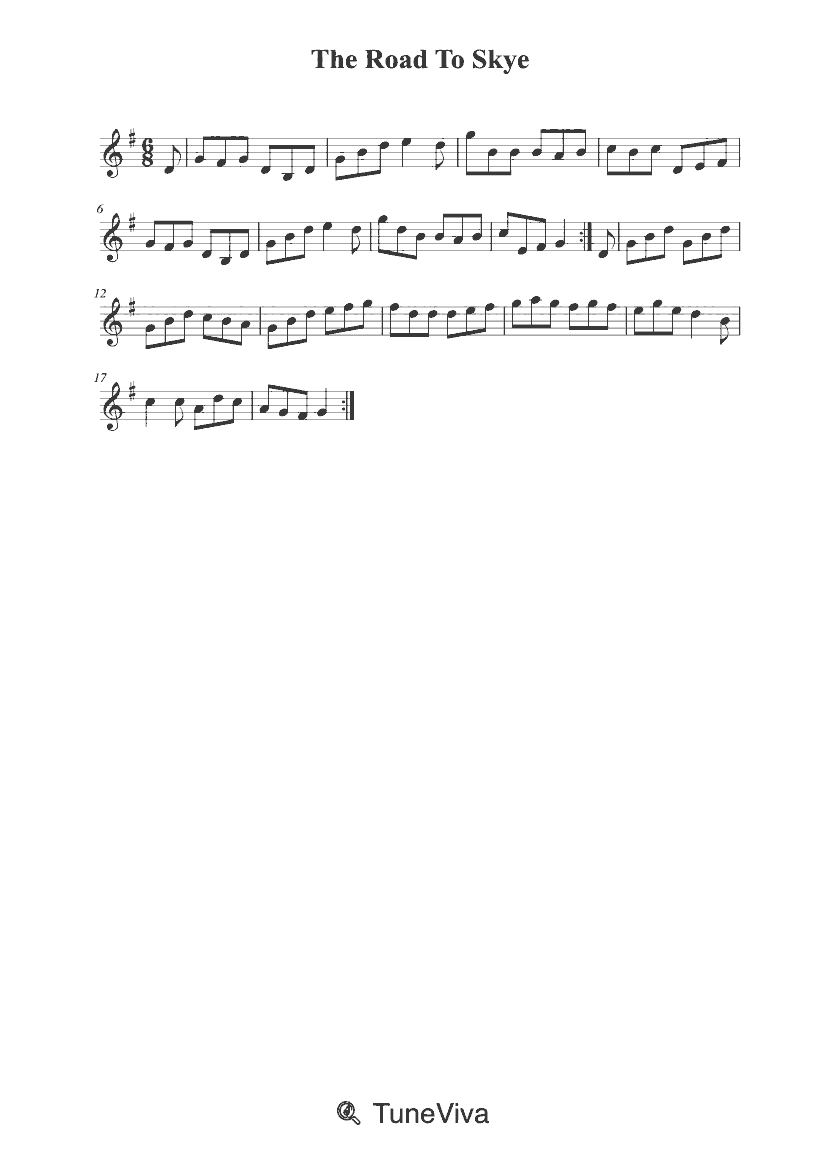
Misc tunes
30 sec · Score #97272
Open score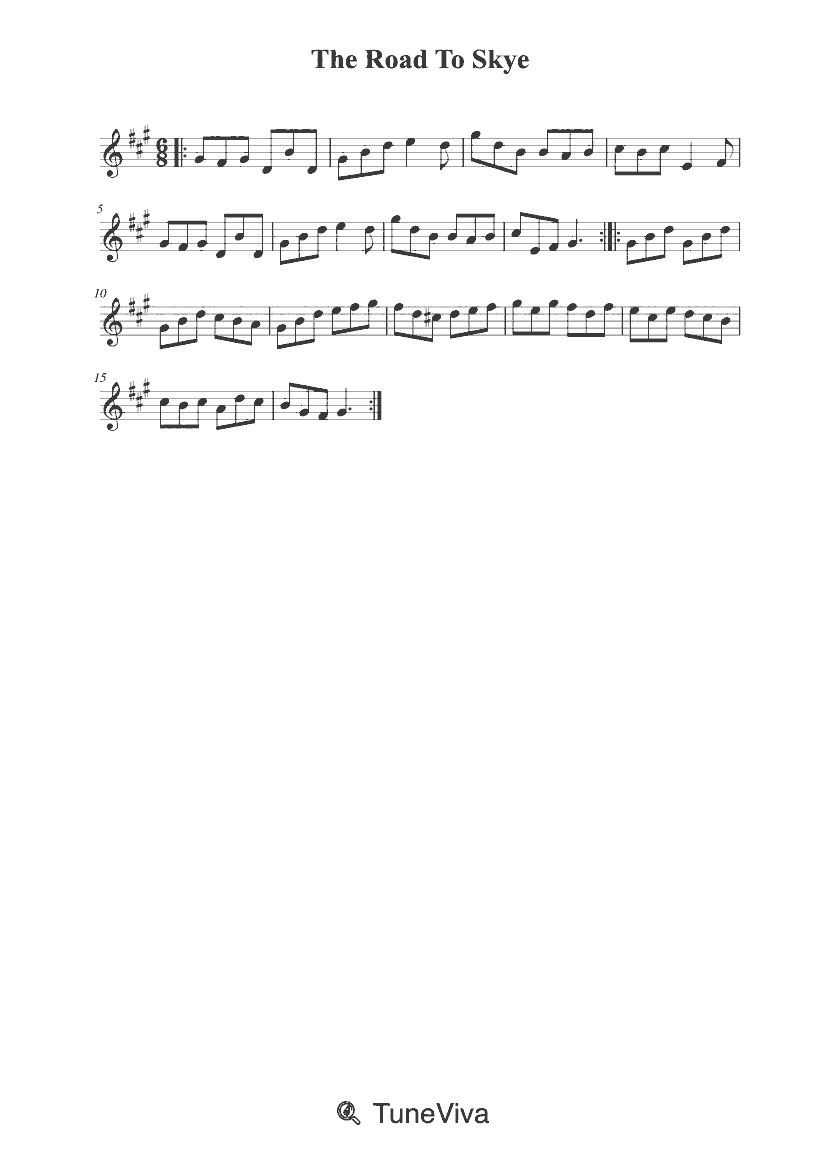
Misc tunes
24 sec · Score #172494
Open score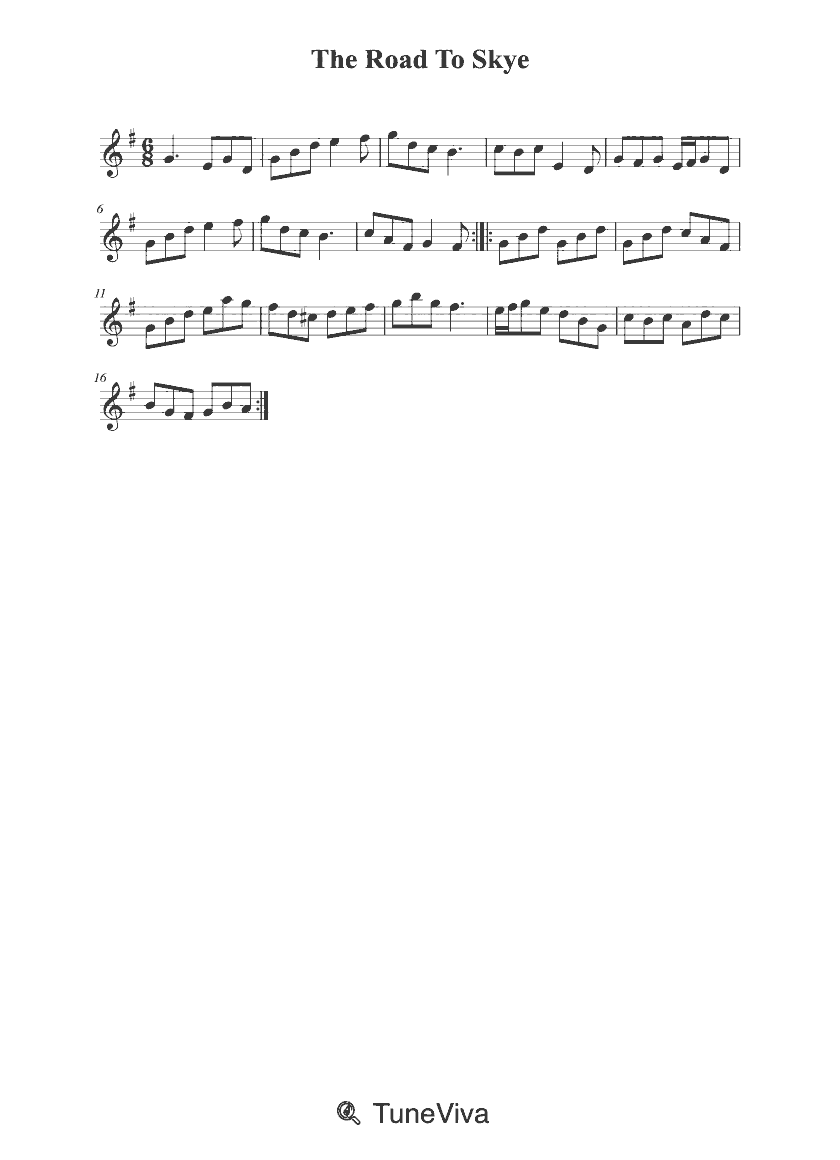
Misc tunes
24 sec · Score #152727
Open scorePage 1 of 2
All three scores listed as “The Road to Skye” open in A major with three sharps and a 6/8 time signature. Two entries contain 176 notes and run to roughly 24 seconds; the third contains 130 notes and runs to roughly 18 seconds. Those figures describe the individual scores rather than a definitive performing length, and they do not by themselves show that the shorter score is a simplified or abridged setting.
Two scores list “Trad.-Buddy MacMaster Natalie MacMaster” in the composer field, while the third lists no composer. The credit combines a traditional attribution with two names, but the available record does not explain what role either musician had—composition, arrangement, recording, or transmission. Treating “The Road to Skye” as traditional is the safest description until a published tune collection or a recording credit supplies a named author.
Because the key and metre are consistent across the three entries, the practical differences are length and note count rather than transposition. A player wanting the fuller listed setting might start with one of the 176-note scores; a shorter setting may suit a first read-through or a set where the tune is played once or twice. Compare the openings directly before deciding, since note counts alone say nothing about difficulty, ornamentation, or bowing.
A 6/8 signature is compound duple metre: two main beats to the bar, each dividing into three. In traditional British and Irish repertoire that metre is shared by jigs and by many marches, so the signature alone does not settle what kind of tune “The Road to Skye” is. A recorded performance or a dance-tune index is the more reliable way to establish whether the tune is played as a jig, a march, or something else.
Catalogue duration 24 sec. Opening key signature: 3 sharps (A major). Opening time signature: 6/8.
Catalogue duration 18 sec. Opening key signature: 3 sharps (A major). Opening time signature: 6/8.
Catalogue duration 24 sec. Opening key signature: 3 sharps (A major). Opening time signature: 6/8.
A named composer is not confirmed by the available material. Two scores list “Trad.-Buddy MacMaster Natalie MacMaster” and the third lists no composer. The credit does not explain whether either named musician composed, arranged, recorded, or transmitted the tune, so “traditional” remains the safest attribution until a published collection or recording credit supplies an author.
The available scores of “The Road to Skye” open in A major, with a key signature of three sharps, and in 6/8 time. Because all three entries share that key and metre, transposition is not the main difference between them.
The tune type is not documented in the available material. A 6/8 signature is compound duple metre, used for jigs and marches in traditional repertoire, so the metre alone does not establish whether “The Road to Skye” is a jig. A recorded performance or a dance-tune index would be a better guide.
The three scores share A major and 6/8, so their listed differences are size and duration. Two entries contain 176 notes and run to about 24 seconds; the third contains 130 notes and runs to about 18 seconds. Those figures describe individual scores, not a definitive performing length, and they do not prove which setting is more ornamented or closer to a particular player’s version.
The scores list “Trad.-Buddy MacMaster Natalie MacMaster” in the composer field, which indicates an association between the tune and the two named musicians but not the nature of that association. The available material does not state whether either person composed, arranged, recorded, or passed on “The Road to Skye.” Confirming the link would require a recording credit or a published collection that names the tune alongside them.
The original instrumentation of “The Road to Skye” is not specified in the available record. The credits name Buddy MacMaster and Natalie MacMaster, but the scores do not state a scoring, so a melody instrument should be chosen by checking the individual score before assuming an instrument.