
The Sally Gardens Irish Folk Tune
Irish Folk Tune
Voice; Piano · 2 min 38 sec
Open scoreThe Sally Gardens sheet music is listed here in several arrangements, including a voice-and-piano setting and single-line versions that open in D major. The scores differ in key, scoring and tempo information, so compare the details of each listing before choosing a version to play or sing. One voice-and-piano arrangement credits W.B. Yeats as lyricist and opens with five flats.
Scores 1–20 of 35
Irish Folk Tune
Voice; Piano · 2 min 38 sec
Open score
Traditional
1 min 4 sec
Open score
Misc tunes
32 sec · Score #189435
Open score
Misc tunes
4 min 19 sec
Open score
traditional
1 min 4 sec
Open score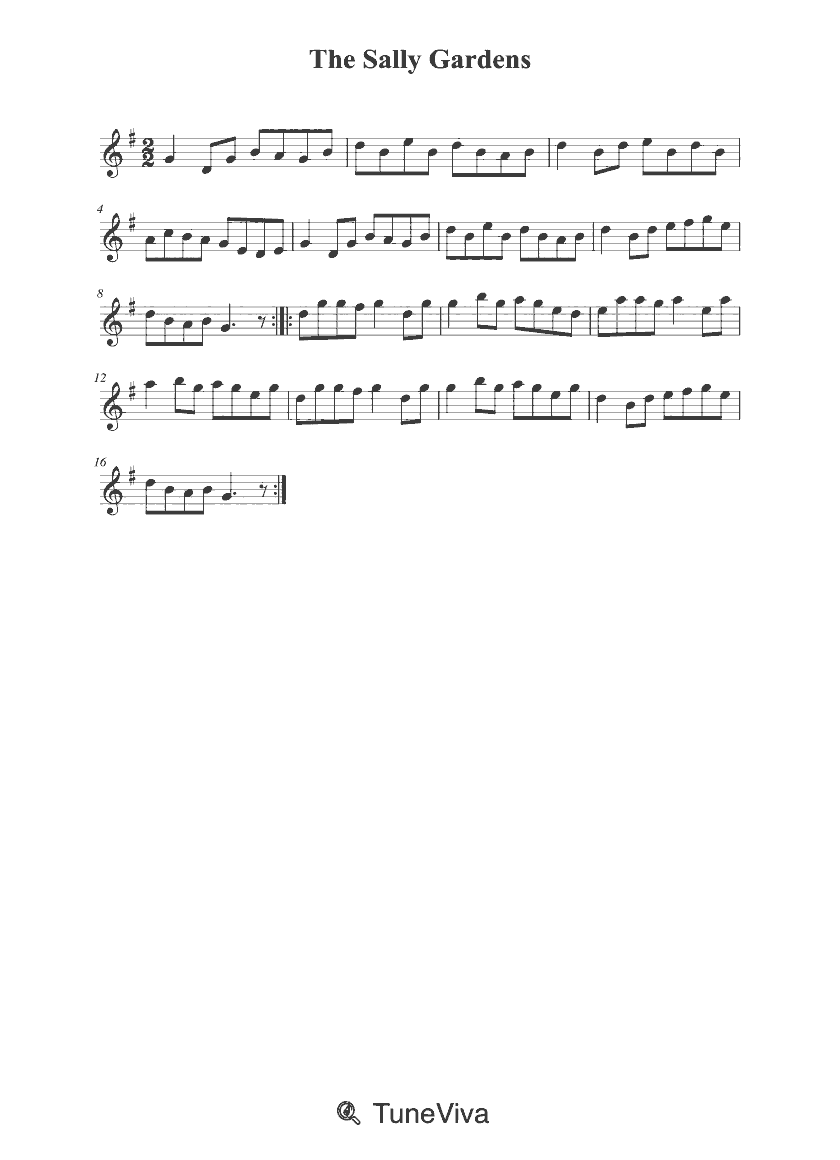
Misc tunes
2 min 7 sec · Score #246518
Open score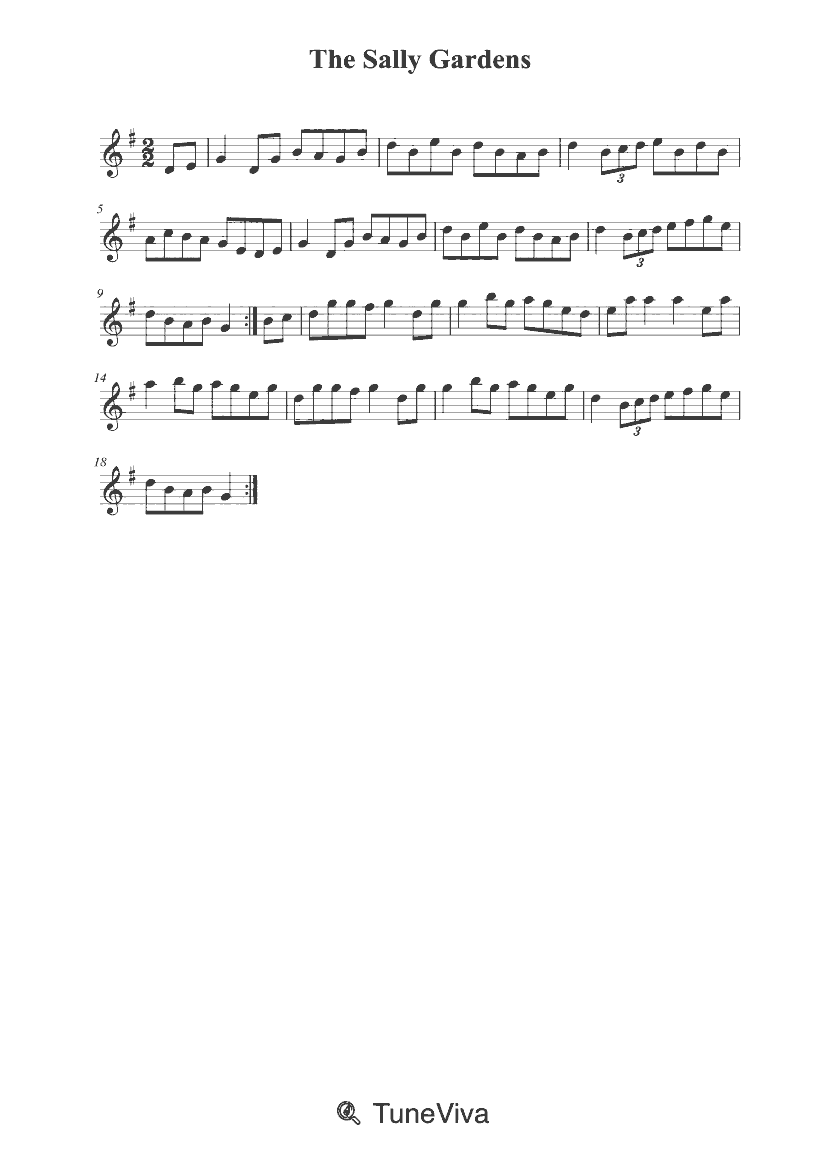
Misc tunes
2 min 40 sec · Score #125070
Open score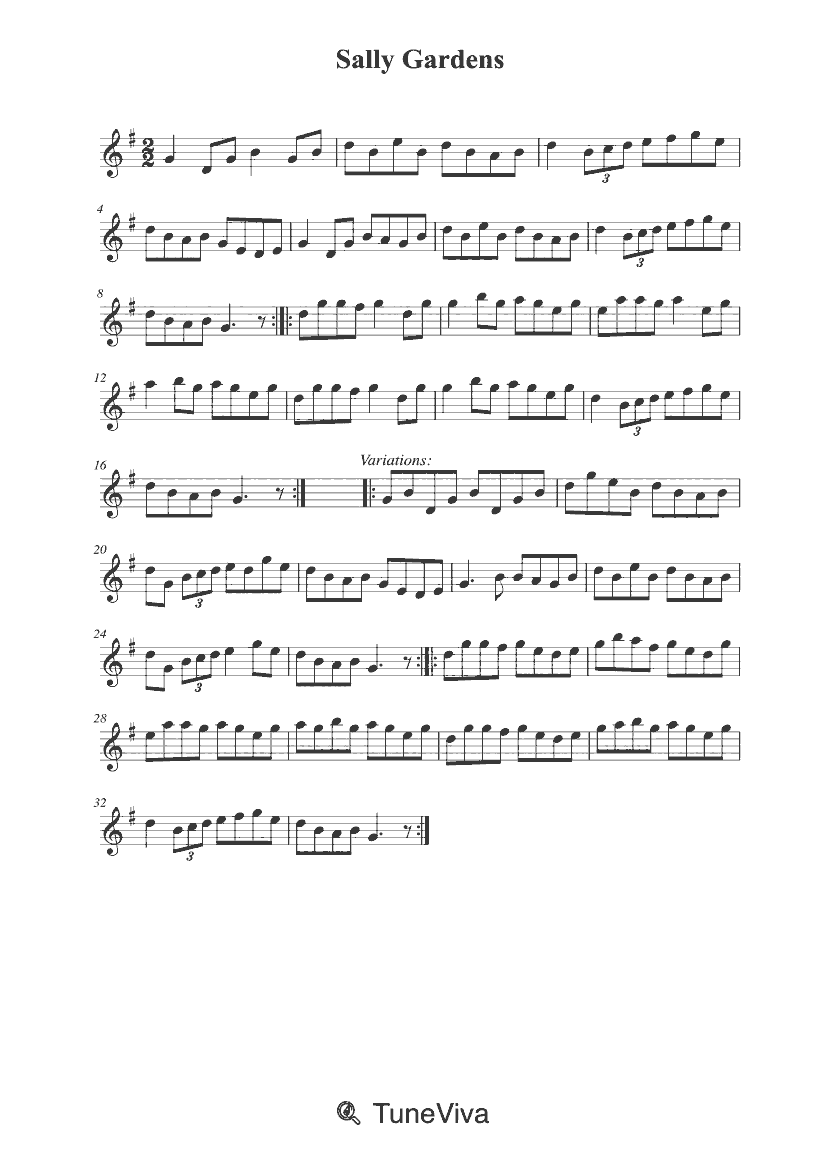
Misc tunes
4 min 19 sec
Open score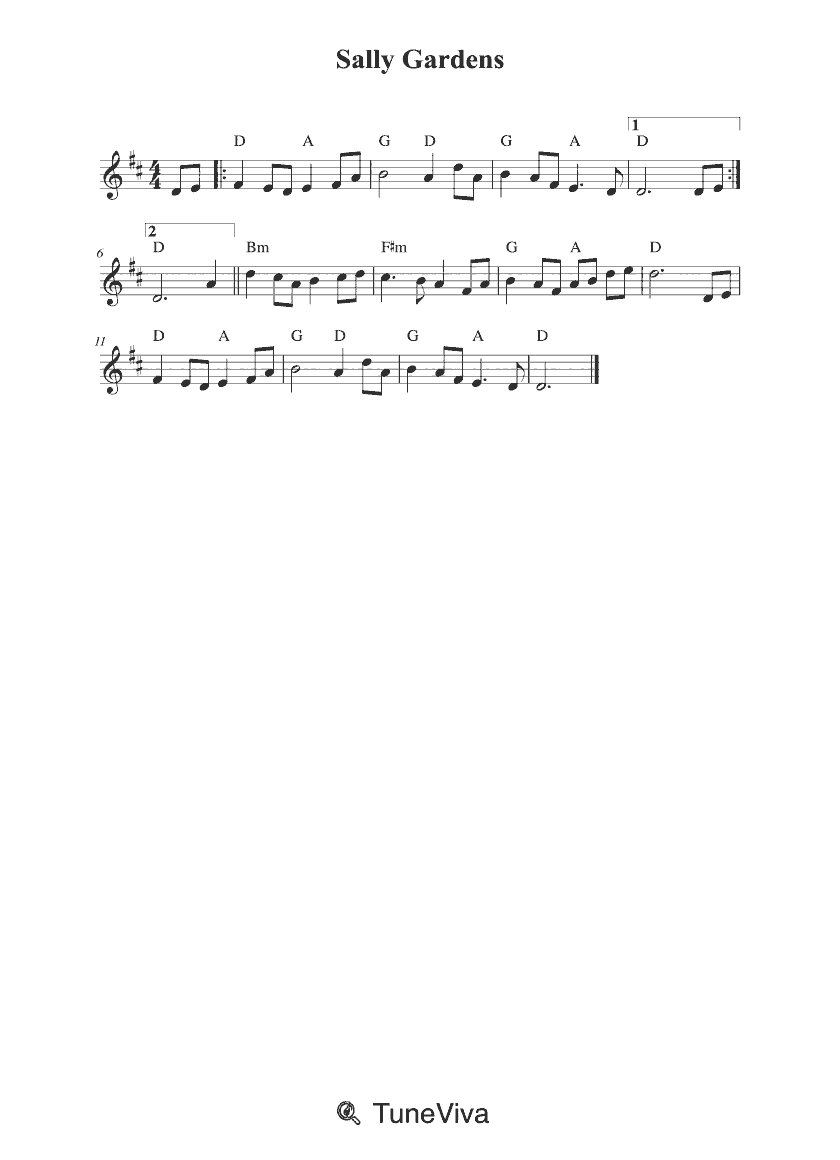
Misc tunes
32 sec · Score #67227
Open score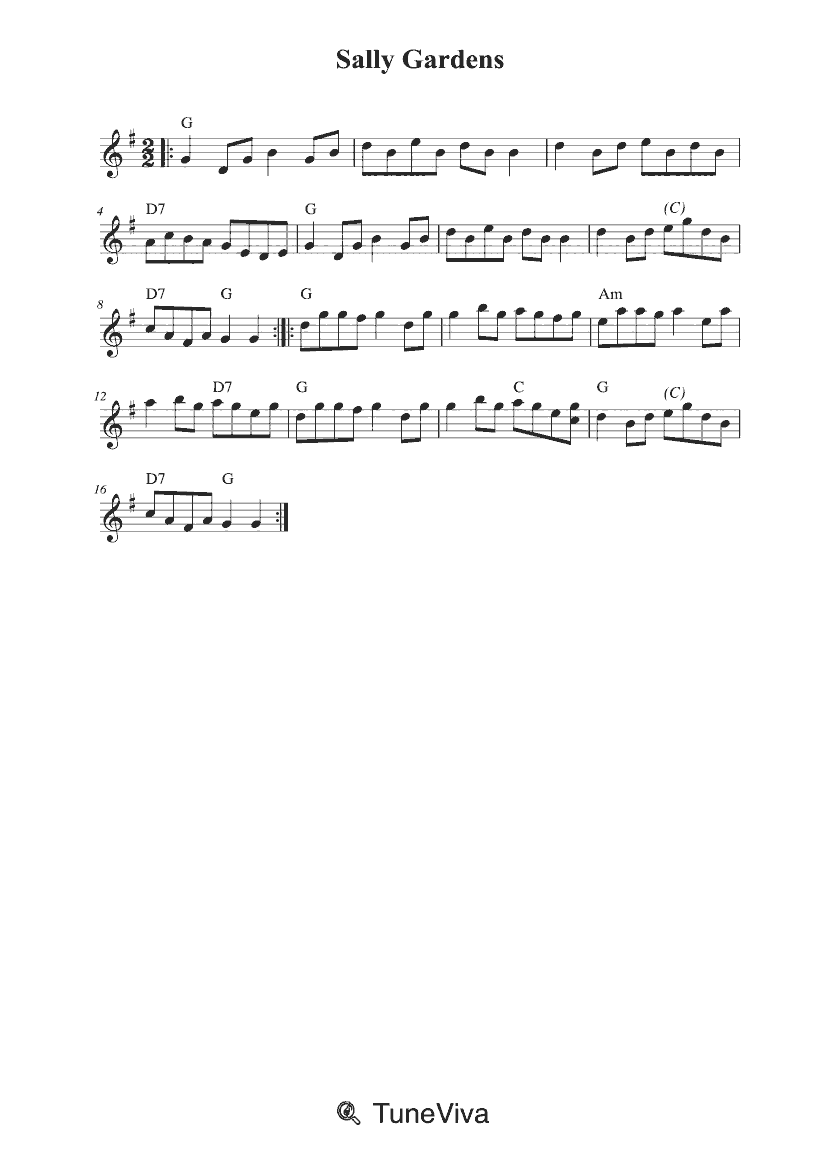
Misc tunes
2 min 8 sec
Open score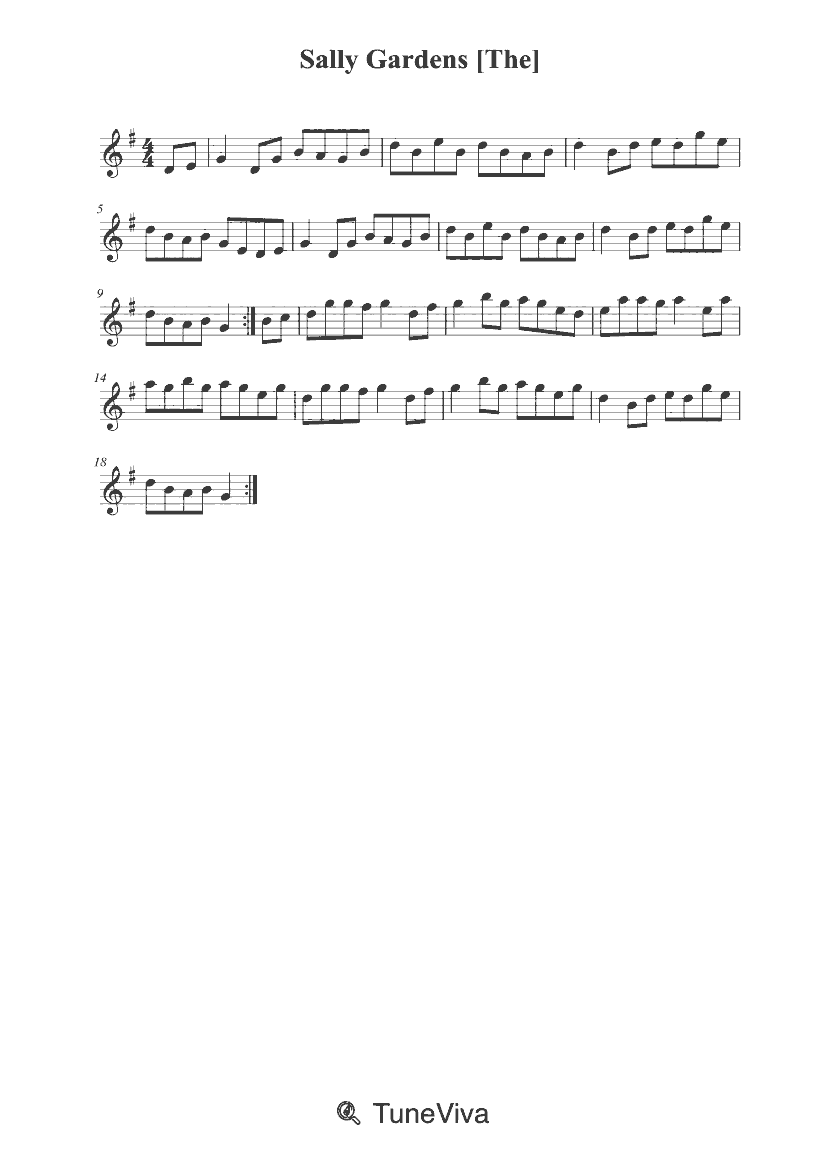
Misc tunes
1 min 20 sec · Score #224400
Open score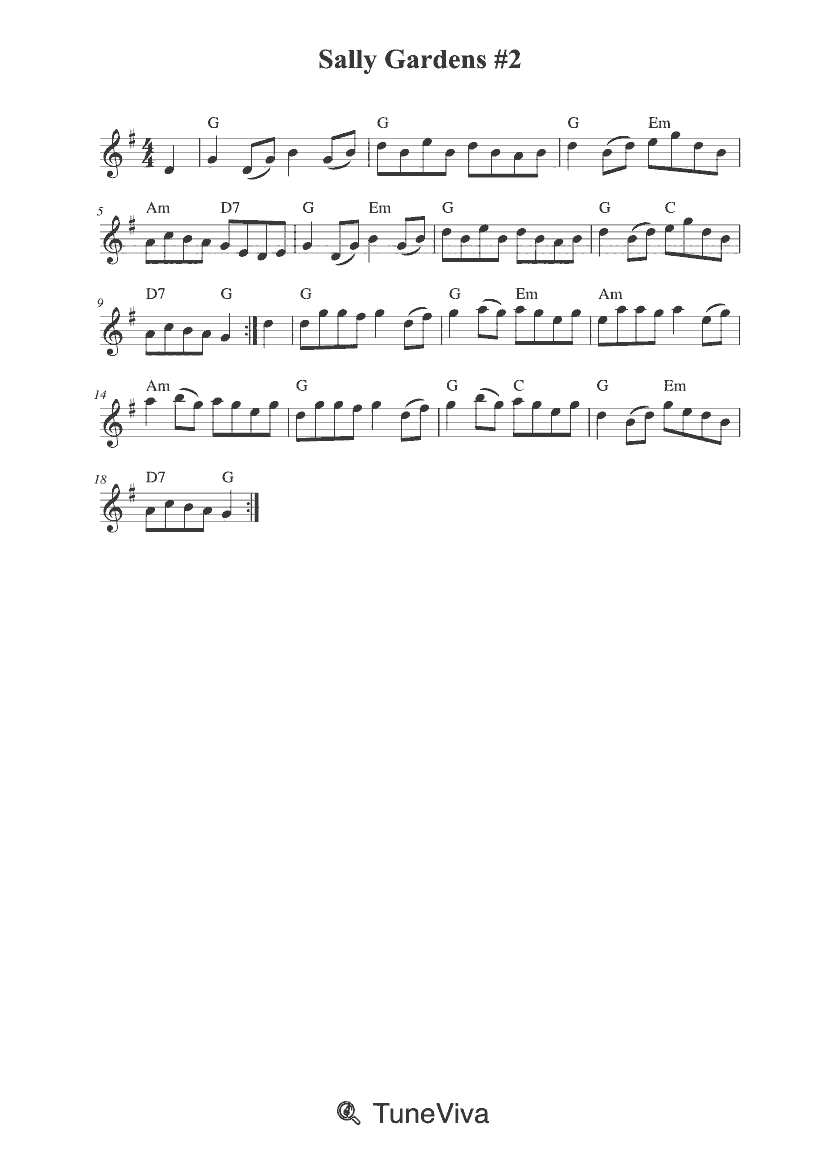
Joe Buchanan's Scottish Tome - Page 184.1
1 min 20 sec
Open score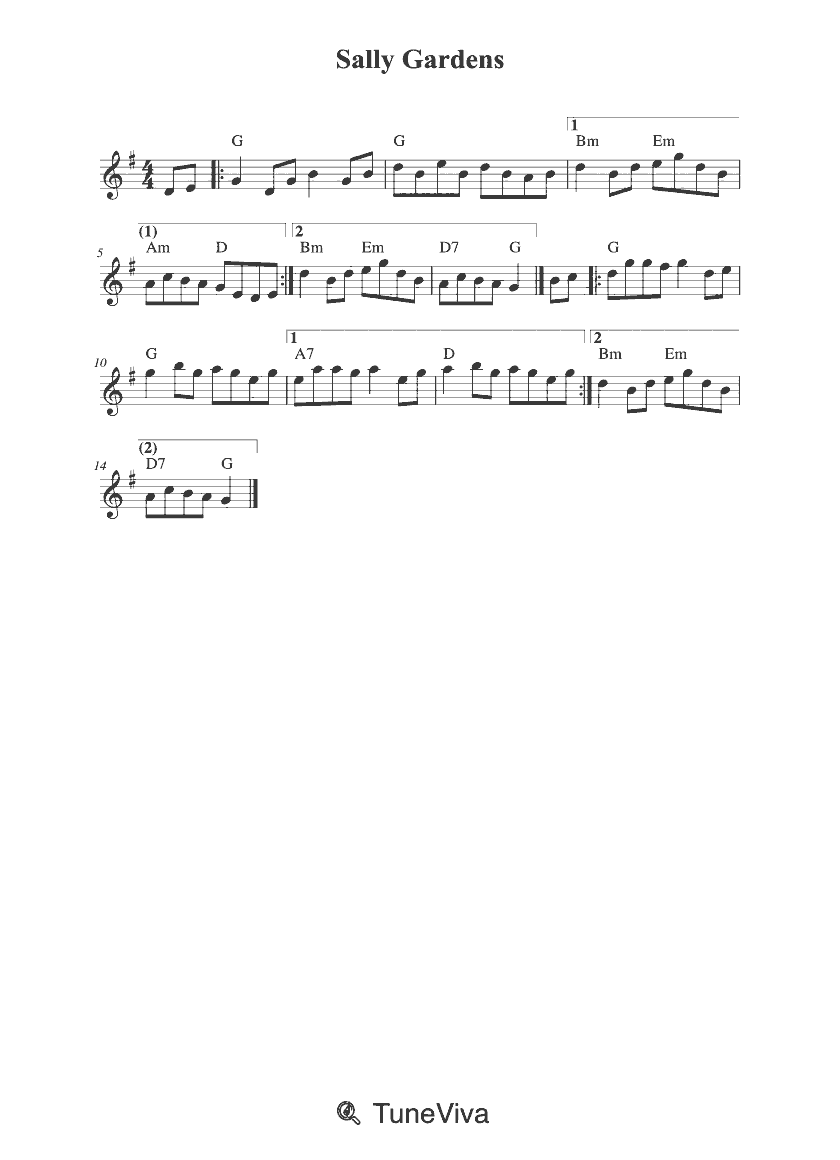
Misc tunes
32 sec · Score #79396
Open score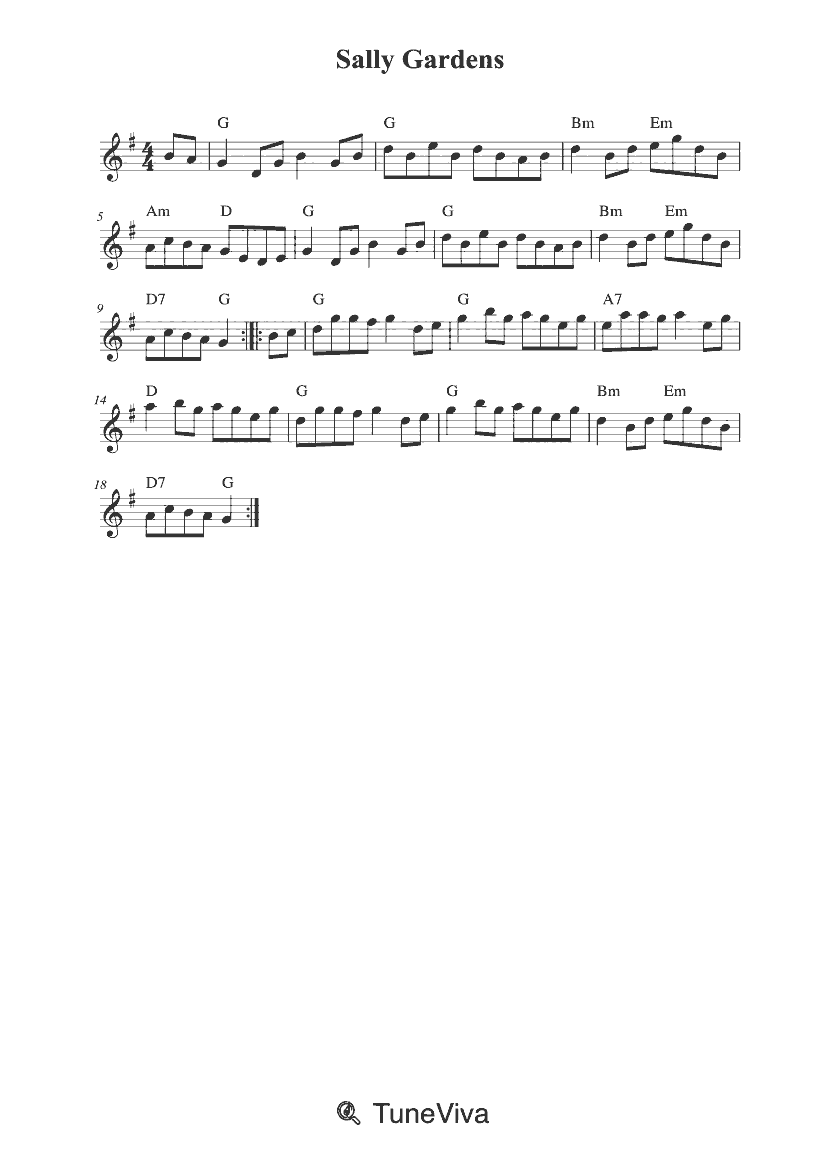
Misc tunes
1 min 4 sec
Open score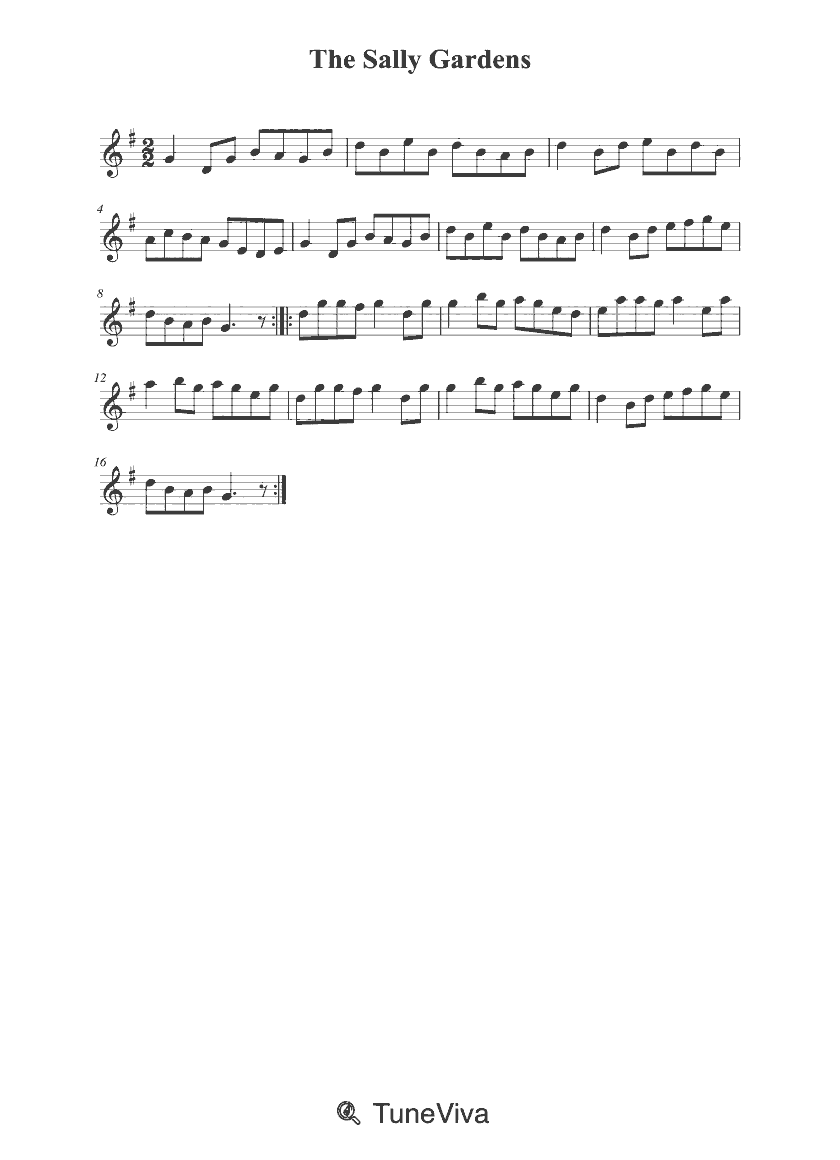
Misc tunes
2 min 7 sec · Score #123439
Open score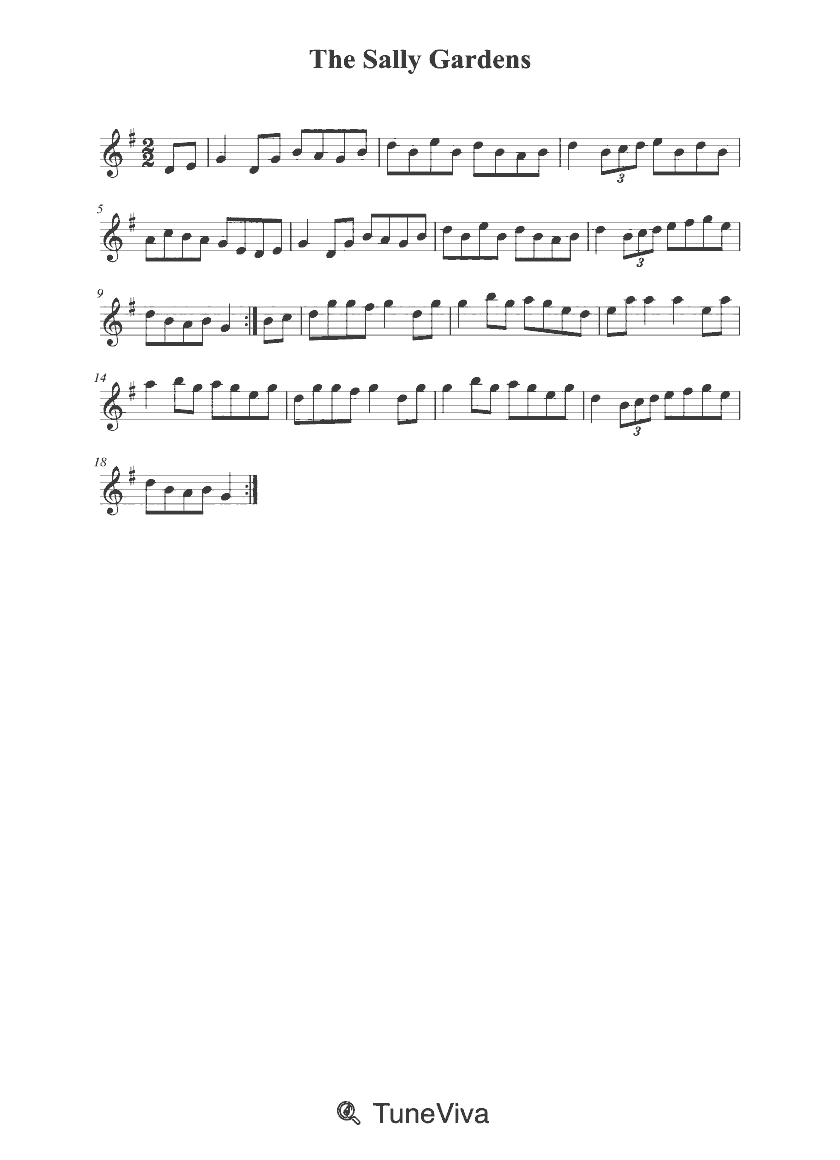
Misc tunes
2 min 40 sec · Score #137598
Open score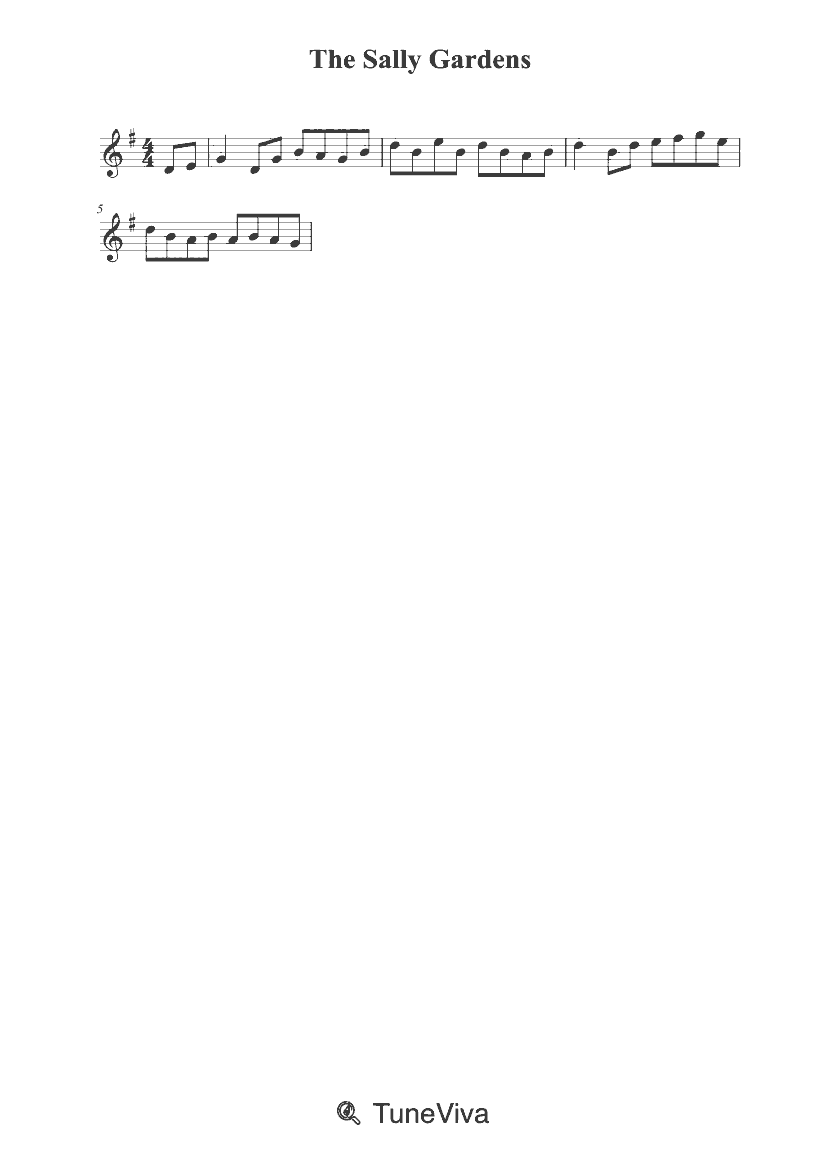
Misc tunes
8 sec
Open score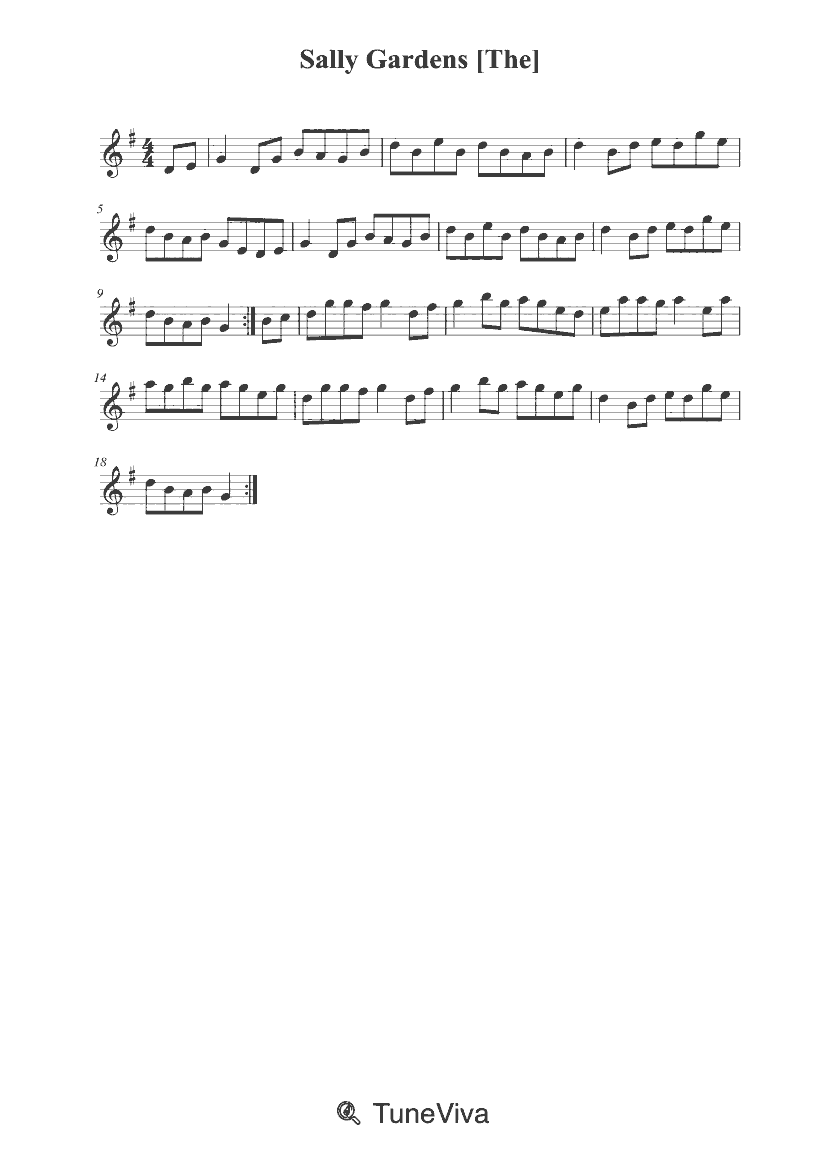
Misc tunes
1 min 20 sec · Score #168855
Open score
Traditional
47 sec
Open score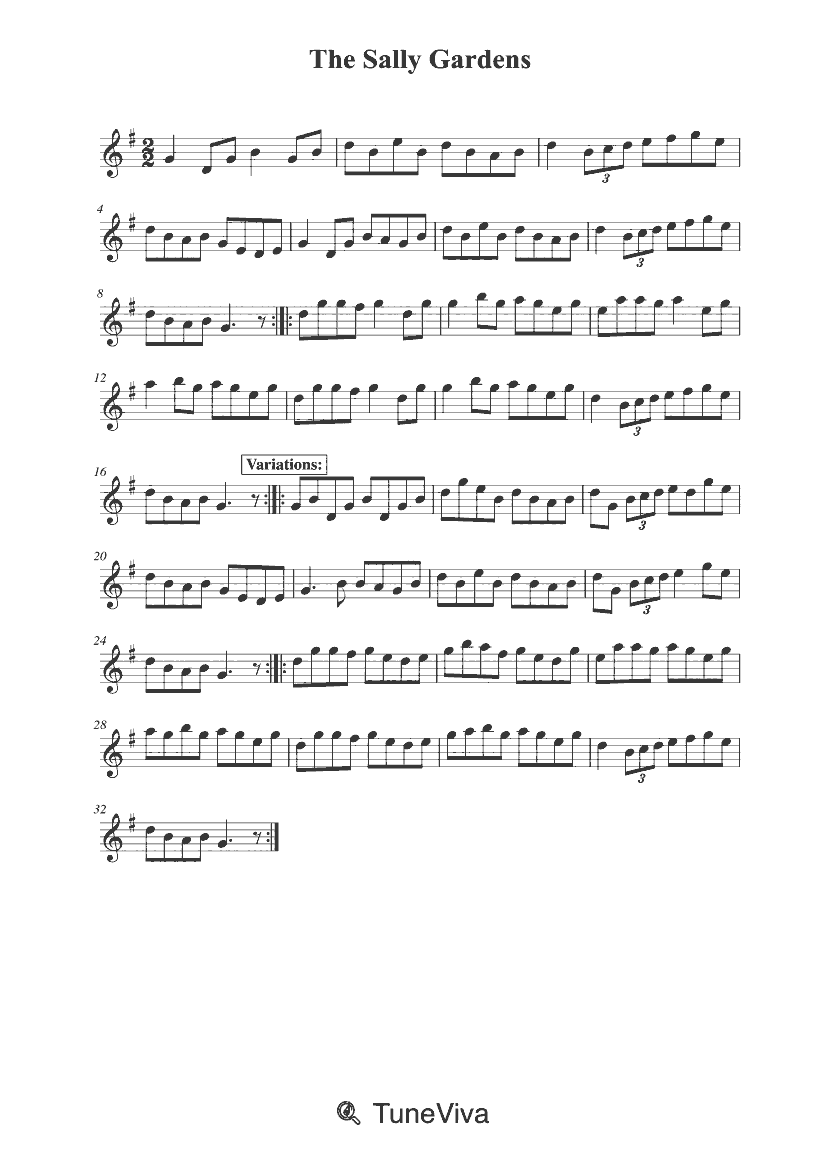
Misc tunes
4 min 15 sec
Open scorePage 1 of 2
The listings for The Sally Gardens are not identical. One score names Voice and Piano as its parts and gives a lyricist credit for W.B. Yeats; two others are single-track versions with no named parts. Check the scoring first if you need a song setting rather than an instrumental line.
Two listings open with two sharps (D major), while the voice-and-piano arrangement opens with five flats. That difference matters for singers and for players who need a comfortable range or a particular key. Use the opening key of the specific score as your starting point rather than assuming one standard key.
The composer credits attached to these scores vary: one says Traditional, another says Irish Folk Tune, and a third gives no composer name. These credits describe individual catalogue entries and do not by themselves establish a single author or a full publication history for the song.
All three listings give 4/4 as the opening time signature. Only the voice-and-piano arrangement lists an opening tempo, at 66 BPM. If tempo matters for your rehearsal or performance, use the details shown for that particular score and be prepared to set your own tempo where none is given.
Score parts: Voice, Piano. Catalogue duration 2 min 38 sec. Opening key signature: 5 flats. Opening time signature: 4/4. Opening tempo: 66 BPM.
Catalogue duration 1 min 4 sec. Opening key signature: 2 sharps (D major). Opening time signature: 4/4.
Catalogue duration 32 sec. Opening key signature: 2 sharps (D major). Opening time signature: 4/4.
Listed arrangements of The Sally Gardens include a voice-and-piano setting credited to Irish Folk Tune with W.B. Yeats as lyricist, plus two single-track versions credited to Traditional and to no named composer. The voice-and-piano score opens with five flats in 4/4 at 66 BPM.
The Sally Gardens appears in more than one key in these listings: two scores open with two sharps (D major), while the voice-and-piano arrangement opens with five flats. Singers and instrumentalists should check the opening key and range of the specific score rather than assuming a single standard key.
Catalogue credits for The Sally Gardens are inconsistent: one score names Traditional as composer, another says Irish Folk Tune, and a third leaves the composer blank. One arrangement credits W.B. Yeats as lyricist. These labels identify individual scores rather than establishing a single author for the song.
All three listed scores of The Sally Gardens give 4/4 as the opening time signature. The voice-and-piano arrangement also lists an opening tempo of 66 BPM; the other two listings do not include tempo information.
One listed arrangement of The Sally Gardens is scored for Voice and Piano and credits W.B. Yeats as lyricist, indicating a song setting in that score. The other two listings do not name their parts, so their instrumentation cannot be confirmed from the catalogue information alone.