
The Seven Stars
Misc tunes
24 sec · Score #165546
Open scoreThe Seven Stars is available as sheet music in settings that all open in 6/8 time. The scores differ at the outset: two begin with two sharps, pointing to D major, and one begins with one sharp, pointing to G major. No composer is named on the available scores, and no supplied source confirms the work's origin or original instrumentation, so compare the notation rather than relying on the title alone.
Scores 1–20 of 22
Misc tunes
24 sec · Score #165546
Open score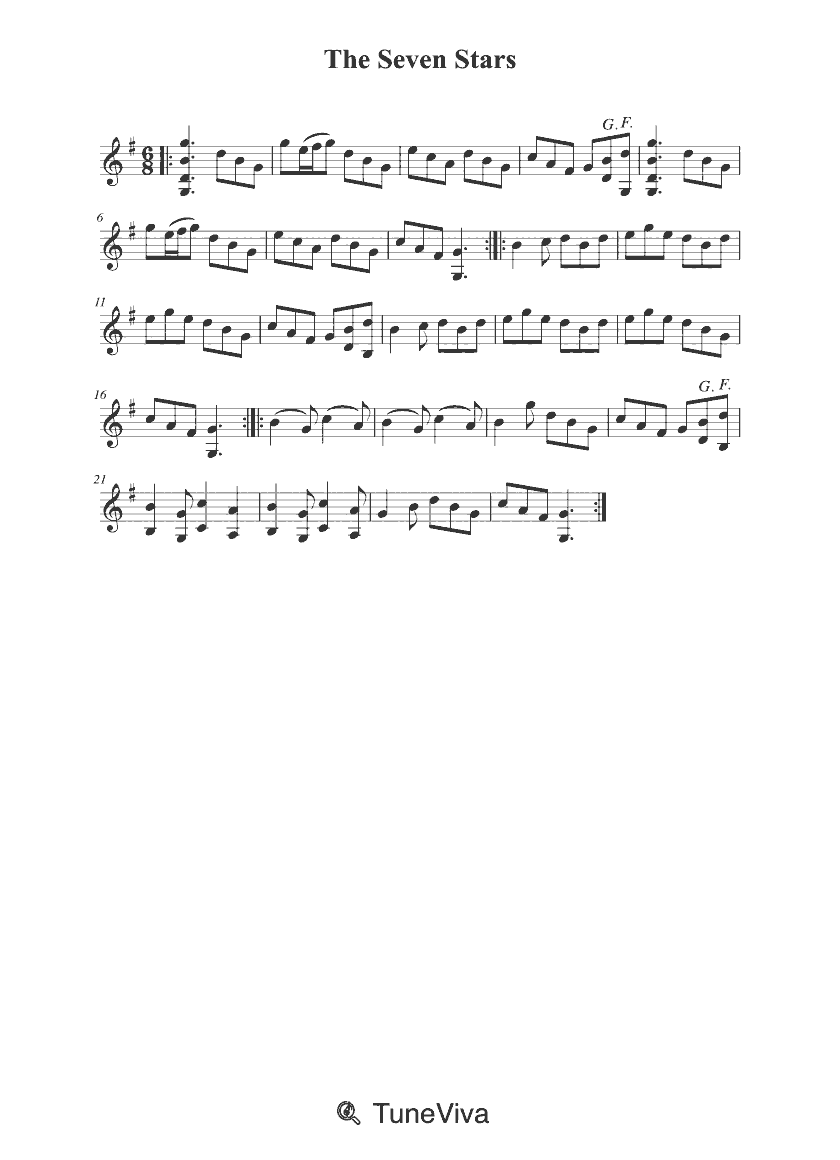
Misc tunes
36 sec · Score #34597
Open score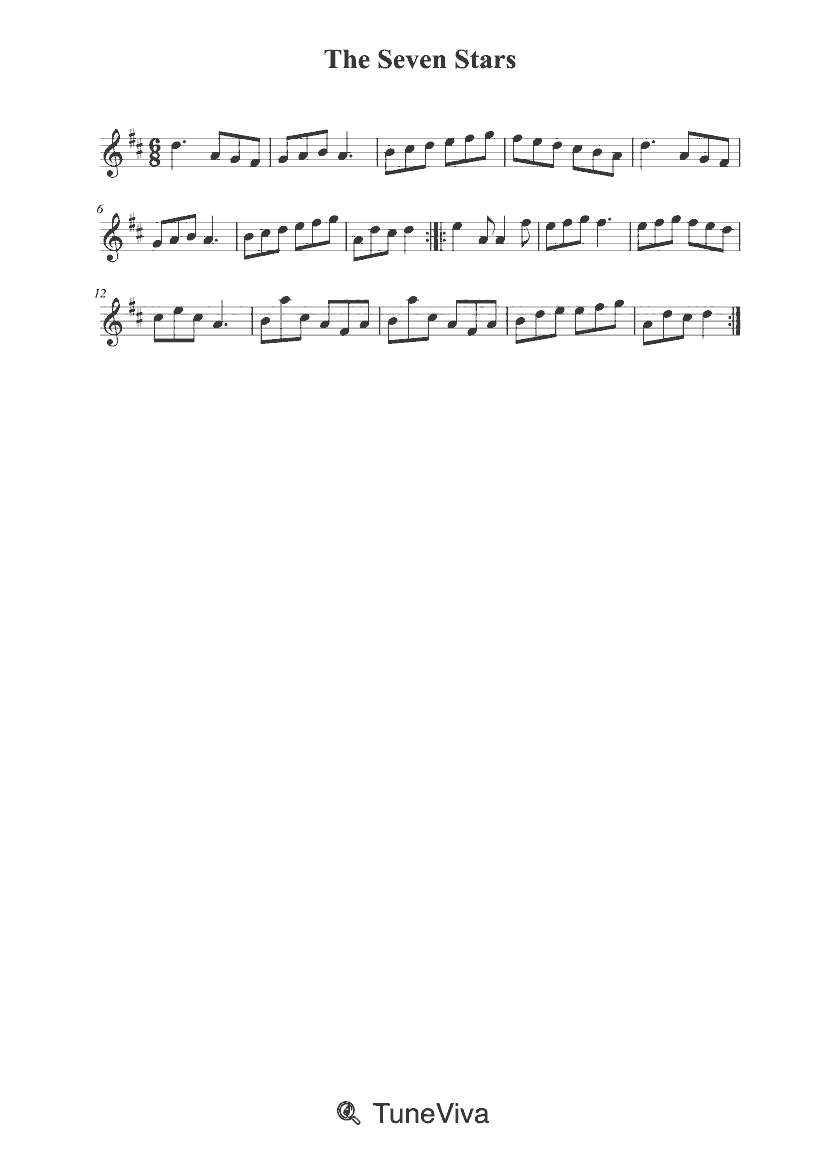
Misc tunes
Moon and Seven Stars The
23 sec
Open score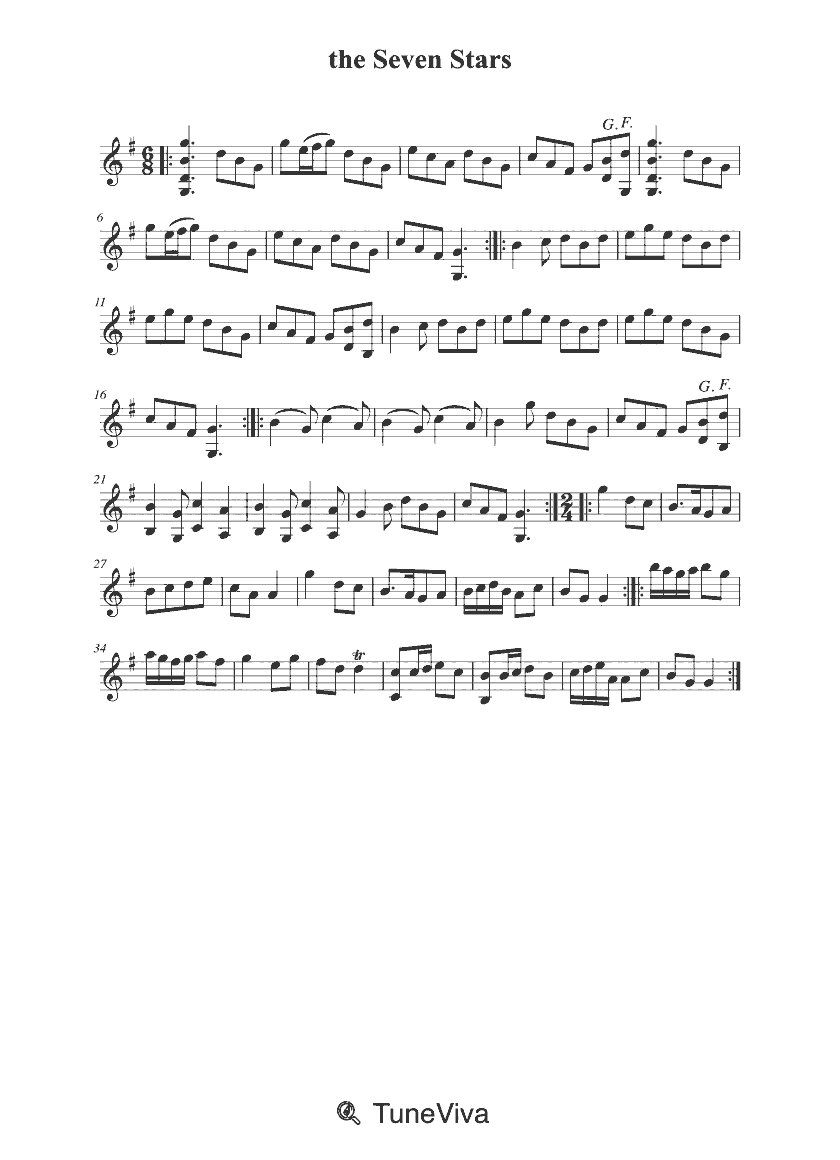
Misc tunes
1 min 8 sec
Open score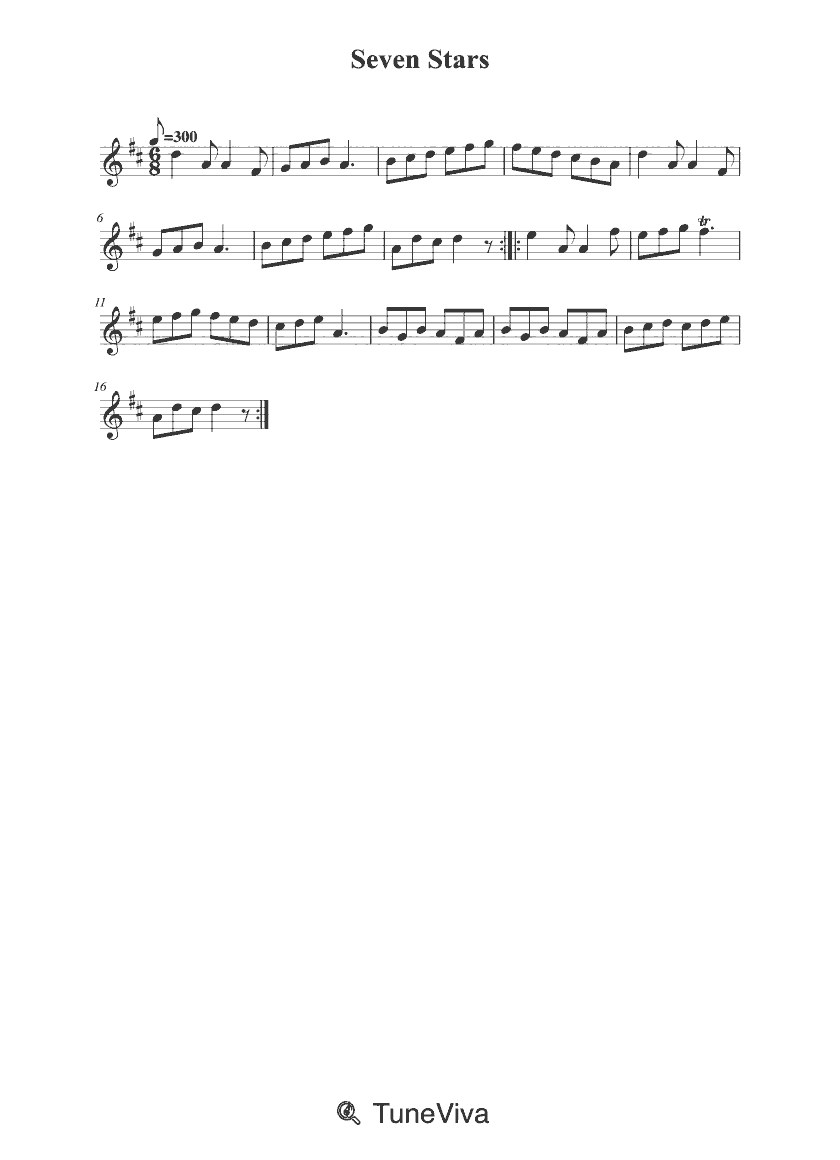
Misc tunes
19 sec · Score #127787
Open score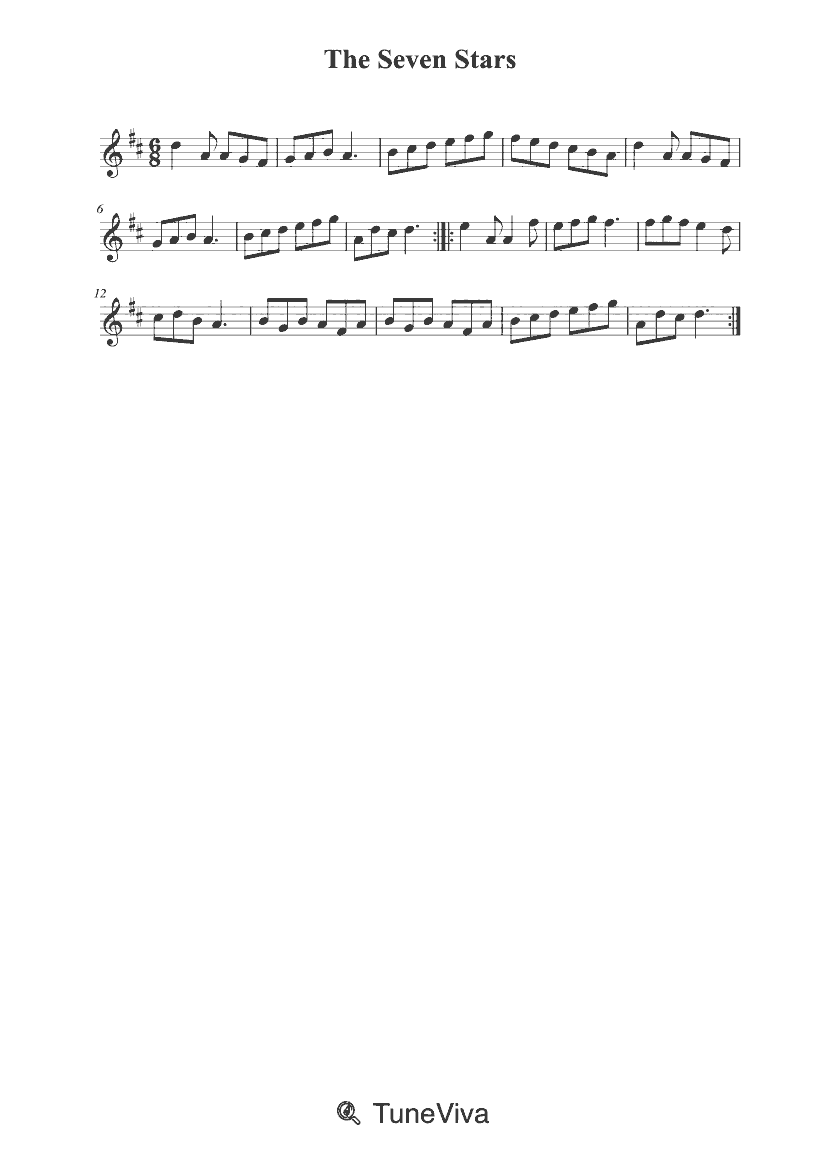
Misc tunes
24 sec · Score #192102
Open score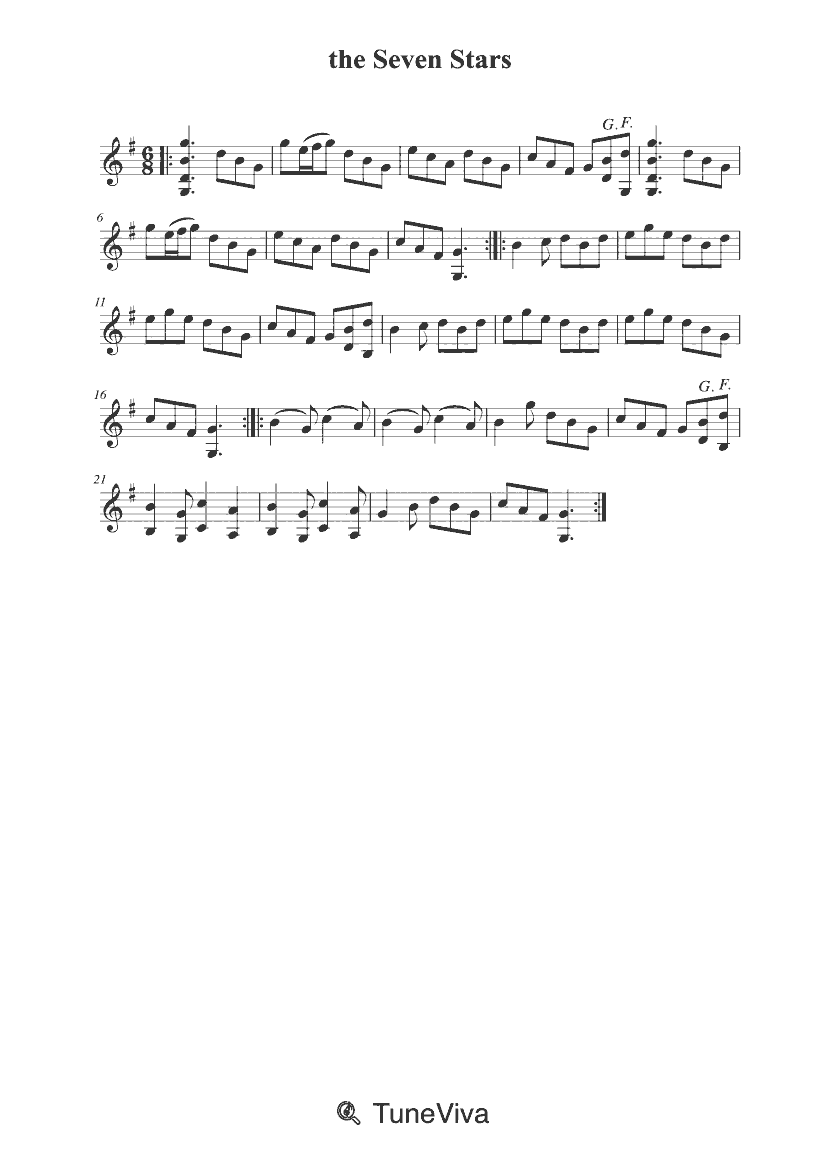
Misc tunes
36 sec · Score #15654
Open score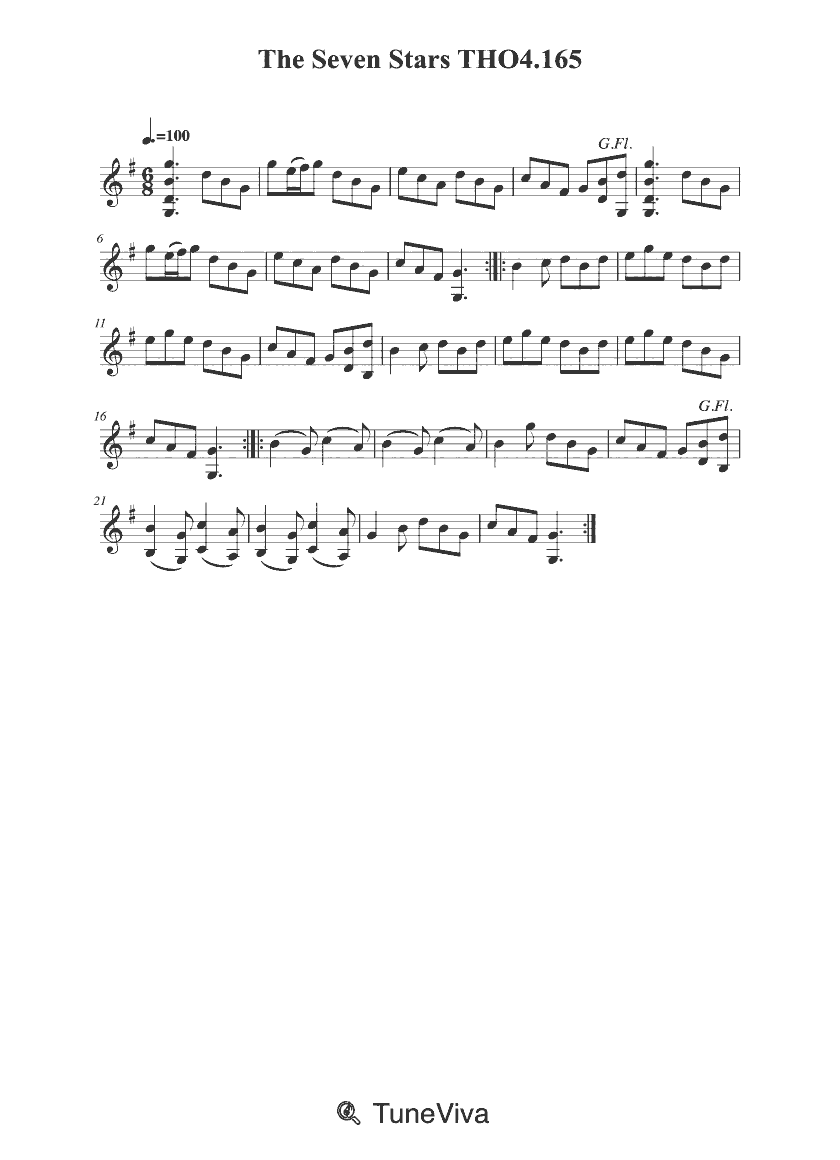
Misc tunes
29 sec
Open score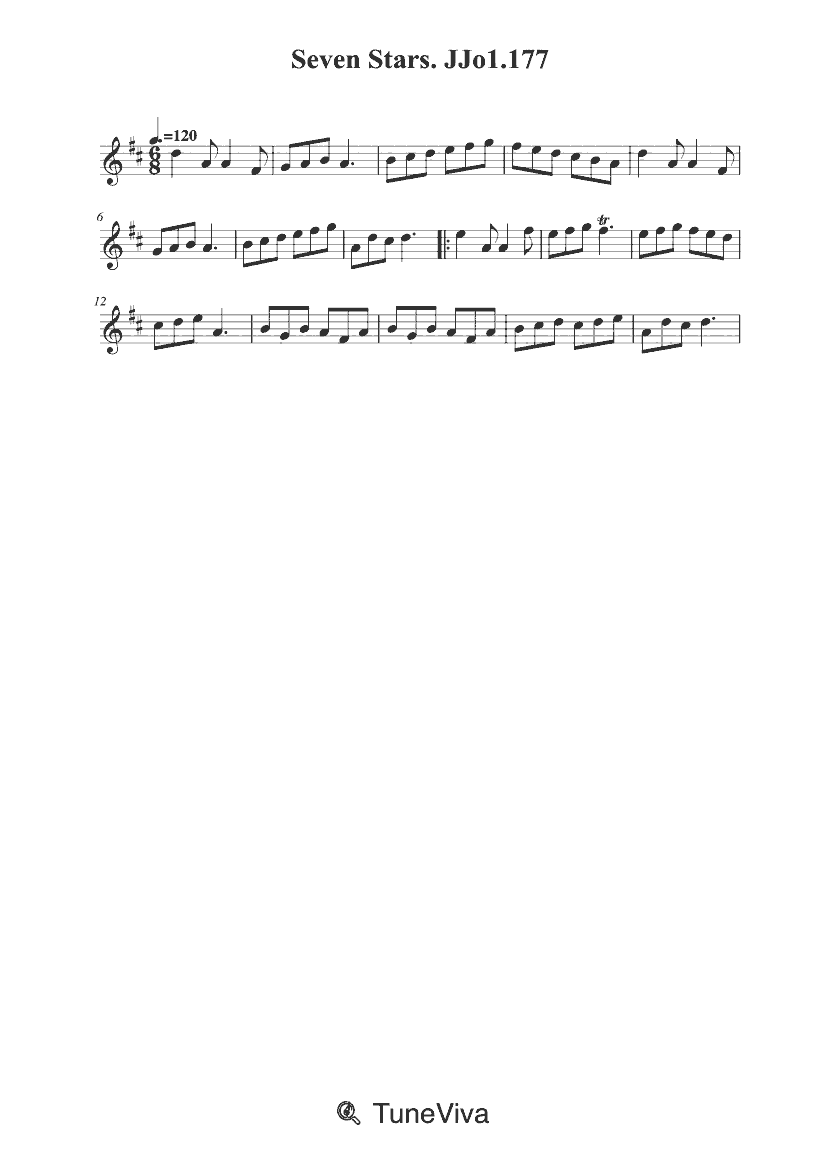
Misc tunes
Moon and Seven Starsaka. JJo1.177
12 sec
Open score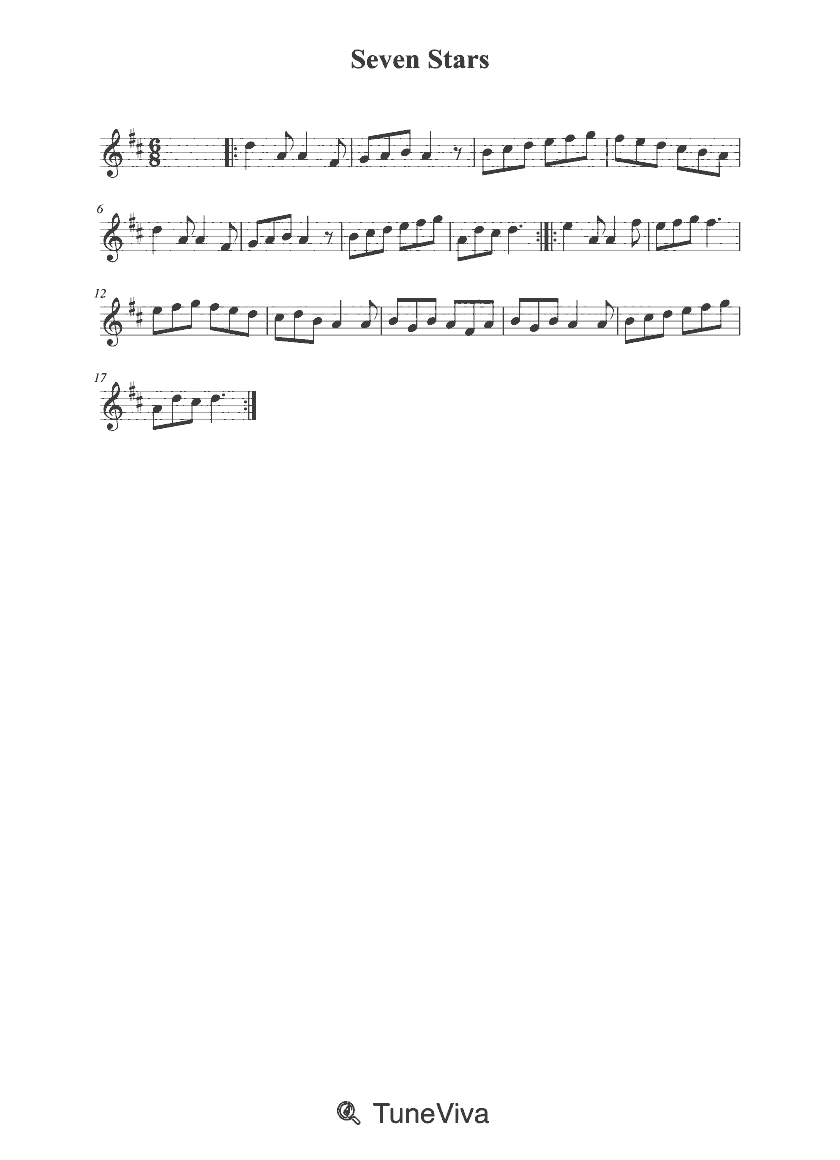
Misc tunes
Moon And Seven StarsThe
25 sec · Score #156438
Open score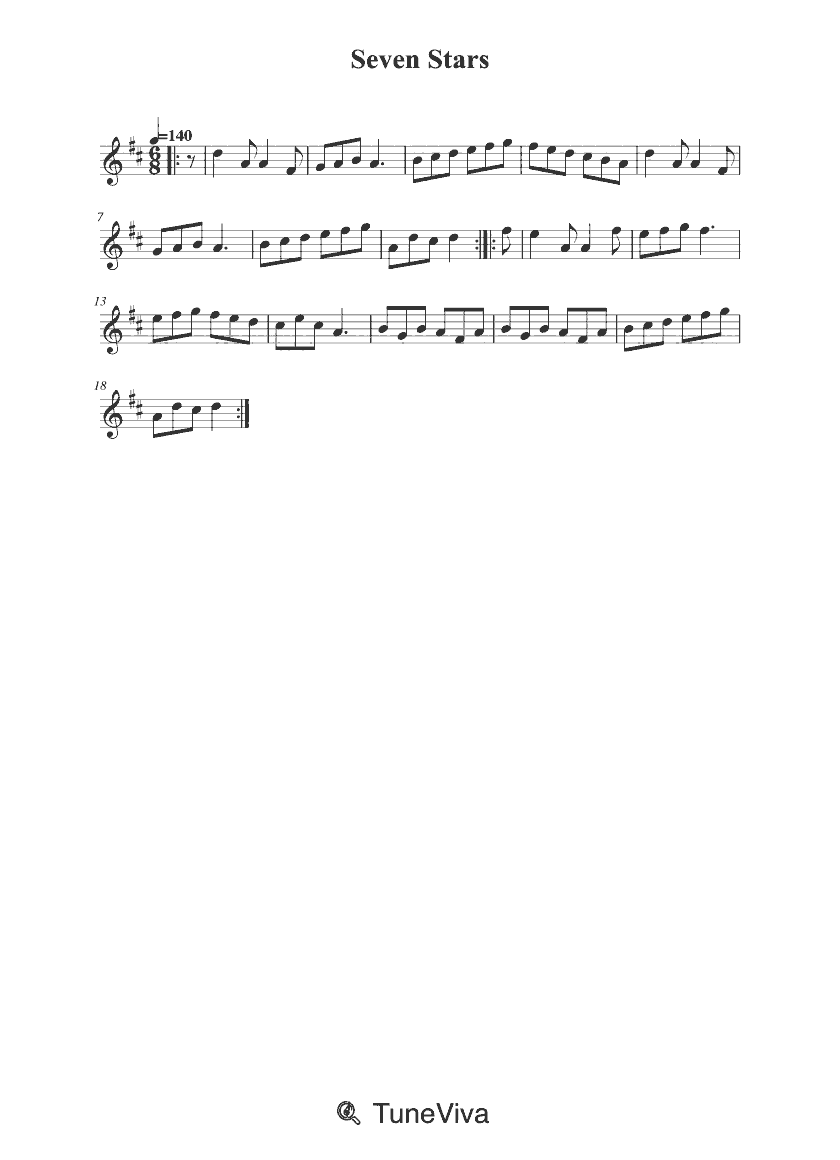
Misc tunes
21 sec · Score #157675
Open score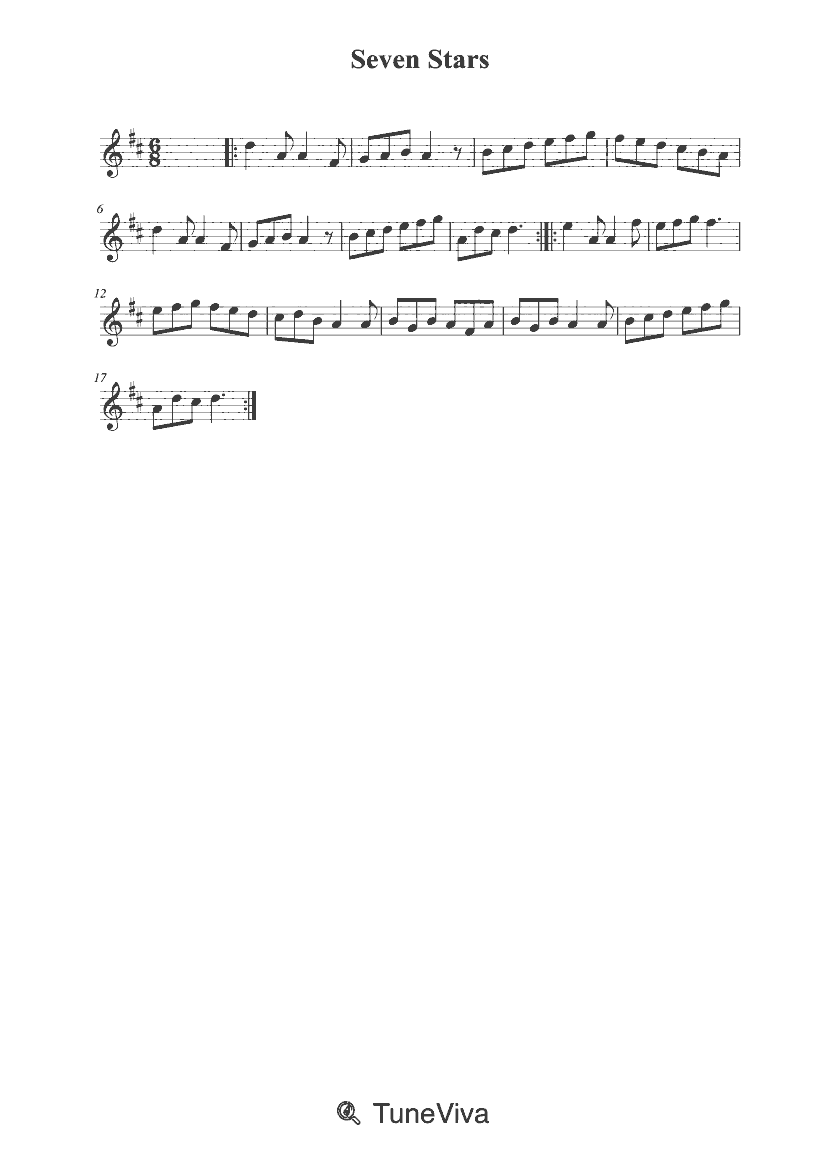
Misc tunes
Moon And Seven StarsThe
25 sec · Score #161934
Open score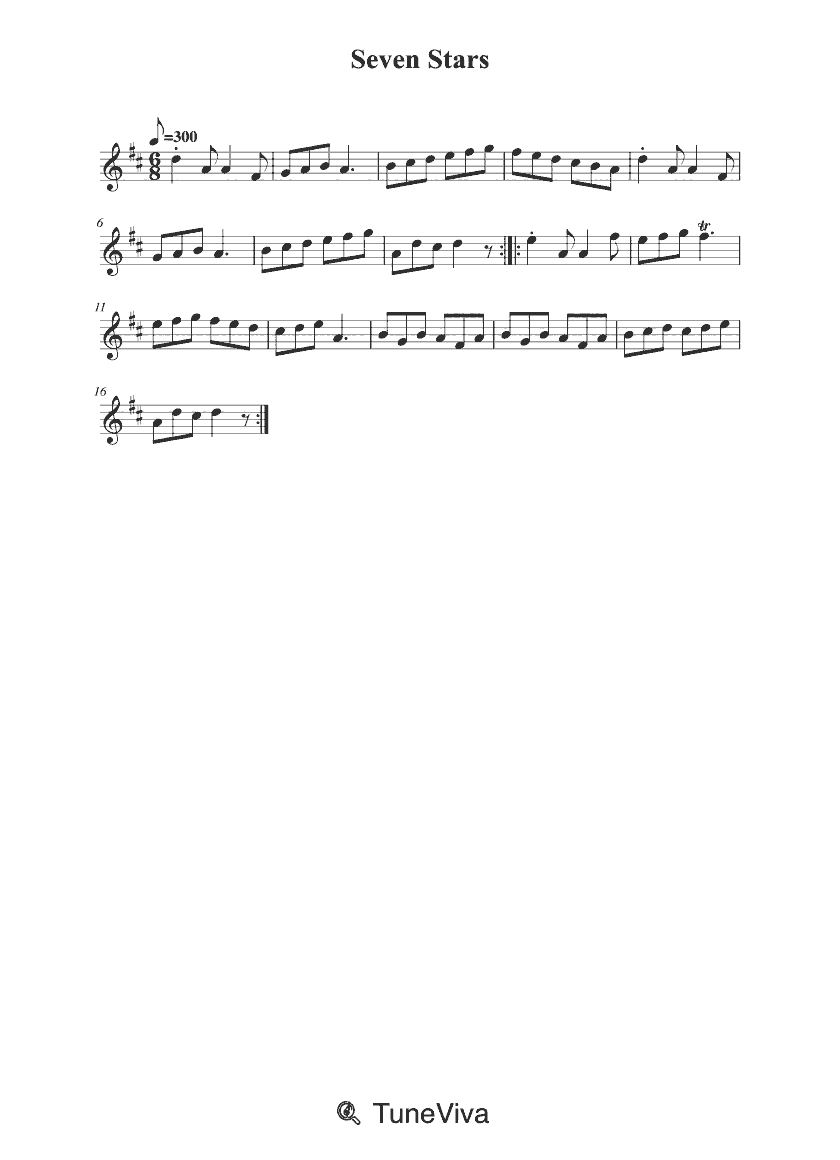
Misc tunes
19 sec · Score #162990
Open score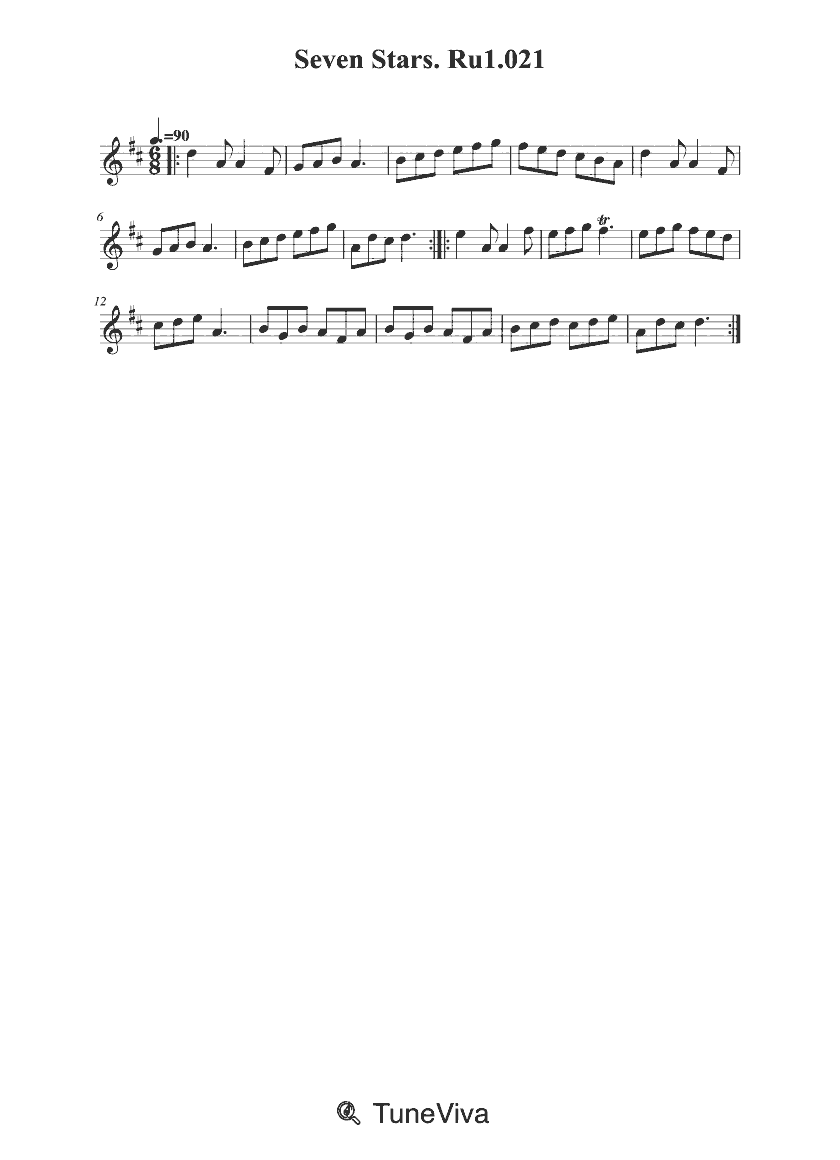
Misc tunes
21 sec
Open score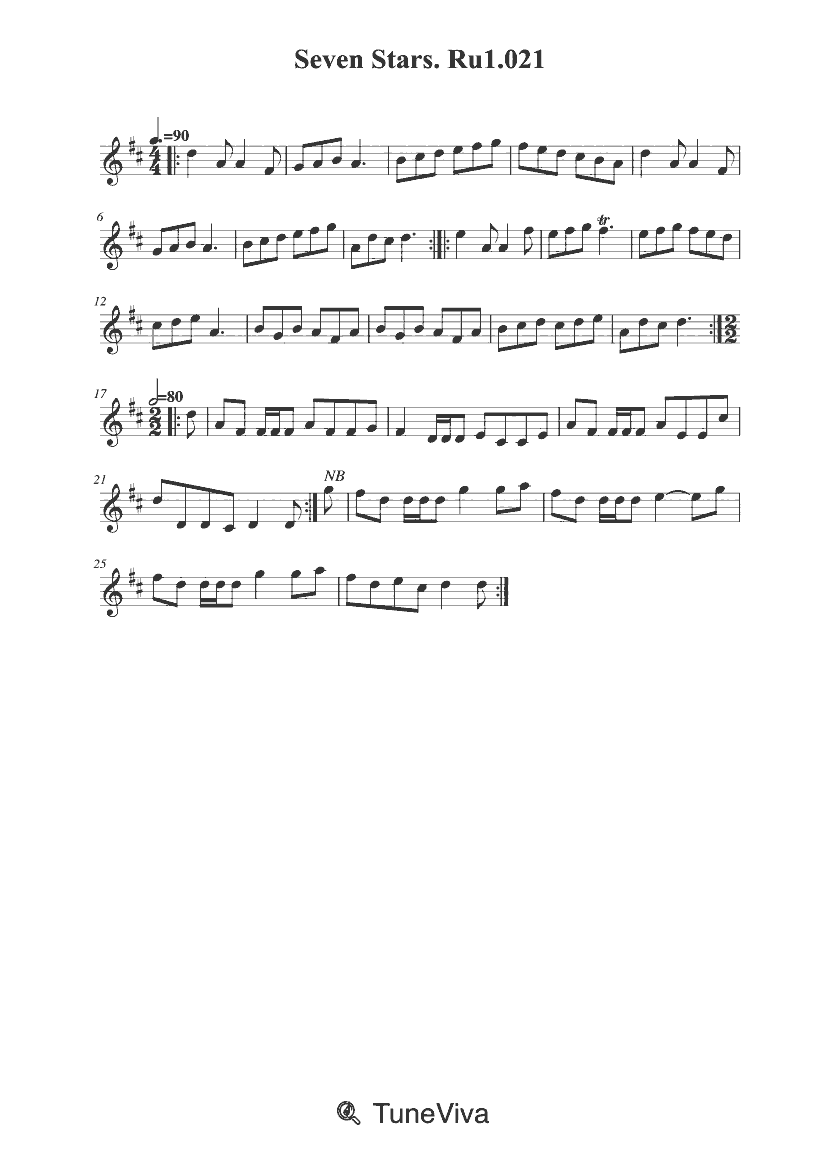
Misc tunes
1 min 43 sec
Open score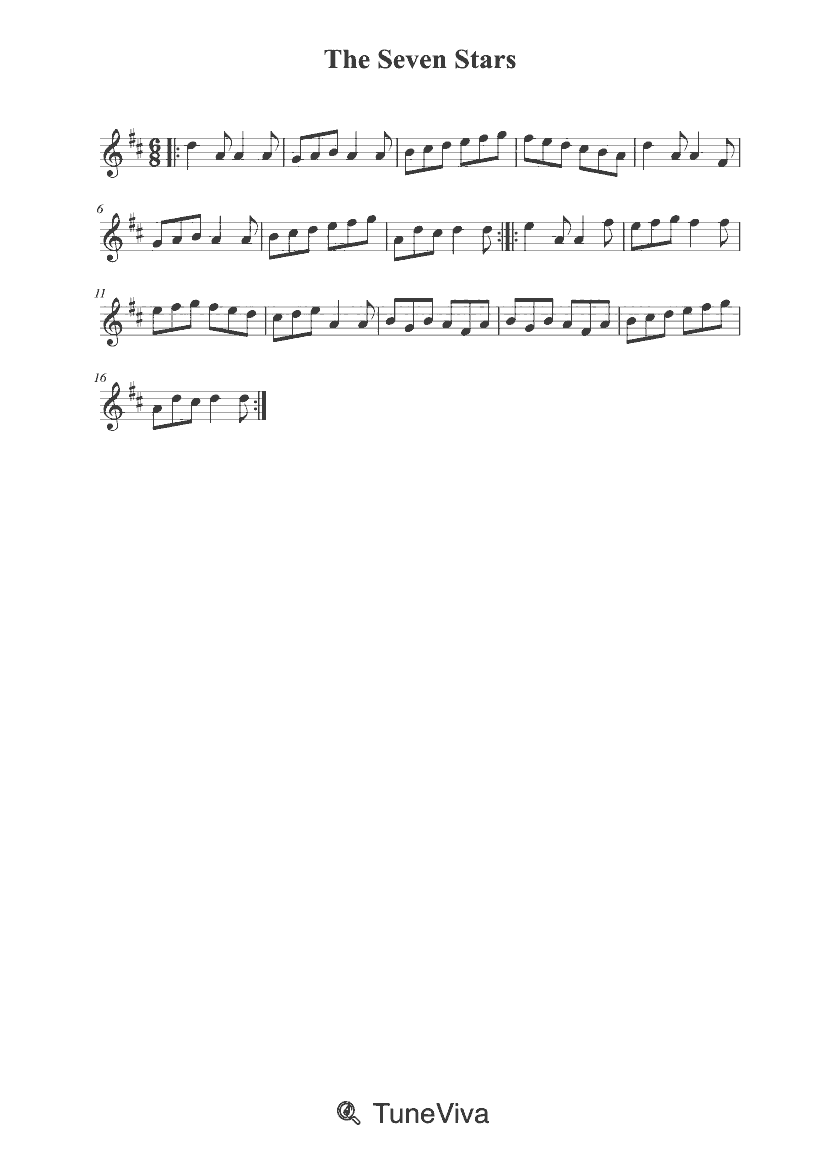
Misc tunes
24 sec · Score #246887
Open score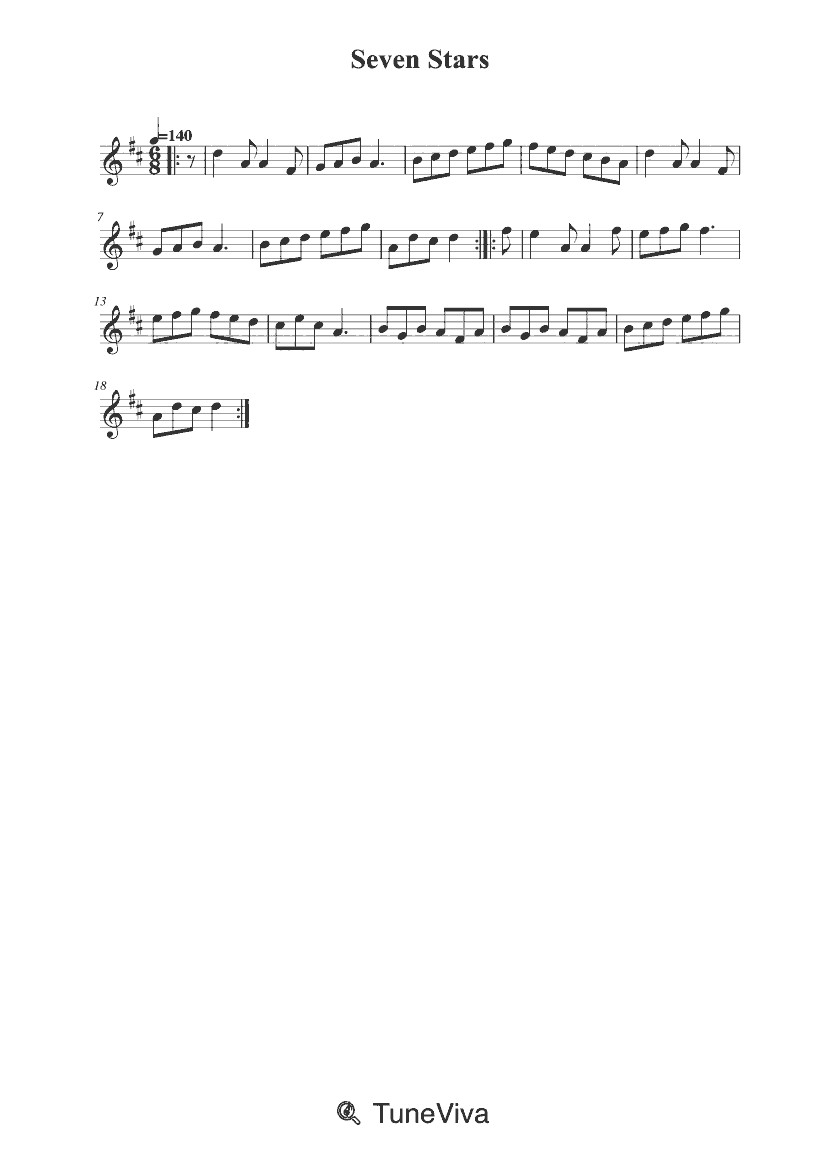
Misc tunes
21 sec · Score #13427
Open score
anon.
The Moon And Seven Stars
24 sec
Open score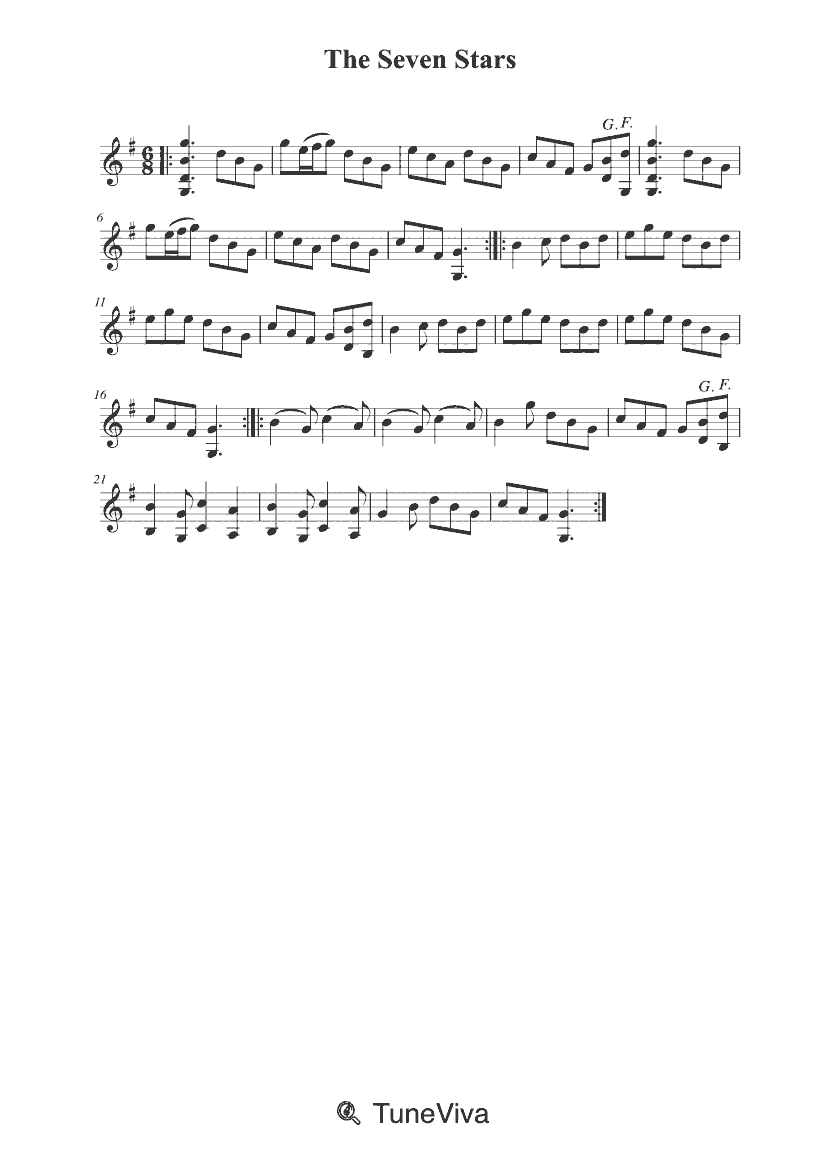
Misc tunes
36 sec · Score #60032
Open score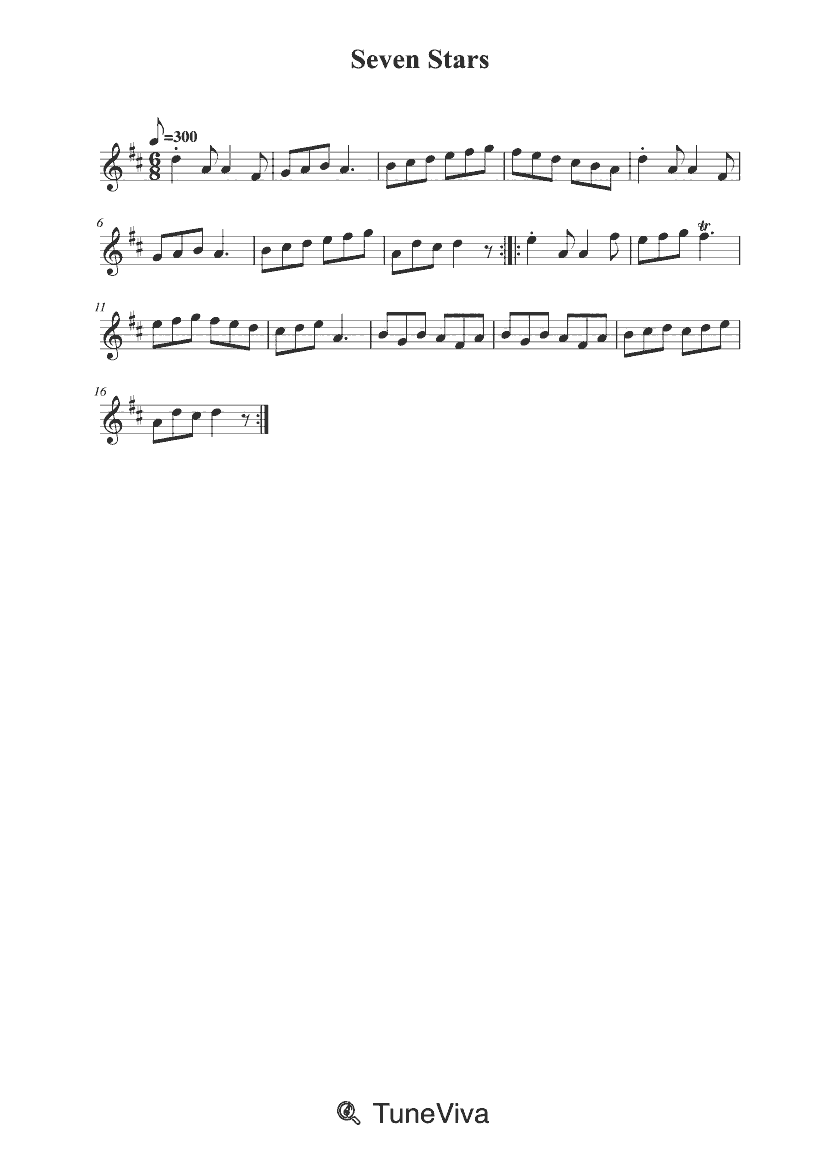
Misc tunes
19 sec · Score #99112
Open scorePage 1 of 2
Two available scores of The Seven Stars begin with two sharps, indicating D major, while one begins with one sharp, indicating G major. Use the opening key as a practical starting point when choosing a version, especially if you are playing with others, but check the first bars as well: an opening signature does not describe every key the music may visit.
The available scores notate The Seven Stars in 6/8, a compound-duple meter with two main beats per bar. Each main beat is felt as a dotted-quarter pulse, so count in two rather than six when setting a tempo and let the eighth-note groupings fall under that pulse.
The scores share the title The Seven Stars and an opening 6/8 meter, but they divide between D major and G major openings. The evidence does not establish whether these are independent arrangements, variants of one setting, or different notated versions, so compare the notation and any named instrument or part on each score before deciding which one fits your needs.
No supplied source identifies the composer, date, origin, or original instrumentation of The Seven Stars. The shared title and meter are not enough to prove that the scores represent the same piece in the same form, so treat the notation itself as the most reliable guide available here.
Catalogue duration 24 sec. Opening key signature: 2 sharps (D major). Opening time signature: 6/8.
Catalogue duration 36 sec. Opening key signature: 1 sharp (G major). Opening time signature: 6/8.
Catalogue duration 23 sec. Opening key signature: 2 sharps (D major). Opening time signature: 6/8.
Available scores of The Seven Stars all open in 6/8 time. Two begin with two sharps, indicating D major, and one begins with one sharp, indicating G major. An opening key signature identifies the starting key area, not necessarily every key visited later.
No composer is named on the available scores of The Seven Stars, and no supplied source identifies an author. The composer therefore cannot be confirmed from the evidence available.
The available scores share the title The Seven Stars and an opening 6/8 meter, but they divide between D major and G major openings. The evidence does not show whether these are independent arrangements, variants of one setting, or different notated versions.
The Seven Stars is notated in 6/8, a compound-duple meter with two main beats per bar, each felt as a dotted-quarter pulse. Counting in two rather than six helps keep the eighth-note groupings under a stable pulse.
The available scores do not name a specific instrument or ensemble for The Seven Stars, and no verified source confirms an original scoring. Inspect the notation and any part labels on a score before assuming it suits a particular instrument or group.
Match the opening key to other musicians first: two available scores begin in D major and one begins in G major. Check the first bars of each score as well, because the title and meter alone do not show whether the settings are otherwise the same.