
the Silver Spear
Misc tunes
1 min 4 sec · Score #216906
Open scoreThe Silver Spear is a tune title that appears in several different settings in the TuneViva catalogue. The scores listed here share an opening key of D major (two sharps) and a 4/4 time signature, but they differ noticeably in length and in the number of notes they contain. Musicians looking for The Silver Spear sheet music can use these details to compare versions, though the composer credit and the tune's wider background should be checked against an authoritative traditional-music source before relying on them.
Scores 1–20 of 26
Misc tunes
1 min 4 sec · Score #216906
Open score
Misc tunes
Old Silver Spear TheSilver SpearSilver Tip The
5 min 24 sec
Open score
traditional
1 min 4 sec
Open score
Misc tunes
2 min 8 sec
Open score
Misc tunes
1 min 4 sec · Score #150561
Open score
Misc tunes
2 min 8 sec · Score #160822
Open score
Misc tunes
1 min 18 sec
Open score
Misc tunes
1 min 4 sec · Score #226795
Open score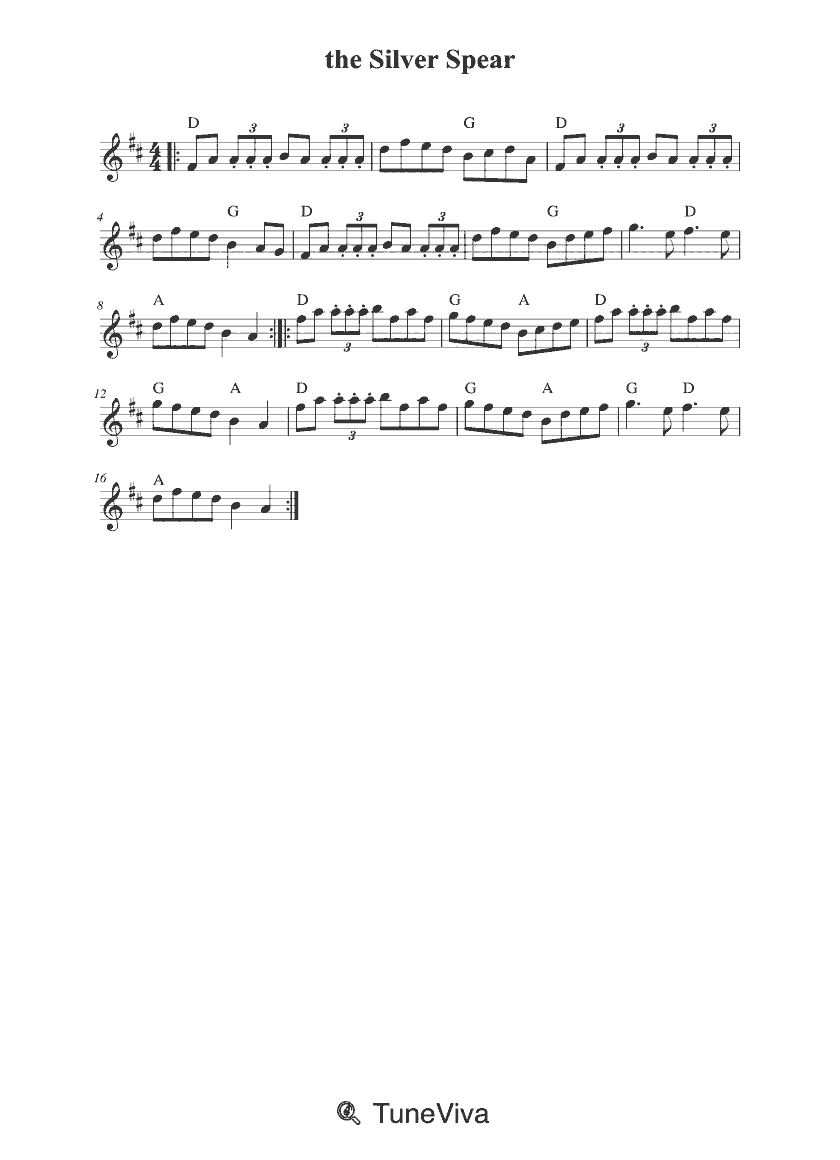
Misc tunes
1 min 4 sec · Score #87766
Open score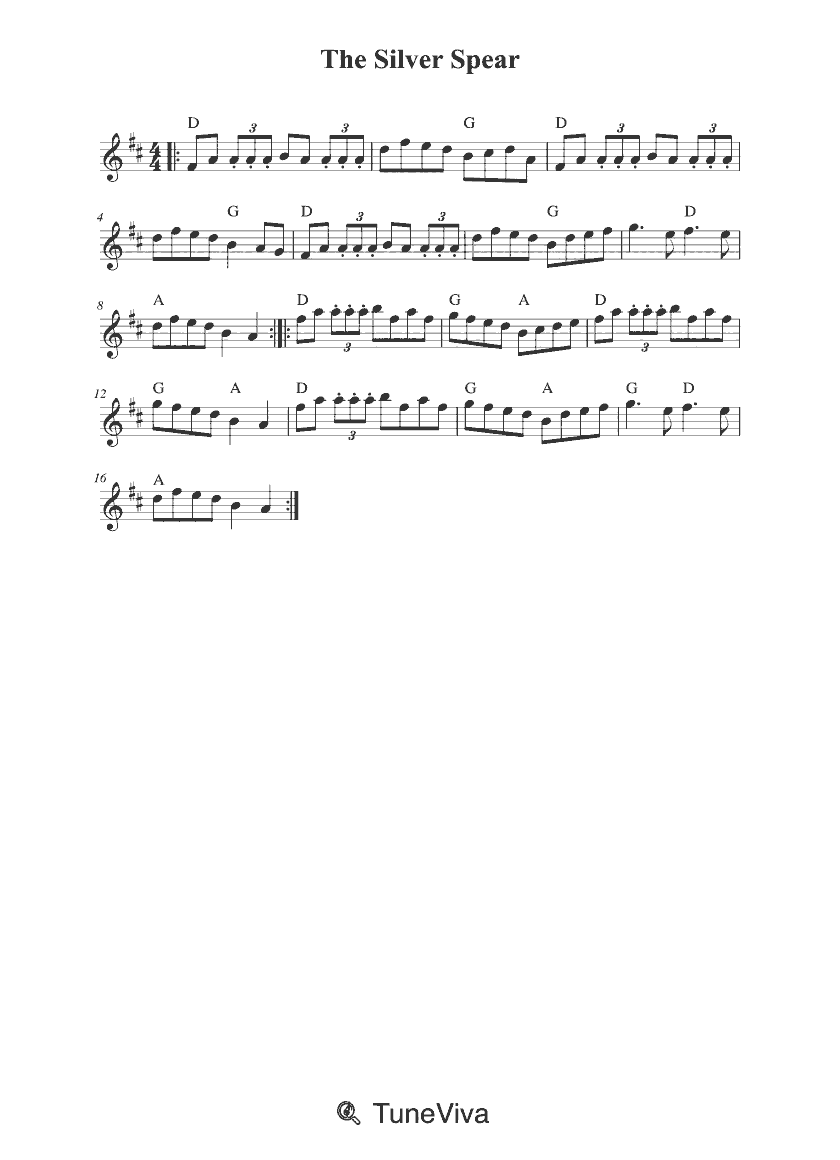
R-158
1 min 4 sec
Open score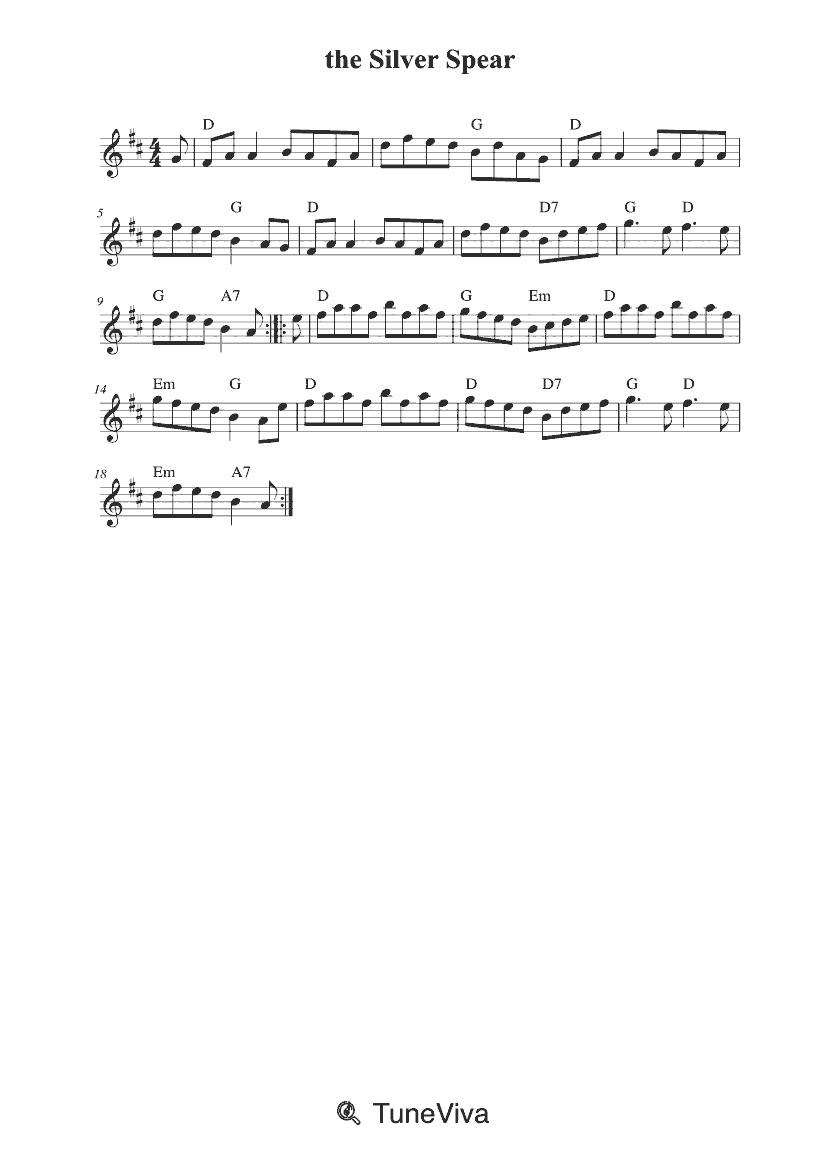
Misc tunes
1 min 4 sec · Score #95509
Open score
Trad.
1 min 4 sec
Open score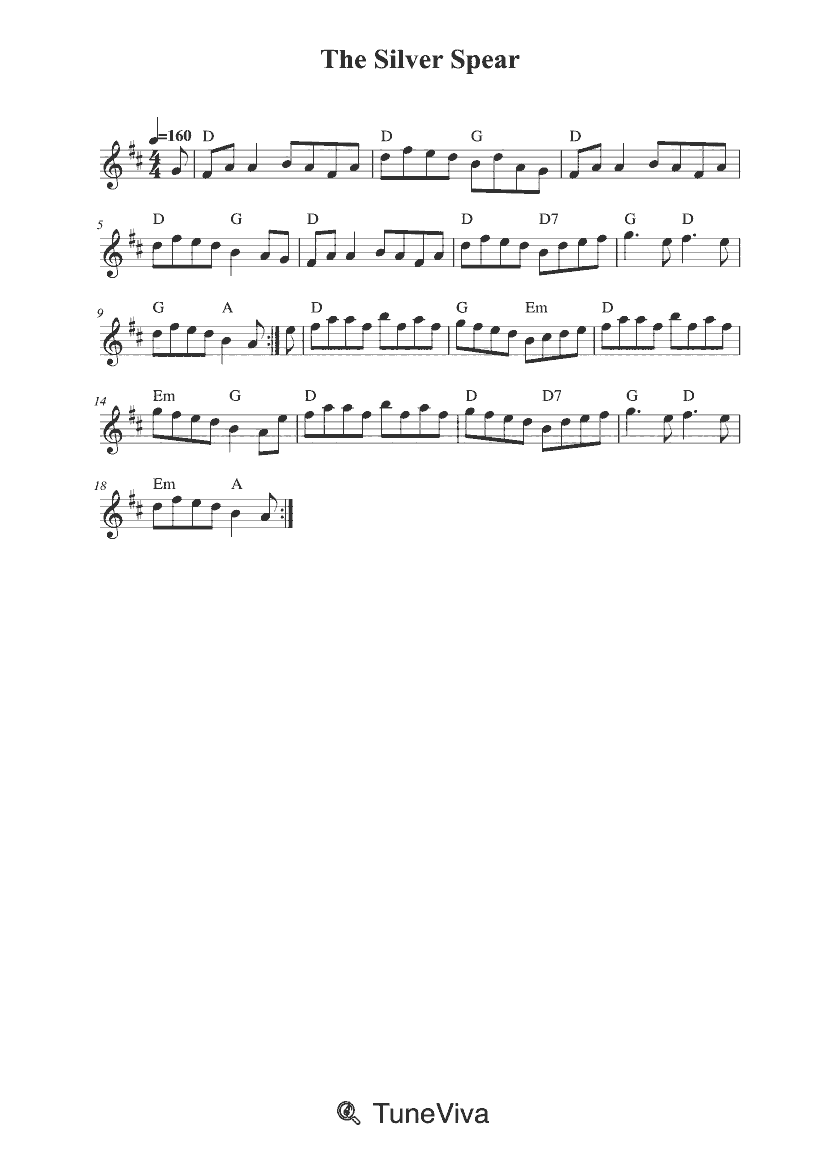
Misc tunes
1 min 0 sec
Open score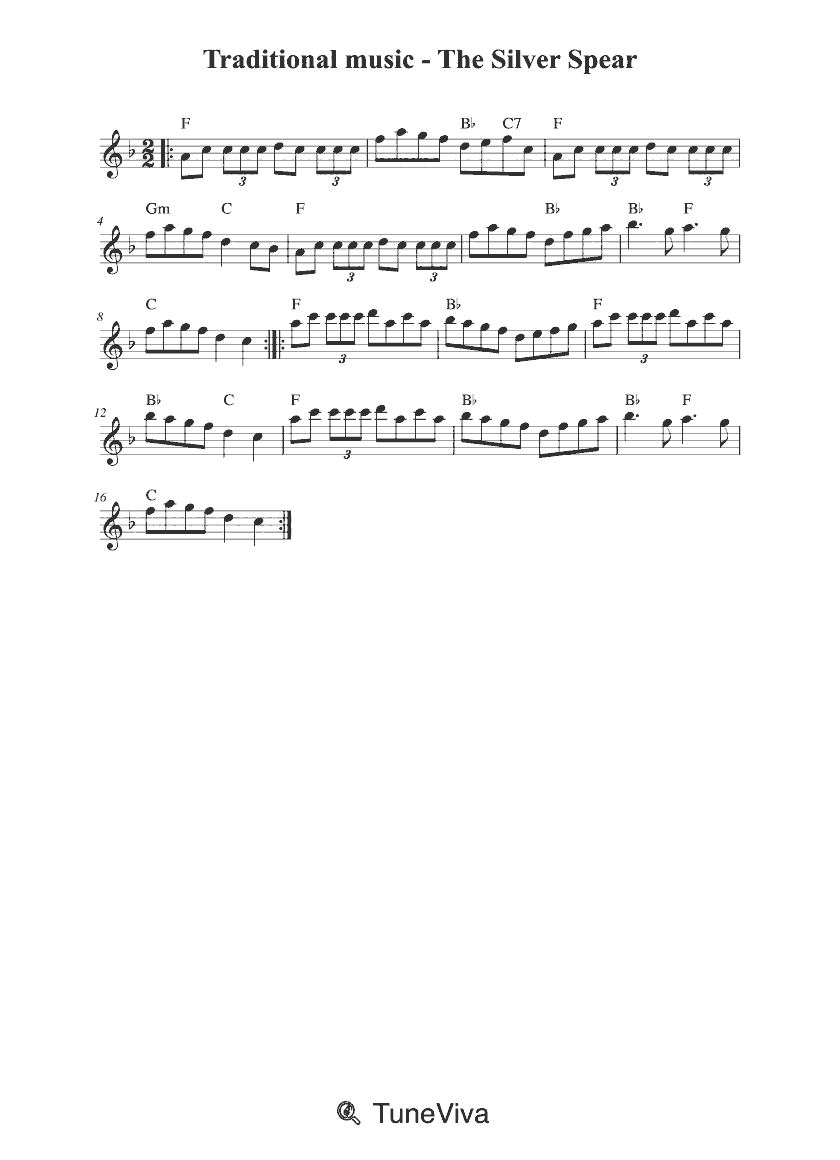
Trad. Ireland (R-158)
2 min 8 sec
Open score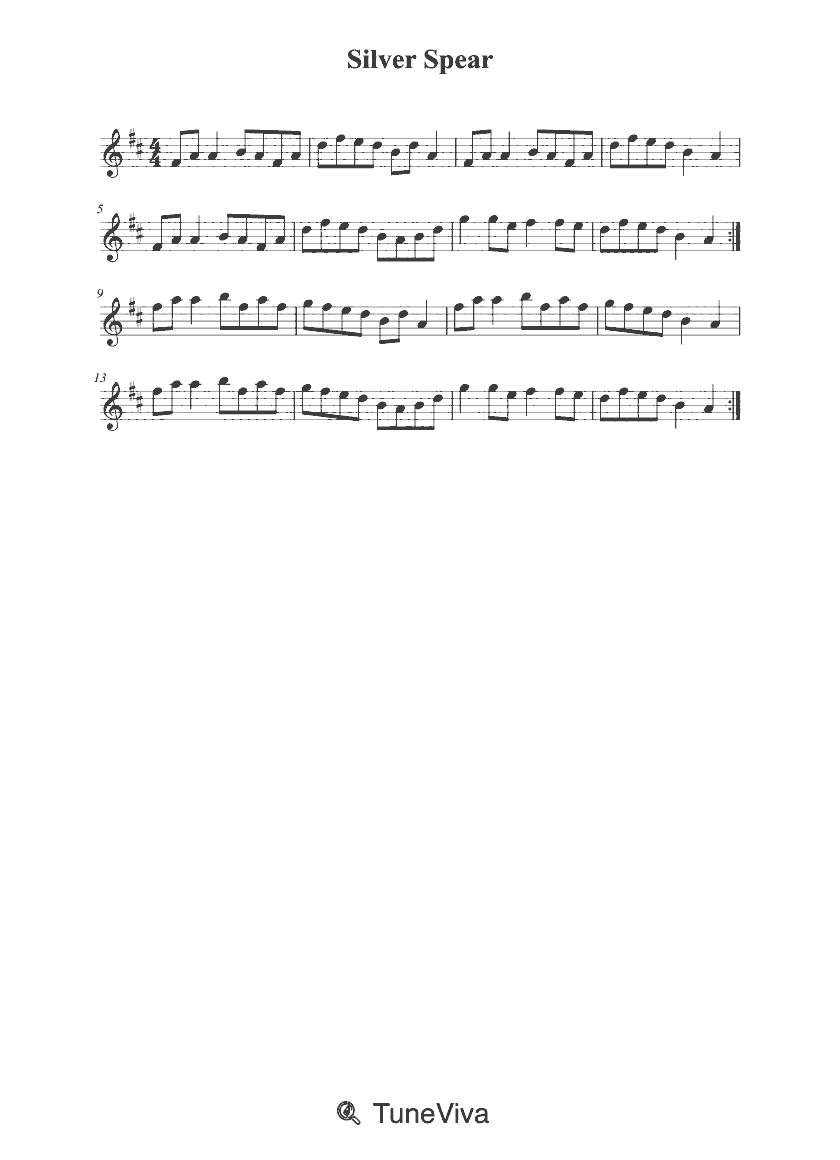
Misc tunes
1 min 20 sec
Open score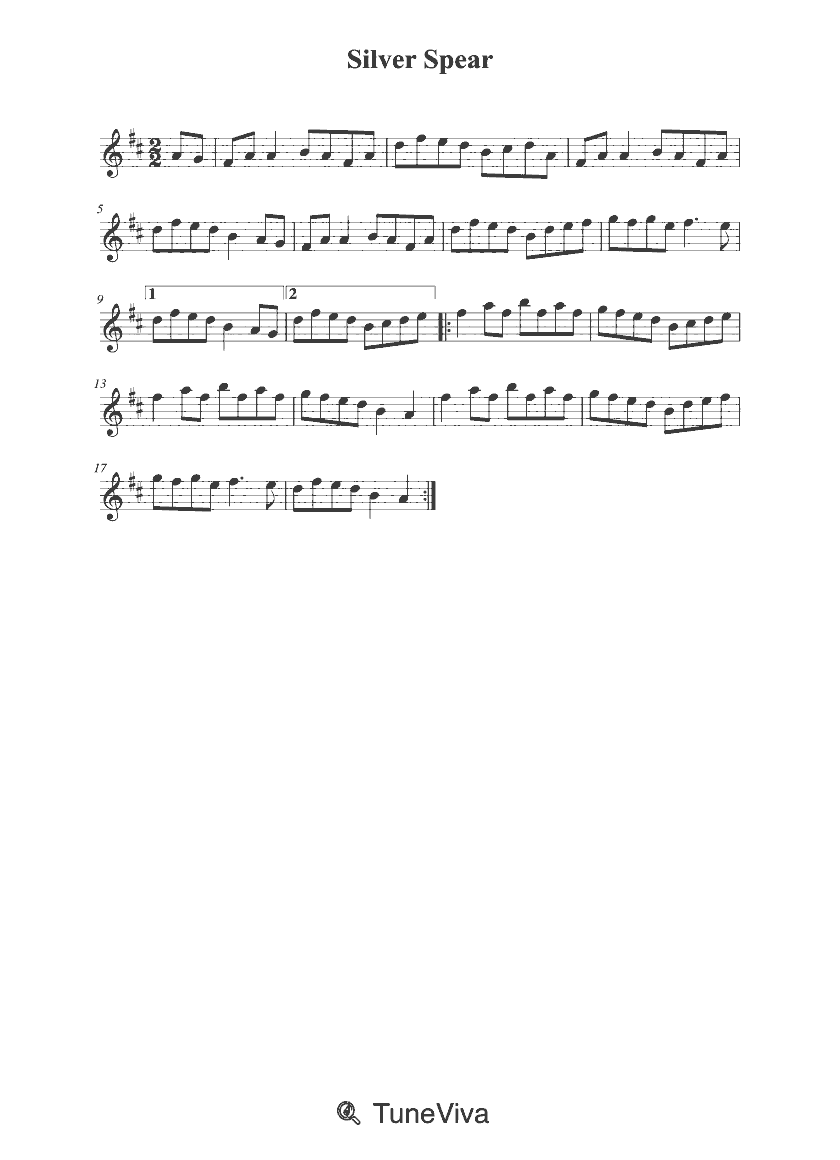
Misc tunes
1 min 41 sec
Open score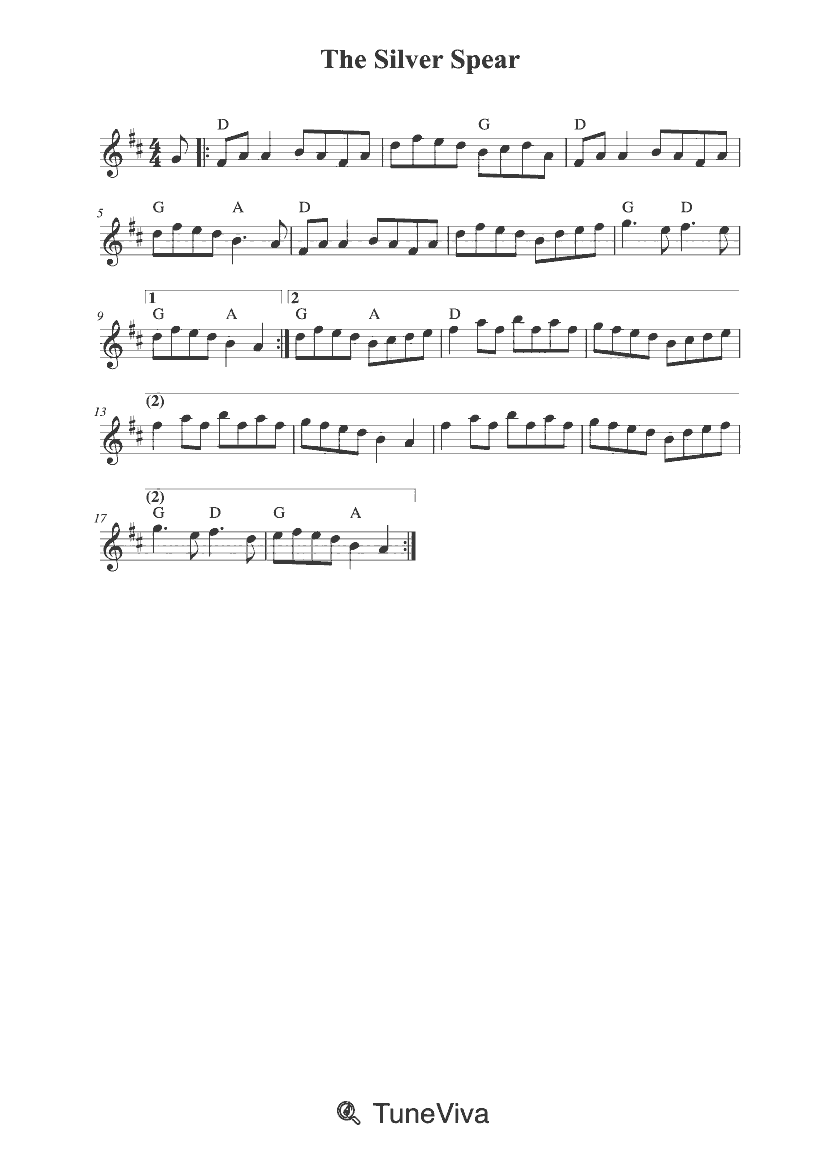
Misc tunes
1 min 4 sec · Score #151635
Open score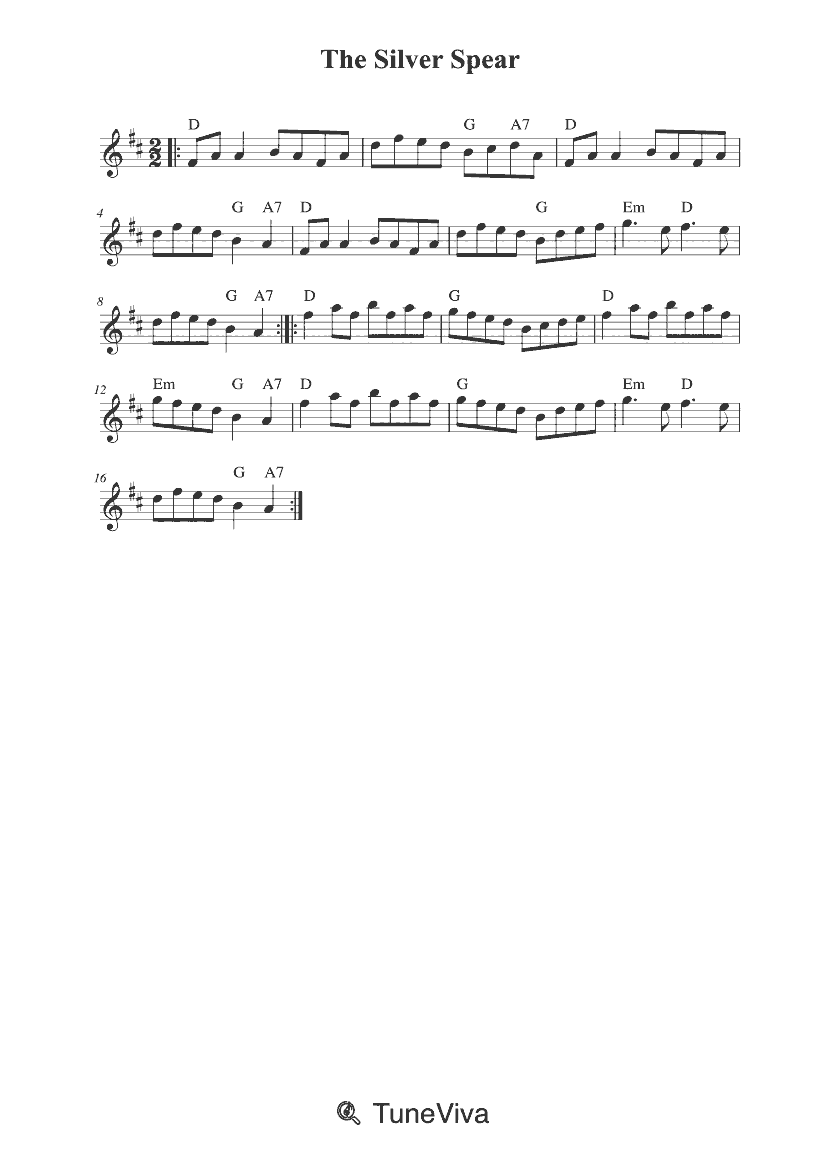
Misc tunes
2 min 8 sec · Score #229319
Open score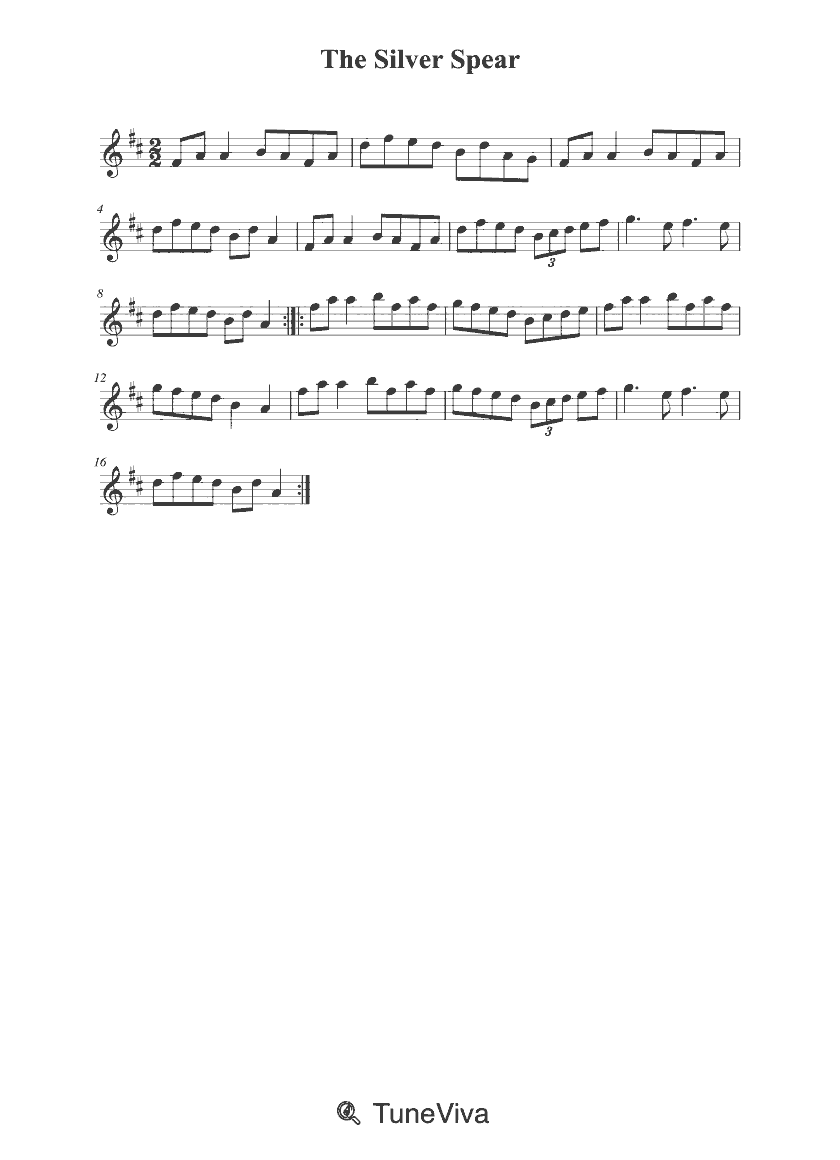
Misc tunes
2 min 8 sec · Score #47882
Open score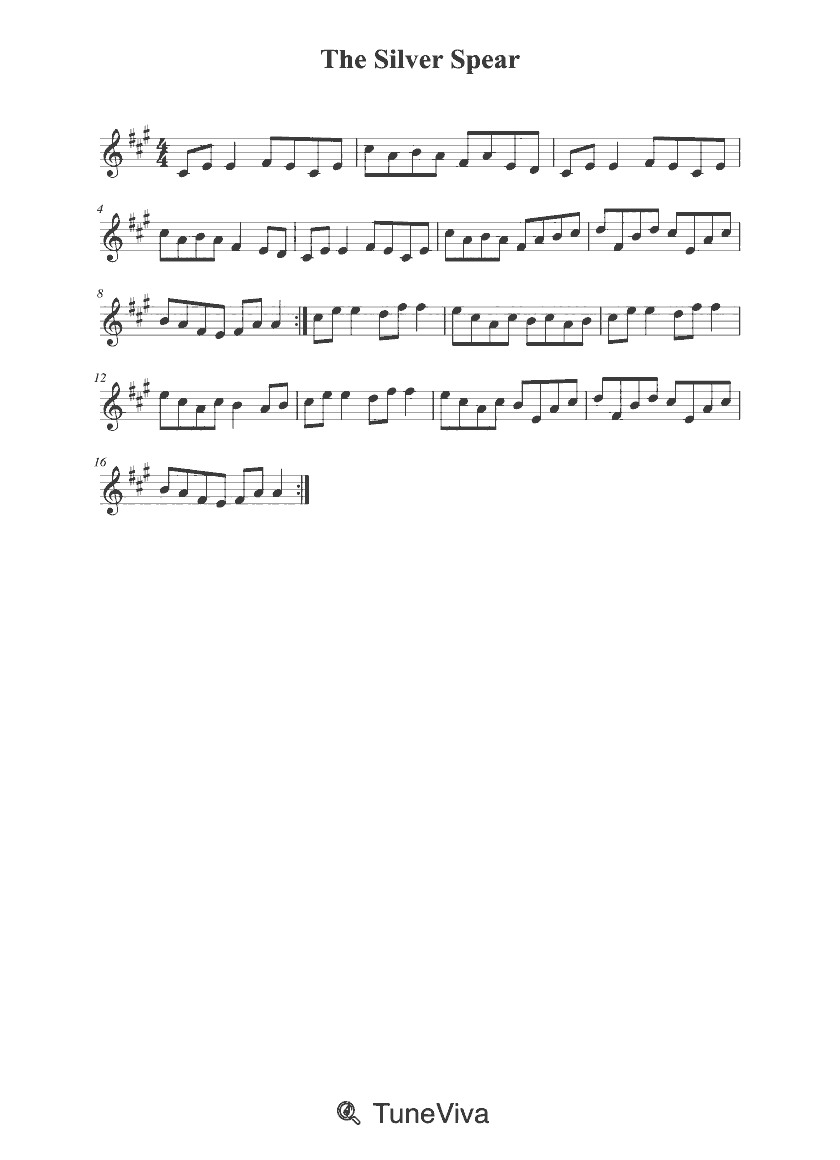
Misc tunes
1 min 20 sec
Open scorePage 1 of 2
All three listed versions of The Silver Spear open in D major, notated with two sharps, and are written in 4/4 time. Each appears as a single-track score. These shared features are a practical starting point if you are matching the sheet music to a recording or to a session setting you already know.
The settings are not identical in scale. Two of the listed scores contain a little over 200 notes and run to roughly a minute, while the third contains around 1,190 notes and runs to about five minutes. Those figures come from the individual scores and can be approximate, so treat them as a rough guide to how much music each version contains rather than as fixed performance timings. Reading through the notation remains the surest way to see how a setting treats the tune.
Because the available versions range from short to substantially longer, decide first how much of the tune you need: a compact single version for a quick reference, or a longer setting with more written material. Check the opening bars, key and time signature against the version you already play, and confirm the notation suits your instrument before committing to a score. No difficulty grading is offered for these settings.
Catalogue duration 1 min 4 sec. Opening key signature: 2 sharps (D major). Opening time signature: 4/4.
Catalogue duration 5 min 24 sec. Opening key signature: 2 sharps (D major). Opening time signature: 4/4.
Catalogue duration 1 min 4 sec. Opening key signature: 2 sharps (D major). Opening time signature: 4/4.
Each of the listed scores of The Silver Spear opens in D major, notated with two sharps. Because these are separate settings, check the key signature at the start of any version you intend to use, especially if you plan to play alongside other musicians.
The available scores of The Silver Spear are notated in 4/4 time. This is consistent across all three listed settings, so the basic metre should feel the same whichever version you open.
The catalogue credits the tune as traditional, with no named composer for the other listed versions. No verified attribution was supplied with this page, so the origin of The Silver Spear should be confirmed through a reliable traditional-music reference rather than assumed from the sheet music alone.
The listed scores vary considerably: two run to about a minute, while the third runs to roughly five minutes. These durations are derived from the individual scores and may not match how long the tune takes in performance, so use them only as a rough comparison between versions.
The settings differ in size. Two contain a little over 200 notes each, while the third contains around 1,190 notes. A larger note count suggests a more fully written-out setting, but it does not by itself tell you whether the version suits your instrument or ability, so review the notation itself.