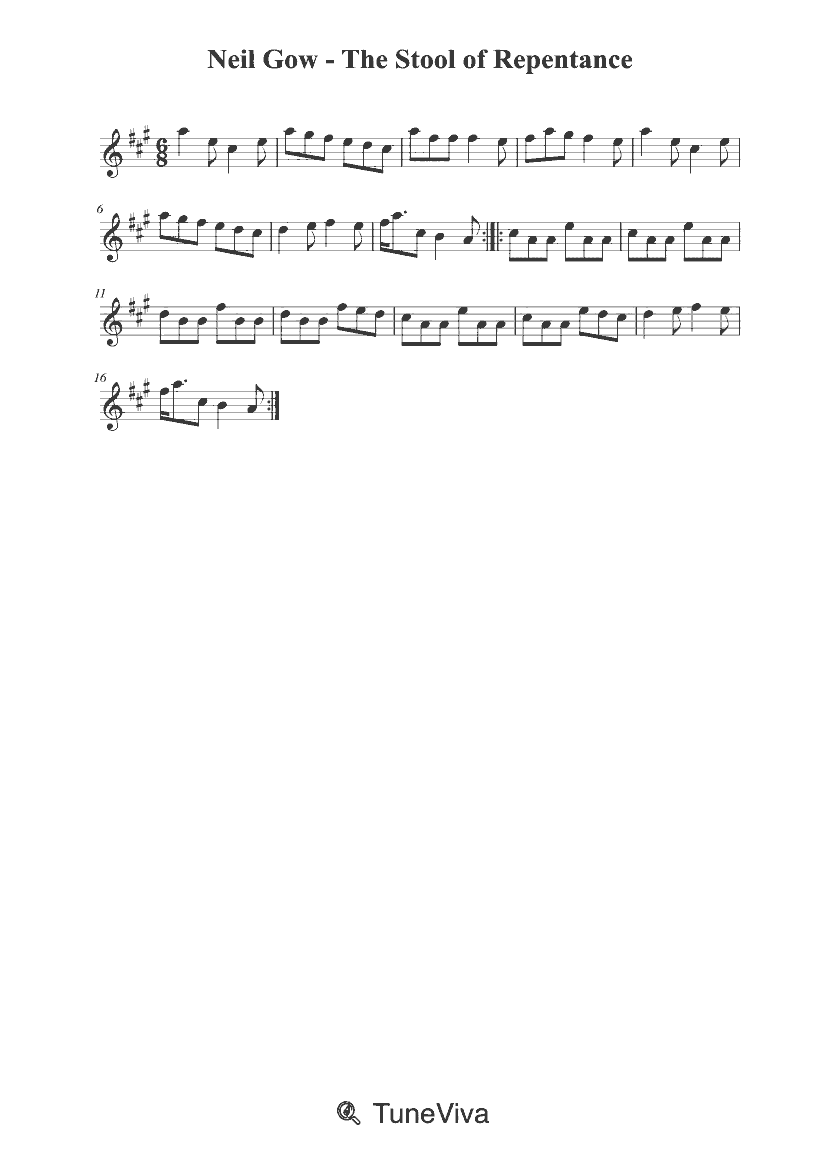
Neil Gow - The Stool of Repentance
Neil Gow ?
24 sec · Score #52546
Open scoreThe Stool of Repentance appears here in three scores, all opening in A major with a 6/8 time signature. One score credits Niel Gow (1727–1807), Scotland; another gives “Neil Gow ?”; the third leaves the composer unnamed. The versions differ in note count, and one carries a 120 BPM opening tempo marking.
Scores 1–20 of 23
Neil Gow ?
24 sec · Score #52546
Open score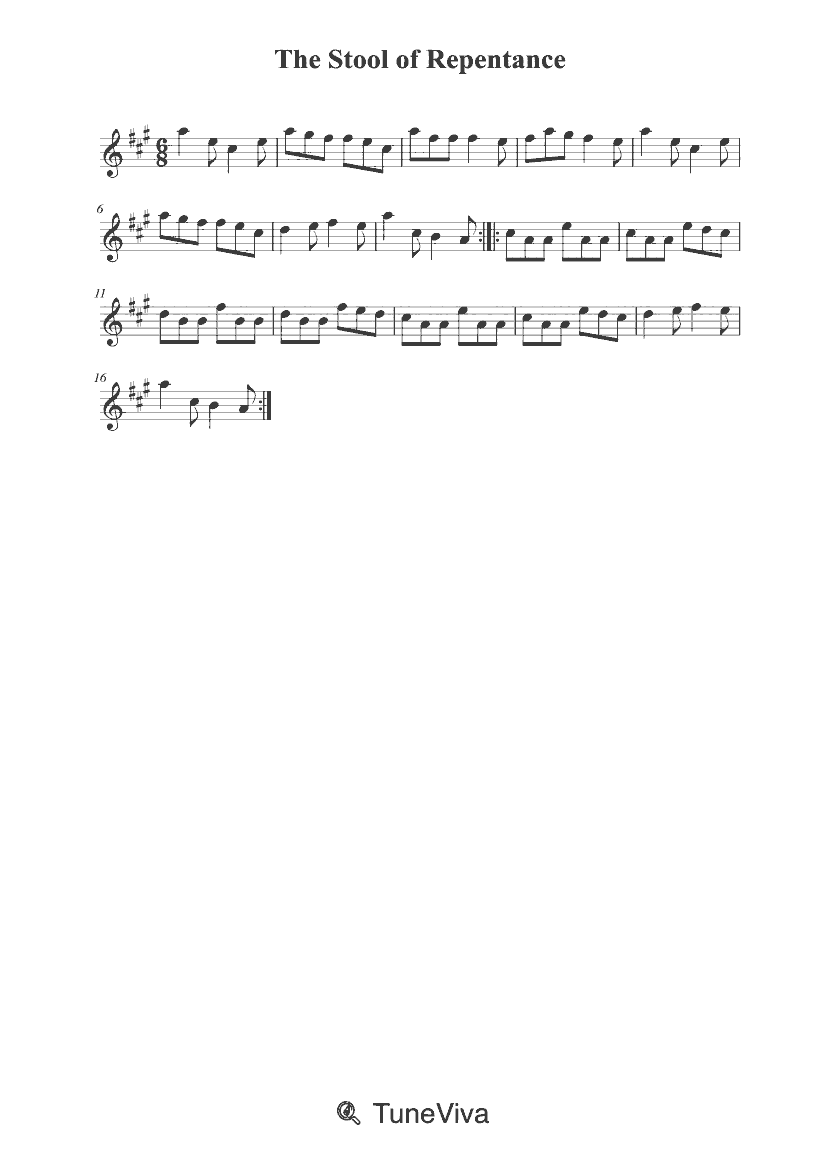
Niel Gow (1727-1807) Scotland
24 sec
Open score
Misc tunes
24 sec · Score #234713
Open score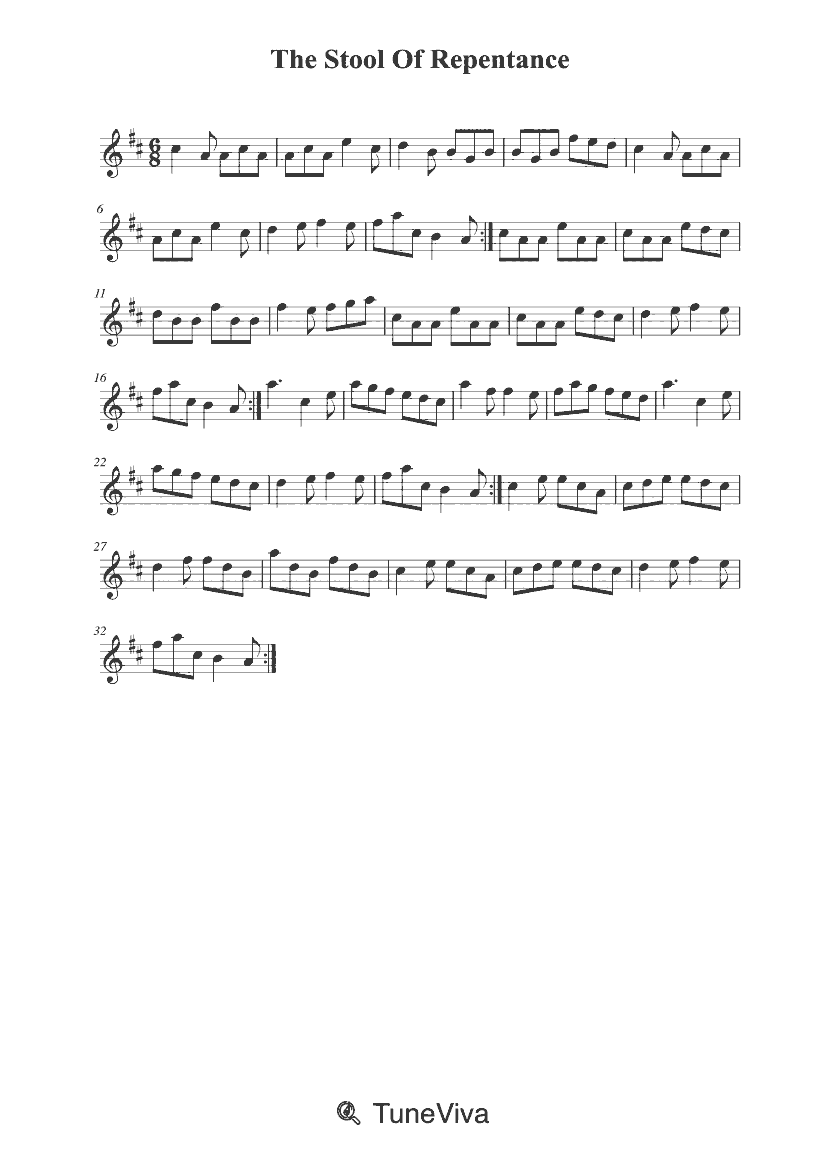
Misc tunes
1 min 24 sec
Open score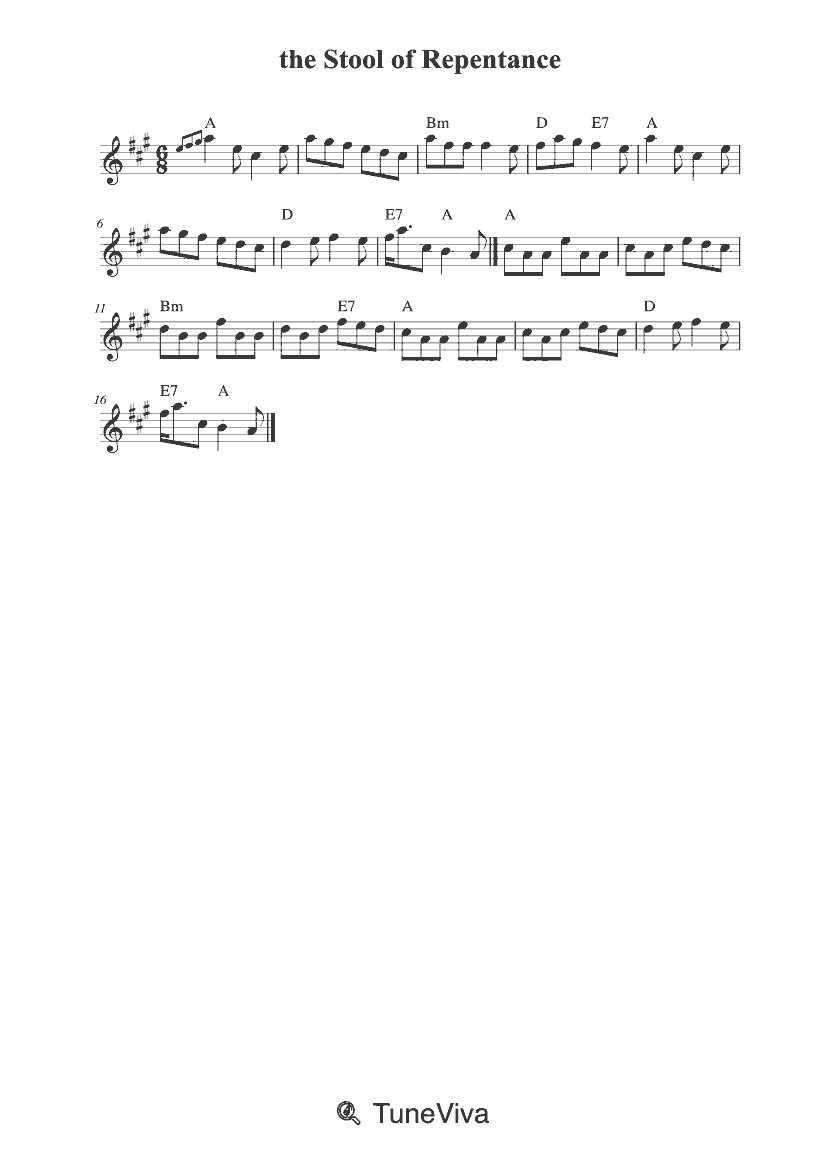
Misc tunes
12 sec
Open score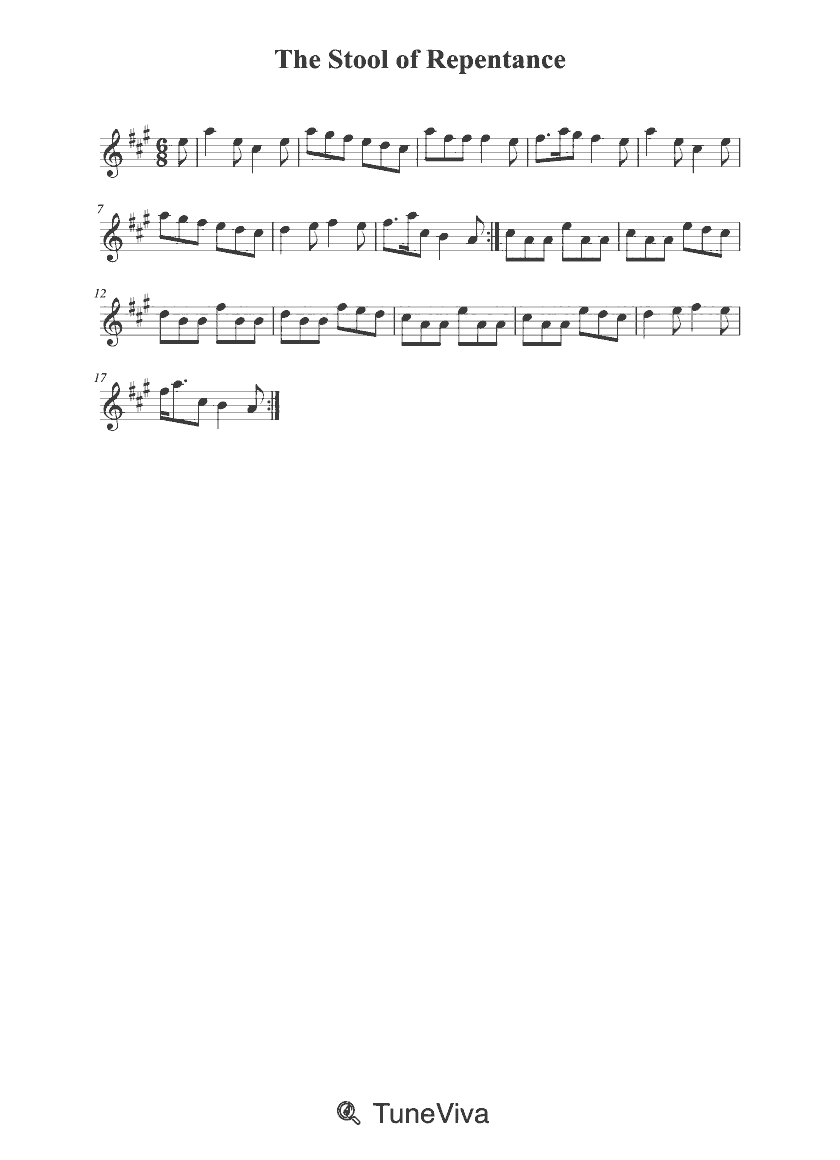
Joe Buchanan's Scottish Tome - Page 277.2
30 sec
Open score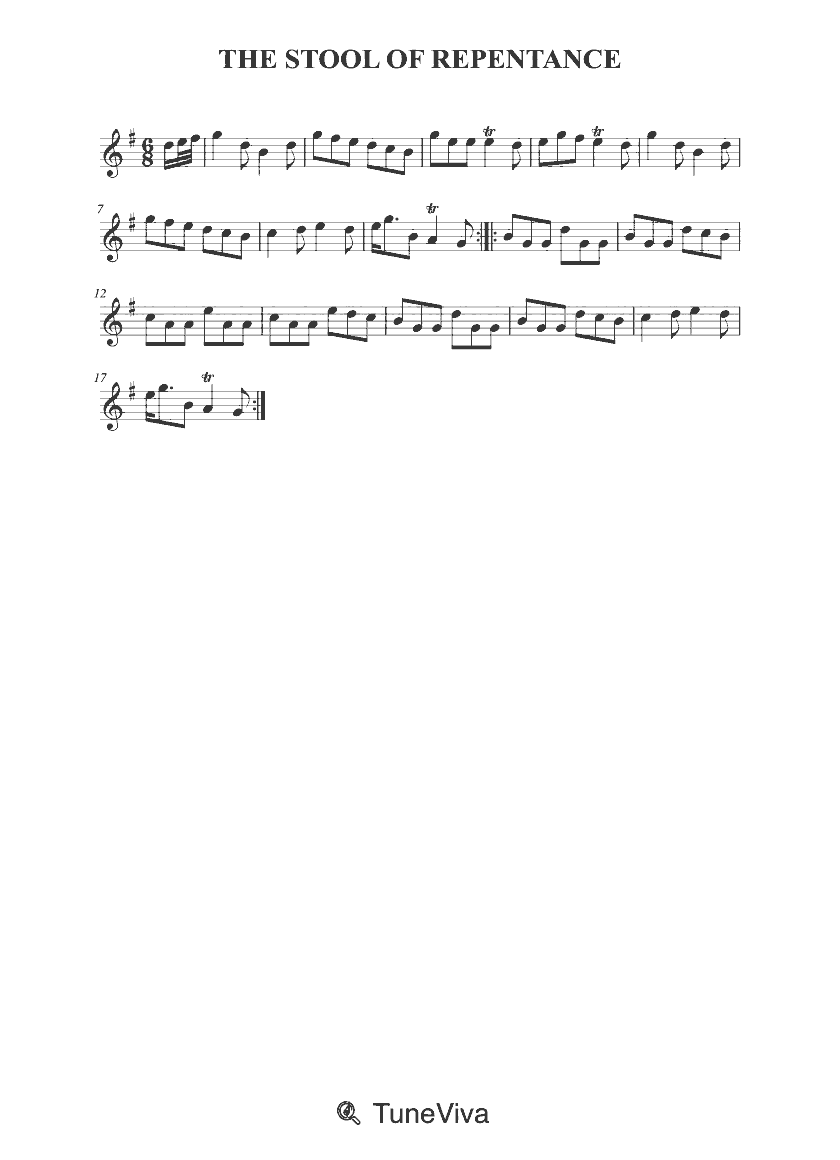
Misc tunes
24 sec · Score #187676
Open score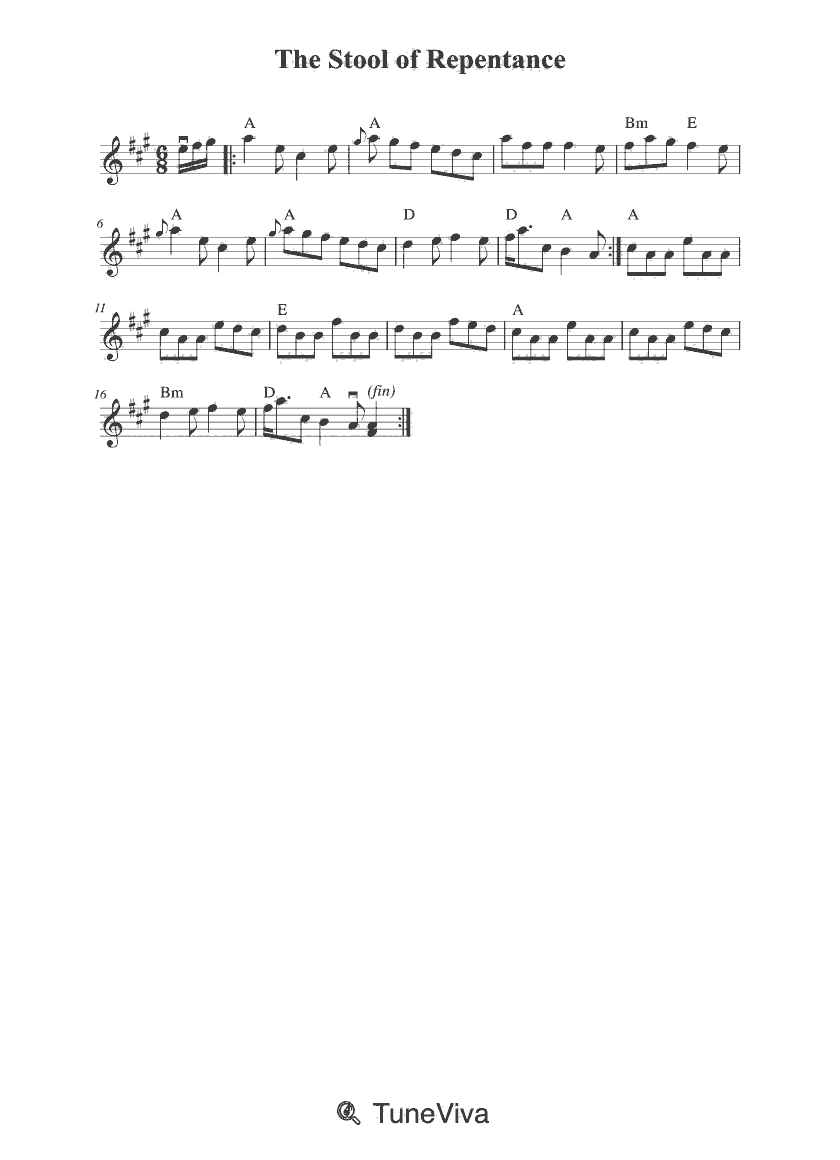
Misc tunes
31 sec
Open score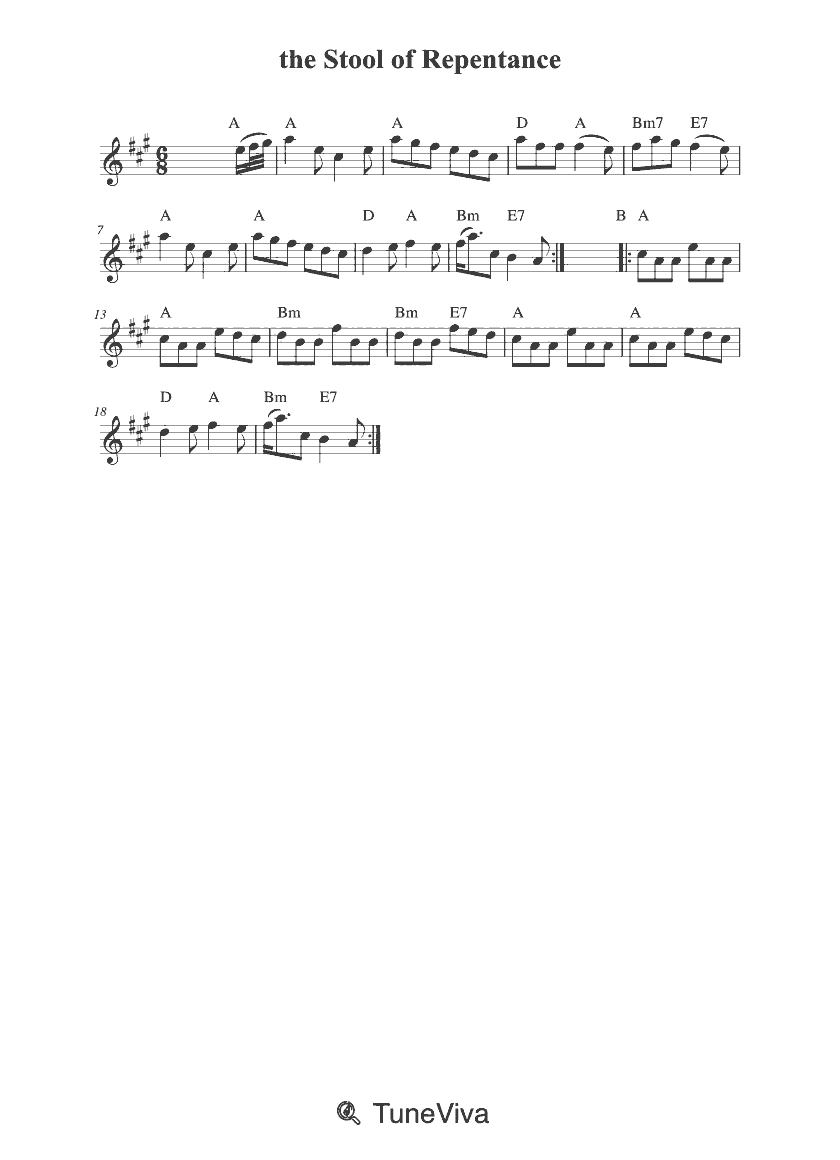
attr. Niel Gow
26 sec
Open score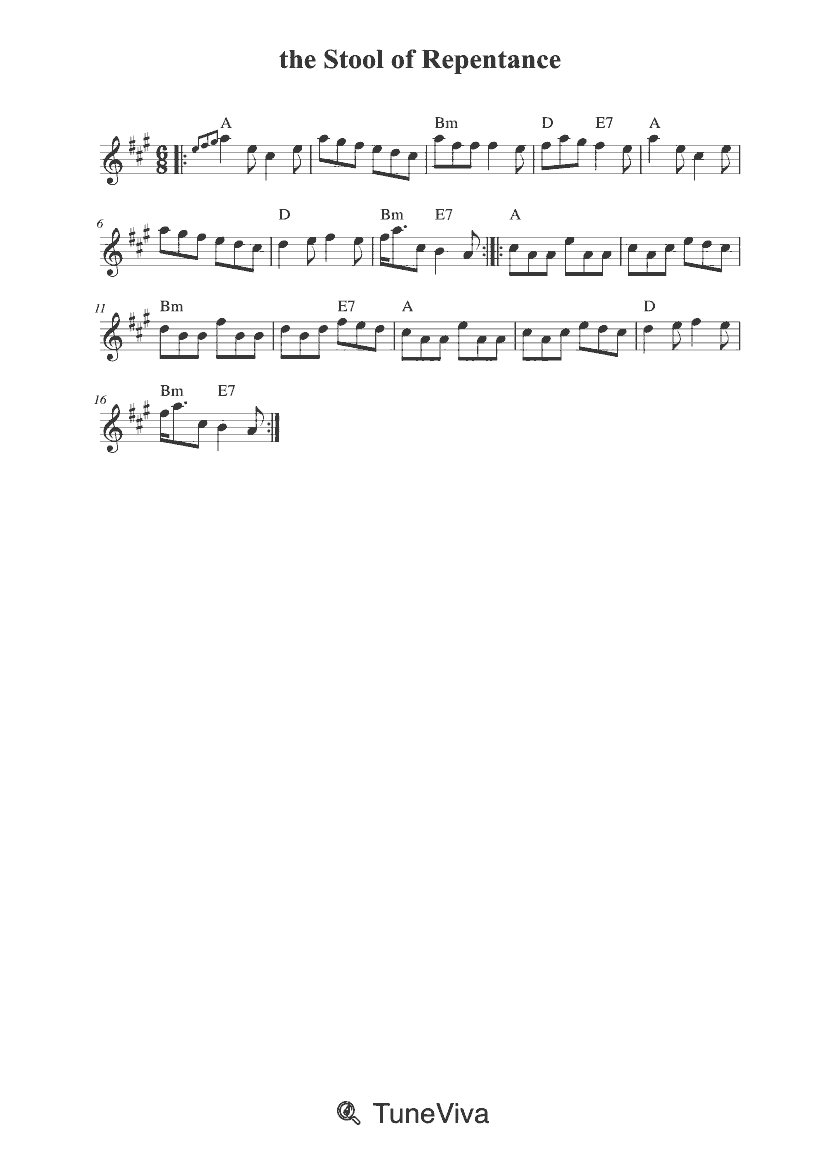
Misc tunes
24 sec · Score #52194
Open score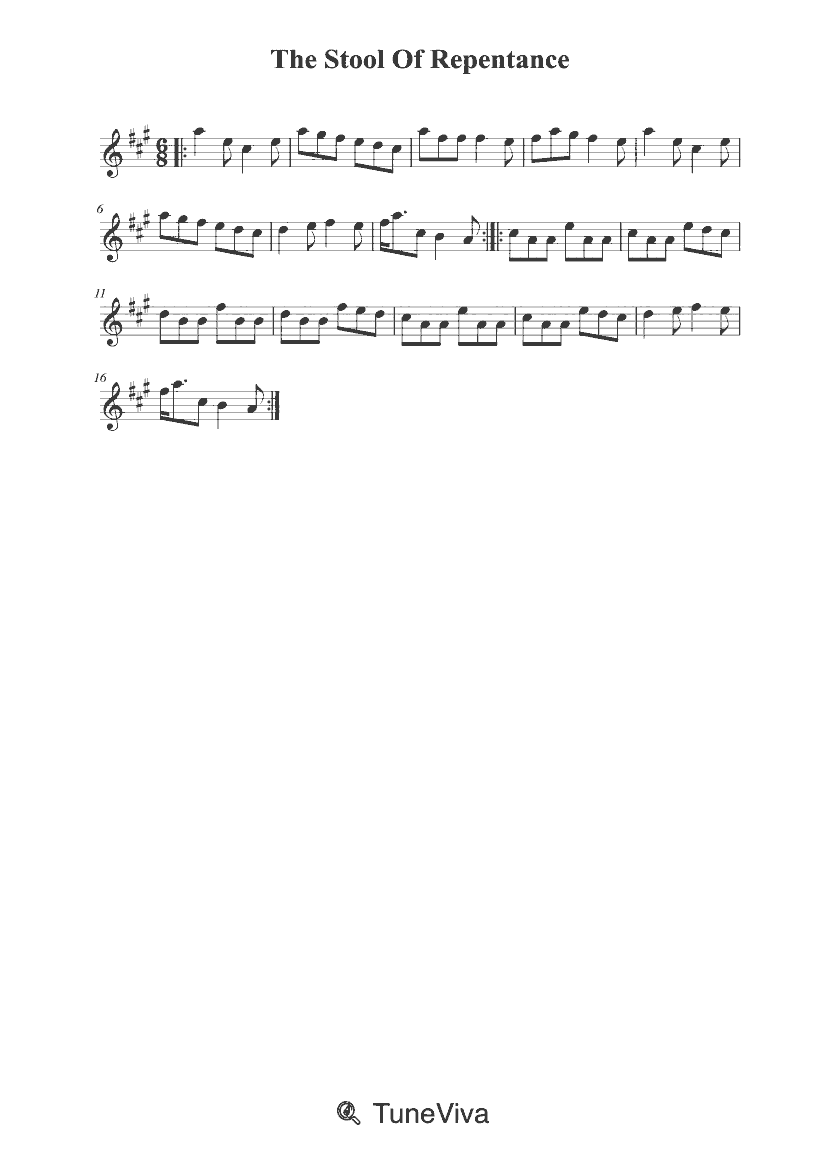
Misc tunes
24 sec · Score #52257
Open score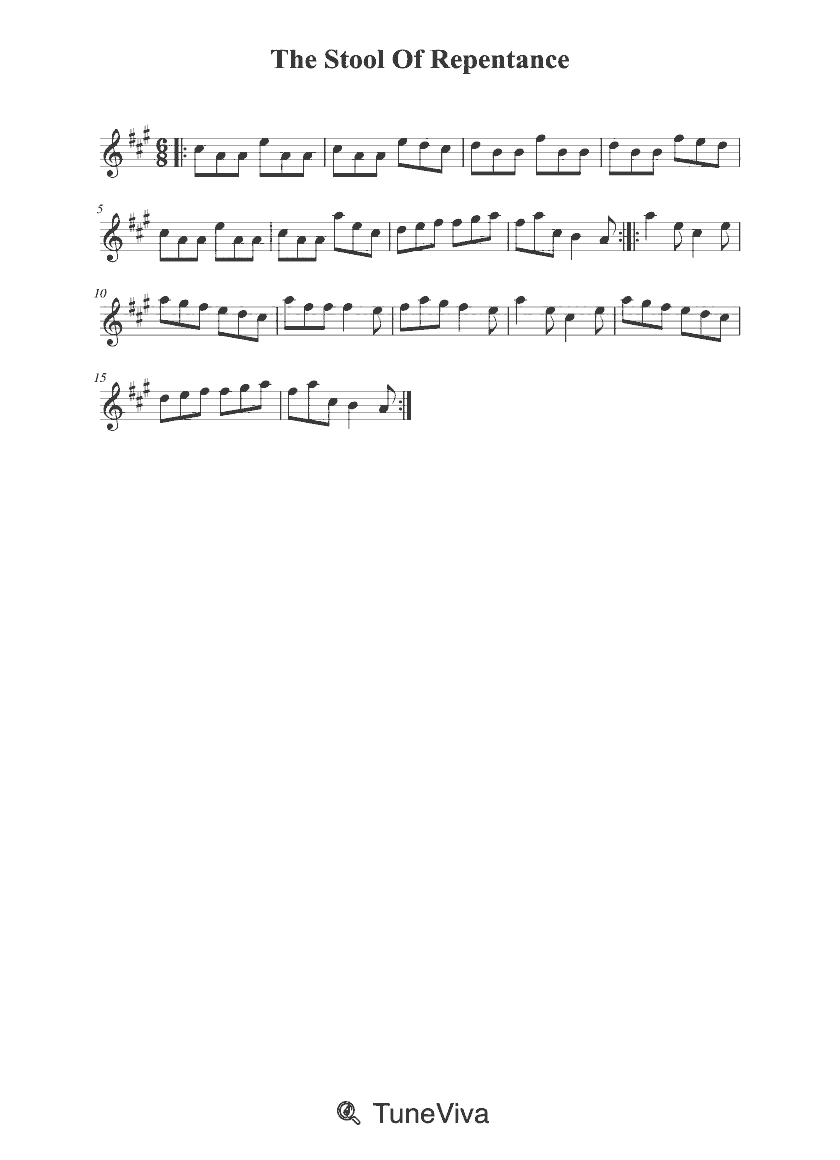
Misc tunes
24 sec · Score #73249
Open score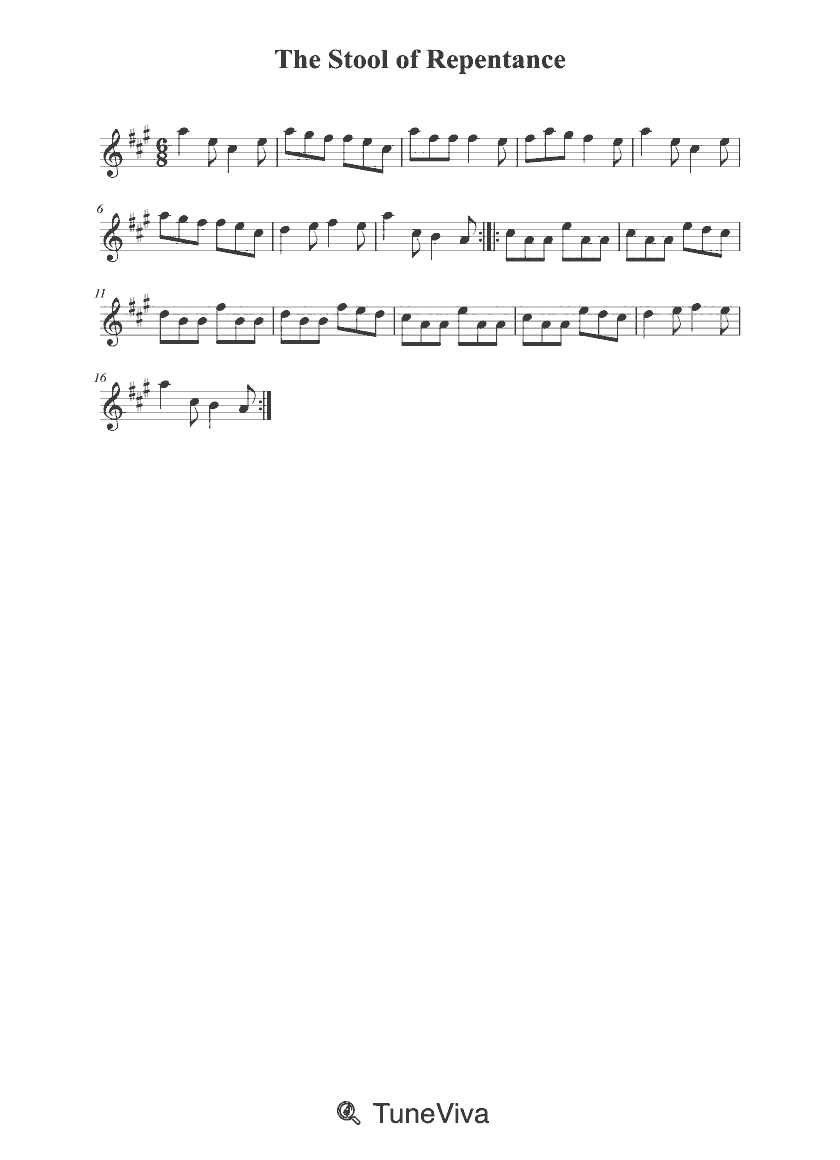
Niel Gow Scotland
24 sec
Open score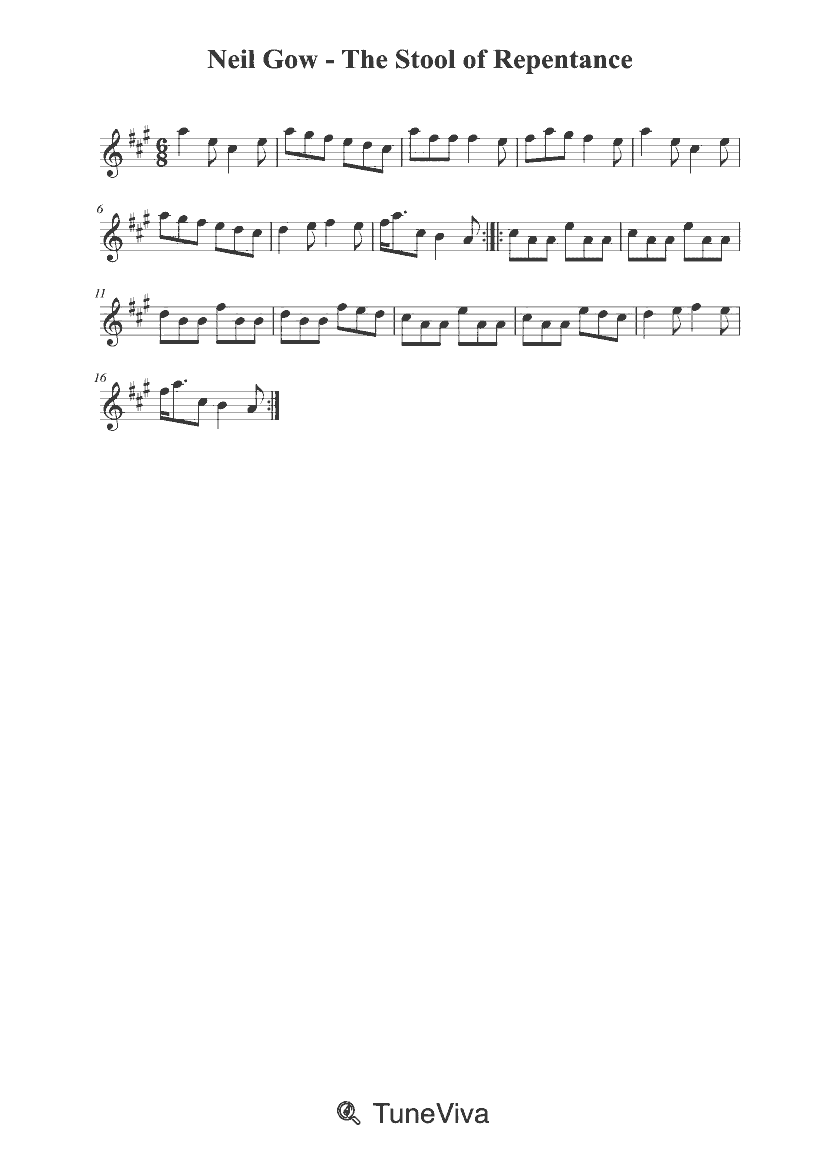
Neil Gow ?
24 sec · Score #91442
Open score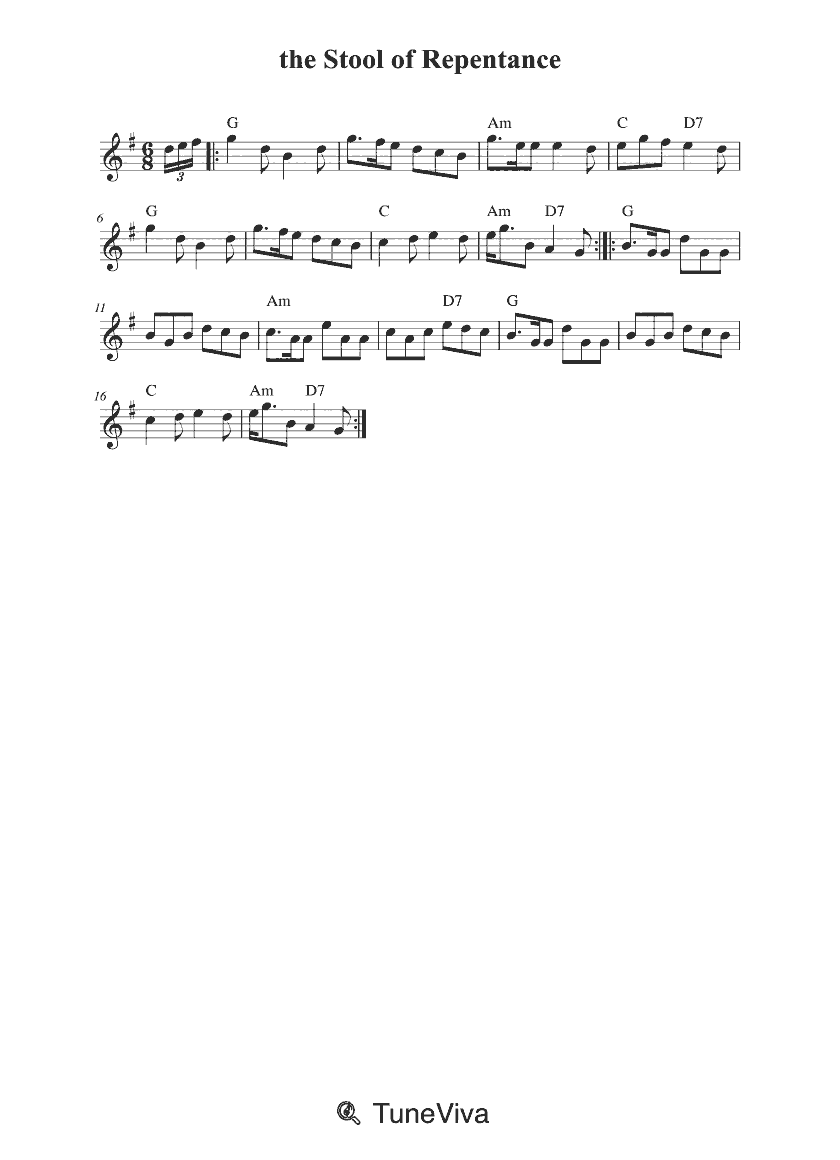
Misc tunes
24 sec · Score #97664
Open score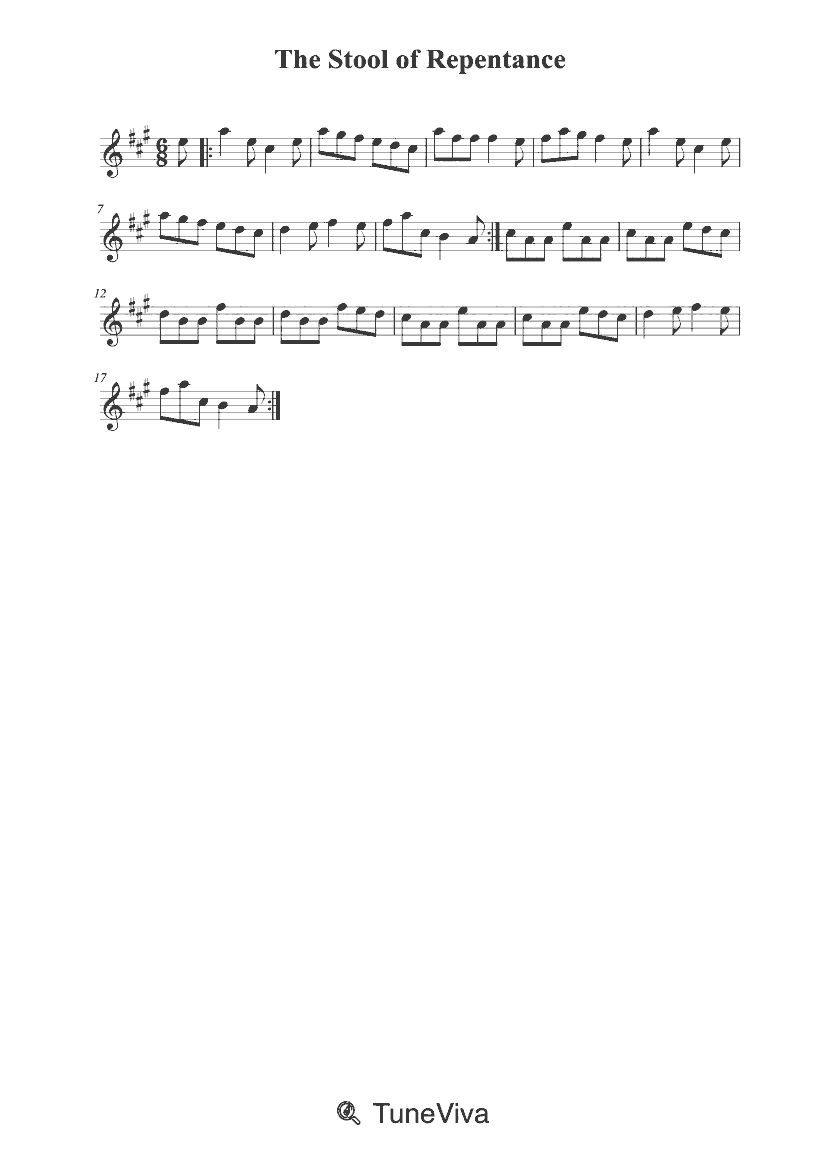
Misc tunes
30 sec
Open score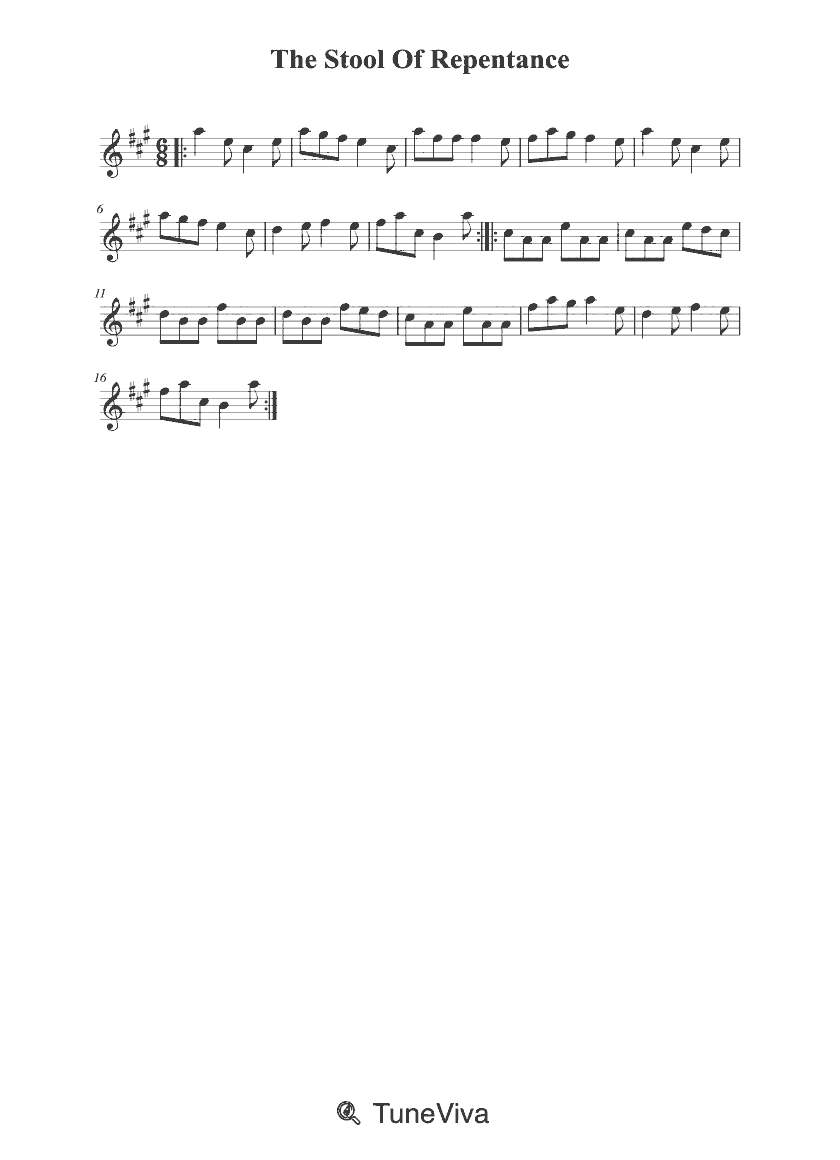
Misc tunes
24 sec · Score #152955
Open score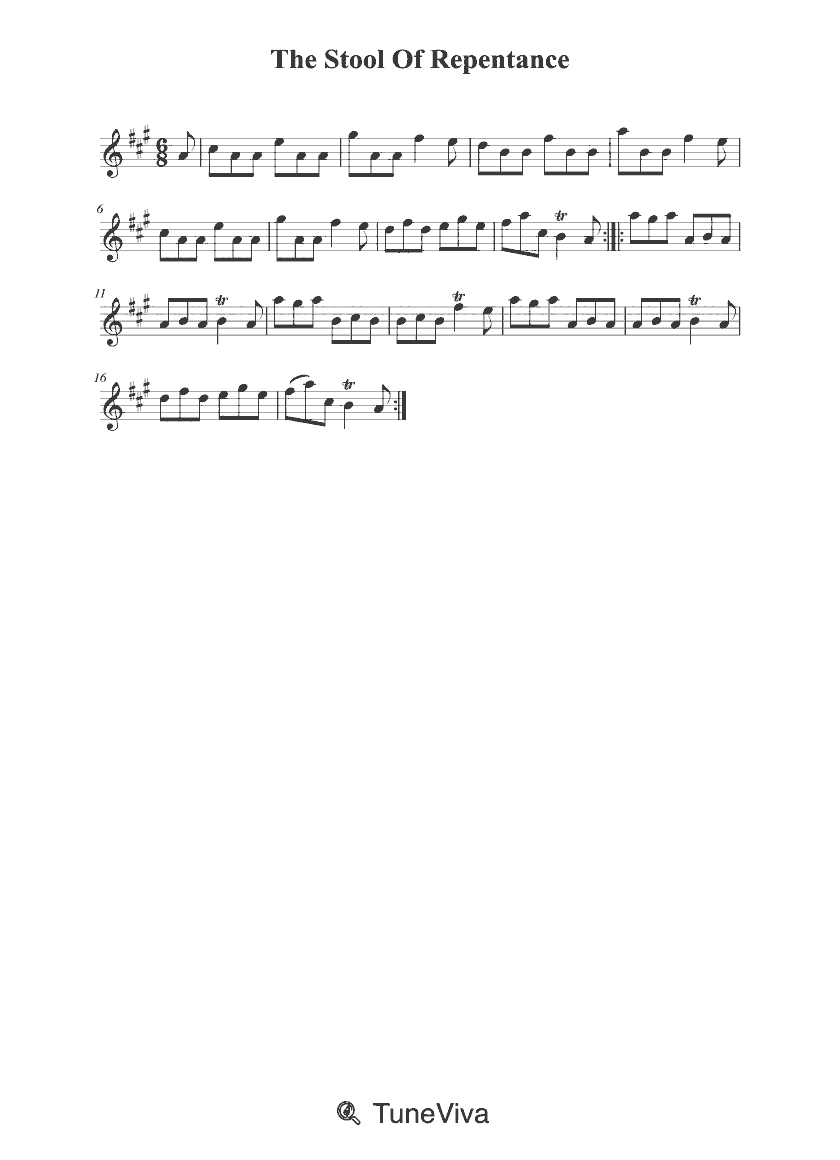
Misc tunes
24 sec · Score #180751
Open score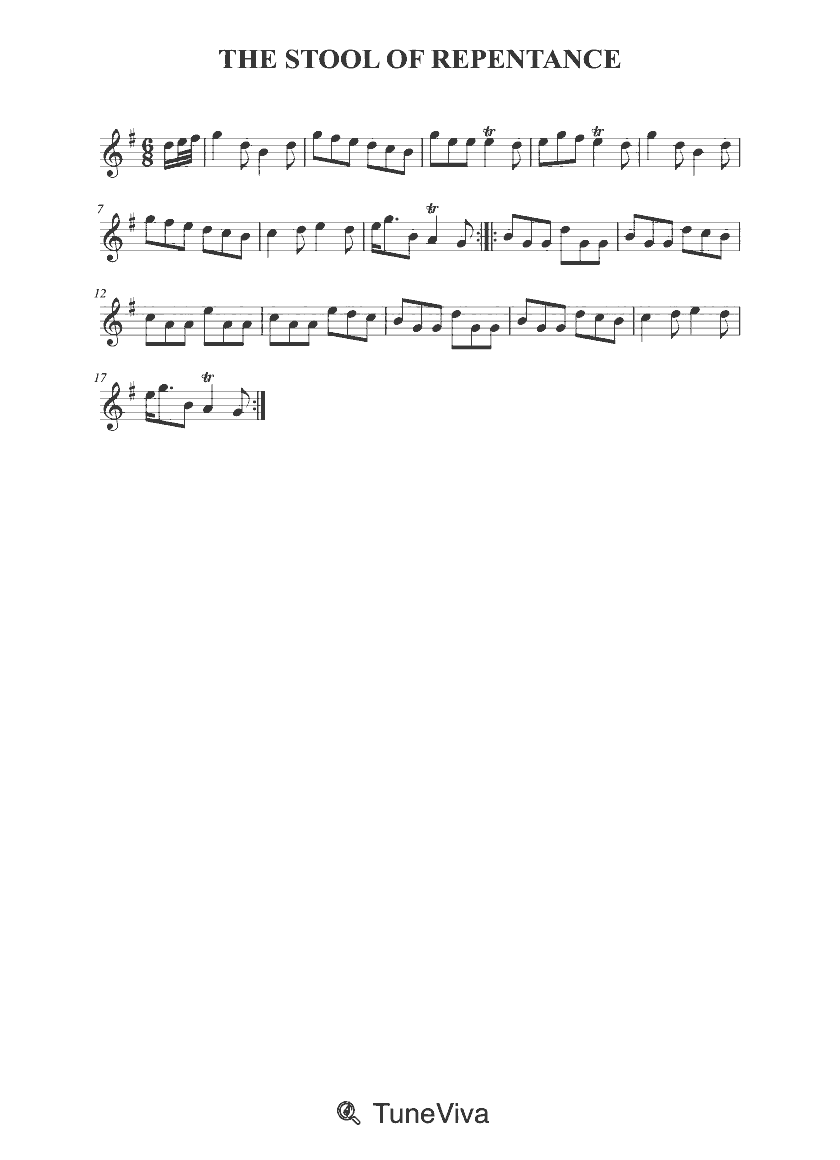
Misc tunes
24 sec · Score #190522
Open score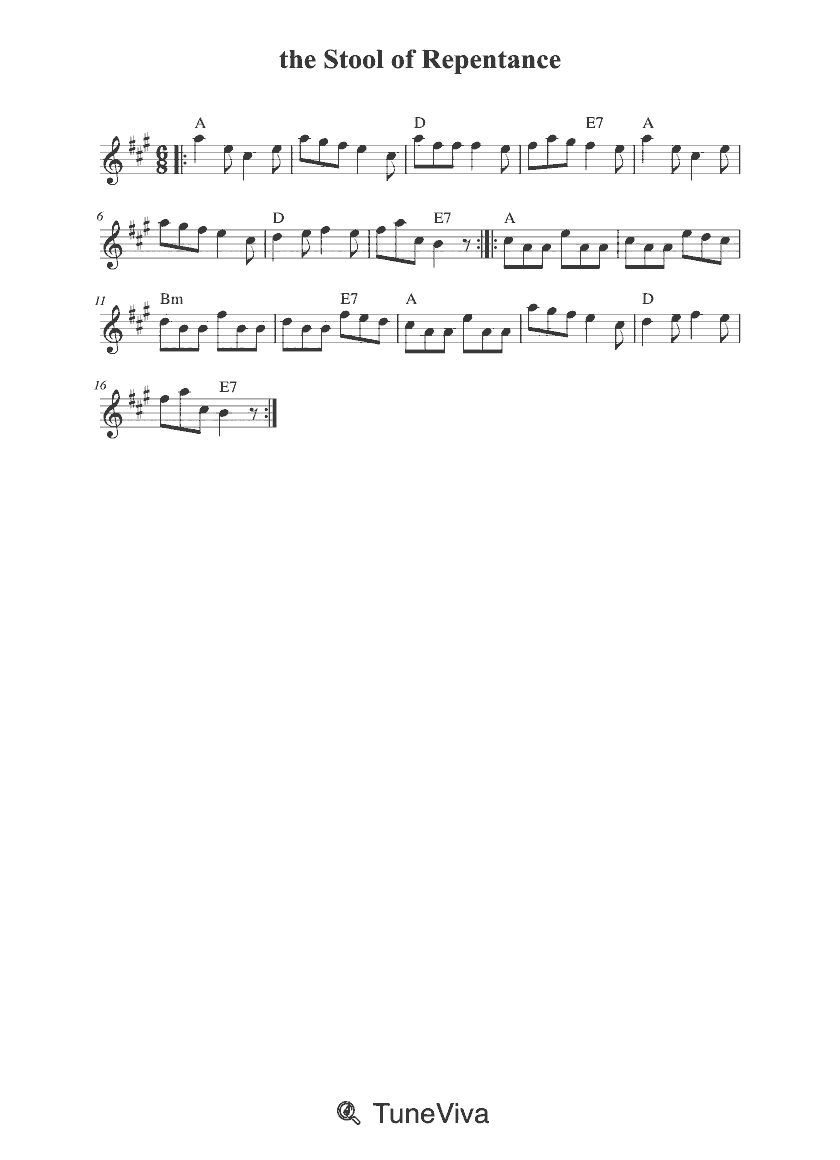
Misc tunes
24 sec · Score #3700
Open scorePage 1 of 2
All three scores for The Stool of Repentance open in A major and use 6/8 metre. One score also lists an opening tempo of 120 BPM. These details describe the start of each score and are useful for comparing versions, but they do not prove that every bar follows the same pattern.
A 6/8 signature groups six eighth notes into two main beats of three. Players usually count the music in two, with the pulse falling on the first and fourth eighth notes: 1–2–3, 4–5–6. This compound-duple feel is a practical starting point for reading any of the scores listed for The Stool of Repentance.
The composer credit is not consistent across the scores. One names Niel Gow with the dates 1727–1807 and a Scottish association; another gives “Neil Gow ?”; the third gives no composer at all. Treat the Gow attribution as a lead rather than a settled fact, and compare the notation itself when choosing a version.
Compare the attribution, note count and any tempo marking before deciding. The three scores contain 164, 168 and 174 notes respectively, and each is listed at roughly 24 seconds.
Catalogue duration 24 sec. Opening key signature: 3 sharps (A major). Opening time signature: 6/8.
Catalogue duration 24 sec. Opening key signature: 3 sharps (A major). Opening time signature: 6/8.
Catalogue duration 24 sec. Opening key signature: 3 sharps (A major). Opening time signature: 6/8. Opening tempo: 120 BPM.
All three scores listed for The Stool of Repentance open in A major with a 6/8 time signature. One score also gives an opening tempo of 120 BPM. These markings describe the opening of each score and should be checked as the music proceeds.
One score names Niel Gow (1727–1807), Scotland, as the composer; another credits “Neil Gow ?”; and a third gives no composer.
The three scores contain 164, 168 and 174 notes respectively, though each is listed at about 24 seconds. The differences may reflect variant settings or different notation, but the evidence provided does not identify which version is authoritative.
The 6/8 metre used in all three scores groups six eighth notes into two beats of three, so the music is usually counted in two: 1–2–3, 4–5–6, with the main pulse on the first and fourth eighth notes. This gives the music a compound-duple feel rather than a simple one-beat-per-eighth-note pulse.
Compare the attribution and the notation. One score credits Niel Gow with dates and a Scottish association, another gives a tentative “Neil Gow ?”, and the third gives no composer. All three open in A major and 6/8, and their note counts differ, so check the version that best matches the setting you need.