
Trip to Durrow
Misc tunes
1 min 36 sec · Score #31743
Open scoreThe Trip To Durrow is represented by three scores with different titles and opening keys. Two scores titled “The Trip To Durrow” or “Trip to Durrow” open in D major with two sharps and a 4/4 time signature. A third score, titled “Durrow”, opens in E-flat major with three flats. No named composer is given in the score details, so this page concentrates on choosing and checking the notation rather than on unverified authorship or history.
Scores 1–20 of 22
Misc tunes
1 min 36 sec · Score #31743
Open score
Irish Tune
27 sec
Open score
Misc tunes
1 min 36 sec · Score #65471
Open score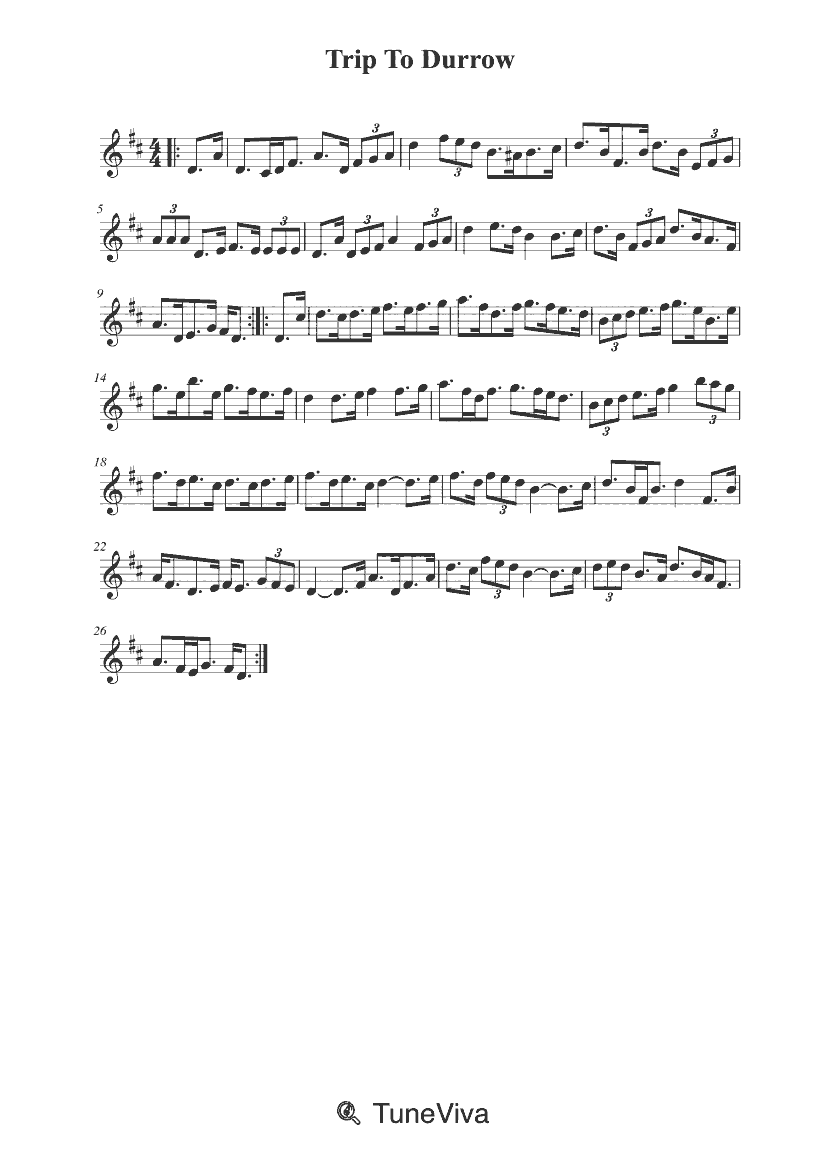
Misc tunes
1 min 36 sec · Score #1537
Open score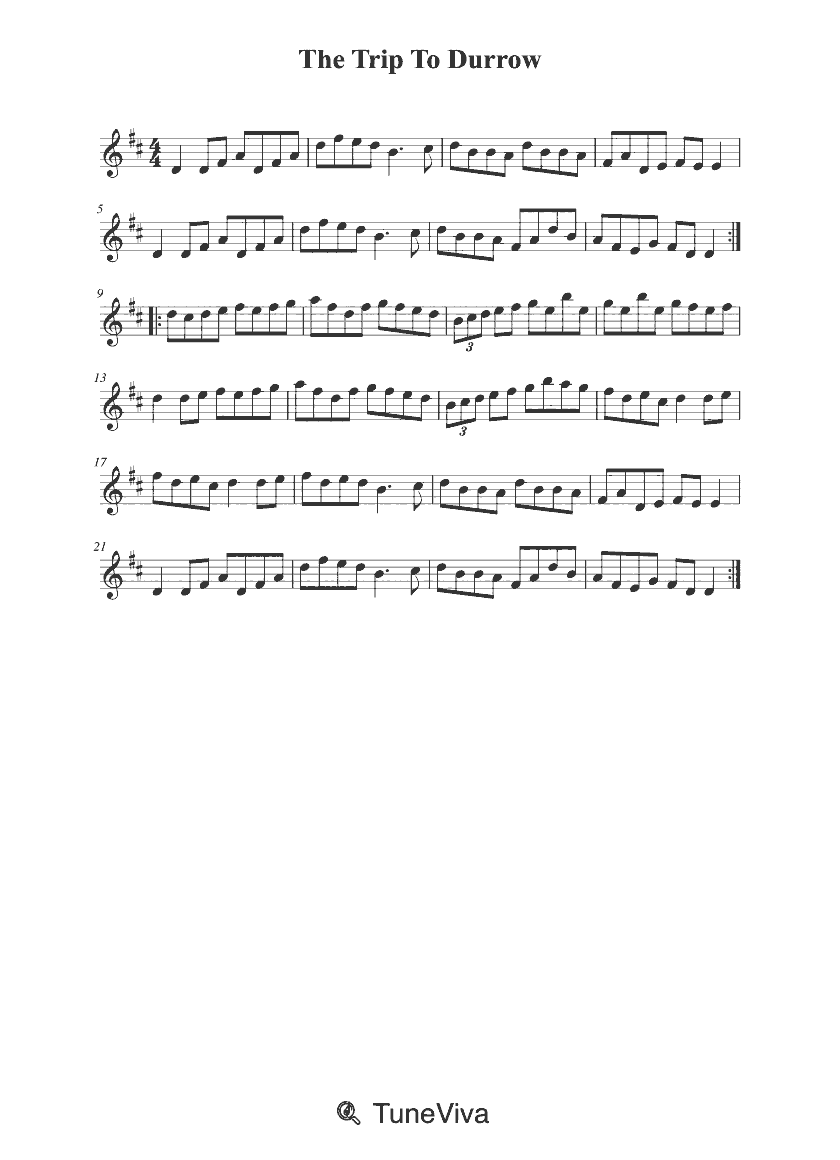
Misc tunes
1 min 36 sec · Score #109787
Open score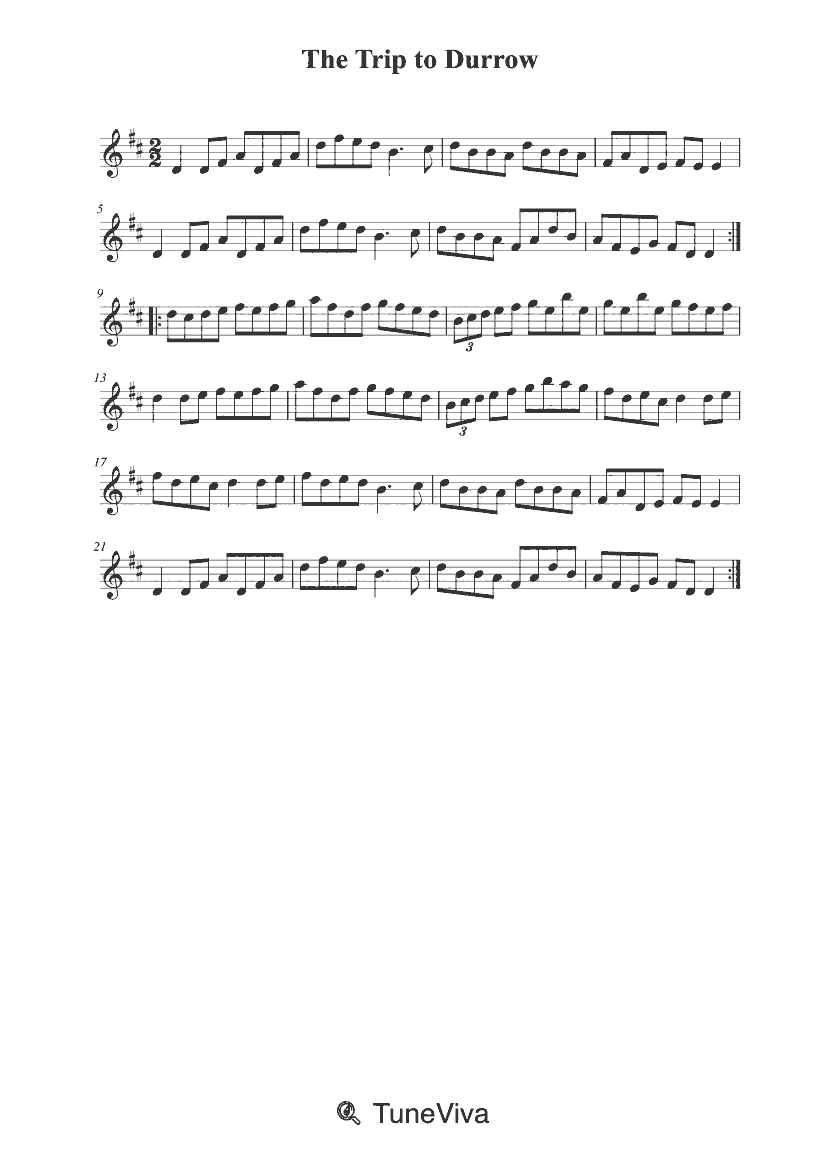
Misc tunes
3 min 12 sec · Score #10072
Open score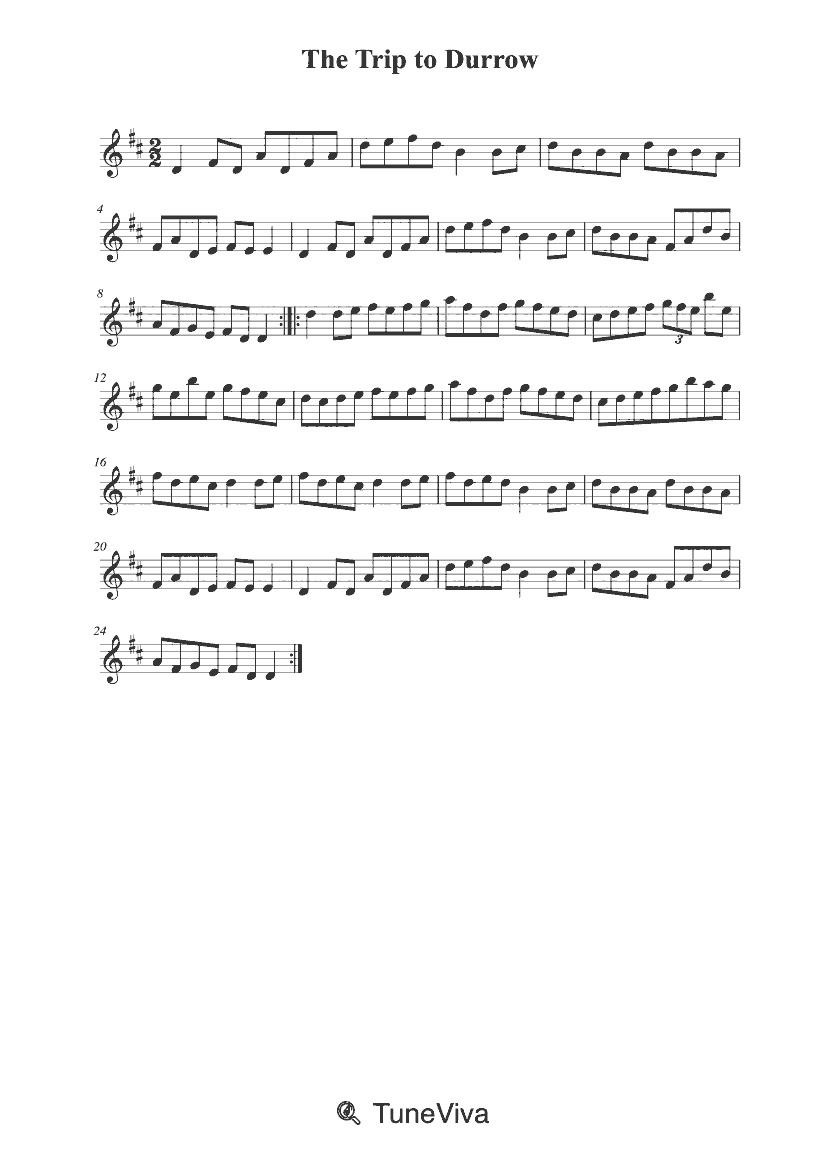
Misc tunes
3 min 12 sec · Score #52957
Open score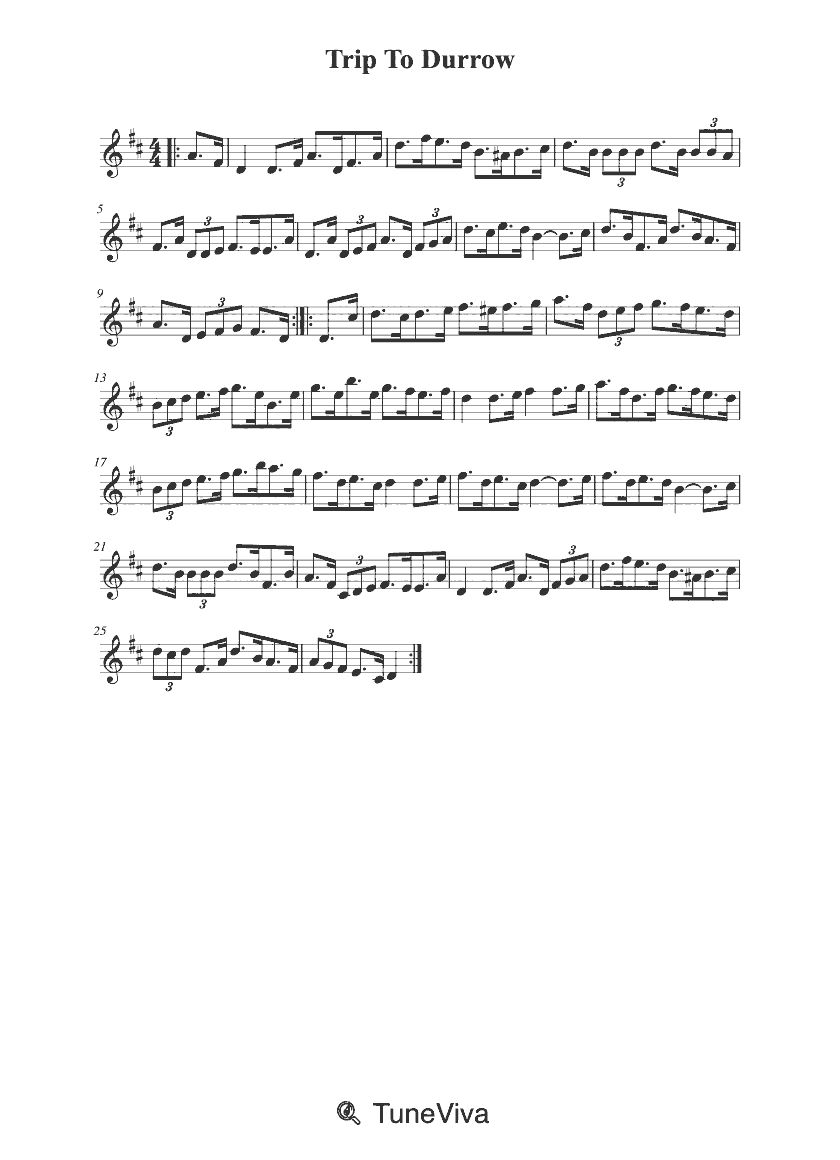
Misc tunes
1 min 36 sec · Score #246428
Open score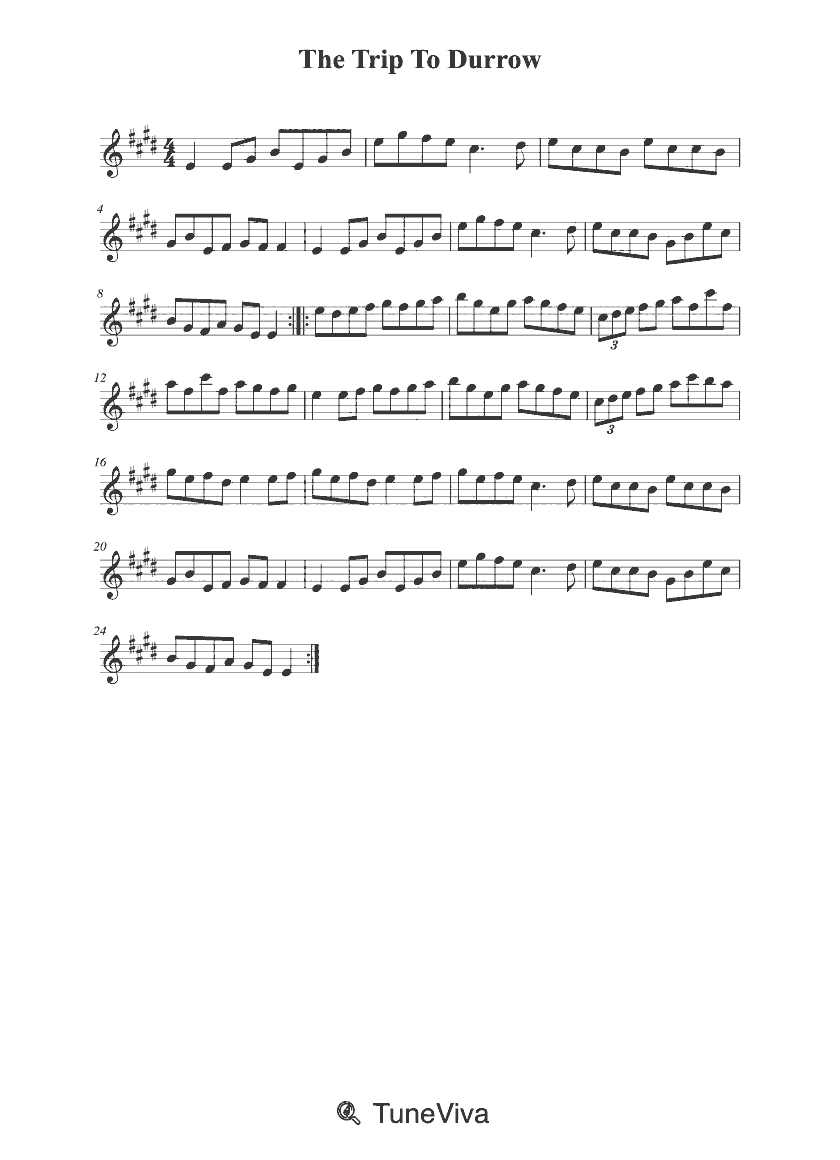
Misc tunes
1 min 36 sec · Score #18661
Open score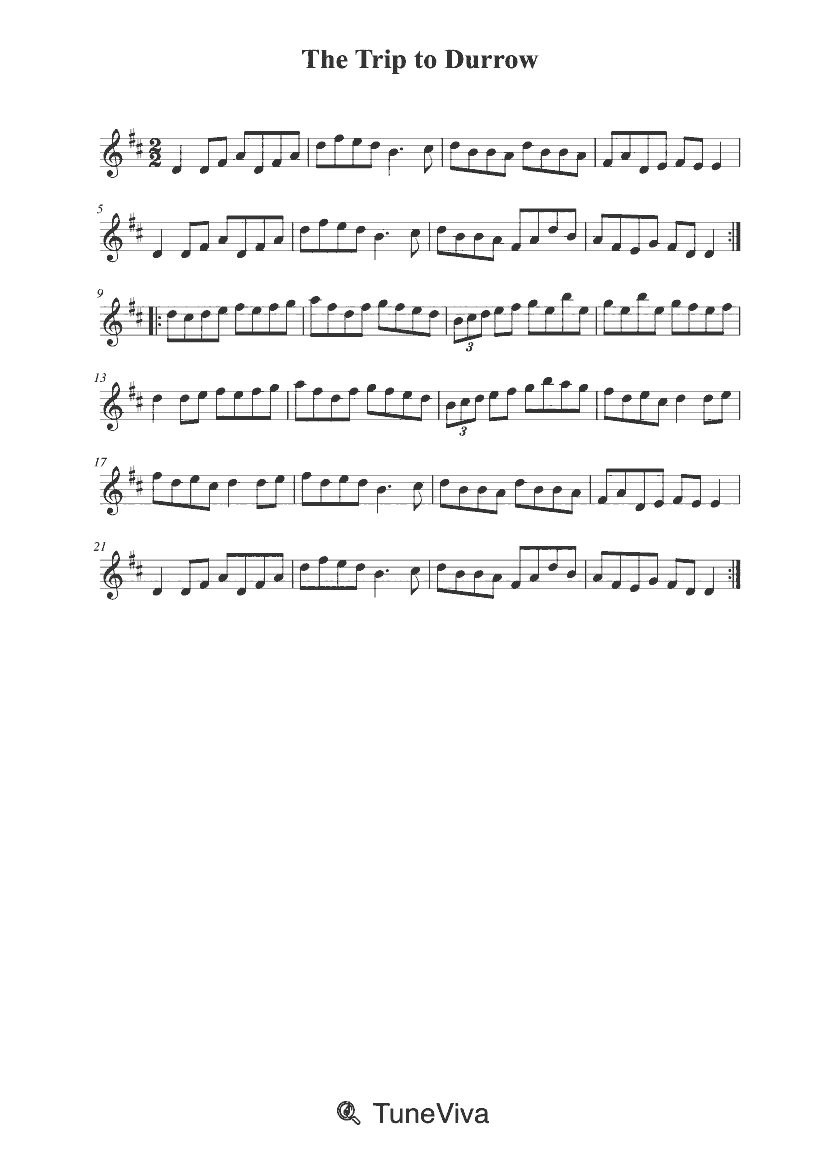
Misc tunes
3 min 12 sec · Score #20521
Open score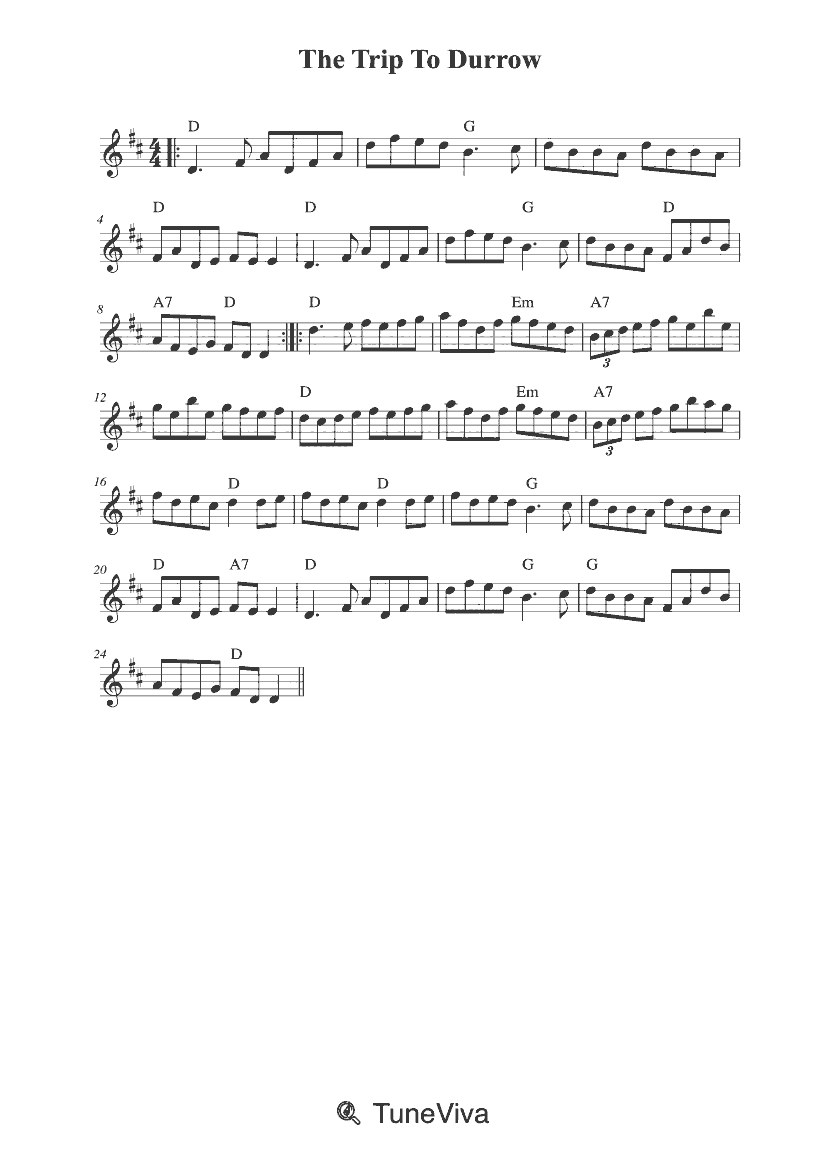
Misc tunes
1 min 36 sec · Score #48053
Open score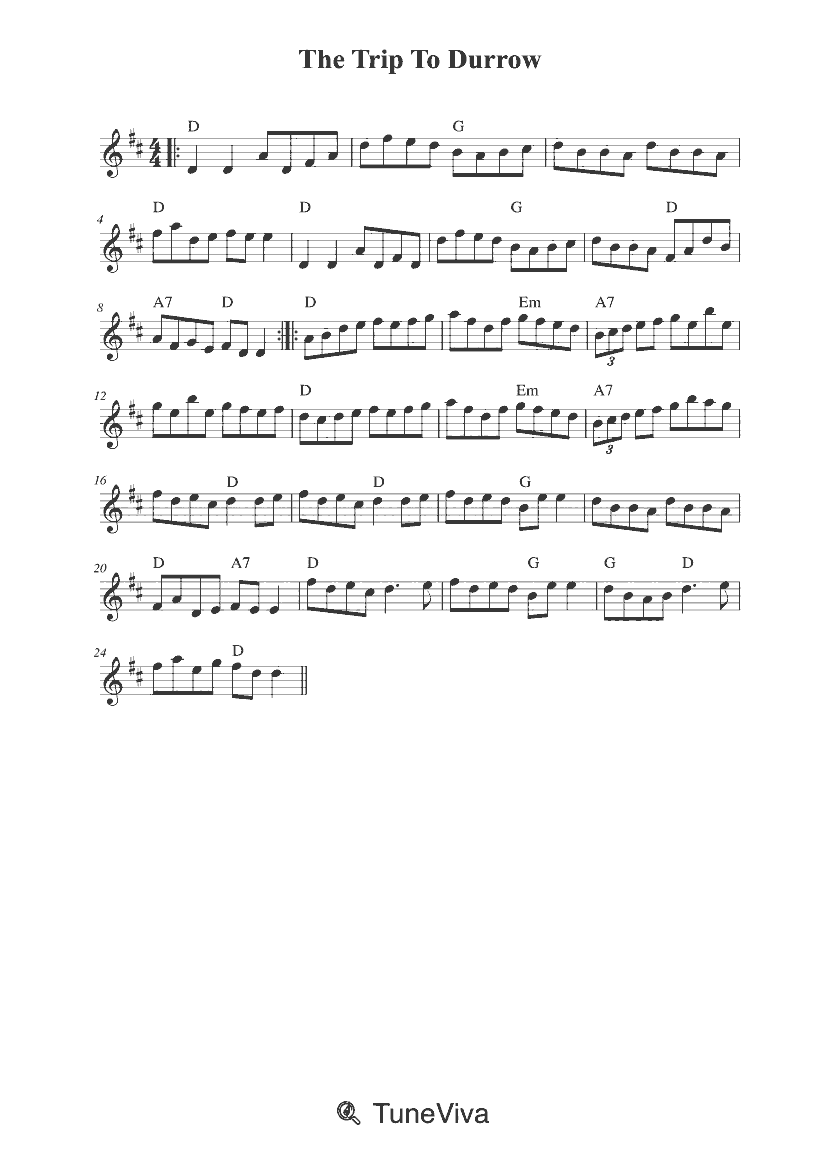
Misc tunes
1 min 36 sec · Score #76920
Open score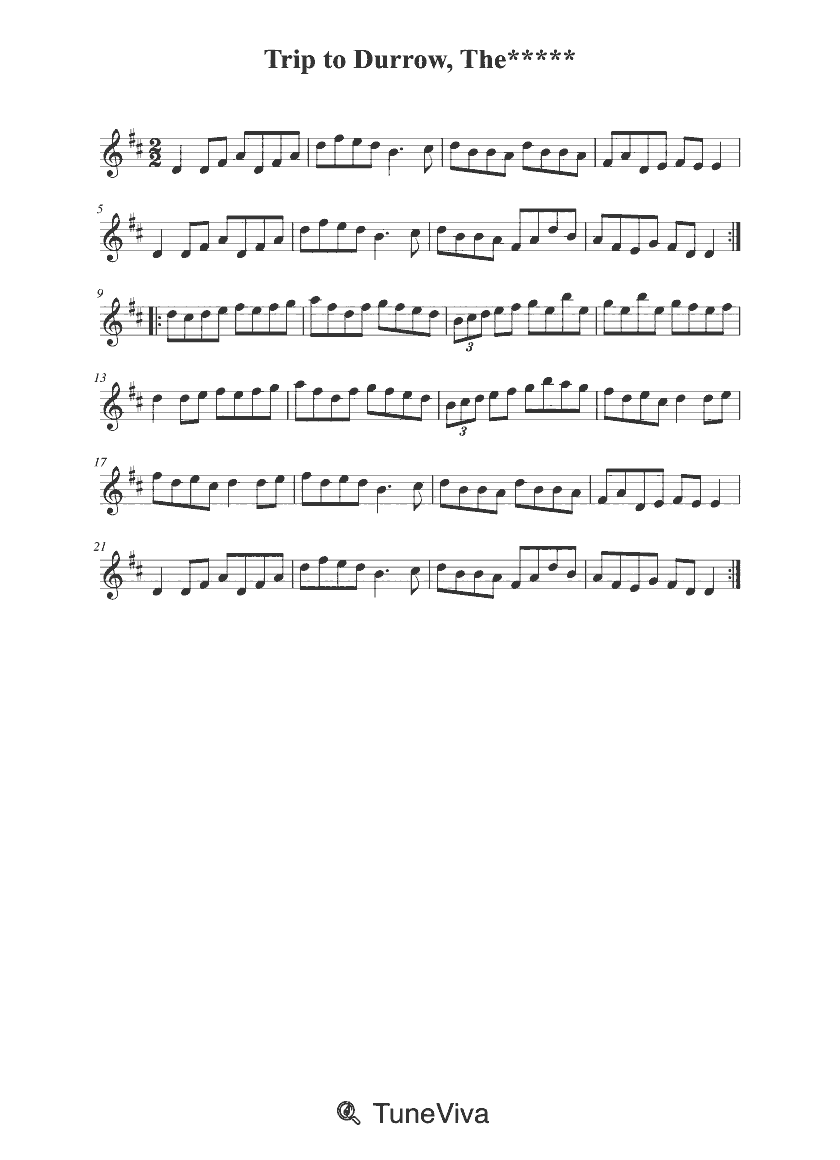
Misc tunes
3 min 12 sec
Open score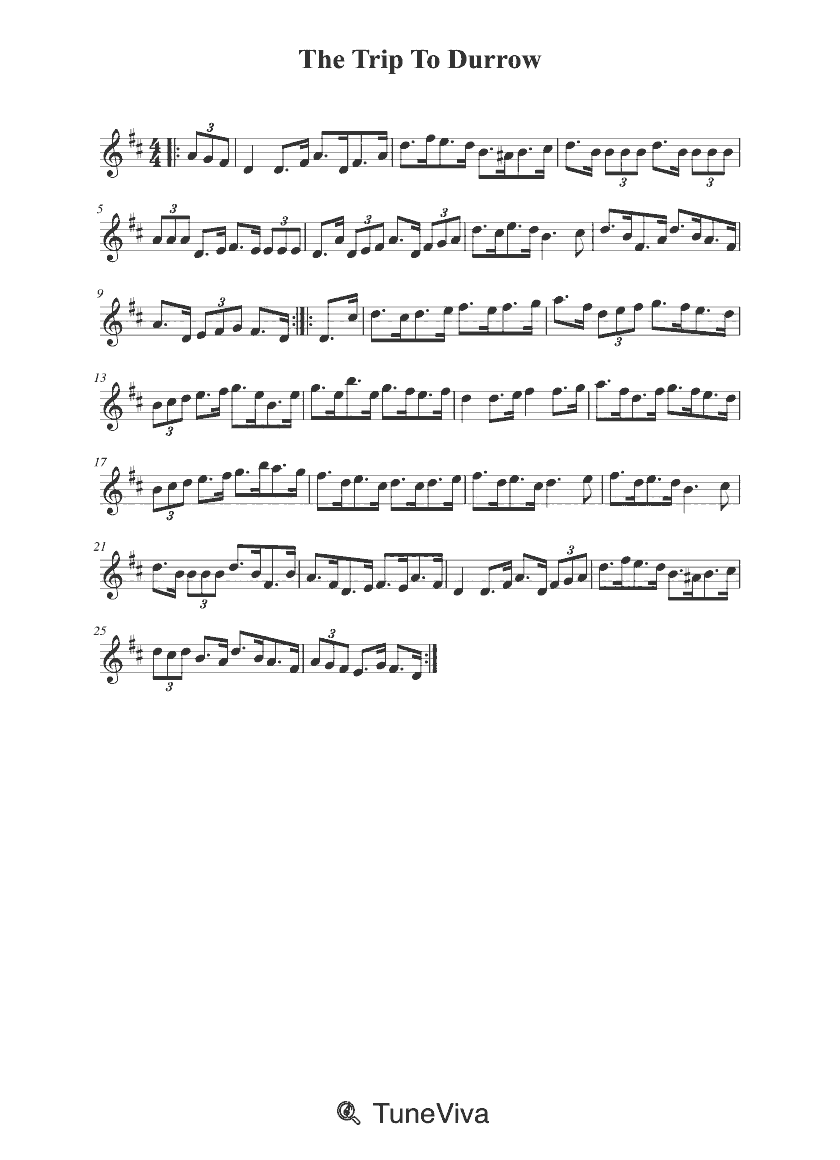
Misc tunes
1 min 36 sec · Score #172154
Open score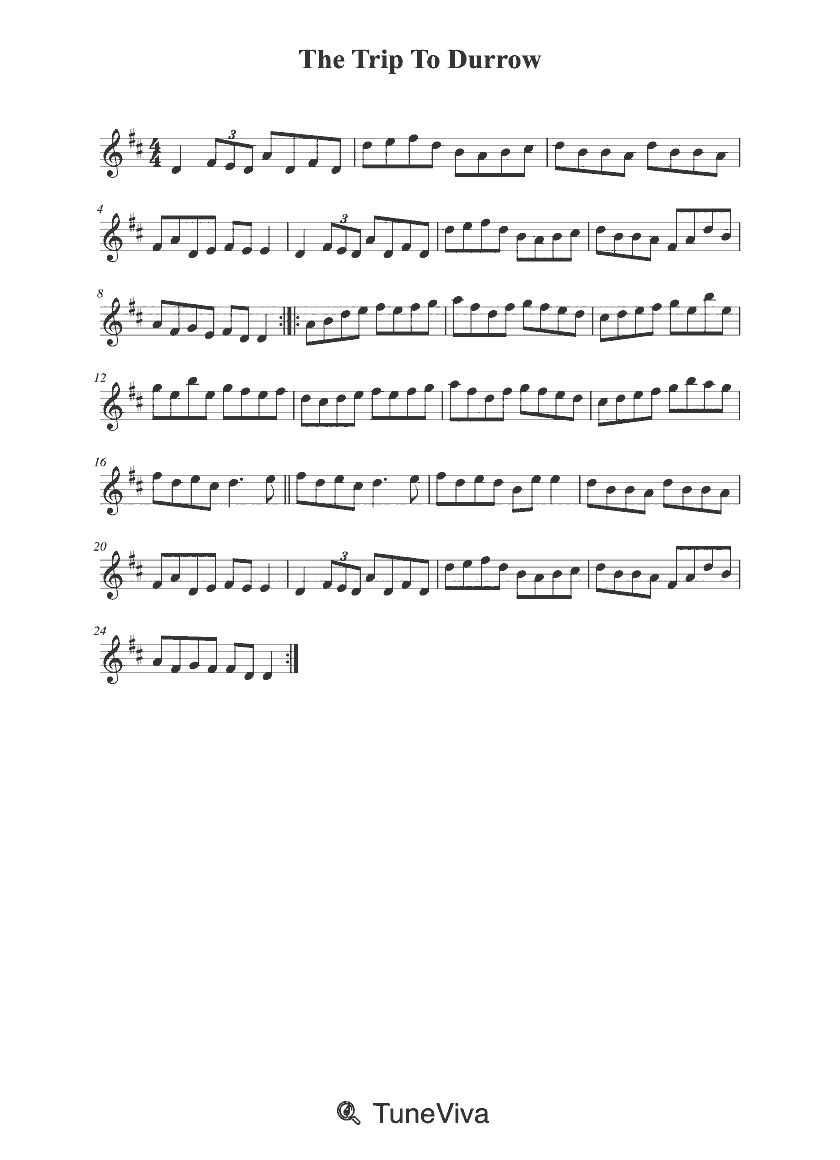
Misc tunes
1 min 36 sec · Score #179571
Open score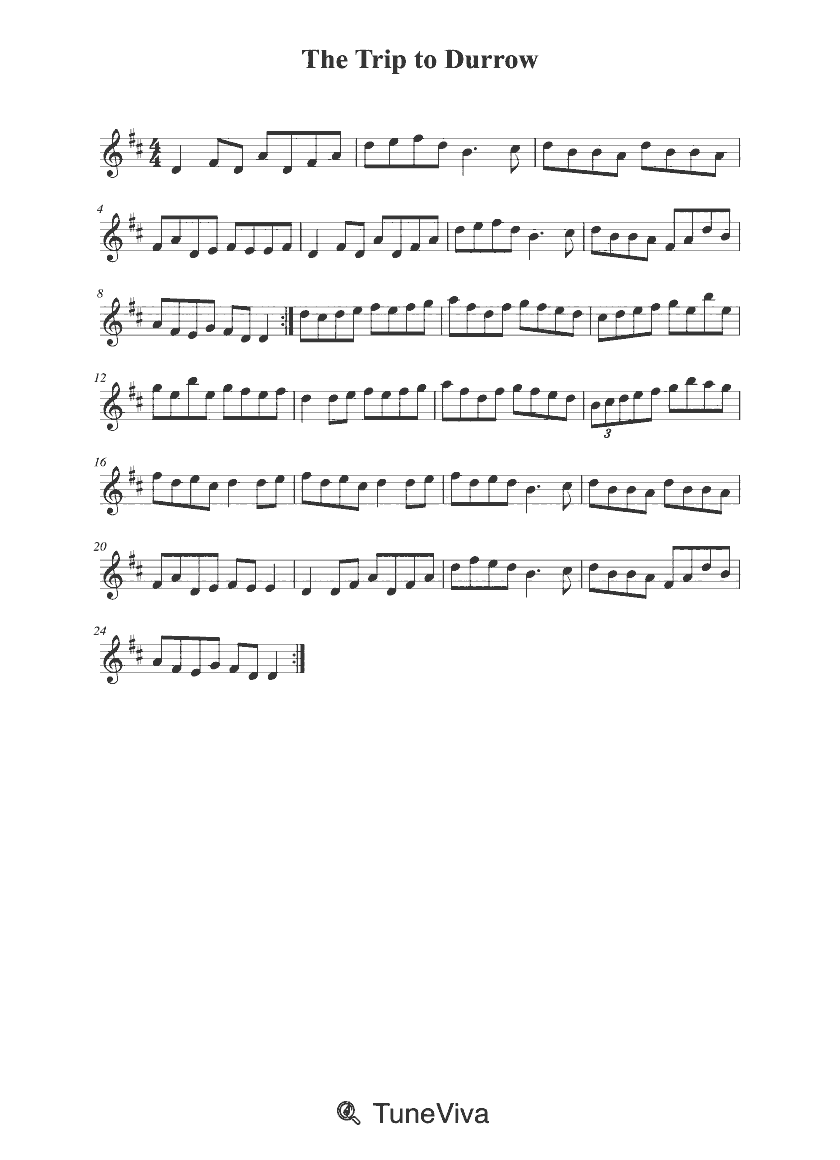
Misc tunes
1 min 52 sec
Open score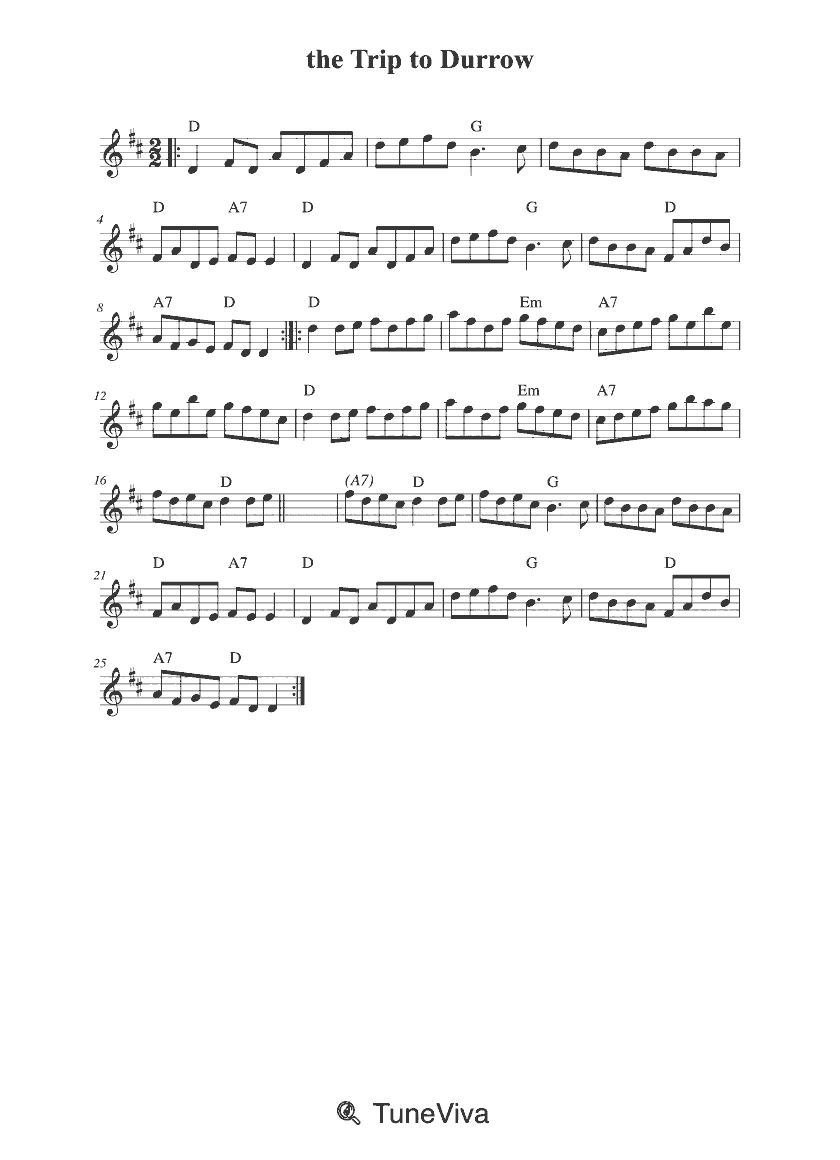
Misc tunes
3 min 20 sec
Open score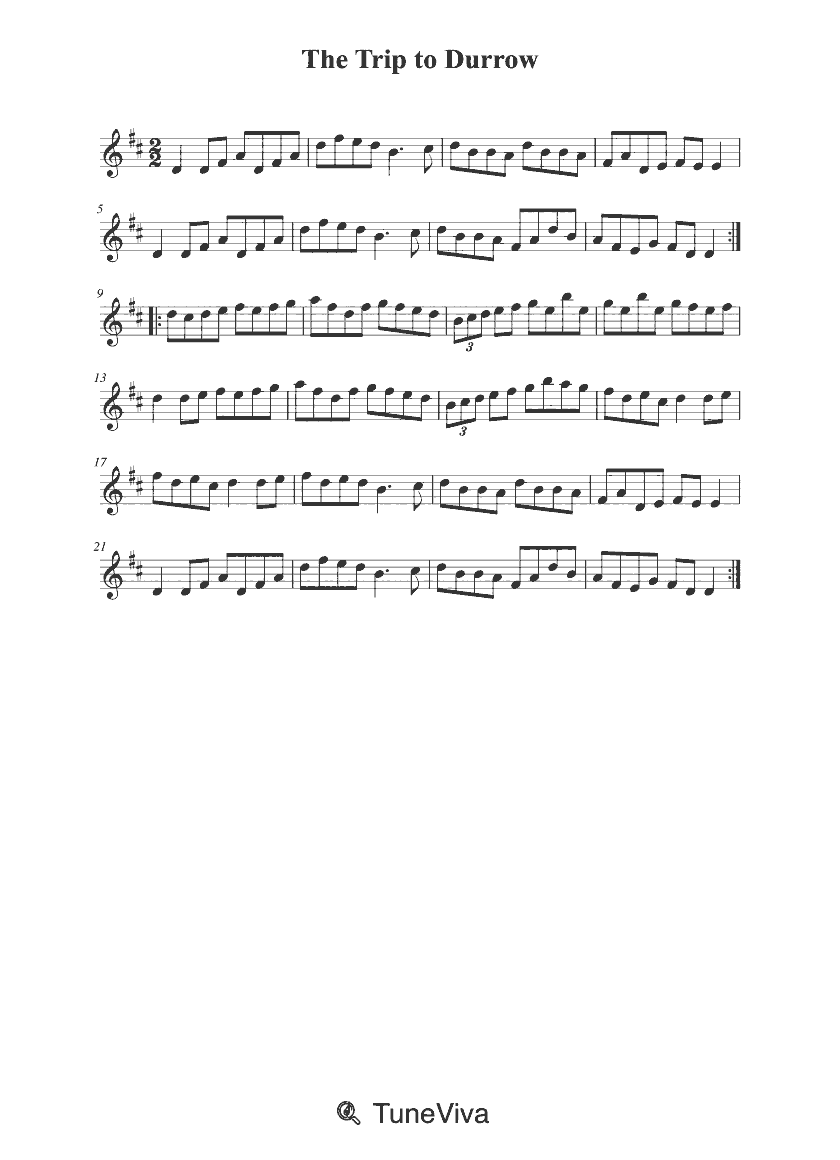
Misc tunes
3 min 12 sec · Score #249569
Open score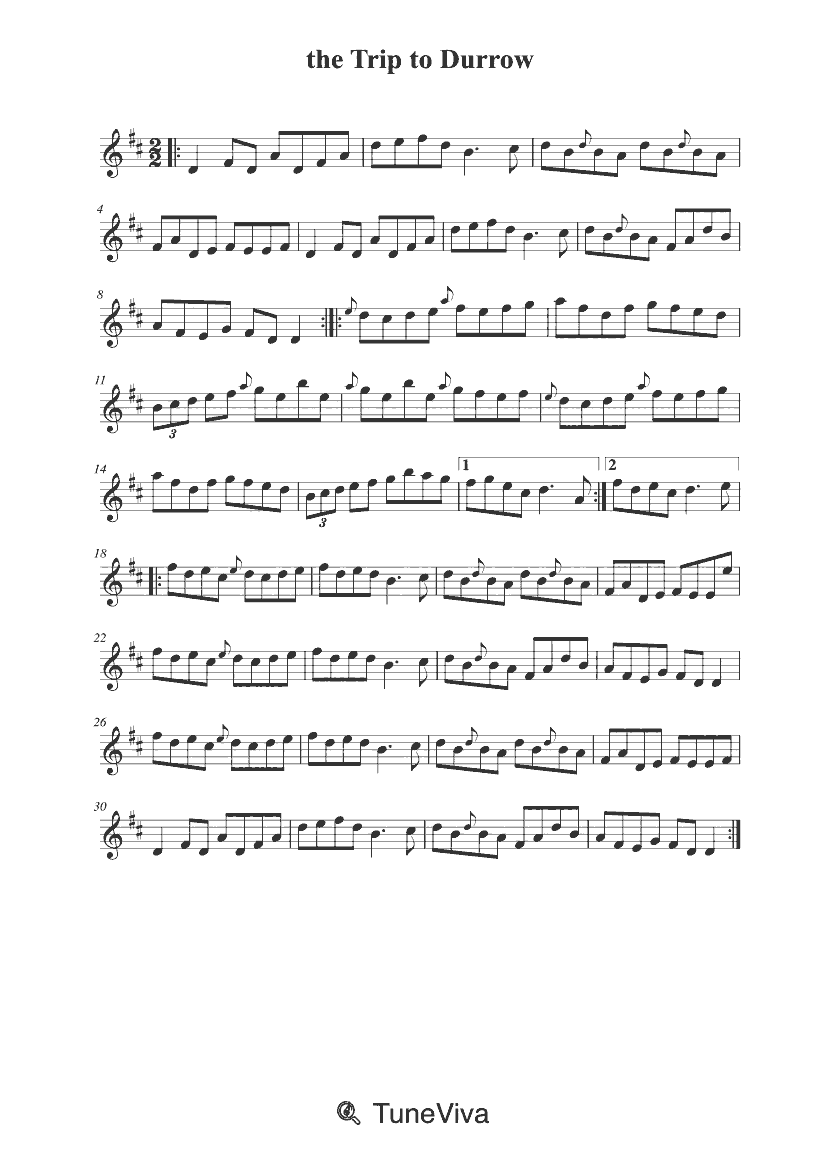
Misc tunes
4 min 16 sec · Score #7467
Open score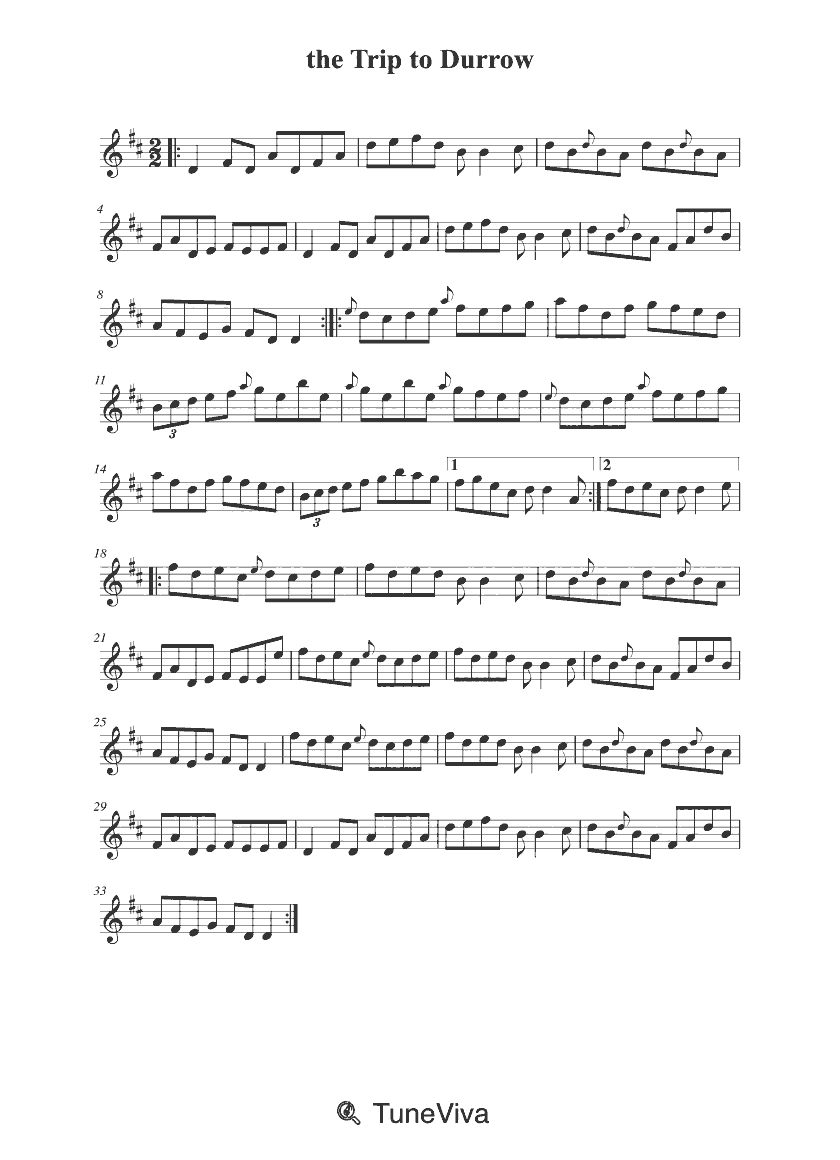
Misc tunes
4 min 16 sec · Score #13401
Open scorePage 1 of 2
The two full-title scores share an opening key of D major and a 4/4 time signature. The score titled “Durrow” opens in E-flat major; its details do not give an opening time signature. These observations describe individual scores, not a definitive setting of the tune. Check the notation before treating any key or metre as settled.
If you plan to play with a session or another musician, begin with the opening key and match the group’s setting. If you are practising alone, compare the first bars, range and repeats in the notation rather than assuming that the titles refer to the same setting. The available details do not establish a difficulty level.
Confirm the clef, key signature, time signature and first phrase directly from the score you choose. Opening-key and time-signature details can help you shortlist a score, but they do not confirm the whole piece’s structure, ornaments, repeats or intended instrumentation.
One score carries the credit “Irish Tune”, but that is a lead from the score details rather than proof of traditional Irish authorship. The relationship between “Durrow” and the full title is also unconfirmed.
Catalogue duration 1 min 36 sec. Opening key signature: 2 sharps (D major). Opening time signature: 4/4.
Catalogue duration 27 sec. Opening key signature: 3 flats (E♭ major).
Catalogue duration 1 min 36 sec. Opening key signature: 2 sharps (D major). Opening time signature: 4/4.
The Trip To Durrow is given in two different opening keys in the available scores. Two scores titled “The Trip To Durrow” or “Trip to Durrow” open in D major with two sharps. A third score, titled “Durrow”, opens in E-flat major with three flats. These opening keys describe individual scores; check the notation for the setting you choose.
Two scores of The Trip To Durrow titled “The Trip To Durrow” and “Trip to Durrow” give an opening time signature of 4/4. The score titled “Durrow” does not include an opening time signature in its details, so its metre cannot be confirmed from the available information.
The composer of The Trip To Durrow is not identified in the available score details. Two scores give no named composer, and one carries the credit “Irish Tune”. No verified attribution was supplied, so authorship should be treated as unknown here rather than assigned to a named composer.
That credit is a lead from the score details, not proof, so the description remains unverified.
The scores differ in title and opening key, so they should not be assumed to be identical settings. Compare the melody, phrase lengths and repeats in the actual notation. The available details do not establish whether one score is a variant, an arrangement or a separate tune.
Start with the opening key: D major for the two full-title scores and E-flat major for “Durrow”. When playing with other musicians, choose the key that matches their setting. When practising alone, compare the first bars and range in the notation; the available details do not establish difficulty.