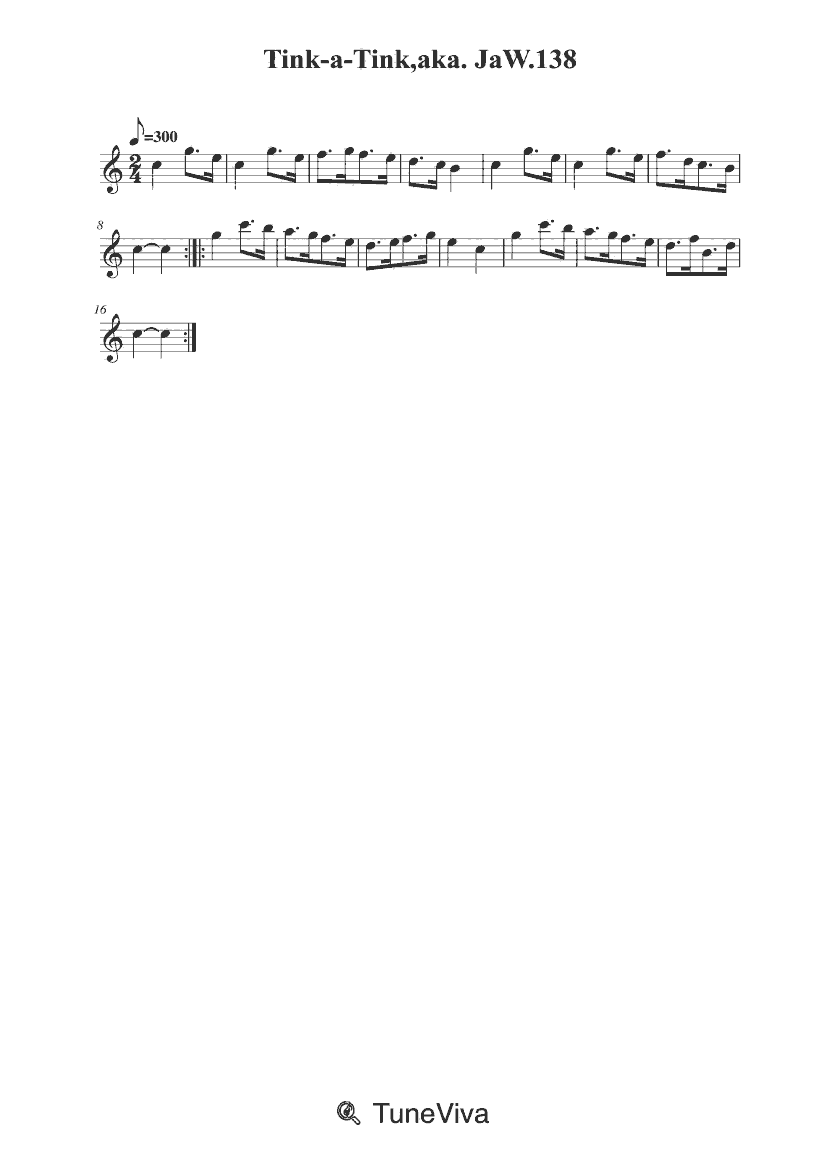
Tink-a-Tink,aka. JaW.138
Clarinett Primo Untitled in MS
26 sec
Open scoreTink a Tink is represented here by several scores listed in 2/4 time. The available versions differ in opening key, listed tempo and length, but the supplied records do not identify a composer or confirm that they represent the same arrangement. Compare the first page and opening key before choosing a score for reading or playing.
Scores 1–20 of 26
Clarinett Primo Untitled in MS
26 sec
Open score
Misc tunes
32 sec
Open score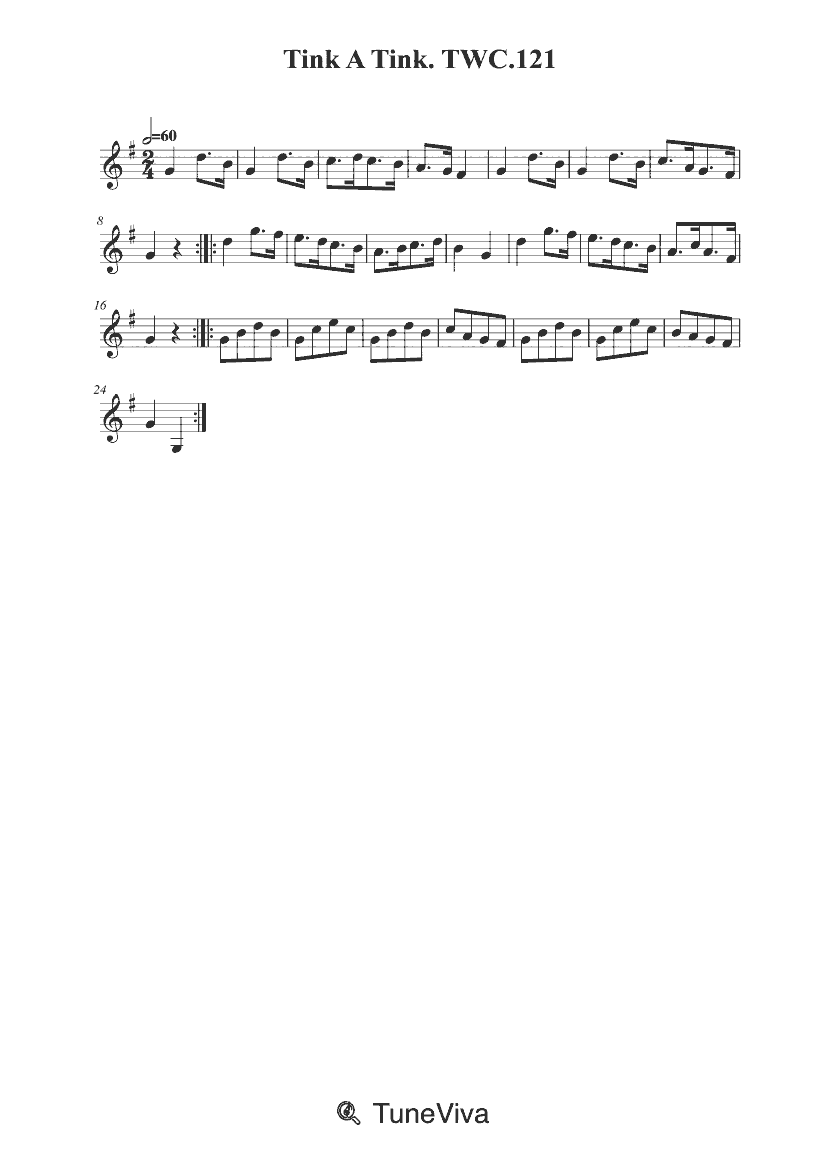
Misc tunes
48 sec
Open score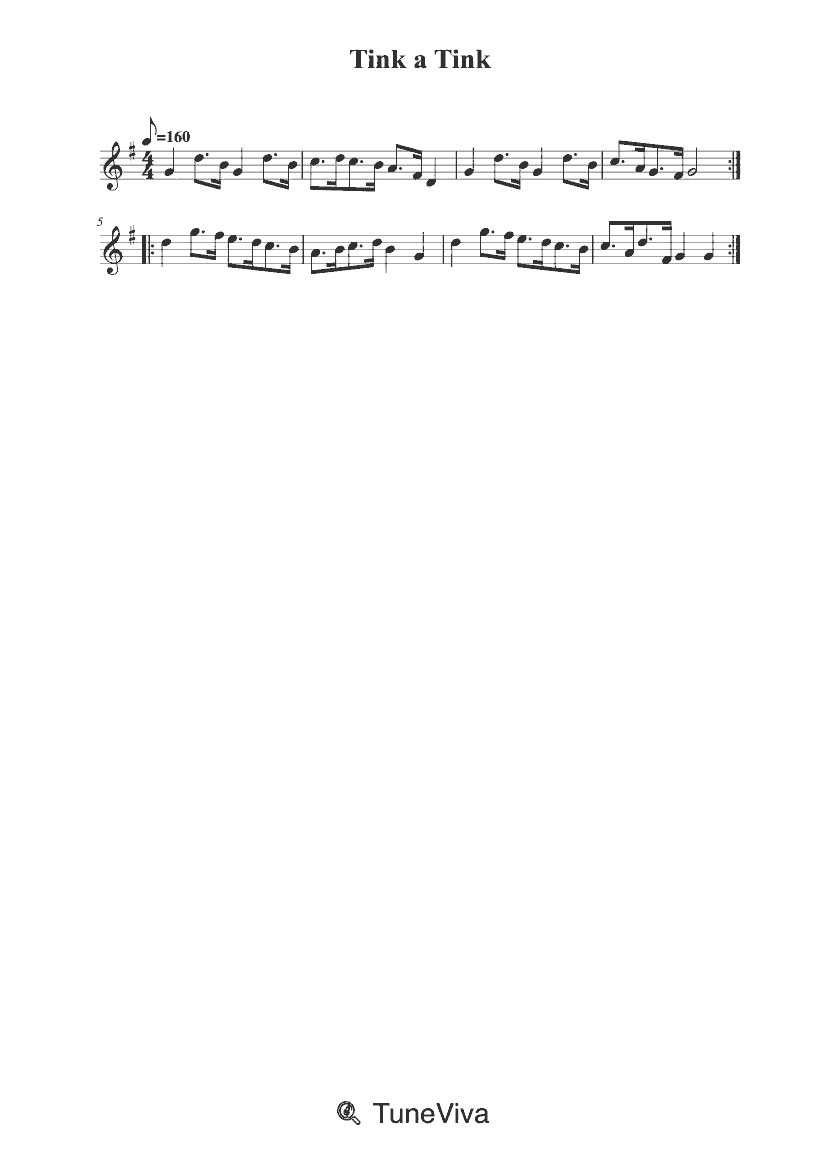
Misc tunes
48 sec · Score #207965
Open score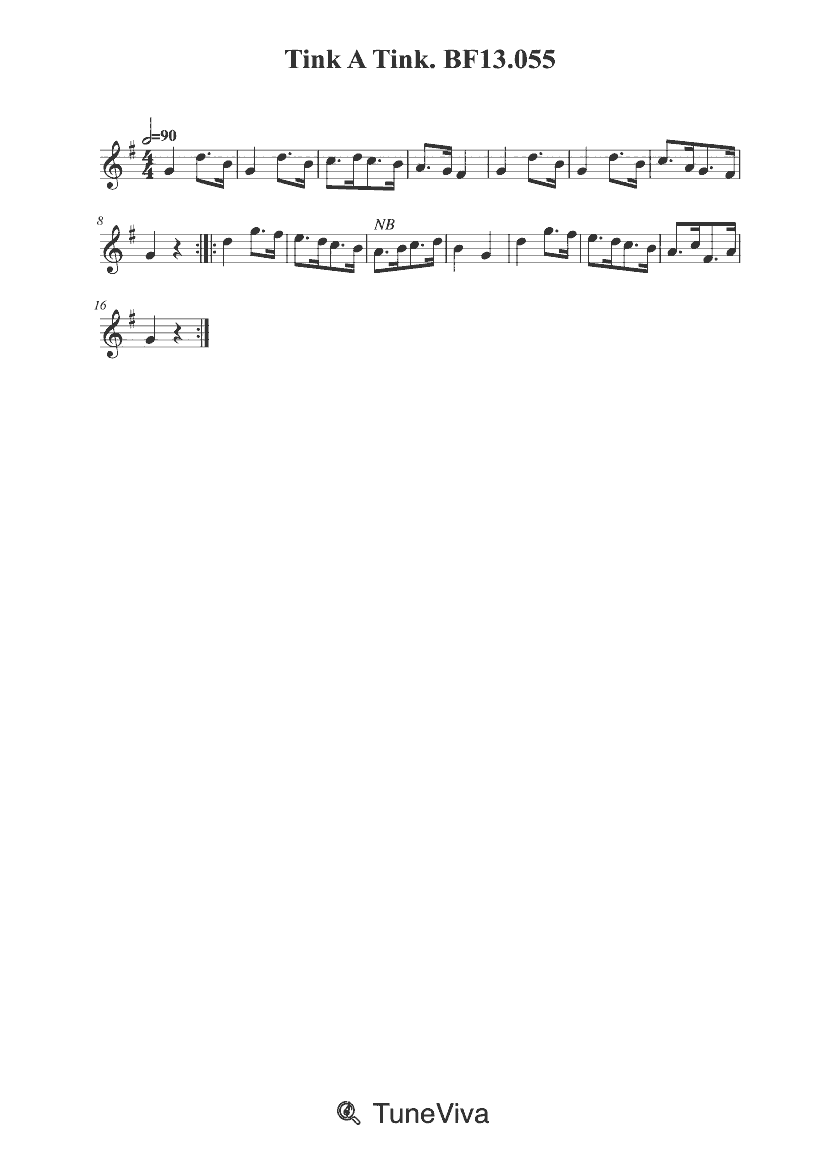
Misc tunes
22 sec
Open score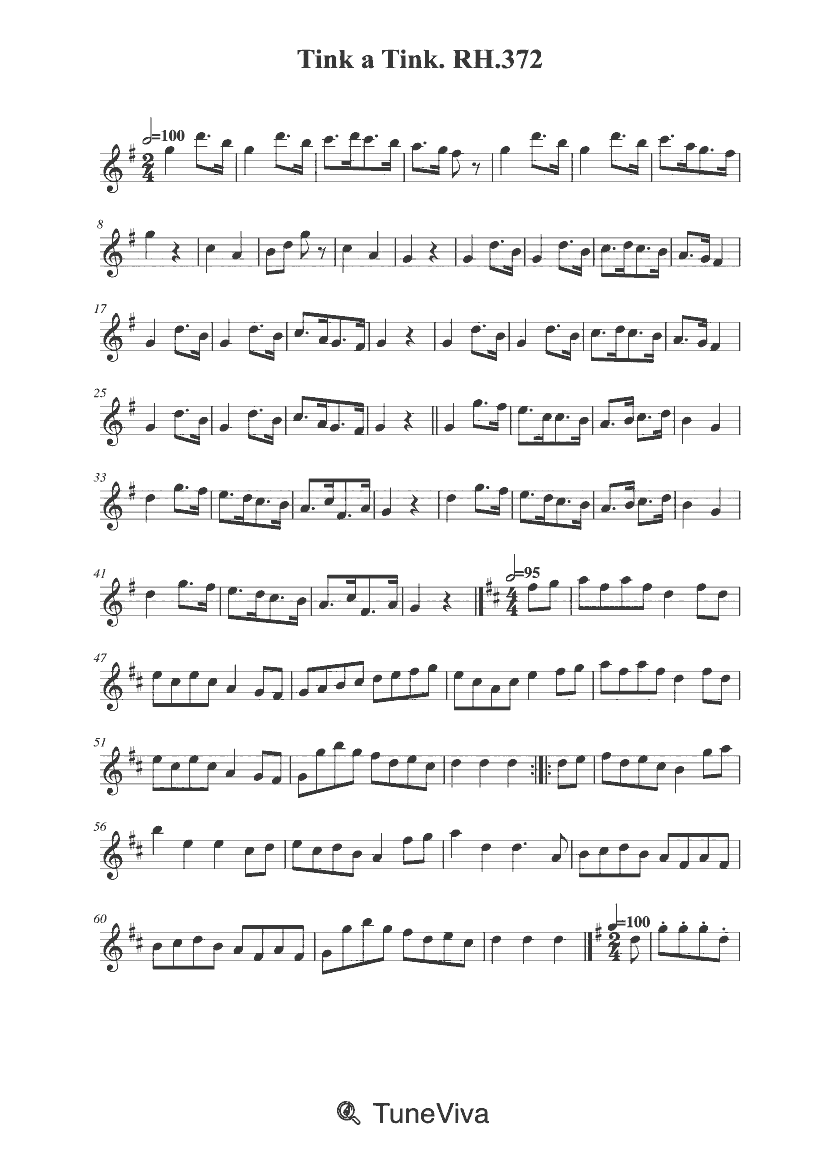
Misc tunes
2 min 40 sec
Open score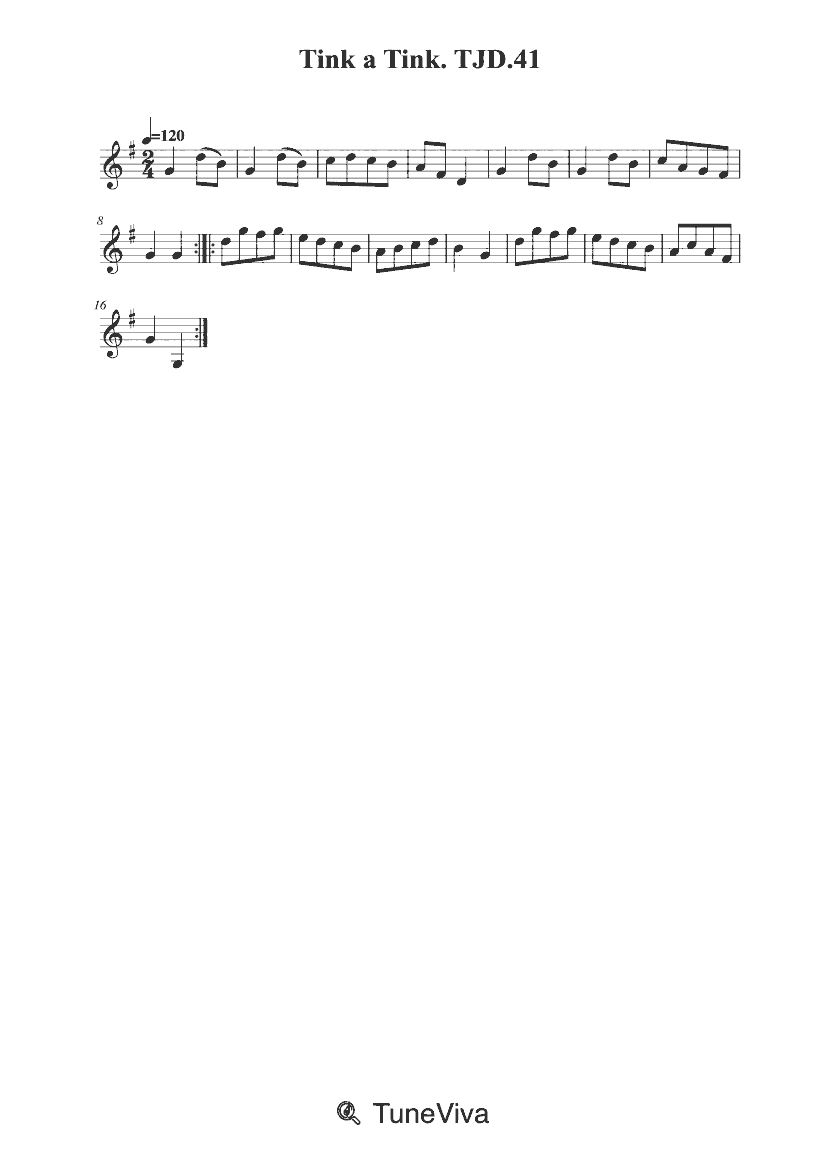
Misc tunes
32 sec · Score #18845
Open score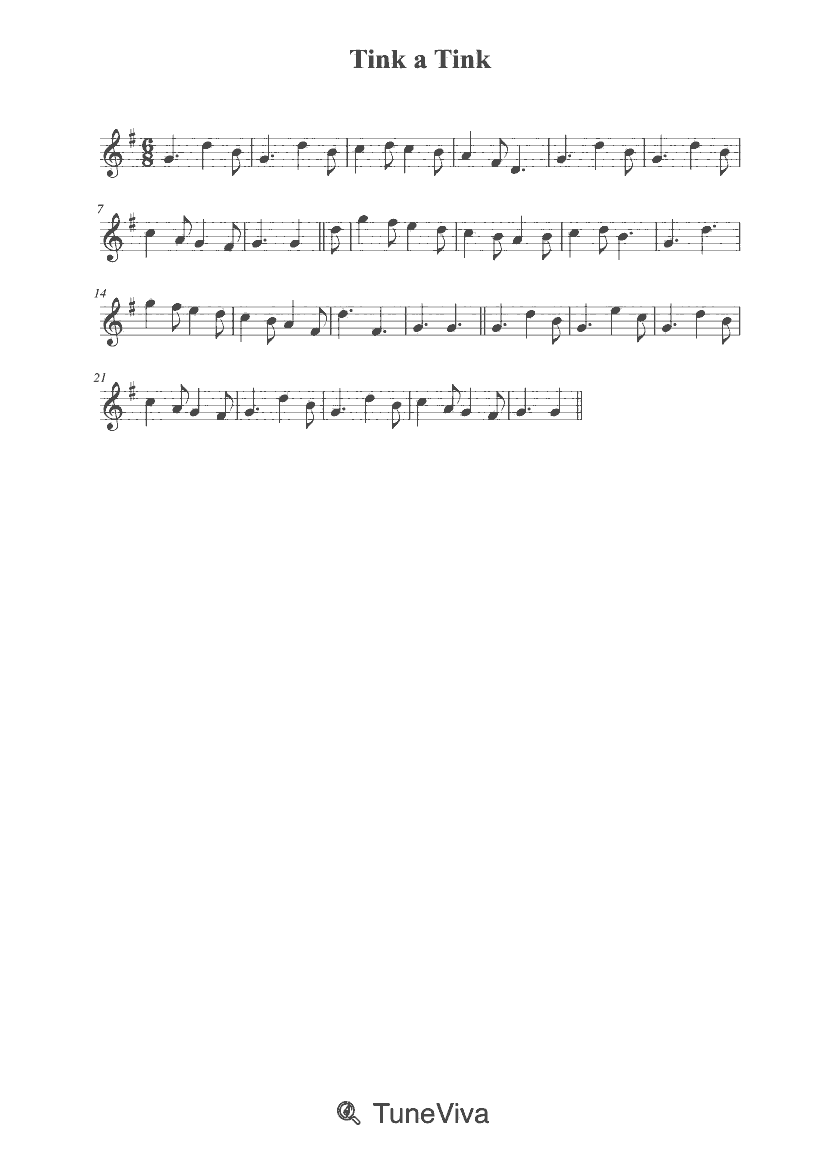
Misc tunes
18 sec
Open score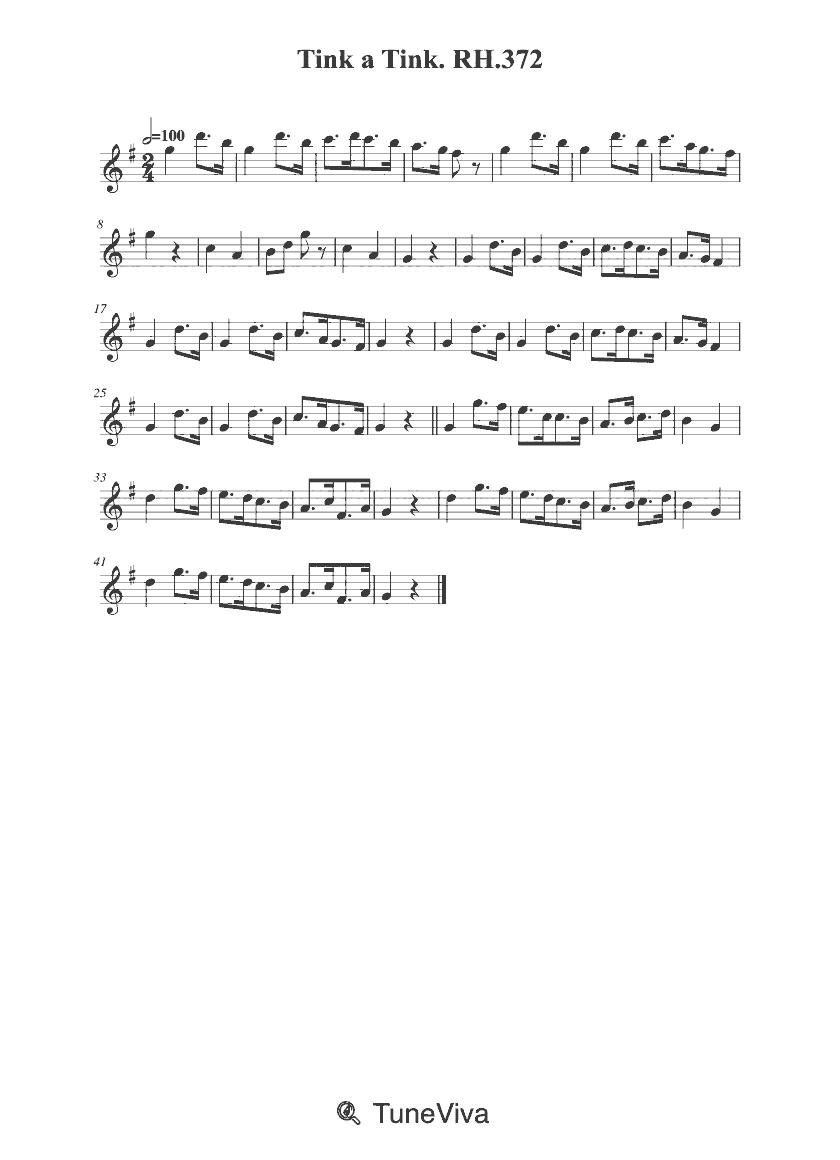
Misc tunes
26 sec
Open score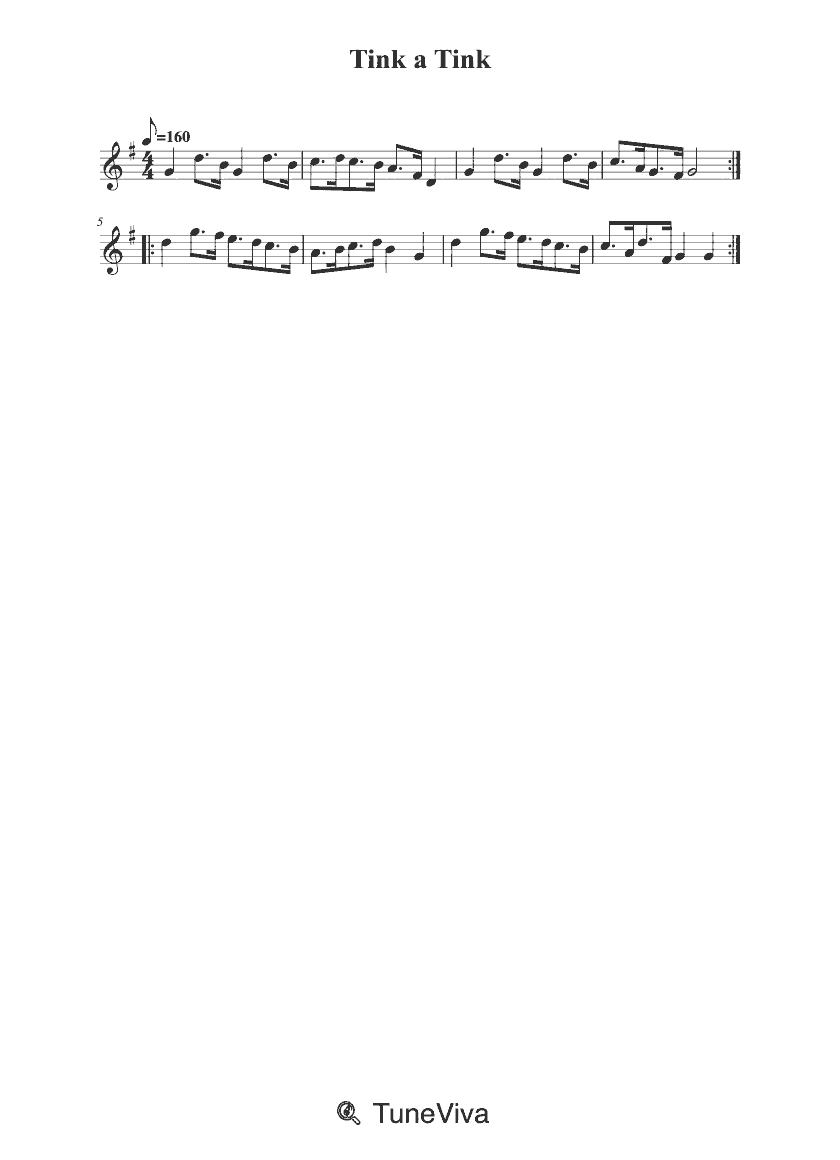
Misc tunes
48 sec · Score #103276
Open score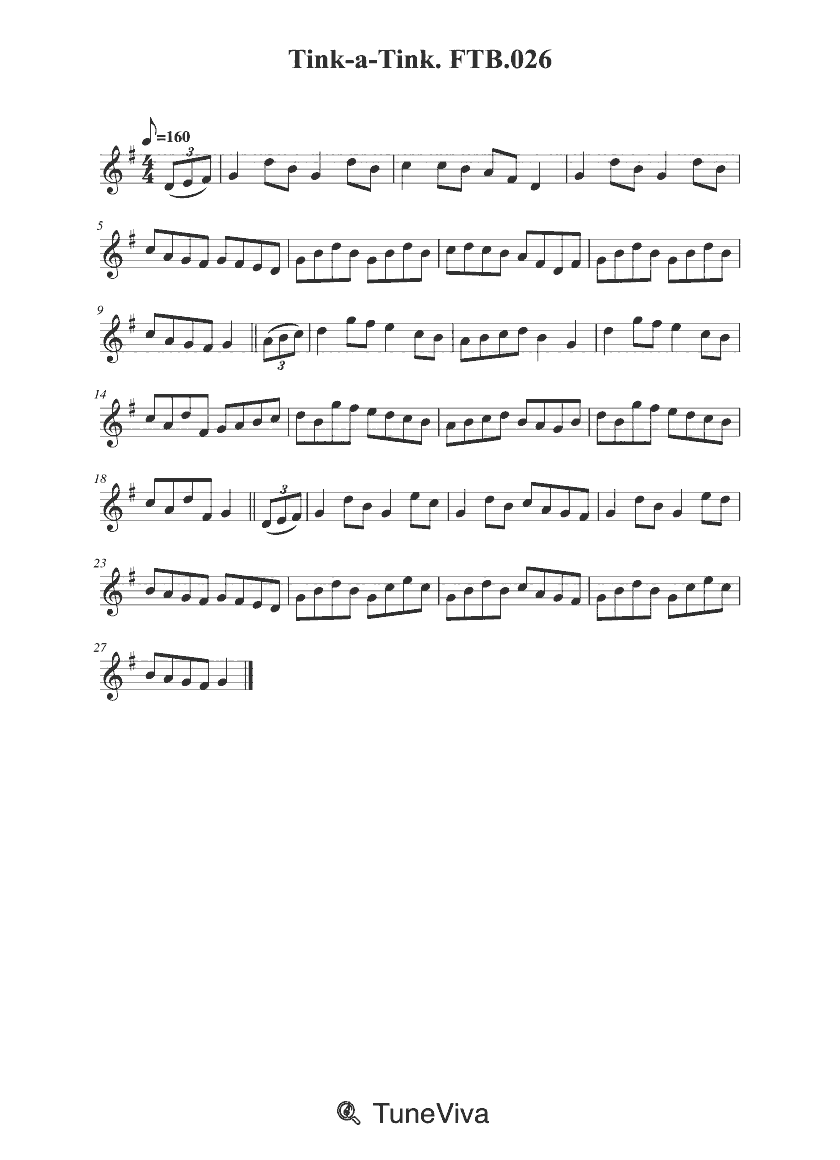
Misc tunes
1 min 12 sec
Open score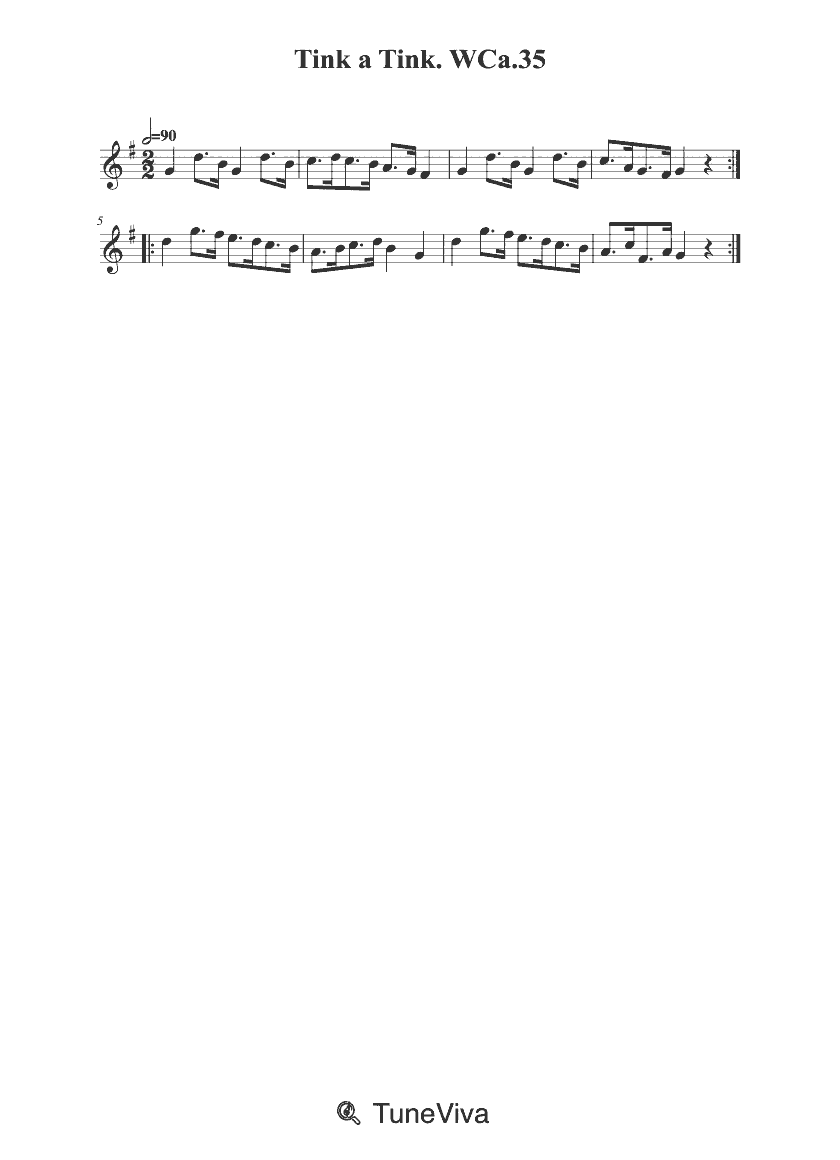
Misc tunes
42 sec
Open score
Trad. Mittell 1799
38 sec
Open score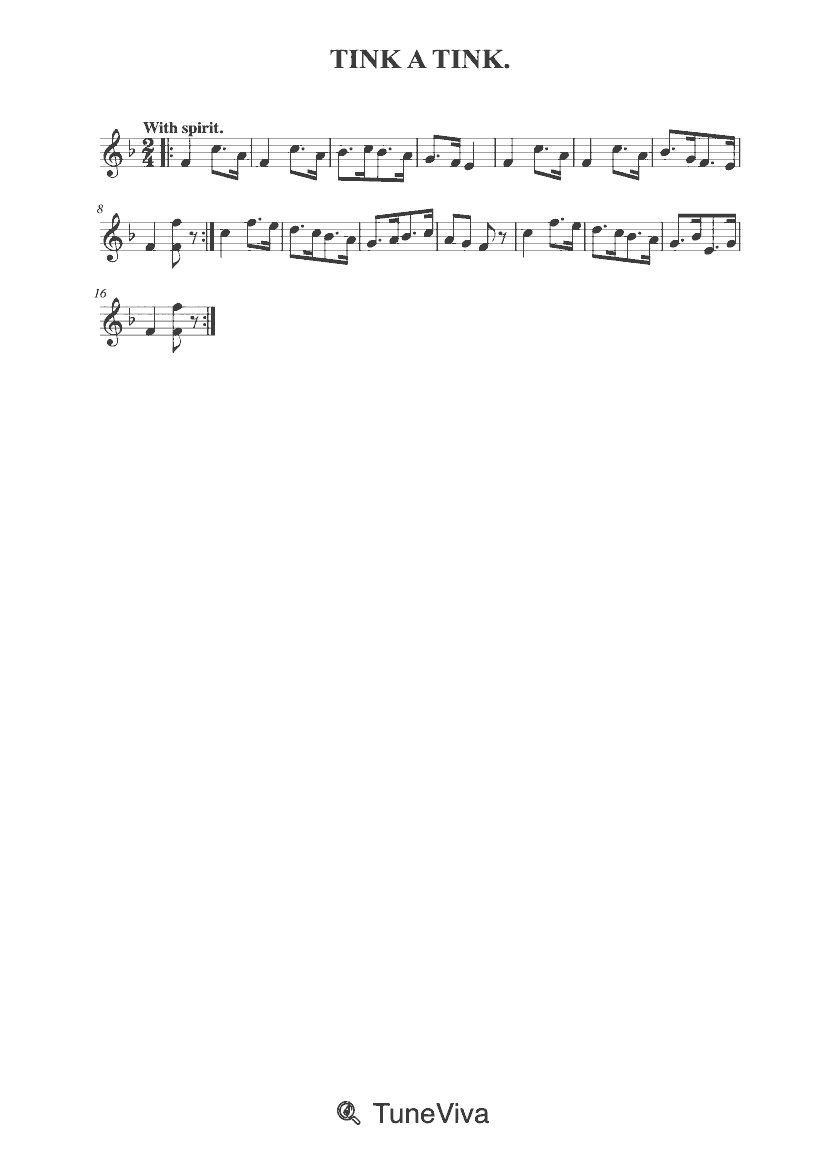
Misc tunes
From the opera of Blue Beard.
40 sec · Score #229485
Open score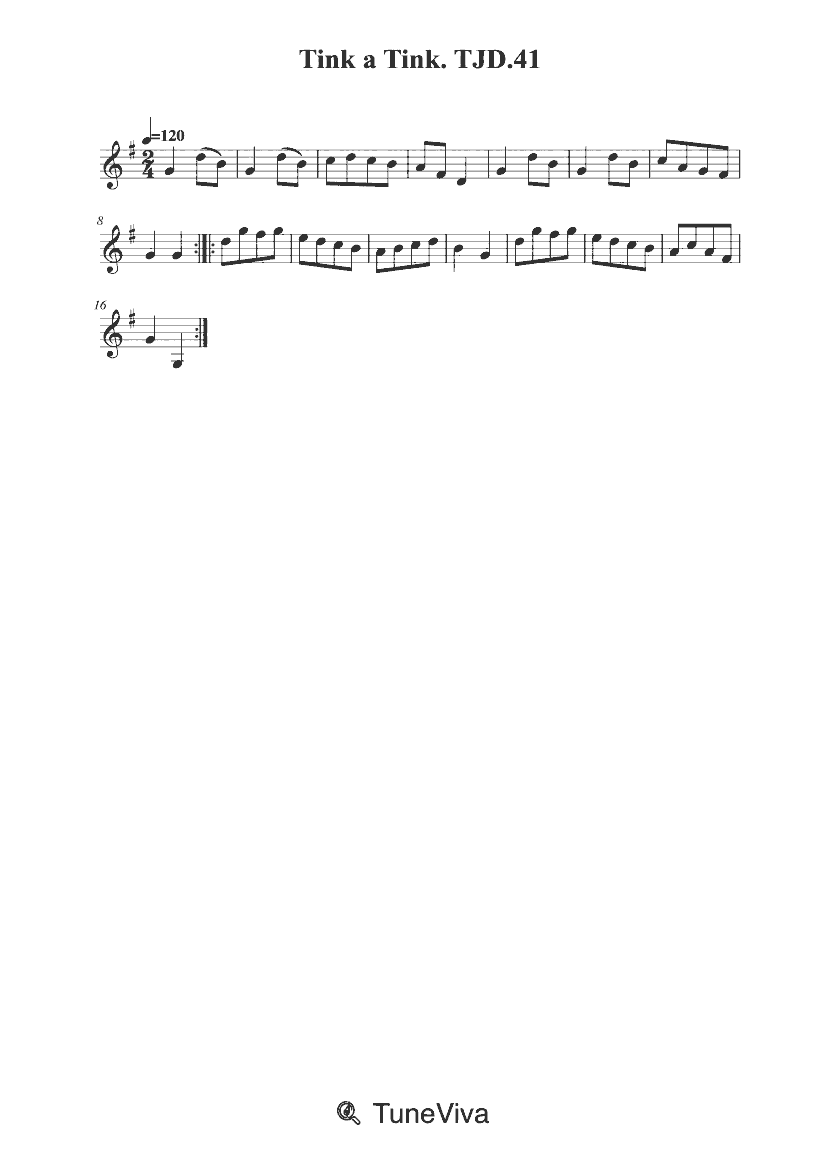
Misc tunes
32 sec · Score #58136
Open score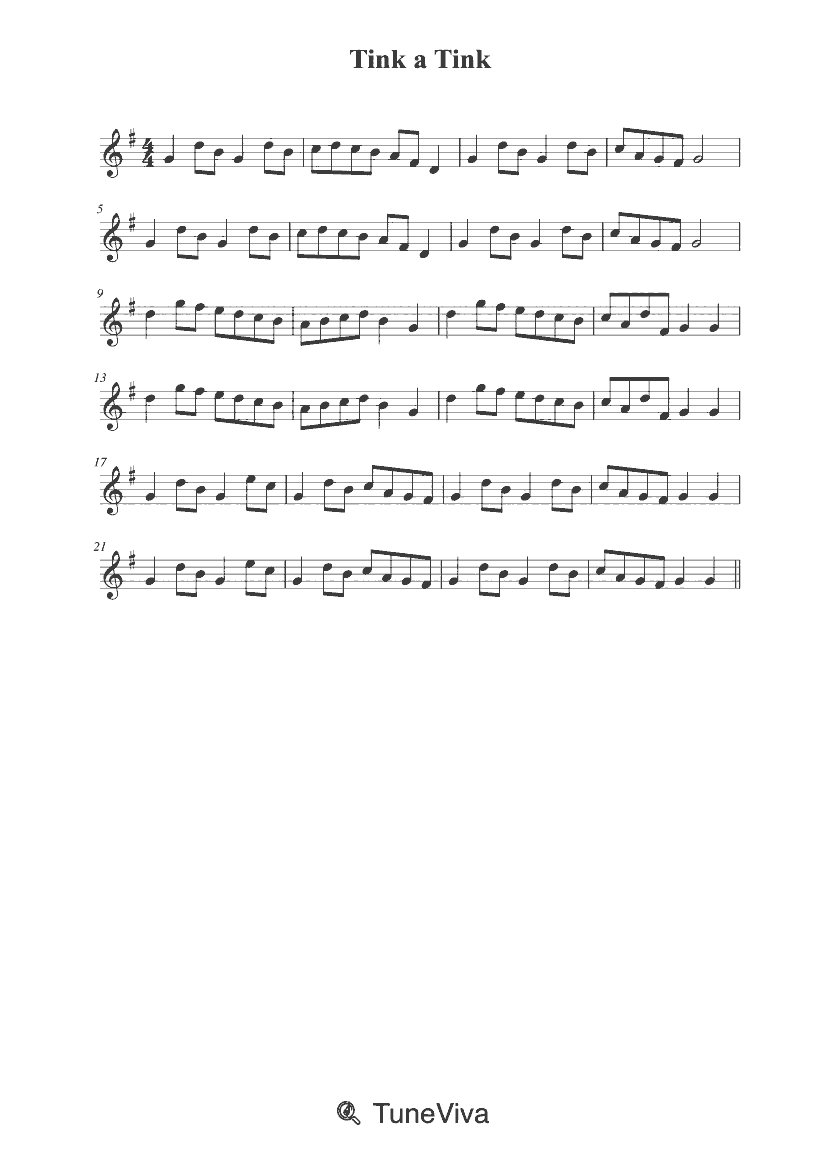
Misc tunes
48 sec · Score #108059
Open score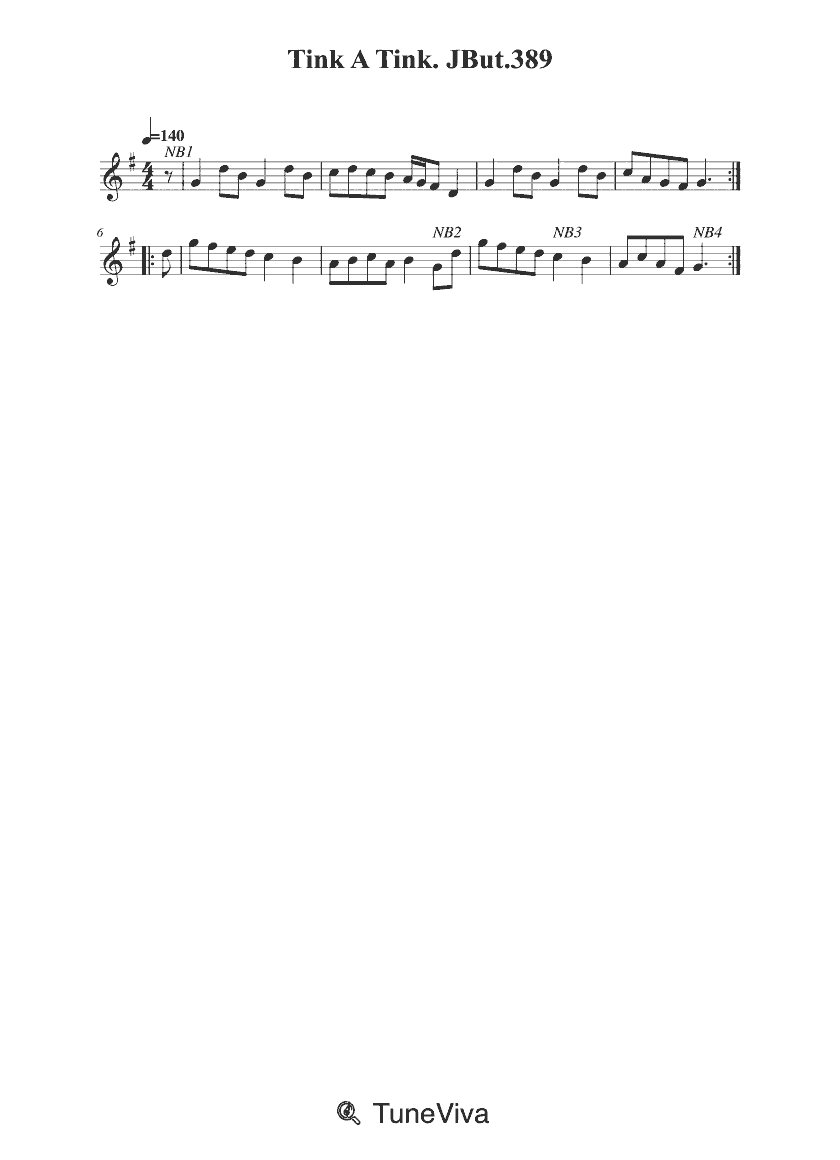
'A Quickstep'
27 sec
Open score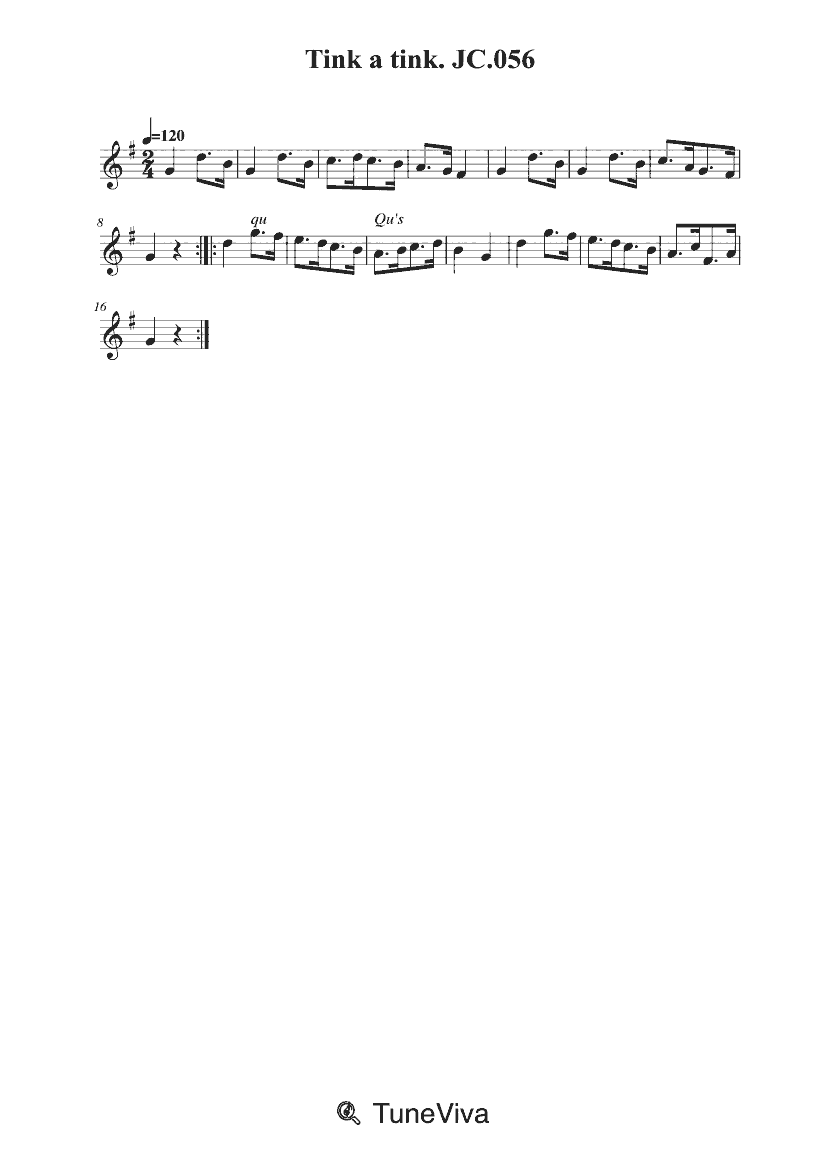
Misc tunes
31 sec
Open score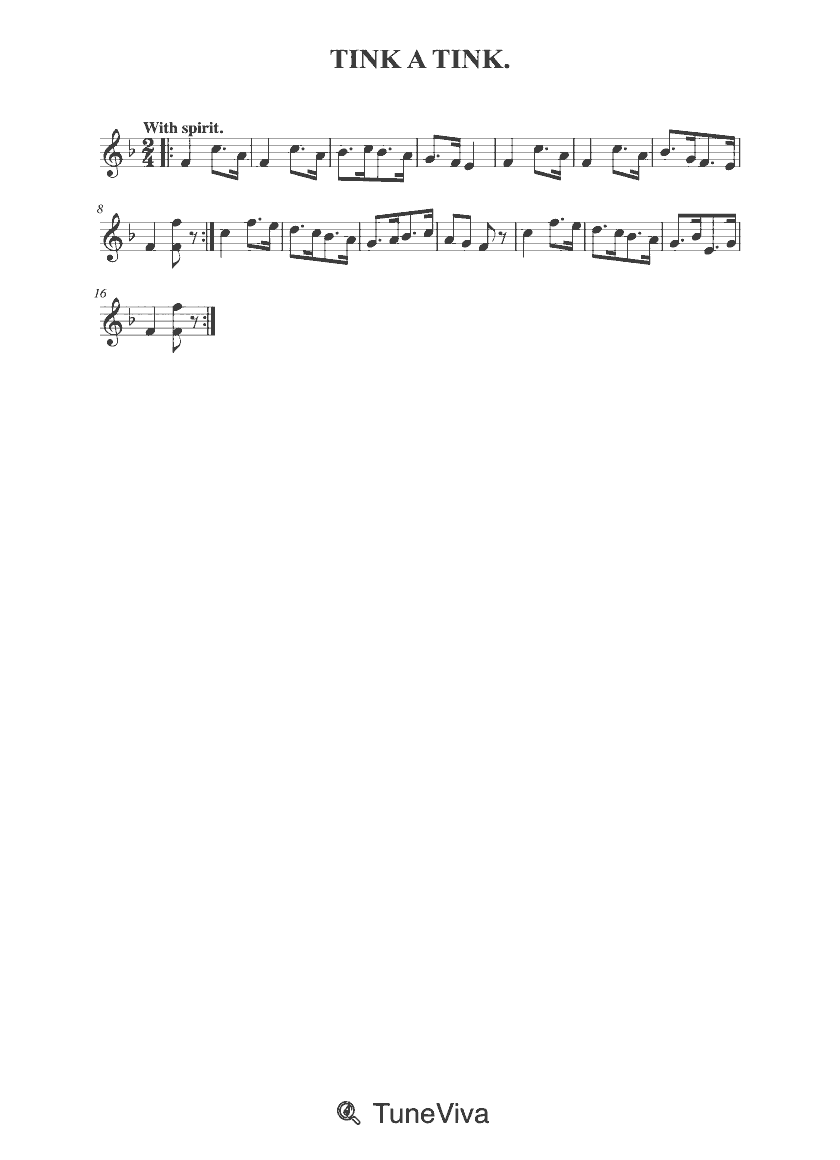
Misc tunes
From the opera of Blue Beard.
40 sec · Score #165672
Open score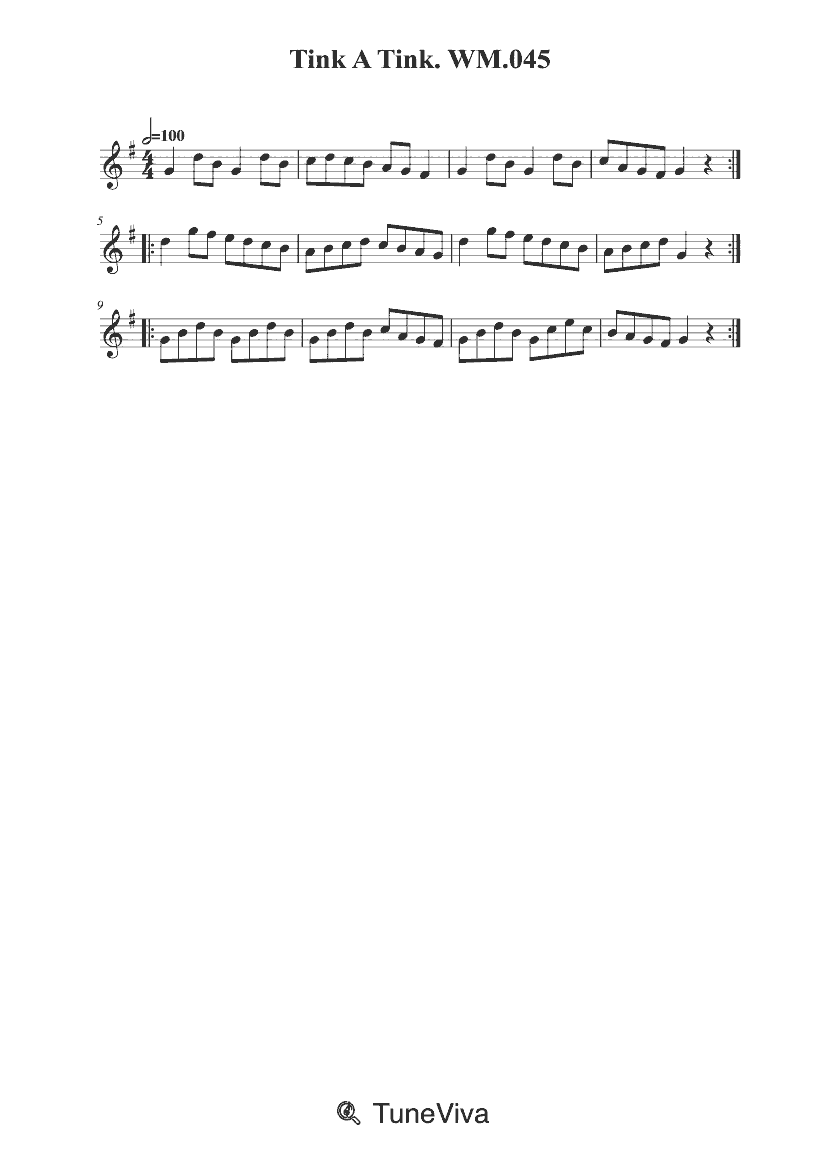
Misc tunes
29 sec
Open scorePage 1 of 2
The three selected entries for Tink a Tink all list an opening time signature of 2/4. Two begin with one sharp, listed as G major, and one begins with no sharps or flats. The records also show different opening tempos—120 BPM for two entries and 150 BPM for the other—and different listed lengths. These details describe individual scores, so check the music itself before treating one version as definitive.
If you need to play Tink a Tink with another musician, start by comparing the opening key and tempo rather than relying on the title alone. The selected versions offer a choice between a G-major opening and an opening with no sharps or flats, with listed tempos of 120 or 150 BPM. Because the records do not establish that the versions are identical, matching these details will not necessarily make two different scores compatible.
No supplied source identifies the composer, origin or historical background of Tink a Tink. The entries are listed with miscellaneous tunes and their titles carry different suffixes, but that is not proof of a common source or a single authoritative version. Treat composer credits, instrumentation and any claim that the scores are the same piece as unverified unless you can check an authoritative edition.
All three selected scores list a 2/4 opening, so the basic pulse is two quarter-note beats per bar. Use that metre to count entries and compare phrasing across versions; the listed durations are brief, but they are not a difficulty grade. A slower listed tempo will make the same bar count take longer, so set a tempo that lets you read the rhythms cleanly.
Catalogue duration 26 sec. Opening key signature: No sharps or flats. Opening time signature: 2/4. Opening tempo: 150 BPM.
Catalogue duration 32 sec. Opening key signature: 1 sharp (G major). Opening time signature: 2/4. Opening tempo: 120 BPM.
Catalogue duration 48 sec. Opening key signature: 1 sharp (G major). Opening time signature: 2/4. Opening tempo: 120 BPM.
No composer is identified in the supplied records for Tink a Tink. One entry carries a non-standard credit line, but that does not establish authorship; the other selected entries list no composer. Check a reliable edition or tune index if authorship matters for your performance or programme notes.
Every selected score for Tink a Tink lists 2/4 as its opening time signature. That metre gives two quarter-note beats per bar in these versions, though the records describe individual scores rather than a definitive edition.
The selected Tink a Tink scores do not all use the same opening key. Two list one sharp, identified as G major, while one lists no sharps or flats. Compare the first page if you need a specific key for playing with others.
The supplied records do not confirm that the Tink a Tink scores are the same arrangement. Their titles carry different suffixes, and their opening keys, listed tempos and lengths differ. Treat them as separate versions to compare rather than interchangeable copies.
Opening tempos in the selected Tink a Tink scores are listed as 120 BPM and 150 BPM. These are score-specific starting indications, not a verified performance tempo for the piece; choose a pace that suits the version and your reading.
Listed durations for the selected Tink a Tink scores are about 26 seconds, 32 seconds and 48 seconds. Those figures describe the individual records and should not be treated as the definitive length of a work called Tink a Tink.