
Wallop the spot
anon.
1 min 40 sec · Score #104371
Open scoreSeveral scores titled Wallop The Spot are gathered here, and they do not present a single fixed text: the listed settings differ in metre and key, and no composer is identified. Two scores open in 6/8 with two sharps (D major), while a third opens in 4/4 with no sharps or flats. Players should compare the actual scores rather than assume the versions match.
Scores 1–20 of 21
anon.
1 min 40 sec · Score #104371
Open score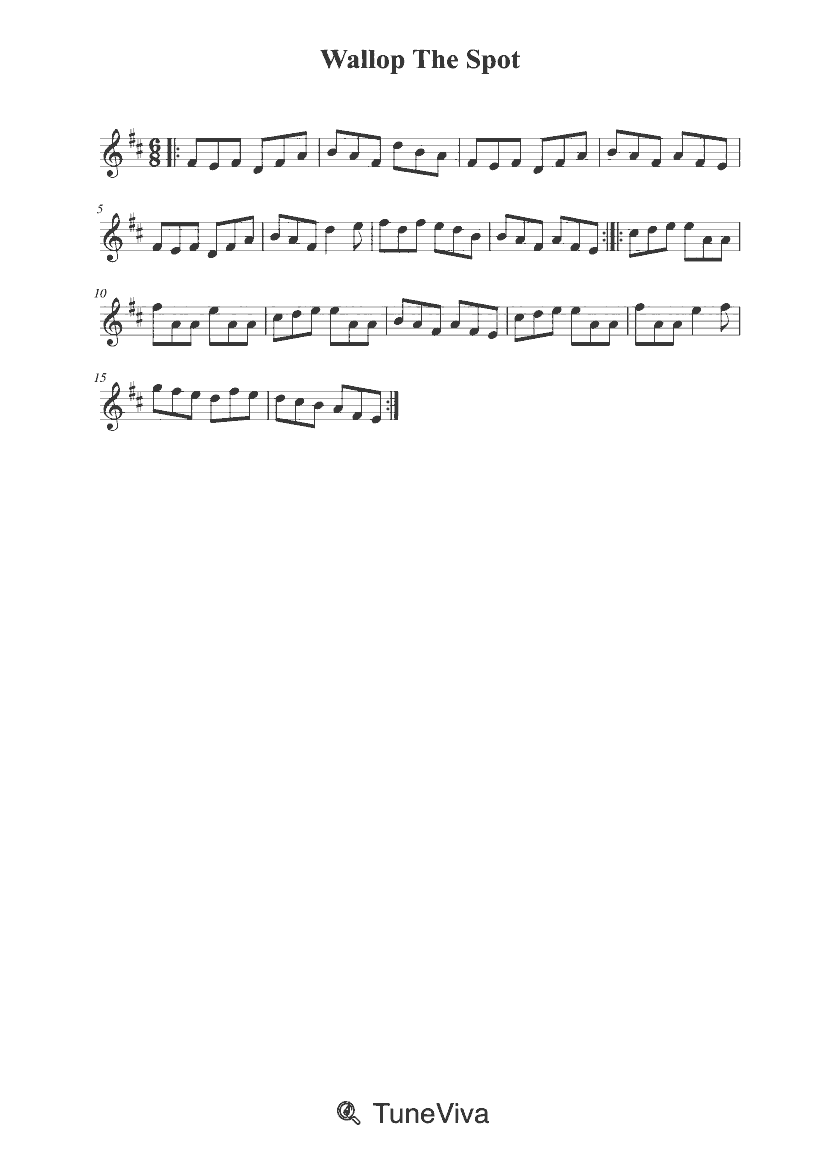
Misc tunes
24 sec · Score #43560
Open score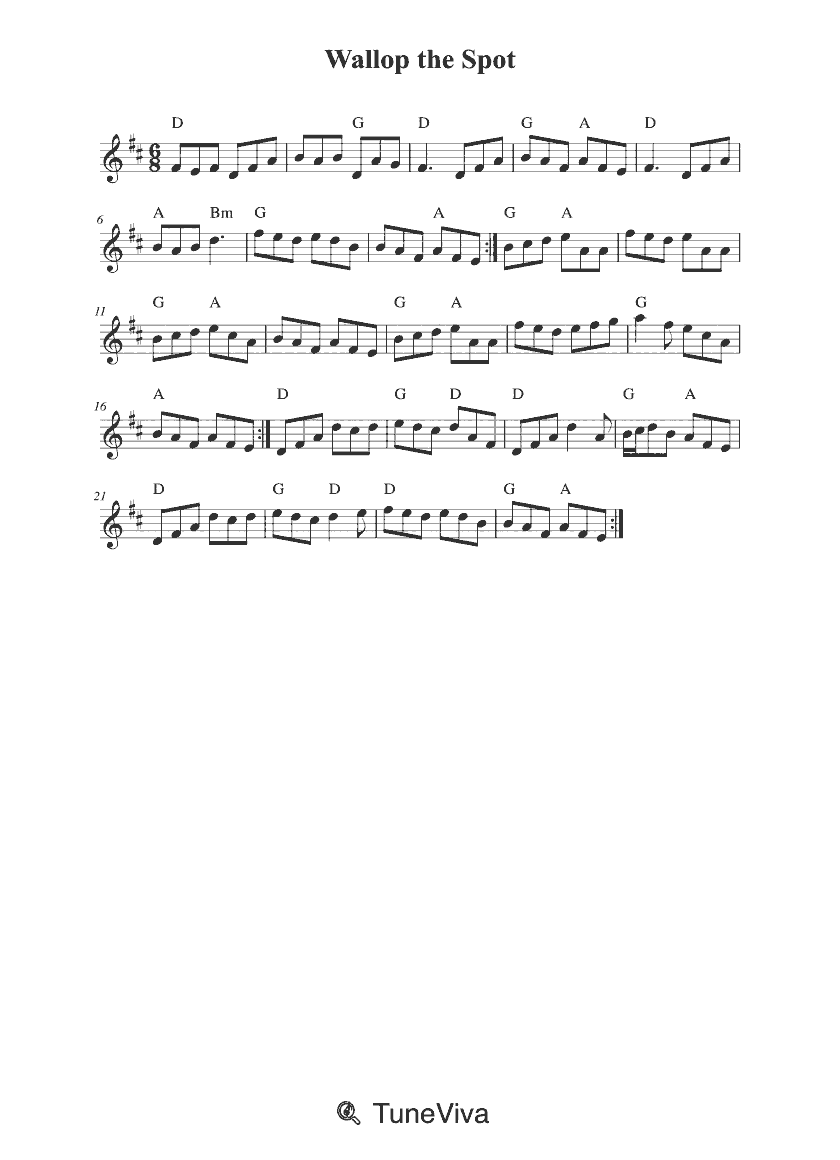
Misc tunes
54 sec
Open score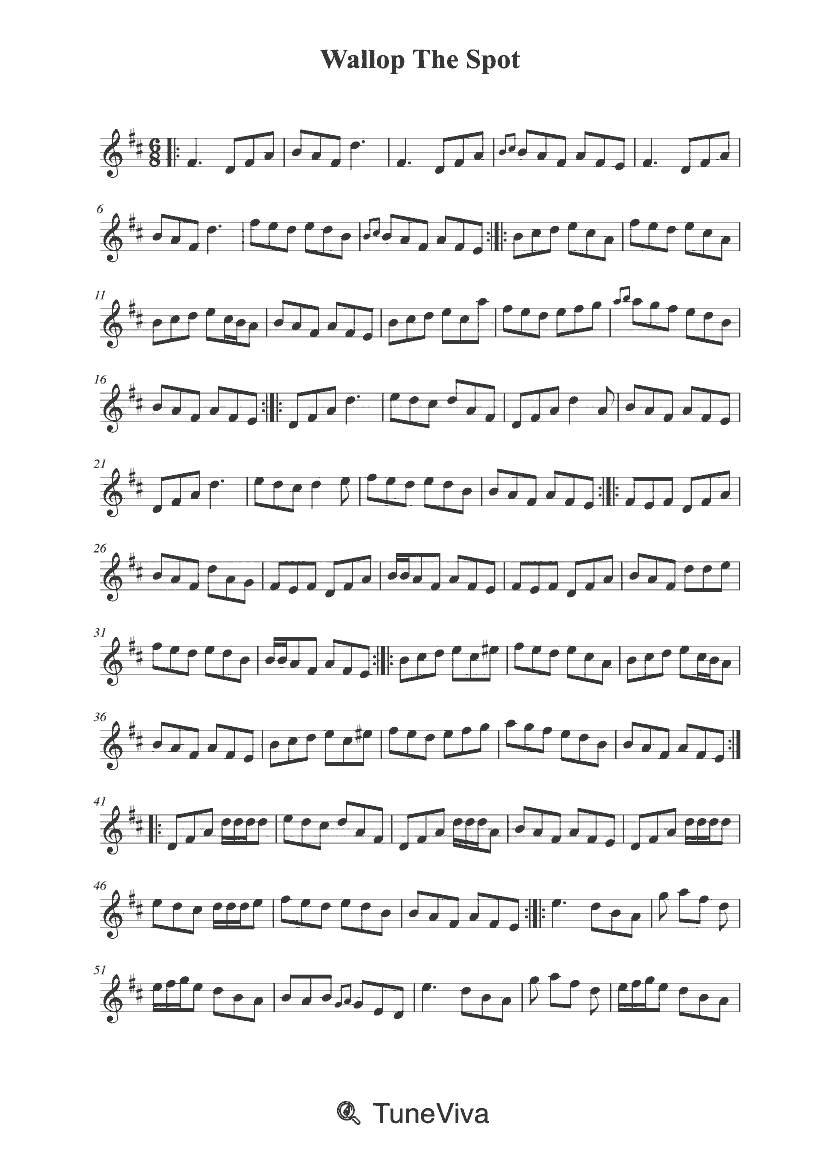
Misc tunes
1 min 34 sec
Open score
anon.
1 min 31 sec · Score #46236
Open score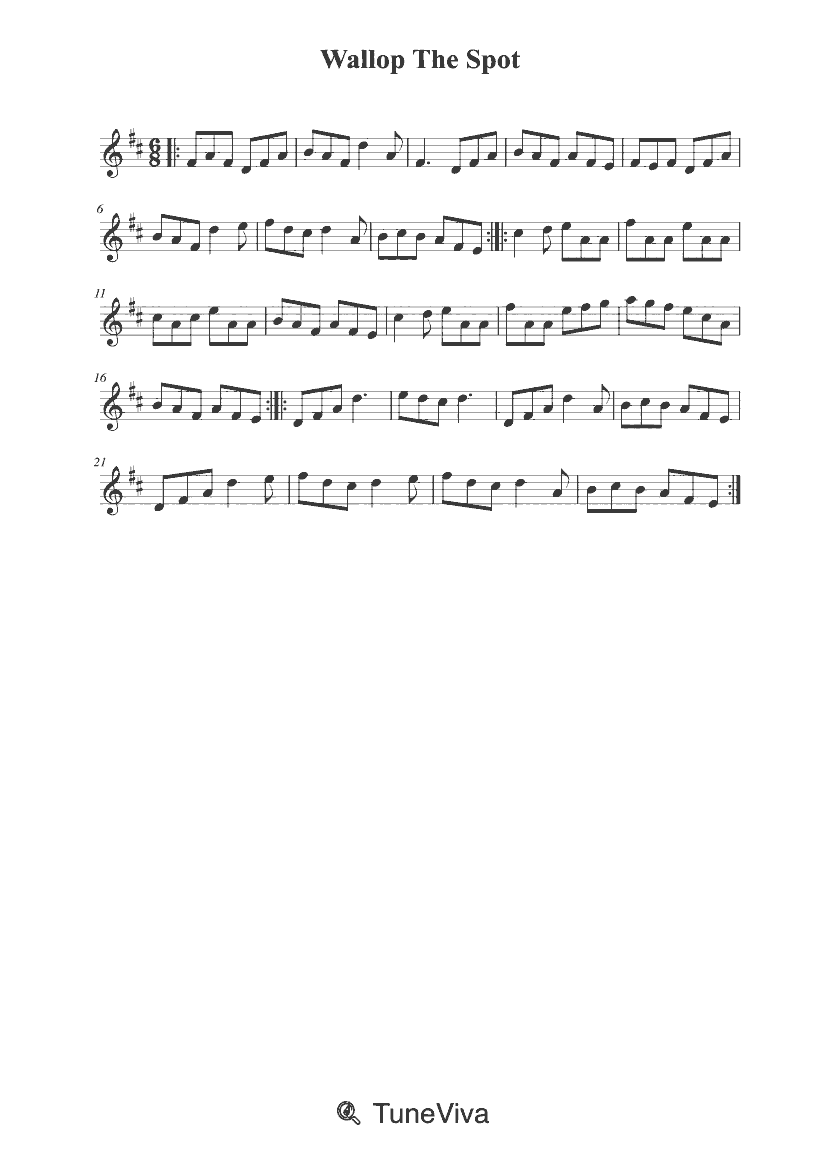
Misc tunes
36 sec · Score #82039
Open score
after Mr. McFadden
50 sec
Open score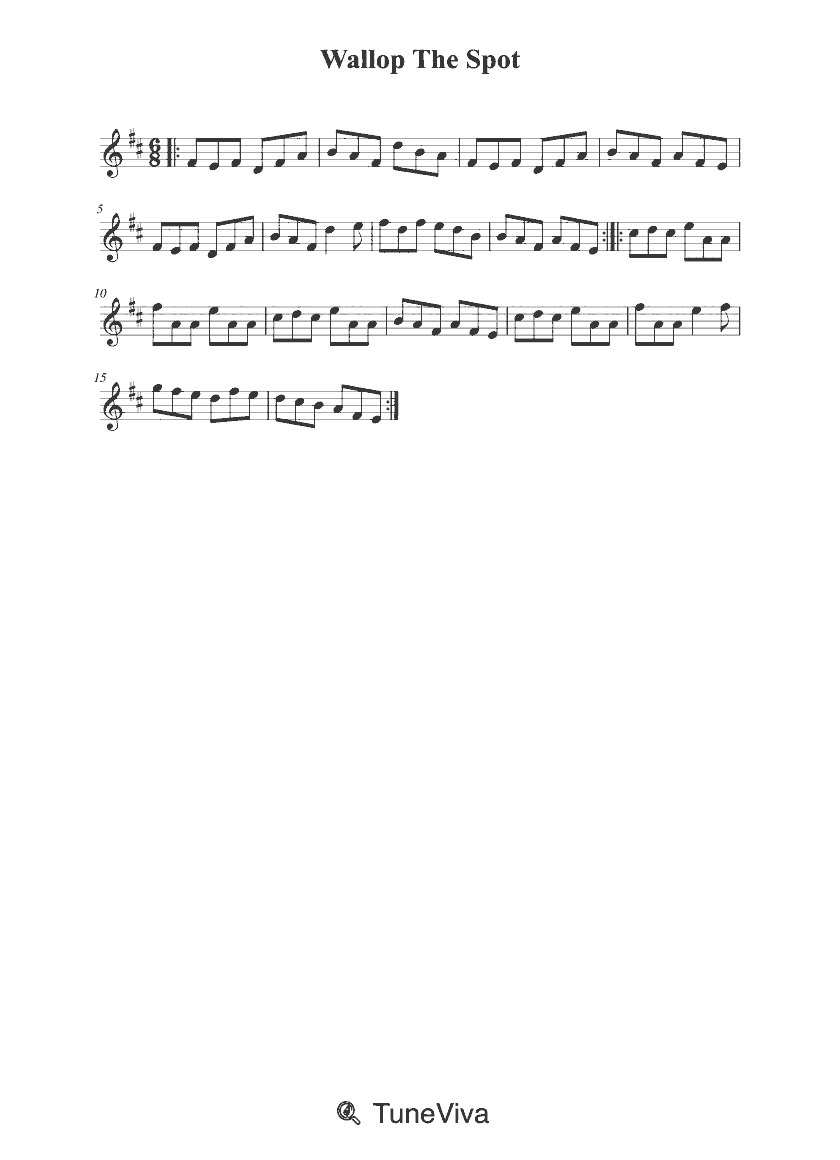
Misc tunes
24 sec · Score #100083
Open score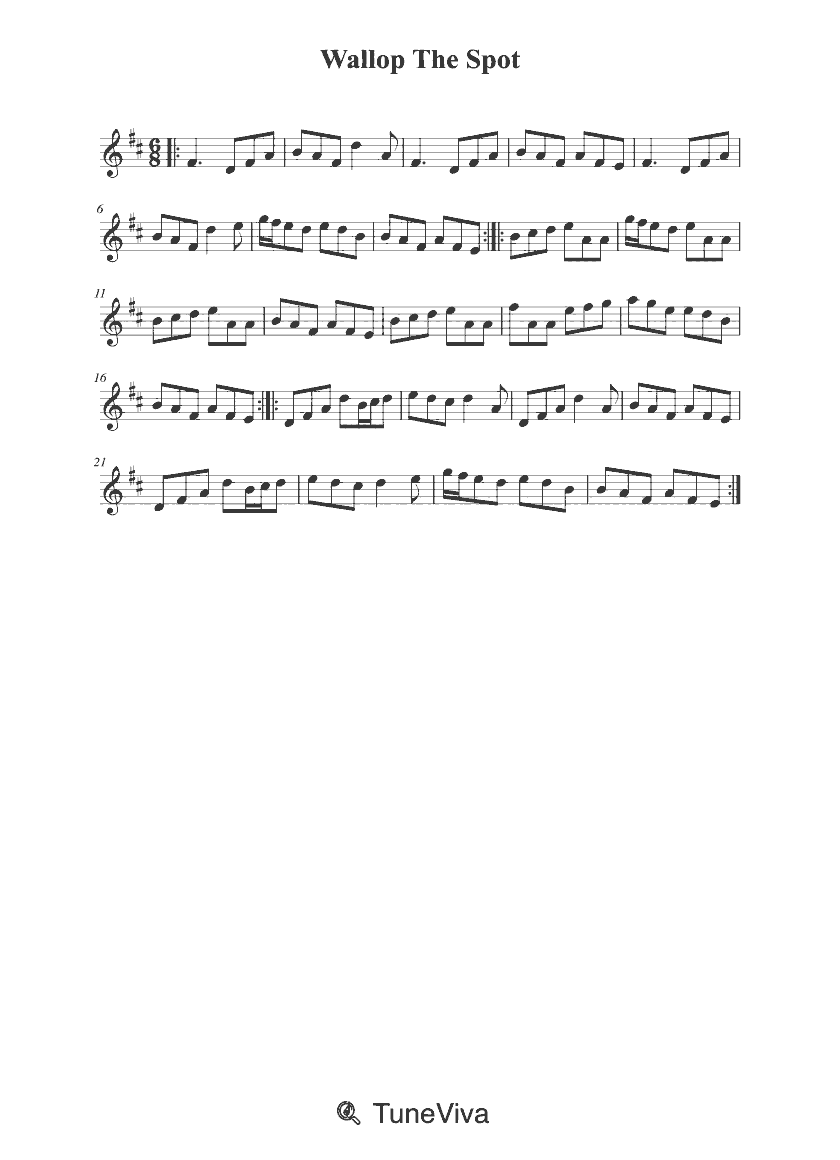
Misc tunes
36 sec · Score #101788
Open score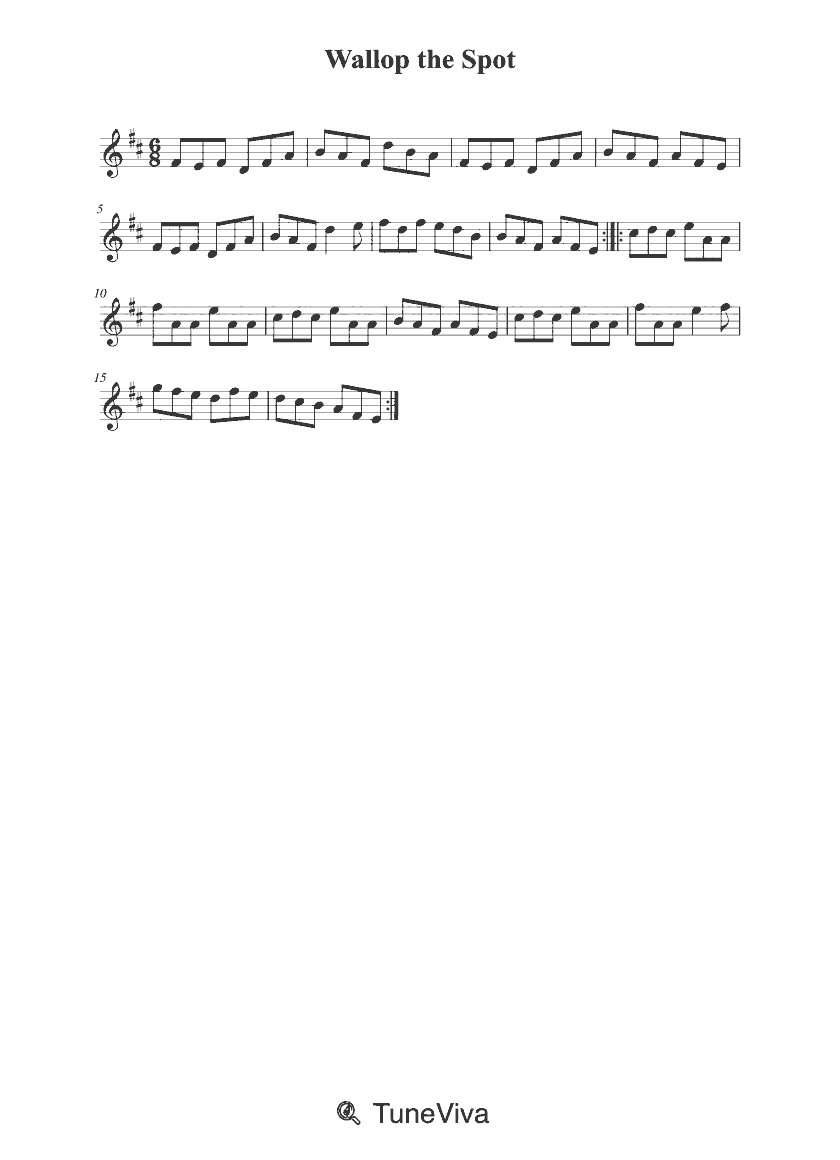
Misc tunes
24 sec · Score #124951
Open score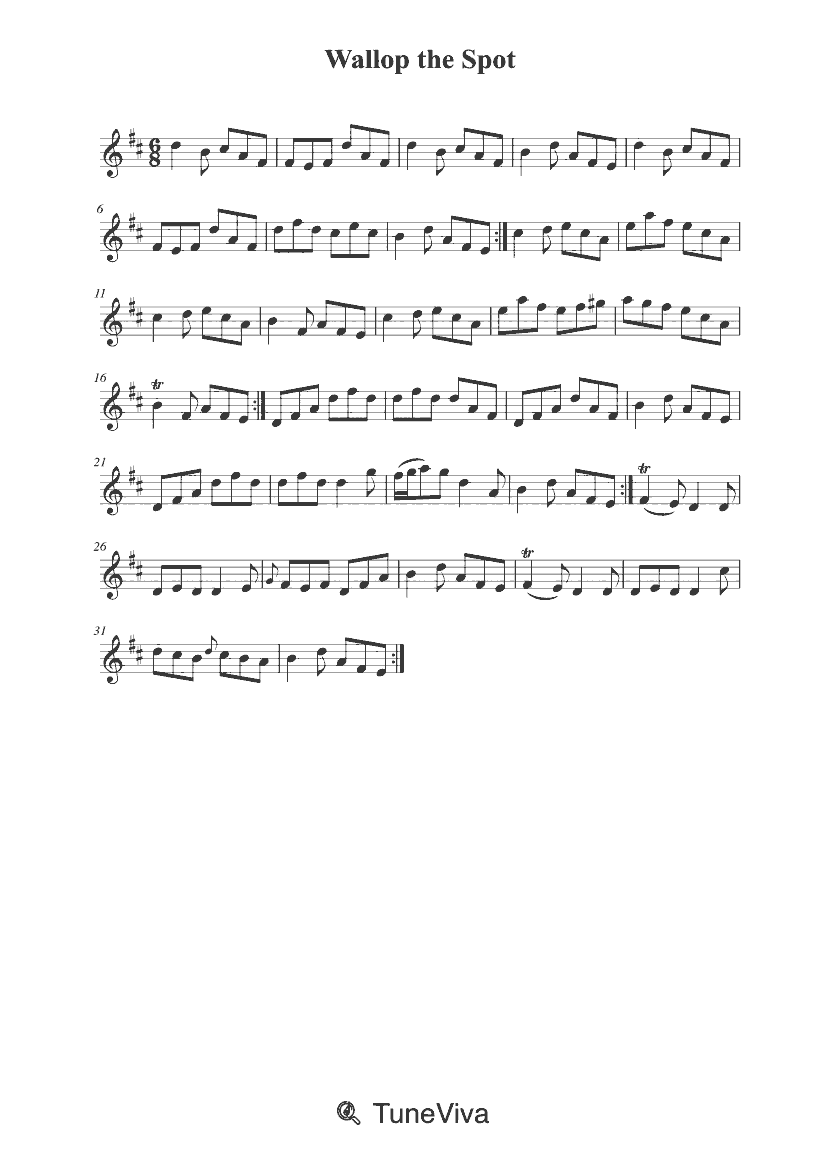
Misc tunes
1 min 24 sec · Score #138539
Open score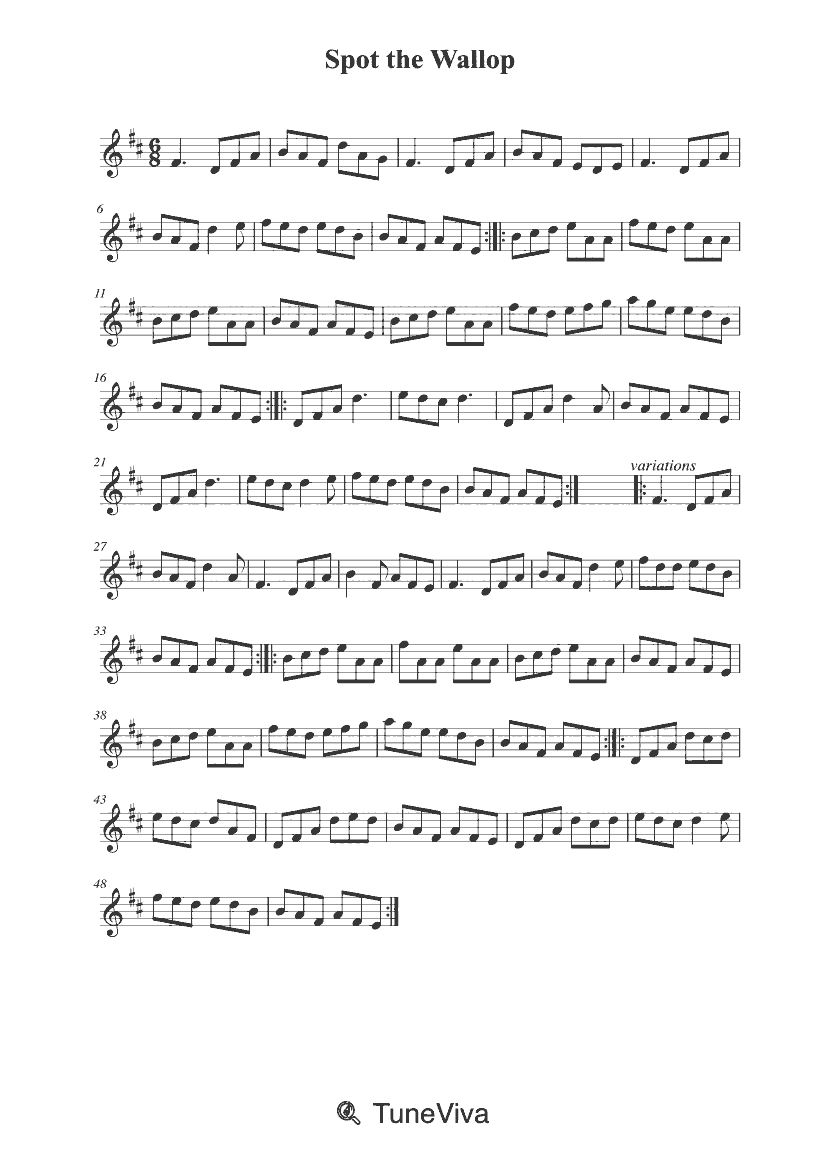
Misc tunes
1 min 13 sec
Open score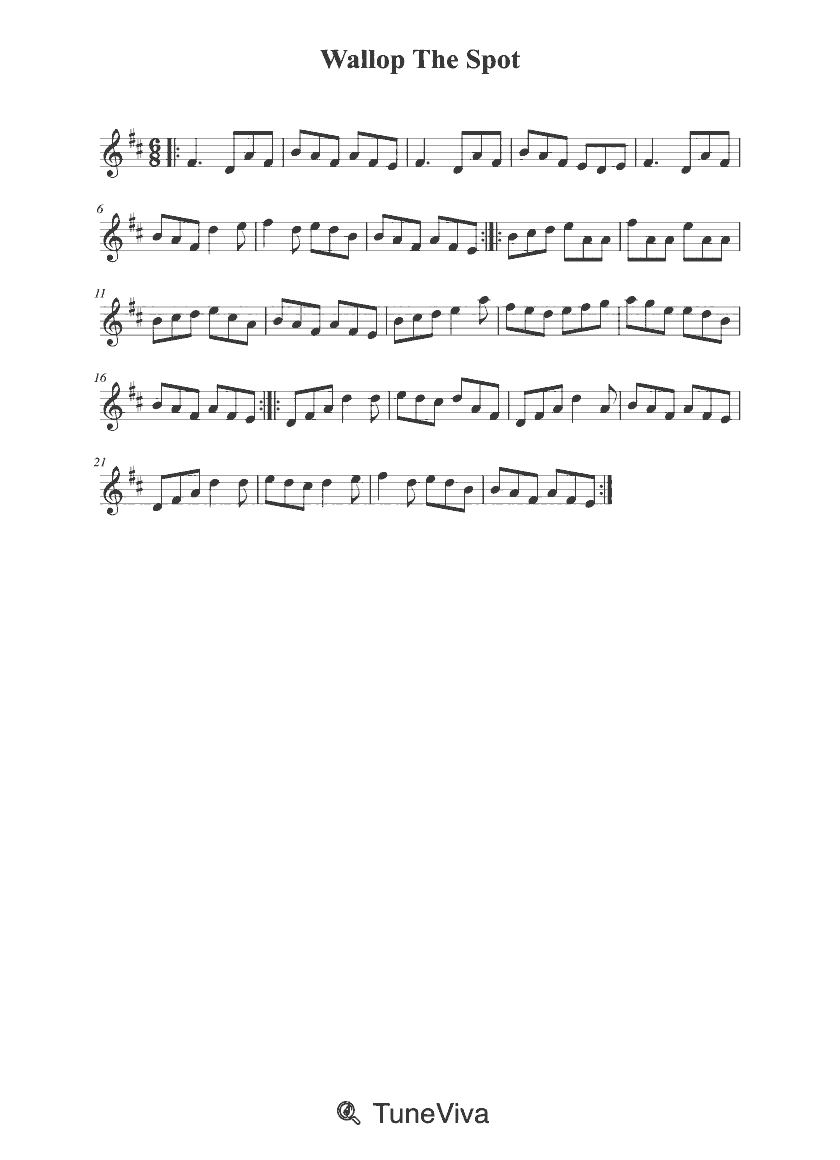
Misc tunes
36 sec · Score #183790
Open score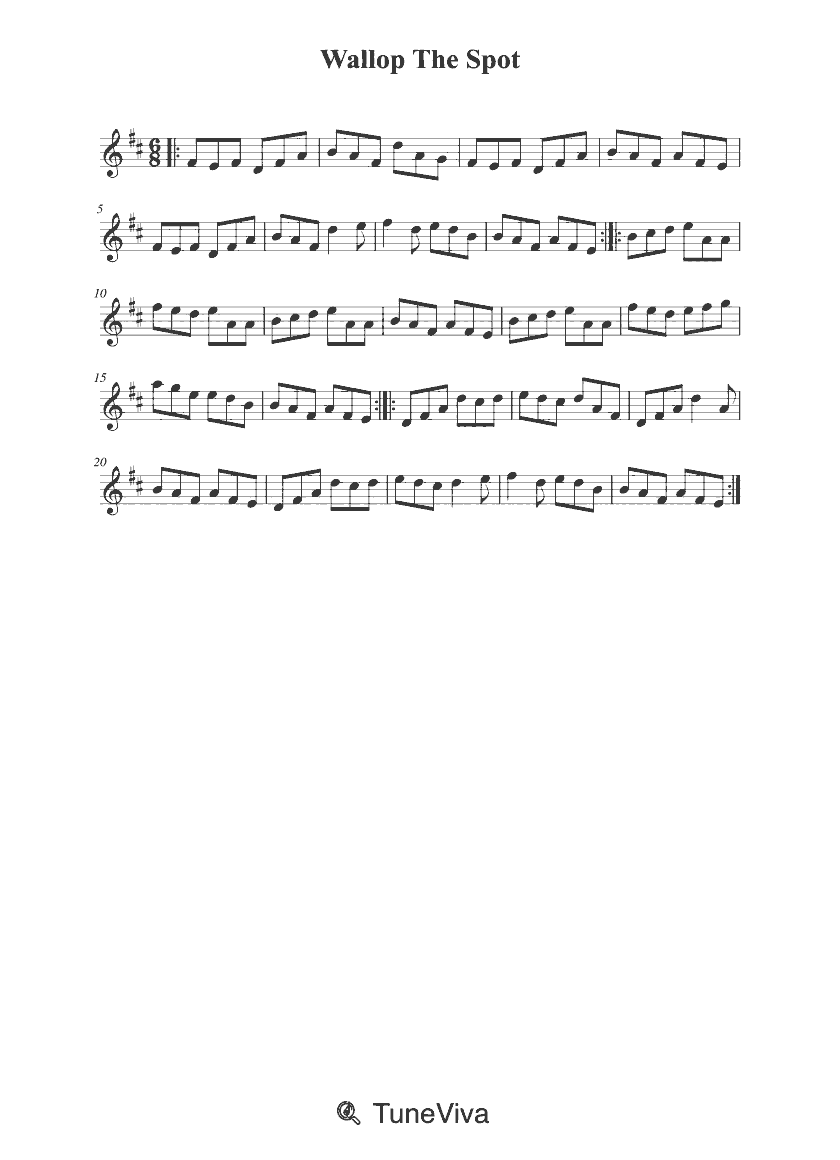
Misc tunes
36 sec · Score #218935
Open score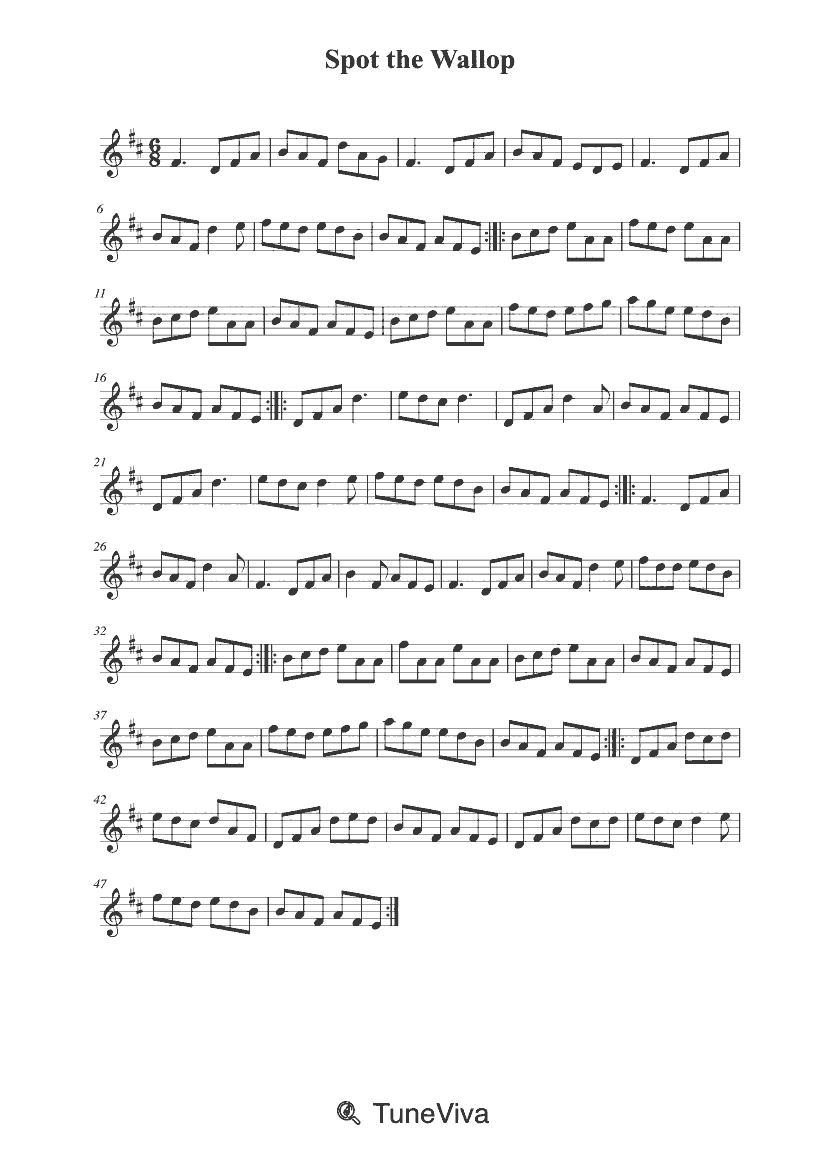
Misc tunes
1 min 12 sec
Open score
anon.
1 min 40 sec · Score #228916
Open score
anon.
1 min 31 sec · Score #19831
Open score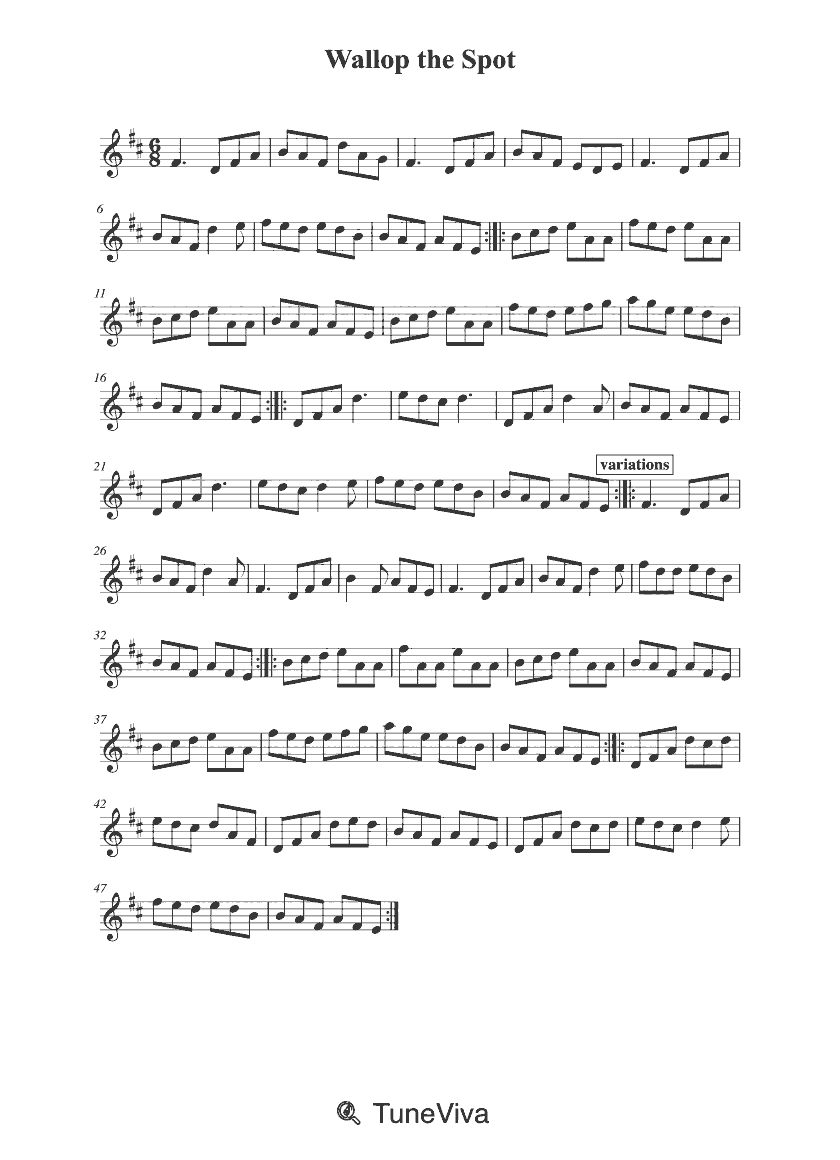
Misc tunes
Spot the Wallop
1 min 12 sec
Open score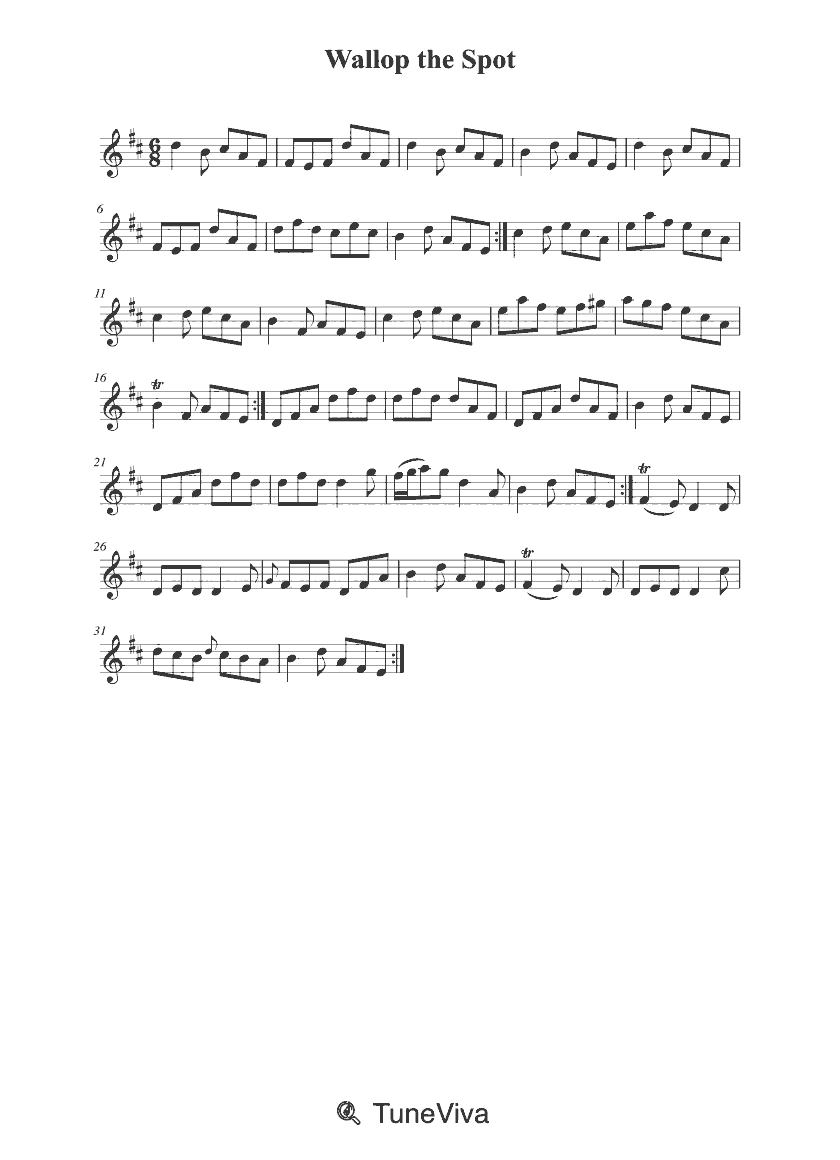
Misc tunes
1 min 24 sec · Score #113208
Open score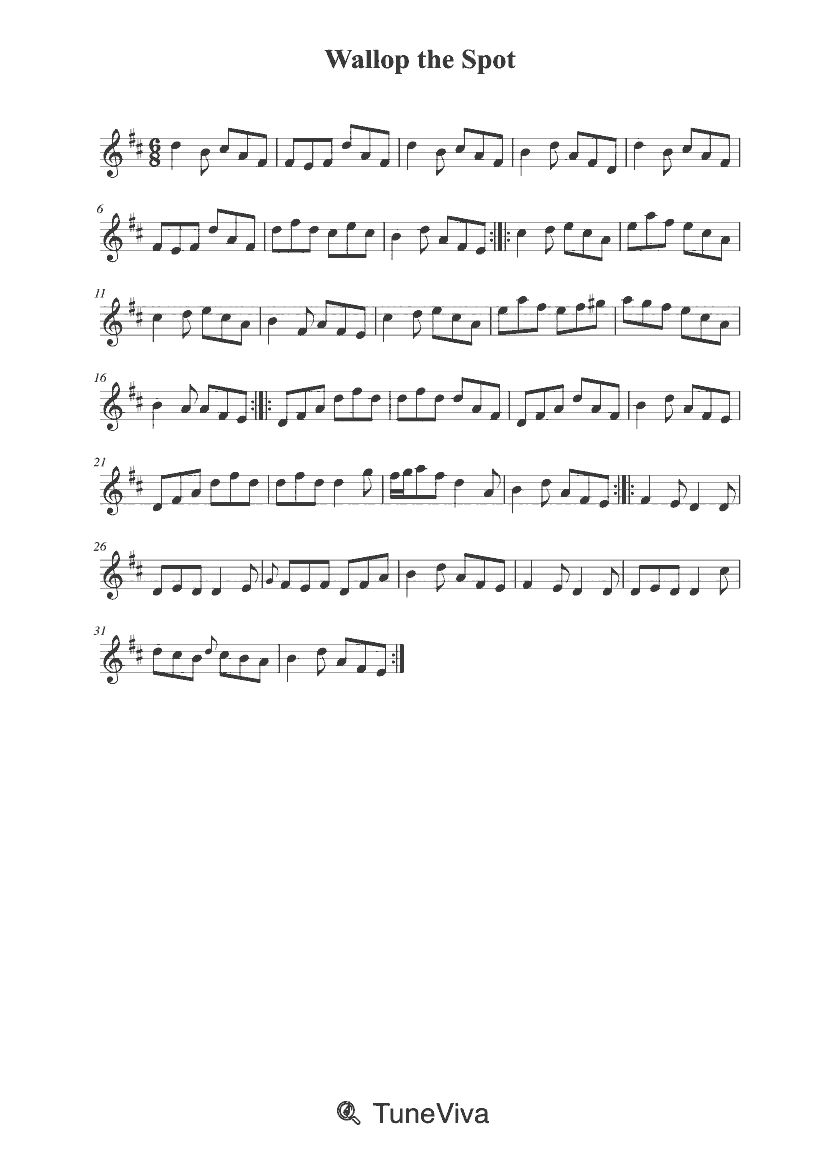
Misc tunes
48 sec
Open scorePage 1 of 2
The listed settings of Wallop The Spot divide between 6/8 and 4/4. In 6/8 the music is compound duple, with two main beats per bar each divided into three; in 4/4 the pulse is simple quadruple. That difference changes phrasing and accent, so pick the setting that matches the version you already know. Opening signatures describe only the start of a score, so check the full piece.
Two scores open with two sharps, which points to D major, and one opens with no sharps or flats. A signature with no sharps or flats can indicate C major or A minor, so confirm the key from the harmony and final cadence rather than the opening signature alone. Transposition and accidentals may also differ between versions.
One score credits the composer as 'anon.' and the others leave the composer field blank. Treat authorship as unknown and avoid assigning the tune to a named writer without a verified source. The title appears with different capitalisation, but that alone does not show whether the settings are related arrangements or different versions.
The listed scores contain 188, 403 and 606 notes respectively. Note counts describe the individual scores and may reflect repeats, extra material or different settings; they are not a difficulty grade and do not prove completeness. Use them only as a rough signal to open and inspect the music itself.
Catalogue duration 1 min 40 sec. Opening key signature: No sharps or flats. Opening time signature: 4/4.
Catalogue duration 24 sec. Opening key signature: 2 sharps (D major). Opening time signature: 6/8.
Catalogue duration 54 sec. Opening key signature: 2 sharps (D major). Opening time signature: 6/8.
No composer is identified in the records for Wallop The Spot; one listed score credits 'anon.' and the others leave the composer field blank. Treat authorship as unknown rather than assigning the tune to a named writer without a verified source.
Wallop The Spot is listed in more than one key: two scores open with two sharps (D major) and one opens with no sharps or flats. A key signature with no sharps or flats can indicate C major or A minor, so check the harmony and final cadence before deciding.
The listed settings of Wallop The Spot include two in 6/8 and one in 4/4. 6/8 is compound duple, with two main beats each divided into three, while 4/4 is simple quadruple; the metre changes how the tune is phrased and accented, so choose the setting that matches the version you know.
The scores titled Wallop The Spot differ in opening metre, key and length, so they should not be assumed to be identical settings. Compare the melodies and section structure in the scores themselves; the shared title alone does not guarantee the same arrangement.
In the 6/8 settings of Wallop The Spot, each bar divides into two groups of three eighth notes, giving a compound-duple pulse. Count two main beats per bar while keeping the triplet subdivision even, and check whether the score's beaming and accents support that grouping.
Listed note counts for Wallop The Spot range from 188 to 606 across the three scores. Note counts describe the individual scores and can reflect repeats, extra material or different versions; they are not a reliable measure of difficulty or completeness, so inspect the music itself.