
Yankee Doodle
Misc tunes
in G major for piano
Piano · 31 sec
Open scoreYankee Doodle sheet music appears here in several settings, including a piano score listed under the traditional title and a separate listing for “(I'm a) Yankee Doodle Dandy.” The scores differ in key signature, time signature and stated instrumentation, so compare those details before choosing a version to practise or perform.
Scores 1–20 of 37
Misc tunes
in G major for piano
Piano · 31 sec
Open score
Misc tunes
31 sec
Open score
Misc tunes
Piano · 16 sec
Open score
Traditional
Piano · 1 min 4 sec
Open score
Misc tunes
32 sec · Score #246076
Open score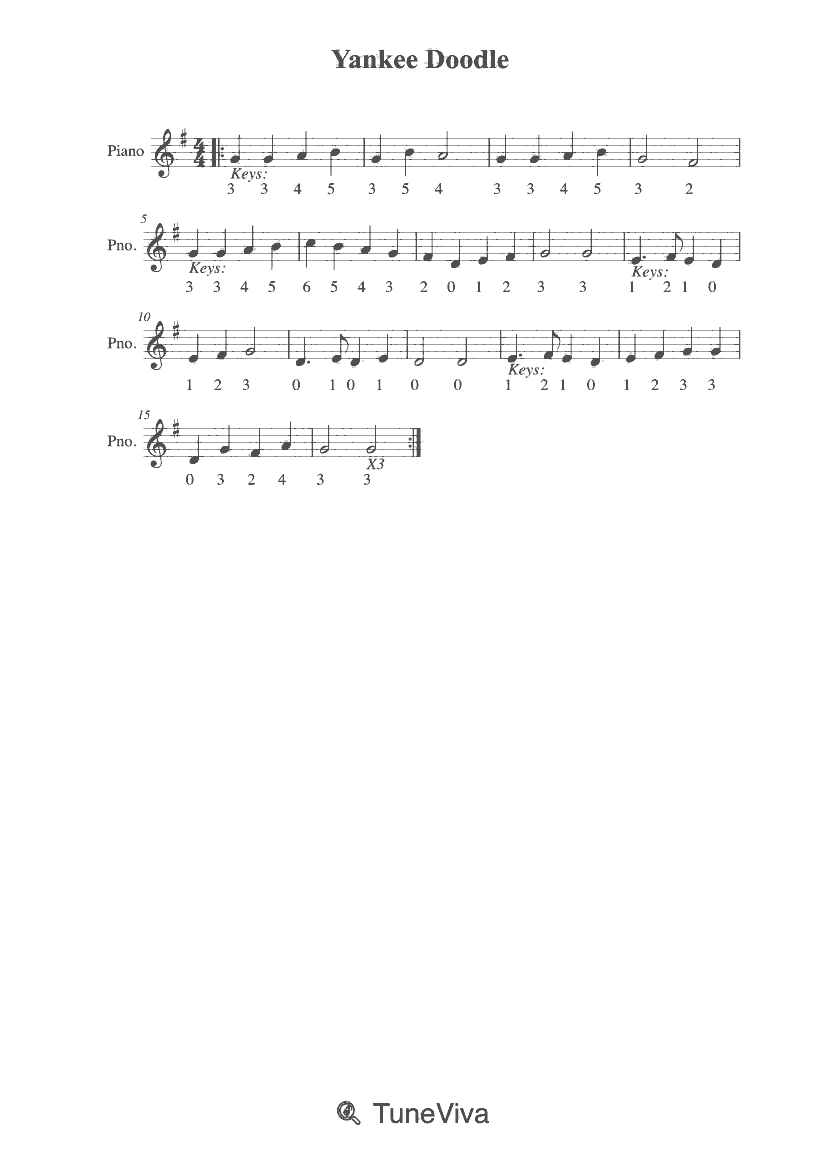
Dr Richard Shuckburg -c 1755
Piano · 1 min 4 sec
Open score
Misc tunes
32 sec · Score #203403
Open score
Misc tunes
51 sec
Open score
Misc tunes
3 min 12 sec · Score #45158
Open score
Misc tunes
19 sec
Open score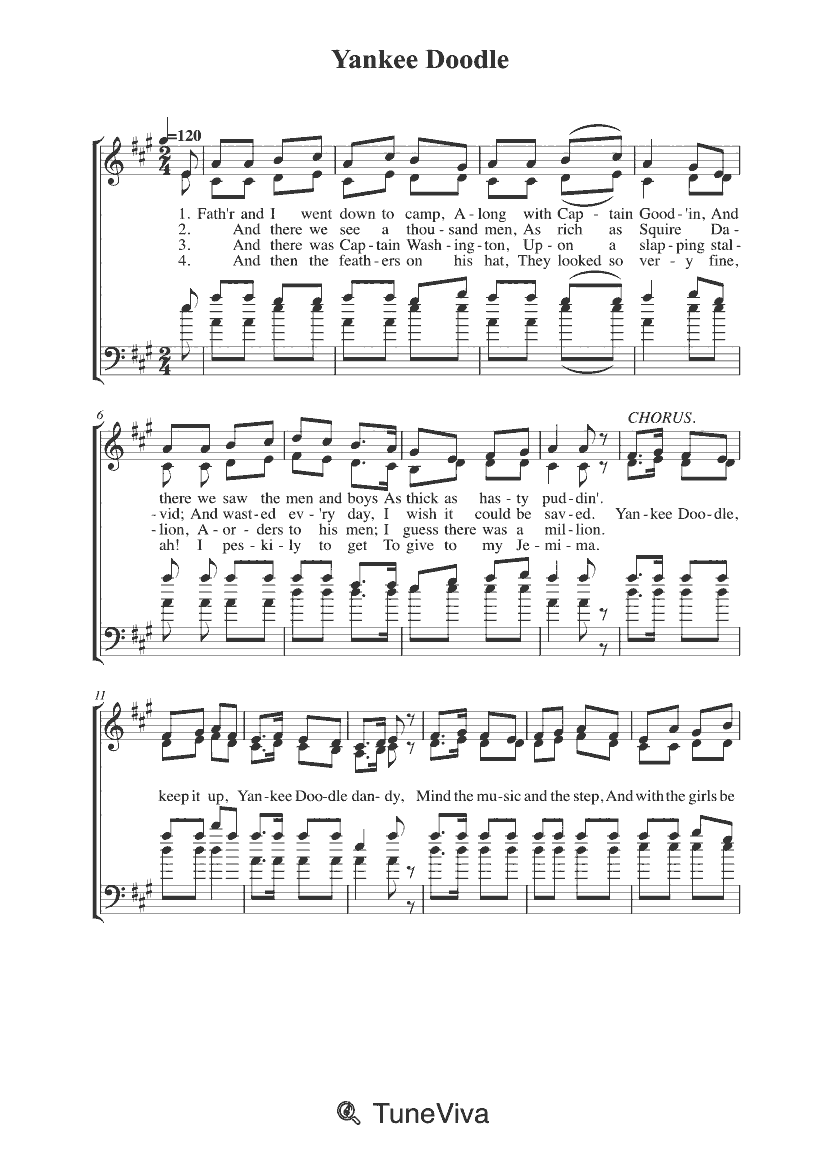
Dr. Schamburg/Old English Tune ca. 1755
16 sec
Open score
Misc tunes
1 min 4 sec
Open score
Misc tunes
43 sec
Open score
Misc tunes
58 sec · Score #206030
Open score
unknown
17 sec
Open score
Misc tunes
16 sec
Open score
Misc tunes
58 sec · Score #174085
Open score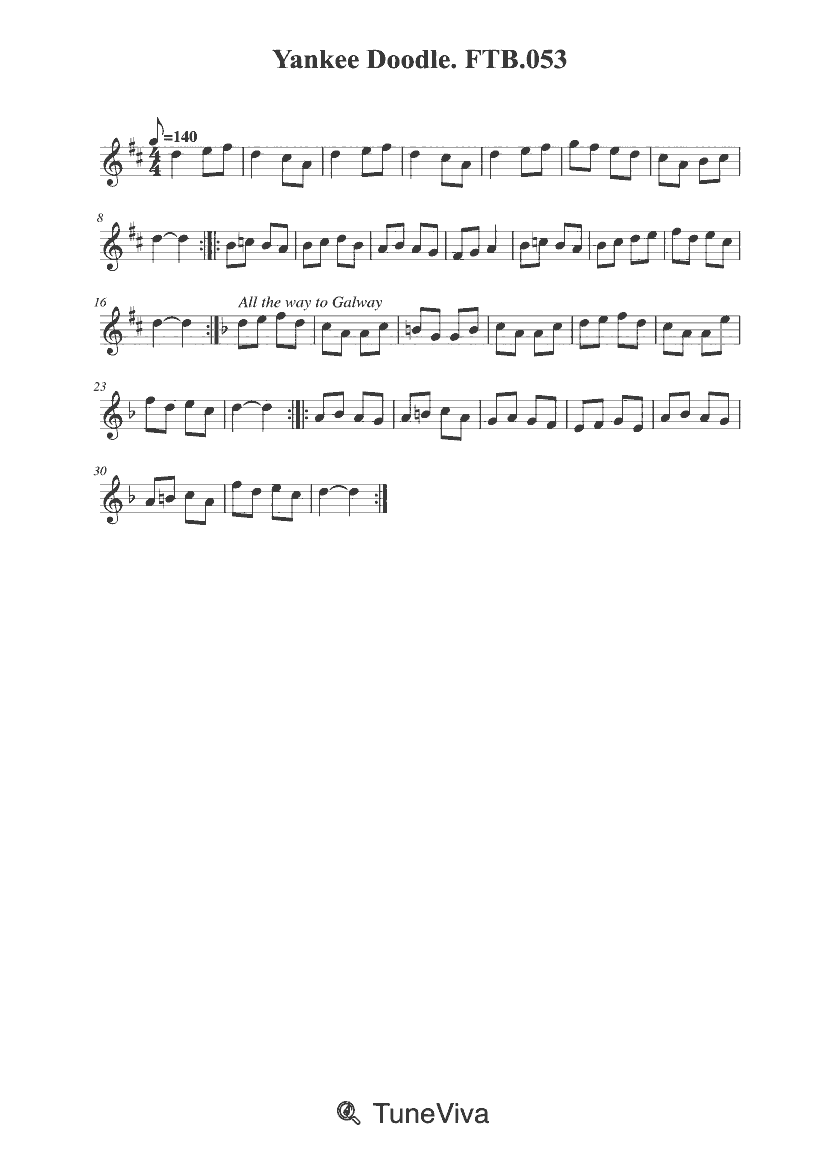
Misc tunes
All The Way To Galway. FTB.053
2 min 4 sec
Open score
Misc tunes
3 min 12 sec · Score #81419
Open score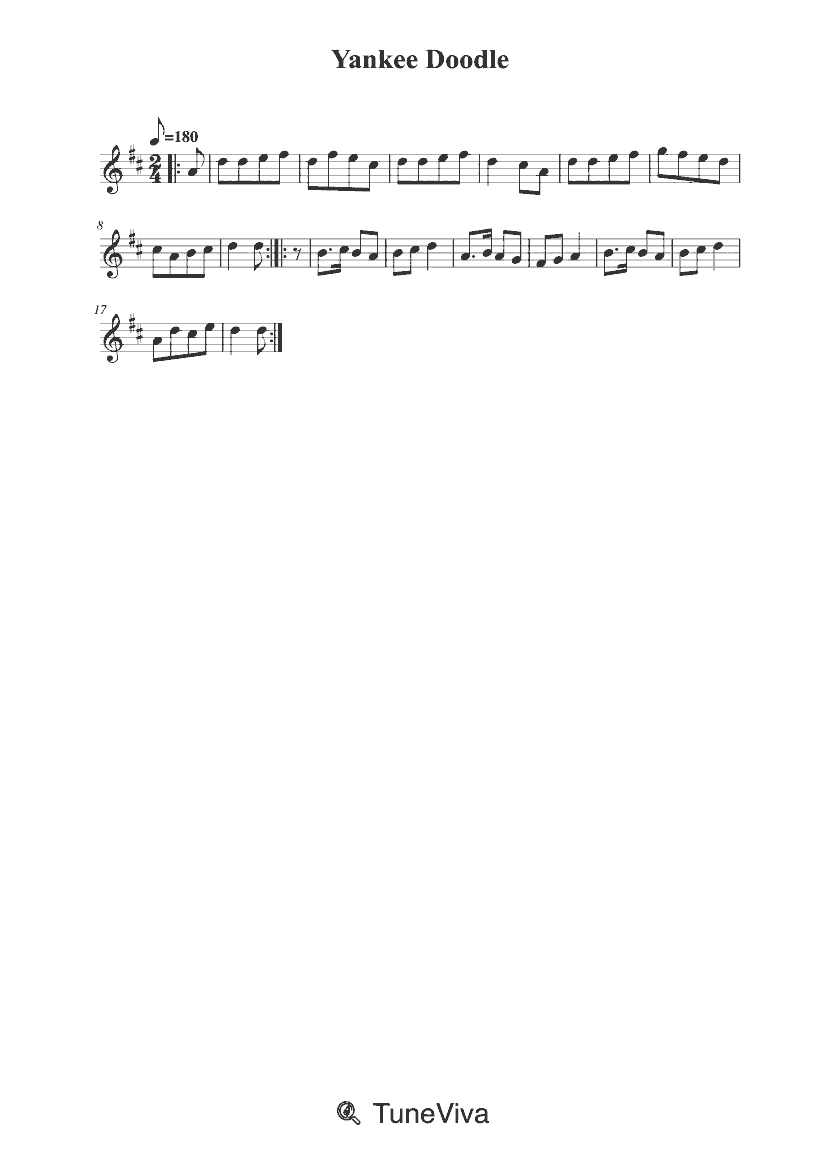
Misc tunes
43 sec
Open scorePage 1 of 2
The listings include “Yankee Doodle” and “(I'm a) Yankee Doodle Dandy.” These are separate titles, and the supplied details do not establish that they are the same piece. One score is labelled “Yankee Doodle - Anonymous (Traditional),” which identifies a traditional attribution rather than a named composer. Confirm the title before ordering or practising.
The listed scores open in D major (two sharps), A major (three sharps) and a key with one sharp; they use both 2/4 and 4/4. Key and time signature affect range, fingering and phrasing, so compare them with the instrument or voice you have in mind. Verify the details against the score itself, since displayed score information can be incomplete.
Two listings state Piano as the score parts: “Yankee Doodle” in a key with one sharp and “Yankee Doodle - Anonymous (Traditional)” in A major. The “(I'm a) Yankee Doodle Dandy” listing does not state instrumentation, so check its score parts before assuming it is for piano or another specific instrument.
The supplied information does not establish Yankee Doodle's origin, composer, first publication or a formal difficulty grade. The title “Anonymous (Traditional)” is an attribution label, not proof of a particular edition or historical account. Treat historical claims and difficulty labels elsewhere with caution unless a specific edition is documented.
Score parts: Piano. Catalogue duration 31 sec. Opening key signature: 1 sharp. Opening time signature: 4/4.
Catalogue duration 31 sec. Opening key signature: 2 sharps (D major). Opening time signature: 2/4.
Score parts: Piano. Catalogue duration 16 sec. Opening key signature: 3 sharps (A major). Opening time signature: 2/4.
Two of the listed scores identify Piano as the score parts: the score titled “Yankee Doodle” in a key with one sharp and 4/4, and “Yankee Doodle - Anonymous (Traditional)” in A major and 2/4. The “(I'm a) Yankee Doodle Dandy” listing does not state instrumentation in its details, so check its score parts before assuming piano.
The listed Yankee Doodle settings open in D major (two sharps), A major (three sharps), and a key with one sharp. The listings do not explain those choices; a key signature affects range and fingering, so compare the opening key with the instrument or voice you plan to use rather than assuming all versions match.
The 2/4 settings include “(I'm a) Yankee Doodle Dandy” and “Yankee Doodle - Anonymous (Traditional),” while the score titled “Yankee Doodle” with piano parts is in 4/4. Both meters organise beats into groups, but the groupings and beaming can differ, so check the time signature at the start of a score before reading.
The page lists “(I'm a) Yankee Doodle Dandy” and “Yankee Doodle” under separate titles, and the supplied details do not show that they are the same piece. One score is explicitly labelled “Yankee Doodle - Anonymous (Traditional),” so check the music and title before treating the two as interchangeable.
The label “Anonymous (Traditional)” indicates an attribution to an unnamed or traditional source rather than a named composer. It does not by itself establish Yankee Doodle's origin, date or a specific edition; treat it as a description of the score's attribution and verify further details in the score or an authoritative reference.
Choosing a Yankee Doodle arrangement means matching the score details to your needs: two listings state Piano parts, one does not state instrumentation, and the settings differ in key and meter. Compare the title, key signature, time signature and score parts, and note that no formal difficulty grade is supplied for these listings.