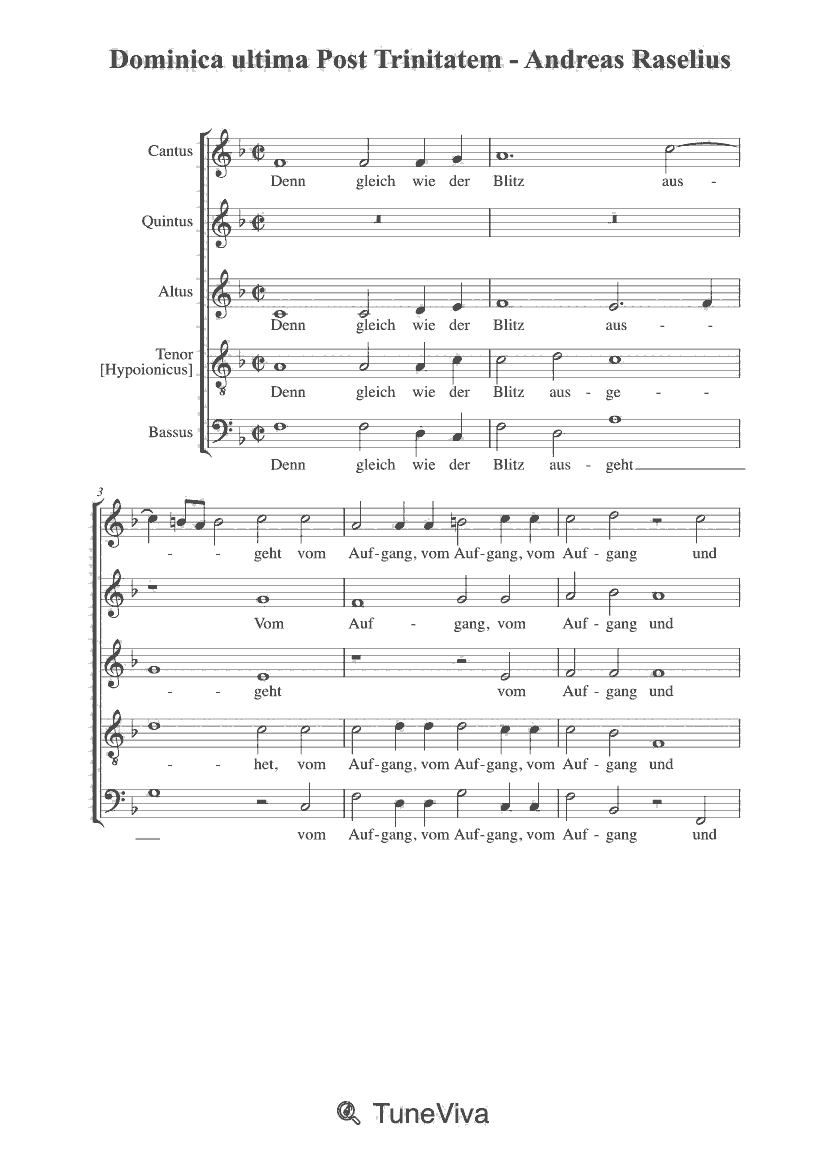
classical
5 tracks
Raselius spent most of his career in Regensburg, and the catalogue follows the church year he wrote for: 47 scores, about 271 minutes of music and 36,664 notated notes. Every entry carries lyrics, as you would expect from a composer whose surviving output is almost entirely vocal.
The titles are liturgical rather than decorative — Dominica I. Adventus, Natalis Christi, Epiphaniae — because they come from his cycles of German Gospel motets. Beside them sit Latin motets from the 1589 Dodecachordum vivum and chorale settings. All 47 entries sit at complexity index 0.
Raselius was born at Hahnbach in the Upper Palatinate around 1563, the son of a Lutheran preacher who had studied at Wittenberg under Melanchthon. He entered the University of Heidelberg in 1581 and took an M.A. in 1584, then moved to Regensburg, where he taught at the Gymnasium Poeticum and served as cantor at the Neupfarrkirche. In 1600 the Elector Palatine Frederick IV appointed him court Kapellmeister at Heidelberg; he died there on 6 January 1602, less than two years later.
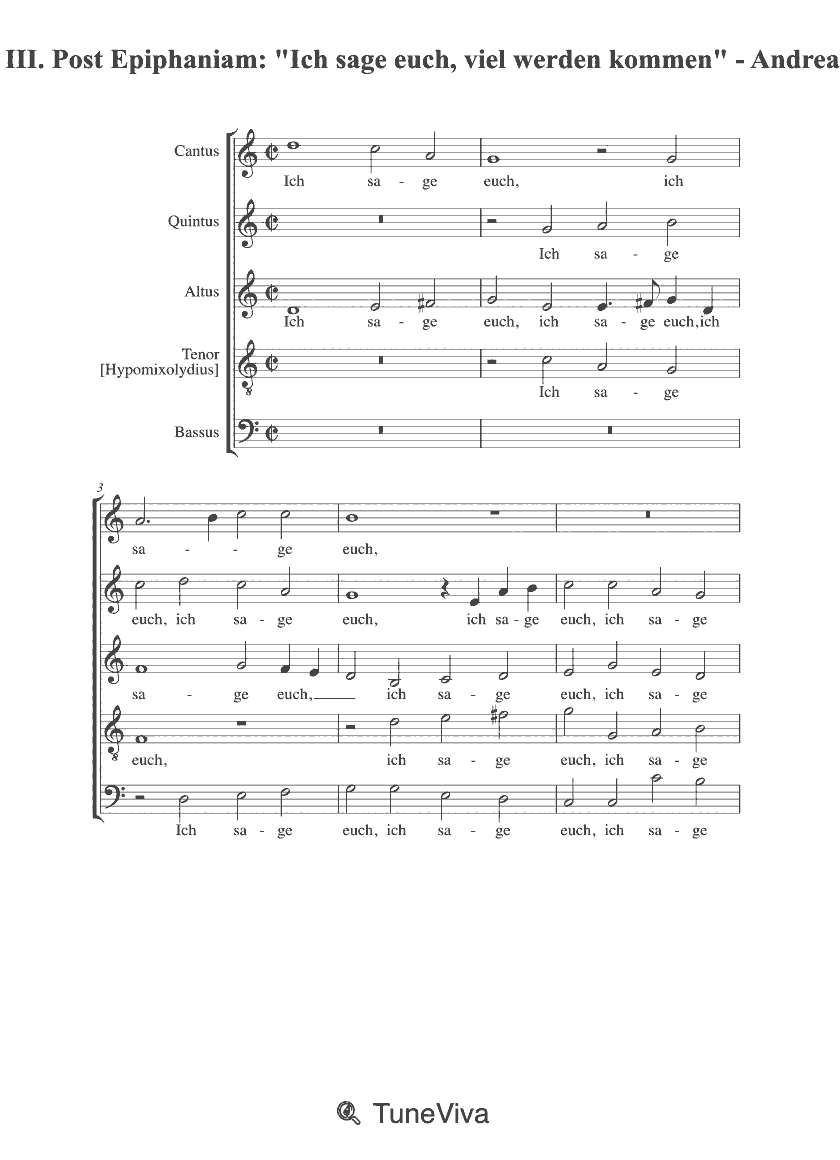
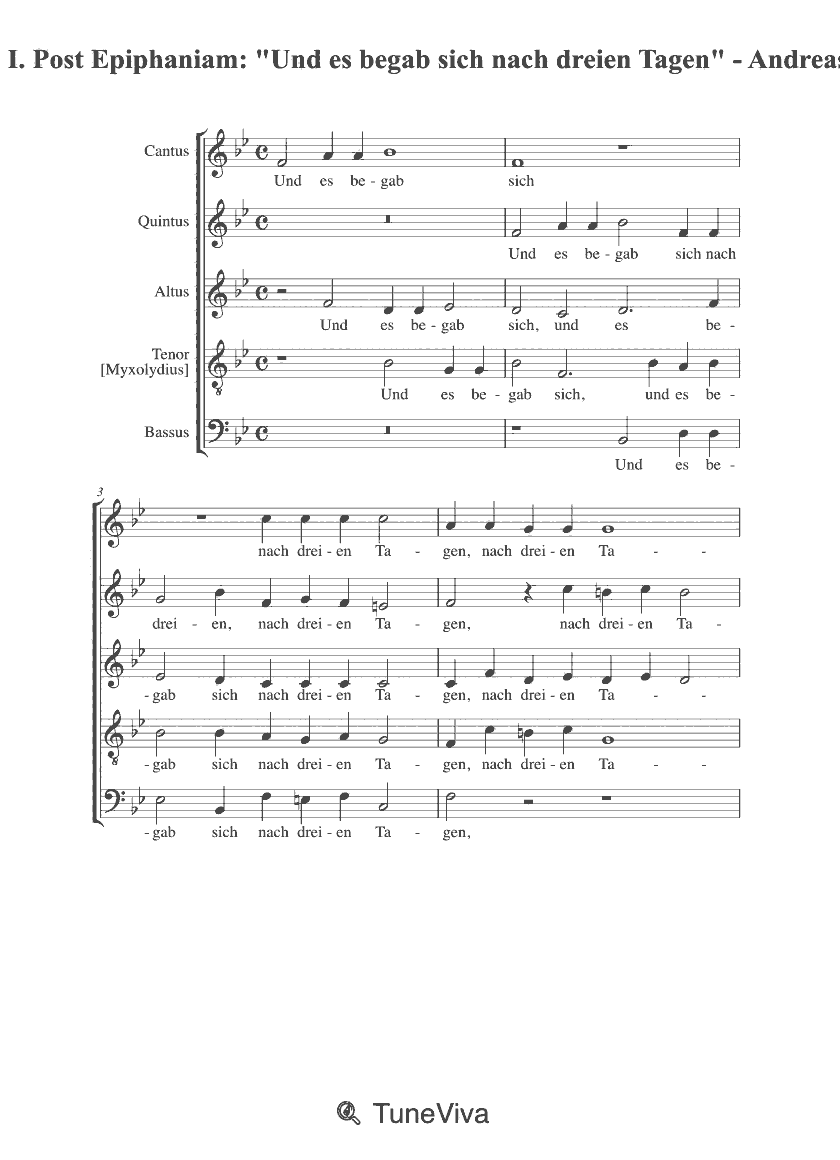
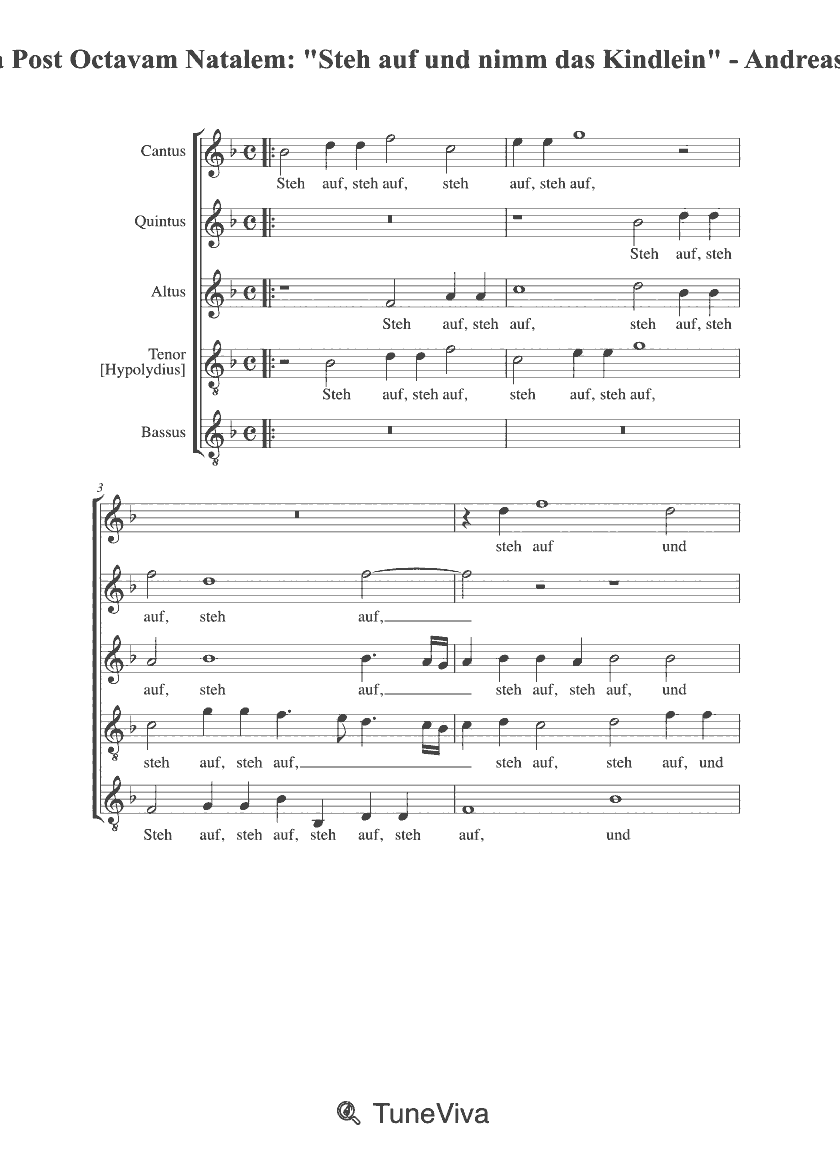
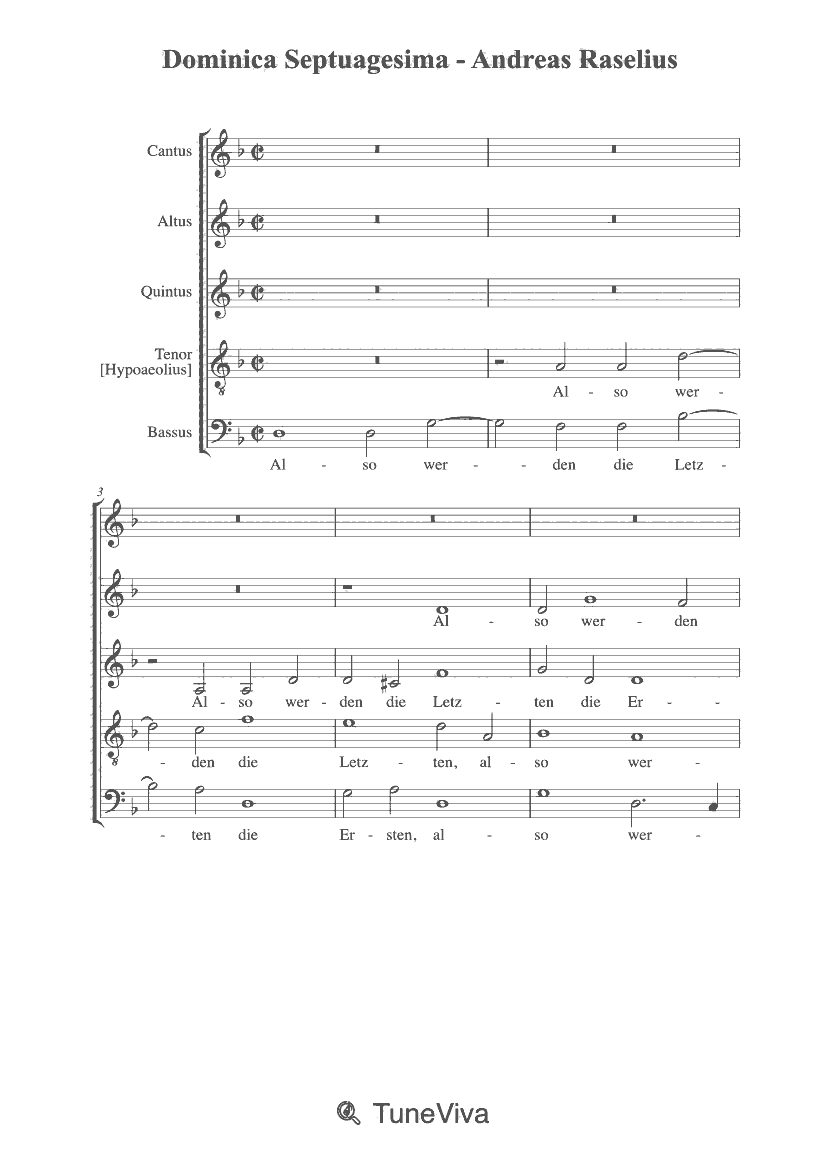
His publications belong to the Regensburg years. Dodecachordum vivum (1589) is a collection of Latin motets; the Teutsche Sprüche of 1594 sets German Gospel texts for the Sundays of the year in fifty-three five-part motets, the first complete German cycle of its kind, and a second volume of twenty-one pieces for the major feasts followed in 1595. He also issued chorale collections in 1591 and 1599, wrote a chronicle of Regensburg, and left a library of nearly 600 titles.
The catalogue holds 47 scores, about 271 minutes and 36,664 notated notes, which works out at roughly six minutes a piece; these are whole motets rather than excerpts. The Latin entries — Si vos manseritis in sermone meo, Ego sum via, Qui de terra est — come from the 1589 collection, while the Sunday and feast headings belong to the German cycles. The catalog titles are editorial labels for the liturgical slot, not necessarily the wording on the original title page.
Raselius writes imitative counterpoint that stays close to the words: a phrase of the Gospel is passed from voice to voice, then repeated for emphasis before the cadence. Keep the declamation clear and resist slowing the semiquaver runs; the music depends on the text being audible. Five-part textures need careful balance so that the inner voices are not buried. Latin pieces want full, rounded vowels, German ones a crisper consonant attack. Tune the final chords without vibrato and let the last cadence ring.
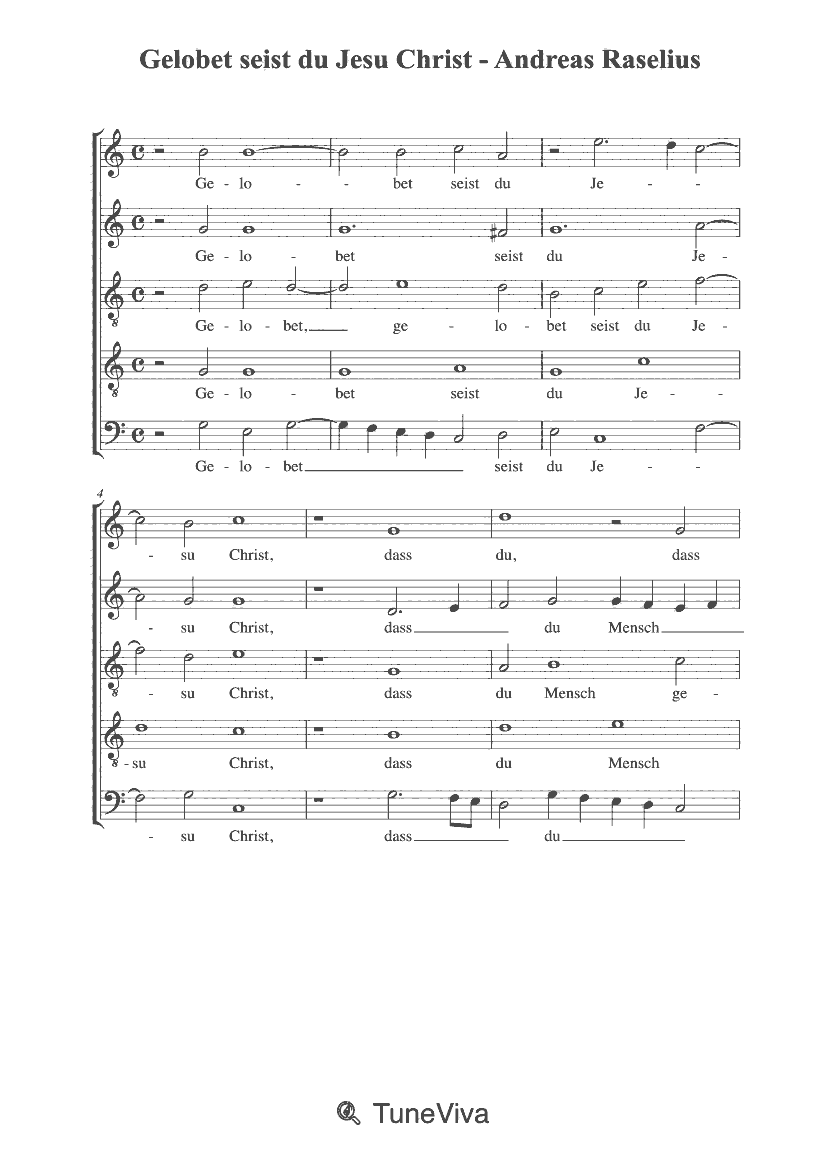
A setting of the Christmas hymn 'Gelobet seist du, Jesu Christ', whose text and melody go back to the 1520s.
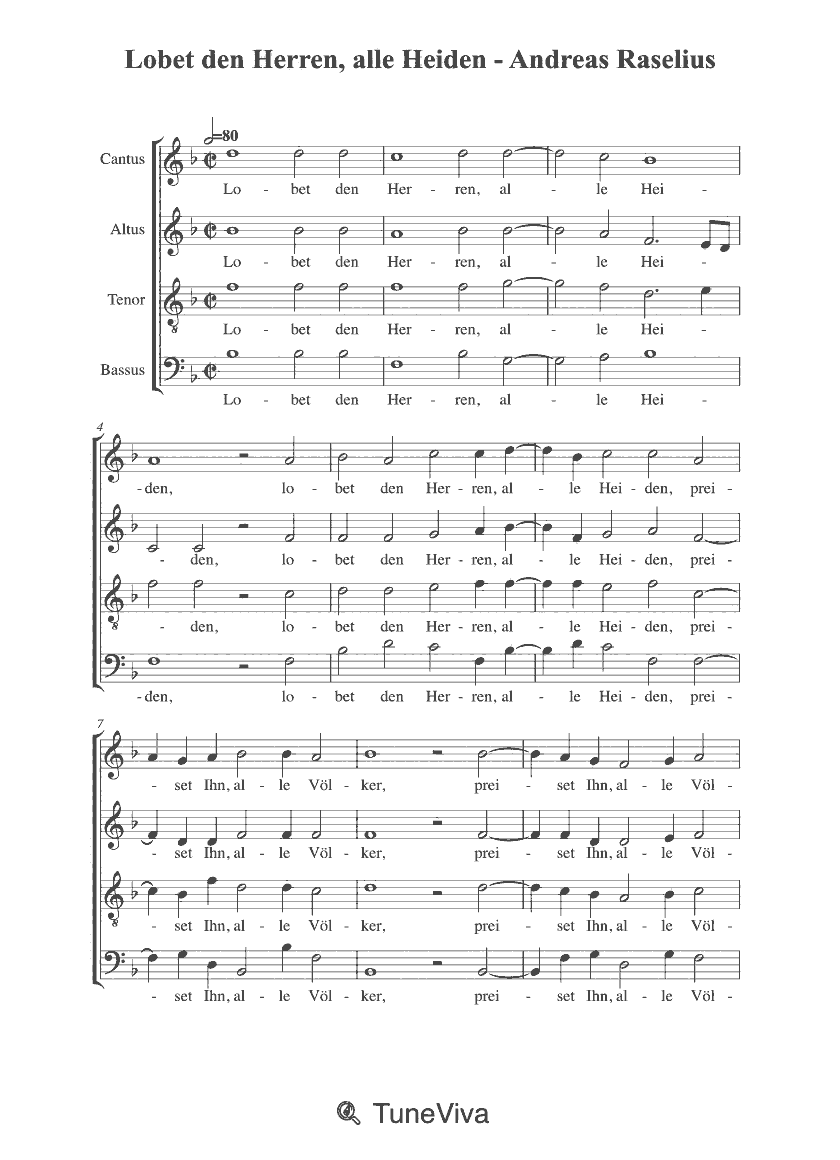
A German setting of Psalm 117, the shortest psalm and a standard text for a Lutheran motet.
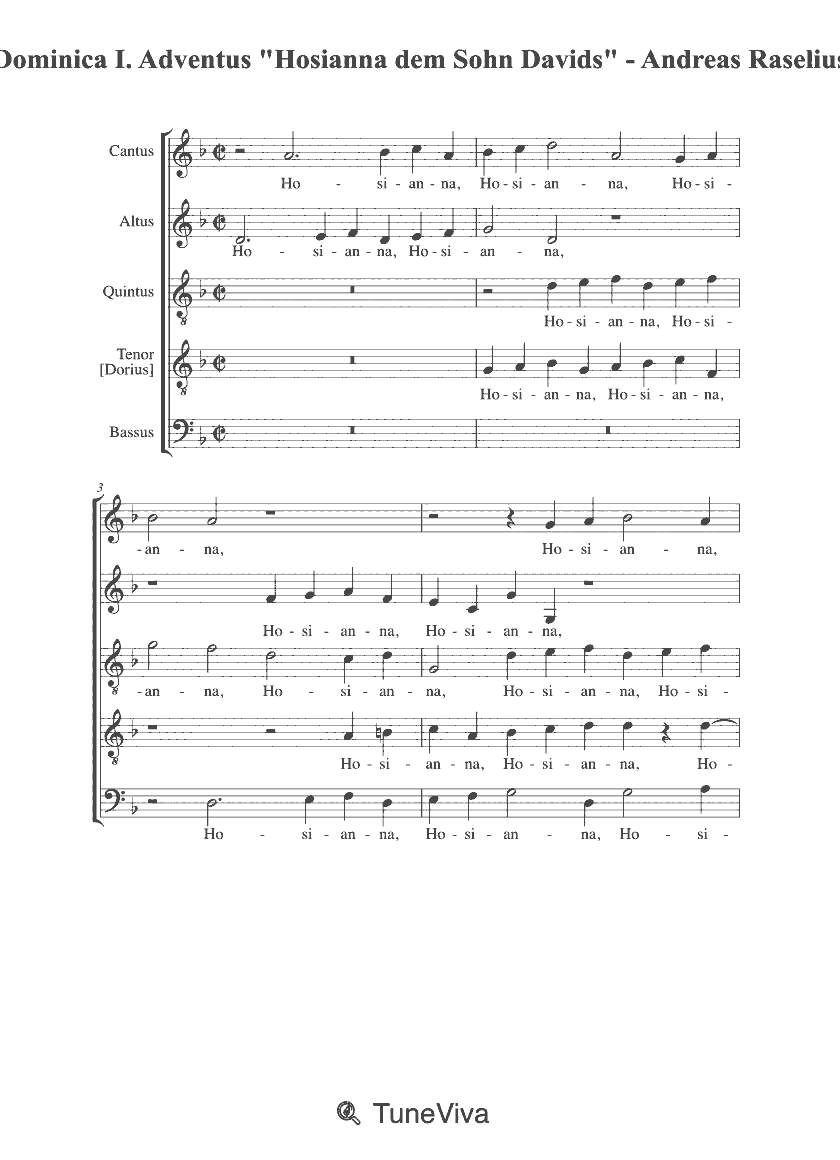
The Advent Sunday motet from the 1594 cycle of German Gospel settings, on the 'Hosanna' acclamation.
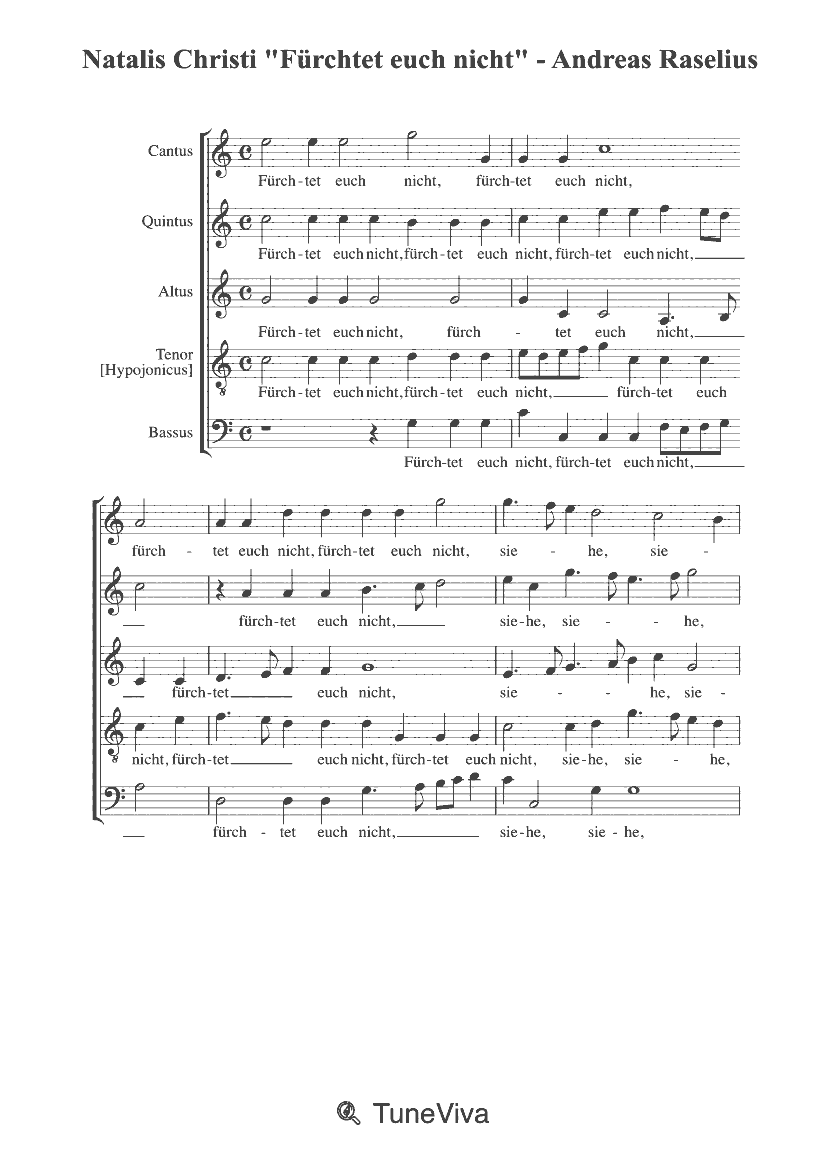
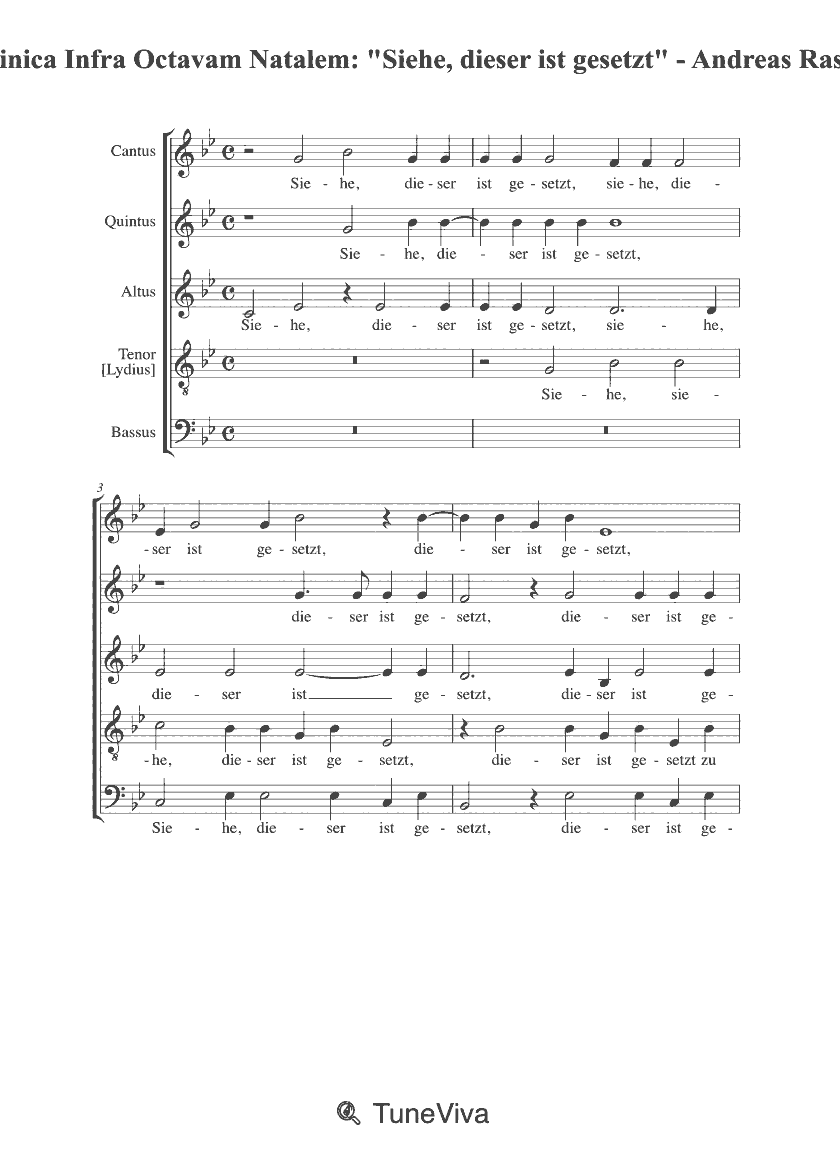
A Christmas motet on Luke 2:10, the angel's 'Fear not' to the shepherds.
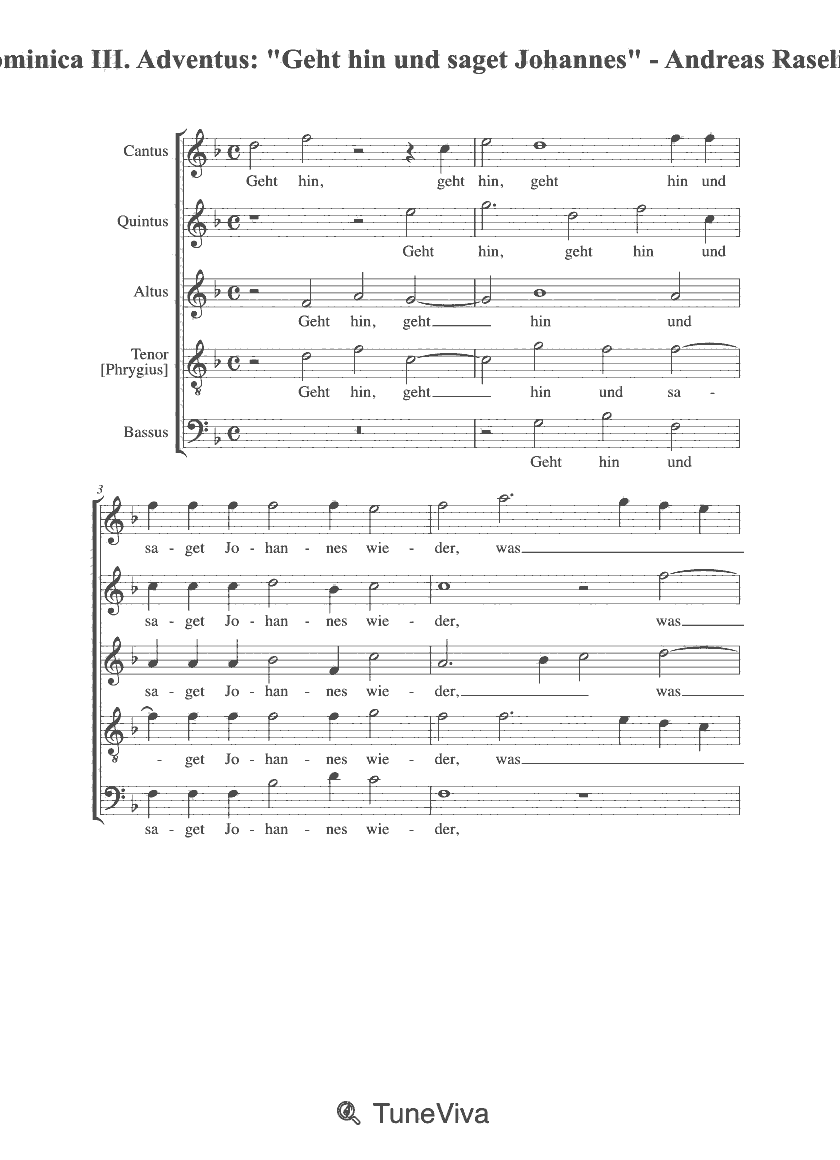
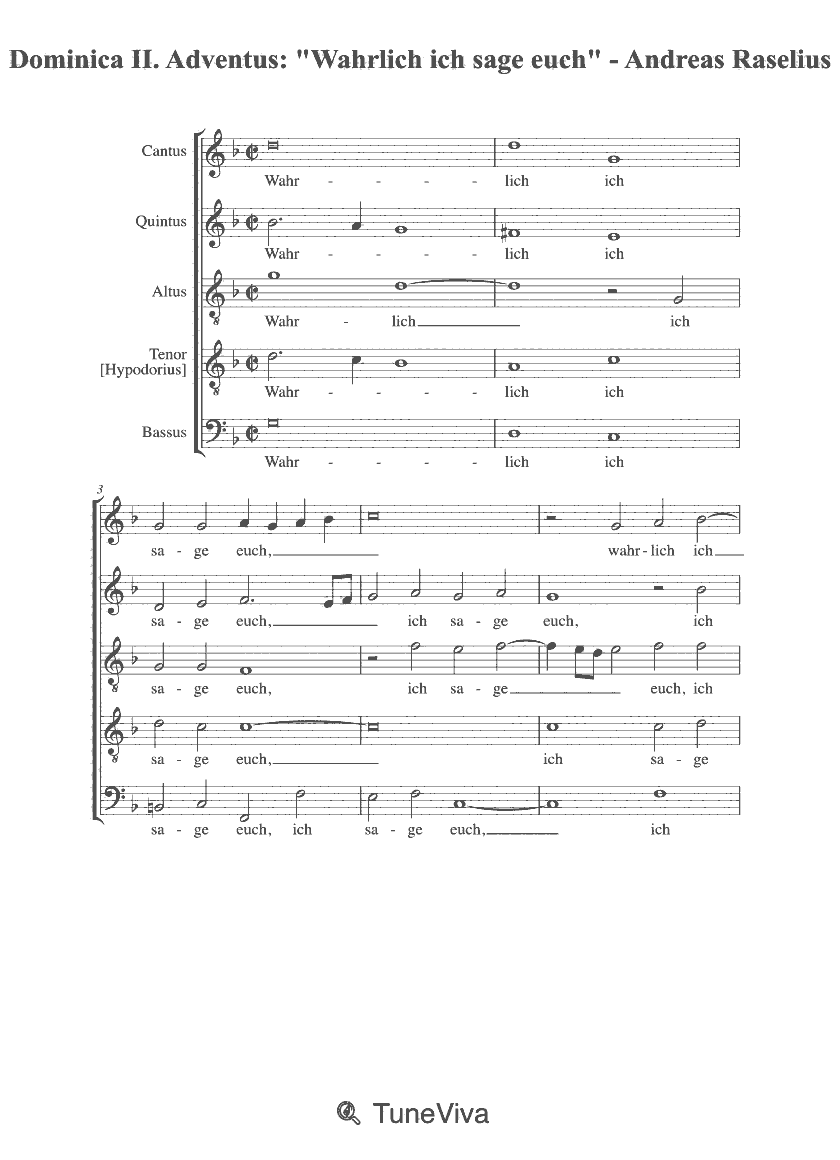
The third Sunday in Advent, with the Baptist's answer to John's disciples, 'Go and tell John'.
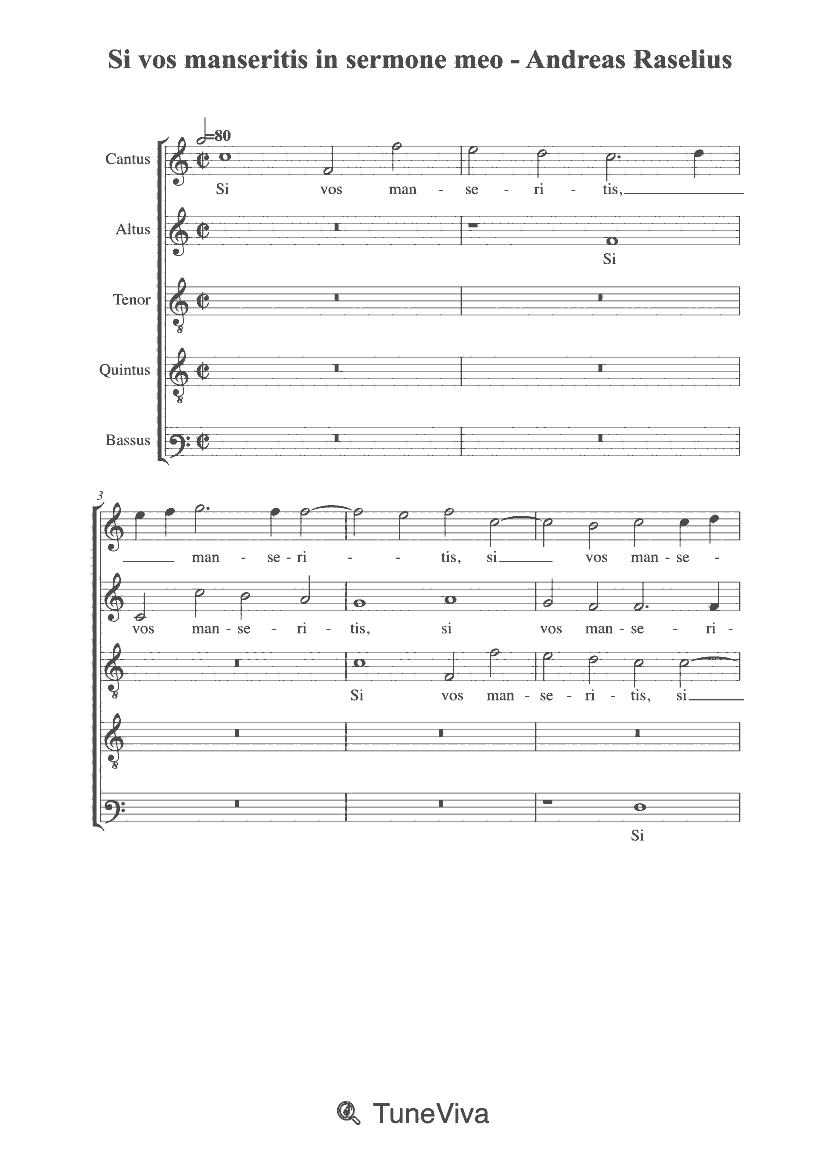
A Latin motet on John 8:31, printed in the Dodecachordum vivum (Regensburg, 1589).
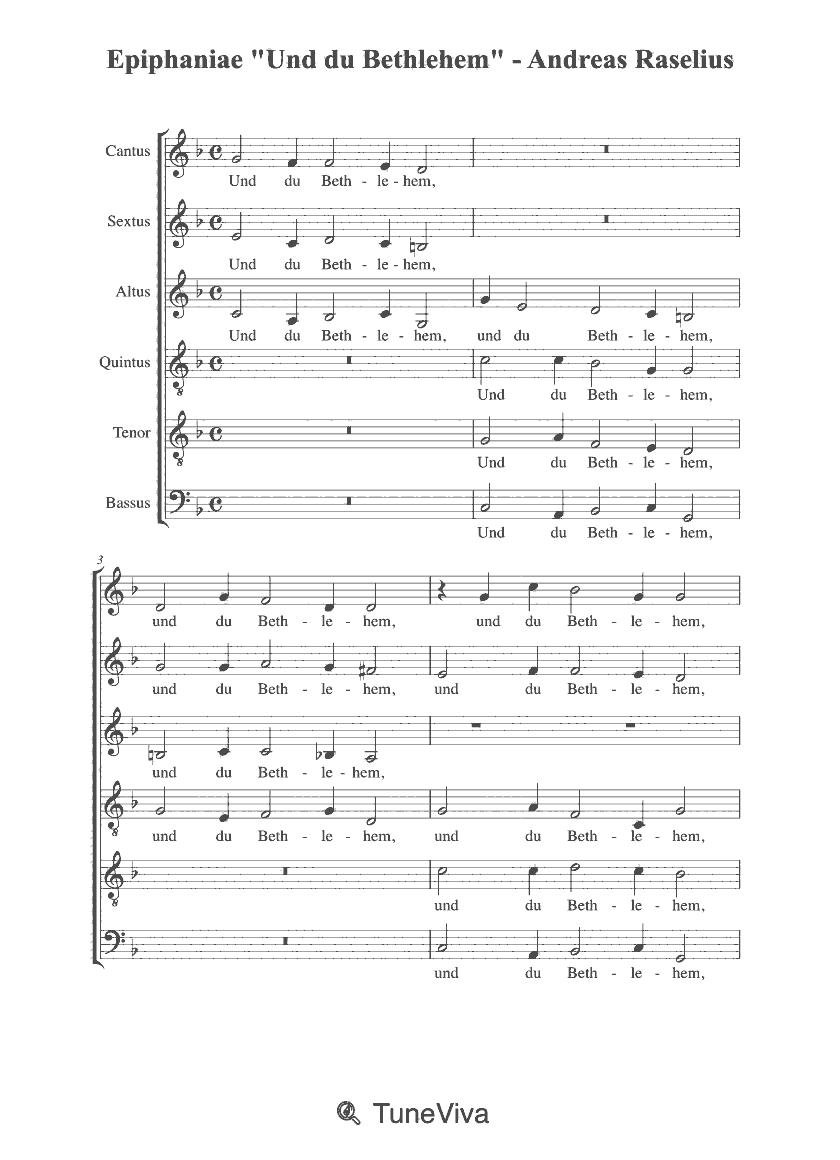
An Epiphany motet on Matthew 2:6, 'And thou Bethlehem', the prophecy quoted to Herod.
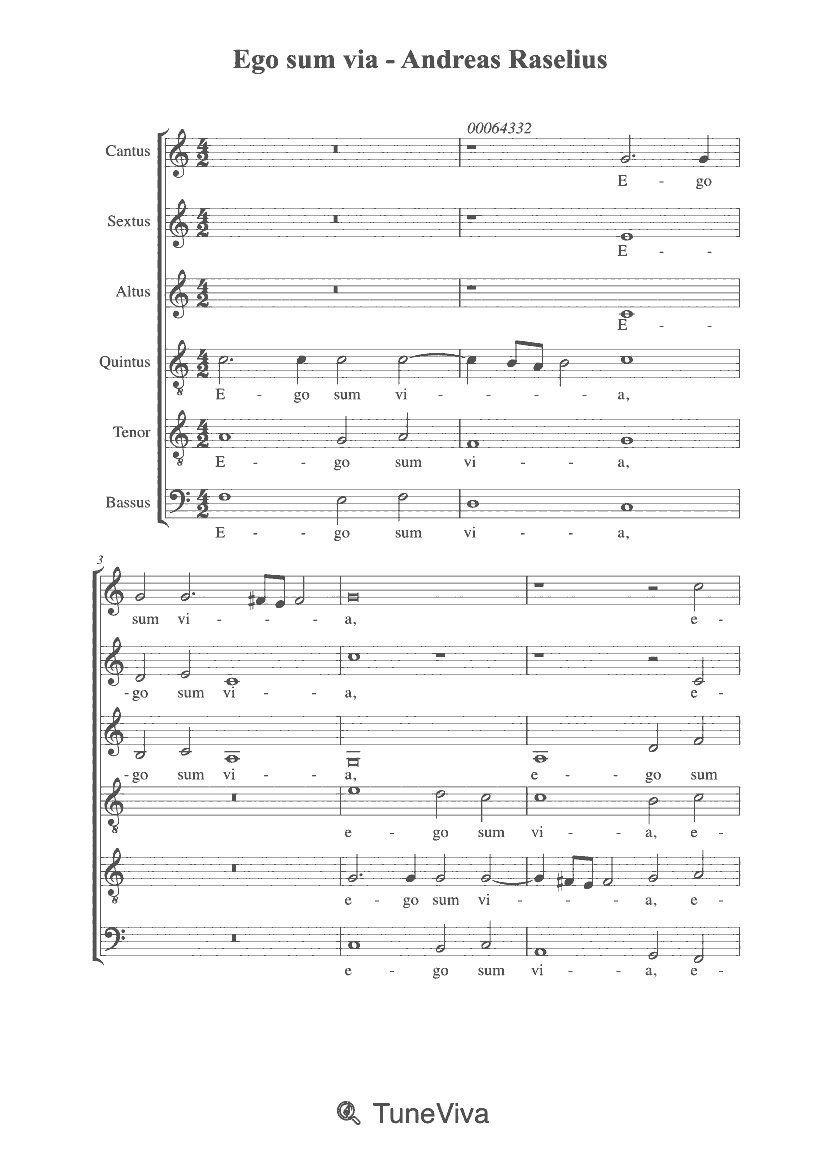
A Latin motet on John 14:6, 'I am the way', from the 1589 Dodecachordum vivum.
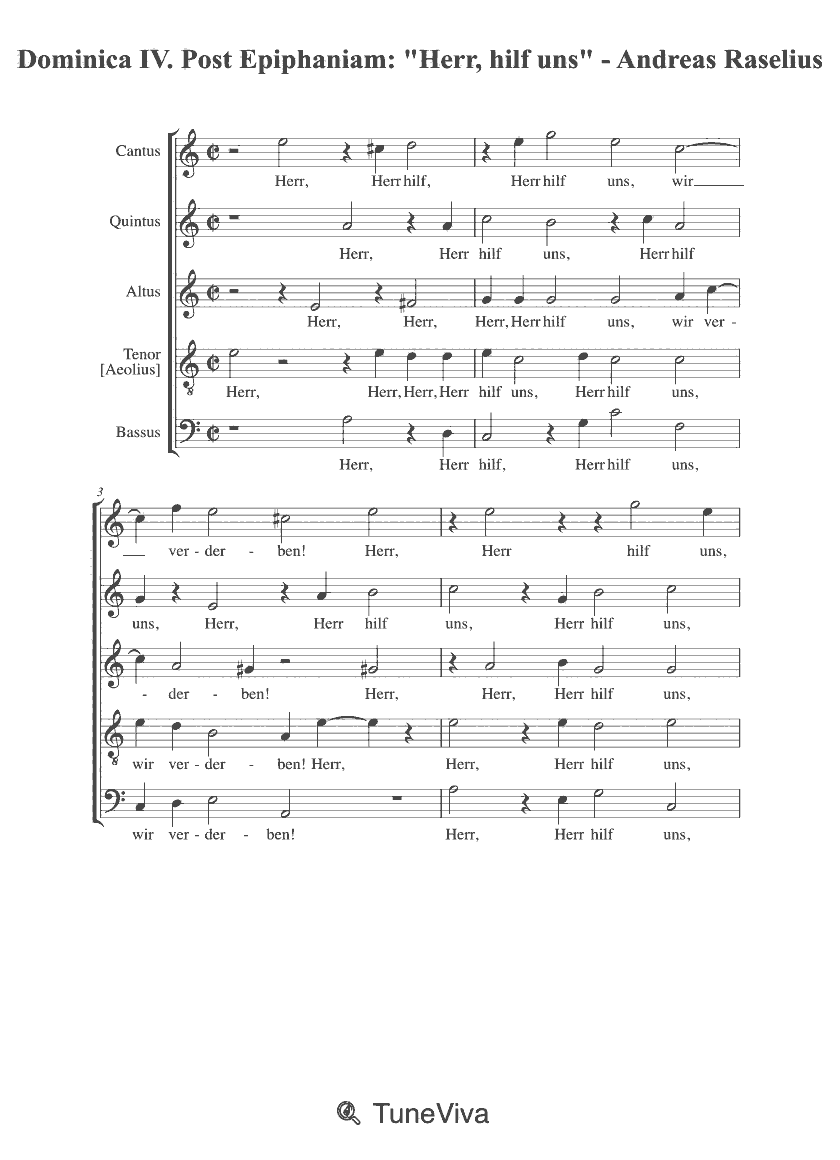
The fourth Sunday after Epiphany, on the disciples' cry 'Lord, save us' during the storm.
A Latin motet on John 3:31, 'He that is of the earth', from the 1589 collection.
47, running to about 271 minutes of music and 36,664 notated notes. All 47 carry lyrics and all sit at complexity index 0.
A cycle of 53 five-part German motets on the Sunday Gospels, published in 1594, followed by 21 motets for the major feasts in 1595. It was the first complete German-language motet cycle for the church year.
Those pieces come from Dodecachordum vivum (Regensburg, 1589), a collection of Latin motets. The German titles belong to the later Gospel cycles.
The texts are liturgical and the scoring is vocal, but check the voicing on each file: the catalogue does not record whether an entry is an original setting, a transposition or an arrangement.
Catalog editions and arrangements attributed to Andreas Raselius.
(6 vocum)
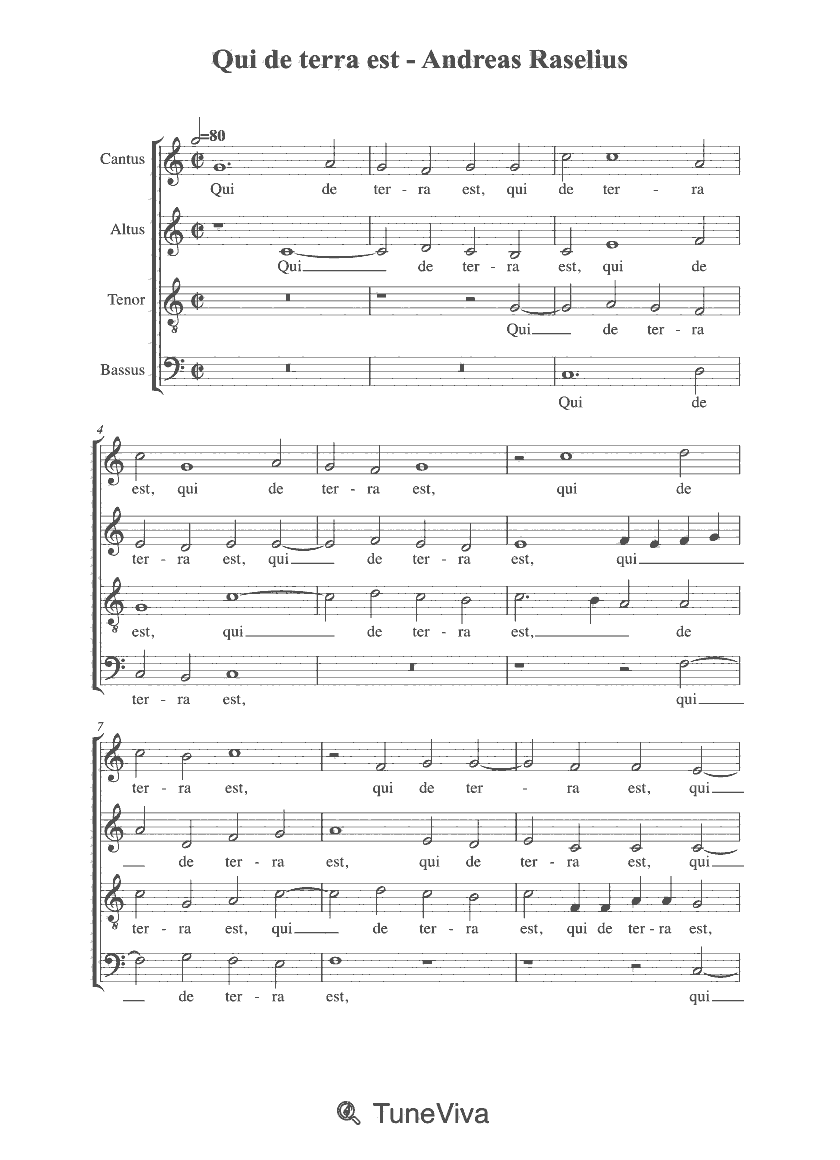
(4 vocum)
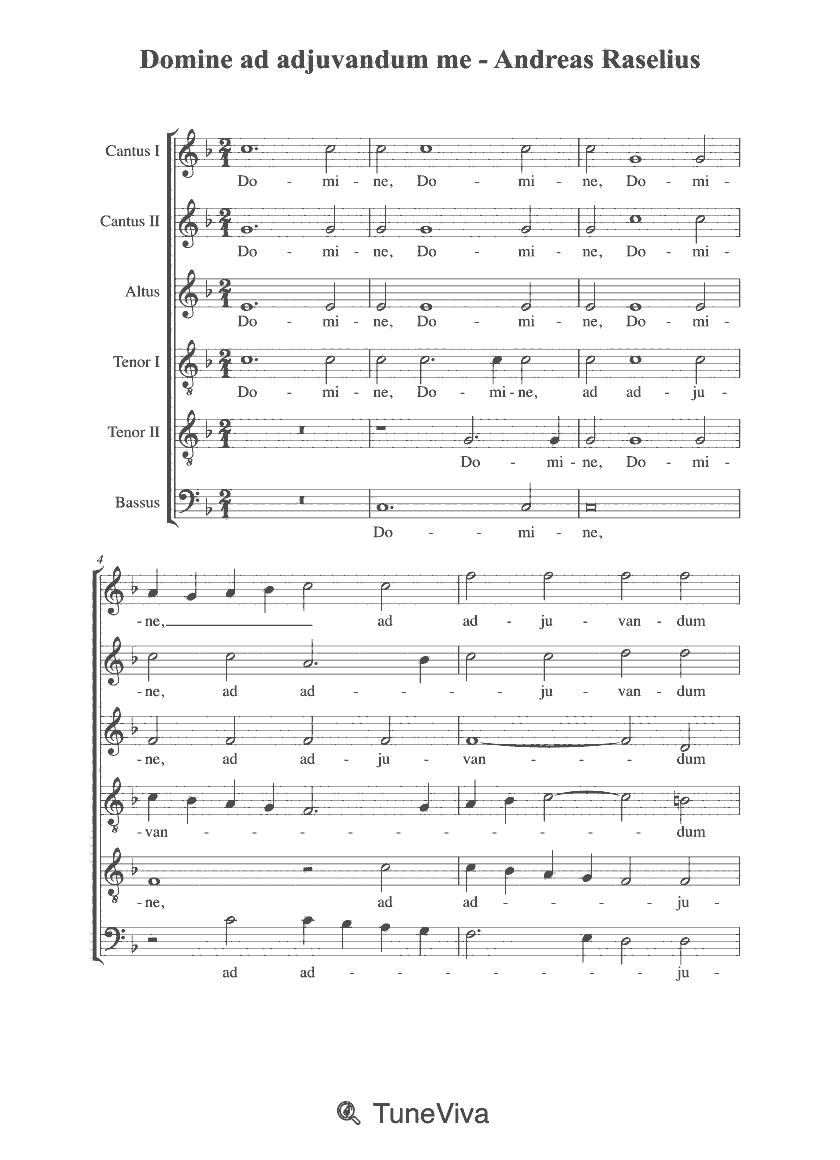
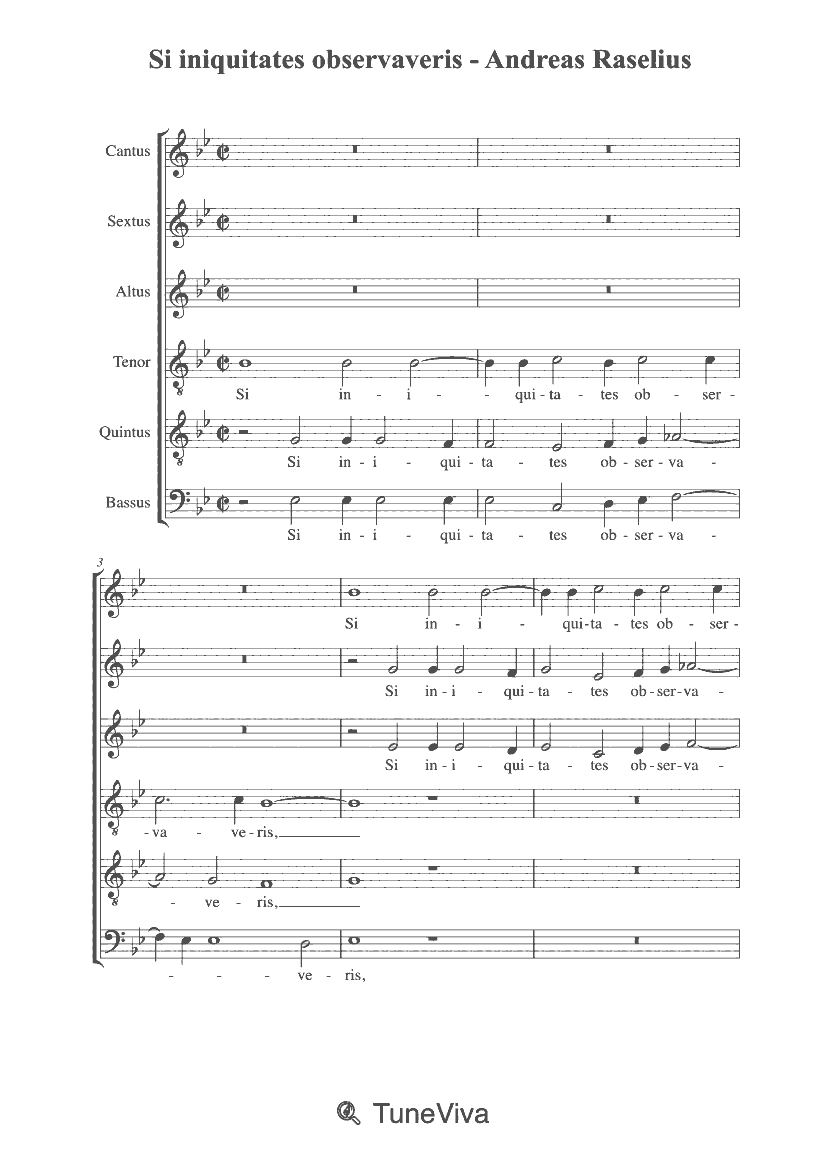
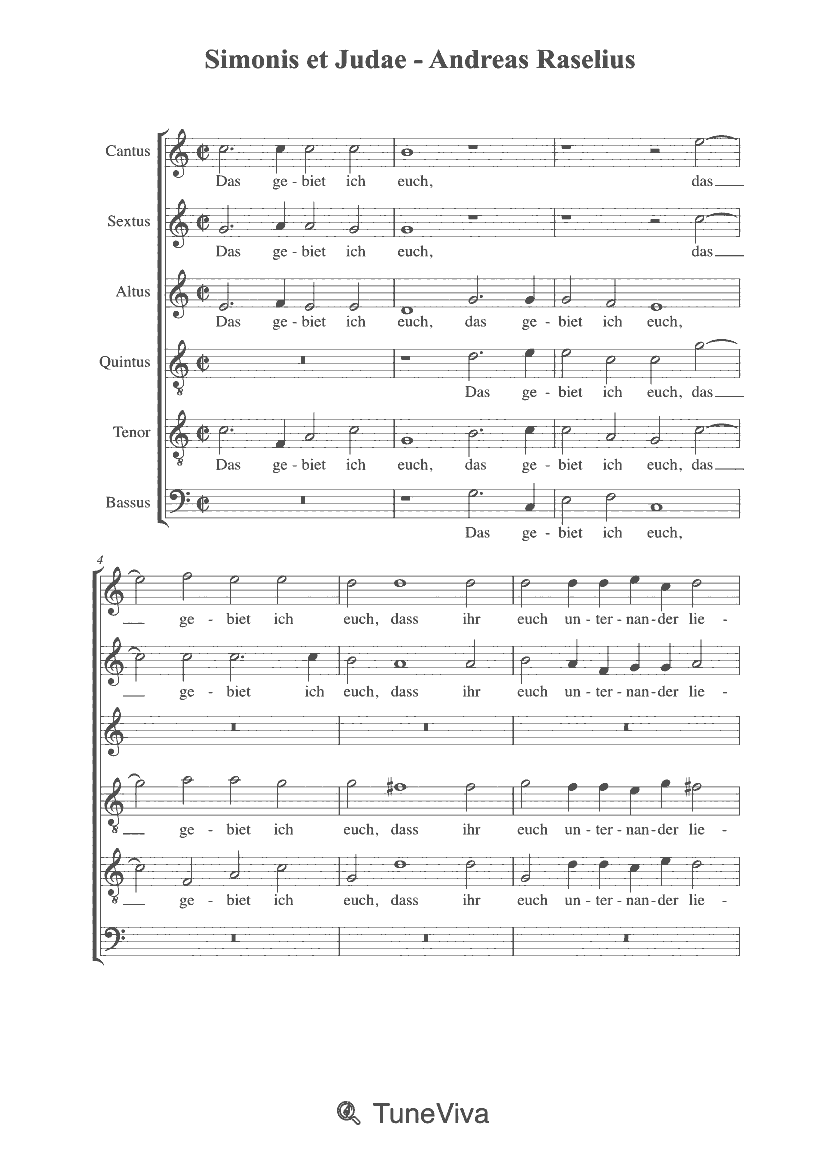
(6 vocum)