
classical
1 tracks
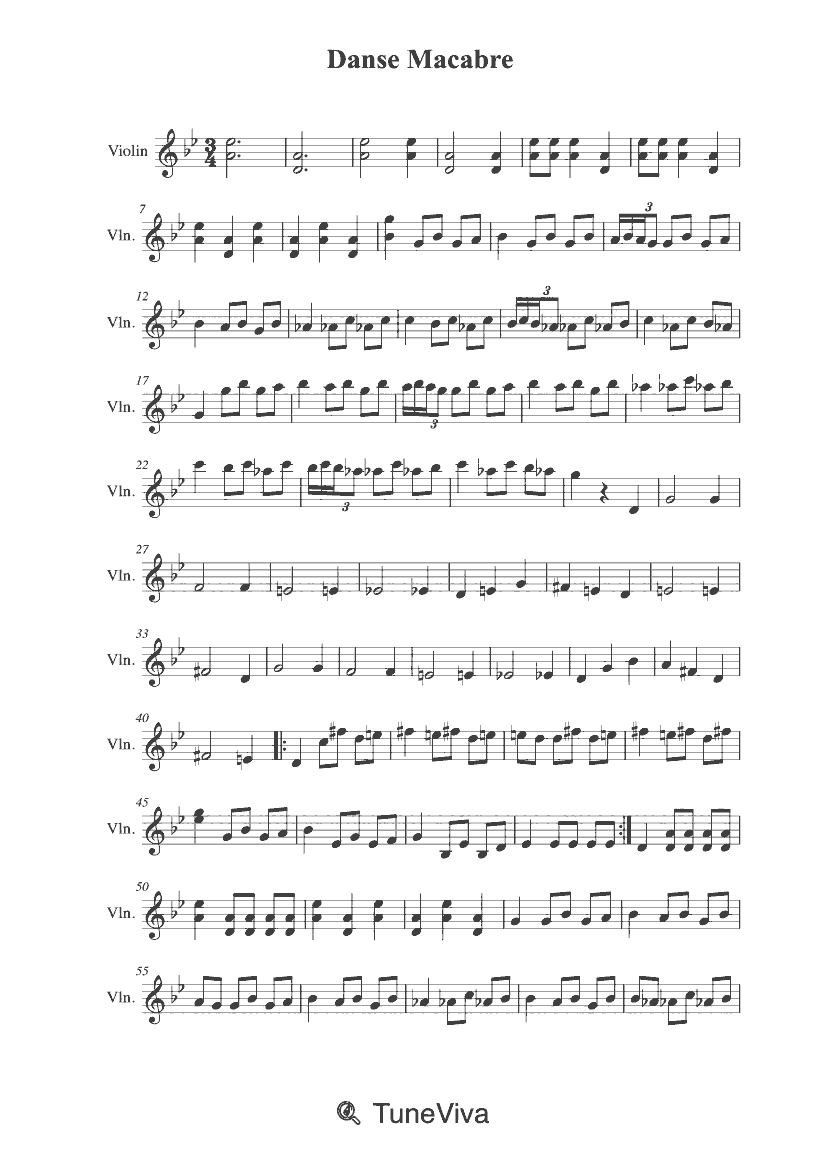
Saint-Saëns is represented here by 24 scores, about 89 minutes of music and 82,482 notated notes, and the page is dominated by one piece: Danse macabre, at 61,699 views, more than ten times the next entry. The Swan follows at 5,141, then the Tollite Hostias chorus from the Christmas Oratorio and two solo-piano reductions of the Second Piano Concerto.
Twenty entries sit at complexity index 0 and three at index 3, so the collection is mostly playable rather than virtuosic. Seven files carry lyrics, all of them choral.
Charles-Camille Saint-Saëns was born in Paris on 9 October 1835 and died in Algiers on 16 December 1921, on one of the North African trips he took to escape the Paris winter. He was a prodigy who played at the Salle Pleyel at ten, studied at the Conservatoire, and worked as a church organist: Saint-Merri from 1853, then La Madeleine from 1858 until he gave up the post in 1877.
His catalogue runs from the Symphony in E-flat, Op. 2, of 1853 to the wind sonatas of his last year. The works on this page come from the middle and late stretches: the Introduction and Rondo capriccioso, Op. 28, written in 1863 for Pablo de Sarasate; the G minor Piano Concerto, Op. 22, composed in 1868 and premiered that May with Anton Rubinstein conducting; Danse macabre, Op. 40, expanded in 1874 from a song on a poem by Henri Cazalis; and Africa, Op. 89, the piano fantasia of 1891.
The catalogue's bias is pianistic. The orchestral Danse macabre appears as a piano piece, the concerto as separate solo movements, the Carnival finale as a piano solo. Saint-Saëns would have recognised the practice: Liszt transcribed Danse macabre for piano soon after the premiere, and a Debussy arrangement of the Rondo capriccioso is listed here. Of the 24 files, 18 are filed as classical and six are left without a genre.
Danse macabre turns on detail: the harp's twelve strokes, the solo violin tuned a semitone flat on the E string, the xylophone clicking out the skeletons, the oboe's dawn crow. The Swan needs long, unbroken bowing and a pianist who keeps the ripples below the melody. The concerto's first movement begins as a Bach fantasia before the orchestra arrives, and its second is a scherzo, which is worth knowing before planning a programme.
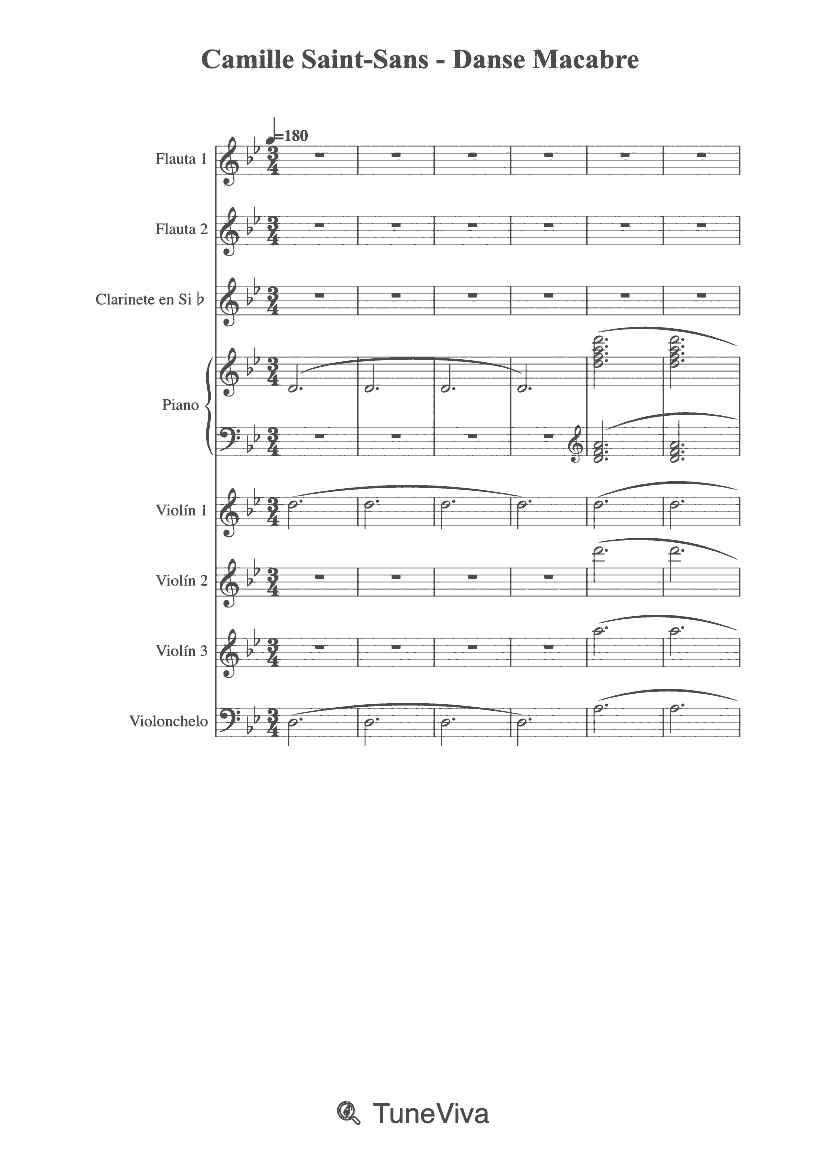
61,699 views, by far the most-opened file here. The symphonic poem of 1874, grown from a song of 1872, with a solo violin tuned a semitone flat on the E string for the tritone and a xylophone for the skeletons.
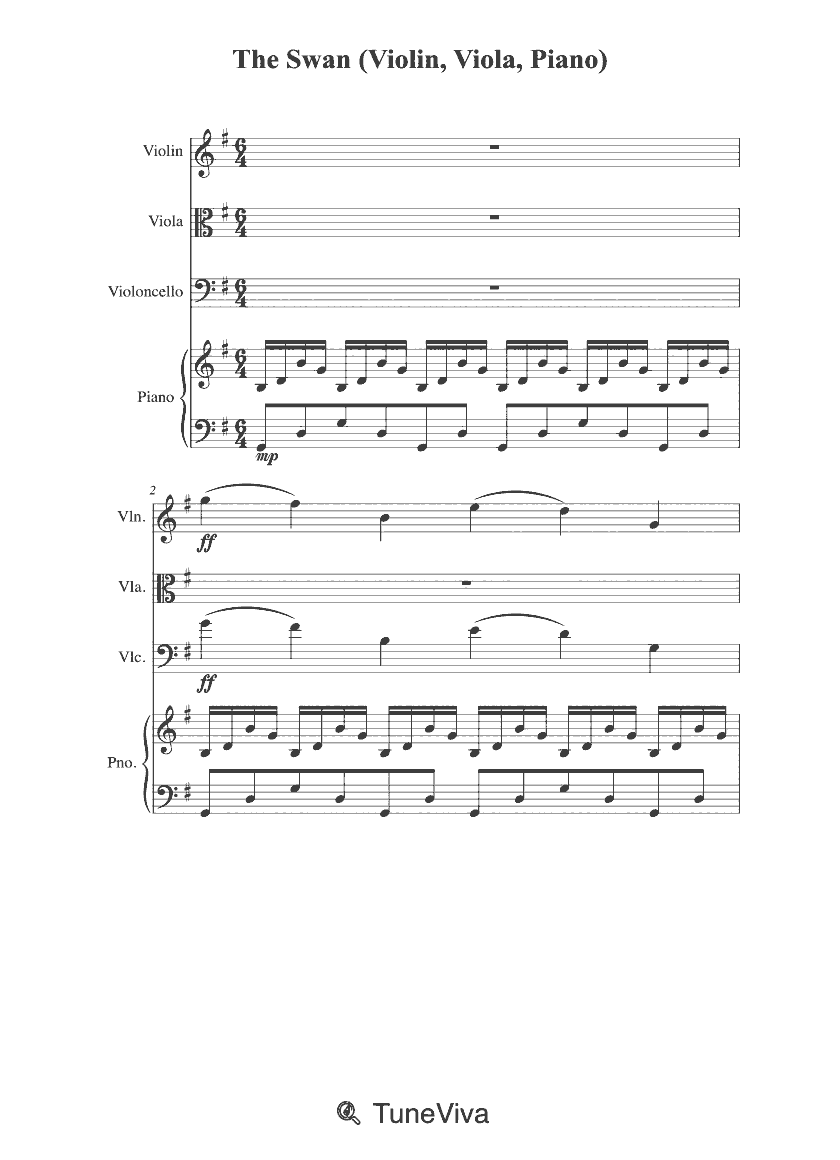
5,141 views. The penultimate movement of The Carnival of the Animals, originally for cello and two pianos and the only movement Saint-Saëns allowed into print in his lifetime, in 1887.
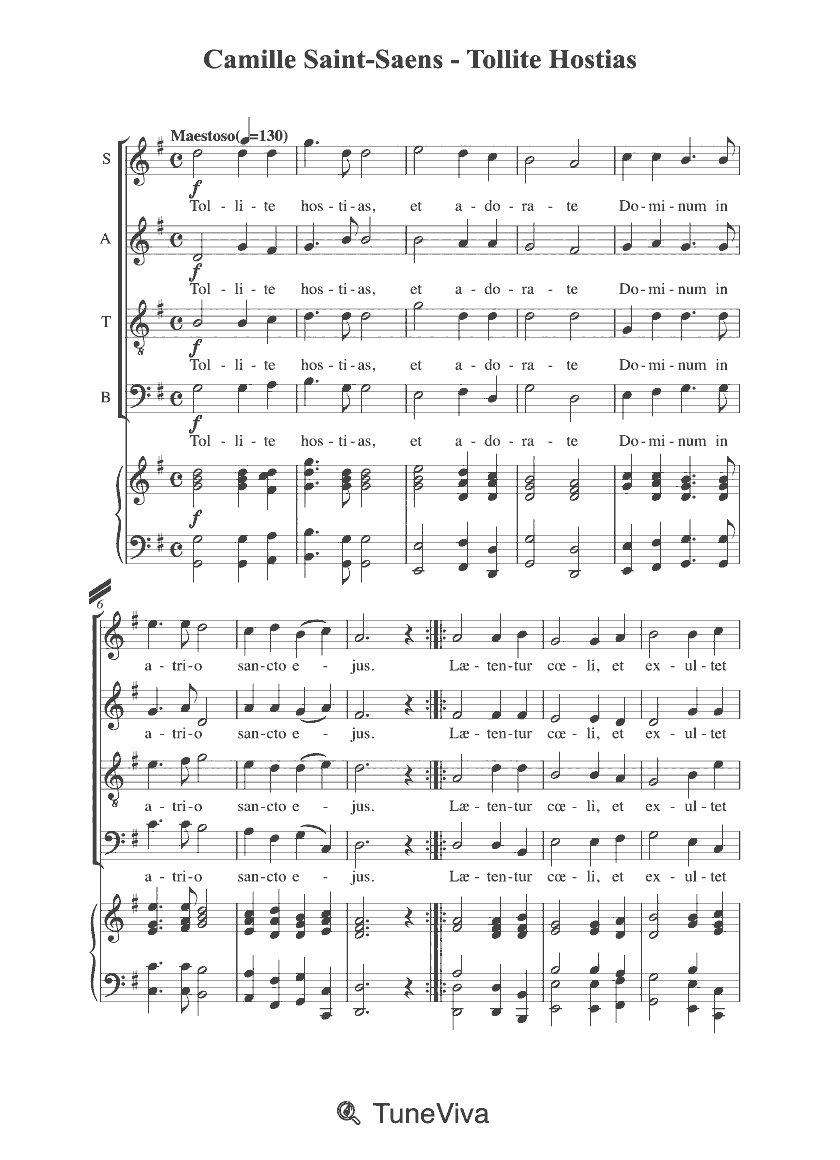
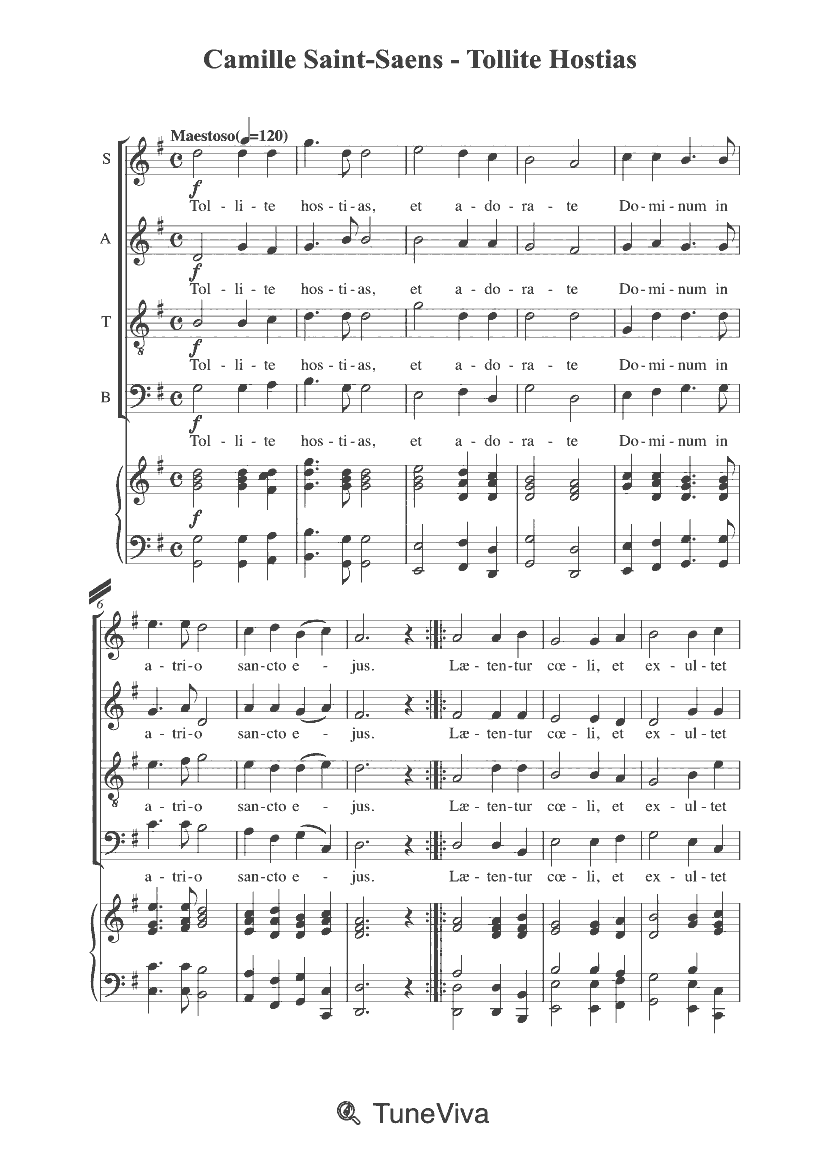
4,719 views. The closing chorus of the Oratorio de Noël, Op. 12, written in under a fortnight for Christmas 1858 and published in 1863.
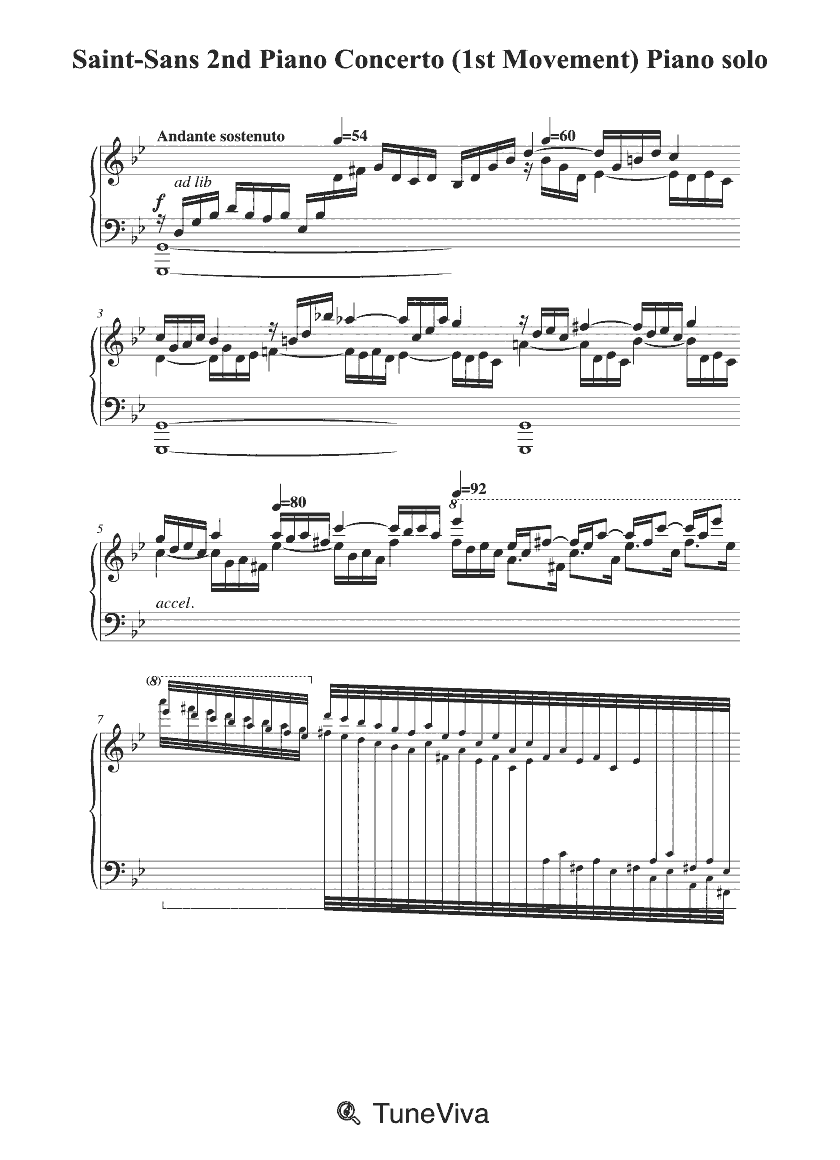
3,744 views. The movement opens with an unaccompanied piano solo in the manner of a Bach fantasia before the orchestra enters; this file is the solo part without orchestra.
3,594 views. Written in 1863 for Sarasate, who played it at the premiere in April 1867; the file carries Debussy's arrangement rather than the orchestral original.
1,499 views. The middle movement is a scherzo in E-flat rather than the slow movement the layout of a concerto leads you to expect.
1,294 views. The finale of the 1886 zoological fantasy, which was not published until 1922, the year after the composer's death, apart from The Swan.
860 views. Probably a study arrangement connected with the Morceau de concert, Op. 94, for horn and orchestra, composed in 1887 and issued in a horn-and-piano version in 1893.
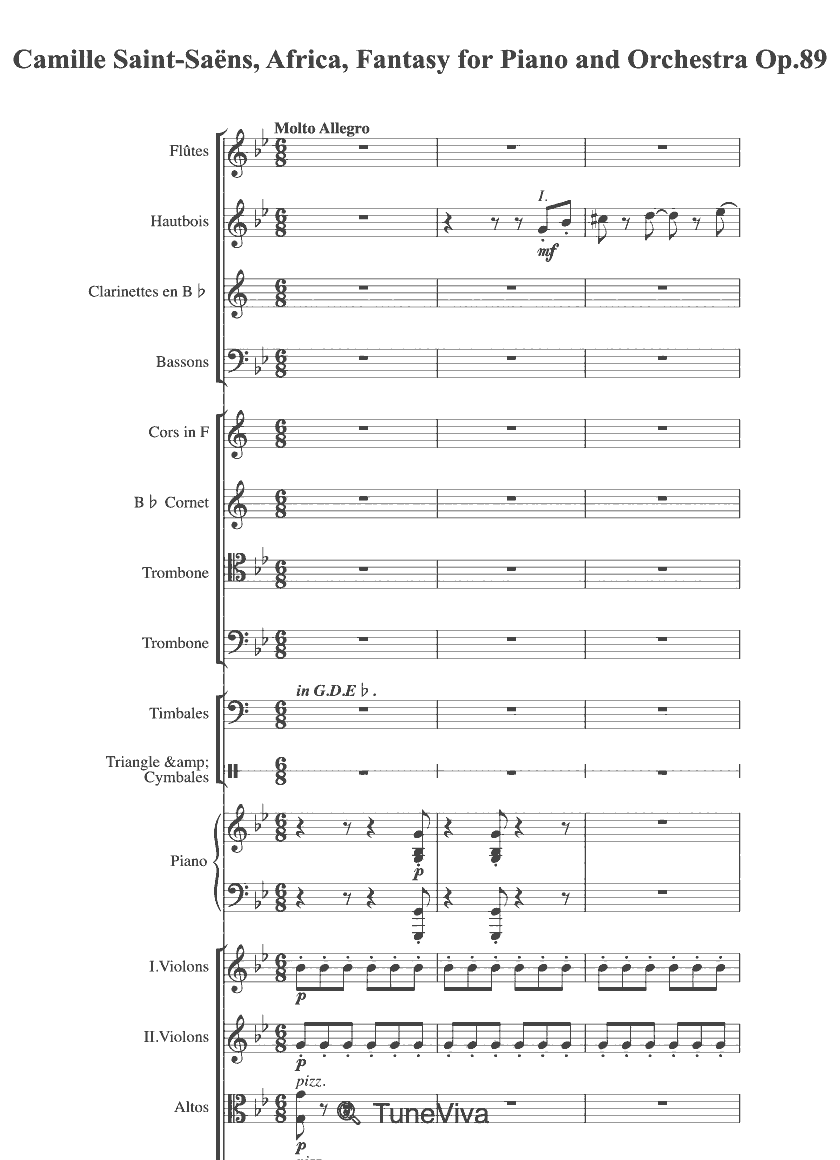
251 views. The single-movement fantasia of 1891, written after travels in Egypt and North Africa and built from themes that Jann Pasler labels A to I in his analysis; composed in Cairo in March 1891 and orchestrated in Algiers that June.
24, running to about 89 minutes of music and 82,482 notated notes. Seven of them include lyrics.
It began in 1872 as a song for voice and piano on a text by Henri Cazalis. In 1874 Saint-Saëns replaced the vocal line with a solo violin and made the orchestral tone poem that was premiered in January 1875.
The final chorus of the Oratorio de Noël, Op. 12, a setting of verses from the Vulgate for soloists, chorus, organ, harp and strings.
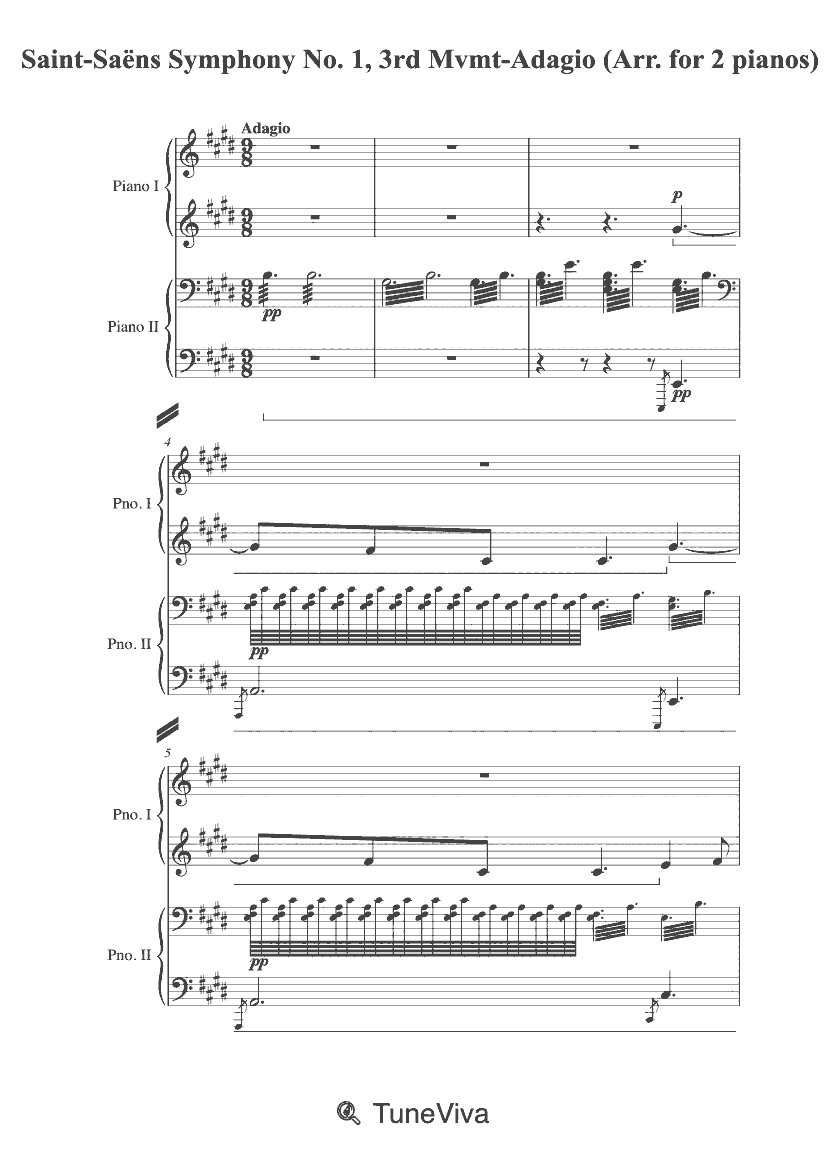
The catalogue holds the first and second movements of the Second Piano Concerto as separate solo-piano reductions, so each can be practised alone; there is no orchestral material in either file.
Catalog editions and arrangements attributed to Camille Saint-Saëns.
From the Carnival of the Animals
First Movement
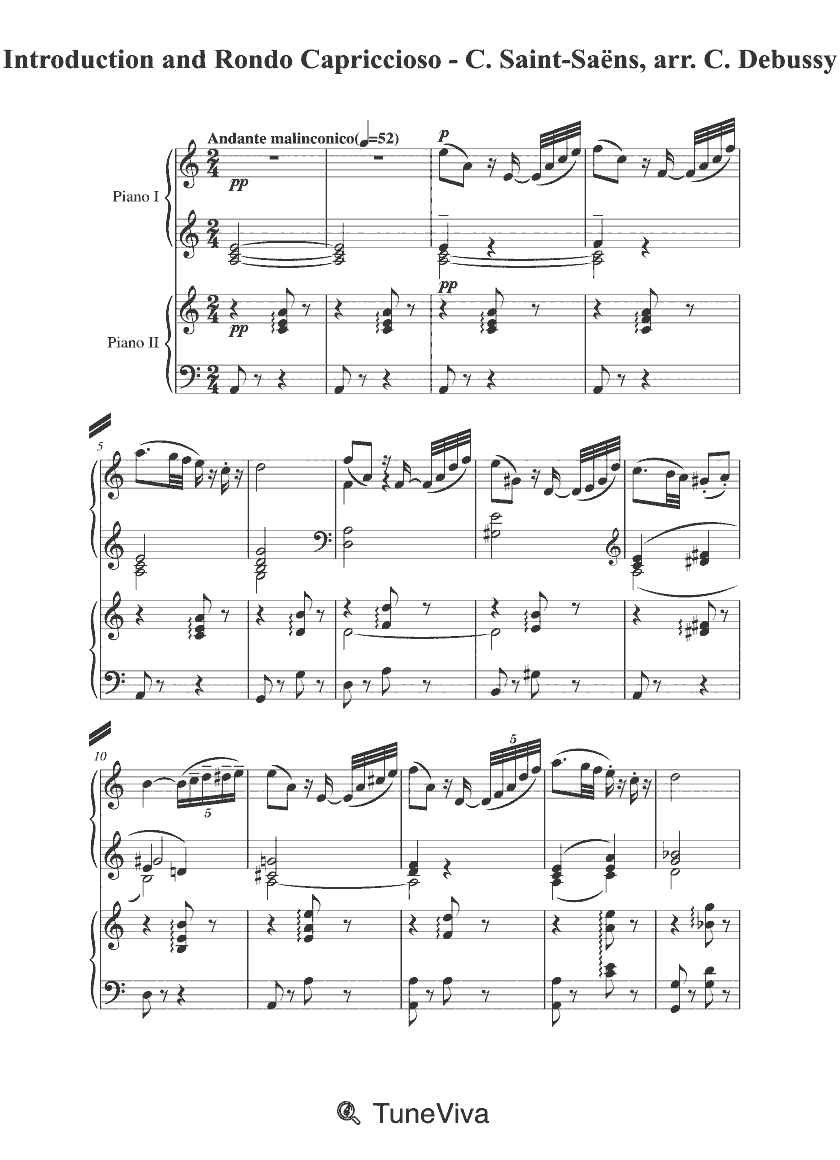
Op. 28 (Saint-Saëns)
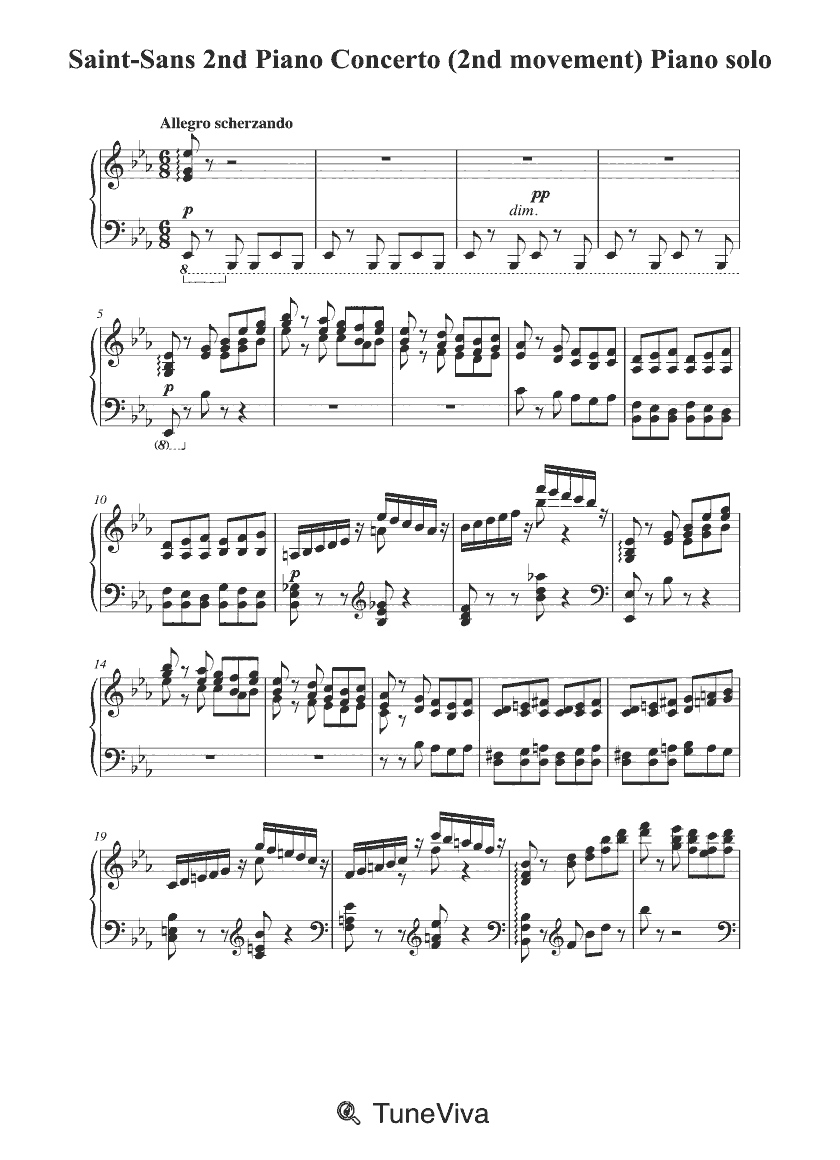
Second Movement
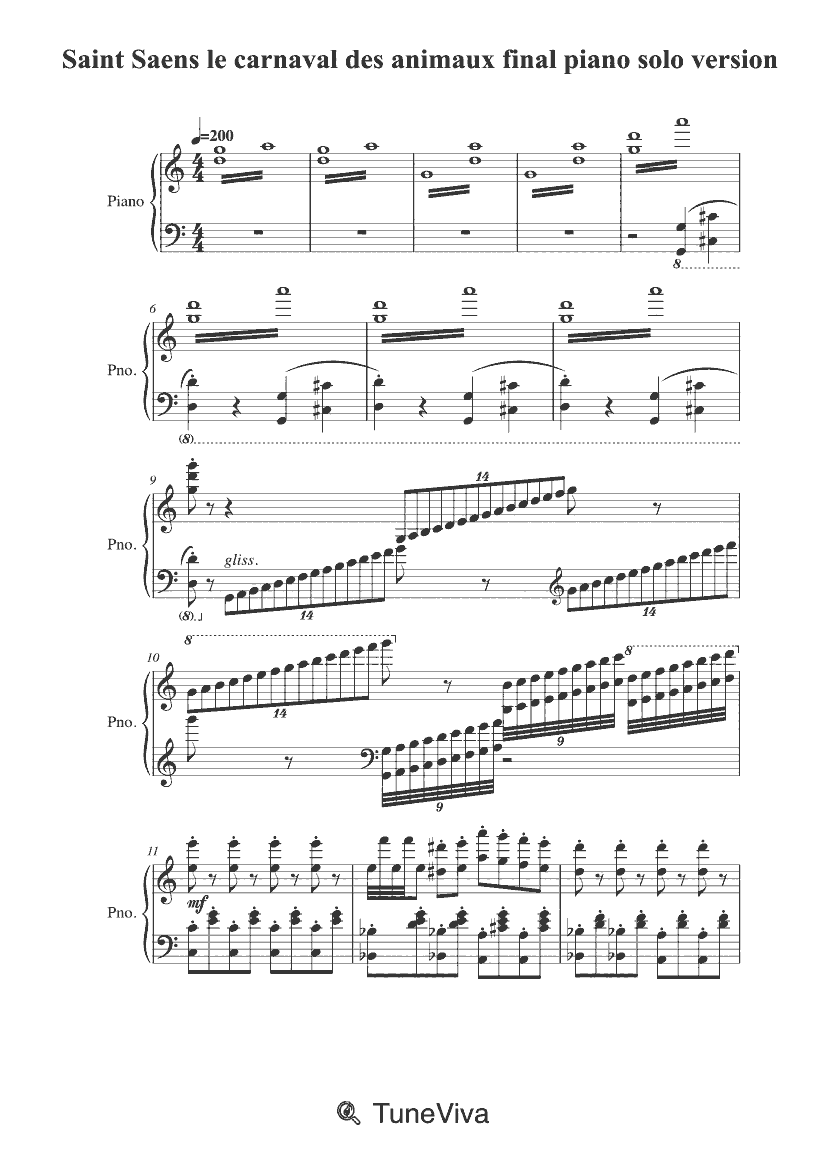

Exercises
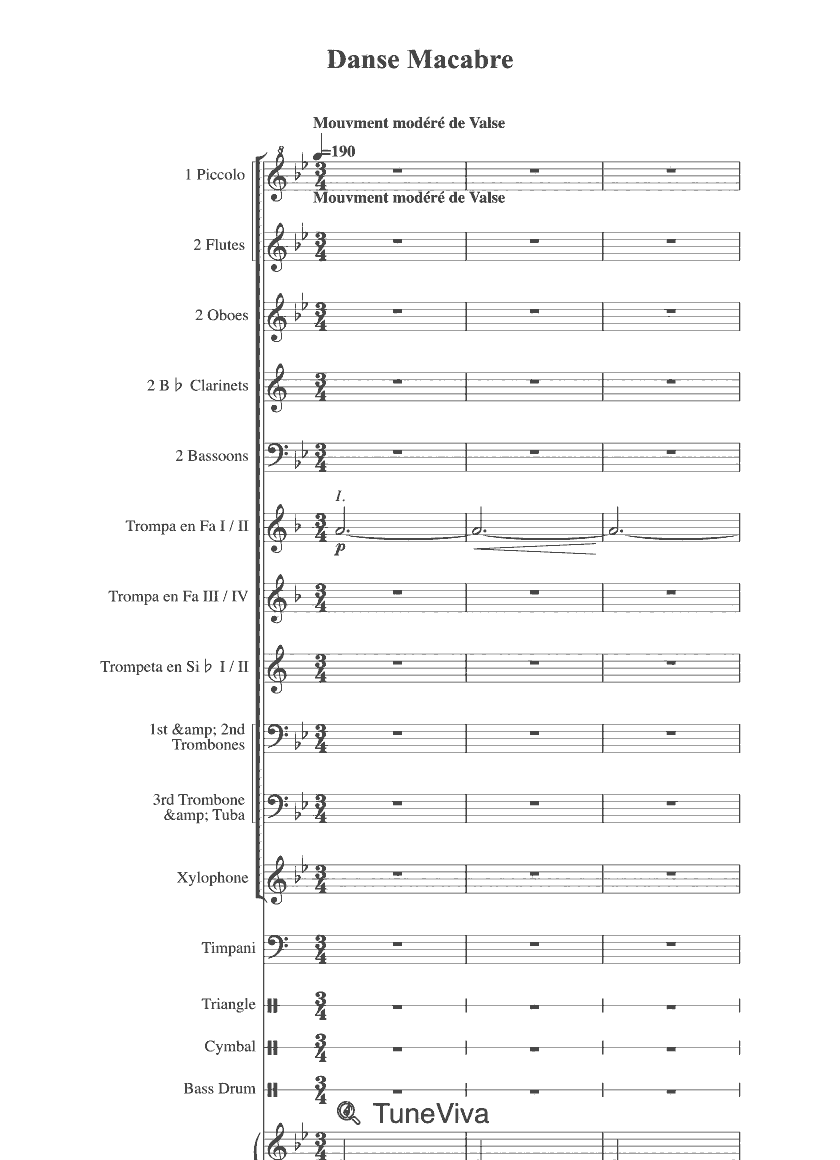
Opus 40
Fantasy for Piano & Orchestra Op.89
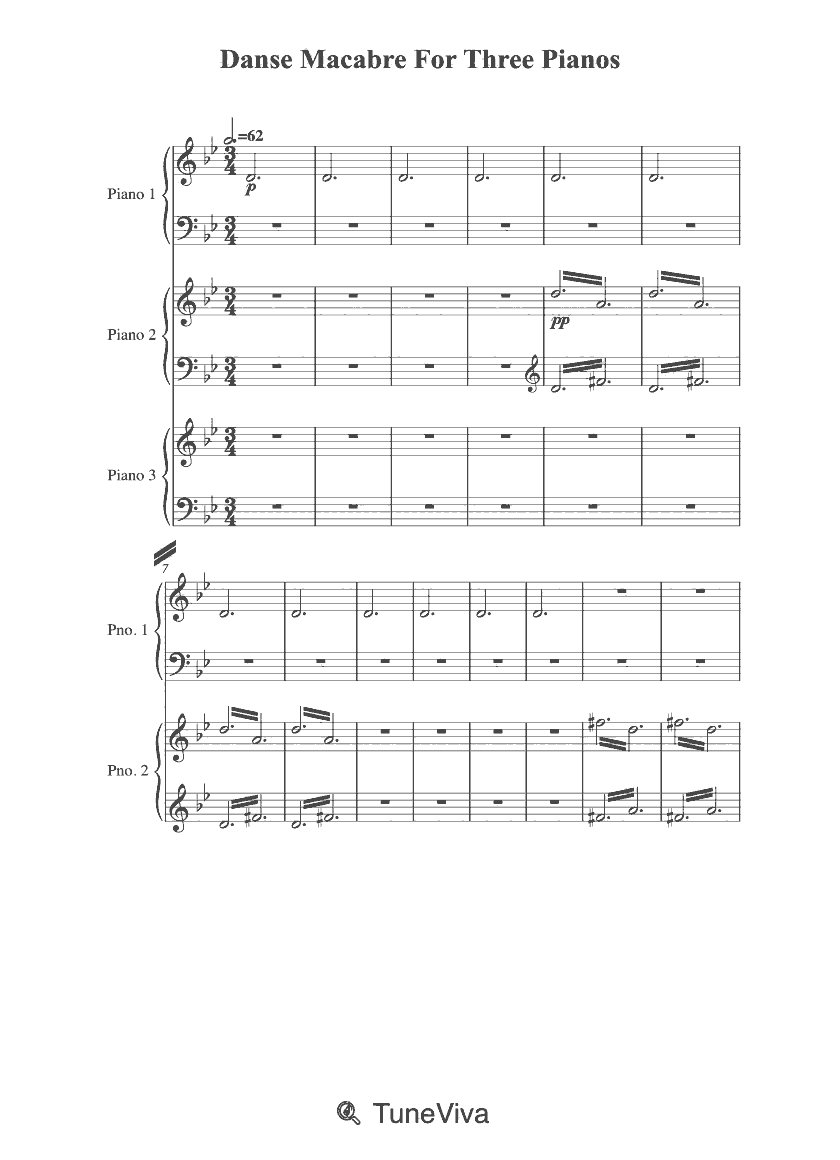
For 3 Pianos
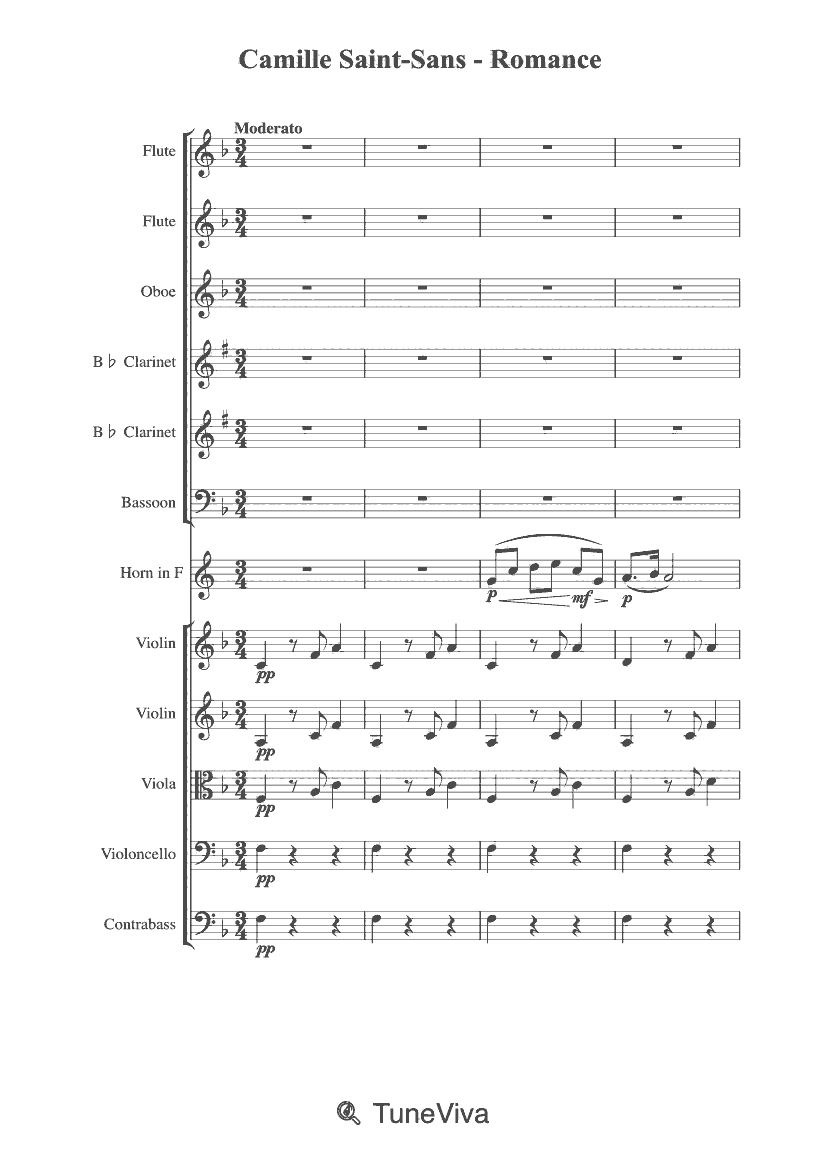
for Horn and Orchestra op. 36
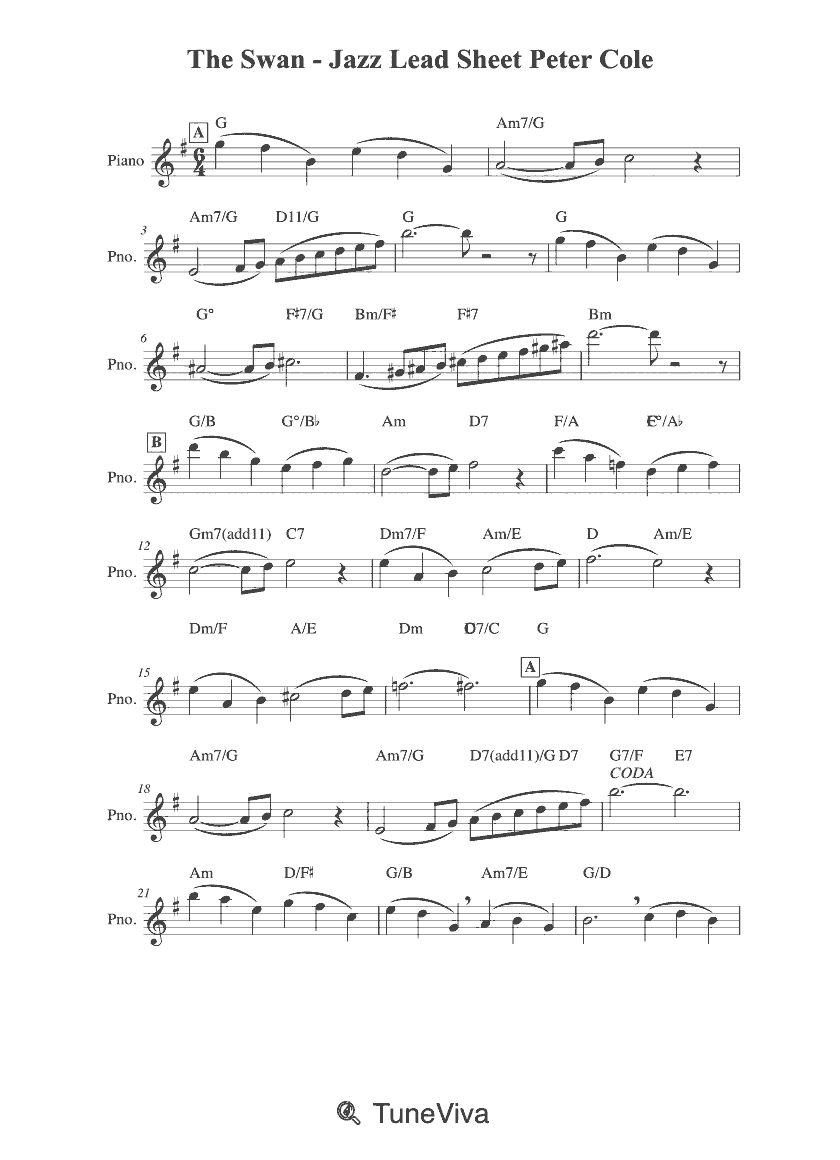
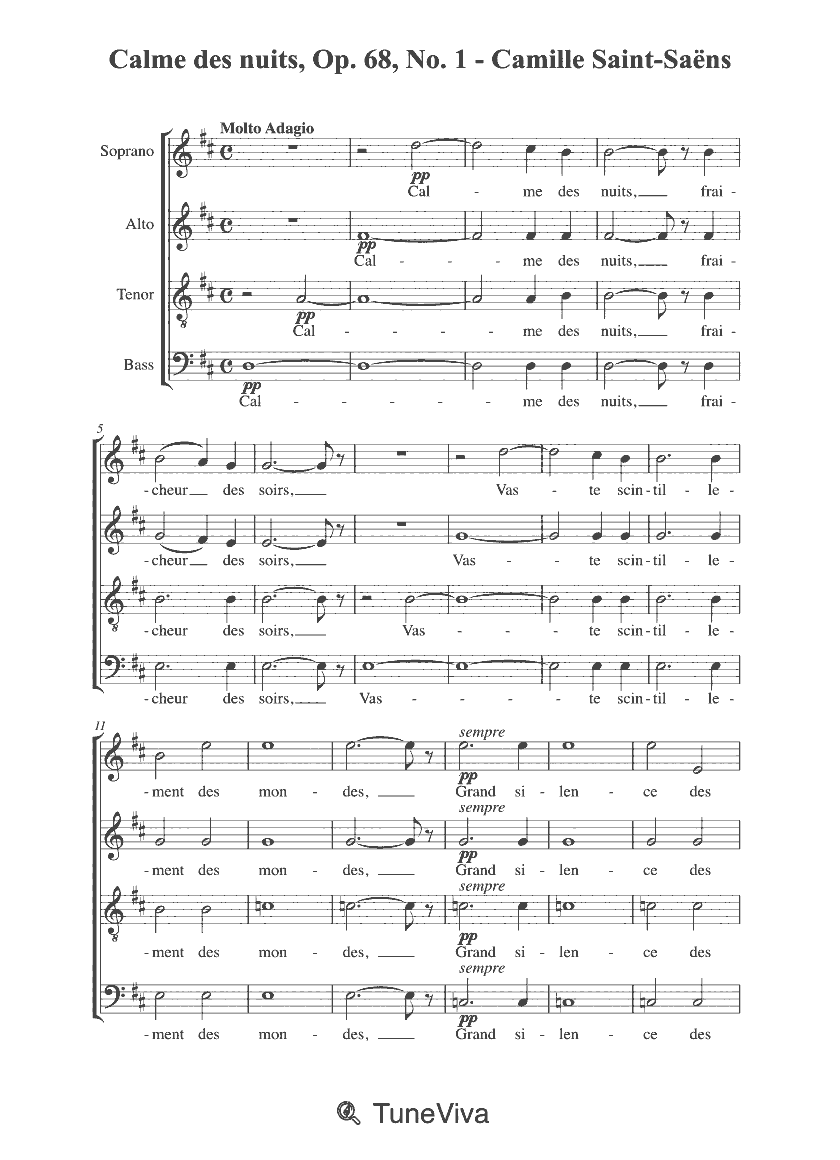
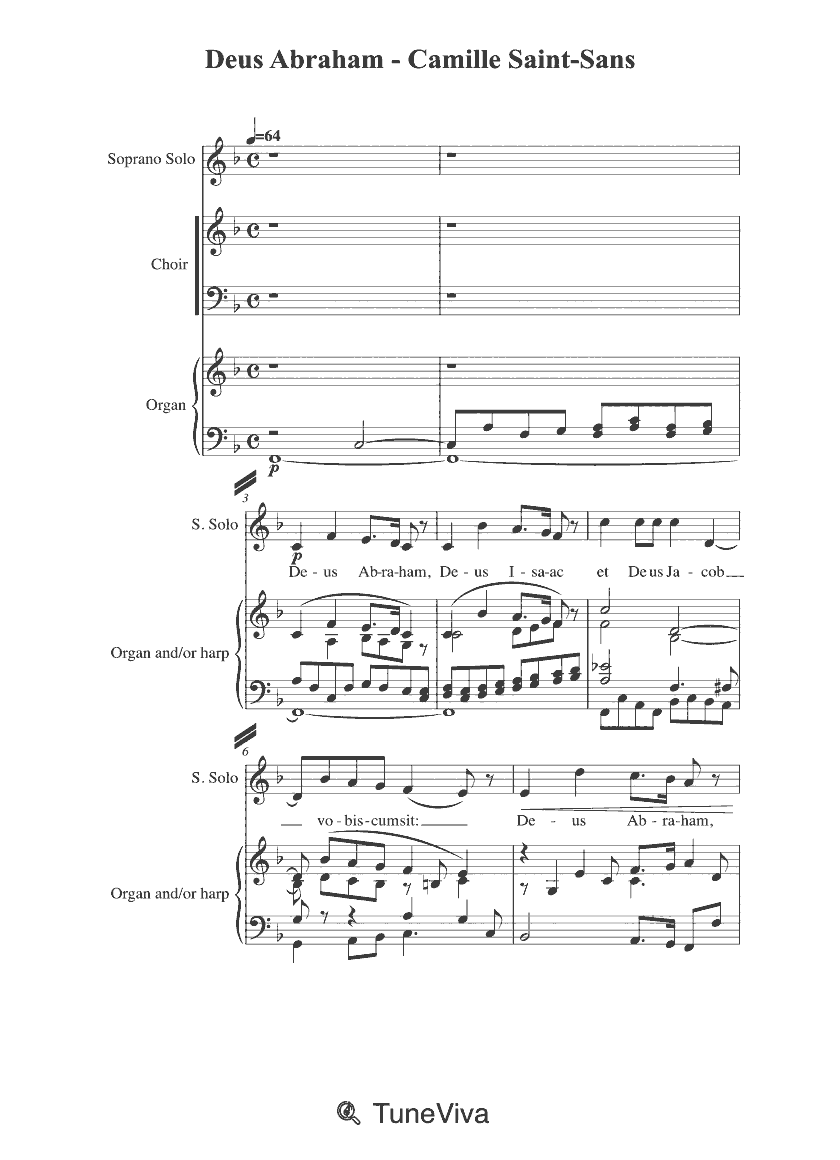
Copyright 2015 by The Choral Public Domain Library. Edition may be freely distributed duplicated performed or recorded.
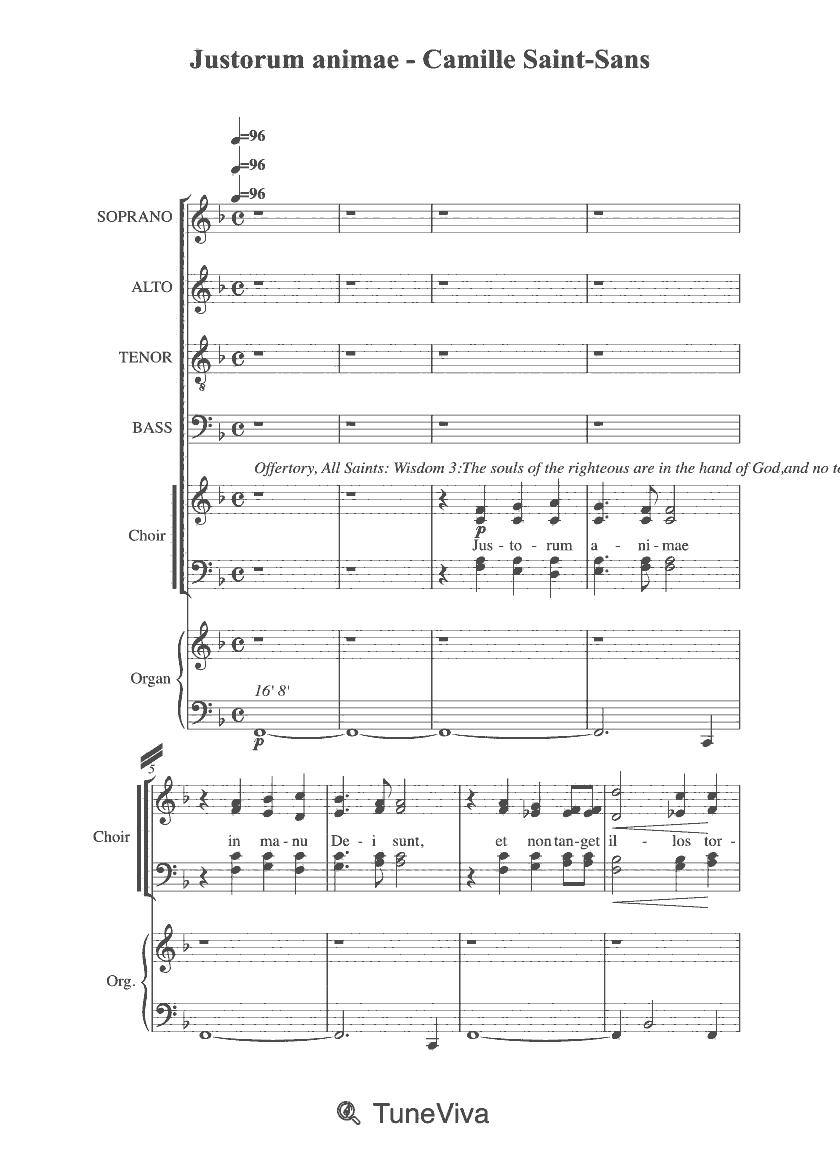
Copyright 2015 by The Choral Public Domain Library. Edition may be freely distributed duplicated performed or recorded.