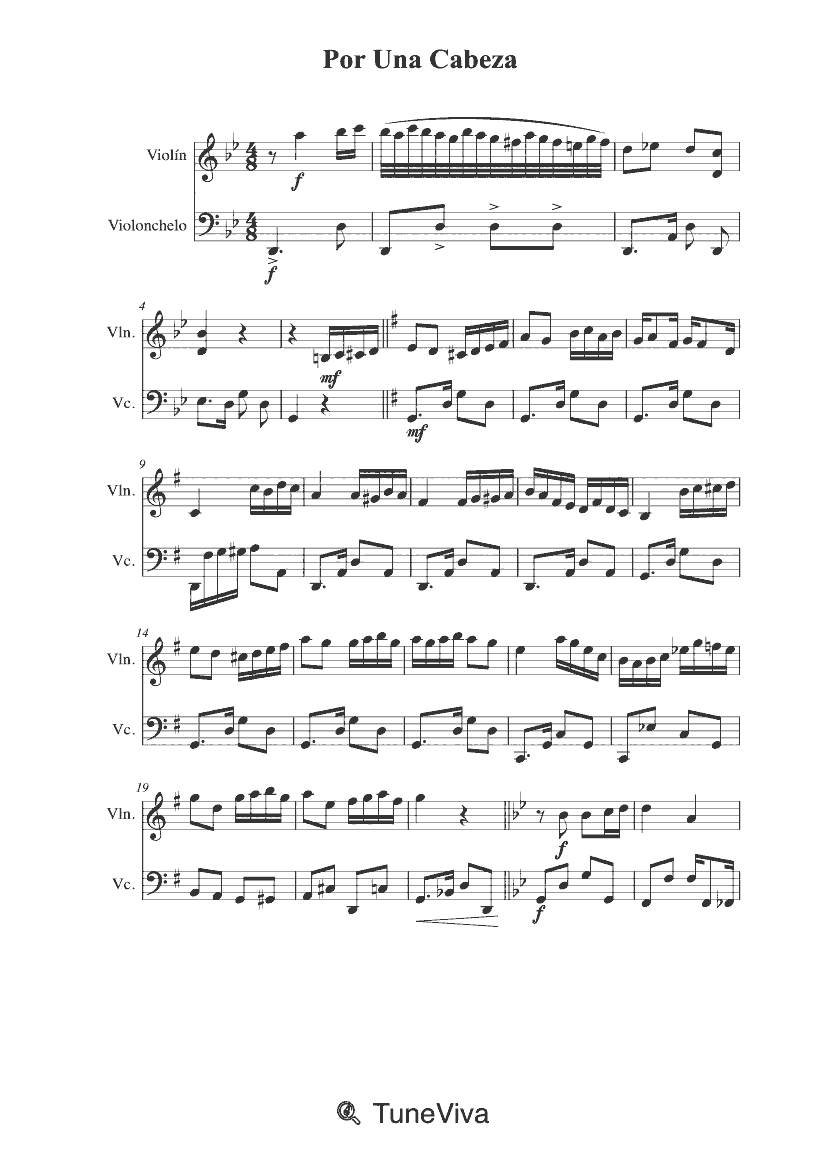
Por Una Cabeza
Carlos Gardel
Tango
Violín; Violonchelo · 34 sec
Open score14 Carlos Gardel tango scores to preview, including Por una cabeza for flute, cello and piano and El día que me quieras, with composer and lyricist credits.
Violín; Violonchelo · 34 sec
One of several distinct files for the tango. Compare it with other versions by checking the instrument staves and any supplied parts.
Other editions:
Soprano; Violin · 1 min 0 sec
A file for another Gardel song; the “V1.1” suffix is retained as an upload/version label.
Other editions:
Compare the instrument and arrangement details below, then open a score to check the notation. Different entries may be arrangements or editions of the same work; available playback tools are shown on each score page.
Carlos Gardel
Tango
Violín; Violonchelo · 34 sec
Open score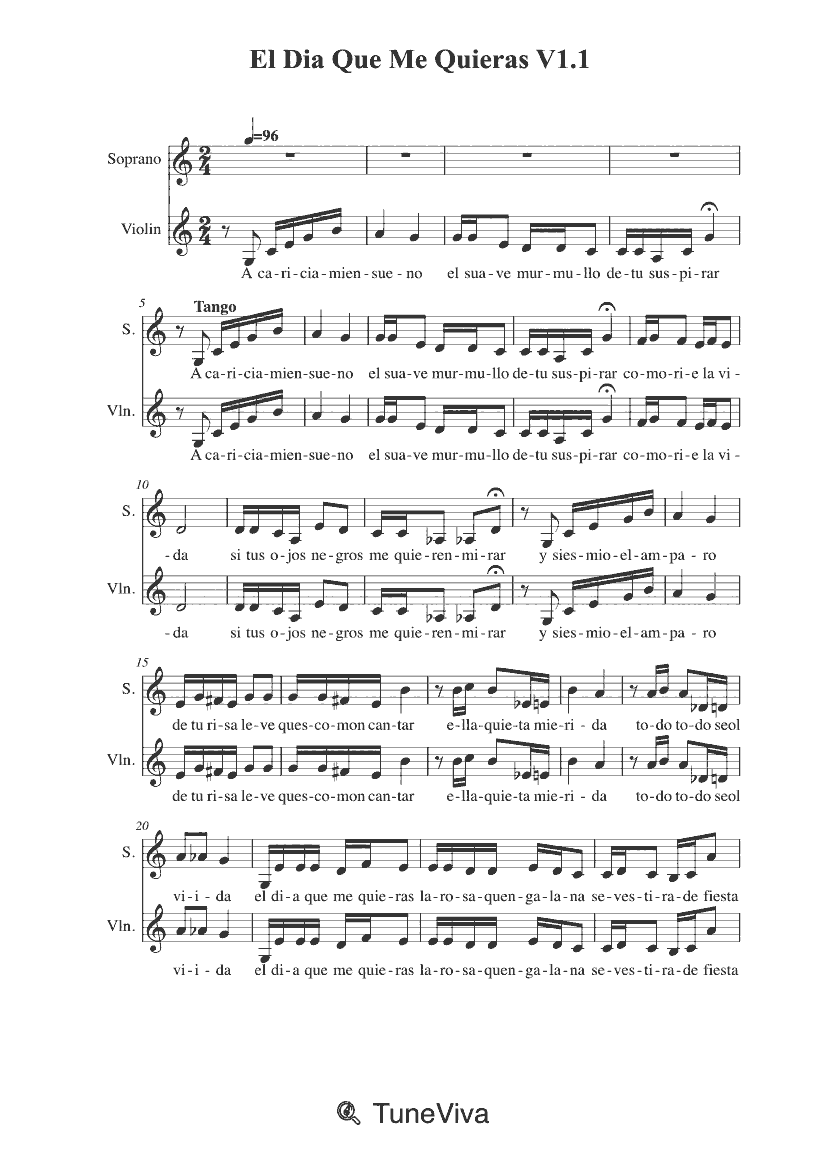
Carlos Gardel
Soprano; Violin · 1 min 0 sec
Open score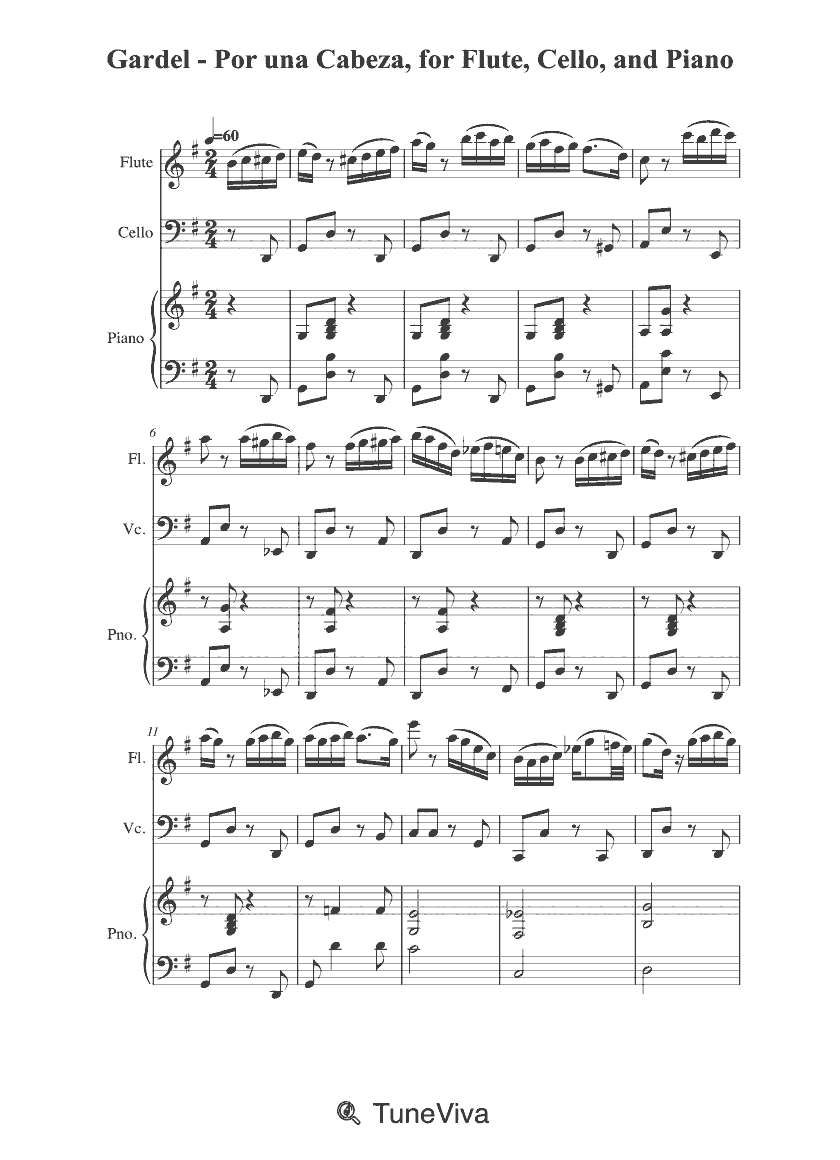
Carlos Gardel
from 'Scent of a Woman' (1993)
Flute; Cello; Piano · 2 min 9 sec
Open score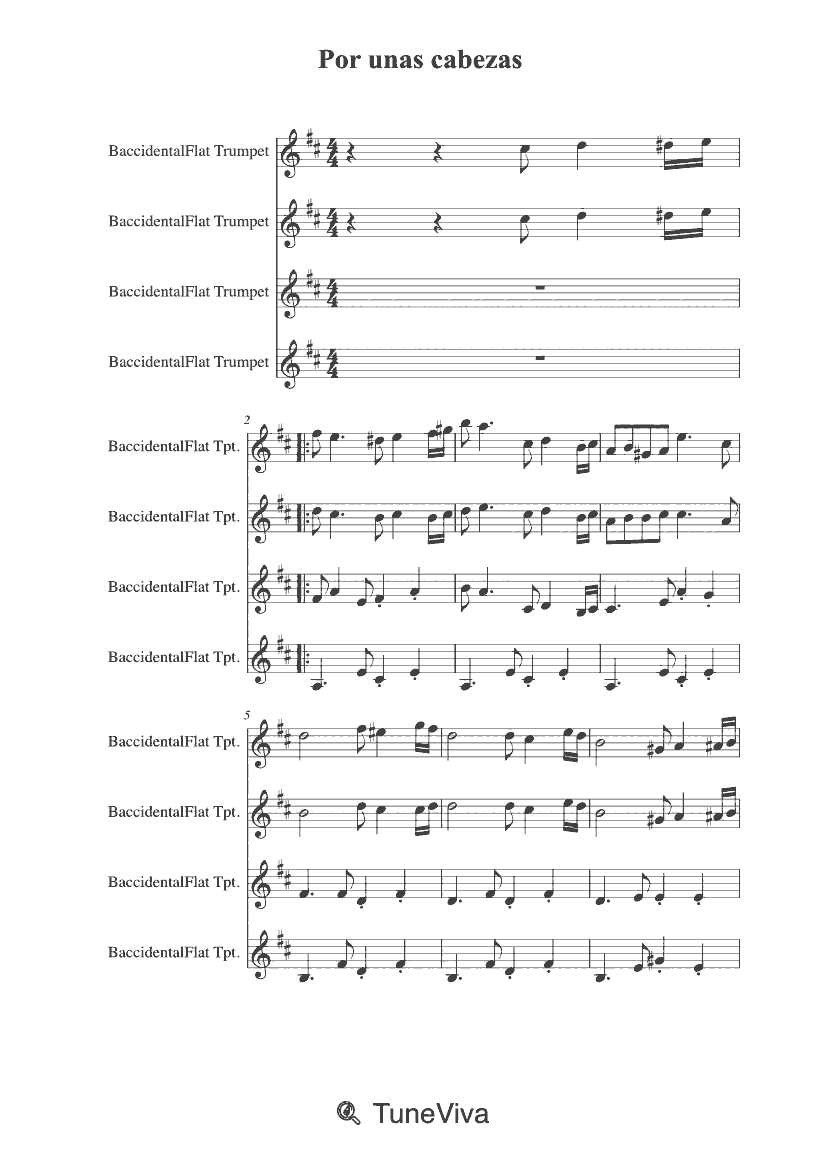
Carlos Gardel
B♭ Trumpet · 2 min 15 sec
Open score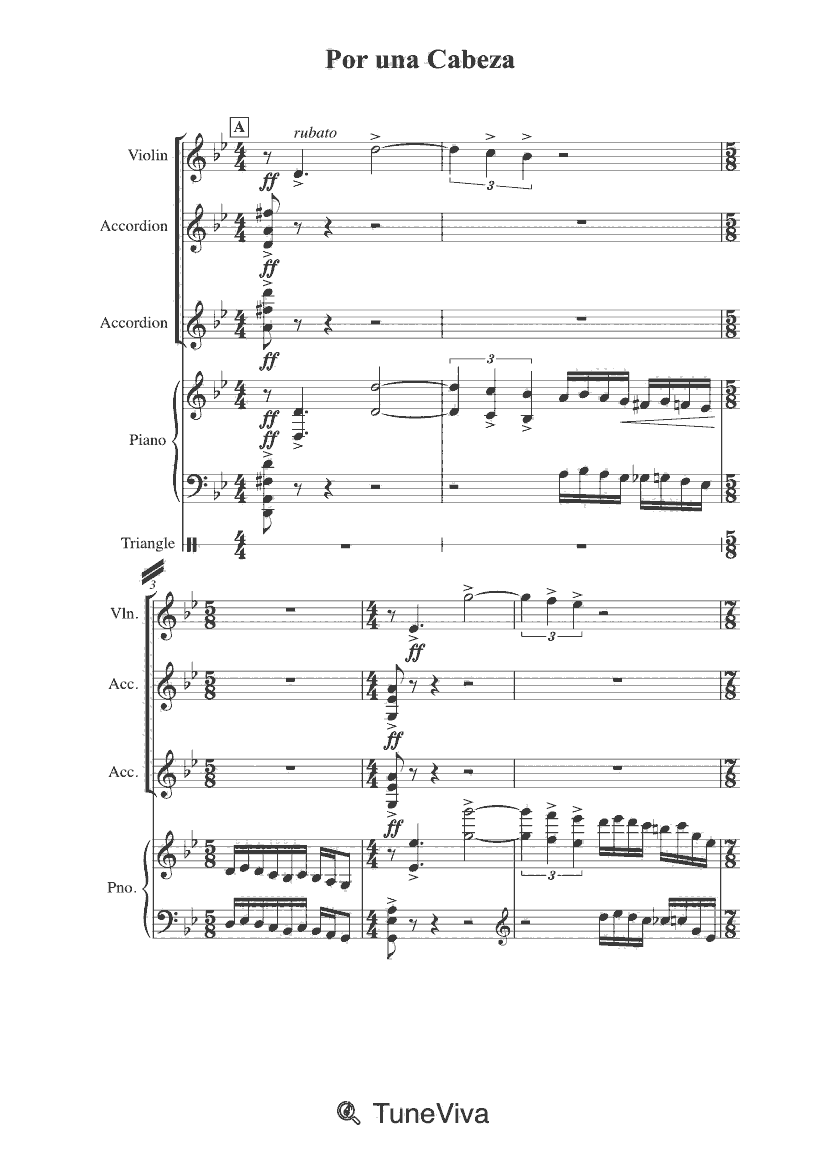
Carlos Gardel
Tango
Violin; Accordion; Piano +1 parts · 2 min 44 sec
Open score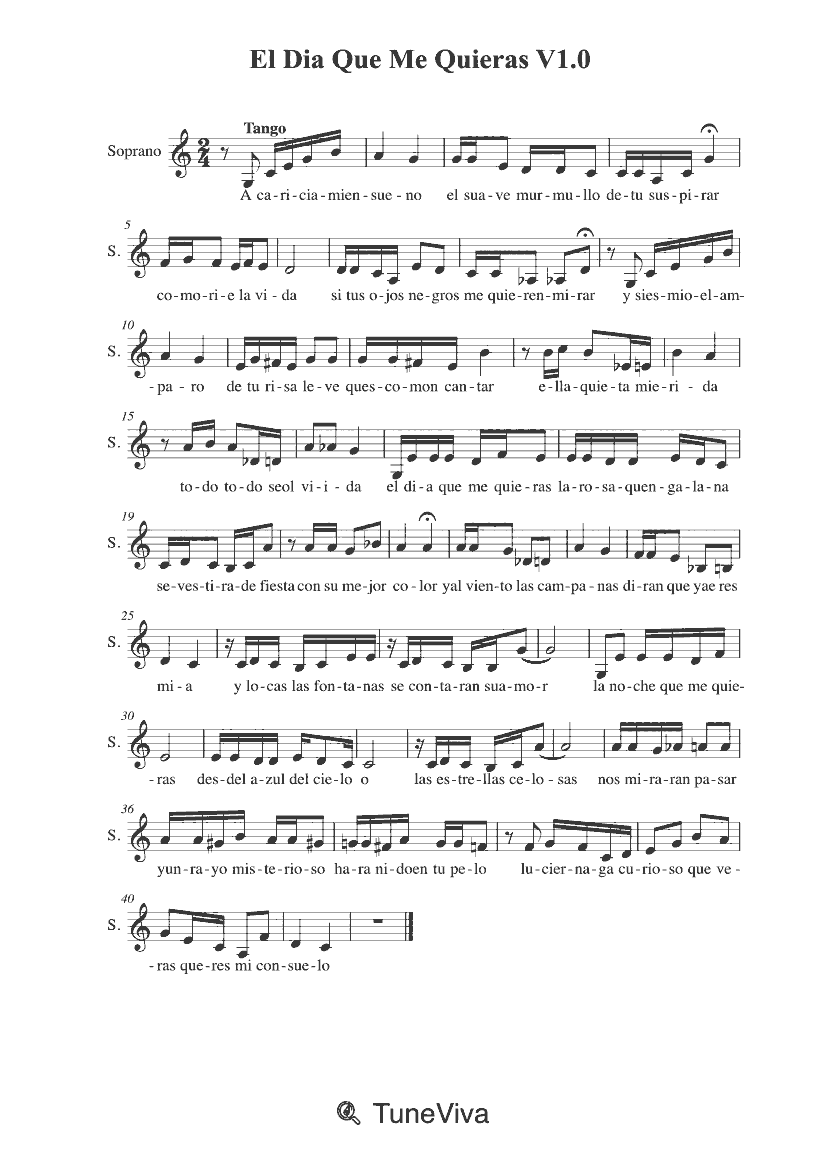
Carlos Gardel
Soprano · 52 sec
Open score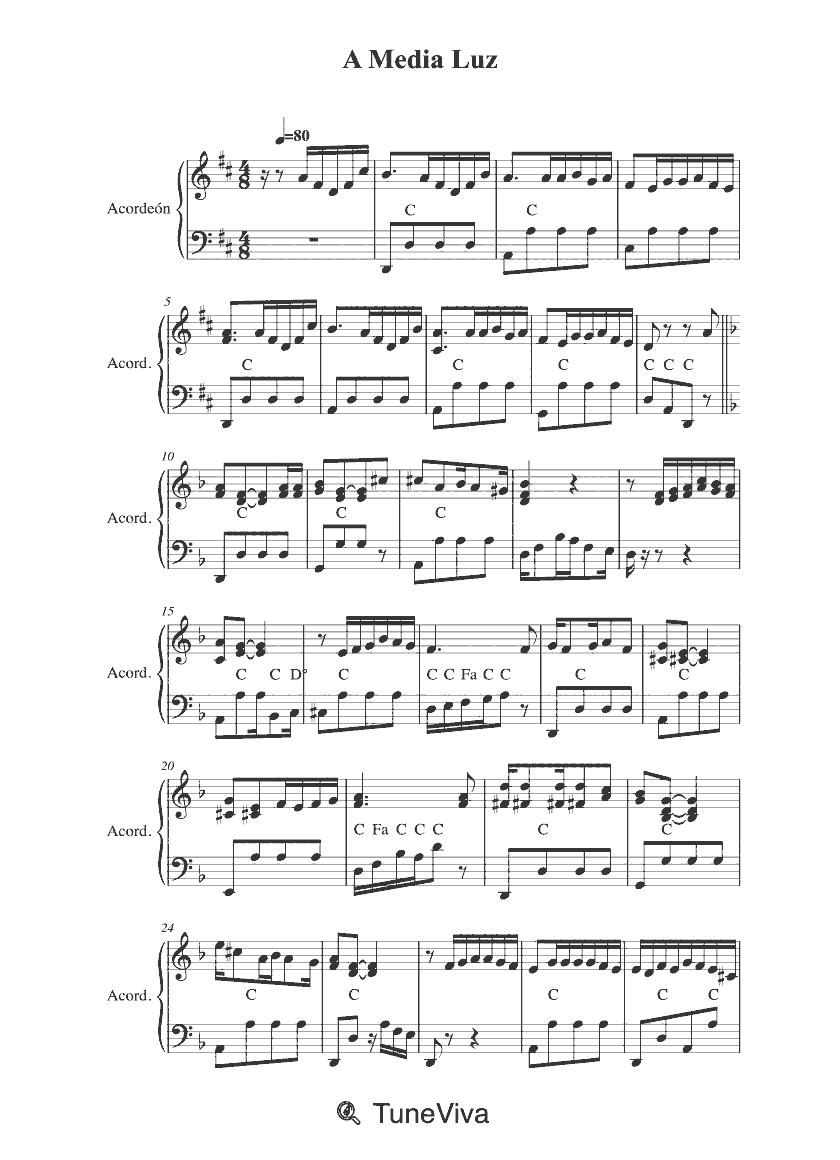
Carlos Gardel
Tango
Acordeón · 22 sec
Open score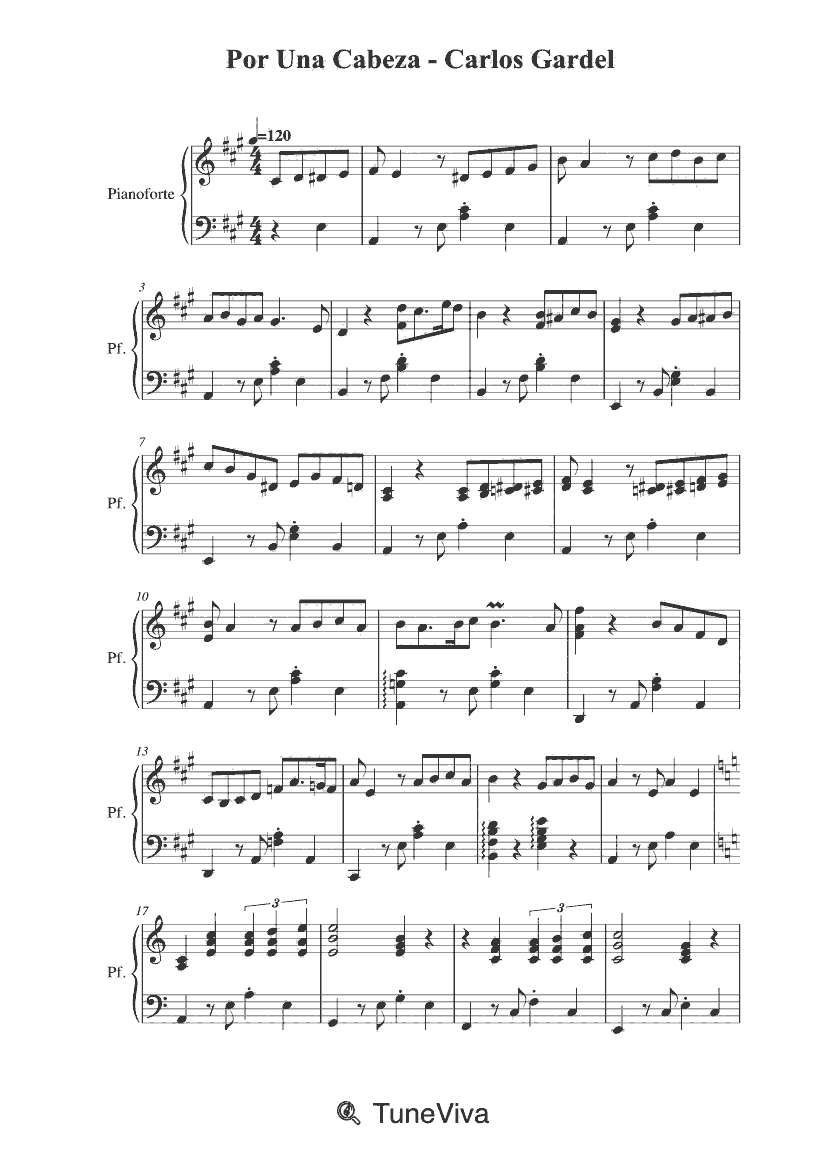
Carlos Gardel
Tango
Pianoforte · 2 min 11 sec
Open score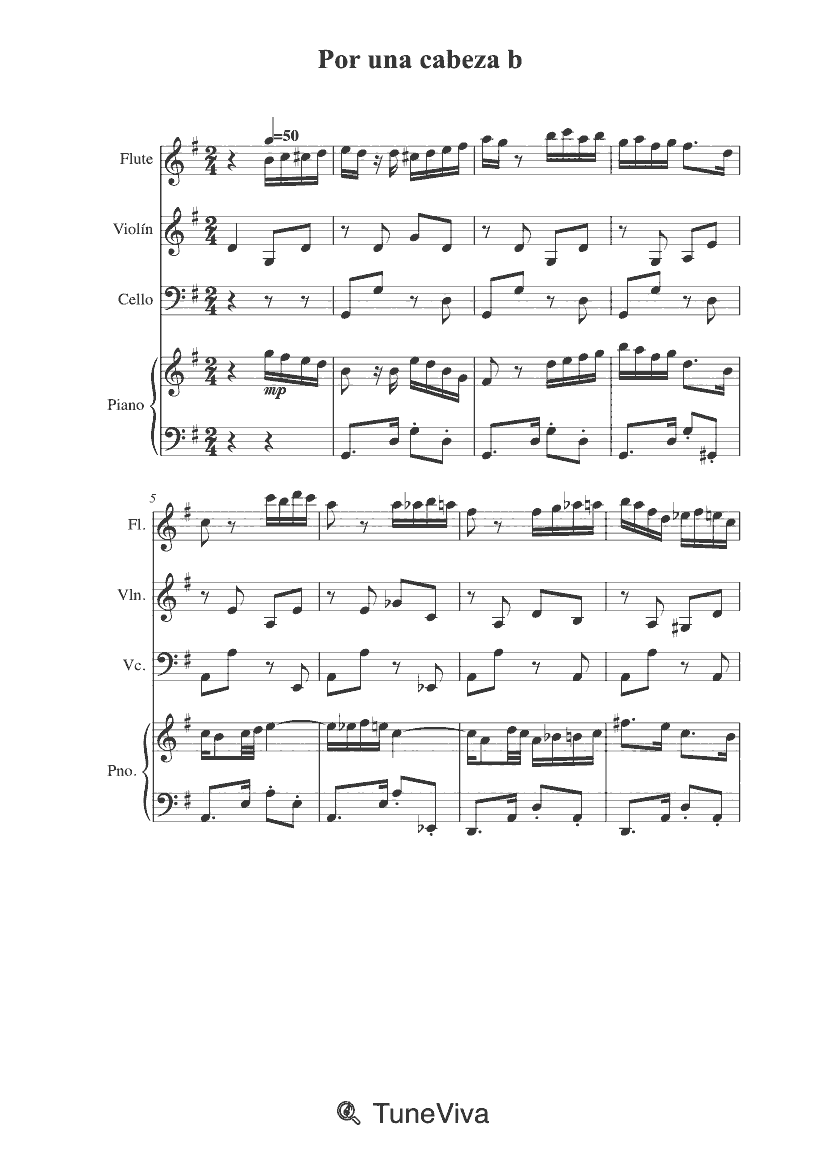
Carlos Gardel
for Flute and Cello
Flute; Violín; Cello +1 parts · 2 min 35 sec
Open score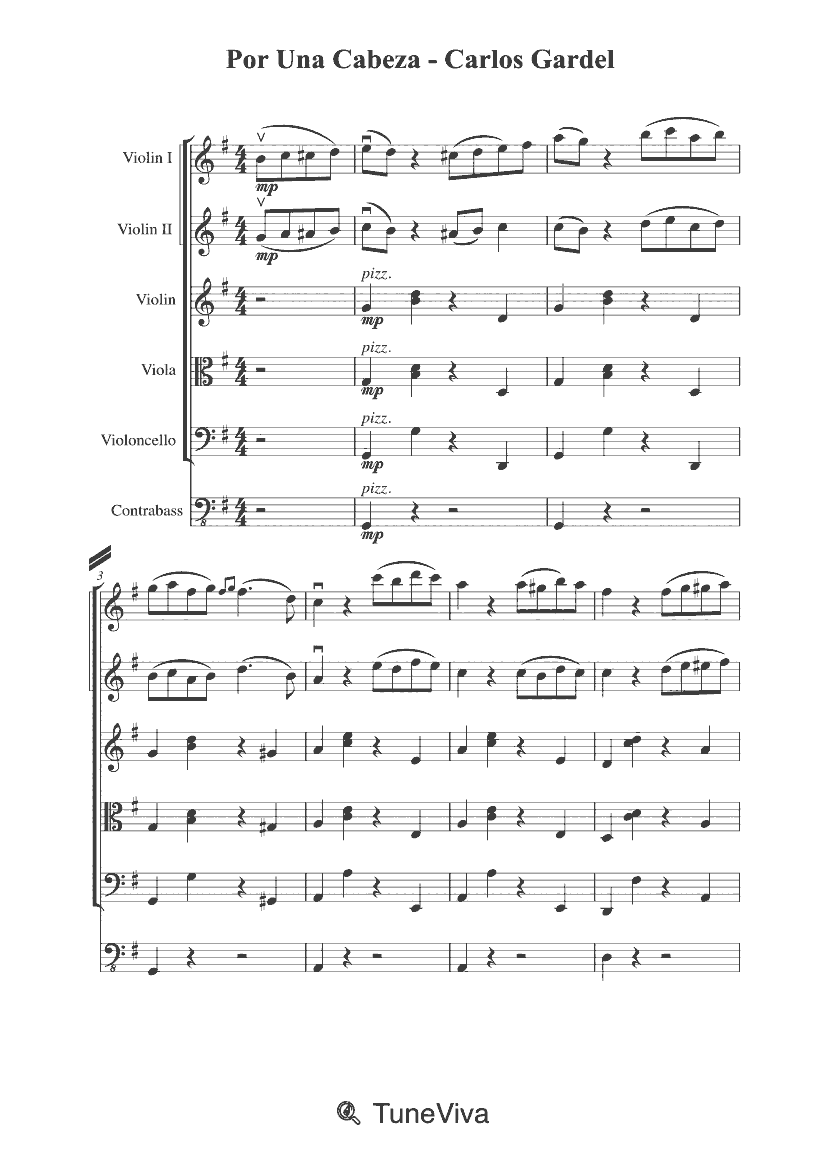
Carlos Gardel
Tango from Scent of a Woman
Violin I; Violin II; Violin +3 parts · 3 min 13 sec
Open score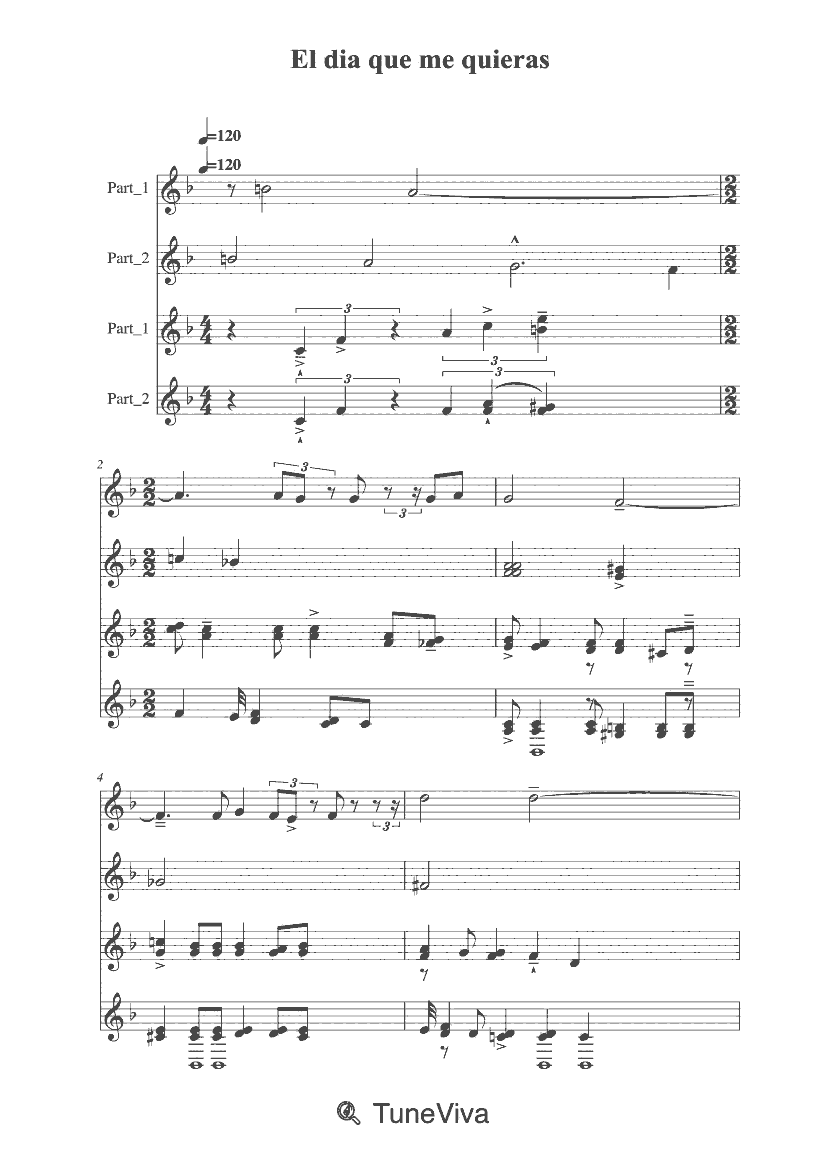
Carlos Gardel
Part_1; Part_2 · 5 min 52 sec
Open score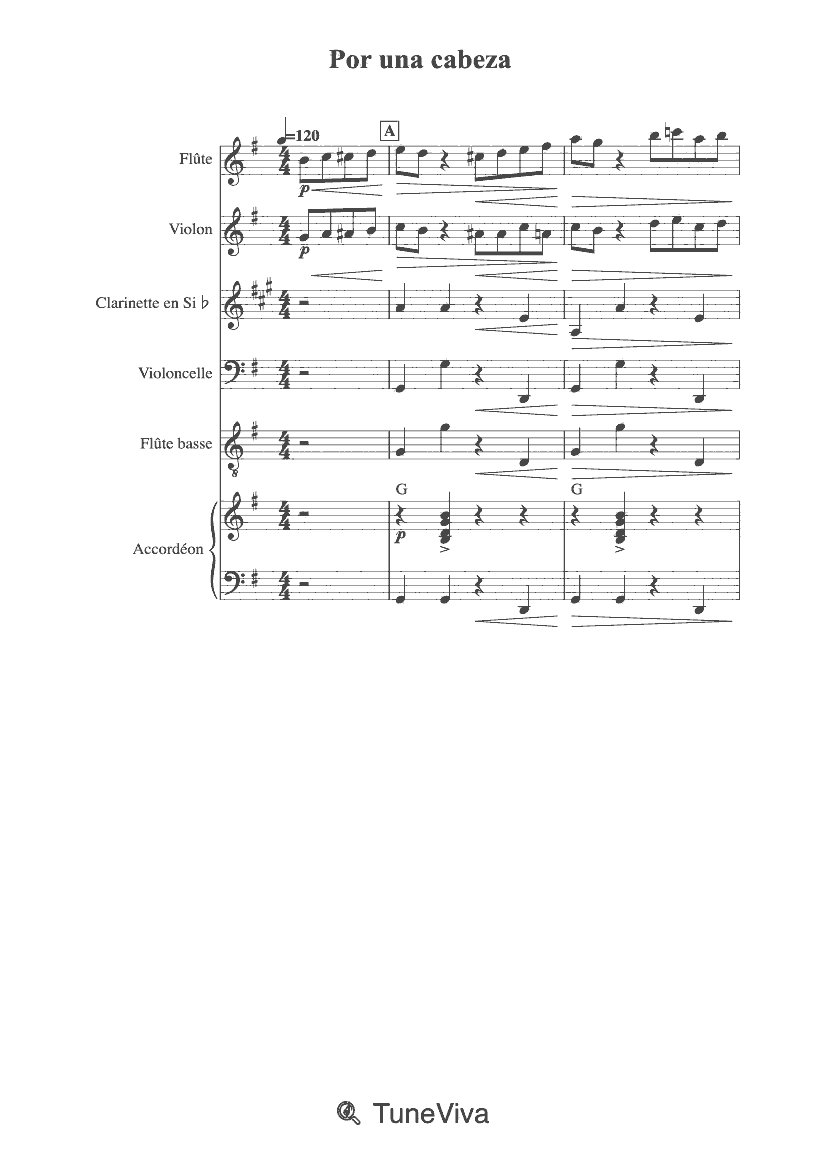
Carlos Gardel
Flûte; Violon; Clarinette en Si♭ +3 parts · 2 min 8 sec
Open score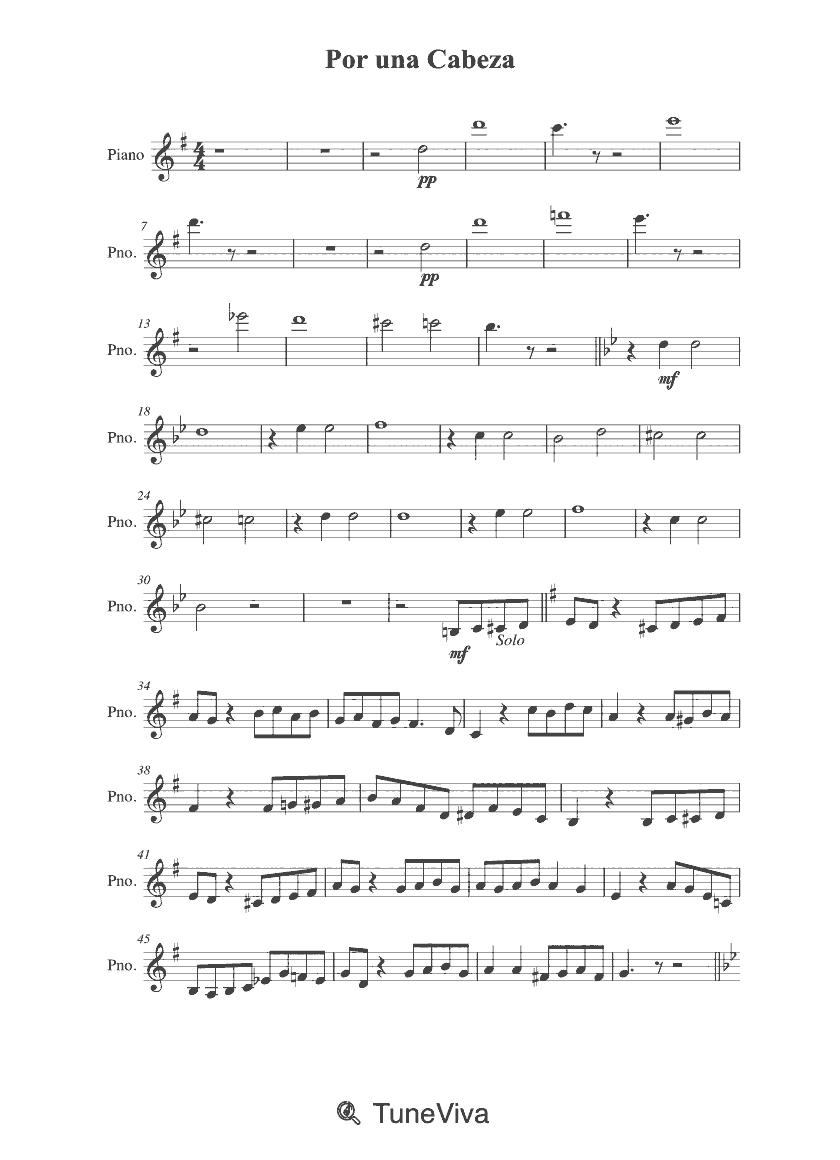
Carlos Gardel
Piano · 3 min 5 sec
Open score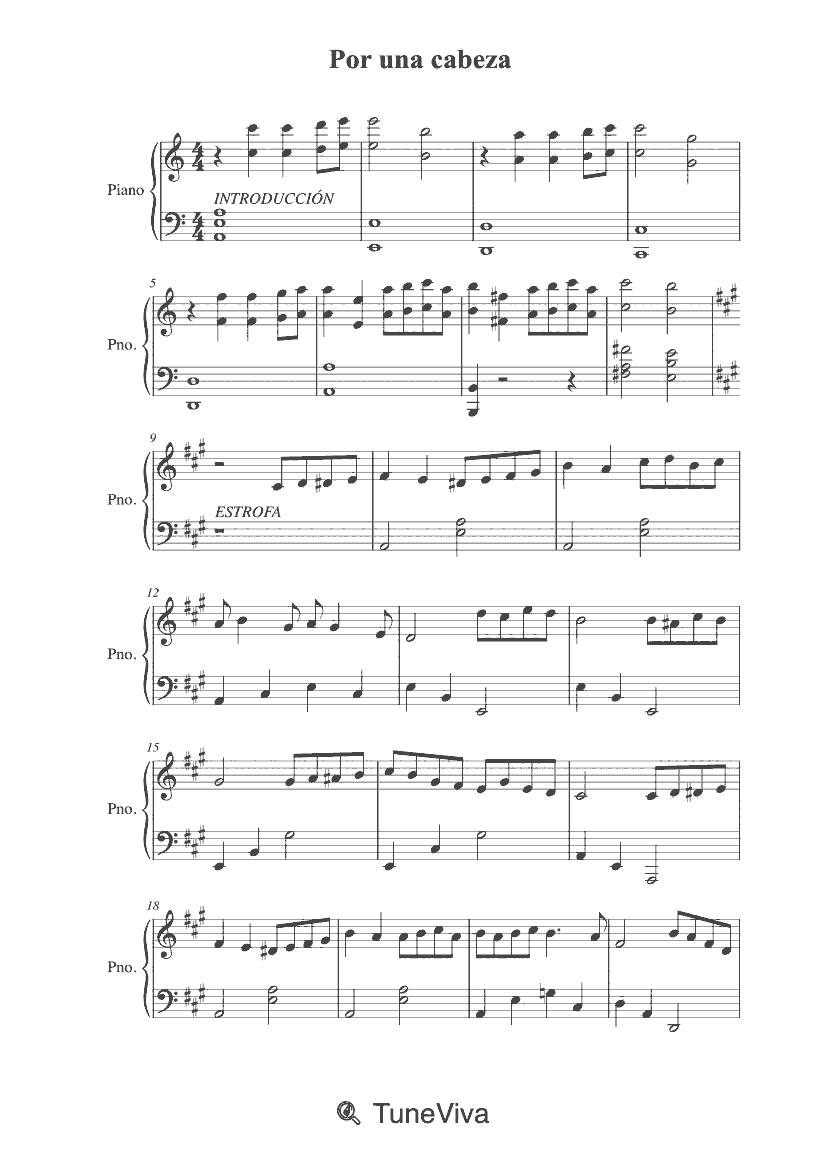
Carlos Gardel
Piano · 2 min 28 sec
Open scoreCarlos Gardel became a defining tango singer and recording artist, though accounts of his birthplace differed for decades. Argentina’s official cultural account points to Toulouse as the best-supported origin and traces his arrival in Buenos Aires as a child. The Buenos Aires Ministry of Culture credits music to Gardel and lyrics to Alfredo Le Pera on songs including “Por una cabeza”; an archival score record connects that tango to Tango Bar. TuneViva’s 12 files cluster around “Por una cabeza” and “El día que me quieras,” with several arrangements of the same songs. Compare their scores as different settings, keeping Gardel’s composition and performance roles separate from the arranger or lyricist credits on a given version. Carlos Gardel sheet music on TuneViva centres on scores titled “Por una cabeza” and “El día que me quieras”. The listings include several versions of each song, with instrument labels ranging from soprano and violin to flute, cello and piano. Because titles and part lists can describe arrangements rather than a single original scoring, compare the stated instruments, opening key and time signature before choosing a score. The credit fields also need checking: most selected listings name Carlos Gardel as composer, while one Por una cabeza listing leaves the composer field blank.
Gardel’s importance to tango is inseparable from the recorded voice and film career through which the genre reached wider audiences. Argentina’s official cultural account describes his early performance career and the documentary basis for the Toulouse origin story, while acknowledging that the birthplace question was debated for decades. The Buenos Aires Ministry of Culture’s collection of Gardel and Alfredo Le Pera songs makes their respective roles explicit: music by Gardel, lyrics by Le Pera. Its “Por una cabeza” entry connects the tango to Tango Bar, the film also identified in the Real Academia’s surviving score record.
The 12 TuneViva files concentrate on “Por una cabeza” and “El día que me quieras.” Their repetition reflects versions and arrangements, not a dozen unrelated works. The clearest arrangement label is “Gardel - Por una Cabeza, for Flute, Cello, and Piano”; it names a chamber format rather than the original recording setup. Other versions use capitalization or spelling variants, and the two “El Dia Que Me Quieras” titles carry version suffixes. Keeping those labels visible helps compare files without obscuring their shared compositions.
Listen to Gardel’s recording or another historically grounded performance, then compare the melody and bass movement with the notation in each file. For the chamber title, check which parts are actually present and whether the piano supports or replaces other material. For the two versioned “El día que me quieras” records, compare the score pages directly. This collection is most useful as a way to explore how a small number of tango songs circulate through different scorings.
Choose by song and scoring: Begin with the song title, then use the part list to decide whether a score suits your ensemble. The selected Por una cabeza scores include labels for flute, cello and piano; violin and cello; and violin, accordion, piano and triangle. The El día que me quieras scores list soprano, with one also naming violin. Treat these as starting points and inspect the score pages to confirm the parts you need are present.
Compare versions of El día que me quieras: The V1.1 score lists soprano and violin, while the V1.0 score lists soprano alone. Both supplied openings give no sharps or flats, 2/4 time and 96 BPM, so the clearest listed difference is the part disposition. The version suffixes are title labels; they do not by themselves establish which score is later, more complete or intended as a replacement.
Read Por una cabeza variants carefully: Several scores share the Por una cabeza title, including one with the variant spelling “Por unas cabezas”. Their part lists and opening details differ: one names flute, cello and piano; another names violin and cello; another names violin, accordion, piano and triangle. A different title spelling does not necessarily mean a different work. Compare the notation, stated instruments and opening signatures instead.
What to verify before playing: Check the actual score rather than relying only on the title or part summary. Confirm that the required staves are present, that the key and time signature suit your plan, and that any composer, lyricist or arranger credits meet your needs. The supplied listings do not give a formal difficulty grade for these arrangements, so choose by instrumentation and by reading the notation itself.
The catalog contains multiple uploads or arrangements of the same tango, including one explicitly titled for flute, cello and piano.
The Buenos Aires Ministry of Culture and the archival score record identify Carlos Gardel for the music and Alfredo Le Pera for the lyrics.
No. At least one title describes a flute, cello and piano arrangement. Read the individual score to identify its actual parts.
The Carlos Gardel scores selected here centre on two song titles: “Por una cabeza” and “El día que me quieras”. Several listings share those titles but name different instruments or carry version suffixes, so they should be compared as separate arrangements or versions rather than as unrelated songs.
Por una cabeza listings name several different scorings: flute, cello and piano; violin and cello; and violin, accordion, piano and triangle. One score titled “Por unas cabezas” lists a trumpet part. These are title or part-list descriptions; check the actual score to confirm which staves and parts are included.
The El día que me quieras V1.1 score lists soprano and violin, while V1.0 lists soprano alone. Both supplied entries give an opening with no sharps or flats, 2/4 time and 96 BPM, so the clearest difference in the listing is the part disposition, not the opening key or tempo.
“Gardel - Por una Cabeza, for Flute, Cello, and Piano” is the explicit flute, cello and piano title in the selected scores. Its part list names flute, cello and piano. A musician choosing it should still open the score to verify that all three parts are present and usable as expected.
Most selected scores list Carlos Gardel as composer and artist, but one “Por unas cabezas” listing gives “NA” in the composer field. Lyricist and arranger credits are not consistently supplied in these listings, so confirm the credit line on the score you intend to use.