classical
2 tracks
Clara Faisst left songs, piano pieces and a handful of larger works, and the catalogue follows the songs: 22 scores, about 29 minutes of music and 9,048 notated notes. Twenty-one entries carry lyrics.
The most-viewed items are lieder from Opp. 1, 3, 4, 8 and 11, headed by Die Insel der Vergessenheit and a Netherlandish lullaby that survives in two catalog entries, one with its umlaut lost. A single keyboard piece, the Präludium in gotischem Stil, Op. 28, breaks the pattern. Twenty-one of the 22 entries sit at complexity index 0, so the page is unusually approachable.
Clara Mathilda Faisst was born in Karlsruhe on 22 June 1872, the youngest of six children; her father died when she was a year old. She studied at the grand-ducal conservatory in her home city until 1894, then at the Königliche Hochschule für Musik in Berlin until 1896, where Ernst Rudorff taught her piano, Woldemar Bargiel counterpoint and Max Bruch composition. After a concert tour through Germany and Switzerland she returned to Karlsruhe in 1901 and worked there as a pianist, teacher, poet and composer for the rest of her life.
Her songs were widely published for a composer without a major house: some appeared in her own imprint, others through Karlsruhe music shops, and twenty were printed as magazine supplements. The Op. 4 songs came out in Leipzig in 1897, and Op. 11 is dated 1905 in the Badische Landesbibliothek copy. She wrote about thirty opus numbers, the later ones mostly instrumental, and most of the music was composed before 1930. She never married, corresponded with Albert Schweitzer and was close to the painter Hans Thoma; Wilhelm Furtwängler was among her musical contacts. She died in Karlsruhe on 22 November 1948; her manuscripts and printed music are held by the Badische Landesbibliothek.
The catalogue's 22 entries are almost entirely vocal, and the instrumental exception is the Op. 28 Prelude. Only one entry rises above complexity index 0, which reflects short, syllabic songs rather than simple music.
Faisst writes for the voice in short phrases, with the piano often taking the melodic lead between lines. Keep the accompaniment below the singer: the textures are chordal and easy to overplay, especially in the Op. 4 and Op. 11 sets. German diction matters more than volume, since the poems carry the form. In the Op. 28 Prelude, choose piano or organ before you start, because the same notes change weight on the two instruments. Where two catalog entries give the same song, compare the first page before choosing.
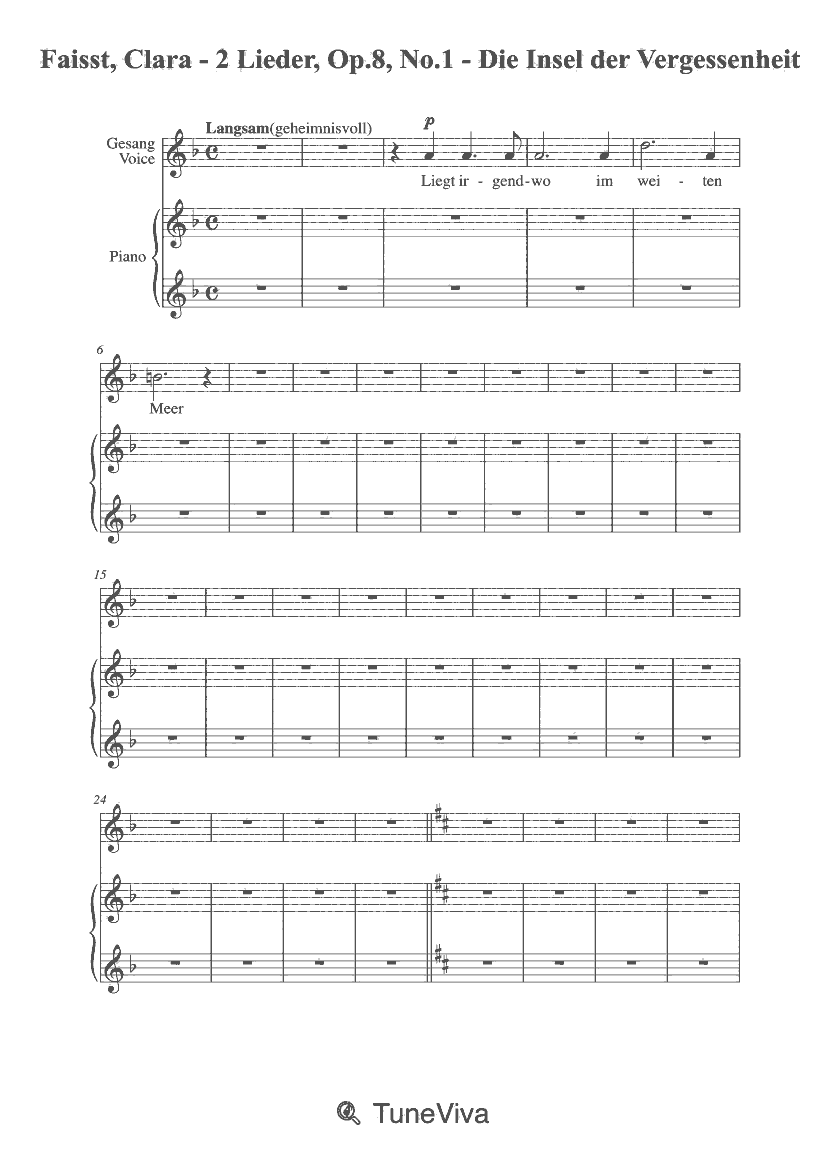
The page's most-viewed score, a setting of Anna Ritter's poem 'Die Insel der Vergessenheit' from her Gedichte.
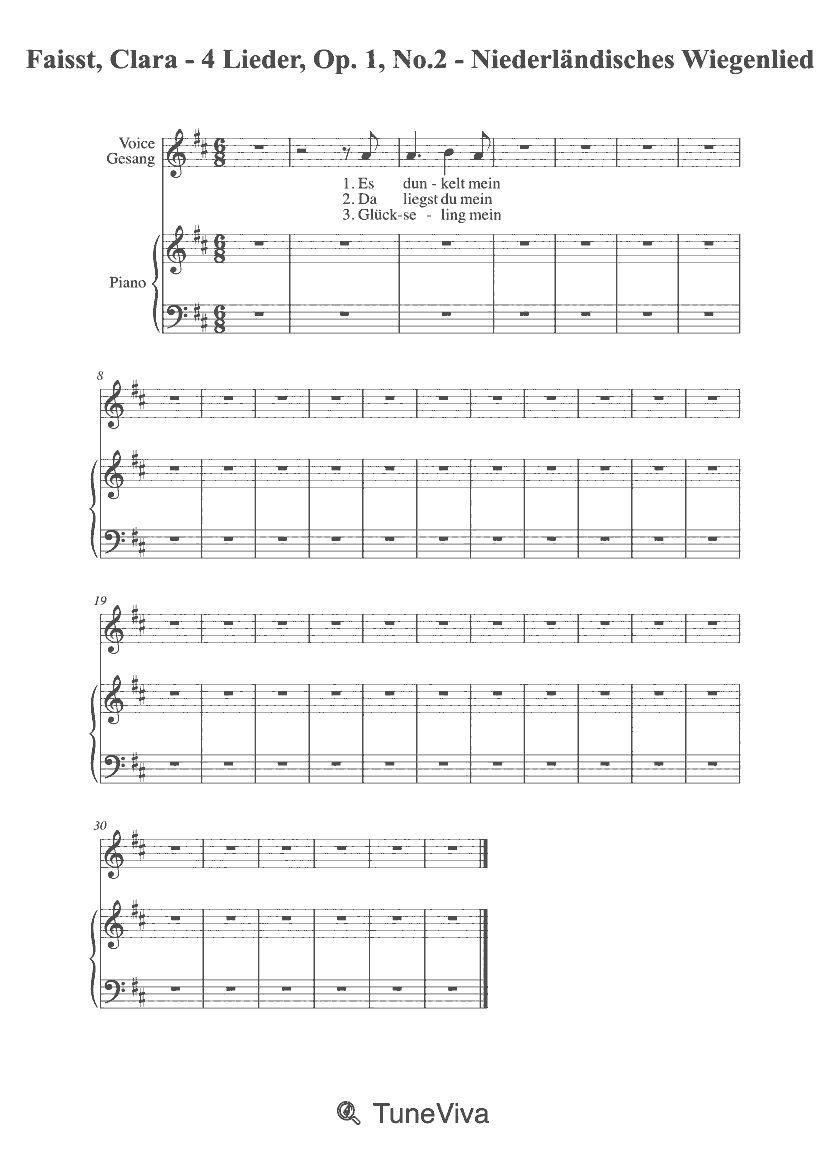
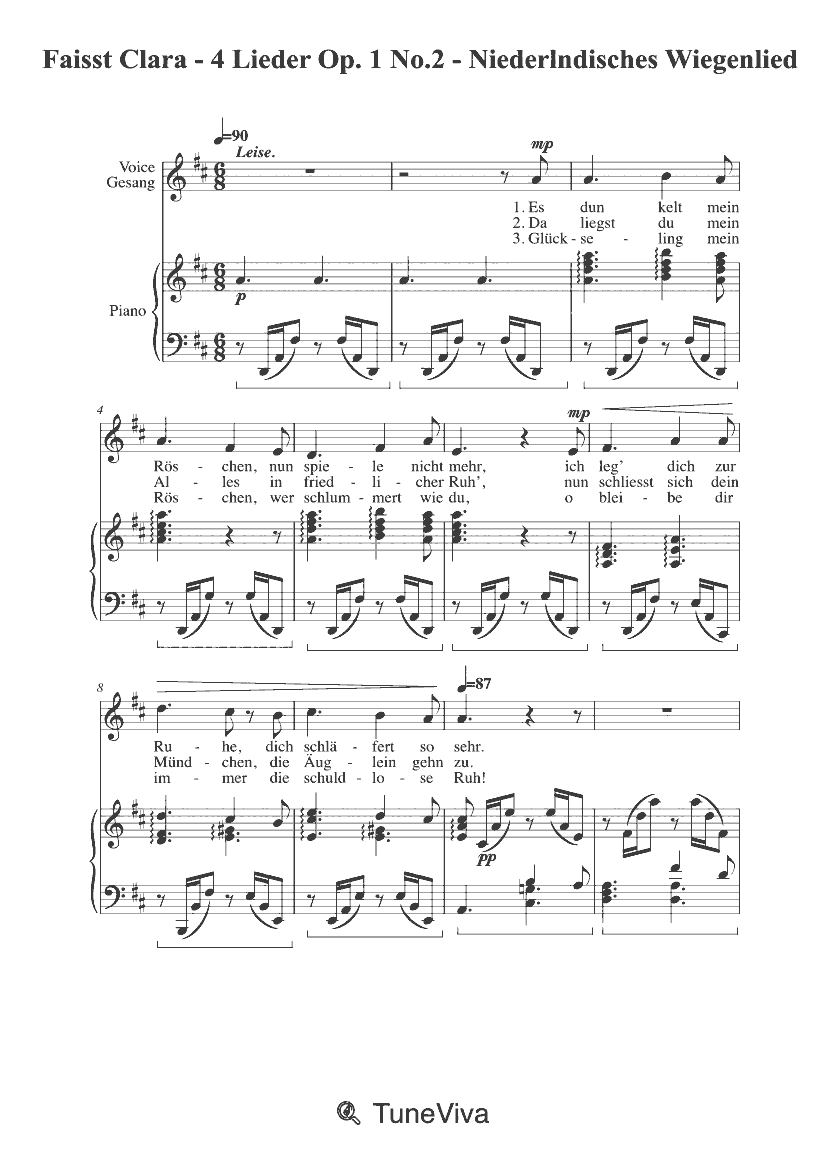
A Netherlandish lullaby in the Op. 1 set; the catalogue also holds a second copy under a spelling that has lost the umlaut.
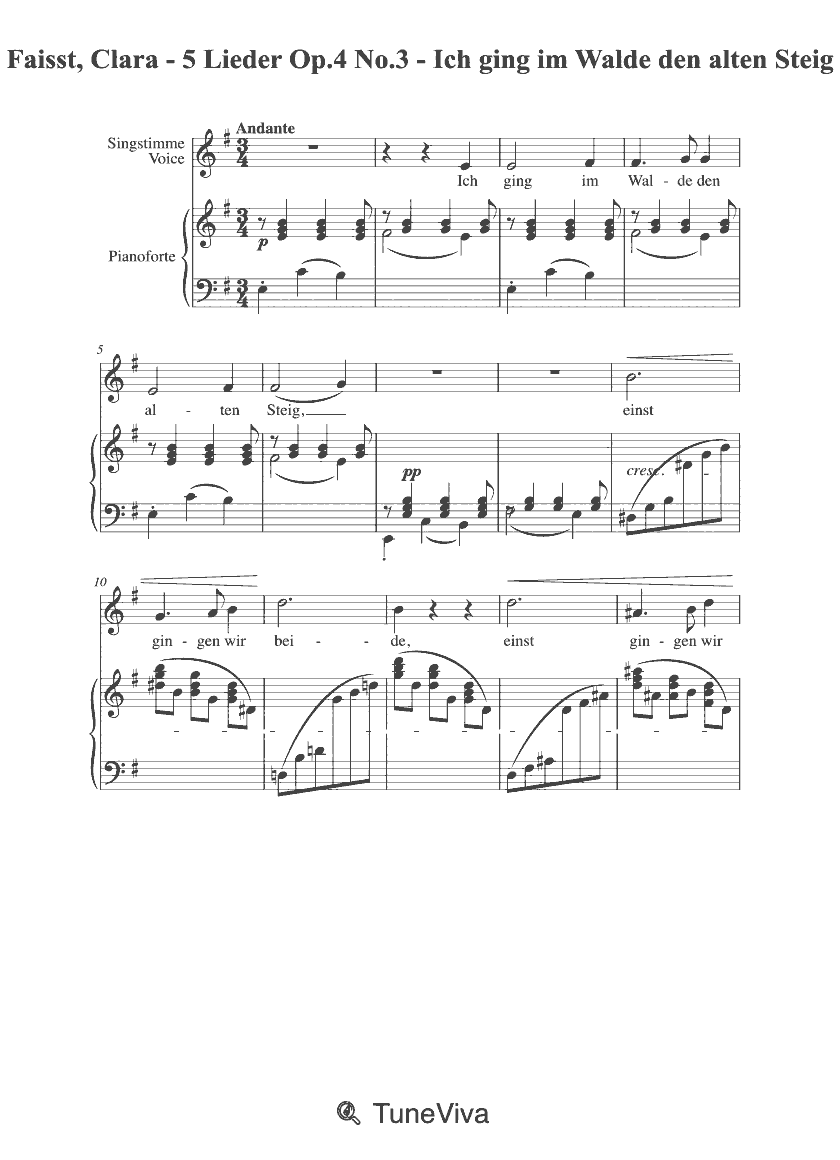
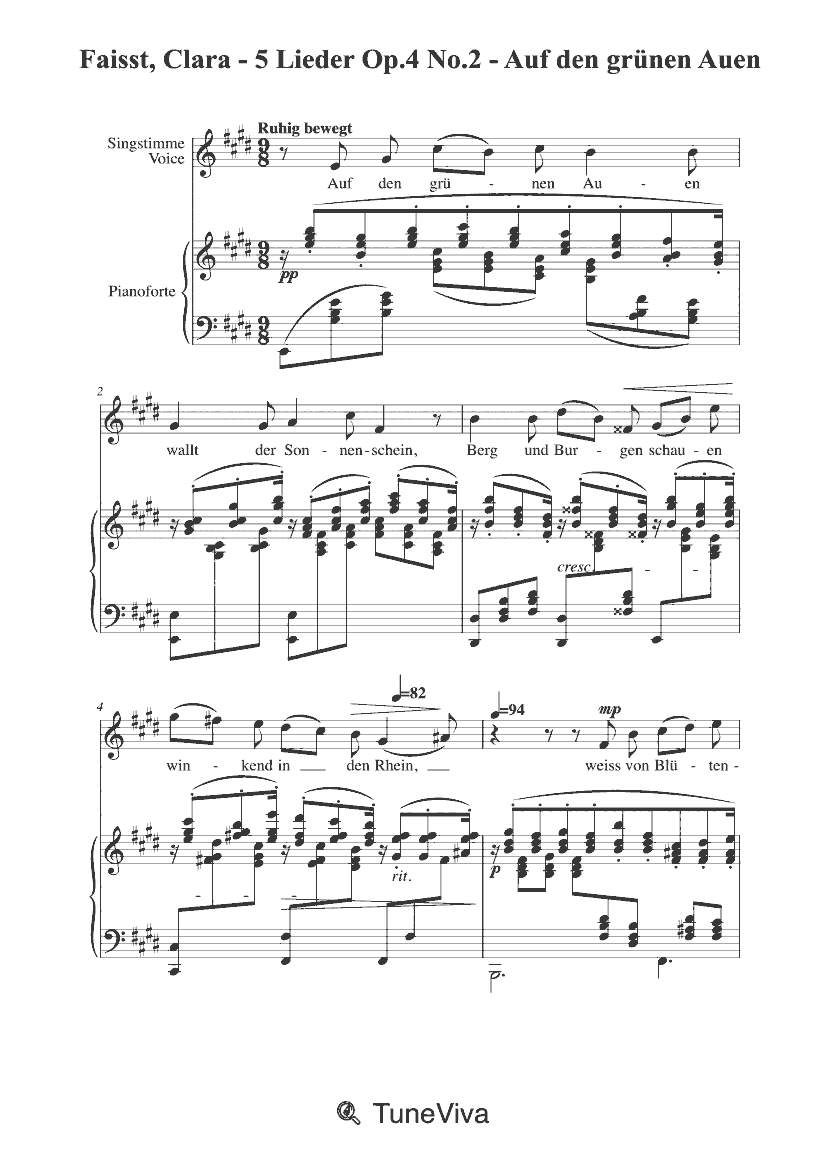
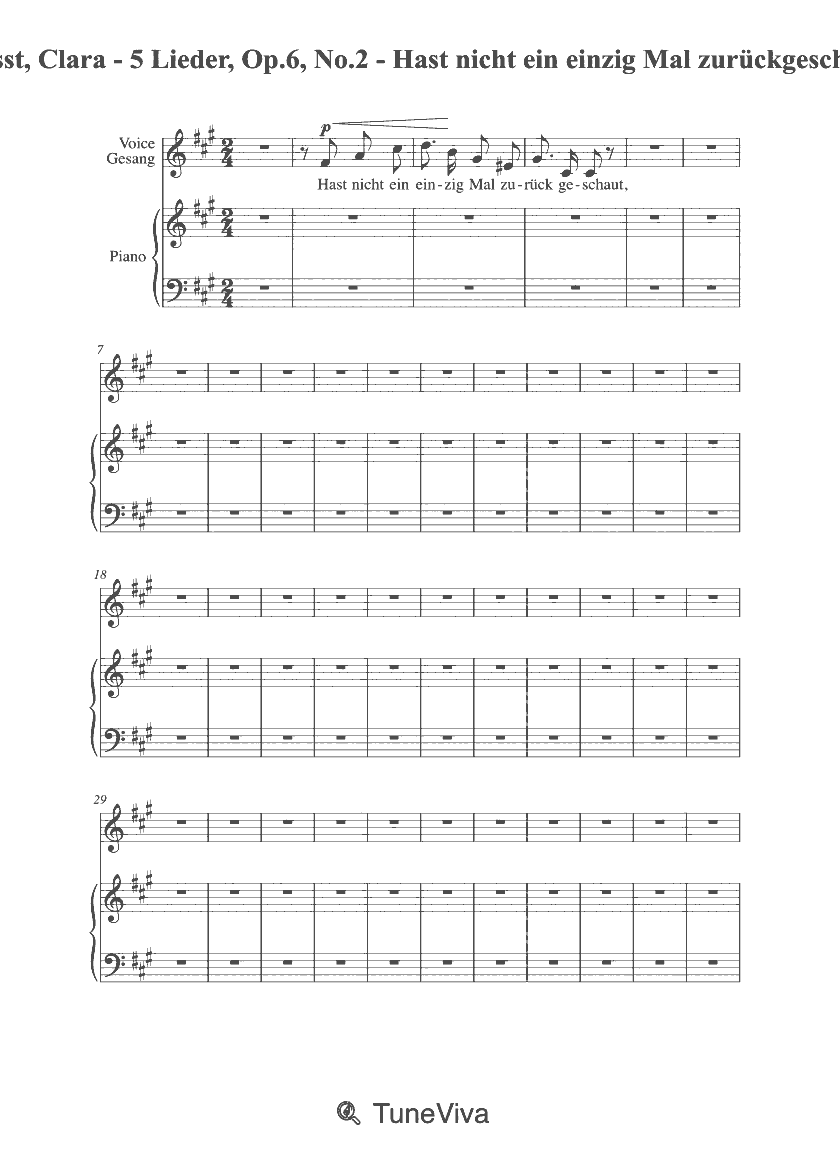
From the Op. 4 songs, published in Leipzig in 1897; the title is the opening line of the poem.
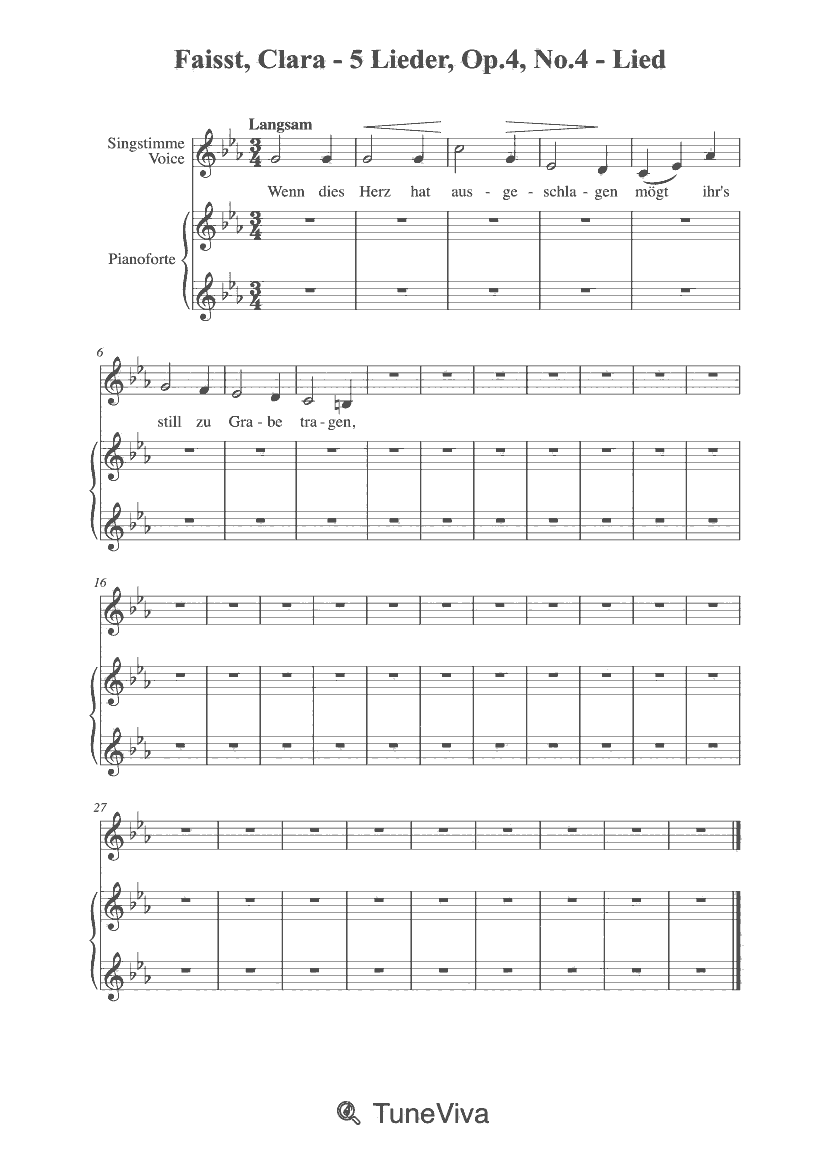
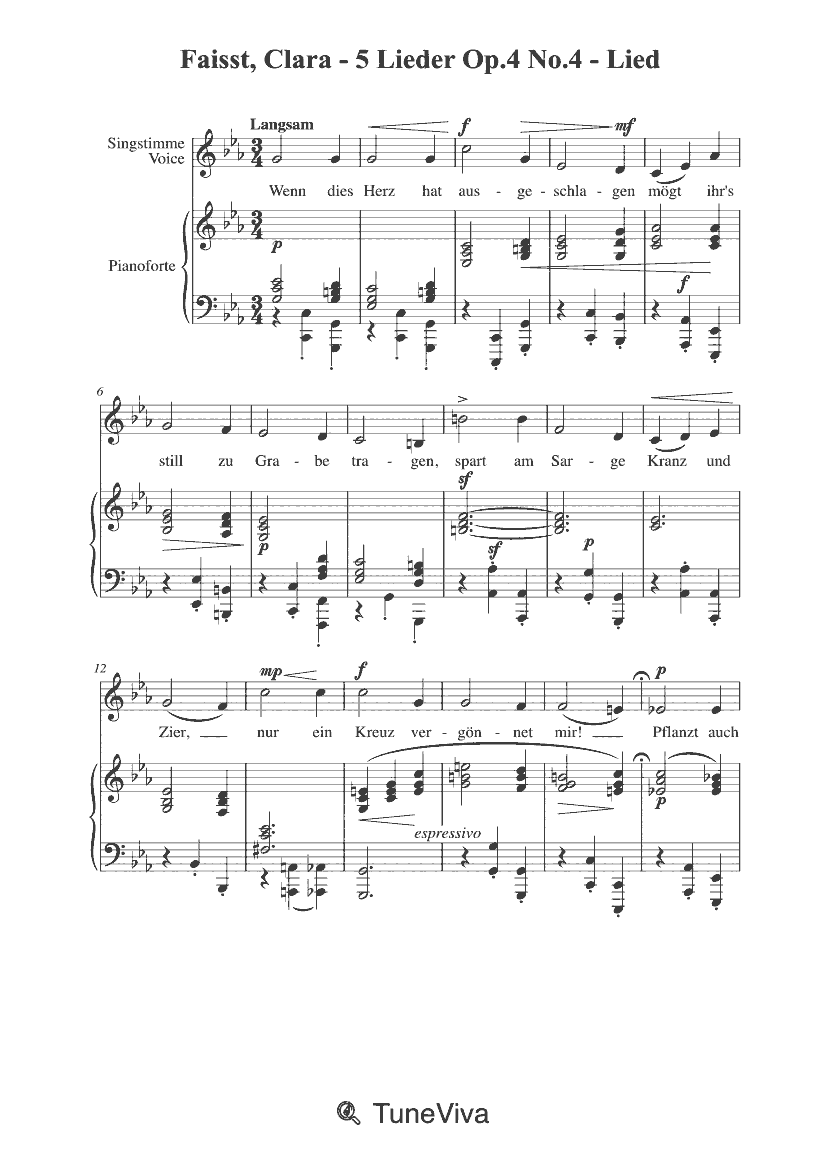
The fourth of the Op. 4 songs; the catalogue gives no title beyond 'Lied'.
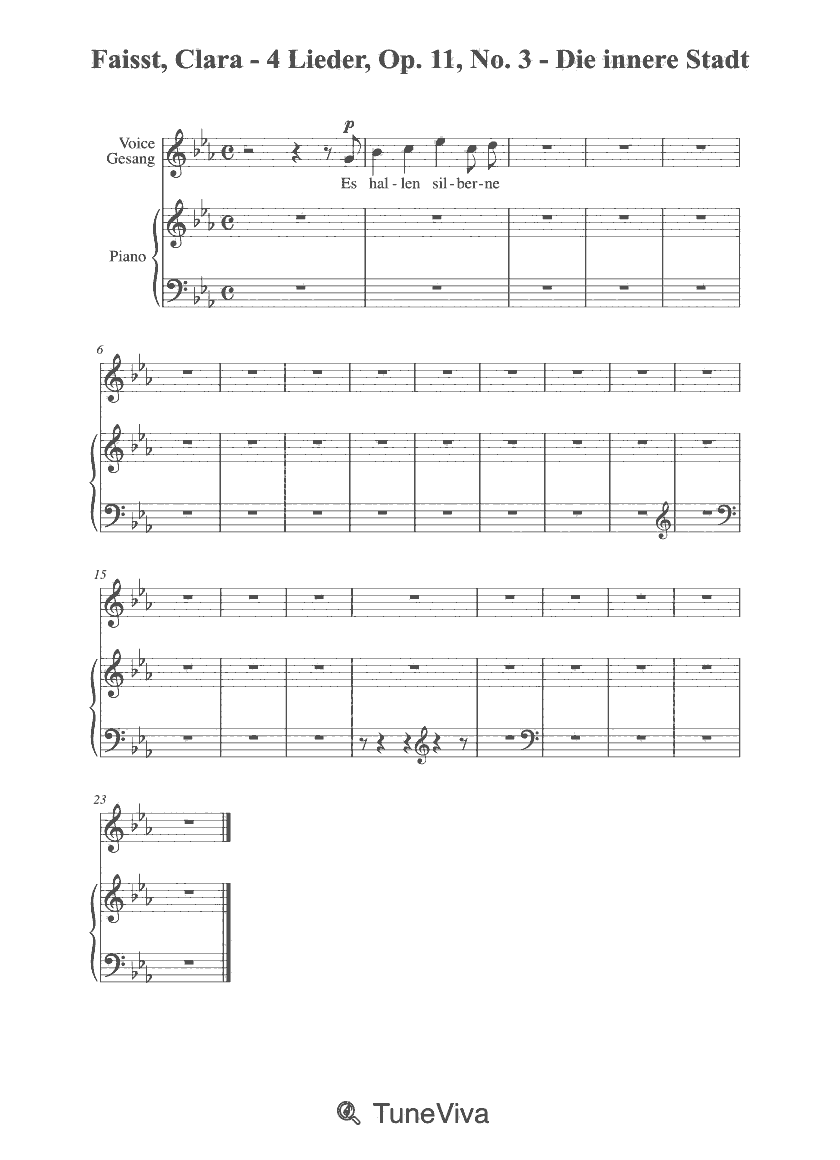
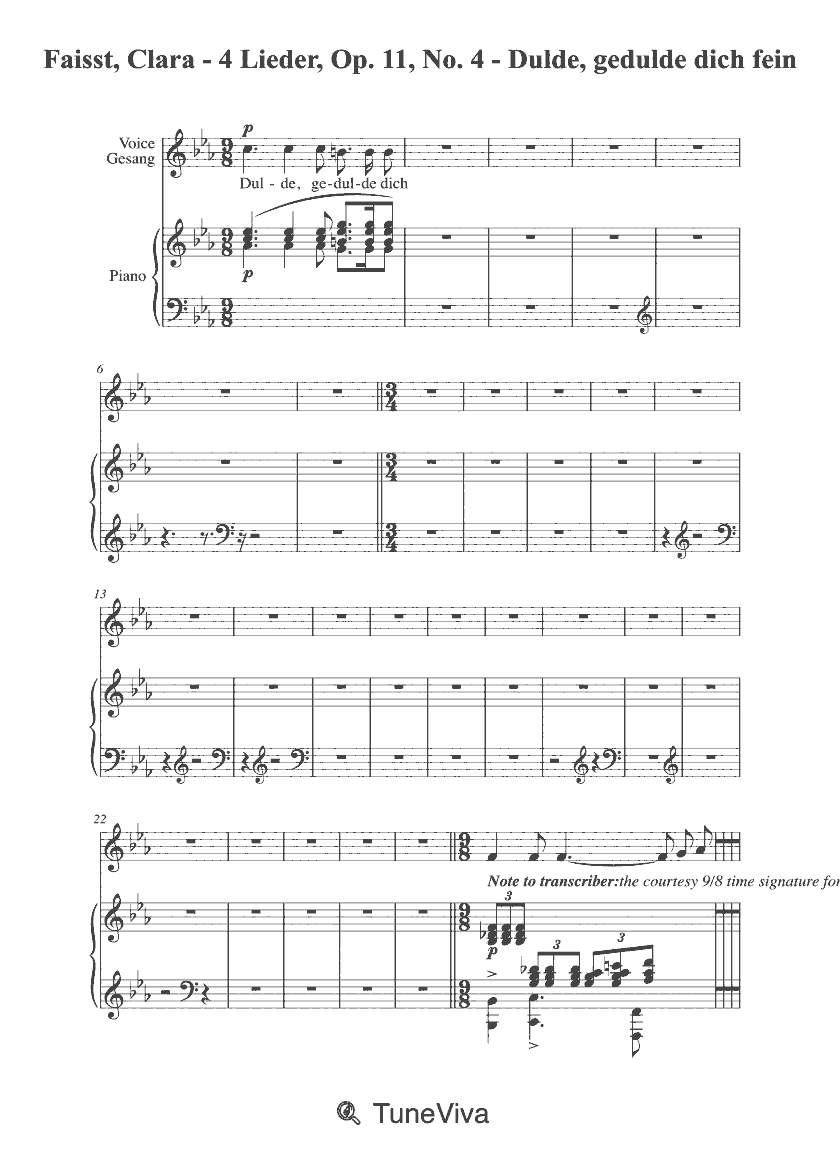
The third of the Op. 11 songs, a four-song set dated 1905 in the Karlsruhe copy.
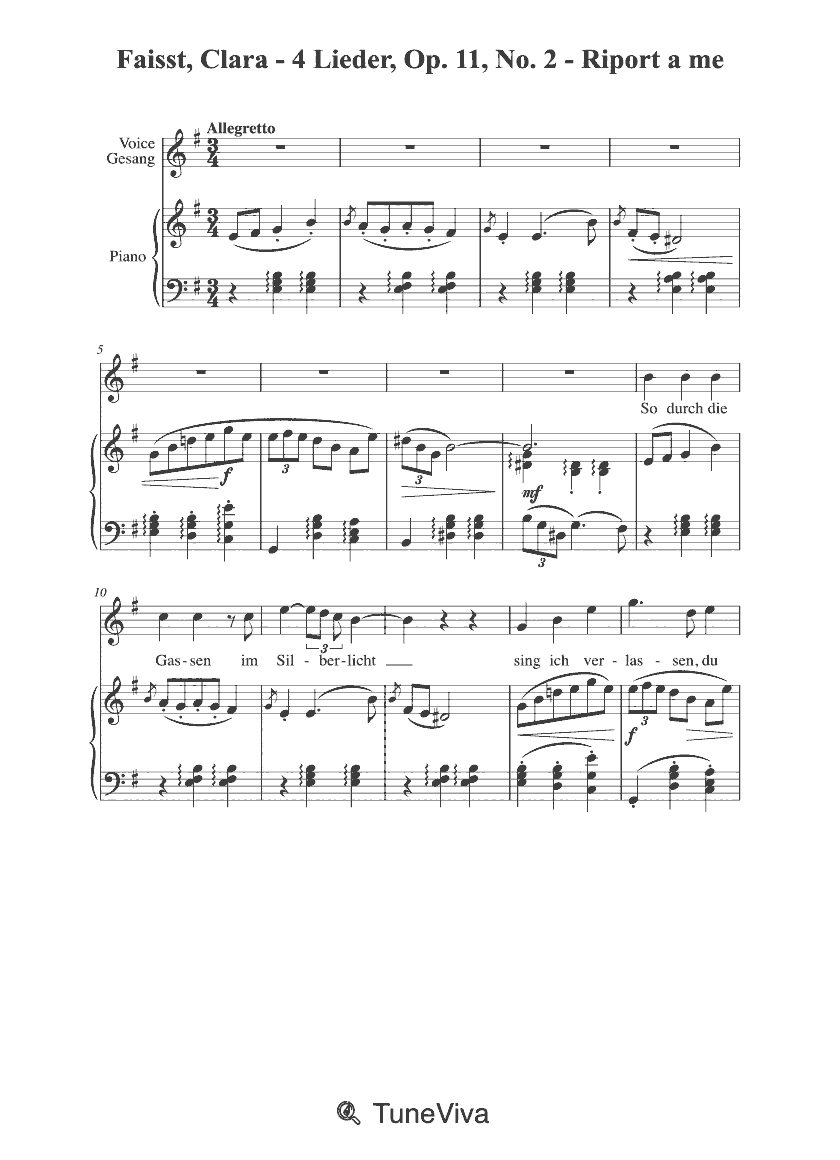
The second Op. 11 song, a setting of a text by M. Geissler.
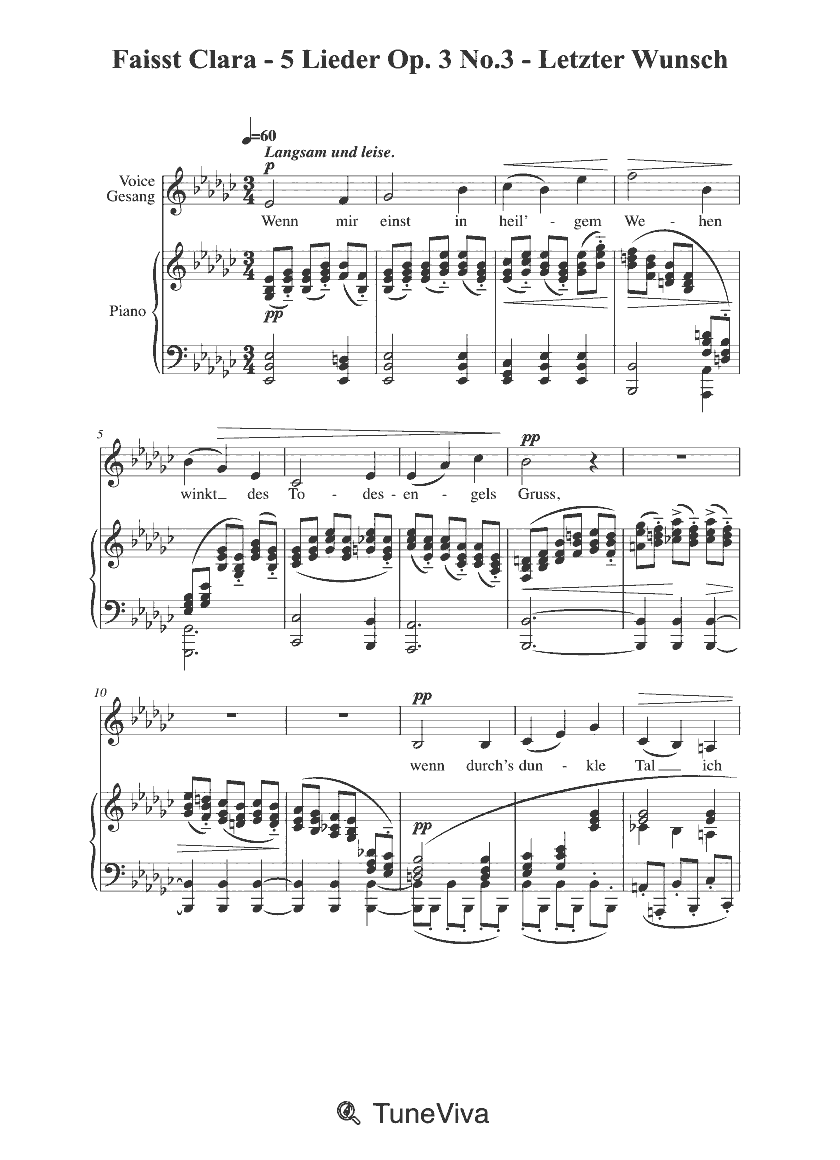
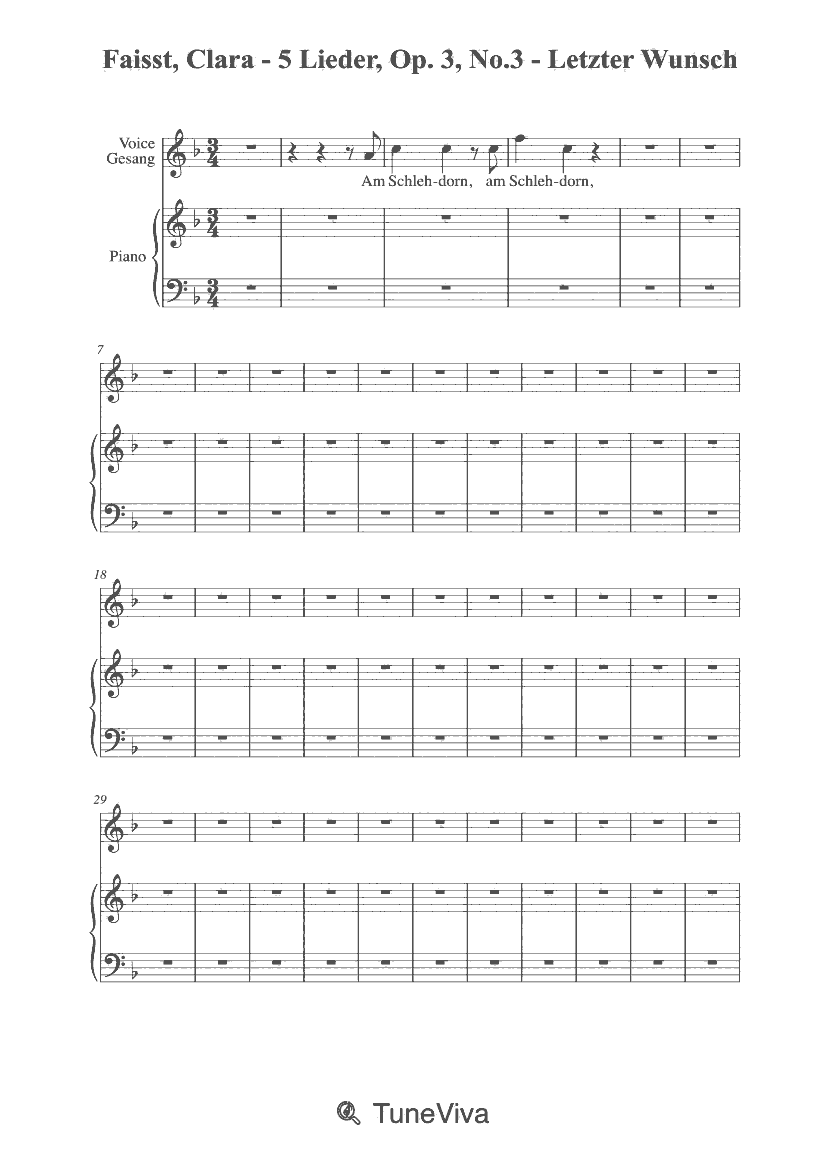
The third of the Op. 3 songs; the title means 'last wish'.
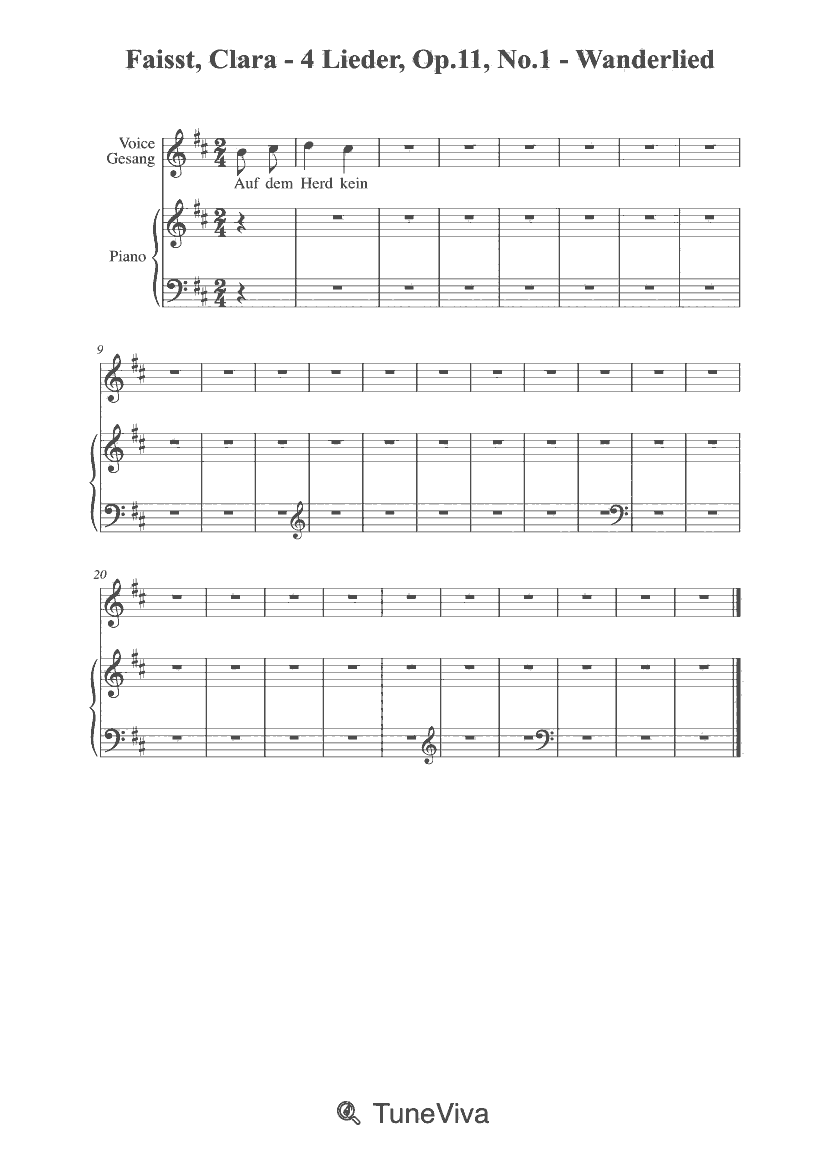
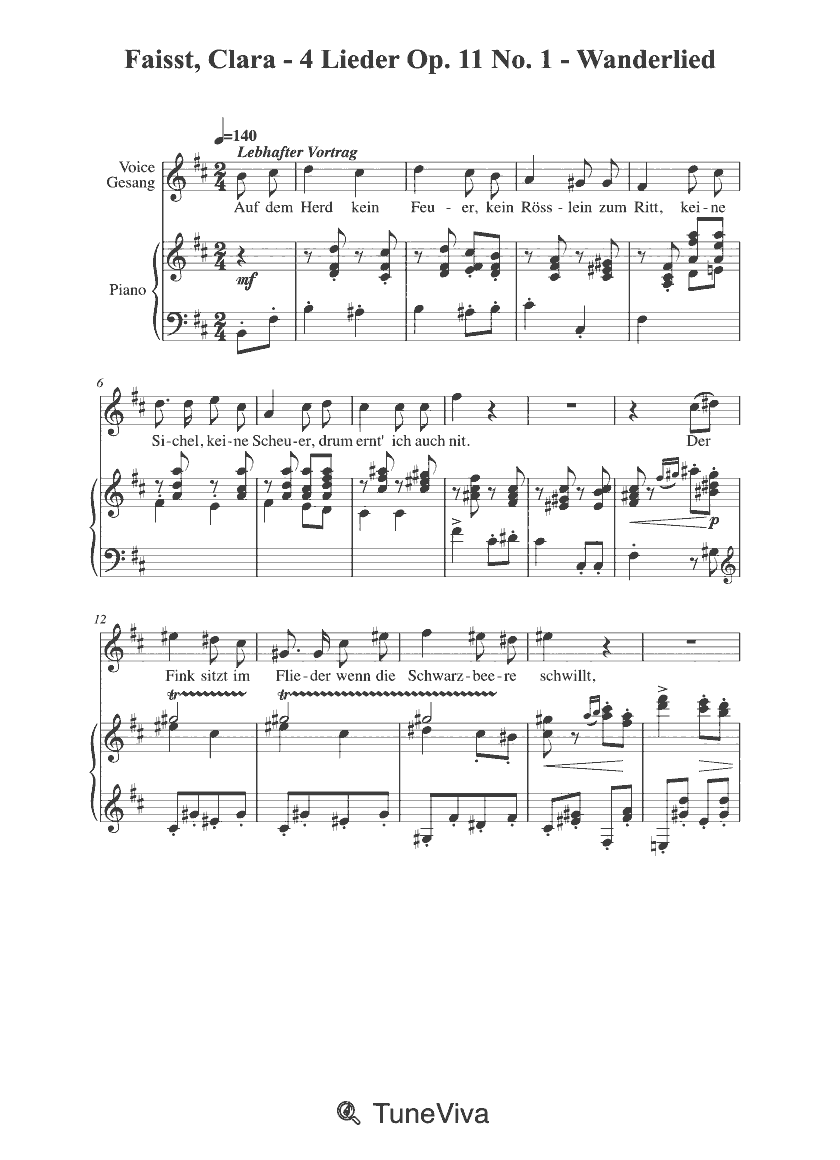
The opening song of Op. 11.
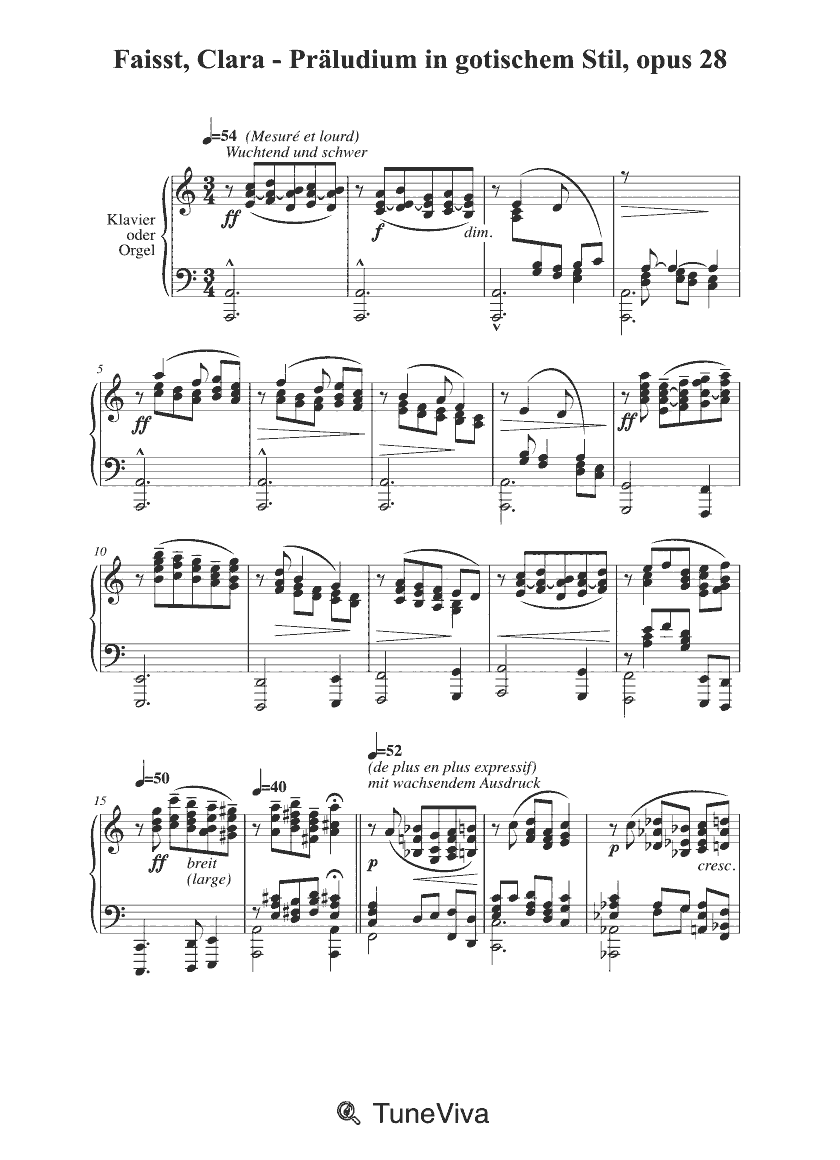
The only instrumental work among the most-viewed entries: a keyboard piece in a deliberately Gothic style, for piano or organ.
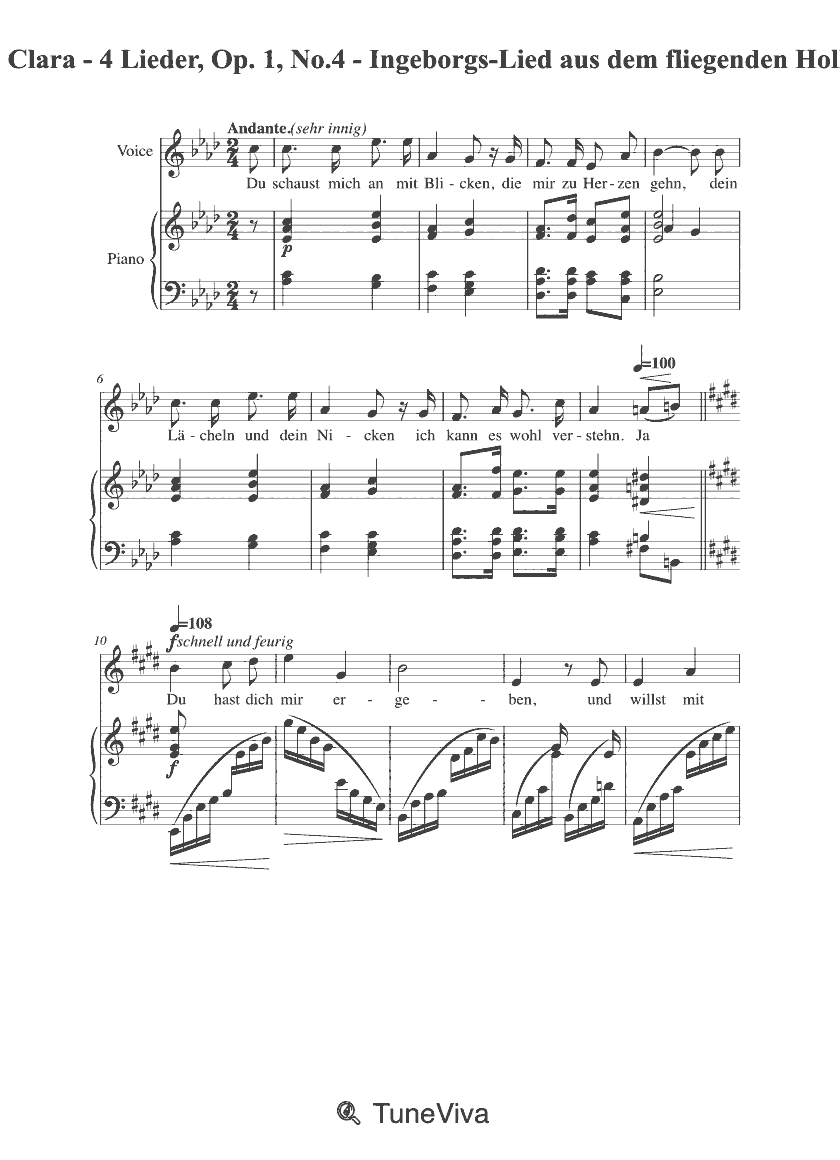
A song from Op. 1 whose text retells the Flying Dutchman legend rather than quoting Wagner's opera.
Twenty-two, running to about 29 minutes of music and 9,048 notated notes. Twenty-one of them carry lyrics.
One entry spells 'Niederländisches' correctly and the other has lost the umlaut, so they were catalogued as separate items. Both appear to be the Op. 1 No. 2 song.
The catalogue title allows either, and it is the only instrumental piece among the most-viewed scores. Its opus number is 28.
No. Her Berlin teacher was Max Bruch; the Brahms comparison comes from the style of her songs, not from a pupil-teacher link.
Catalog editions and arrangements attributed to Clara Faisst.