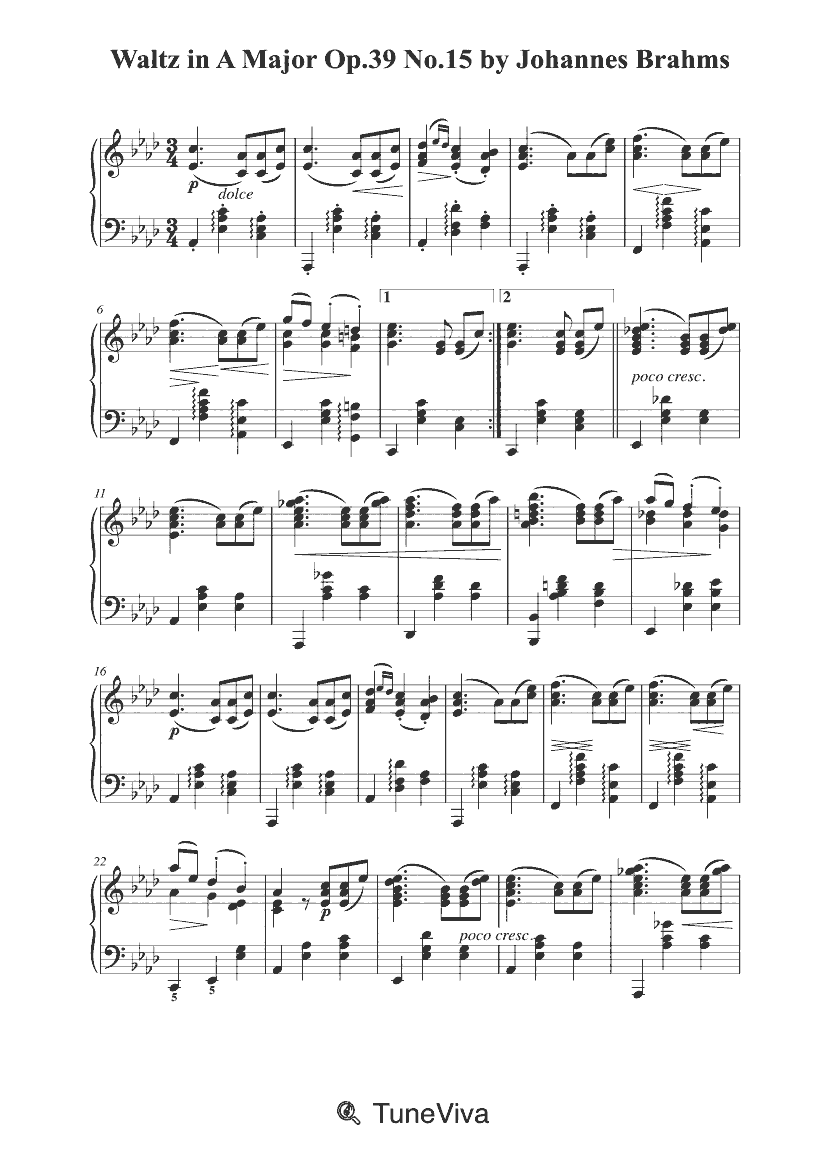
Waltz in A Major Op.39 No.15 by Johannes Brahms
Johannes Brahms
Op.39 No.15
Piano · 1 min 15 sec
Open score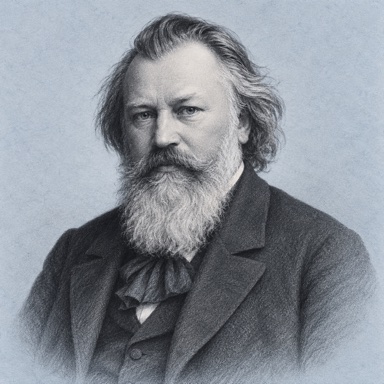
285 Brahms scores to preview and download, from the Waltz Op. 39 No. 15 and Gaudeamus Igitur to Requiem movements, Hungarian Dances and the Intermezzi.
The most-viewed Brahms score here, a short waltz from the sixteen Op. 39 pieces for piano duet.
The student song that crowns Brahms's Academic Festival Overture, catalogued here as a separate item.
One of the late intermezzi, a lyrical piece that rewards a singing tone and flexible phrasing.
The Wiegenlied Op. 49 No. 4, one of the most recognised melodies in the catalogue.
A movement from A German Requiem in a practical chorus-and-piano reduction.
Violin; Piano · 48 sec
The best-known of the Hungarian Dances, in the familiar orchestral and piano versions.
Other editions:
A substantial song from Op. 43, showing the range of the Lieder in this collection.
The opening movement of A German Requiem, set for chorus and piano.
For Waltz Op. 39 No. 15, distinguish a solo version from music laid out for piano duet. Confirm which version you are preparing before marking fingerings or balancing the lines. If you prefer an Intermezzo, use the opus and number to find the piece, and check where the melody passes through the middle of the texture. It may need to be heard even when it sits below the top note.
Compare the instrument and arrangement details below, then open a score to check the notation. Different entries may be arrangements or editions of the same work; available playback tools are shown on each score page.
Johannes Brahms
Op.39 No.15
Piano · 1 min 15 sec
Open score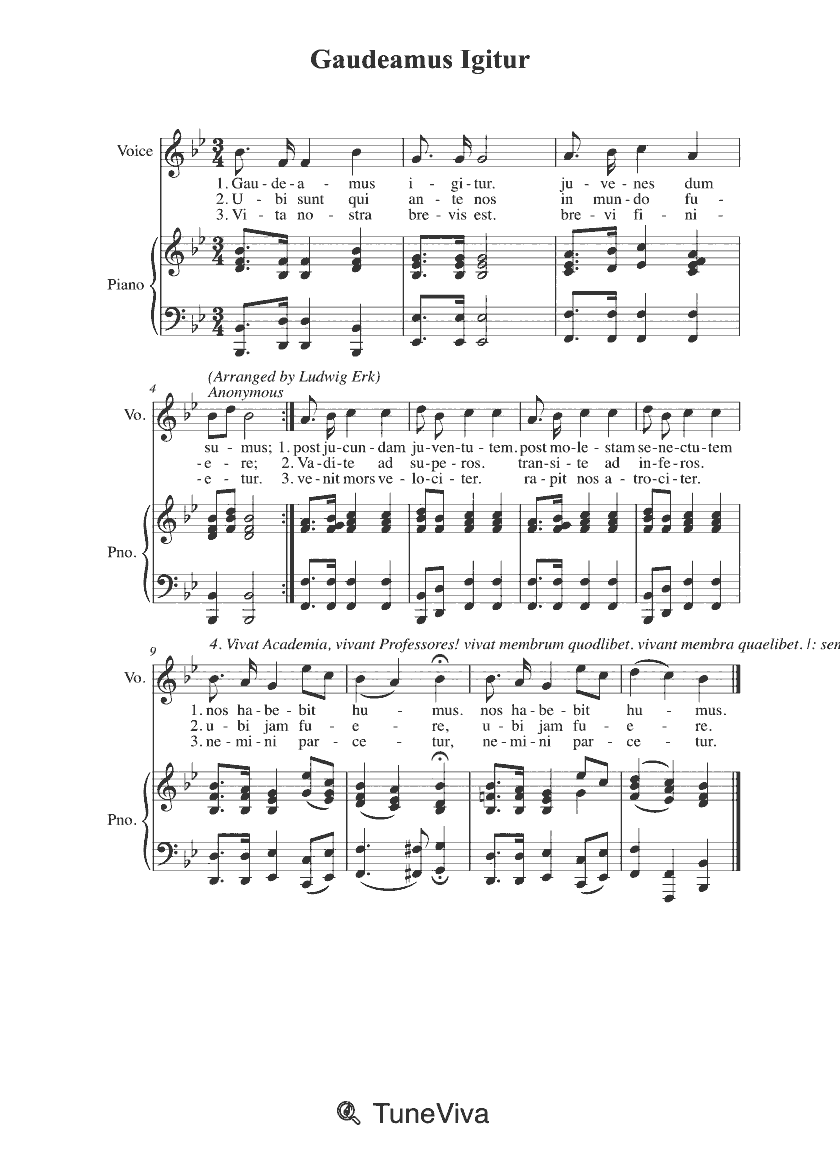
Johannes Brahms
Voice; Piano · 25 sec
Open score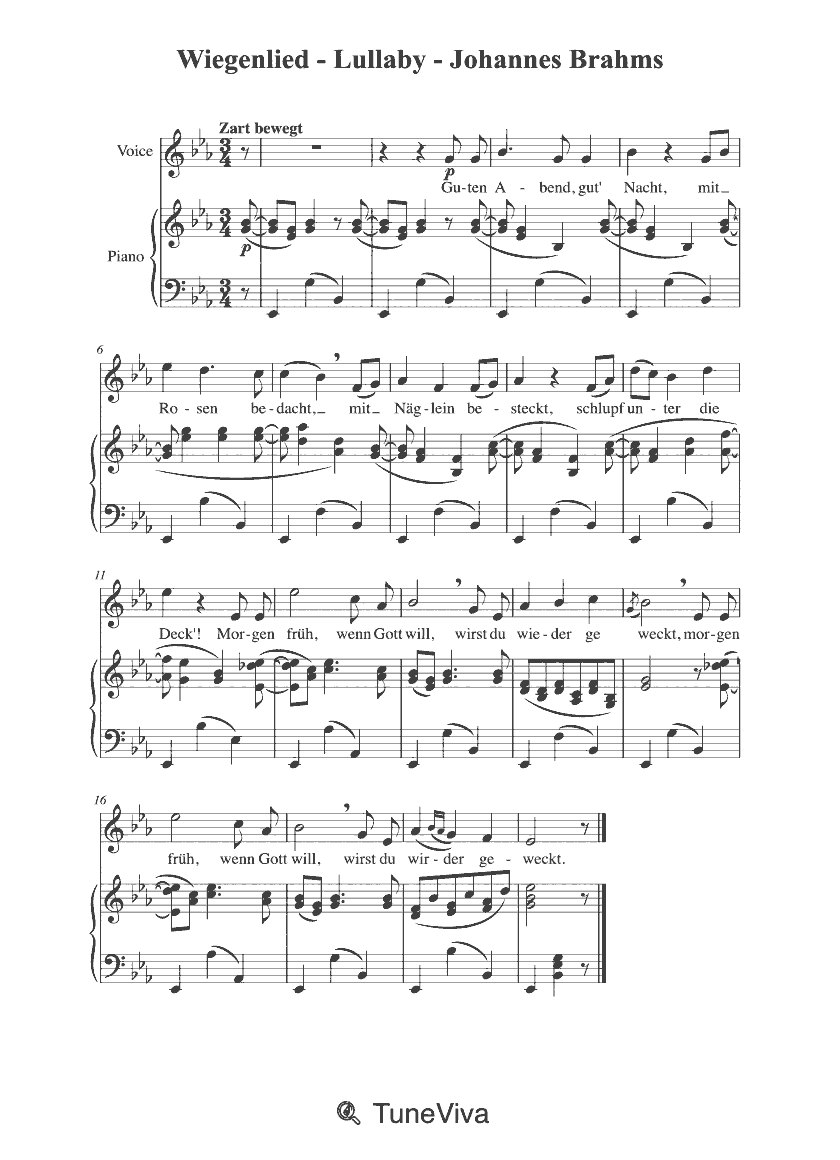
Johannes Brahms
aus Des Knaben Wunderhorn
Voice; Piano · 41 sec
Open score
Johannes Brahms
G Minor
Piano · 4 min 3 sec
Open score
Johannes Brahms
From A German Requiem Op. 45
Soprano; Alto; Tenor +2 parts · 9 min 28 sec
Open score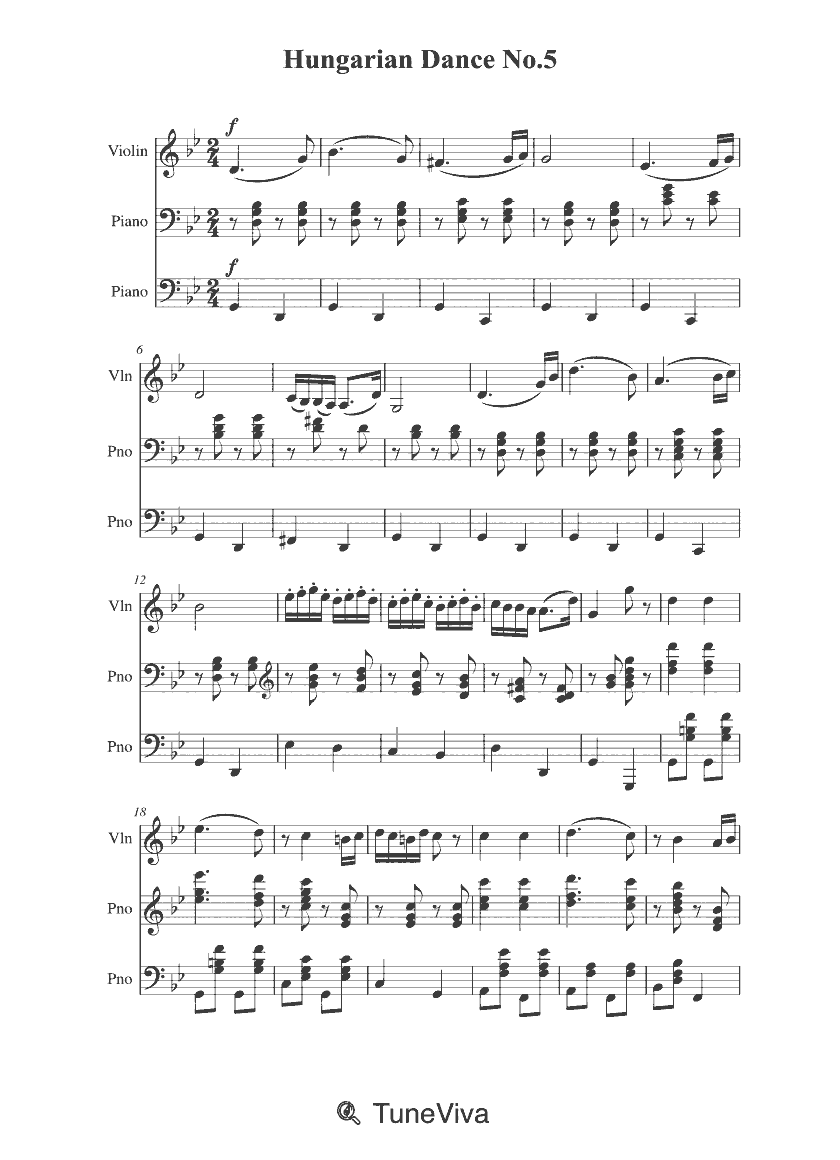
Johannes Brahms
Violin; Piano · 48 sec
Open score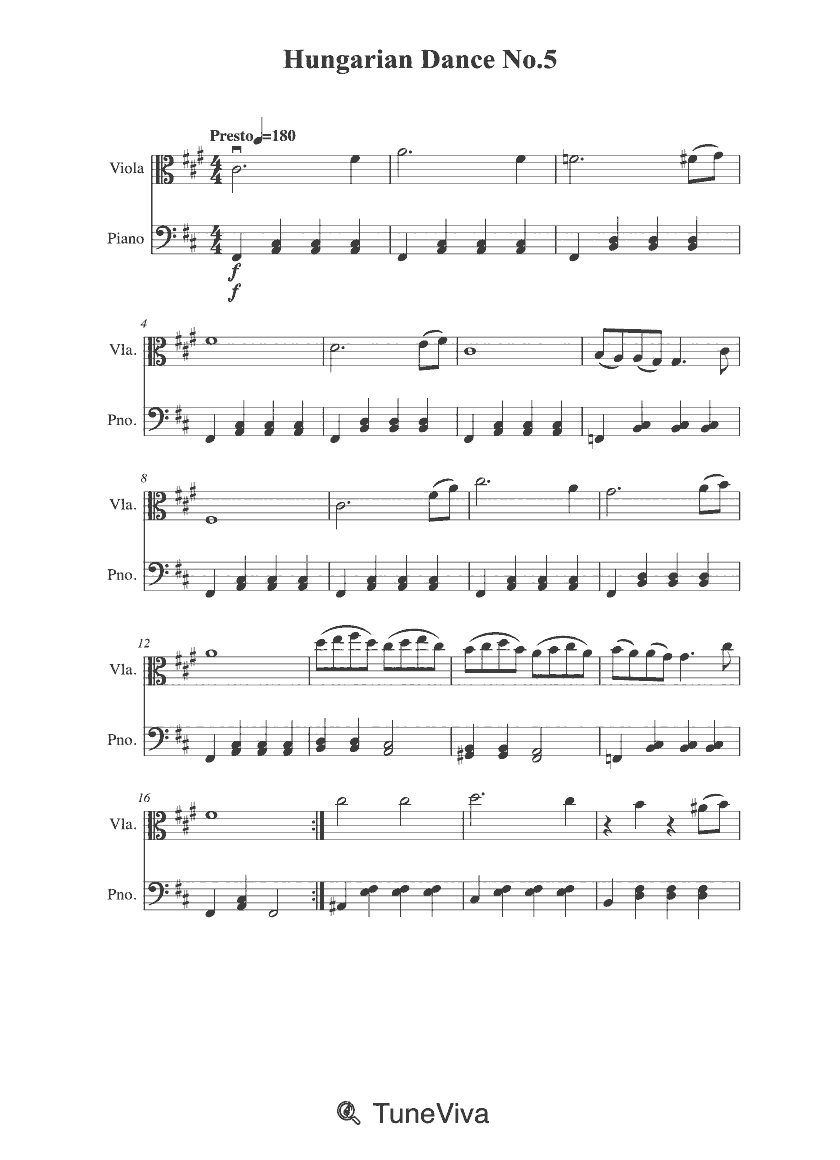
Johannes Brahms
Viola; Piano · 1 min 8 sec
Open score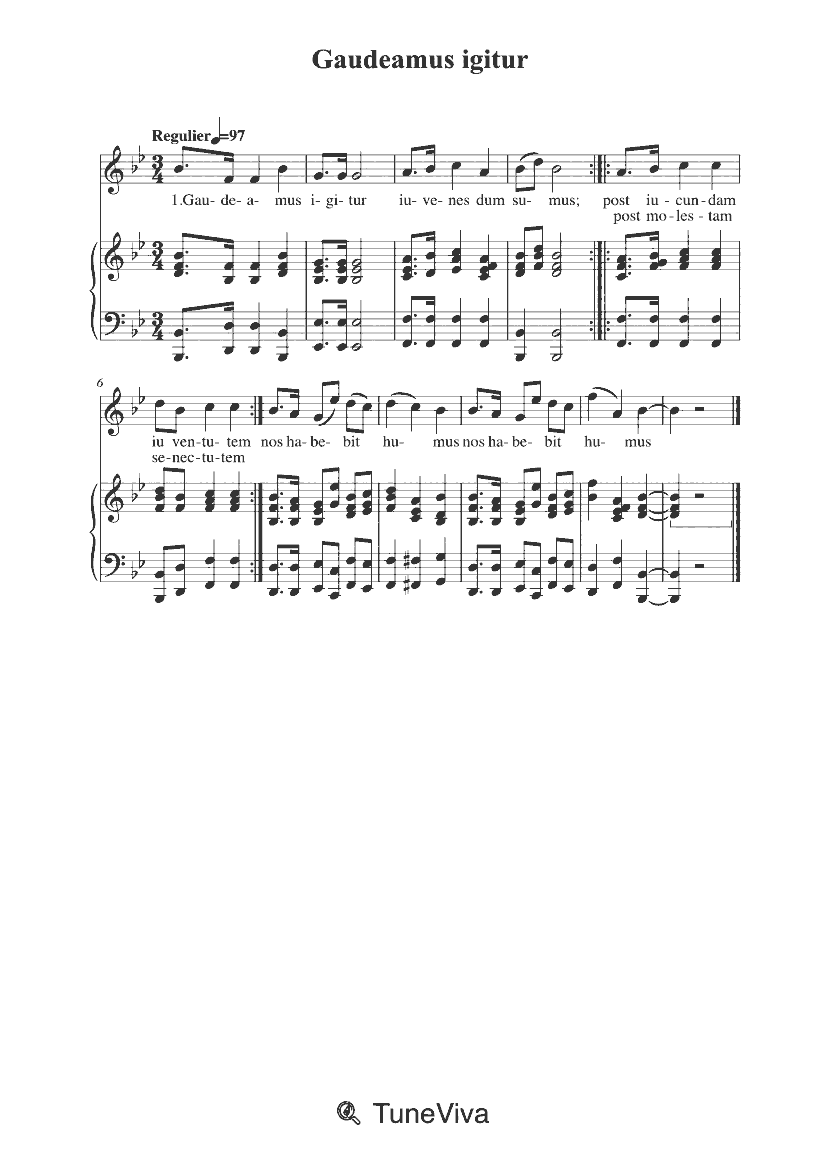
Johannes Brahms
Voice; Piano · 31 sec
Open score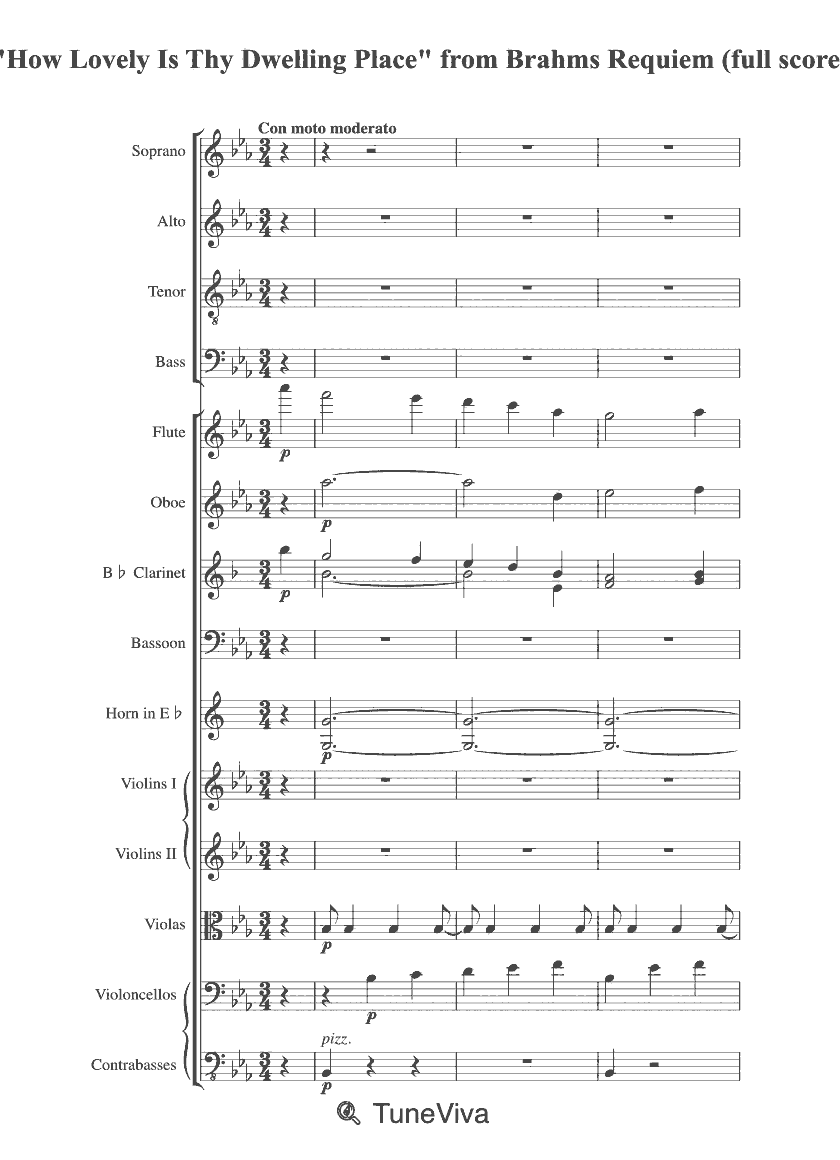
Johannes Brahms
From A German Requiem Op. 45
Soprano; Alto; Tenor +11 parts · 6 min 29 sec
Open score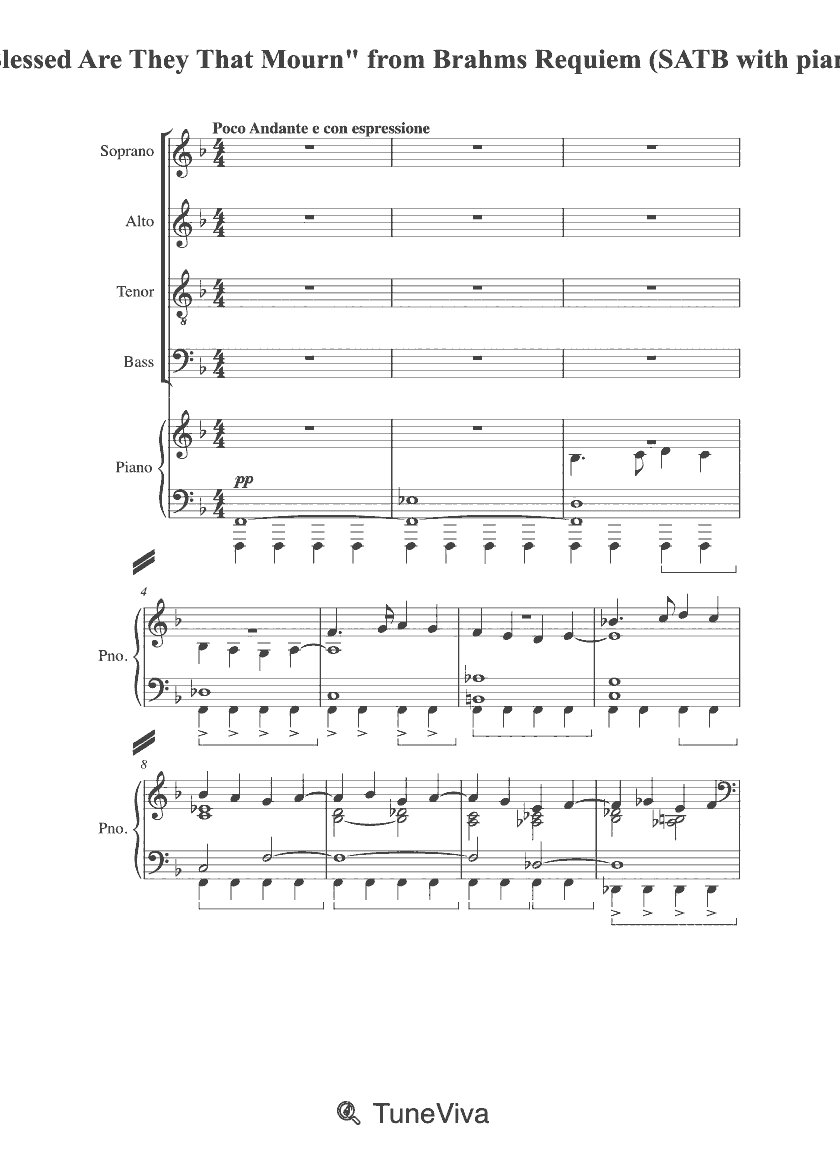
Johannes Brahms
From A German Requiem
Soprano; Alto; Tenor +2 parts · 11 min 35 sec
Open score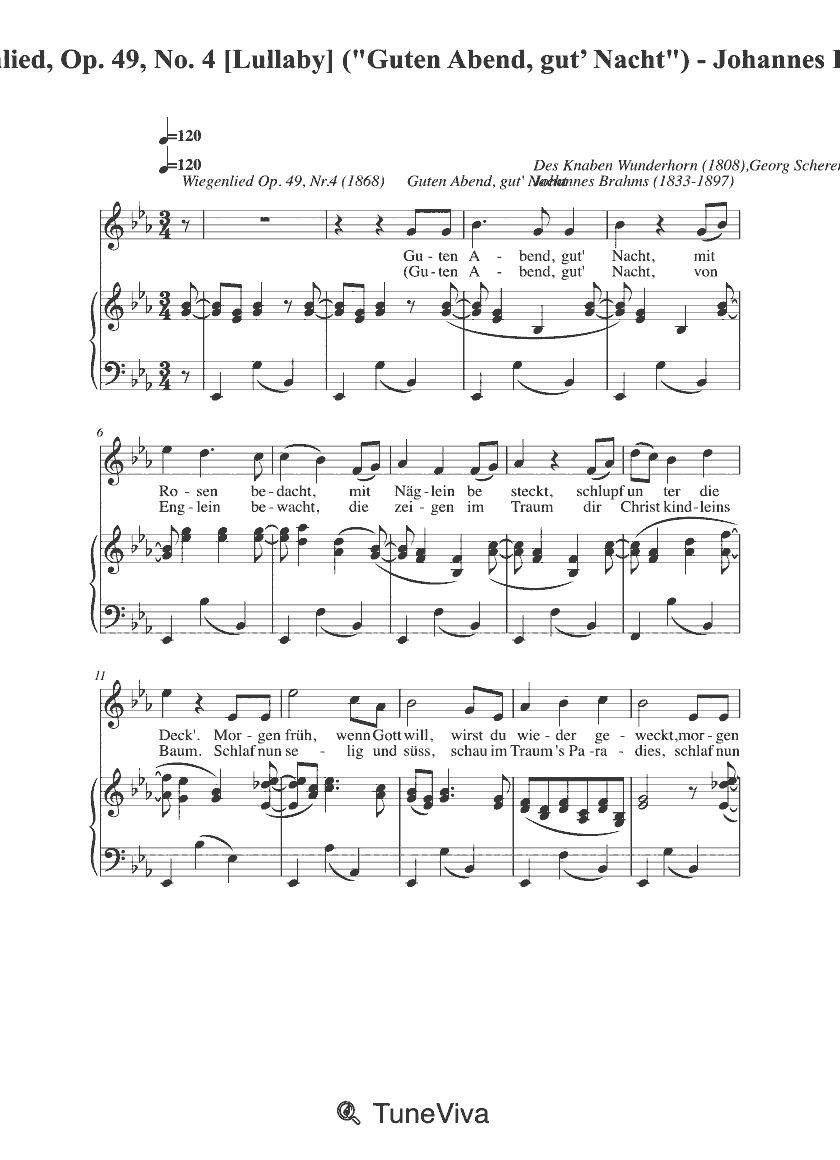
Johannes Brahms
MusicXML Part · 54 sec
Open score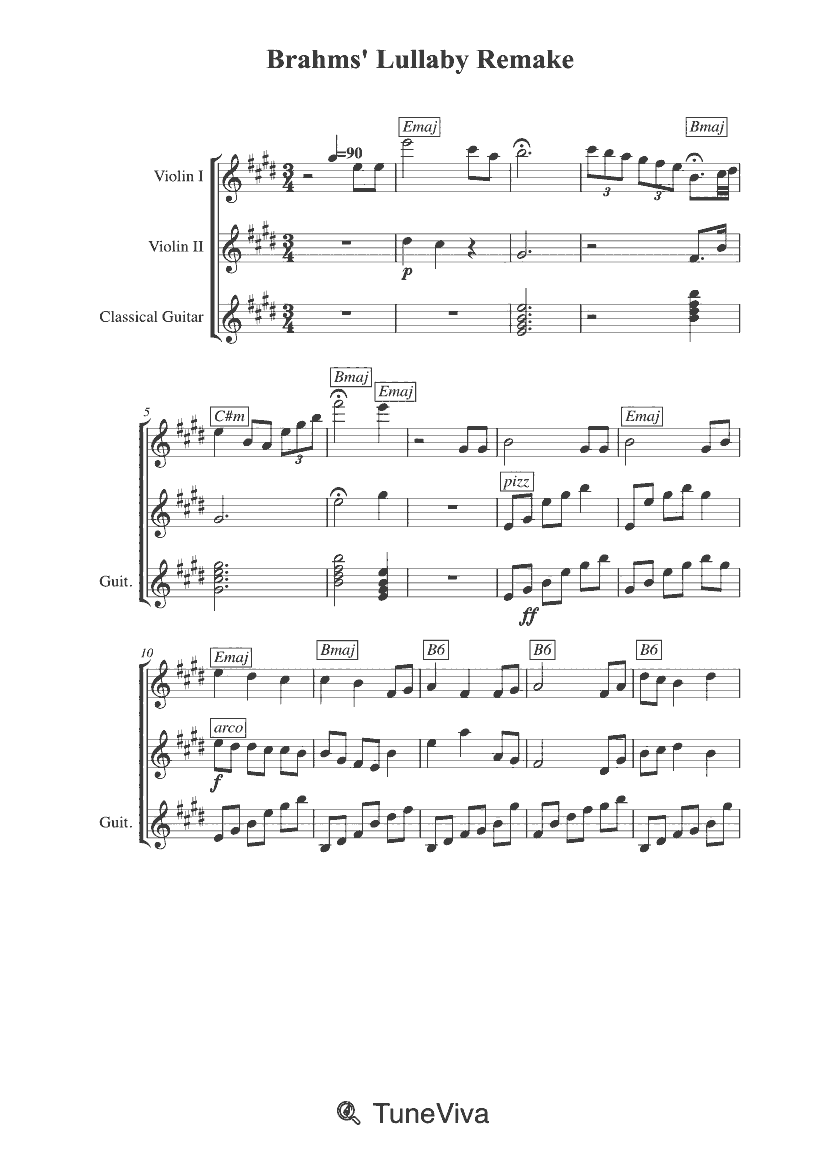
Johannes Brahms
Violin I; Violin II; Classical Guitar · 2 min 9 sec
Open score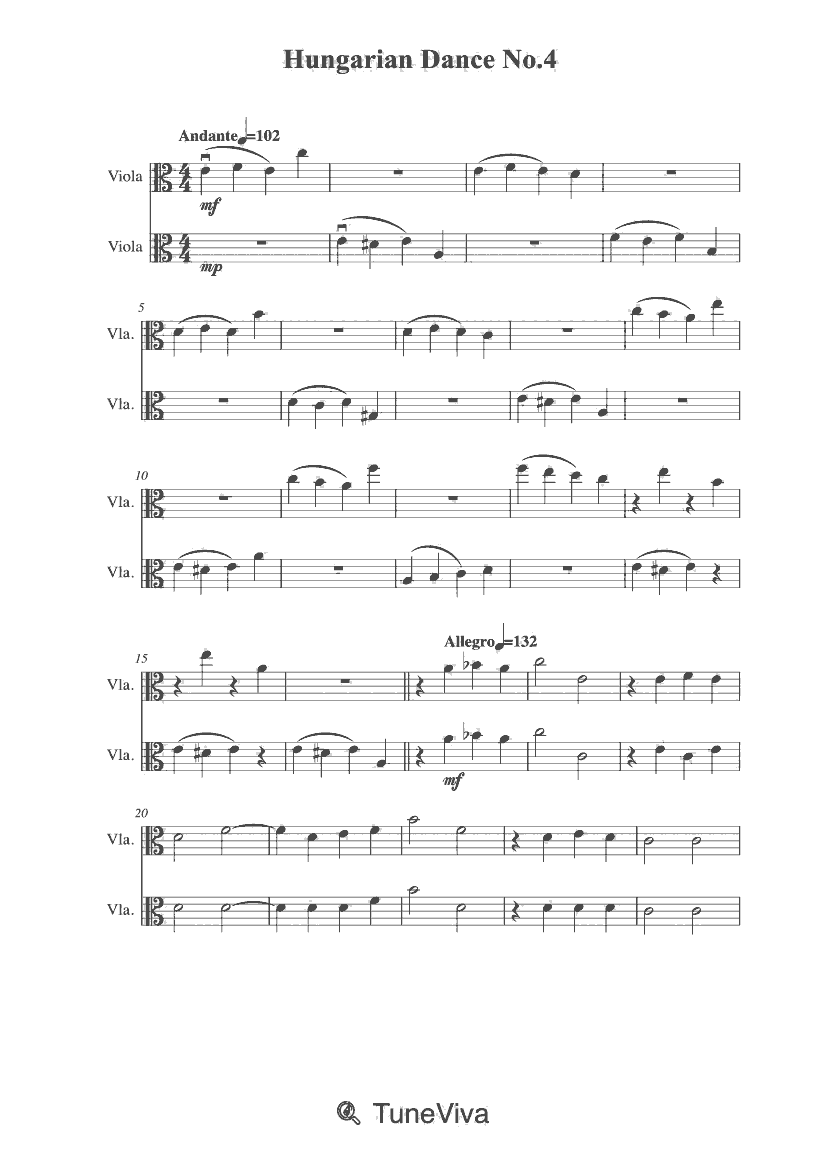
Johannes Brahms
Viola · 2 min 31 sec
Open score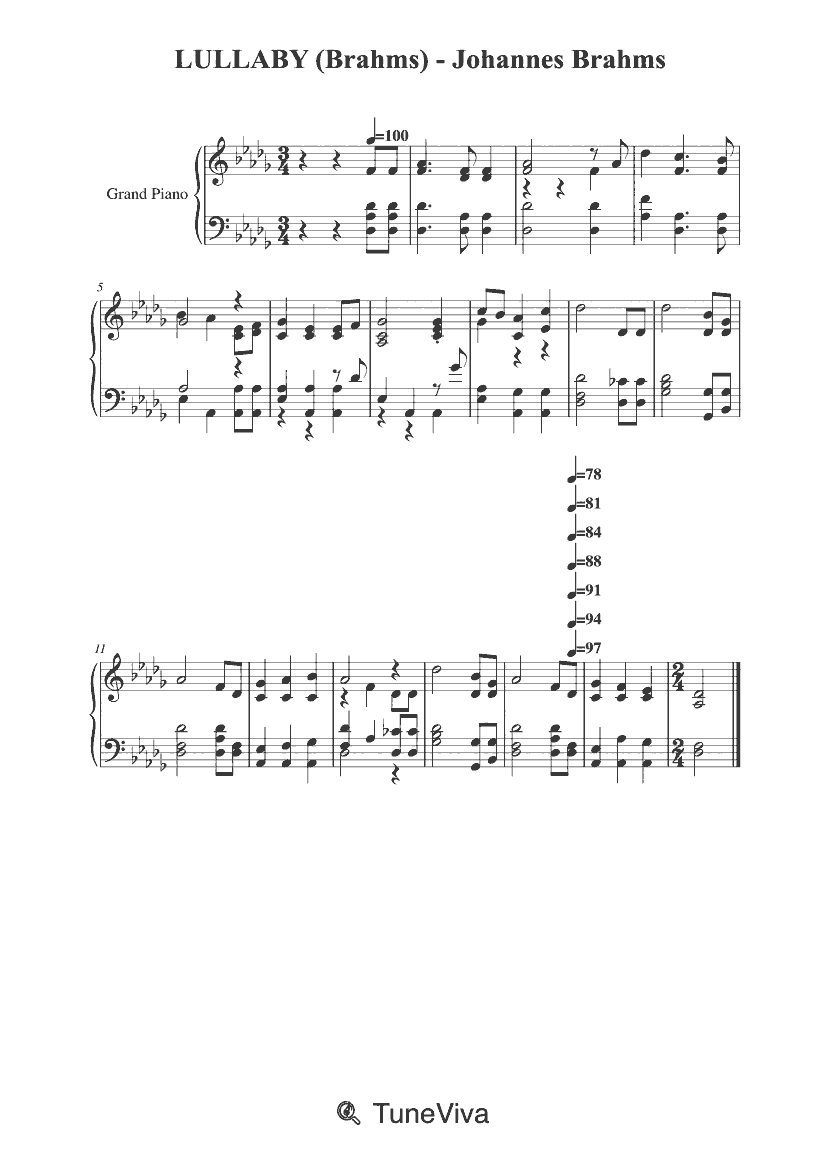
Johannes Brahms
Grand Piano · 31 sec
Open score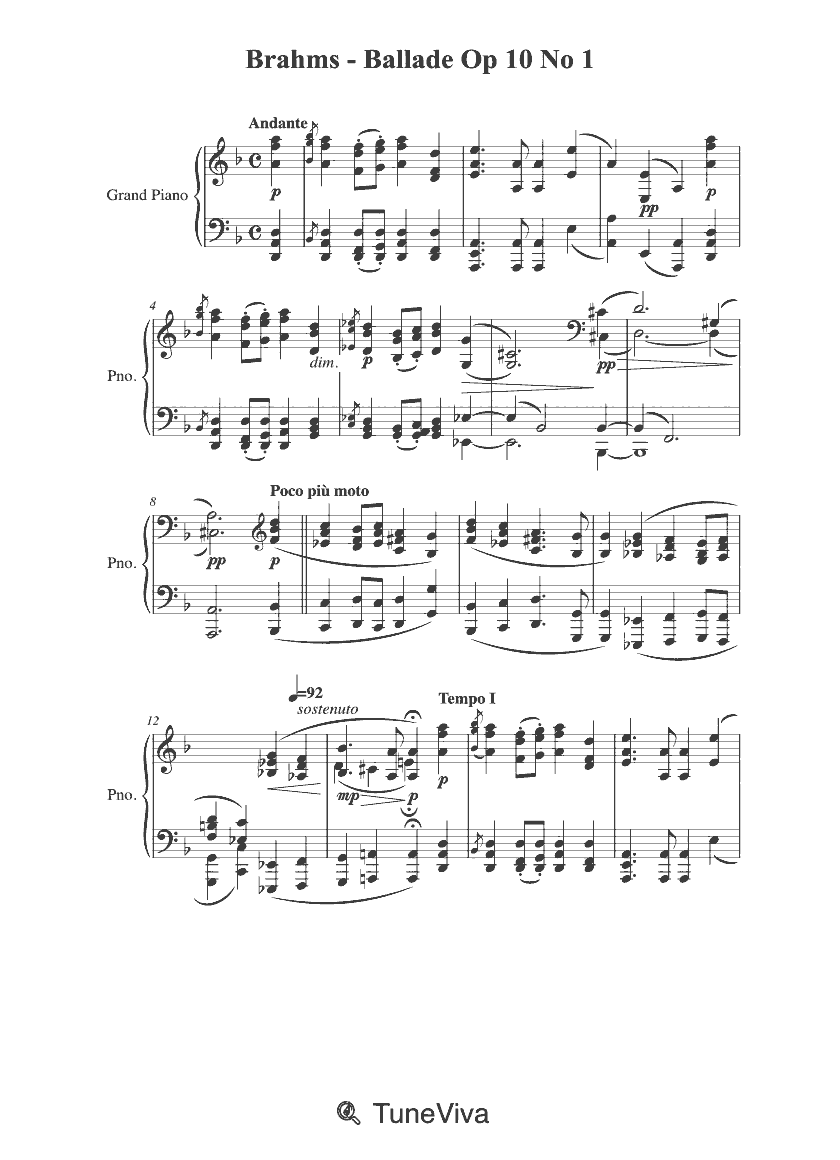
Johannes Brahms
from Ballades Op. 10
Grand Piano · 2 min 35 sec
Open score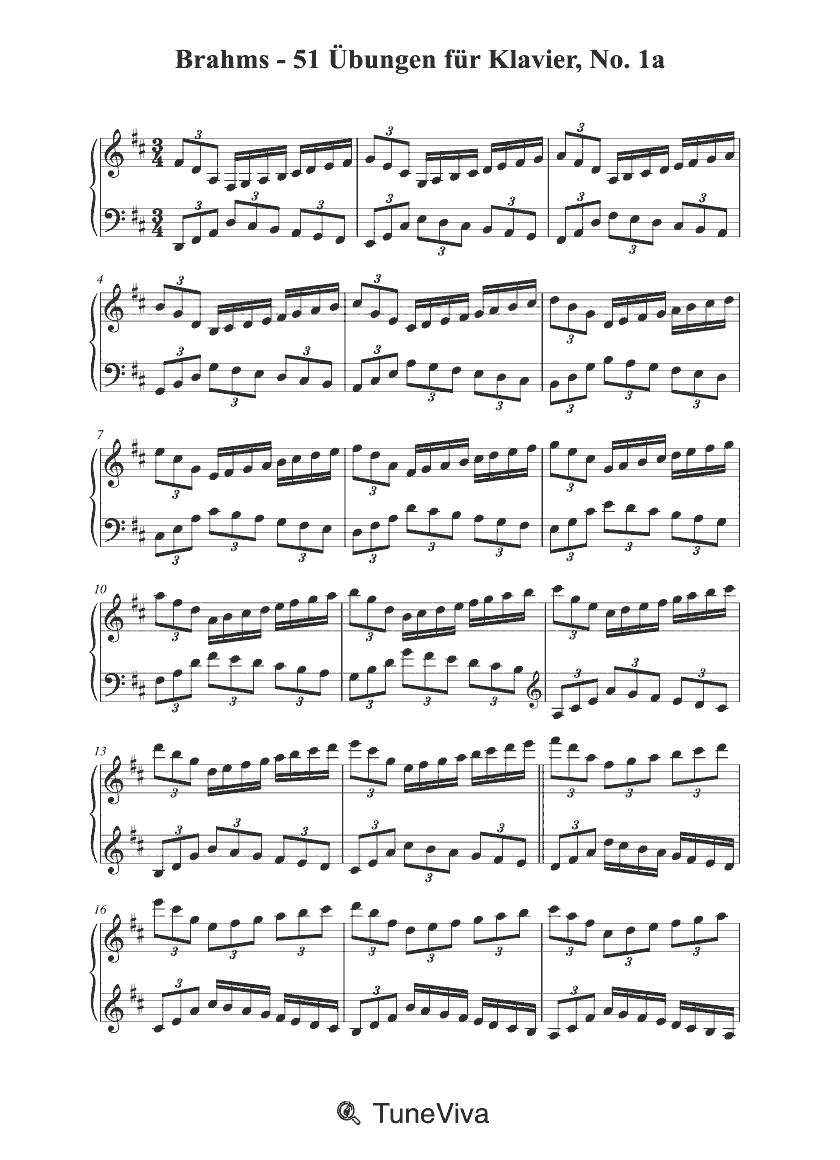
Johannes Brahms
Piano · 37 sec
Open score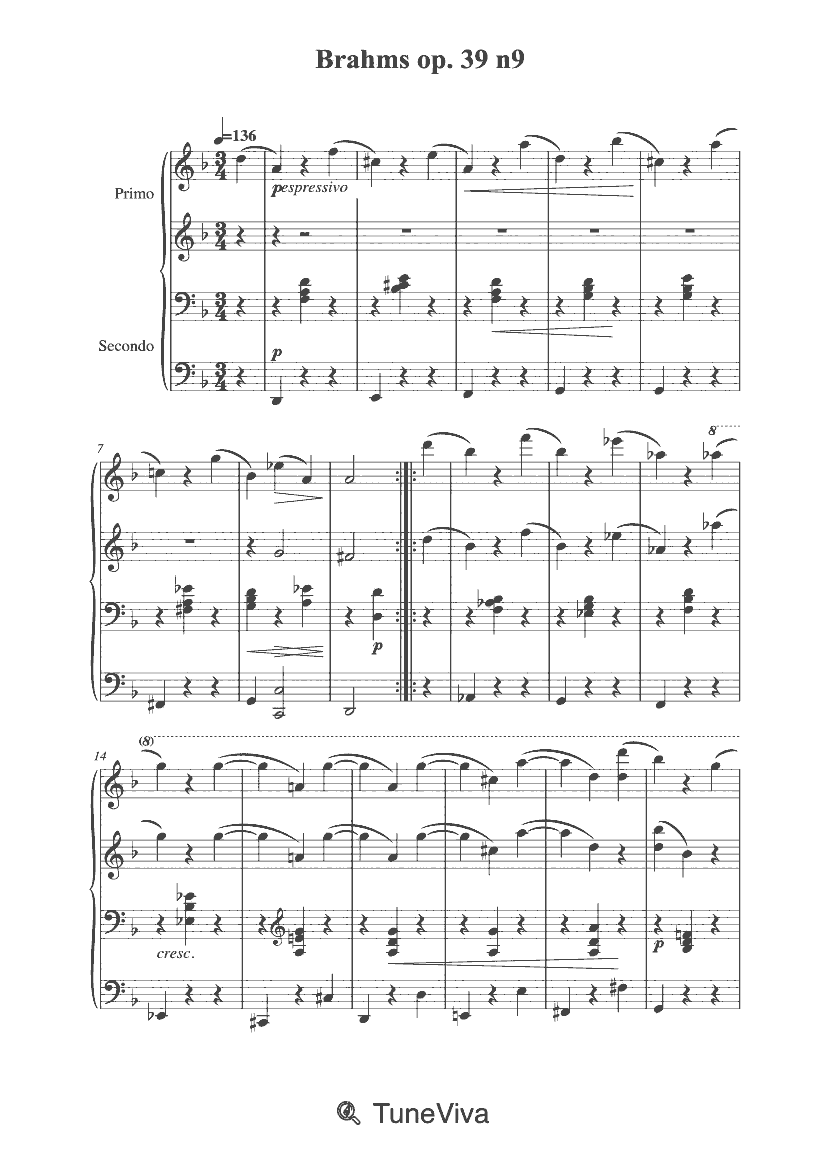
Johannes Brahms
Primo Secondo · 46 sec
Open score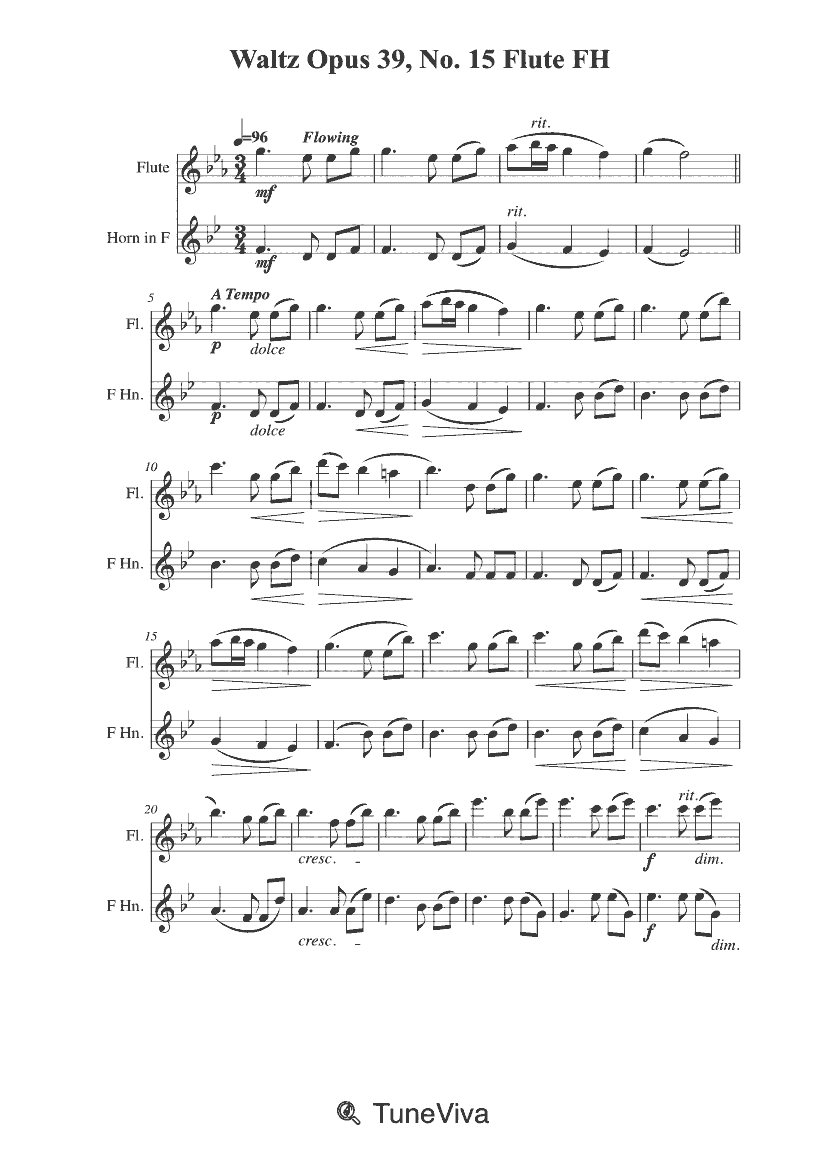
Johannes Brahms
Opus 39 No. 15
Flute; Horn in F · 1 min 40 sec
Open score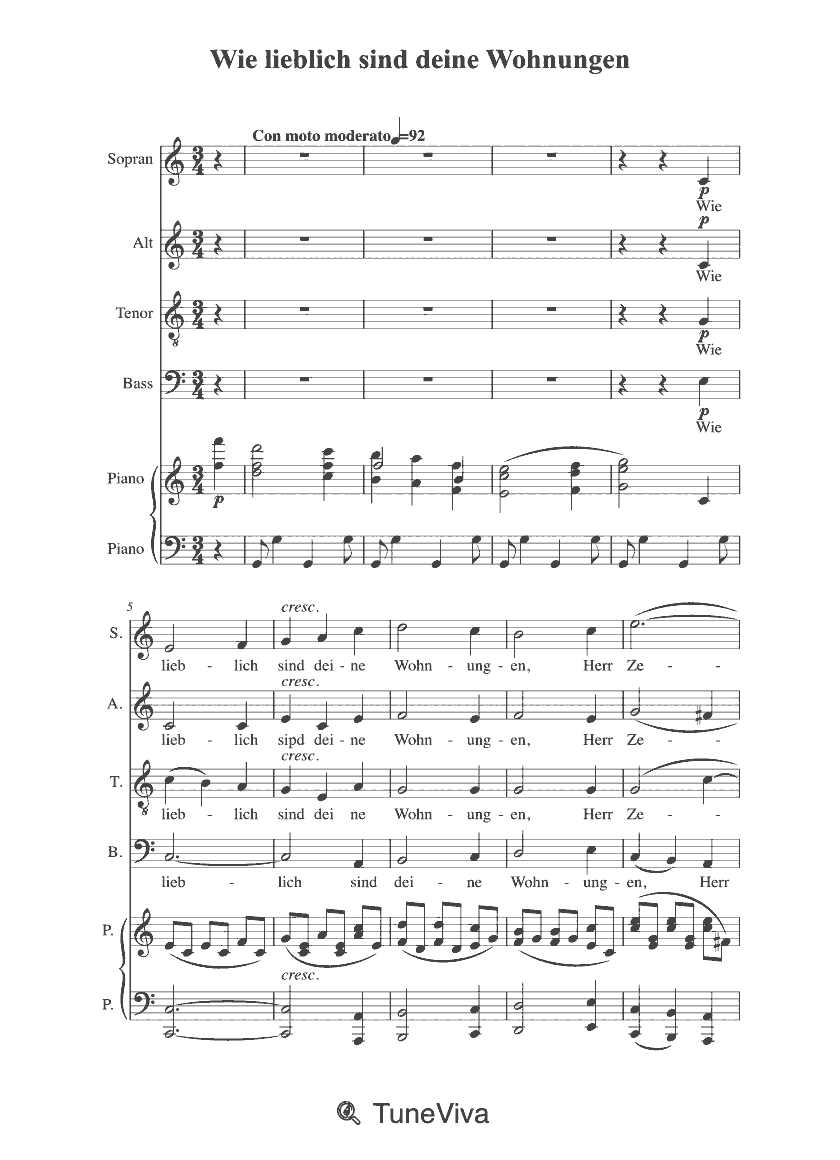
Johannes Brahms
Sopran; Alt; Tenor +2 parts · 6 min 49 sec
Open score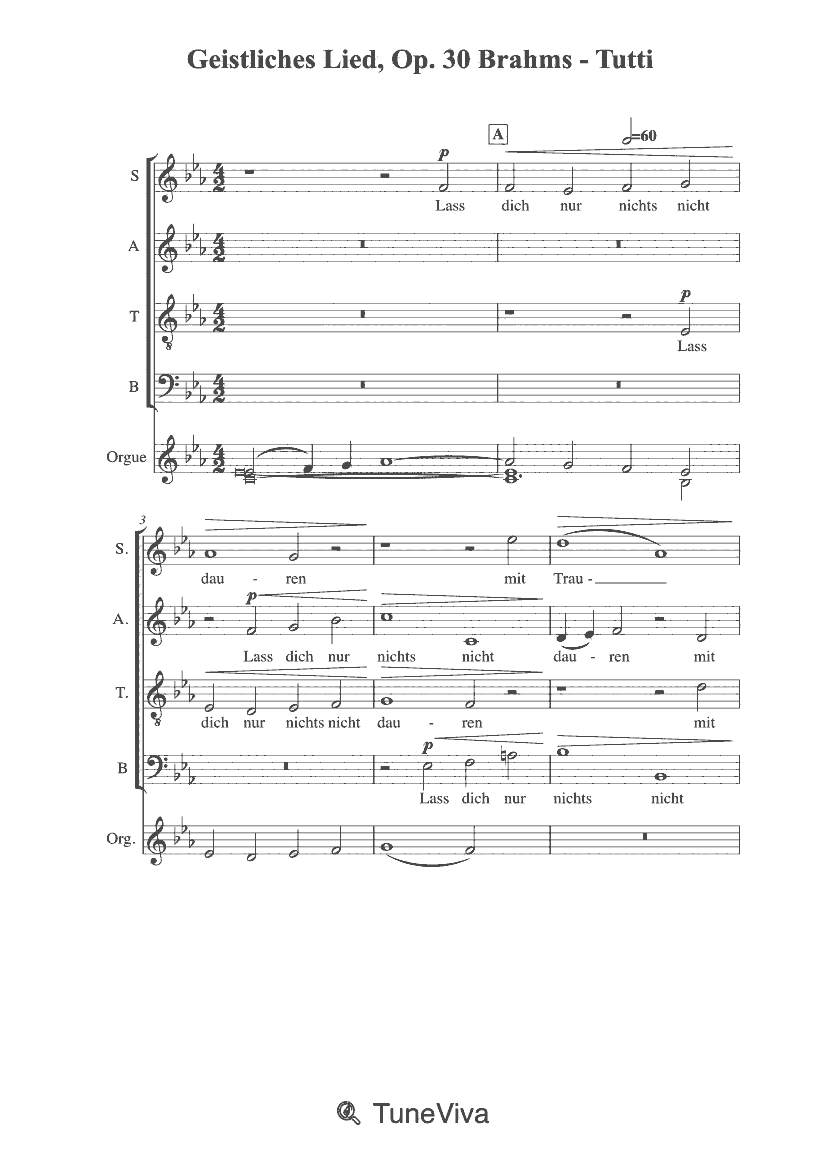
Johannes Brahms
S; A; T +2 parts · 8 min 0 sec
Open scorePage 1 of 15
Brahms claimed to have destroyed twenty string quartets before allowing one to be published. The same perfectionism left a catalogue dominated by short, polished pieces: songs, piano miniatures, waltzes and individual Requiem movements. TuneViva holds 285 Brahms scores, 232 of them with lyrics, and the total duration is about 630 minutes. The most-viewed items are the Waltz in A major Op. 39 No. 15, Gaudeamus Igitur and the Intermezzo Op. 118 No. 2. Wiegenlied is here, and so are two movements from A German Requiem in SATB arrangements. Johannes Brahms was a German composer, pianist and conductor of the mid-Romantic period whose music features expressive counterpoint, freer dissonance, rhythmic vitality and traditional forms. His works include four symphonies, four concertos, a Requiem, much chamber music, and hundreds of folk-song arrangements and Lieder. This Johannes Brahms sheet music selection reflects that range in practical formats: the Waltz in A major Op. 39 No. 15 and Intermezzo Op. 118 No. 2 for piano; Wiegenlied Op. 49 No. 4 and Von ewiger Liebe Op. 43 No. 1 for voice and piano; Hungarian Dance No. 5 for violin and piano; and two movements from A German Requiem for SATB chorus and piano. A separate Gaudeamus Igitur item also appears here; Brahms used that student song in the finale of his Academic Festival Overture, Op. 80. The Requiem items are individual movements rather than the complete work, and the choral scores are piano reductions.
Brahms was born in Hamburg on 7 May 1833. His father, Johann Jakob Brahms, played double bass, horn and flute in the city's orchestra, and the boy studied piano with Otto Cossel from 1840 and with Eduard Marxsen from 1845. In 1853, introduced by the violinist Joseph Joachim, he met Robert and Clara Schumann in Düsseldorf; Robert praised him in the article Neue Bahnen. After Schumann's suicide attempt in 1854 and his confinement, Brahms supported the household and remained close to Clara until her death. He never married.
He settled in Vienna in 1862, conducted the Wiener Singakademie in 1863-64 and directed the Gesellschaft der Musikfreunde concerts from 1872 to 1875. A German Requiem was completed in 1868, with a seventh movement added in 1869. The First Symphony appeared in 1876 after roughly fifteen years of work; Hans von Bülow called it Beethoven's Tenth. The Hungarian Dances were published in 1869 and 1880, and the late piano sets Opp. 116-119 include the Intermezzi that many pianists know best. Brahms died in Vienna on 3 April 1897.
The catalogue holds 285 Brahms scores. Of these, 232 carry lyrics and 257,464 notes are notated across roughly 630 minutes of music. That reflects the number of short songs and easy piano arrangements rather than a lack of serious works. Duplicate titles are frequent, especially for Wiegenlied and the Hungarian Dances.
Start with the instrument and forces: The selected Brahms scores cover solo piano, voice and piano, violin and piano, and SATB chorus with piano. For solo piano, the Waltz Op. 39 No. 15 and Intermezzo Op. 118 No. 2 are short piano pieces. For a song, Wiegenlied Op. 49 No. 4 and Von ewiger Liebe Op. 43 No. 1 are voice-and-piano scores. Choral singers can use the two Requiem movements set for soprano, alto, tenor, bass and piano.
What to listen for in Brahms: Brahms's music features expressive counterpoint, freer dissonance, rhythmic vitality and traditional forms. When preparing contrapuntal passages, clarify each line; in rhythmically active music, keep the underlying pulse steady so vitality does not turn into haste.
Vocal and choral choices: The Lieder in this selection are voice-and-piano scores, including Wiegenlied and Von ewiger Liebe. The Requiem items are individual movements in SATB-and-piano versions: "Blessed Are They That Mourn" and "How Lovely Is Thy Dwelling Place." Check the listed voicing before choosing a choral movement, since these are not full Requiem scores.
The Gaudeamus Igitur connection: A separate Gaudeamus Igitur item appears in this selection, listed for voice and piano. Brahms used the student song "Gaudeamus igitur" in the finale of his Academic Festival Overture, Op. 80, composed in 1880 for the University of Breslau and premiered under the composer in January 1881. If you need the complete overture, do not assume this item is the full orchestral score.
Yes. It sets German biblical texts rather than the Latin Mass, and Brahms added the seventh movement, "Ihr habt nun Traurigkeit", after the first performances.
The Lullaby Op. 49 No. 4, a short song for voice and piano and one of his most widely known pieces.
Brahms used the student song in his Academic Festival Overture. The catalogue lists it as a separate item, likely as an arrangement.
No. He remained close to Clara Schumann for decades but never married.
Johannes Brahms was a German composer, pianist and conductor of the mid-Romantic period. His music features expressive counterpoint, freer dissonance, rhythmic vitality and traditional forms, and his works include four symphonies, four concertos, a Requiem, much chamber music, and hundreds of folk-song arrangements and Lieder.
Brahms's music is described as combining expressive counterpoint, freer dissonance, rhythmic vitality and traditional forms. That description fits both his large works and the shorter piano and vocal pieces represented in this sheet music selection.
Brahms composed the Academic Festival Overture, Op. 80, during the summer of 1880 as a tribute to the University of Breslau, which had told him it would award him an honorary doctorate in music. The overture's finale uses the student song "Gaudeamus igitur" among other student tunes, and Brahms conducted the premiere at the university on 4 January 1881.
The two Requiem movements in this selection are individual movements: "Blessed Are They That Mourn" and "How Lovely Is Thy Dwelling Place." Both are set for soprano, alto, tenor, bass and piano, so they are chorus-and-piano versions rather than the complete Requiem.
Wiegenlied, Op. 49 No. 4, is a song for voice and piano from Brahms's 5 Lieder, Op. 49. The selected score is listed for voice and piano and is set in 3/4 time.
Intermezzo Op. 118 No. 2 is a piano piece in A major from Brahms's 6 Klavierstücke, Op. 118. The selected score is for piano.