4 tracks
Daniel Friderici spent his working life training singers, and the catalogue shows what that produced: 79 scores, about 355 minutes and 33,394 notated notes, every one of them with a text. The German song Wir lieben sehr im Herzen is the most-viewed work, in two entries, one of them set in capitals.
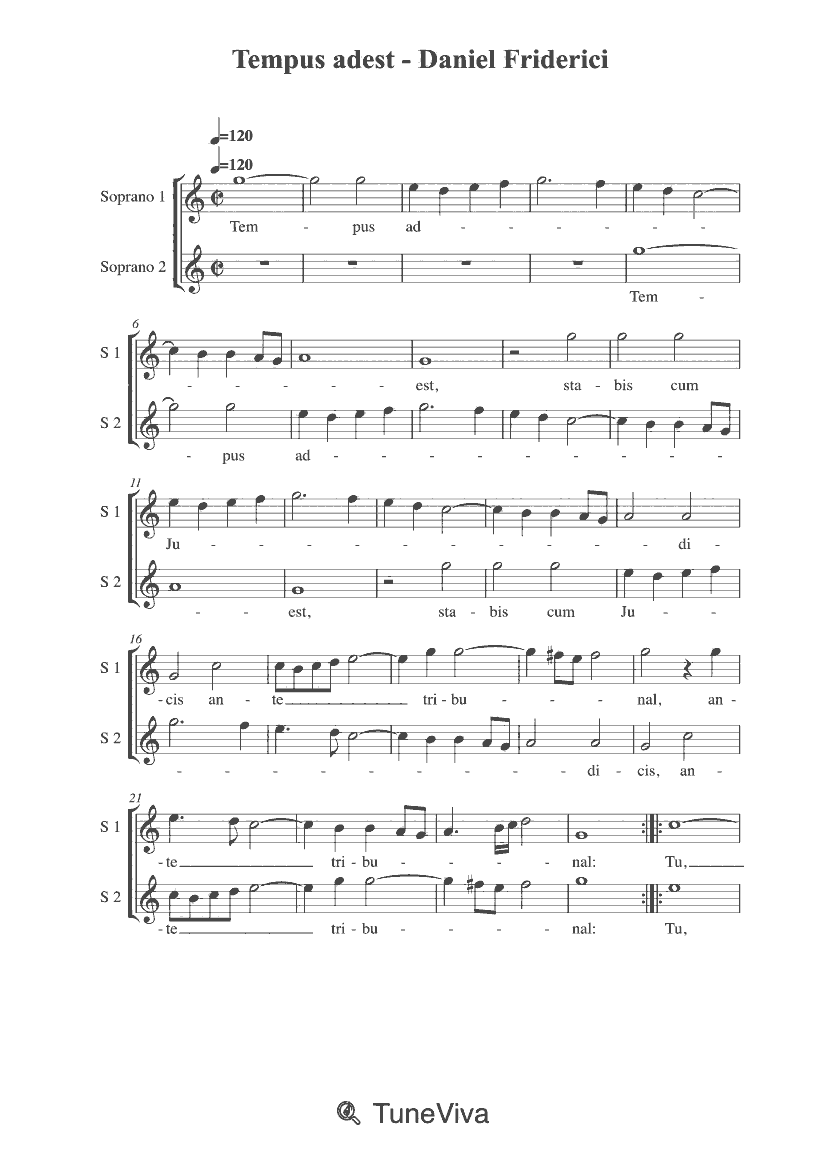
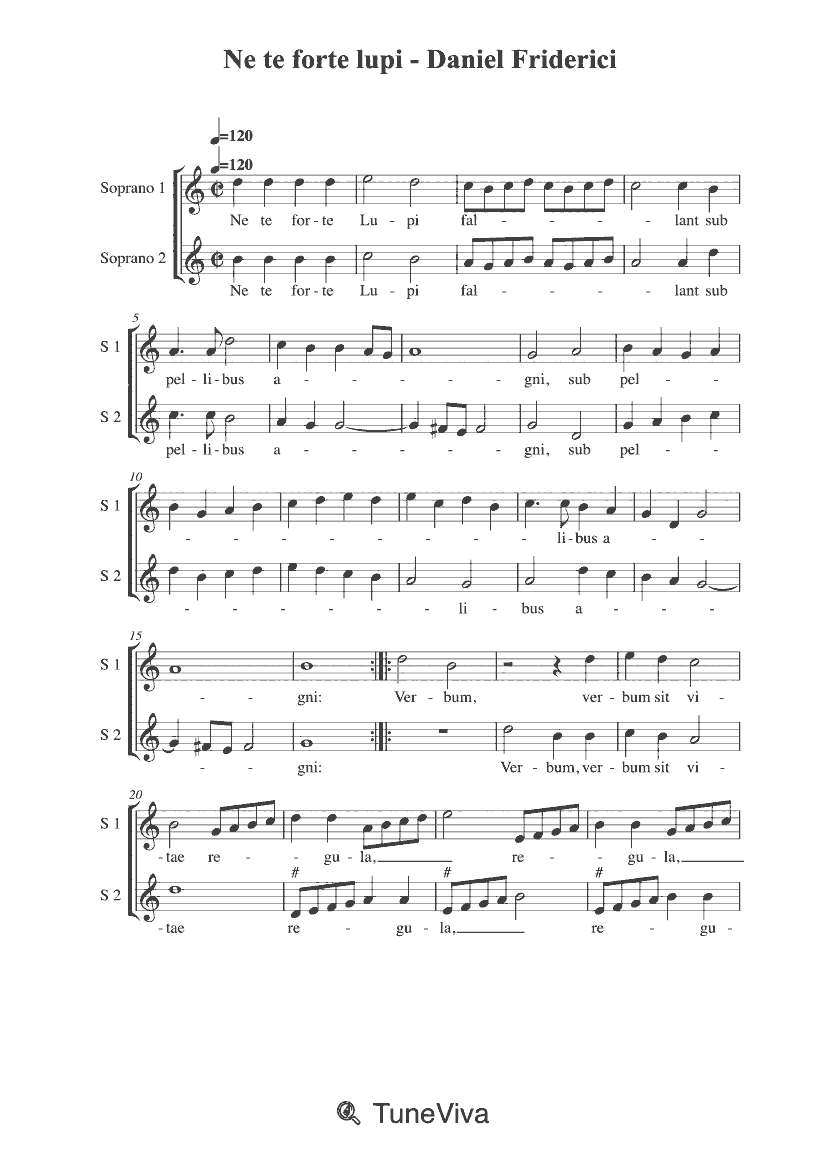
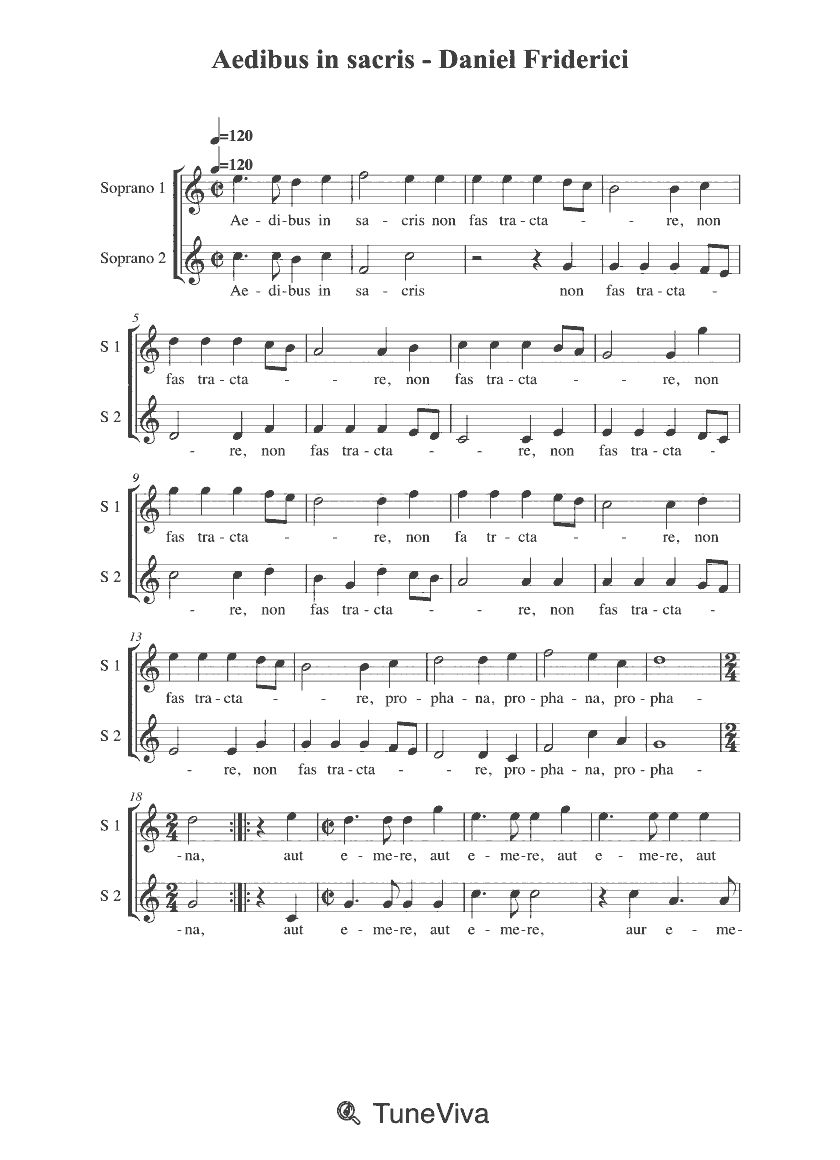
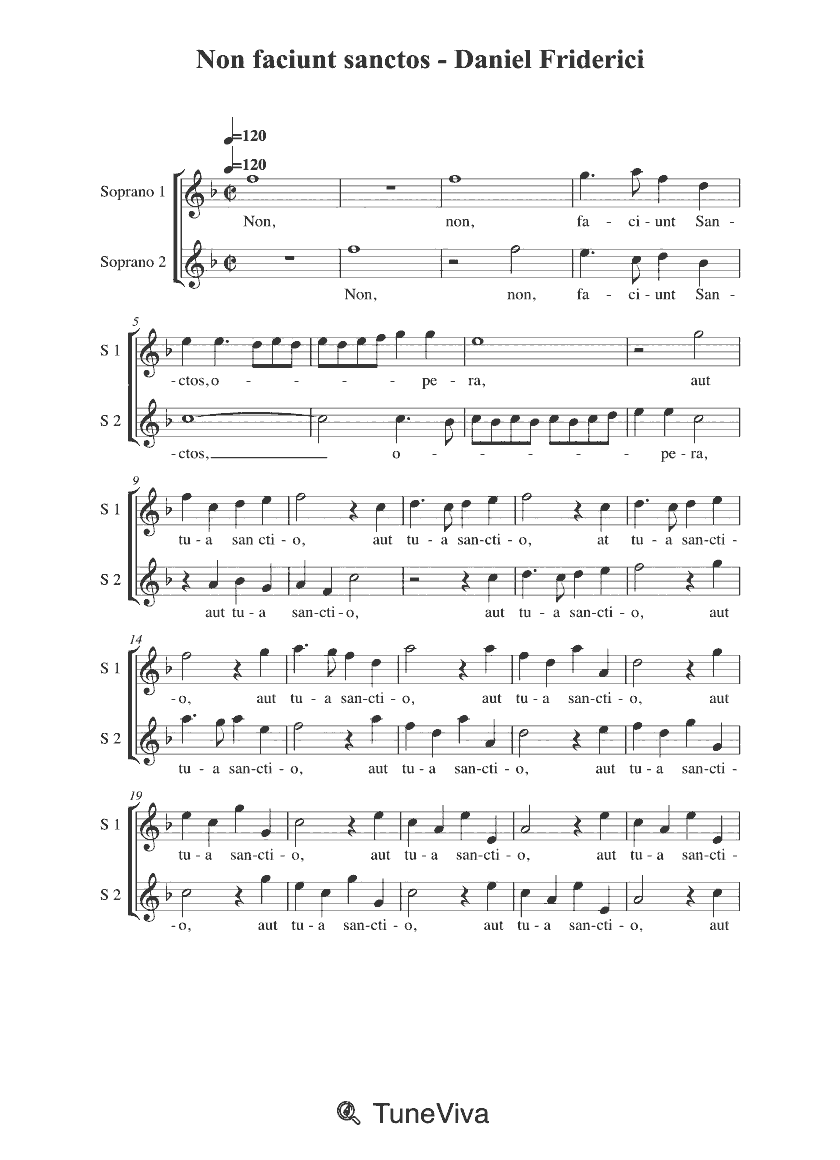
The rest is mostly Latin: short motets on devotional epigrams, many of them for two voices, from the collection Bicinia sacra of 1623. All 79 entries sit at complexity index 0. At roughly four and a half minutes per score, these are pieces for a choir's weekly round rather than the concert platform.
Friderici was born in 1584 in Kleineichstädt, near Querfurt, to a poor family, and earned money as a choirboy and currende singer before studying with Valentin Haussmann and Friedrich Weißensee. He enrolled at the University of Rostock in 1612, but two years later Count Anton Günther appointed him cantor at Oldenburg. In 1618 he moved to the same post at St Mary's Church in Rostock and later became director of music for all the city's churches. He died there of plague on 23 September 1638.
His publications divide into Latin sacred collections and German secular ones. Sertum musicale primum (1614) and alterum (1619) were followed by Psalmus Regii Prophetae Davidis (1622), Bicinia sacra (1623), Viridarium musicum sacrum (1625), Selige Grab- und Himmelsleiter (1628) and Deliciae iuveniles (1630). On the secular side stand Servia musicalis prima (1614), Amores musicales (1624), Honores musicales (1624), Amuletum musicum contra melancholiam (1627) and Hilarodicon (1632). He also wrote Musica figuralis, a singing manual printed in Rostock in 1618, and edited an expanded Piae cantiones in 1625.
The Latin motets here belong to the world of Bicinia sacra, settings of single epigrammatic sentences, many of them by the jurist Joachim von Beust, each assigned to a Sunday or a principal feast.
Two voices leave nowhere to hide: intonation must be settled before the first entry, because the second voice enters against a bare interval. Keep the tempo steady and let the text shape the phrase; these epigrams make one point and then stop. In the German songs, a warmer, more flexible delivery suits the strophic verse. Do not add continuo where the print does not ask for it, since the bicinia were conceived as unaccompanied training pieces as much as performance music.
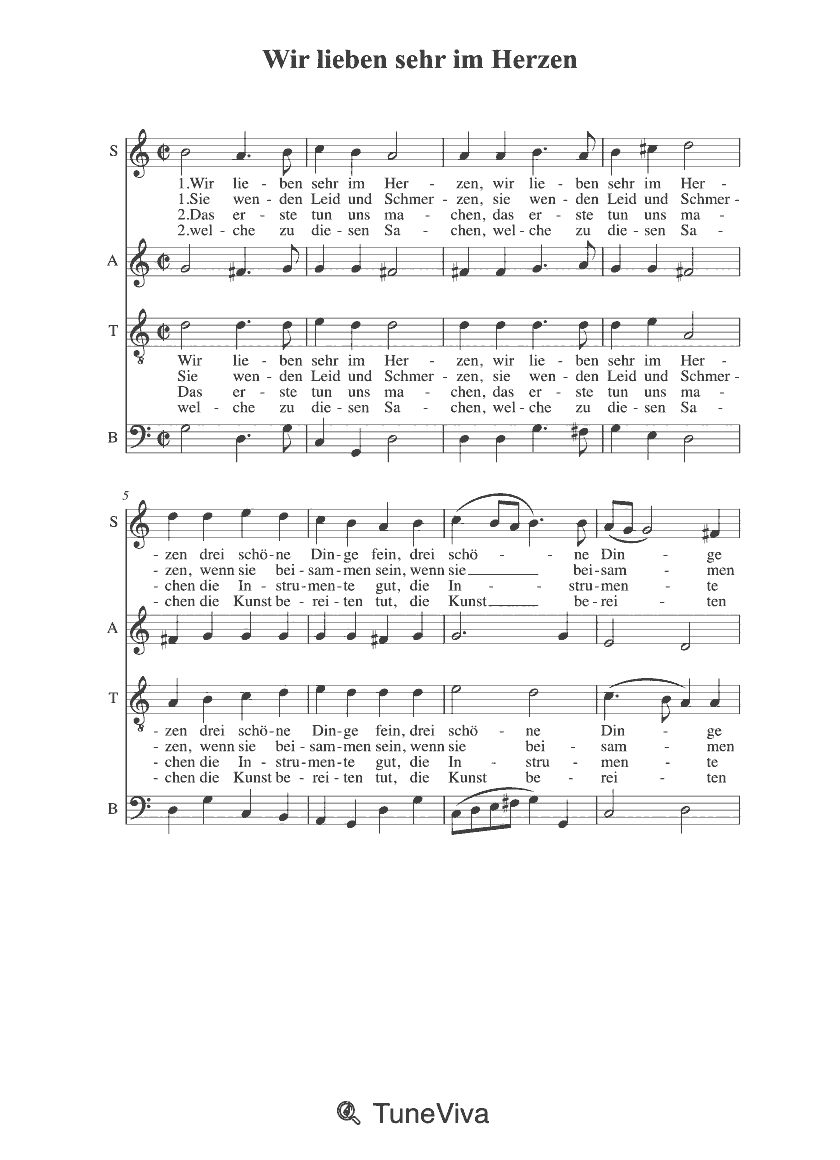
The most-viewed Friderici score: a four-voice German song from Servia musicalis prima (1614), later arranged for male chorus.
The same song again, catalogued with its title in capitals; the second entry is a duplicate rather than a different setting.
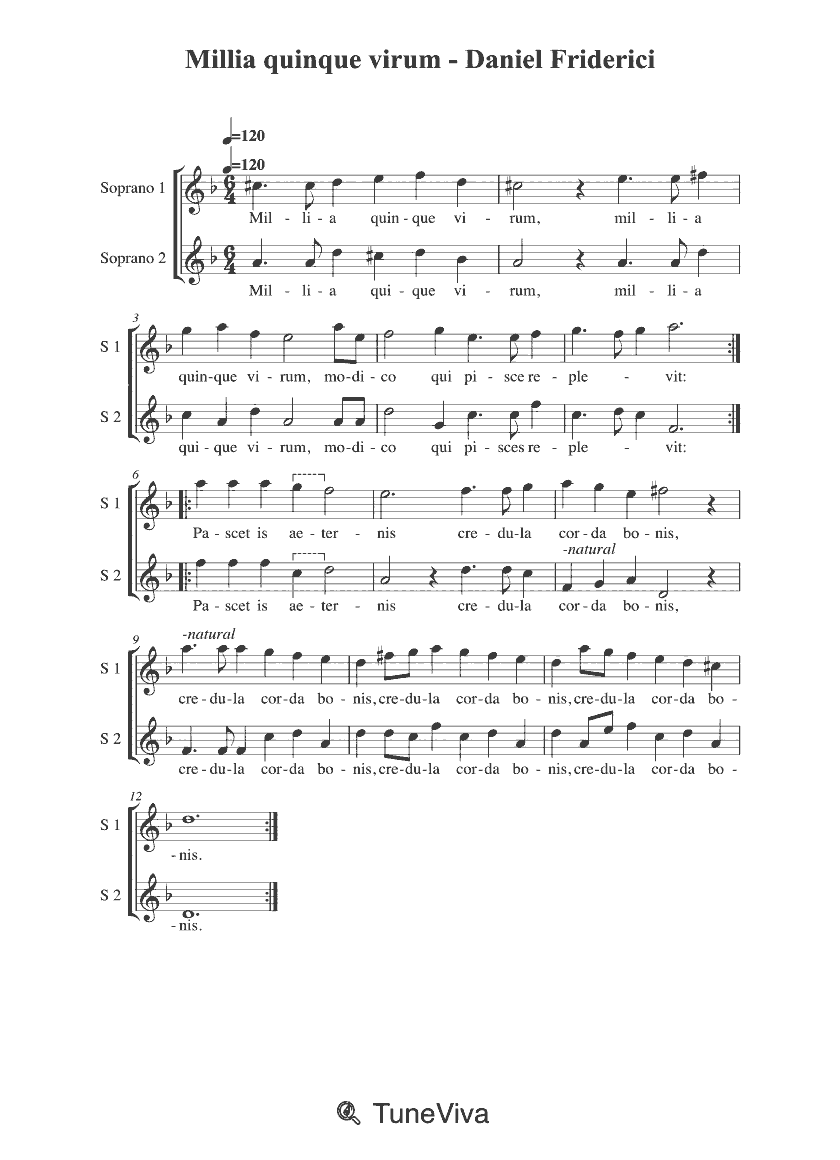
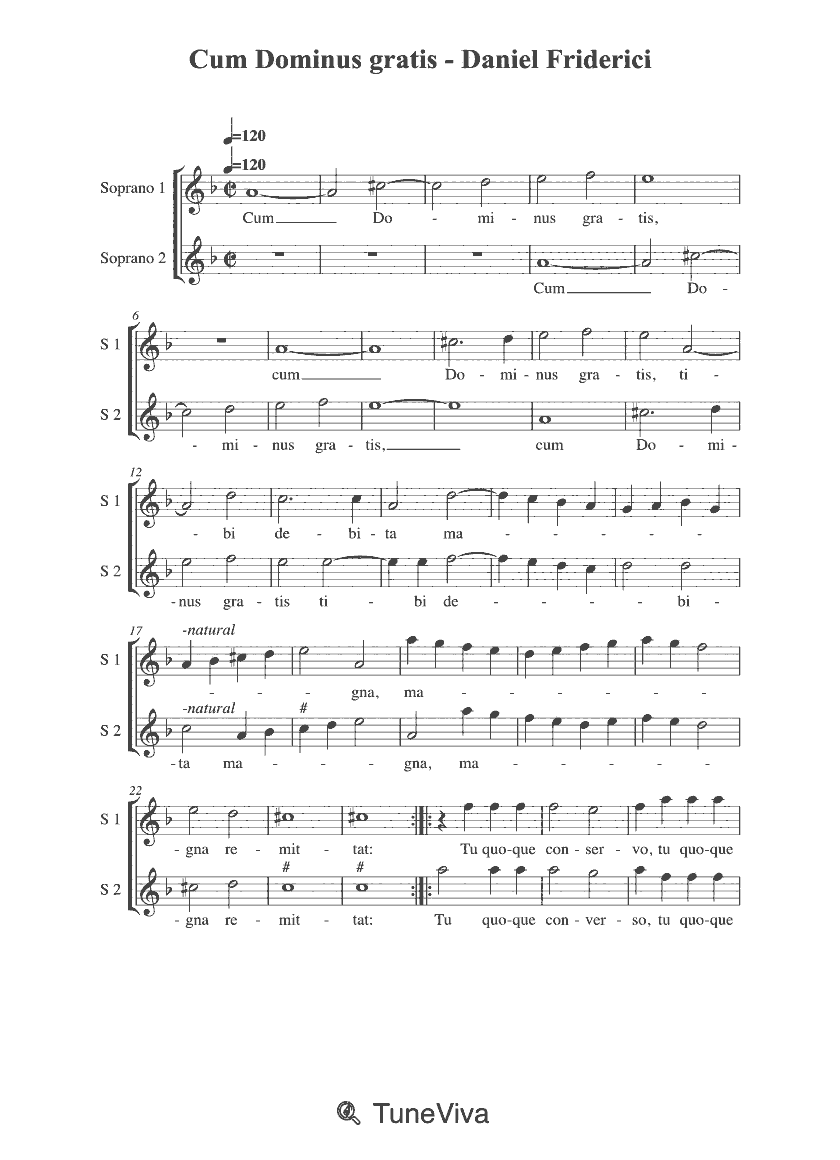
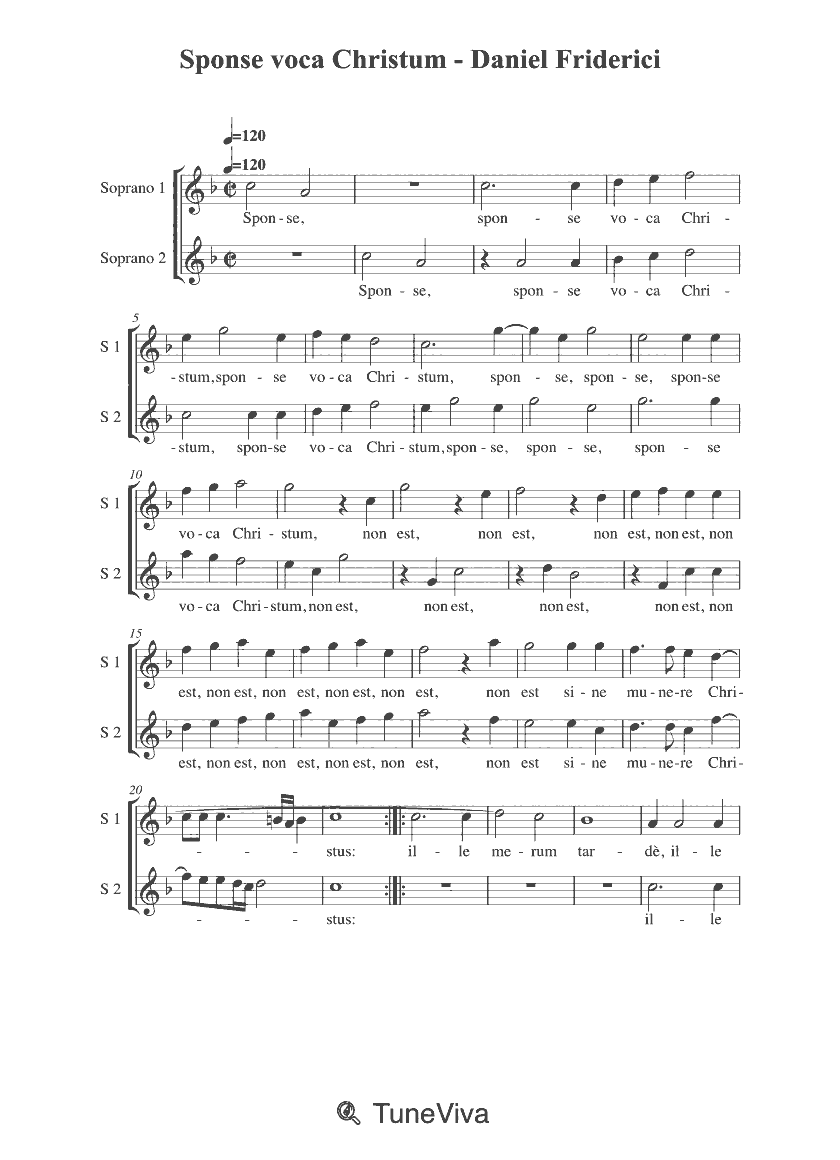
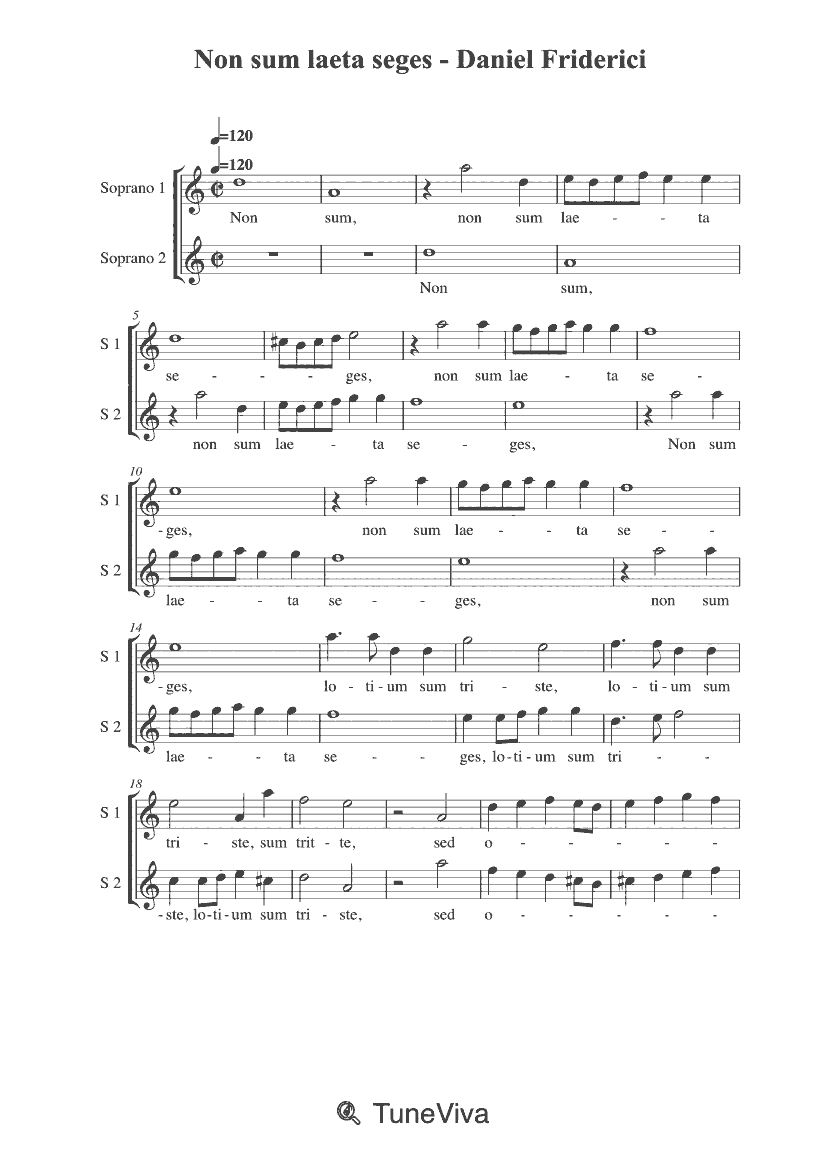
No. XXIII in Bicinia sacra (1623), a two-voice setting of a distich on the feeding of the five thousand, appointed for Laetare Sunday.
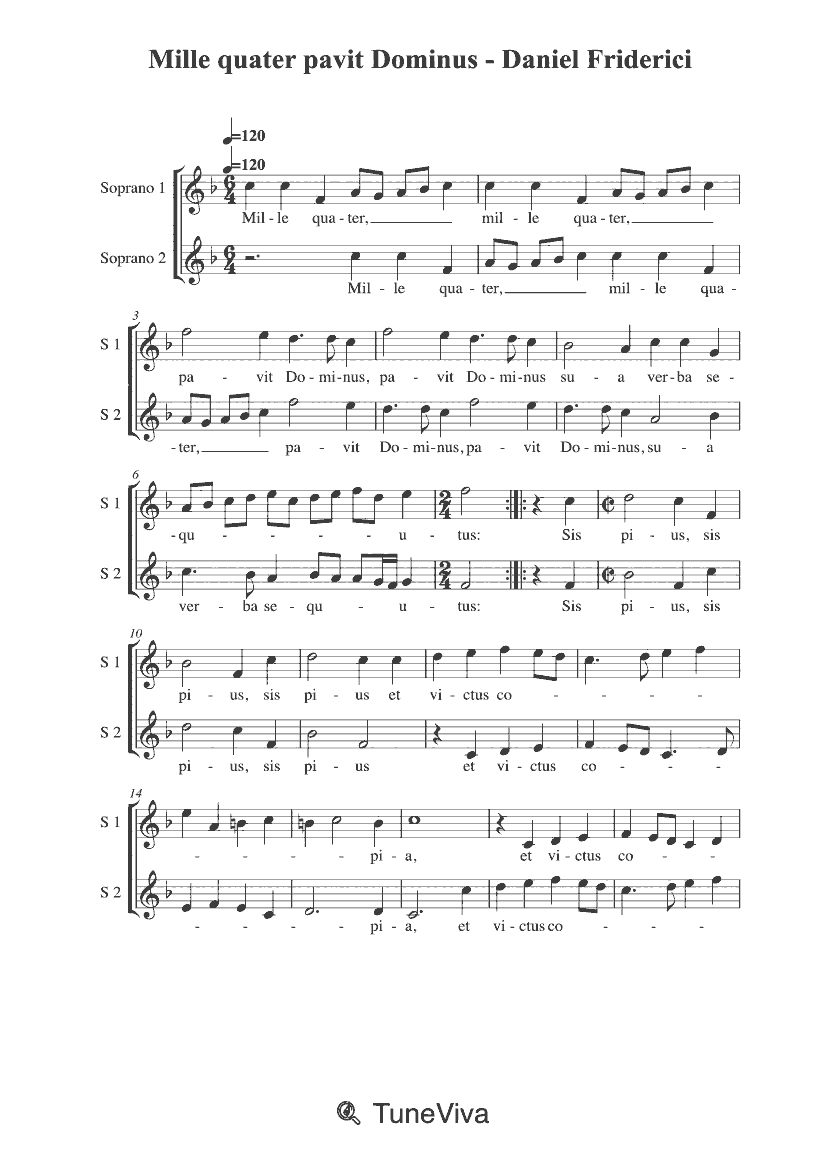
No. LVII in the same print, another two-voice distich on the feeding of the crowd.
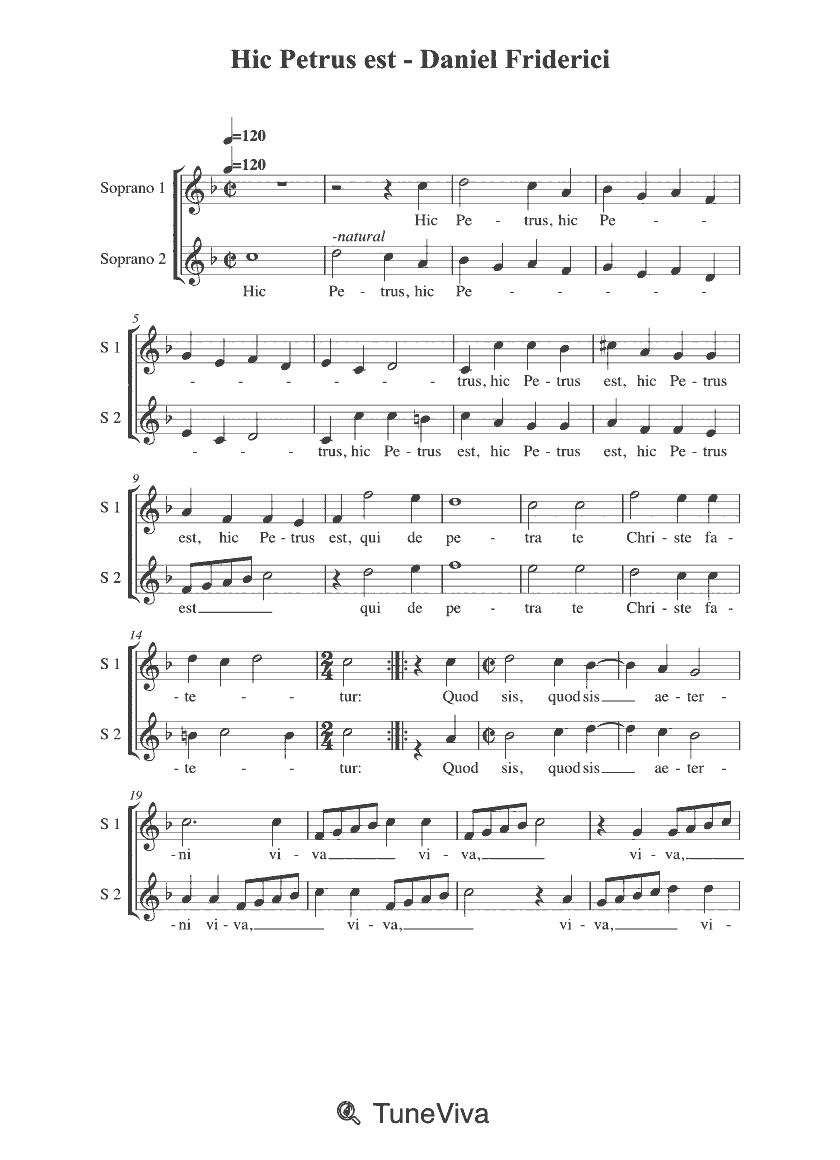
No. L in Bicinia sacra: a single sentence naming Peter, set for two voices.
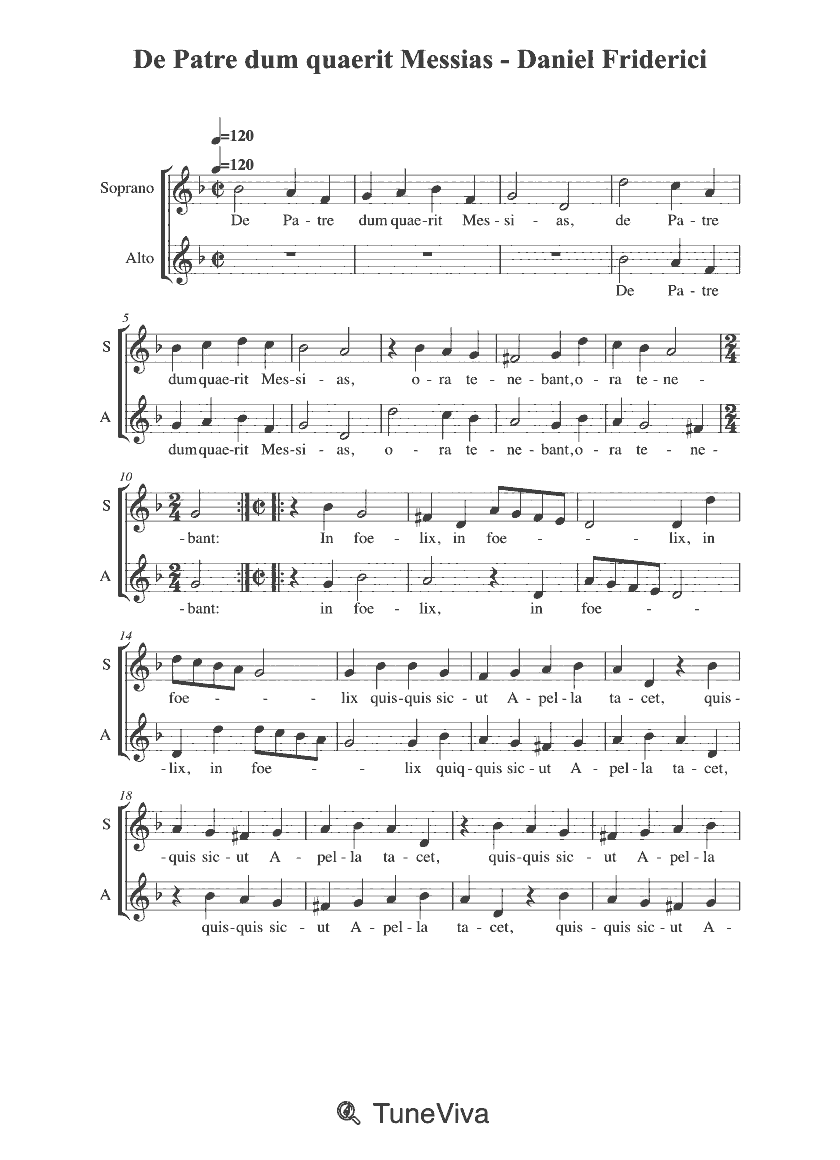
No. LXXI in the collection, a distich turning on the Messiah's question about the Father.
No. LXXV, one of the shortest pieces in the print, built on a clause about the Lord giving freely.
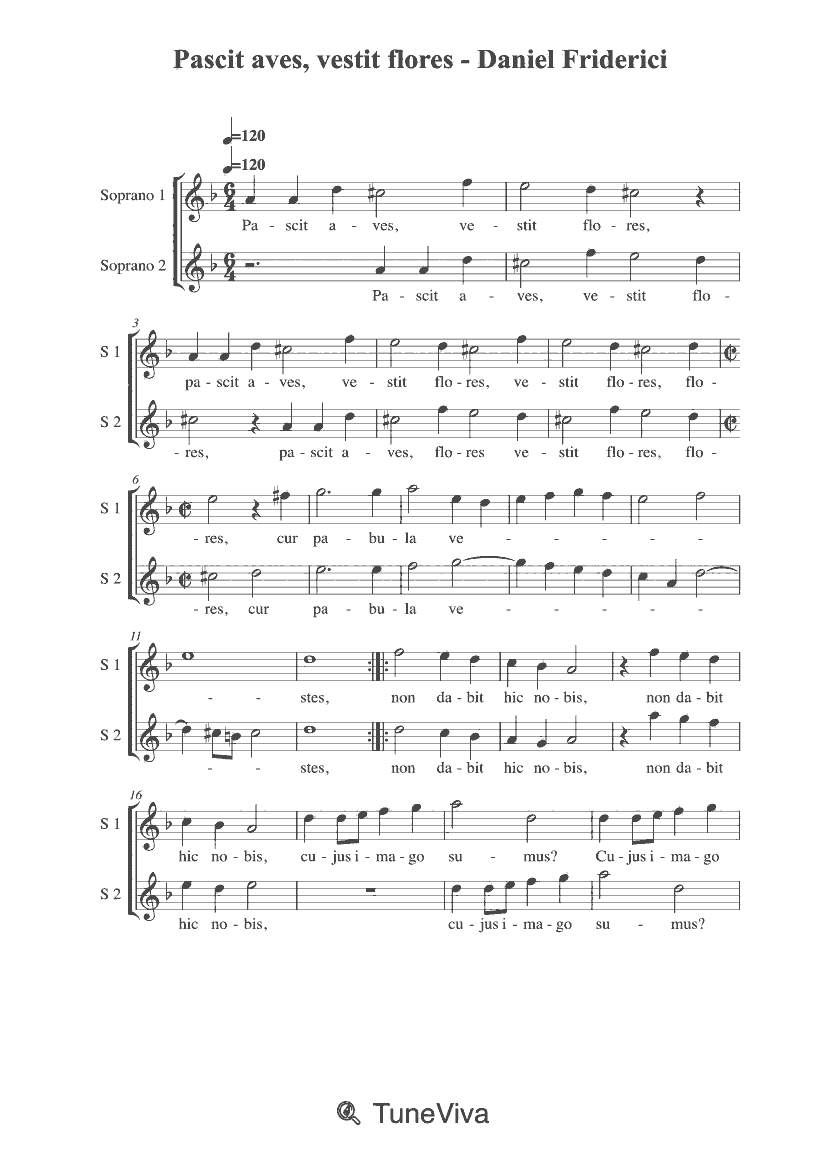
No. LXVI in Bicinia sacra, for the fifteenth Sunday after Trinity, on Matthew 6: the birds are fed and the lilies clothed.
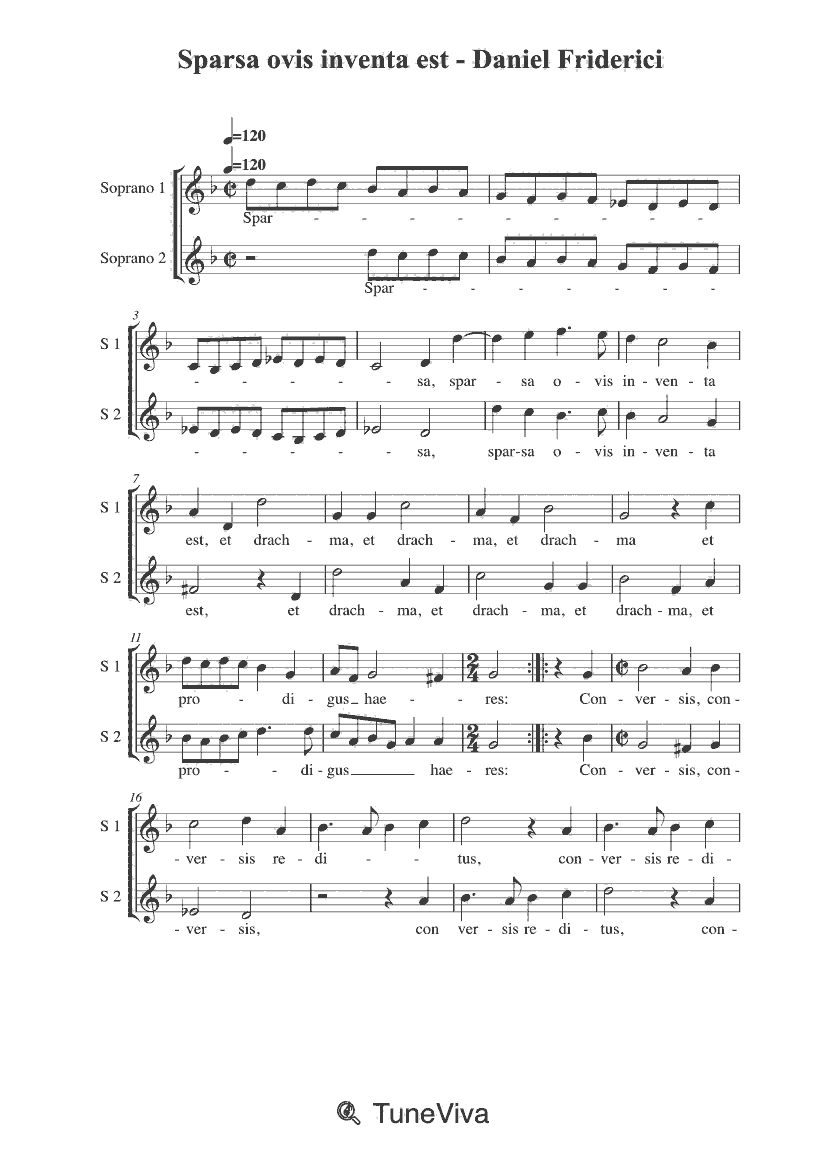
No. XLVII, a distich on the lost sheep that is found, one of the gospel images the collection follows through the year.
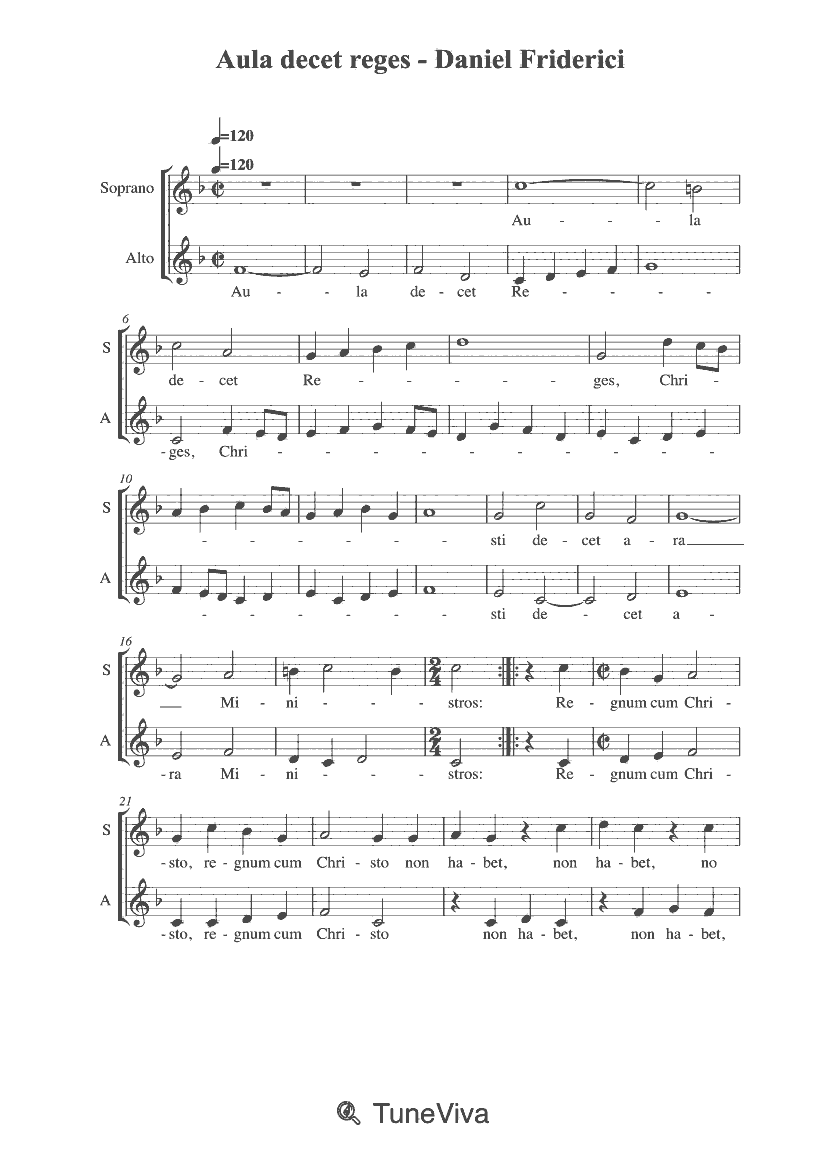
No. LVI, a moral distich on what suits a court and a king, set with the same brevity as the gospel pieces.
There are 79, running to about 355 minutes of music and 33,394 notated notes. Every entry has a text.
A piece for two voices. Bicinia sacra (1623) collects short Latin settings of Joachim von Beust's epigrams, one for each Sunday or feast, and they double as exercises in intonation and ensemble.
No. Alongside the sacred collections he published German secular books such as Servia musicalis (1614), Amores musicales (1624) and Hilarodicon (1632), and the most-viewed piece here comes from the first of them.
Entries 169621 and 31592 are the same German song; only the capitalisation of the title differs. Pick one rather than ordering both.
Catalog editions and arrangements attributed to Daniel Friderici.

- Ciò che più amiamo -