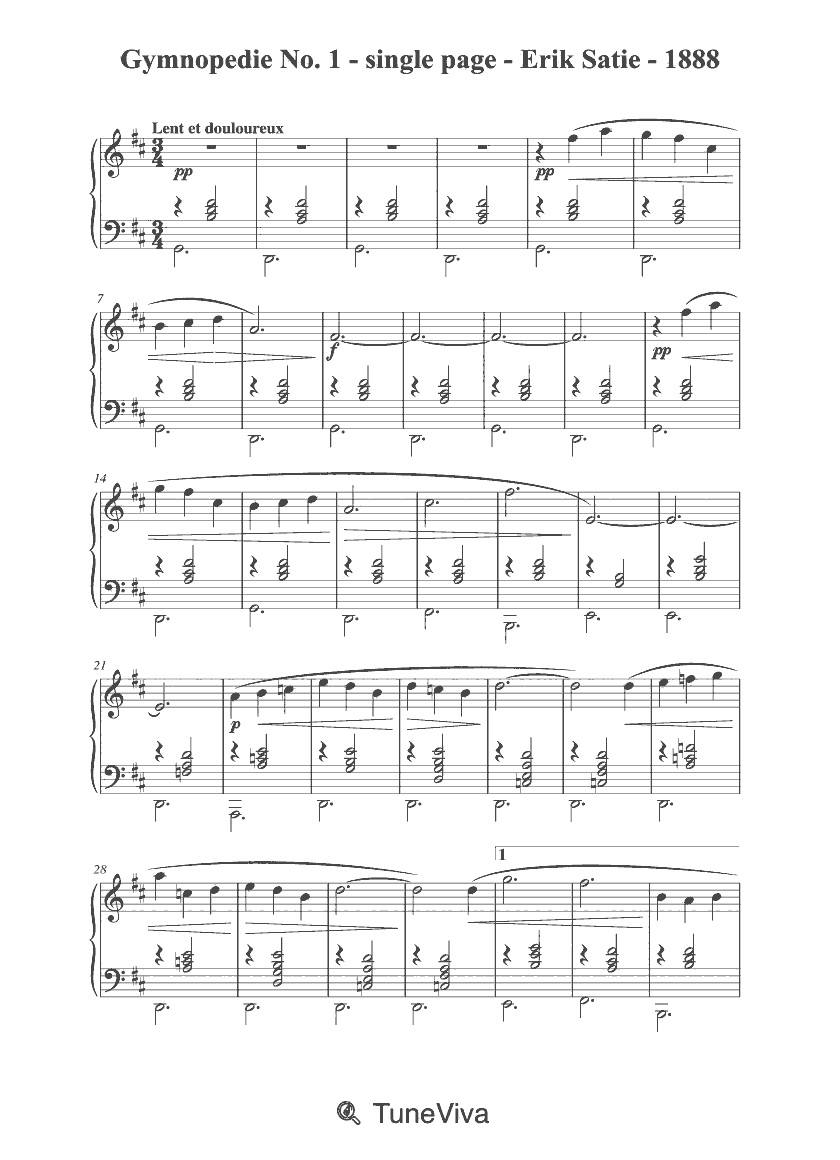
Gymnopedie No. 1 - single page - Erik Satie - 1888
Erik Satie
Piano · 6 min 14 sec
Open score58 Satie scores to preview and download: the Gymnopédies, the Gnossiennes, Vexations, Je te veux and the four-hand Morceaux en forme de poire, for piano.
Piano · 6 min 14 sec
The first Gymnopédie, marked Lent et douloureux, completed in 1888 and printed that year; it is built on two alternating seventh chords.
Other editions:
Written in 1889 and published in 1893 without a time signature or bar lines, so the phrase rather than the bar decides the pulse.
The third of the 1893 group, slower and more withdrawn than the first, with the same free notation.
A short bass-line figure with a manuscript direction to play it 840 times; the first complete performance was given in New York in 1963.
Satie's best-known waltz-song, to words by Henry Pacory, here arranged for three cellos.
The sixth of the seven movements of the 1903 four-hand suite, printed here as the secondo part alone.
A piano version of music Satie wrote in 1891 for Joséphin Péladan's Rosicrucian play.
Compare a Gymnopédie and a Gnossienne before deciding what to practise. The Gymnopédie gives you a steady waltz-like bass and chord pattern under the melody. In an edition of a Gnossienne without barlines, use the bass changes and the shape of the melodic phrase to orient yourself. Check the piece number and the notation, since the titles recur across arrangements.
Compare the instrument and arrangement details below, then open a score to check the notation. Different entries may be arrangements or editions of the same work; available playback tools are shown on each score page.
Erik Satie
Piano · 6 min 14 sec
Open score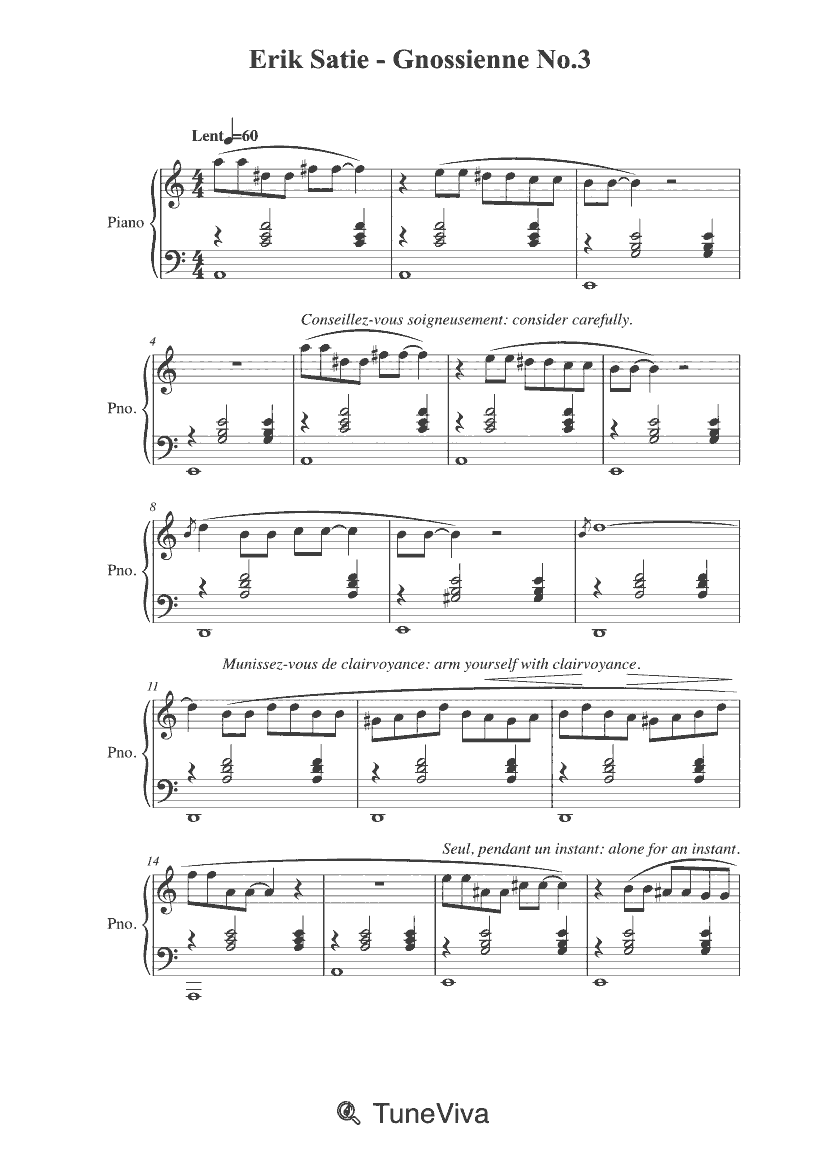
Erik Satie
Piano · 7 min 12 sec
Open score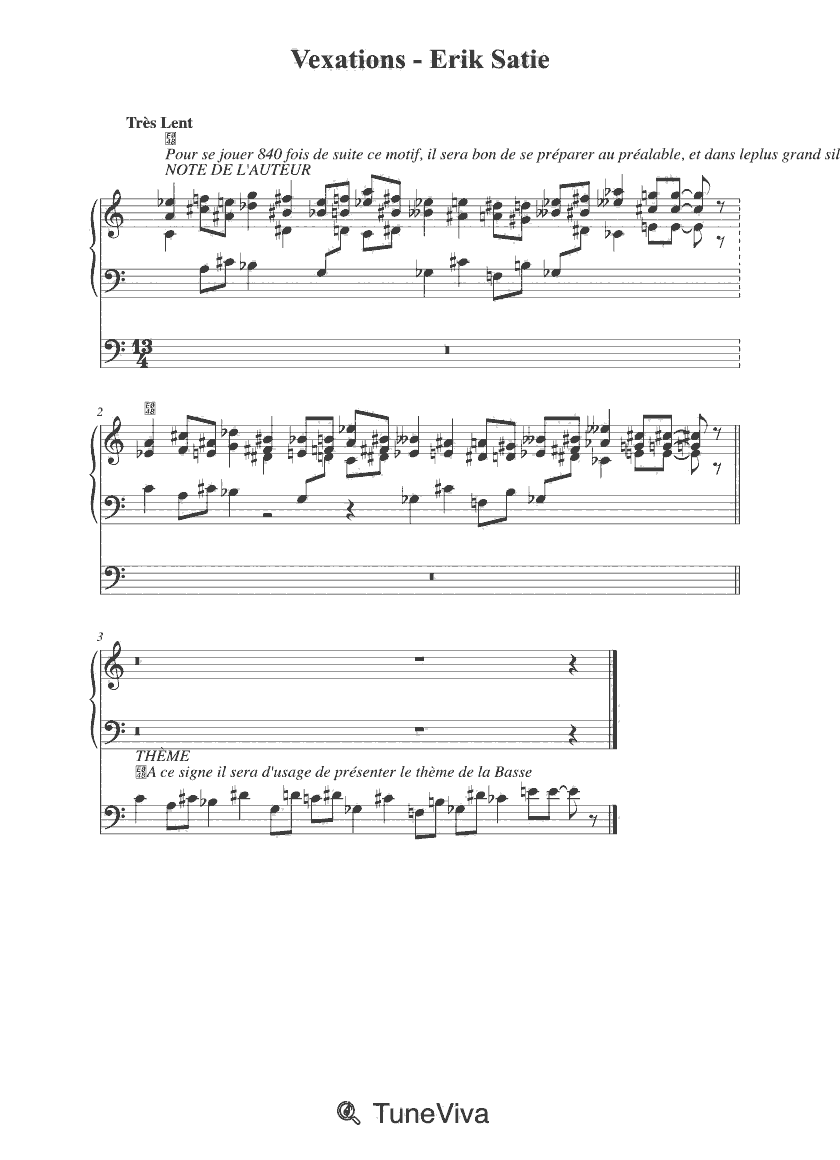
Erik Satie
Piano · 1 min 12 sec
Open score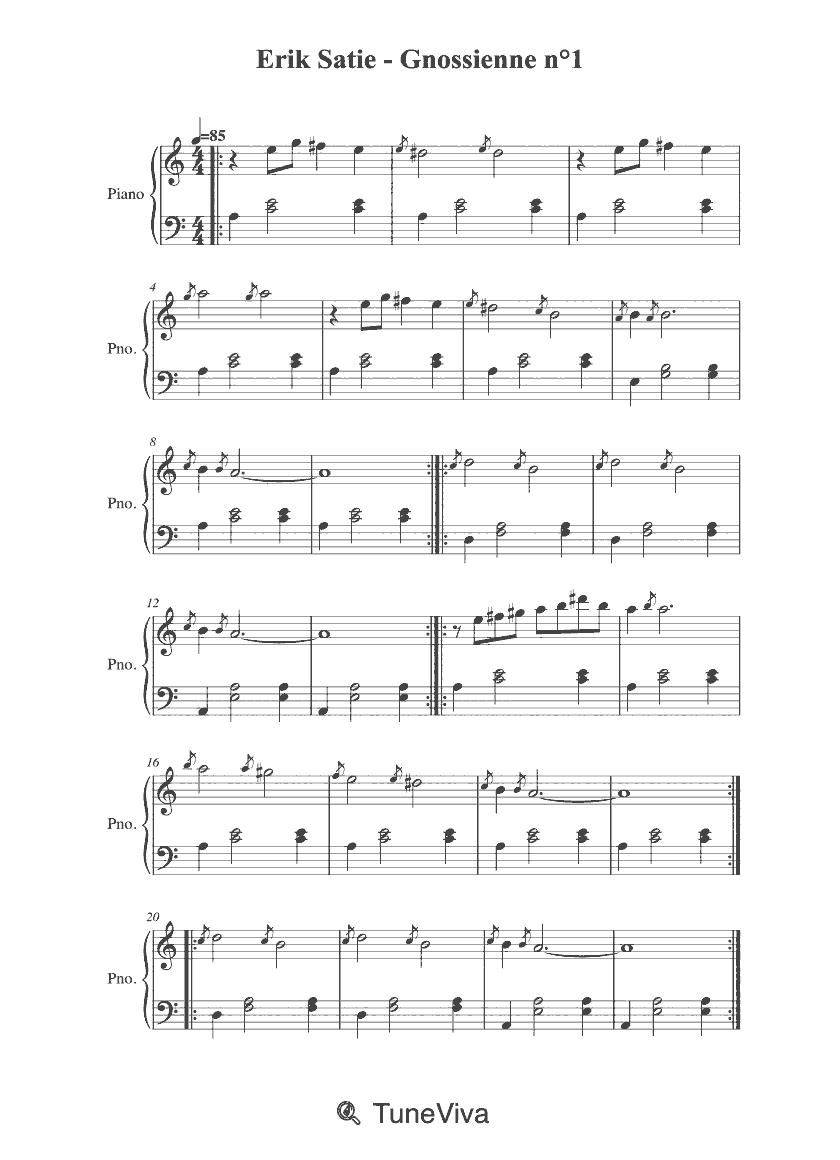
Erik Satie
Piano · 2 min 32 sec
Open score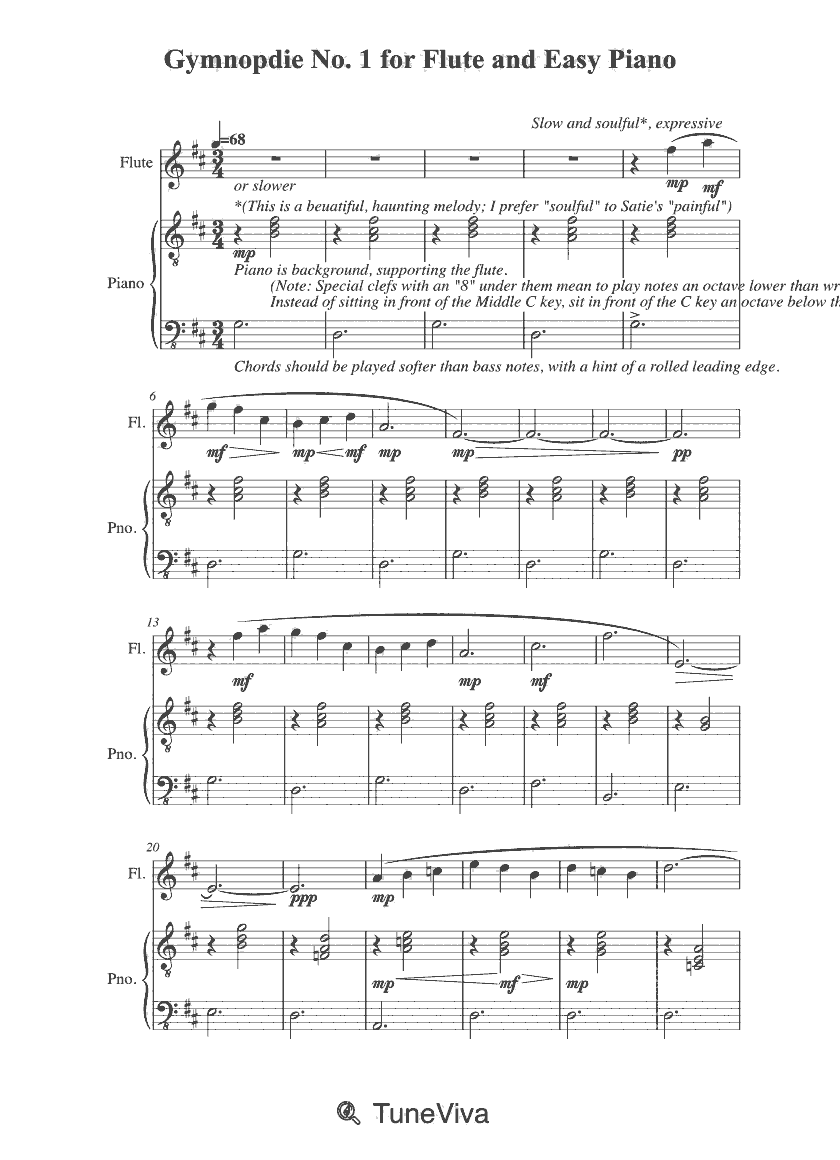
Erik Satie
(for Flute or other monophonic C instrument)
Flute; Piano · 3 min 8 sec
Open score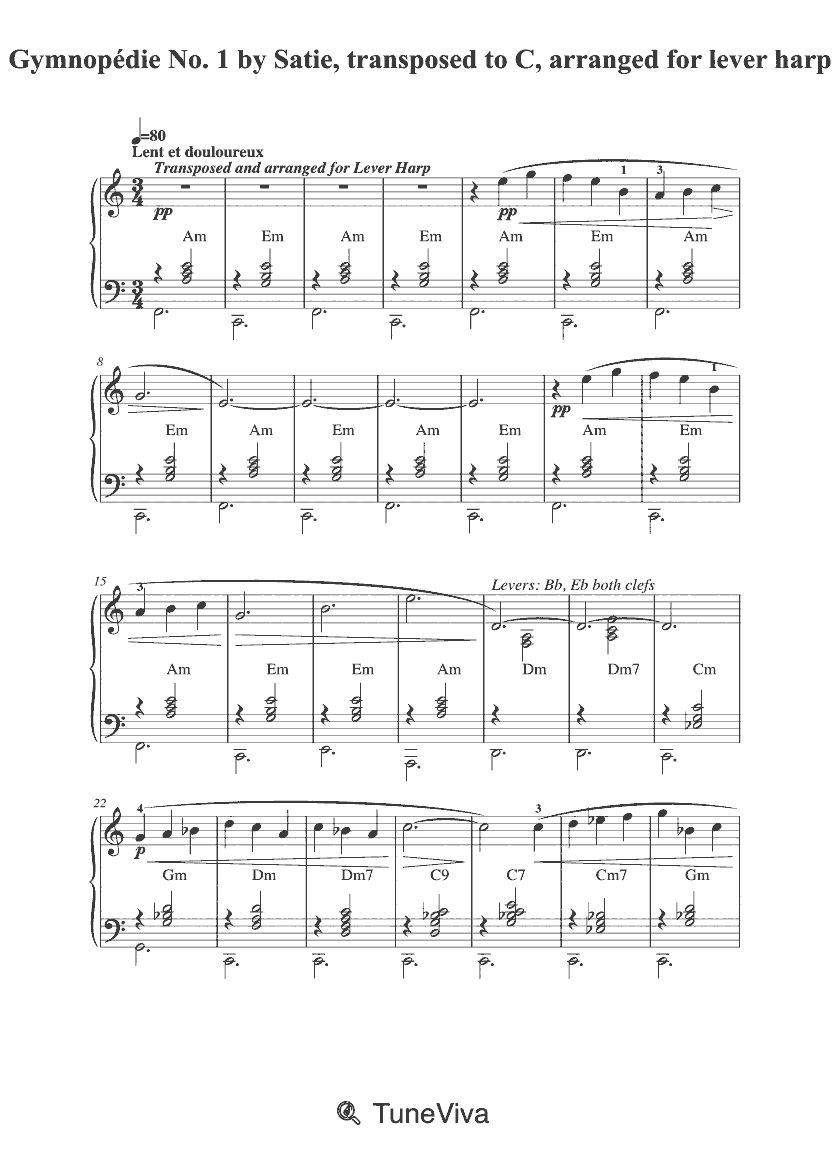
Erik Satie
from Trois Gymnopédies
Piano · 2 min 37 sec
Open score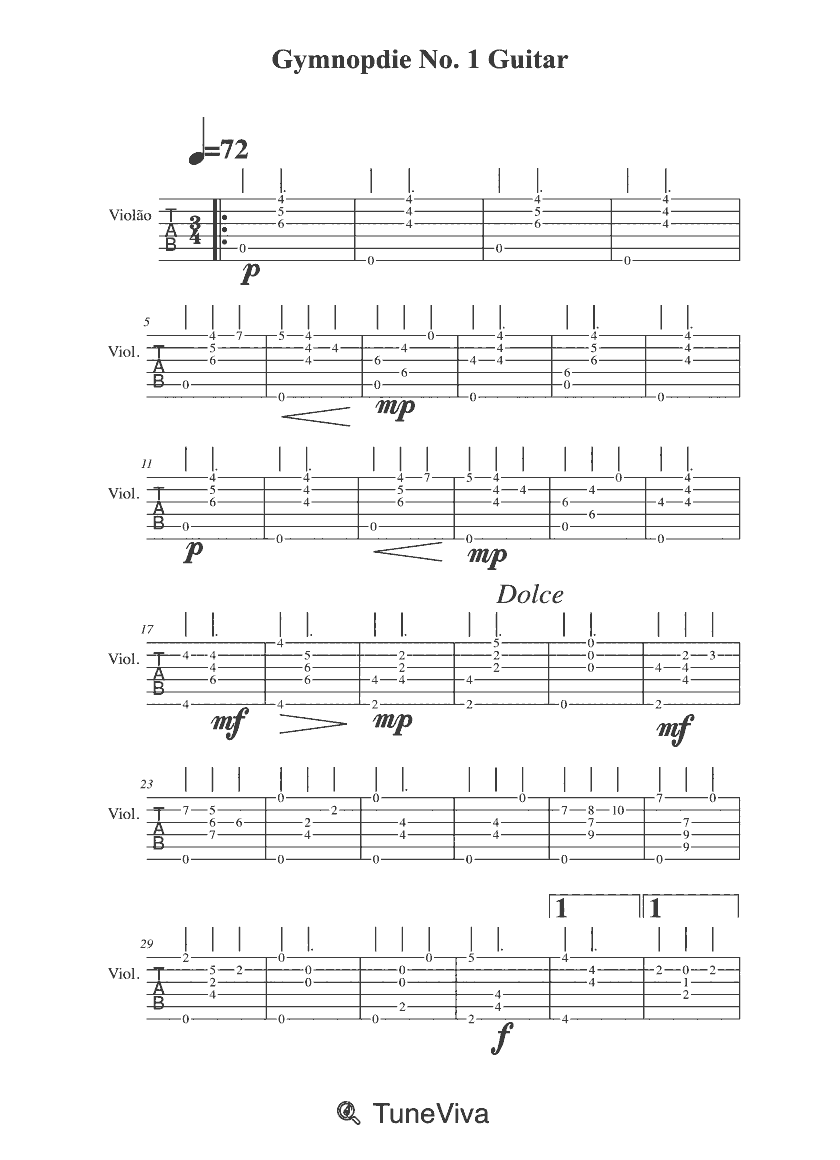
Erik Satie
Violão · 3 min 17 sec
Open score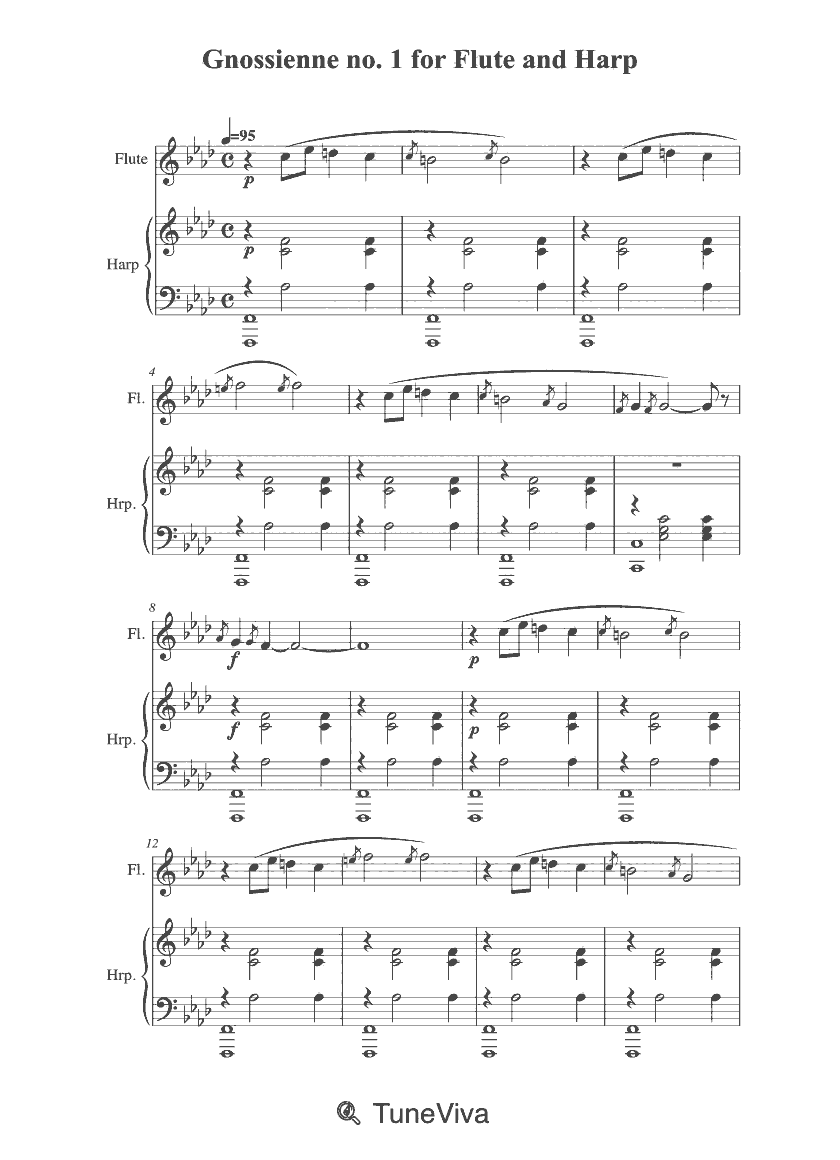
Erik Satie
Flute; Harp · 6 min 49 sec
Open score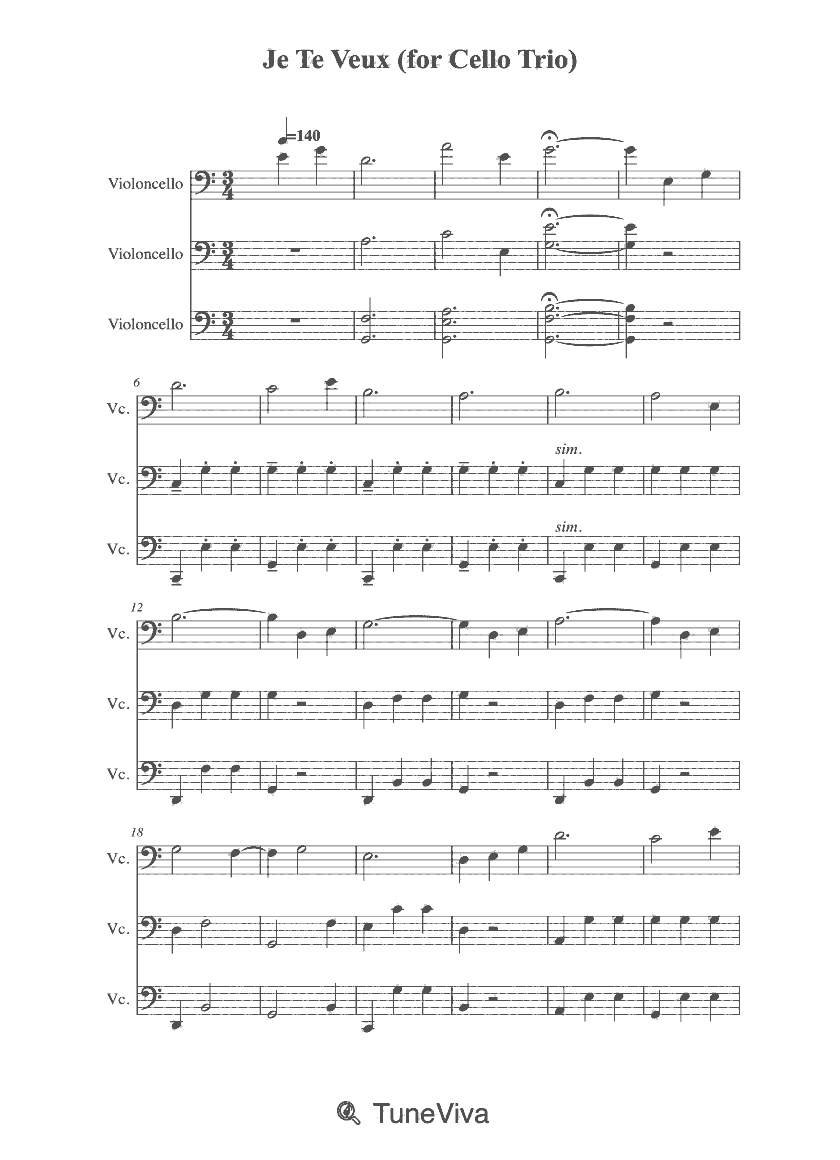
Erik Satie
for Cello Trio
Violoncello · 6 min 2 sec
Open score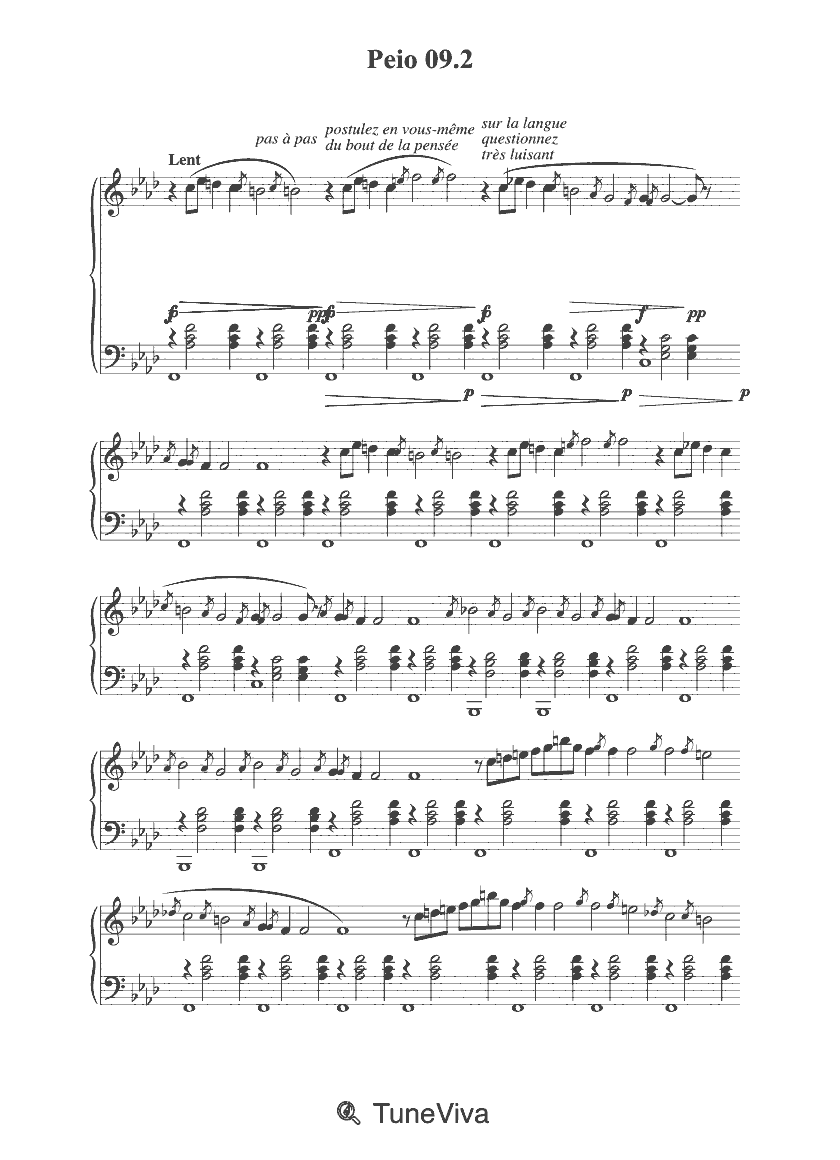
Erik Satie
Piano · 3 min 11 sec
Open score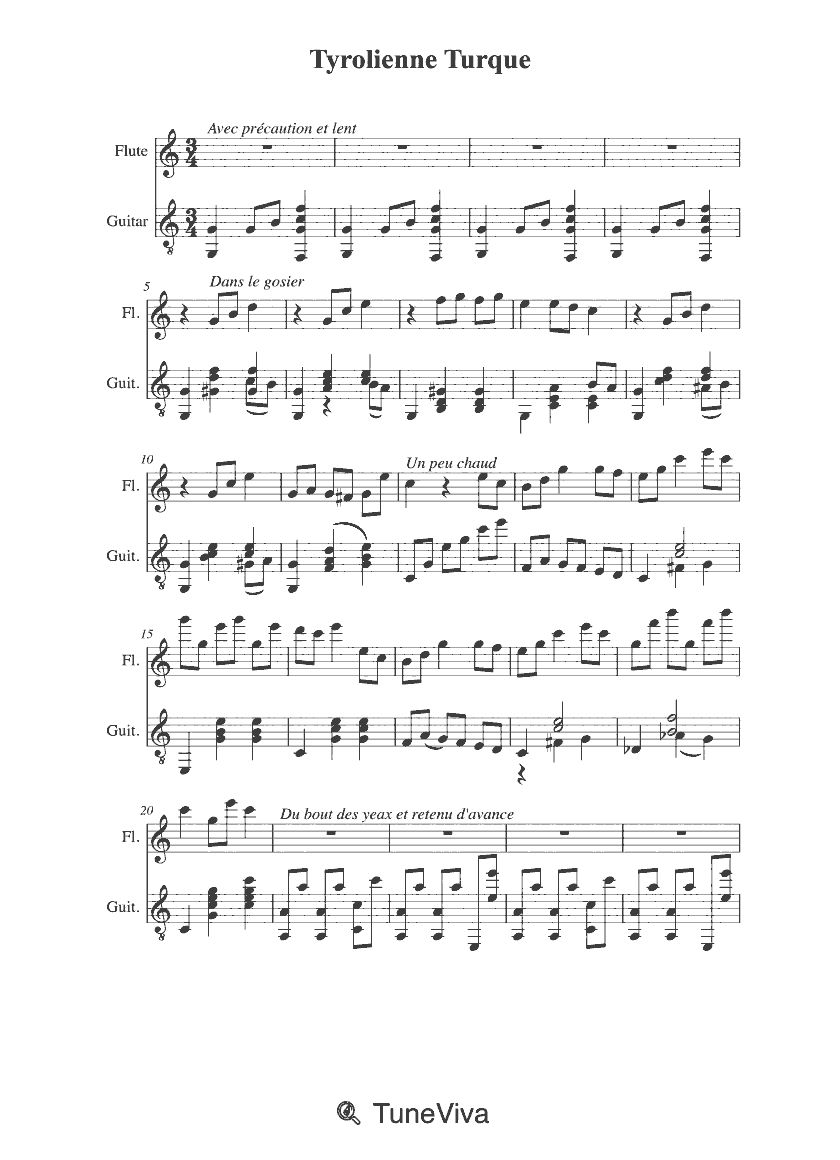
Erik Satie
from Croquis et Agaceries d'un Gros Bonhomme en Bois
Flute; Guitar · 1 min 55 sec
Open score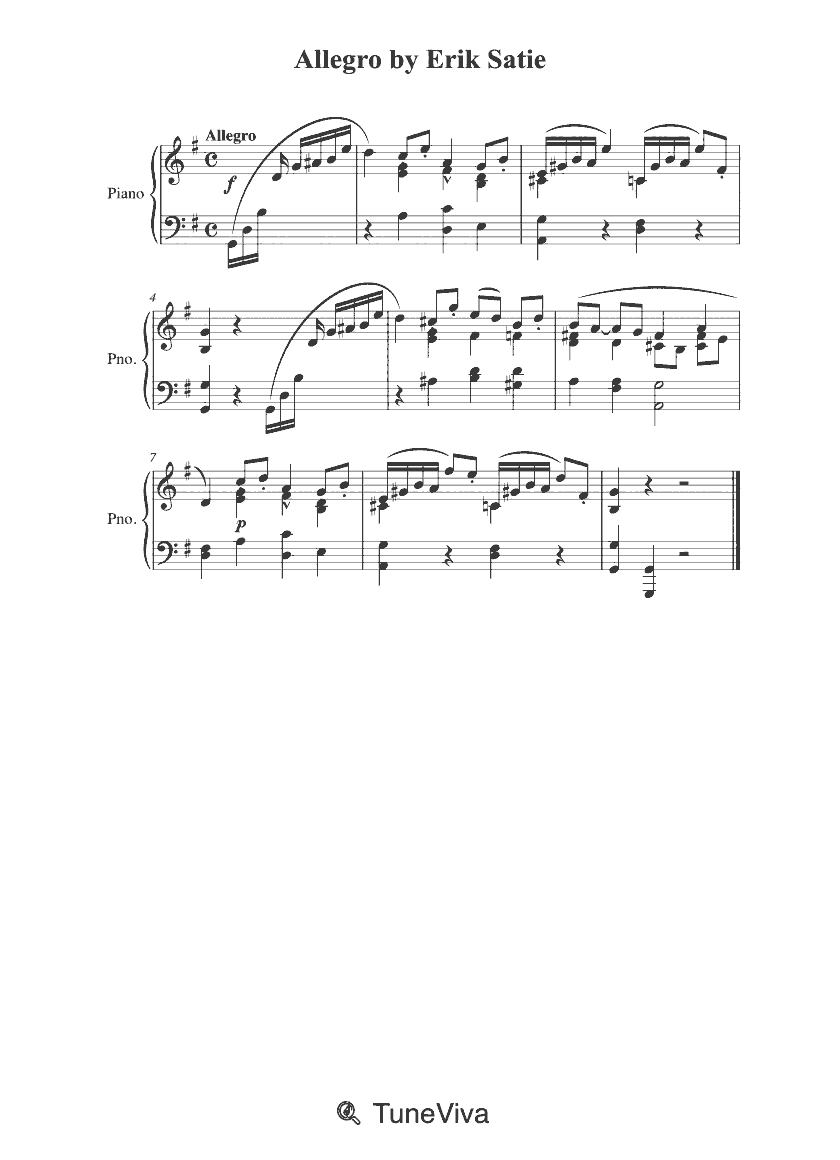
Erik Satie
Piano · 13 sec
Open score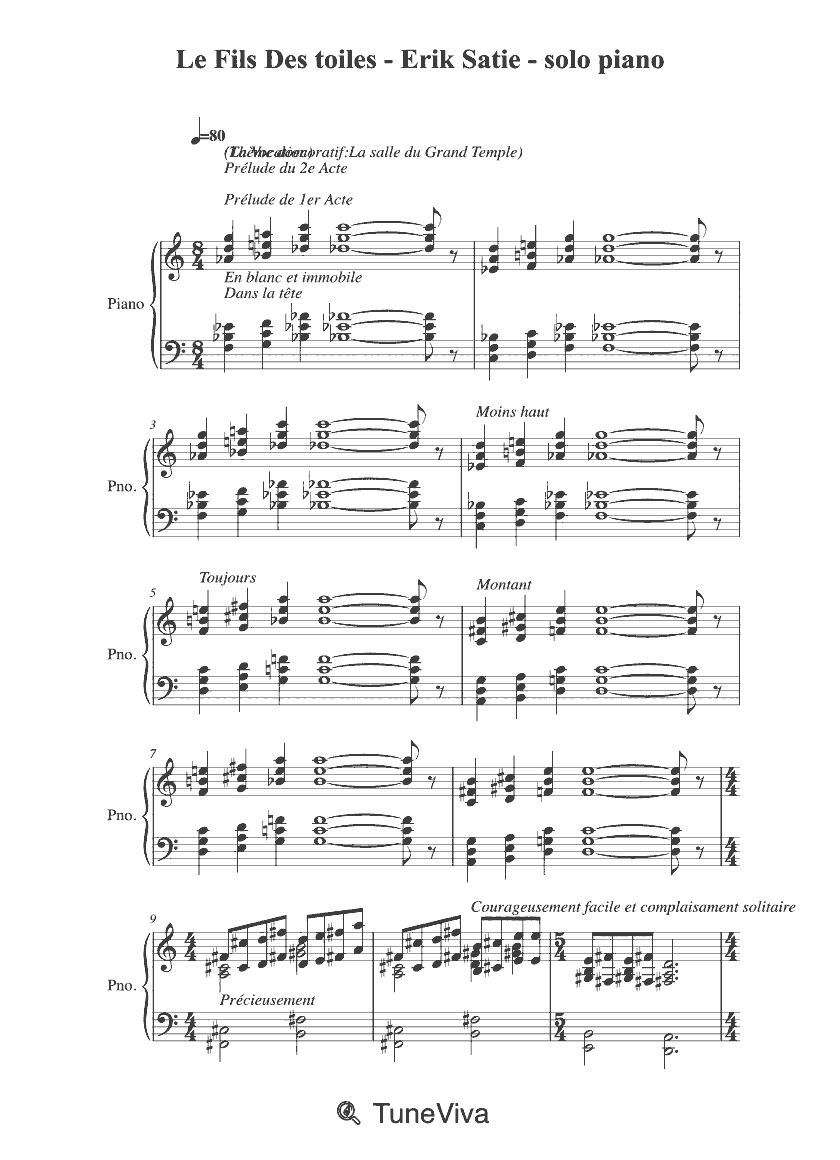
Erik Satie
Piano · 4 min 52 sec
Open score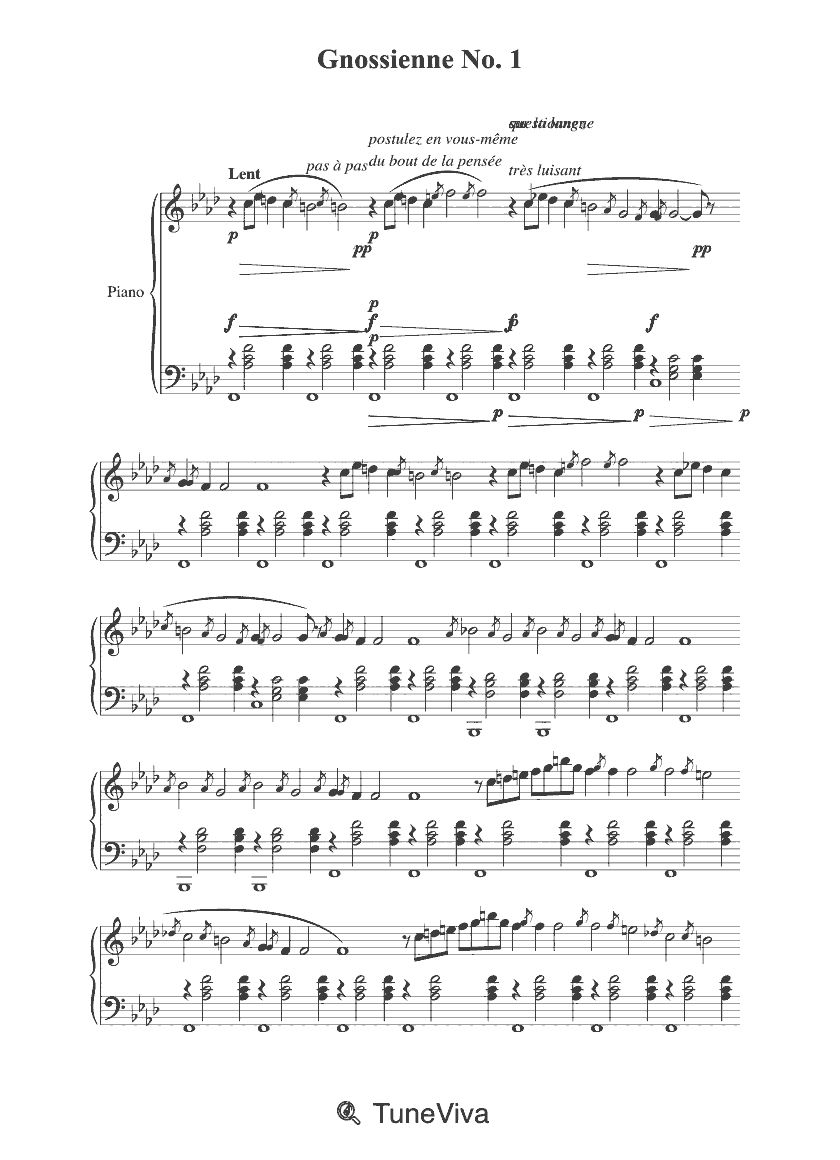
Erik Satie
from Trois Gnossiennes
Piano · 6 min 21 sec
Open score
Erik Satie
Piano · 1 min 3 sec
Open score
Erik Satie
Viulu; Alto; Tenorisaksofoni +1 parts · 1 min 53 sec
Open score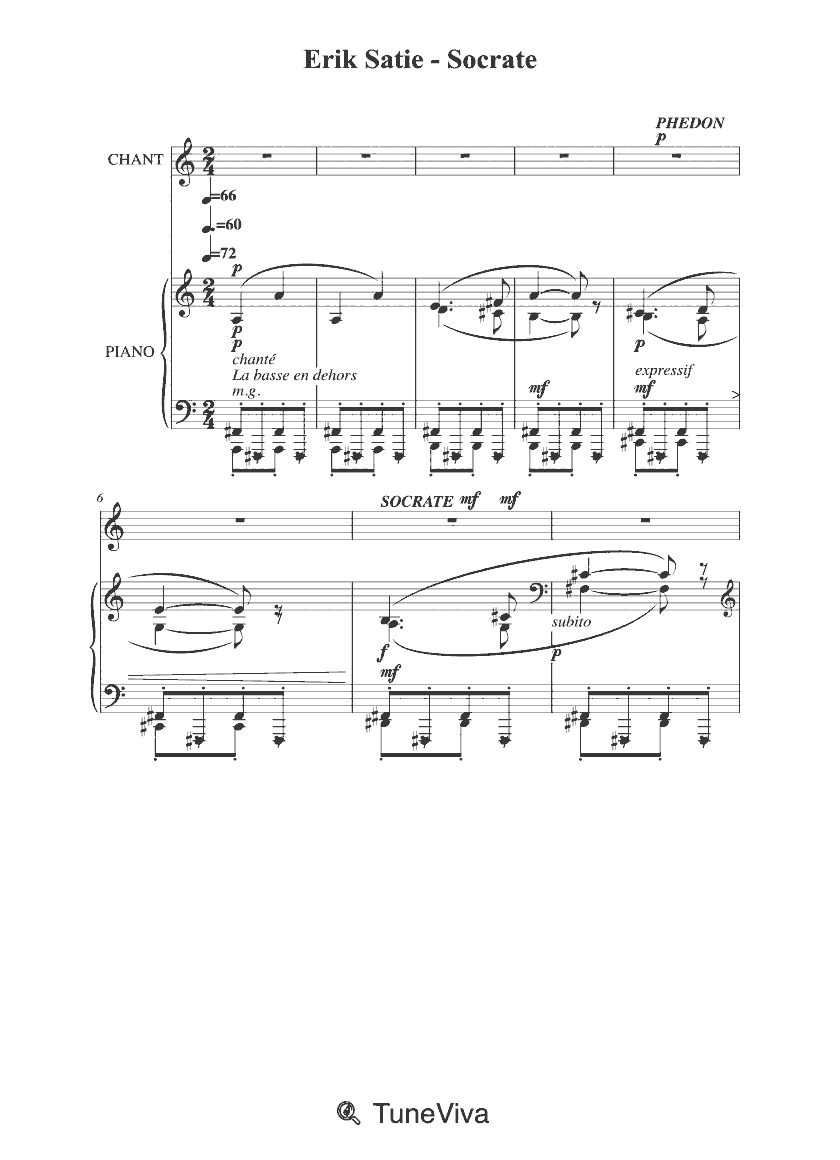
Erik Satie
Drame Symphonique en 3 Parties avec VoixSur des dialogues de Platon traduits par Victor Cousin
CHANT; PIANO · 42 min 59 sec
Open score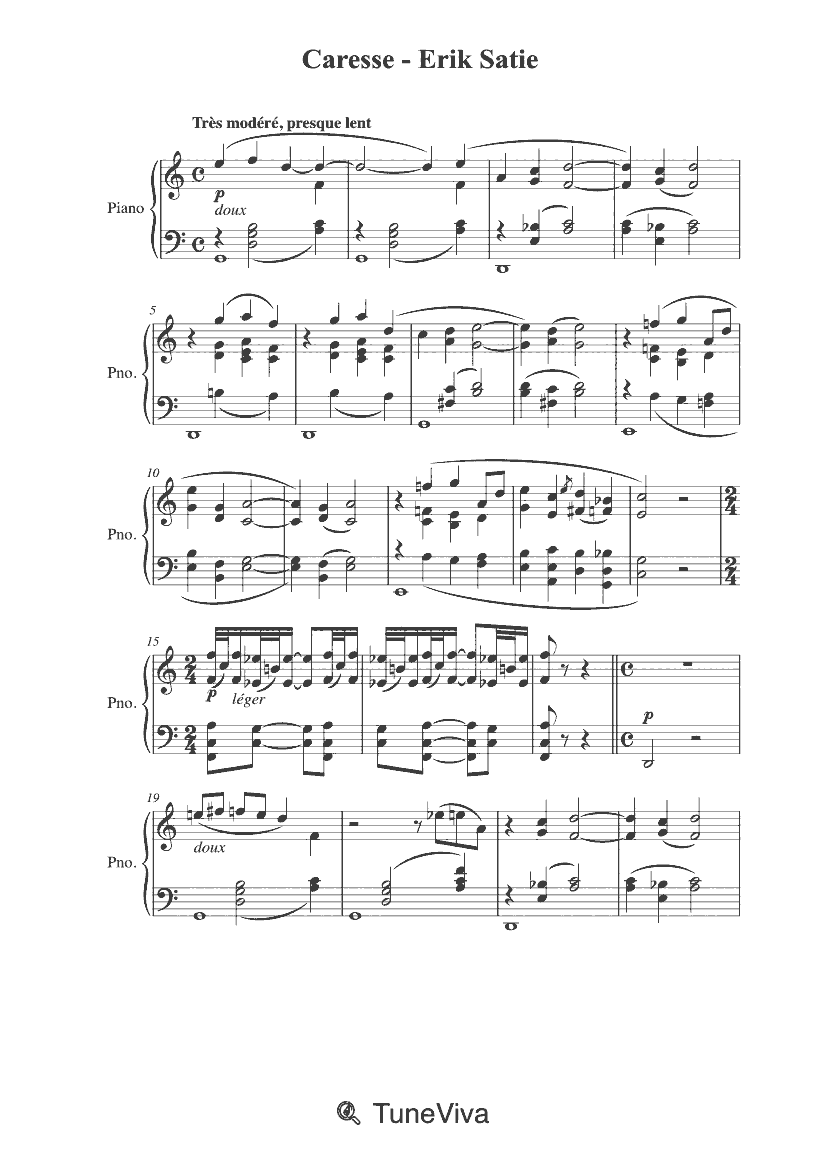
Erik Satie
Révision par ROBERT CABY
Piano · 1 min 33 sec
Open score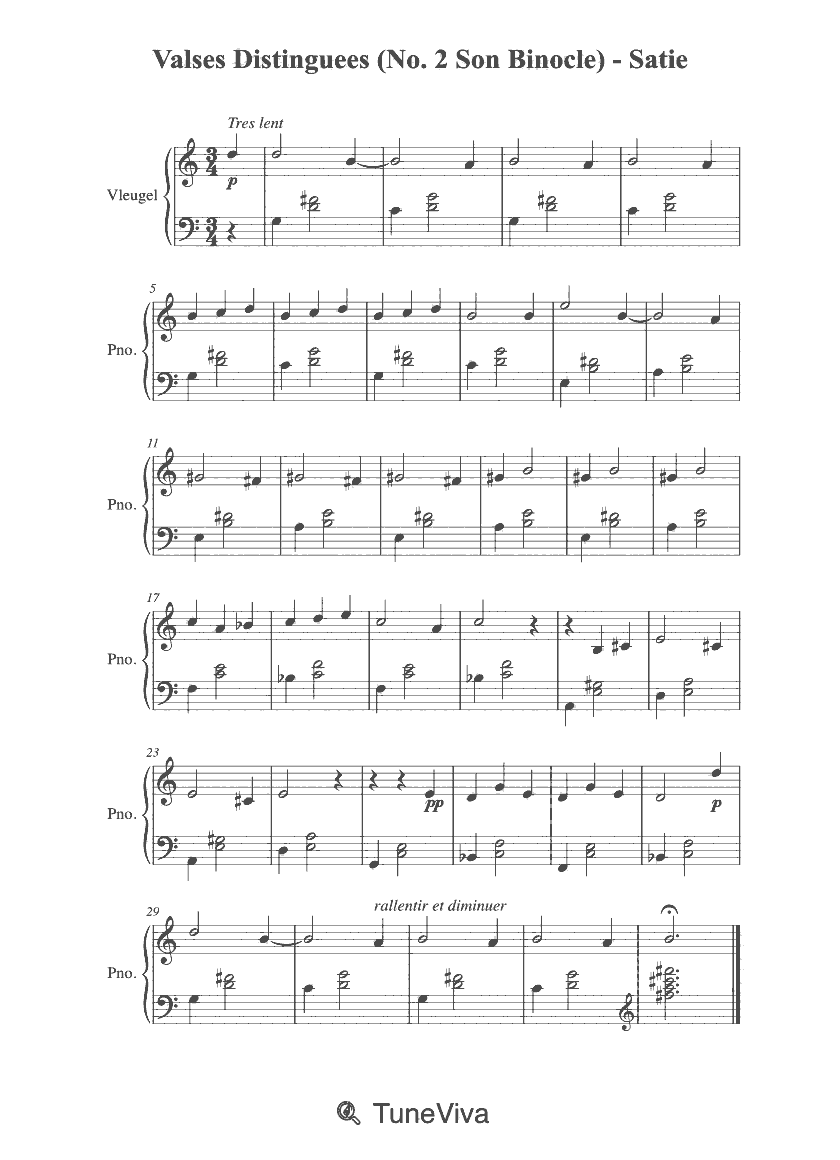
Erik Satie
2. Son binocle
Vleugel · 50 sec
Open score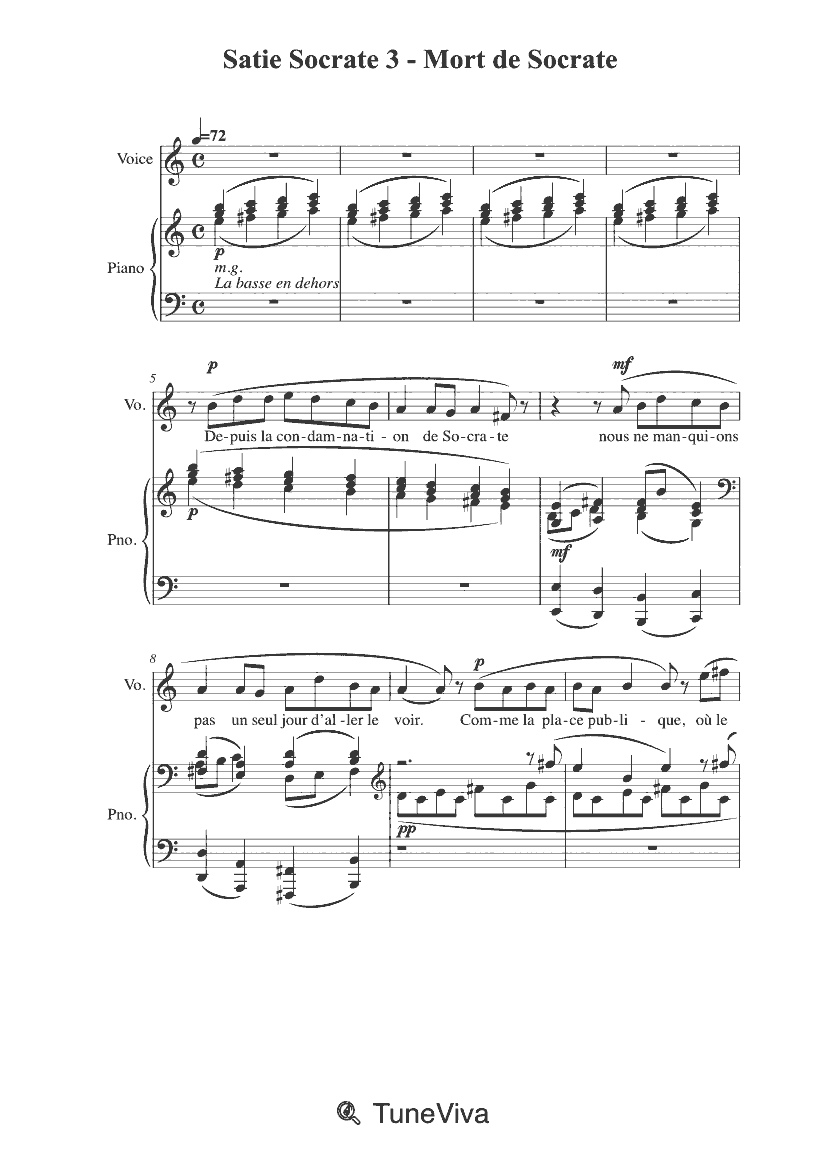
Erik Satie
(Phédon)
Voice; Piano · 16 min 17 sec
Open scorePage 1 of 3
Erik Satie spent most of his working life around Paris, playing piano in Montmartre cafés and writing short keyboard pieces that look easier than they are. The catalogue holds 58 Satie scores, about 221 minutes of music and 53,366 notated notes, from the 1888 Gymnopédies to the cabaret songs of the early 1900s. Nine of the entries carry lyrics, a reminder that Satie wrote waltz-songs as well as piano music. The most-viewed files are Gymnopédie No. 1 and the first and third Gnossiennes, with guitar, flute and lever-harp arrangements of the Gymnopédie beside the originals. Difficulty stays low: 21 scores are at index 0 and 17 each at index 1 and index 2. Erik Satie was a French composer and pianist whose brief, spare keyboard pieces—above all the Gymnopédies and Gnossiennes—made him a distinctive voice in French music. Most of his works are short and for solo piano, often built on simple melodies and unresolved chords. This page gathers sheet music published under Satie's name, including solo-piano scores and arrangements such as a guitar transcription of Gymnopédie No. 1, a flute-and-piano version, a cello trio of Je te veux, and a single part from the four-hand Trois morceaux en forme de poire. Check the scoring and key on each score before choosing.
Satie was born on 17 May 1866 in Honfleur, Normandy, to a French father and a Scottish mother, and died in Paris on 1 July 1925. He entered the Paris Conservatoire in 1879, was expelled in 1882, returned in 1885 and left without a diploma. After a short spell in the army he settled in Montmartre, played piano at the Chat Noir and became a friend of Debussy. In 1905, aged 39, he enrolled at the Schola Cantorum to study counterpoint with Albert Roussel, and from 1898 until his death he lived in a single room in Arcueil.
The Gymnopédies were finished by April 1888; the first and third were printed that year, the second only in 1895. Debussy orchestrated the first and third in 1897 and reversed their numbering. The Gnossiennes followed from 1889, and the first three were published in 1893 without bar lines. Vexations, an undated manuscript usually placed around 1893, carries an instruction to repeat its short passage 840 times. Je te veux, a waltz-song to words by Henry Pacory, dates from about 1901, and the seven-movement Trois morceaux en forme de poire for piano four hands appeared in 1903.
The catalogue reflects that mix. Most entries are solo piano, but Gymnopédie No. 1 exists here in versions for flute and easy piano, for guitar and for lever harp, and Je te veux turns up as a cello trio. About half the scores carry no genre tag, and the level-3 index is unused: nothing here is technically extreme. Check the scoring named on each file, because an arrangement and an original can share a title.
The Gymnopédies as an entry point: Satie completed the three Gymnopédies by 2 April 1888; the first and third were published that year, while the second waited until 1895. Each lasts about three minutes and shares a melancholy mood and mild dissonance. Gymnopédie No. 1 is in 3/4 and begins with an alternating progression of two major seventh chords, on G and D. The set's performance directions ask for playing that is 'painful', 'sad' or 'grave', so aim for restrained, even left-hand chords and a melody that sits calmly above them.
The Gnossiennes and music without bar lines: The Gnossiennes belong to the works in which Satie dispensed with bar lines. That makes the page look freer than a conventional piano score, but it does not remove the need for shape: follow the phrasing and harmonic movement rather than counting a fixed number of beats per bar. Satie's melodies are generally simple, and his harmony often uses unresolved chords, which gives the music its suspended, questioning character.
Beyond the piano miniatures: Satie also wrote music for a Rosicrucian sect, the 'symphonic drama' Socrate (1919), and the ballets Parade (1917), Mercure and Relâche (1924). Parade was a collaboration with Jean Cocteau, Sergei Diaghilev, Pablo Picasso and Léonide Massine. Selected scores here include a solo-piano version of Le Fils des étoiles and a cello-trio arrangement of Je te veux, alongside the better-known piano pieces.
Choosing among Satie scores and arrangements: Many entries are solo piano, but some are arrangements for other instruments or forces. Check whether a score is a complete work or a single part: one four-hand item is only the 'En plus' secondo part of Trois morceaux en forme de poire, not the whole suite. Titles may name the instrument without identifying the arranger, and an arrangement can change the key or texture, so confirm the scoring and key before you begin.
The catalogue holds the solo original plus arrangements for flute and easy piano, for guitar and for lever harp. None of the arrangements names its arranger.
The manuscript carries a direction to repeat the passage 840 times, though Satie neither published nor performed the piece. The first complete reading, in New York in 1963, lasted more than eighteen hours.
Gymnopédie No. 1 and the first Gnossienne are both slow, short and technically light. The flute version reduces the texture further for a pianist who is still learning to voice chords.
Erik Satie is known for short, spare piano works such as the Gymnopédies and Gnossiennes, and for a style in which unresolved chords, simple melodies and sometimes barless notation create a deliberately understated atmosphere. Most of his works are brief and for solo piano, though he also wrote music for a Rosicrucian sect, the symphonic drama Socrate and ballets including Parade, Mercure and Relâche.
Satie completed the set of three Gymnopédies by 2 April 1888. The first and third were published in 1888, while the second did not appear in print until 1895.
Gymnopédie No. 1 is in 3/4 and begins with an alternating progression of two major seventh chords, on G and D. Its mild dissonance and melancholy mood match Satie's performance directions for the set, which ask for playing that is 'painful', 'sad' or 'grave'.
Claude Debussy orchestrated the first and third Gymnopédies in February 1897. When he published the scores two years later, their numbering was reversed: Satie's first became Debussy's third, and vice versa.
The Gnossiennes are among the works in which Satie dispensed with bar lines. Without regular bar divisions, the player has to follow the phrasing and harmonic movement rather than counting a fixed number of beats per measure; Satie's melodies are generally simple and his harmony often uses unresolved chords.
Satie wrote music for a Rosicrucian sect, the 'symphonic drama' Socrate (1919), and the ballets Parade (1917), Mercure and Relâche (1924). Parade was a collaboration with Jean Cocteau, Sergei Diaghilev, Pablo Picasso and Léonide Massine. His catalogue nevertheless consists mostly of brief solo-piano works.
Check the instruments named, whether the score is a complete work or a single part, and the key. A guitar transcription of Gymnopédie No. 1, a flute-and-piano version, and a cello trio of Je te veux all change the performing forces; one four-hand item is only the 'En plus' secondo part of Trois morceaux en forme de poire, not the whole suite.