Gymnopédie No. 1 by Satie, transposed to C, arranged for lever harp
Listen & explore
Follow the score, hear the music, then make it your own.
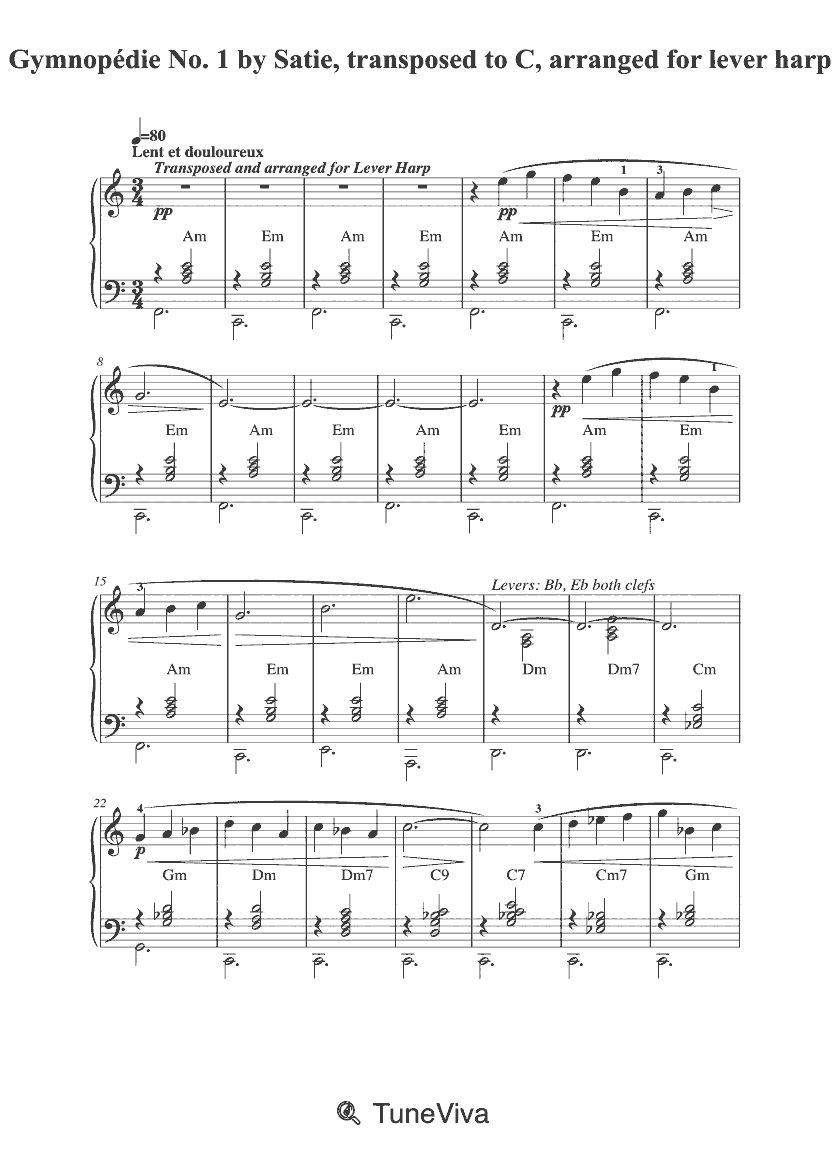
About this score
Erik Satie wrote Gymnopédie No. 1 for piano. This arrangement is labelled for lever harp and transposed to C. It opens in 3/4 with Lent et douloureux and a printed quarter-note tempo of 80. A low F alternates with C underneath soft chords before the melody enters in bar 5.
Score parts: Piano. Opening key signature: No sharps or flats. Opening time signature: 3/4. Opening tempo: 54 BPM. Estimated playback time: 2 min 37 sec. Listen while following the notation, adjust playback speed, or open this score in practice mode.
- Duration (approx.)
- 2 min 37 sec
- Lyricist
- Éric Alfred Leslie Satie
- Score parts
- Piano
- Opening key signature
- No sharps or flats
- Opening time signature
- 3/4
- Opening tempo
- 54 BPM
- Genre
- Classical
Keep the bass and chord pattern light
The first four bars alternate F and C in the bass. Above them sit the notes A–C–E and G–B–E, respectively. Hear the E as the note that survives the change of harmony. When the melody enters, play just the bass and tune through the first phrase, then restore the chords softly enough that the melody can remain the most distinct sound. The score’s part label says Piano, while the arrangement instruction and the written lever cues identify its intended use on lever harp.
Plan the lever changes before playing
The opening signature is blank, but the arrangement calls for accidentals later. At bar 19 the score calls out B♭ and E♭ in both clefs. Later cues bring E and B back to natural. Locate the relevant levers on your own harp, mark the octave of each string you will change and practise the move from the preceding bar. Try the passage with the melody alone first, then restore the chord and bass that occupy your hands around the cue.
Shape the quieter return and ending
The opening bass and chord texture returns at bar 40, with the melody returning later. Try that return at the same pulse as your opening and keep the accompaniment soft enough to hear the tune arrive. Near the ending, listen for how the E♭ colours the final C harmony. Let notes resonate where they help connect the line, and damp a ringing string when it blurs the next chord.
Practice tips
- Play the first four bars with a consistent three-beat pulse and compare the two bass notes before adding the melody.
- Practise bars 18–22 as a lever drill. Pause after the preceding note if needed to learn which hand can make each change.
- Play the final chords as a separate phrase. Listen to which resonances carry into the final C harmony before deciding where to damp.
Questions about this score
Is this the original piano score?
This edition is labelled as a lever harp arrangement and transposed to C. Its lever cues are meant for the harpist preparing the written accidentals.
Which lever changes should I prepare first?
Look at the B♭ and E♭ cue at bar 19, then find the later cues restoring E and B to natural. Check which octaves the notes occupy on your harp.
Where does the melody enter?
The bass and chord pattern starts on its own. The upper melody enters at bar 5, over the same alternating accompaniment used in the opening.