classical
1 tracks
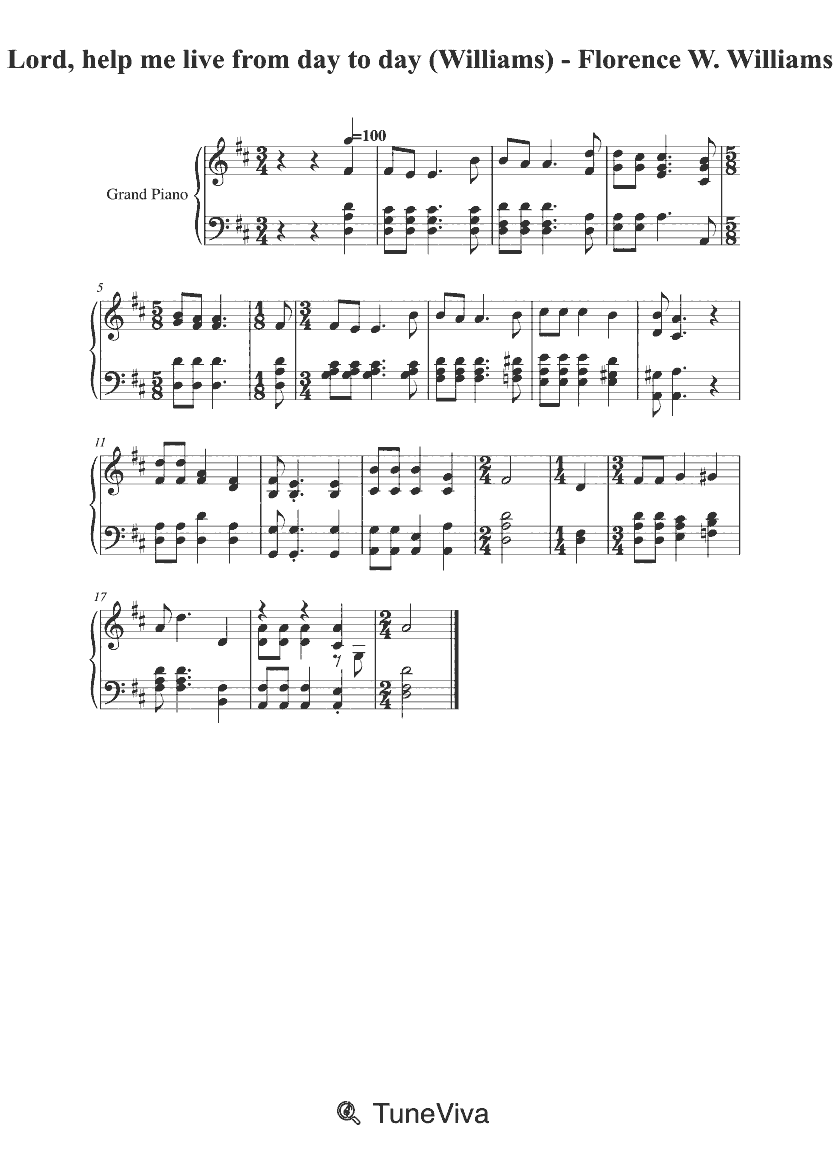
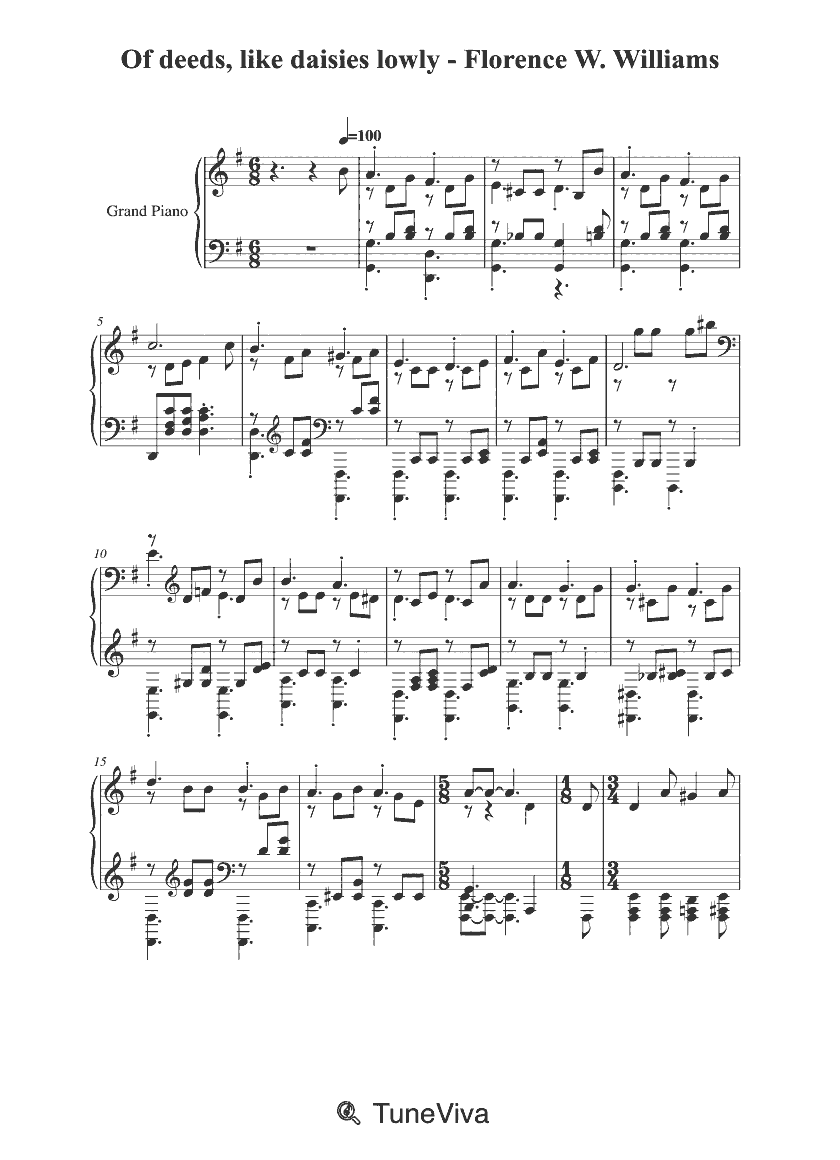
Florence W. Williams wrote for the Sunday school and the devotional meeting, and the catalogue follows it: 32 scores, about 16 minutes of music and 8,301 notated notes, 15 of them with lyrics. The most-viewed title is Forward March with Steady Tread, followed by Lord, Help Me Live from Day to Day and Of Deeds, Like Daisies Lowly.
Four entries sit at complexity index 0, nineteen at index 1 and nine at index 2, a spread that matches the mix of unison songs, simple part-songs and slightly fuller settings. Most titles are first lines rather than tune names, so the list reads like a hymnal index: Be a Little Light for Jesus, We're Little Ships That Sail Away, God Sends a Tender Message.
Florence W. Williams was born in 1875 and was active in American hymn publishing in the early twentieth century. She studied with Adam Geibel, the Philadelphia composer and publisher, and worked as his assistant and secretary; the connection shaped much of her output, which appeared in Sunday-school and gospel collections issued by Geibel's firm. Around 1906 she married George G. Falconer Jr. and was afterwards known as Florence Williams Falconer.
Her tunes circulated widely in the hymnals of the period. Hymnary indexes 105 of them, and her setting of Lavinia Brauff's Christ Was Once a Little Baby appeared in Uplifted Voices (1901), a Geibel collection. Her published tune list includes Be a Little Light, Little Ships, Not Far from the Kingdom and A Song in My Heart. She also harmonised other composers' tunes for the same books.
The catalogue's 32 entries run to about 16 minutes and 8,301 notated notes. Fifteen carry lyrics, which is consistent with songs written for children's choirs and congregational singing; the rest are instrumental or lack a text layer in the file. Four entries are at complexity index 0, nineteen at index 1 and nine at index 2, so the collection is mostly easy without being uniformly so. The files are grouped under her maiden name even where the published copy used her married name.
Most of these pieces are meant for a room rather than a concert hall. Keep the accompaniment light and let the words come through, especially in the unison verses, where a heavy left hand can swallow the text. The part-writing is mostly homophonic, so tune the chords from the bass upwards and do not let the inner voices swell. Refrains can take a little more weight than the verses, but the tempo should stay steady; these hymns depend on the words being understood at a first hearing.
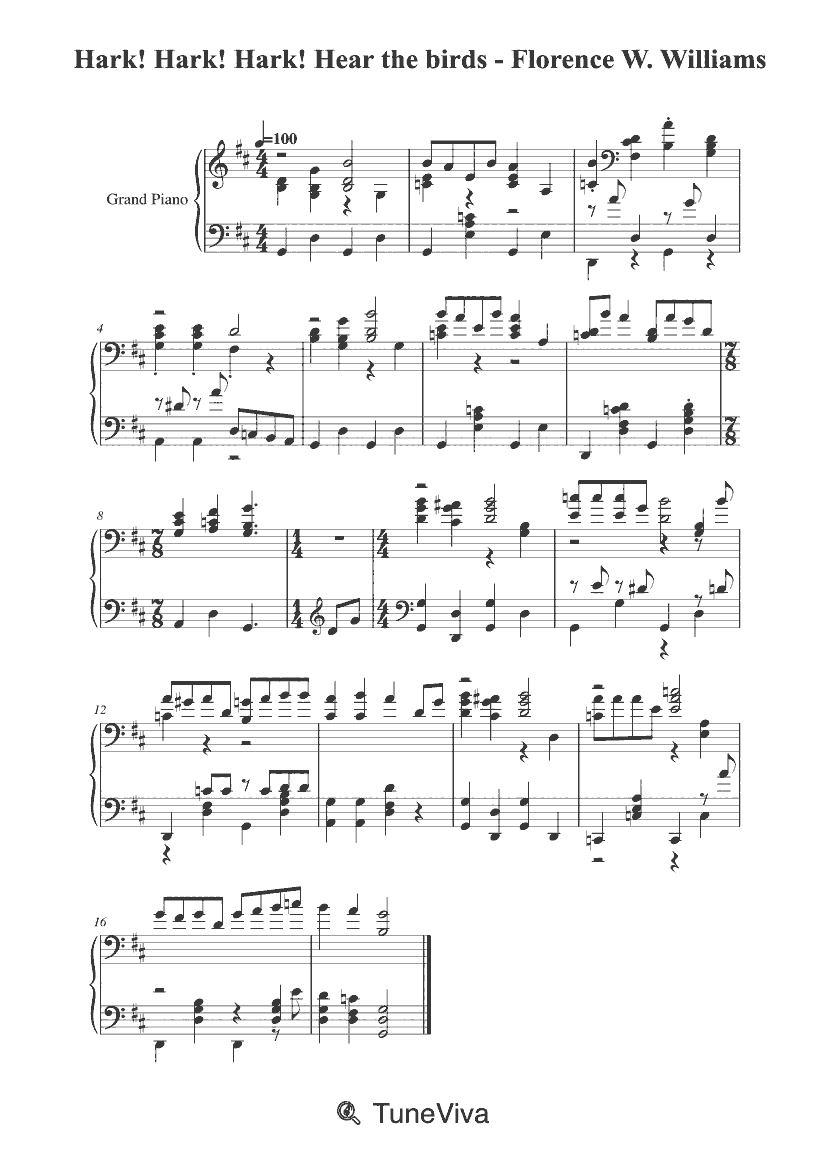
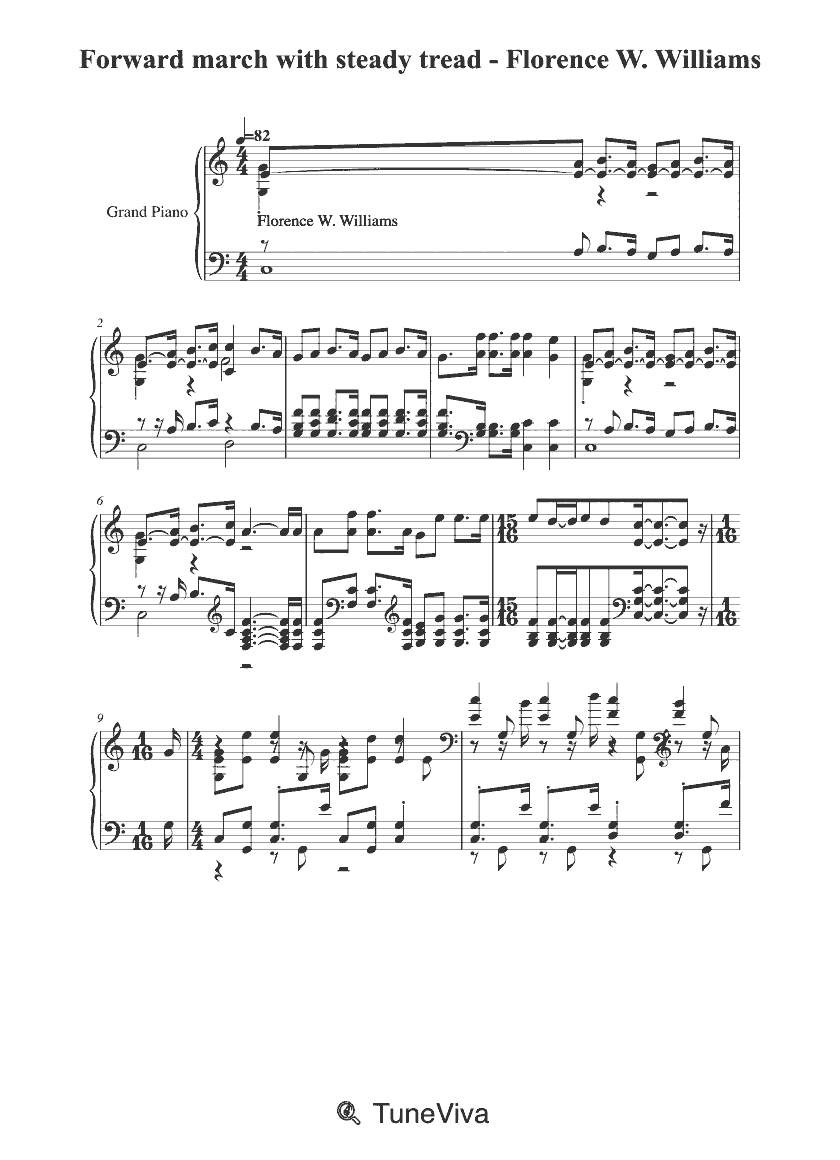
The most-viewed score on the page (19 views): a march-shaped hymn, one of the pieces here with a text layer.
A prayer hymn in simple strophic form; the '(Williams)' in the file name distinguishes her setting from other tunes for the same text.
A nature-image hymn, typical of the gentle moral tone of the Sunday-school repertory.
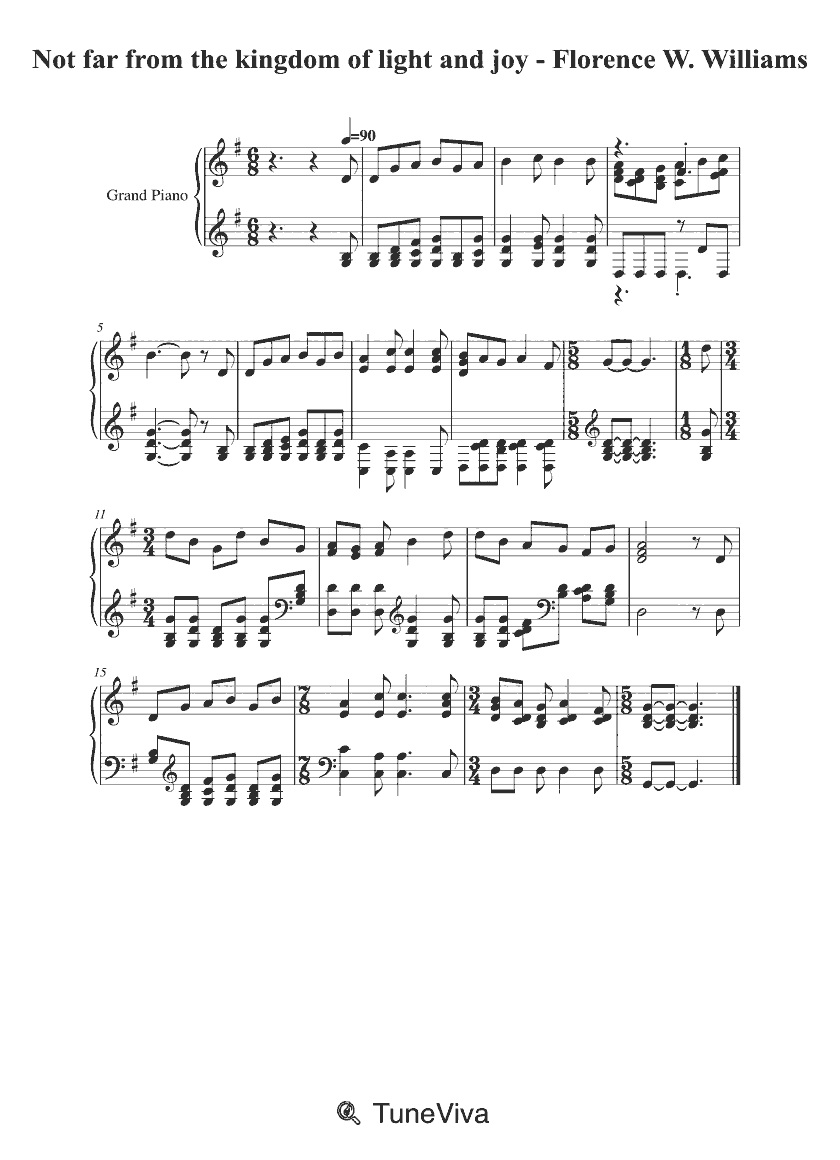
A short hymn on the kingdom of God, listed in Hymnary's index of her tunes as Not Far from the Kingdom.
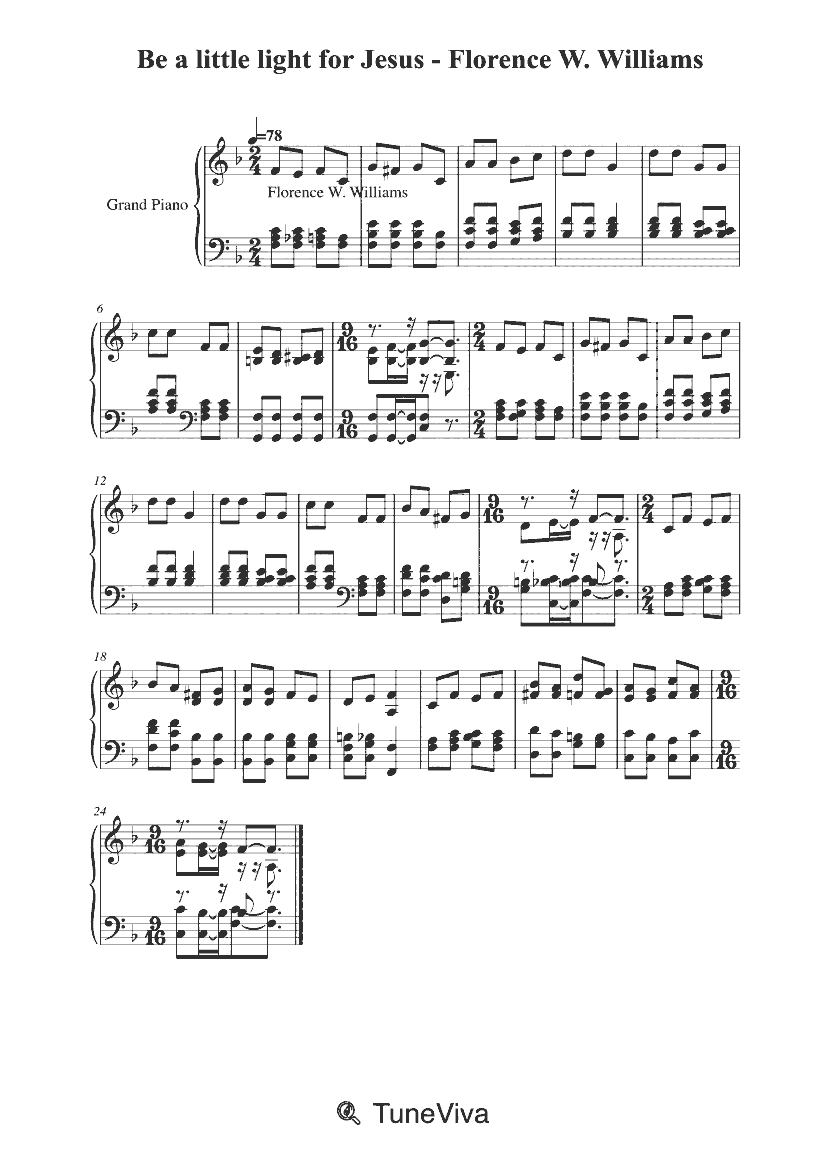
A children's consecration song; the title appears in her published tune list as Be a Little Light.
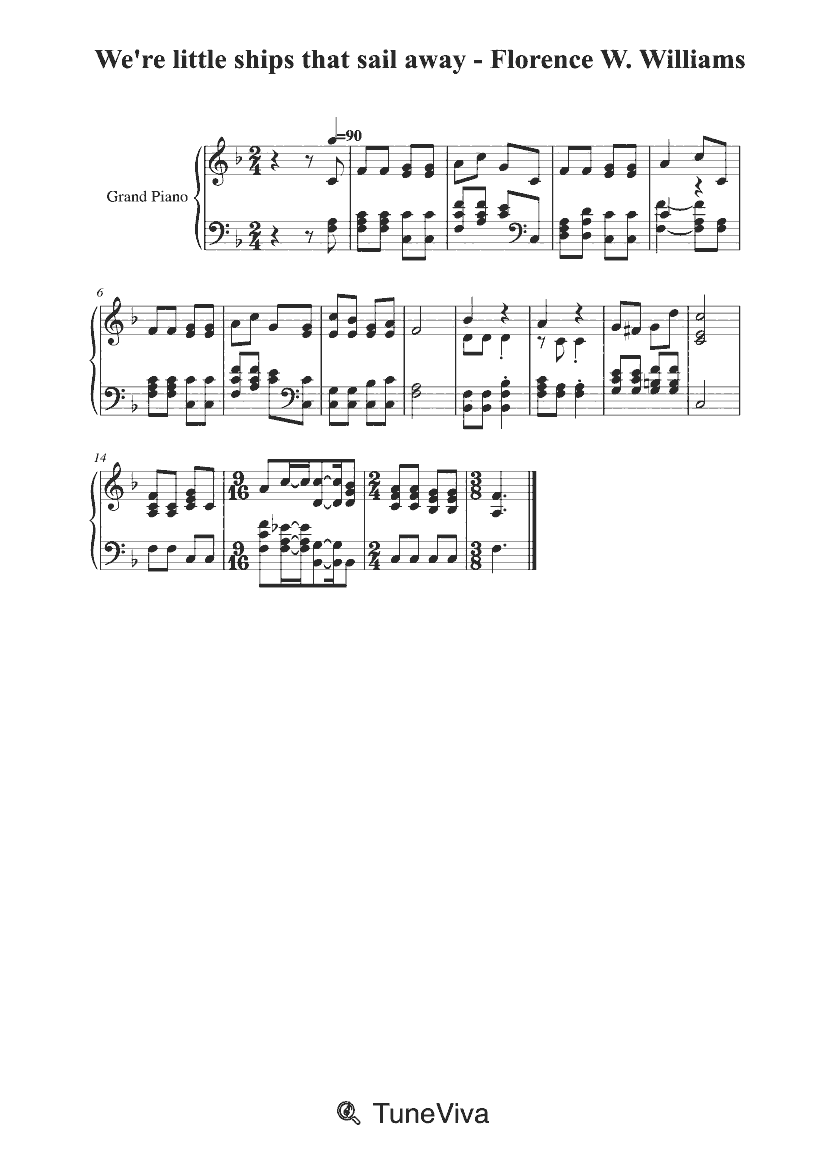
A voyage metaphor for the Christian life, set as a short unison song.
A quiet devotional piece, one of the longer settings at about 48 seconds.
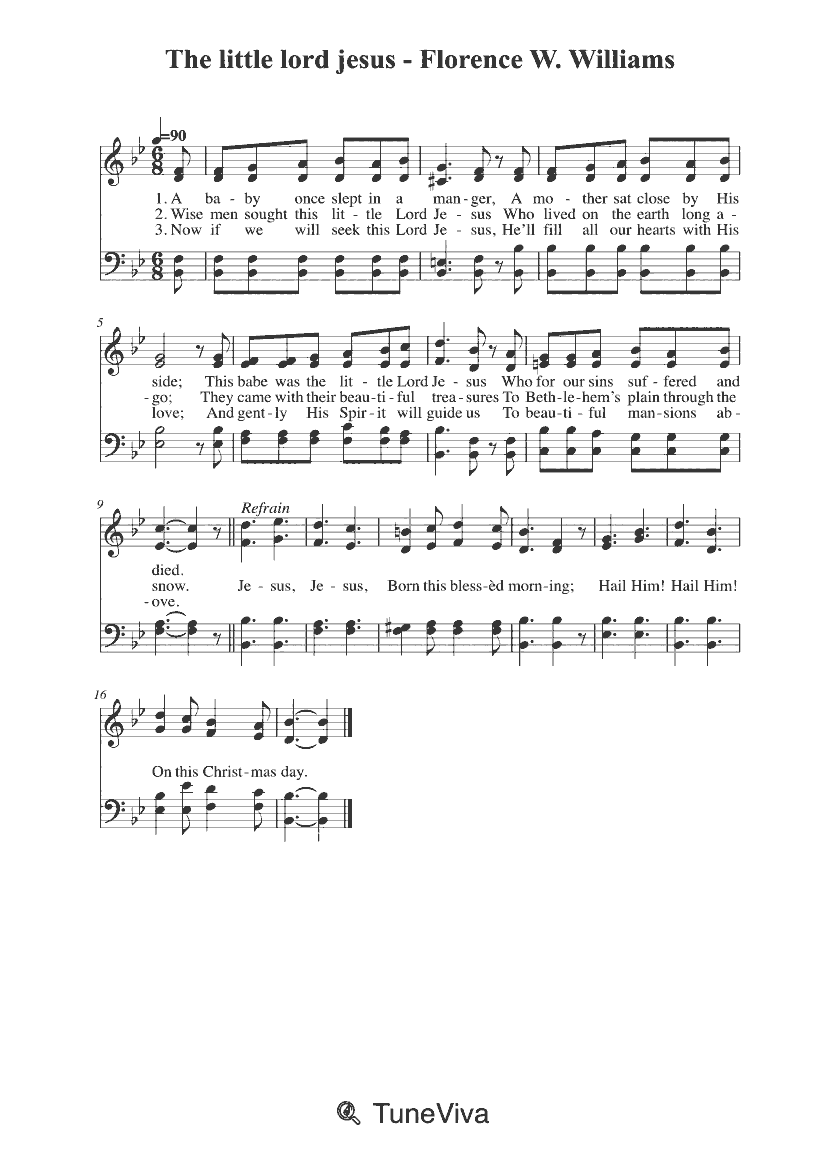
A Christmas song for children, close in tone to the carol tradition rather than to formal anthem writing.
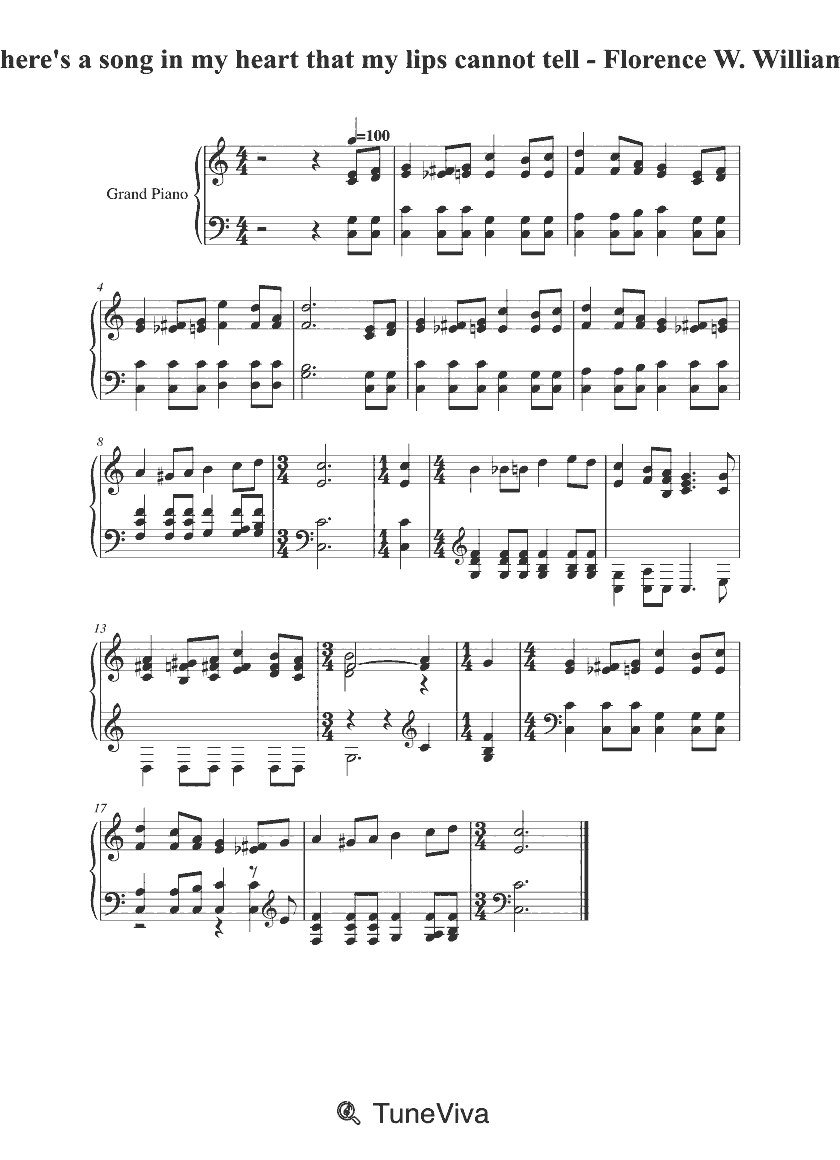
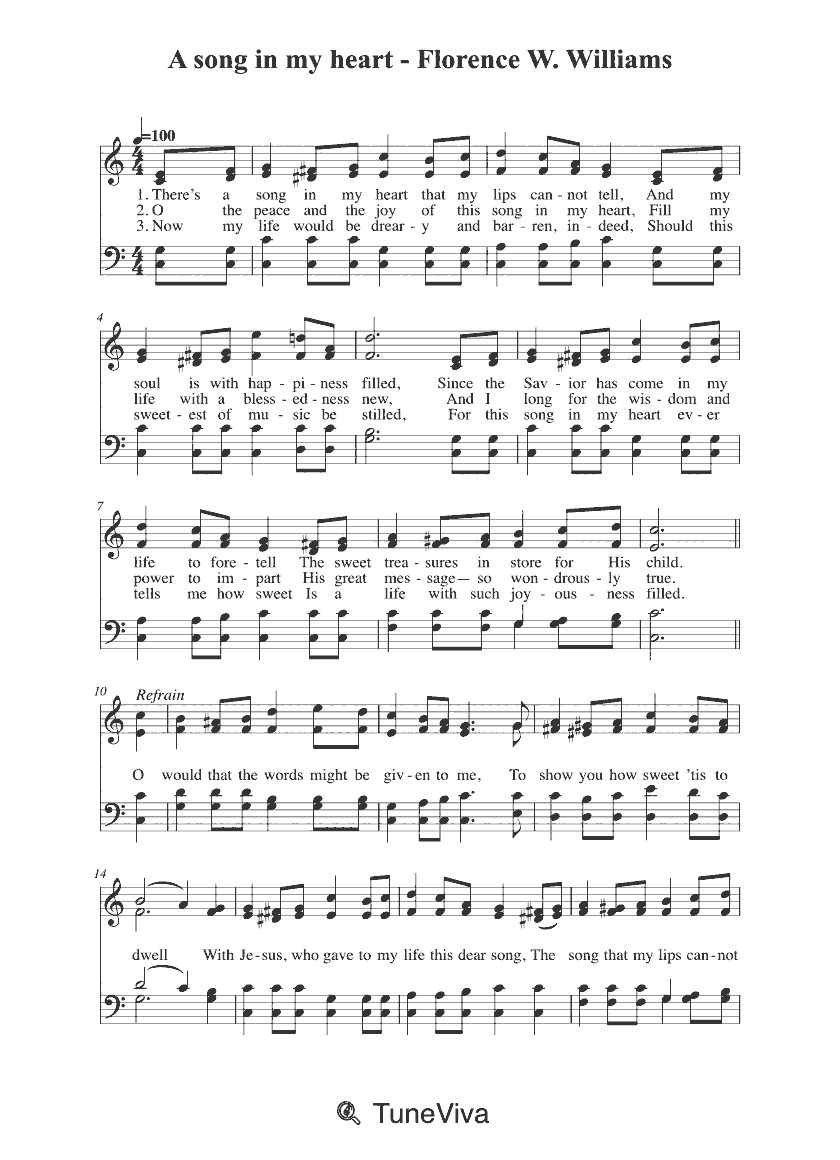
A refrain song of inward joy; the catalogue also holds a separate A Song in My Heart.
There are 32, running to about 16 minutes of music and 8,301 notated notes. Fifteen of them include lyrics.
A Philadelphia composer, conductor and publisher (1855-1933) who ran a music company and edited Sunday-school collections. Williams was his student, assistant and secretary before her marriage.
Usually the words came from other writers. Christ Was Once a Little Baby sets a text by Lavinia Brauff, and the catalogue does not identify the authors for most of the other entries.
The catalogue uses her maiden name throughout, although after her marriage around 1906 she published as Florence Williams Falconer. Searching either form should find the same pieces.
Catalog editions and arrangements attributed to Florence W. Williams.