
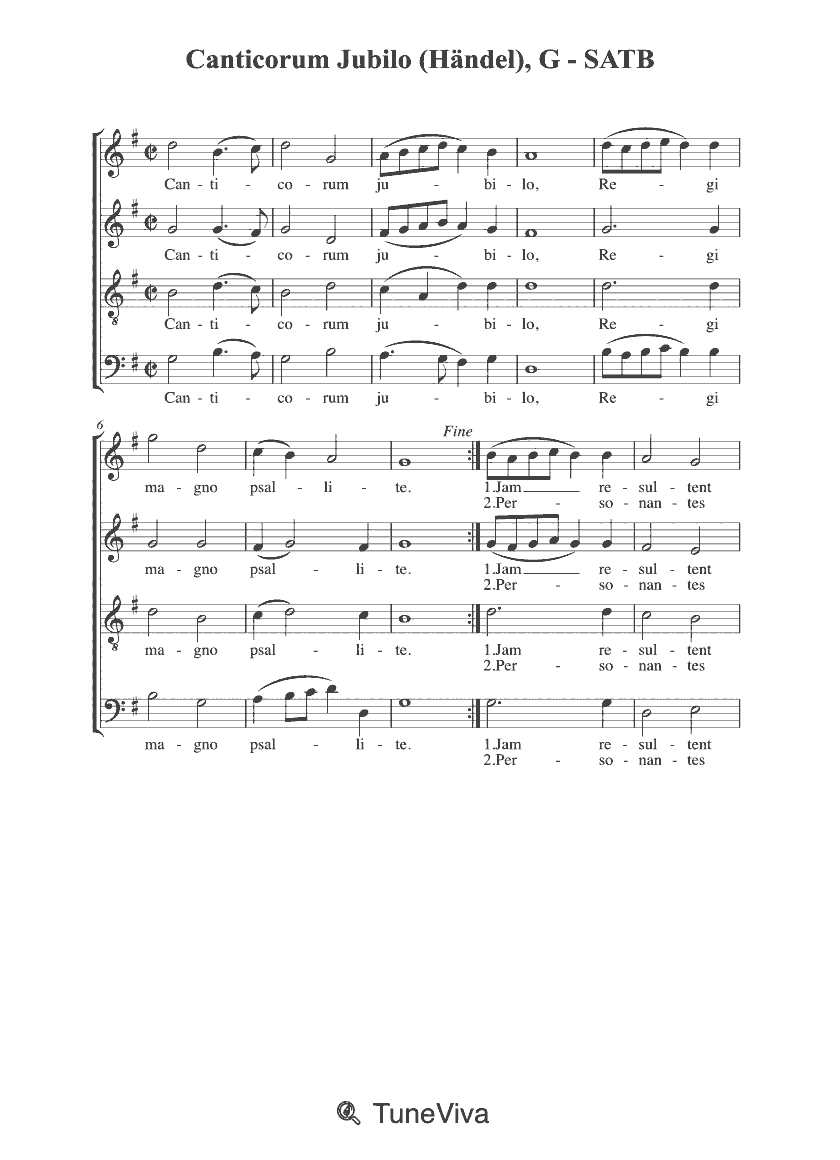
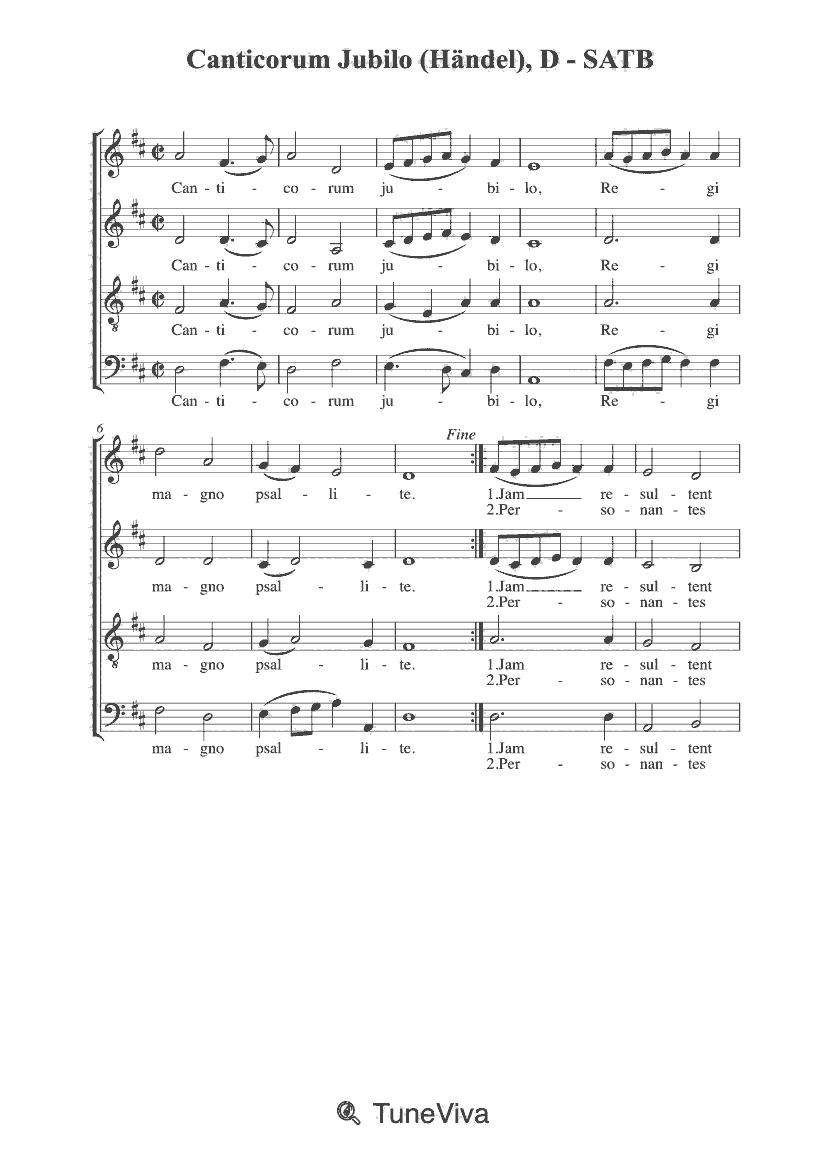
Canticorum Jubilo (Händel), G - SATB
Joshua 1748
classical
4 tracks
Handel's Water Music was played on a barge on the Thames in 1717; his Messiah was first heard in Dublin in 1742. Both facts belong to a career that began in Halle, Germany, and ended in London, where he was naturalised British in 1727. This catalogue holds 365 Handel scores, and 334 of them sit at the lowest complexity index. Seventy-seven carry lyrics, and the whole collection runs to about 1,696 minutes of music.
The range is wider than the Hallelujah chorus. There are opera arias, coronation and oratorio numbers, keyboard suite movements, and instrumental arrangements, including Halvorsen's arrangement of the Passacaglia from Handel's Harpsichord Suite in G minor.
He was born Georg Friedrich Händel in Halle on 5 March 1685, the son of a barber-surgeon, and studied with the organist Friedrich Wilhelm Zachow. After university in Halle he joined the Hamburg opera in 1703 and wrote Almira there, then spent several years in Italy, where Rodrigo and Agrippina were staged. He became Kapellmeister to the Elector of Hanover in 1710 but was in London by 1712 and stayed. He was naturalised in 1727, the year he wrote the coronation anthems for George II, and he died in London on 14 April 1759, buried in Westminster Abbey.
London shaped the music in this catalogue. Handel ran three commercial opera companies and wrote 42 operas, then turned to English oratorio after a breakdown in 1737. Messiah was composed in 1741 and premiered in Dublin on 13 April 1742. Earlier came the Water Music for George I in 1717; later came the Music for the Royal Fireworks in 1749. The keyboard suites, the concerti grossi Op. 6 and the coronation anthems belong to the same working life, and they are the source of many of the shorter pieces catalogued here.
The TuneViva holdings reflect that breadth. The catalogue presents all 365 scores as public domain, 77 include lyrics, and the total playing time is roughly 1,696 minutes across 1,075,104 notated notes. Most entries are rated complexity index 0, which makes this a practical starting point for a keyboard player or a choral singer. Expect duplicate titles under different spellings — Händel, Hndel, Handel — because the underlying catalogue has never merged name variants.
These scores cover several different jobs. The keyboard suite movements are dance forms — allemande, courante, sarabande, gigue — and need clear articulation and restrained ornament rather than romantic rubato. The opera and oratorio arias are vocal lines with a continuo part, so a pianist has to supply the harmony and leave room for the singer. Choral entries such as the Hallelujah Chorus expect four-part balance and a firm, steady pulse. The Water Music and concerto movements reward a bright, dance-like touch.
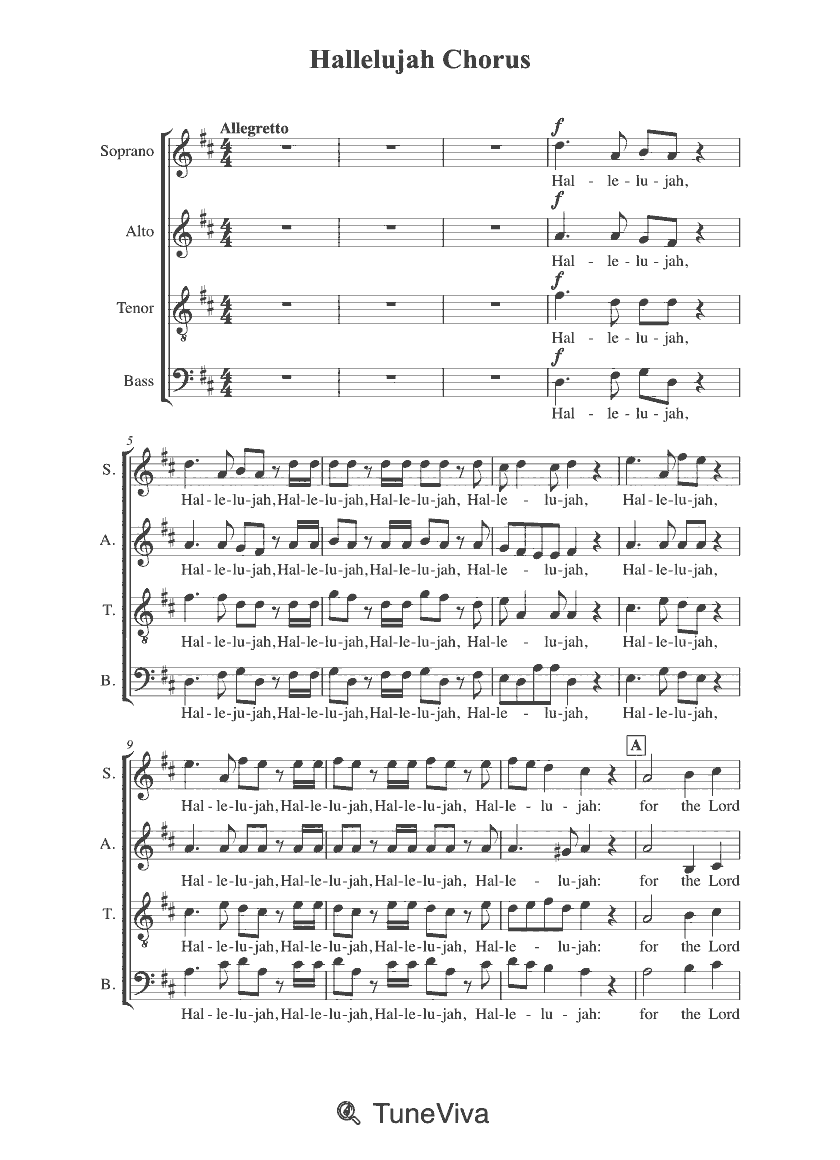
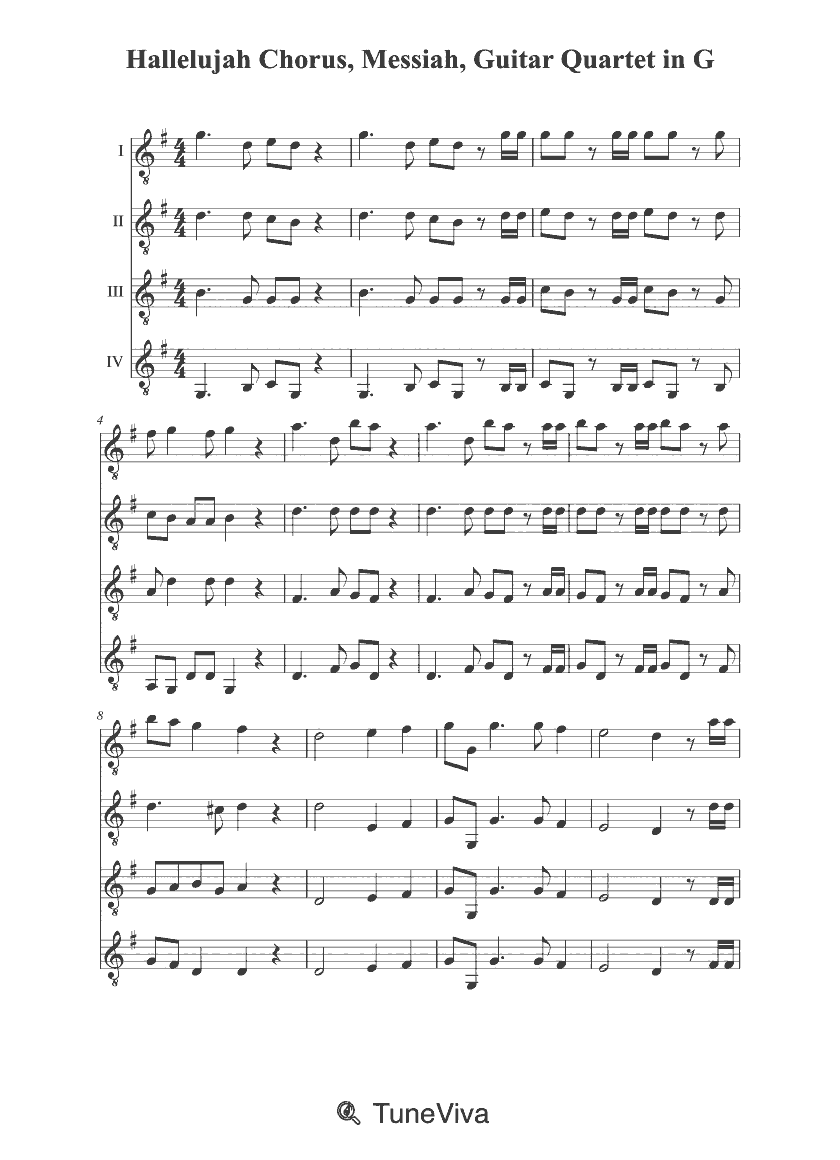
A choral setting in G major for four voices and the most-viewed Handel item in this catalogue.
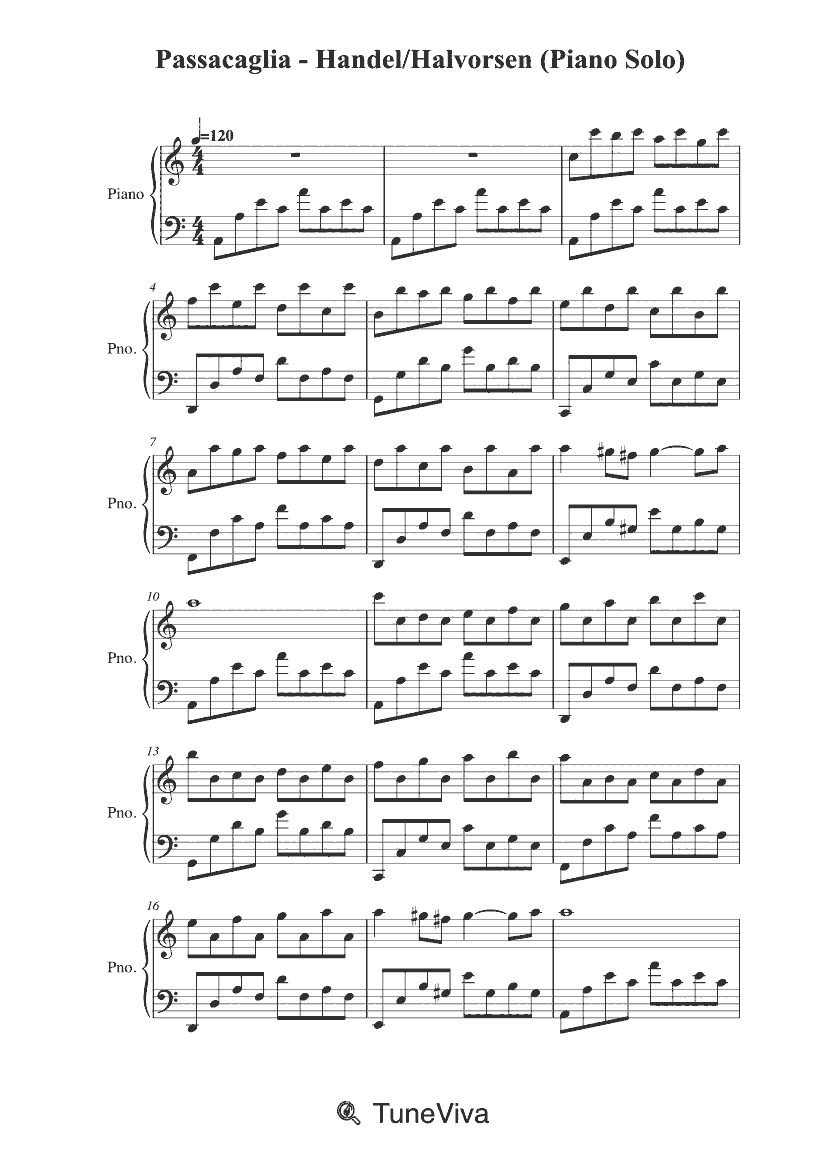
The passacaglia from Handel's Harpsichord Suite in G minor, HWV 432, in Johan Halvorsen's celebrated arrangement, here set for piano.
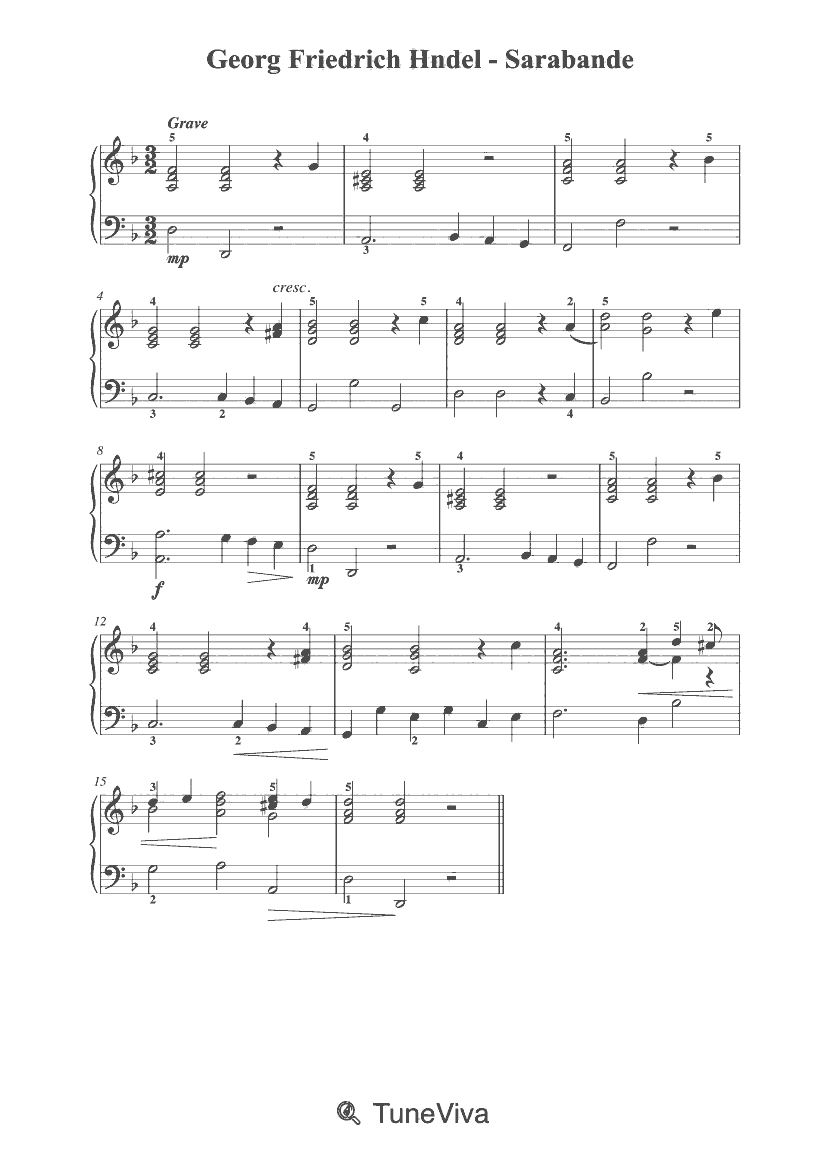
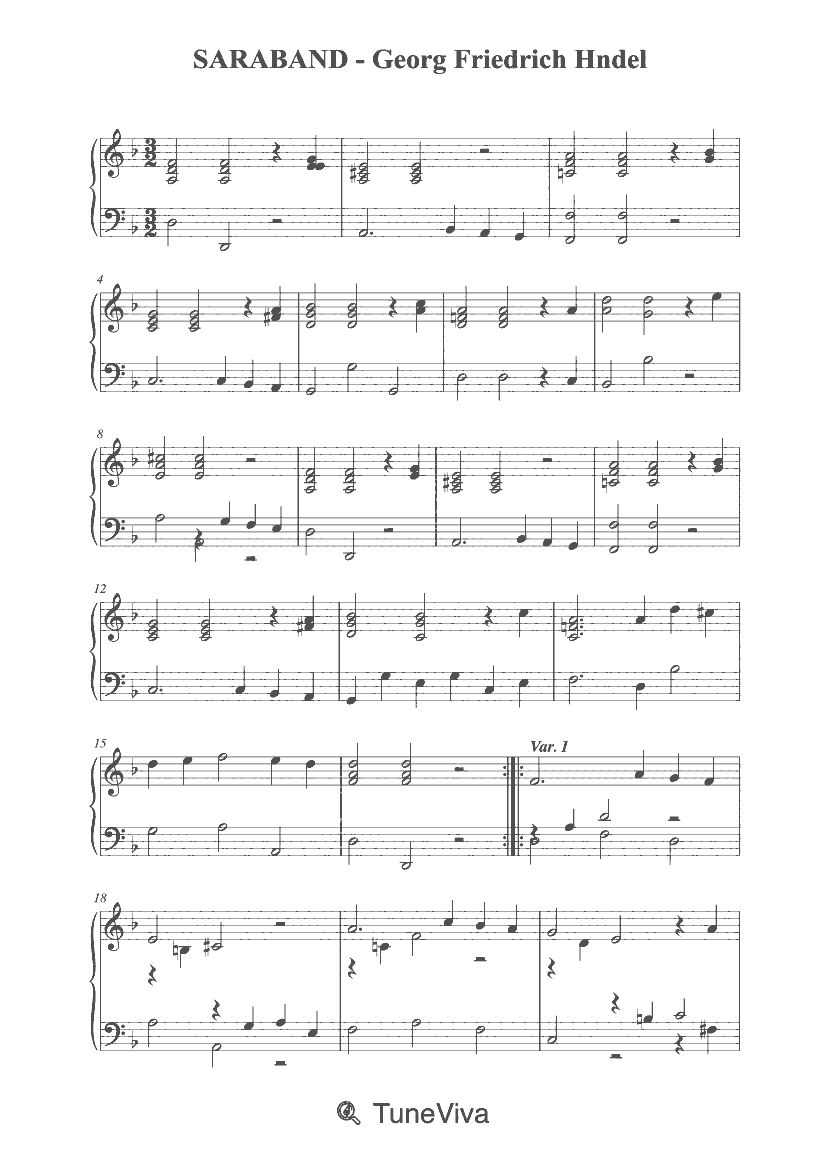
The sarabande from the Keyboard Suite in D minor, HWV 437, a stately movement familiar from film and television.
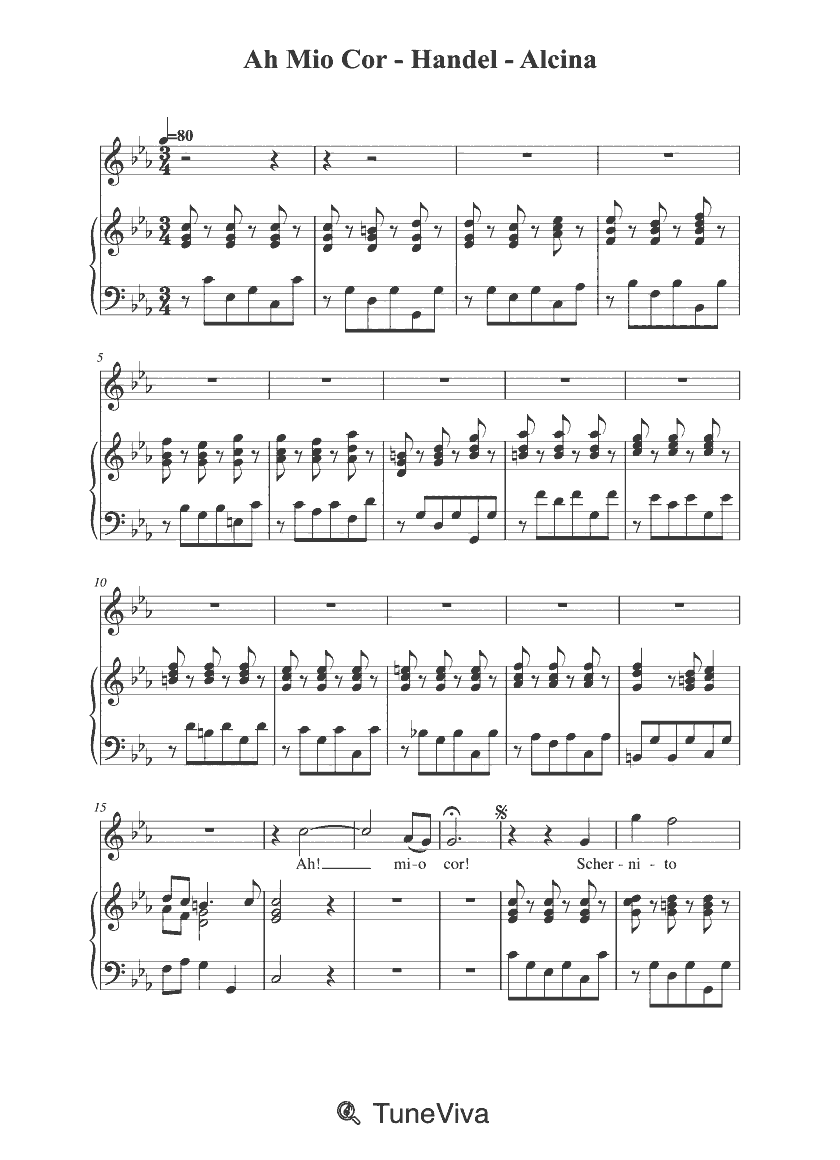
One of Handel's finest opera arias, sung by Alcina herself in Act II and often performed as a standalone recital piece.
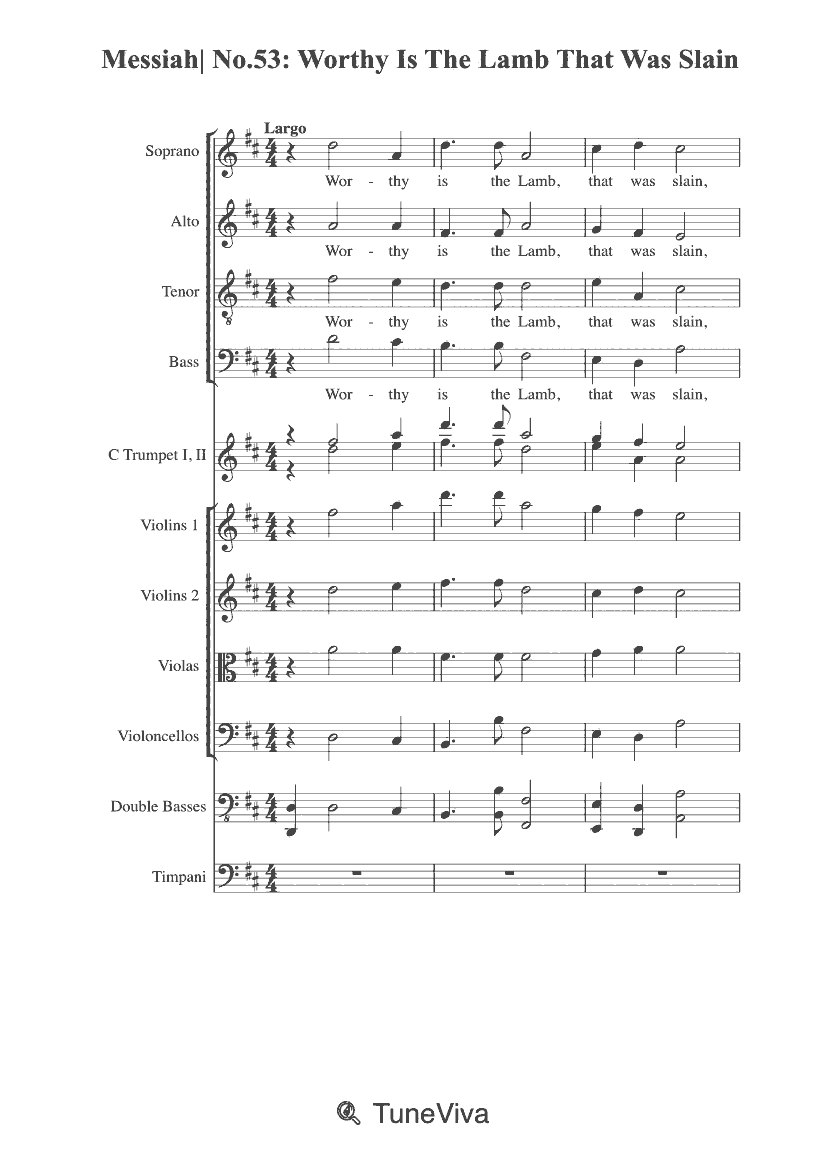
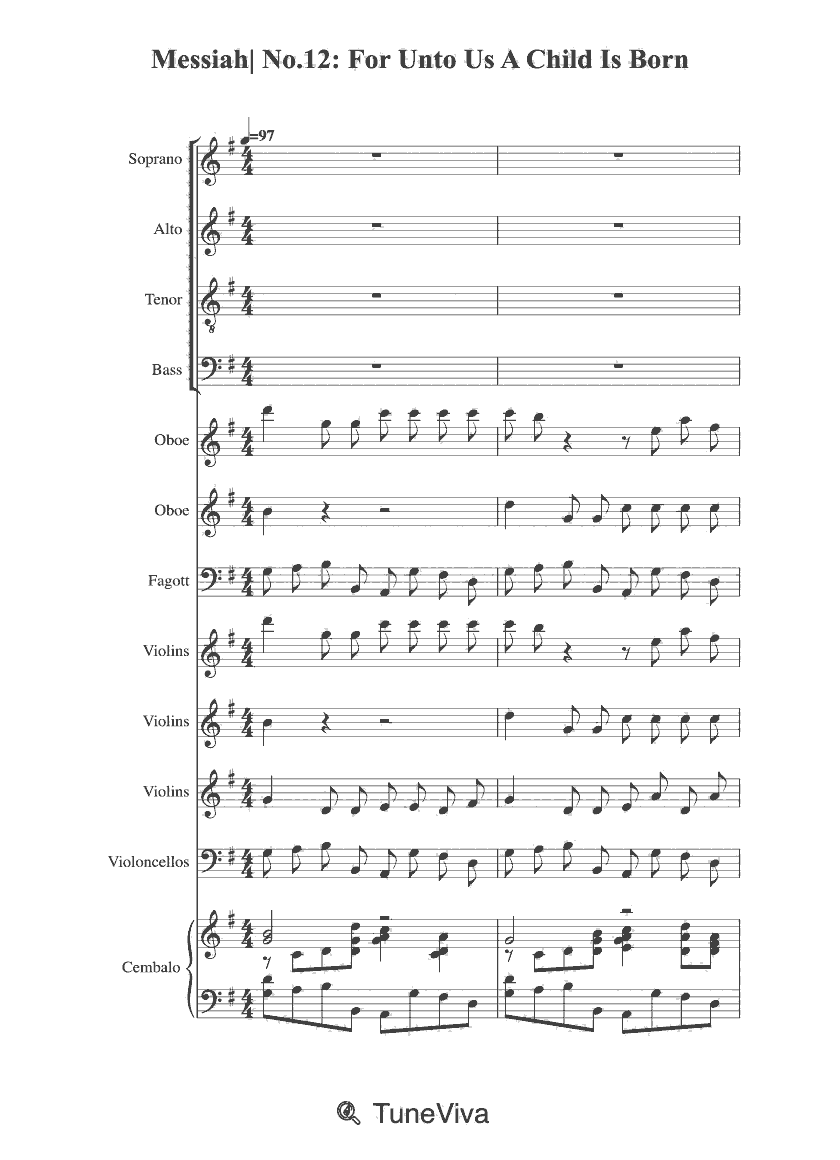
The closing chorus of Part II of Messiah and the single most recognisable piece of English choral music.
The opening aria of Serse, a long-breathed melody that became known in the nineteenth century as Handel's Largo.
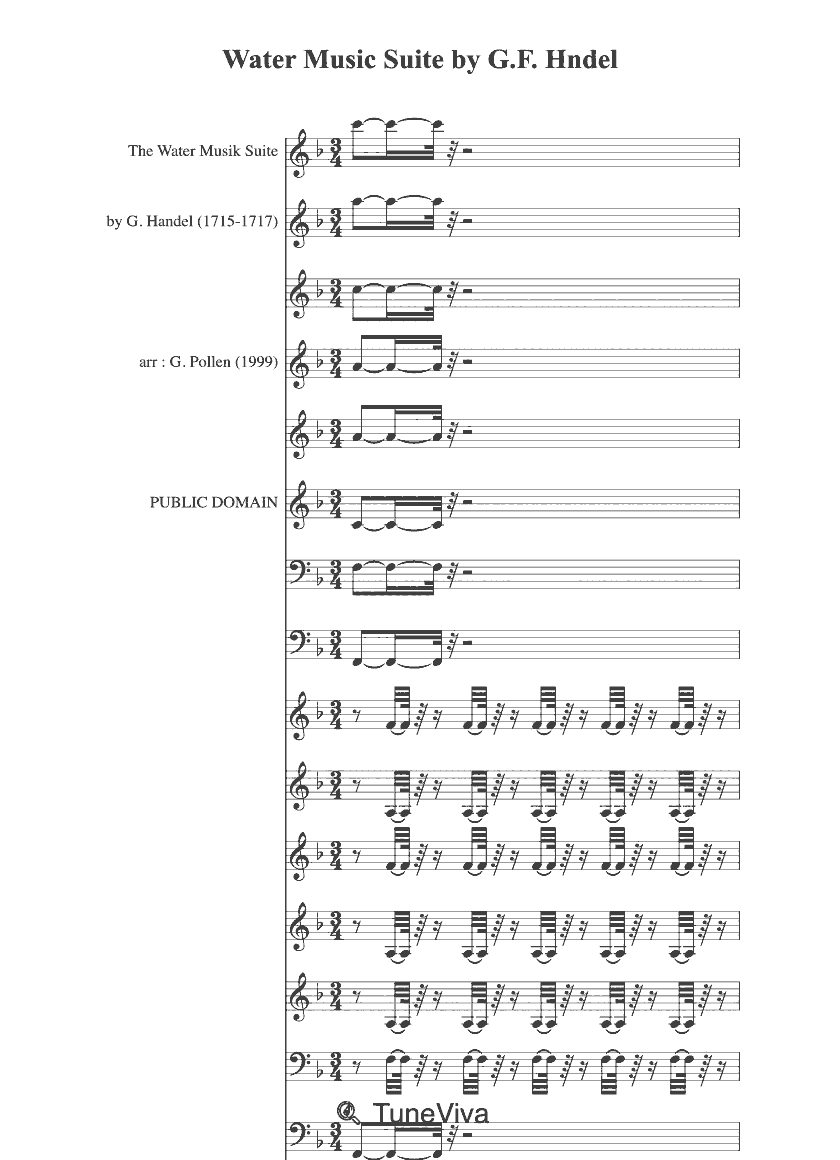
A suite drawn from the three Water Music sets written for a royal river party in 1717.
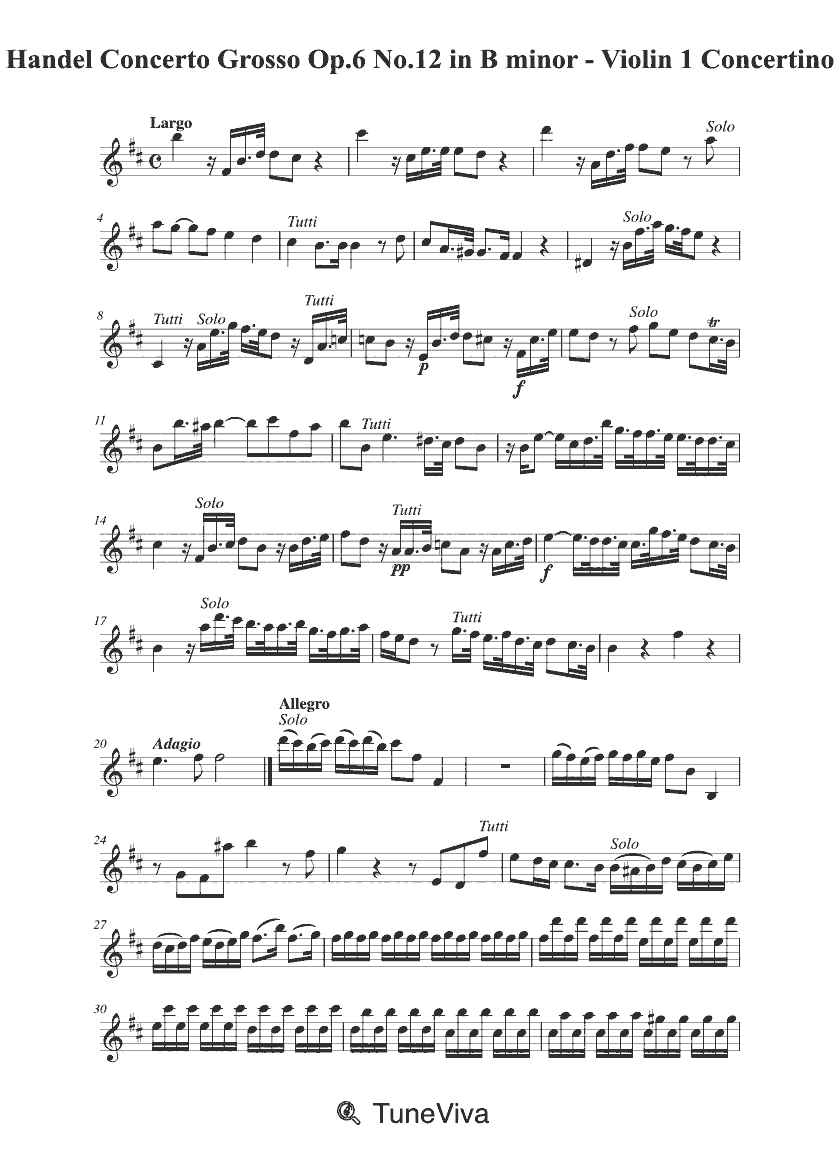
The first violin part of the last of the twelve Op. 6 concerti grossi, published in 1740.
Both. He was born in Halle in 1685 and trained in Germany and Italy, but settled in London in 1712 and became a naturalised British subject in 1727.
Johan Halvorsen arranged the passacaglia from Handel's Harpsichord Suite HWV 432 as a violin-and-viola duo. The catalogue entry is a piano solo version of that arrangement.
Yes. It holds the Hallelujah Chorus and the aria O Thou That Tellest Good Tidings to Zion, among other choral and instrumental items.
The raw catalogue preserves name variants exactly as they were entered. They all point to the same composer, George Frideric Handel.
Catalog editions and arrangements attributed to George Frideric Handel.
Joshua 1748
(alte spanische Tanzform)
Alcina - original key
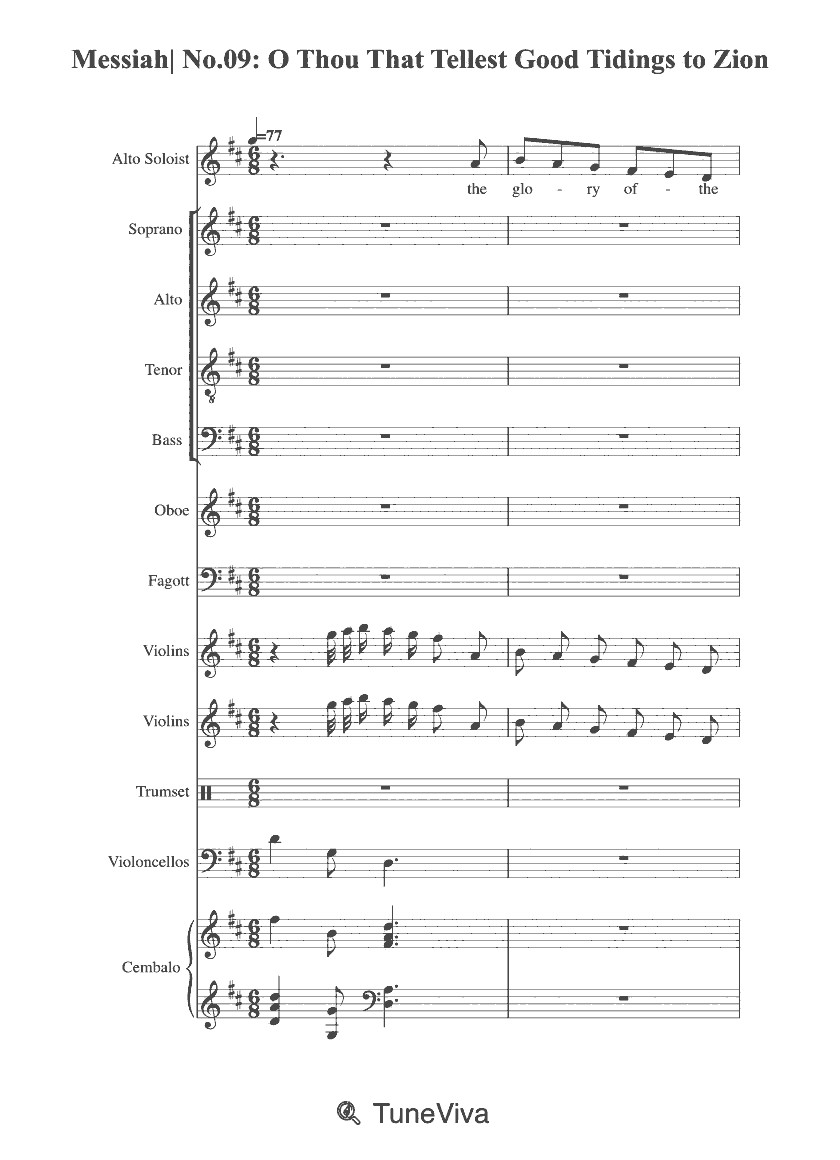
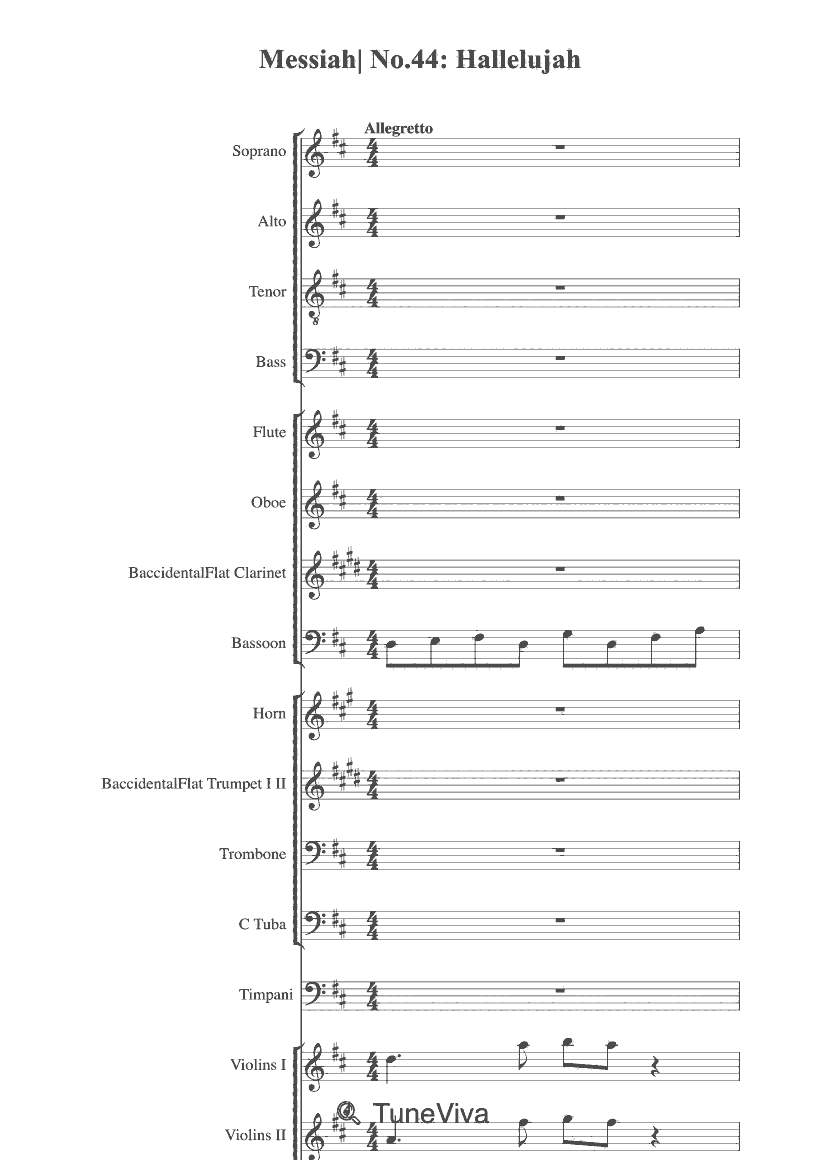
Messiah
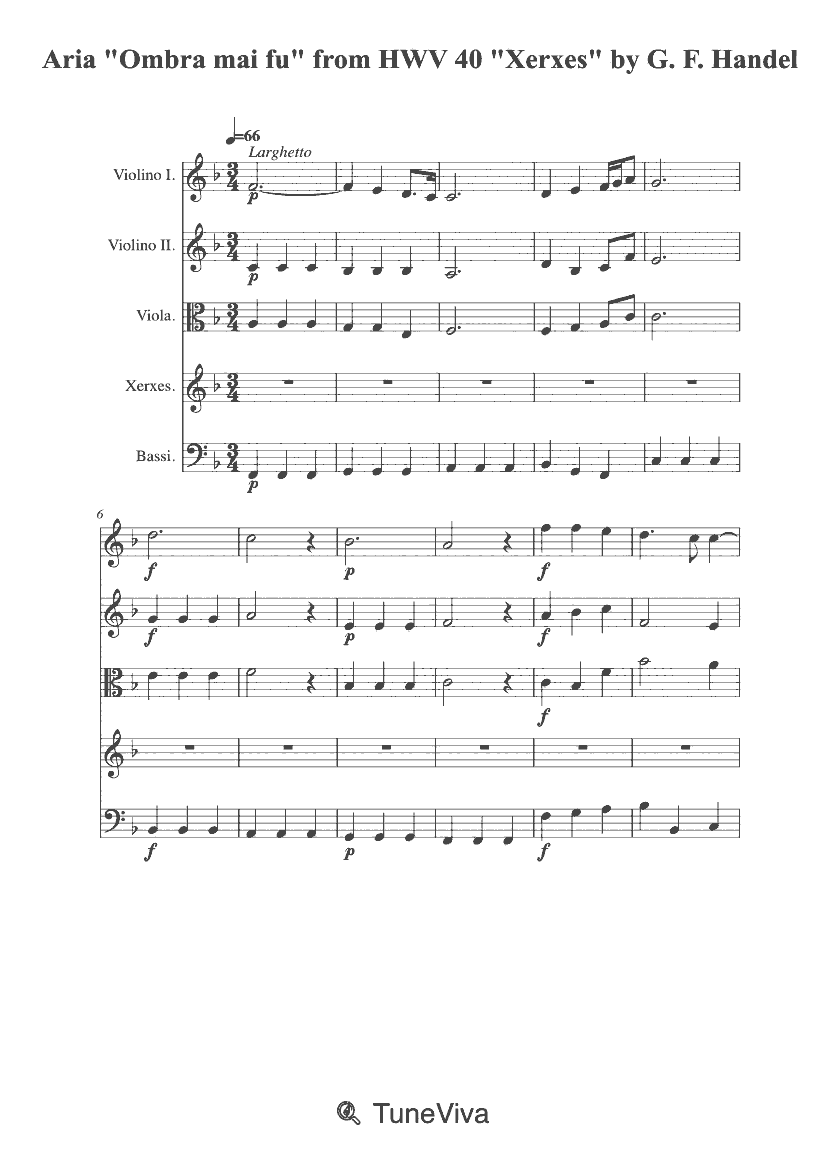
Aria from HWV 40 Xerxes
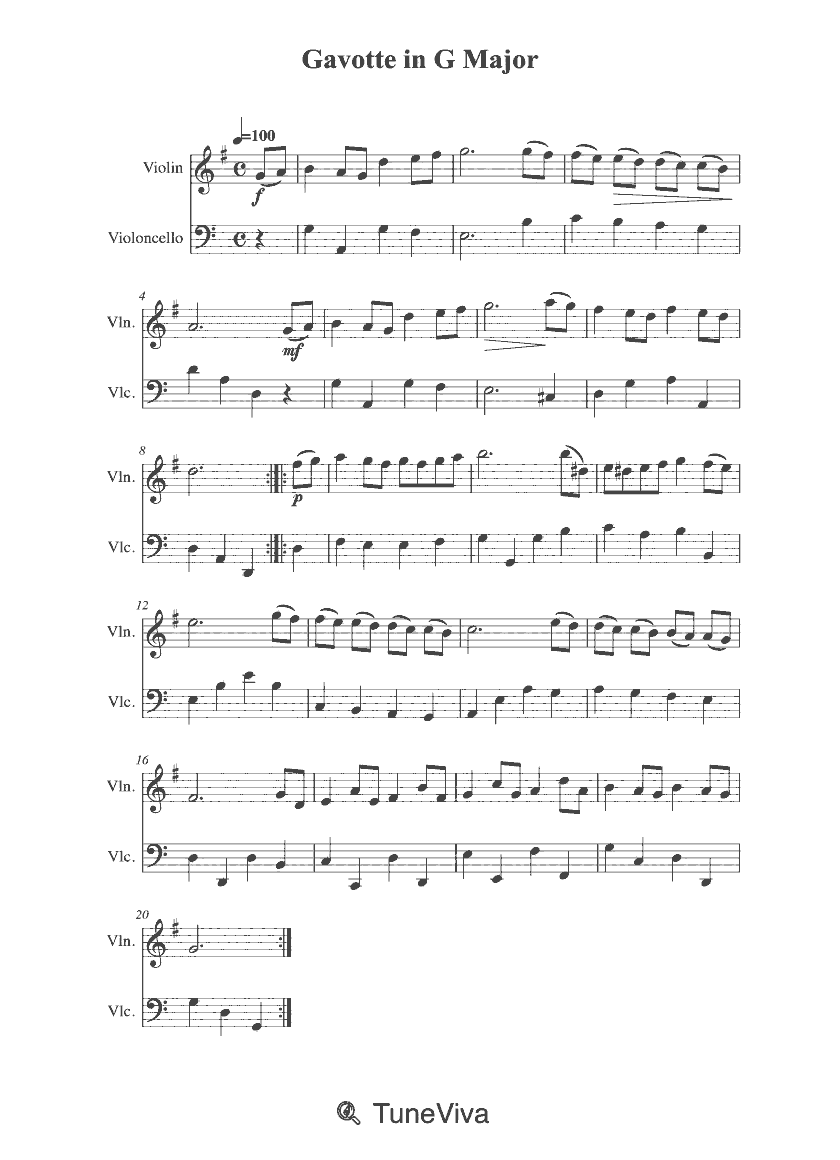
in G major
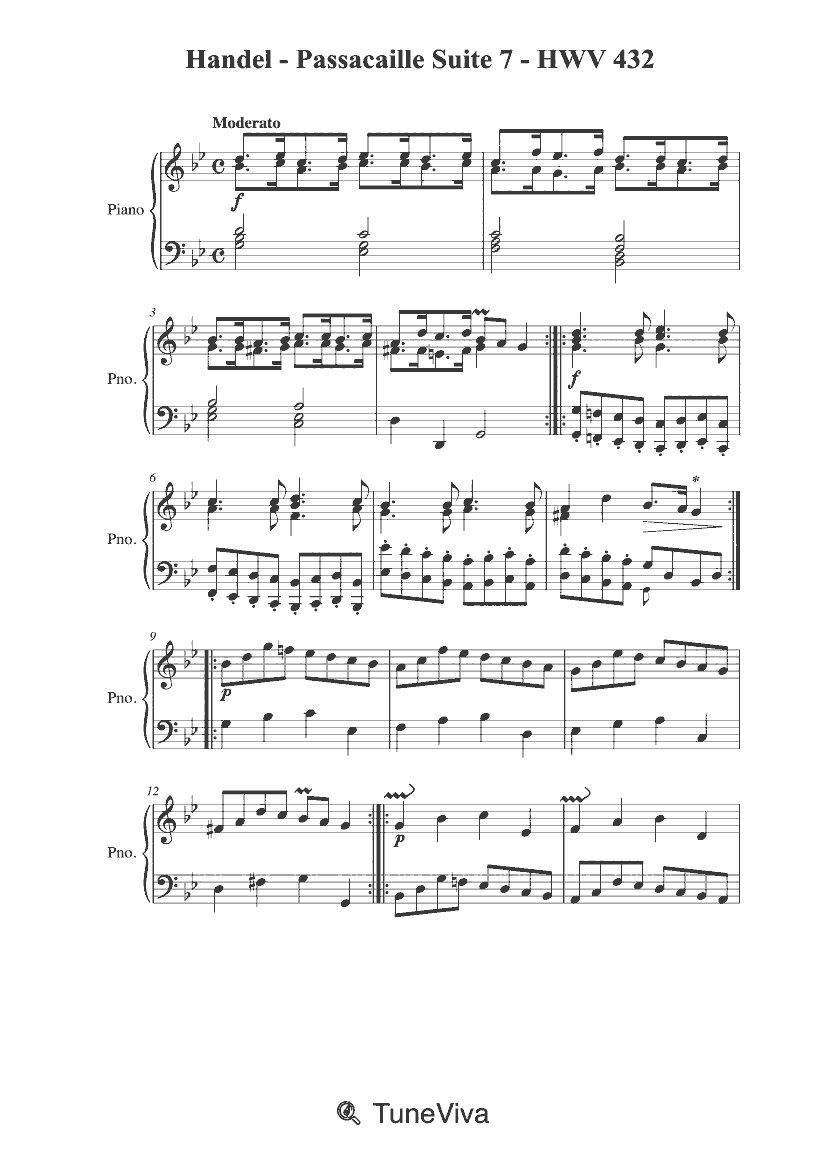
Suite 7 - HWV 432
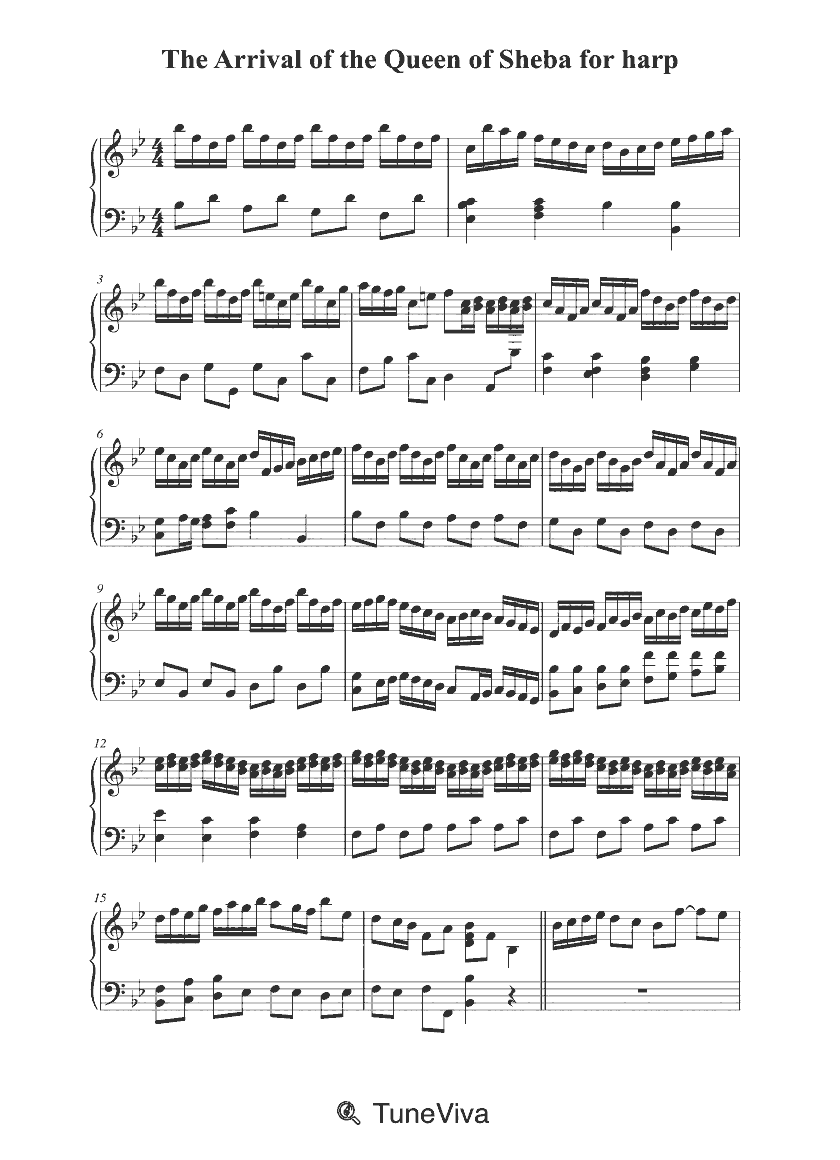
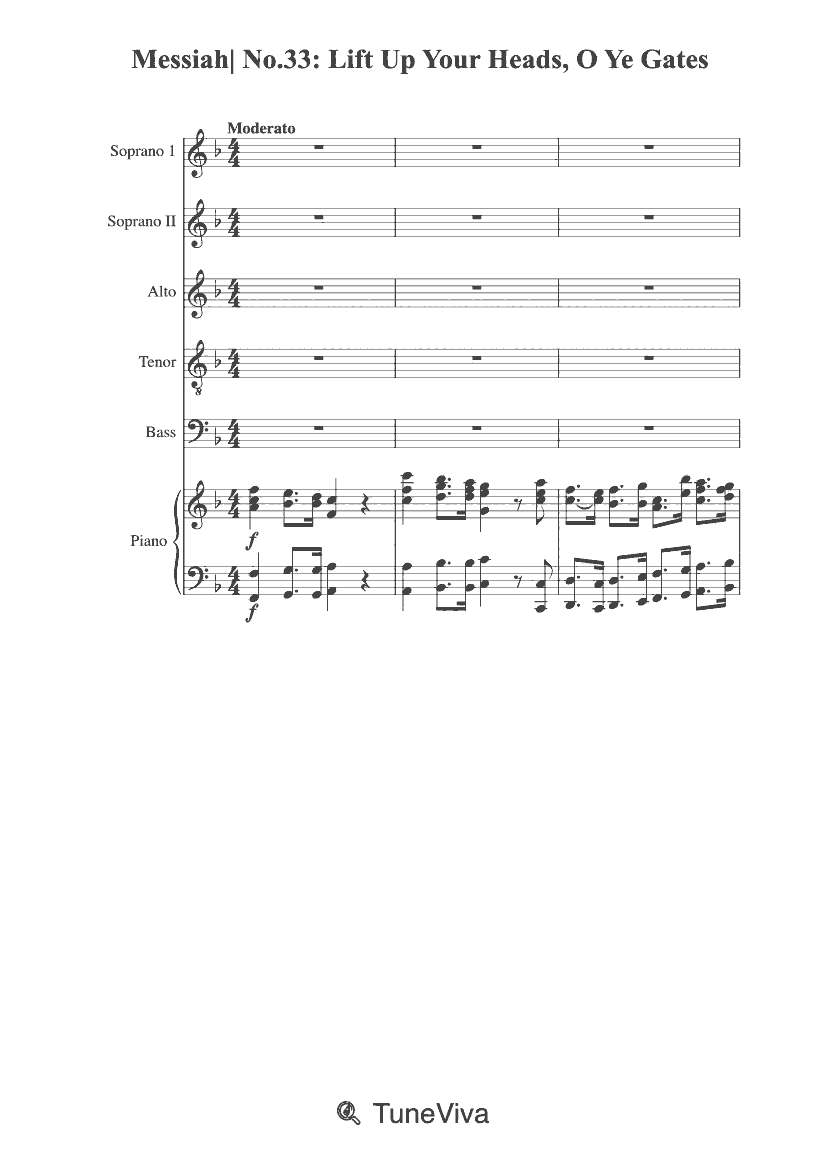
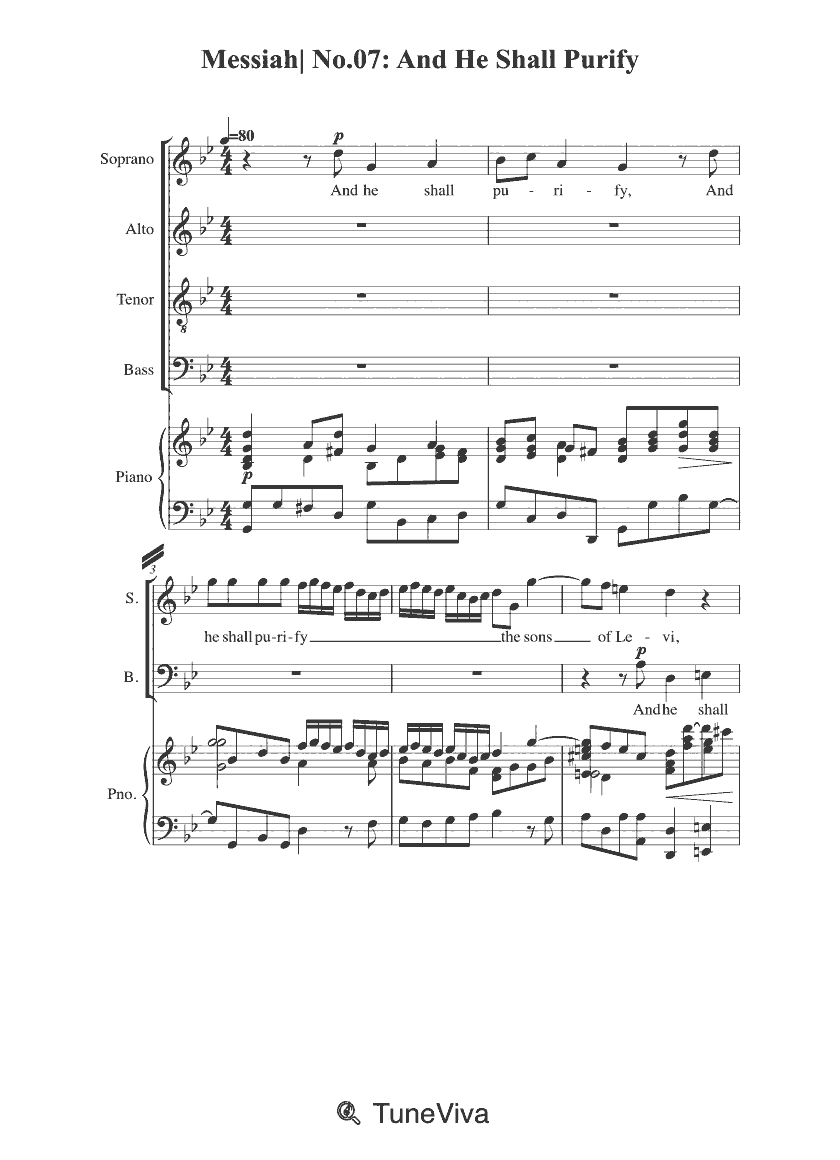
Joshua 1748