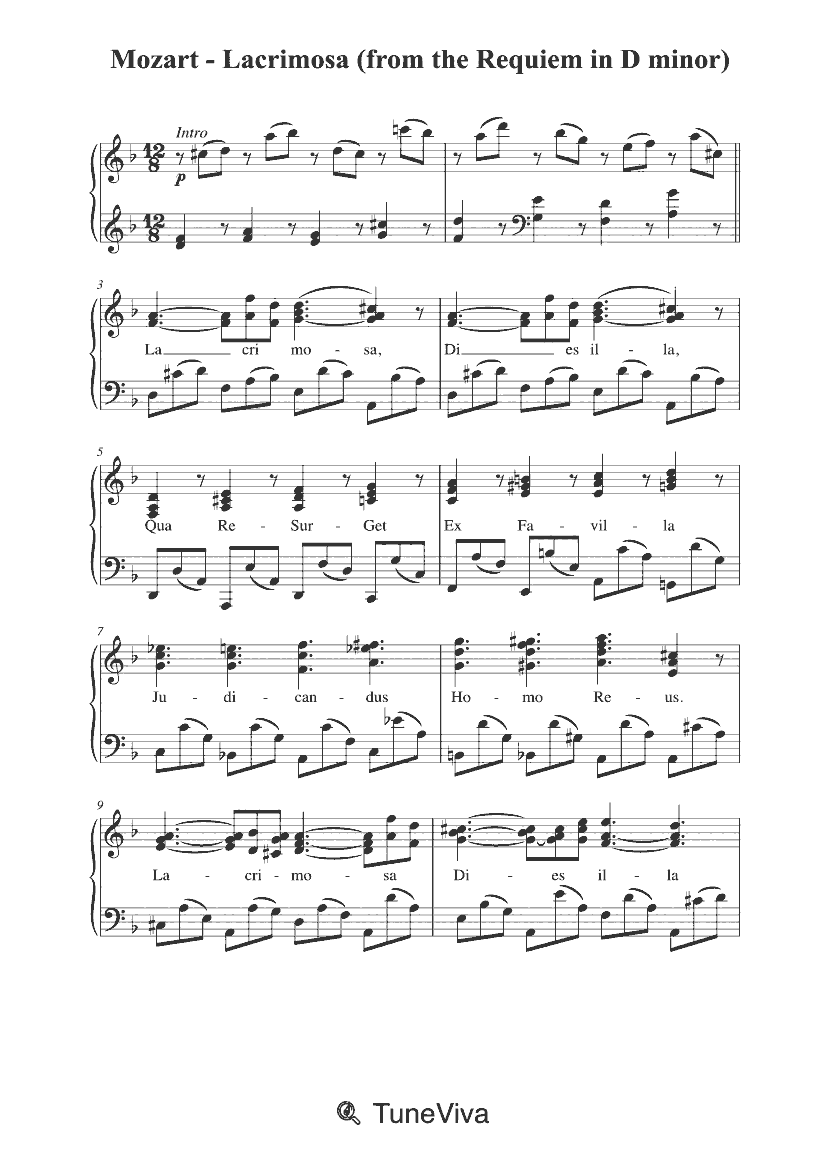
Mozart - Lacrimosa (from the Requiem in D minor)
Wolfgang Amadeus Mozart
(from the Requiem in D minor)
Piano · 56 sec
Open score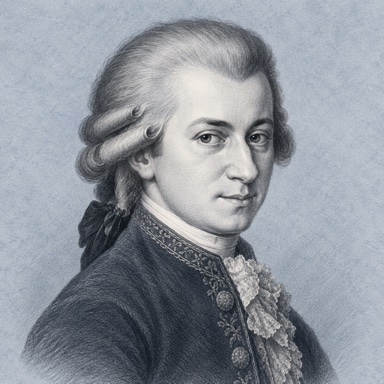
405 Mozart scores to preview and download, from the Minuet K. 2 to the Requiem K. 626, including the piano sonatas, opera arias and concerto movements.
The most-viewed Mozart score in the catalogue, from the Requiem K. 626, completed after his death by Franz Xaver Süssmayr.
The opening movement of K. 545, which Mozart described as a little piano sonata for beginners; completed in 1788.
The Act I duet for Don Giovanni and Zerlina from the 1787 opera, with words by Lorenzo Da Ponte.
K. 2, entered in Leopold's notebook for Nannerl in January 1762 when Wolfgang was five or six.
An arrangement of the finale of Piano Sonata No. 11, K. 331, a movement imitating Turkish Janissary band music.
The slow movement of the Clarinet Concerto, written in Mozart's final year, 1791.
The opening movement of the G minor symphony, one of the central works of the Classical style.
Use the K. number to distinguish Mozart works with similar titles. For a piano sonata, check whether you have the whole sonata or the movement you want. For an aria, compare the sung range and printed text before choosing a key. For Requiem excerpts, check the movement heading and the actual voice parts before using a score for choir rehearsal.
Compare the instrument and arrangement details below, then open a score to check the notation. Different entries may be arrangements or editions of the same work; available playback tools are shown on each score page.
Wolfgang Amadeus Mozart
(from the Requiem in D minor)
Piano · 56 sec
Open score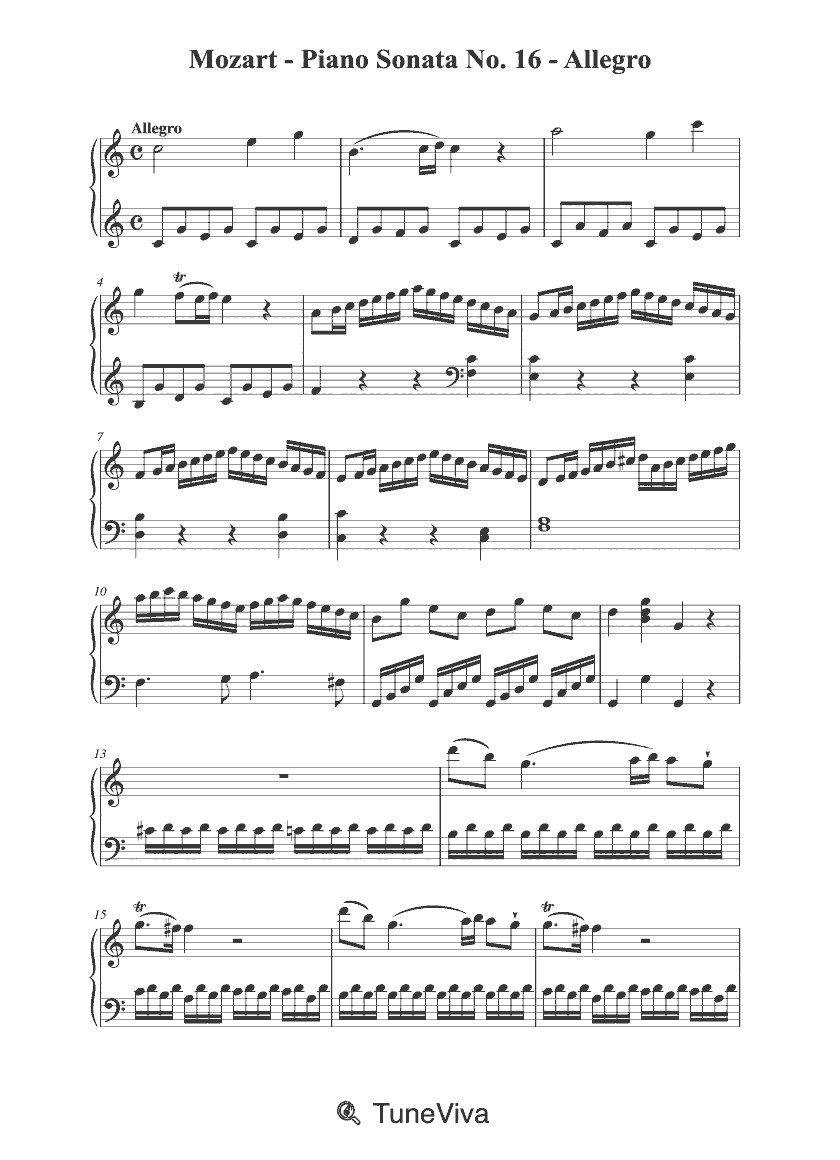
Wolfgang Amadeus Mozart
KV 545
Piano · 4 min 25 sec
Open score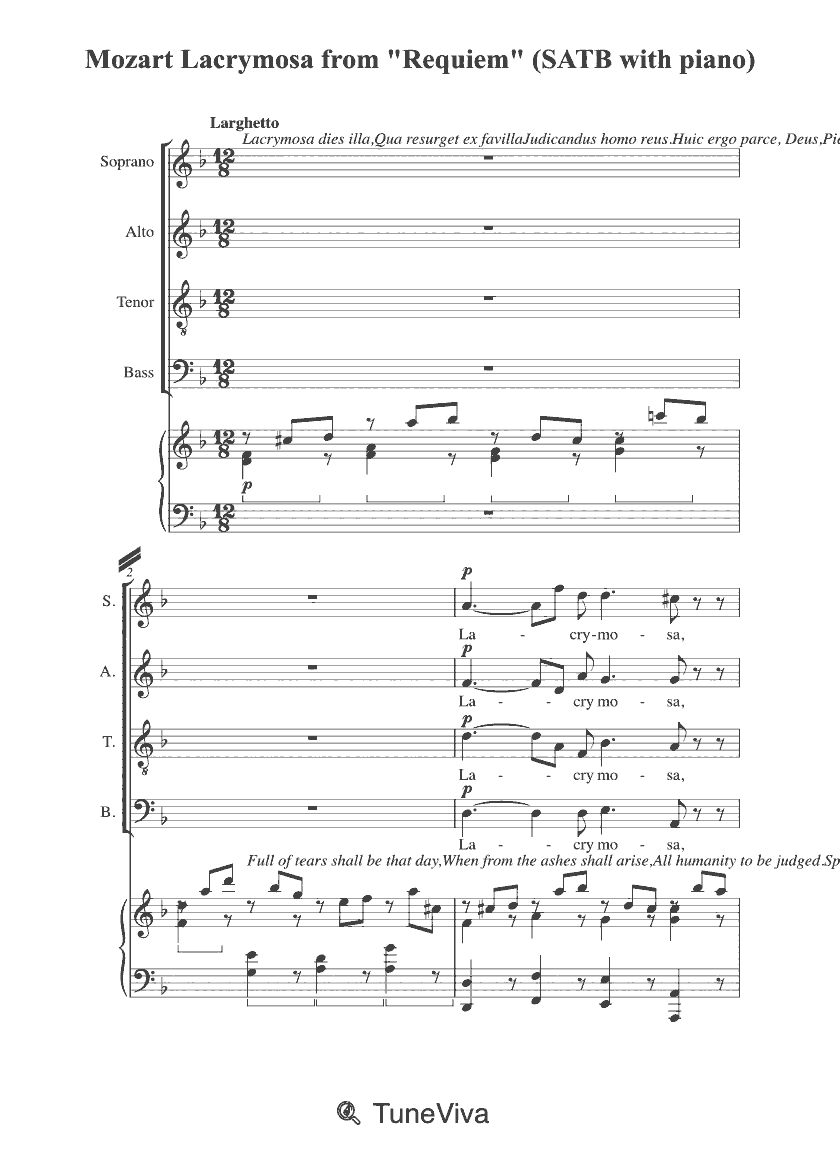
Wolfgang Amadeus Mozart
From Requiem in D Minor K. 626
Soprano; Alto; Tenor +2 parts · 3 min 2 sec
Open score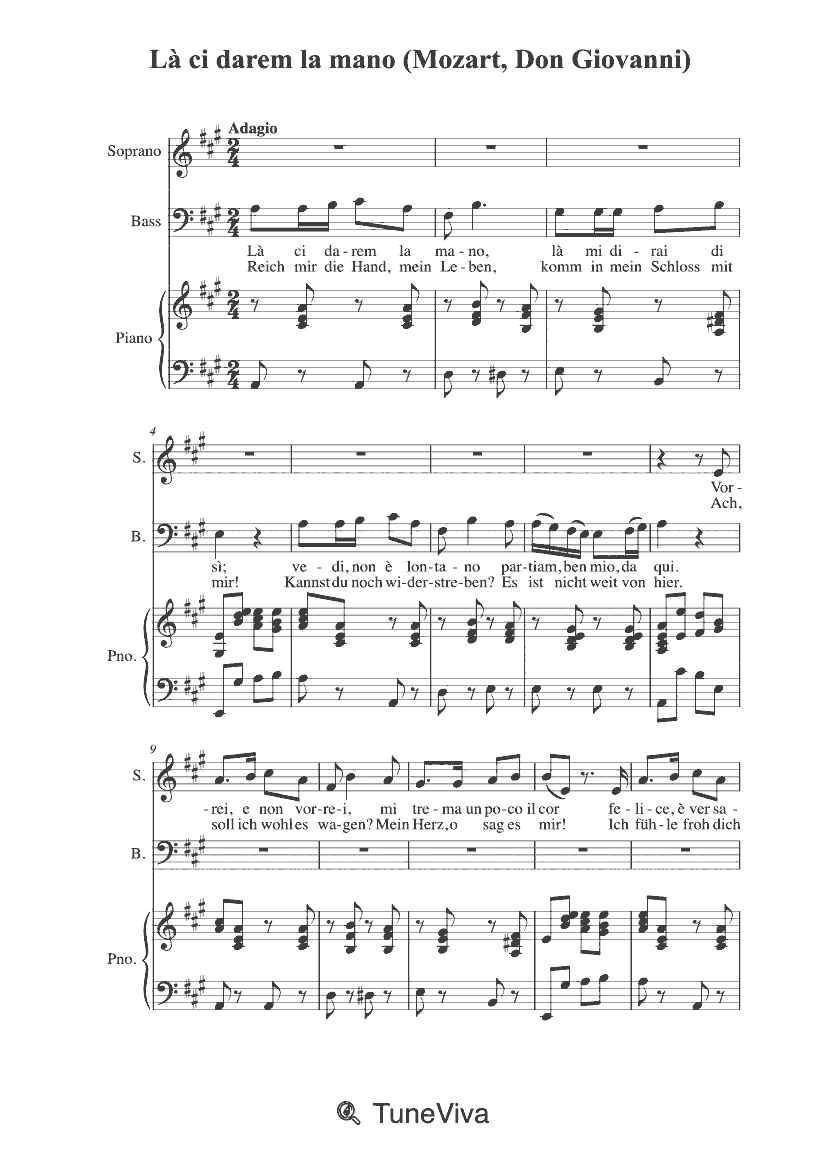
Wolfgang Amadeus Mozart
Don Giovanni / Zerlina
Soprano; Bass; Piano · 2 min 45 sec
Open score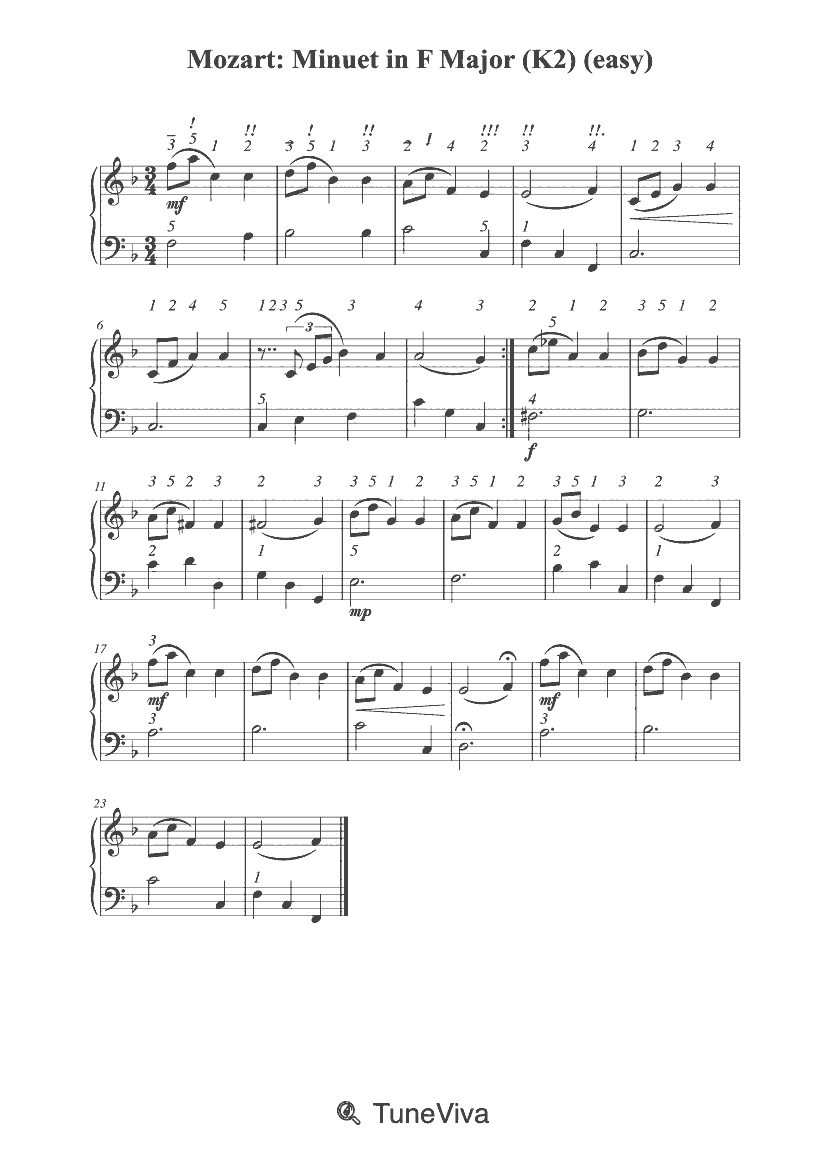
Wolfgang Amadeus Mozart
K2
Piano · 48 sec
Open score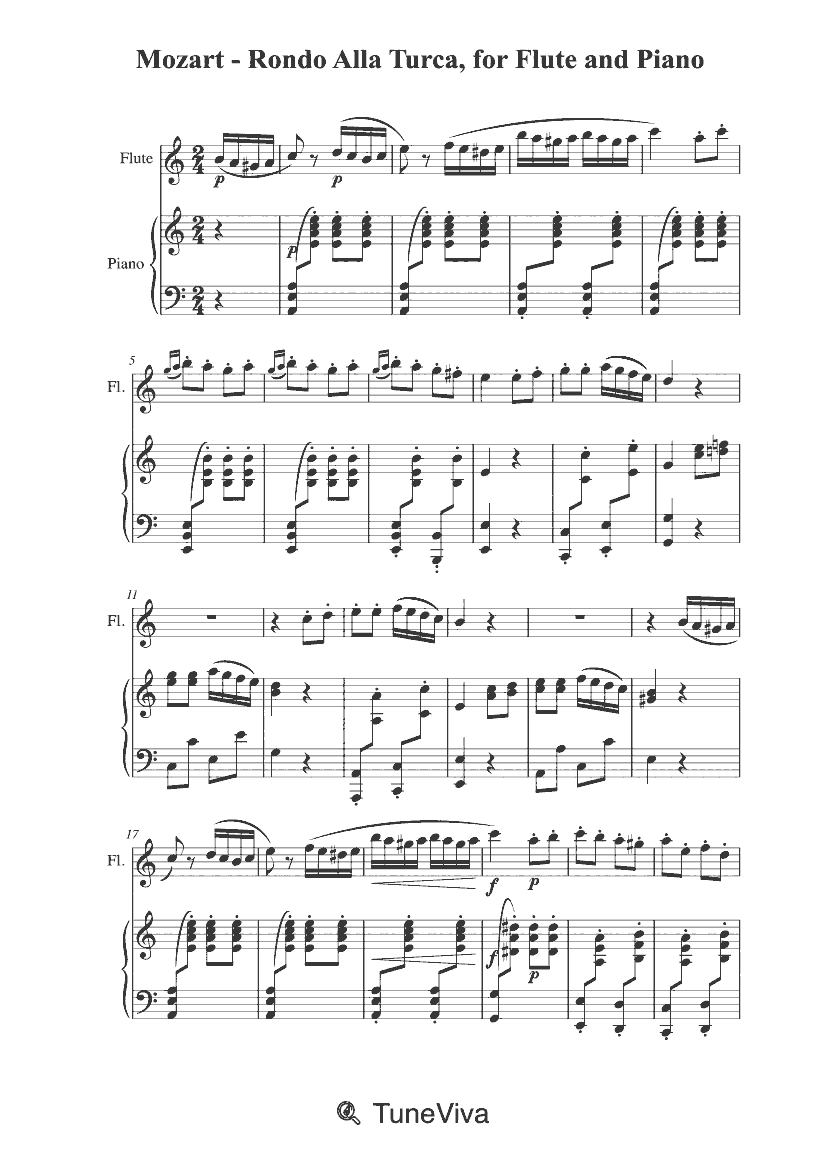
Wolfgang Amadeus Mozart
for Flute and Piano
Flute; Piano · Arr. Robert Kile · 2 min 31 sec
Open score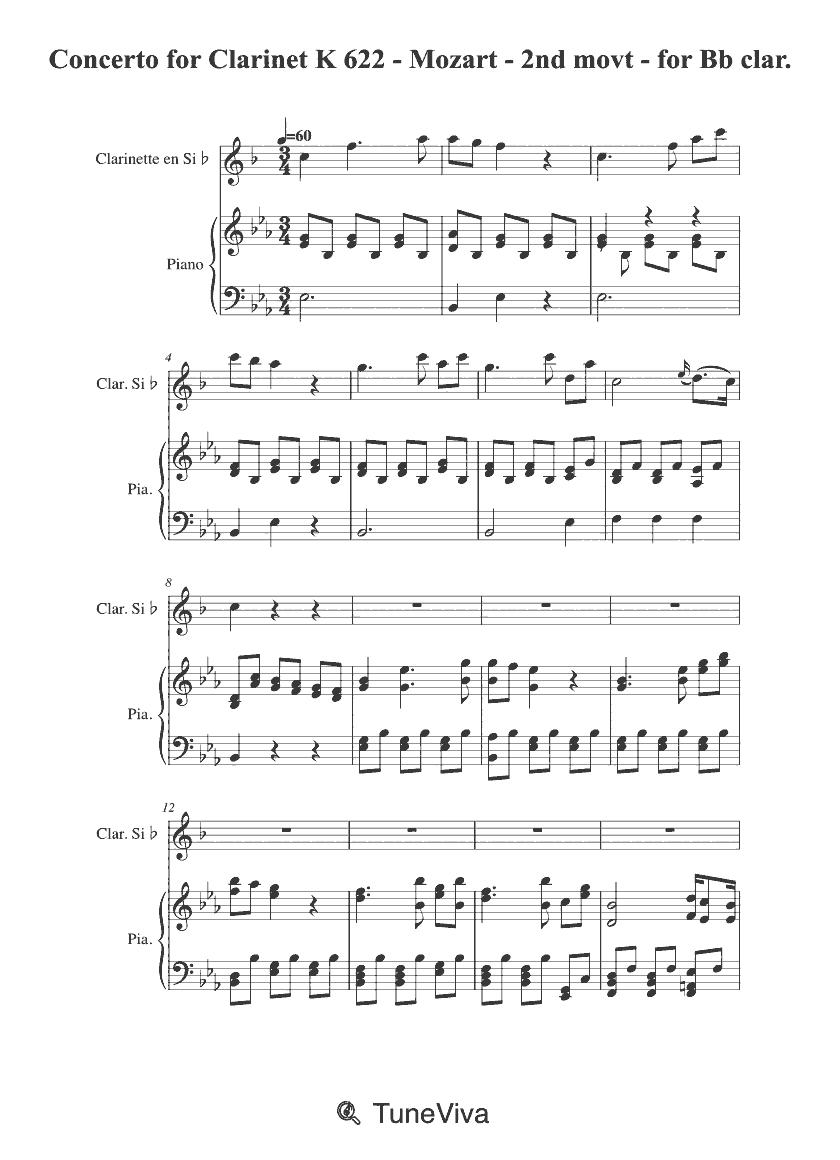
Wolfgang Amadeus Mozart
2ème mouvement - Adagio
Clarinette en Si♭; Piano · 6 min 13 sec
Open score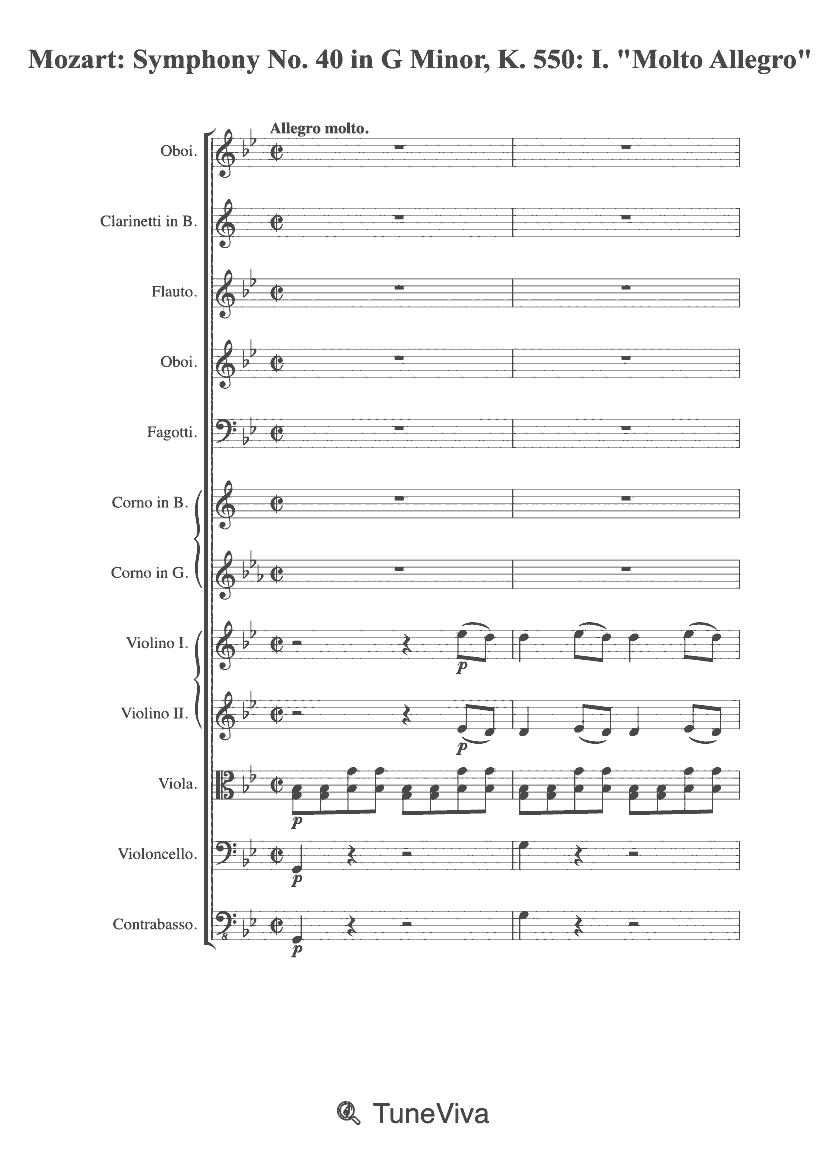
Wolfgang Amadeus Mozart
Oboi.; Clarinetti in B.; Flauto. +8 parts · 25 min 4 sec
Open score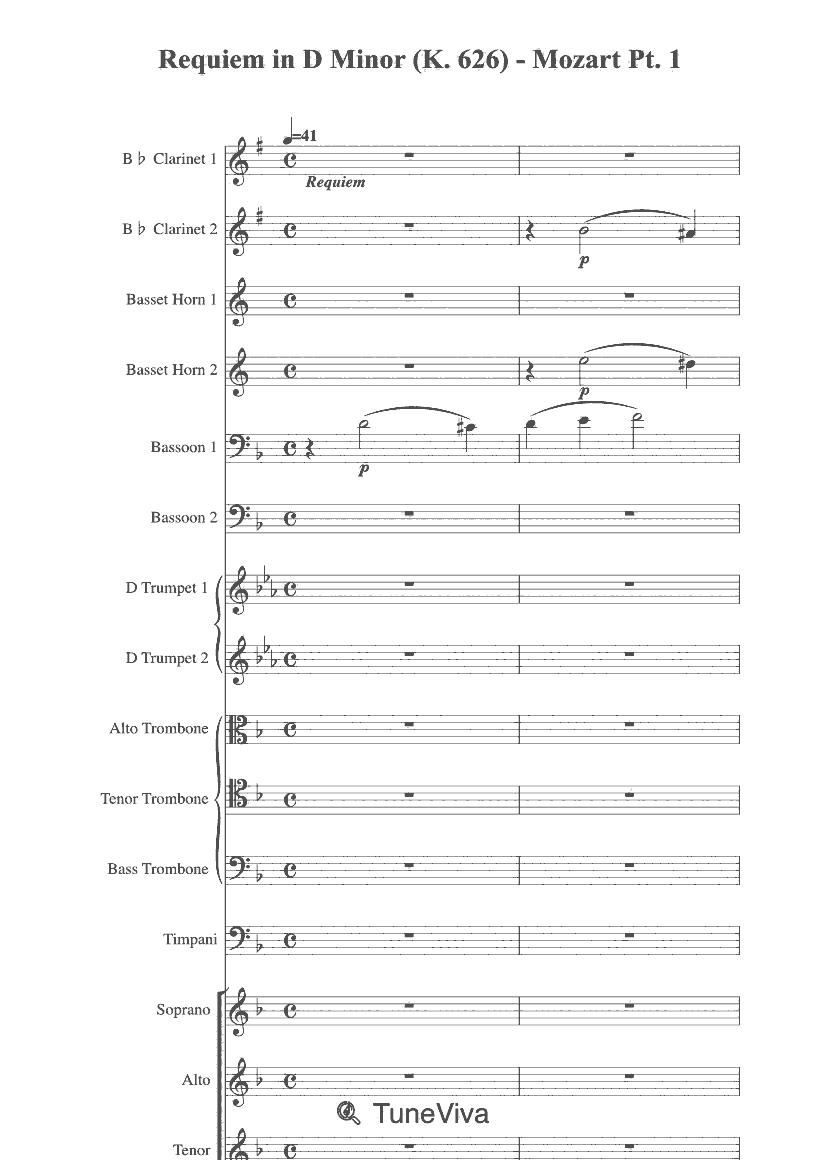
Wolfgang Amadeus Mozart
B♭ Clarinet 1; B♭ Clarinet 2; Basset Horn 1 +18 parts · 22 min 59 sec
Open score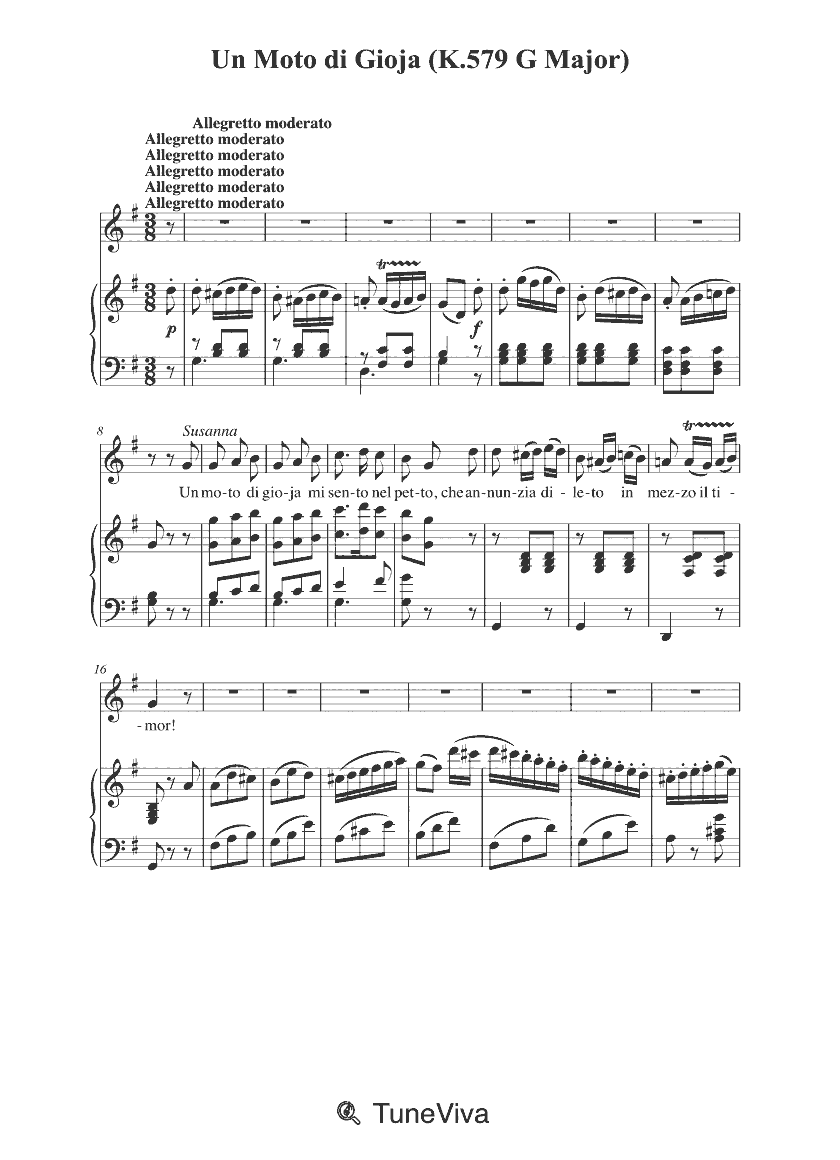
Wolfgang Amadeus Mozart
K.579 Le Nozze di Figaro
Soprano; Piano · 52 sec
Open score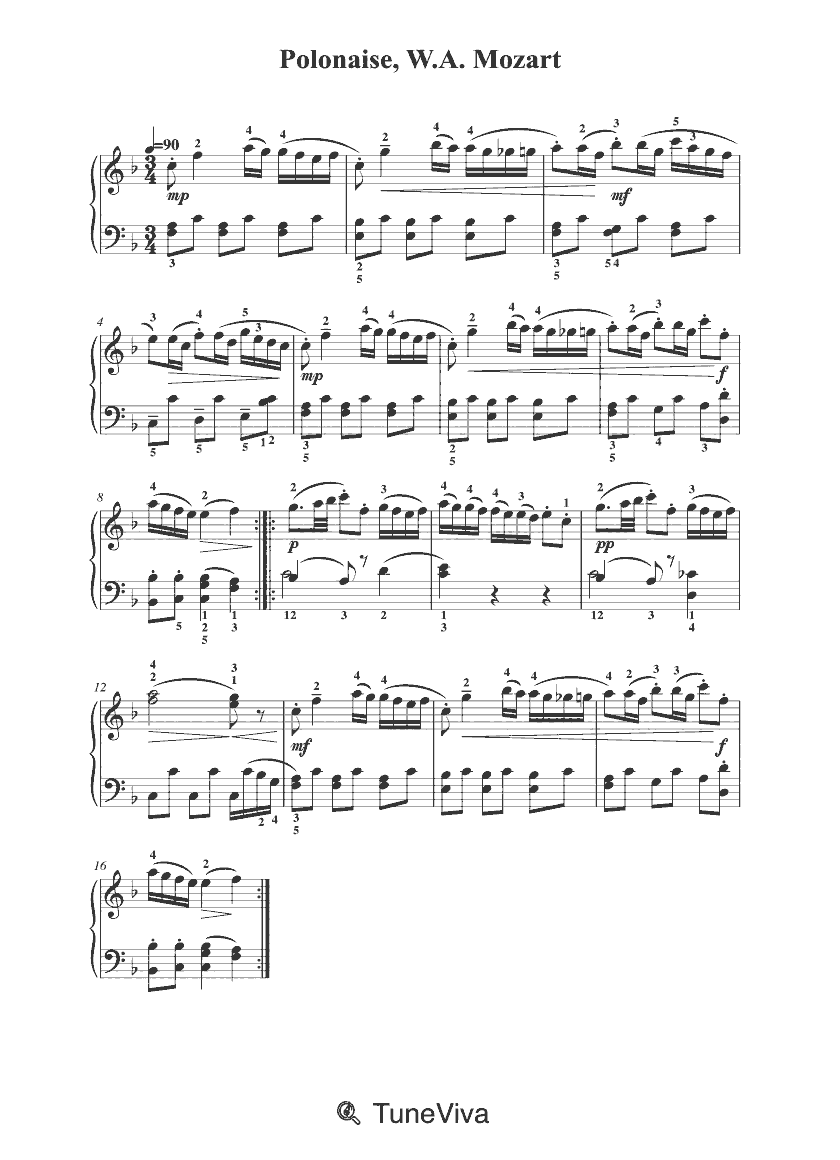
Wolfgang Amadeus Mozart
Piano · 1 min 12 sec
Open score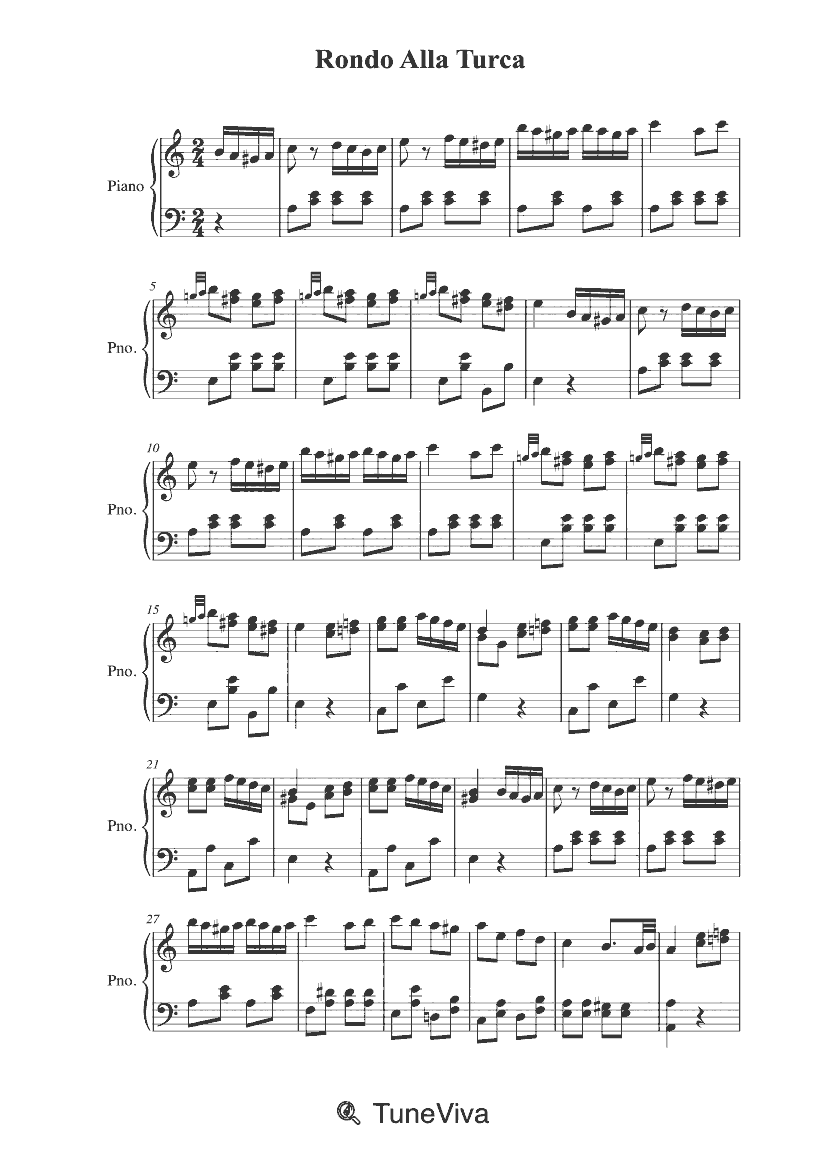
Wolfgang Amadeus Mozart
Turkish March
Piano · 3 min 51 sec
Open score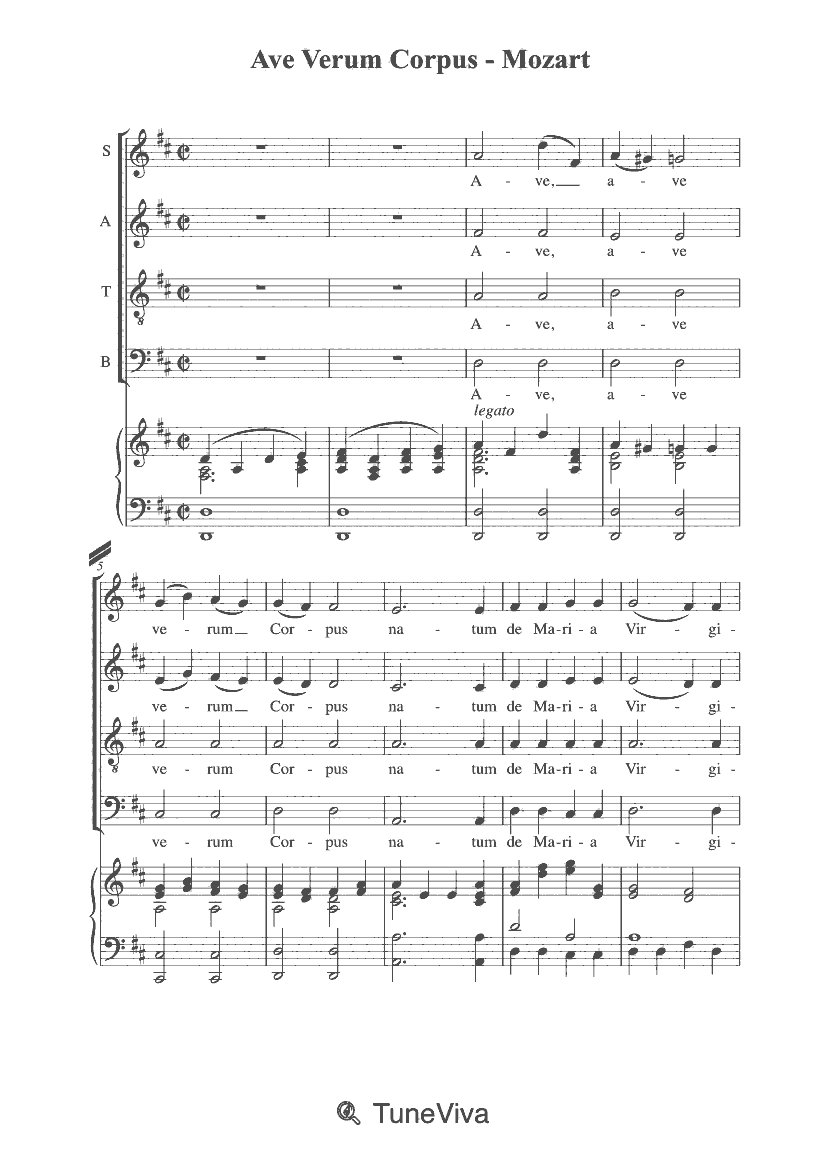
Wolfgang Amadeus Mozart
S; A; T +2 parts · 4 min 27 sec
Open score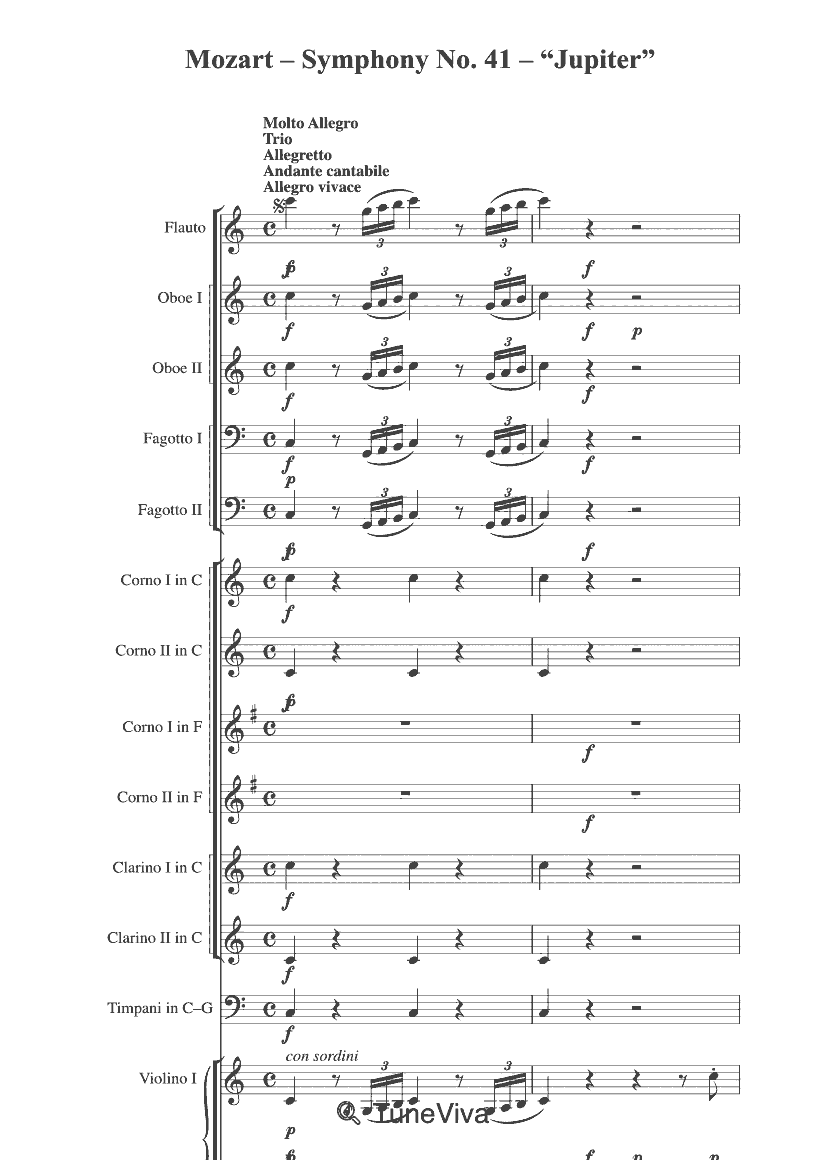
Wolfgang Amadeus Mozart
Flauto; Oboe I; Oboe II +14 parts · 1 hr 18 min 21 sec
Open score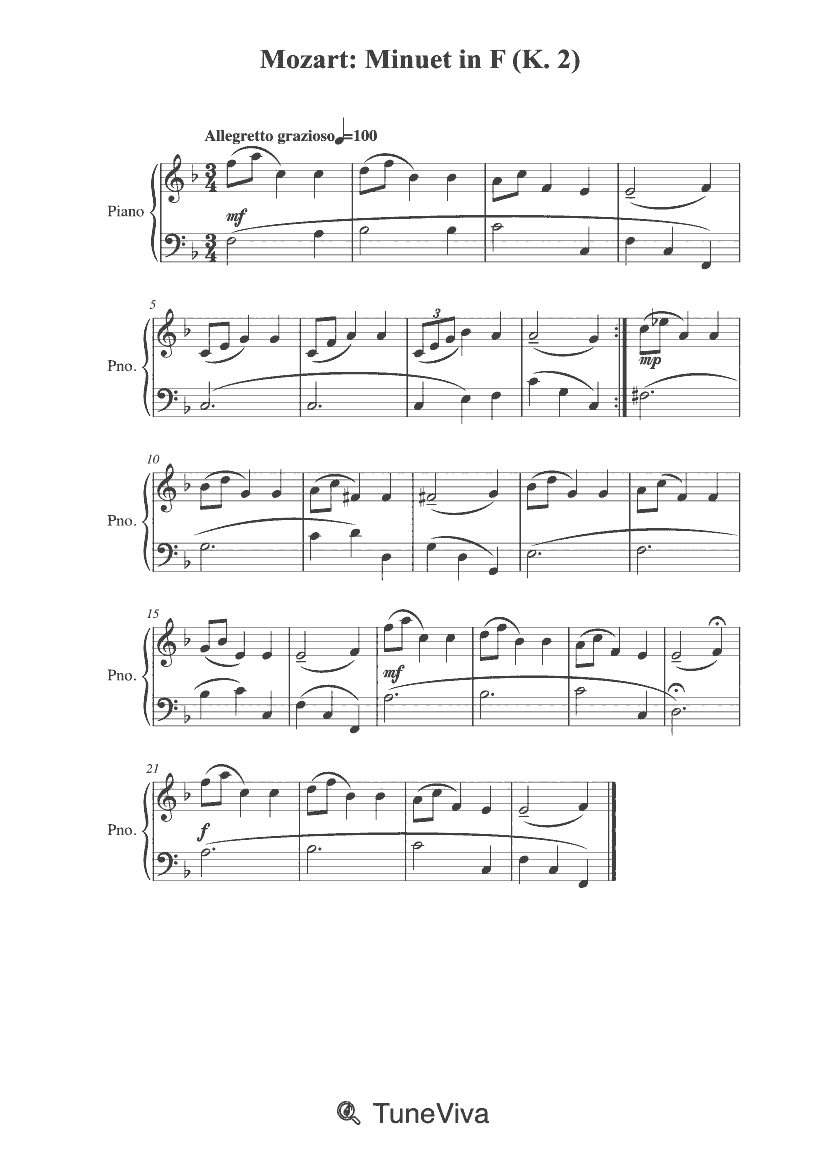
Wolfgang Amadeus Mozart
K. 2
Piano · 58 sec
Open score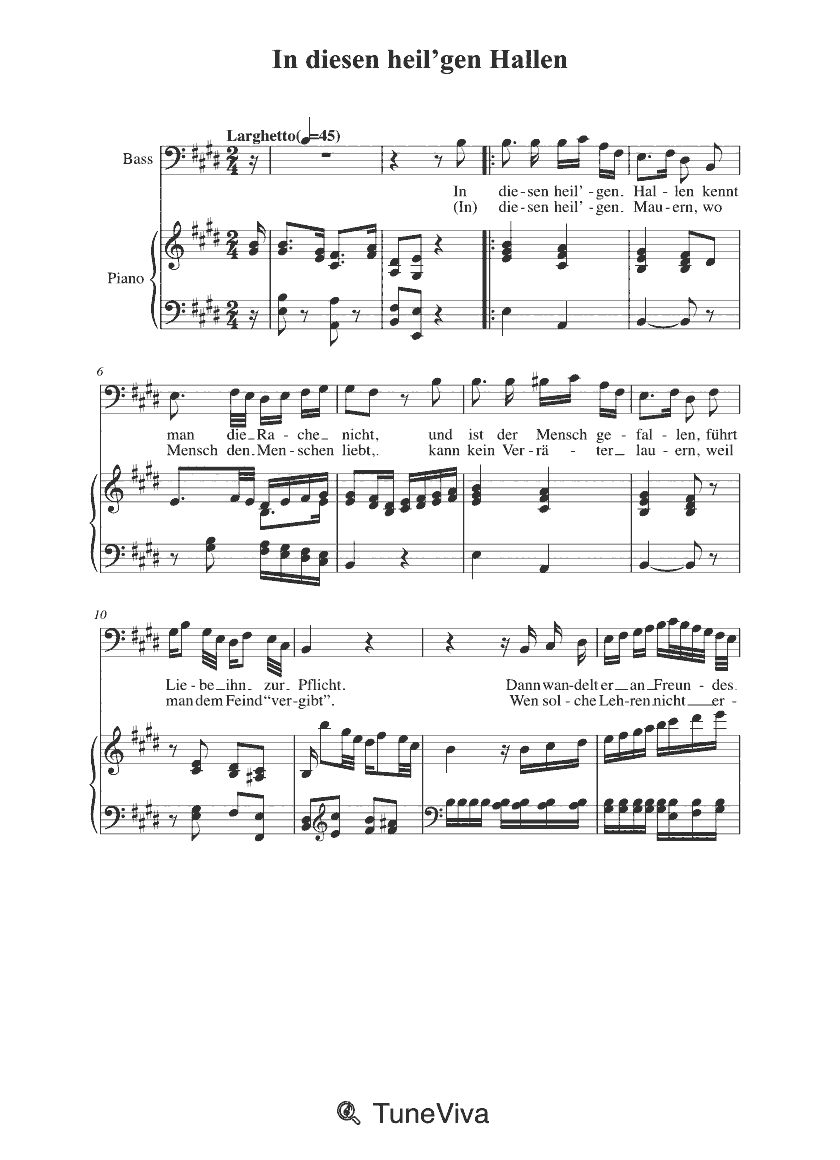
Wolfgang Amadeus Mozart
(Aria from Die Zauberflöte)
Bass; Piano · 2 min 37 sec
Open score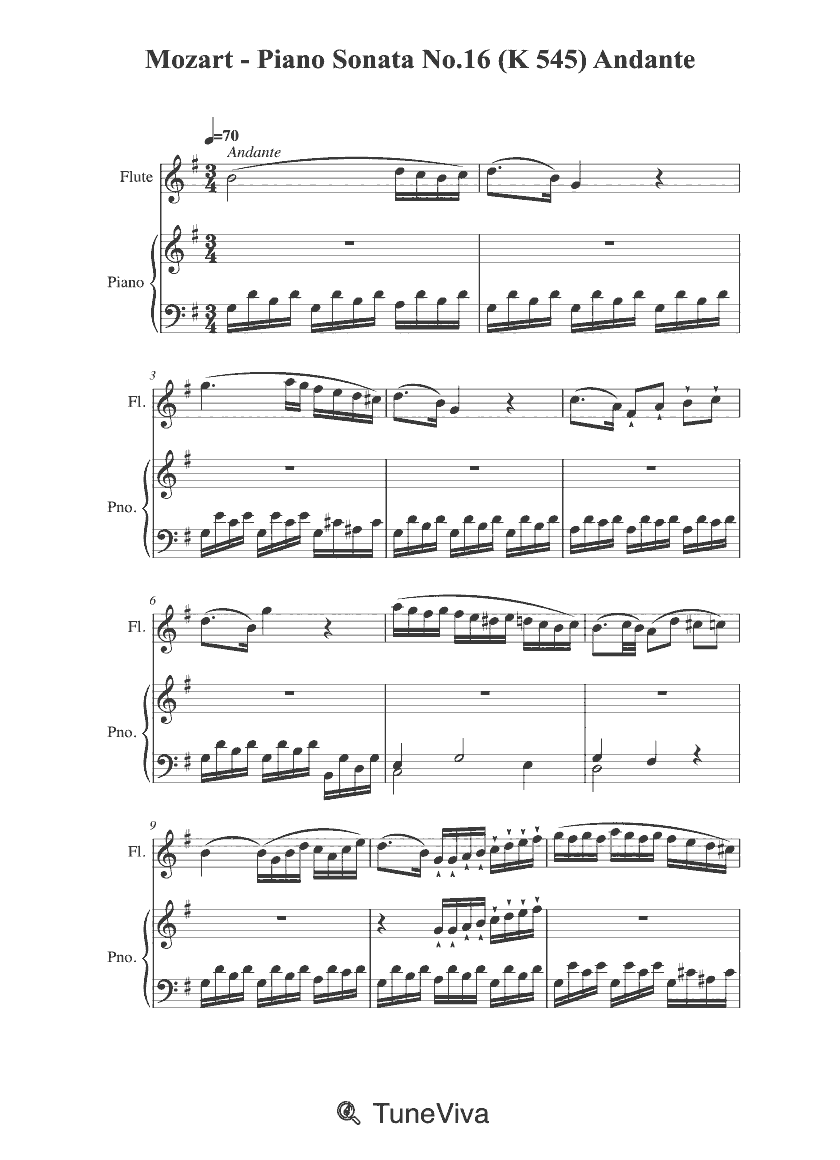
Wolfgang Amadeus Mozart
2nd mov. Andante for Flute and Piano
Flute; Piano · 3 min 48 sec
Open score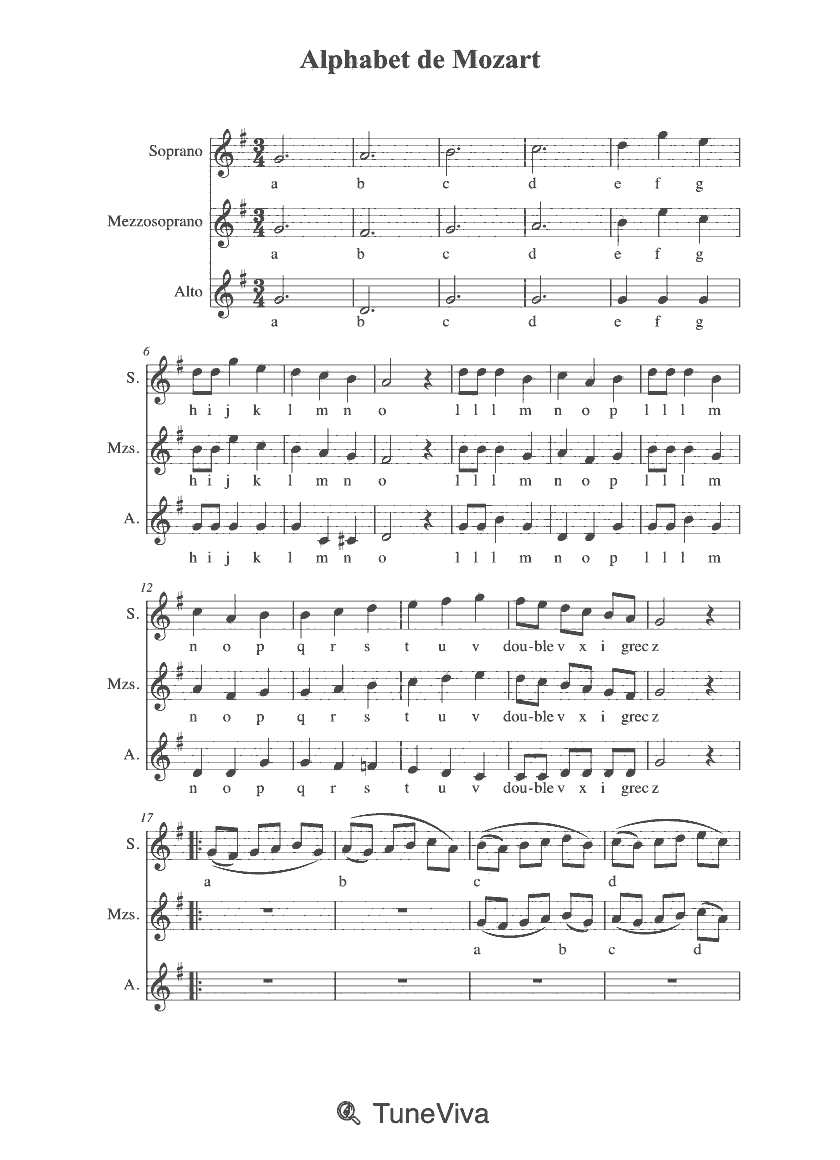
Wolfgang Amadeus Mozart
Soprano; Mezzosoprano; Alto · 1 min 15 sec
Open score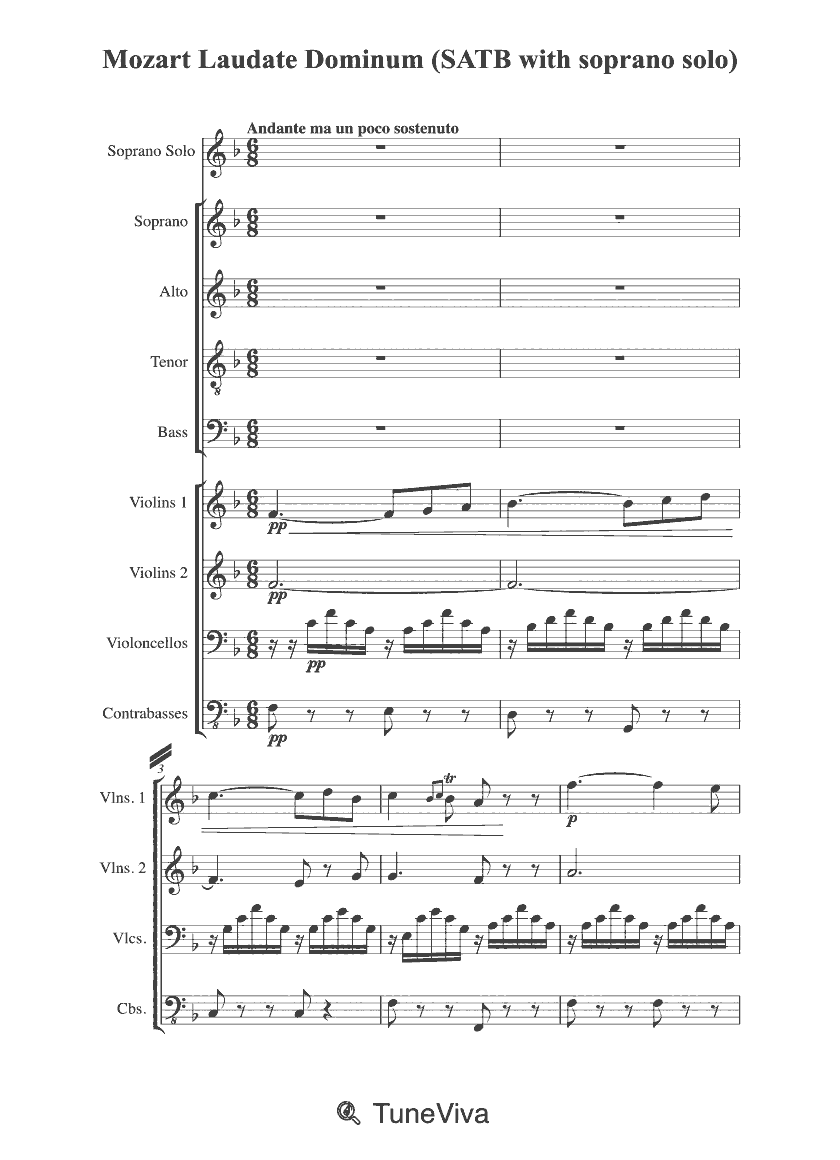
Wolfgang Amadeus Mozart
From Vesperae solennes de confessore K. 339
Soprano Solo; Soprano; Alto +6 parts · 2 min 20 sec
Open score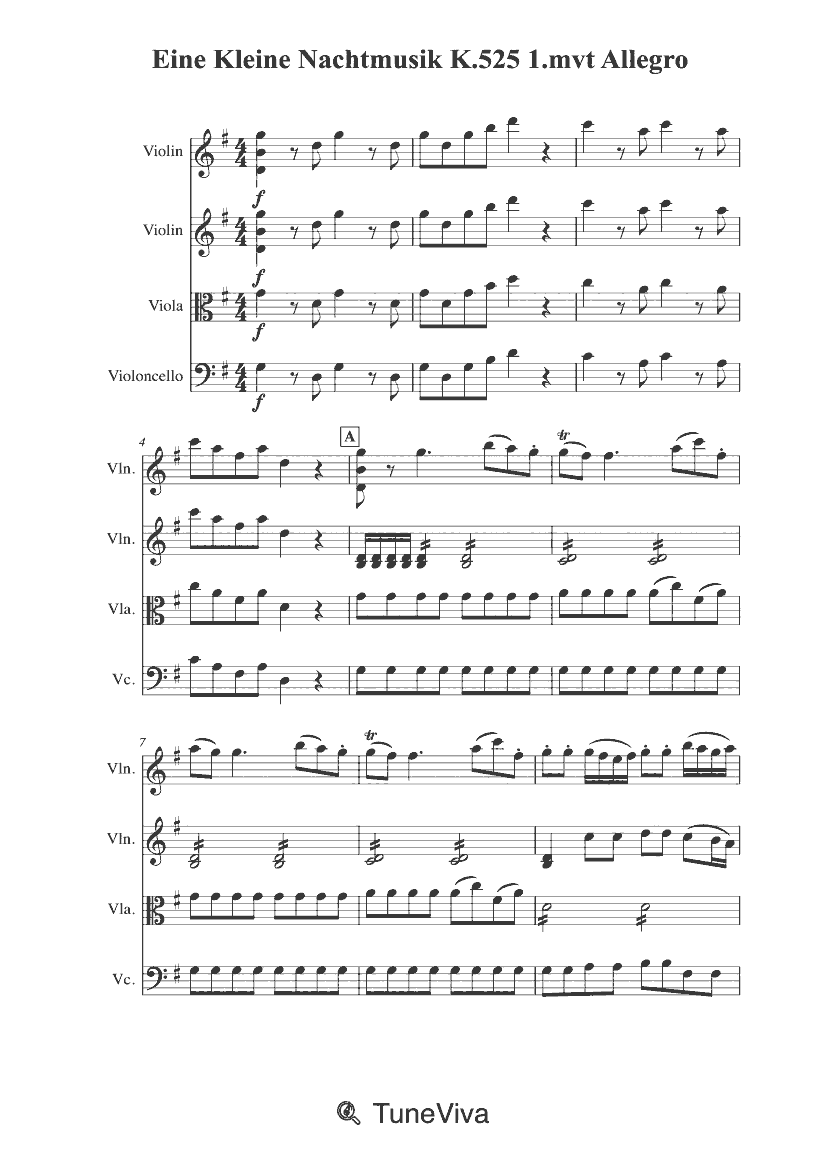
Wolfgang Amadeus Mozart
K.525
Violin; Viola; Violoncello · 9 min 7 sec
Open scorePage 1 of 21
The catalogue runs from a minuet a five- or six-year-old wrote into his sister's notebook to a Requiem he did not finish. Between those points Mozart packed the Salzburg court years, the Vienna decade, the operas, the piano concertos and the chamber music that define the Classical style for many listeners. TuneViva holds 405 Mozart scores, about 1,867 minutes of music and 990,525 notated notes; 100 have lyrics. The most-viewed item is the Lacrimosa from the Requiem. Wolfgang Amadeus Mozart (1756–1791) wrote more than 800 works across symphonies, concertos, chamber music, opera and choral music, and his final years produced the last three symphonies, Eine kleine Nachtmusik, the Clarinet Concerto, the operas Le nozze di Figaro, Don Giovanni, Così fan tutte and Die Zauberflöte, and the Requiem. Mozart sheet music on this page reflects that range, from piano sonatas to opera numbers and Requiem movements. Some scores are arrangements rather than Mozart's original versions: the Rondo alla Turca appears for flute and piano, and the Clarinet Concerto's second movement as a B-flat clarinet and piano setting. Check the listed parts and key before choosing, especially if you need a specific instrumentation for performance or study.
Mozart was born in Salzburg on 27 January 1756 and died in Vienna on 5 December 1791, aged thirty-five. The details of his life are familiar: the tours, the break with Archbishop Colloredo, the move to Vienna in 1781, the marriage to Constanze Weber in 1782, the Freemasonry, the appointment as chamber composer to Joseph II in 1787. What matters for a player is the range of the catalogue. It runs from the Minuet in F major, K. 2, written into Leopold's notebook for Nannerl in January 1762 when Wolfgang was five or six, to the Requiem, completed after his death by Franz Xaver Süssmayr.
The most-viewed works are a fair sample: the Lacrimosa, the opening Allegro of Piano Sonata No. 16 in C major, K. 545, which Mozart's own catalogue calls "a little piano sonata for beginners," and the duet Là ci darem la mano from Don Giovanni. The Rondo alla Turca, the finale of Piano Sonata No. 11, K. 331, appears here in a flute-and-piano arrangement as well as in its keyboard form.
The catalogue is an arrangement-heavy one. Arias, concerto movements and opera numbers sit beside sonatas and symphonies, and the scoring in the title is often the arrangement's, not Mozart's. That is an advantage for singers and wind players looking for playable versions, but it means the collection is not a substitute for a critical edition. Check the key and instrumentation before you print.
Original works and arrangements: Several scores on this page are arrangements rather than Mozart's original versions. The Rondo alla Turca is the finale of Piano Sonata No. 11, K. 331, but the score listed here is for flute and piano; the Clarinet Concerto movement is presented for B-flat clarinet and piano; the Lacrimosa is a piano score. Read the listed parts and opening key before you choose, and decide whether you need a study score, a solo part with accompaniment, or a transcription.
Piano sonatas: two useful entry points: Piano Sonata No. 16 in C major, K. 545, is the work Mozart entered in his own catalogue as 'a little piano sonata for beginners'; its first movement opens with an Alberti bass and includes a recapitulation that begins in the subdominant. Piano Sonata No. 11 in A major, K. 331, is homotonal, and its finale, the Rondo alla Turca, is often played on its own. Choose K. 545 for its Alberti bass and scale passages, and K. 331 for a theme-and-variations opening plus the Turkish-style finale.
Singers and wind players: Là ci darem la mano is an Act I duet for Don Giovanni (baritone) and Zerlina (soprano), with words by Lorenzo Da Ponte. It begins in A major in 2/4 at an andante tempo; Zerlina's hesitation is dramatised by a chromatic falling line before the music moves to allegro and 6/8. The score here includes soprano, bass and piano parts. For the Clarinet Concerto, the second movement is available in a B-flat clarinet and piano setting, useful for study or accompanied performance, but check whether you need the orchestral texture of the concerto.
The Requiem and its completions: Mozart died before finishing the Requiem in D minor, K. 626. Joseph Eybler and then Franz Xaver Süssmayr worked on the completion, and Süssmayr's version was delivered to the commissioner. The Lacrimosa comes from the Sequence; Mozart's draft included the first eight bars of the movement. A piano score of the Lacrimosa is useful for learning the vocal lines, but it does not reproduce the Requiem's basset horns, bassoons, trumpets, trombones, timpani, strings and organ.
They refer to the Köchel catalogue, a single chronological sequence of Mozart's works. The numbers identify pieces but were revised over time, so some works have two numbers.
No. It was incomplete at his death in 1791. Franz Xaver Süssmayr completed it, building on work by Joseph Eybler, and that is the version usually performed.
The Minuet in F major, K. 2, written when he was five or six, and the C major Sonata K. 545 are the usual starting points; both are in this catalogue.
Mozart completed more than 800 works and wrote outstanding examples in most genres of his time, including symphonies, concertos, chamber music, opera and choral music. Works from his final years include the last three symphonies, Eine kleine Nachtmusik, the Clarinet Concerto, Le nozze di Figaro, Don Giovanni, Così fan tutte, Die Zauberflöte and the Requiem.
Mozart's Requiem in D minor, K. 626, was unfinished when he died on 5 December 1791. Joseph Eybler and then Franz Xaver Süssmayr worked on completing it, and Süssmayr's completion was delivered to Count Franz von Walsegg; alternative completions also exist.
Là ci darem la mano is an Act I duet from Don Giovanni in which Don Giovanni tries to persuade Zerlina to come with him; Lorenzo Da Ponte wrote the words. The music begins in A major in 2/4 at an andante tempo, and Zerlina's wavering resolve is marked by a falling chromatic line before the duet moves into allegro and 6/8.
Mozart entered the Piano Sonata No. 16 in C major, K. 545, in his own thematic catalogue as 'a little piano sonata for beginners'. Its first movement is in sonata form in C major, with the opening theme accompanied by an Alberti bass in the left hand, and its recapitulation unusually begins in the subdominant key of F major.
The Rondo alla Turca is the finale of Piano Sonata No. 11 in A major, K. 331, and Mozart titled it 'Alla turca'. It is an irregular rondo structured as A–B–C–B–A–B with a coda, and its refrain imitates the sound of Turkish Janissary band instruments; the sonata was published by Artaria in 1784 with K. 330 and K. 332.
The original Rondo alla Turca is the piano finale of Mozart's Piano Sonata No. 11 in A major, K. 331. The score listed here is a flute-and-piano arrangement, with parts for flute and piano, so it is a transcription rather than the keyboard original.